
In this article
There are roughly 18 established routes up Mount Everest, and more than 95% of every summit in history has come by just two of them. The other sixteen are not a menu you get to order from. They are a museum.
Ask anyone who has actually run the numbers from the Himalayan Database: of the 13,737 summits recorded through December 2025, the two standard routes account for 12,697 of them, about 92.4%. This piece names every route on the mountain, breaks the two real options down in terms a climber who already knows grades will recognize, and answers the only question that actually matters when you start planning. Which side is right for you.
The Two Routes That Carry 95% of Everest Summits
Walk into a planning meeting with any guide service and the very first question is not about fitness or oxygen or budget. It is which side of the mountain you want to climb. That single fork decides almost everything else about the trip, because Everest straddles the Nepal–Tibet border and each side is a completely different mountain to organize, approach, and survive.
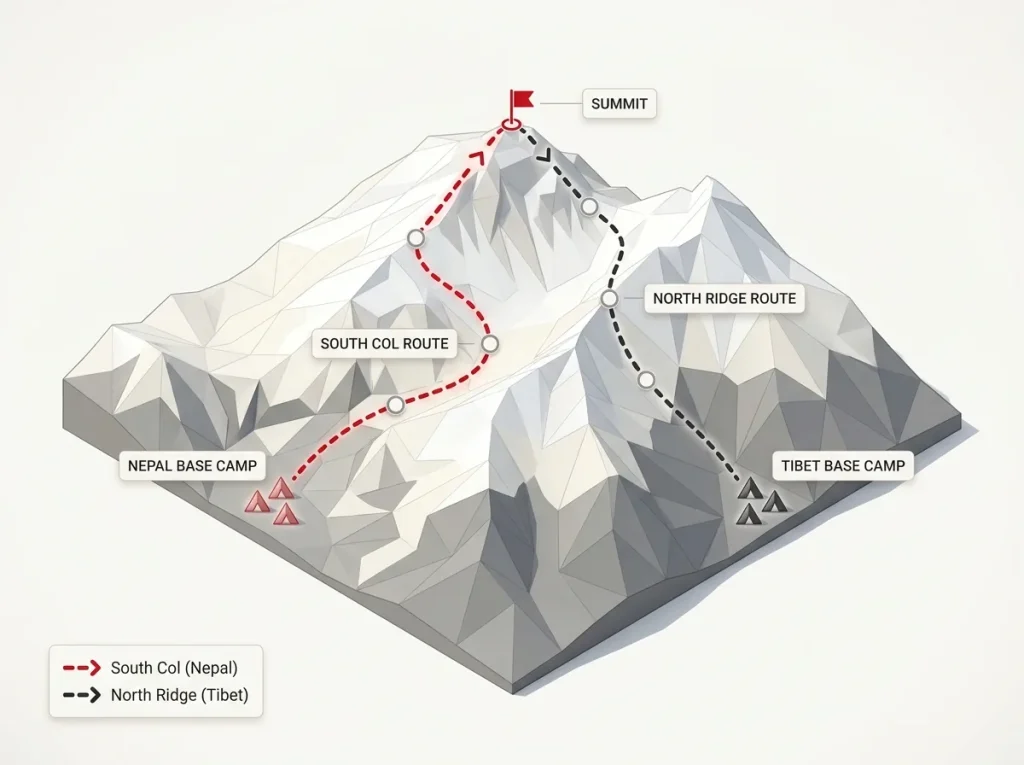
The two lines that matter are the South Col route, also called the Southeast Ridge, which climbs from Nepal and follows the original 1953 Hillary and Tenzing line. The other is the North Ridge route, the Northeast Ridge, which climbs from Tibet by way of the North Col. When climbers say standard route, they mean one of these two specifically. It is not loose slang for “the easy way.” It is a precise term that separates the two commercially supported lines from everything else on the peak.
Here is the part that surprises people. The standard route is not a compromise or a beginner’s shortcut. It is what nearly everyone who has ever stood on top actually climbed. Out of more than 13,000 summits recorded, the two standard routes carry about 92.4% of them, and north of 95% once you count loosely. If you are picturing yourself on Everest, you are almost certainly picturing one of these two lines, whether you know it yet or not.
The two routes are close on paper in the ways that scare people and far apart in the ways that shape the trip. Their fatality rate per summit is nearly identical. Their success rate, their hazards, their crowds, and their cost are not. Here is the head to head.
| Factor | South Col (Nepal) | North Ridge (Tibet) |
|---|---|---|
| Ridge name | Southeast Ridge | Northeast Ridge |
| First ascent | 1953 (Hillary, Tenzing) | 1960 (Chinese team) |
| Base camp access | Multi-day trek from Lukla | Vehicle to base camp |
| Signature hazard | Khumbu Icefall, crossed repeatedly | Cold, wind, exposed summit ridge |
| Technical crux | Icefall movement (~class 4), no hard rock | Second Step rock (~5.7–5.8 free) |
| 2025 member success | 63% (303 of 481) | 86% (68 of 79) |
| Fatality per summit | 0.98% | 0.89% |
| Relative cost | Higher | Lower |
| Crowds | Busy, hundreds of permits | Capped near 300 permits |
The trap most people fall into is ranking these two routes by a single crux grade and stopping there. That misses the real difference. The South Col and the North Ridge do not carry the same risk in different amounts. They carry different kinds of risk.
One asks you to repeatedly walk through terrain that can fail regardless of your skill. The other asks you to climb harder ground in colder, windier conditions with a thinner safety net. Choosing between them is really about which of those you can live with, and we will get to that route selection decision in full.
The South Col Route, in Climbing Terms
If you have led ice and rock but never been to 8,000 meters, the South Col route splits neatly into two categories: the parts that are climbing, and the parts that are surviving while you walk. Understanding which is which tells you a lot about whether this side fits you.
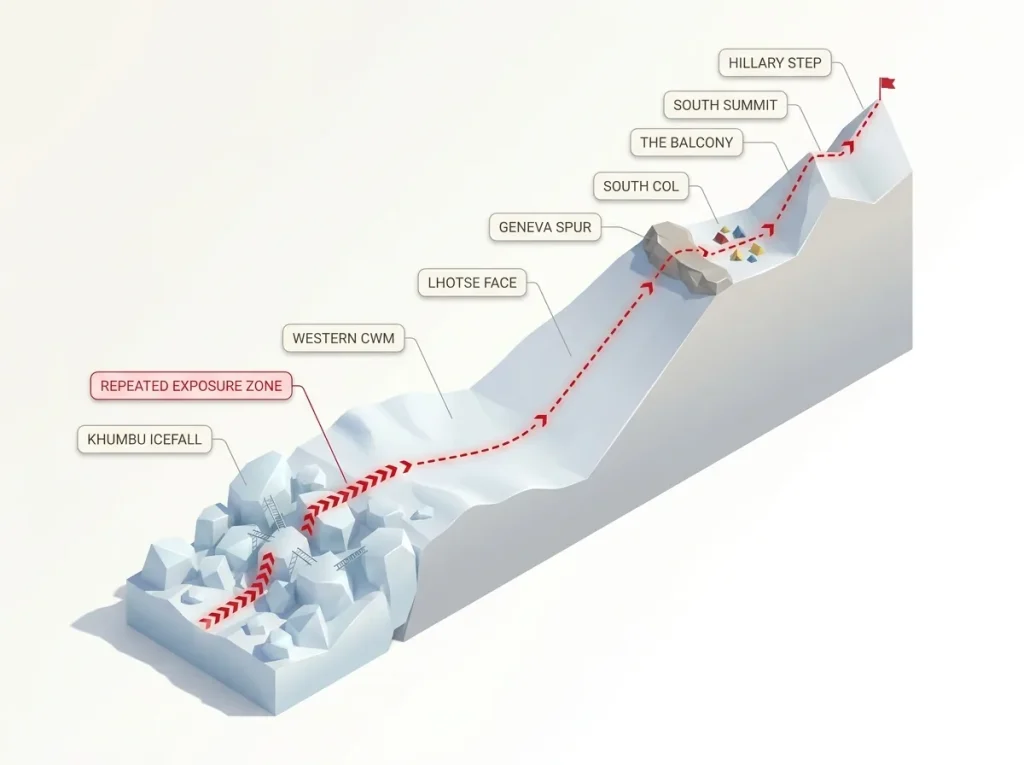
The Khumbu Icefall is the whole story
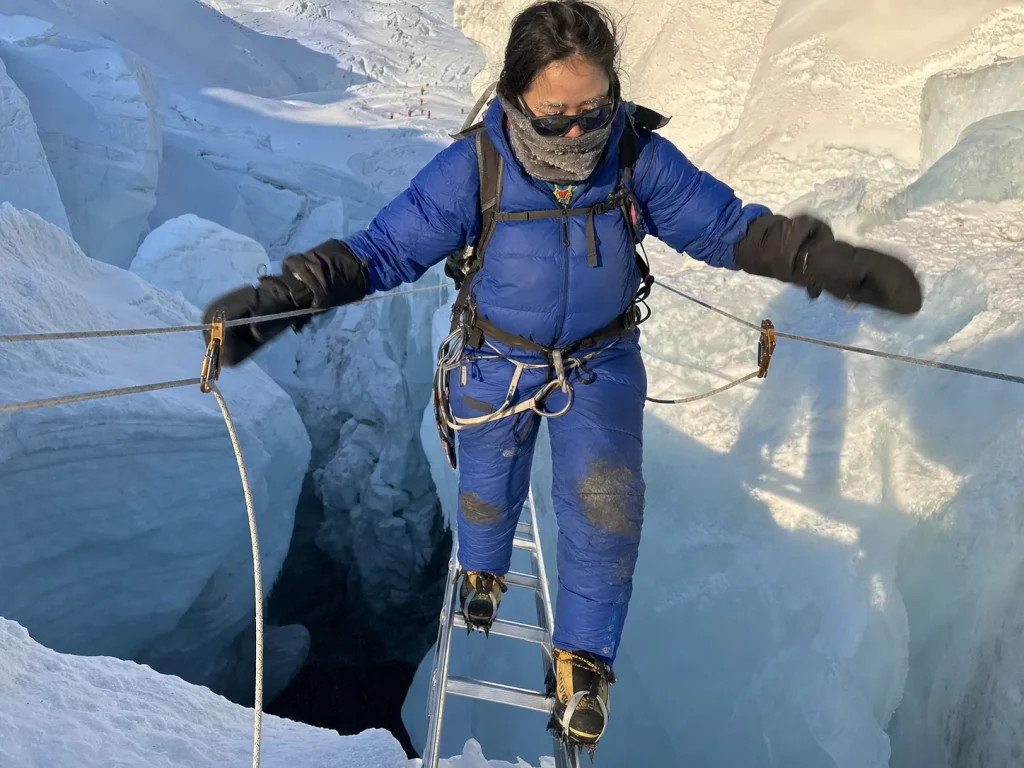
The signature obstacle low on the route is the Khumbu Icefall, and it defines the South Col experience more than the summit day does. On a technical scale it grades out around class 4. You are crossing aluminum ladders lashed over crevasses, scrambling on hands and feet across shifting blocks of ice, clipped to fixed lines the whole way. Nothing about the movement itself would trouble a competent scrambler at sea level. In pure movement terms, the honest answer on the South Col is that it is not very technical at all.
That is exactly why it fools people. The hazard here is not the difficulty of the moves. It is that the terrain itself moves. Seracs the size of houses collapse without warning. Ladders shift between the morning you cross them and the afternoon you come back.
A perfect climber and a clumsy one are equally exposed to a serac that lets go at the wrong moment. Skill does not protect you from geology. A specialist crew known as the Icefall Doctors rebuilds and maintains the ladder route through it every season, the same way a rope-fixing team sets the fixed lines higher up, but even a freshly rebuilt line runs straight through moving ice.
The Icefall is not a one-time obstacle. You cross it several times during acclimatization rotations, the climb-high-sleep-low process that builds your oxygen-carrying capacity, so the objective hazard compounds with every trip. Climbers who think in terms of a single crux underrate the South Col badly. The right mental model is repeated exposure, not one hard section. Move through it fast and early, before the sun loosens the ice.
Above the Icefall, the walking route
Clear the Icefall and the route opens into the Western Cwm, a broad glacial valley that bakes in reflected sun by day and freezes hard at night. This is where Camp 1 sits above the Icefall, and the character of the climbing changes. From here you cross the Cwm, then climb the Lhotse Face, a long sweep of firm snow and ice taken on fixed rope, past the Yellow Band and the Geneva Spur to the South Col itself.
The South Col is where the mountain stops being a climb and starts being a countdown. It sits right at the edge of the death zone, and Camp 4 on the South Col is the last high camp, less a rest stop than a launch pad for the summit push. From there the summit sequence runs through The Balcony, up to the South Summit, across the knife-edge to the Hillary Step (reshaped since the 2015 earthquake but still the symbolic gate), and onto the top.
What fails on this route is rarely a hard move gone wrong. It is objective hazard and attrition: an Icefall collapse, a storm on the long summit day, a climber who runs out of gas above the South Summit with hours of down-climbing still ahead. The South Col does not ask for your best move. It asks for your judgment and your fuel.
The North Ridge Route, in Climbing Terms
The North side is the one people call “more technical,” and for once the reputation is earned. What that phrase actually means, with a rope in your hand at 8,600 meters, is worth spelling out.
No Icefall, but you pay for it elsewhere
The North Ridge skips the Khumbu Icefall entirely. There is no equivalent repeated objective-hazard gauntlet low on the route. In exchange, you take on sustained cold, relentless wind, and harder rock high on the mountain. That trade sits at the center of the whole South-versus-North decision, so hold onto it. You are swapping a hazard you cannot control for conditions you have to endure and ground you have to actually climb.
The route starts from the Rongbuk valley and climbs from Advanced Base Camp up to the North Col, then along a long, wind-hammered ridge that hangs above the Tibetan plateau thousands of meters below. The exposure to weather here is the defining variable. The summit ridge catches the full force of the wind, cutting cornice overhangs along its crest, in a way the more sheltered upper South Col route does not, and the cold on this side, the kind that ends bids in frostbite rather than a fall, has turned back plenty of strong, fit climbers who never faced a move they could not do.
The Steps, and the one that counts
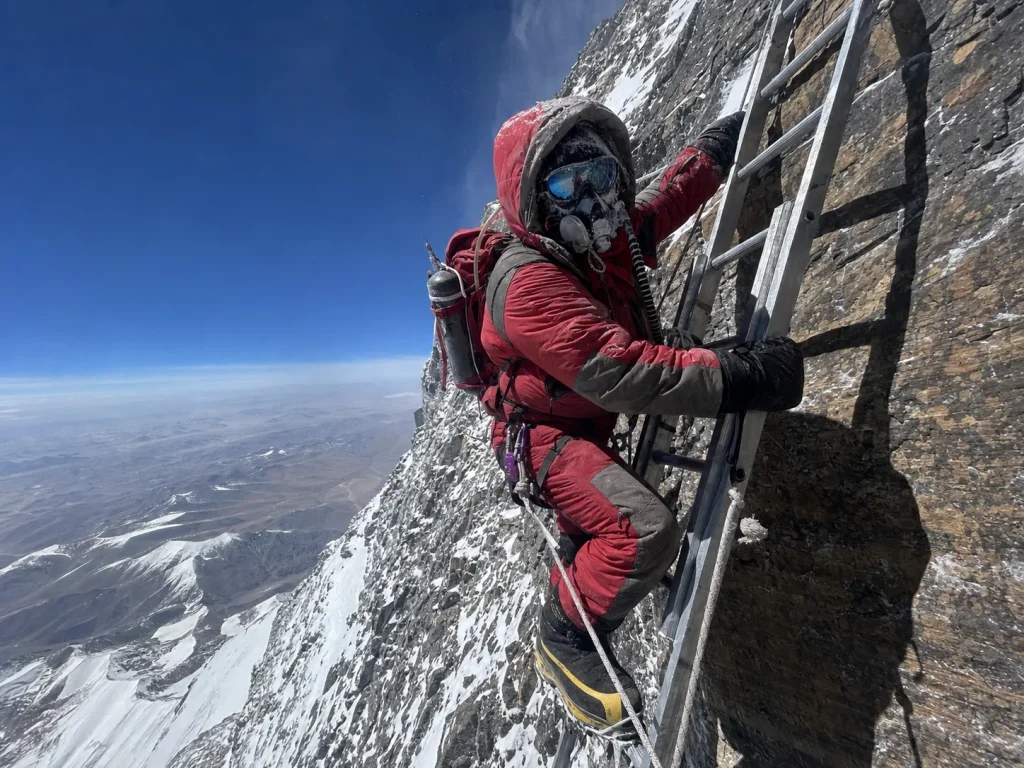
Summit day on the North Ridge is famous for the Steps, three rock step obstacles known as the First Step, Second Step, and Third Step. Climbers refer to them as a set even though only one of them is genuinely hard. The First and Third are modest. The Second Step is the real crux, and it is worth understanding in climbing terms.
The rock face of the Second Step, climbed free without the fixed ladder that hangs on it today, grades somewhere around 5.7 to 5.8 in the Yosemite system. When Conrad Anker free-climbed it in 1999, he rated it as hard as 5.10. Now sit with that number honestly. That grade is a sea-level grade.
Move it to 8,600 meters, put the climber in a down suit and expedition mittens with crampons on their feet and a mask feeding supplemental oxygen, and even the fixed-ladder-assisted version becomes strenuous in a way the paper grade does not convey. The common mistake is showing up expecting to “just clip the ladder” and getting caught off guard by how much a simple move costs up there.
That is the honest translation of “more technical.” It is not that the North Ridge is a hard rock climb. It is that it puts a genuinely hard move at the worst possible altitude, in the worst possible conditions, after weeks of wear. If you want the fuller picture of the objective hazards that define big alpine faces, the same categories, wind, cold, exposure, and rockfall, are what shape this side. And if the Second Step has you wondering how Everest’s difficulty really compares to the world’s genuinely hard peaks, the short version is that Everest’s challenge is altitude and endurance far more than technical climbing.
Grade the Second Step by what it costs you physically, not by the number in a guidebook. A 5.8 move you can do a hundred times at the gym is a different animal after a night in the death zone on bottled oxygen. Climbers who respect the altitude penalty, not just the rock grade, are the ones who still have something left for the descent.
Which Route Should You Actually Climb
Here is the question every comparison table dodges. A good guide does not hand you a spec sheet and walk away. They ask you a few honest questions about yourself, then tell you which side. Route choice on Everest is a proxy for a risk-profile choice, not a geography choice. These are the questions that decide it.
Which hazard can you live with?
Start here, because it is the real fork. The South Col trades a repeated objective hazard you cannot control, the Icefall, for better rescue infrastructure, more expedition operators, and even helicopter rescue as far up as Camp 2 in the right conditions. The North Ridge trades that uncontrollable hazard for sustained cold, wind, and harder rock, ground you can at least prepare for and climb, but with a thinner safety net and no helicopter option if things go wrong.
Some climbers cannot stand the sitting-duck feeling of the Icefall, the knowledge that skill will not save them from a collapsing serac. Those climbers often lean North, where the hazard feels like something they can meet with technique and grit.
Others would far rather move fast through an objective hazard than face a hard technical step when they are wrecked and hypoxic. Those climbers lean South. Neither instinct is wrong. They are just different tolerances.
How comfortable are you on technical ground at altitude?
If steep rock at 8,600 meters sounds like the part you would enjoy testing yourself against, the North Ridge rewards that. If it sounds like the thing most likely to end your climb, the South Col keeps the hardest movement well below what a fit scrambler can handle and asks for endurance instead.
Crowds, support, and your real odds
This is where the numbers get counterintuitive. In 2025, Nepal’s South side saw 63% member success while Tibet’s North side hit 86%. The North side does not summit at a higher rate because the route is easier. It is harder. It summits higher because China caps the North at roughly 300 permits a year and enforces stricter prerequisites, so the pool of climbers on that side is smaller and better vetted. A tighter, more experienced field posts better odds.
The flip side is real too: the South has more expedition operators running each commercial route, more Sherpa support, and a denser rescue network if something goes wrong. Fewer people and higher success, or more people and more help. That is the honest trade, and it holds whether you book a fully guided expedition or a leaner logistics-only package.
Budget and access
The North Ridge has historically been the cheaper side, though “cheaper” on Everest is a relative word, and both sides now gate entry on experience rather than money alone. We will cover the current rules in the next section, and you can dig into what an Everest expedition actually costs in 2026 for the full breakdown. Keep in mind that both standard routes are climbed in the same fundamental way, with fixed ropes, stocked camps, and Sherpa support. That is the expedition-style approach both routes rely on, and it is a different game from lightweight alpine climbing.
Put it together and there is no universally better route. There is the route that matches your tolerance for uncontrollable risk, your comfort on technical ground, and your appetite for crowds versus isolation. Answer those honestly and the mountain picks a side for you.
The Extreme Routes Almost Nobody Climbs
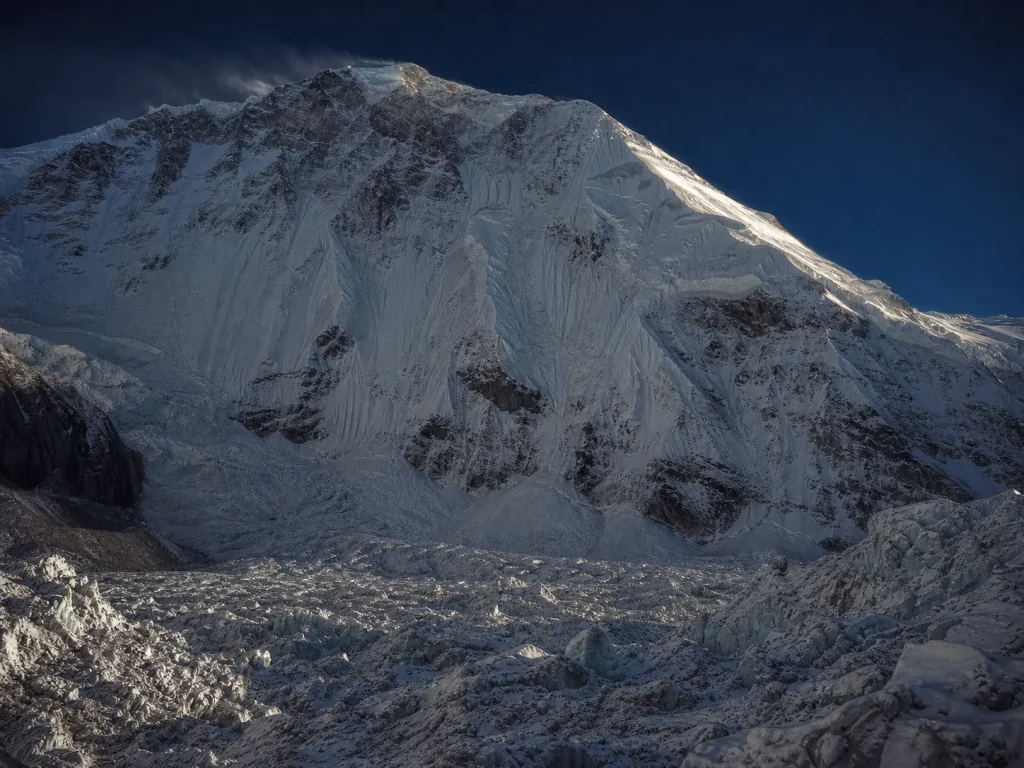
Everything past the two standard routes belongs to a different sport. These are the lines that make climbing films, and understanding them honestly means being blunt about one thing: for all but a tiny handful of elite, sponsored alpinists, they are not an option. They are history you read about, not a trip you book.
The named set includes the West Ridge and its Hornbein Couloir, the Kangshung Face (the East Face), the Southwest Face, the Great Couloir (also called the Norton Couloir), the South Pillar (the American Buttress), the various North Face couloirs, and the Fantasy Ridge on the East Ridge. Each has a first-ascent story worth telling, which the history section below gets into. What matters here is scale.
The reality-check numbers are stark. All the non-standard routes combined account for just 1.4% of Everest summits, about 187 ascents in the mountain’s entire history. The Kangshung Face saw only around a dozen summits total by the year 2000, despite its first ascent back in 1983. Set “about a dozen people, ever” against the more than 7,500 who have topped out by the standard routes, and the gap tells you everything.
These lines have no fixed ropes, no ladders, no stocked camps, and no realistic guided option. Decades can pass between repeat ascents on some of them.
This is the honest part competitors gloss over. The extreme routes are not a harder version of the same trip you would take on the South Col. They are a fundamentally different, near-extinct category of climbing, closer to true alpinism, stripped of fixed ropes and infrastructure, than to a commercial Everest expedition.
If you want a sense of just how far out of reach they are, consider that the 1981 Kangshung Face attempt included Edmund Hillary himself on the team, and it still turned back at around 7,000 meters because the avalanche hazard was simply too high. These faces humble legends. They belong on the same shelf as the famous mountain routes and peaks that define the sport, admired, studied, and left to the very few who can climb them.
If a route on Everest has no fixed ropes and no commercial operator running it, treat that as a hard signal, not a challenge. The absence of infrastructure is not an oversight waiting for you to be the exception. It is the sport telling you this line is reserved for a level of alpinist that almost nobody reading this is, and that is fine. The two standard routes are the honest goal.
Permits, Access, and the 2026 Route Status
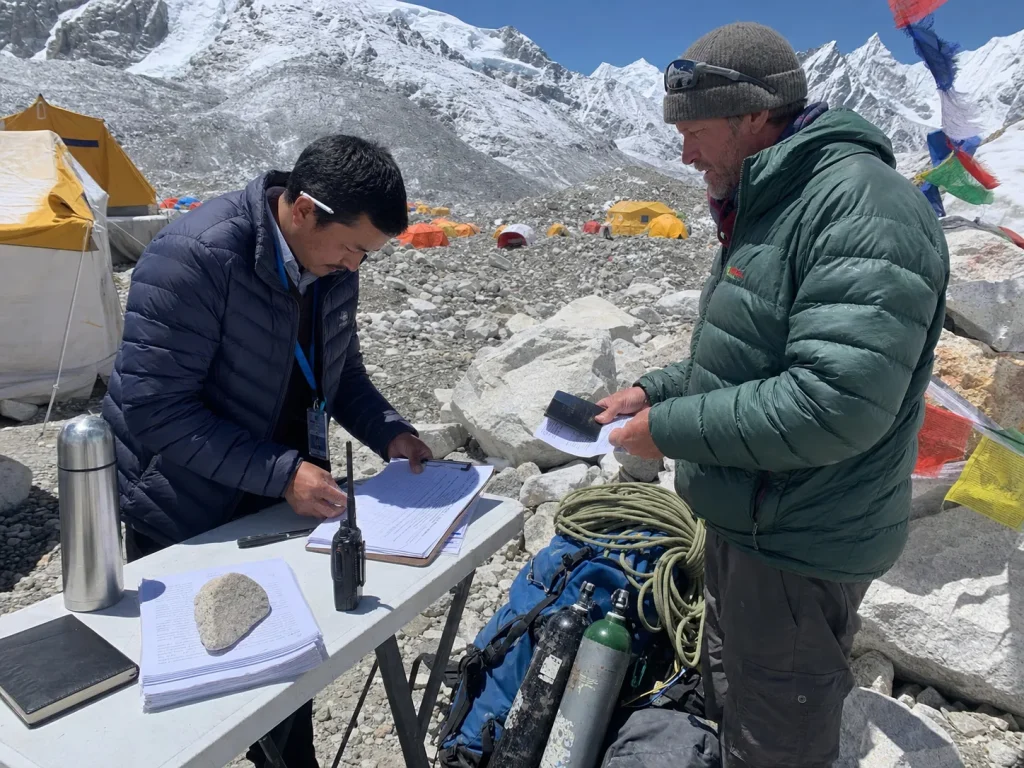
This is the part of Everest planning that changes fastest, and it is where the most outdated information floats around. Get it wrong and you can wreck a plan before you ever leave home. Here is the current picture for 2026.
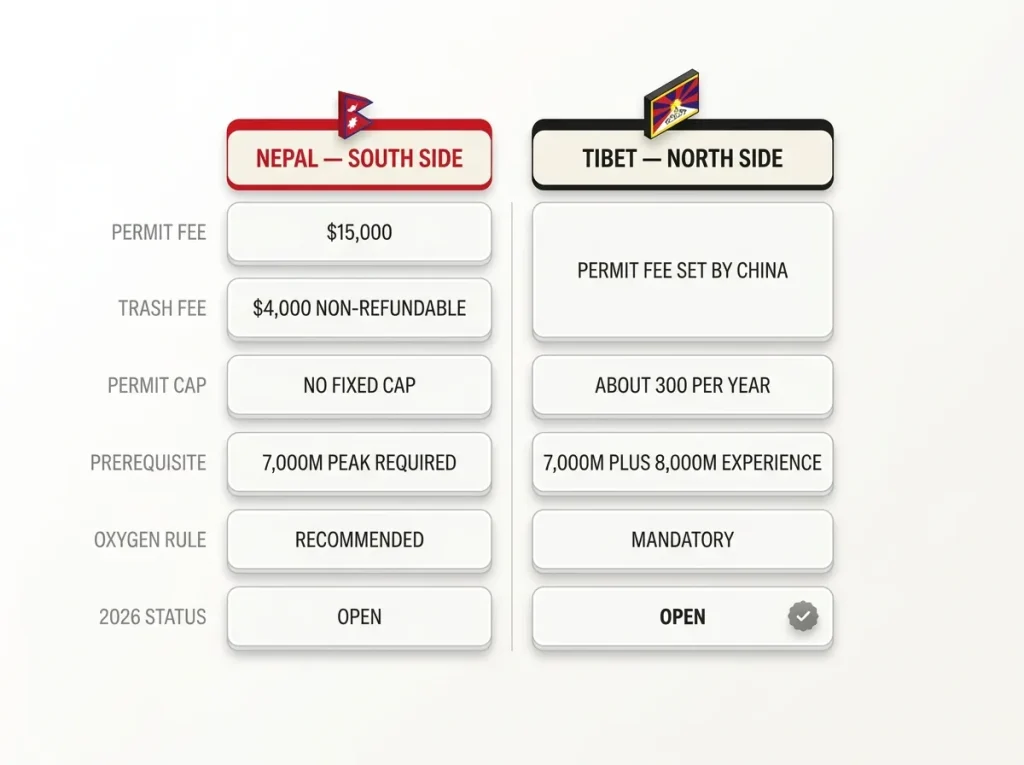
First, the correction that matters most. The North Ridge on the Tibet side is open for 2026. It is not closed. You may have read stale chatter claiming China shut the North side down, and that is simply wrong for this season. China caps the North at roughly 300 permits a year, requires supplemental oxygen, and enforces tighter prerequisites, but capped and restricted is not the same as closed. If a planning resource tells you the North is off the table for 2026, it is out of date.
On the cost of entry, Nepal raised its Everest permit fee to $15,000 for 2026, up from $11,000, the first increase in nearly a decade. Nepal also changed its trash system. The old $4,000 refundable trash deposit, which you got back if you carried your waste down out of Sagarmatha National Park, is now a $4,000 non-refundable per-climber charge that funds a Sherpa-staffed checkpoint at Camp 2.
Everyone pays it now, regardless of how clean they climb. It is a real shift in the cost of getting on the mountain, and worth budgeting for as a fixed fee rather than a deposit you will recover. The Tibet side runs its own version through the Qomolangma National Nature Preserve.
The bigger change is the prerequisite gate, and it applies to both sides. Both Nepal and Tibet now require you to have summited a qualifying 7,000-meter peak before they will issue an Everest permit. Everest is no longer a mountain you can simply buy your way onto with a big enough check. Tibet goes further and requires prior 8,000-meter experience for non-Chinese climbers.
If you are serious about either side, the honest first step is not booking Everest. It is building the résumé, and you can see the full list of Everest prerequisites to understand what actually qualifies. The American Alpine Club’s analysis of Everest permits and outcomes is a solid, non-commercial place to sanity-check any operator’s claims.
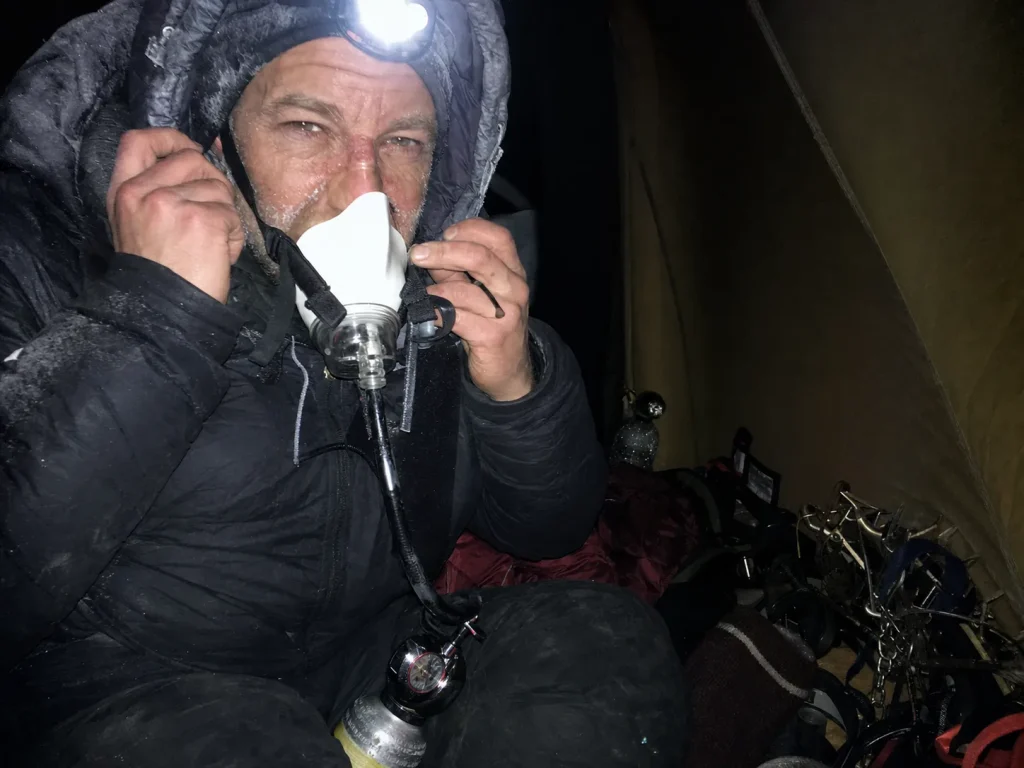
One more piece worth flagging, since the North side mandates it: bottled oxygen is not optional on Tibet’s route, and it shapes both your logistics and your cost on either side. That falls under the gear you will need regardless of which side you pick, so it is not really a route-choice variable, just a cost of admission to the top of the world. Both sides funnel almost everyone into the same brief spring season weather window in May, when the jet stream lifts off the summit for a few days. Despite all these fee hikes and new rules, 2026 is projected to see 900 to 1,000 total summits, which would break the prior record of 877 set in 2019. Everest is getting more expensive and more regulated, and more crowded at the top, all at once.
The Honest Risk Picture, Route by Route
These are the numbers nobody puts side by side, stated plainly. Not to scare you off, but because choosing a route without them is choosing blind. The point of this section is honesty, not drama.
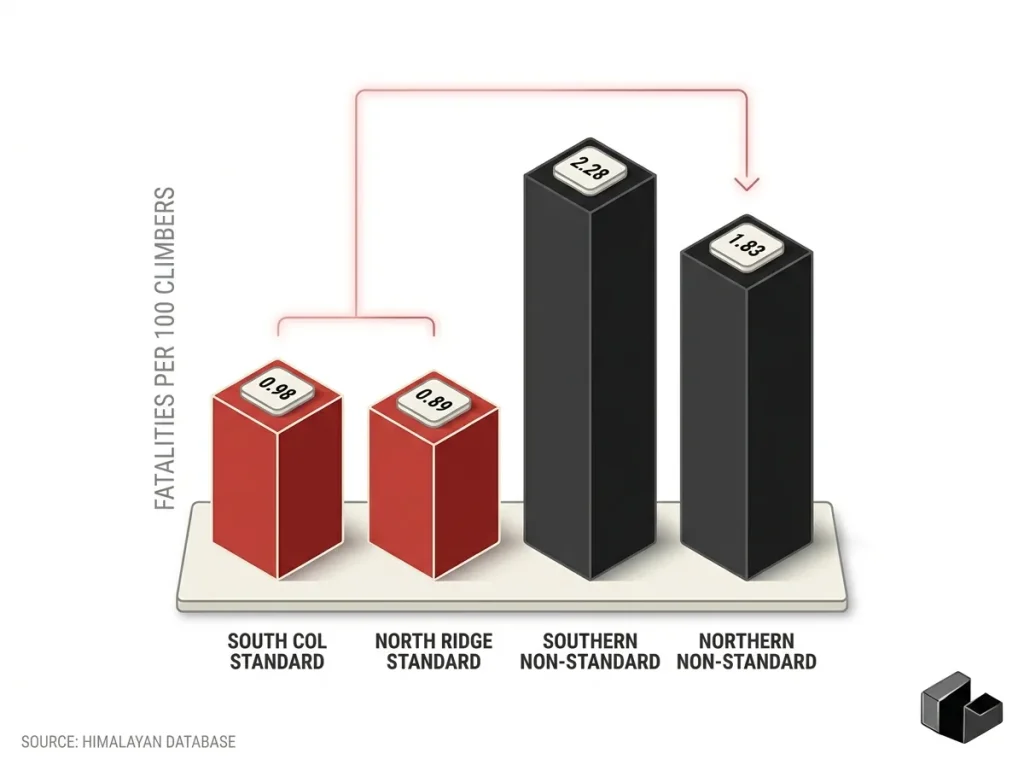
Start with the reassuring part. The two standard routes are statistically close and, by high-altitude standards, defensible. The Southeast Ridge on the South Col runs a 0.98% fatality rate per summit. The Northeast Ridge on the North Ridge runs 0.89%. That is roughly one in 100 to 110 climbers, and the near-tie holds even though the two routes carry very different hazards. Whichever side you pick, the standard route is the statistically honest way up.
Now the part most sources bury. The non-standard routes are only 1.4% of all Everest summits, yet they have caused about 21% of all the mountain’s fatalities, roughly 70 deaths. Run the rate and it is brutal: 2.28 fatalities per 100 climbers on the southern non-standard lines and 1.83 per 100 on the northern non-standard lines, against 0.98 and 0.89 on the standard routes.
Going off the two standard routes does not just add difficulty. It roughly doubles your odds of dying, on a line where almost nobody else is climbing to help if it goes wrong. A 2026 peer-reviewed mortality study of Everest deaths from 1921 to 2024 backs the pattern with the full historical dataset.
What actually claims lives differs by route. On the South Col, it is Icefall collapse and, more often, exhaustion or weather caught out on the long summit day. On the North Ridge, it is cold, wind, and the bottleneck at the Second Step where climbers queue in the death zone burning oxygen they cannot spare. And on both sides, the pattern that gets understated: most fatal events happen on the descent, not the way up. Summit fever gets you to the top with nothing left for the down-climb, which is the long descent where most of the real risk lives.
Underneath all of it is the death zone itself. Above 8,000 meters your system breaks down by degrees no matter how strong you are, and severe altitude sickness takes two forms that end summit bids fastest: HACE, high-altitude cerebral edema, and HAPE, its pulmonary cousin. Time is the enemy. Every hour up there stacks the odds against you, which is why route choice, pace, and turnaround discipline matter more than raw fitness.
The takeaway is not that Everest is out to get you. It is that the standard routes exist because they are, statistically, the honest choice, and the extreme lines roughly double the odds against you for a line almost nobody is on to help.
A Short History of How These Routes Got Climbed
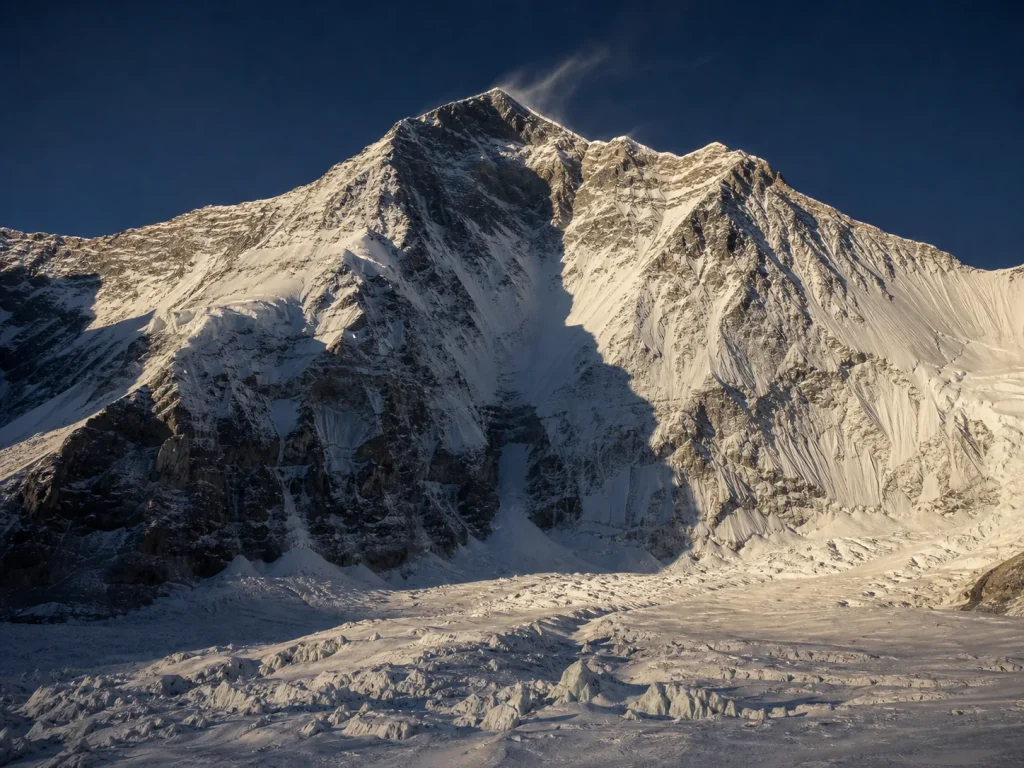
Every route on Everest was somebody’s impossible idea first. You do not need the full chronology to plan a climb, but the short version explains why the two standard routes became standard and why the rest stayed legend.
The story starts in 1953, when Edmund Hillary and Tenzing Norgay reached the top by the South Col and Southeast Ridge. That first-ascent line is still the standard South route today, which tells you how well they read the mountain. Seven years later, in 1960, a Chinese team made the first ascent of the North Ridge from Tibet, including a contested-at-the-time night ascent of the Second Step that opened the North side as the second standard route.
Then came the bold era. In 1963, Tom Hornbein and Willi Unsoeld climbed the West Ridge and descended the South Col, completing the first traverse of any 8,000-meter peak. That exact traverse-with-descent has never been repeated in the same form, and it remains one of the boldest single pushes in the mountain’s history. In 1975, Chris Bonington’s expedition put Doug Scott and Dougal Haston up the Southwest Face, the first of the great technical face routes to fall.
The line that redefined what was humanly possible came in 1978, when Reinhold Messner and Peter Habeler summited without supplemental oxygen, something the medical consensus of the day considered impossible. Messner went further in 1980 with a solo ascent, no oxygen, from the Tibet side. If those milestones make you curious about testing yourself on a more forgiving giant first, an easier 8,000er like Cho Oyu is the classic proving ground and a common step on the road to Everest. But the line that best captures why these routes matter is still the Hornbein and Unsoeld traverse: not a practical step for anyone, just proof of how far a route on this mountain can be pushed.
Conclusion
Three things to carry out of all this. First, you are really choosing between two routes. The South Col from Nepal and the North Ridge from Tibet carry more than 95% of every summit, and the rest of the mountain is history, not a plan. Second, the choice is about your risk profile, not which side is “easier,” because the two standard routes are close on the odds and far apart on the kind of hazard. Third, the standard routes are standard because they are the honest, statistically defensible way up, and the extreme lines roughly double the odds against you.
Before you fixate on a side, get honest about your own altitude résumé and your tolerance for uncontrollable risk. That answer picks the route better than any comparison table can. Then build the 7,000-meter experience both governments now demand, and go into the cost and logistics with clear eyes.
Frequently Asked Questions
01How many routes are there to climb Mount Everest?
There are roughly 18 established routes to the summit, but more than 95% of all summits have come by just two of them: the South Col route from Nepal and the North Ridge route from Tibet. The rest are rarely climbed alpine testpieces with no fixed infrastructure.
02Which is easier, the South Col route or the North Ridge route?
Neither is simply easier, they carry different risks. The South Col avoids hard technical rock but forces repeated trips through the shifting Khumbu Icefall. The North Ridge skips the Icefall but adds the technical Second Step, more cold, and relentless wind. Their fatality rates are nearly identical, about one in 100.
03Is the North Ridge route closed in 2026?
No. The North Ridge on the Tibet side is open for 2026. China caps it at about 300 permits per year, requires supplemental oxygen, and enforces stricter prerequisites, but capped and restricted is not the same as closed.
04What is the death rate difference between Everest’s standard and non-standard routes?
The two standard routes run about 0.89 to 0.98 fatalities per 100 climbers. The non-standard routes run roughly double, 1.83 to 2.28 per 100. While they account for just 1.4% of summits, they have caused about 21% of all Everest fatalities.
05What is the West Ridge route on Everest?
The West Ridge is a rare, extreme line first climbed in 1963 by Tom Hornbein and Willi Unsoeld, who ascended it and descended the South Col, the first traverse of any 8,000-meter peak. It has almost no fixed infrastructure, is climbed only by elite alpinists, and that exact traverse has never been repeated.
Safety Notice: Rock climbing and mountaineering are inherently high-risk
activities that can involve physical trauma or fatal incidents. The information on Rock Climbing Realms is for
educational and informational purposes only. Techniques and advice presented here are not a substitute
for professional, hands-on instruction. Conditions and risks vary by location. Always seek guidance
from a qualified instructor before attempting new techniques. By using this website, you agree that you
are solely responsible for your own safety. Any reliance you place on this information is strictly
at your own risk, and you assume all liability for your actions. Rock Climbing Realms and its authors
will not be held liable for any harm, damage, or loss sustained in connection with the use of this information.
Affiliate Disclosure: We are a participant in the Amazon Services LLC Associates Program, an
affiliate advertising program designed to provide a means for us to earn advertising fees by advertising and linking
to Amazon.com. As an Amazon Associate, we earn from qualifying purchases. We are also an official affiliate partner
of Black Diamond Equipment via the AvantLink network. If you click on a Black Diamond affiliate link and make a
purchase, we may earn a commission at no additional cost to you. We also participate in other affiliate programs.
Additional terms are found in the terms of service.