
In this article
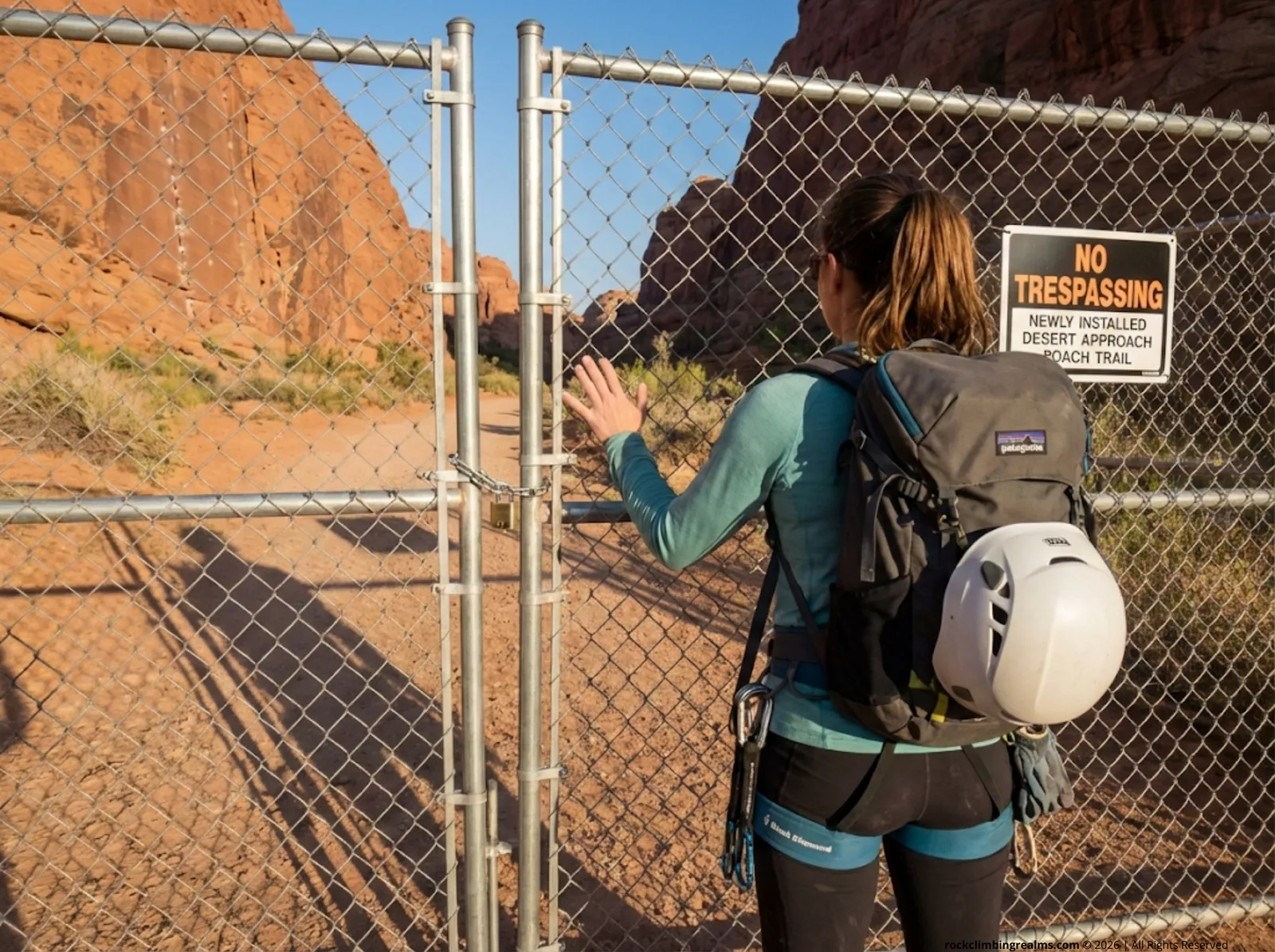
You pull into the familiar dirt lot at the base of your home crag — rack already sorted on the passenger seat — and there’s a chain across the approach trail. A fresh “No Trespassing” sign zip-tied to a padlocked gate. No warning, no public comment period, no explanation. Just a lock and fifty bolted routes on the other side of it.
I’ve walked up to that scene three times in fifteen years of climbing. Twice, nobody reported it. One of those crags is still gated. The third time, a group of us documented everything within 48 hours, contacted the Local Climbing Organization, and filed a formal report through the Access Fund. That crag reopened nine months later.
Here’s the exact process — who to contact, what evidence to collect, and how to file a report that actually gets results — so you never have to sit in your car wondering what to do while your favorite crag disappears.
⚡ Quick Answer: If you discover a climbing access issue, document it immediately with GPS coordinates, photos of any signs or barriers, and a count of affected routes. Contact your Local Climbing Organization (LCO) first, then file a report through the Access Fund’s dedicated reporting form. Be factual, specific, and offer stewardship — not complaints. Early, well-documented reports are the single biggest factor in whether a crag stays open or closes permanently.
Why Climbing Access Is Disappearing Faster Than You Think
The Numbers Behind Crag Closures
Nearly 60% of America’s climbing areas sit on federal lands managed by the BLM, USFS, or NPS — all subject to policy changes, budget cuts, and management plan revisions that most climbers never hear about until the gate goes up. Approximately 1 in 5 U.S. climbing areas is currently threatened with restrictions or permanent loss, according to the Access Fund, the national organization protecting climbing access.
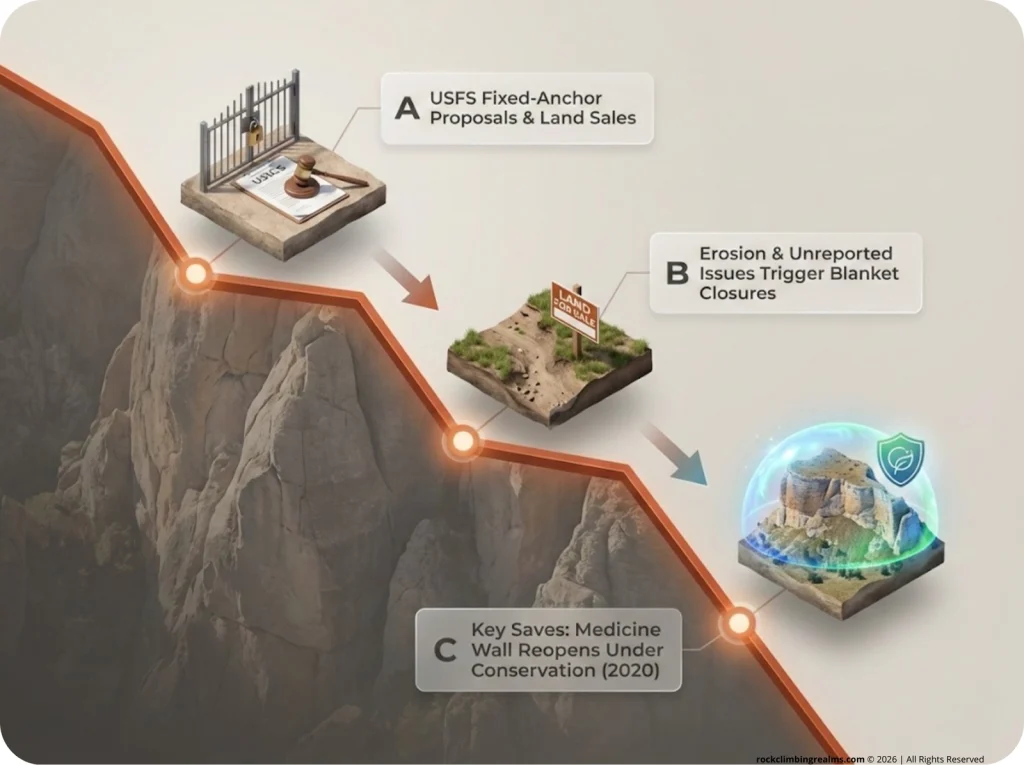
National forests host about 30% of those climbing areas, and recent USFS proposals on fixed-anchor policy could restrict safety hardware in wilderness zones. That means established routes with decades of climbing history could become effectively off-limits — not because the rock changed, but because the paperwork did. And public comment periods on Climbing Management Plans directly determine whether climbers keep access. Most climbers never submit one.
Pro tip: The closures that stick are the ones nobody reported in the first 72 hours. By the time you see it on Mountain Project, the land manager already made their decision.
What “Access Issue” Actually Means for Climbers
A climbing access issue isn’t about ADA compliance or website accessibility — though that’s what dominates the search results. For climbers, it means any barrier, restriction, or threat preventing sustainable climbing access to a crag or area. That includes gate installations, private-property postings, eroded approach trails, seasonal closures expanding beyond their original scope, and regulatory changes that quietly eliminate climbing use from management plans.
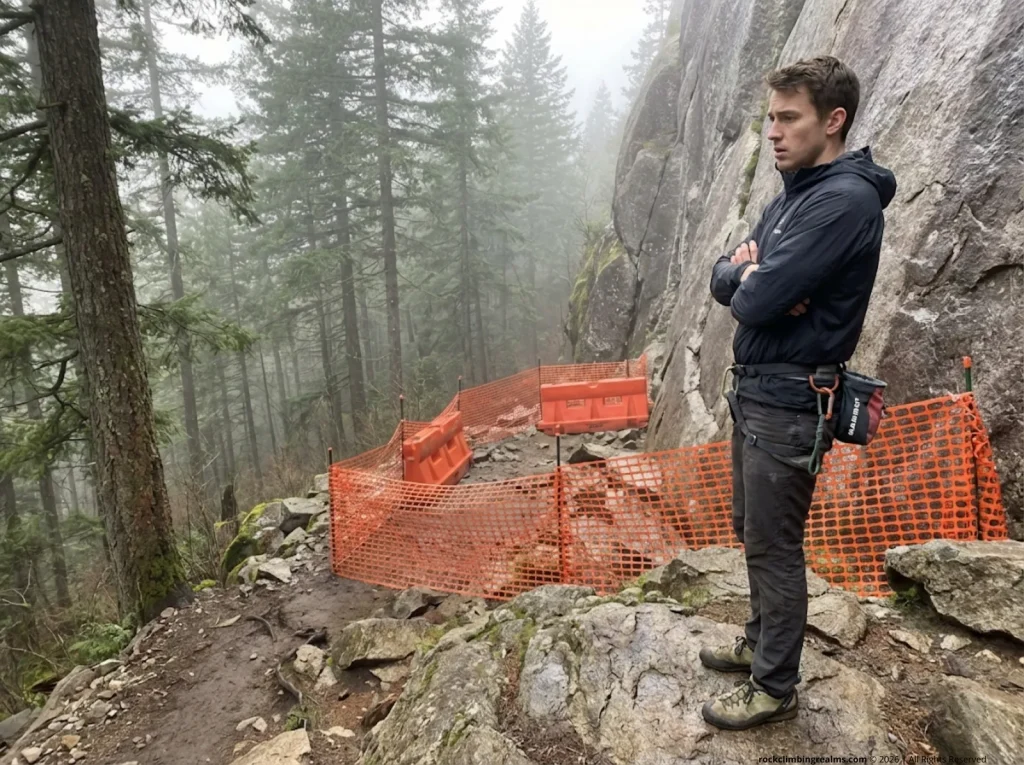
The critical distinction is between temporary and permanent threats. A raptor nesting closure with a defined spring window is science-based, legally mandated, and something you should respect — violations trigger permanent closures. But a “No Climbing” sign that appeared overnight on private land? That’s a different situation requiring a completely different response. Knowing which one you’re facing determines your first move.
The Domino Effect of Doing Nothing
When access issues go unreported, land managers interpret silence as indifference. No stakeholders means no reason to preserve climbing use. One uncontested closure sets precedent for neighboring areas under the same management district. Eroded trails, if left undocumented, trigger formal environmental complaints that lead to blanket closures.
Medicine Wall, Texas closed in 2015 when the private landowner locked the gate. Climber-led documentation, coordinated through the Texas Climbers Coalition and the Access Fund, drove a multi-year acquisition campaign. It reopened in 2020 under conservation protection. Without those early reports — filed through a clear complaint procedure with photos and route data — it stays gated.
Building Your Evidence Kit Before You File Anything
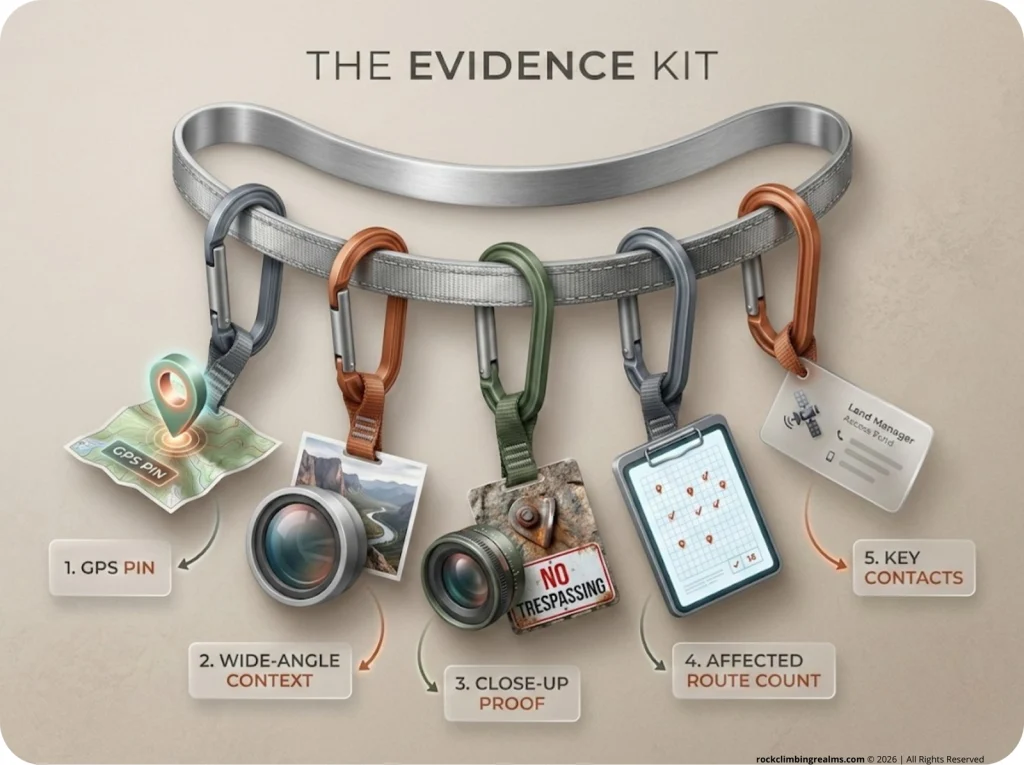
The Five Things Every Report Needs
Your report is only as strong as the evidence behind it. Here’s what you need before you contact anyone.
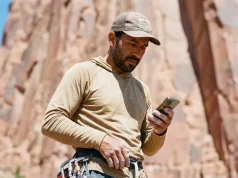
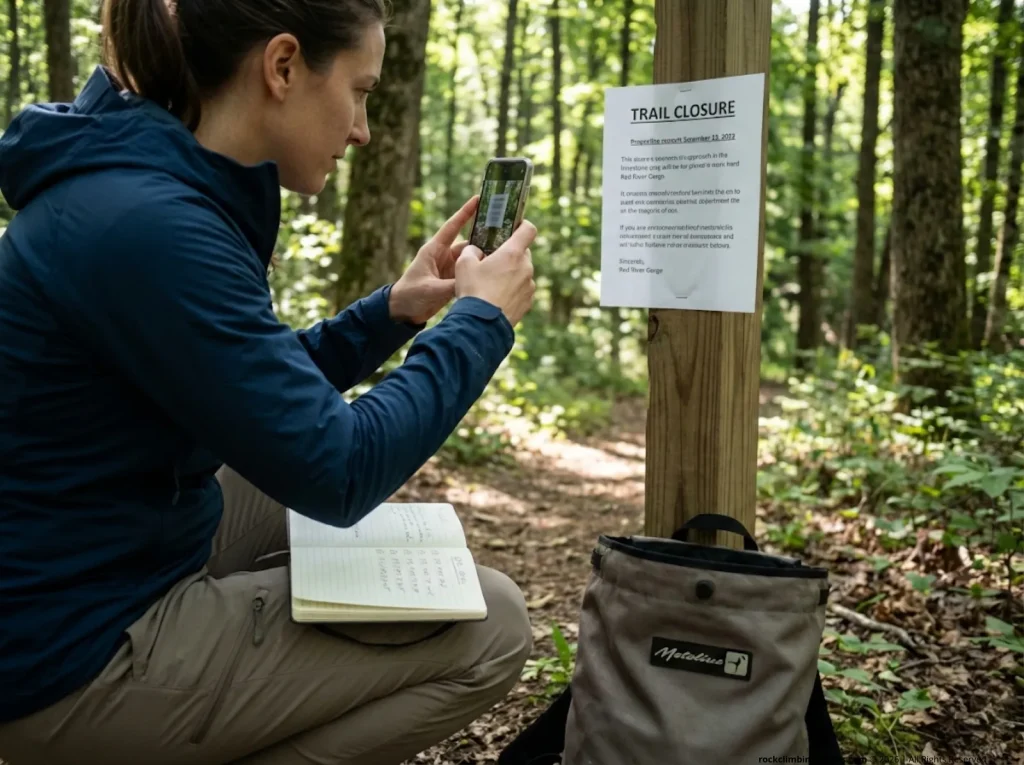
GPS coordinates in decimal degrees — not “the crag off Highway 12.” Drop a pin on your phone and screenshot it. Date and time observed. Clear photos: the sign or gate itself, the surrounding area showing established trails, and any posted notices with readable text. Include a screenshot of the exact wording — land managers want to see what’s posted, word for word.
Affected route count or area description — “This closure blocks access to 47 established sport routes on the south face” carries far more weight than “my crag is closed.” And your contact information. Name, email, phone. Anonymous reports carry zero weight with any federal agency or the Access Fund.
Pro tip: Take a wide-angle shot showing the sign in context, then a close-up of the text. Two photos, ten seconds, and your report goes from “someone complained” to “documented evidence.”
Documenting Impact Beyond “I Can’t Climb There”
Go beyond the barrier itself. Quantify community impact: How many climbers visit this area weekly? Are there training groups, youth programs, or guide services that depend on it? Describe the problem with specific safety implications — if this is the only outdoor crag within reasonable distance, loss means reliance solely on gym training with no real-rock risk management development.
Note any stewardship history. Has your LCO done trail maintenance days, clean-ups, or bolting work here? That documentation proves the climbing community is an active, responsible partner — not just a user group showing up with a list of demands. And collect witness climber statements from others who use the area. Collective reports carry exponentially more weight than a single voice.
What NOT to Do When You Find a Closure
Never ignore posted closures or trespass. Violations destroy the entire community’s reputation and can trigger permanent bans. Don’t confront the landowner or land manager emotionally on-site. Document silently, leave, and report through proper channels.
And don’t blast it on social media or Mountain Project before contacting the responsible party. Public pressure without private outreach first burns bridges that your LCO spent years building.
Who to Contact First (And in What Order)
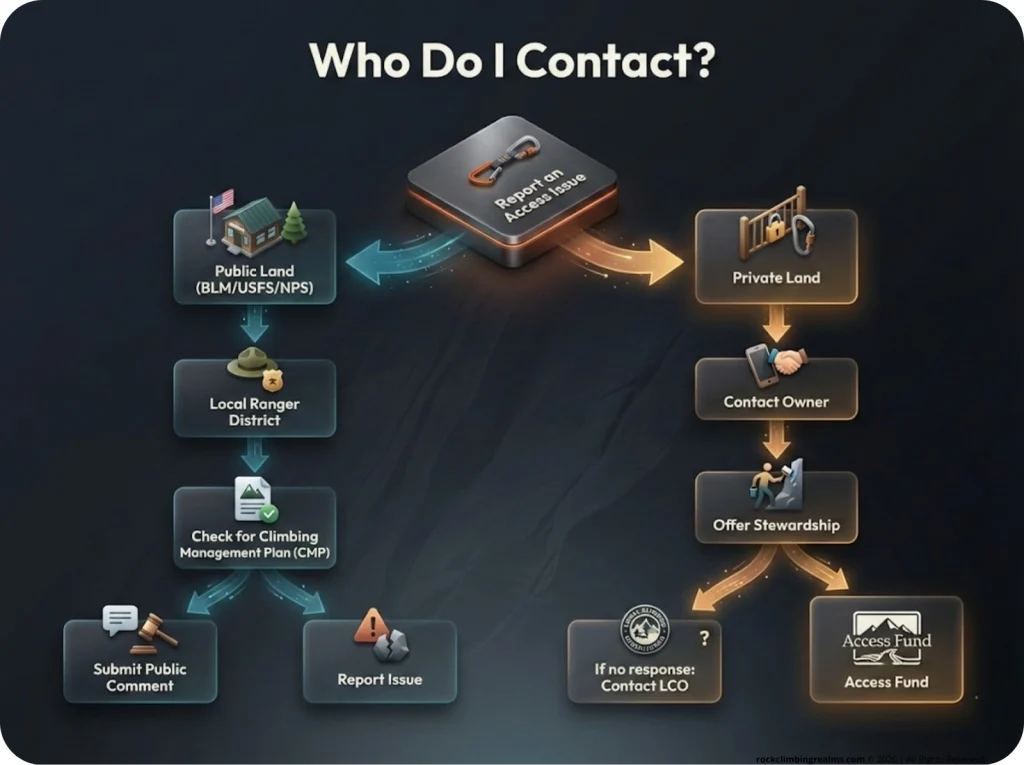
Public Land (BLM, USFS, NPS)
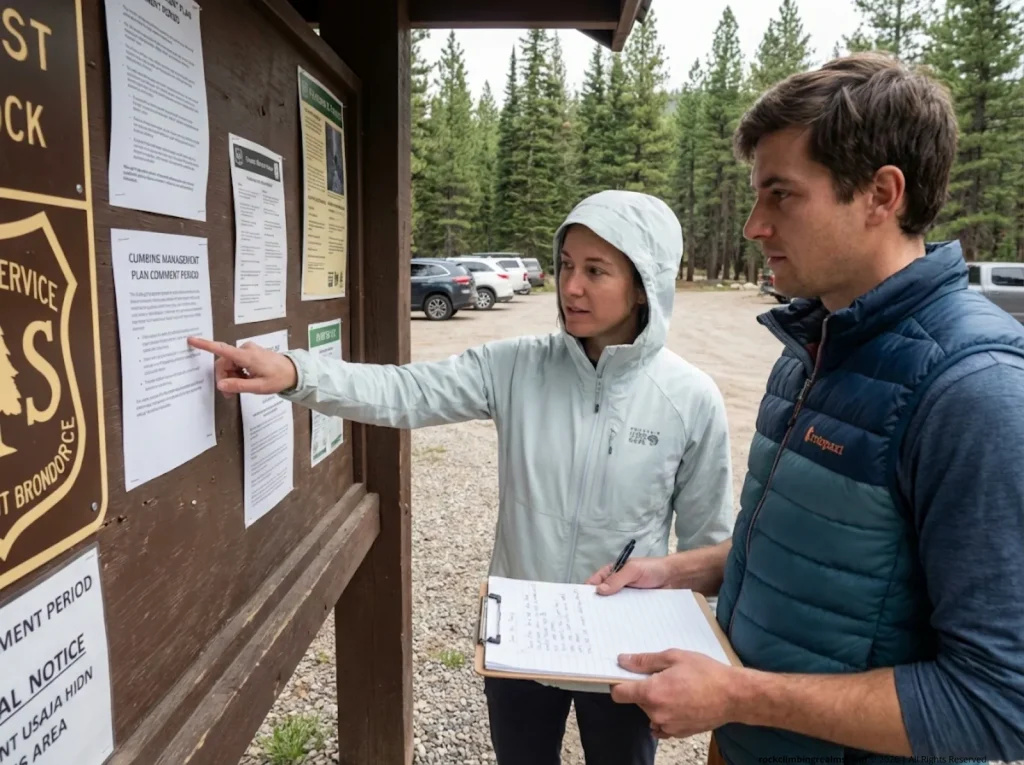
Identify the specific field office or ranger district — not the national headquarters. A report to the local BLM field office carries far more weight than a generic email to D.C. Check if a Climbing Management Plan exists for the area. If it does, your complaint submission should reference specific provisions that protect climbing use.
For NPS areas, reference the park’s National Park Service climbing management guidance and submit during any open public comment period. If you’re climbing in a national park, understanding how Joshua Tree’s permit system affects climbing access gives you a model for how federal management plans work in practice.
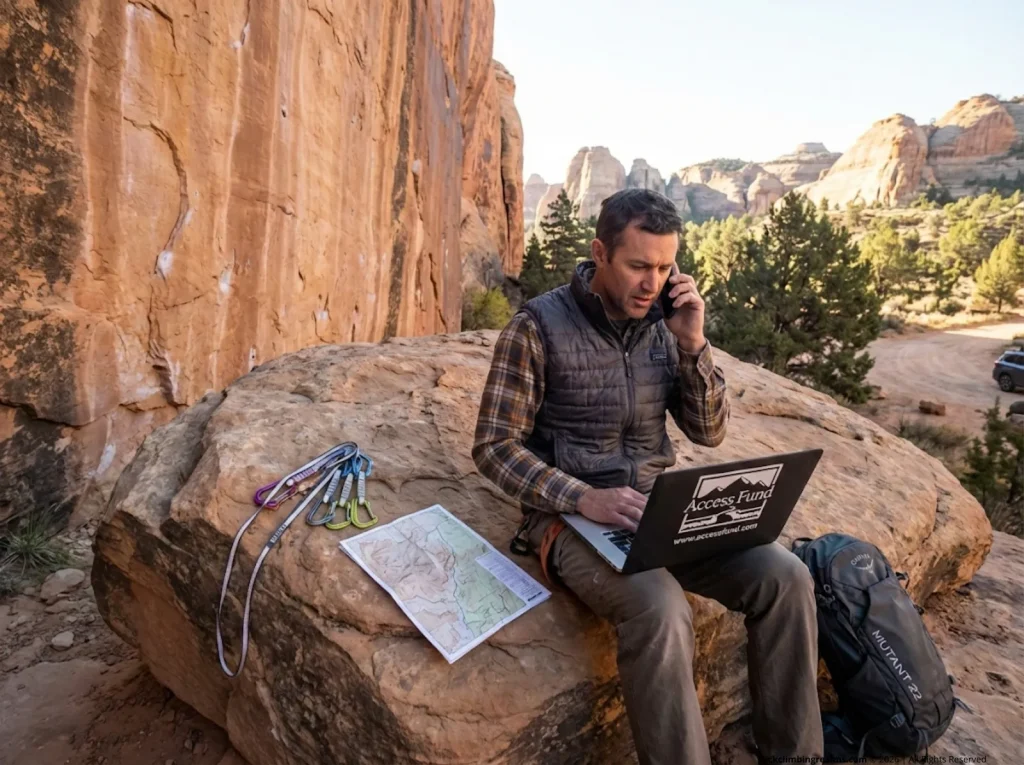
Pro tip: Always call the ranger station before emailing. A five-minute phone conversation establishes a relationship faster than any email thread. And when you do follow up in writing, you’re no longer a stranger — you’re the person they already spoke with.
Private Land
Contact the landowner directly and respectfully before any escalation. Introduce yourself as a local climber, acknowledge their property rights, and ask about their concerns. Nine times out of ten, it’s fear of lawsuits.
That’s where Recreational Use Statutes come in. Most states limit landowner liability when they allow free recreational access on their property. Understanding liability laws every climber must know about private land access can transform a confrontation into a conversation. Offer concrete stewardship: “Our local climbing group would be happy to maintain the approach trail and carry a liability waiver.” If direct contact fails, escalate to your LCO or the Access Fund.
Your Local Climbing Organization (LCO)
Use the Access Fund’s LCO finder to identify your local group. Local Climbing Organizations have existing relationships with land managers, legal frameworks, and advocacy infrastructure already in place. They know the ranger’s name. They’ve attended the land management meetings. They’ve already done the groundwork you’re trying to start from scratch.
If no LCO exists for your area, the Access Fund can connect you with the nearest regional organization or help you start one. Hit up the LCO first — locals have relationships that cold emails never build.
Filing Your Report Step by Step
The Access Fund Report Form
The Access Fund’s “Report an Access Issue” form at accessfund.org/report-an-access-issue is the single most important tool for national-level climbing access advocacy. Fill in every field: location, issue type, detailed issue description, photos, and your contact info.
Be factual, specific, and solution-oriented. “Gate installed blocking approach to Sector B, 47 routes affected, local LCO willing to discuss stewardship agreement” gets assigned to regional policy staff. “They closed my crag and it’s not fair” gets filed and forgotten.
The Access Fund triages reports by severity and assigns them to the right people — regional policy staff, legal resources, or the relevant LCO. Your job is to give them enough documentation to act fast.
Writing an Effective Email to a Land Manager
Subject line: clear, professional, location-specific. “Climbing Access Inquiry — [Crag Name], [County/District].” Not “COMPLAINT about trail closure!!!”
Open by identifying yourself, your connection to the area, and your LCO affiliation if you have one. State the issue factually in the body. Attach evidence — photos, GPS, route count. Reference any existing management plans or stewardship history. Close by offering to meet in person, volunteer for trail work, or attend a public meeting. Always thank them for their land management work — framing every interaction around shared goals changes the dynamic entirely.
Understanding the climber’s pact for ethical stewardship helps you write from a position of partnership, not entitlement. Never use the word “complaint” in your outreach. Use “inquiry” or “concern.” It changes the entire tone.
Following Up Without Being Ignored
Send a follow-up 7-10 days after your initial outreach. Keep detailed records of all communications: dates, names, responses, and any commitments made. If the land manager is unresponsive after two attempts, escalate to the Access Fund with your communication log attached. They have the policy staff and legal resources to push when individual climbers can’t.
Post-resolution, send a thank-you and document the outcome. The Access Fund tracks success stories of reopened areas — your data helps build the case for future advocacy.
Stewardship as Prevention (The Report You Never Have to File)
Adopt a Crag Before You Lose It
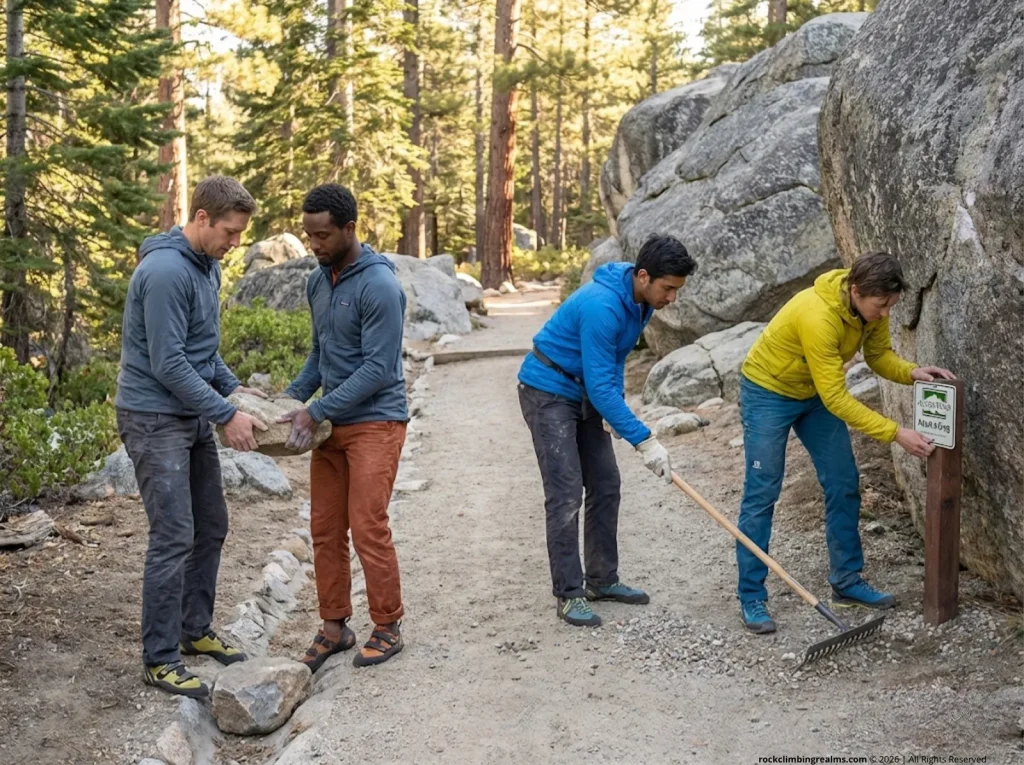
The Access Fund’s Adopt a Crag program lets climbing groups formally register stewardship commitments for specific areas. Registration signals to land managers that an organized community actively maintains and polices the crag. Since 1991, the Access Fund has awarded more than $1.6 million in Access Fund’s Climbing Conservation Grants supporting 495 projects — your next trail day could be funded.
Registration is free and takes 15 minutes. But it puts your crag on the Access Fund’s radar for priority support if issues arise. That’s the difference between scrambling to react and having an organization already in your corner.
Trail Days, Clean-Ups, and Showing Up
Organize or attend at least one stewardship event per season at your local crag. Document every event: photos, volunteer count, feet of trail restored. Over 65,000 feet of sustainable trails have been built through Access Fund-supported projects. Your 50 feet of trail work contributes to that record.
Caring about protecting the biological soil crusts around your crag isn’t just good ethics — it’s documented proof that the climbing community takes conservation seriously. Every trail day you photograph is evidence for the next time a land manager questions whether climbers deserve access.
Pro tip: Always offer to help with trail work or clean-up in your first email to a land manager. It shows you’re part of the solution, not another user demanding services. “Steward or lose it” isn’t just a slogan — it’s the pattern behind every crag that’s still open today.
Building Relationships That Prevent Closures
Attend local land management meetings, even when climbing isn’t on the agenda. Being a familiar face builds trust. Invite rangers and managers to climbing events — competitions, trail days, educational clinics. Share stewardship reports and event summaries with the managing agency annually.
The most effective access protection isn’t a lawsuit or a petition. It’s a land manager who already knows and respects your climbing community. That relationship is your insurance policy against the next surprise gate.
When Reporting Works (Real Success Stories)
Medicine Wall, Texas
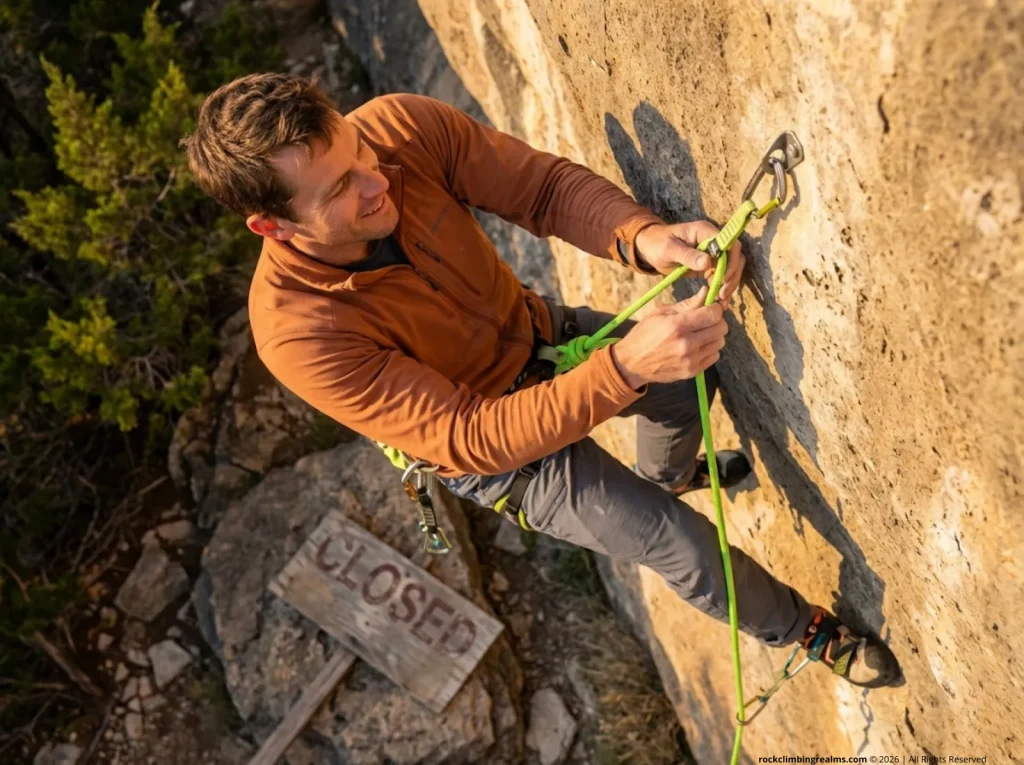
Closed in 2015. Private landowner, padlocked gate, zero warning. The Texas Climbers Coalition and the Access Fund coordinated a multi-year campaign: evidence gathering, landowner outreach, and acquisition negotiations. The catalyst was climbers who reported the closure immediately — with GPS coordinates, route inventories, and community impact data. Medicine Wall reopened in 2020 under permanent conservation protection.
Crag Acquisitions and Conservation Easements
The Access Fund has purchased and conserved 93+ climbing areas nationwide and helped protect over 4 million acres of public land containing climbing resources. Every acquisition started with a report — a climber noticing a threat and picking up the phone. Understanding the science behind raptor nesting closures shows how constructive collaboration between climbers and wildlife agencies produces outcomes that work for everyone.
The crags your kids will climb on exist because someone filed a report. What you file today determines what exists in 2046.
Conclusion
Three things separate the crags that survive from the ones that disappear. First, immediate documentation — GPS, photos, route count, impact statement. A report without evidence is just an opinion. Second, contacting the right people in the right order — LCO first, then land manager, then Access Fund. Relationships beat petitions every time. Third, stewarding before you have to report. Adopt a Crag, show up for trail days, build trust. The best access fight is the one that never happens.
Right now, open your phone, pull up the Access Fund’s Report an Access Issue form, and bookmark it. The next time you drive up to a crag and find something wrong, you’ll know exactly what to do.
Now go send something — and protect the crags that let you do it.
FAQ
How do I report a climbing access issue?
Start by documenting the issue with GPS coordinates, photos of any signs or barriers, a count of affected routes, and a written description. Then contact your Local Climbing Organization or file a report through the Access Fund’s online complaint form at accessfund.org/report-an-access-issue. Include your contact information — anonymous reports rarely lead to action.
What should I do if my favorite crag is on private land and the owner posts No Trespassing?
Do not trespass. Contact the landowner respectfully and ask about their concerns — often it’s liability fear, which Recreational Use Statutes in most states already address. Offer stewardship like trail maintenance and liability waivers, and connect them with your LCO or the Access Fund for guidance.
How long does it take to resolve a climbing access issue?
Timelines vary widely. Simple misunderstandings with land managers can resolve in weeks. Private land disputes may take months of negotiation. Full-scale closures requiring land acquisition — like Medicine Wall, TX — can take years of sustained advocacy. The common factor in every success story is an early, well-documented report.
Can I file an access report for a seasonal closure like raptor nesting?
Seasonal wildlife closures are science-based and legally mandated — respect them, because violations trigger permanent closures. However, if you believe a seasonal closure is outdated, overly broad, or unsupported by current wildlife data, report your observations to your LCO and the Access Fund so they can engage the managing agency using scientific evidence.
What’s the difference between the Access Fund and a Local Climbing Organization?
The Access Fund is the national advocacy organization with policy staff, legal resources, and land acquisition capability. Local Climbing Organizations (LCOs) are grassroots groups that handle crag-specific stewardship, community organizing, and local land manager relationships. They work together — LCOs handle the ground game, and the Access Fund provides national leverage when escalation is needed.
Safety Notice: Rock climbing and mountaineering are inherently high-risk
activities that can involve physical trauma or fatal incidents. The information on Rock Climbing Realms is for
educational and informational purposes only. Techniques and advice presented here are not a substitute
for professional, hands-on instruction. Conditions and risks vary by location. Always seek guidance
from a qualified instructor before attempting new techniques. By using this website, you agree that you
are solely responsible for your own safety. Any reliance you place on this information is strictly
at your own risk, and you assume all liability for your actions. Rock Climbing Realms and its authors
will not be held liable for any harm, damage, or loss sustained in connection with the use of this information.
Affiliate Disclosure: We are a participant in the Amazon Services LLC Associates Program, an
affiliate advertising program designed to provide a means for us to earn advertising fees by advertising and linking
to Amazon.com. As an Amazon Associate, we earn from qualifying purchases. We are also an official affiliate partner
of Black Diamond Equipment via the AvantLink network. If you click on a Black Diamond affiliate link and make a
purchase, we may earn a commission at no additional cost to you. We also participate in other affiliate programs.
Additional terms are found in the terms of service.