
In this article
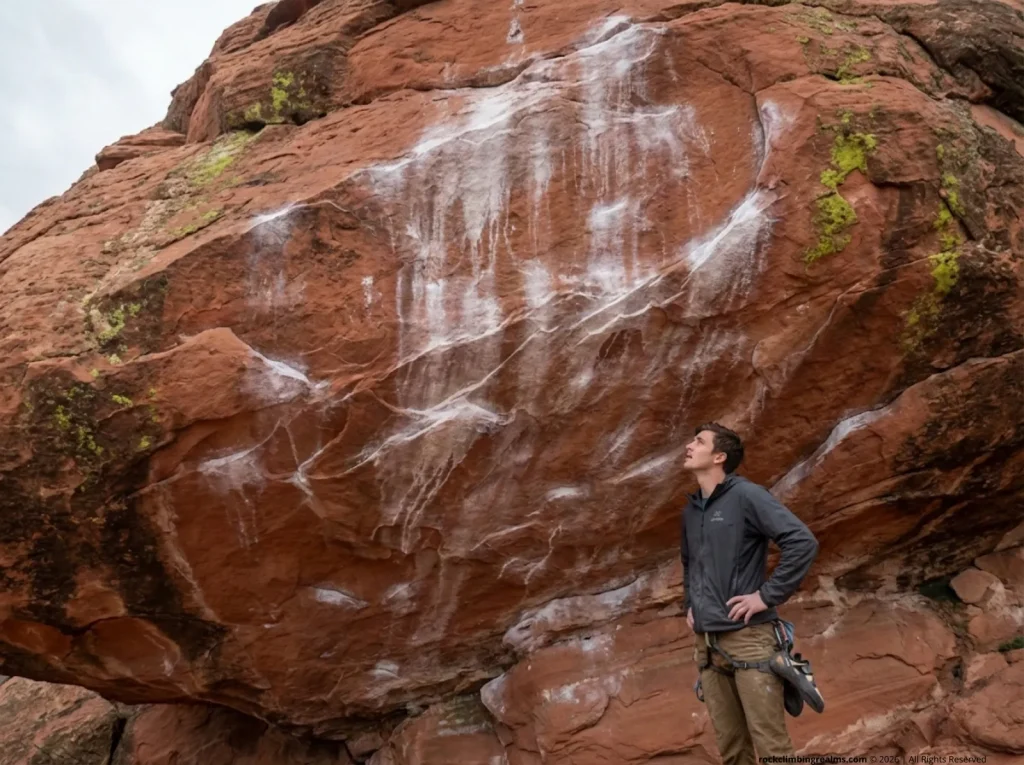
The white streak ran twenty feet down the sandstone face. Someone had dumped a water bottle over a classic V5, and now the whole thing looked like a bird colony had moved in. That chalk wasn’t cleaned. It was redistributed. And the rock paid for it.
I’ve spent more hours scrubbing boulders than I’d care to admit. After organizing three crag cleanup events in the last year alone and testing every removal method from dry brushing to dilute vinegar on four different rock types, I can tell you this: most climbers mean well but get the technique dead wrong. The damage shows up within hours, and sometimes it’s permanent.
This guide breaks down exactly how to remove climbing chalk from rock without destroying the surface, polluting waterways, or making the problem worse. Whether you’re cleaning after a casual session or organizing a full-scale chalk cleanup party, the method matters more than the effort.
⚡ Quick Answer: Brush holds dry with a soft-bristle brush (boar’s hair or nylon — never wire) after every send. For heavy chalk buildup, use a squirt bottle aimed directly at the residue while pressing a towel against the rock below to catch all runoff. Target 90-95% removal. Never hose, never pressure wash, and never let chalky water run into soil or streams.
Why Chalk Cleanup Actually Matters (It’s Not Just Cosmetic)
The Invisible Damage You Can’t See
Here’s something that will change how you look at a “clean” boulder. A peer-reviewed study in Ecology and Evolution on climbing chalk impacts to ferns and mosses found that 65% of sampling points with no visible chalk traces still showed elevated magnesium carbonate concentrations above ecological thresholds. The rock looked clean. It wasn’t.
That invisible residue shifts the surface pH and messes with nutrient availability for rock-dwelling organisms. Fern and moss germination rates dropped significantly — and these are the species that stabilize micro-ecosystems on the rock you climb. If the holds look fine but you’ve been chalking them for years, the damage is already there. You just can’t see it.

Runoff Wrecks More Than Rock
Every storm drain connects directly to local streams. When you hose a boulder, that chalky water doesn’t just disappear — it alters aquatic chemistry downstream. University of North Carolina Environment, Health & Safety guidelines on chalk runoff make this explicit: do not use hoses or pressure washers on paved or rock surfaces. Period.
It gets worse in sheltered spots. Overhangs and caves never see rain, so chalk buildup accumulates indefinitely. And when that chalky water sits on soil, it can form hydromagnesite crusts — hard, mineral deposits that impair plant growth for years. The “just let rain wash it off” excuse works for exposed faces. It fails everywhere else.
Access Is on the Line
Visible chalk damage is one of the top complaints from land managers considering climbing bans. Tick marks — those little chalk arrows you leave for beta — look like graffiti to non-climbers. Land managers don’t care whether your marks point to a sick crimp. They see vandalism. And that perception can shut down access faster than any bolt war.
The Access Fund stewardship recommendations for chalk use tie chalk management directly to long-term access. When you brush your ticks, you’re not just being polite. You’re protecting the climber’s pact for responsible crag stewardship that keeps crags open.
Pro tip: Brush your ticks immediately after finishing a problem — not at the end of the session. Dried chalk bonds harder to rock within hours, and what takes five seconds now takes five minutes later.
The Right Tools for Chalk Cleanup (And the Ones That Wreck Everything)
Brushes That Work
The right brush makes all the difference. You want soft-bristle brushes — boar’s hair, nylon, or natural fiber. Boar’s hair is the gold standard for sandstone and soft rock because it creates friction without mechanical abrasion. Nylon works well on granite and harder surfaces.
Carry a dedicated crag brush with a long handle. Those tiny gym brushes with three-inch handles don’t reach outdoor holds effectively. Metolius makes a solid wooden-handled brush that’s purpose-built for the job. If you’re serious about the mechanics of brushing holds for maximum friction, investing in the right tool is step one.
Why Wire Brushes Are Off Limits
Wire brushes permanently damage soft rock textures. They polish holds smooth, which is the opposite of what you want. Even on granite, wire leaves micro-scratches that actually attract more chalk absorption over time. One climber on Mountain Project summed it up perfectly: “Used a wire brush on sandstone and polished the holds smooth.” That damage is forever.
The Squirt-and-Towel Kit
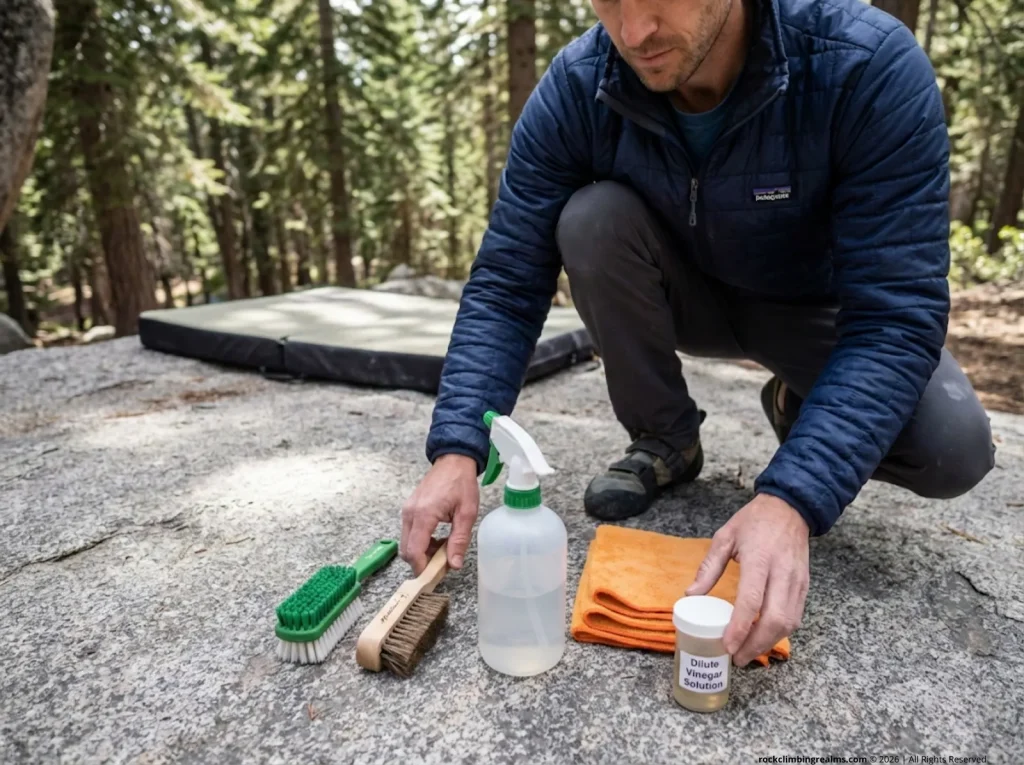
For anything beyond daily brushing, you need three things: a garden squirter bottle (small, portable, controlled spray), microfiber towels (absorbent enough to catch dissolved chalk before it runs), and optionally a dilute vinegar solution (one part white vinegar to two parts water) for stubborn crystallized residue.
That vinegar mix dissolves hardened magnesium carbonate better than plain water because the mild acid breaks down the mineral. It’s safe when diluted and rinsed on most rock types. But test a small area first on any rock you haven’t cleaned before, and avoid using it on limestone entirely. Limestone is carbonate rock. The acid dissolves the rock itself.
Pro tip: Carry a small bucket and rinse your towels over it. Never dump chalky water on the ground near the crag. Bag it and carry it out.
Daily Chalk Protocol (What to Do After Every Send)
Brush Your Ticks Before You Walk Away
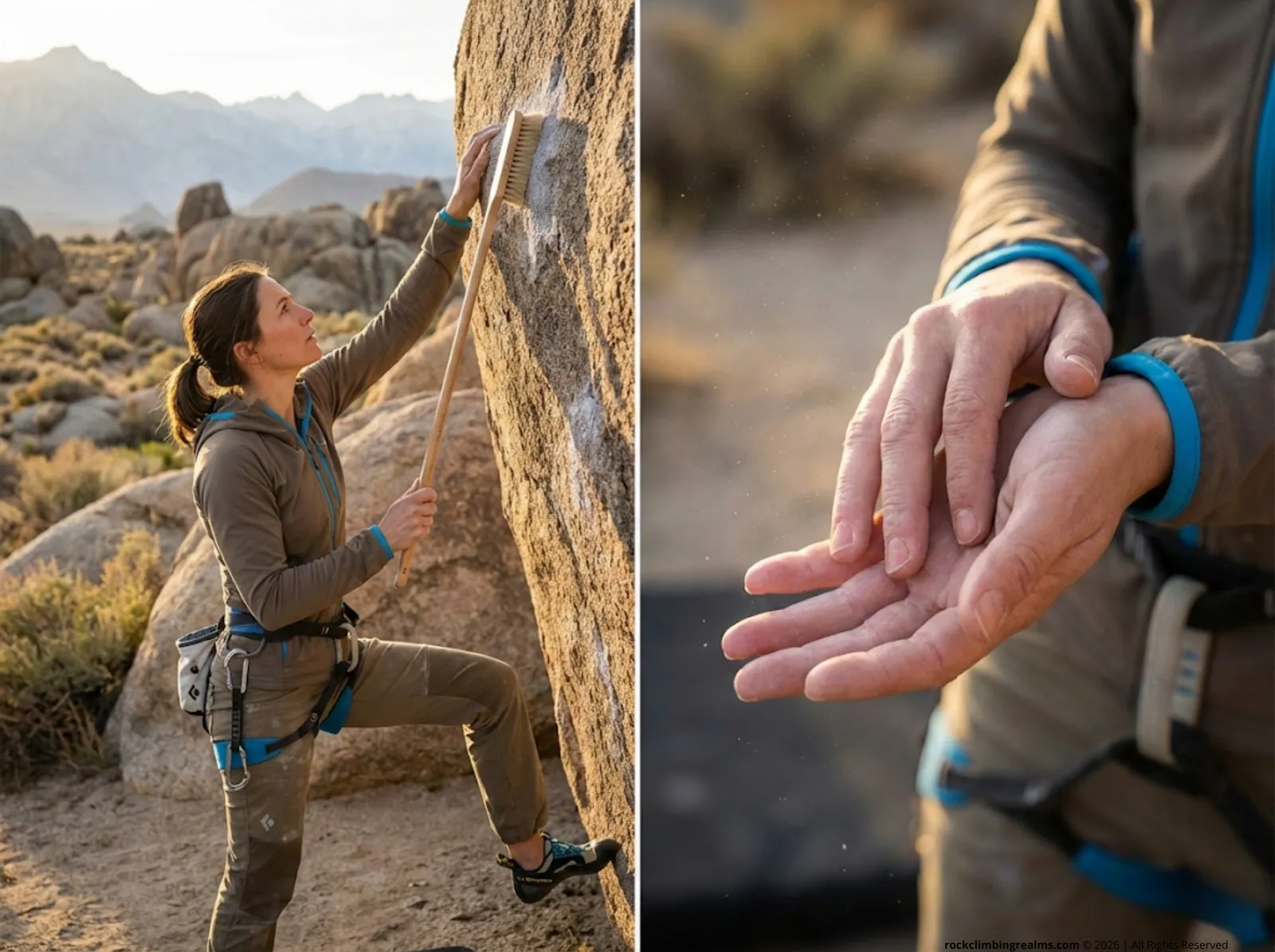
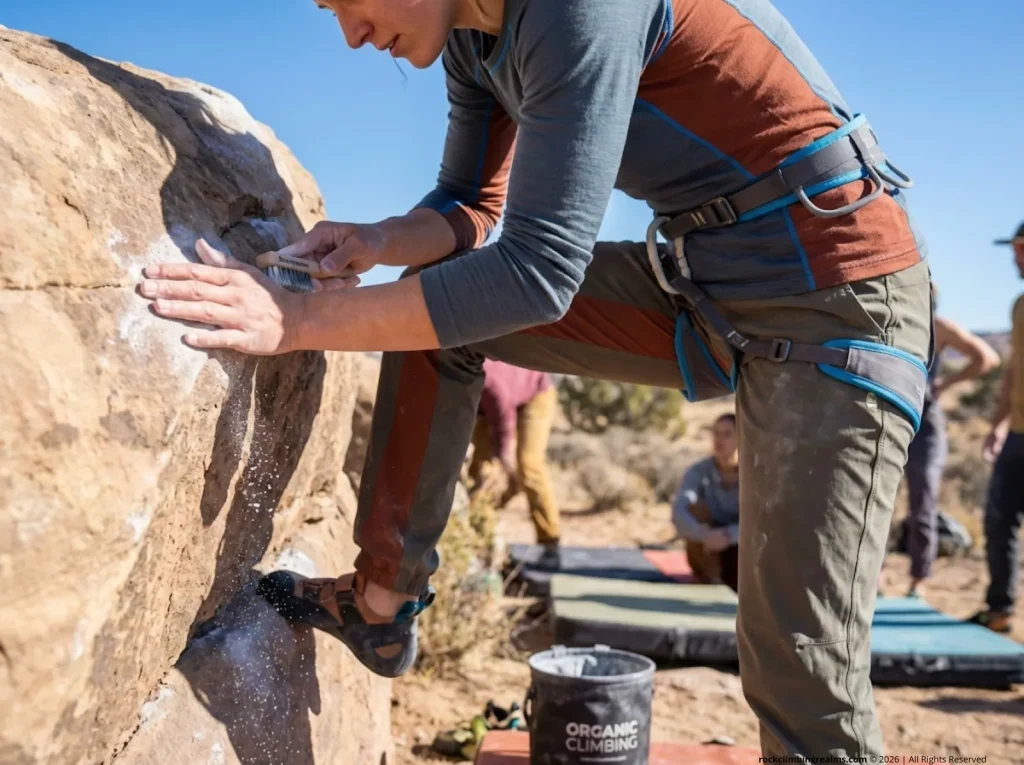
This is the single most effective habit in chalk cleanup best practices, and it takes thirty seconds. After finishing your session, brush every hold you chalked and erase every tick mark you left. Use downward strokes from top of hold to bottom — don’t push chalk deeper into the rock texture.
“Brush your ticks or you’re part of the problem.” That phrase shows up in every crag stewardship guide for a reason. It’s the minimum standard.
Minimize at the Source
You can cut future cleanup work by 90% with smarter chalk habits. Chalk balls and eco-chalk reduce airborne dust and over-application compared to loose chalk. Liquid chalk applies a thinner, more adhesive layer with less residue. And colored chalk (matched to local rock tone) reduces visual impact in sensitive zones.
One climber I know switched to liquid chalk on desert projects after seeing ghosting on classic V5s in the Buttermilks. The difference in residue was visible within a single session. If you’re climbing in areas with gym climbing etiquette rules including chalk brushing, these same habits transfer directly from indoor walls to outdoor rock.
The 90% Rule
Full 100% removal from every session is unnecessary and risks damaging rock texture through over-scrubbing. Target a 90% clean target with a soft brush after each attempt. Rain handles the rest on exposed faces. But sheltered overhangs and caves need deliberate cleanup — chalk accumulates indefinitely in spots where water never reaches.
Deep Cleanup on Outdoor Rock (The Zero-Runoff Method)
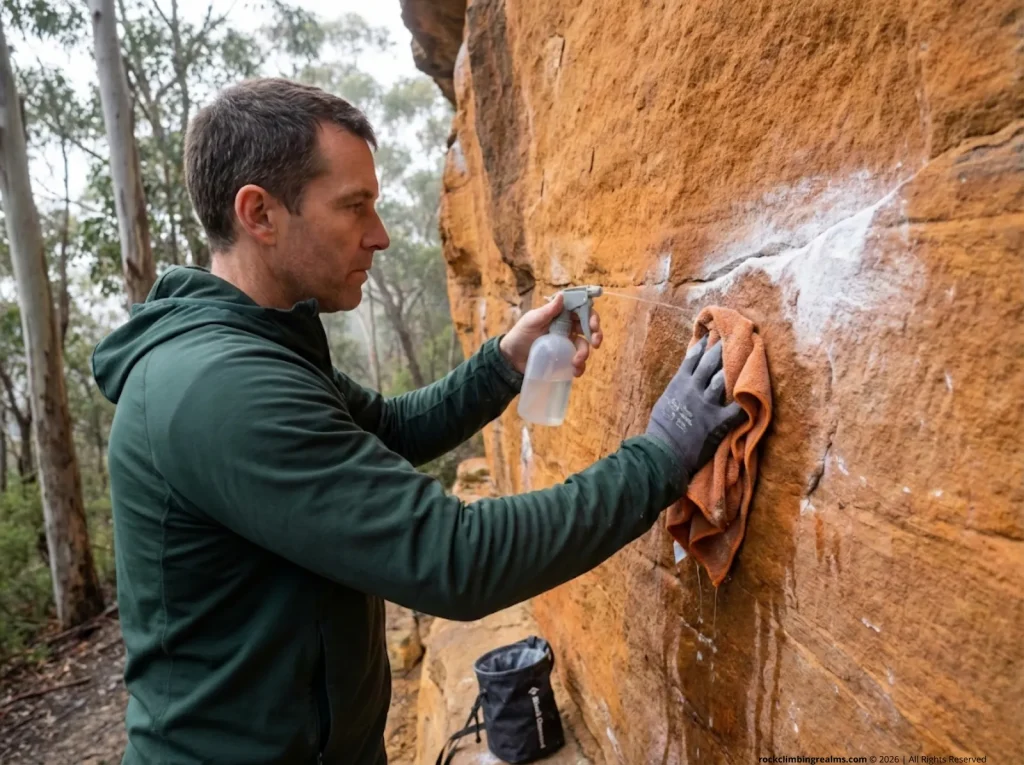
Step 1 — Dry Brush First
Always start dry. Remove all loose chalk dust with a soft brush before introducing any moisture. Work top-to-bottom so gravity moves loosened particles away from the hold. Bag the dry dust for regular trash — don’t let it blow downwind onto soil or water.
For large events using more than three pounds of chalk, UNC’s guidelines require an indoor floor buffer and indoor wastewater disposal. Scale matters.
Step 2 — Targeted Squirt and Towel Catch
This is the technique that separates good cleanup from bad. Hold the towel directly under the hold, tight against the rock face. Squirt a small amount of water directly onto the chalk — just enough to dissolve, not stream.
The towel catches all dissolved chalk before it runs. That’s the key. No water should run down the rock. The Australian Climbing Association NSW tested this method and recorded about 95% visible chalk residue removal without creating runoff streaks. The Grampians volunteer crews used exactly this technique to remove years of buildup in a single session.
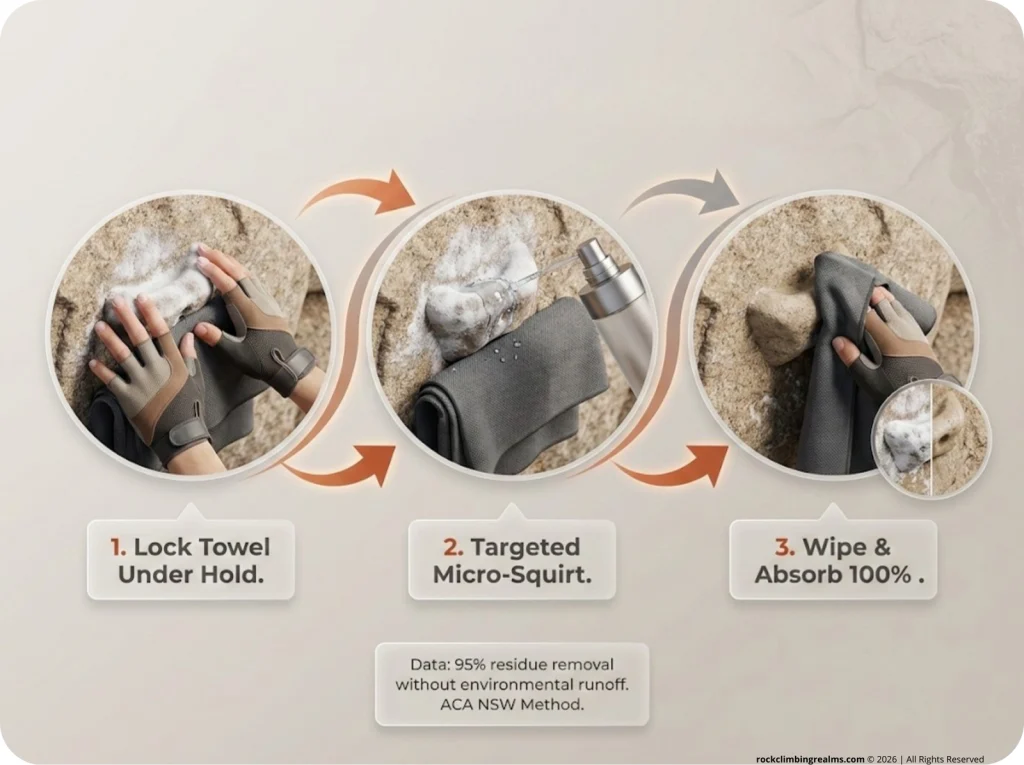
Step 3 — Vinegar for Stubborn Crystallized Chalk
When water alone won’t cut it, the dilute vinegar solution breaks down crystallized buildup that’s bonded to the rock surface. The mild acid dissolves the hardened chalk into harmless byproducts that rinse away clean. Simple and effective.
Two warnings that save rock: test a two-inch area first on any rock type you haven’t cleaned before. And National Park Service chalk-color matching rules at Arches remind climbers that NPS takes chalk visibility seriously — if you’re cleaning in a national park, follow their protocol to the letter. Always rinse with clean water after the vinegar pass to prevent any residue from sitting on the surface.
Pro tip: For big cleanups, notify the local climbing Facebook group so nobody shows up the next day to climb wet rock. One day of drying time saves a lot of frustration.
Heritage Sites and Land Manager Protocols
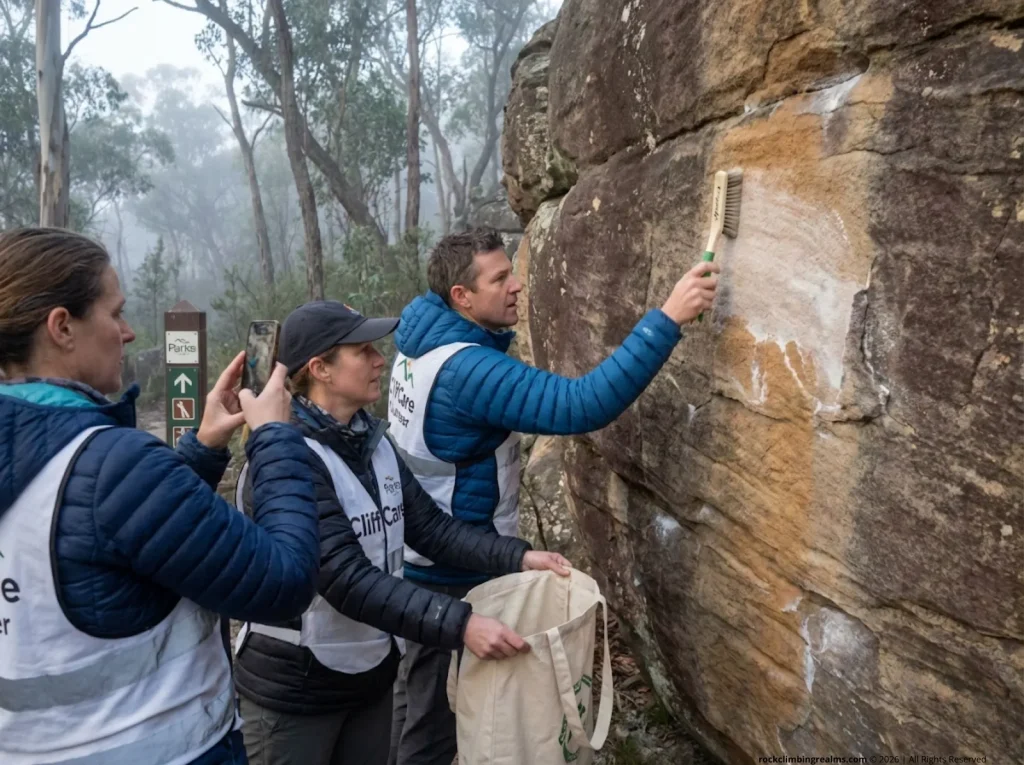
When Chalk Covers Something Sacred
In areas like the Grampians in Australia, chalk buildup may directly overlie Aboriginal rock art that’s thousands of years old. Aggressive scrubbing without specialist guidance can permanently destroy underlying cultural heritage that you can’t even see until it’s too late.
CliffCare ran volunteer crews in the Grampians that demonstrated the towel and squirter method safely removes years of buildup in minutes — but only after formal land manager consultation with Parks Victoria and rock-art specialists. Their message was blunt: “The issue here is that what lies beneath the chalk could be sensitive. We need to do it the right way and with the right skills.”
This isn’t just an Australian problem. Any crag near indigenous sites, historic formations, or culturally significant features demands the same care.
How to Organize a Crag Cleanup
Contact your local climbing coalition or how the Access Fund protects climbing areas chapter before organizing group cleanups. Document before-and-after with photos — that evidence is what keeps climbing access open during land management reviews.
Carry all wastewater out in sealed containers. Never dump on ground, never allow into drains. And coordinate with your community so the freshly cleaned rock has time to dry before anyone tries to climb on it.
Gym vs. Crag — The Key Differences
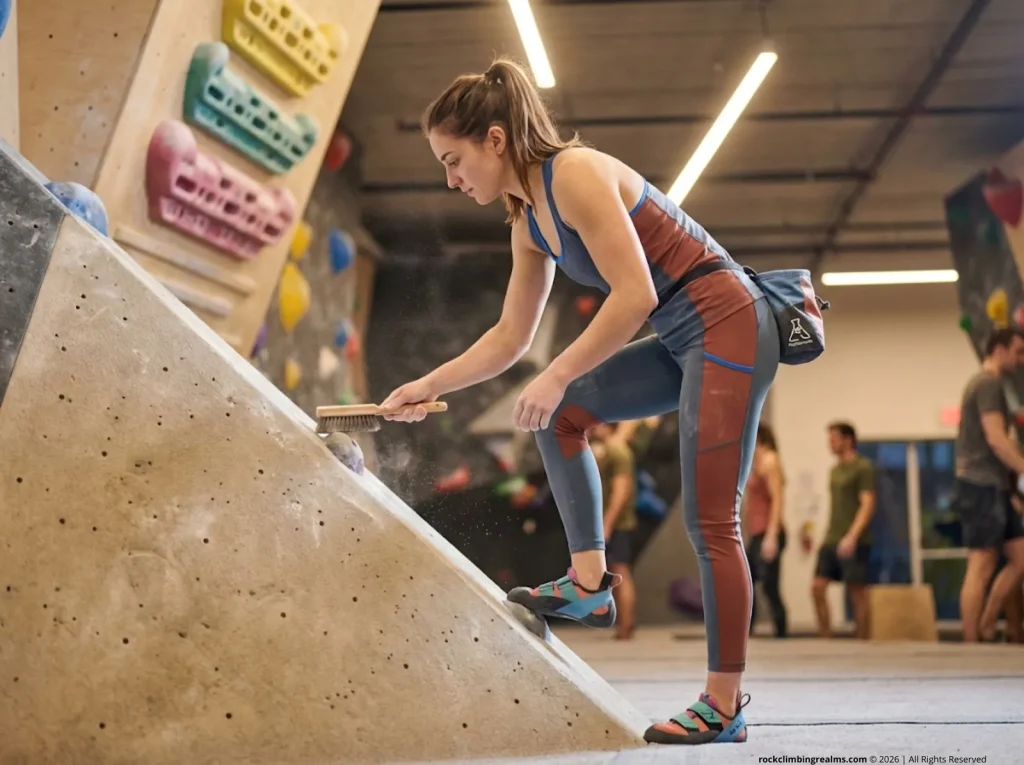
Indoor Hold Cleaning
Climbing holds get deep-cleaned on a rotation schedule at most gyms — typically every reset cycle, every four to eight weeks. Between resets, climbers should still brush holds after sessions to maintain friction and reduce chalk loading for the next person.
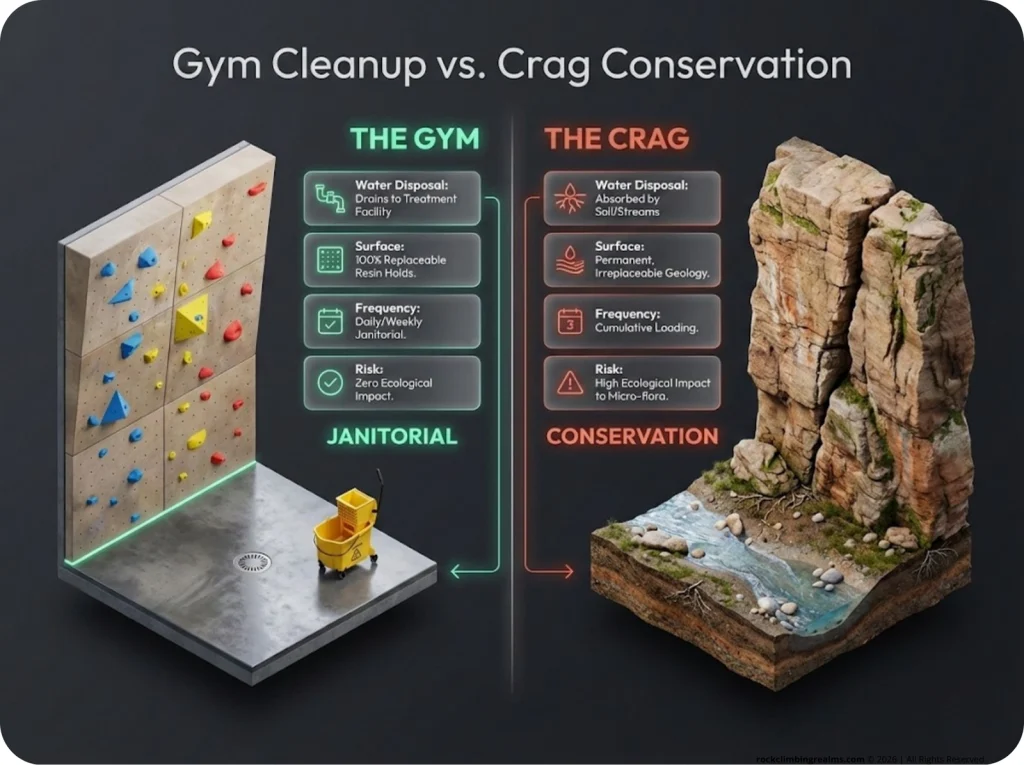
The big difference: gyms have infrastructure. Vacuum cleaners handle the floors. Mops clean the indoor mats. Wastewater goes through normal plumbing, not storm drains. So water-based cleanup is perfectly fine indoors. If you’re looking at what to look for when choosing a climbing gym, air quality and chalk dust management are worth asking about.
Why Outdoor Rock Is Different
Outdoors, there’s zero infrastructure. No drains, no mops, no plumbing. Every drop of water stays on the rock or runs into soil and streams. Natural rock texture is irreplaceable — gym holds get manufactured new, but sandstone features worn smooth are gone permanently.
Environmental loading is cumulative. A gym can mop chalk dust daily and order new holds next month. But a crag absorbs magnesium into its geology permanently. The comparison that clicks: gym cleanup is janitorial. Crag stewardship is conservation.
Conclusion
Three things to carry with you from here. First, brush your chalk and tick marks after every session. It takes thirty seconds and prevents 90% of long-term damage. Second, when deep cleaning, use the squirt-and-towel method with zero runoff — never hose, never pressure wash, never dump water. Third, the rock you climb on isn’t just a surface. It’s a micro-ecosystem carrying invisible magnesium loads that affect organisms you’ll never see.
Next time you finish a session, spend half a minute brushing the holds clean. That small habit protects the rock, the access, and the next climber’s experience. The crag was here before us. Make sure it stays worth climbing.
FAQ
Can you just let rain wash chalk off outdoor rock?
Rain removes surface chalk on exposed faces, but sheltered overhangs and caves never get rained on. Chalk buildup accumulates indefinitely in those spots and requires manual removal. Even on exposed rock, invisible magnesium residue persists after the visible chalk disappears.
Does liquid chalk leave less residue than loose chalk?
Yes. Liquid chalk applies a thinner, more adhesive layer that absorbs into skin rather than coating the rock surface. It produces significantly less airborne chalk dust and visible residue than loose chalk or chalk blocks.
How often should you clean climbing holds at a gym?
Gym holds get deep-cleaned every reset cycle, typically every four to eight weeks. Between resets, climbers should brush holds after sessions to maintain friction. Gym floors and mats benefit from daily vacuuming to reduce ambient chalk dust in the air.
Is climbing chalk bad for the environment?
Climbing chalk (magnesium carbonate) raises rock surface pH, impairs germination of rock-dwelling plants, and its runoff alters aquatic chemistry in nearby streams. A 2020 peer-reviewed study found that even clean-looking rock carried elevated magnesium at ecologically harmful levels. Responsible use and cleanup minimize but don’t eliminate the impact.
What should you do with chalk-contaminated water after cleanup?
Carry all chalk-contaminated wastewater out in sealed containers. Never dump it on the ground near the crag, and never allow it into storm drains or streams. At indoor facilities, dispose through normal plumbing, not outdoor drains.
Safety Notice: Rock climbing and mountaineering are inherently high-risk
activities that can involve physical trauma or fatal incidents. The information on Rock Climbing Realms is for
educational and informational purposes only. Techniques and advice presented here are not a substitute
for professional, hands-on instruction. Conditions and risks vary by location. Always seek guidance
from a qualified instructor before attempting new techniques. By using this website, you agree that you
are solely responsible for your own safety. Any reliance you place on this information is strictly
at your own risk, and you assume all liability for your actions. Rock Climbing Realms and its authors
will not be held liable for any harm, damage, or loss sustained in connection with the use of this information.
Affiliate Disclosure: We are a participant in the Amazon Services LLC Associates Program, an
affiliate advertising program designed to provide a means for us to earn advertising fees by advertising and linking
to Amazon.com. As an Amazon Associate, we earn from qualifying purchases. We are also an official affiliate partner
of Black Diamond Equipment via the AvantLink network. If you click on a Black Diamond affiliate link and make a
purchase, we may earn a commission at no additional cost to you. We also participate in other affiliate programs.
Additional terms are found in the terms of service.