
In this article
The crash pad shuddered under someone else’s landing — two feet from my head. I was sitting against the bouldering wall, chalking up between attempts, completely unaware that a climber above me had just peeled off an overhang. No warning. No “falling.” Just a 160-pound body slamming into the foam where my skull had been a second earlier.
That was my third week climbing. Nobody had told me the most basic rule in the climbing gym: never sit in a fall zone. After five years of sessions, route-setting conversations, and a few close calls that still make my palms sweat, I’ve watched hundreds of new climbers walk in and break the same rules I did — not because they’re rude, but because nobody explains this stuff.
Here are the 9 gym climbing etiquette rules most people break without realizing it, why each one exists, and how to handle things when someone else gets it wrong.
⚡ Quick Answer: Gym climbing etiquette comes down to spatial awareness, communication, and respect for shared space. The biggest rules: never stand in a fall zone, wait your turn on routes, don’t give unsolicited beta, brush holds after climbing, never distract a belayer, and handle conflicts like a steward — not a gatekeeper. Most of these rules exist because someone got hurt or stopped coming back.
The Fall Zone Is a Three-Dimensional Space (Not Just the Floor)
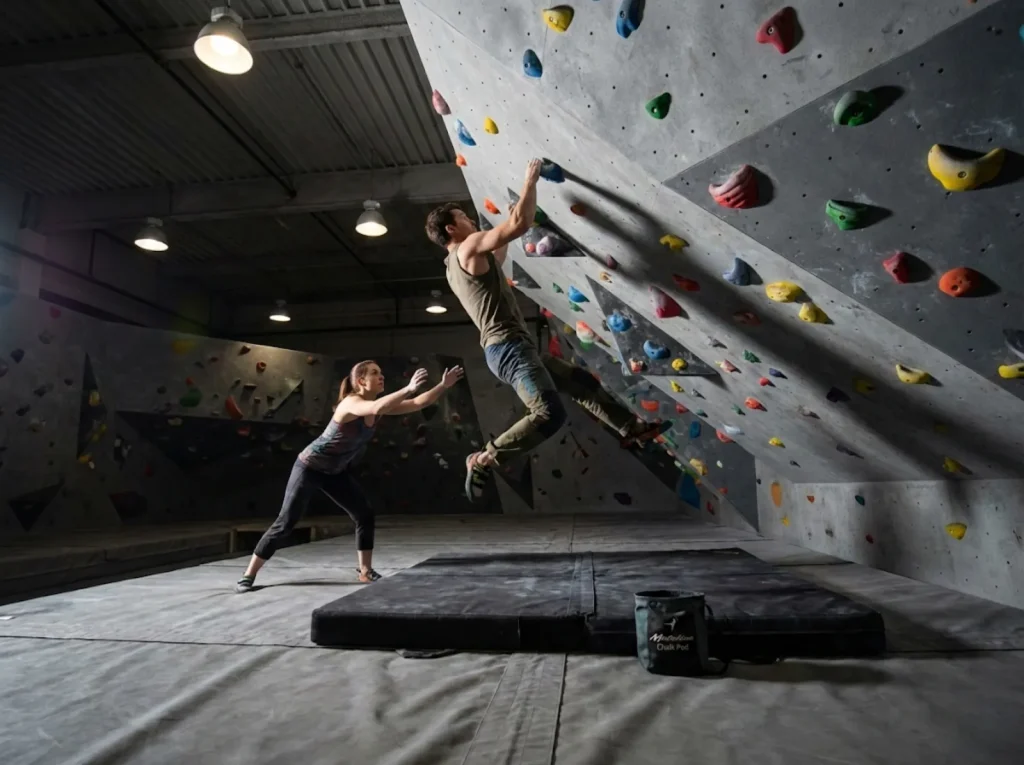
Most beginners hear “look up before you walk” and think that covers it. It doesn’t even come close.
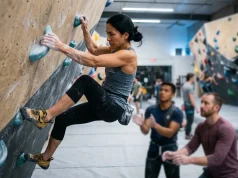
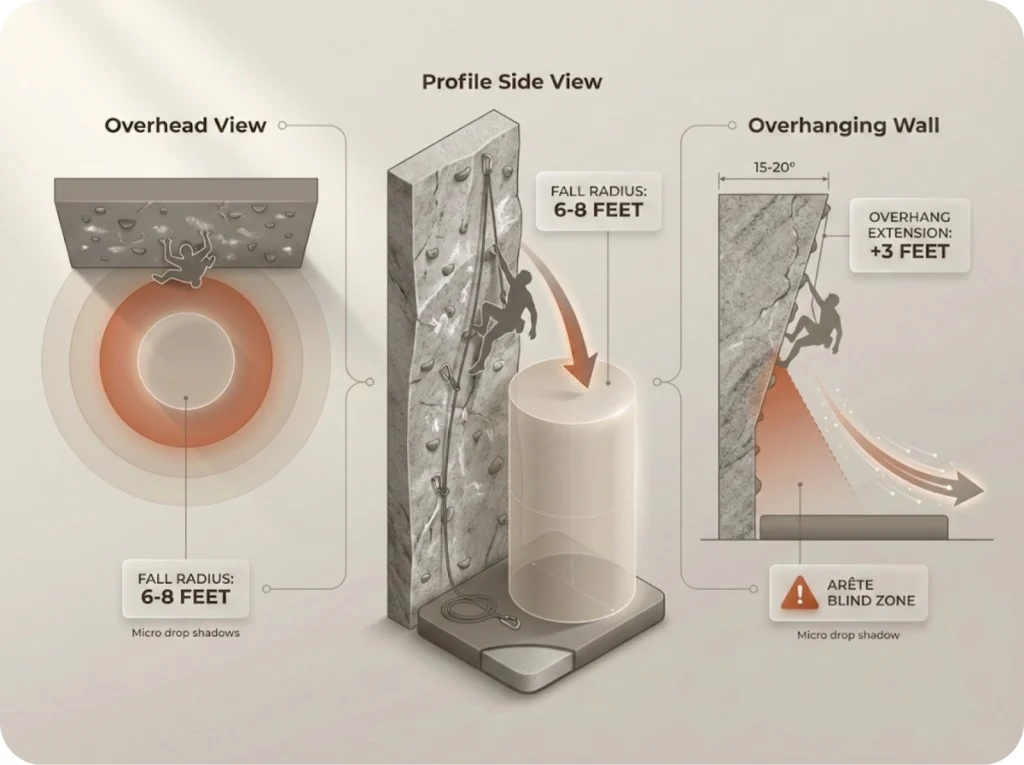
The fall zone isn’t a static circle beneath a climber. It’s a dynamic cylinder of space that shifts with the climber’s trajectory, body angle, and the wall’s overhang profile. On steep climbing walls — what regulars call “caves” or “waves” — a falling climber can land several meters away from the wall’s base. A national analysis of rock climbing injuries found that climbing-related emergency department visits surged significantly in 2021, with lower-extremity fractures accounting for the highest volume of injuries — primarily from indoor bouldering falls.
Then there’s the arête blind spot. Bouldering problems wrap around corners, making it impossible for pedestrians to see a climber until they’re directly in the fall path. Treat every corner like an active climbing lane until you can see the entire wall face.
Pro tip: Before you cross any padded area, scan up, left, right, and behind you. It takes two seconds and might keep you out of a neck brace.
The Belayer Corridor
Never walk between a belayer and the wall. This is the belayer corridor, and crossing it while someone is on rope can trip a belayer who needs to move quickly to manage a lead fall. If you need to pass, go behind the belayer — never between them and the wall.
Mat Rules: What Stays and What Goes
The gym floor’s padded area is a safety device, not a storage shelf. Hard objects — water bottles, phones, keys, chalk buckets — concentrate energy during a fall and cause severe injuries. Personal items go in cubbies or lockers. Jewelry, especially rings, must come off to prevent degloving accidents and equipment snags.
If you’re still gearing up — lacing your climbing shoes, adjusting your harness — do it on a bench or in the locker area. Not directly under a route. That “gearing up zone” mistake is one of the pre-climb safety checks that most climbers skip.
Sharing Wall Space Without Being “That Climber”
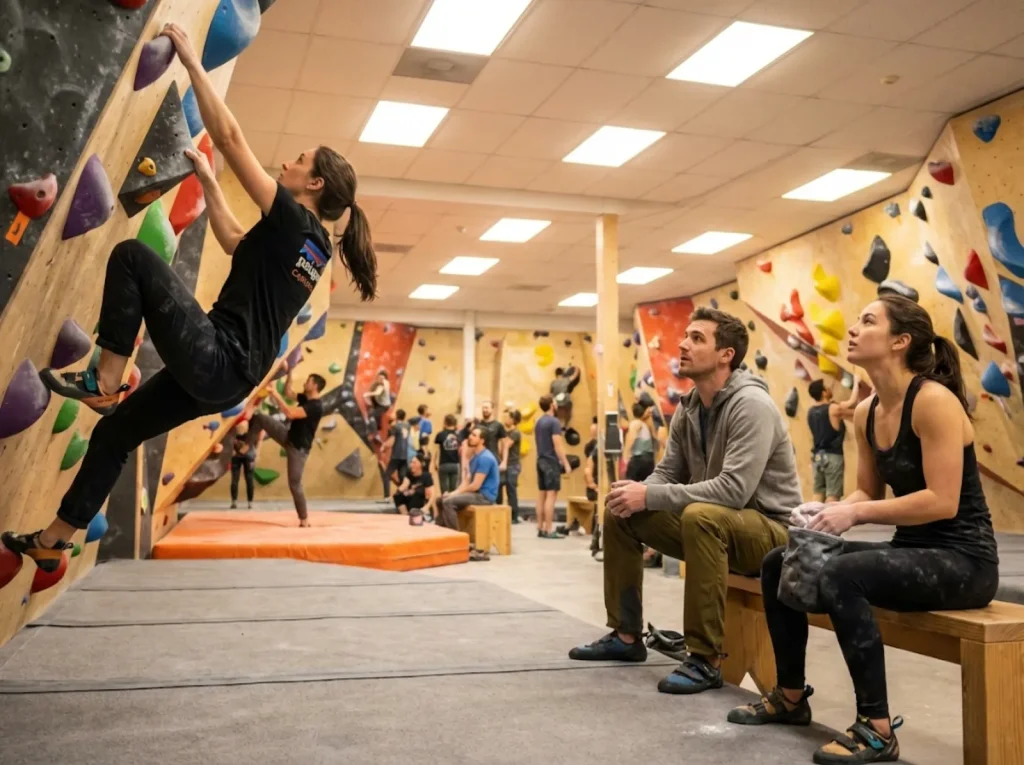
The wall belongs to everyone. Treating it like your personal training area during peak hours is one of the fastest ways to earn the “that climber” label.
The Queue Nobody Announces
The standard protocol is simple: the first person on the wall has the right to complete their attempt or fall without interference. After 2-3 failed attempts at a boulder climb, step back and let the queue circulate. “Queue signaling” varies by gym culture — some accept placing shoes at the base of a route as a placeholder, others consider it hogging. When in doubt, use words: “Are you in line for this?”
For overlapping climbing routes, wait for the active climber to finish. Starting a route that converges with an occupied line risks mid-air collisions. And if you spot someone silently hovering near your problem, they’re probably waiting. A simple “want to jump on?” costs nothing and earns goodwill.
Hangdogging and Route Hogging on Rope
On roped routes, limit resting on the rope — what climbers call hangdogging — to 3-5 minutes. Longer than that monopolizes a route others are waiting for. If you’re projecting something hard and the gym is packed, alternate with waiting climbers between attempts.
The professional standard is active communication. Make eye contact. Acknowledge people waiting. “Main Character Energy” — occupying a wall section for extended periods without acknowledging others — is one of the most criticized behaviors in climbing communities. Understanding the V-scale grading system helps beginners realize why someone might be “repeatedly trying” a problem, which makes turn-taking etiquette easier to follow.
Beta Spraying: The Line Between Helpful and Annoying
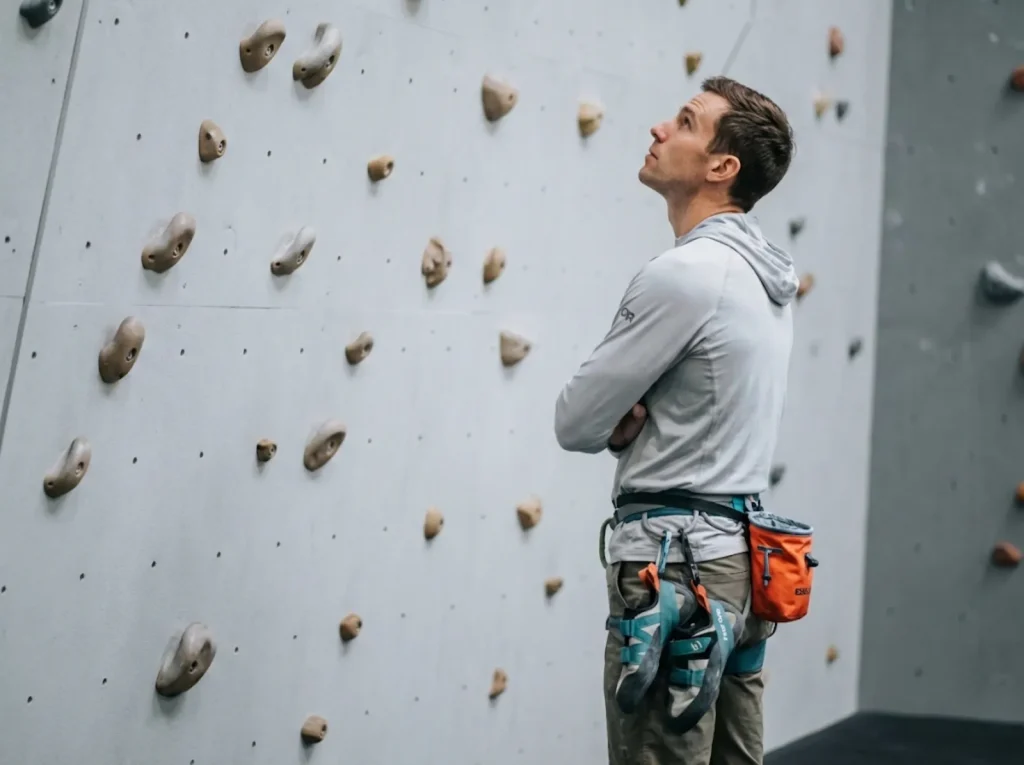
Beta is the specific sequence of moves or information needed to complete a route. The term comes from Betamax video tapes — early climbers shared recorded sequences, and the name stuck. Related terms you’ll hear: sending (completing a route cleanly), “flashing” (sending on first try with beta), and “onsighting” (sending first try without any beta).
What “Beta” Actually Means
For many climbers, the core joy of climbing is the puzzle — the cognitive reward of figuring out the movement on your own. When someone shouts directions from the ground, they steal that discovery. This is beta spray, and it’s one of the most frequently broken social rules in the gym.
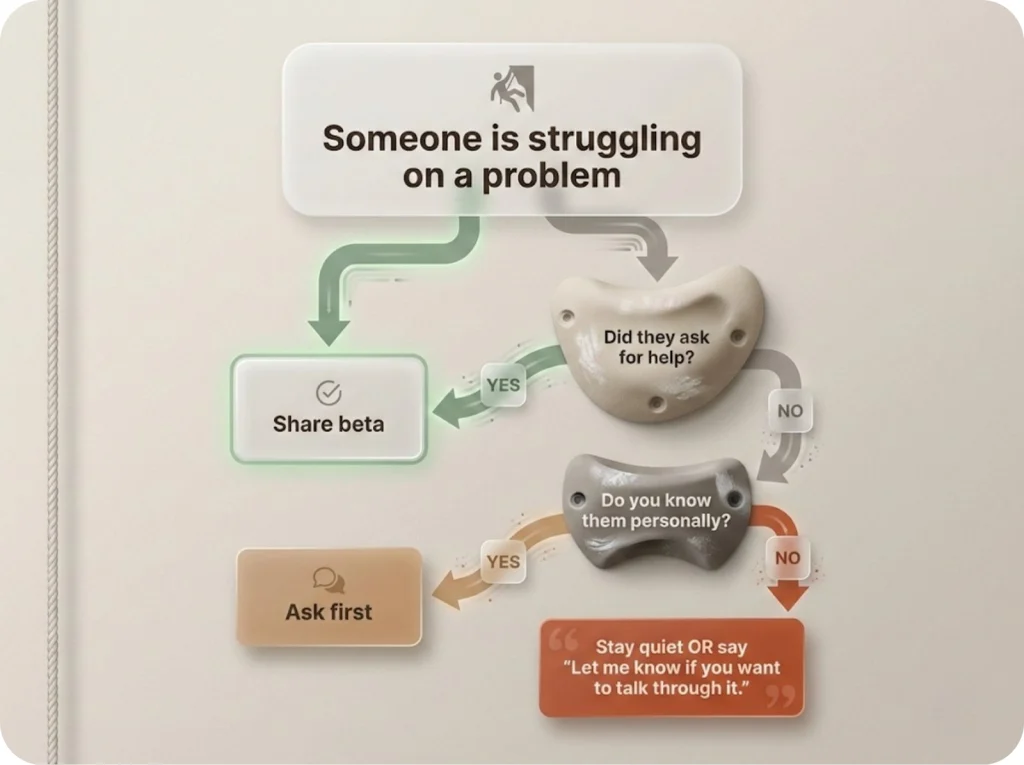
Professional etiquette requires what I call the “Consent First” model. Before offering advice, ask: “Would you like some beta?” or “Can I suggest something?” A refusal must be respected without judgment.
This rule extends to what the community calls “Gearsplaining” — unsolicited lecturing on gear choices that’s usually more about social posturing than genuine safety. If you want to learn climbing terminology every newcomer should know, do it through the right channels — not by cornering someone mid-climb.
Pro tip: If you see someone struggling and they haven’t asked for help, the best approach is: “That move is tricky — let me know if you want to talk through it.” Then walk away. The ball is in their court.
The “Consent First” Model
Beta from experienced climbers to novices can feel condescending, even with good intentions. In a group setting, offering beta to one person can unintentionally spoil the problem for others nearby. The nuanced difference: mentorship is ongoing, consensual, and relationship-based. Beta spray is one-off, unsolicited, and often ego-driven.
Chalk, Hygiene, and the Stuff Nobody Wants to Say
Magnesium carbonate — chalk — is essential for moisture control. But excessive use creates a spiral: caked chalk mixed with hand oils creates a “greasy” surface that’s harder to grip, which makes climbers use more chalk, which makes the problem worse. Good chalk management is what separates considerate gym regulars from the oblivious ones.
Chalk Application Protocol
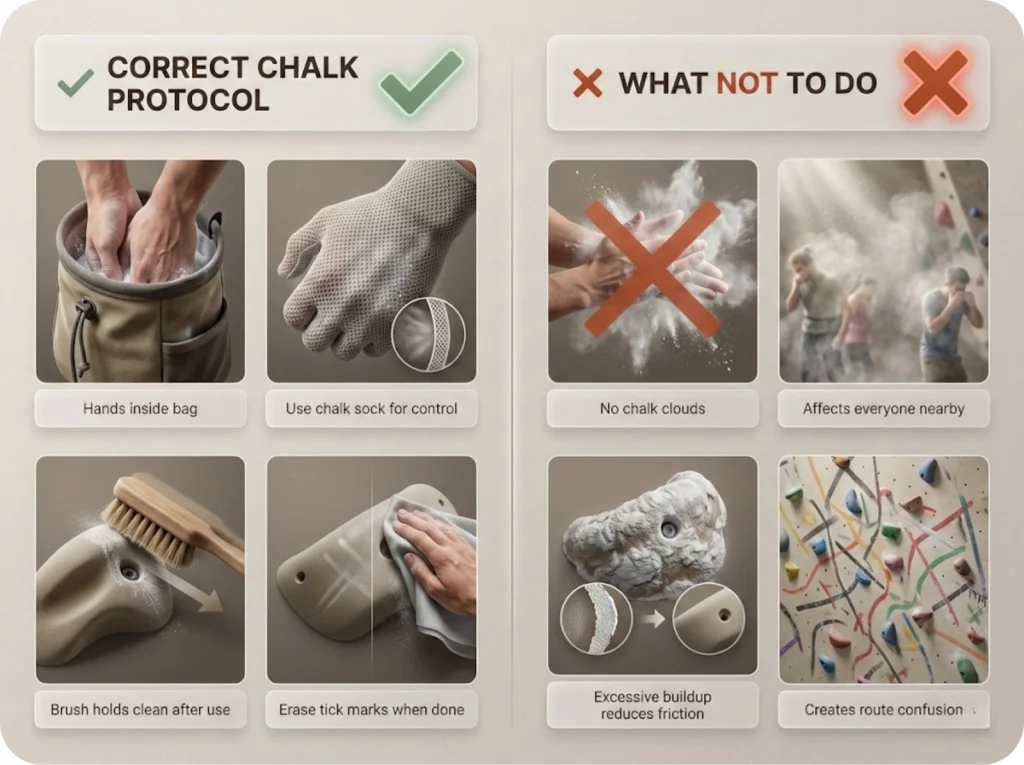
Use a chalk sock — a permeable fabric ball inside your chalk bag — to minimize airborne clouds that irritate lungs. Apply chalk with your hands entirely inside the bag. Clapping hands or blowing on fingers to clear excess creates an obnoxious plume that nobody asked for.
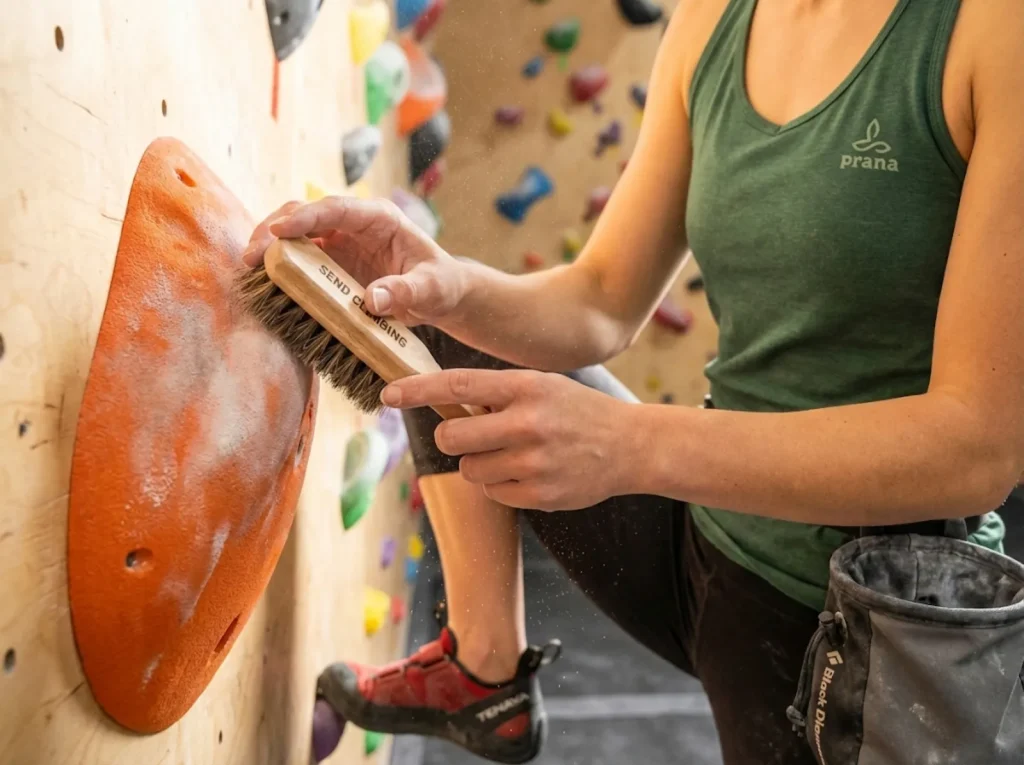
The unwritten rule: “Those who brush it, crush it.” Brush the climbing holds after your attempt, especially if you’ve heavily chalked them. Tick marks — chalk lines used to identify small holds — must be erased after your session. Leaving them is both an eyesore and an unwanted form of beta spray for the next climber. Learn the right way to brush climbing holds and you’ll earn respect from every regular in the gym.
The Bathroom Shoe Taboo and Hygiene Rules
The most frequently broken hygiene rule: wearing climbing shoes into the restroom. Climbing shoe rubber is porous and high-friction — it absorbs bacteria and transfers them directly onto holds where other climbers put their hands.
Barefoot climbing is prohibited in nearly all professional facilities due to fungal infection risk. Shirts are required indoors to minimize sweat transfer to the wall. And the “See an Injury, Tell Someone” rule is standard operating procedure — staff use industrial-grade cleaners to neutralize pathogens on holds, ropes, and crash pads.
Belayer Ethics: Your Partner’s Life Is in Your Hands
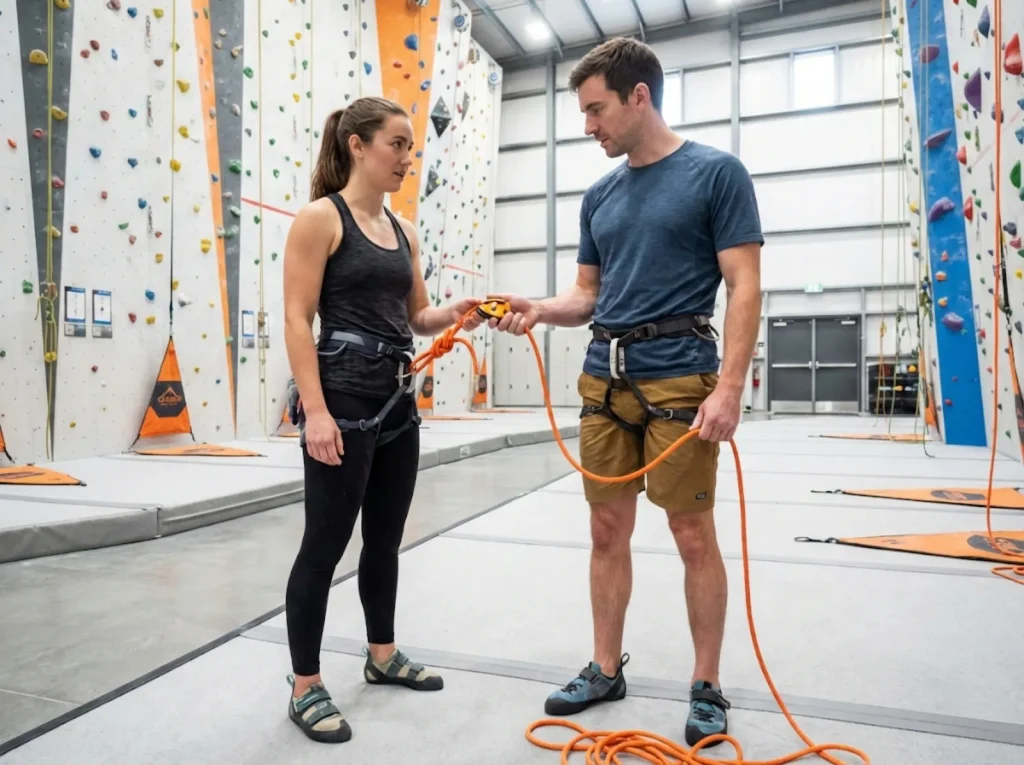
In rope climbing, the belayer is a life-support technician. The safety etiquette governing this role is the most rigid because errors can cause fatalities.
The Silent Belayer Rule
Social conversations must stop while actively belaying. This includes questions from spectators and well-meaning encouragement that might mask a climber’s verbal command. A belayer must maintain constant visual contact with their climber’s position, manage slack appropriately, and anticipate lead falls.
Standing distance matters: belayers should stay within roughly 10 feet of the wall. Standing too far back creates a trip hazard and pulls the belayer into the wall during a fall. Understanding how different belay devices work helps you make the right call on equipment and technique.
The Partner Check Ritual
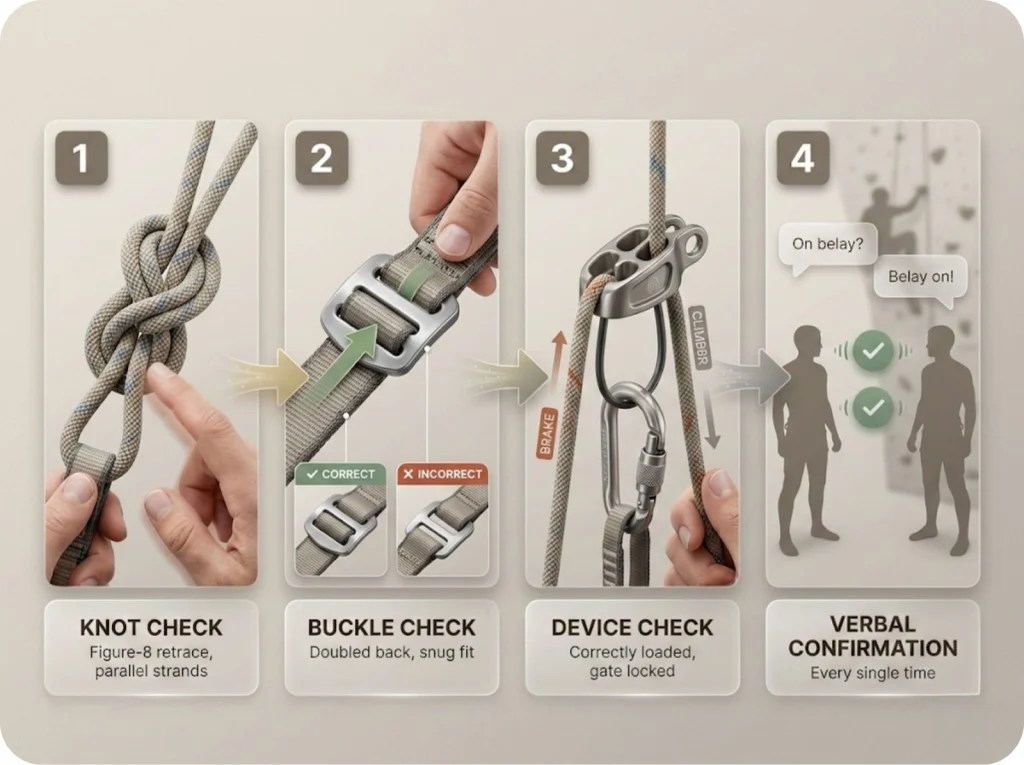
The belay check procedures are mandatory before every single ascent — both climber and belayer visually and physically verify: the knot (figure-eight retrace), the harness buckle (doubled back), and the belay device (correctly loaded). The Wilderness Medical Society emphasizes that complacency is the primary cause of belay failure, echoing guidance from the AMGA and the CWA.
Never assume your partner’s setup is correct just because they’re an experienced climber. The checks take 10 seconds. Make them a ritual, not a formality. Say the checks out loud: “Knot — good. Buckle — doubled back. Device — loaded.” Every single time.
Pro tip: If you’re significantly lighter than your climbing partner, look into an Edelrid Ohm or similar assisted-braking device. The weight difference changes how a fall plays out in ways most beginners don’t realize. Read more about heavy climber, light belayer dynamics to understand the risks.
Filming, Phones, and the “Main Character” Problem
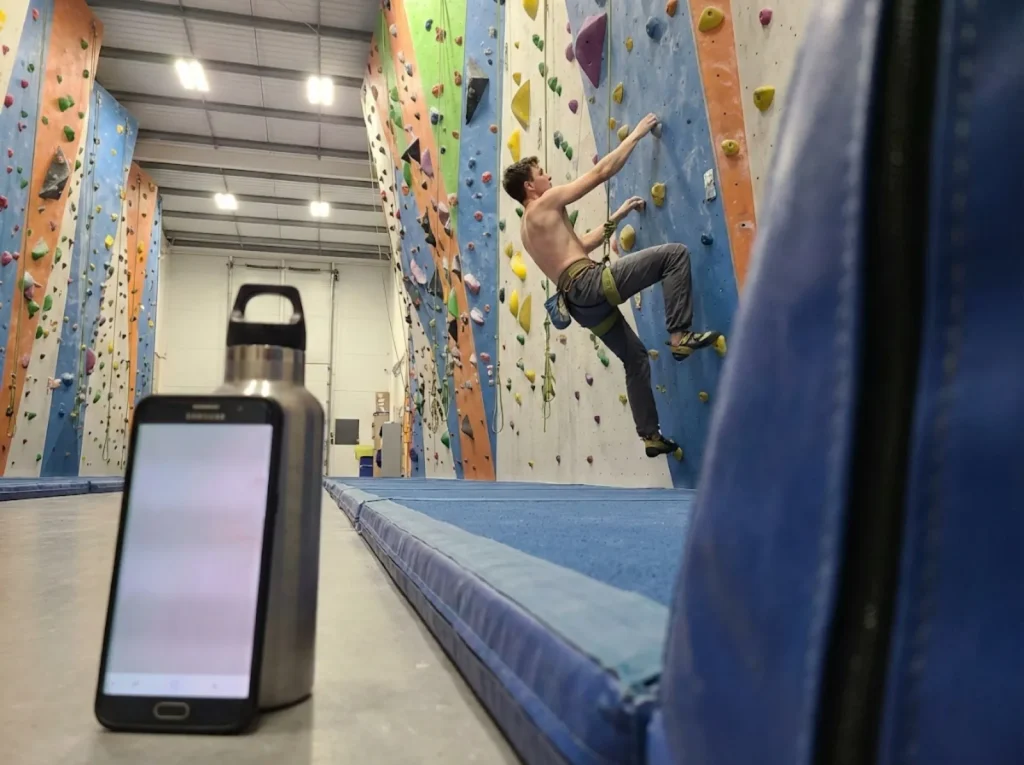
The explosion of climbing content on social media has created an entirely new category of etiquette conflicts — and almost no other articles address this meaningfully.
The Tripod Controversy
Tripods obstruct narrow walkways and create trip hazards for belayers. They also claim floor space that belongs to everyone. The “Main Character” bias — influencers who get agitated when someone walks through their frame — violates the core ethic of a shared public space. The camera is a guest in the climbing gym. It doesn’t grant exclusive rights.
Some major gym chains like PureGym and Virgin Active have started banning tripods or requiring consent for all filming. Check your gym’s policy before setting up shop.
Consent, Privacy, and Shaming Content
Many jurisdictions recognize “publicity rights” that prohibit commercial use of a person’s image without consent. Recording other climbers to mock their technique or “bad form” violates community standards and can result in immediate membership revocation.
If you want to film your own climb, position the camera to minimize capturing others. A casual “Hey, am I in your frame?” opens the conversation without confrontation.
Pro tip: Bluetooth speakers in the gym are a guaranteed way to annoy regulars. Use headphones. If your gym doesn’t have a formal noise management policy, assume headphones are the expectation.
When Someone Else Breaks the Rules (And What to Actually Do)
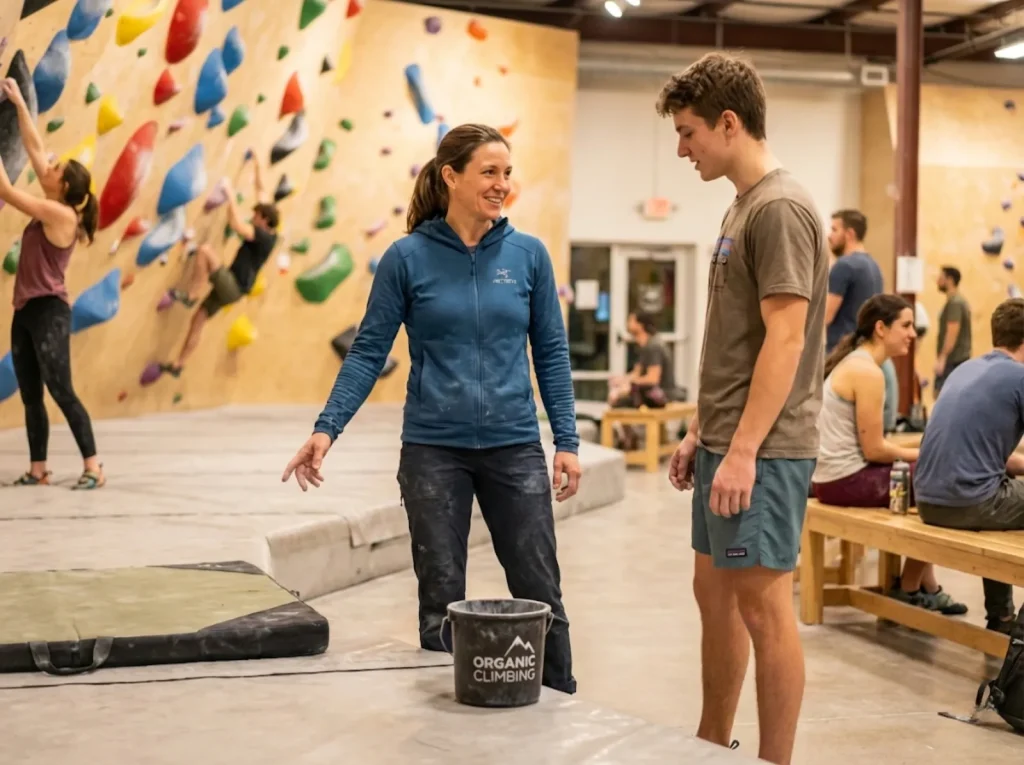
This is the section every other gym climbing etiquette guide skips — and it’s the one that matters most in practice. The Association for Applied Sport Psychology recommends communication strategies that work just as well in a climbing gym as they do on a competitive team.
The “I Statement” Approach
Professional conflict resolution technique: confront the situation, not the person. Instead of “You are walking in a dangerous area,” try: “I’m concerned that a climber might fall on you if you stand there.”
Private de-escalation always beats public shaming. Pull someone aside quietly rather than calling them out in front of the gym. Nobody learns when they’re humiliated.
When to Involve Staff
If you witness dangerous belaying, aggressive behavior, or repeated safety violations, alert staff communication channels rather than attempting to instruct a stranger. Staff are trained in formal mediation and liability protocols — they handle it better than peer confrontation.
For minor issues — chalk mess, shoes in walkways — a polite word directly is usually enough. But the real advantage for community health is modeling. Senior climbers who act as stewards — brush holds after climbing, announcing falls, checking on fallen climbers — create a culture where newcomers self-correct by observation. Being a steward means leading by example while building a more inclusive climbing community one session at a time.
Conclusion
Three things separate the regulars from the rookies — and none of them involve climbing hard.
The fall zone is three-dimensional. Look up before climbing, look sideways, and keep the padded area clear of gear, bodies, and distractions. This single habit prevents the majority of gym injuries.
Ask before you offer. Whether it’s beta, filming someone, or correcting a stranger’s behavior — consent first. The climbing gym is a shared puzzle room, not your personal stage.
Be a steward, not a gatekeeper. Model good behavior. Brush holds after your attempts. Announce falls. Check on people. The best climbers aren’t defined by the grade they send — they’re defined by how they treat the people around them.
Next time you walk in, try one thing: spend your first five minutes just watching. Notice who looks up before crossing the mats. Notice who brushes holds after their attempt. Notice who moves out of the way. Then be that person. Every session.
FAQ
What is climbing gym etiquette?
Climbing gym etiquette is the set of safety protocols and social norms that keep everyone safe and the community welcoming. It covers everything from where you stand (never in a fall zone) to how you communicate (solicited vs unsolicited advice). Most gyms post formal rules at the front desk, but the majority of etiquette is learned through observation and community norms.
What are the rules for climbing in a gym?
The universal rules include: always look up before climbing, never sit or stand in landing zones, wait your turn on routes, don’t give unsolicited beta, brush holds after climbing, report injuries immediately, and never distract belayers. Each gym may add specific policies around chalk type, filming, and noise management.
How do you not look new at a climbing gym?
The fastest way to how to not look new: keep your climbing shoes off the bathroom floor, brush holds after your attempts, don’t walk under climbers, and ask before offering advice. Nobody cares what grade you climb. They notice whether you’re aware of the people around you. Confidence comes from spatial awareness, not send difficulty.
Is it rude to talk to someone at the climbing gym?
Not at all — climbing gyms are social spaces. The exceptions: never talk to an active belayer (they’re managing a life-safety system), don’t interrupt someone mid-climb, and read body language. Headphones on and focused eyes usually mean not right now. Between attempts, a genuine nice send or want to work in? is always welcome.
What should I wear to a climbing gym?
Wear flexible, non-restrictive clothing that allows full range of motion — think fitness wear or stretchy pants and a fitted T-shirt. Avoid loose jewelry (rings risk degloving injuries), excessively baggy clothes (snags on climbing holds), and open-toed shoes for walking areas. Most gyms require shirts. Climbing shoes are either rented at the front desk or brought from home. Check out our guide to passing your lead climbing test when you’re ready to move beyond top-rope.
Safety Notice: Rock climbing and mountaineering are inherently high-risk
activities that can involve physical trauma or fatal incidents. The information on Rock Climbing Realms is for
educational and informational purposes only. Techniques and advice presented here are not a substitute
for professional, hands-on instruction. Conditions and risks vary by location. Always seek guidance
from a qualified instructor before attempting new techniques. By using this website, you agree that you
are solely responsible for your own safety. Any reliance you place on this information is strictly
at your own risk, and you assume all liability for your actions. Rock Climbing Realms and its authors
will not be held liable for any harm, damage, or loss sustained in connection with the use of this information.
Affiliate Disclosure: We are a participant in the Amazon Services LLC Associates Program, an
affiliate advertising program designed to provide a means for us to earn advertising fees by advertising and linking
to Amazon.com. As an Amazon Associate, we earn from qualifying purchases. We are also an official affiliate partner
of Black Diamond Equipment via the AvantLink network. If you click on a Black Diamond affiliate link and make a
purchase, we may earn a commission at no additional cost to you. We also participate in other affiliate programs.
Additional terms are found in the terms of service.