
In this article
Walk-up. That is the word the internet hangs on Mount Hood’s South Side, and it is the same word that keeps sending people down the mountain in a helicopter. Ask anyone who climbs Mount Hood regularly, or the volunteers who go collect the ones who underestimate it, and they land on the same line: an 11,245-foot glaciated volcano is not a stair-climber with a view. The route is non-technical, and that is exactly what fools people. This guide gives you the honest version: the real route beta, the permits, the live-conditions habit that separates a clean climb from an epic, the gear worth renting instead of buying, the hazards that actually hurt people, and a straight self-assessment before you commit.
Why Mount Hood Isn’t the Walk-Up It Looks
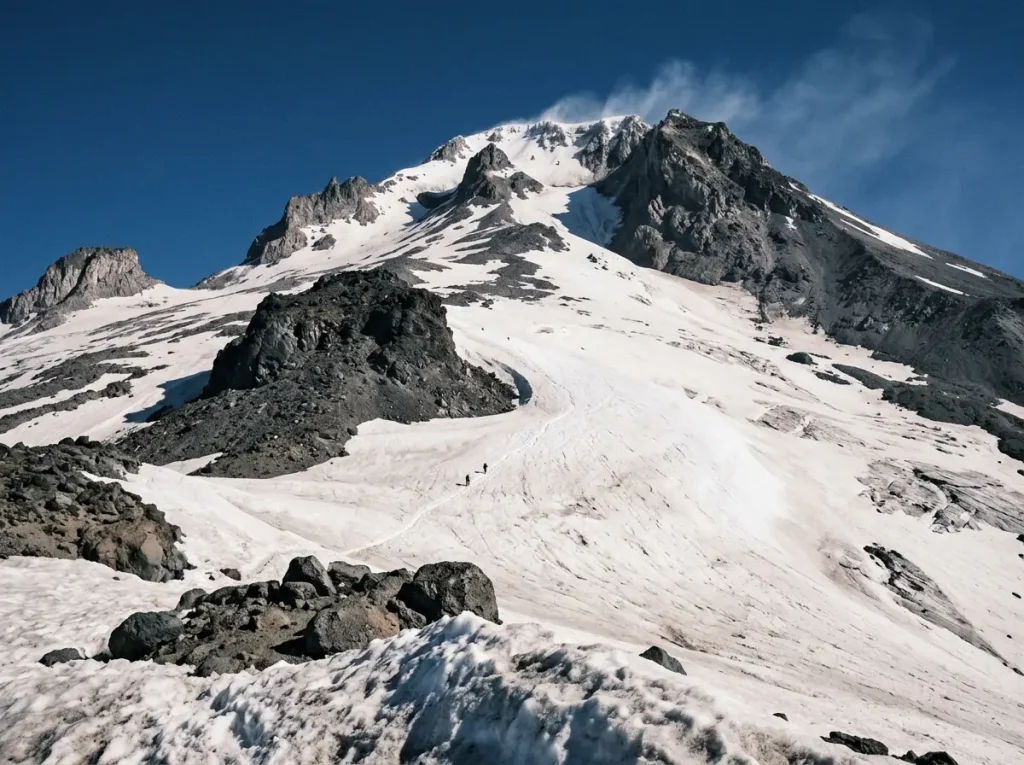
From the Timberline parking lot, Hood looks like a big white ramp with a rock band near the top. That first impression is the single most expensive misread in Cascade mountaineering. Non-technical is a route grade, not a difficulty rating, and the gap between those two things is where people get into trouble.
Grade II on the South Side route means no roped rock or ice pitches on the standard line. It does not mean no skills. You still need to move in crampons on firm snow, you still need to stop yourself with an ice axe if your feet blow out, and you still need the judgment to read rockfall timing on a mountain that sheds rock as the day warms. The final slopes run 35 to 45 degrees. That is steep enough that a simple slip becomes a slide you cannot stop without a trained self-arrest, and steep enough that the word walk stops meaning anything useful.
The stats hide inside friendly-sounding numbers. An 11,245-foot summit and about 4,450 feet of gain sound moderate on paper. What the paper leaves out is the night start, the altitude working on your legs at 3 a.m., and the descent, when your quads are cooked and the snow you cramponed up at dawn has turned to mush. None of that shows up in the phrase easy hike.
Here is where the reputation actually comes from. On a good-weather day, the success rate is high, and thousands of people summit every season without incident. That is real. It is also survivorship bias in action. Roughly 10,000 people attempt Hood in a year, and the overwhelming majority of days that go fine drown out the pattern in the days that do not. The mountain earns its friendly reputation on calm mornings and then quietly keeps a serious record on the others. Experienced local climbers do not treat it casually, and neither should you. The Mazamas, the Portland climbing club that has been on this mountain since 1894, lay it out plainly in their own Mount Hood climbing FAQ: this is a real alpine objective that demands real preparation.
If you want to see where Hood actually sits on the spectrum, it helps to compare it against the famous peaks sorted by what each one truly demands, from genuine drive-to walk-ups to expedition giants. Hood lands further up that scale than its reputation suggests. It is a glaciated stratovolcano in the Cascade Range, the same volcanic family as neighboring Mount St. Helens and Mount Adams, and while the South Side is not full technical mountaineering, it is not Rainier, and it is nowhere near Denali. But it is also not a hike with a summit sticker at the end, and the climbers who get hurt are almost always the ones who packed the wrong mindset before they packed the wrong gear.
The South Side Route, Step by Step From Timberline to the Summit
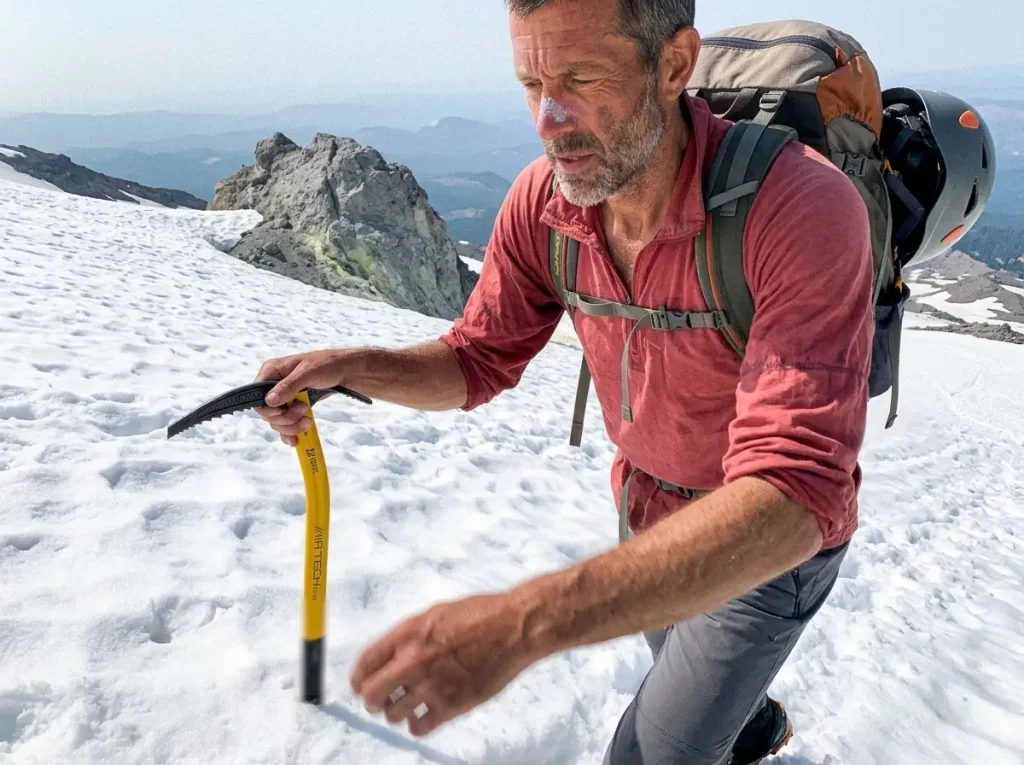
Every Hood climber builds the same mental map, because at 2 a.m. in a headlamp you want to know exactly where you are and what comes next. The route is a chain of named landmarks, and ticking them off in order is how you keep your bearings in the dark.
You start at Timberline Lodge (5,960 feet) and head straight up the ski area’s edge toward Silcox Hut (7,016 feet), a stone warming hut that marks the top of the lower lift. From there you continue up the Palmer Snowfield, the lower tongue of the Palmer Glacier, to the top of the Palmer lift, around 8,600 feet, mostly by boot-packing and kick-stepping up the firm snow, where the groomed world ends and the real mountain begins. Above that, the grade steepens as you climb toward Crater Rock, the big volcanic plug at roughly 10,400 feet, and the flat basin of Devil’s Kitchen just below it.
Devil’s Kitchen is a landmark and a warning at the same time. This is where fumaroles vent sulfur gas through the snow near a feature called Hot Rocks. You will smell it before you think about it, a sharp rotten-egg tang, and the lesson is simple: do not linger in the low spots where the gas pools, and do not camp there. Give the vents a wide berth and keep moving.
From Devil’s Kitchen you gain the Hogsback, a snow ridge on the Coalman Glacier that leads up toward the summit rocks. This is the staging point for the final push, and it is also the moment the climb stops feeling like a slog and starts feeling like an alpine route. Standing at the base of the Hogsback with headlamps pointed up at the Old Chute or the Pearly Gates, the easy-hike story stops matching what is under your crampons. Above you is a 35 to 45 degree finish through snow and rock to the summit ridge at 11,245 feet.
The numbers say 6.8 miles round-trip and 8 to 11 hours car-to-car. Those feel small until you live them. The distance is short, but the vertical is relentless, the air thins as you go, and you did most of the early climbing in the dark. And the summit is only halfway. Retracing the Hogsback and down-climbing the chute on tired legs is where the day gets real, which is why the descent gets its own attention later in this guide.
If you want to see the terrain before you stand on it, this footage of the standard Old Chute finish shows the Hogsback-to-summit ground and the exposure that words undersell.
Best Time to Climb Mount Hood and How to Read the Conditions Report Yourself
The climbing window on Hood is a compromise. Go too early and the snowpack is loaded and avalanche-prone. Go too late and summer melt strips the upper mountain down to loose rock and rime. The sweet spot runs from mid-April to mid-July, when the snow has consolidated enough to climb well but has not yet rotted out the top of the route.
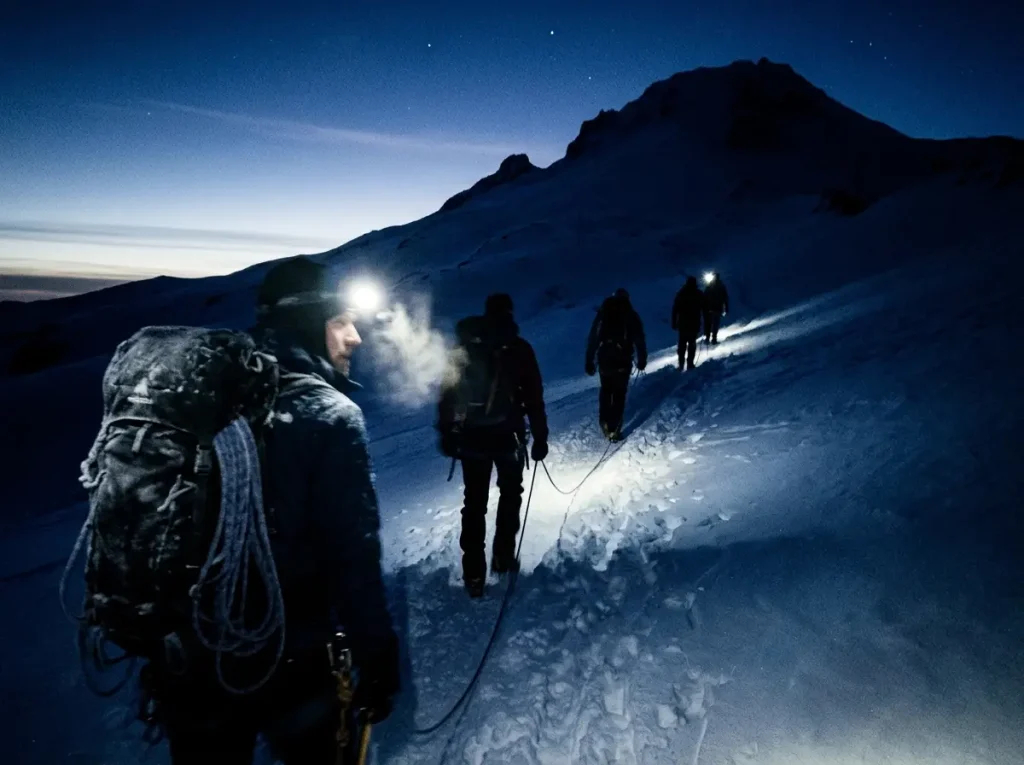
Inside that window, the alpine start is not optional and it is not machismo. Most parties leave Timberline Lodge somewhere between midnight and 1 a.m. The reason is physics, not bravado. You want to be climbing the upper mountain on firm, frozen snow and standing on the summit around sunrise, then getting down off the steep, overhead-hazard ground before the sun softens everything and starts loosening rock. A midnight start is how you climb the safe version of Hood. A mid-morning start is how you climb the version that throws rocks at you.
Here is the part most route guides skip, and it is the single habit that separates informed climbers from guidebook-only planners. Hood’s conditions do not hold still. The Mount Hood Climbing Rangers publish the Forest Service climbing conditions report on Tuesday and Friday mornings through the spring and early summer, and those reports are gold. They tell you what the snow is doing right now, which summit variation is holding a snow line, where the rockfall is active, and whether the bergschrund at the top of the Hogsback has opened up. You can read the Tuesday and Friday Mount Hood climbing conditions report straight from the source before you drive up.
The mistake is treating that report like a brochure you skim a week in advance. Conditions on this mountain shift meaningfully inside three or four days during peak melt. A line that was fat with snow on Tuesday can be melting out by Friday. Read the report the morning you leave, not the week before, and let it shape your plan. This is the same read-the-mountain-this-week discipline that makes or breaks a climb in the North Cascades, where glacier conditions and timing decide as much as fitness does.
Climb on a weekday if you can. The late-season route funnels everyone into the same corridor, and a weekend summit push means other parties above and below you in a rockfall zone. Midweek spreads the crowd out and cuts the odds that someone knocks a rock down onto you.
Old Chute vs Pearly Gates and How the Choice Really Gets Made
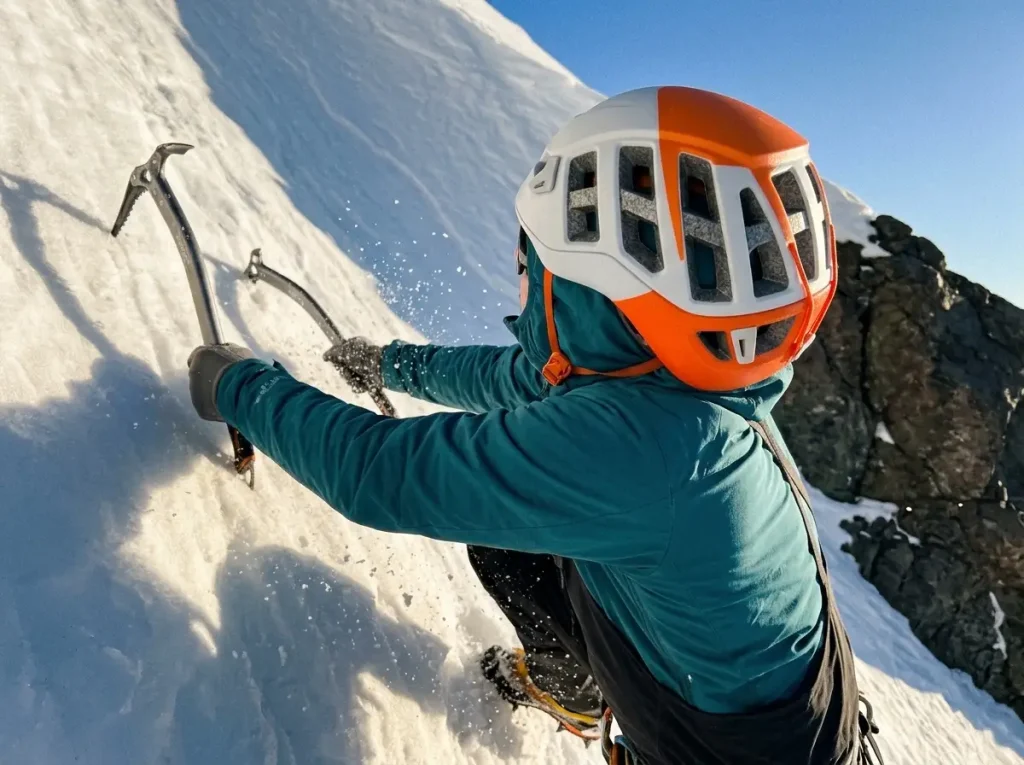
Most guides present the two summit finishes like a menu: Old Chute or Pearly Gates, pick your favorite. That framing is wrong, and believing it is how a party ends up on ground it has no business being on. The choice is not a style preference. It is dictated week to week by which line still holds snow.
From the top of the Hogsback, you have two ways through the summit rocks. The Old Chute sits on the climber’s left and tends to hold a rideable snow line longer into the season. The Pearly Gates is the more direct notch straight through the rock formations. On a given morning, one of them is the obvious call and the other might be a bad idea, and the only way to know which is which is to check the current report and look with your own eyes.
Take the current warm-season picture as the example. The Pearly Gates has been melting out to dirt, rock, and thin ice, while the Old Chute still holds the path of least resistance in continuous snow. So this season, Old Chute is the answer for most parties. Next season the balance can flip, and mid-summer it can flip again. That is precisely why the Tuesday and Friday report matters so much: it is the input that picks your finish, not a guidebook photo taken three years ago in different conditions.
There is a sharper edge to this. When it goes lean, the Pearly Gates can present a genuine pitch of alpine or water ice, up to AI or WI3. That is real ice climbing, not a snow walk, and a party that came expecting a walk-up has no tools, no ice screws, and no business on it. Reading the phrase Pearly Gates melted to rock in the report and understanding what that actually implies is the difference between adjusting your plan calmly and discovering the problem the hard way at 10,800 feet.
And whichever finish you pick, you have to reverse it. The Old Chute descent means down-climbing a short exposed section climbers call the catwalk, then roughly 600 feet of terrain too steep to safely glissade or plunge-step. You cannot slide down it. You have to climb down it, facing in, on legs that already did the hard work getting up. The finish you choose on the way up is the finish you own on the way down, tired.
This clip documents the Pearly Gates variation in leaner, icier conditions, and it is worth watching precisely because it shows what the steeper option becomes when the snow is gone.
Permits, Registration, and WAG Bags
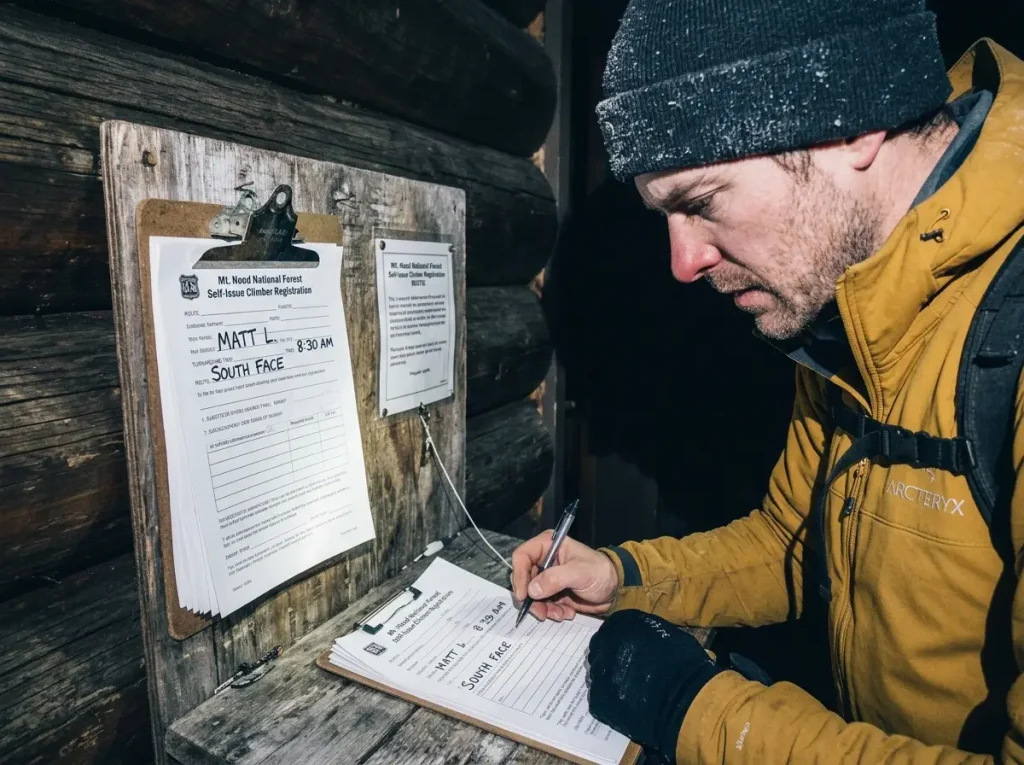
This is the paperwork nobody wants to read and everybody needs. It comes down to a few minutes online and a few more at the lodge, and skipping it can leave rescuers with no idea where you went.
You need a Climbing Permit for any travel above 9,500 feet on Hood. It runs a modest fee for a three-day single-trip pass or a slightly higher flat rate for an annual pass, and you buy it on Recreation.gov before you go. It is sold year-round with no cap on the number issued. The permit is not checked at a gate on the mountain, so the honor system does the work here, but if something goes sideways and you are unpermitted, that is a headache stacked on top of an emergency. Buy it. You can confirm the current cost and rules on the Forest Service’s official Mount Hood climbing permit page.
There is also a free Wilderness Permit for the South Side. A three-day climbing permit doubles as your wilderness permit, so most climbers are covered automatically, though annual pass holders register separately. On top of that, fill out the free climber registration at the board near the Wy’East Day Lodge entrance at Timberline. The form is not checked to confirm you came back safely, which makes people skip it. Do not. It is the one piece of paper that tells search and rescue where to start looking if you go overdue, and it costs you two minutes.
One recent wrinkle to know: for the 2025 and 2026 seasons, a free uphill-travel pass is required for foot travel within the Timberline ski area footprint, which includes the climbers’ trail on the standard approach. It is separate from the climbing permit and it is free, so grab it along with everything else and keep your paperwork clean.
Finally, WAG bags. Human-waste pack-out is required on Hood and the bags are provided free. On a mountain this heavily trafficked, Leave No Trace is not a slogan, it is the only thing keeping the snow you are melting for water clean. Carry the bag, use it, pack it out.
If you want to see how Hood’s relatively light permit load compares to a more heavily regulated volcano, the way Mount Rainier’s permit and registration system works is a useful contrast, since Rainier layers on climbing fees, timed registration, and blue-bag rules that make Hood’s system feel simple.
Required Gear and When to Rent Instead of Buy
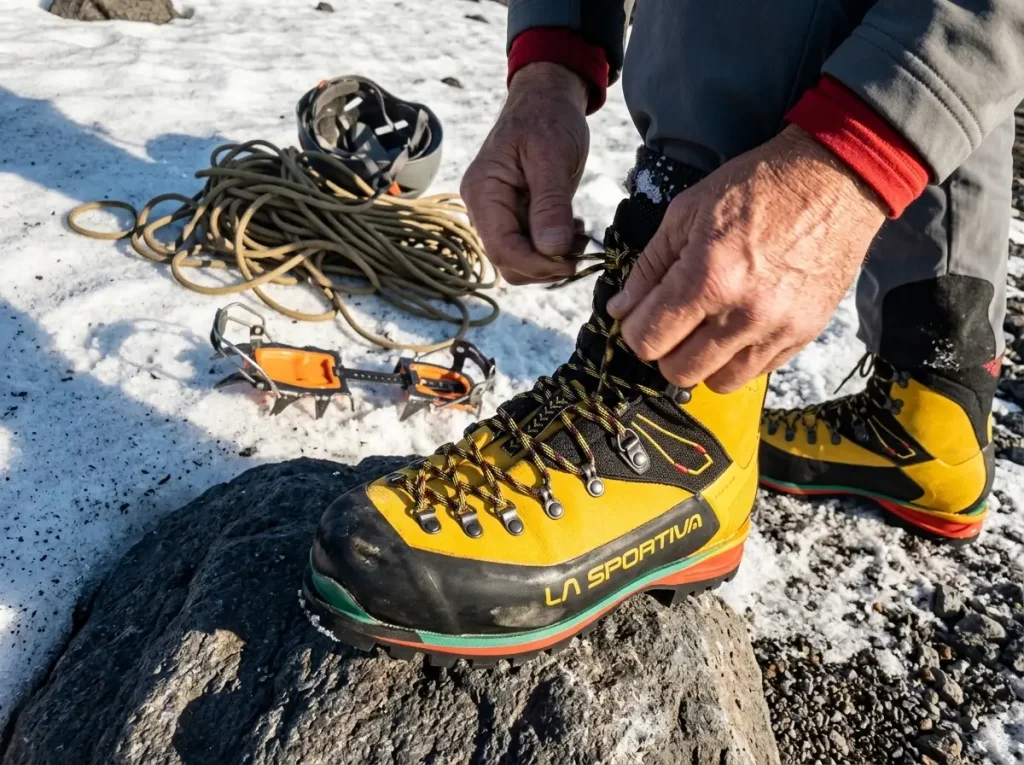
Time for the honest gear talk, which means starting with what you actually need and then telling you when the smartest move is to buy nothing at all. Before anything else, if you want the deeper breakdown of the full kit, the alpinism gear you actually need versus checklist padding covers boot ratings and crampon compatibility in detail. Here is the Hood-specific version.
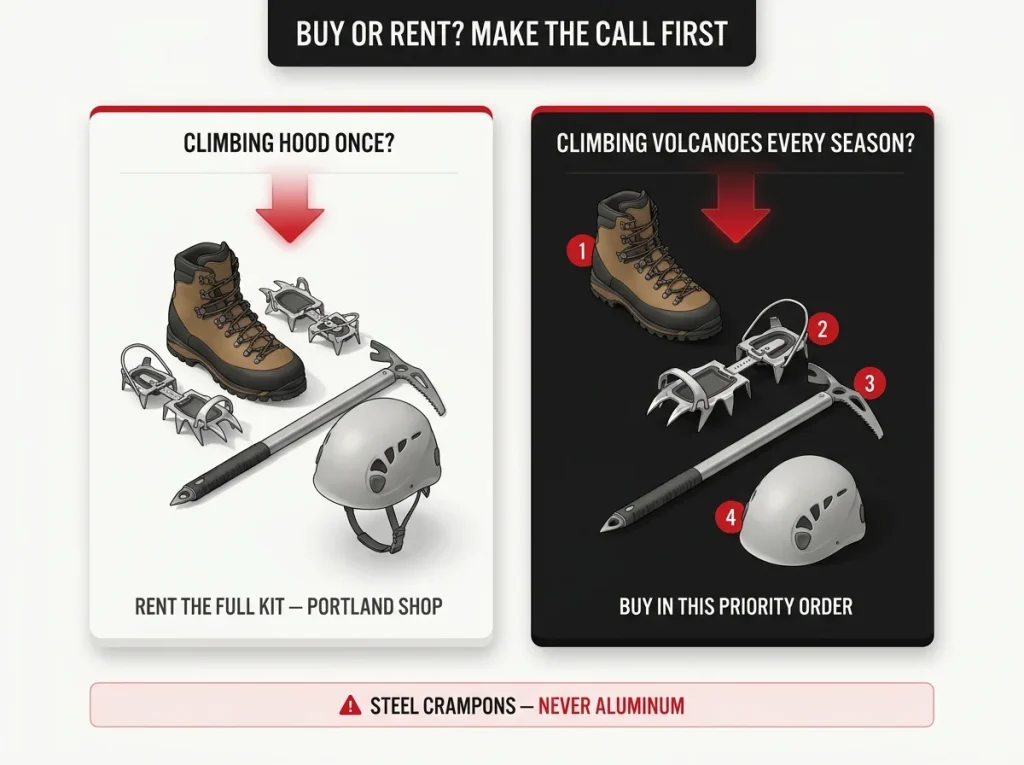
The core kit is short and non-negotiable: full-shank insulated mountaineering boots, steel crampons with 10 to 12 points, an ice axe in the 50 to 65 centimeter range, a mandatory mountaineering helmet, gaiters to keep snow out of your boots, a 40 to 50 liter pack, trekking poles with snow baskets for the lower approach, and a real layering system. One spec matters more than the rest and gets ignored constantly: your crampons must be steel, not aluminum. Aluminum crampons are built for flat glacier travel and they cannot take repeated hard front-pointing on the firm snow and ice of Hood’s summit slopes. Bring steel.
For boots, the benchmark is a stiff, insulated, crampon-compatible mountaineering boot. The La Sportiva Nepal Evo GTX (men’s · women’s) is the boot that shows up on Hood gear lists again and again, a full-shank leather boot that takes an automatic crampon and keeps your feet warm on a cold summit ridge. If you want a second option in the same class, the Scarpa Mont Blanc Pro GTX (check it here) is a comparable four-season boot with an integrated gaiter and the same automatic-crampon compatibility. Either one is premium footwear, and either one will carry you up Hood and a dozen other volcanoes after it.
For crampons, the Black Diamond Sabretooth (check it here) is a 12-point steel clip crampon that matches the steel-not-aluminum rule and fits rigid boots cleanly. If you want a value pick in the same category, the Grivel G12 New Matic (check it here) is a proven 12-point steel semi-auto crampon that shows up on nearly every Cascade volcano kit. For the axe, a classic straight-shaft mountaineering tool in the right length is all you need. The Black Diamond Raven (check it here) is the budget-friendly standard, and the Grivel Air Tech Evo (check it here) is a slightly more versatile step-up if you plan to keep climbing. Round it out with a solid pair of Black Diamond Distance Z (check them here) trekking poles with snow baskets for the Palmer approach, where poles save your legs before the axe ever comes out.
Now the part that actually saves you money. If this is a one-time climb, do not buy any of this. Rent it. A Portland shop like Mountain Shop rents a full summer mountaineering package, boots, crampons, axe, and helmet, for a small fraction of the cost of new gear, and renting the whole kit for a weekend costs less than a single new boot. This is not a fringe hack. Timberline Mountain Guides keeps its own rental stock for guided clients only and openly points independent climbers to Mountain Shop for exactly this. The blog’s own bias is anti-sell here: if you are climbing Hood once and are not sure you will do this again, the right answer is to rent the whole thing and spend your money on the climb, not the closet. It is the same rent-before-you-buy call that makes sense on Mount Shasta, another non-technical Cascade volcano where a local shop rents the exact kit you need for a single push.
If you do rent, pick up the boots a day early and walk around in them at home with your climbing socks on. A boot that fits on the shop floor can still hot-spot on a 4,000-foot climb, and finding that out in your living room beats finding it out at Crater Rock with no way to fix it.
The Hazards That Actually Hurt People on Mount Hood
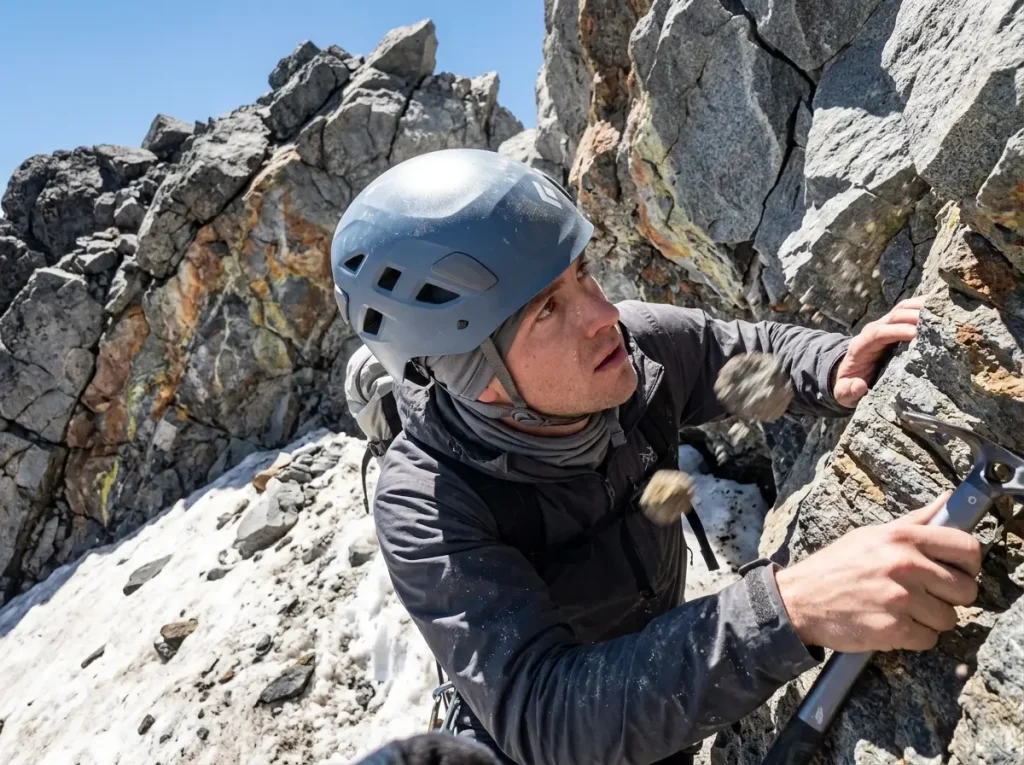
Here is the buddy-to-buddy version of what actually goes wrong on Hood, ranked by how often it bites rather than how scary it sounds. If you want the general framework first, the seven alpine hazards every climber should be able to name is the wider lens; what follows is how those hazards play out on this specific mountain.
Rockfall and icefall top the list, and they are not rare bad luck. As the day warms, the sun melts the ice that bonds loose rock and rime to the steep summit terrain, and the Forest Service describes rockfall and icefall as a near-daily occurrence during warm-weather climbing season. That is the whole reason for the midnight start: you want to be above and then below that terrain before the sun turns it loose. Climb on the frozen version of the mountain, not the thawing one.
Below that come the classic glacier and volcano hazards. The bergschrund and crevasses at the top of the Hogsback open as the season progresses. Early season brings avalanche risk on the loaded slopes. The summit rim carries cornices that can break under your weight if you wander onto them in flat light. And down at Devil’s Kitchen, the fumaroles vent sulfur gas that pools in the low spots. Each one is manageable with timing, awareness, and staying on route, and each one has caught people who were not paying attention.
Then there is the hazard nobody puts on the poster, the one that competitor guides tend to bury under the rockfall talk: getting lost on the way down. A recurring pattern in Hood’s incident history is not a fall or a rock strike at all. It is a party descending into the wrong canyon or drainage in a whiteout or low visibility, often dropping into White River Canyon or a neighboring drainage instead of the climbers’ trail, walking off the standard route into terrain that funnels them somewhere they cannot easily climb back out of. These are people who never fell, never got hit, and still ended up in serious trouble because they could not find the line down in a cloud. It is the same descent-is-the-hard-part pattern that defines the Matterhorn, where most serious incidents happen going down, not up. On Hood the mechanism is navigation, not technical climbing, which makes it both more preventable and more overlooked.
That is where a couple of specific pieces of gear stop being optional. The Pearly Gates area is a rockfall funnel, and moving through that gate zone with a helmet on is flagged as essential by rescue-adjacent sources for a reason. A helmet like the budget-friendly Black Diamond Half Dome (check it here) or the lighter, premium Petzl Meteor (check it here) is a trust-your-life item on this mountain, not a formality you clip to your pack. And for the whiteout-descent scenario, a satellite communicator or PLB earns its weight. The Garmin inReach Mini 2 (check it here) gives you two-way messaging and an SOS with no cell signal, which matters when you consider who comes to get you. Portland Mountain Rescue, the volunteer team that handles most Hood rescues, runs roughly 15 missions a year and helps about 70 people, all of it unpaid. Being findable is the least you can do for the people leaving their jobs and families to come pull you out of a cloud.
Mark your high point at Devil’s Kitchen with a GPS waypoint before you start the summit push, and drop a couple more on the way up. In a whiteout descent, those breadcrumbs are what keep you out of the wrong drainage. A phone in airplane mode with a downloaded map runs the whole way down on one charge if you keep it warm in an inside pocket.
Are You Fit and Skilled Enough for Mount Hood
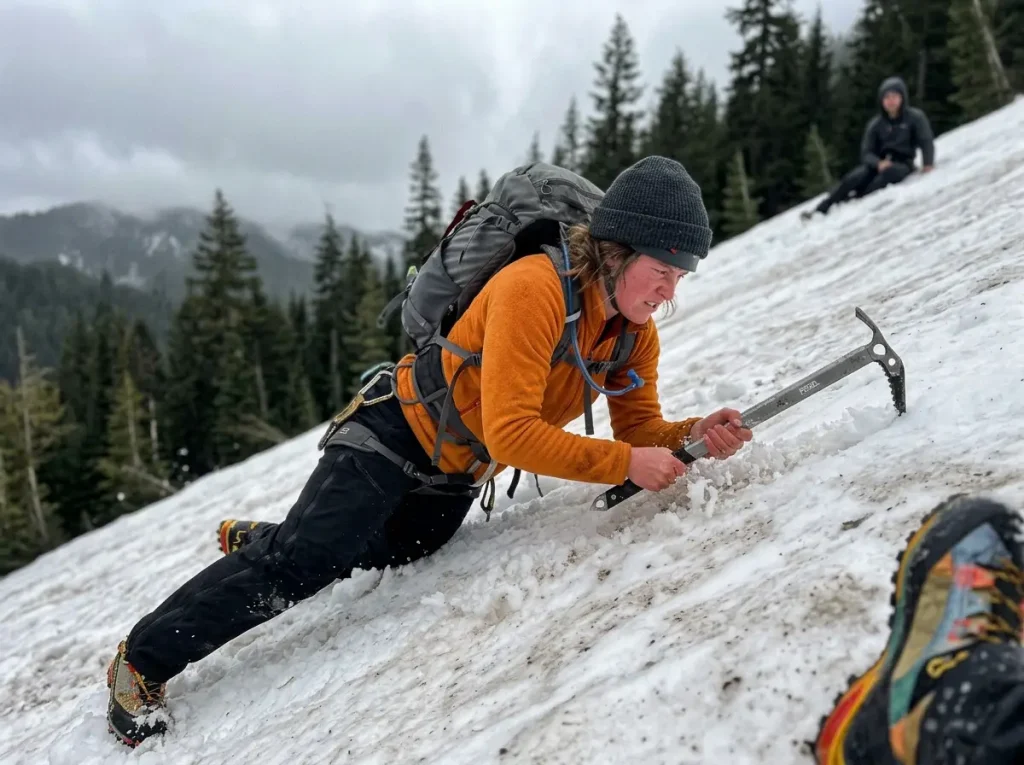
Time for the honest self-assessment, the one a mentor gives you before letting you go unguided. Not the vague get in shape version. A specific pass-fail test and a specific skill you either own or you do not.
Start with fitness, because that is what actually stops most people. Guide-service consensus frames a successful Hood climb as roughly 90 percent fitness and 10 percent technical skill. Most people who fail on summit day do not fumble a crampon strap. They run out of gas at 10,000 feet at 3 in the morning with hours of climbing still ahead. So the honest gate is a fitness gate, and there is a concrete way to test it. If you can hike a Columbia Gorge classic like Dog Mountain or Table Mountain, each around 3,000 feet of gain, with a 25-pound pack, and finish without being completely trashed, you are probably fit enough for Hood. Run that test five to ten times before your climb. If it wrecks you every time, you have your answer, and it is not the mountain’s fault.
The skill floor is separate and it is non-negotiable. You need a reliable self-arrest under a loaded pack, and you need to be genuinely comfortable in crampons on 35 to 45 degree snow. Self-arrest is the skill that turns a slip into a non-event instead of a slide you cannot stop, and it has to be automatic, not something you half-remember from a video. Whether you can actually stop yourself, cold, with a pack on, tired, is the real question, and whether you can self-arrest under a loaded pack has its own complete breakdown worth working through before you commit. If the honest answer is that you have never practiced it on a real slope, you are not ready to go unguided yet.
That last phrase matters: yet. The guided-versus-self-guided decision is not about ego, it is about matching the mountain to your actual competence. Hood is a common first objective in beginner mountaineering, and for most first-timers, hiring a guide is the right call, and it is not a knock on you. A guide handles the route-finding in the dark, makes the turnaround decision when the weather sours, and short-ropes you through the steep finish. If you own reliable self-arrest, you are confident cramponing on steep snow, you can navigate the descent in poor visibility, and you pass the fitness test, then self-guided is reasonable. If any one of those is a maybe, go guided this time and earn the self-guided trip next season.
What Mount Hood’s Accident History Teaches
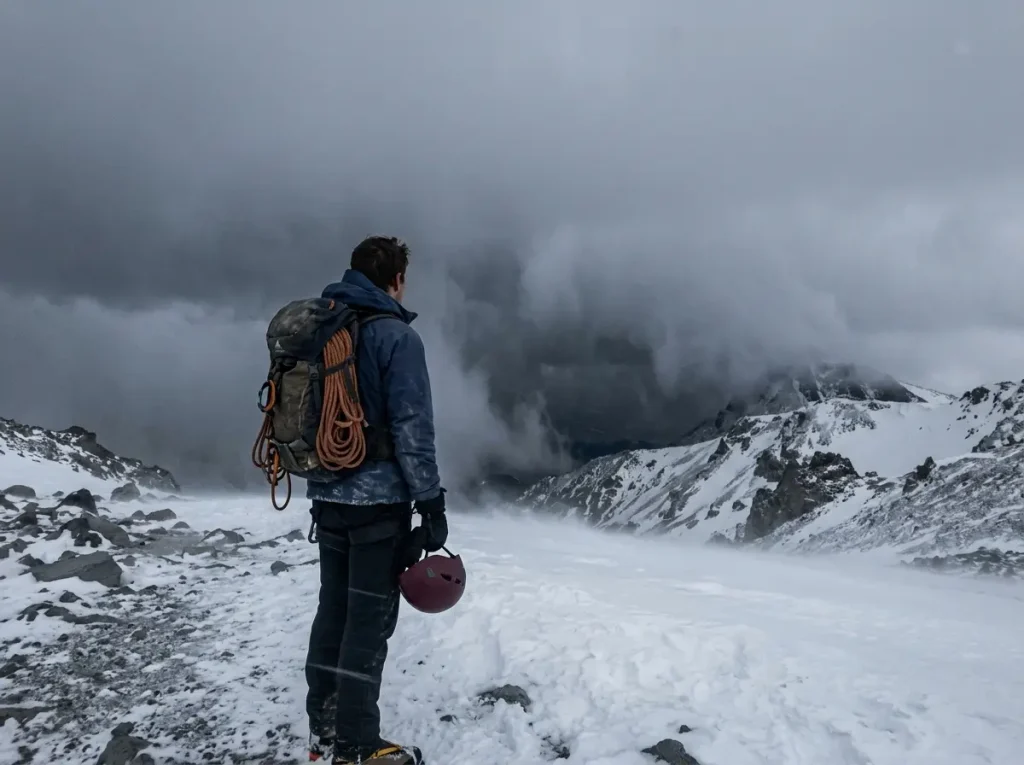
The mountain keeps a sobering record, and the point of looking at it is not fear, it is pattern recognition. Learn what actually goes wrong and you can make the specific decisions that keep you out of the statistics.
The scale first. More than 130 recorded fatalities as of 2002 records, with total estimates now above 150, set against roughly 10,000 attempts a year. Do that math and it is a small fraction of climbers. But that volume of attempts is exactly why the easy-mountain thinking keeps producing incidents. Most people who get hurt on Hood are not unusually unlucky. They are a good-weather party that misjudged timing, conditions, or their own margin on the descent. The reputation is the mechanism, not the exception.
The sharpest lesson in the record is the 1986 Oregon Episcopal School tragedy, remembered as the 1986 Mount Hood disaster, when a supervised school group was caught by a fast-moving storm during a retreat on this exact route, and nine people did not make it down. It remains one of the worst alpine accidents in North American history. The lesson is not do not climb. The lesson is that even an organized, guided, adult-supervised party got caught when a weather window slammed shut faster than anyone expected. Weather on Hood closes fast, and turning around early is the discipline that separates the parties who tell the story from the ones the story gets told about.
And the human cost of a rescue is real. Portland Mountain Rescue runs those roughly 15 missions a year and helps around 70 people, entirely with volunteers who leave work and family to come get climbers off this mountain. That is worth sitting with before you decide the training hike is optional or the turnaround time is negotiable.
The through-line ties straight back to the top of this guide. The climbers who get hurt on Hood are rarely the ones who thought it was hard. They are the ones who thought it was easy, packed that assumption first, and met a mountain that does not read its own reviews. Respect the grade for what it hides, and Hood is one of the great climbs of the Cascades.
Conclusion
Three things to carry off this page. First, non-technical is a route grade, not a difficulty rating, so respect the crampon work, the self-arrest, and the judgment that the walk-up label quietly hides. Second, climb the mountain that exists this week: read the Tuesday and Friday report, take the midnight start seriously, and let real conditions pick your finish between Old Chute and Pearly Gates. Third, be honest at the self-assessment gate, rent the gear if this is a one-off, run the Dog Mountain test with a loaded pack, and go guided if your self-arrest is not automatic.
Before your next weather window, do two concrete things: load a pack and go climb Dog Mountain to see where your fitness actually stands, then pull up the conditions report and start reading it like a local. Let the mountain tell you when it is a go, and climb it like the serious peak it is.
Frequently Asked Questions
01How hard is it to climb Mount Hood?
Mount Hood’s South Side is a non-technical Grade II climb, but it is a serious glacier ascent that requires crampons, an ice axe, and reliable self-arrest on 35 to 45 degree snow. Success is roughly 90 percent fitness and 10 percent technical skill, so the real gate is your conditioning, not your rope work.
02What is the best time of year to climb Mount Hood?
Mid-April through mid-July is the prime window, when the snowpack is consolidated but has not melted out the upper route. Plan a midnight to 1 a.m. alpine start so you climb firm snow and clear the rockfall terrain before the sun loosens it, and check the Tuesday and Friday conditions report the morning you leave.
03Do you need a permit to climb Mount Hood?
Yes. A Climbing Permit is required above 9,500 feet, sold on Recreation.gov as a three-day or annual pass, and a free wilderness permit and climber registration apply on the South Side. For 2025 and 2026 you also need a free uphill-travel pass within the Timberline ski area, and WAG bags for pack-out are provided free.
04Can you climb Mount Hood without a guide?
Yes, if you own reliable self-arrest, move confidently in crampons on steep snow, can navigate the descent in poor visibility, and pass a real fitness test. For most first-timers, going guided is the right call, since a guide handles route-finding in the dark and makes the turnaround decision when weather sours.
05How long does it take to climb Mount Hood?
Most parties take 8 to 11 hours car-to-car for the 6.8-mile round trip, starting between midnight and 1 a.m. and summiting around sunrise. Fitness, conditions, and congestion in the summit chute all move that number, and the descent takes longer than first-timers expect on tired legs.
Safety Notice: Rock climbing and mountaineering are inherently high-risk
activities that can involve physical trauma or fatal incidents. The information on Rock Climbing Realms is for
educational and informational purposes only. Techniques and advice presented here are not a substitute
for professional, hands-on instruction. Conditions and risks vary by location. Always seek guidance
from a qualified instructor before attempting new techniques. By using this website, you agree that you
are solely responsible for your own safety. Any reliance you place on this information is strictly
at your own risk, and you assume all liability for your actions. Rock Climbing Realms and its authors
will not be held liable for any harm, damage, or loss sustained in connection with the use of this information.
Affiliate Disclosure: We are a participant in the Amazon Services LLC Associates Program, an
affiliate advertising program designed to provide a means for us to earn advertising fees by advertising and linking
to Amazon.com. As an Amazon Associate, we earn from qualifying purchases. We are also an official affiliate partner
of Black Diamond Equipment via the AvantLink network. If you click on a Black Diamond affiliate link and make a
purchase, we may earn a commission at no additional cost to you. We also participate in other affiliate programs.
Additional terms are found in the terms of service.