
In this article
The hold looked bomber — a fist-sized knob right at the crux, exactly where you needed it. It pulled off in his hand. He caught the bolt below but the damage was done: he understood what everyone means when they say Pinnacles isn’t like anywhere else. I’ve watched this play out more than once at this park, and every time, the climber had been warned. This guide is that warning — plus the specific areas, routes, and pre-trip steps that make Pinnacles one of the most rewarding climbing days in California.
Quick Answer: Planning a Pinnacles National Park climbing trip? Here’s what experienced locals do before touching a hold.
- Check the Friends of Pinnacles closure tracker the morning of your trip
- Start on the East Side — more reliable rock than the West for your first visit
- Lead at least 2 grades below your comfortable onsight ceiling
- Tap every suspicious hold with your knuckle before committing weight
- Inspect every bolt before clipping — old hardware is common throughout the park
- Bring extra water: there are no water facilities on any trail
The Rock at Pinnacles Is Unlike Anything You’ve Climbed
Pinnacles National Park sits in California’s Diablo Range, about 80 miles south of San Jose. The spires, pinnacles, and walls that make it a climbing destination were formed by explosive volcanic activity roughly 23 million years ago — and the rock that activity left behind is nothing like the granite you trained on.
What Volcanic Breccia Actually Is
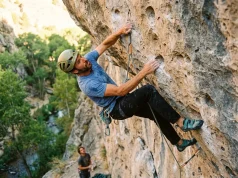
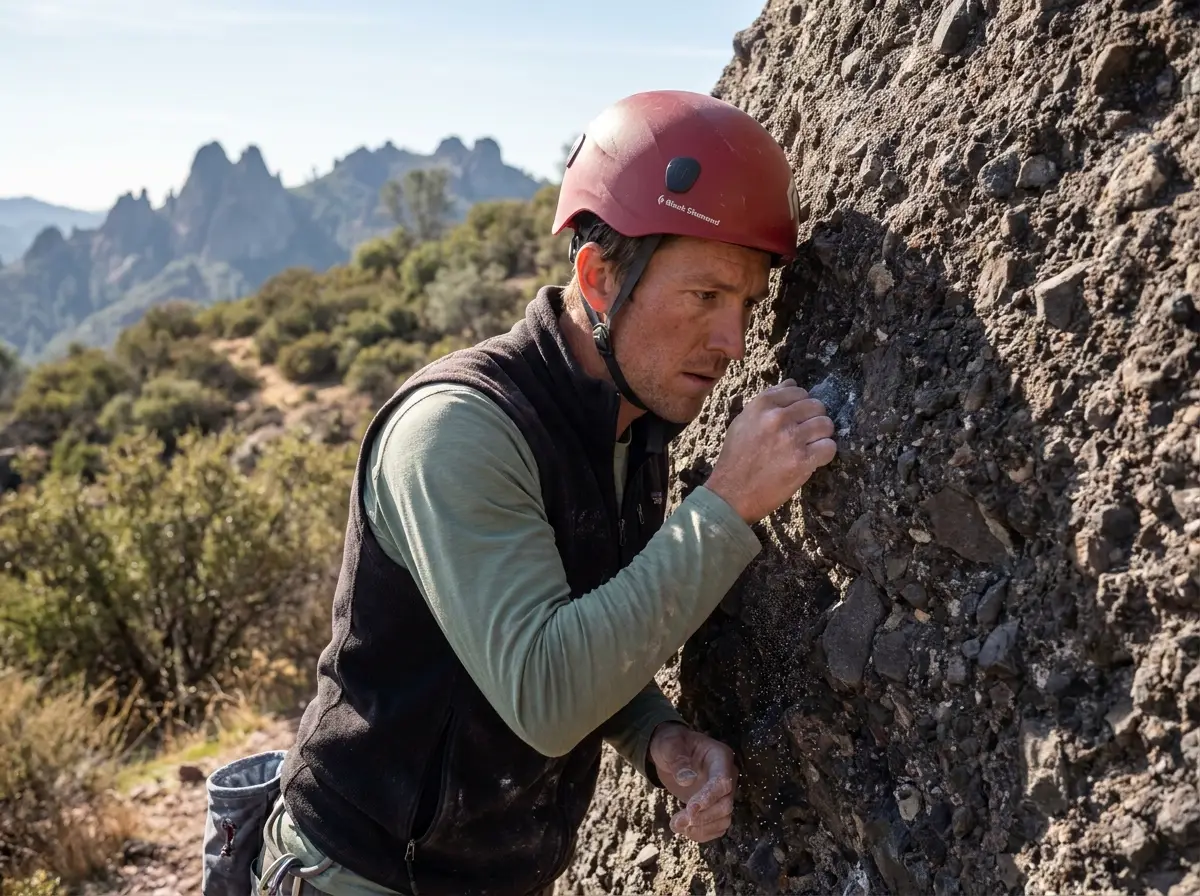
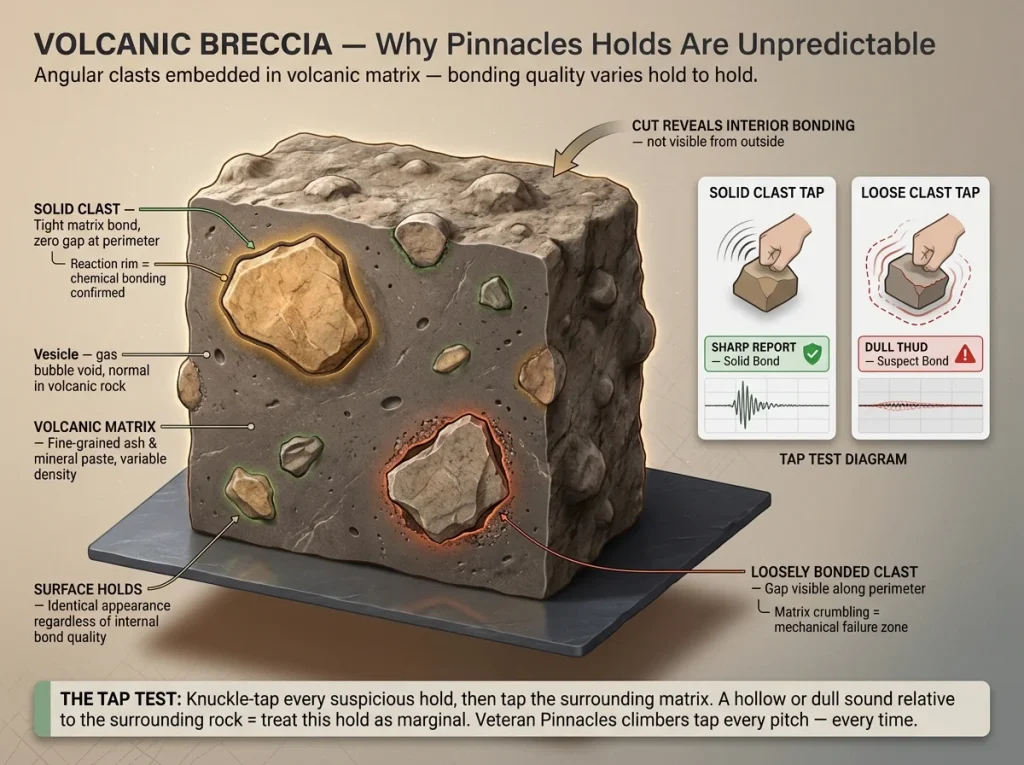
The primary rock at Pinnacles is volcanic breccia — angular rock fragments called clasts embedded in a finer-grained volcanic matrix. Think of it like a rough concrete where some of the aggregate pieces are only loosely bonded. Those clasts are your holds. The problem is that some clasts are solidly fused into the matrix and some are barely hanging in there, and from five feet away they look identical.
This is why Pinnacles has a reputation that follows it everywhere. The grades are real. The routes are real. The holds, however, exist on a spectrum of trustworthiness that you simply don’t encounter at granite crags like Yosemite or Tuolumne.
The Tap Test: How to Read Holds Before You Commit
Long-time Pinnacles climbers have a ritual that looks odd if you don’t know the context: they tap the rock before they grab it.
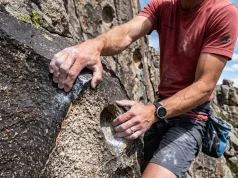
Use your knuckle — not your fingertip. Give the hold a firm tap, then tap the surrounding matrix. What you’re listening for is the difference in sound. A solid, well-bonded clast returns a sharp report. A loosely bonded one returns a dull thud, sometimes almost hollow-sounding. That hollow sound is your signal to move on, find a different hold, adjust your sequence, or if you’re leading, add more protection before committing.
This isn’t overcaution. Veteran Pinnacles climbers tap suspicious holds every single pitch. You know you’ve been climbing there long enough when tapping the rock becomes as automatic as checking your figure-eight before lowering off.
Pro tip: Tap the hold, then tap the rock directly beside it. Comparing the two sounds tells you more than tapping the hold alone. A hold that sounds distinctly hollow relative to the surrounding rock is worth treating as marginal.
Why Breccia Changes How You Clip and Protect
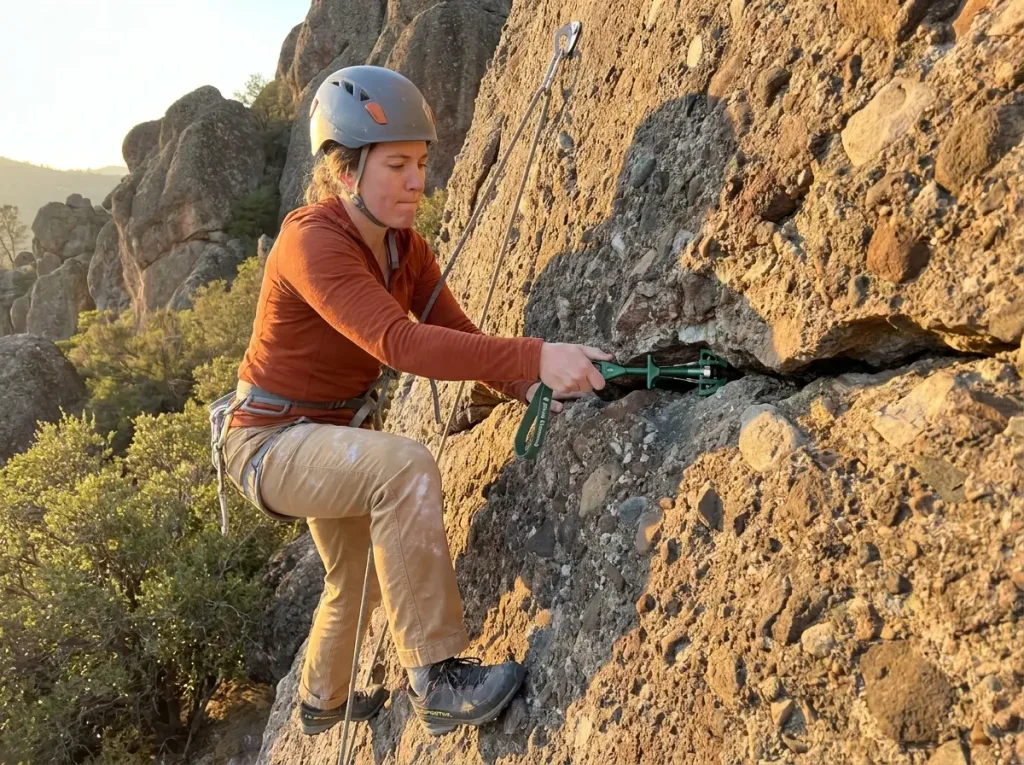
Self-placed trad protection — cams and nuts — can pull out of Pinnacles rock at loads that would be nothing on granite. The rock matrix compresses and crumbles differently. This is well documented by the Friends of Pinnacles and repeated in the park’s official climbing safety advisory.
The practical result: on any trad route here, place more gear than you think you need. If the crux is above your last piece, back it up. If you’re looking at a potential groundfall, treat the route as if you’re leading a grade harder than the topo says. Understanding how cams behave differently in softer rock types is worth reviewing before your first Pinnacles trad lead.
East Side vs West Side: They’re Two Different Parks
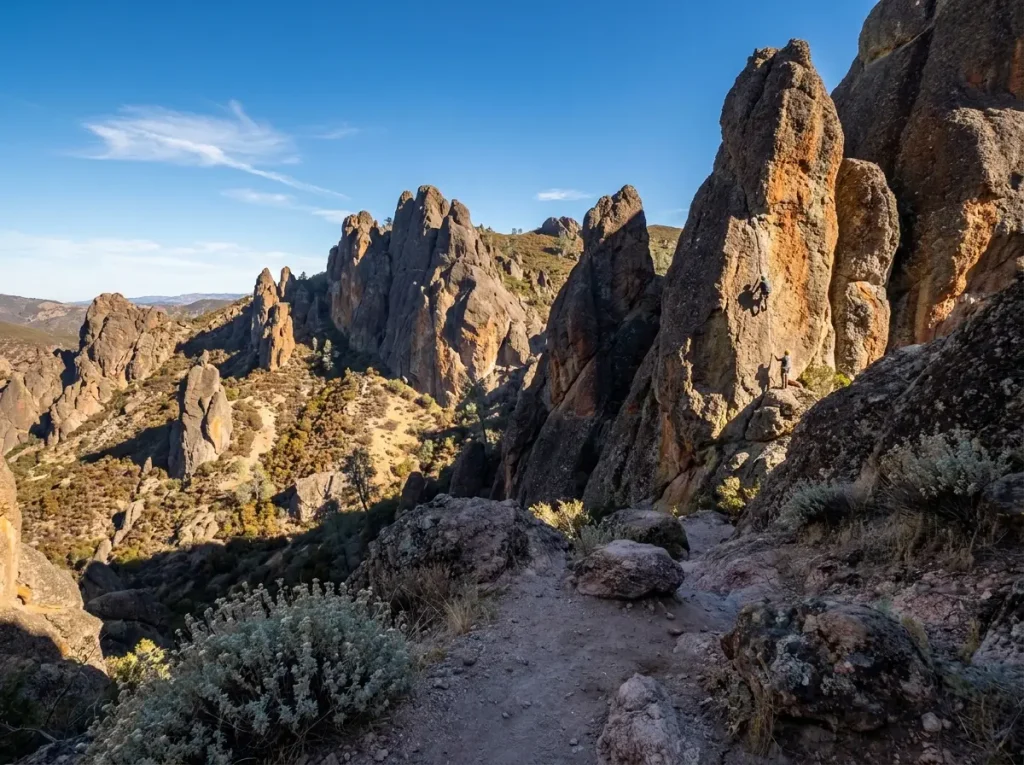
Pinnacles has two separate entrance stations — one on the east side near Paicines and one on the west near Soledad. These two sides are not connected by road inside the park. If you park at Bear Gulch on the east side and decide mid-day to check out a west side route, you’re looking at roughly an hour of driving around the park’s perimeter.
Plan your day for one side. Full stop.
East Side: Harder Rock, Easier Access, Best for First Visits
The East Side has measurably harder, less crumbly breccia than the West. The climbing areas near Bear Gulch — Discovery Wall, Tourist Trap, The Sisters — are 10 to 20 minutes from the parking area on marked trails. Most beginner and intermediate routes are on the East Side, and nearly all dedicated top-rope options are here.
If it’s your first trip to Pinnacles, start here. Get calibrated to how this rock behaves before you commit to a West Side multi-pitch.
West Side: Multi-Pitch Country, Older Bolts, Bigger Commitment
The West Side is where you find the longer, more committing lines — Machete Ridge, the Balconies Formation, and routes like Dos Equis (5.8 R) that run you up 200-plus feet of breccia. The rock is generally softer and more variable than the East Side. The bolts on many West Side routes are notably older, and the consequences of a gear failure on a longer pitch are more serious.
The West Side rewards experience and patience, not ambition. This is where climbers get into trouble most often — they’re solid at their home crag on sport routes with reliable protection, and they underestimate the commitment the West Side demands.
Pro tip: Always carry a headlamp on West Side routes. Approaches run longer than expected, routes take more time than you plan for, and the parking lot closes at sunset.
The Drive-Around Problem Nobody Warns You About
Plan like it’s a remote destination. There’s no shortcut between the east and west sides. If you want to experience both, book two consecutive days and commit fully to each side. Trying to squeeze both into one day means you’ll spend more time in the car than on the rock.
Climbing Areas and Formations Worth Knowing
Bear Gulch Area: The East Side Hub
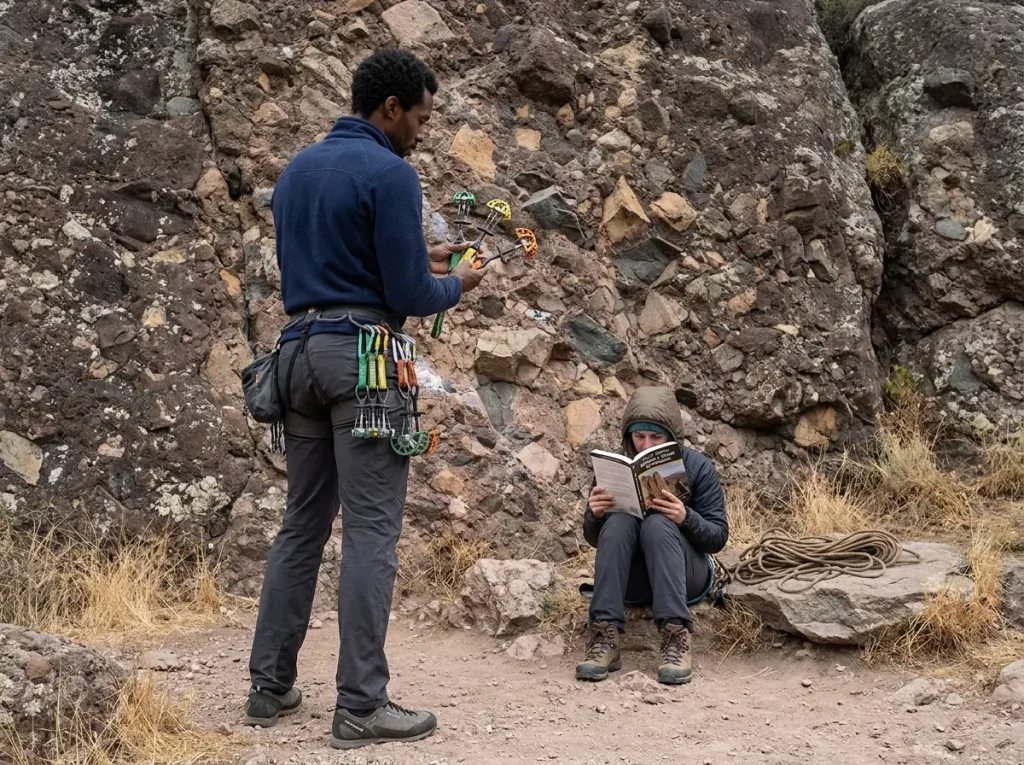
Bear Gulch Day Use Area is the main climbing hub on the east side. From the parking area, Discovery Wall and Tourist Trap are 10–15 minutes away on a signed climber access trail — look for the 4×4 post marked with a locking carabiner symbol. Discovery Wall has routes from 5.5 to 5.11b, and Tourist Trap’s Rat Race (5.7) is one of the best introductory leads in the park: a real roof that requires natural gear but gives you plenty of room to place protection before the crux.
The Top Rope Wall (also called Teaching Rock) is the dedicated top-rope area on the East Side, with routes from 5.4 to 5.9. If you’re introducing someone to outdoor climbing for the first time, this is your spot.
High Peaks and Beyond: When You’re Ready
The High Peaks require a longer approach but deliver some of the most memorable positions in the park. The Shaft (5.10a) at Long’s Folly is steep and relentless with serious exposure. Tuff Dome’s Adagio (5.10d) is the technical test piece of the area — delicate edging on terrain that doesn’t forgive a rushed sequence.
These areas see less traffic, which also means less reliable real-time route information. If your beta source is old, treat it as a starting point, not a guarantee.
Machete Ridge and the Balconies: The West Side Gems
On the West Side, the Balconies Formation has two standout moderate leads: Lava Falls (5.9+) and Shake and Bake (5.10a R). Both routes involve genuine exposure — you’ll be looking at hundreds of feet of air — and both require composure when the bolt spacing gets uncomfortable.
Machete Ridge is the West Side statement objective. Dos Equis (5.8 R) is the accessible classic, but “accessible” here means it’s climbed by people who know what they’re doing. The R-rating is earned.
Routes at Pinnacles by Difficulty Level
Beginner and Top-Rope Routes (5.3–5.8)
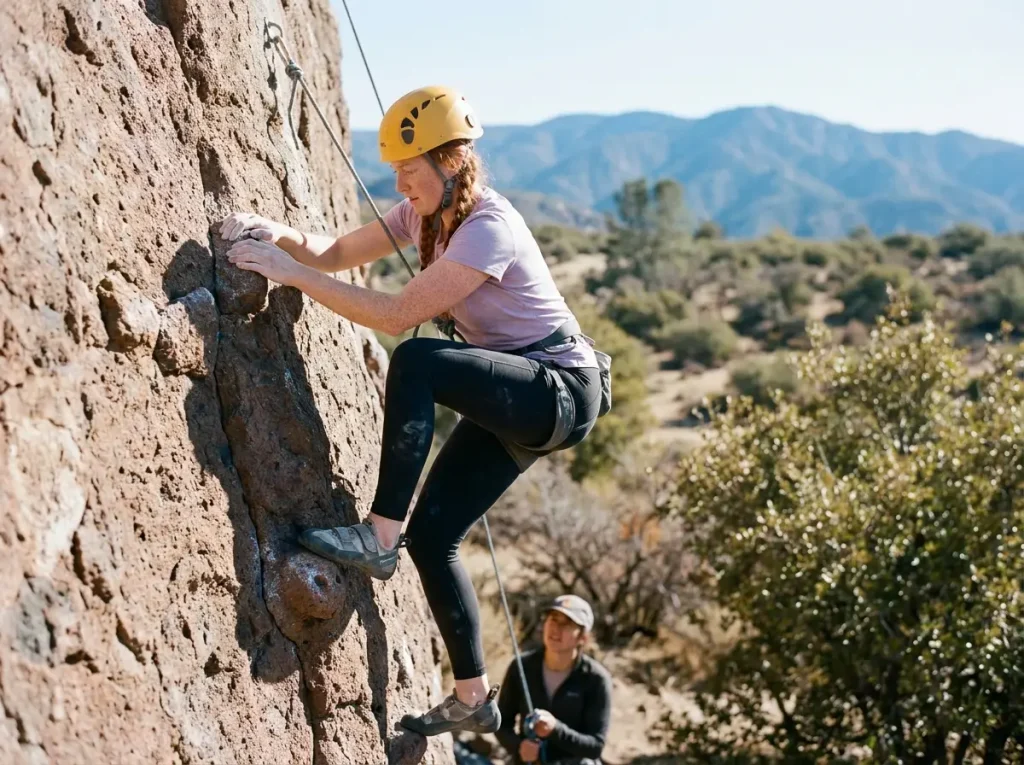
If you’re transitioning from the gym to real outdoor rock, the learning curve at Pinnacles is steeper than most gym-to-crag transitions. The rock demands more attention than plastic holds. Start with these:
- First Sister Center Route (5.4, East Side): A classic. The rappel descent feels serious but goes cleanly with two ropes.
- Portent (5.5, Discovery Wall): One of the best entry-point leads in the park. Sporty bolt spacing, accessible movement.
- Chockstone Dome (5.3–5.8 range, West Side): Three routes on the same formation, all solid. The 5.6 has a high exposure factor.
- Elephant Rock Regular Route (5.3, West Side): Short chimney, spectacular summit view, and a fun Indiana Jones feel on the approach.
Moderate Leads (5.9–5.10a)
This is where Pinnacles gets interesting — and where the grade-deflation reality bites hardest. A Pinnacles 5.9 is not the same mental experience as a bolted 5.9 at a sport crag. When you understand how grade systems map between different rock types, the pattern makes sense: technical difficulty and safety margin are separate variables here.
- Jorgie’s Crack (5.9, Discovery Wall): Classic crack with plenty of gear options. Beware the slick matrix.
- Coyote Ugly (5.9, Tiburcio’s X): Long pitch with spectacular exposure. Bring trad gear.
- Abner Bear Is Everywhere (5.10a, Long’s Folly): Best pocket climbing in the High Peaks.
- Lava Falls (5.9+, Balconies): Be a solid 5.9 leader before committing to this one. Long first pitch, real mental test.
Harder Lines (5.10b and Up)
Here’s the community rule that most trip reports skip: lead two grades below your comfortable onsight ceiling on your first Pinnacles visit. Not because the movement is technically harder. Because the mental overhead of questionable holds and aging hardware changes how you climb, and you’ll burn significantly more energy second-guessing yourself than you would on familiar rock.
Every experienced Pinnacles regular I know enforces this personally. They climbed 5.11 at their home crag, showed up at Pinnacles, and discovered that a Pinnacles 5.10d with variable rock quality, older bolts, and run-out sequences was a completely different experience. The solution isn’t avoiding the harder routes — it’s building up to them over a visit or two at moderate grades first. Reviewing how to manage the mental game when protection feels uncertain is genuinely useful preparation.
Routes worth targeting when you’re calibrated:
- POD (5.10d, Monolith East): Definitive Pinnacles classic. Stamina is the crux.
- Split Infinity (5.10c, Yaks Wall): Wildly exposed chute. Powerful movement with serious air beneath you.
- Cosmos (5.11b, Discovery Wall): Bouldery moves into a roof. Not your first hard Pinnacles lead.
When to Climb at Pinnacles (And When to Stay Home)
The Best Months: Fall Through Spring
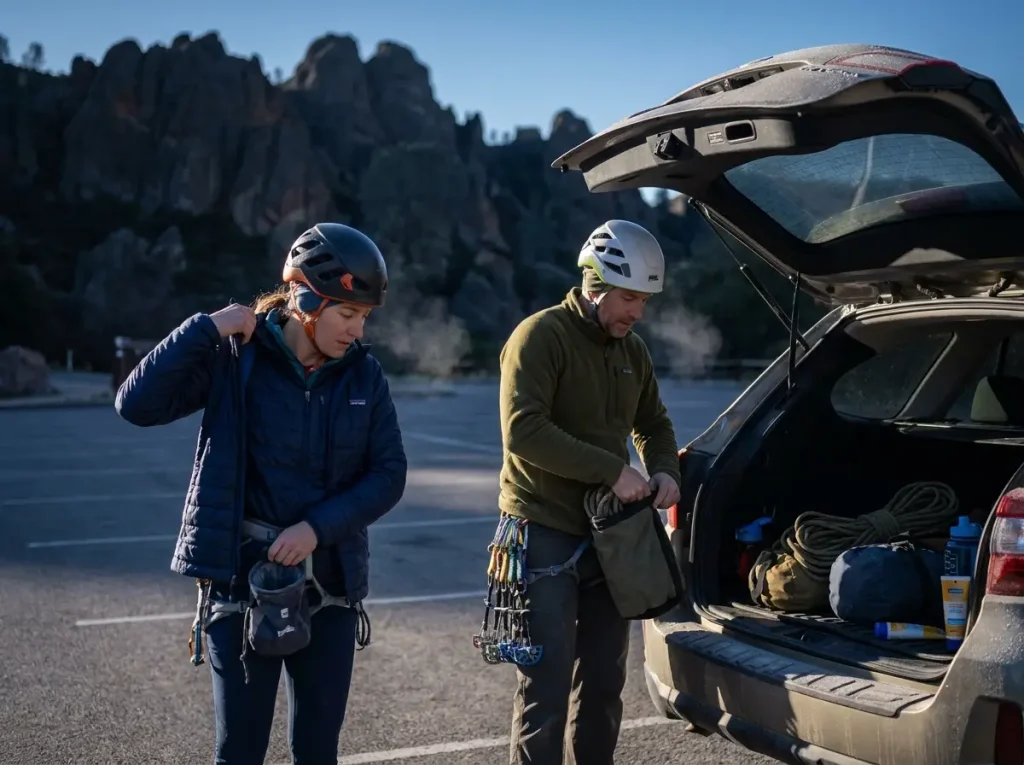
October through April is the window. The park sits in California’s inner coast range and warms fast. The most reliable conditions run November through March — cool, dry, and often clear. January and February can be cold in the shade but produce the clearest winter days.
Pinnacles stays dry when surrounding Bay Area crags are wet, which makes it a reliable winter climbing destination for the whole region.
Summer at Pinnacles: Heat, No Water, and a Long Drive for Nothing
Summer is not worth it. Temperatures regularly exceed 100°F at the park, and there are no water sources on any climbing approach trail. You’d be managing heat, dehydration, and hot rock simultaneously. The climbing isn’t better — it’s just miserable.
Pro tip: Even in winter, bring more water than you think you need. Two liters minimum for a half-day, three for a full day. The dry air and steady approach hike add up faster than expected.
Reading a Weather Window Before You Commit
The Friends of Pinnacles home page maintains a real-time weather update that’s more accurate for the immediate crag than regional forecasts. Rain makes the breccia slick and unreliable. Give it 24–48 hours after any precipitation before climbing.
Raptor Closures: How to Actually Navigate Them
Which Formations Close and When
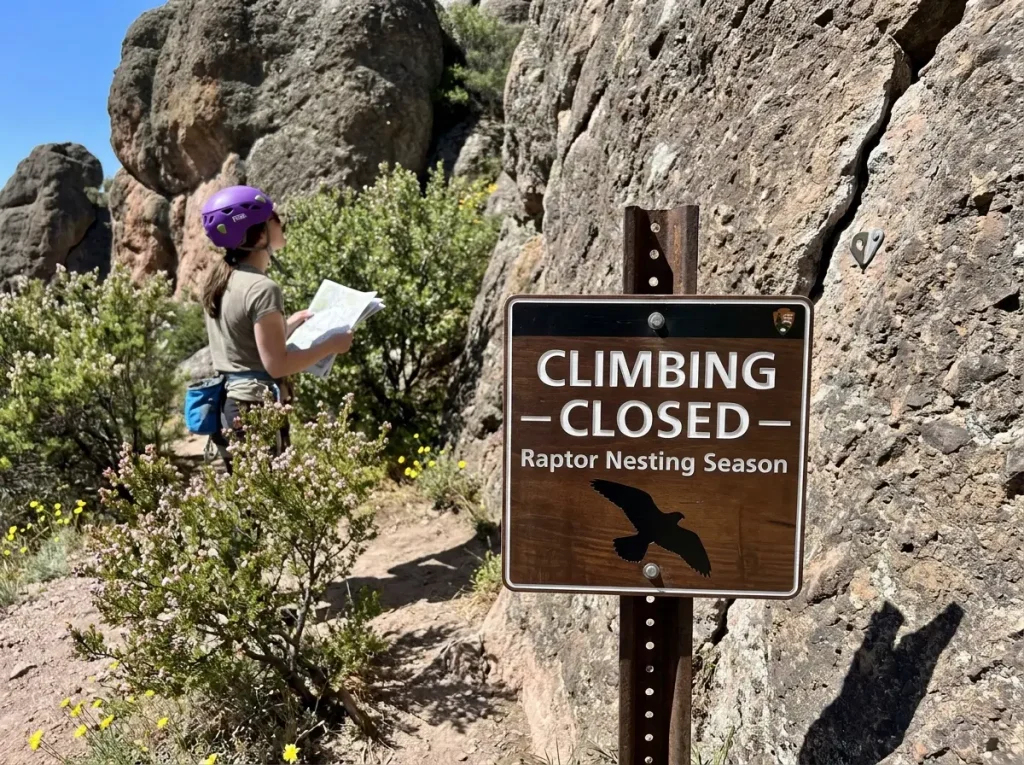
From January through July, the park temporarily closes climbing areas to protect nesting birds. The primary species are peregrine falcons (Falco peregrinus) and prairie falcons (Falco mexicanus), though California condors (Gymnogyps californianus) and golden eagles (Aquila chrysaetos) also nest in the park.
Specific closures change year to year depending on where birds actually establish nests. There’s no fixed list that stays accurate from one season to the next. Common closure zones include sections of the West Side formations, parts of the High Peaks, and specific routes on the East Side near the spires. The science behind why these closures matter — including the documented stress response in nesting raptors to human proximity — is worth understanding; the full explanation is at rockclimbingrealms.com/raptor-nesting-closures-science-explained.
Closures under the current management plan are voluntary in structure, but disturbing nesting wildlife can trigger federal fines. More to the point: the Pinnacles climbing community takes them seriously, and ignoring them makes you unwelcome at the crag.
How to Check Closure Status Before Your Trip
The Friends of Pinnacles closure tracker is the authoritative source. Check it the morning of your trip, not the week before. Closures open and close throughout the season as nesting activity shifts, and a formation that was shut last week may be open today — or the reverse.
Both the East and West trailheads have closure information boards. If you haven’t checked online, read the board before you start your approach.
Pro tip: Screenshot the current closure map before driving into the park. Cell service is unreliable in parts of the park, and you won’t want to hike back to your car just to check your phone mid-approach.
When Your Target Wall Is Shut: Backup Plans
This happens more often than people plan for. Arrive expecting to climb Discovery Wall, find it shut for falcon nesting — you need a Plan B ready before you leave home, not when you’re standing at the trailhead.
The reliable backup strategy: identify one primary area and one backup area on whichever side you’re visiting. East Side fallbacks include the Top Rope Wall, The Carousel, and Moses Spring Wall (check route-specific closures there too). West Side fallbacks include Chockstone Dome and the lower Balconies area. If you encounter a closure that isn’t listed on the FOP tracker, use the Access Fund’s access issue reporting system to document it for the broader community.
Trip Planning: Logistics, Gear, and Safety Checklist
Getting There and Park Entry
The East Entrance is via CA-25 to CA-146 near Hollister. The West Entrance is off US-101 near Soledad. Both entrances collect the standard NPS entry fee; an America the Beautiful pass covers it. The Pinnacles Campground is on the east side and accepts reservations through Recreation.gov.
Weekends during good-weather months fill up at Bear Gulch Day Use Area early. Shuttles run from the campground to the trailhead on busy weekends — check the current NPS schedule before planning your logistics.
Essential Gear Differences for Pinnacles
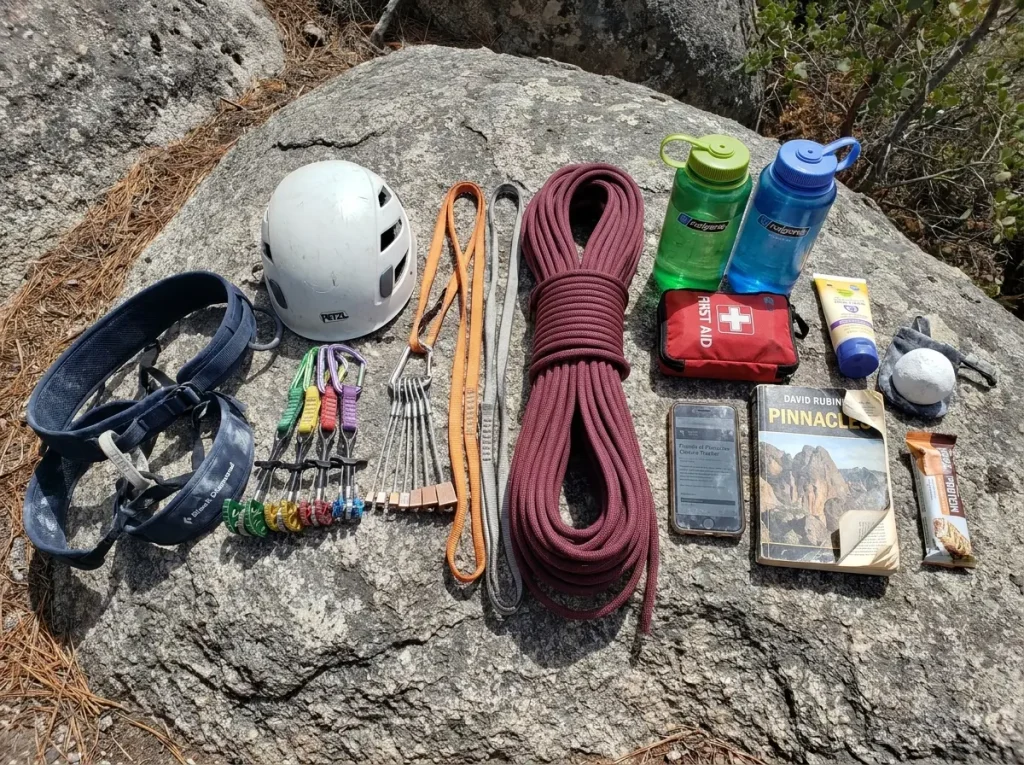
A standard sport climbing rack doesn’t cover everything you need here. Even on bolt-protected routes, bring:
- A helmet — non-negotiable, especially on the West Side where rockfall from above is a real factor on many routes
- A trad rack for routes requiring it: a single set of cams from micro through #3, a set of stoppers — building a rack specifically for Pinnacles’ finger and hand crack terrain means prioritizing small to mid-sizes
- Brown or grey webbing for fixed anchors and rap stations — both the NPS and FOP request this to reduce visual impact on the dark volcanic rock
- A chalk ball instead of loose chalk — rain is infrequent and chalk marks remain visible for months on breccia
Safety Non-Negotiables Before You Leave the Trailhead
Examine every bolt before you clip it. Test suspicious holds before weighting them. Let someone outside your party know your plans and expected return time.
The Climber’s Pact principles apply here with extra urgency: stay on established access trails marked by locking-carabiner posts, minimize impact on vegetation at the base of routes, and carry out everything you bring in. The David Rubine Climber’s Guide to Pinnacles National Monument (2nd edition, 1995) is the standard reference for route information — out of print but findable online and worth having before a serious trip.
Conclusion
Pinnacles rewards climbers who show up prepared and humble. Three things worth carrying from this guide: the tap test is not optional — build the habit before you need it. Your grade on granite doesn’t transfer directly to this rock. And the raptor closure tracker is a morning-of task, not a pre-trip planning step.
The park is genuinely spectacular. The volcanic formations, the falcons circling overhead, the challenge of reading a rock type that has nothing to do with what you trained on — it’s worth the drive, worth the extra preparation, and worth coming back to.
Bookmark the FOP closure tracker, build your backup plan, and start on the East Side.
Q1 Is Pinnacles National Park good for beginner climbers?
Pinnacles can work for beginners in the right setup. The Top Rope Wall on the East Side has routes from 5.4 to 5.9 appropriate for newer climbers with basic outdoor training. However, the volcanic breccia demands more attention than gym holds, and any lead climbing here should be approached conservatively — even by experienced climbers. A guided trip through one of the park’s authorized services is a solid first step for true beginners.
Q2 When is the best time to climb at Pinnacles?
October through April is the best window, with November through March offering the most reliable conditions. Summer temperatures regularly exceed 100°F with no water available on the trails — warm-season climbing isn’t worth attempting. Winter days are often clear and cool, ideal for breccia climbing.
Q3 Are routes at Pinnacles closed for raptor nesting?
Yes. From January through July, certain formations close to protect nesting peregrine falcons, prairie falcons, golden eagles, and California condors. Specific closures change year to year based on where birds actually nest. Check the Friends of Pinnacles closure tracker at pinnacles.org the morning of your trip for current status.
Q4 Do I need a permit to climb at Pinnacles?
No climbing permit is required beyond the standard park entry fee. Motorized drills for bolting are permanently prohibited, and rappel-placed first ascents are against park tradition. Check the National Park Service’s current climbing regulations before your trip, as specific route restrictions can change.
Safety Notice: Rock climbing and mountaineering are inherently high-risk
activities that can involve physical trauma or fatal incidents. The information on Rock Climbing Realms is for
educational and informational purposes only. Techniques and advice presented here are not a substitute
for professional, hands-on instruction. Conditions and risks vary by location. Always seek guidance
from a qualified instructor before attempting new techniques. By using this website, you agree that you
are solely responsible for your own safety. Any reliance you place on this information is strictly
at your own risk, and you assume all liability for your actions. Rock Climbing Realms and its authors
will not be held liable for any harm, damage, or loss sustained in connection with the use of this information.
Affiliate Disclosure: We are a participant in the Amazon Services LLC Associates Program, an
affiliate advertising program designed to provide a means for us to earn advertising fees by advertising and linking
to Amazon.com. As an Amazon Associate, we earn from qualifying purchases. We are also an official affiliate partner
of Black Diamond Equipment via the AvantLink network. If you click on a Black Diamond affiliate link and make a
purchase, we may earn a commission at no additional cost to you. We also participate in other affiliate programs.
Additional terms are found in the terms of service.