
In this article
The first time I drove into City of Rocks, I missed the turnoff twice. The reserve hides behind miles of ranch land and dirt roads south of Almo, and nothing about the approach hints at what’s waiting — until the granite spires appear above the sagebrush like a city skyline dropped into the high desert. I spent two weeks that first trip and came back knowing I’d barely scratched the surface.
This guide covers everything you need to plan a climbing trip to City of Rocks National Reserve in Idaho — the areas that match your ability, the routes worth your time, the gear the granite demands, and the logistics that most guides skip. Whether you’re leading 5.12 or tying in for your first outdoor pitch, this place has something that’ll push you.
Quick Answer: City of Rocks National Reserve in southern Idaho offers over 600 granite climbing routes from 5.6 to 5.14 across sport, trad, and multi-pitch disciplines. The reserve sits at 7,000 feet near Almo, Idaho, with the best climbing between May and September. Castle Rocks State Park next door adds beginner-friendly bolted routes. Below you’ll find area breakdowns, route picks, gear lists, and trip planning details.
What Makes City of Rocks Granite Different
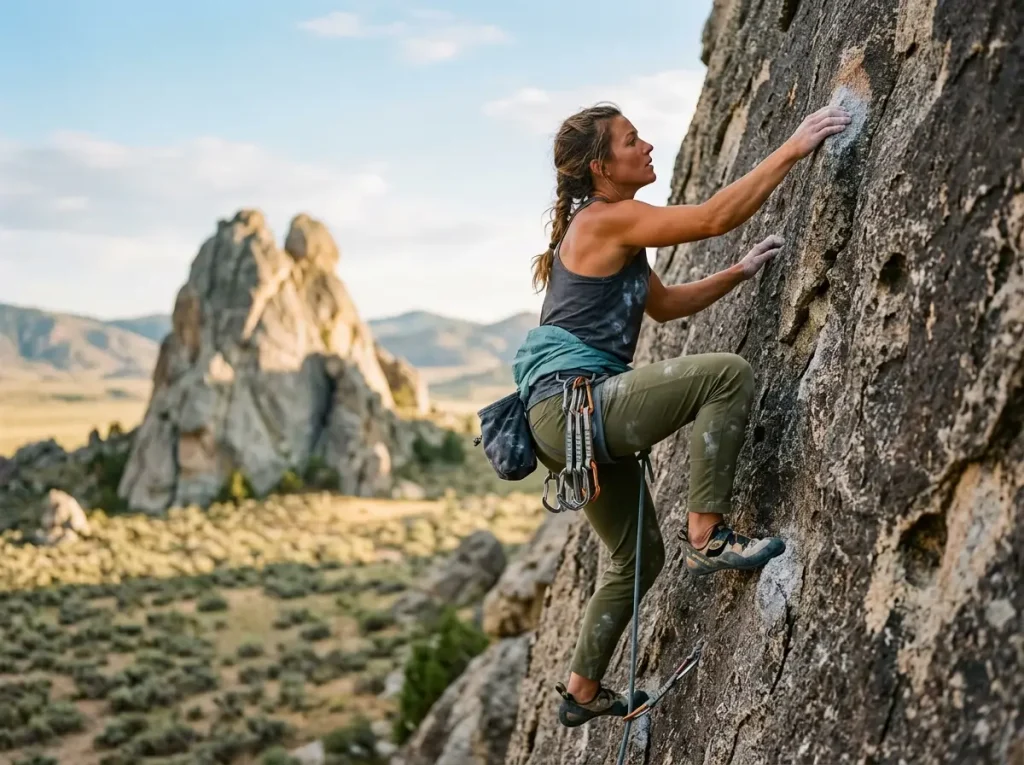
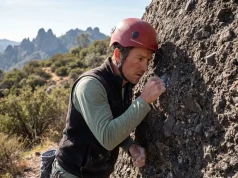
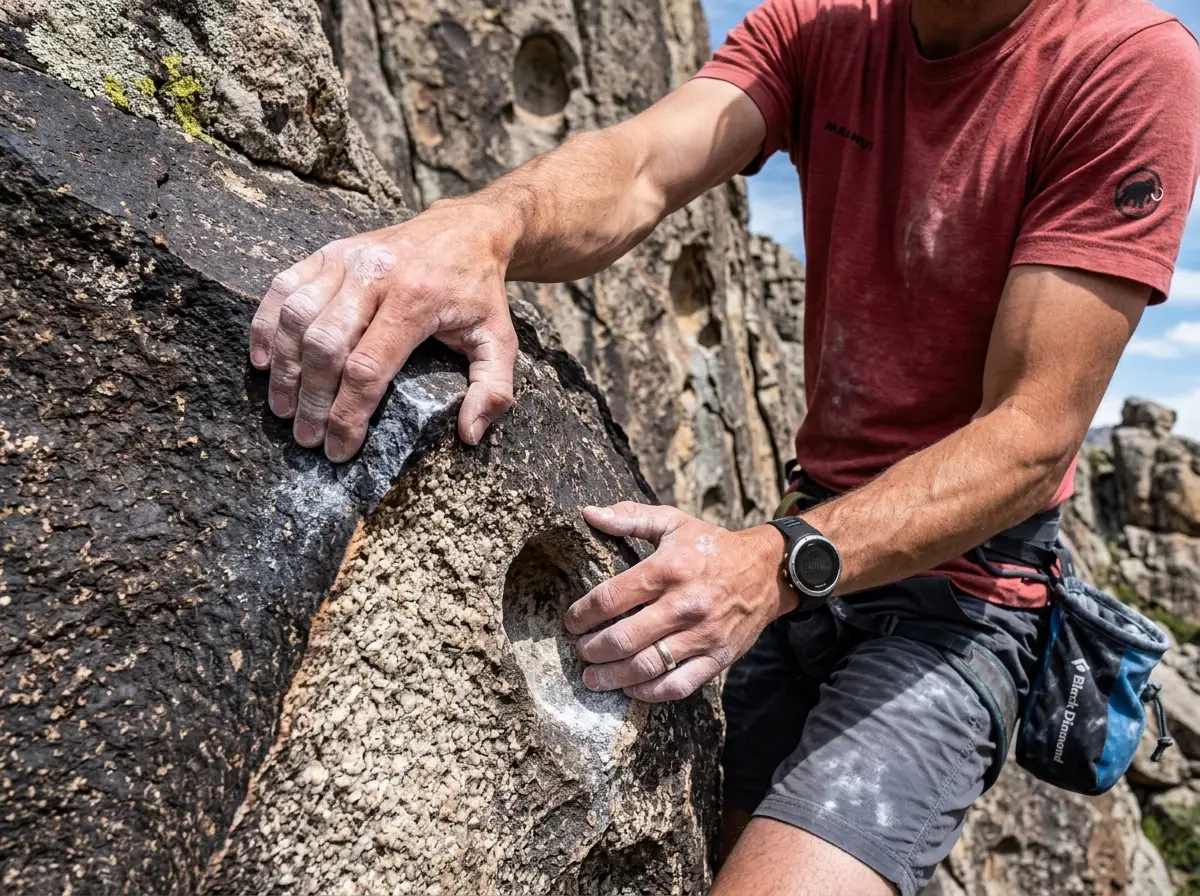
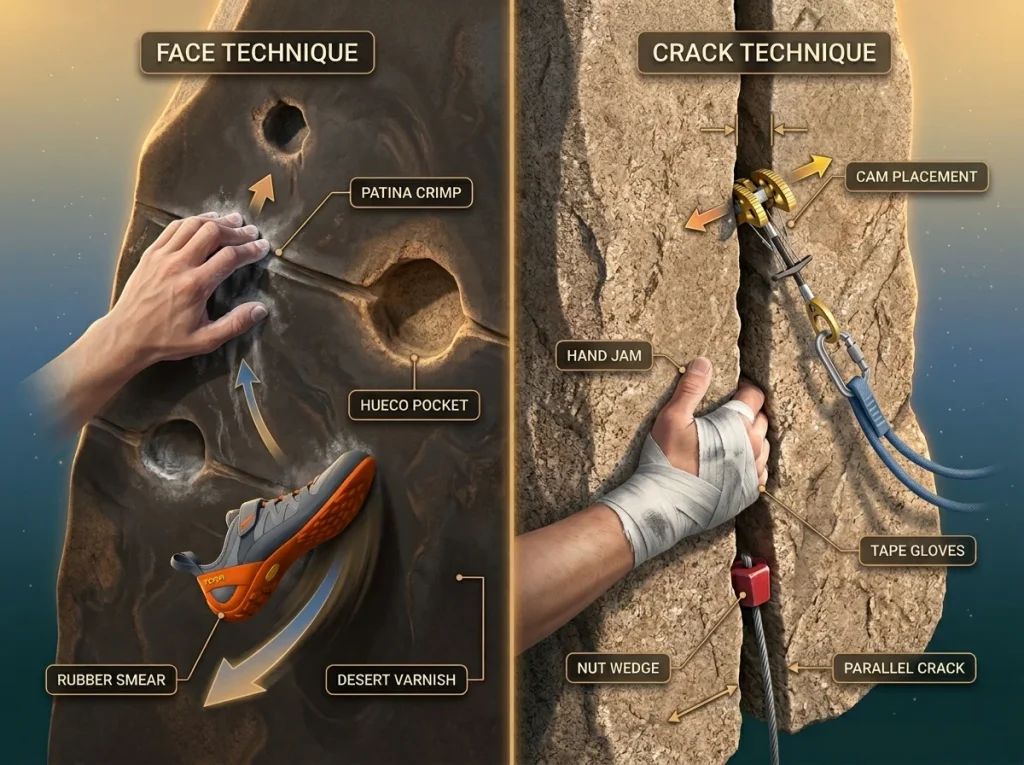
The rock at City of Rocks is 28-million-year-old Almo Pluton granite, and it climbs unlike any granite you’ve touched in Yosemite or Joshua Tree. The surface has a dark desert varnish — a patina built up over millennia — that creates a smooth, almost polished texture on some faces while leaving others rough and crystalline where the varnish has weathered away.
Patina Crimps and Huecos
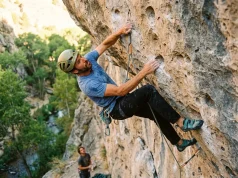
The signature moves here involve crimping on patina edges where the dark varnish meets raw granite. These edges are thin but surprisingly positive once you trust them. Scattered across the faces are huecos — weathered pockets ranging from fingertip divots to grapefruit-sized holes — that reward creative footwork and movement.
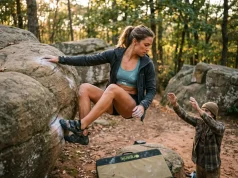
The bouldering is defined by sharp crimps, abundant pinches, and these huecos. Sport routes tend to follow the patina face features, while trad lines find the crack systems that split the formations vertically.
How the Rock Affects Your Movement
On patina faces, you’re smearing and edging on small features. Sticky rubber matters more here than at most granite destinations — worn-out shoe rubber slides on the polished varnish in ways that raw granite wouldn’t. In the cracks, the granite is coarse enough for solid hand and finger jams, but the crystal structure can chew up your tape gloves by the end of a full day.
Pro tip: Bring two pairs of climbing shoes if you’re staying more than a weekend. One aggressive pair for the steep patina faces, one moderate pair for the crack routes and multi-pitches. Your hands will thank you for the variety, and your feet will thank you more.
Why It Matters for Your Rack
The crack systems at City of Rocks run from finger-width to offwidth, and many routes have mixed protection — bolts on the face sections that stop halfway up, with gear placements taking over in the crack above. This catches people off guard. You’ll clip three bolts feeling comfortable on a sport route and suddenly need to place a cam to protect the last 30 feet. The granite accepts gear well, with clean parallel-sided cracks that hold cams and nuts securely.
Castle Rocks vs City of Rocks — Where to Climb by Ability
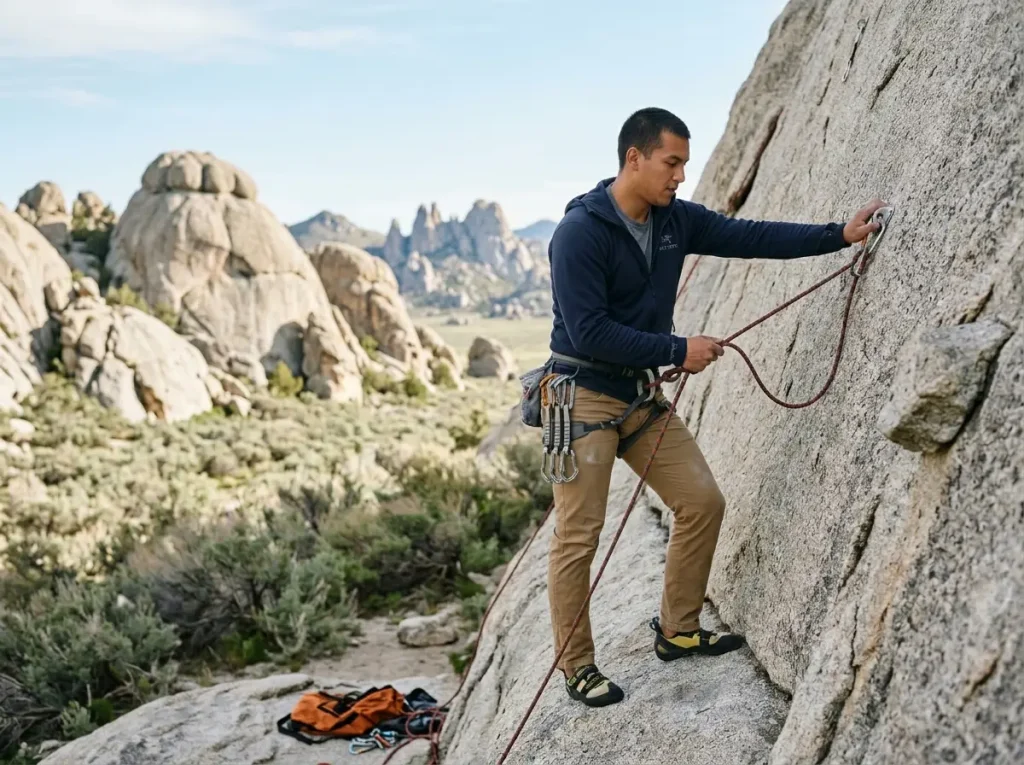
Everyone lumps these two areas together, but they climb differently and serve different climbers. Castle Rocks State Park sits adjacent to the National Reserve and has its own distinct character.
Castle Rocks for Beginners and Intermediate Climbers
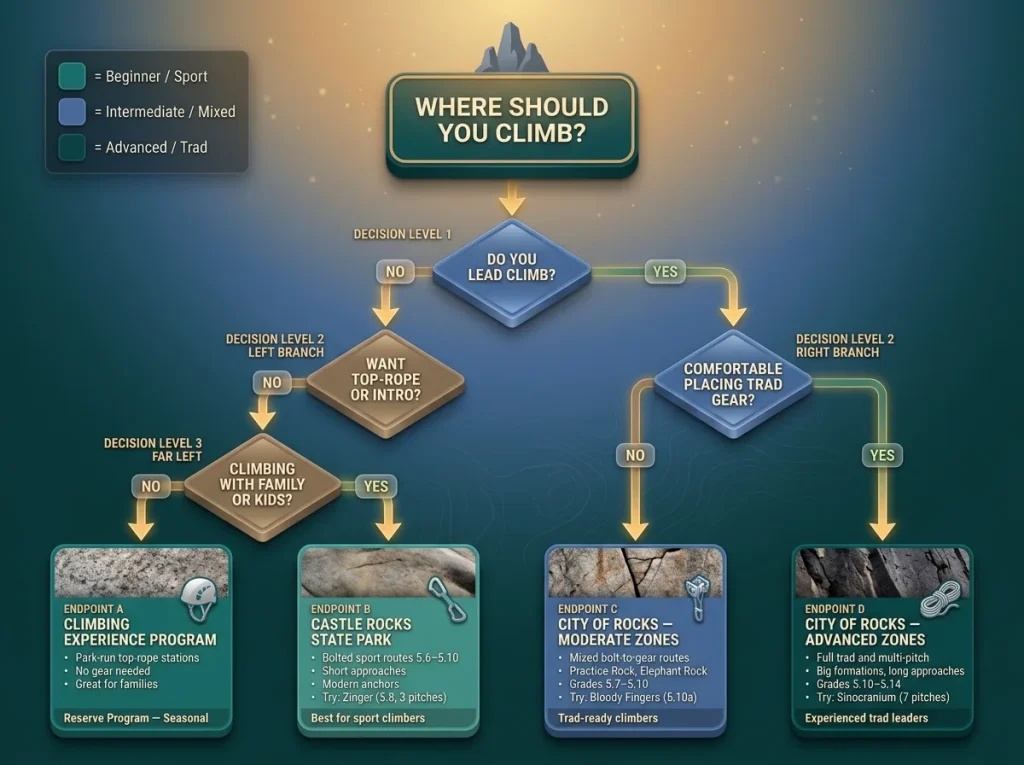
Castle Rocks is where you go if you’re new to outdoor climbing or want a relaxed day on well-protected routes. The rock is lower-angle, the bolting is modern and consistent, and the approaches are short — some routes start 60 seconds from the parking area. Grades cluster in the 5.6 to 5.10 range with generous spacing between bolts.
The route Zinger is a three-pitch 5.8 jug haul that’s become a rite of passage for climbers making the gym-to-crag transition. Big holds, solid protection, and enough exposure to feel like a real climb without the commitment of the bigger City formations.
City of Rocks for Experienced Climbers
The main reserve is where the trad routes live. Trad routes outnumber sport climbs here, and the grades cover the full spectrum from mellow 5.6 multi-pitches to sustained 5.14 test pieces. The formations are bigger, the approaches longer, and the protection more varied. Mixed routes — where bolts transition to gear placements mid-pitch — are common.
The marquee classic is Bloody Fingers (5.10a), a 100-foot crack climb on granite that has everything from a bouldery start to a thin finger crack to the chains. If you climb one route at City of Rocks, make it this one.
The Decision Matrix
If you’re climbing 5.8 and below and want bolted anchors with minimal approach, start at Castle Rocks. If you’re comfortable placing gear and want variety from single-pitch cracks to multi-pitch systems, head into the main City. Most climbers who stay a week split their time between both.
Best Routes by Grade at City of Rocks
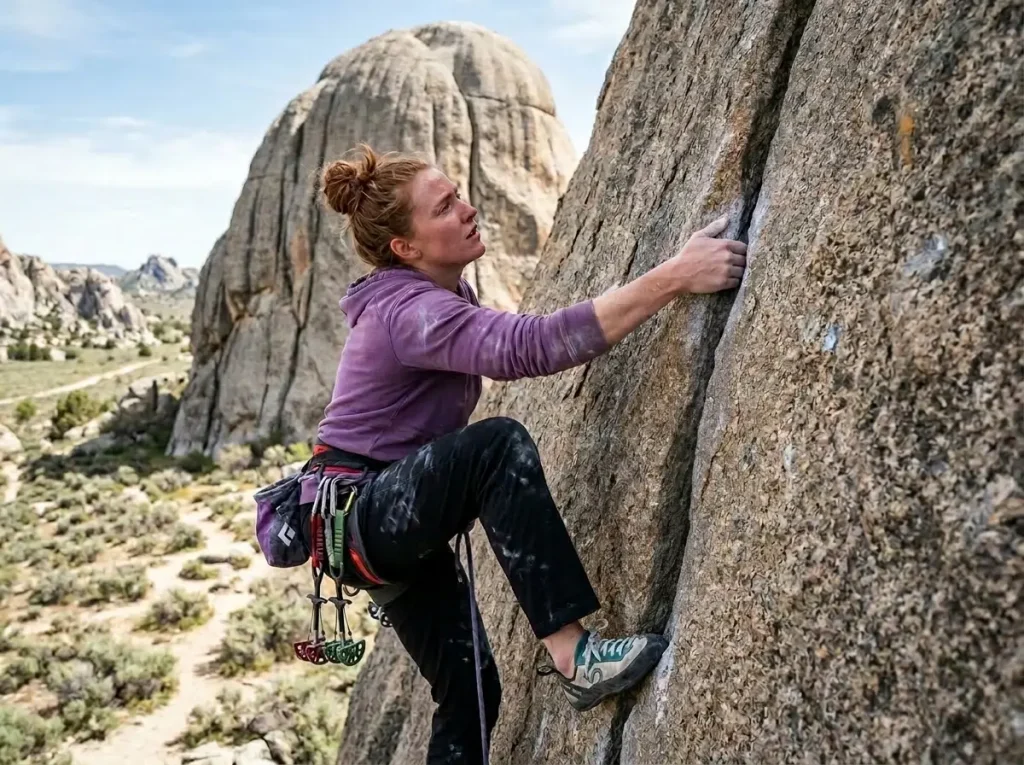
Picking routes at City of Rocks without a plan means wandering between formations for an hour wondering where to start. Here’s what’s worth your time, organized by what you’re climbing.
5.6–5.8: The Approachable Classics
Practice Rock sits in the center of the reserve and offers several top-rope options for beginners and intermediates. Three 5.7 routes — Far Left, New Left, and Original Left — are where most people tie in for the first time at City of Rocks.
Elephant Rock has a one-minute approach and holds beautiful low-grade classics: Wheat Thin (5.7), Rye Crisp (5.8), and Columbian Crack (5.7). These are clean crack lines on solid granite with straightforward protection.
On Bath Rock West, Rollercoaster (5.8) is one of the best routes for new lead climbers — no approach, clean bolts, and positive holds throughout.
5.9–5.10: The Sweet Spot
This is where City of Rocks gets interesting. Bloody Fingers (5.10a) on the main wall is the must-do crack climb. Too Much Fun (5.8-5.9) on Bumblie Rock lives up to its name with solid hand and foot holds on featured granite.
The 5.9–5.10 range gives you access to the best of both worlds: challenging enough to feel earned, moderate enough to on-sight if you’re having a good day.
5.11 and Above: The Test Pieces
The harder routes tend to follow steeper patina faces with smaller huecos and thinner crimps. The sustained nature of these climbs — long sequences on small holds with minimal rest — makes them physically demanding in ways that the lower grades don’t hint at. If you’re projecting at this level, bring extra chalk and plan for shorter days.
Multi-Pitch Options
Sinocranium is a seven-pitch, 700-foot line that’s been a City of Rocks classic for decades. It’s moderate in grade but committing in length — bring your multi-pitch systems and plan for a full day. The summit views of the high-desert basin make the approach and descent worth the effort.
Pro tip: Bring the Dave Bingham guidebook — City of Rocks and Castle Rocks Climber’s Guide (2nd edition, 2025, Wolverine Publishing). It’s the definitive resource with route descriptions, maps, and action photos. Buy it online or at the visitor center in Almo before you drive in.
Climbing Season and Weather Strategy
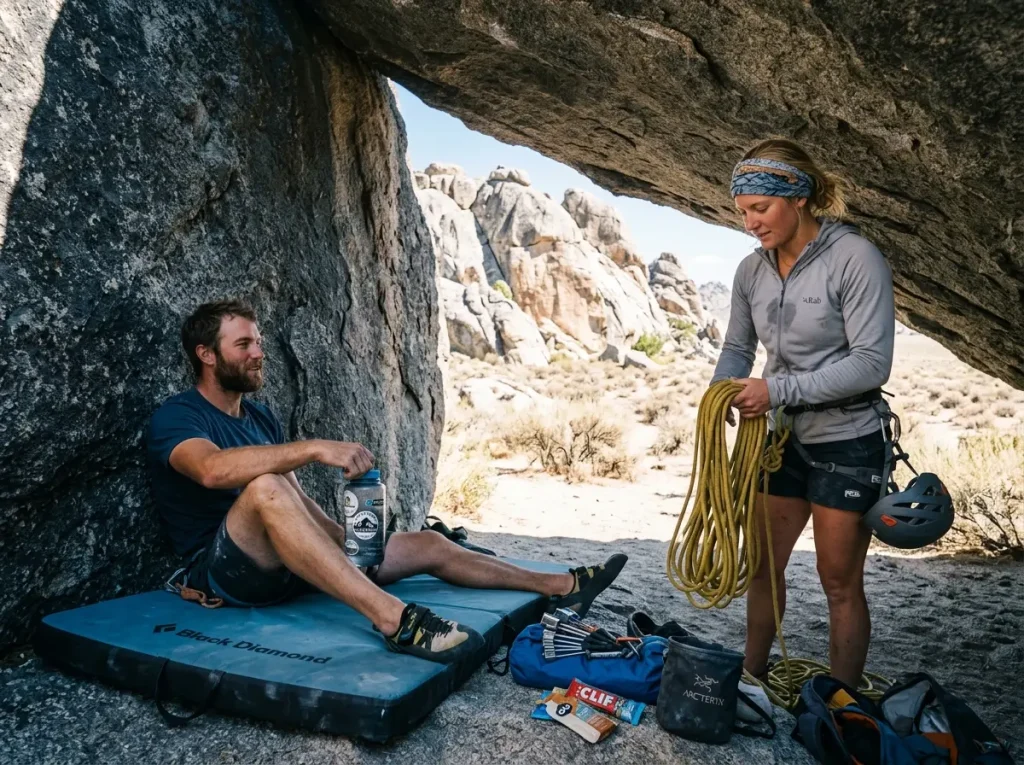
City of Rocks sits at 7,000 feet in the high desert of southern Idaho. That elevation means weather that can shift from sunburn to hypothermia in the same day, and a climbing season that rewards planning over spontaneity.
When to Go
The reserve is climbable from April through October, but the sweet spot is late May through June and September. These shoulder seasons offer daytime temps in the 60s and 70s with cool mornings and manageable afternoon warmth.
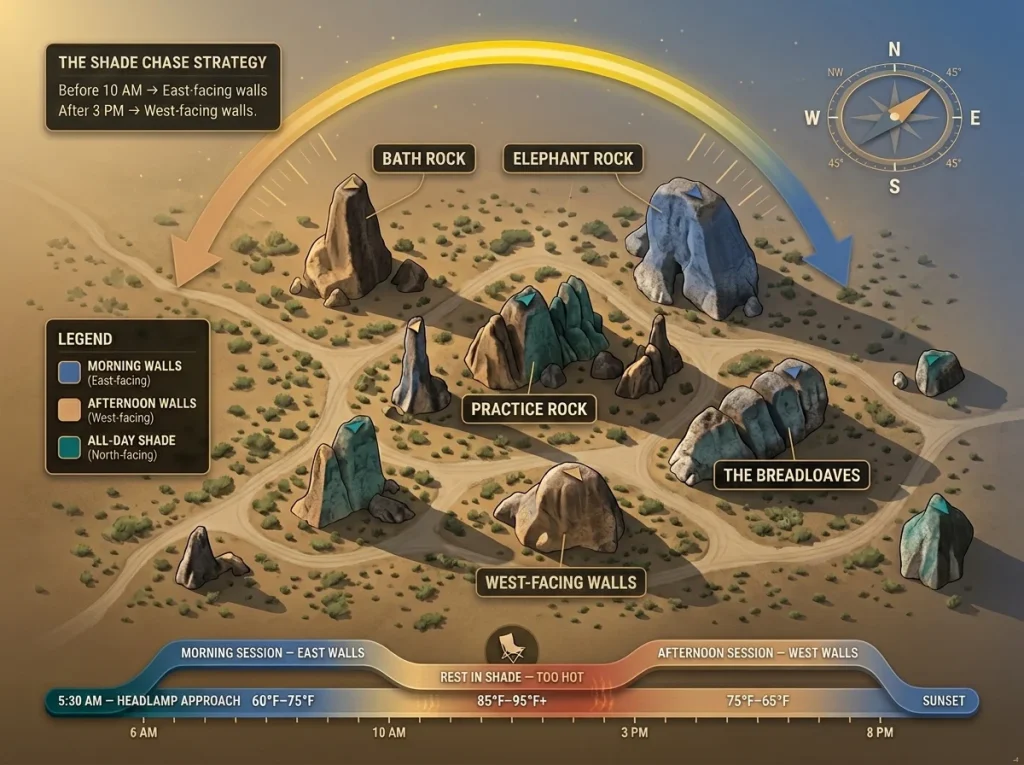
July and August bring highs that can push past 90°F. You can still climb, but you need a strategy. Early starts — headlamp approaches at 5:30 AM — let you get three or four pitches in before the rock starts radiating heat. By early afternoon, most experienced climbers are in their camp chairs waiting for the shade to reach their project.
The Shade Chase
Here’s what most guides don’t tell you: the orientation of each formation determines when it’s climbable in summer. East-facing walls catch morning sun and are scorching by 10 AM but cool down by mid-afternoon. West-facing walls stay shaded until noon and climb well into the late afternoon.
Experienced City of Rocks climbers plan their day around two sessions: east-facing routes in the last hour before sunrise shadow lifts, then west-facing routes from 3 PM until dark. The two hours in between? That’s lunch in the shade of a boulder, and nobody apologizes for it.
Weather Hazards
Afternoon thunderstorms roll through regularly in July and August. Granite conducts electricity efficiently, and the spires are the highest points in the basin. If you see clouds building, get off the rock. The storms move fast and hit hard at this elevation.
Temperature swings of 30–40 degrees between day and night are normal. Campsites at higher elevations run 10–15 degrees cooler than the valley floor. Pack layers even in summer — a down puffy at the campfire isn’t optional, it’s survival.
Camping and Logistics at City of Rocks
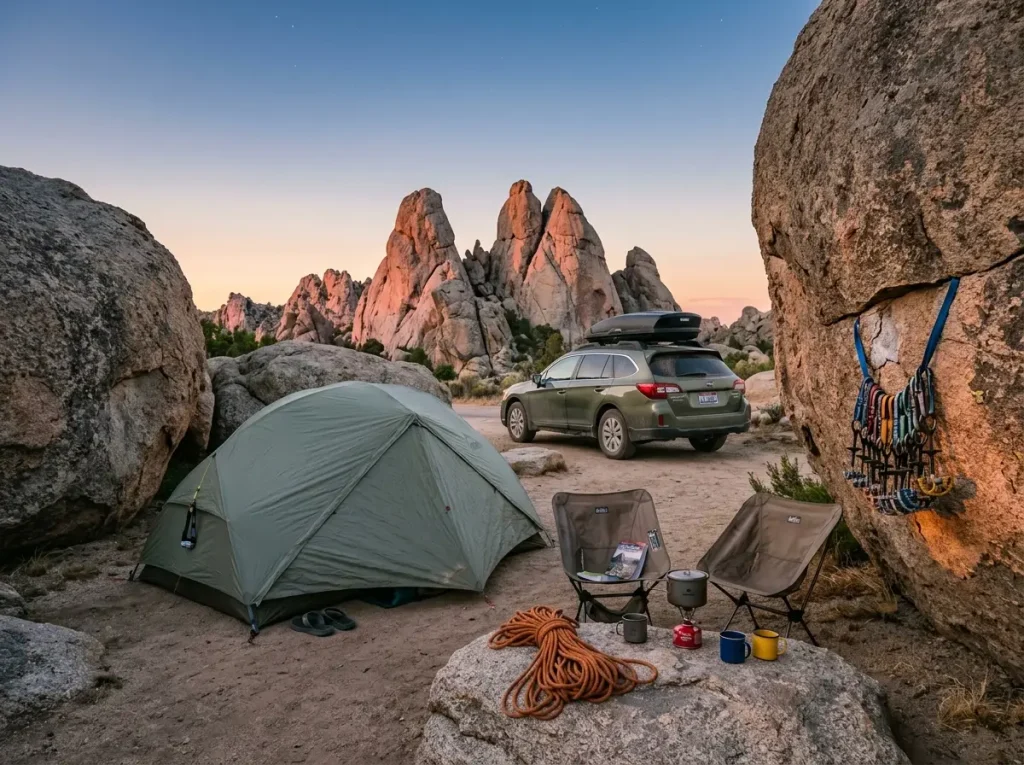
Getting to City of Rocks takes commitment. The reserve is remote by design, and the logistics reflect that.
How to Get There
From Salt Lake City: about 3 hours northwest on I-84 to Declo, then south on Highway 77 through Albion and Almo. From Boise: about 4–5 hours southeast on I-84 to the same Declo exit. From Jackson, Wyoming: roughly 5 hours southwest.
The last stretch from Almo into the reserve is paved. Roads within the reserve are dirt but passable for low-clearance vehicles in dry conditions. After rain, the clay roads get slick — a Subaru will handle it, but a sedan might struggle.
Camping Options
The reserve has 60+ dispersed campsites tucked among the granite formations. These are primitive sites — flat dirt pads with fire rings, no hookups, no water at individual sites. You fill up at the dump station on the way in and ration accordingly.
Reservations are strongly recommended during climbing season (May–September). Weekend sites book weeks in advance, especially around holidays. Walk-in availability exists midweek but don’t count on it.
Castle Rocks State Park has Smoky Mountain Campground with additional sites. Free BLM dispersed camping is available just outside the reserve boundaries for climbers on a budget.
What You Need to Know Before You Go
As of 2024, the reserve implemented a no trash cans anywhere policy. Pack out everything — and I mean everything. Bring extra trash bags and a plan for your garbage.
There’s no cell service inside the reserve. Download your maps, tell someone your itinerary, and bring a first aid kit. The nearest town with services is Almo, which has a small store but limited supplies. Stock up in Burley or Twin Falls on the drive in.
Pro tip: Fill every water container you own before driving into the reserve. The dump station water is your only source, and on a hot climbing day you’ll burn through a gallon per person easily. Two gallons per person per day is the safe minimum for summer trips.
Essential Gear for City of Rocks Granite
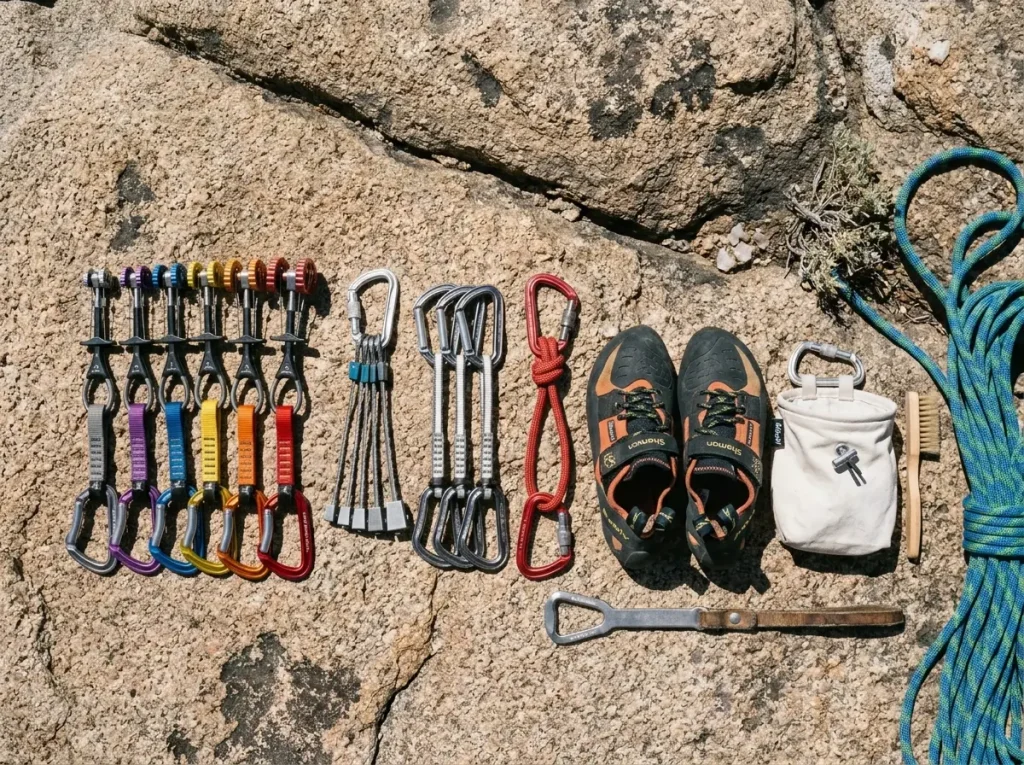
What you bring to City of Rocks depends on whether you’re climbing bolted routes at Castle Rocks or mixed trad lines in the main reserve. Here’s what the granite actually demands.
Trad Rack Specifics
A single standard rack — cams from finger size (#0.3) through hand size (#3), a set of nuts, and a few alpine draws — covers most moderate routes. If you want comfort on the wider cracks and multi-pitches, bring a double rack with larger pieces (#4 and #5 Black Diamond Camalots or equivalent). Offwidth sections aren’t common but they exist, and being short a big piece 80 feet up is a bad place to learn that lesson.
The granite accepts gear cleanly. Parallel-sided cracks hold cams and nuts well with minimal walking. Bring a nut tool — placements seat deep in the crystalline granite and can be stubborn to clean.
Sport Climbing Gear
For Castle Rocks and the bolted routes in the City, 12–14 quickdraws cover most single-pitch lines. A 60m rope handles everything, though a 70m gives you more options on the longer pitches. A few routes require anchor cleaning skills — practice lowering and threading before you’re 100 feet up.
Shoes and Rubber
Sticky rubber is non-negotiable on the patina. The dark varnished surfaces are smooth enough that worn-out rubber loses purchase completely. If your shoes are approaching the end of their resoling life, get them done before the trip. Aggressive downturned shoes work on the steep face routes. Moderate, comfortable shoes work better for the all-day crack climbing and multi-pitches.
Everything Else
Helmet — always, on everything. The granite formations shed small flakes and the approaches cross below routes where other climbers are active. Sun protection is serious at 7,000 feet — sunscreen, sun hoodie, and a hat for the belayer. A well-organized harness keeps your gear accessible on the longer trad routes.
Guide Services and Learning to Climb at City of Rocks
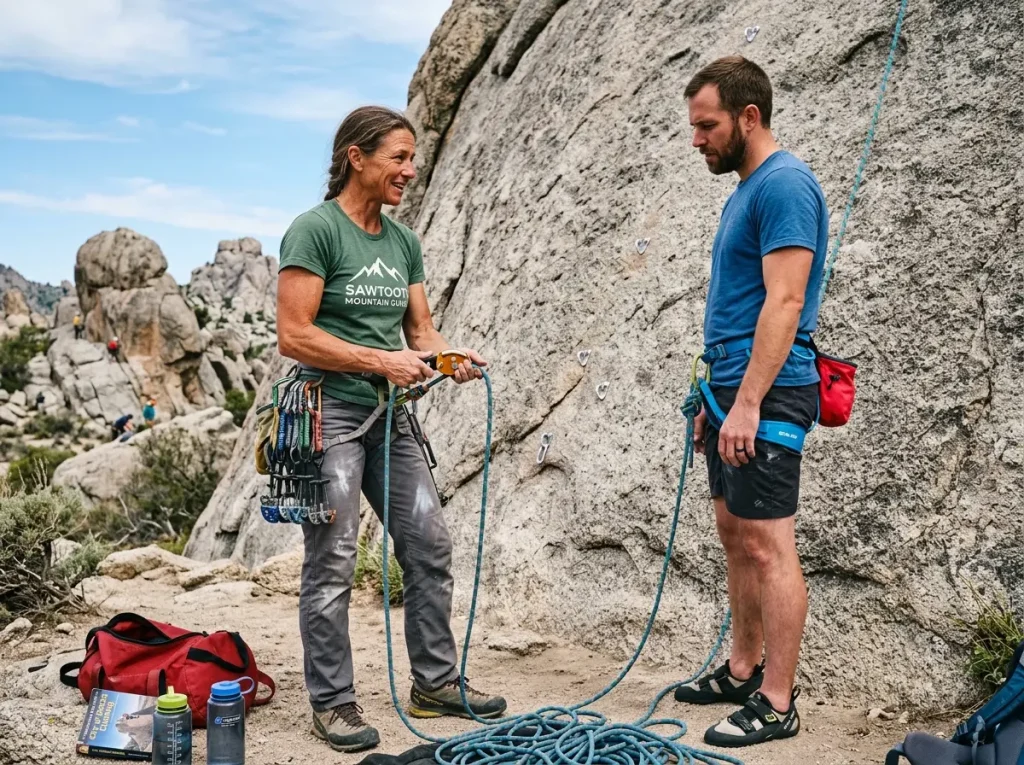
City of Rocks has a handful of permitted guide services, and hiring a guide makes sense if you’re new to outdoor climbing, new to trad, or want to maximize route selection in limited time.
Permitted Guide Services
Sawtooth Mountain Guides is one of only two guide services permitted by the NPS to operate inside the reserve. They run everything from single-day introductory clinics to multi-day fully catered climbing trips. Exum Mountain Guides and The Mountain Guides also offer City of Rocks programs focused on sport climbing, trad skills, and multi-pitch instruction.
Guided trips range from $250–$500 per person for single-day programs depending on group size and trip type. Multi-day packages that include camping and meals run higher but take all the logistics off your plate.
The Climbing Experience Program
The reserve itself runs a Climbing Experience Program designed for beginners and families. Park staff set up top-rope stations on moderate routes and provide basic instruction. It’s a low-commitment way to try climbing without investing in gear or hiring a private guide. Check the NPS events calendar for dates — the program runs seasonally and fills up.
Self-Guided Preparation
If you’re heading in without a guide, know your systems cold before you arrive. The reserve is remote, cell service is nonexistent, and the nearest rescue team is not close. Review your trad anchor systems, practice your rappels, and climb within your ability level. City of Rocks rewards preparation and punishes overconfidence.
Pro tip: The visitor center in Almo opens seasonally and the rangers there know the current route conditions — which formations are dry, where raptor closures are in effect, and which new routes have been established since the last guidebook edition. Stop in before your first day of climbing.
Climbing Rules and Ethics at City of Rocks
City of Rocks National Reserve is co-managed by the National Park Service and Idaho Department of Parks and Recreation. The climbing regulations reflect that dual management.
Permits and Access
You do not need a permit to climb established routes or scramble on the formations. A permit is required if you plan to place permanent anchors — new bolts or fixed hardware. This keeps the bolt proliferation in check and preserves the trad character of many formations.
A day-use or camping fee applies to enter the reserve. Current fees are posted at the entrance station and on the NPS website.
Seasonal Closures
Raptor nesting closures affect several formations each spring and early summer. Peregrine falcons and prairie falcons nest on the spires, and the NPS closes specific routes and approach areas to protect them. Closures are posted at trailheads and at the visitor center — check before you hike to a formation. Getting shut down at the base after a 30-minute approach is a waste of a climbing day.
Leave No Trace at the Crag
Crag ethics matter here more than at most destinations because of the reserve’s co-management structure. The NPS watches climbing impact closely, and irresponsible behavior gives ammunition to access restrictions.
Don’t chip holds. Don’t leave fixed gear on routes unless you’re prepared to retrieve it. Don’t trundle loose rock without checking below. Brush chalk off holds when you’re done — the white marks on dark patina are visible from across the basin and they accumulate fast.
The California Trail — a historic emigrant route — runs through the reserve, and climbing is prohibited on formations along its corridor. Respect the closures. This trail is a National Historic Landmark, and the climbing access we have here exists because the climbing community has earned it through responsible behavior.
Conclusion
City of Rocks is one of those places that rewards you more the longer you stay. The granite is unique, the setting is remote enough to feel like an adventure, and the route variety means you won’t run out of objectives in a week.
Three things to remember: the reserve sits at 7,000 feet in the high desert, so plan your water, your shade strategy, and your layers accordingly. Castle Rocks is the better choice for newer climbers and well-bolted sport routes. And the trad climbing in the main City is as good as anything in the American West — bring a rack and the skills to use it.
Your next move: pick a season, book a campsite early, grab the Bingham guidebook, and drive south from Almo until the spires appear. The rock’s been waiting 28 million years. It can handle one more weekend.
Q1 Is City of Rocks good for beginner climbers?
Yes — Castle Rocks State Park has well-bolted sport routes from 5.6 to 5.10 with short approaches and modern anchors, making it one of Idaho’s best beginner outdoor climbing areas. Practice Rock in the main reserve also offers approachable top-rope setups for first-timers.
Q2 What is the best time of year to climb at City of Rocks?
Late May through June and September offer the best conditions — daytime temps in the 60s–70s with cool mornings. July and August are climbable but require early starts and shade management due to highs exceeding 90°F at the 7,000-foot elevation.
Q3 Do you need a permit to climb at City of Rocks?
No permit is needed to climb established routes. You only need a permit to place new permanent anchors like bolts. A standard day-use or camping fee applies to enter the reserve, payable at the entrance station.
Q4 How many climbing routes are at City of Rocks?
Over 600 established routes ranging from 5.6 to 5.14 across sport, trad, and mixed protection styles. Routes range from 30-foot single-pitch bolted lines to 700-foot multi-pitch classics like Sinocranium. The adjacent Castle Rocks adds more moderate options.
Q5 Can you camp at City of Rocks National Reserve?
The reserve has 60+ dispersed primitive campsites among the granite formations. No water or hookups at individual sites — bring all your water. Reservations are recommended for climbing season weekends. Free BLM dispersed camping is available just outside reserve boundaries.
Safety Notice: Rock climbing and mountaineering are inherently high-risk
activities that can involve physical trauma or fatal incidents. The information on Rock Climbing Realms is for
educational and informational purposes only. Techniques and advice presented here are not a substitute
for professional, hands-on instruction. Conditions and risks vary by location. Always seek guidance
from a qualified instructor before attempting new techniques. By using this website, you agree that you
are solely responsible for your own safety. Any reliance you place on this information is strictly
at your own risk, and you assume all liability for your actions. Rock Climbing Realms and its authors
will not be held liable for any harm, damage, or loss sustained in connection with the use of this information.
Affiliate Disclosure: We are a participant in the Amazon Services LLC Associates Program, an
affiliate advertising program designed to provide a means for us to earn advertising fees by advertising and linking
to Amazon.com. As an Amazon Associate, we earn from qualifying purchases. We are also an official affiliate partner
of Black Diamond Equipment via the AvantLink network. If you click on a Black Diamond affiliate link and make a
purchase, we may earn a commission at no additional cost to you. We also participate in other affiliate programs.
Additional terms are found in the terms of service.