
In this article
Halfway up the third pitch, I reached for a #1 cam that should have been right there — front of the sling, left side, same spot it always lives. Instead I grabbed a fistful of tangled nuts, watched the whole gear sling swing away from my body like a chandelier, and spent forty-five seconds fighting gear while my forearms screamed. That pitch should have gone clean. It didn’t.
After ten years on trad and multipitch routes from Yosemite to the Gunks, I can tell you: that fumble wasn’t a skills problem. It was a trad climbing gear management problem. A clean, repeatable racking system is the difference between flowing up a pitch and white-knuckling through it — and most climbers never fix the root cause.
⚡ Quick Answer: Rack your smallest pieces at the front of the sling and largest cams toward the back. Group same-size cams together, keep all carabiner gates facing the same direction, and use the D-modification on overhangs to eliminate chandelier swing. Re-rack your gear while seconding so the next pitch starts with a clean, organized sling.
Why Your Trad Gear Sling Setup Fails When It Matters
Most shoulder-worn slings work fine on flat vertical terrain. The problems start the moment the angle tips past comfortable. At that point, your rack isn’t just heavy — it’s actively working against you.
The Chandelier Problem Nobody Warns You About
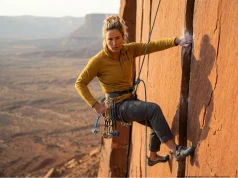
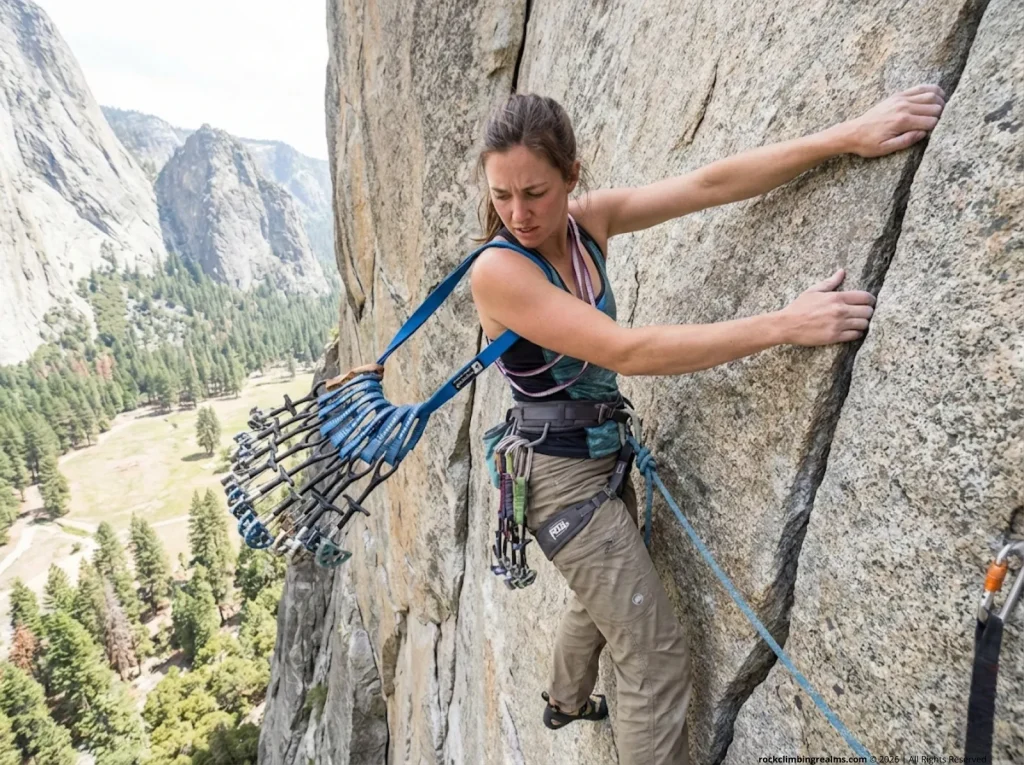
Chandeliering is the real culprit behind most trad fumbles, and almost nobody talks about it. On vertical rock, your sling hangs predictably against your body. But pull past a bulge or step into a traverse, and the whole thing swings outward — cams and nuts dangling, spinning and tangling as you move. You can’t reach what you need because it’s no longer where you expect it to be.
The time cost is real. Reaching for a single piece and grabbing three wrong ones instead costs 10 to 30 seconds on terrain where you can’t afford to rest. On sustained sequences, that’s a flash pump. I’ve watched climbers fall off routes well within their grade because their on-the-climb racking system broke down at the worst moment.
I tested three different racking setups on real routes — and if you want the full comparison of harness gear loop organization versus sling systems, that breakdown covers every trade-off. But for trad leads, the gear sling wins when it’s set up right.
Muscle Memory Breakdown Under Pump
A well-organized sling creates muscle memory — your hand reaches the same spot automatically, without looking or thinking. Beth Rodden calls it “compartmentalization so you know where everything is without thinking.” When you’re pumped and your grip is fading, fine motor control degrades fast. If your rack order changes pitch to pitch, you lose that automatic access exactly when you need it most.
The fix isn’t more discipline. It’s building a consistent system and sticking to it every single time you rack up.
The Weight Distribution Trap
A full trad rack loaded onto one shoulder is heavier than most climbers expect. A double rack including cams to #6 and a full nut set can push 4+ kilograms on a single shoulder point. The Black Diamond Padded Gear Sling at 108g and the Metolius Multi-Loop Gear Sling at 125g both offer padded straps that reduce the bite, but padding alone doesn’t solve the problem.
On multipitch trad routes, shoulder fatigue compounds footwork errors. You start compensating without realizing it. The right configuration manages that load intelligently — which is where the D-modification comes in.
The D-Trick That Changes Everything on Overhangs
This is the technique I wish someone had shown me years ago. The D sling modification lives almost entirely in forum threads — I found it mentioned on Mountain Project exactly once, buried in a gear discussion.
What the D-Modification Actually Does
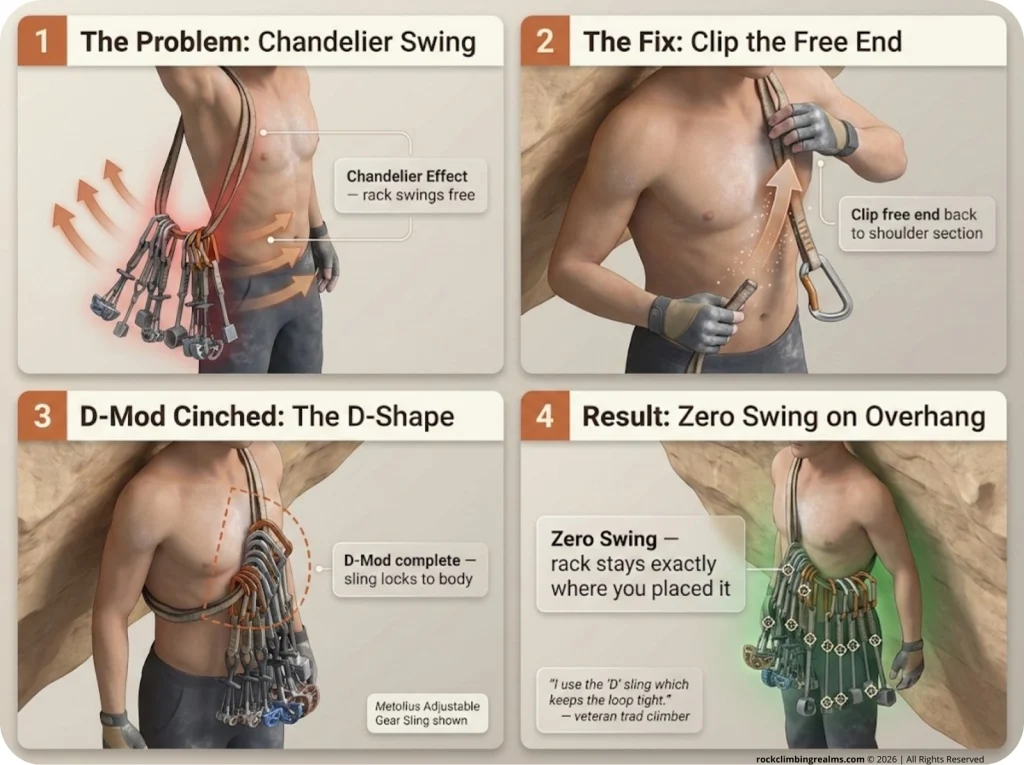
The chandelier effect happens because your sling has a loop of slack below your shoulder that swings freely. On overhangs, that slack becomes a pendulum. The D-mod closes the loop: take the free end of the sling at hip level and clip it back to the shoulder section using a spare carabiner (or the built-in adjustment on models like the Metolius Adjustable Gear Sling). The sling now forms a tight “D” against your torso with no slack loop to swing.
As one veteran trad climber on Mountain Project put it: “I use the ‘D’ sling which keeps the loop tight on the body and avoids the chandelier problem on overhangs.” Zero swing. Every piece stays exactly where you put it.
Step-by-Step D-Mod Setup
Start with your sling worn normally — one-shoulder diagonal, over your left shoulder and under your right arm. Locate the free end at hip level. Clip that end back to the shoulder strap (or to the same carabiner already holding gear) to close the loop. The sling should sit flat against your torso. Test by leaning into a steep angle — the rack should stay flush against your body with no swing at all.
Pro tip: Run the D-mod on any pitch steeper than slab angle. On pure vertical or easier terrain, release it for fuller reach across the gear loops. If you’re swapping leads with a partner, explain your D-mod setup before leaving the ground — it takes ten seconds and saves both of you on every steep pitch.
When to Use It vs. When to Skip It
Use the D-mod on overhangs, traverses, chimneys — any terrain where your body angle shifts mid-pitch. Leave it open on flat vertical terrain where you want maximum spread across the gear loops and easy reach to every piece. The real-world trade-off: D-mod cuts your gear loop access by roughly 20%, but it eliminates chandelier swing across slab vs overhang vs vertical terrain. For most mixed multipitch routes, start each pitch in D-mod and adjust as the terrain calls for it.
The Front-to-Back Grouping System That Builds Blind Access
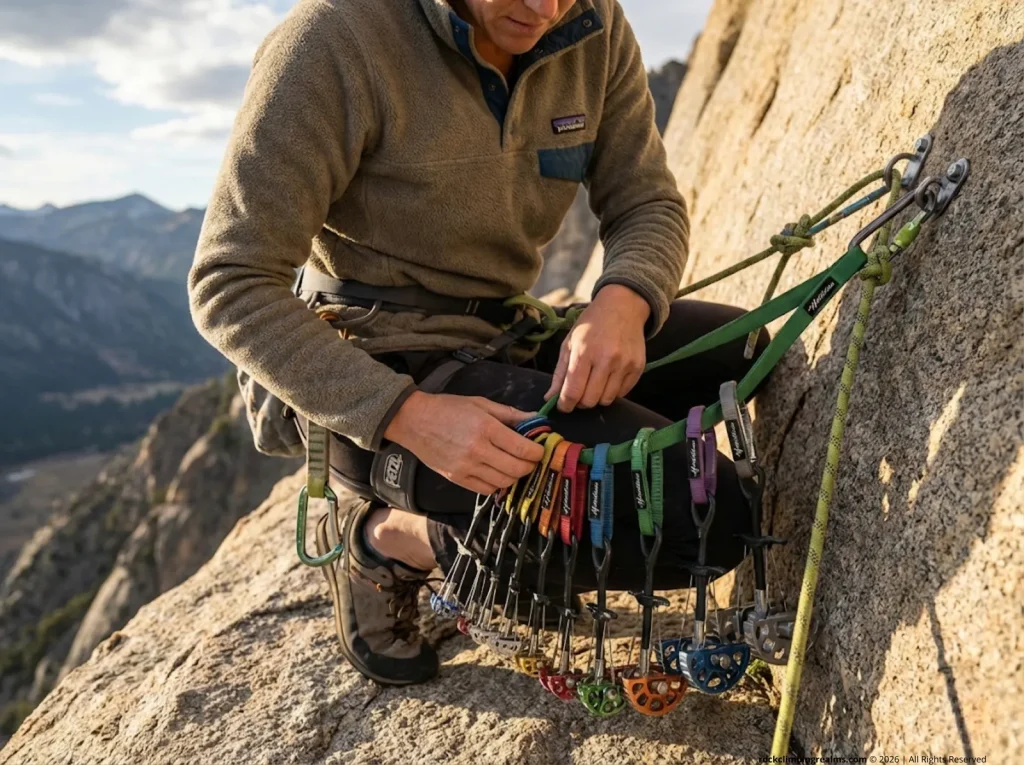
The D-trick solves the swing problem. The grouping system solves the fumble problem. Run them together and you’ve got a rack that works even when you’re blind-pumped.
Small Front, Large Back (And Why It Works)
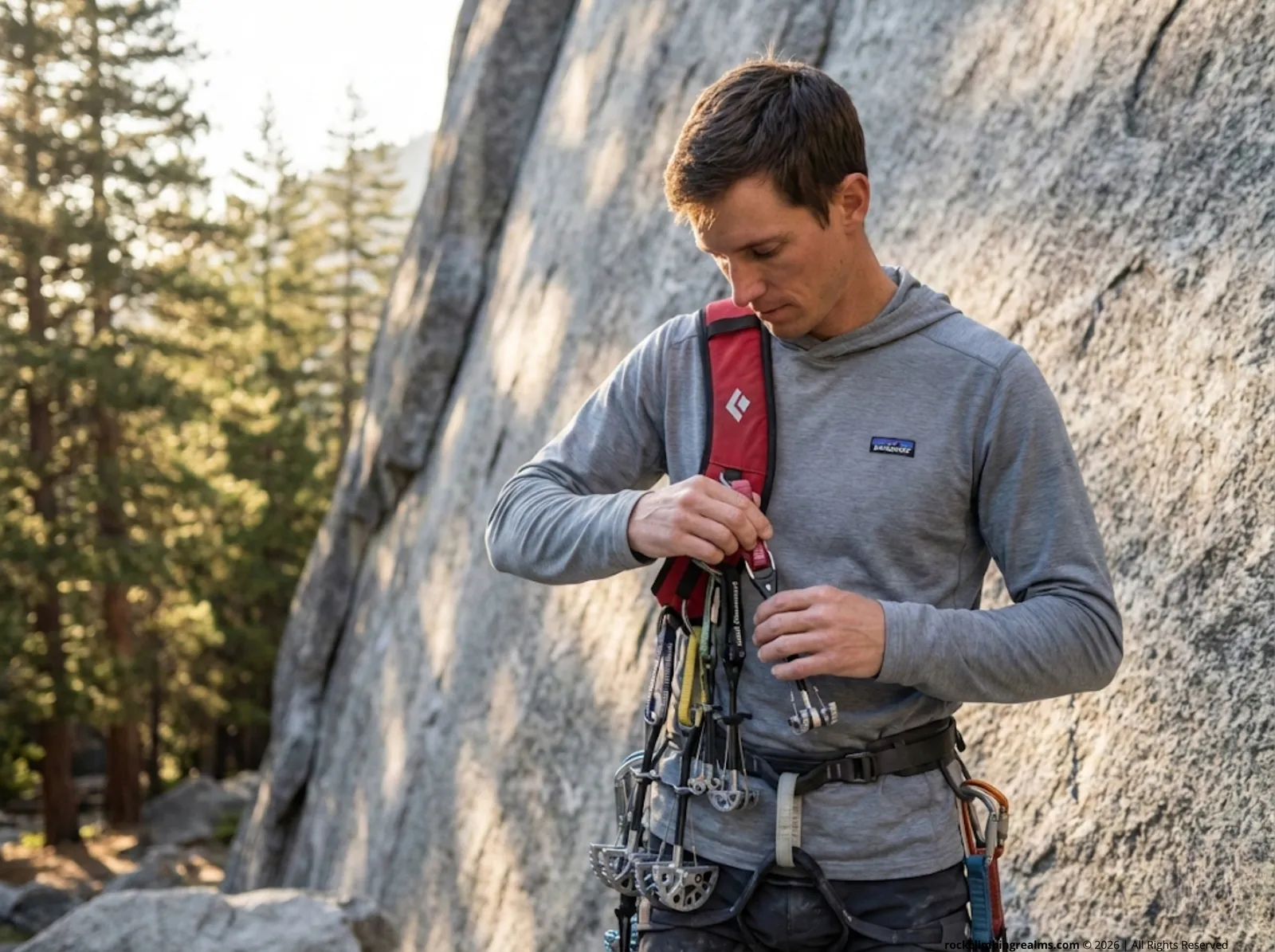
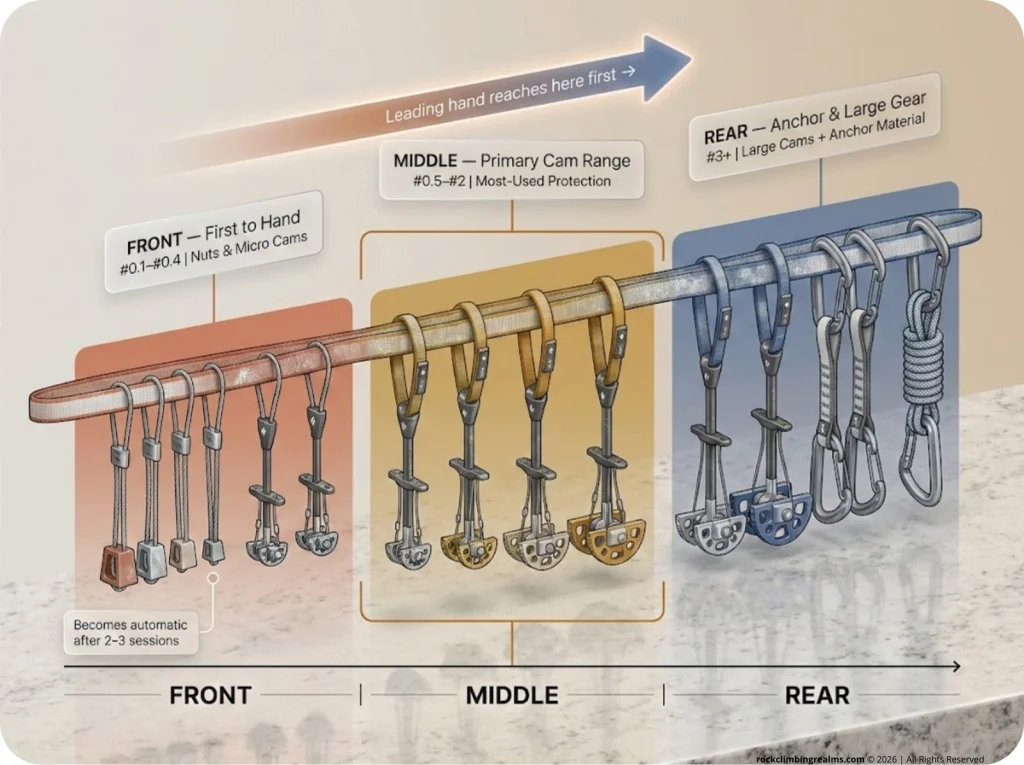
Smallest pieces front, largest cams rear — this is the single most impactful change you can make to your rack, and it’s backed by REI expert advisors and AMGA instructors alike. Your leading hand naturally reaches the front of the sling first. The pieces you grab most often in trad climbing — nuts, micro cams, small stoppers — belong there.
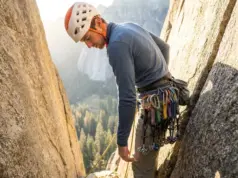
Practically: the front third of your sling holds offset nuts and cams from #0.1 to #0.4. The middle section handles your primary cam range (#0.5 to #2). Large cams (#3 and up) go in the rear alongside any alpine draws or anchor material. This order becomes automatic after a few sessions — and it meshes directly with your first trad rack sizing decisions if you’re still building out your protection.
Same-Size Cam Grouping for a Narrower Profile
This is the Beth Rodden method, and it works every time. Group all same-size cams together on adjacent loops or a single biner — both #0.75s together, both #1s together. The result is a narrower, less snaggable sling profile. This matters on crack systems where your rack can catch on features and throw you off balance. It also means you can hand a partner exactly the two cams they need without sorting through alternating sizes mid-pitch.
Keeping your cams clean and in working order is part of this system too — the guide on how to clean trad gear covers the maintenance steps that keep cams triggering properly when you need them.
Pro tip: Re-rack while seconding — not at the belay. If you clean each piece from the rock and rack it into the correct position as you climb, you arrive at the anchor with an organized sling ready to hand off. The rolling re-rack turns follower time into lead prep time. A rack swap that used to take five minutes now takes thirty seconds.
Consistent Gate Direction Across Every Single Biner
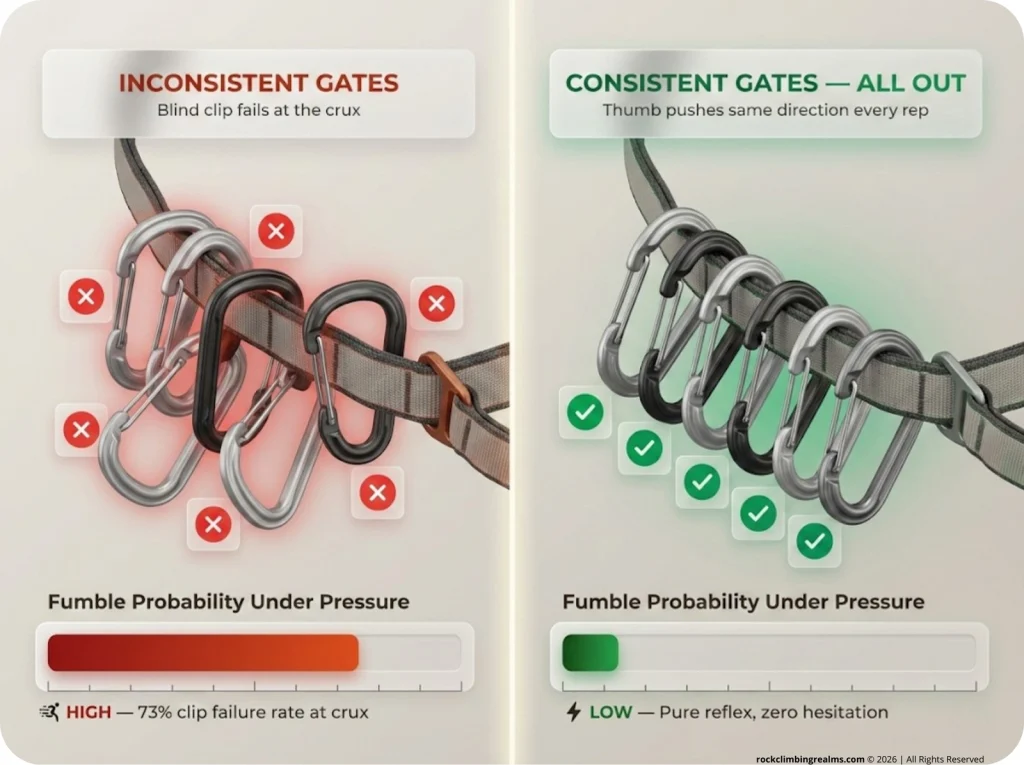
This sounds minor until you fumble a clip in your crux. Consistent carabiner gate direction — all gates facing the same way across your entire sling — creates a pure reflex. Your thumb pushes the same direction every single time, without checking. REI and AMGA instructors confirm this as standard best practice, and it’s the detail most climbers overlook when setting up a new rack.
Pick your preference: “outtie clipper” (gates facing away from your body) is the most common setup among trad climbers. What matters isn’t which you choose — it’s that every single piece on the sling is consistent. Changing gate direction mid-sling is where blind-access clips fail.
Sling vs. Harness vs. Hybrid — When Each System Wins
The sling vs harness loops for trad debate is context-dependent. Neither system wins universally.
Sling-Only: The Multipitch Partner Swap Advantage
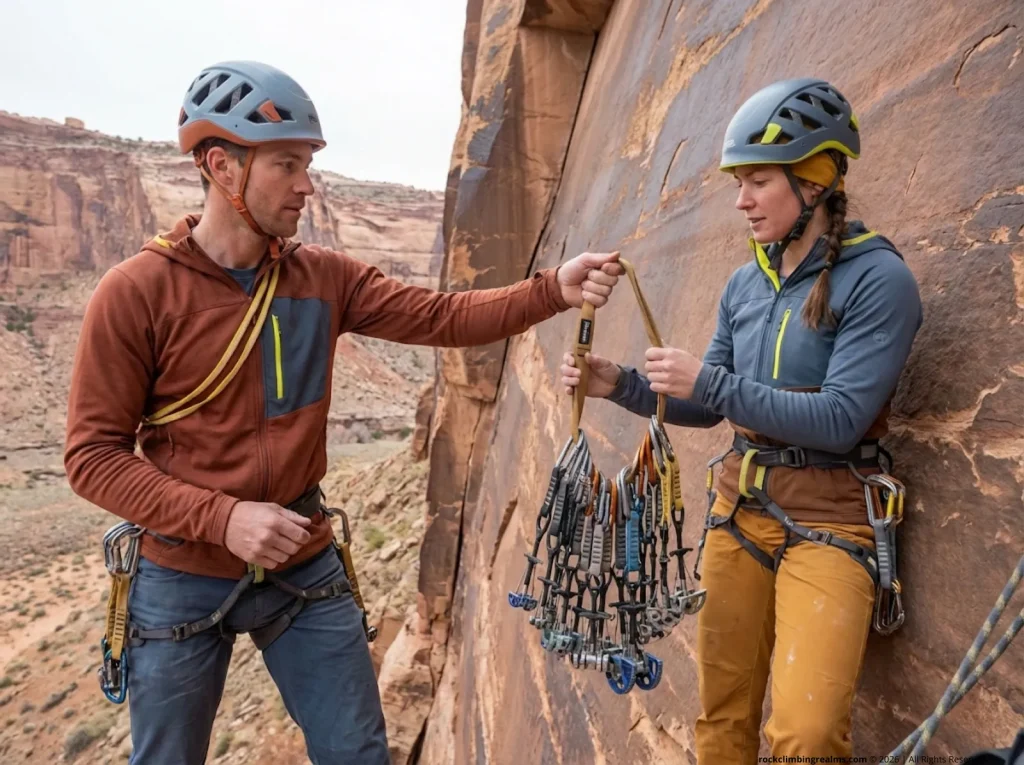
On multipitch partner swaps, the gear sling has one advantage nothing else can replicate: instant full-rack hand-off. Instead of unclipping piece by piece from your harness loops, you pull the whole loaded sling over your head and pass it directly to your partner. A transition that used to take five minutes happens in thirty seconds. On routes where you’re swapping leads every pitch, that efficiency compounds across the whole day.
Harness-Only: Clean Movement on Single Pitch
Harness gear loops keep weight centered at your hips — genuinely better for movement on single-pitch trad where you’re not swapping gear at the belay. No shoulder interference, no sling rotation on hard moves. The limitation is capacity: standard harness loops can’t handle a full double rack without crowding. If you’re weighing whether your harness has enough loops to go sling-free, the breakdown of differences between trad and sport harness designs is the right place to start.
The Hybrid System Most Trad Climbers Actually Use
Protection on the sling, quickdraws and anchor material on the harness loops. This is the dominant real-world setup — confirmed by REI expert advice and Mountain Project forum consensus. It balances the sling’s capacity with the harness loops’ movement advantage. AMGA instructors Olivia Race and Dale Remsberg sum it up: “Smaller gear at the front, consistent system so gear returns to expected positions.”
One safety note that matters here: gear slings are non-structural accessories. The UIAA safety standards for slings establish minimum load ratings for load-bearing sewn slings — gear slings sit below that threshold by design. Never use a gear sling for tying in, anchoring, or fall arrest. It’s a racking tool only.
Re-Racking While Seconding — The Pitch Transition Everyone Skips
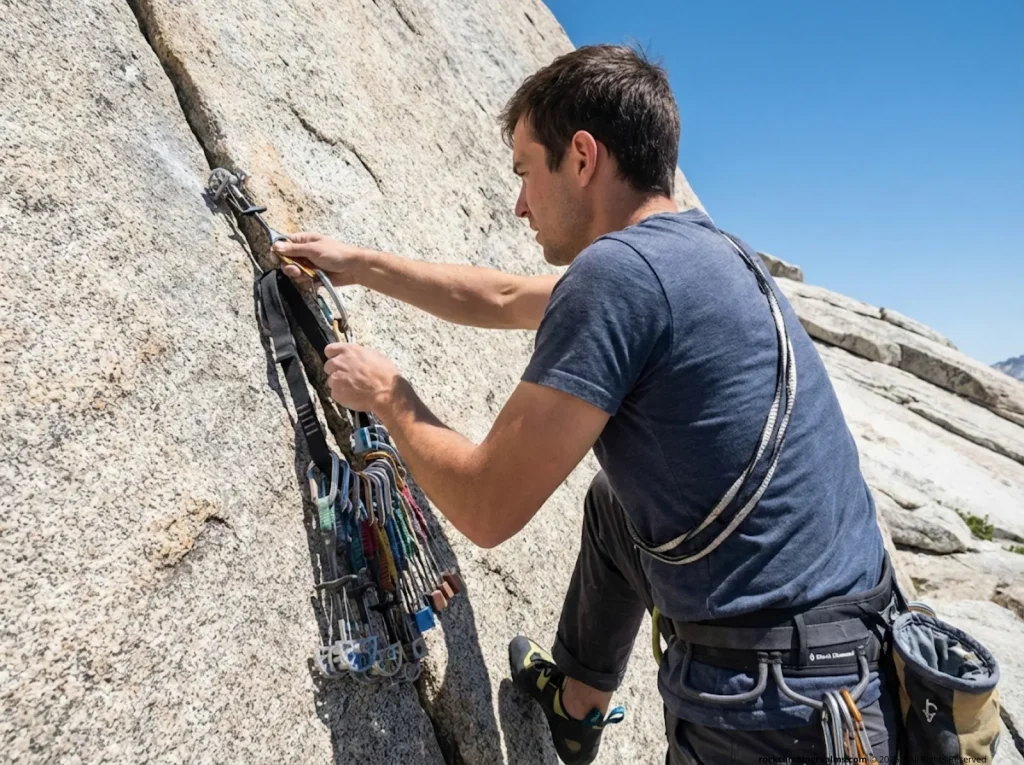
Most climbers treat seconding as recovery time. Smart climbers treat it as gear-prep time.
Why Seconding Is Free Organization Time
When you’re following a pitch, you’re cleaning gear at a natural pace with pauses between pieces. That dead time is where your rack gets rebuilt. Clean a cam, rack it into the correct front-to-back position. Clean a nut, slot it back in order. By the time you clip the anchor, your sling is already organized for the next lead.
Most climbers stuff cleaned gear wherever it fits and then spend three to five minutes re-racking at the belay. On a five-pitch route that’s twenty minutes of wasted belay time — which matters when weather is building. For the full context on belay transitions and pitch systems, the guide on multipitch systems and belay transitions covers timing and communication in detail.
The Rolling Re-Rack Method
The execution: treat every piece you clean as a chance to do one small organizational task. Clean the #1 cam from the crack, clip it to its correct sling position — not wherever your hand lands. Nuts go front. Same-size cams grouped. Gates consistent. You’re not stopping to sort; you’re sorting during movement. By the belay, the work is done.
Pro tip: Talk through your partner’s racking system before leaving the ground. If you rack nuts on the left side and they rack them on the right, a “clean rack hand-off” becomes a fumble for both of you. Two minutes at the base of the route saves thirty seconds of confusion on every pitch swap throughout the day.
Advanced Mods and Hacks for Growing Racks
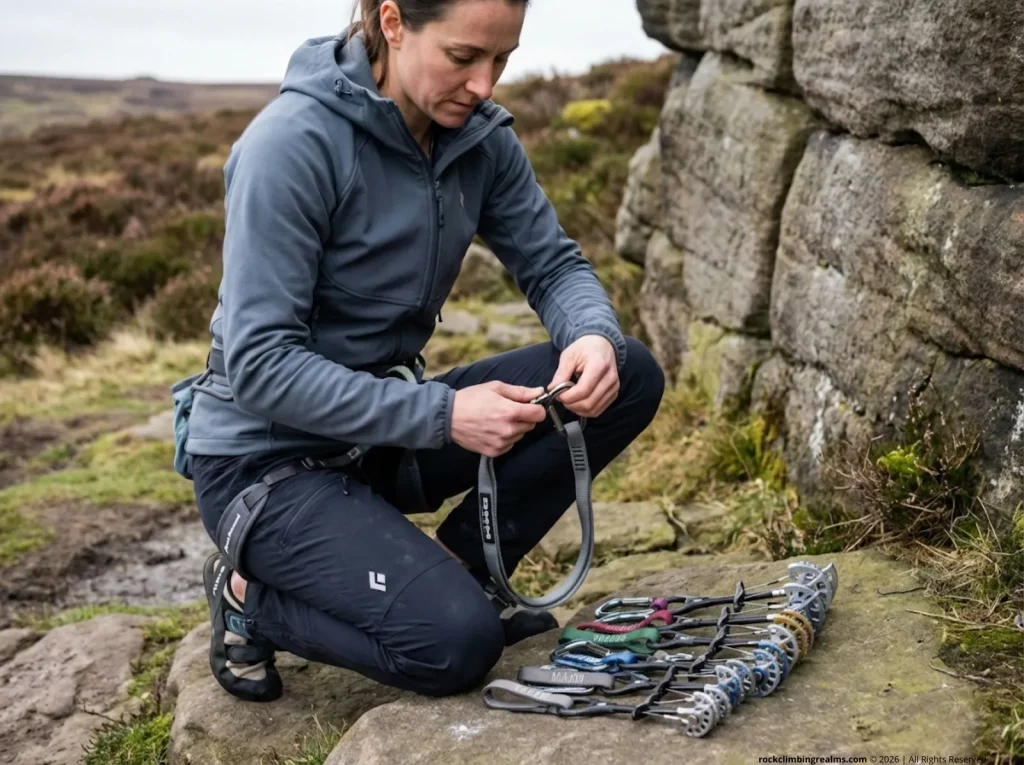
Two more techniques from the edge of the community — barely covered anywhere else.
The PAS Girth-Hitch Hack for Minimalists
A Personal Anchor System girth-hitched to your harness can function as a temporary gear sling. Clip protection pieces to the individual loops, wear it over one shoulder, and you have a functional racking setup without buying a dedicated sling. The limitations are real: fewer loops, no padding, not suited for a full double rack. But for cragging days with a half rack, it’s a zero-cost option worth knowing. If you’re unfamiliar with PAS systems, start with the comparison of PAS vs daisy chain anchor safety before repurposing one for racking use.
Terrain-Specific Gate and Grouping Tweaks
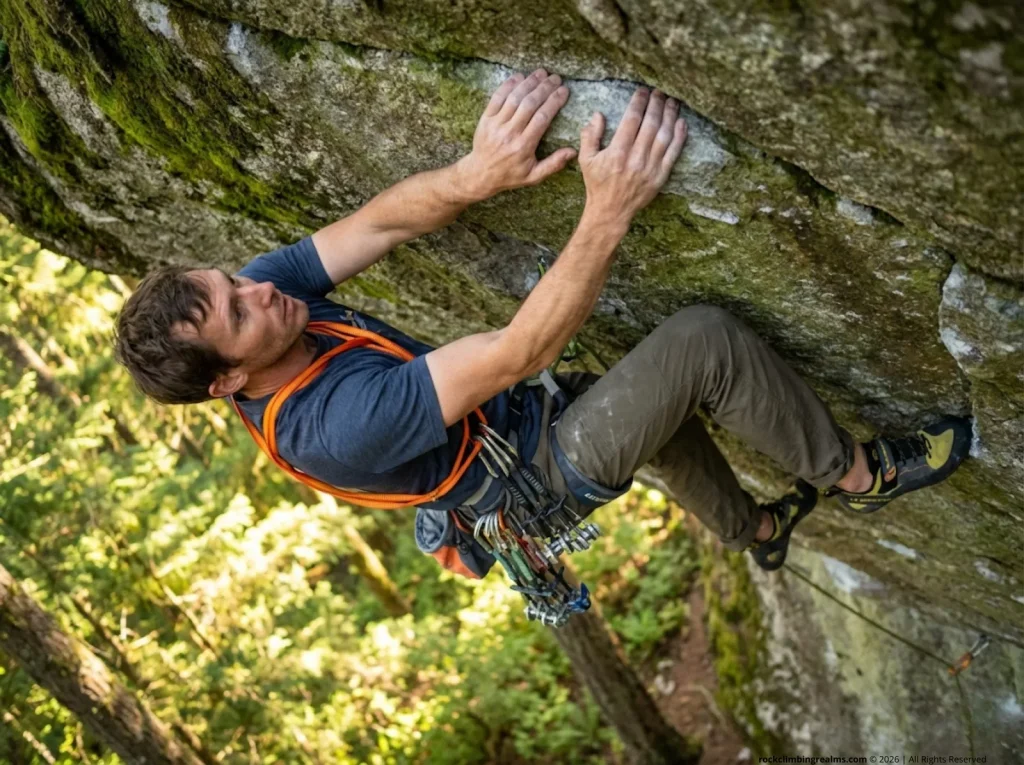
On slabs, keep the sling open with no D-mod, gates facing outward for easy thumb-push clips, and nuts front-loaded — that’s what low-angle placements demand. On overhangs, run the D-mod, keep gates accessible from your body position, and front-load the pieces you’ll reach for most on sustained steep ground. On traverses, consider keeping a critical piece on a harness loop as a backup — easier to access from awkward body positions than a swinging sling.
The slab vs overhang vs vertical matrix is the piece of advice every “how to rack” article skips. Matching your sling configuration to the terrain is the difference between a system that just works and one that works everywhere.
Scaling Your System as Your Rack Grows
The framework stays constant at every rack size — front-to-back, grouped, consistent gates. Only the volume changes. A beginner single rack fits on any standard sling with basic front-to-back order. An intermediate 1.5x rack needs the D-mod and full same-size cam grouping to stay manageable. A full double rack of 30+ pieces is where partition models like the Metolius Multi-Loop earn their value: separate dedicated sections for nuts and cams eliminate the sorting step entirely.
The rule that holds at every level: find a system that works for you and your regular partner, and never deviate from it. Consistency beats optimization every time.
Conclusion
Three things will change your trad climbing immediately. First, run the D-mod on every steep pitch — it takes ten seconds and eliminates the chandelier problem for good. Second, build your front-to-back grouping system with same-size cams together and gates consistent, and never change the order. Third, re-rack while seconding. Turn follower time into lead-prep time. Arrive at every belay with a clean rack.
Test one of these on your next trad day. Stack all three and you’ll feel the difference within a pitch. Your rack should work for you on the sharp end — not against you.
FAQ
How do you organize gear on a climbing sling?
Rack smallest pieces (nuts, micro cams) at the front near your leading hand, and largest cams toward the back. Group same-size cams together and keep all carabiner gates facing the same direction. This builds muscle memory so you can pull the right piece without looking, even when pumped.
Gear sling vs harness loops for trad — which is better?
Neither is universally better. Gear slings win on multipitch where you swap leads, thanks to instant full-rack hand-off. Harness loops win on single-pitch where centered weight keeps movement clean. Most experienced trad climbers use a hybrid: protection on the sling, quickdraws and anchor material on the harness.
How to rack cams and nuts on a sling?
Nuts go in the front section for fastest access. Cams rack behind them, grouped by same size — both #0.75s together, both #1s together. The front-to-back principle applies: the gear you place most often goes closest to your leading hand.
What is a padded gear sling used for?
A padded gear sling is a shoulder-worn accessory designed to carry trad protection during climbing. Padding reduces shoulder fatigue on long multipitch routes. Critical safety note: gear slings are never rated for fall arrest or tying in — they are racking accessories only.
Does the D-sling modification work on every gear sling model?
Yes. Any one-shoulder gear sling can run the D-mod by clipping the free end back to the shoulder section. Adjustable models like the Black Diamond Padded Gear Sling and Metolius Adjustable Gear Sling make it easiest since you can cinch the length precisely. On a fixed-length sling, close the D-shape with a spare carabiner.
Safety Notice: Rock climbing and mountaineering are inherently high-risk
activities that can involve physical trauma or fatal incidents. The information on Rock Climbing Realms is for
educational and informational purposes only. Techniques and advice presented here are not a substitute
for professional, hands-on instruction. Conditions and risks vary by location. Always seek guidance
from a qualified instructor before attempting new techniques. By using this website, you agree that you
are solely responsible for your own safety. Any reliance you place on this information is strictly
at your own risk, and you assume all liability for your actions. Rock Climbing Realms and its authors
will not be held liable for any harm, damage, or loss sustained in connection with the use of this information.
Affiliate Disclosure: We are a participant in the Amazon Services LLC Associates Program, an
affiliate advertising program designed to provide a means for us to earn advertising fees by advertising and linking
to Amazon.com. As an Amazon Associate, we earn from qualifying purchases. We are also an official affiliate partner
of Black Diamond Equipment via the AvantLink network. If you click on a Black Diamond affiliate link and make a
purchase, we may earn a commission at no additional cost to you. We also participate in other affiliate programs.
Additional terms are found in the terms of service.