
In this article
The belay loop looked fine. Smooth, pliable, same as always. Then I flipped it inside out under a headlamp at the trailhead and saw bone-white nylon fibers pushing through the dyed outer fabric like tendons through torn skin. That harness had caught maybe forty falls across two seasons of regular outdoor climbing. Not one inspection had flagged it. Not until I actually went looking.
That moment changed how I handle every piece of personal protective equipment I own. Because the truth about climbing harnesses is uncomfortable: the most dangerous failures come from gear that looks fine on the outside.
⚡ Quick Answer: Retire your climbing harness immediately if you find any fraying, cuts, or stiffened sections on the belay loop or tie-in loop, or if any bar tack stitching shows cut threads. For age-based retirement, follow manufacturer guidelines — most put the window at 1–3 years for frequent climbers, up to 7 years for occasional use, with a hard 10-year maximum from manufacture date regardless of use. When in doubt, retire it.
The Invisible Clock Ticking Inside Every Harness
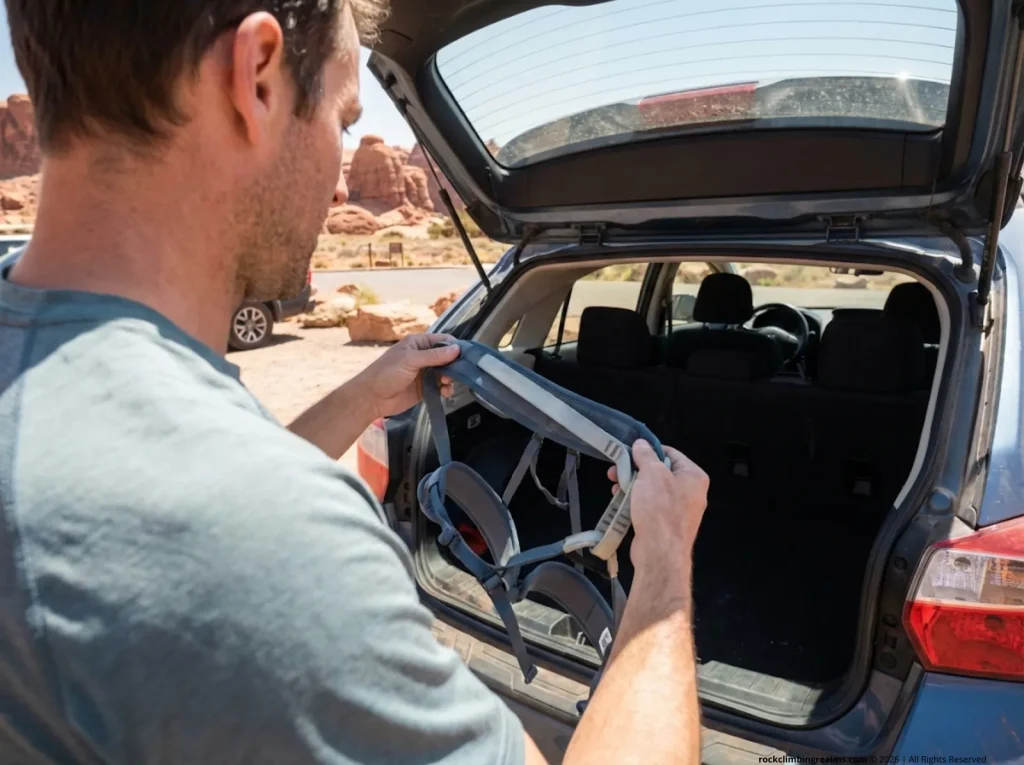
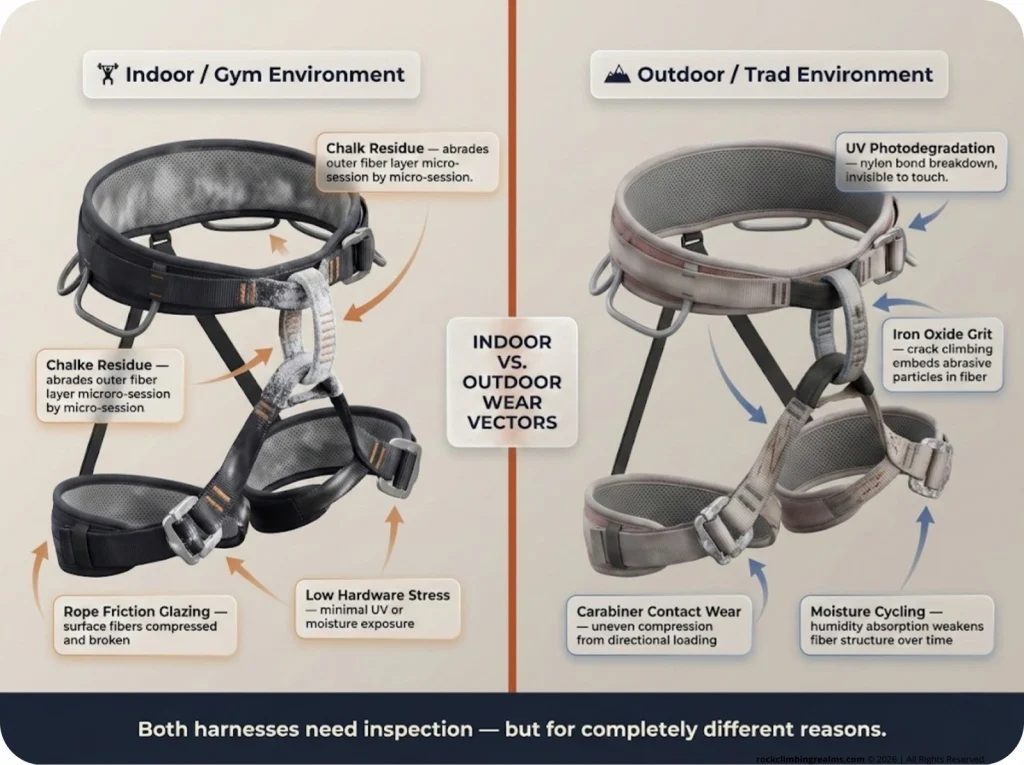
Most climbers think harness failure looks dramatic — a snapped buckle, a shredded waist belt. The real danger is quieter. Polyamide webbing, the nylon that makes up your harness’s structural components, degrades continuously from the day it’s manufactured. UV radiation from sunlight attacks the nylon’s chemical bonds, breaking them down long before any fiber separation appears on the surface. Store your harness in a hot car trunk through one desert summer, and you’ve shortened its life in ways no visual inspection will catch.
Black Diamond’s QC Lab testing on worn belay loops found that older samples still held an average of 5,000+ lbf before failure. But the variance between samples increased sharply with age — which means that as a harness gets older, its strength becomes less predictable, even if the average still sounds impressive. That unpredictability is the problem.
The degradation isn’t just from UV. Heat above 60°C (around 140°F) — easily reachable inside a closed car in summer — accelerates the breakdown. Moisture cycling, where the nylon absorbs and releases humidity repeatedly, weakens fiber structure over time. Even the chalk residue that builds up from gym sessions plays a role, slowly abrading the outer fiber layers session by session in ways that outdoor granite never would.
Pro-Tip: Store your harness inside a cotton stuff sack in a cool, dark closet — never in the garage, never in the car. The number one threat of otherwise healthy harnesses is a back seat window in July.
For any climber serious about tracking wear, building a complete gear lifespan tracking system is worth the fifteen minutes it takes to set up. Knowing the manufacture date and first-use date of each piece of protection gear is the baseline for making good retirement decisions.
The 5-Point Harness Inspection That Takes 90 Seconds
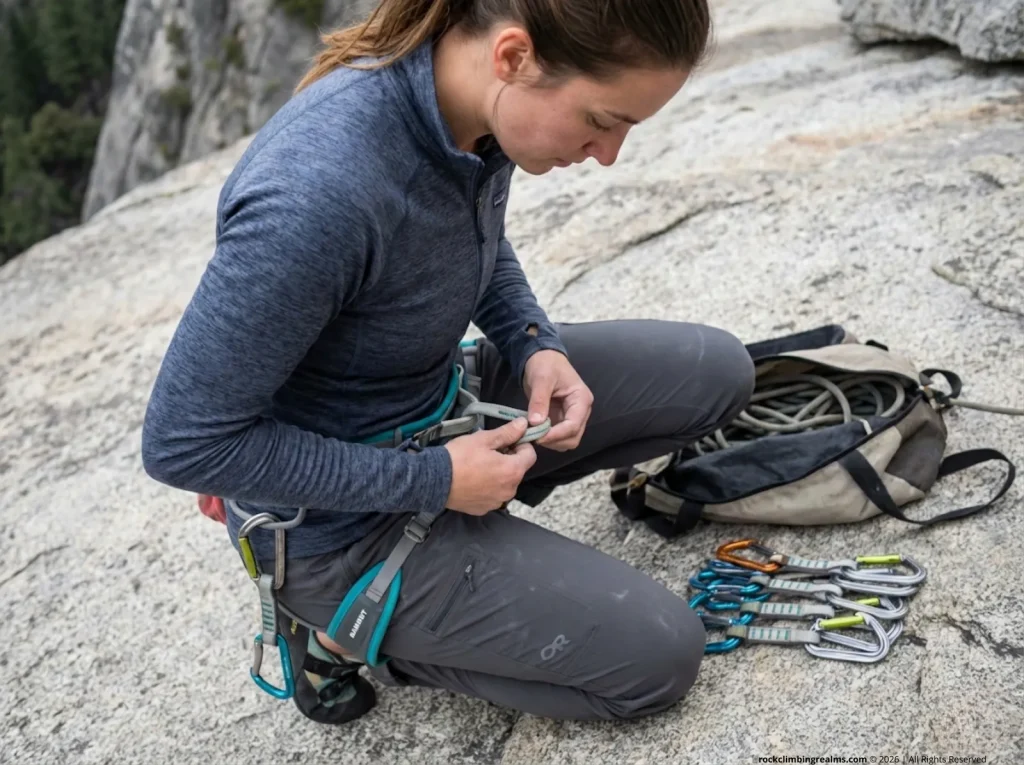
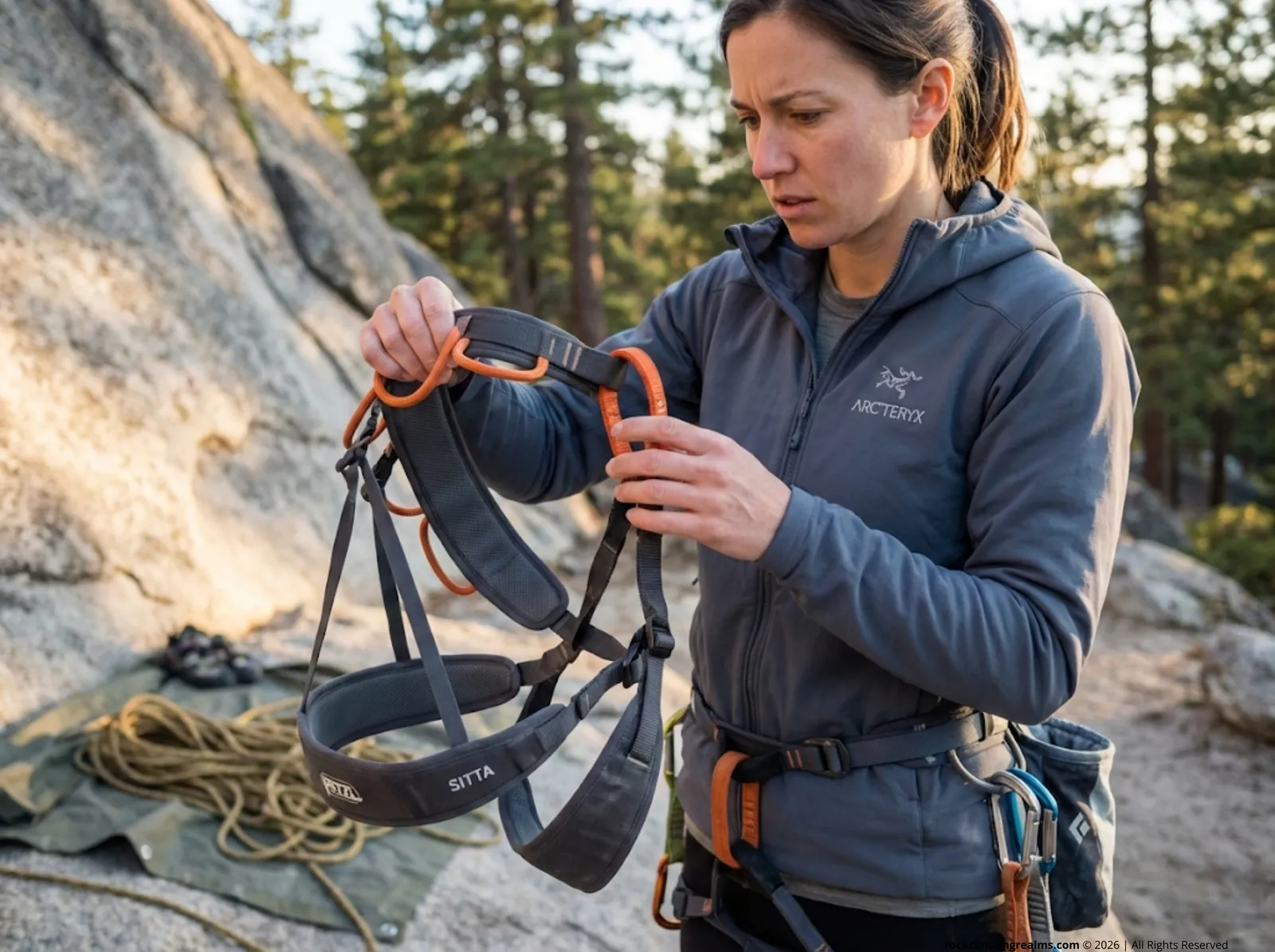
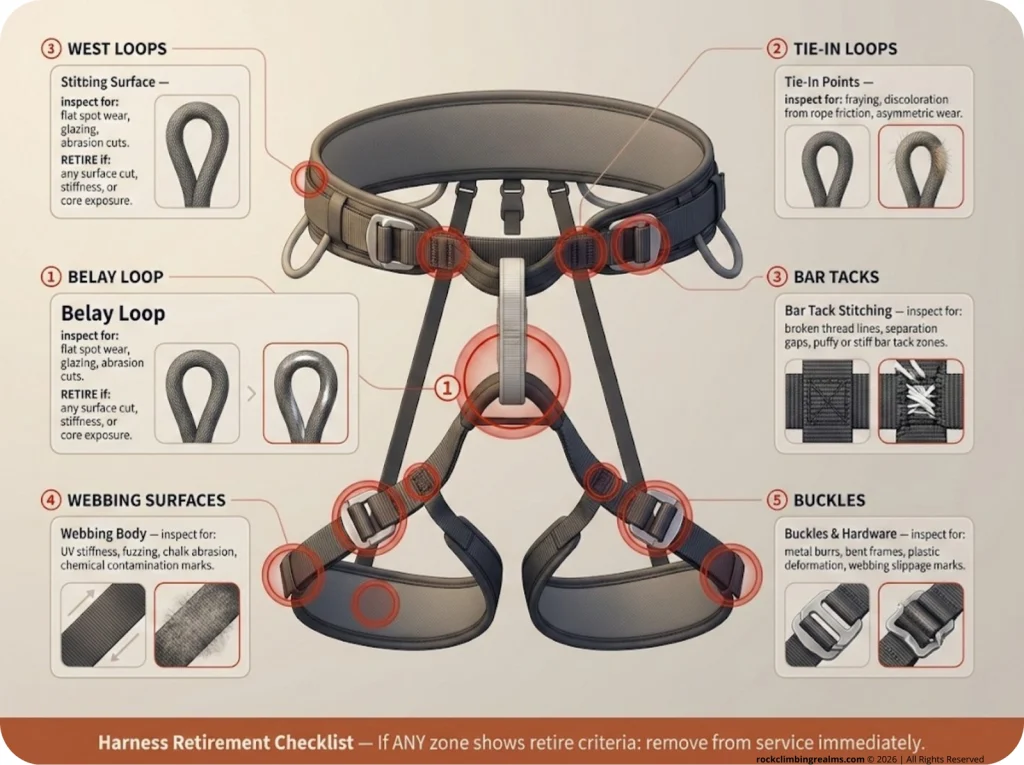
Most climbers perform a fast visual check before tying in — a quick glance at the waist belt, maybe a tug on the belay loop. That’s not an inspection. A real inspection targets the five structural pressure points where webbing abrasion, hidden stress, and fatigue accumulate fastest.
Start with the belay loop. Run your thumb slowly along the entire circumference, pressing into the material. You’re feeling for any texture change — fuzzy spots where outer fibers have broken, thin sections where the loop has compressed unevenly, or stiff zones where the nylon has hardened. Flip the loop over and inspect the underside, the surface that contacts your locking carabiner every session. This face wears fastest and gets looked at least.
The tie-in points deserve the same slow treatment. These loops bear the full force of a fall and develop abrasion where the rope runs through them on lead. If you’ve climbed trad, check for grit embedded in the fibers — iron oxide from crack climbing eats nylon from the inside.
Move to the bar tacks — the dense, zigzag stitching that holds structural webbing junctions together. Any cut, frayed, or missing threads in a bar tack mean immediate retirement, no further review needed. Bar tacks are not decorative; they are load-bearing seams. After the Todd Skinner accident in 2006, which was attributed to a failed harness component at these junctions, the industry’s awareness of bar-tack wear shifted permanently.
Check buckle movement last. Every buckle should move smoothly, lock crisply, and hold firm under a hard pull. Corrosion, sticky mechanisms, or visible deformation are all disqualifying. If a buckle feels wrong, it is wrong.
Pro-Tip: Keep a small headlamp in your gear bag specifically for harness inspection. The fiber detail you can see in direct lamp light versus ambient daylight is genuinely different — and the difference matters when you’re looking for early-stage belay loop wear.
Before you head to the wall, run through the full pre-climb safety checklist — harness inspection is one of six steps that most climbers skip or compress.
When Age and Usage Force the Decision
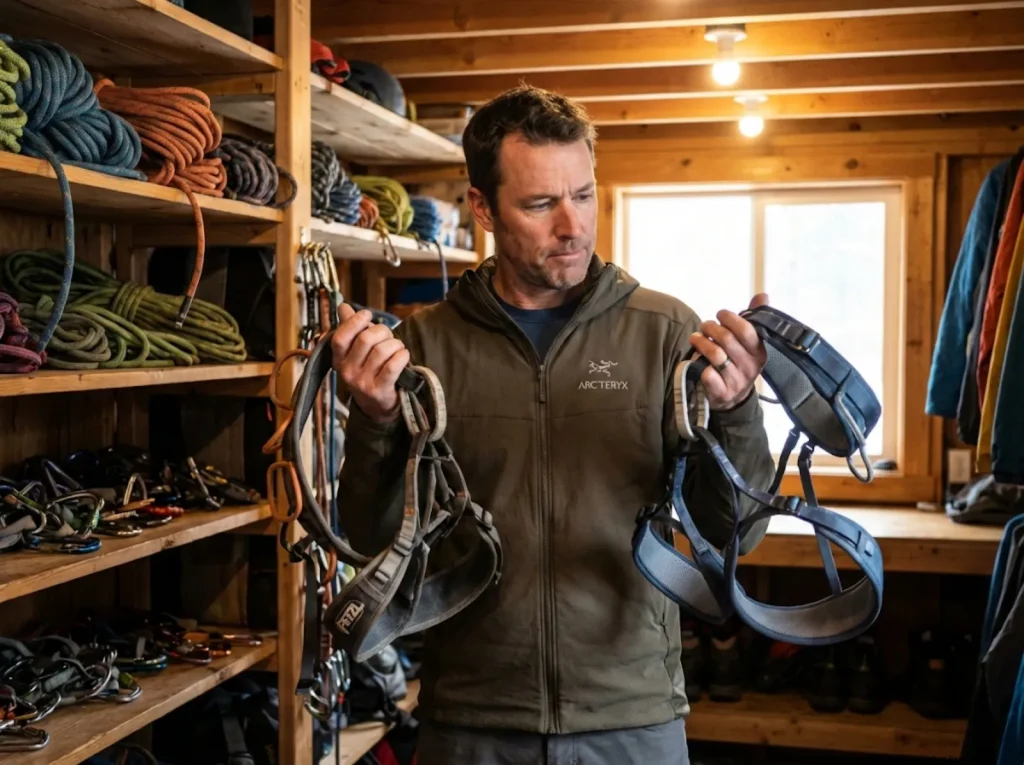
Visible damage makes the call easy. The harder judgment comes when your harness looks clean but the calendar is working against you. Manufacturers publish usage-based lifespan tables, and most climbers have never read them.
The Mammut retirement table is the most detailed in the industry. A harness that’s never left its bag has a 10-year maximum shelf life from manufacture date. Use it on occasional weekend trips, and the window drops to 3–5 years. Climb regularly — three to five days a week — and you’re looking at 1–3 years before the harness should be replaced regardless of appearance. Professional guides and instructors on the wall daily should plan for retirement inside 12 months, sometimes sooner.
What drives these numbers isn’t dramatic wear — it’s cumulative micro-stress. Every fall you take, whether it’s a gentle take onto a sport route or a hard leader fall at crags, transfers energy into the harness webbing. Nylon absorbs that energy by deforming at the fiber level. The deformation is largely invisible. It doesn’t reverse. Over time, the harness loses its ability to absorb the next fall with the same margin of safety it had when new.
The UIAA — the international body that sets climbing safety standards — publishes harness certification standards and retirement guidance that every serious climber should know. Their standard (UIAA 105 / EN 12277) requires the belay loop to withstand 15 kN for three minutes on a new product, but makes no claims about field-worn gear. That gap is your responsibility to manage. For a deeper breakdown of how these numbers translate to real-world gear decisions, the UIAA safety standards and retirement matrix is a solid starting point.
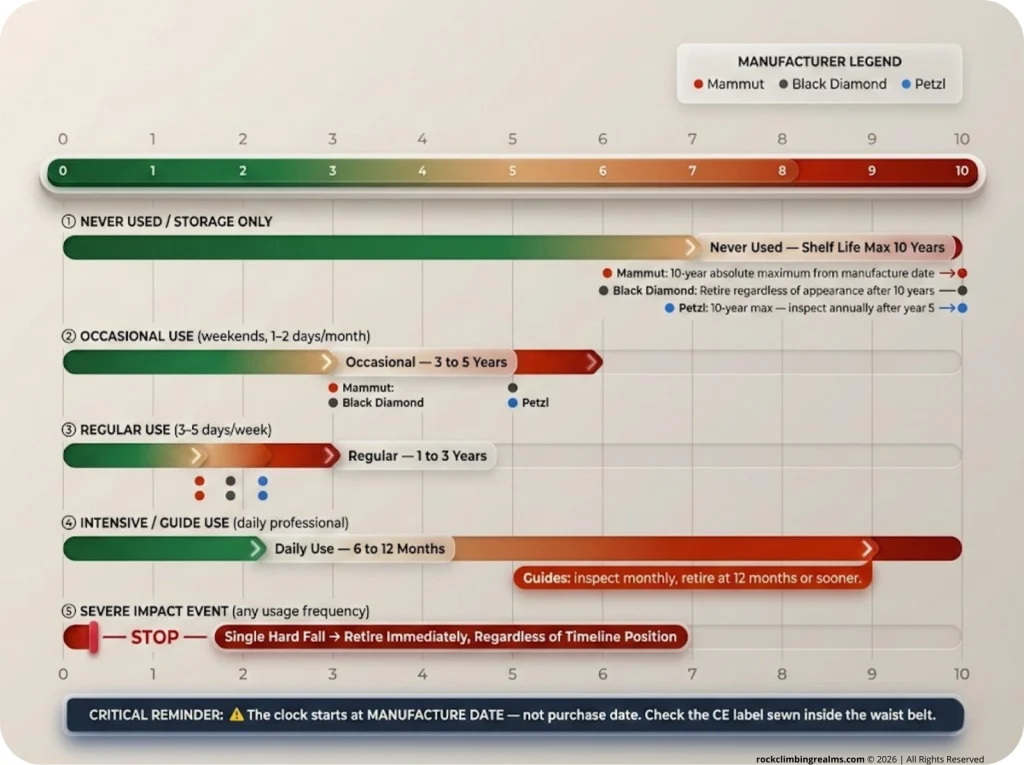
One rule that trips up even experienced climbers: the retirement clock starts at manufacture, not purchase. A harness sitting on a shop shelf for two years before you bought it has already burned two years of its lifespan. Check the CE label sewn inside the waist belt — the manufacture date is printed there, and it matters more than your receipt.
Pro-Tip: After any fall that felt genuinely hard — a high fall factor, a swinging pendulum onto rock, a fall that left you catching your breath — retire that harness even if it looks perfect. The internal fiber stress from a single severe impact can compromise a harness that still passes every visual check.
What to Do With a Retired Harness
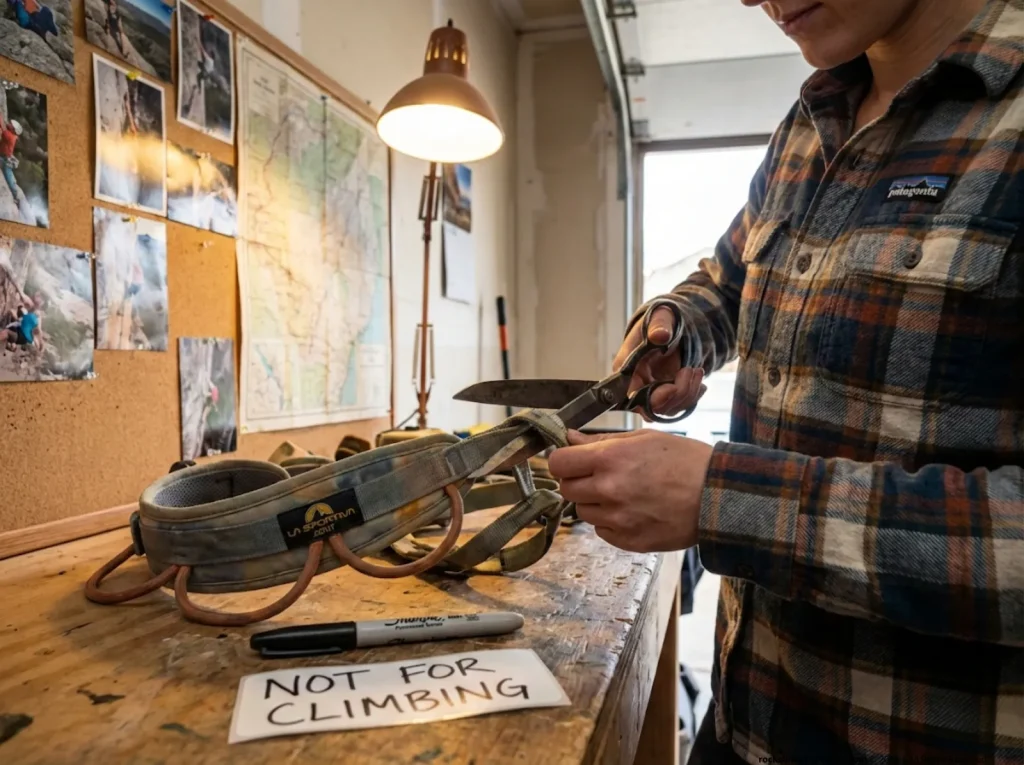
Retiring a harness doesn’t mean stuffing it in a corner of the garage. A harness that’s still intact is a hazard — someone else might find it, assume it’s functional, and take it to the crag. The disposal protocol is simple and non-negotiable.
Cut the belay loop completely through with heavy scissors. Then cut at least two other sections of structural webbing — waist belt or leg loops. The goal is to make the harness obviously, visibly non-functional. If you’re keeping the hardware for a creative project, fine. But the webbing structure that makes it a harness needs to come apart before it goes in the trash or recycling.
Never donate, sell, or give away a retired climbing harness. There is no responsible secondhand market for life-critical PPE. The condition that made you retire it — whether age, UV degradation, or micro-stress — isn’t visible to the next person, and there’s no way to communicate that context through a transaction. Cut it, label it, and let it go.
The good news: retired harness webbing has a second life. The polyamide webbing makes durable dog leashes, hammock straps, and garden plant ties. Buckles get salvaged for pack repairs and DIY projects. A few climbers we know have turned their most memorable harnesses into wall art — a way to honor gear that kept them alive for years. Check with your local climbing gym about textile recycling partnerships; some collect old gear for responsible processing rather than landfill disposal.
If you’re ready to find your replacement, start with the trad versus sport harness decision framework to match your new harness to your actual climbing life — not just whatever’s on sale.
Choosing Your Replacement Without Repeating the Same Mistakes
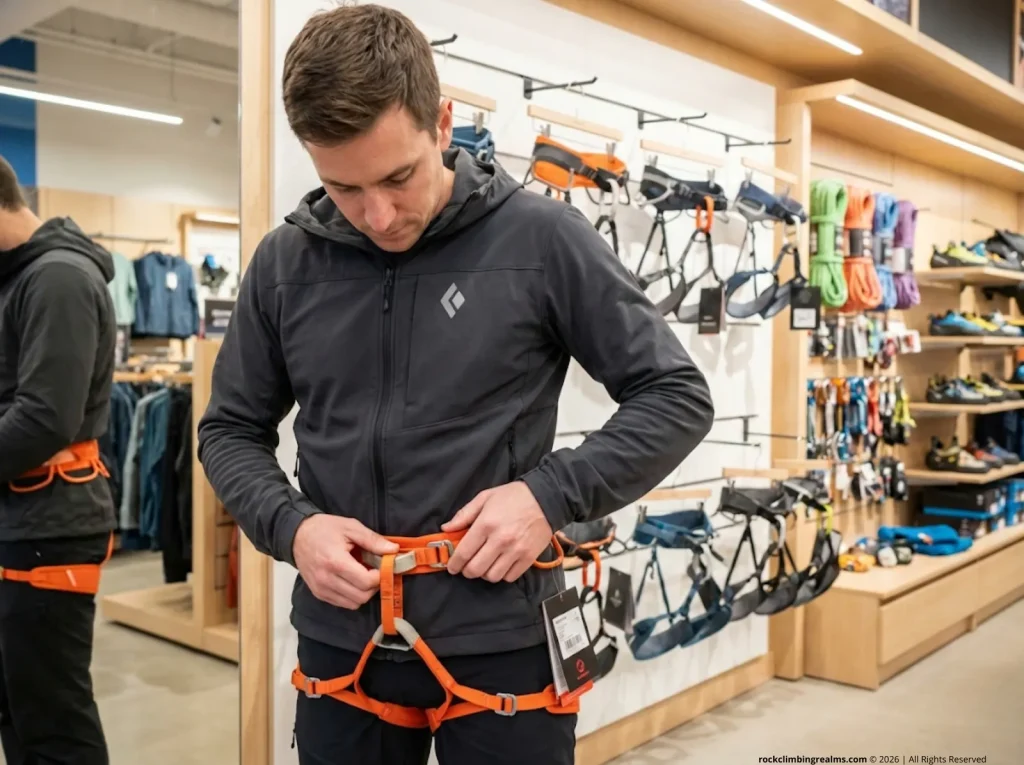
The smartest thing you can do when buying your next harness is look for built-in retirement criteria you can read at a glance. Mammut’s red wear-indicator thread — woven into the webbing beneath the outer dyed layer — is the most practical version of this technology available today. When the red thread becomes visible, the harness has worn through its safety margin and needs to go. No interpretation required.
Some newer Petzl and Black Diamond models use similar contrasting-color underlayers that reveal wear through color change. These aren’t marketing features — they’re engineering solutions to the problem of invisible degradation. If your budget allows for the choice, prioritize harnesses with this technology. It removes the guesswork from future inspections and gives you a clear, objective signal.
On the fit side, use your actual climbing frequency to drive the purchase decision. Gym-only climbers benefit from lightweight, breathable materials and maximum comfort for long sessions — gear loops and adjustability are secondary. Multi-discipline climbers who move between the gym, sport routes, and trad need adjustable leg loops and a minimum of four gear loops. If you climb five or more days a week, budget for harness replacement every two to three years and treat it as a routine operating cost, not an unexpected expense.
For a precise fit on your new harness — and to understand why the suspension audit matters before you ever clip in — follow the fit protocol that most gear shops skip. The difference between a harness that fits and one that’s worn incorrectly is measurable in both comfort and how the system performs in a real fall.
Conclusion
Your harness ages invisibly. The UV working on it in the car, the micro-stress accumulating from every catch, the chalk abrading the belay loop session by session — none of that announces itself. You have to go looking for it.
Run the 5-point inspection before every climbing day. Build the habit until it’s as automatic as tying your figure eight. When usage frequency and manufacture date put you inside the retirement window, trust the calendar over the appearance. And when you do retire a harness, cut it up properly — because the climber who finds it after you deserves better than an unmarked trap.
Now go flip your belay loop inside out. Tonight, before your next session. If anything feels wrong — fuzzy, stiff, thin, glazed — trust that. A new harness costs less than one emergency room copay.
Now go send something.
FAQ
How long does a climbing harness last?
A climbing harness lasts between 1 and 10 years depending on how often you climb and how you store it. Weekend climbers typically get 3–5 years of safe use; guides climbing daily should plan for annual replacement. The hard ceiling is 10 years from the manufacture date, regardless of how good the harness looks.
What are the signs a climbing harness needs replacing?
The clearest signs are fuzzy or frayed fibers on the belay loop or tie-in points, cut or worn bar tack stitching, glazed or stiffened webbing, corroded buckles, and any chemical odors indicating solvent or acid exposure. On Mammut harnesses, visible red wear-indicator thread beneath the outer dyed layer is an engineered retirement signal.
Can a climbing harness be repaired?
No — climbing harnesses cannot be safely repaired by the user or any third party. The load-bearing webbing and stitching are engineered as an integrated system; any modification voids the CE certification and compromises rated strength in ways only lab testing could verify. Retire and replace.
How often should I inspect my climbing harness?
Perform a quick visual and tactile inspection before every session and a thorough 5-point inspection at least once per month. Inspect immediately after any hard fall, chemical exposure, prolonged storage, or outdoor trip where the harness contacted grit or salt water.
What do I do with my old climbing harness?
Cut the belay loop completely through and sever at least two other structural webbing sections before discarding. Never donate, sell, or give away a retired harness — the degradation that caused retirement is invisible to the next person. Repurpose the cut webbing as dog leashes, hammock straps, or garden ties, and salvage buckles for DIY projects.
Safety Notice: Rock climbing and mountaineering are inherently high-risk
activities that can involve physical trauma or fatal incidents. The information on Rock Climbing Realms is for
educational and informational purposes only. Techniques and advice presented here are not a substitute
for professional, hands-on instruction. Conditions and risks vary by location. Always seek guidance
from a qualified instructor before attempting new techniques. By using this website, you agree that you
are solely responsible for your own safety. Any reliance you place on this information is strictly
at your own risk, and you assume all liability for your actions. Rock Climbing Realms and its authors
will not be held liable for any harm, damage, or loss sustained in connection with the use of this information.
Affiliate Disclosure: We are a participant in the Amazon Services LLC Associates Program, an
affiliate advertising program designed to provide a means for us to earn advertising fees by advertising and linking
to Amazon.com. As an Amazon Associate, we earn from qualifying purchases. We are also an official affiliate partner
of Black Diamond Equipment via the AvantLink network. If you click on a Black Diamond affiliate link and make a
purchase, we may earn a commission at no additional cost to you. We also participate in other affiliate programs.
Additional terms are found in the terms of service.