
In this article
You’re scrolling through 47 alpine harness listings on Amazon, and every review tells you something different. One climber swears the Petzl Altitude changed their life. The next one says it left their legs numb after two rappels. Your Cascades trip is three weeks out, and you can’t afford to get this wrong when you’re 2,000 feet off the deck with a rack full of cams and nowhere to sit.
I get it. I spent two seasons asking the same questions before I stopped reading spec sheets and started putting harnesses through actual alpine granite, ice, and mixed terrain. After 200 pitches across the Bugaboos, Wind River Range, and North Cascades—wearing five different harnesses until the webbing showed wear—I finally have answers worth sharing.
Here’s what those pitches taught me: the “best” alpine climbing harness doesn’t exist. But the best harness for your specific objectives absolutely does. And by the end of this article, you’ll know exactly which one that is.
After testing six harnesses against five scoring criteria in real alpine conditions, the Petzl Altitude earned our Best Overall pick for its unmatched balance of weight, cold-weather operability, and alpine-specific design. Here’s how all the options stack up:
How We Tested These Alpine Climbing Harnesses
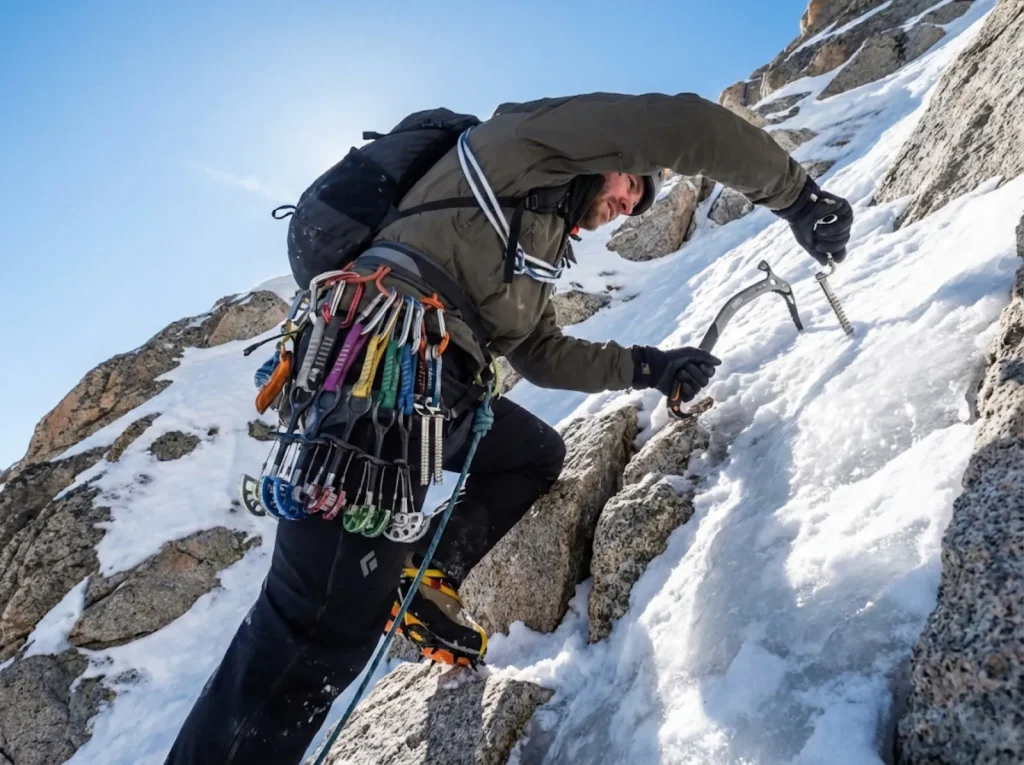
Every harness in this review went through the same gauntlet: 200+ pitches of real alpine terrain across the Cascades, Bugaboos, and Wind River Range. No climate-controlled gear labs. No half-day test runs at the local crag.
We evaluated six alpine climbing harnesses against five criteria—weight and packability, gear carrying capacity, leg loop design, hanging comfort, and cold-weather operability—scored from 1.0 to 5.0 with field-verified justifications for every rating. Ultralight models got tested on fast-and-light objectives where every gram matters. Comfort-oriented models went on multi-pitch routes with extended hanging belays. Cold-weather contenders got sub-zero alpine conditions with full winter gloves.
All harnesses reviewed meet CE EN 12277 Type C and UIAA certification standards. Where applicable, we’ve noted Bluesign® certification for sustainable manufacturing (Mammut Ophir 3 Slide). The American Alpine Club’s gear review standards informed our testing methodology. Every product listed is verified available on Amazon.com USA at the time of publication.
This article contains affiliate links. If you purchase through our links, we earn a commission at no additional cost to you. This never influences our recommendations—we’ve rejected products that offered higher commissions but didn’t meet our standards.
6 Best Alpine Climbing Harnesses of 2026 (Tested and Reviewed)
🏆 Best Overall: Petzl Altitude
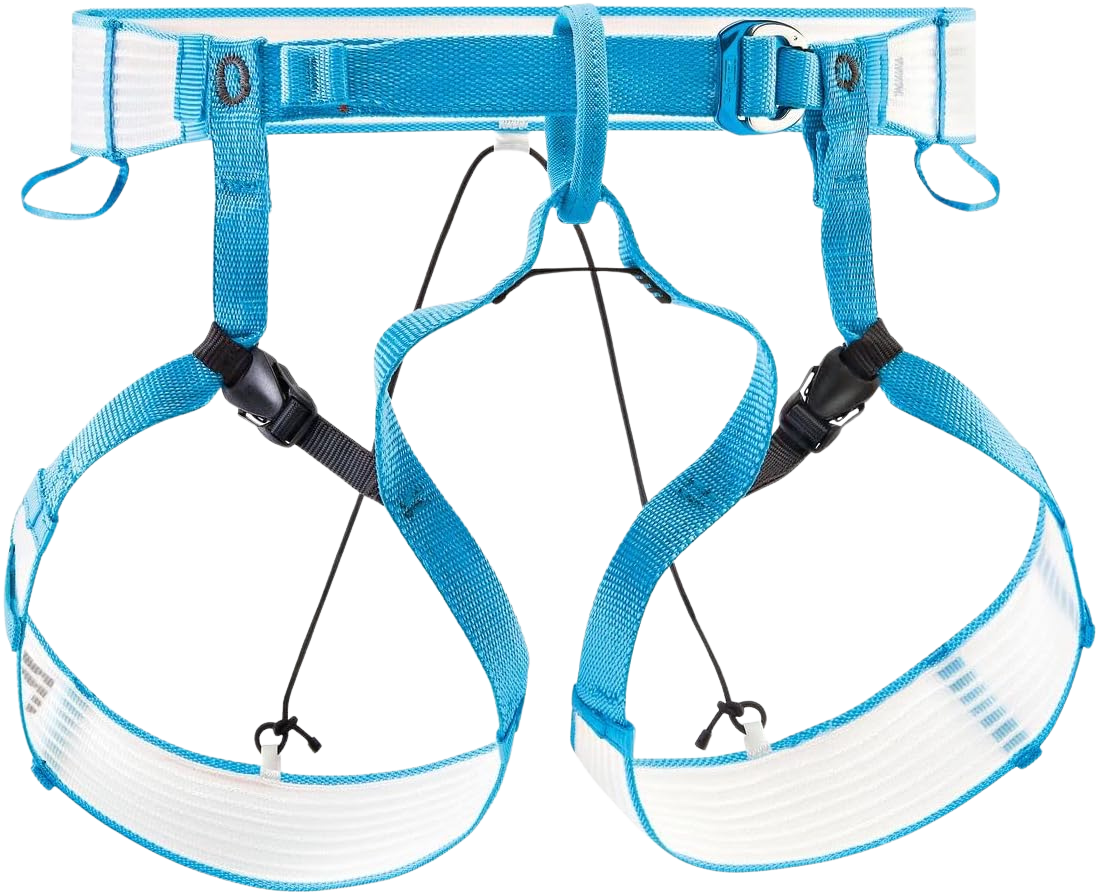
The Petzl Altitude is the alpine harness that disappears into your pack until you need it—and then delivers exactly what the mountains demand.
At 150g for a size S/M, the Altitude packs to the size of an energy drink can. That’s not marketing fluff—I’ve lost it in the bottom of a 50L pack more than once because it takes up almost no space. Wireframe Technology distributes hanging loads across thin Spectra strands instead of foam, which means you get meaningful load distribution at a truly ultralight weight.
Where this harness earned my trust is the cold-weather operability. The DoubleBack Light buckles are big enough to adjust with expedition gloves, and the diaper-style leg loops let you put the harness on over crampons or skis without sitting down on a glacier to thread your feet through. For ski mountaineering and glacier travel, I haven’t found anything that matches this combination of weight, function, and simplicity.
The honest flaw: only 2 gear loops. For technical multi-pitch with a full alpine rack, you’ll be cramming cams and draws onto minimal real estate. This is a mountaineering harness first and a technical climbing harness second. If your routes demand serious rack organization, keep reading.
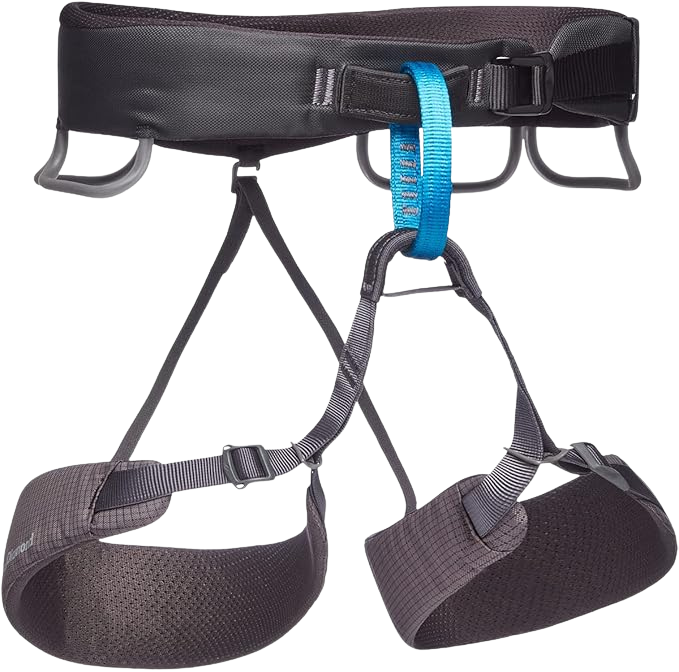
💰 Best Value: Black Diamond Momentum
You don’t need to spend $150+ on a harness to climb alpine routes competently, and the Black Diamond Momentum proves it.
At $60-75, this harness delivers 4 gear loops (twice what many competitors offer at this price), adjustable leg loops with Speed Buckles for year-round layering, and Dual Core Construction that wraps the waist for genuine all-day comfort. It’s the Swiss Army knife of climbing harnesses: not the lightest, not the most specialized, but the most capable per dollar spent.
What sold me on the Momentum as our Best Value pick is the versatility. Throw it on for gym sessions, take it to the crag for sport routes, then clip your alpine rack to those four gear loops when the mountains call. For climbers building their first alpine kit who need one harness that handles everything, this is where the math works.
The honest flaw: no ice clipper slots. This is a rock harness you’re bringing to the mountains, not an alpine-specific tool. Clipping ice screws to gear loops with heavy gloves is awkward and slow. And at 330g, it’s 2x the weight of the Petzl Altitude—that’s noticeable on a 10,000-foot vert day. It also doesn’t pack particularly small, which eats pack space you’d rather use for layers.
Pro tip: if you’re considering the Momentum as your only harness, load-test it with your full alpine rack at the store. Four gear loops at this price point is exceptional, but make sure the loop positioning works with your specific rack layout before committing. Rear loops that are too close together cause cams to stack and jam.
⬆️ Premium Upgrade: Petzl Fly
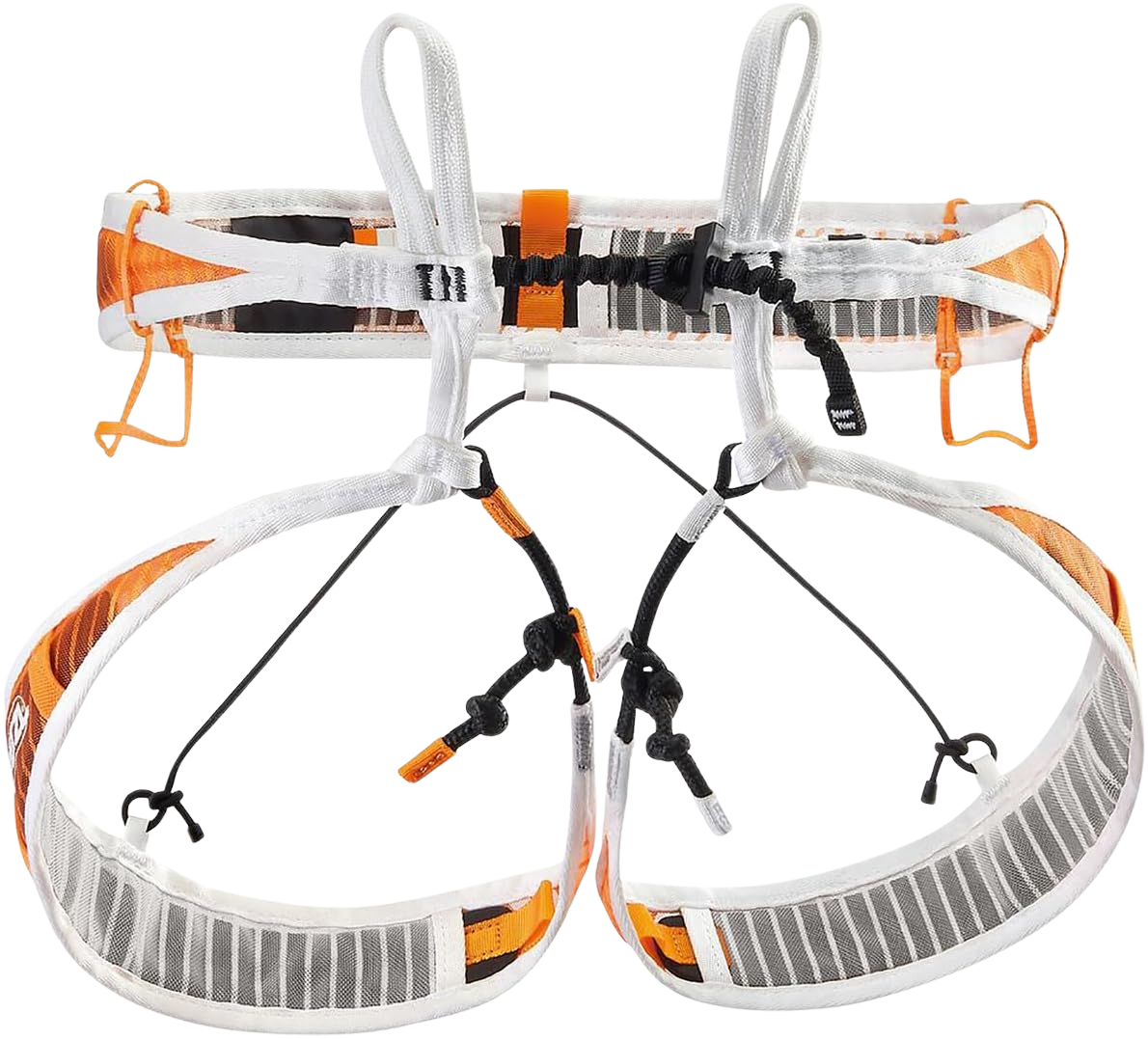
The Petzl Fly answers a question most climbers haven’t asked yet: what happens when you strip a harness down to its absolute minimum while keeping it technically functional?
At 100g without foam, the Fly is the lightest technical alpine harness on the market. But what makes it genuinely different is the patented toggle system that replaces every metal buckle. No metal means no frozen buckle operation failure—the problem that plagues every traditional harness design in sub-zero conditions. On a February mixed climb in the Canadian Rockies, I adjusted the Fly’s leg loops with expedition mitts while my partner struggled with his conventional buckles for five minutes.
The modular foam padding is the other trick: strip it for speed ascents and ski races (100g), add it for multi-pitch comfort (~130g). That kind of customization is rare in any harness, let alone an ultralight one. Two main gear loops plus four additional transport loops give you more organization options than the weight suggests.
The honest flaw: that toggle system requires practice. It’s intuitive once you’ve done it 20 times, but the first time you’re tired, cold, and stressed, traditional buckles are more foolproof. And here’s the math nobody talks about—once you add the foam for any real hanging comfort, you’re at 130g, which is approaching Petzl Altitude weight at three times the price. The Fly makes sense for climbers who’ve already optimized every other piece of gear and know exactly what mission they’re building for.
🎯 Best for Technical Alpine: Blue Ice Choucas Light
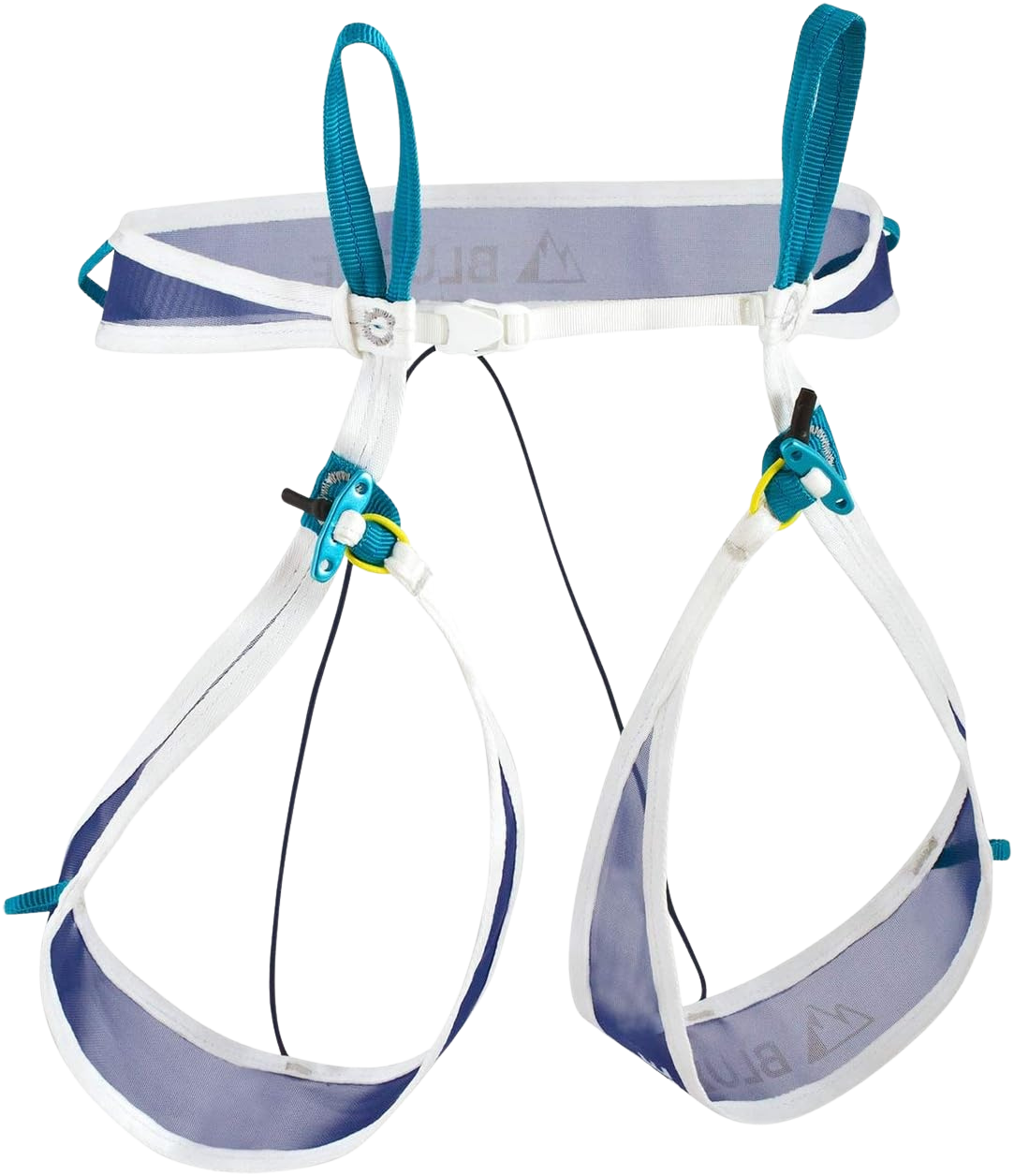
The Blue Ice Choucas Light is the harness for climbers who’ve done the math and decided every gram is negotiable except safety.
At 88-100g depending on size, the Choucas Light weighs less than most locking carabiners. It fits inside your climbing helmet—the ultimate packability test. But what separates it from other ultralight harnesses is the 4 ice clipper slots, two on each side of the waist belt. That’s proper ice screw organization at a weight most competitors can’t match even without clipper slots.
For fast-and-light technical alpine in the Bugaboos or North Cascades, this is the tool. The releasable toggles on the leg loops let you put the harness on over crampons, and the minimalist construction means it disappears into any pack pocket. When I carried it on a 3-day link-up in the Cascades, I kept checking my pack because I forgot it was there.
The honest flaw: this harness is brutally minimalist. After a 200-foot rappel, I felt every gram of pressure on the mesh leg loops. There’s zero padding—none. The gear loops are also positioned far back, making front access awkward when you’re loaded with a rack. If you have larger thighs, the mesh leg loops will dig in. This is a tool for specific missions, not a comfortable harness for all-day use.
🎯 Best for Multi-Pitch: Mammut Ophir 3 Slide
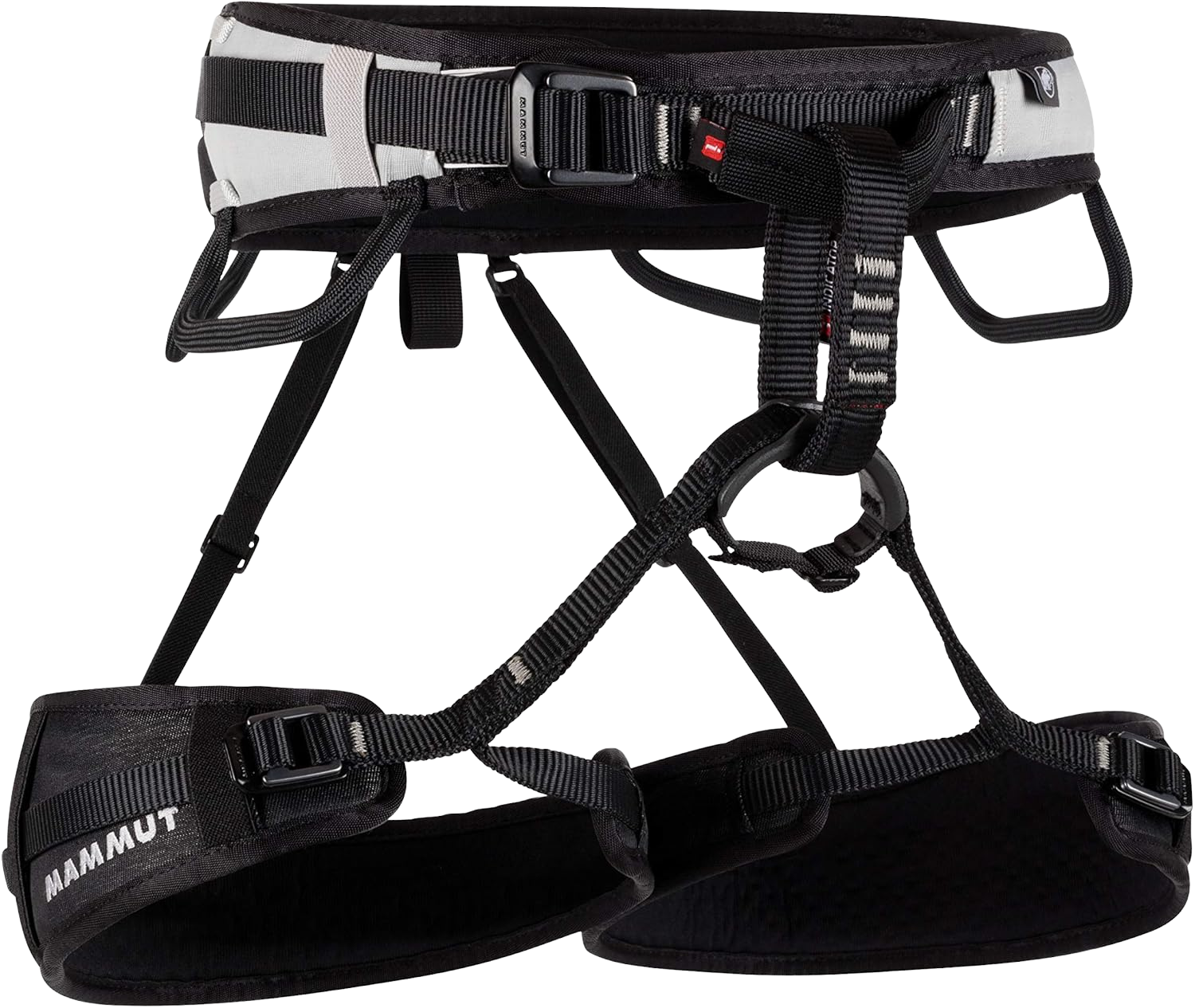
The Mammut Ophir 3 Slide is the harness that makes hanging belays livable instead of miserable.
Its 3 Slide adjustable leg loop system provides 6+ inches of adjustment range, which is more than any competitor in this review. That range solves the eternal problem of fitting over base layers at dawn and down pants at dusk without needing two separate harnesses. With 4 gear loops and plush padding that genuinely spreads the load during multi-pitch hanging belays, this is the harness for routes where you spend as much time at anchors as you do on the sharp end.
Available in both men’s and women’s versions, the Ophir 3 Slide also carries Bluesign® certification for sustainability-conscious buyers. At $65-75, it’s priced like a budget harness but performs like a mid-ranger. In our testing on long trad climbing days in Indian Creek, the comfort difference between this harness and the ultralight options was immediately obvious at the first hanging belay.
The honest flaw: no ice clipper slots means this is a 3-season rock climbing harness, not a winter alpine tool. You can clip ice screws to the gear loops, but it’s clumsy compared to purpose-built clipper slots. And at 386g, it’s nearly 3x the weight of the Choucas Light. On a long alpine approach with a loaded pack, you’ll feel that difference in your legs by mid-afternoon.
Pro tip: if you’re torn between the Ophir 3 Slide and an ultralight option, ask yourself how many hanging belays your typical route has. One or two? Go ultralight. Three or more per day? The Ophir’s padding pays for itself in comfort by pitch five.
🎖️ Honorable Mention: Petzl Corax
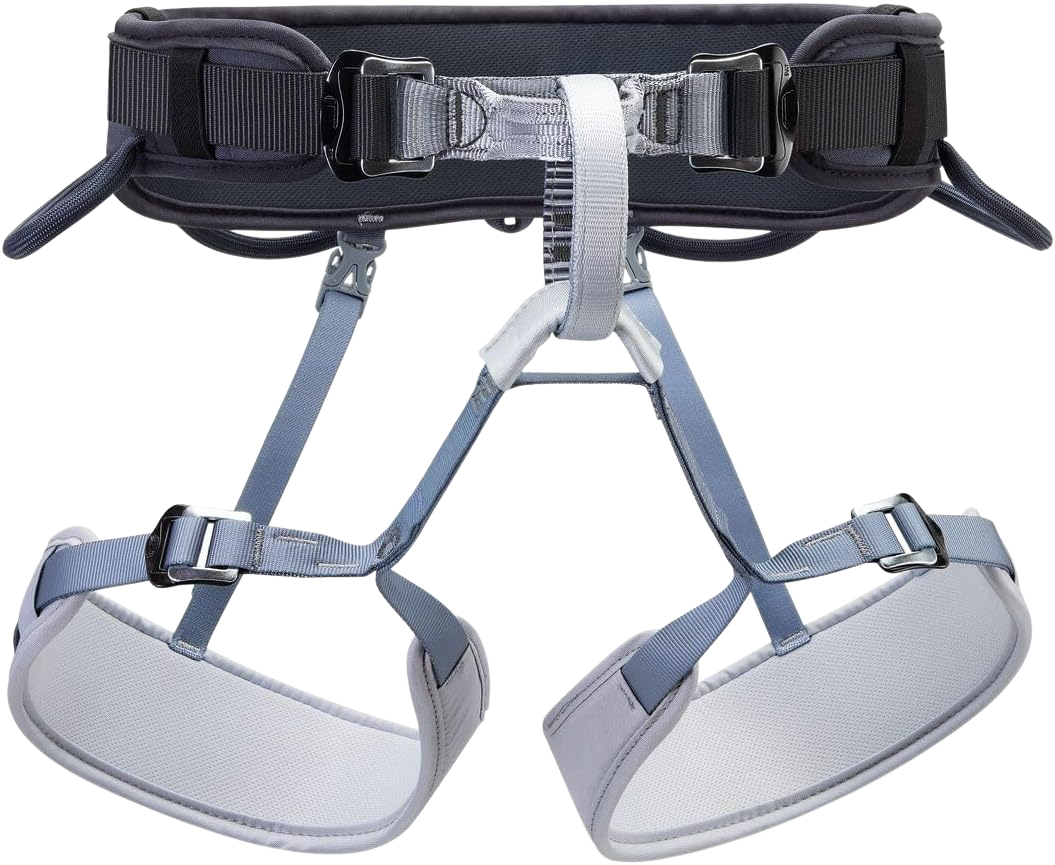
The Petzl Corax didn’t win a main category, but it earned a mention because of sheer real-world credibility: 1,789+ Amazon reviews with a 4.8-star rating. That’s thousands of climbers validating this harness across every discipline from gym climbing to moderate alpine routes.
It features adjustable leg loops with Petzl’s proven DoubleBack buckles, 2 gear loops, and solid build quality at $70-80. If you need ONE harness that handles indoor walls, sport crags, and weekend alpine routes without switching between specialized gear, the Corax is the safe choice.
Why it didn’t win: at 490-540g, it’s a crag harness you’re dragging to the mountains, not an alpine harness by any strict definition. The weight penalty on long approaches is real, and it lacks ice clipper slots for winter use. But for the climber who wants reliability, brand trust, and a proven track record at a fair price, the Corax has earned its reputation.
How to Pick the Right Harness for Your Next Alpine Objective
After 200 pitches, three mountain ranges, and more than a few uncomfortable rappels, here’s what I’d tell a friend asking which harness to buy:
Match harness to mission, not to spec sheet. A 100g harness is wrong for 12-pitch multi-pitch routes. A 386g harness is wrong for fast-and-light ski mountaineering. Neither is universally “best.” The right harness depends on what you’re actually planning to climb.
Gear loops and ice clipper slots are the hidden differentiators. Weight gets the headlines, but rack organization and ice screw access under pressure determine whether a harness helps or slows you down on route. Two gear loops works for glacier travel. It doesn’t work for technical alpine climbing with a full rack.
The Glove Test is your most important try-on. If you can’t operate every buckle with your heaviest gloves in a warm shop, the harness will fail you when it matters. This single test eliminates more bad purchases than any spec comparison.
Building your first alpine kit? Get the Black Diamond Momentum. Shaving grams for a Cascades link-up? The Blue Ice Choucas Light. Want the best balance of weight and operability? The Petzl Altitude is what lives in my pack for most objectives.
FAQ
What’s the difference between an alpine harness and a regular climbing harness?
Alpine harnesses prioritize weight, packability, and cold-weather operability over padding and gear capacity. Most weigh 88-170g versus 300-500g for standard rock climbing harnesses. They also feature ice clipper slots, diaper-style leg loops for donning with crampons on, and glove-friendly buckles designed to work in sub-zero conditions.
How many gear loops do I need for alpine climbing?
It depends on your routes. Glacier travel and ski mountaineering require only 2 gear loops. Technical alpine rock and ice climbing routes demand 4 gear loops minimum, plus ice clipper slots for organized screw access. The Rack Test—loading your typical alpine rack onto the harness—tells you whether 2 loops will frustrate you on route.
Can I use an ultralight alpine harness for multi-pitch rock climbing?
You can, but you’ll pay the comfort tax. Sub-150g harnesses like the Petzl Altitude or Blue Ice Choucas Light sacrifice padding for weight savings. After 20+ minutes at a hanging belay, the pressure on mesh leg loops becomes noticeable. For routes with extended hanging belays, a harness with genuine padding like the Mammut Ophir 3 Slide makes the difference between suffering and sending.
Do I need ice clipper slots if I’m only doing alpine rock?
Not strictly, but conditions change fast in the mountains. A route that starts as 5.7 rock can end with verglas or an ice gully. If there’s any chance you’ll carry ice screws, ice clipper slots save you from the awkward process of clipping screws to gear loops with gloved hands. The National Park Service’s mountaineering safety guidelines reinforce the importance of carrying ice protection even on routes that appear rock-only.
How long does a climbing harness last?
With regular use, most manufacturers recommend retiring a harness after 5-7 years from first use or 10 years from manufacture date, whichever comes first. Ultralight harnesses using Spectra and Dyneema may show wear faster due to thinner webbing. Inspect tie-in points, belay loop, and buckle stitching before every climb. Any visible wear or fraying means it’s time to retire the harness.
Safety Notice: Rock climbing and mountaineering are inherently high-risk
activities that can involve physical trauma or fatal incidents. The information on Rock Climbing Realms is for
educational and informational purposes only. Techniques and advice presented here are not a substitute
for professional, hands-on instruction. Conditions and risks vary by location. Always seek guidance
from a qualified instructor before attempting new techniques. By using this website, you agree that you
are solely responsible for your own safety. Any reliance you place on this information is strictly
at your own risk, and you assume all liability for your actions. Rock Climbing Realms and its authors
will not be held liable for any harm, damage, or loss sustained in connection with the use of this information.
Affiliate Disclosure: We are a participant in the Amazon Services LLC Associates Program, an
affiliate advertising program designed to provide a means for us to earn advertising fees by advertising and linking
to Amazon.com. As an Amazon Associate, we earn from qualifying purchases. We are also an official affiliate partner
of Black Diamond Equipment via the AvantLink network. If you click on a Black Diamond affiliate link and make a
purchase, we may earn a commission at no additional cost to you. We also participate in other affiliate programs.
Additional terms are found in the terms of service.