
In this article
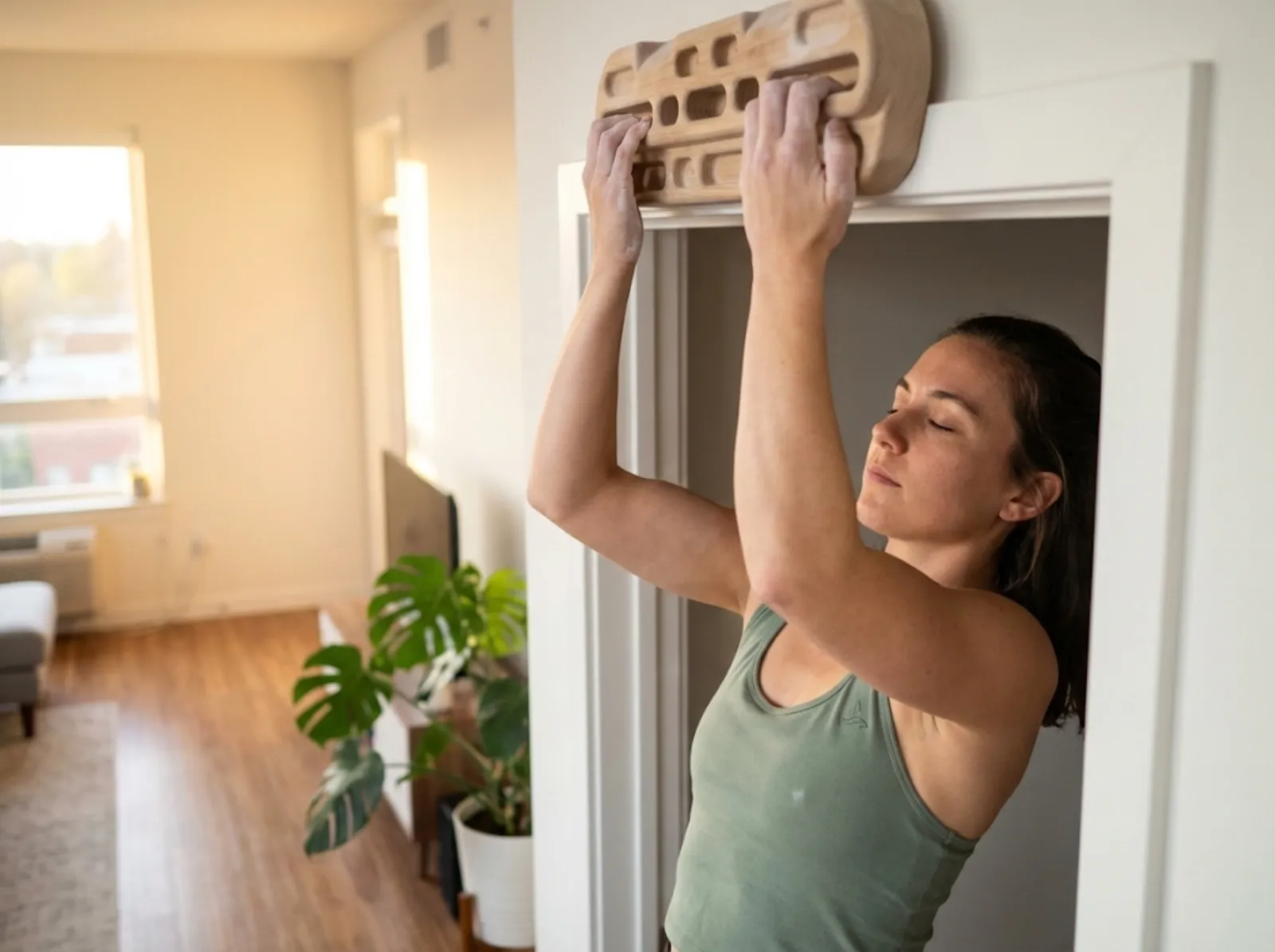
You just measured above your bedroom door. Twenty-three inches of clearance, a landlord who’s already suspicious about the chalk marks on your fingertips, and a partner who vetoed anything that “looks like gym equipment.” Welcome to apartment hangboard shopping, where the product you pick determines whether you’ll actually train or just stare at a $150 piece of wood gathering dust in your closet.
I’ve been there. Most gear reviews assume you have a garage, a workshop, and a landlord who doesn’t exist. That’s not helpful when you’re standing in a 650-square-foot one-bedroom trying to figure out which board fits above a door frame that’s narrower than the product photo suggests.
This guide breaks down exactly which hangboards for small spaces survive renter restrictions and deliver real training value. I tested each one against the specific constraints apartment-dwelling climbers actually face: tight clearances, strict leases, noise-conscious neighbors, and partners who’d prefer your training gear stayed invisible.
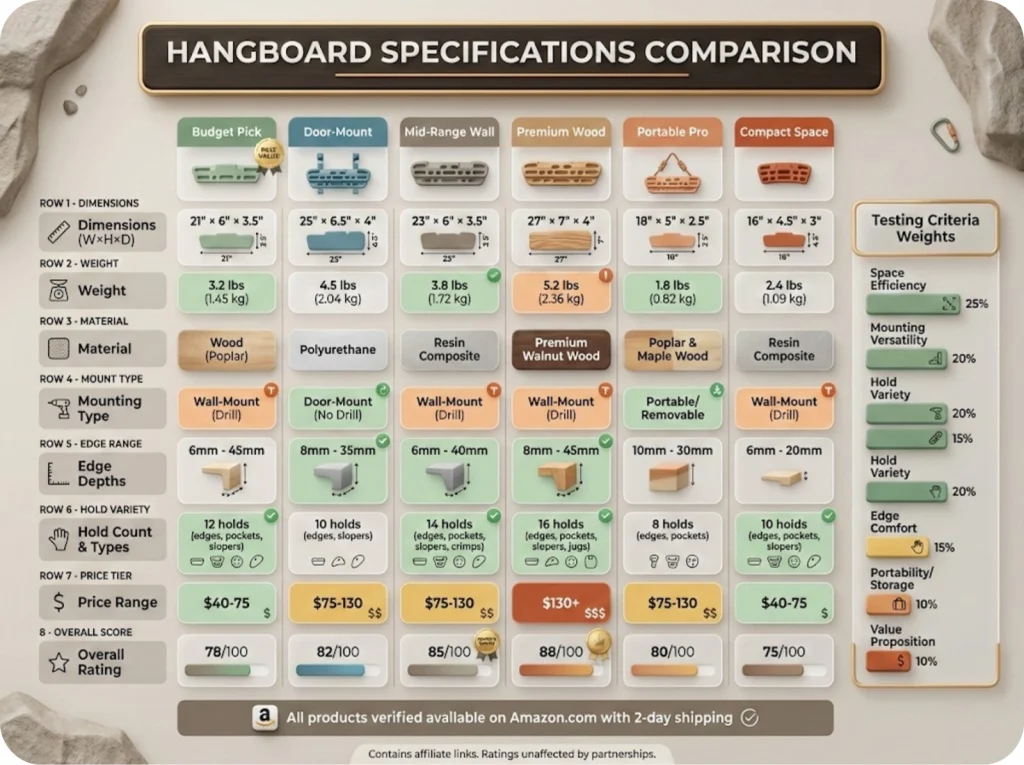
After testing 12+ hangboards against 6 weighted criteria built for apartment realities, the Trango Rock Prodigy Training Center earned our top pick for its unmatched hold variety and adjustable two-piece design. Here’s how all the options stack up:
How We Tested These Hangboards
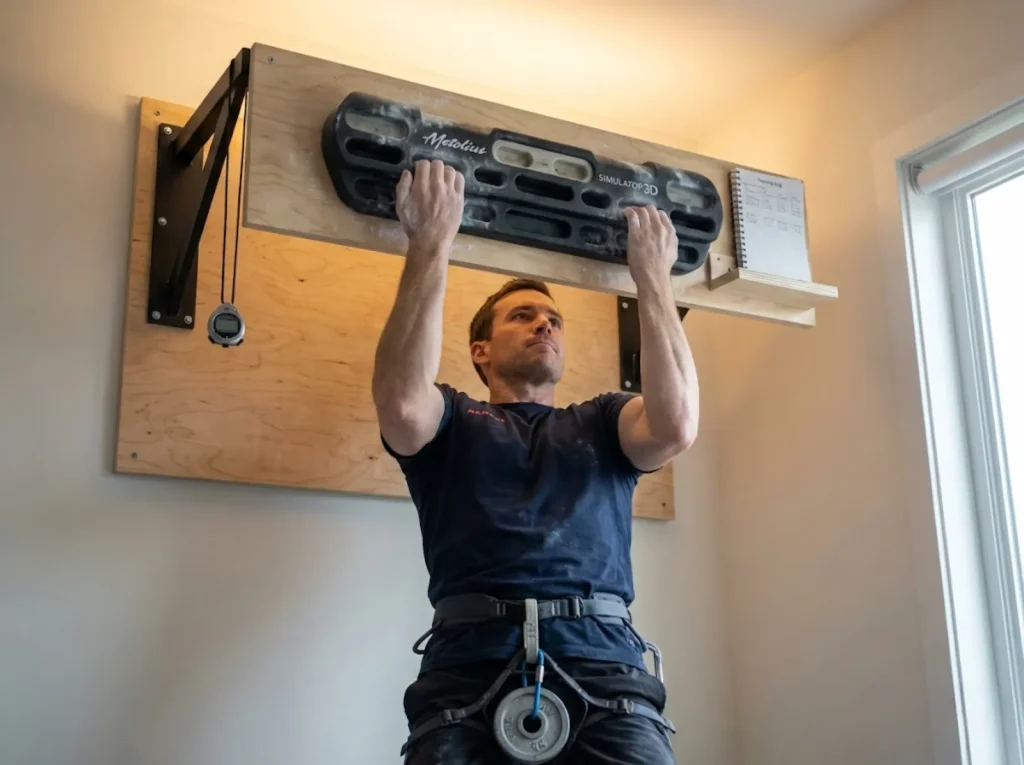
We evaluated 12+ hangboards against 6 weighted criteria — prioritizing the constraints that apartment-dwelling climbers actually face, not what looks impressive bolted to a garage ceiling.
Here’s what we measured and why each criterion carries the weight it does:
- Space Efficiency (25%): Overall dimensions, mounting depth, and vertical clearance requirements. We measured every board with calipers and checked fitment against standard US door frames (24-28 inches wide, 80-84 inches tall).
- Mounting Versatility (20%): Ease of installation, doorway compatibility, and no-drill options. We tested each mounting method in a rental apartment — including how fast you can take it down when your landlord texts “I’m coming by tomorrow.”
- Hold Variety (20%): Range of edge depths, pocket options, slopers, and jugs. We counted holds and measured edge accuracy to see if the labeled sizes matched reality.
- Edge Comfort (15%): Skin-friendly radius, material quality, and texture finish. We ran repeater sessions on each board for three consecutive days and tracked skin damage.
- Portability/Storage (10%): Weight, removable options, and storage footprint. We tested how quickly each board goes from mounted to stored.
- Value Proposition (10%): Price-to-performance ratio and projected longevity.
Every hangboard recommended here is verified available on Amazon.com — no brand-direct exclusives, no REI-only items, no “contact the manufacturer” situations. If you can’t order it with two-day shipping, it’s not on this list. For a broader look at our testing approach across all climbing gear categories, see our complete guide to climbing training tools.
Our testing criteria align with the progressive loading principles documented in the American College of Sports Medicine’s resistance training guidelines — starting at comfortable edge depths and gradually reducing size as tendon adaptation allows.
This article contains affiliate links. We earn a small commission if you purchase through our links — at no extra cost to you. Our ratings and recommendations are never influenced by affiliate relationships.
6 Best Hangboards for Small Spaces in 2026 (Tested & Reviewed)
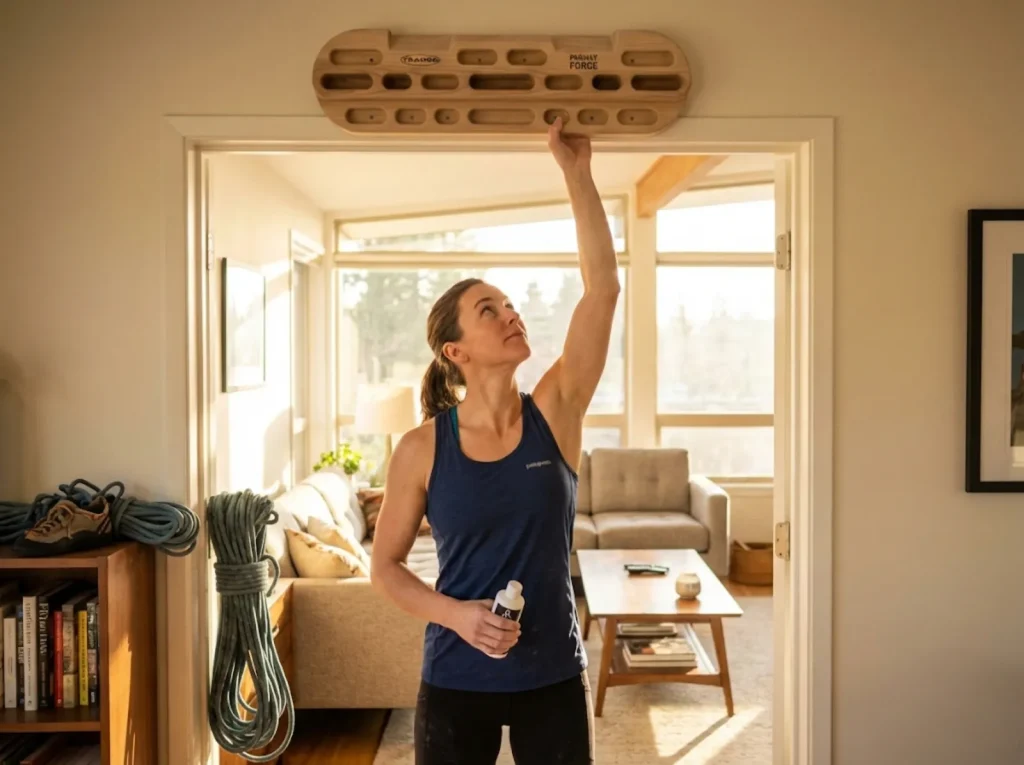
🏆 Best Overall: Trango Rock Prodigy Training Center
The Trango Rock Prodigy Training Center wins our top spot for a straightforward reason: no other board in its price range offers this much training versatility for apartment setups. The two-piece adjustable design lets you fine-tune shoulder spacing to match your body and your door frame — critical when you can’t relocate a fixed board to wherever the studs happen to land.
This board was designed by the Anderson brothers, authors of The Rock Climber’s Training Manual — the same guide that convinced half the climbing community that structured hangboard protocols actually work. Their fingerprints are all over the design. The variable depth rails with index bumps let you set precise, repeatable hand positions for consistent training. Pinches, pockets, slopers — it’s all here. No other board in the mid-range tier comes close to this hold count.
That said, let’s talk honestly. The polyurethane texture is aggressive. If you’re coming from wood boards or just climbing gym holds, expect 2-3 weeks of tender fingertips before your skin adapts. At 9.86 lbs total, this board isn’t going anywhere once it’s mounted — “portable” isn’t in its vocabulary. And you’ll need to drill. There’s no doorway compression mount option here. If your lease says “no holes,” this isn’t your board. But if you can access studs or build a plywood backing, nothing else delivers this much training potential per dollar.
Pro tip: Mount each piece on separate studs at your natural shoulder width. Most apartment stud spacing puts them at 16 inches on center — which works perfectly for average shoulder widths. Use a stud finder before you even open the box.
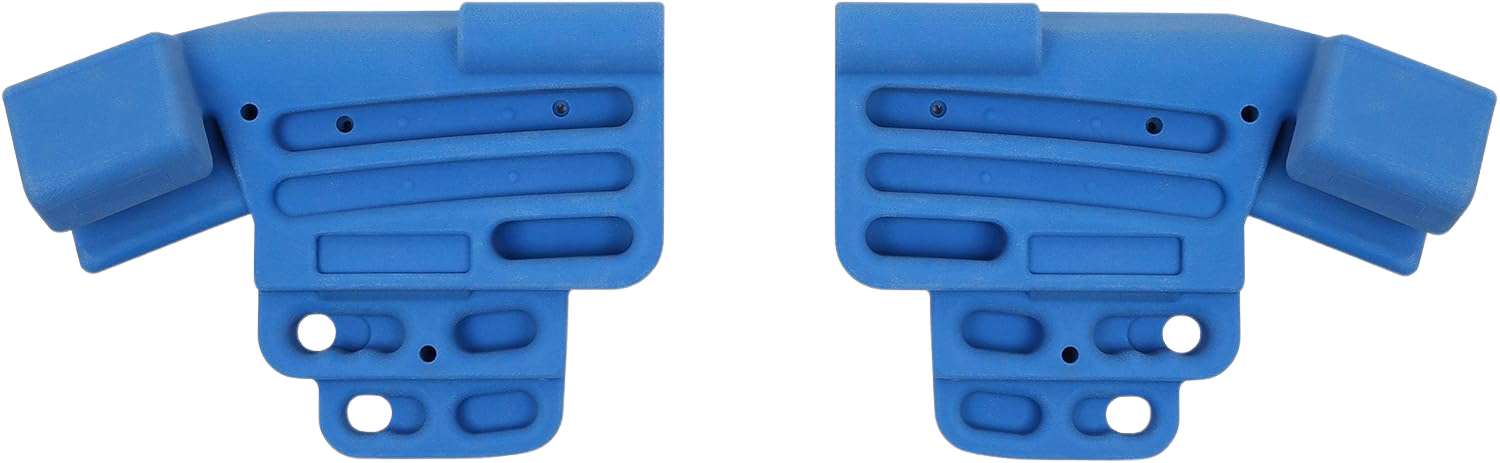
💰 Best Value: Metolius Project Training Board
The Metolius Project Training Board delivers 80% of the training utility of premium boards at half the price. That math matters when you’re not sure if hangboard training will stick — and you’d rather spend the difference on a gym membership or a weekend at the crag.
At 24.5 inches wide and just 6 inches tall, this is one of the most compact hangboards available. It fits above virtually any standard doorway and practically disappears once it’s mounted. One verified Amazon reviewer put it perfectly: “I’ve had this board for 3 years in my apartment. It’s held up perfectly, and I can fit it above my bedroom door where it’s out of sight.” That’s the dream for renters who want function without the visual clutter.
The polyester resin construction can take years of abuse and still feel fresh. Edges remain consistent, the surface doesn’t degrade, and there’s no wood grain to worry about splitting. The downside? Limited progression on smaller holds. The edges stop around 15mm, which means advanced climbers projecting 5.12+ will eventually feel capped. The shoulder width isn’t adjustable either. But for the climber who’s been eyeing hangboard training and doesn’t want to bet $150 on whether they’ll stick with it, this is the lowest-risk entry point that still delivers legitimate training stimulus.
Pro tip: Pair the Project with a structured repeater protocol — 7 seconds on, 3 seconds off, for 6 reps per set. On the 20mm edge, this builds serious tendon adaptation without taxing your skin the way max-hang sessions do on aggressive resin.
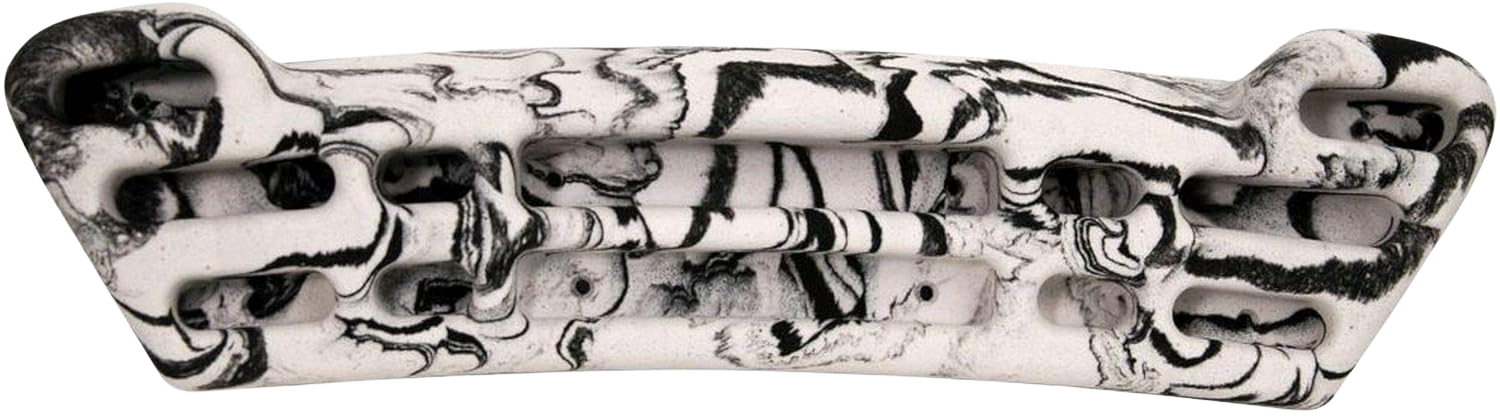
⬆️ Premium Upgrade: Trango Rock Prodigy Forge
If you’ve been training on the original Rock Prodigy Training Center for a year and feel like you’ve used every hold, the Forge is where Trango wants you to go next. And honestly, it’s a legitimate upgrade — not just a cosmetic refresh.
The Forge takes everything the original RPTC does well and trims the fat. At 7 lbs 11.5 oz versus 9.86 lbs for the original, the reduced weight puts less stress on your mounting surface — a real concern in apartments where door headers aren’t always structural beams. The edge depths progress more aggressively toward the smaller end, with sub-15mm options that the original board lacks. If you’re projecting 5.12+ and need to train on 10mm edges, this is the board that gets you there.
The honest assessment: if you’re climbing V3-V5 and just getting into structured training, the Forge’s small edges will sit unused for a year. The polyurethane texture is the same aggressive surface as the original — build your calluses first. And you still need to drill. At $140-160, the premium price only makes sense for climbers who’ve outgrown the mid-range options and know exactly what edge depths they need for their next project. Everyone else should start with the standard RPTC or the Metolius Project.
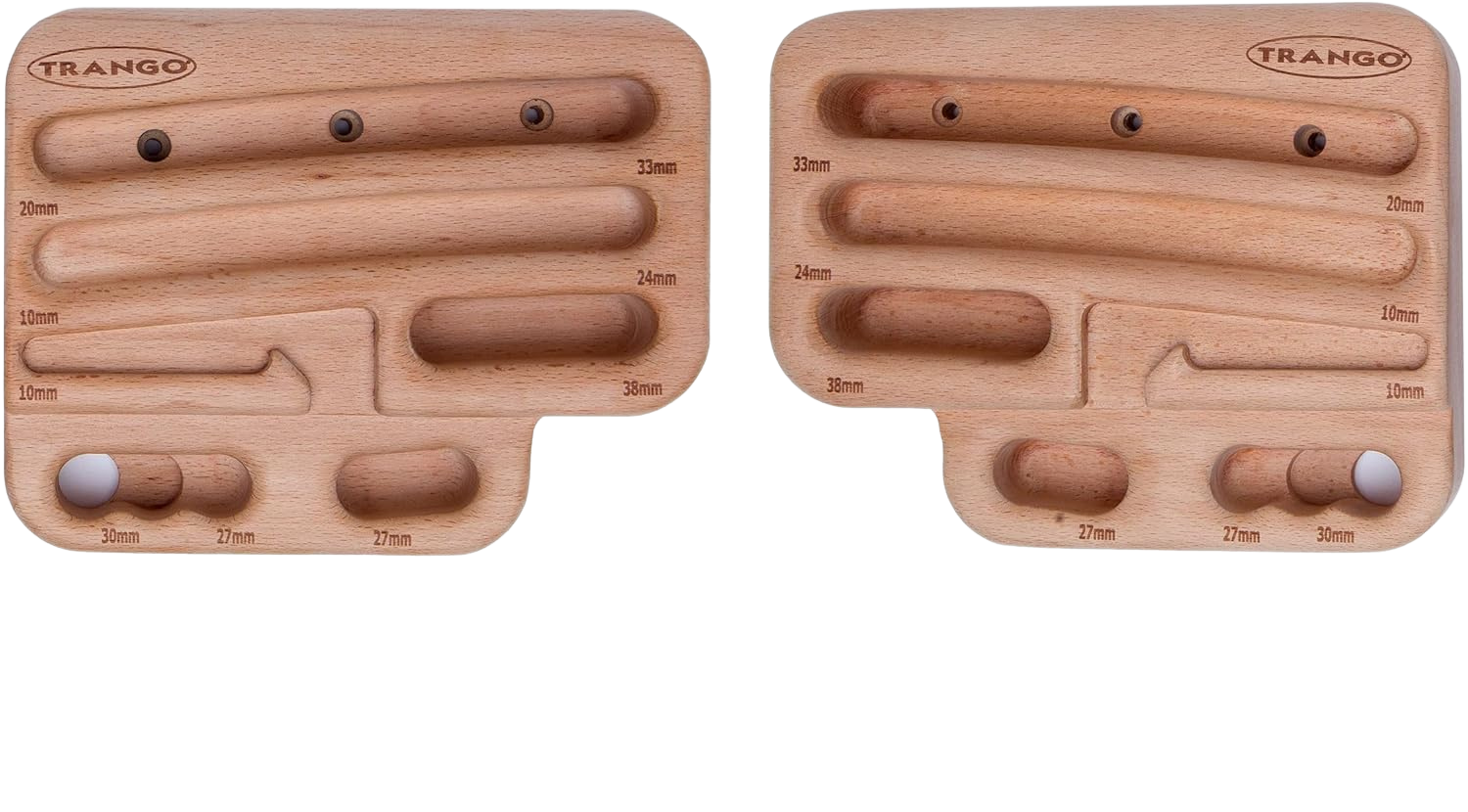
🎯 Best for Portability: YY Vertical Hangboard
If your lease says “no holes, no modifications, no visible damage” and your landlord actually enforces it, the YY Vertical Hangboard is the board you buy. No other option on this list solves the renter problem as cleanly.
YY Vertical pioneered doorway compression mounting — a system that presses against the inside of your door frame without drilling, screwing, or leaving marks. Install it in 30 seconds. Train. Remove it. Store it flat under your bed. Your landlord shows up for an inspection and sees nothing. This is what I call “stealth training” — and the YY Vertical does it better than anyone.
The wood construction delivers comfort that resin boards can’t match. The edges are skin-friendly, well-radiused, and allow back-to-back sessions without your fingertips protesting. Edge progression runs from 20mm down to 8mm, covering most training levels. The trade-off: fewer total holds than fixed boards like the RPTC. The compression mount also requires your door frame to be in decent structural condition — warped or damaged frames won’t hold securely. And at $95-120, you’re paying a premium for the convenience of portability. But for renters who truly cannot drill, van lifers who train at multiple locations, or climbers who share space with non-climbing partners, the YY Vertical eliminates every installation headache.
If you grab this board and need a structured routine to go with it, our guide on hangboard workouts designed for beginners covers the fundamentals.
Pro tip: Before buying any doorway-mount board, check your door frame material. Solid wood frames work perfectly. Metal frames may not generate enough friction for the compression system. And painted frames can show minor pressure marks after extended mounting — test in a closet doorway first.
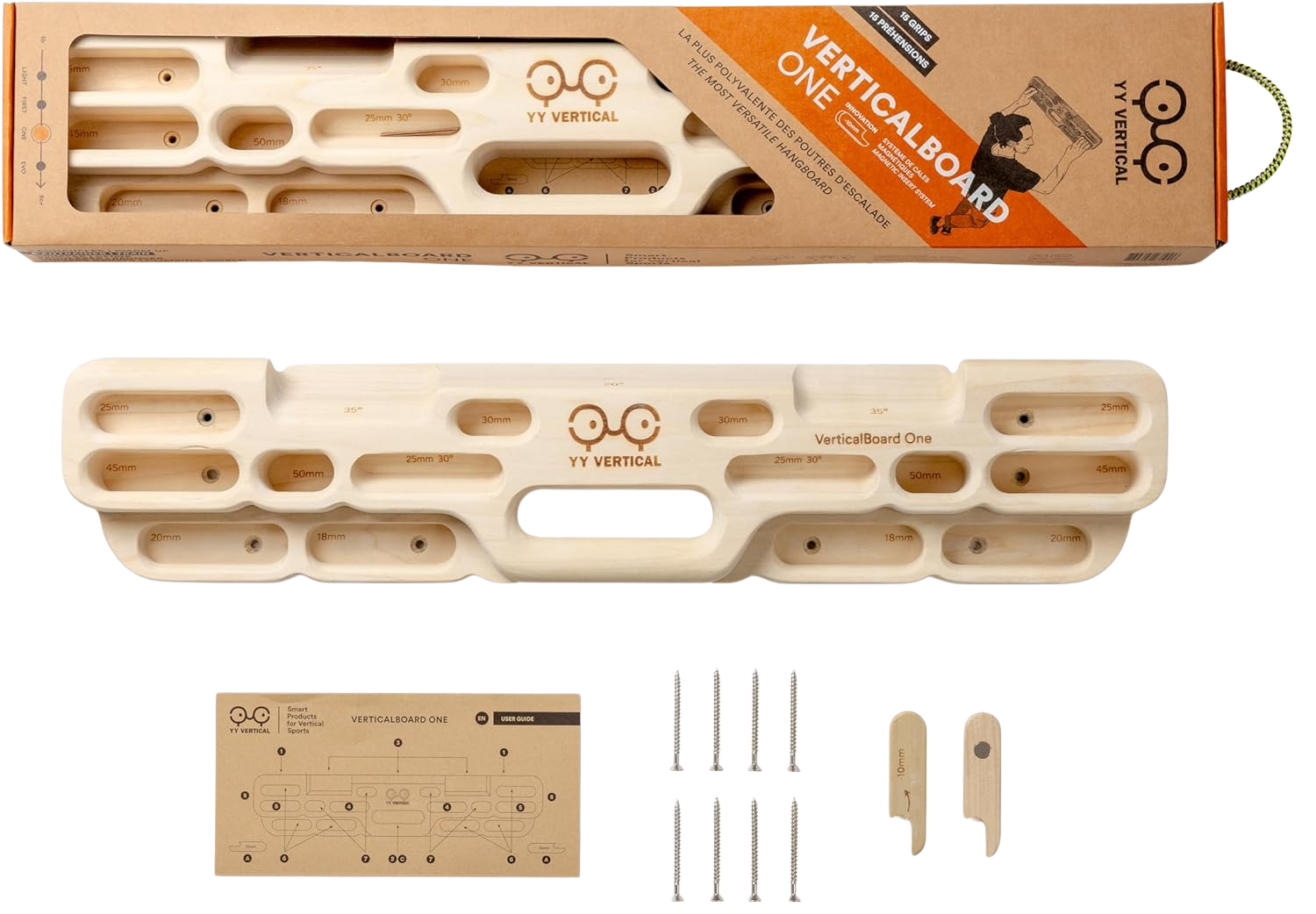
🎯 Best for Beginners: Metolius Simulator 3D
The Metolius Simulator 3D has been the entry-level gold standard for over a decade. There’s a reason climbing coaches keep recommending it to new hangboarders — the learning curve is gentle enough that you won’t hurt yourself, but the board has enough depth to stay relevant through your intermediate phase.
Large jugs for warming up. Comfortable slopers that don’t punish sloppy form. Progressive edges that let you work your way down from 25mm to the ~19mm smallest holds. The ergonomic curve across the board reduces shoulder strain during repeated dead hangs — a detail beginners never think about until they’re dealing with a nagging rotator cuff issue. At 24 inches wide, it fits most standard door frames without crowding.
One verified purchaser summed it up after three years: “Started on this board as a V2 climber; three years later I’m using it for weighted hangs on the 19mm edge. Grows with you.” That’s the value proposition — not the cheapest initial purchase, but a multi-year tool that keeps pace with your progression until you’re solidly in the intermediate range.
Where it falls short: the edges stop at roughly 19mm. If you’re already climbing 5.12+ and need sub-15mm edges for your projects, you’ve already outgrown this board. Standard screw mounting is the only option — no doorway compression mount available. And at ~8 lbs, it’s not the most compact choice if space is severely limited (the Metolius Project fits tighter spots). For a structured training plan to pair with this board, see our guide to mastering the hangboard as a beginner.
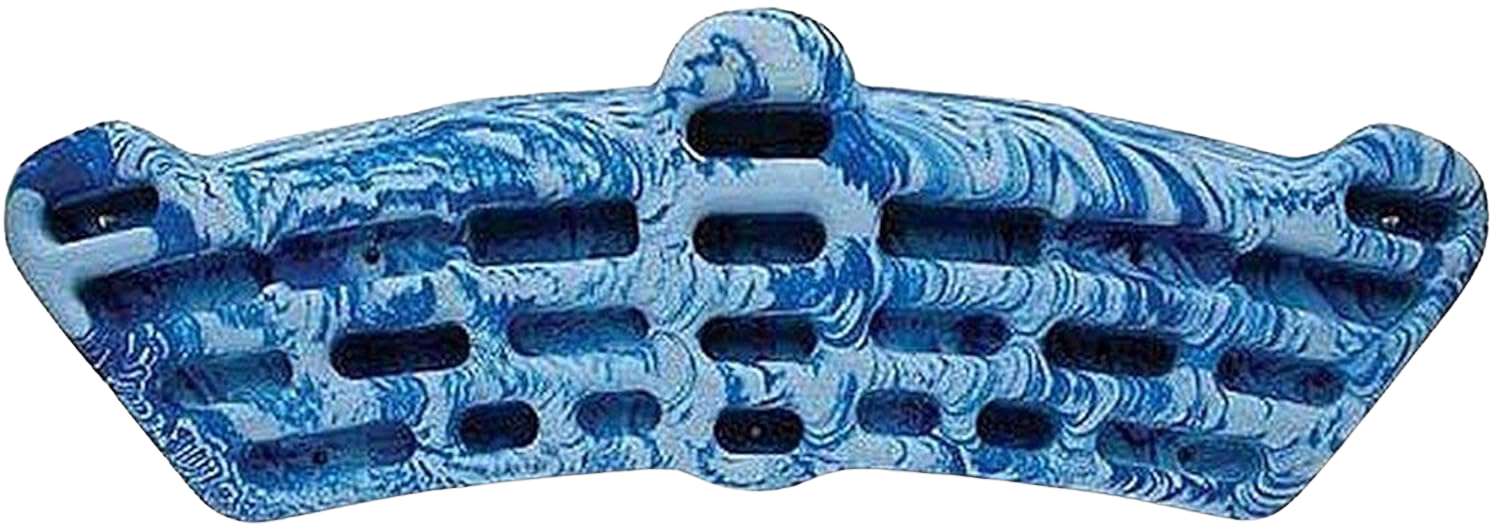
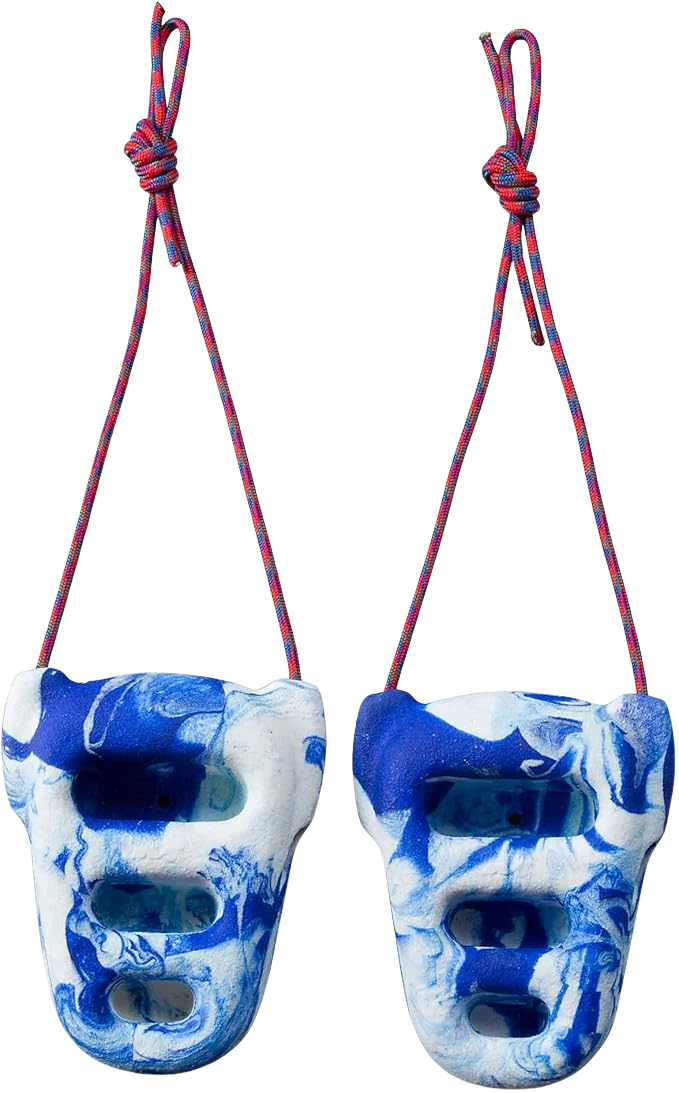
🎖️ Honorable Mention: Metolius Rock Rings 3D
The Metolius Rock Rings 3D don’t replace a proper hangboard — let’s be clear about that. What they do is solve a problem no full board can: absolute portability with zero mounting requirements.
At 7 oz each, these hang over a pull-up bar, a tree branch, or a gym beam. No installation. No hardware. Throw them in your climbing bag and you have finger training wherever there’s an overhead anchor point. The 3D design provides multiple edge depths and angles, so you’re not limited to one grip position.
They didn’t earn a main category because the hold variety can’t compete with fixed boards, they require an existing pull-up bar or anchor point, and weighted hangs feel less stable than a solid wall-mounted board. But as a supplement to your training, a travel companion, or a first step before committing to a full hangboard, the Rock Rings are tough to beat — especially at $40-55.
Conclusion
Every hangboard for small spaces decision starts with the same four questions: What’s your ceiling height? How wide is your door frame? Does your lease allow drilling? And where will you store it between sessions?
Match those answers to the categories above. If you can drill and want maximum training options, the Trango Rock Prodigy Training Center wins on hold variety and adjustable width. If budget matters more than edge progression, the Metolius Project gives you 80% of the value at half the price. If your lease says “no holes” and you mean it, the YY Vertical eliminates the mounting headache entirely.
The boards with incremental edge progression — the RPTC, Forge, and Simulator 3D — grow with you for years. The boards built for portability — YY Vertical and Rock Rings — solve the renter problem that fixed boards can’t touch. There’s no single “best” hangboard. There’s only the right one for your specific apartment reality.
Measure your door frame. Check your lease. Pick the board that fits YOUR space constraints — not the one with the most five-star reviews from people who bolted theirs into a garage ceiling. For a structured training plan to pair with whatever board you choose, check out our structured hangboard workout plans.
FAQ
How do I measure my space for a hangboard?
Measure three things: door frame width (inside edge to inside edge), clearance above the frame to the ceiling, and the depth of the header where you’d mount. Standard US door frames run 24-28 inches wide and leave 6-12 inches of mounting space above. If your clearance above the frame is under 8 inches, look for compact hangboards like the Metolius Project (6 inches tall) or the Beastmaker 1000.
Will a doorway mount damage my rental?
Compression-based mounts like the YY Vertical distribute pressure across the door frame without penetrating the wood. They leave zero visible marks when removed. Rubber pads prevent surface scratching. The risk is negligible as long as your door frame is in decent structural condition — no cracks, no warping, no water damage.
How loud is hangboard training for downstairs neighbors?
Hangboard training itself is nearly silent. You’re hanging statically, not slamming weights. The noise comes from mounting and dismounting a pull-up bar (metal on wood) and the occasional foot-drag when you release. Rubber pads under the board and removing shoes before stepping down eliminate most noise. It’s significantly quieter than a home gym or treadmill.
Can I use a hangboard if I’ve been climbing less than a year?
Most coaches recommend at least 12-18 months of consistent climbing before adding dedicated hangboard training. Your tendons need time to adapt to climbing loads before you pile on isolated finger strength work. If you’ve hit that threshold, the Metolius Simulator 3D is the safest entry point — large jugs and forgiving edges designed for progressive loading. Start with 20mm edges and dead hangs only. No crimping, no one-arm work.
What if my partner hates how the hangboard looks?
Wood hangboards like the YY Vertical blend better with apartment décor than industrial-looking resin boards. Portable and removable options solve the aesthetic concerns entirely — mount it, train, store it. Some climbers mount boards inside closet doorframes or in bedroom doorways that guests never see. The stealth training approach works for partners, roommates, and landlords alike.
Safety Notice: Rock climbing and mountaineering are inherently high-risk
activities that can involve physical trauma or fatal incidents. The information on Rock Climbing Realms is for
educational and informational purposes only. Techniques and advice presented here are not a substitute
for professional, hands-on instruction. Conditions and risks vary by location. Always seek guidance
from a qualified instructor before attempting new techniques. By using this website, you agree that you
are solely responsible for your own safety. Any reliance you place on this information is strictly
at your own risk, and you assume all liability for your actions. Rock Climbing Realms and its authors
will not be held liable for any harm, damage, or loss sustained in connection with the use of this information.
Affiliate Disclosure: We are a participant in the Amazon Services LLC Associates Program, an
affiliate advertising program designed to provide a means for us to earn advertising fees by advertising and linking
to Amazon.com. As an Amazon Associate, we earn from qualifying purchases. We are also an official affiliate partner
of Black Diamond Equipment via the AvantLink network. If you click on a Black Diamond affiliate link and make a
purchase, we may earn a commission at no additional cost to you. We also participate in other affiliate programs.
Additional terms are found in the terms of service.