
In this article
On the standard route up Rainier, just over half the people who start actually tag the summit. The other half turn around, and almost none of them do it because of the altitude. They turn around because of a soft afternoon snow slope, a night of no sleep, or a pair of boots that won’t hold a crampon. Rainier gets called a “beginner 14er,” and that label sends people up the mountain underestimating it. The easiest route is still a coin-flip. This is the honest version of what it takes: the routes, the permits, the boots that decide your day, the skills you can’t fake, and the midnight start that’s keeping you alive.
Why Rainier Turns Half Its Climbers Around
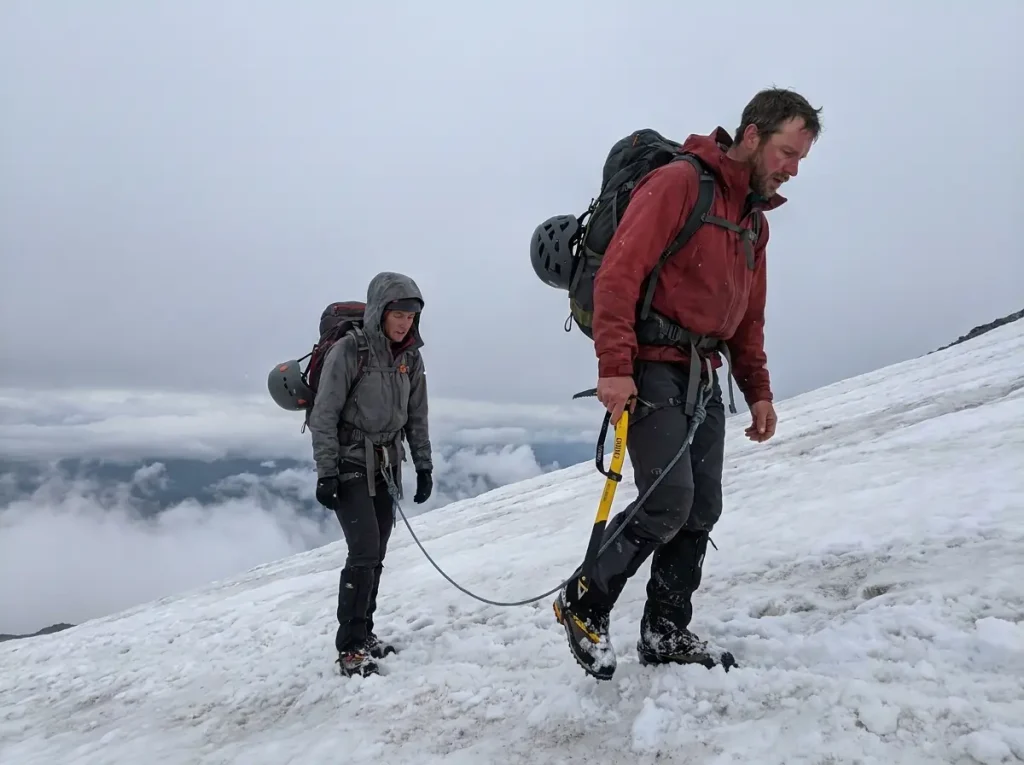
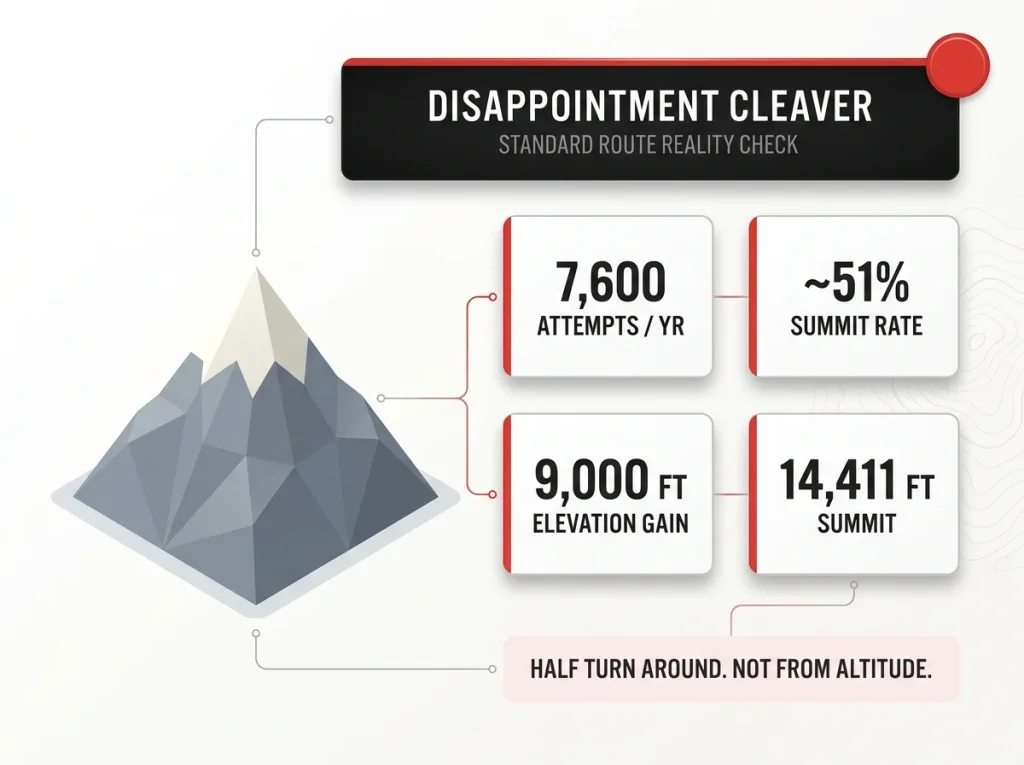
The number that should reset your expectations is this one: the Disappointment Cleaver route sees roughly 7,600 attempts a year, and about 51% of them reach the top. Half the people who pay the fee, drive to Paradise, and start up the standard route come back down without summiting. That’s not a hard route by climbing-grade standards. It’s a coin-flip because of everything around the climbing.
“Easiest Route” Is Not “Easy Route”
Rainier’s standard route is the easiest line up the mountain, and people hear “easiest” and pack accordingly. It’s the same trap people fall into on Elbrus, the easiest of the Seven Summits, which still turns people back in droves. Easiest among hard things is still hard. You’re climbing about 9,000 feet of elevation gain to a 14,411-foot summit, the height of nearly two Empire State Buildings stacked, on a glacier, roped to other people, in the dark. Rainier earns its place in the conversation about the famous peaks worth climbing precisely because it’s a real mountaineering objective wearing a friendly reputation.
What Actually Sends People Down
Ask around and the turn-around stories almost never start with altitude sickness. They start with foot speed. The climbers who summit built the endurance to move steadily under a full pack, because pack weight you haven’t trained with turns a long day into a slow one. An unfit climber moves slowly, and slow is not just tired on this mountain. Slow means you’re still on the upper slopes when the morning sun softens the snow, and soft snow is where the hazards live. The other recurring villains are gear that quit and sleep that never came. The summit is optional. Getting caught by the afternoon is the thing that hurts you.
Turning Around Is a Skill, Not a Failure
The story that keeps coming up in trip reports is the climber who turned back at the top of the Cleaver, came home, trained harder, and summited the next season. That’s not a sad story. That’s the right call made by someone who understood the clock. The climbers who get in trouble are usually the ones who couldn’t admit they were behind schedule. Learning to read your own pace and call it early is a mountaineering skill, same as crampon footwork.
Disappointment Cleaver vs Emmons — Which Route Fits You
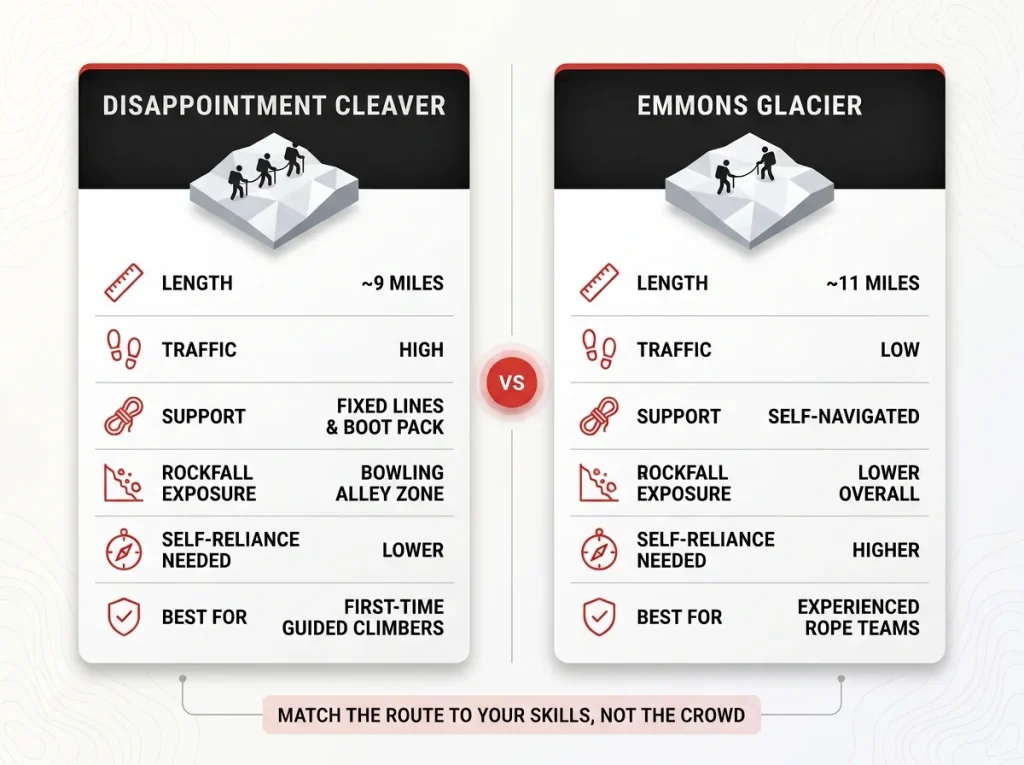
Two routes account for almost all the standard ascents, and most first-timers default to the Disappointment Cleaver without thinking about it. Sometimes that’s right. Sometimes the quieter Emmons Glacier is the smarter choice. The difference comes down to how much support you want versus how much you can do yourself.
The Disappointment Cleaver (DC)
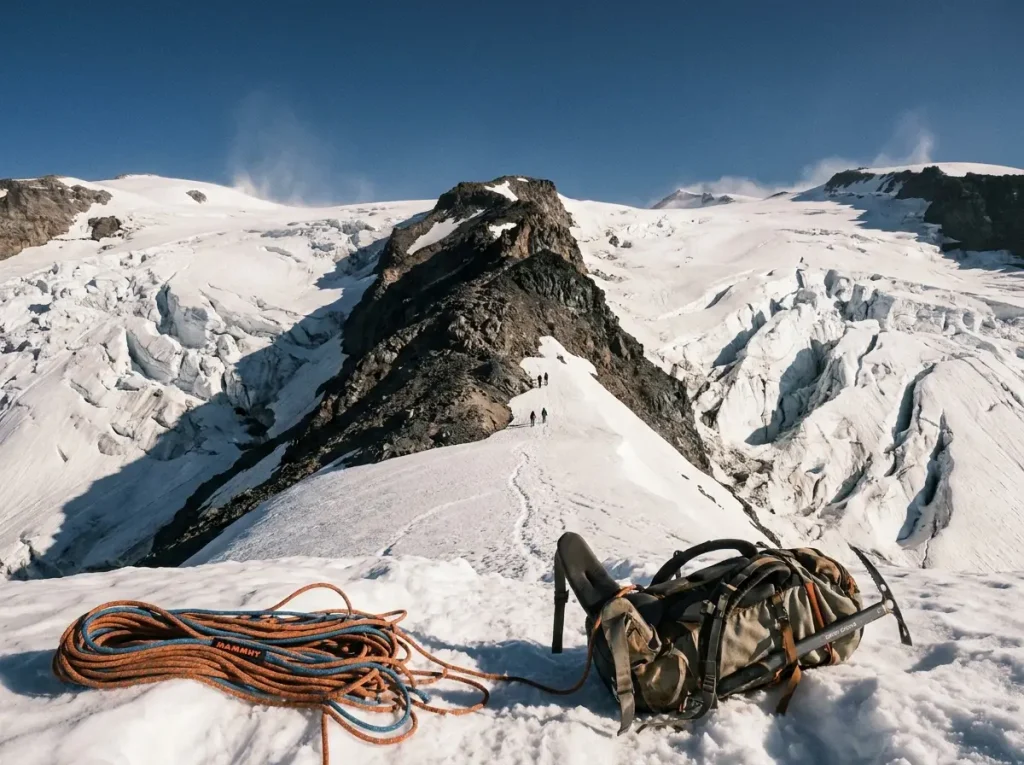
The DC is the busy route, and busy is a double-edged thing. You get a fixed boot pack kicked into the snow, fixed lines on the steep bits, guided teams moving the same direction, and the comfort of other people around if something goes wrong. You also get rockfall. The Bowling Alley below the Cleaver catches rocks kicked loose by the rope teams above you, which is exactly why a helmet here isn’t a suggestion. The DC route crosses Ingraham Flats before the Cleaver itself, and for a beginner private party that infrastructure is the reason to choose it.
The Emmons Glacier
Emmons is the road less traveled, around 11 miles and noticeably quieter. You trade the crowds for self-reliance: you do your own route-finding, run your own rope team, and make your own calls about which snow bridge to trust. It’s a better experience if you have the skills. It’s a worse idea if you don’t. Emmons rewards a competent party and punishes an unprepared one.
The Route Changes Month to Month
Here’s the part the route descriptions don’t capture: the mountain is not the same in June as it is in July. By midsummer there are usually ladders bridging the big crevasses. In mid-June there may be none up yet, and you’re jumping or finding a way around. It pays to know what the route actually looks like by July, ladders and all, before you lock in your dates, and to understand the broader summer-season picture on Rainier so you’re not surprised by conditions that shifted in two weeks.
Learn the named features in order before you climb the DC in the dark: Cathedral Gap, the Cleaver itself, the Bowling Alley underneath it. When you’re moving by headlamp at 1 a.m. and everything looks the same, knowing what comes next is half of not getting disoriented on the route.
Permits and Fees Without the Guesswork
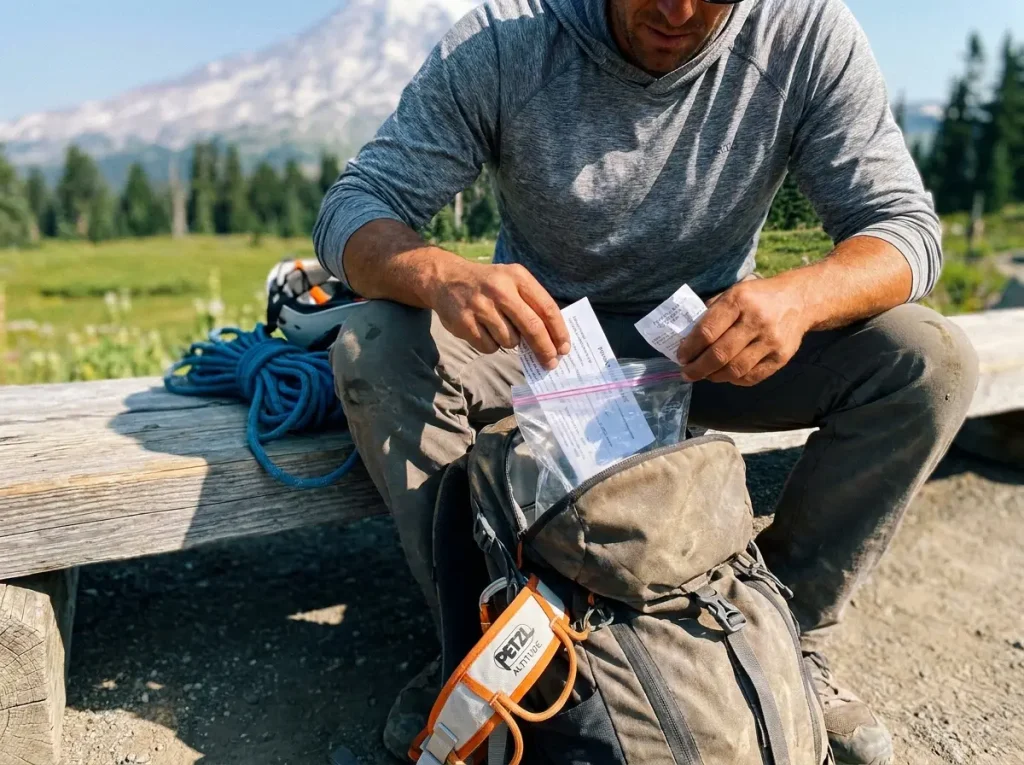
This is where stale internet advice costs you. Half the blogs still quote fees from years ago, and showing up with the wrong paperwork means you don’t climb. There are two separate things to pay for, and they are not the same permit.
The $70 Climbing Fee
The first is the annual climbing fee. The National Park Service sets the annual climbing fee at $70 per person, paid online through Pay.gov, and it’s required for travel above roughly 10,000 feet or on the glaciers. It runs the calendar year, so you pay once and climb on it all season. If you see “$82” or “$56” floating around in an older guide, ignore it and trust the NPS page.
The Wilderness Permit
The second is a separate Wilderness Permit to sleep on the mountain. A Wilderness Permit at $12 per person, per night is required to camp at Muir or Schurman. You get it through the February Early Access Lottery, which carries a $6 non-refundable reservation fee, or you take your chances on a walk-up at the Wilderness Information Center, where the climbing rangers also post current route conditions. If your dates are fixed, the lottery is the safe play. Walk-ups exist but they’re a gamble in peak season.
Don’t Conflate the Two
The mistake people make is treating these as one permit. They’re not. You need the $70 climbing fee AND the $12-per-night wilderness permit to do a standard two-day climb sleeping at Camp Muir. Budget for both, sort them out weeks ahead, and you’ve removed one of the dumber reasons people get turned away before they even start walking.
The Boots Are Where Beginners Fail
If you remember one section from this article, make it this one. The single most common beginner mistake on Rainier isn’t fitness and isn’t nerve. It’s footwear. People show up with waterproof hiking boots that physically cannot hold a crampon, and the day is over before it starts.
The B-Rating System Nobody Explains
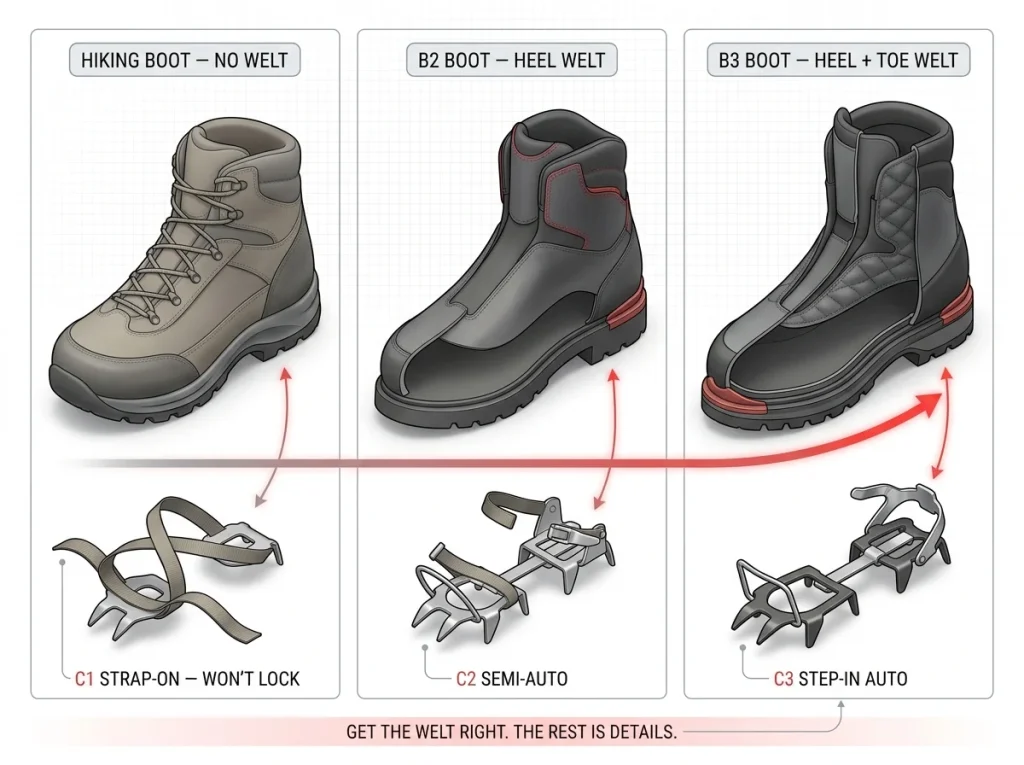
Mountaineering boots get a stiffness rating, B1 through B3, and it maps directly to which crampon they can take. A B2 boot has a heel welt and a stiffer sole, and it accepts a semi-automatic (C2) crampon. A B3 boot adds a toe welt and a fully rigid sole, and it takes an automatic, step-in (C3) crampon. A standard hiking boot has no welt and a flexible sole. Strap a crampon to it and the boot flexes, the crampon levers off, and you’re standing on a glacier with hardware dangling from your foot. The boot has to be rigid enough to keep the crampon locked. That’s the whole game. If you want the full breakdown, the boot-to-crampon (B/C) compatibility matrix most guides skip spells out every pairing.
The Timberland Mistake
This isn’t a hypothetical. One widely shared Rainier gear list literally recommended waterproof Timberland hikers for a glaciated 14er. They’re fine boots for a wet trail. They will not take a crampon, full stop. Waterproof does not mean crampon-compatible, and “my boots are really sturdy” does not mean they have a welt. This is the exact category error that ends summit days, and it’s the same B3-boot logic that applies on Shasta and the other Cascade volcanoes. Get the category right first, then worry about brand.
What to Actually Put on Your Feet
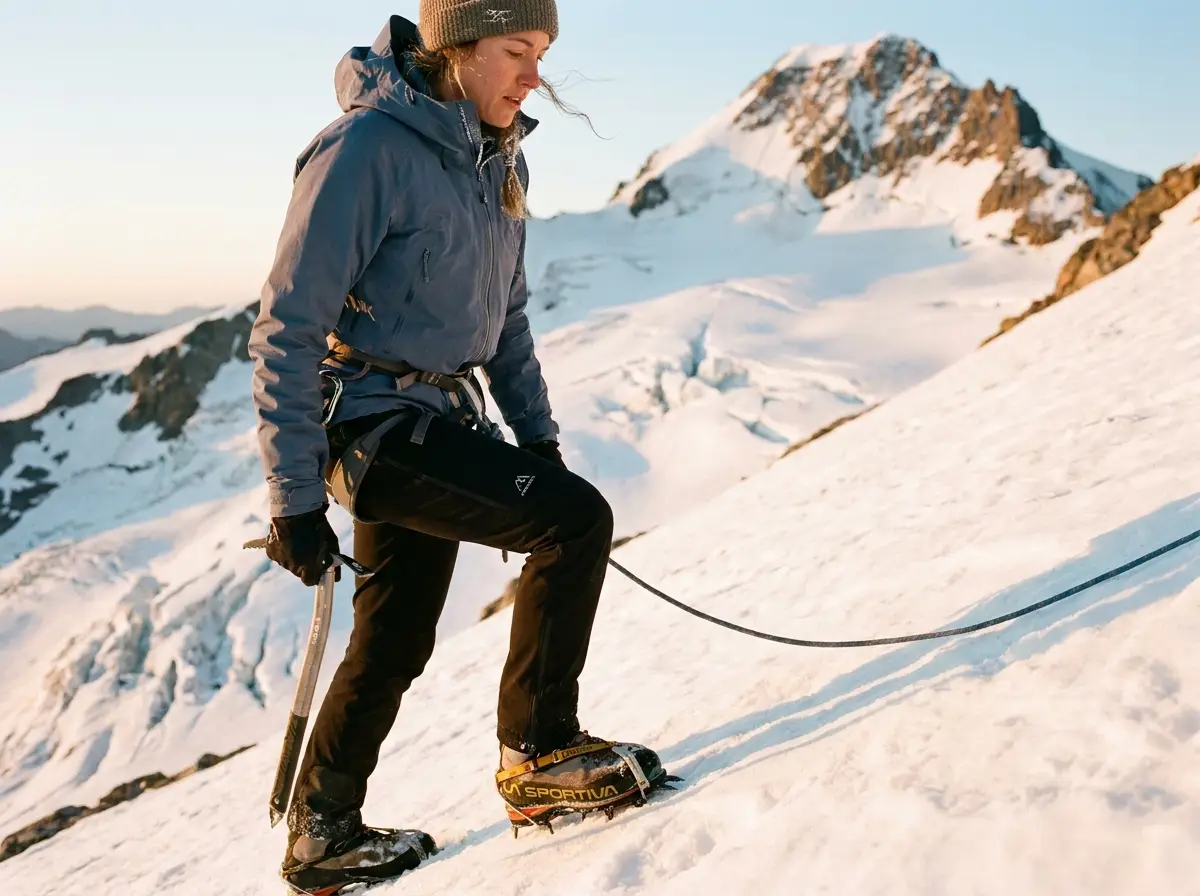
The proven do-it-right-once pick is a true B3 double boot. The La Sportiva Nepal Evo GTX is the standard answer, fully rigid, dual welts, and a Gore-Tex membrane, and it’s been on Pacific Northwest glaciers for decades.
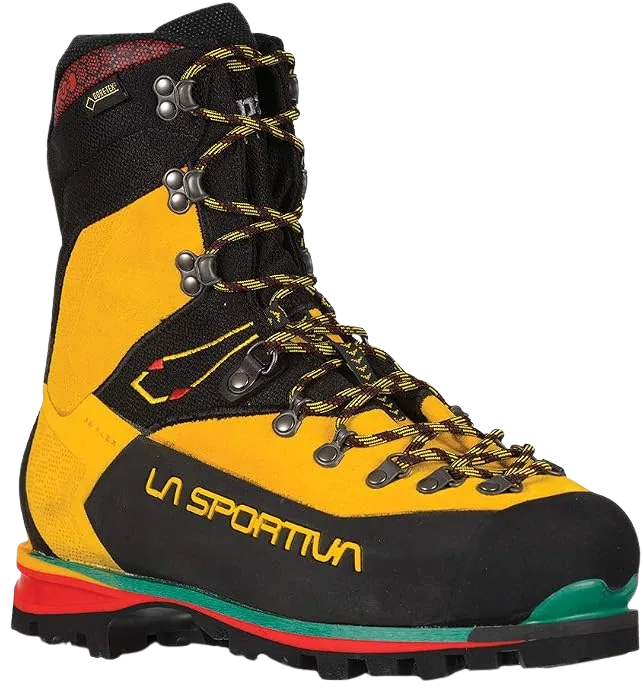
If a full-shank B3 is more boot than you want, a B2 alpine boot like the La Sportiva Trango Tech GTX (men’s · women’s) is the lighter, softer-flexing budget path that still takes a semi-automatic crampon and handles the DC fine for most fit climbers. And if you’re climbing Rainier once, you do not have to own any of this: renting B2 or B3 boots from a guide service or REI is a completely legitimate move. The point is the category, not the receipt.
Once you’re in the right boot category, fit beats brand. A stiff boot that hot-spots at hour 10 ends your day as surely as the wrong category does. Try boots on with the socks you’ll actually climb in, and if you rent, do it a day early and walk around camp before committing your feet to 16 hours.
The Rest of the Glacier Kit
Once the boots are sorted, the rest of the technical kit is less about brand loyalty and more about a few specs people skip. Get these right and the gear becomes the part of the trip you stop thinking about.
Crampons That Match Your Boots
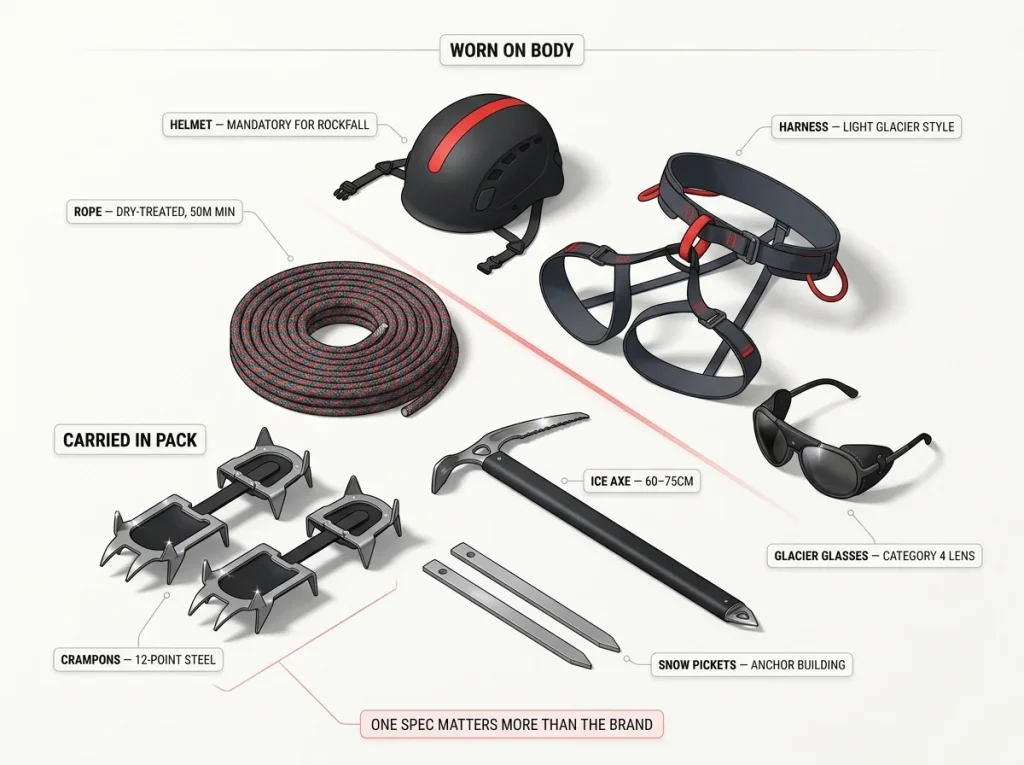
Run 12-point steel crampons, not aluminum. Aluminum is for ski-mountaineering on pure snow, and the Cleaver has rock that will chew soft points apart. The other non-negotiable is ABS anti-balling plates: in the wet PNW snow, snow cakes up under an un-plated crampon, you lose your points, and you’re suddenly walking on slick platforms. The binding has to match your boot welt, a New-Matic or semi-auto for a B2, a clip/auto for a B3. The Grivel G12 New Matic is the safe middle-ground pick that fits B2 and B3 boots both.
| Boot Rating | Crampon Match | Binding Type |
|---|---|---|
| B1 (flexible) | C1 | Strap-on |
| B2 (heel welt) | C2 | Semi-auto (New-Matic) |
| B3 (heel + toe welt) | C3 | Clip / step-in |
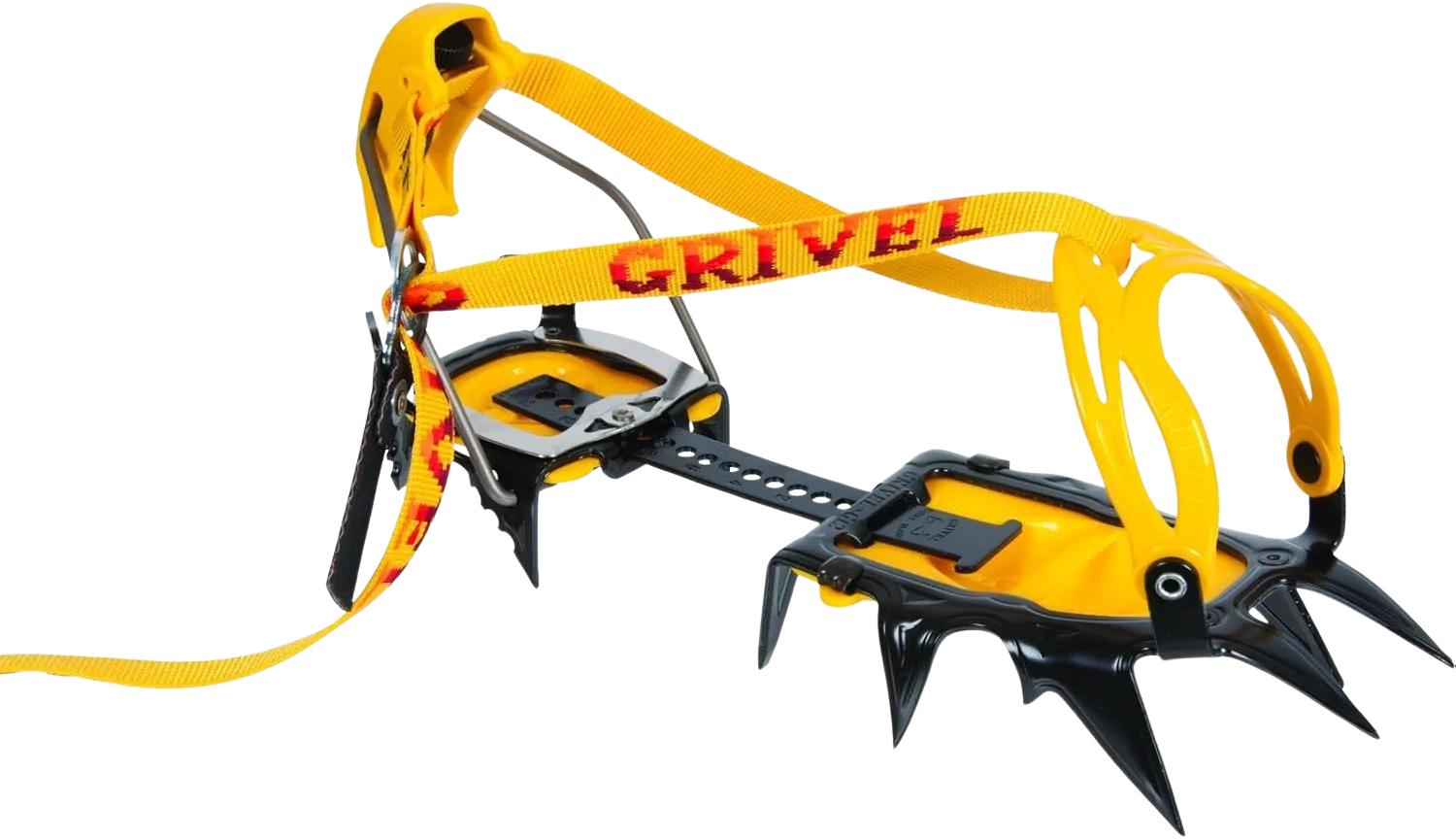
If you’re in a B3 boot and want a true step-in, the Black Diamond Sabretooth Clip is a clean steel alternative with the same anti-balling logic. Either one works. The plates and the steel matter more than the badge.
Ice Axe, Harness, Helmet, Rope, and Eyes
Your axe is the do-everything tool: a classic mountaineering axe sized around 60 to 75 centimeters for walking and self-arrest. The Black Diamond Raven is the budget hero that’s been getting people up Rainier forever.
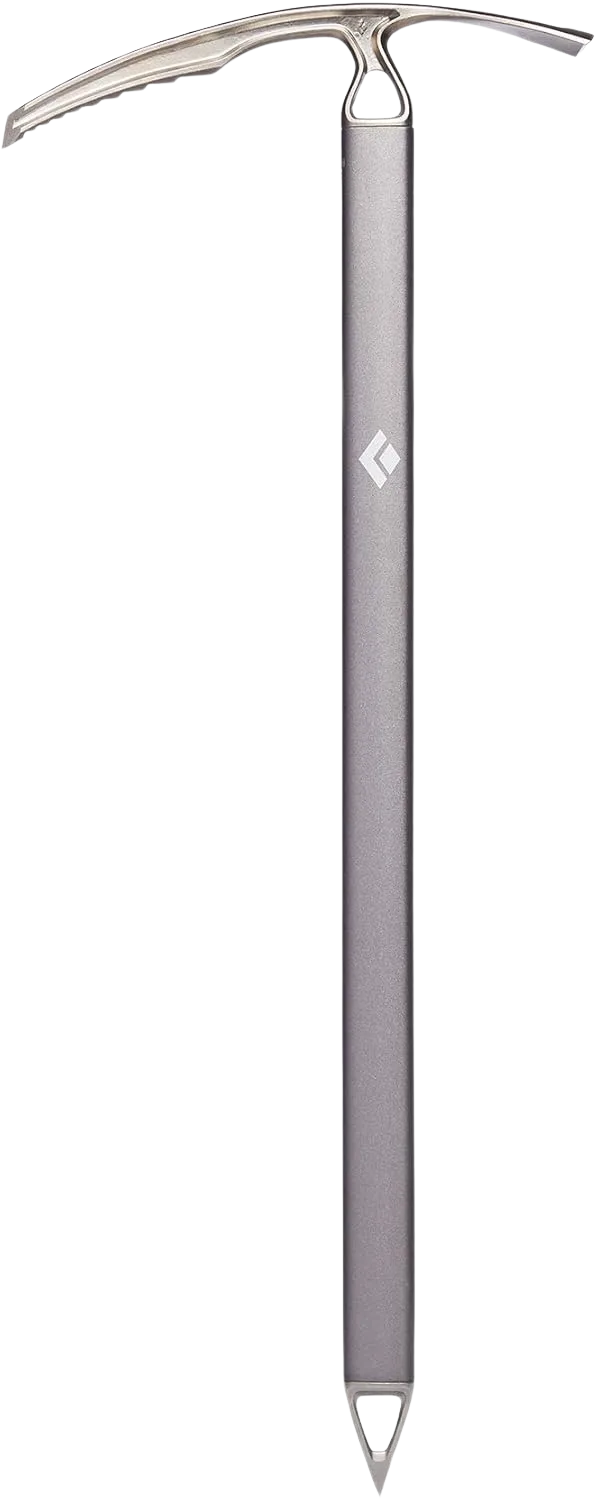
If you want something a touch more technical for future objectives, the Grivel Air Tech Evo steps up without going overboard. For the rest: a light glacier harness like the Petzl Altitude goes on over your layers and crampons for rope-team travel, gaiters keep snow out of your boot tops, and a UIAA helmet like the Petzl Meteor is mandatory, not optional, because of the rockfall in the Bowling Alley. Your team needs a dry-treated single rope, and the Mammut 9.5 Infinity Dry at 50 meters minimum covers glacier travel and crevasse rescue. Last, protect your eyes: glacier glasses with a Category 4 lens like the Julbo Camino with Spectron 4 block the brutal all-day glare that causes snow blindness, the kind of injury that turns a summit day into a miserable descent. This is the same glacier kit you’d rack up for any Cascade volcano, so it earns its keep across more than one mountain.
The Skills That Decide Whether You Summit — and the Guide Question
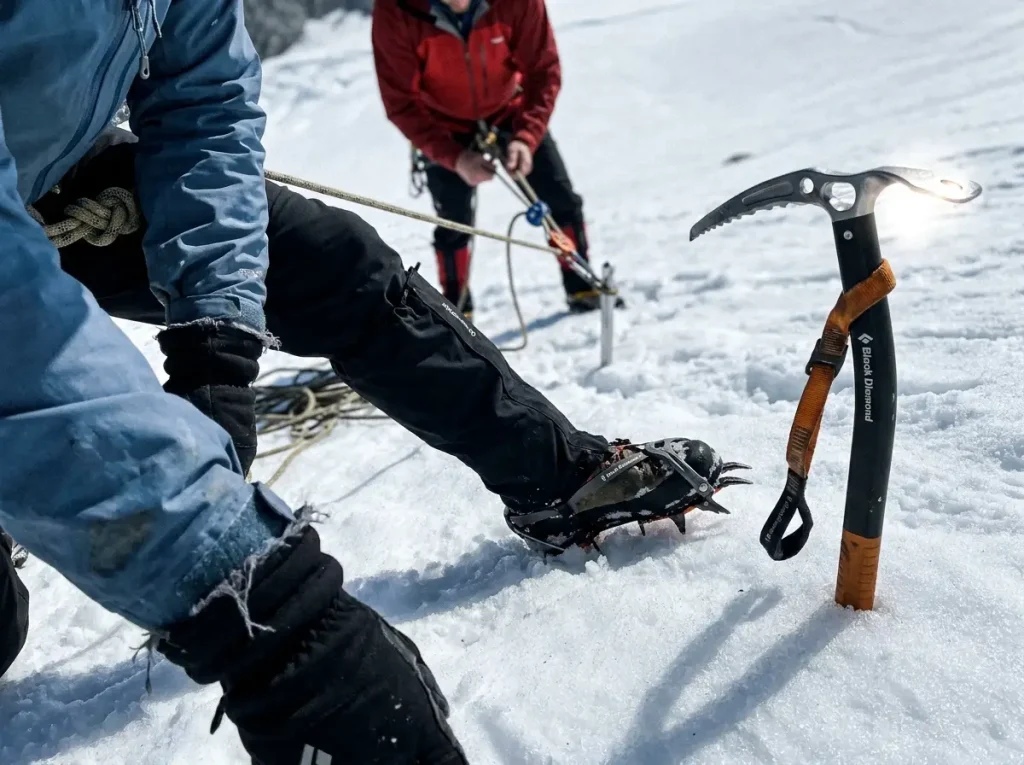
Gear is the easy part. You can buy or rent your way to a complete kit in an afternoon. The skills are the part you can’t fake on a roped glacier at one in the morning, and they’re what actually separates the climbers who summit from the ones who shouldn’t have started.
The Non-Negotiable Skills
Four things are not optional: roped glacier travel, ice-axe self-arrest, crevasse rescue, and snow-anchor building. Self-arrest is the one people think they know and don’t, because crampons flip the rule. With crampons on, you can’t drive your feet in to stop, you’ll catch a point and cartwheel, so the technique changes. It’s worth drilling the one self-arrest braking position and how to reach it from any fall until it’s reflex. The broader set, glacier rope-team management, crevasse rescue, turnaround discipline, is covered well in the seven alpine skills that actually keep you safe.
Crevasse Rescue and Snow Anchors
If your partner goes into a crevasse, the clock starts immediately, and a haul system you’ve only read about won’t save them. Fumbling a prusik or rigging a Z-pulley for the first time on a loaded rope is exactly how a rescue falls apart. You need to build an anchor in snow that holds, which usually means a buried picket. A 90 cm aluminum picket is the standard tool for crevasse-rescue anchors and running belays on the steeper sections.
The MSR Snow Picket at 90 cm is the workhorse here, with the shorter 52 cm cable picket as a lighter option for firmer snow. Knowing how to build a snow anchor that actually holds in soft snow is the skill that makes the hardware worth carrying.
Guided vs Unguided — The Honest Answer
Three authorized outfitters, RMI, Alpine Ascents, and IMG, run the standard routes at a 2:1 guide-to-client ratio. If you can’t lead glacier travel yourself, that rope team is the safety net you’re paying for, and it’s a smart purchase, not a cop-out. The honest self-test is simple: if you’ve never built a snow anchor or run a crevasse-rescue drill for real, go guided this time. You’ll learn the systems where someone competent is checking your work, and you’ll come back ready to do it yourself.
Self-arrest is a perishable skill. Practice it on a safe runout slope with a clean stop at the bottom before you ever need it for real, and practice the awkward falls too, head-downhill on your back is the one that actually happens and the one nobody drills. Muscle memory is the only version that works when you’re sliding.
The Midnight Start, the Hazards, and the Camp Muir Cold
Two things quietly end more summits than steep climbing ever does: the snow softening in the afternoon, and the night of no sleep at Camp Muir. Both are predictable. Both get managed before you ever rope up.
Why You Leave at Midnight
The alpine start isn’t tradition or machismo. It’s physics. Climbers wake around 11 p.m. and leave Camp Muir just after midnight so they’re moving on firm, frozen snow and off the upper mountain before the sun goes to work. Once the day warms, snow bridges weaken over crevasses, the boot pack turns to slush, and rock and ice that was frozen in place starts coming down. The same afternoon-warming trap catches climbers on every glaciated volcano in the range. You start in the dark so you can finish before the mountain wakes up.
The Named Hazard Zones
Rainier’s hazards have names because climbers have learned them the hard way. The Bowling Alley is the rockfall-raked traverse under the Cleaver, where a helmet earns its place. The Icebox is the icefall-exposed section, and the American Alpine Club’s accident analysis maps Rainier’s deadliest zones, including the 1981 icefall there that took a large roped party in seconds. This is not theoretical risk. It’s why the turnaround clock matters: be moving down before mid-morning, because the afternoon is the hazard and the summit is optional.
The Camp Muir Cold Nobody Warns You About
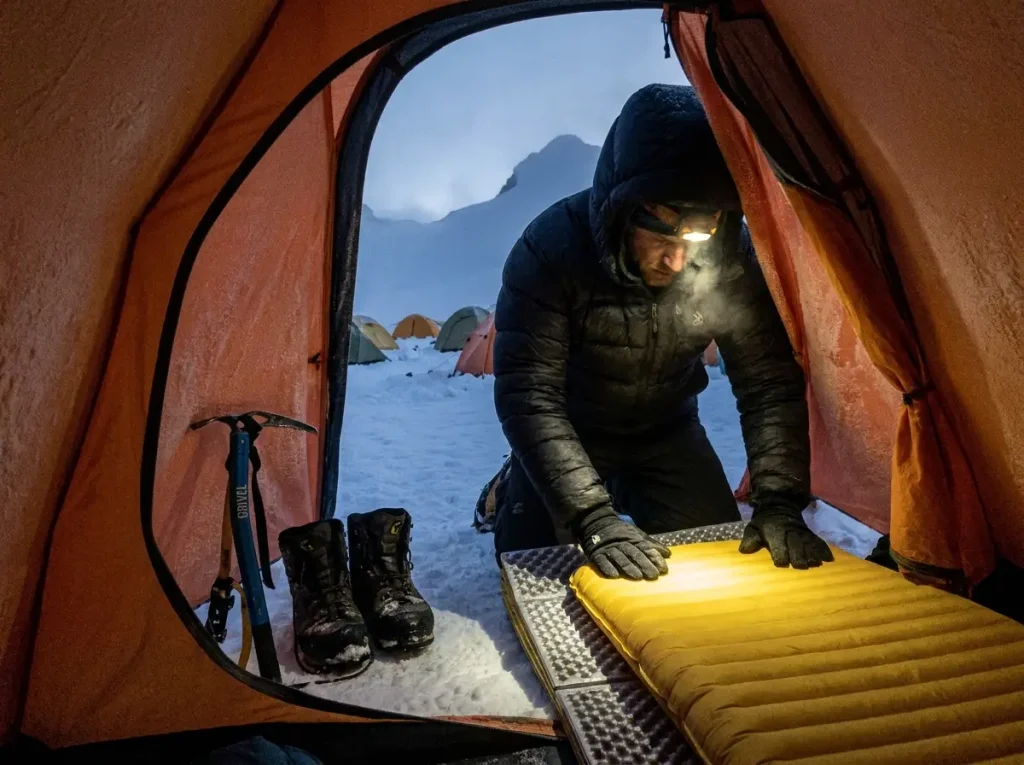
Here’s the one that blindsides people. You’re sleeping on a glacier, and the ice conducts heat straight out of you from below. Climbers describe lying on “a giant ice cube” at Camp Muir and getting under two hours of sleep, then trying to summit exhausted. The fix is your sleep system. Aim for a sleeping pad R-value of 5 or more, which in practice means doubling a closed-cell foam pad under an inflatable. Run a 0°F down sleeping bag for May, June, and September, a 20°F bag for July and August, pull on a down jacket the moment you stop moving, and dial in a layering system that keeps you warm without soaking your base layer. A warm night is a performance issue, not a comfort one.
Camp on snow once before your real attempt. A backyard-adjacent snow camp where it doesn’t matter is the cheapest insurance you’ll buy, you find out your pad is too cold, your bag is too thin, or your stove won’t light in the wind on a night you can bail, not on summit eve at 10,000 feet.
The Bottom Line on Climbing Rainier
Rainier rewards the people who respect it and humbles the ones who don’t. Keep three things front of mind. The “easiest route” is a coin-flip, so train like it matters. The boots and the skills decide your day more than raw fitness, so get the category right and drill the systems. And the midnight start and the turnaround clock are hazard management, not suggestions.
Before you pay the fee, get on snow once. Camp a night, practice self-arrest until it’s reflex, and find out what your sleep system actually does when it’s cold. Do that, show up with the right boots on your feet and the right skills in your hands, and you put yourself in the half that summits, and the half that comes home either way.
Frequently Asked Questions
01How hard is it to climb Mount Rainier?
Rainier is a glaciated 14,411-foot mountaineering objective, and the standard Disappointment Cleaver route has about a 51% summit rate. It isn’t technical rock climbing, but it demands real fitness, glacier-travel skills, and crampon-compatible boots. The difficulty is the altitude, the 9,000 feet of gain, and the conditions, not hard moves.
02Do you need a permit to climb Mount Rainier?
Yes, two of them. A $70-per-year climbing fee paid on Pay.gov is required for glacier travel, plus a Wilderness Permit at $12 per person, per night to camp at Camp Muir or Schurman. The wilderness permit comes through a February lottery or a walk-up at the Wilderness Information Center.
03Can a beginner climb Mount Rainier?
Yes, with a guide. A fit beginner can summit on a guided 2:1 rope team that supplies the glacier-travel and rescue skills. An unguided beginner should not attempt it without first owning self-arrest, roped glacier travel, and crevasse rescue. The fitness matters as much as the skills.
04How long does it take to climb Mount Rainier?
The standard push is two days. Day one climbs from Paradise to Camp Muir, roughly 4,500 feet of gain. Day two is the summit and full descent, starting just after midnight. Most guided programs add a skills-training day at the start, making it a three-day trip.
05What boots do you need to climb Mount Rainier?
You need B2 or B3 mountaineering boots with a heel welt that locks a crampon and a rigid sole. Standard hiking boots, even waterproof ones, will not hold a crampon and are the number-one beginner mistake. You can rent proper boots from a guide service if you climb only once.
Safety Notice: Rock climbing and mountaineering are inherently high-risk
activities that can involve physical trauma or fatal incidents. The information on Rock Climbing Realms is for
educational and informational purposes only. Techniques and advice presented here are not a substitute
for professional, hands-on instruction. Conditions and risks vary by location. Always seek guidance
from a qualified instructor before attempting new techniques. By using this website, you agree that you
are solely responsible for your own safety. Any reliance you place on this information is strictly
at your own risk, and you assume all liability for your actions. Rock Climbing Realms and its authors
will not be held liable for any harm, damage, or loss sustained in connection with the use of this information.
Affiliate Disclosure: We are a participant in the Amazon Services LLC Associates Program, an
affiliate advertising program designed to provide a means for us to earn advertising fees by advertising and linking
to Amazon.com. As an Amazon Associate, we earn from qualifying purchases. We are also an official affiliate partner
of Black Diamond Equipment via the AvantLink network. If you click on a Black Diamond affiliate link and make a
purchase, we may earn a commission at no additional cost to you. We also participate in other affiliate programs.
Additional terms are found in the terms of service.