
In this article
Here’s the thing most Matterhorn guides will tell you before you ever rope up: the summit is the halfway point, not the finish line. Ask anyone who works the Hörnli Ridge out of Zermatt and they’ll say the same thing in different words. The climbing up is serious. The climbing down, tired and elated with the weather building, is where most people get caught out. So the real question isn’t “can you climb the Matterhorn.” It’s “can you climb it and still have the legs, focus, and discipline to get back down.” This guide walks you through the route, the grade, the season, the gear, and the honest readiness check, the way a Zermatt-savvy friend would lay it out for you.
The Hörnli Ridge and the Three Other Ways Up
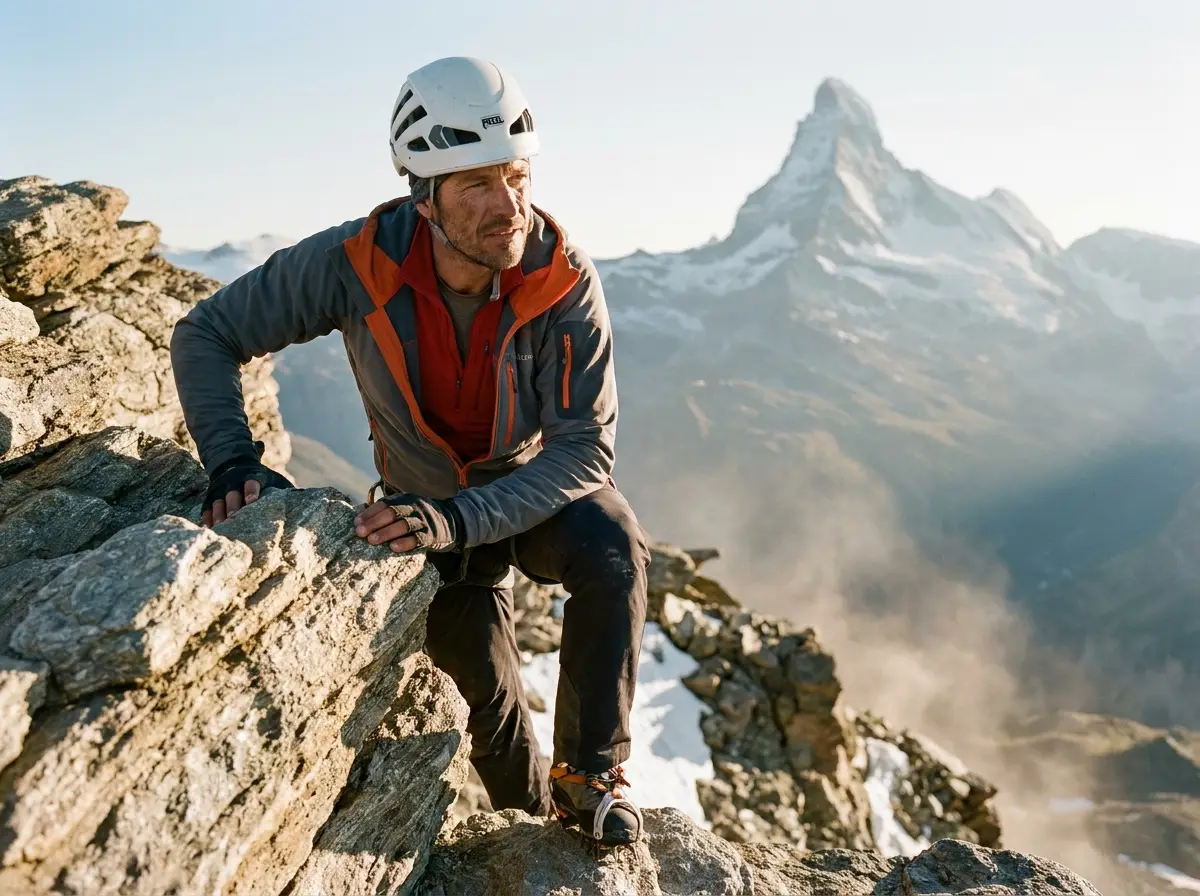
When someone says they climbed the Matterhorn, almost always they mean the Hörnli Ridge, the Swiss-side line that Edward Whymper first climbed in 1865. It’s the normal route, the one nearly every guided party takes, and it’s still one of the most demanding lines on the list of famous mountain peaks and what they actually ask of you. Before you fall down a rabbit hole of north-face history, get clear on which line you’re signing up for.
The four ridges, briefly
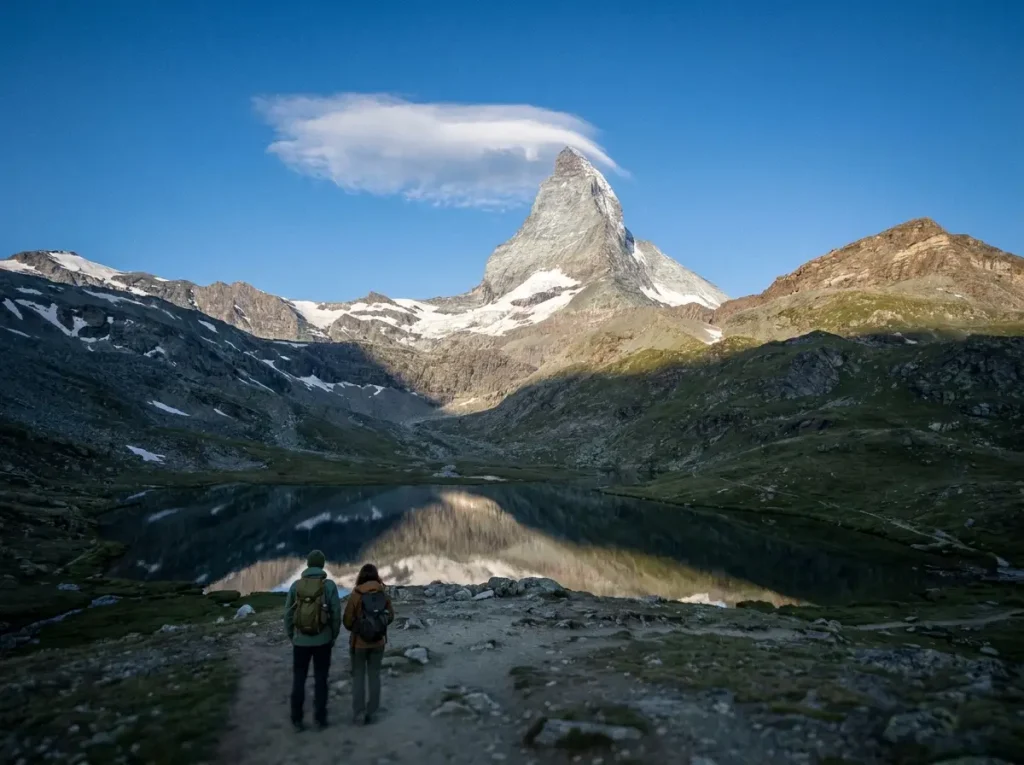
The Matterhorn is a near-perfect rock pyramid sitting on the Swiss-Italian border, and that shape is exactly why every edge of it is exposed. Four ridges run up to the 4,478 m (14,692 ft) summit. The Hörnli Ridge (Hörnligrat) rises from Zermatt and the Hörnli Hut. The Lion Ridge (Italian Ridge) climbs from Breuil-Cervinia and the Carrel Hut on the Italian side. The Zmutt and Furggen ridges are longer, harder, and far less traveled.
Why the North Face is not this guide
You’ve seen the photos of the North Face, the Schmid route, one of the great north faces of the Alps. It’s a serious mountaineering objective for experienced alpinists, and it has nothing to do with the route 95% of climbers take. This guide is about the Hörnli. If you’re eyeing the north face, you already know who you are and you don’t need a beginner’s overview.
Don’t call it “just a scramble”
Reports on the Hörnli swing wildly, from “it’s basically a long scramble” to “a serious, committing alpine undertaking.” Both are true, depending on conditions and how fast you move. The honest framing: the normal route is moderate in its hardest moves and relentless in its exposure. That combination is what trips people up.
How Hard Is the Matterhorn, Really
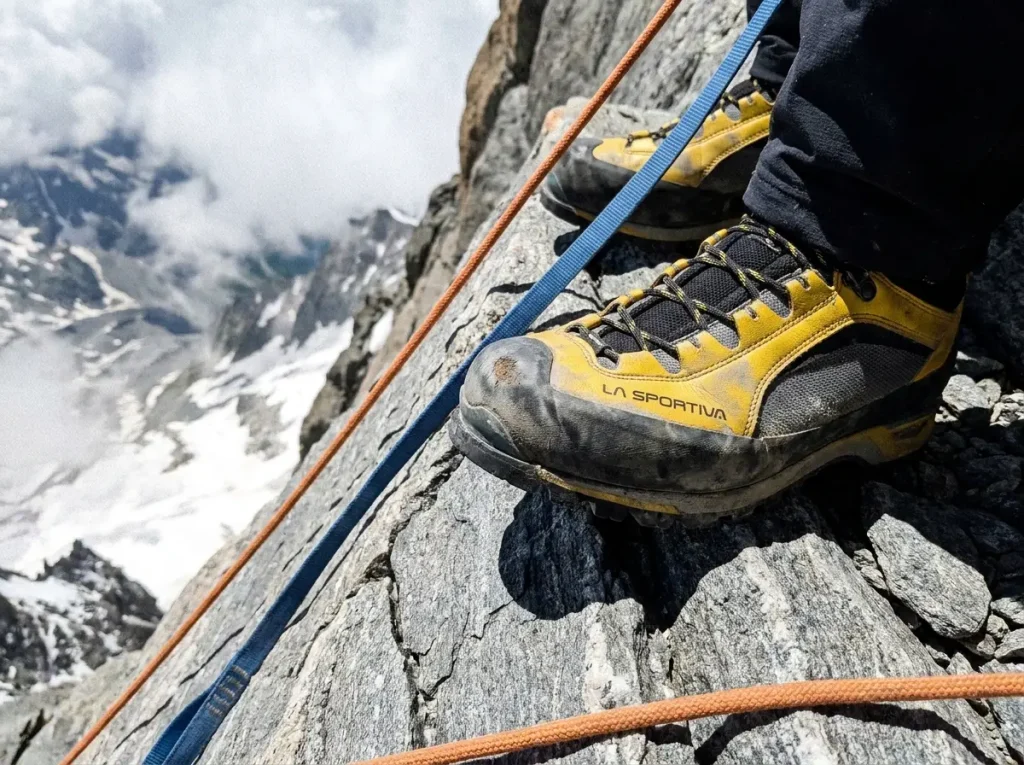
Here’s where gym climbers get a rude surprise. The Matterhorn’s grade looks gentle on paper, and then you’re standing on it in stiff boots with crampons, 1,200 meters off the deck, on rock you absolutely cannot fall on. The number is not the difficulty here. The exposure and the duration are.
What AD and UIAA III actually mean
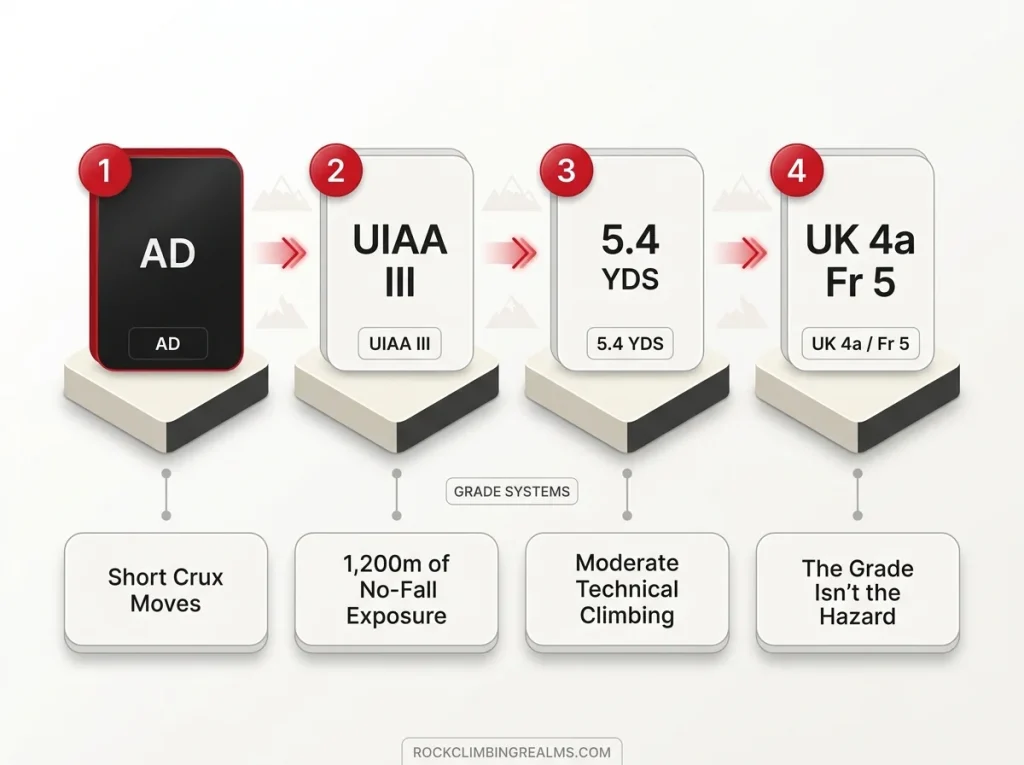
The Hörnli is graded AD (Assez Difficile, “fairly hard”) or AD+, with sustained UIAA II scrambling and short crux sections up to UIAA III, roughly 5.4 YDS or Grade 3. If you’ve climbed exposed low-fifth-class terrain, that’s the technical level. The crux itself is short: the Moseley Slabs near the Solvay Hut, protected by fixed ropes, pins, and bolts. It’s the same kind of exposed, low-fifth-class scrambling you’d find on the Grand Teton’s Owen-Spalding route, just at altitude and for far longer.
The grade lies about the real difficulty
The hard part of the Matterhorn isn’t any single move. It’s the roughly 1,220 meters of continuous, exposed terrain you have to move across fast and unbothered, then reverse on tired legs. A strong gym climber pulling 5.10 plastic is not automatically ready for 5.4 in boots with a thousand-foot drop under each heel. They’re different sports.
Where it sits among hard peaks
The Matterhorn isn’t the hardest mountain in the world, and it isn’t a walk-up either. If you’re trying to place it on the spectrum of what counts as a genuinely difficult mountain to climb, think of it this way: the technical bar is moderate, but the consequence, the altitude, and the sustained exposure push it well past a casual objective.
When to Climb It and the Heat Problem Nobody Mentions
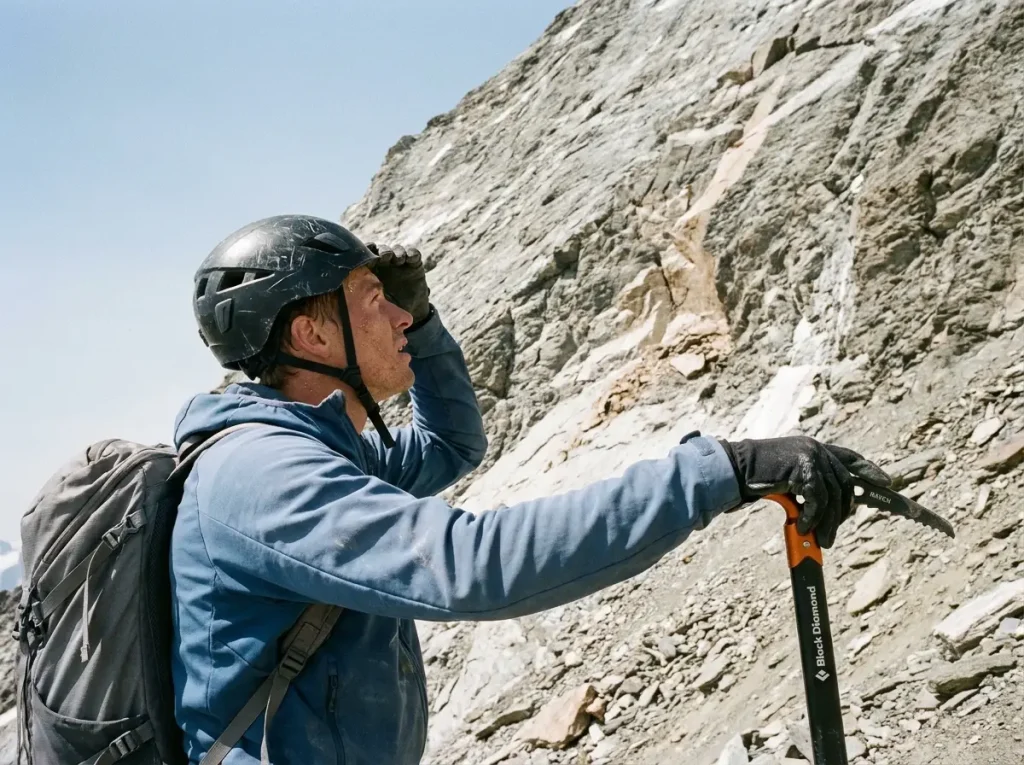
Everyone tells you July to September. Almost nobody tells you that a heat wave can be a reason not to go, even in peak season, because the rock holding the ridge together is literally thawing. This is the most current piece of beta on the mountain, and most guides blogs skip it.
The season window
The Hörnli is best from July to mid-September, sometimes late June in a dry year. The ridge needs to be clear of snow for swift, safe movement. Too early and it’s snow-loaded and slow, and the whole route is a lot harder with snow on it. The dry-rock window is short, which is part of why the hut and the guides book out so far in advance.
Warming permafrost has changed the rockfall math
This is the part competitors miss. On 13 June 2023, a freestanding rock pillar on the Hörnligrat collapsed outright. Researchers monitoring the warming permafrost that holds the Hörnli Ridge together have tied rockfall spikes directly to rising temperatures. The frozen “glue” between the blocks is thawing, and the ridge is shedding rock more often. The off-spine chutes and the East Face now act as what the researchers call “bowling alleys” for debris.
This isn’t abstract climate talk. The Hörnli Hut now closes on extreme-heat days because the standard route gets too loose to be reasonable. The same heat-dome calculus that now shapes peaks like Mount Shasta applies here.
Read the freezing level, not just the rain
Practical version: check the multi-day temperature and freezing-level forecast, not only the precipitation. A hot spell on the back of a freeze-thaw cycle is a red flag for rockfall, and it’s worth running a simple rockfall hazard assessment before you commit. And remember the daily clock: convective afternoon storms build over the Matterhorn with extraordinary speed, which is the other reason your weather window is tight.
When the valley forecast shows an unusual hot spell, treat it as a yellow light, not a green one. Guides watch the freezing level climb and quietly push trips a few days. A high freezing line after warm nights means the rock never refroze, and that’s when blocks let go.
The Route Step by Step from the Hörnli Hut
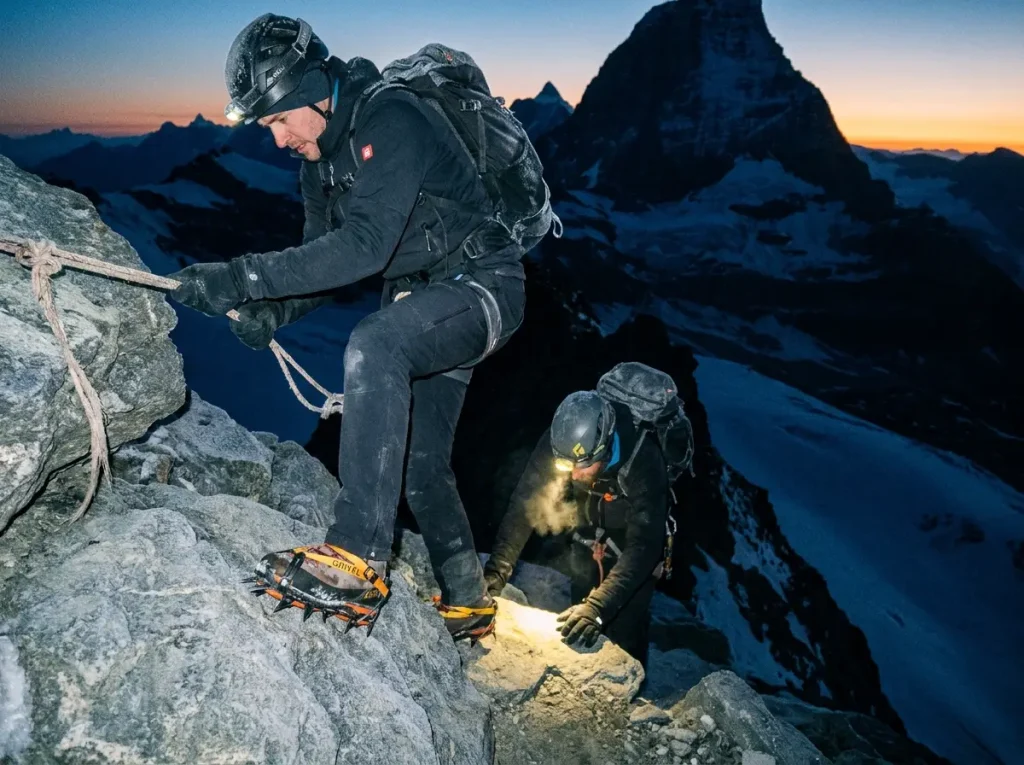
The route is a sequence of named features and a clock. Knowing them in order, and knowing roughly when you should hit each one, is the difference between flowing up and getting lost on dark, loose ground at three in the morning.
The alpine start
You leave the Hörnli Hut (3,260 m) by headlamp at 3:30 to 4:00 AM. The early start isn’t tradition for its own sake. It’s the only way to be off the upper ridge before afternoon storms and to spread out the crowd that funnels onto the first fixed ropes. Your headlamp earns its keep here, on broken ground in the dark.
The named features in order
From the hut, the sequence runs: the lower fixed ropes on the Lower and Upper Red Tower (Unter Roter Turm), then the Moseley Slabs (the crux at III-), then the Solvay Hut at 4,003 m, an emergency refuge that doubles as the turnaround clock. Above that comes the Shoulder, a snow-and-ice ramp with belay pegs, and finally the Roof, the last ~250 meters of fixed-rope-draped buttress and the most exposed ground of the day, before the summit at 4,478 m.
The clock you climb against
Pace targets keep you safe: aim for the Shoulder by 7 to 8 AM, the summit around 9 to 10 AM, and past the Solvay by early afternoon. Figure roughly 300 meters per hour of climbing. The Solvay is an emergency hut, not a planned rest stop. If you haven’t reached it within about 2.5 to 3 hours of leaving the Hörnli Hut, the disciplined move is to turn around.
You’ll be short-roped the whole way if you’re with a guide, which brings up a point veterans repeat: you should never actually feel like you need the rope, but it’s always there for the worst case. Good movement is quiet, balanced, and rope-light. The rope is insurance, not a handrail.
Are You Actually Ready for the Matterhorn
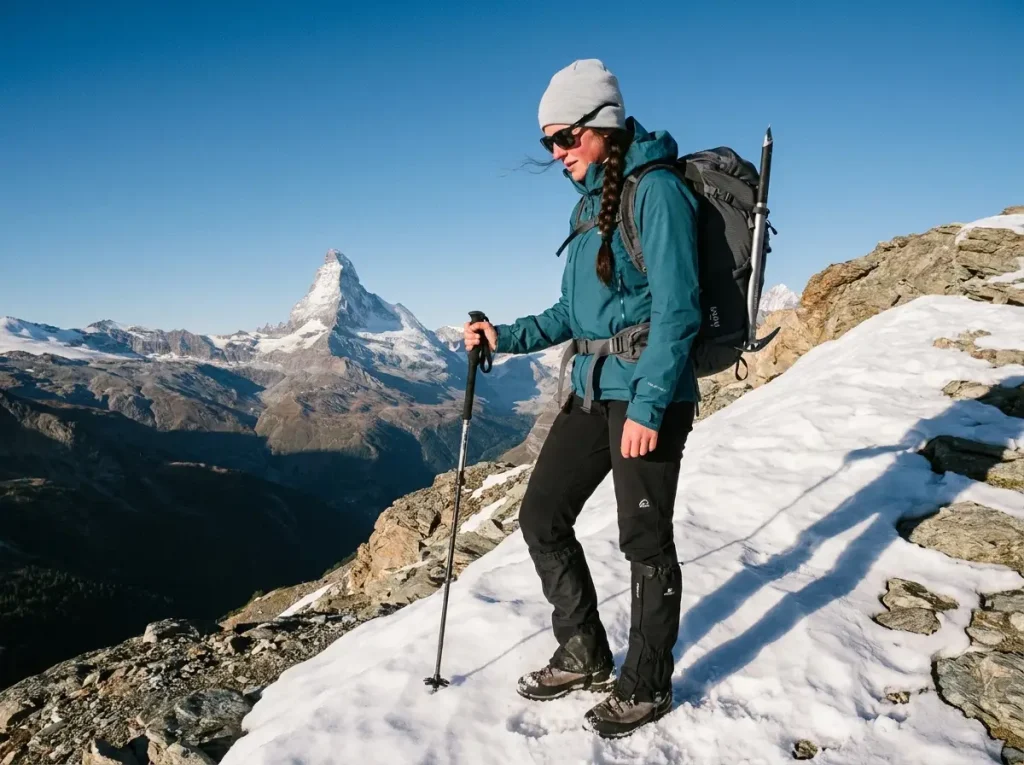
Nobody wants to hear they’re not ready. But the mountain doesn’t care about your enthusiasm, and turning around at the Solvay because you ran out of clock is a far better story than the alternative. So here’s the honest gut-check, the part the guiding blogs soft-pedal.
The fitness benchmark
Forget vague “be in good shape” advice. The real benchmark: build to climbing roughly 10 routes in a row on 5.6 to 5.8 terrain in your boots, sustain 8 to 10 hour days on your feet, and hold about 300 meters per hour uphill with a light pack. Train specifically for three to four months and ramp your hiking load around 10% a week. If a long day in the mountains wrecks you for three days, you’re not there yet.
The skills that keep you alive
Fitness gets you up. Skill gets you down. You need confident cramponing on rock, deliberate downclimbing, smooth short-roping and the simul-climbing that often goes with it, sure-footed movement on mixed terrain of rock and snow, efficient route-finding on exposed ground, and a dialed self-arrest you can throw without thinking. None of these should be new to you on summit day. The Matterhorn is where you spend skills you already own, not where you learn them.
Acclimatize first, summit second
Don’t make the Matterhorn your first day at altitude. Bag a 4000er or two first: the Breithorn (4,164 m), Pollux (4,092 m), and the Riffelhorn (2,929 m) for rock-in-boots practice, or a bigger warm-up like Gran Paradiso, ideally inside a 4 to 6 day Zermatt block. Climb high, sleep low. It’s the same climb-high-sleep-low acclimatization that peaks like Mount Elbrus demand, and skipping it is how strong climbers end up slow and nauseous at 4,000 meters.
The readiness verdict
Here it is, plainly: if you can’t move fast and unbothered on exposed UIAA III in stiff boots after a 3 AM start, you’re not ready yet. And that’s fine. There’s a field story climbers pass around about a guy who lost 90 minutes in a queue at the Moseley Slabs, hit the Shoulder two hours behind schedule, and turned around at 4,300 meters while guided parties were already descending past him. The clock, not the climbing, beat him. He went home and came back stronger. Turning around is a win, not a failure.
Do your hardest training climbs in the exact boots you’ll wear on the Matterhorn, not in approach shoes or rock shoes. The skill that matters most up there is moving confidently on small holds in stiff soles, and that only comes from putting real time in the boots before the trip.
The Gear That Matters and What to Rent in Zermatt
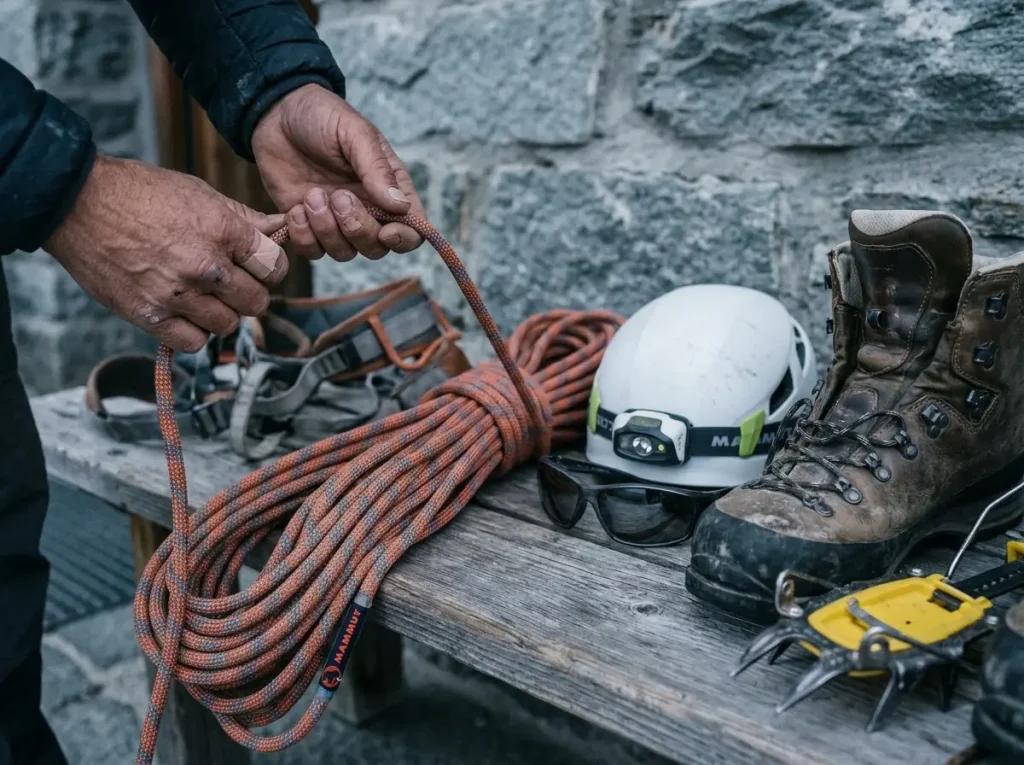
You don’t need to buy the whole boutique. A guide will tell you straight: the boots and the rope are worth real money and real fit, and a lot of the rest you can rent in Zermatt or buy cheap without compromising safety. Here’s where the money actually matters and where it doesn’t.
The five items you can’t fudge
Five things are safety-critical. First, B2 alpine boots, stiff enough to hold a crampon and edge on rock yet walkable on the approach. The La Sportiva Trango Tech GTX (men’s · women’s) is exactly that class of boot, and renting a pair in Zermatt is the legitimate money-saver if you don’t already own one. Second, 12-point crampons that fit a B2 boot, like the semi-auto Grivel G12 New Matic with anti-balling plates. Third, a simple ice axe for walking and self-arrest; the straight-shaft Black Diamond Raven is all the Hörnli needs, sized by your height. You don’t want technical tools here.
Fourth, a lightweight harness you’ll forget you’re wearing on a 10-hour day, like the featherweight Petzl Altitude, one of the picks in our alpine climbing harness guide. Fifth, a helmet, and this one is genuinely non-negotiable given the warming-permafrost rockfall we talked about earlier. The hybrid Petzl Meteor is light enough to wear all day, which matters because the only helmet that protects you is the one you don’t take off.
The rest of the checklist
Fold these in and you’re set: Cat-4 glacier glasses for the high-altitude UV on snow, like the Julbo Camino; a bright headlamp for the 3:30 AM start, where the cheap-and-reliable Black Diamond Spot 400 does the job; a 30 to 35-liter alpine pack with axe and crampon carry, like the Osprey Mutant 38 trimmed down for a fast summit day; a single dry-treated 40 to 50 m rope, such as the Mammut 9.5 Infinity; a simple belay device with a locking carabiner like the Black Diamond ATC-XP for the short abseils and fixed-rope sections; and right-weight merino socks, like the Darn Tough Full Cushion (women’s here), because blisters end days on the descent just as surely as fatigue does. Add gaiters, a hut liner, and a smart layering system built for alpine starts and afternoon sun to round it out. For the approach hike up to the Hörnli Hut, a pair of folding trekking poles like the Black Diamond Distance Z saves the legs you’ll want for the descent crux.
Where premium is overkill
The honest budget call: rent the boots and crampons in Zermatt if you’re climbing the Matterhorn once. The helmet, harness, headlamp, and belay device are cheap-and-fine items where premium buys you almost nothing. The two places to actually spend are boot fit (a poorly-fitting rented boot will wreck your day) and a proper rope. Everything else is negotiable.
If you rent boots in Zermatt, do it the afternoon before and walk the approach to the Hörnli Hut in them. That hour tells you about hot spots and lacing before you’re committed on the ridge, and the shops will swap a pair that doesn’t fit if you catch it early.
Guides, Cost, and Getting It Booked
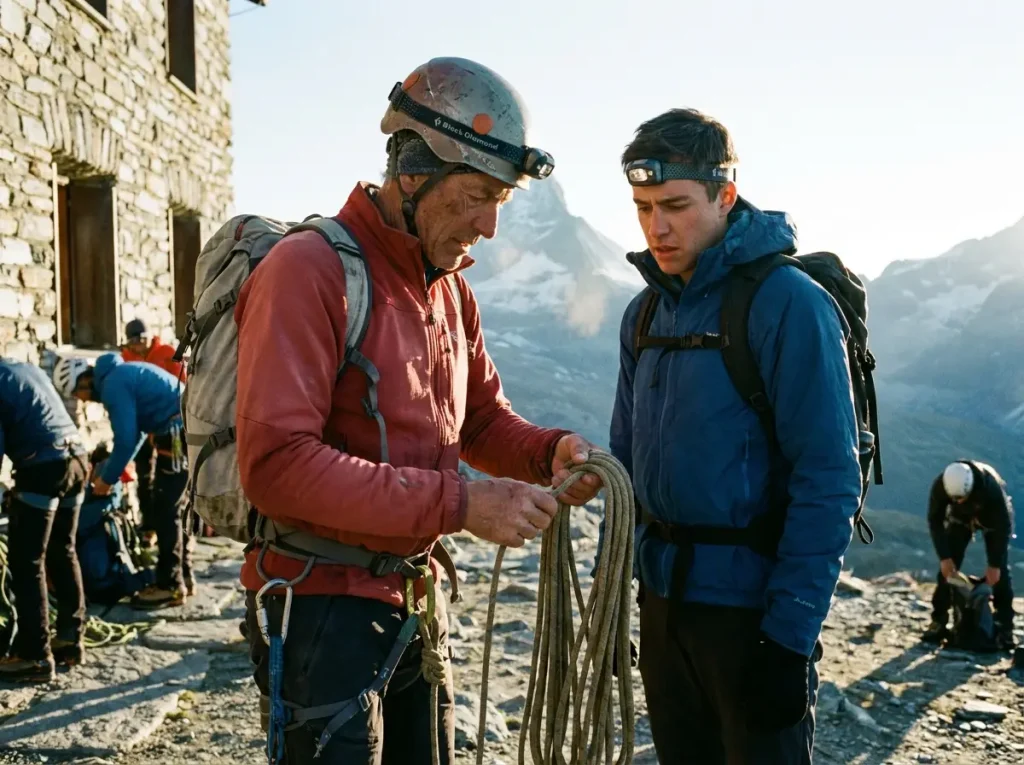
“Hire a guide” is the standard advice, and it’s good advice. But nobody tells you what guided actually means on the Matterhorn, and the reality is worth understanding before you decide.
What a guide changes
Guide ratio on the Matterhorn is typically 1:1, with IFMGA/UIAGM certified guides. A guided round trip averages around 7 hours in good conditions with a strong client, versus roughly 12 hours unguided. That speed is not a luxury. On this mountain, speed is safety, because the less time you spend on the upper ridge, the less exposed you are to rockfall and afternoon weather.
What guided actually feels like
You’ll be short-roped continuously, the guide managing protection on the move and setting a relentless but talkable pace, the kind where your heart rate stays where you can still hold a conversation. And the guide will make the turnaround call at the Solvay clock far more readily than you would. That’s not them being timid. Guides bail readily, and that’s exactly why their clients live to climb again.
Cost and booking logistics
Plan for the guide fee plus the Hörnli Hut stay as the core spend, with acclimatization days and Zermatt lodging on top; think mid-range to premium depending on your guide and how many warm-up days you build in. The Hörnli Hut sits at 3,260 m with around 130 beds, and it books out, so reserve early. Access runs from Zermatt up to Schwarzsee and then the approach to the hut.
The Descent and Why It Catches Climbers Out
You summited. You’re elated, you’re tired, and the day is half over. This is the moment the mountain has been waiting for. A friend who’s watched this play out would tell you flat: the descent is where you earn the summit back.
The number that should reframe your whole plan
Here’s the statistic that changes how you climb the Matterhorn. According to a 2009 to 2021 analysis of fatal alpine accidents in the Swiss Alps, most deadly falls happen on the descent: about 61% on the way down versus 39% on the way up. The summit is the halfway point, not the finish line, and your plan for the day has to treat it that way.
Why coming down is the real crux
The mechanism is simple and human. Tired legs, lost focus after the high of summiting, route-finding errors off the Shoulder, downclimbing the fixed ropes fatigued, and the time pressure of afternoon weather all stack up at once. The same descent-fatigue and afternoon-weather trap that catches climbers on glaciated peaks like Rainier is amplified here by the exposure and the crowds on the fixed ropes.
The fix is discipline, not skill
You don’t need more talent to survive the descent. You need discipline. Honor the turnaround clock even when you feel fine. Keep eating and drinking past the summit. Downclimb deliberately, treating the fixed ropes with the same focus you gave the crux on the way up. The broader hazard picture is real, roughly 1 in 415 attempts ends in a fatality, with 8 to 10 lives lost in a typical year, and rockfall, altitude sickness (AMS, HAPE, HACE), and fast weather sit on top of plain fatigue. The climbers who get caught are rarely the ones who climbed badly. They’re the ones who stopped paying attention after the top.
Conclusion
The Matterhorn rewards honesty more than ambition. Three things to carry with you. First, the descent is the crux, so plan the entire day around getting down with focus to spare, not just tagging the top. Second, readiness means moving fast and unbothered on exposed III in boots after a 3 AM start, and if you’re not there yet, turning around is the smart climber’s move. Third, heat and permafrost are the new go/no-go variable, so read the freezing level, not just the rain.
Pick your acclimatization 4000er, book the Hörnli Hut early, and treat the Solvay clock as law. Do that, and you give yourself the best odds of standing on that summit and, more importantly, getting back down to talk about it.
Frequently Asked Questions
01How long does it take to climb the Matterhorn?
Summit day from the Hörnli Hut is 8 to 10 hours round trip for most parties, split roughly evenly between the climb up and the descent. With a guide and good conditions it can drop to around 7 hours; unguided it often runs closer to 12.
02Can a beginner climb the Matterhorn?
Not as a first mountain. You need to move fast and confidently on exposed UIAA III terrain in stiff boots, handle crampons on rock, and be acclimatized. Most climbers build up through smaller 4000ers like the Breithorn first, even when hiring a guide.
03What is the success rate on the Matterhorn?
It varies heavily with weather, fitness, and crowds, and many attempts end at the Solvay Hut turnaround rather than the summit. Guides turn parties around if they miss the 2.5 to 3 hour checkpoint, so a smart, fit climber in a stable window has the best odds.
04How much does it cost to climb the Matterhorn?
The core costs are the 1:1 guide fee and the Hörnli Hut stay, with acclimatization days, Zermatt lodging, and gear rental on top. Budget for a multi-day trip rather than a single summit day, since you’ll want warm-up climbs to be ready.
05Do you need to know how to rock climb to climb the Matterhorn?
Yes, at a moderate level. The hardest moves are only around UIAA III or 5.4, but you must climb that grade comfortably in mountaineering boots, on exposed terrain, while managing crampons, a rope, and altitude. Pure gym strength does not transfer directly.
Safety Notice: Rock climbing and mountaineering are inherently high-risk
activities that can involve physical trauma or fatal incidents. The information on Rock Climbing Realms is for
educational and informational purposes only. Techniques and advice presented here are not a substitute
for professional, hands-on instruction. Conditions and risks vary by location. Always seek guidance
from a qualified instructor before attempting new techniques. By using this website, you agree that you
are solely responsible for your own safety. Any reliance you place on this information is strictly
at your own risk, and you assume all liability for your actions. Rock Climbing Realms and its authors
will not be held liable for any harm, damage, or loss sustained in connection with the use of this information.
Affiliate Disclosure: We are a participant in the Amazon Services LLC Associates Program, an
affiliate advertising program designed to provide a means for us to earn advertising fees by advertising and linking
to Amazon.com. As an Amazon Associate, we earn from qualifying purchases. We are also an official affiliate partner
of Black Diamond Equipment via the AvantLink network. If you click on a Black Diamond affiliate link and make a
purchase, we may earn a commission at no additional cost to you. We also participate in other affiliate programs.
Additional terms are found in the terms of service.