
In this article
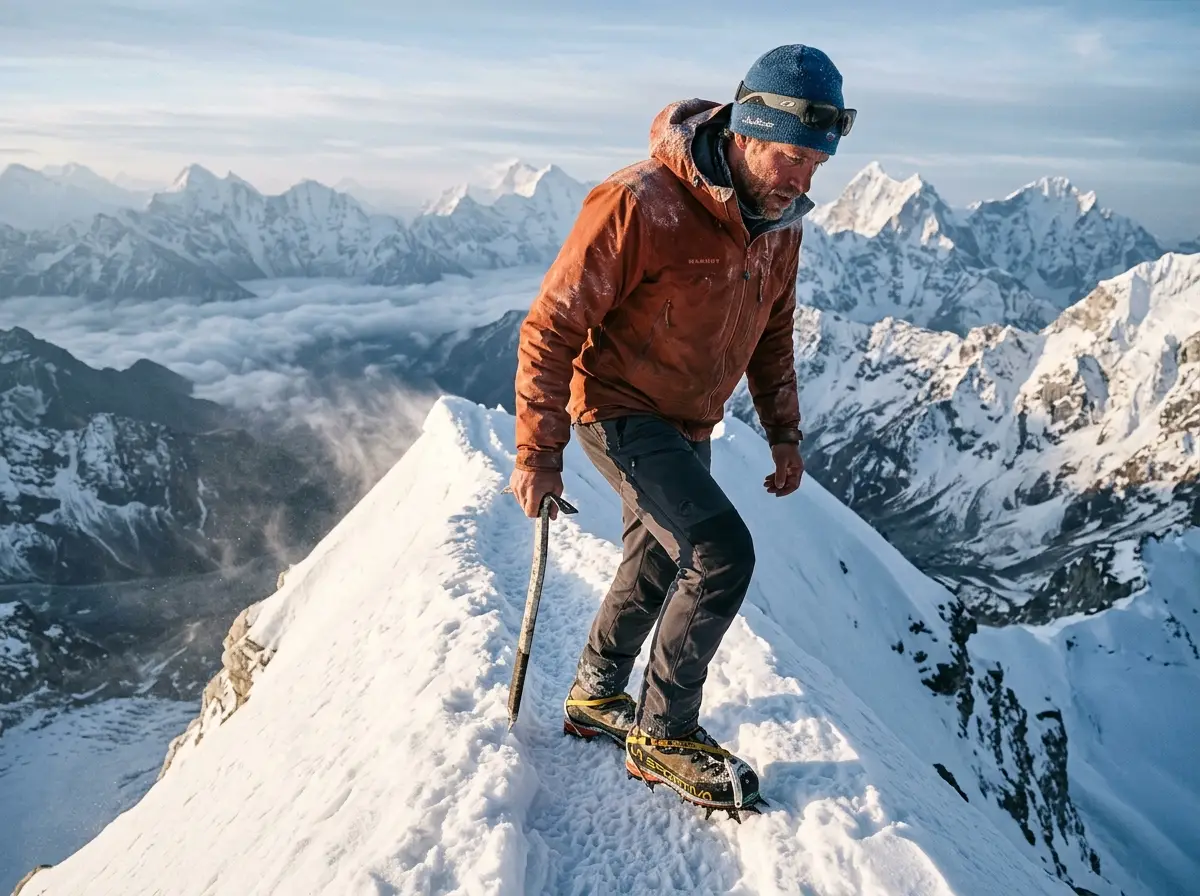
Most lists of famous mountain peaks rank them by height or fame and quietly skip the only question that matters to the person standing at the bottom: can I climb this, and what will it actually take? A name tells you almost nothing. Kilimanjaro is a long walk and K2 is a void, and the entire story of mountaineering lives in the gap between them. Ask anyone who has confused “non-technical” with “easy” and then gotten worked on a high-altitude peak: the grade and the postcard both lie. This guide profiles eighteen of the planet’s most iconic peaks, the famous mountain routes and bucket-list mountains people actually search for, by what each one demands of the climber, from drive-to walk-ups to multi-week expeditions and multi-day rock walls, so you can find the one that fits and dig into its full guide.
Here are five of the most famous peaks on the planet, lined up by what the climb actually asks of you, not by how the postcard looks.
| Peak | Elevation | Standard Route | Difficulty |
|---|---|---|---|
| Kilimanjaro | 19,341 ft | Machame Route | Non-technical trek |
| Mount Rainier | 14,411 ft | Disappointment Cleaver | Glacier mountaineering |
| Matterhorn | 14,691 ft | Hörnli Ridge | Technical alpine (AD+) |
| Everest | 29,032 ft | South Col | Full expedition |
| K2 | 28,251 ft | Abruzzi Spur | Extreme expedition |
How to Read This List (The Climber’s Skill Ladder)
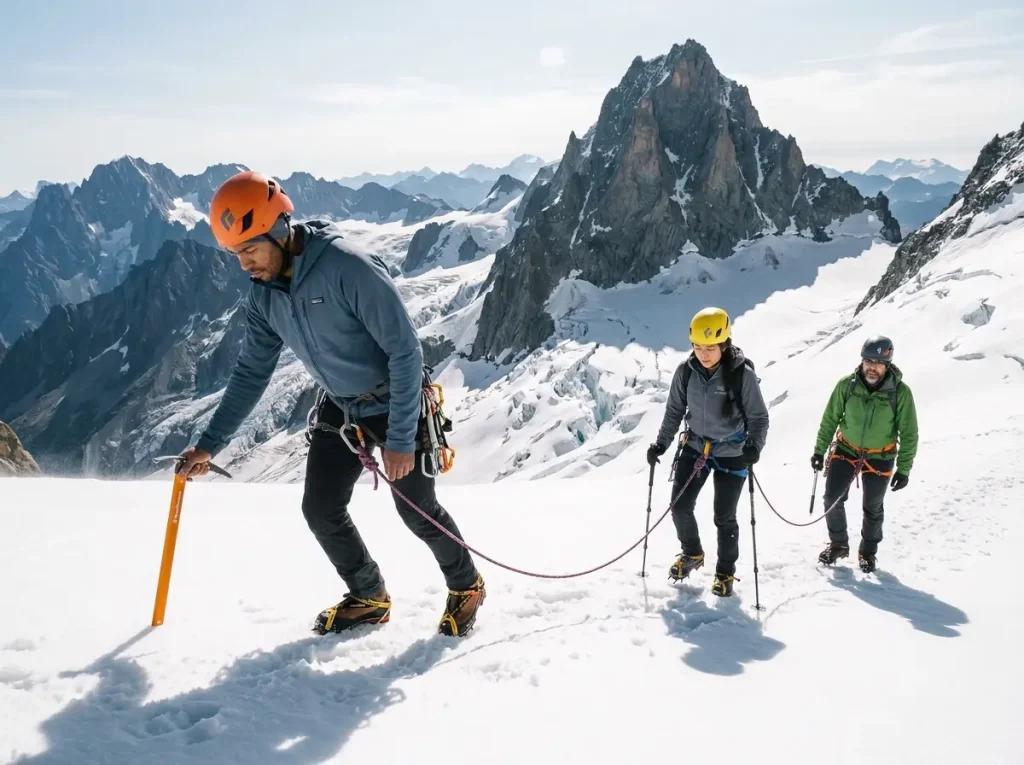
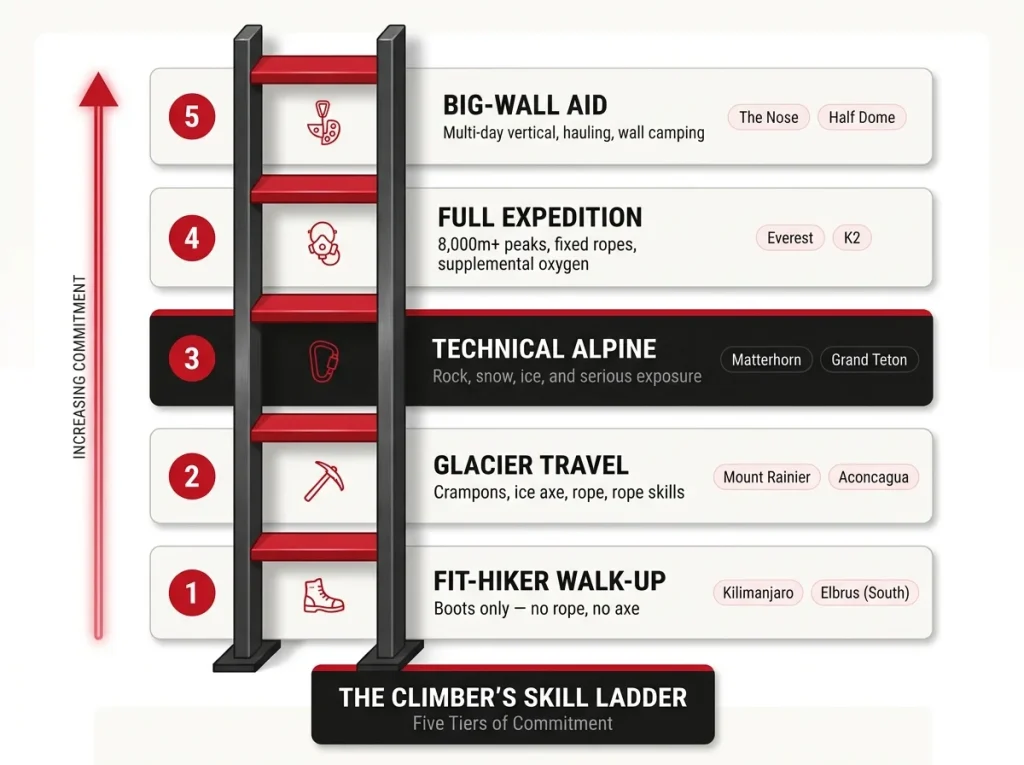
Before you fall in love with a name, figure out which universe you are actually equipped for. Fame and height do not sort peaks. Commitment does, and it sorts them into roughly five tiers that have almost nothing to do with elevation.
The Five Tiers of Commitment
The bottom of the ladder is the fit-hiker walk-up, the classic trekking peak you reach on foot with no rope work, like Kilimanjaro, the south side of Elbrus, or the trail up Mount Whitney. One rung up are the glacier-travel peaks, where you need crampons, an ice axe, a rope, stiff mountaineering boots, and the glacier travel skills to use them: Rainier, Shasta, Hood, Mont Blanc, and Aconcagua as a pure altitude test. The middle rung is the technical alpinist’s ground, where rock, snow and ice, and exposure show up together: the Matterhorn, the Grand Teton, the Eiger ridges. Above that sit the full expeditions, the 8,000-metre giants that swallow weeks and lean on fixed ropes and supplemental oxygen, and finally the big-wall rock tier, where the summit is a wall and the climb is days of vertical living.
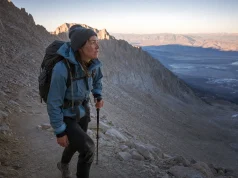
The reason this matters more than any single profile below is that the tiers are not interchangeable, and stepping up a rung is where people get hurt. A fit hiker who tops out on climbing Kilimanjaro’s Machame route has earned a real summit, but it tells them nothing about whether they can travel roped on a crevassed glacier. The same peak can even straddle two tiers depending on the line: the trail up Mount Whitney’s Mountaineers Route is a walk, while the Mountaineers Route proper is Class 3 scrambling that has turned plenty of confident hikers around.
Plenty of these famous routes are quietly sandbagged, where the standard grade undersells what the climb actually asks. Whether you are eyeing a local crag or exploring climbing areas around the world, the ladder is the filter that keeps ambition and ability in the same room.
Non-technical is a rope-work label, not a difficulty label. The climbers who come unstuck on Aconcagua are almost always the ones who treated it like a taller Kilimanjaro. It sits about 3,500 feet higher, and altitude does not care how many step counts you logged on a treadmill.
The Seven Summits (One Peak per Continent)
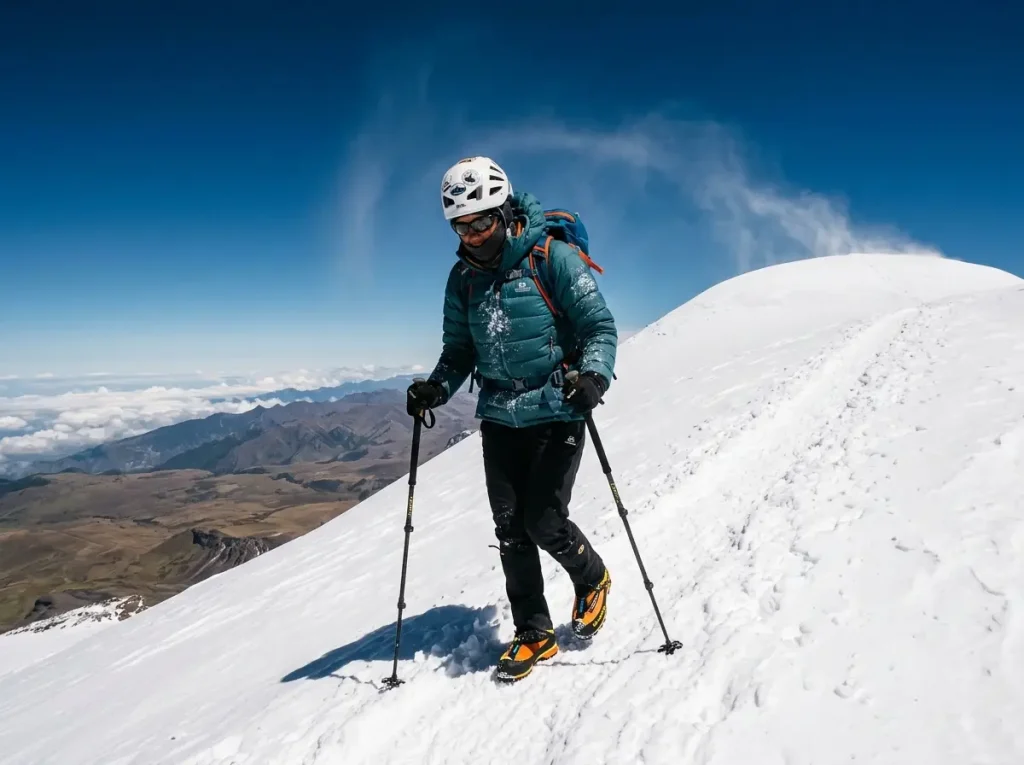
The Seven Summits is the list that launched a thousand bucket lists: the highest peak on each continent, collected as a single lifetime challenge. The idea came from businessman Dick Bass, who topped out the set in 1985 and put the concept on the map. What most people chasing it do not realize is that there are two versions of the list, and they argue over the last summit.
The Two Lists (Bass vs Messner)
The seven are Mount Everest in Asia (29,032 ft), Aconcagua in South America (22,838 ft), Denali in North America (20,310 ft), Kilimanjaro in Africa (19,341 ft), Elbrus in Europe (18,510 ft), the Vinson Massif in Antarctica (16,049 ft), and then the disputed one. The Bass list uses Australia’s Mount Kosciuszko (7,310 ft), a summit you can walk up in an afternoon. The Messner list swaps in Oceania’s Carstensz Pyramid (16,024 ft), a genuine technical rock climb in the Indonesian jungle. They differ only on that seventh peak, but the difference is the whole point: one version ends with a stroll, the other with a roped rock route.
The Approachable End
Two of the seven are reachable by fit hikers with the right acclimatization plan and no technical skills at all. Kilimanjaro is the classic first big mountain, a long uphill trek to Uhuru Peak on the Machame or Lemosho routes rather than a climb. Elbrus, on its south side, is a snow plod with a cable-car start, which is why Mount Elbrus, the most achievable of the Seven Summits, is where so many continental collectors begin.
Neither is trivial. Both sit high enough that altitude, not terrain, decides who summits.
The Serious End
The other end of the set is a different sport. Denali is not technically hard on its standard route, but the cold and the self-supported expedition length filter out most who try. Vinson demands an Antarctic logistics chain that costs more than most people’s cars.
And Aconcagua is the great trap of the group, because Aconcagua’s Normal Route and why “non-technical” is misleading is a lesson in how altitude alone can stop a strong hiker cold. As the highest mountain in the Americas, it sits a full 3,500 feet above Kilimanjaro, where altitude sickness ends most attempts before the summit does.
The 8000ers (Everest, K2 and the Himalaya-Karakoram Giants)
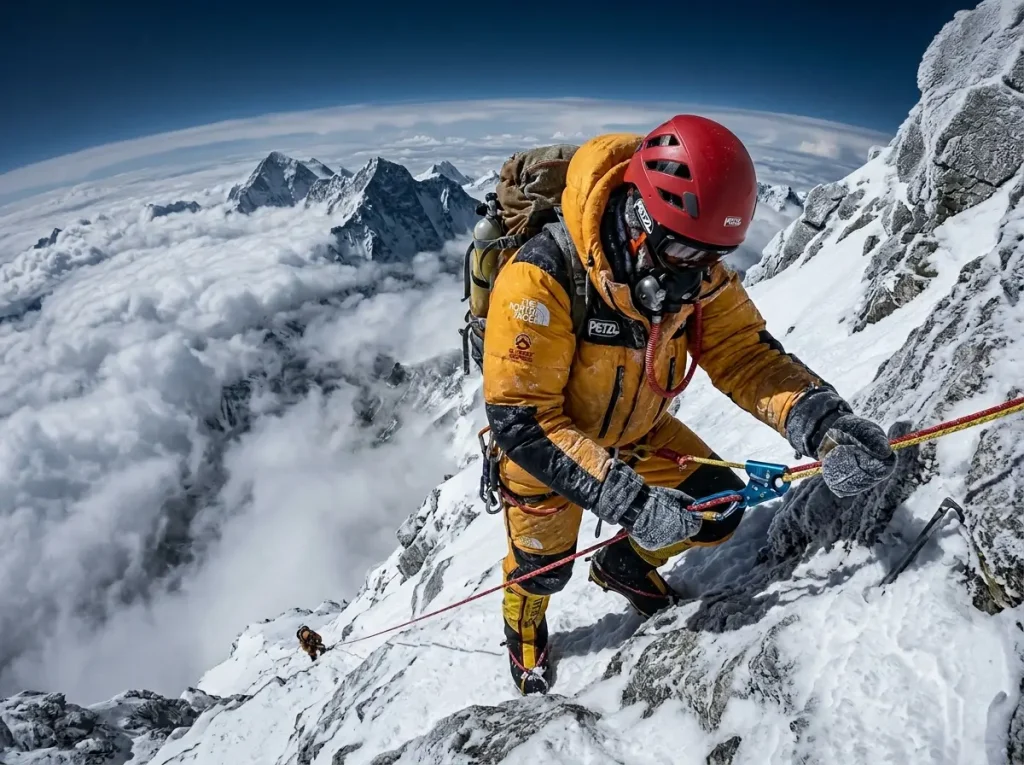
There are fourteen peaks on Earth above 8,000 metres, the eight-thousanders, and all of them stand in the Himalaya and the Karakoram. Above that line you enter what climbers grimly call the thin-air zone, where you break down faster than you can recover, altitude sickness can tip into HAPE or HACE, and supplemental oxygen becomes the difference between turning around and going home. These are not climbs you talk yourself into on a Tuesday. This is the tier where the honest conversation about objective hazard has to start.
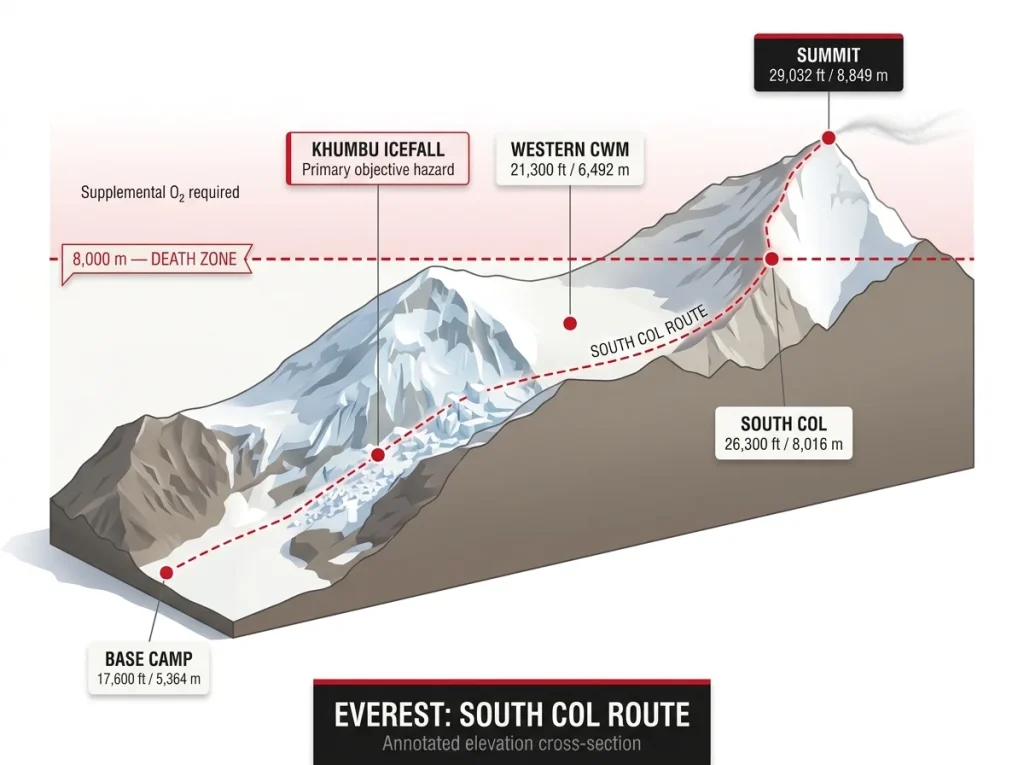
Everest: The South Col and the Khumbu Icefall
Everest’s standard line is the South Col route, the southeast ridge from Nepal that Hillary and Tenzing Norgay pioneered on the 1953 first ascent, and it carries roughly a 32% summit success rate against about 26% on the Tibetan North Ridge. Almost everyone climbs it as a guided expedition in expedition style, leaning on fixed ropes and oxygen, rather than fast and light in alpine style.
The modern fatality rate sits around one to three percent, which sounds small until you stand below the Khumbu Icefall, the route’s signature hazard. The Icefall is a slow-motion river of shifting seracs and crevasses near the bottom of the climb, and there is no skillful way through it, only a fast one. If you want the real numbers behind the climb, what an Everest expedition actually costs and the South Col success odds is the deep dive.
K2: The Savage Mountain and the Bottleneck
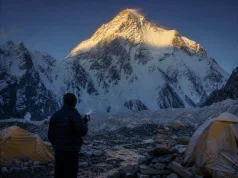
K2 is the second-highest peak on Earth and, by reputation and record, the most lethal of the giants. Its standard route, the Abruzzi Spur, has a historical fatality rate around 23 to 25 percent, though good guided seasons in recent years have pushed success to 50 percent or higher. The mountain’s most feared spot is the Bottleneck, a roughly 100-metre couloir at about 8,200 metres that runs directly beneath a hanging serac. The 2008 tragedy that cost eleven climbers their lives happened there, when the ice above calved.
If you want to understand why K2 and Annapurna outrank Everest as the most difficult mountains to climb, the Bottleneck is the whole argument in one place.
On the Bottleneck, no anchor you place saves you from the serac overhead. The only protection is the clock. Climbers who survive that section treat it like crossing live train tracks: get under it, move fast, and get out before the ice decides. Lingering is the hazard, not the angle.
The Other Giants: Cho Oyu, Kangchenjunga and Annapurna
Not every 8,000er is a coin flip. Cho Oyu, often called the most accessible 8,000er, is the one most climbers use to learn how their system handles extreme altitude before committing to Everest. At the other extreme, Annapurna carries the worst fatality-to-summit ratio of the fourteen, and Kangchenjunga’s remoteness keeps its traffic thin. The lesson of the tier is that “8,000er” is a category, not a difficulty, and the spread inside it is enormous.
Iconic Alpine Peaks of the Alps (Matterhorn, Mont Blanc and Eiger)
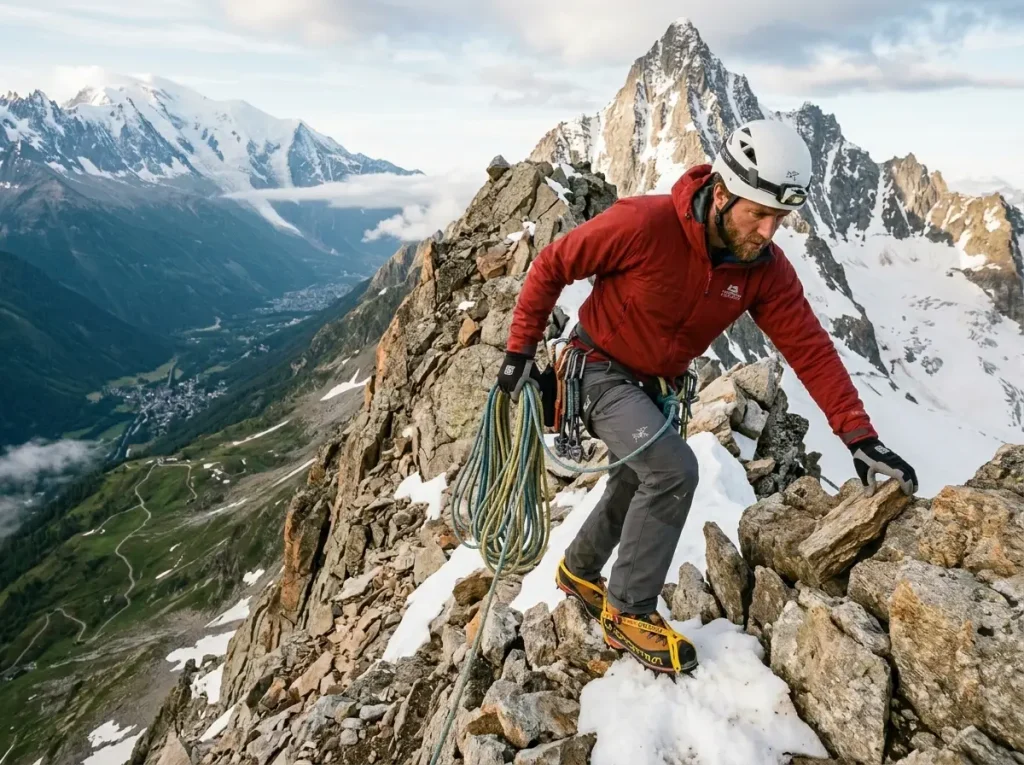
The Alps invented mountaineering, and three peaks carry most of its fame. They are also where “moderate” grades quietly catch people out, because on all three the real story is loose rock and falling rock, not hard climbing moves.
The Matterhorn: The Hörnli Ridge and Loose Rock
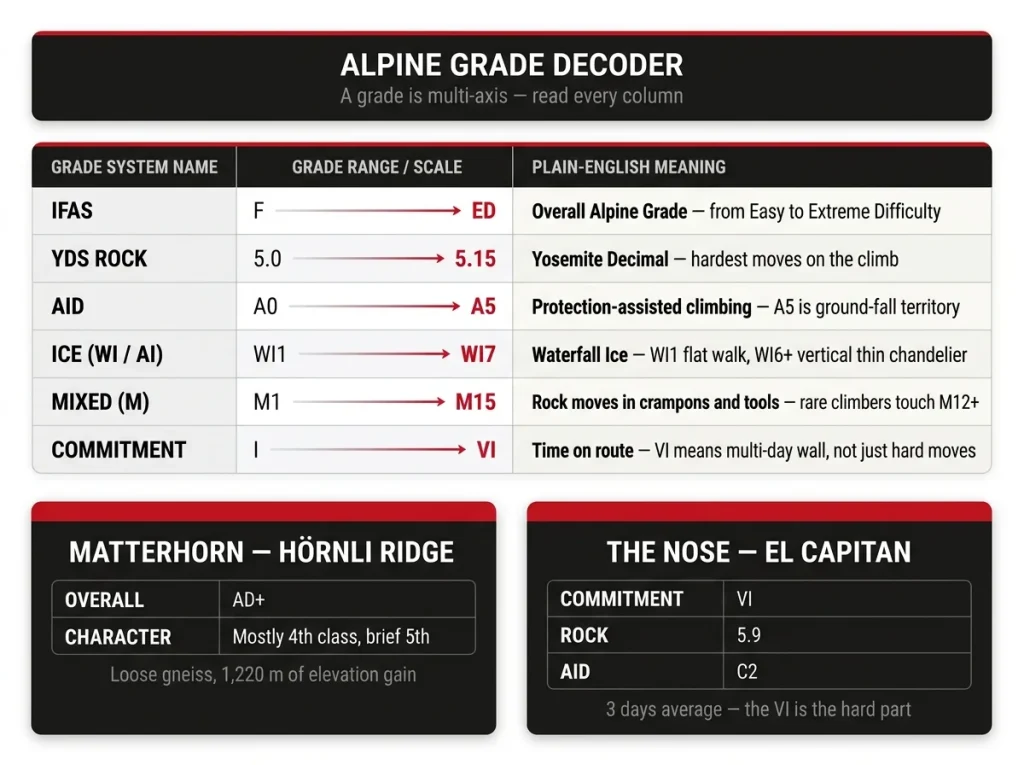
The Matterhorn (14,691 ft) is the most photographed mountain on Earth, and its standard line, the Hörnli Ridge, is graded AD+. That grade hides what it asks: about 1,220 metres of mostly fourth-class scrambling with brief low-fifth moves, all on loose, downsloping gneiss. The hazard is not the difficulty of any single move but the speed it demands and the rock that comes apart in your hands.
A guide and a client were lost to rockfall on the Hörnli in 2019, a reminder that fame and a “moderate” grade do not equal safe. The full picture lives in the Matterhorn’s Hörnli Ridge and its loose-rock reality.
Mont Blanc: The Goûter Route and the Grand Couloir
Mont Blanc (15,771 ft) is the highest peak in Western Europe, and its Goûter Normal Route is graded only PD, technically gentle for such a big summit. The catch is the Grand Couloir, a steep gully the route must cross that is notorious for frequent rockfall. Climbers call it the shooting gallery, and crossing it fast and early is the standard tactic. Non-technical by grade does not mean low hazard when the mountain is throwing rocks at the path.
The Eiger: The Nordwand and the Mittellegi Ridge
The Eiger (13,015 ft) owes its entire reputation to one feature, the North Face, the Nordwand, one of the great problems of the Alps and elite mixed climbing ground. Most climbers never touch it. They take the classic Mittellegi Ridge instead, a committing but far more reasonable line. The Eiger is the clearest case in the Alps of a peak whose fame comes from its hardest face while its normal route sits a full tier below.
US-Accessible Icons You Can Drive To
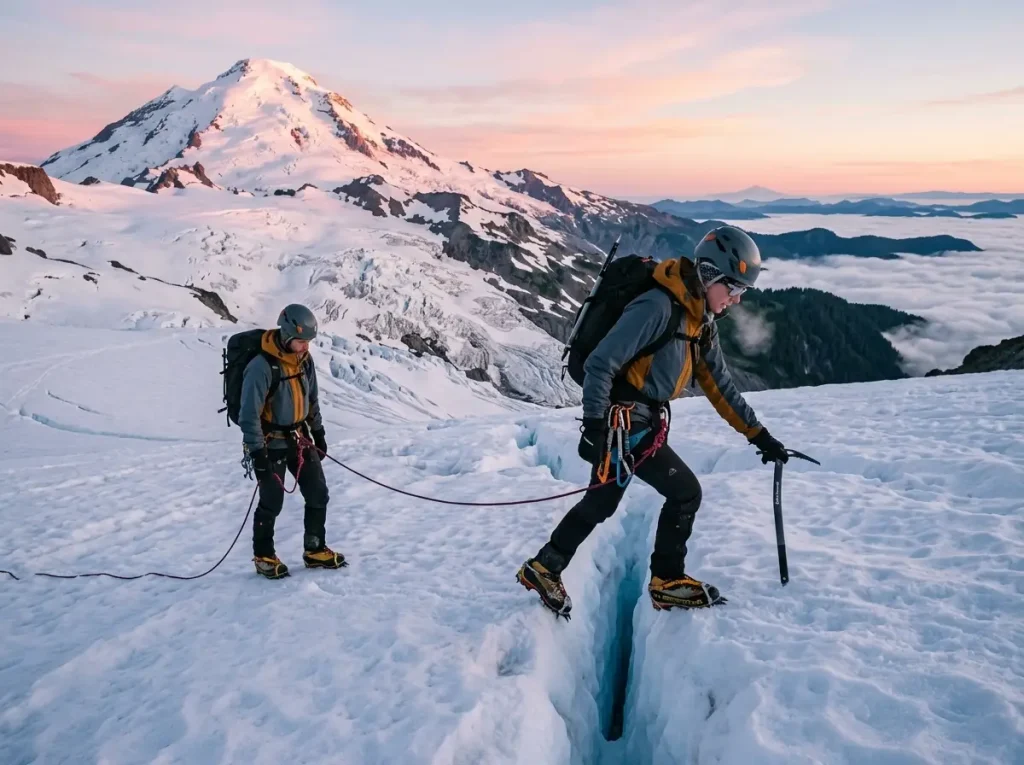
You do not need a Sherpa team and a thirty-hour flight for a world-class climb. Some of the most legitimate mountaineering on the planet is a tank of gas away, and it humbles people precisely because they underestimate it. This is the on-ramp the global lists ignore, and it is where most readers should actually start.
The Cascade Volcanoes: Rainier, Shasta and Hood
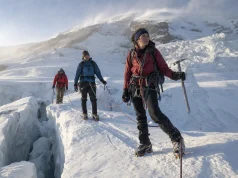
Mount Rainier (14,411 ft) is the classic American glacier proving ground, and climbing Mount Rainier’s Disappointment Cleaver is the standard line. It runs about 14.5 miles round trip with roughly 9,000 feet of gain, and crampons, an axe, and a rope are mandatory on every route, whether you take the Disappointment Cleaver or the steeper Kautz Glacier. The National Park Service logs an average summit success near 51 percent, closer to 44 percent for independent parties and 60 percent for guided ones, and weather plus hidden crevasses turn back the rest. According to the National Park Service’s Mount Rainier climbing program, the registration and the gear requirements are not suggestions.
South of there, Mount Shasta’s Avalanche Gulch route is the most popular introduction to a glaciated volcano, and Mount Hood’s South Side route is one of the most climbed glaciated peaks in the world, which is exactly why it catches casual parties off guard.
The Sierra and the Tetons: Whitney and the Grand Teton
California’s Mount Whitney is the highest point in the lower 48, and it offers two completely different climbs depending on the line you pick, as the skill ladder above already flagged. Wyoming’s Grand Teton is the technical jewel of the group, a true alpine rock summit rising straight out of the valley. Its classic line is the Grand Teton’s classic Owen-Spalding route, and if the peak grabs you, the full Grand Teton climbing guide covers the routes, gear, and training in one place.
Denali: America’s Expedition Peak
Denali (20,310 ft) is the odd one out on this list, because it belongs to the expedition tier even though it sits on a US road system. Its standard West Buttress is not technically demanding (the Cassin Ridge is the hard alternative for elite alpinists), and yet long-term summit success hovers around 50 to 52 percent across roughly a thousand attempts a year. The filter is the cold, the altitude, and the two-to-three-week self-supported haul, where you move your own loads in brutal temperatures. It is the most accessible way for an American climber to learn what a real expedition costs the system.
The peak that humbles the most people is not the tallest one. It is the one a four-hour drive away. Rainier punishes climbers who sleep at sea level, drive to a 5,000-foot trailhead, and go straight up. Build acclimatization days in, and turn around early when the weather shifts. Most Rainier accidents trace back to pushing a closing window.
Legendary Rock Routes (The Nose, Half Dome and the Big Walls)
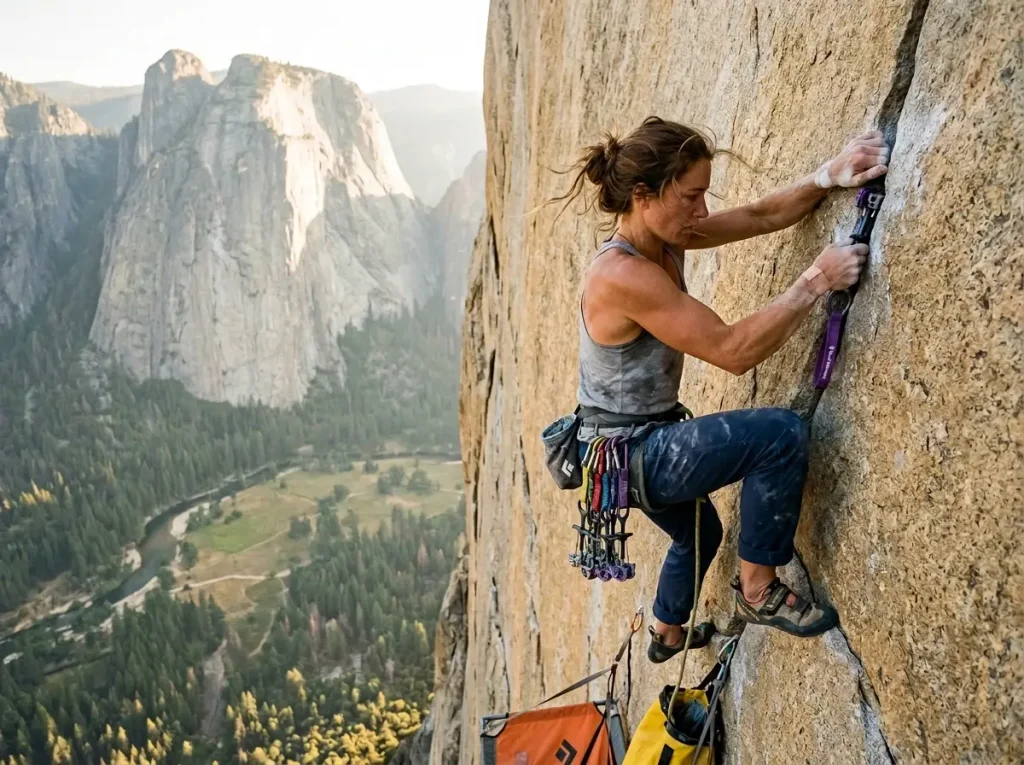
Ask a non-climber to name a famous climb and they say Everest. Ask a climber and half of them say The Nose. A list of famous peaks that skips El Capitan is a tourism list, not a climbing one, because some of the most storied objectives in the sport are vertical rock, not snowy summits.
El Capitan and The Nose: The Most Famous Wall on Earth
The Nose of El Capitan is the most famous rock route in the world: roughly 2,900 feet and 28 pitches up a clean granite prow, graded Grade VI, 5.9 C2 in its standard aid form (or 5.14a if you free it). Warren Harding, Wayne Merry, and George Whitmore made the first ascent in 1958 over 45 days of siege climbing. The same wall holds El Capitan’s Freerider, the route Alex Honnold free-soloed, and most parties still spend days on the stone with a full rack of cams clipped to the harness, which is why tackling The Nose on El Capitan is a planning project as much as a climb.
Half Dome: The Route That Built American Big-Wall Climbing
The Regular Northwest Face of Half Dome is the other legendary Yosemite wall, about 2,200 feet and 23 pitches at Grade VI, 5.9 C1. When Royal Robbins, Mike Sherrick, and Jerry Gallwas climbed it in 1957 over five days, it became the first Grade VI big wall in the United States and effectively launched American big-wall climbing. It remains one of the classic climbs of North America, and Half Dome’s Regular Northwest Face is still a route climbers train years to attempt.
Why a “5.9” Wall Takes Days
Here is the part that confuses climbers who only know sport-crag grades: the 5.9 on these walls is not the hard part. The number that matters is the Roman numeral. Grade VI means a multi-day commitment, where the real skills are aid efficiency, hauling, and the patience to live on the wall for two or three days. Harding’s 45-day siege of The Nose and today’s Nose-in-a-Day ascents are the same rock and two entirely different sports, separated by what the climbers chose to carry and how long they were willing to stay.
On a big wall, read the Roman numeral before the 5.x. A IV is a long day, a V can be a bivy, and a VI means you are living up there. Plenty of strong gym climbers get shut down on The Nose not by the moves but by the logistics of three days of vertical camping.
Reading the Route (Standard Routes, Cruxes and Objective Hazards)
Every peak above has a “standard route,” and the phrase tricks people. Standard means most-traveled, not easy and not safe. Learn to read past the route name to the real crux and the hazard you cannot control, and you will read the other seventeen profiles like a climber instead of a tourist.
Why the Standard Route Is Rarely the Easy Route
The standard route is the most-established line, the one with the most beta and the most traffic, which is not the same as the gentlest one. Most standard routes carry a signature hazard baked into them: Everest’s normal line goes through the Khumbu Icefall, Mont Blanc’s crosses the Grand Couloir, and K2’s passes under the Bottleneck serac. Picking the standard route does not let you skip the mountain’s worst feature. It usually means walking straight into it with company.
Objective vs Subjective Hazard
The single most useful idea in mountaineering is the split between objective and subjective hazard. Subjective hazards come from you: your technique, your fitness, your decisions, all things you can improve. Objective hazards are the ones the mountain owns regardless of how good you are, like serac fall, rockfall, and avalanche.
You cannot out-skill a collapsing serac. You can only choose when and whether to be under it, which is why timing and route choice matter more than raw ability on the big peaks. Comfort with exposure and a long runout is nerve, not armor, and nerve does nothing against falling ice.
The crux of Huascarán, the high point of the Peruvian Andes, is a textbook example, where the objective hazard of the route filters out far more climbers than the climbing itself.
How Alpine Grades Actually Work
A grade is not one number, and reading it as one is the most common rookie mistake. A serious route can carry an overall IFAS grade (F, PD, AD, D, TD, ED), a YDS rock grade (5.x), an aid grade (A or C), an ice grade (WI or AI), a mixed grade (M), and a commitment grade in Roman numerals from I to VI. A peak can be PD overall and still demand crampons across a rockfall gully, and a wall can be “5.9” yet take three days.
The modern system traces back to the UIAA, the international federation that standardized mountaineering grades, whose scale dates to 1967. Read every axis, not just the one you recognize.
Permits, Cost and the Crowding Reality
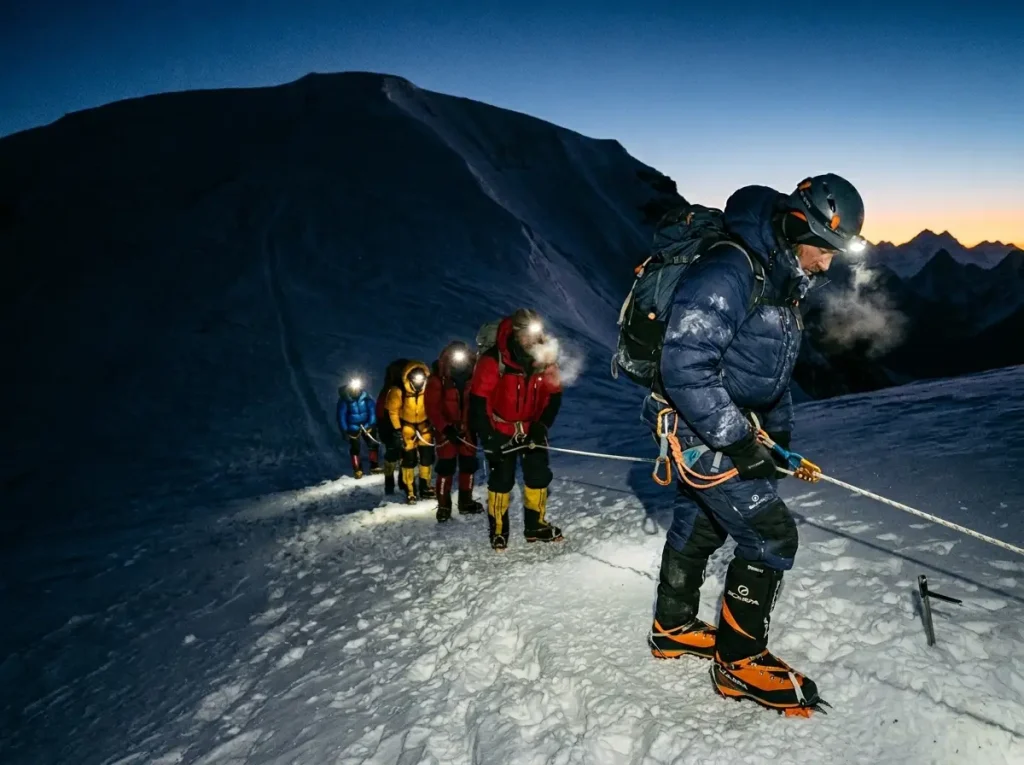
The summit is half the project. The other half is the permit, the price, and the line of headlamps you did not expect at two in the morning. Plenty of trips fall apart in the logistics long before anyone touches rock or snow.
Permit Systems by Peak
Access rules vary wildly from mountain to mountain. Nepal raised its Everest permit cost sharply in 2025 while Tibet reopened its side, Aconcagua runs a tiered provincial permit, and Rainier requires a climbing pass plus a cost-recovery fee through the park. In the US, Mount Whitney runs a competitive lottery for its quota, and Peru’s protected-area agency governs Huascarán and the Cordillera Blanca. The takeaway is to research the permit and the climbing season before the plane ticket, because some of these systems sell out or draw months ahead.
What a Guided Climb Really Costs
Cost scales with the tier, not the height alone. A domestic glacier peak like Rainier or Shasta is a permit, a few days, and an optional guide. A Seven Summit like Denali or Aconcagua is a serious outlay in time and money. And a guided 8,000er sits in a category of its own, where the bill rivals a new car and the guided-versus-private gap is enormous.
None of these numbers belong on a spec sheet, because they move every season, but the order of magnitude jumps with every rung of the ladder.
The Crowding and Commercialization Debate
The famous peaks are busier than their photos suggest. The big commercial mountains now run on fixed ropes and large guided teams, and the images of summit-day queues on Everest are real, not outliers. That commercialization is the running argument in modern mountaineering: it has opened the giants to people who could never have climbed them alone, and it has also stacked crowds into the exact spots where moving fast keeps you alive. Whichever side you land on, plan for company on the standard routes.
Conclusion
Fame and height do not sort mountains. Commitment does, so find your rung on the ladder before you fall for a name. Every standard route carries a signature hazard, so name the crux before you go instead of trusting the grade on its own. And the on-ramp is closer than the bucket list suggests, because a drive-to volcano like Rainier or Hood will teach you more about real mountaineering than a year of daydreaming about Everest.
Pick the one peak from this list that sits a single rung above where you stand today. Open its full guide, and start training for that exact objective. A specific mountain you are afraid of beats a vague ambition every time.
Frequently Asked Questions
01What is the most famous mountain to climb in the world?
Everest is the most famous, as the highest peak on Earth at 29,032 feet, climbed by the South Col route from Nepal. Fame does not equal hardest, though. K2 is far more lethal, and The Nose on El Capitan is the most famous pure-rock route.
02Which is riskier to climb, Everest or K2?
K2 is far more hazardous. Its historical fatality rate runs around 23 to 25 percent against Everest’s one to three percent. K2 is steeper, colder, and sits in a jet stream, and its Bottleneck serac threatens everyone on the standard Abruzzi Spur.
03What are the Seven Summits?
The Seven Summits are the highest peaks on each continent: Everest, Aconcagua, Denali, Kilimanjaro, Elbrus, Vinson, and a seventh that differs by list. The Bass list uses Kosciuszko in Australia; the Messner list uses Carstensz Pyramid in Oceania.
04Do you need technical climbing skills to summit Kilimanjaro or Aconcagua?
No, both are non-technical with no rope work required. That does not make them easy. Both are pure altitude tests, and Aconcagua sits about 3,500 feet higher than Kilimanjaro, so acclimatization, not technical skill, decides most summits.
05What is the easiest of the world’s famous peaks to climb?
Among the famous Seven Summits, Kilimanjaro and the south side of Elbrus are the most achievable, both non-technical walk-ups. The single biggest success lever is time: a 7-day Machame route on Kilimanjaro succeeds far more often than a rushed 6-day attempt.
Safety Notice: Rock climbing and mountaineering are inherently high-risk
activities that can involve physical trauma or fatal incidents. The information on Rock Climbing Realms is for
educational and informational purposes only. Techniques and advice presented here are not a substitute
for professional, hands-on instruction. Conditions and risks vary by location. Always seek guidance
from a qualified instructor before attempting new techniques. By using this website, you agree that you
are solely responsible for your own safety. Any reliance you place on this information is strictly
at your own risk, and you assume all liability for your actions. Rock Climbing Realms and its authors
will not be held liable for any harm, damage, or loss sustained in connection with the use of this information.
Affiliate Disclosure: We are a participant in the Amazon Services LLC Associates Program, an
affiliate advertising program designed to provide a means for us to earn advertising fees by advertising and linking
to Amazon.com. As an Amazon Associate, we earn from qualifying purchases. We are also an official affiliate partner
of Black Diamond Equipment via the AvantLink network. If you click on a Black Diamond affiliate link and make a
purchase, we may earn a commission at no additional cost to you. We also participate in other affiliate programs.
Additional terms are found in the terms of service.