
In this article
You lead 5.10 at the gym, the guidebook calls the Owen-Spalding the easiest technical line up the Grand Teton, and it goes at a friendly 5.4. So the climbing is the part you stopped worrying about, and that is the trap. On the Grand Teton Owen Spalding Route, the grade is the one number that will not decide your day, and the people who get hurt here rarely get hurt on the 5.4 moves. Jenny Lake rangers and decades of trip reports keep pointing at the same things, and none of them are the climbing. Here is the honest beta on what the route actually asks of you, the named features in order, the rack you really need, and how to get back down in one piece.
What “Non-Sustained 5.4” Really Means on the Grand Teton
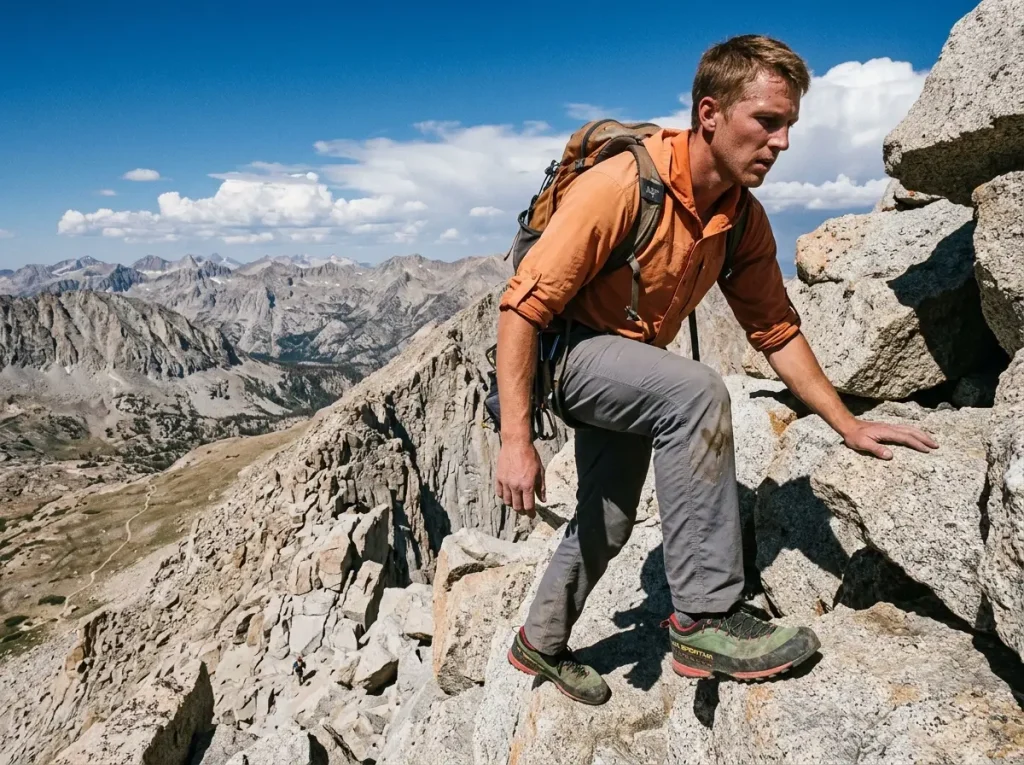
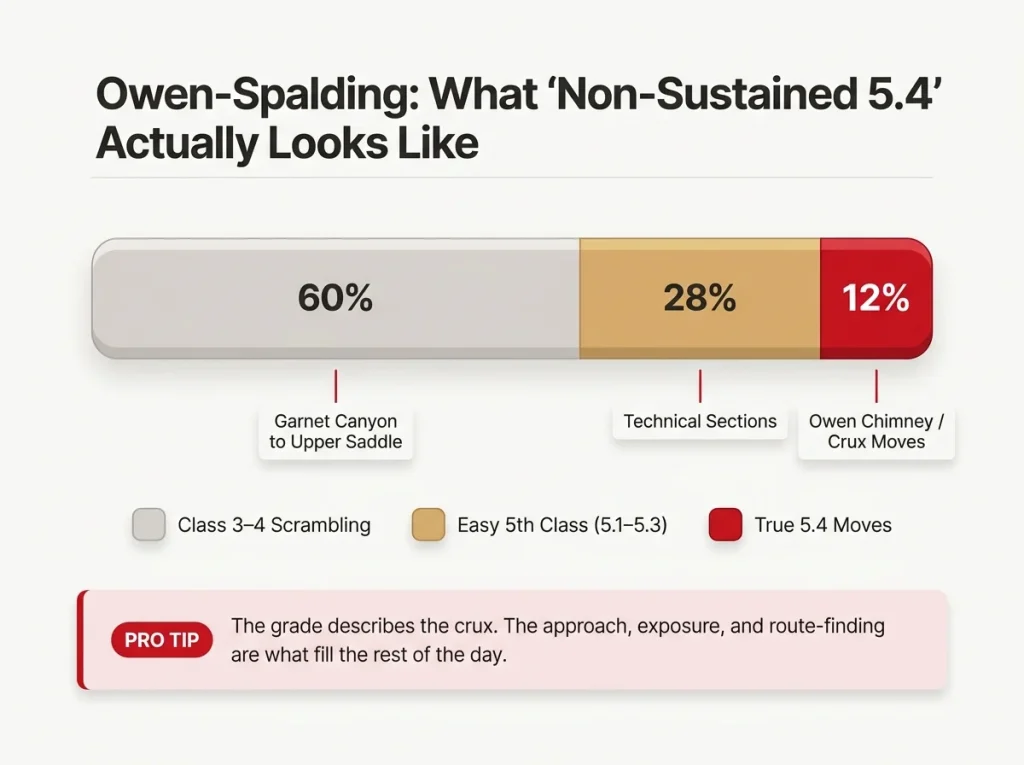
If you came here to find out whether 5.4 is hard, the answer is no and also that you are asking the wrong question. Non-sustained 5.4 is climber shorthand for a route where the hardest few feet earn the grade and everything else is easier. On the Owen-Spalding, that means a handful of real moves stitched together by class 3-4 scrambling and short stretches of 5.1 to 5.3. The number describes the crux. It does not describe the day.
The Grade vs the Reality
Strip the route down and the technical climbing is genuinely modest for anyone who leads outside. What the grade leaves out is everything around those moves: loose rock, thin air, and a summit at 13,775 feet that you reach only after thousands of feet of approach. The reason the 5.4 feels honest in a guidebook and dishonest on the mountain is that a guidebook rates rock, not consequence.
Why Exposure and Route-Finding Are the Real Test
The actual filter on this route is your tolerance for exposure and your ability to read alpine terrain, plus roughly 5,000 feet of gain already sitting in your legs before you touch the first 5.4 move. A gym 5.4 has a crash pad under it. This one has two thousand feet of air. Ask any climber who has bridged the Owen Chimney with a valley yawning under their heels: the moves are easy, the setting is not, and that gap is the whole point.
Where Owen-Spalding Fits Among the Grand’s Routes
This is the 1898 original line, climbed by William O. Owen, Franklin Spalding, Frank Petersen, and John Shive, and it remains the standard way up the peak. If you want the bigger picture of how this route sits next to the Exum Ridge and the rest of the mountain, our full Grand Teton climbing guide lays out the options. For print beta in your pack, the Best Climbs Grand Teton National Park Falcon Guide is the standard reference, though the free route description on Mountain Project covers the basics if you would rather not buy a book for one objective.
How Long It Takes and Who Should Attempt It
The honest version of “can I do this in a day” depends on who is asking. A fit, experienced team that already knows the Tetons can climb it car-to-car in one very long push. Most people should not plan on that.
Car-to-Car vs the Two-Day Plan
The common approach is to split the trip over two days, hiking to a camp at the Lower Saddle on day one and climbing on day two. That turns a brutal single push into two manageable halves and gives you a margin if weather or fatigue slows you down. Car-to-car is real, but it is a fitness and efficiency objective in its own right, not the default.
Guided, Self-Led, or Solo — An Honest Look
A day climb on the Grand does not require a guide on paper. Rangers do caution against one-day solo attempts by people without prior Teton or big-mountain experience, and that caution is worth taking seriously. Exum Mountain Guides runs this route, and a guided trip costs well into four figures, but it buys you route-finding and judgment you may not have yet. If you cannot confidently navigate alpine terrain and manage exposure on your own, hiring a guide is the honest call, and our breakdown of what to ask and what to pay a local climbing guide will keep you from overpaying for it.
The Fitness Reality
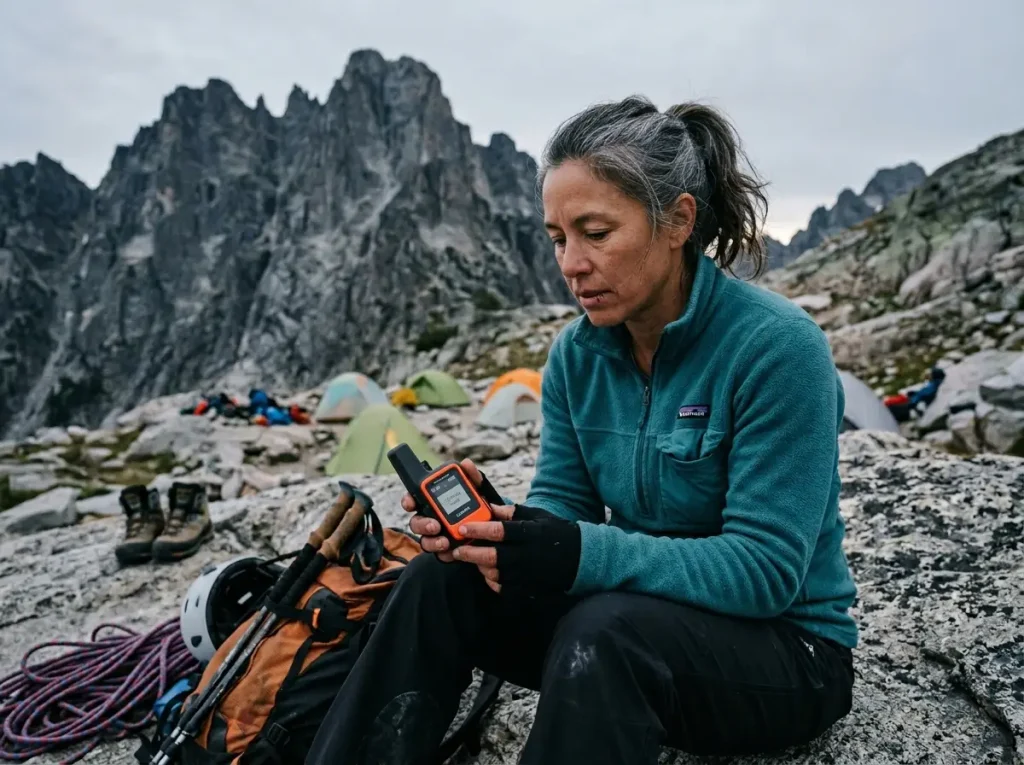
The limiter here is endurance, not finger strength. You are looking at roughly 7,000 feet of total elevation gain over the trip, and the climbing only starts once most of that is behind you. There is no cell coverage on the mountain, so a self-led party should carry a two-way satellite communicator. The Garmin inReach Mini 2 handles that job, and it is one of the few pieces of safety gear with no sensible budget downgrade, because the whole point is reaching help when nothing else can. One reported error worth avoiding: hauling your pack up, stashing it at the saddle, then spending six hours moving through the technical sections with no water or food.
Best Season and Timing Your Summit Day
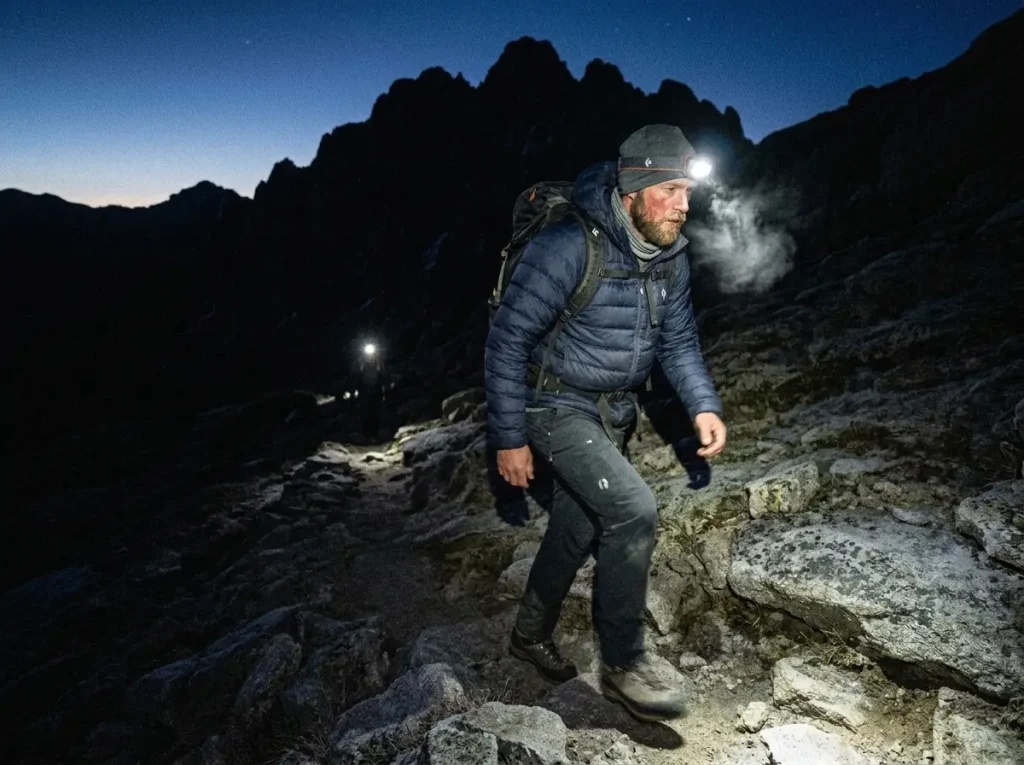
Timing the Grand is two questions stacked on each other: what month, and what hour. Get the month right and the route is a rock climb. Get the hour wrong and you are standing on a 13,775-foot lightning rod at the worst possible time.
The July-to-September Window
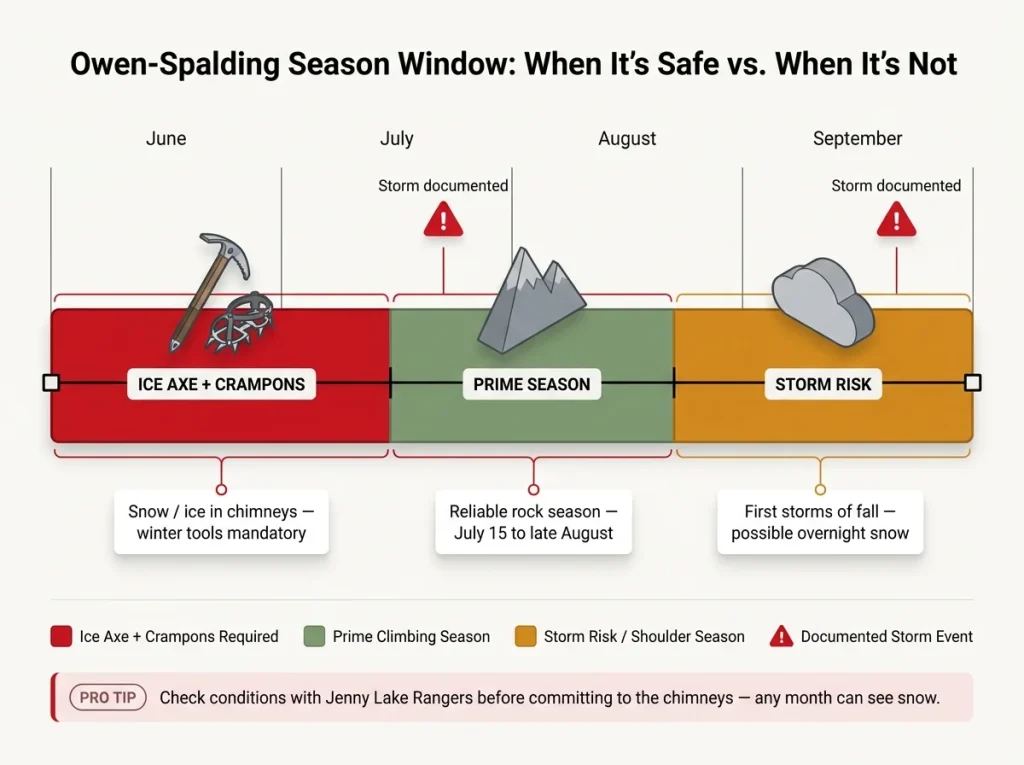
The reliable season runs roughly July through September, once the winter snow clears off the rock and the route comes into shape. Earlier than mid-July, expect snow in the chimneys and on the approach. Later in September, you are gambling on the first storms of fall. Conditions in a snow year look nothing like a dry year, so do not assume summer automatically means snow-free rock.
The Alpine Start and Afternoon Thunderstorms
The afternoon thunderstorm is the reason climbers leave the Lower Saddle in the dark. You want to be moving by headlamp, on the summit early, and already heading down before the clouds build, because storms tend to fire in the afternoon and a high ridge is no place to be when they do. A cold start that becomes a hot scramble that becomes a windy, exposed summit means your whole day rides on your layers.
Reading the Forecast Before You Commit
A forecast for the valley is not a forecast for 13,000 feet. Treat the mountain’s weather as its own system and build a hard turnaround time before you leave camp, not while you are standing below the final slabs talking yourself into “just a bit higher.”
Set your turnaround time the night before and write it on your hand if you have to. The summit will be there next year. The decision you make at 1 p.m. with a black cloud building is not the time to start negotiating with yourself.
Where to Camp and the Permits You Need
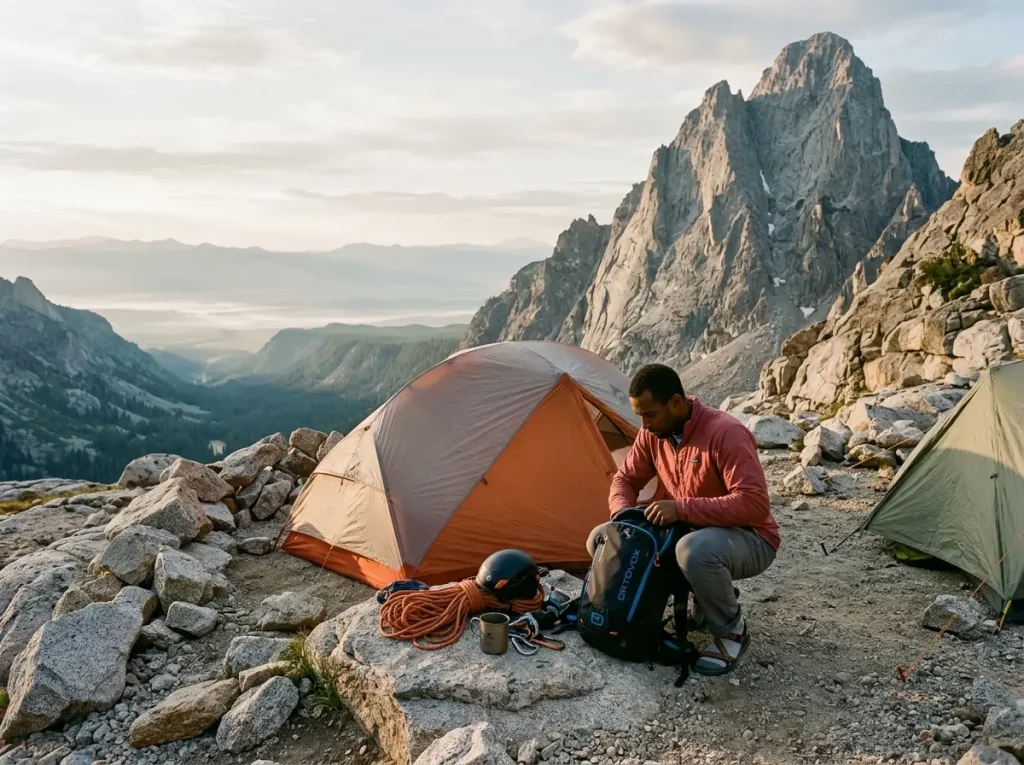
Most parties stage out of Garnet Canyon and the Lower Saddle, and the logistics of getting a legal spot to sleep matter almost as much as the climbing beta. Figure this out before you drive, not at the trailhead.
Garnet Canyon and the Lower Saddle Camps
The standard two-day plan puts a camp at the Lower Saddle, about 11,600 feet, with Garnet Canyon as the other main option lower down. These spots fill in the busy summer window, so plan early and have a backup. The last reliable water is below the saddle, so top off before the final climb up to camp.
Backcountry Permits and Day-Climb Rules
The paperwork is simpler than people assume for a day climb and stricter for an overnight. According to the National Park Service, a climbing permit is not required for day climbs, but overnight bivouacs in Garnet Canyon need a backcountry permit. Sort that out in advance, because the popular dates go fast.
Leave No Trace and Packing Out Waste
This is a high-traffic alpine route, which means you pack out what you bring in, including human waste in a WAG bag. It is not optional and it is not gross once you have done it twice. The mountain stays climbable because people handle this part without being told.
The Approach From Lupine Meadows to the Lower Saddle
Here is the part nobody frames a photo around: your “easy 5.4 day” opens with a half-day of hard hiking. From Lupine Meadows, it is roughly 7 miles and about 4,800 vertical feet to the Lower Saddle, which takes most hikers four to five hours moving well.
The Trail Through Garnet Canyon
The trail climbs steadily through Garnet Canyon, and the grade is honest the entire way. This is where the two-day plan earns its keep, because arriving at camp with something left in your legs changes everything about the next morning. The most common navigation error on the whole trip happens here, not up high: climbers lose the climber’s trail between miles four and five, above the Petzoldt Caves, and burn time and energy regaining it.
The Fixed Rope and the Headwall
Below the Lower Saddle you reach a short headwall, the Black Dike, with a fixed rope to help you up the steepest step. It is straightforward in dry conditions and gets your attention with a heavy pack. Take it deliberately, especially on tired legs at the end of the approach.
Footwear and Pacing for 4,800 Feet of Gain
Sticky approach-shoe rubber is what earns its keep once the trail turns to class 3-4 scrambling and on the Catwalk higher up. A shoe that smears well on granite buys you confidence exactly where the terrain stops being a hike.

Honest note on the anti-sell: if you already own a pair of grippy trail runners, they will get you to the Lower Saddle fine. The sticky rubber matters most on the upper scrambling and the Catwalk, so this is a worthwhile upgrade if you climb a lot, and a borrow-or-skip if the Grand is a one-time objective.
Route-Finding From the Lower Saddle to the Upper Saddle
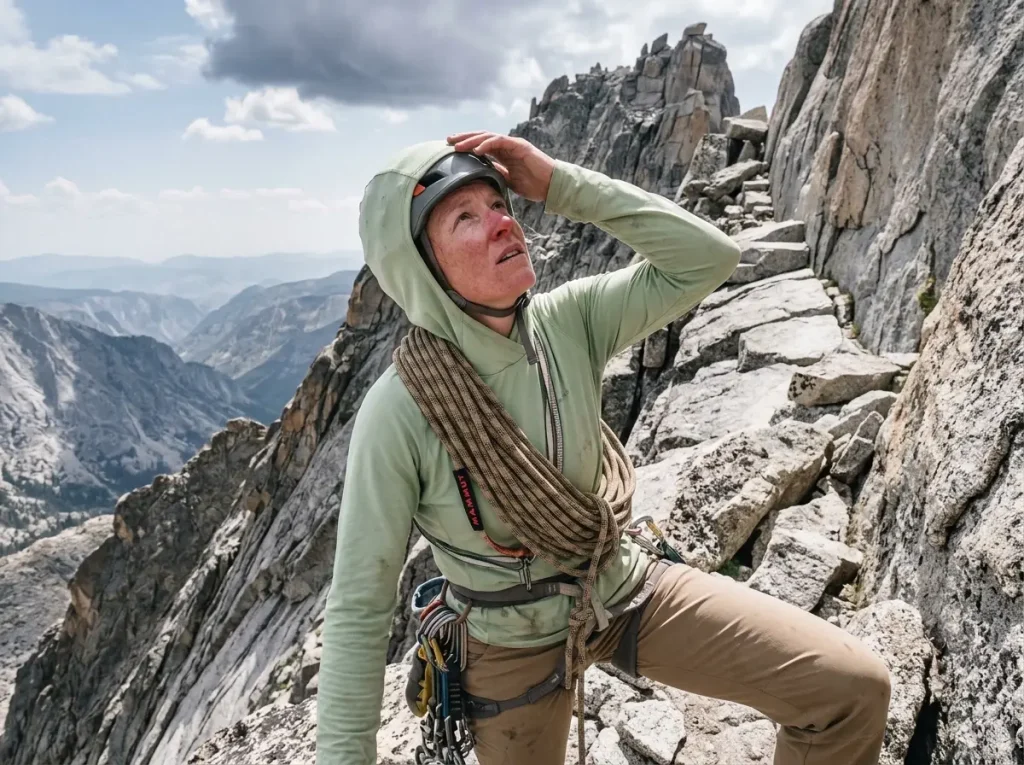
This is the stretch where “easiest route up the Grand” quietly checks whether you can read a mountain. There is no fixed line painted on the rock, and parties drift off-route here more than anywhere else on the climb.
The Needle and the Eye of the Needle
From the Lower Saddle you work up toward the Upper Saddle at about 13,160 feet, navigating past landmarks like the Needle and the Eye of the Needle, with the stone Enclosure standing on the sub-peak nearby. These features are your handrails. Learn them from the description before you go, because picking them out in person, at altitude, with the clock running, is harder than it looks on paper.
Staying on Route on the Way Up
Getting lost here is not just slow, it is how easy ground turns serious. Accident records show that roughly one in ten incidents on these routes involved a party being off-route, and the pattern is always the same: the wrong line puts you on looser, harder, more committing rock with fewer ways to retreat. When the terrain suddenly feels too hard for 5.4, that is your signal to stop and relocate the route, not to push on.
Moving Efficiently on Class 3-4 Ground
Most of this section is scrambling, and roping up where you do not need to is how fast parties become slow parties. Moving efficiently on this easy ground, and saving the rope for the few spots that actually warrant it, is what keeps you ahead of the afternoon weather.
The Named Features — Belly Roll, the Crawl, and the Chimneys
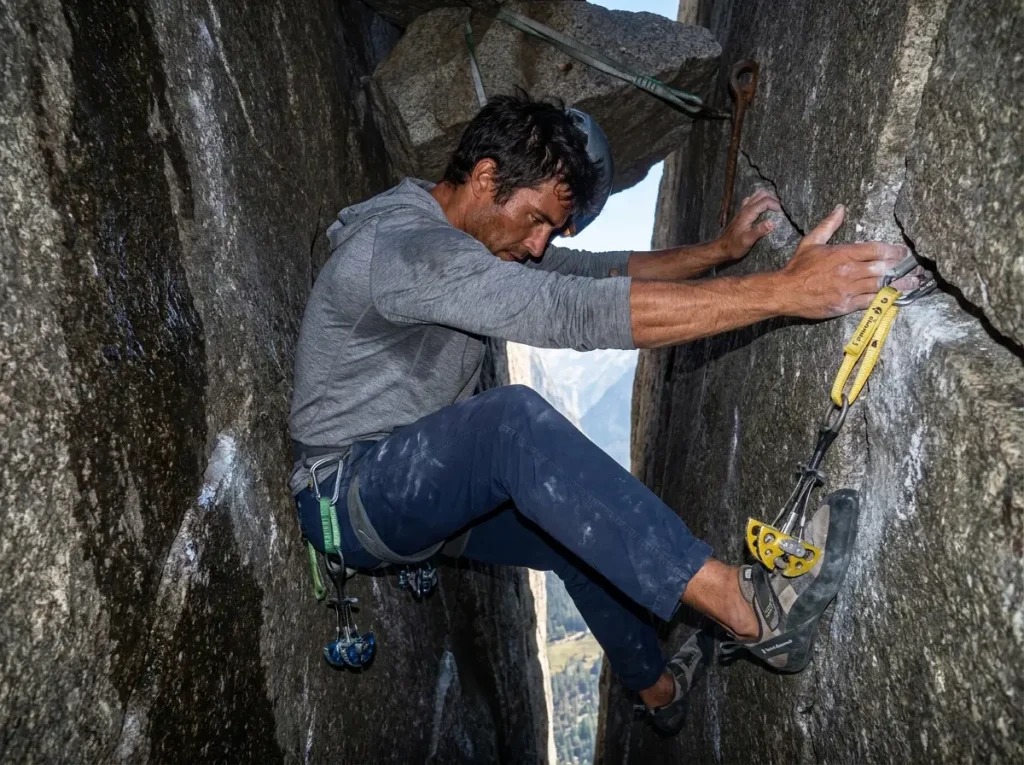
This is the beta you came for, in the order you will meet it. Above the Upper Saddle the route serves up its named features one after another, and knowing what each one is before you are standing on it makes all the difference.
The Belly Roll and the Crawl
The Belly Roll and the Crawl are the two features people remember. The Crawl is a ledge no wider than about 18 inches, with an overhang pressing down from above and roughly 2,000 feet of nothing below your heels. Climbers who have done it will tell you it is more of a straddle than a crawl, and that the moves themselves are easy. The exposure is what tests you, and this is the spot that decides whether high alpine climbing is for you.
The Double Chimney and Owen Chimney Crux
Above the Crawl comes the Double Chimney and then the Owen Chimney, the technical crux of the route. You stem and mantel past a few old fixed pitons and a slung block, and in dry conditions it is short and satisfying. In the wet or the cold it is a different animal, which is the whole reason the bypass below exists.
Sargent’s Chimney, the Catwalk, and the Summit Slabs
In dry weather, the Catwalk sidesteps the Owen Chimney crux entirely, and most parties take it. Above that, Sargent’s Chimney and the final summit slabs carry you to the 13,775-foot summit. The exposure on this upper section never really lets up, which is the same airy mindset a peak like the Matterhorn demands, and it is worth getting comfortable with that feeling on smaller objectives first.
Take the Catwalk when it is dry and skip the Owen Chimney crux entirely. Only commit to the chimney when the Catwalk is wet or iced and the bypass is no longer the safer option. Knowing you have that choice takes a lot of the pressure off the crux.
The Rack You Actually Need (and What’s Overkill)
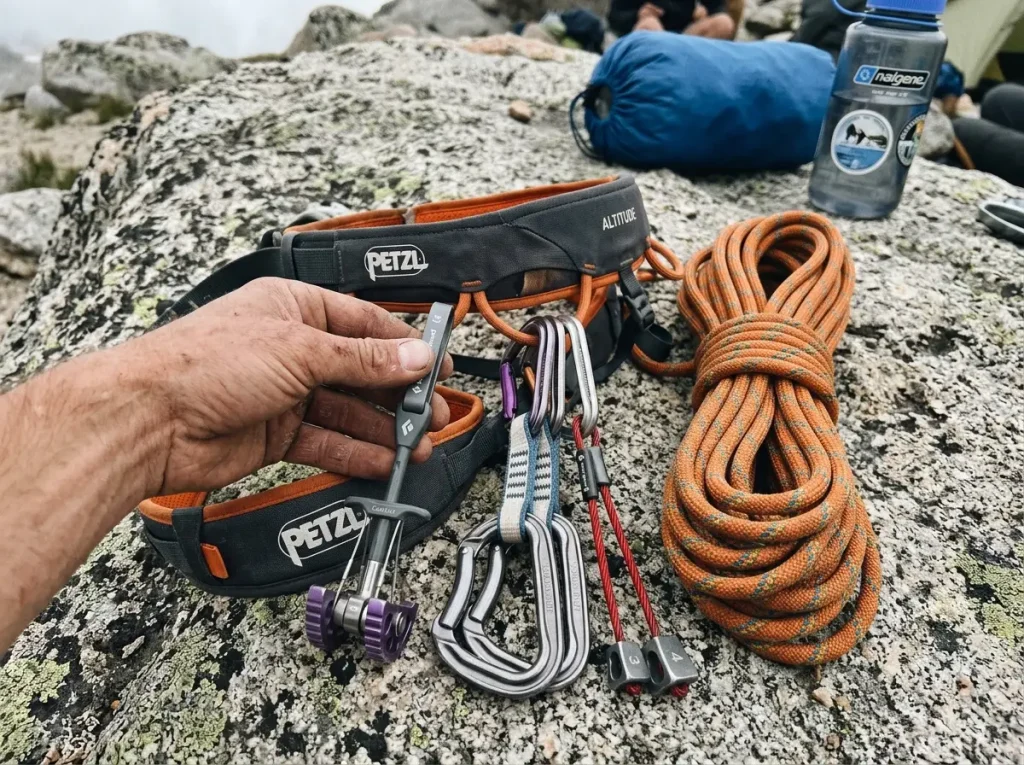
Here is where the catalogs and the mountain disagree. Gear lists for the Grand tend to read like a full trad rack with every sling and cam you own. The real-world rack that gets parties up a non-sustained 5.4 is tiny, and pretending otherwise just means you carry more weight up 7,000 feet for no reason.
The Honest Minimum Rack
Reported placements on this route come down to remarkably little: as few as a small cam, a medium nut, and one or two mid-size cams for the traverse and the anchor. A small alpine rack of finger-to-hand cams, a couple of nuts or stoppers, and a sling or two for natural anchors covers it for most parties, with a handful of alpine quickdraws to round it out. A double or triple of a mid-size cam is a comfort upgrade, not a requirement, and a full set of Dyneema slings on every piece is the kind of overkill that just adds weight to your back. The Black Diamond Camalot C4 in the smaller sizes is the trad standard if you are buying, but for a once-a-season objective, borrowing or renting a rack makes far more sense than buying one.
Single 70m Rope vs Double Ropes
The rope decision is the one that actually bites people, and it bites them on the descent. A single 70m rope is the gold standard here because it just reaches the Upper Saddle on the rappel. A 60m is contested and can leave you short, and two 35m ropes also work if that is what you have. If you want to understand the trade-offs before you commit, our guide to picking the right rope diameter and length walks through it. The Mammut 9.5 Infinity Dry is a solid 70m single, and a partner’s 70m works just as well if you would rather not buy one for a single climb.
Harness and the Borrow-vs-Buy Question
An ultralight alpine harness keeps weight off your hips on a long day, and the Petzl Altitude is built exactly for fast, light objectives like this one. The same honest logic applies as with the rope and rack: if you climb alpine routes regularly, buy it; if this is a bucket-list one-off, borrow or rent and put the money toward the trip.
Rack what you will actually place, not what makes you feel prepared. Every extra cam is weight you carry over 13,000 feet to never use. Lay your kit out the night before and put back anything you cannot point to a specific placement for.
Rockfall, Helmets, and the Hazards You Can’t Control
You can train away weak movement and bad pacing. You cannot train away a rock coming down the chimney above you. Rockfall is the named objective hazard on this route, and managing it is mostly about position and gear.
Why Rockfall Is the Named Hazard Here
The Grand sheds rock, and on a popular route a lot of it gets knocked loose by other people. That means the helmet goes on at the Lower Saddle and stays on until you are back below the technical ground, not just for the crux pitches.
Keeping the Helmet On All Day
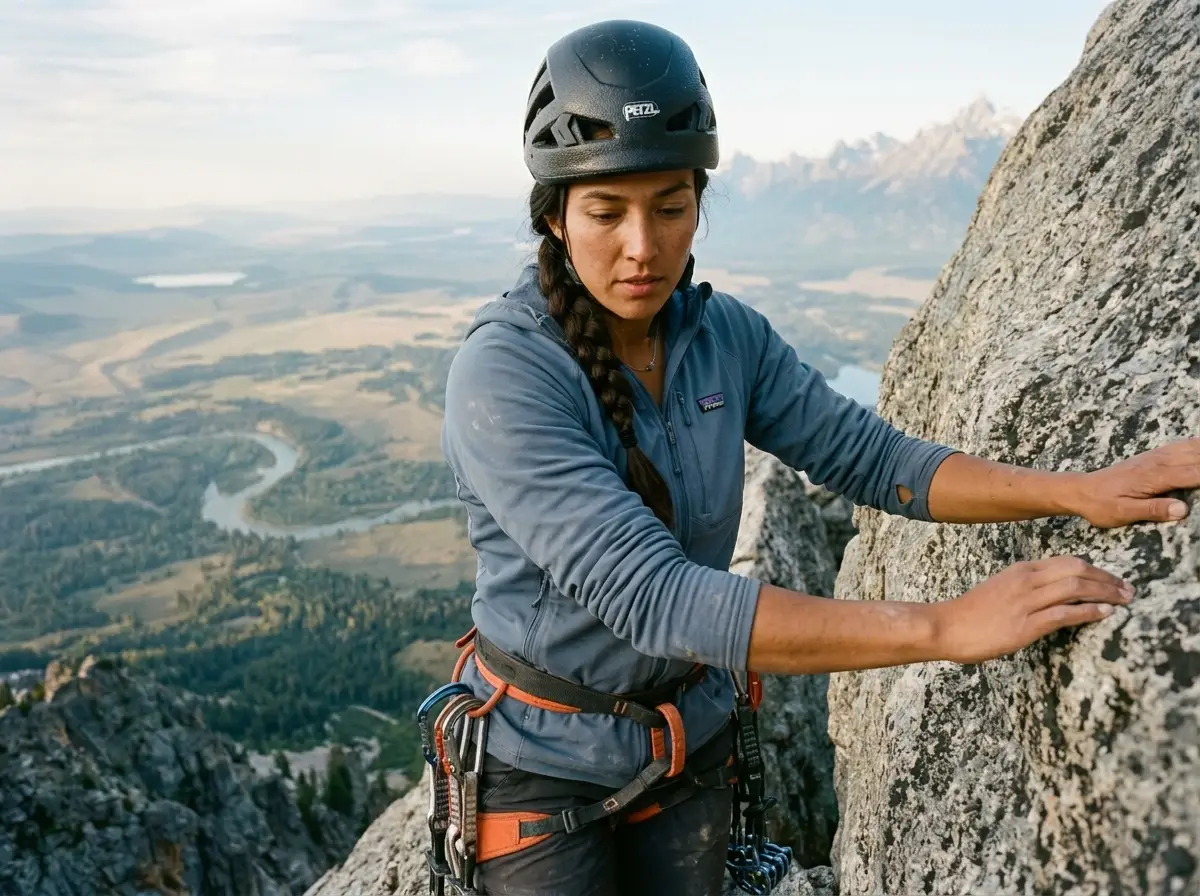
The best helmet is the one you forget you are wearing, because the one you take off to cool down is the one that is on the ground when a rock comes through. Weight is the whole reason an ultralight foam lid wins here: it disappears on your head, so you keep it on for twelve hours without thinking about it.
Other Climbers Above You
On a busy day the biggest rockfall hazard is the party stemming the chimney 30 feet over your head. Time your moves so you are not directly under another team in the Owen Chimney or Sargent’s Chimney, and call out anything you knock loose, loudly, every time.
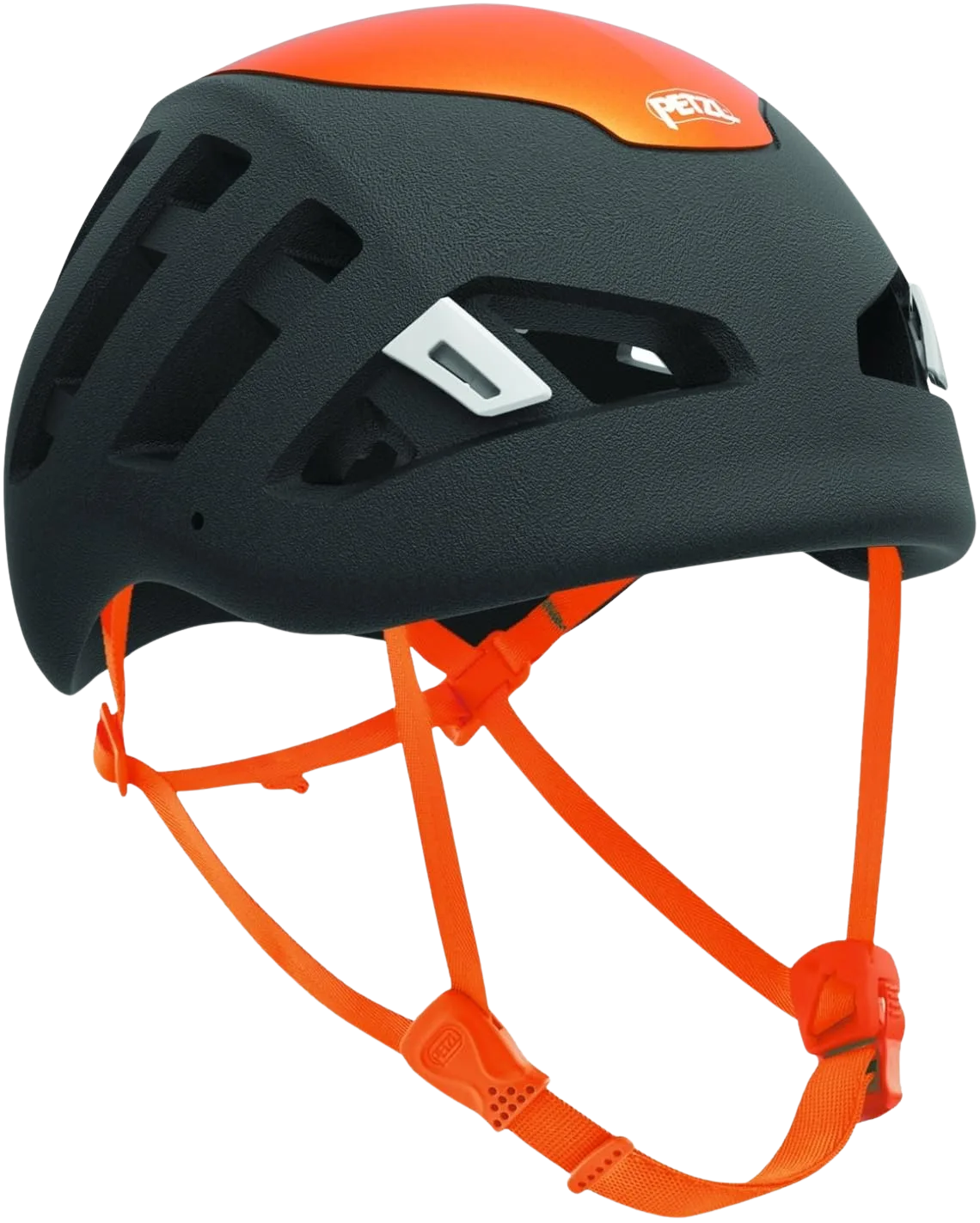
If the Sirocco sits above your budget, the Petzl Meteor is the more affordable Petzl lid that does the same job for a bit more weight. Either way, the rule holds: a helmet you actually keep on beats a lighter one in your pack.
When the Route Becomes a Mixed Climb
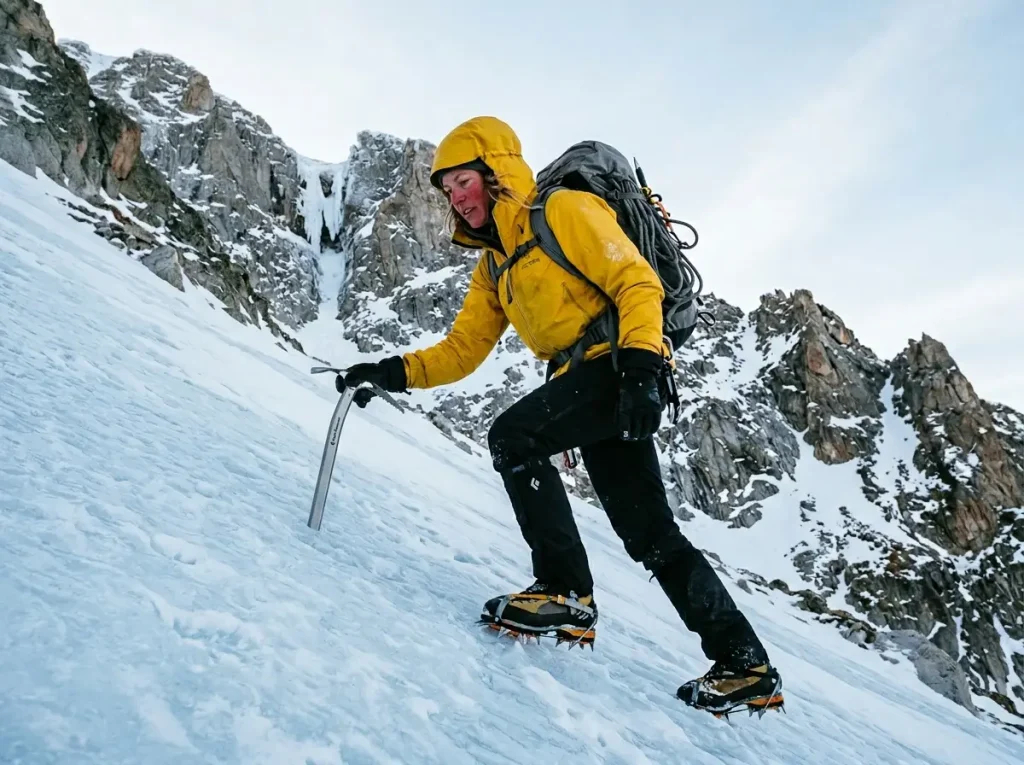
Here is the line nobody draws clearly, and it is the one that wrecks shoulder-season parties: the exact point where this rock scramble turns into a mixed climb that demands winter tools.
The Line Between Rock Scramble and Mixed Climb
The switch flips when the Owen Chimney, Sargent’s Chimney, or the snowfields on the route hold snow or ice. Once the route is in those mixed conditions, crampons and an ice axe stop being optional and become mandatory. A party that shows up treating the Grand as a pure rock route and meets iced-up chimneys with no winter gear is a party that should turn around, and more than one has learned that the hard way.
When Crampons and an Ice Axe Become Mandatory
Before mid-July, plan on needing an axe and crampons, full stop. Late-August snowfields can go bulletproof and “extremely hard,” and documented storms on this peak span June through mid-September, which means any month can re-arm the route overnight. If there is snow or ice on the line and you do not know how to self-arrest with an ice axe, the route is not in condition for you, the way a snow peak like Mount Shasta is only as friendly as its current conditions allow.
Checking Conditions With the Rangers
Do not guess at this from your couch. The smartest 15 minutes you can spend before the climb is to stop by the Jenny Lake Ranger Station for current conditions and route-finding advice. They know what the chimneys are holding right now, and they will tell you straight.
Getting Down Without Becoming a Statistic
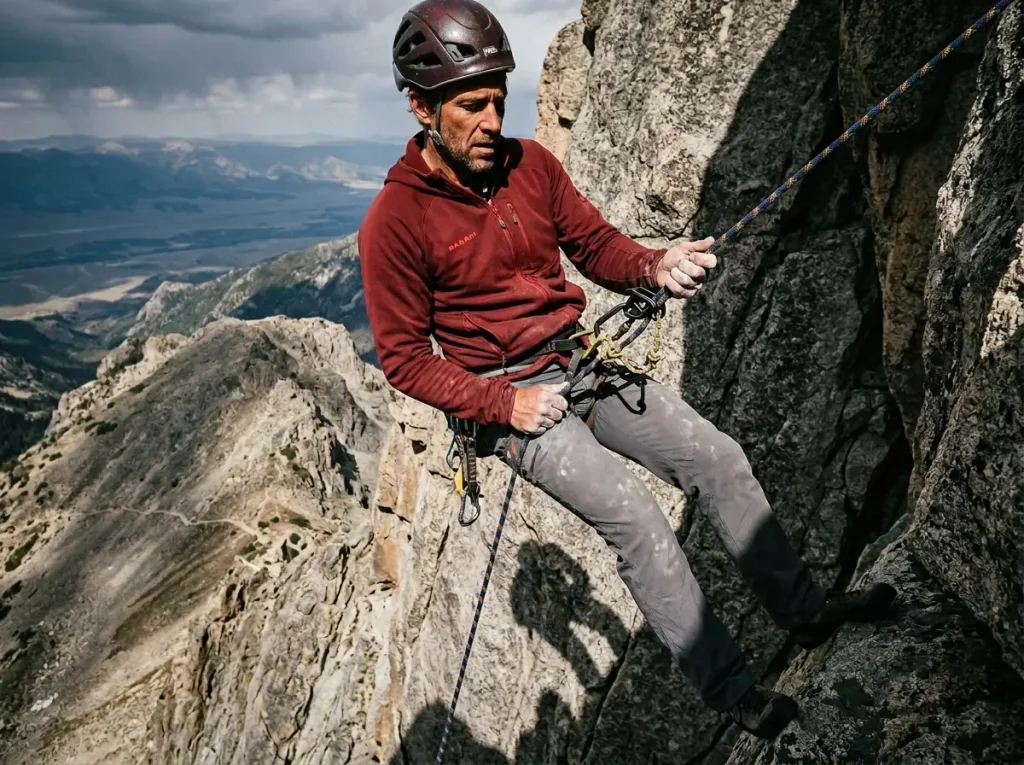
If you remember one section from this whole guide, make it this one. The descent off the Grand has hurt more climbers than the climbing has, and the mistakes that cause it are small, ordinary, and entirely preventable.
Downclimbing vs the 120-Foot Rappel
The descent comes down to one decision point. You downclimb Sargent’s Chimney first, then move to the rappel station for a single rappel of about 120 feet down to the Upper Saddle. This is exactly why rope length matters so much: a 60m rope can leave you dangling short of the saddle, while a true 70m reaches it. Set this up when you are fresh in your head, not when you are rushing a building storm.
Route-Finding on the Descent
Getting down the wrong line is how parties get “cliffed out,” stuck on terrain they can neither safely downclimb nor rappel, forced to reverse on tired legs. The fix is the same discipline as the way up: if the ground ahead feels harder than it should, stop and confirm you are on the route before you commit another move.
And here is the detail competitors gloss over. The common wisdom says most accidents happen on the descent, but the American Alpine Club’s own accident analysis found about one in four incidents on these routes ended in a fatality, split roughly evenly between going up and coming down. The lesson is not “relax on the way up.” It is to stay sharp in both directions.
Backing Up the Rappel
Two real incidents on this exact rappel make the case better than any lecture. One climber, tired and spooked by weather, came onto a ledge with no backup and took a hard fall. Another unclipped from the system to free a stuck rappel device and fell the length of the face. He did not survive. Both are covered in our breakdown of the rappelling mistake behind more accidents than any other, and both point to the same two rules: always back up your rappel with an autoblock, and never, ever disconnect from the system to deal with stuck gear.
A reliable belay device with a guide mode, like the Black Diamond ATC Guide, makes a clean, backed-up rappel simple, and the cheaper BD ATC-XP covers the same job if you want to spend less. The descent is also where a peak like Mount Hood, where the descent is the real crux, teaches the same lesson: the summit is only halftime.
If your rappel device jams on a knot or stuck strand, you fix it while you stay clipped to the system, always. The moment you unclip to solve a gear problem is the moment a small annoyance turns into the worst day of your life. There is no exception to this on the Grand.
Conclusion
The 5.4 is not what tests you on the Owen-Spalding. The approach, the exposure, the route-finding, and the descent are, so train and plan for those and the grade will take care of itself. Pack the honest minimum rack and a true 70m rope, check conditions with the rangers before you commit to the chimneys, and treat the descent with as much respect as the climb, because it earns it. If you have never strung together a long alpine day with real exposure, build that experience on smaller objectives first, then come back and climb the Grand the way it deserves to be climbed.
Frequently Asked Questions
01How hard is the Owen-Spalding route on the Grand Teton really?
It is rated 5.4 but non-sustained, so only a few moves earn that grade and the rest is class 3-4 scrambling and easy fifth class. The real difficulty is the long approach, the exposure, route-finding, and the descent, not the technical climbing.
02How long does it take to climb the Grand Teton via Owen-Spalding?
Most parties split it over two days with a camp at the Lower Saddle. A fit, experienced team can climb it car-to-car in one very long day, but the roughly 7-mile, 4,800-foot approach to the saddle alone takes most hikers four to five hours.
03Do you need a guide to climb the Grand Teton?
No permit requires a guide for a day climb, but rangers caution against one-day solo attempts without prior Teton or big-mountain experience. If you cannot confidently route-find on alpine terrain and manage exposure, hiring a guide is the honest call.
04What is the best time of year to climb the Owen-Spalding route?
Roughly July through September, once the snow clears and the rock comes in. Before mid-July you should expect to need an ice axe and crampons, and a storm in any month can re-arm the chimneys and snowfields.
05How hazardous is the Owen-Spalding route?
It is a serious alpine objective, not a beginner cruise. The American Alpine Club found about one in four incidents on these routes ended in a fatality, split roughly evenly between ascent and descent. Rockfall, exposure, weather, and the descent rappel are the main hazards.
Safety Notice: Rock climbing and mountaineering are inherently high-risk
activities that can involve physical trauma or fatal incidents. The information on Rock Climbing Realms is for
educational and informational purposes only. Techniques and advice presented here are not a substitute
for professional, hands-on instruction. Conditions and risks vary by location. Always seek guidance
from a qualified instructor before attempting new techniques. By using this website, you agree that you
are solely responsible for your own safety. Any reliance you place on this information is strictly
at your own risk, and you assume all liability for your actions. Rock Climbing Realms and its authors
will not be held liable for any harm, damage, or loss sustained in connection with the use of this information.
Affiliate Disclosure: We are a participant in the Amazon Services LLC Associates Program, an
affiliate advertising program designed to provide a means for us to earn advertising fees by advertising and linking
to Amazon.com. As an Amazon Associate, we earn from qualifying purchases. We are also an official affiliate partner
of Black Diamond Equipment via the AvantLink network. If you click on a Black Diamond affiliate link and make a
purchase, we may earn a commission at no additional cost to you. We also participate in other affiliate programs.
Additional terms are found in the terms of service.