
In this article
Balin Miller had already topped out on El Capitan. The hard climbing was finished. All that remained was the rappel down, a sequence he’d done dozens of times on that same wall. He didn’t tie stopper knots in the rope ends. Somewhere on that descent, the ropes slipped through his rappel device and he fell 2,400 feet.
The most dangerous moment in climbing isn’t the crux pitch. It’s the ride down.
After fifteen years of multi-pitch climbing and more rappels than I can count, I still tie knots in my rope ends before anything else. Not because I’m cautious by nature. Because I’ve watched what happens when people skip it. The American Alpine Club’s accident reports tell the same story decade after decade: common rappelling accidents kill experienced climbers who got comfortable with a system they stopped checking.
This article breaks down the specific rappel failures that kill and injure climbers, backed by twenty years of ANAC data, and delivers the field-tested protocols that eliminate each one.
⚡ Quick Answer: The single deadliest preventable rappelling mistake is rapping off the end of the rope without stopper knots. ANAC data shows roughly 7 preventable accidents per year in North America from this cause alone. Tie bulky figure-8-on-a-bight knots in both rope ends, rig a third-hand backup (autoblock on the brake strand clipped to your leg loop), and run the BRAKES checklist before every descent. These three habits would prevent the majority of rappel fatalities.
The One Mistake That Causes Most Accidents More Than Any Other
How Climbers Rappel Off the End of the Rope
It happens faster than you’d expect. The rope ends pass through the ATC device, and there’s nothing to stop them. One moment you’re descending, the next you’re falling. No warning, no second chance.
Most victims never see it coming. On multi-pitch descents, the rope doesn’t always reach the next anchor. Wind blows the ends sideways and hides the true length. Darkness makes it worse. Rope twisting can bury the end in a crack where you’ll never spot it from above.
Brad Gobright knew this. He’d climbed hard routes all over the world. In 2019 at El Potrero Chico, he died during a simul-rappel when the rope ran through without knots. Balin Miller died the same way on El Capitan in 2025, fixing gear on a haul bag with unknotted rope ends.
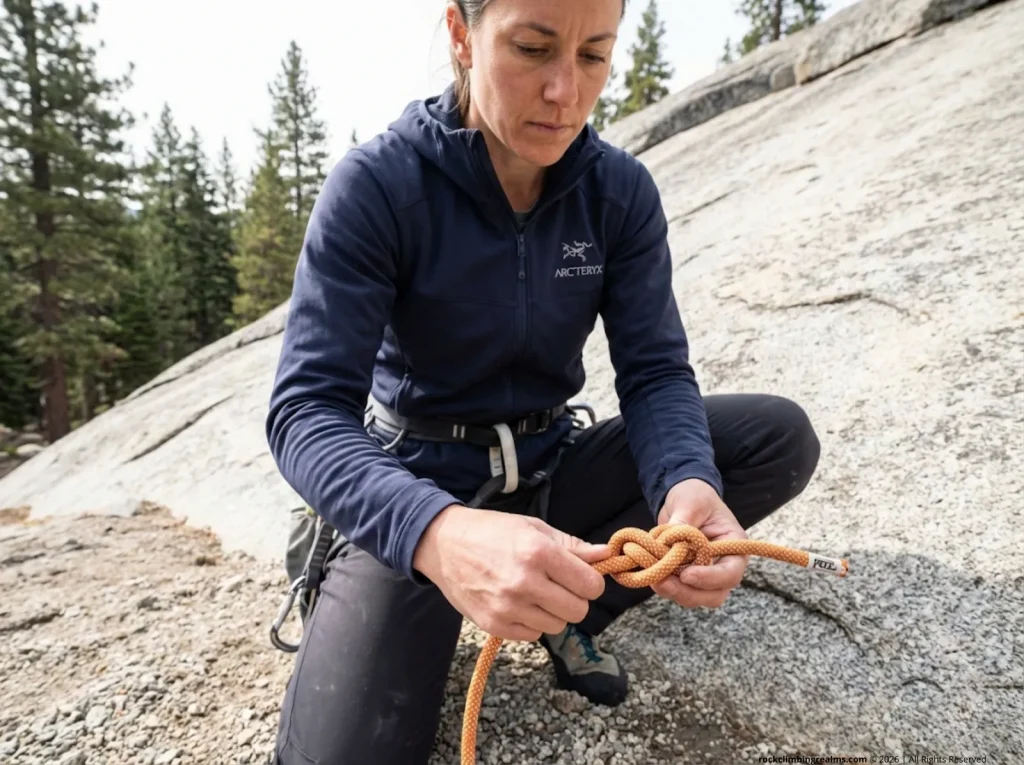
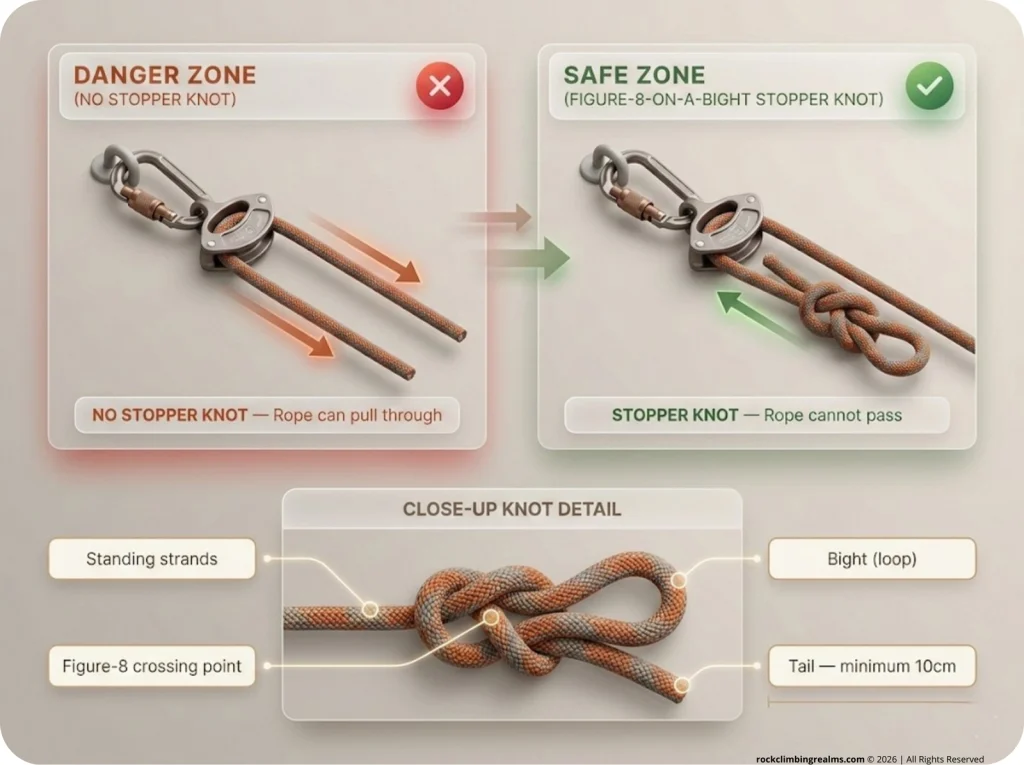
The fix is almost insultingly simple: tie bulky figure-8-on-a-bight stopper knots in both ends of the rope. Every time, every rappel, no exceptions.
Pro tip: Tie your stopper knots into the rope bag loop immediately after pulling the rope, before you do anything else. Make it the first thing, not the last. Muscle memory is the only thing that works when you’re gassed at the end of a long day.
Why Experienced Climbers Still Skip the Knot
Here’s what keeps me up at night: it’s not beginners dying from this. It’s experienced climbers.
Dr. Valerie Karr’s analysis of 2005-2024 ANAC data puts a name on the problem: risk desensitization. You rappel a hundred times without incident. Your brain builds a shortcut that says “this always works.” The knots start feeling optional. They’re not.
The data backs this up. On average, according to the latest American Alpine Club Accidents in North American Climbing report, roughly 7 reported rappel accidents per year in North America could have been prevented by simply tying those knots. That’s seven families getting a phone call because someone skipped a step that takes fifteen seconds.
Complacency spikes at the end of the day. You just crushed a hard pitch. The adrenaline is fading. You’re tired and the ground is close. That’s exactly the moment your brain decides the knots can wait. They can’t.
The paradox is brutal: beginners are scared enough to double-check everything. Experienced climbers are confident enough to skip. And that confidence, as analyzed by Dr. Valerie Karr in the American Alpine Club’s human-factors study, is what kills them.
If you’ve ever caught yourself thinking “I’ve done this a hundred times,” stop. That thought is the red flag. The whole point of breaking down every mistake in a structured post-mortem is to rewire that confidence into discipline.
The Backup That Fails When You Rig It Wrong
Autoblock vs. Prusik: Which Actually Catches You
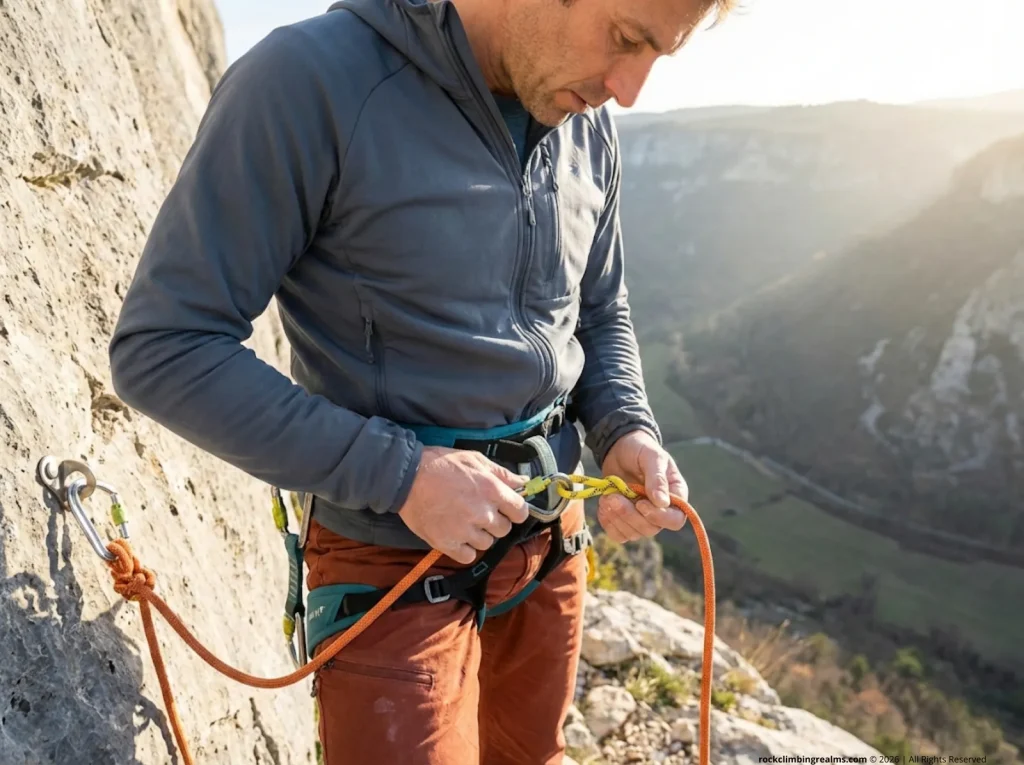
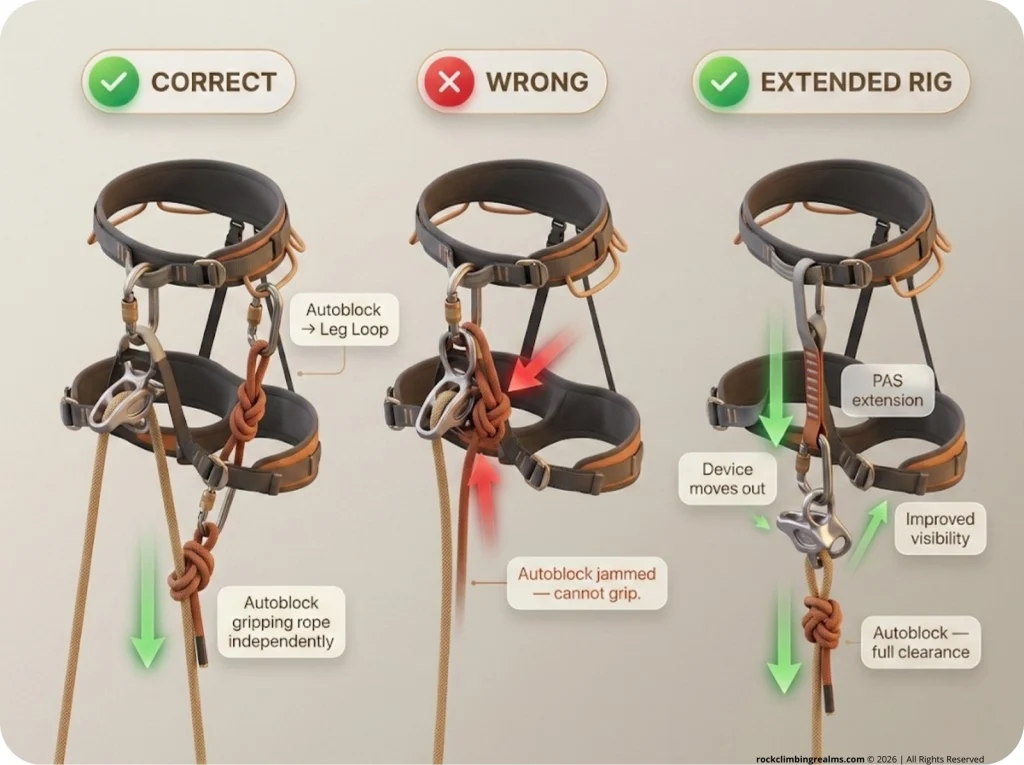
A third-hand backup is only as good as where you clip it. Get this wrong and the backup that’s supposed to save your life will jam against the device and do exactly nothing.
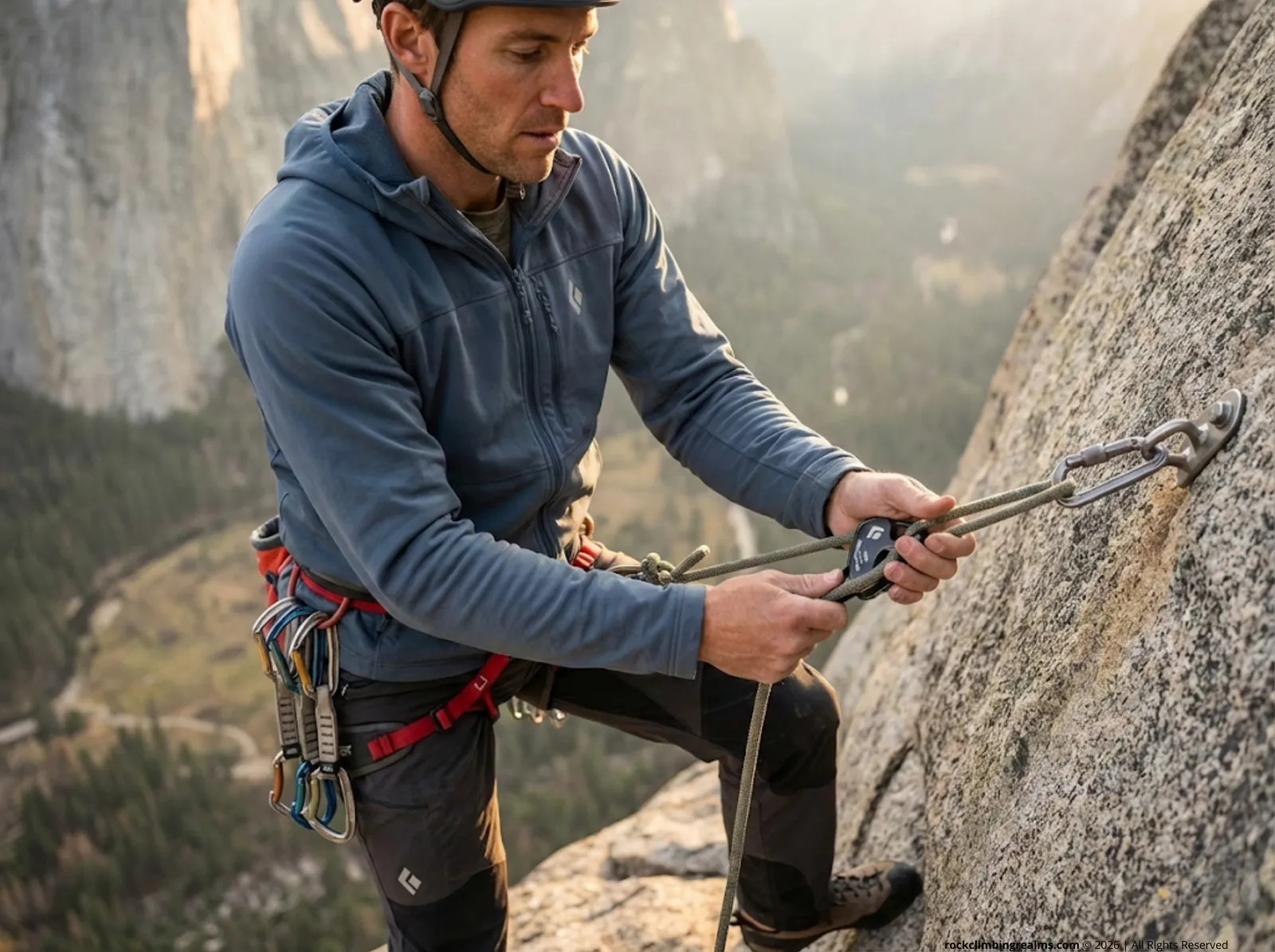
The setup: an autoblock (French prusik) or classic prusik tied on the brake strand below the rappel device. When you release your brake hand, the friction hitch grabs the rope and stops you. Simple, reliable, proven. But only if it’s clipped to the right place.
Clip it to your leg loop. Not the belay loop. When the autoblock goes to the belay loop, it pulls straight up into the device under load and jams. No catch, no friction, no backup. Testing documented on Climbing.com showed a complete failure rate in that position.
Cord diameter matters too. Use 6mm or 7mm accessory cord with 3-5 wraps depending on the hitch. The autoblock releases easier under load than the classic prusik, which grips harder but can freeze if you panic-grip the cord.
Testing Your Backup Before You Commit
Here’s where most people get lazy. They rig the backup, trust that it works, and commit their body weight without testing a thing.
Don’t. Before your feet leave the ledge, slide the autoblock down the rope and release your brake hand. Does it catch? Good. Does it slide without gripping? Add wraps or switch to thicker cord. Does it jam against the device? You need to extend your rappel device away from the harness using a Metolius PAS or 120cm sling.
The extended rappel rig solves most problems at once. Moving the device out from your harness improves visibility, reduces rope twist, and gives the backup enough clearance to grip independently.
Pro tip: Say the BRAKES letters out loud and physically touch each component while your partner watches. It sounds silly until the day it catches the one thing you missed.
Understanding the differences between PAS and daisy chain systems for anchor connection matters here. A PAS gives you multiple adjustment points for your extension. A daisy chain can fail catastrophically if you clip the wrong loop.
Anchor Failures That Should Never Happen
The Degraded Sling That Looks Fine Until It Breaks
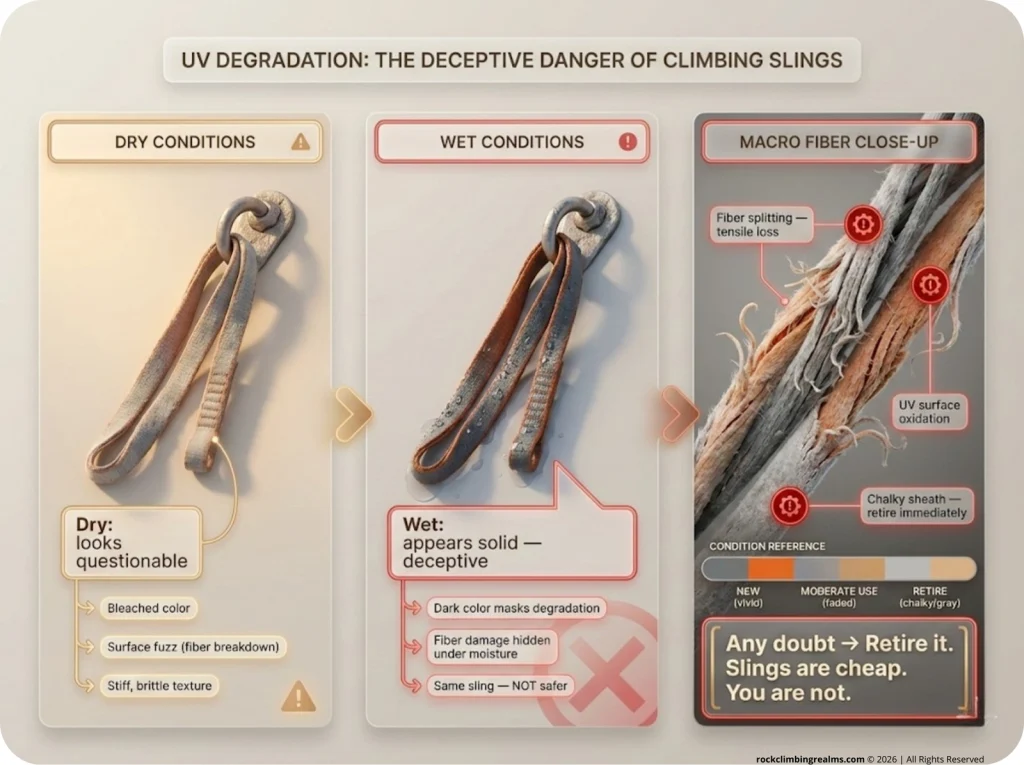
In 2022, two separate rappel fatalities traced back to degraded single rappel anchor slings at Tahquitz Rock in California. The sling appeared solid when wet. It darkened to the color of healthy nylon. Under body weight, it snapped.
Nylon webbing degrades from UV exposure, rain cycles, bird droppings, and constant abrasion from ropes running over it. You can’t always see the damage. A white or gray sling is a retirement red flag, period.
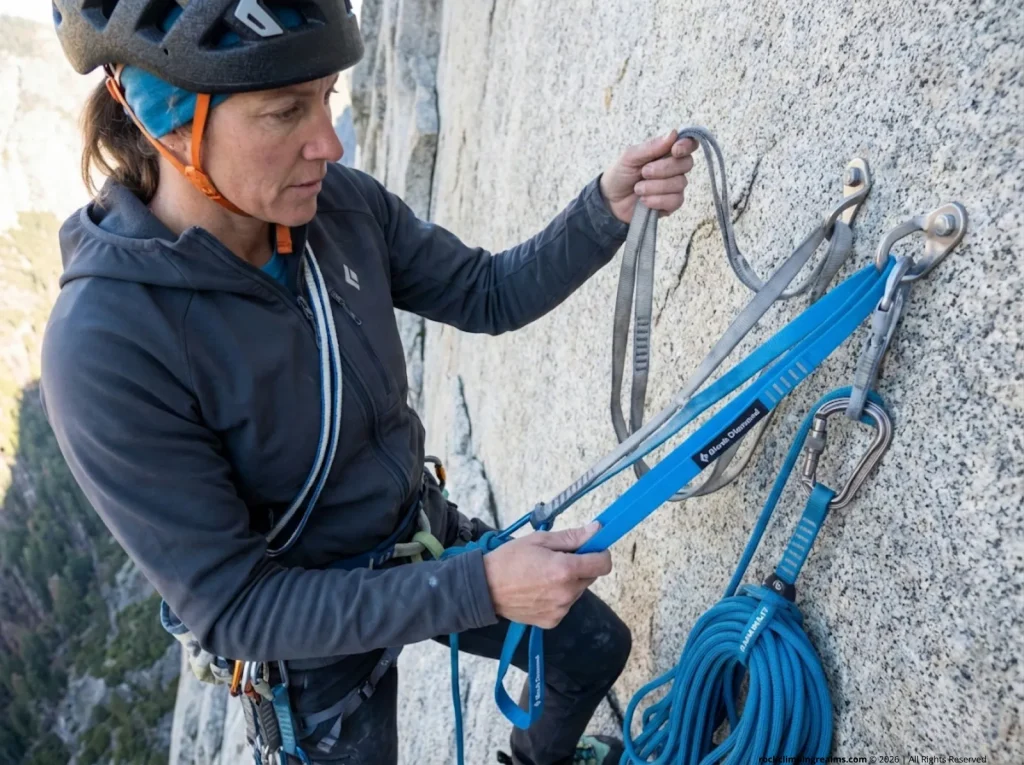
IFMGA Guide Jason Antin put it bluntly: “Avoid rappelling from a single sling. Any white or gray nylon webbing at an anchor should be treated as suspect.” Carry your own cordelette or 120cm sling to add redundancy at any station that looks questionable. The weight is negligible. The alternative is trusting your life to something a stranger rigged years ago.
Why Single-Point Anchors Fail
Every rappel anchor needs at least two independent points. No exceptions. Anchor failure appears across decades of ANAC accident reports as one of the top causes of rappel fatalities.
Meet the SERENE standard at every station: Solid, Equalized, Redundant, No Extension. On bolted routes, verify both bolts are solid. Spin the hanger. Pull laterally. A single corroded bolt or spinner can rip under loaded body weight.
On trad climbing rap stations, inspect every sling, ring, and link before committing. If only one anchor point exists, build a backup with your own gear. The five minutes you spend building redundancy are the five minutes between going home and not.
Pro tip: Carry two extra lightweight locking carabiners and a 7mm cordelette specifically for backing up suspect anchors. If you get to a station and something feels off, trust that instinct. Your gut usually spots what your eyes miss.
If you’re not sure when your own soft goods need replacement, tracking gear retirement timelines based on material degradation is worth your time, especially for slings and cordelettes that live on your harness year-round.
Device Errors That Turn Routine Descents Deadly
Threading the Device Wrong Under Pressure
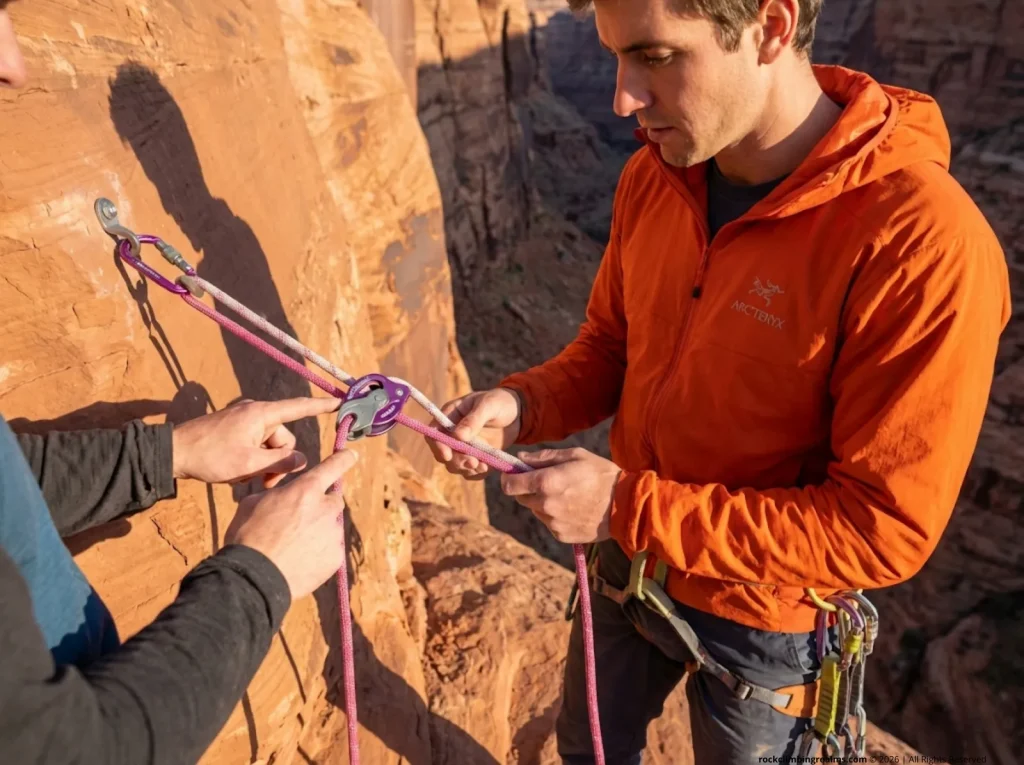
Loading the ATC backward. Threading only one strand. Clipping through a non-locking carabiner. These setup mistakes sound too basic to happen. They happen every season.
Fatigue is the common thread. You just finished the hardest lead of your life. You’re pumped, spacing out, and the rappel feels like a formality. That mental checkout is exactly when precision matters most. The device threading doesn’t care how hard you climbed.
One climber on a forum described it perfectly: “Experienced partner loaded the ATC backward on the last rap, only the backup saved us.” Without that backup, you’re one brain lapse away from a ground-level accident.
Always: visual check both strands through the device. Gate locked. Carabiner oriented correctly. Brake hand below. Say it out loud if you have to. Talking through the steps isn’t a sign of inexperience. It’s how the mechanics of how tube-style and assisted-braking devices handle rope differently become second nature.
The Saddlebag Technique and Rope Management
Rope-end management on long free-hanging rappels is where things get tangled. Literally.
The saddlebag technique keeps things clean: coil each rope half separately and drape one coil over each leg. The rope feeds naturally as you descend. No tangles, no rope caught in brush or cracks, no wind-blown mess that hides the true end location.
On windy days, saddlebag is non-negotiable. Wind can blow the rope completely horizontal on exposed faces, hiding the ends from view. If you can’t see where the rope ends, you can’t know when you’re about to run out.
If the rope doesn’t reach the next station, stop. Ascend back to the anchor. Reassess. Never “just go for it.” That impulse has claimed more climbers than bad rock ever has.
The BRAKES Checklist That Catches Everything Else
What Each Letter Checks
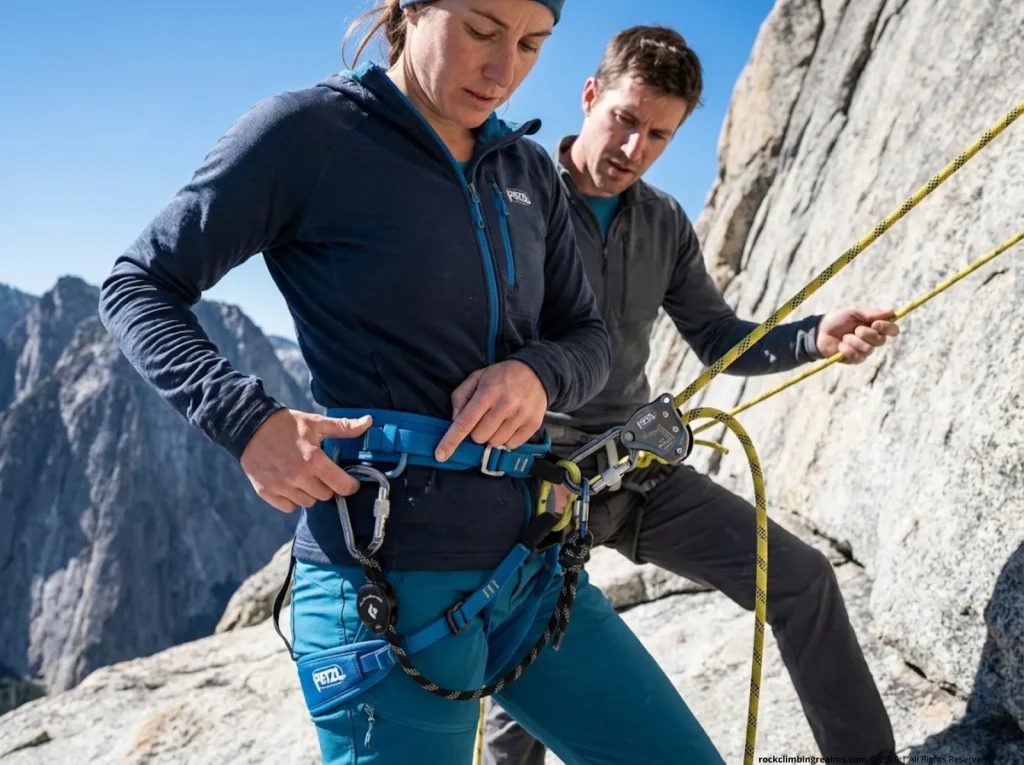
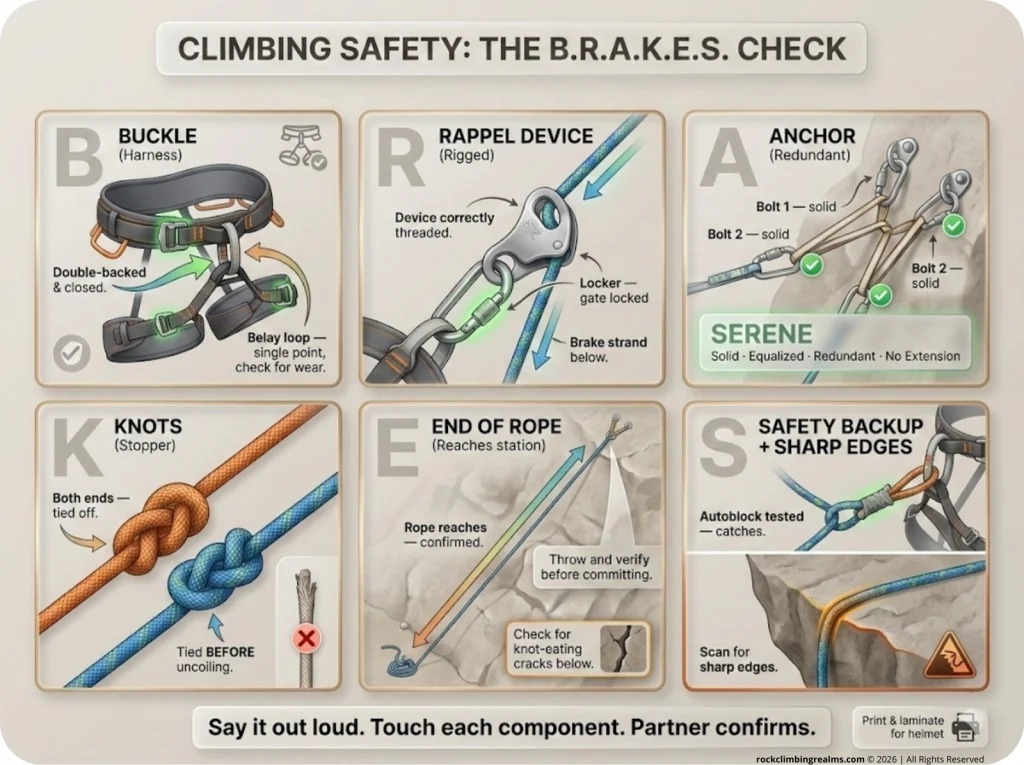
The BRAKES acronym was developed by Cyril Shokoples in 2005 after a friend’s rappel accident. It’s now the standard pre-rappel verification in most climbing schools, and it should be yours.
Here’s the full breakdown:
B — Buckles. Harness waist belt and leg loops doubled back and fastened. Check your partner’s too.
R — Rappel device and ropes. Both strands through the device. Carabiner locked. Ropes running through the anchor rings correctly.
A — Anchor. Redundant, equalized, solid. Every component inspected visually and by touch.
K — Knots. Stopper knots in both rope ends. The joining knot (if using two ropes) backed up and verified.
E — Ends/Extension. Rope reaches the next station. Extension sling or PAS properly connected.
S — Safety backup (autoblock on brake strand, clipped to leg loop) and sharp edges (rope not running over rock edges that could damage the sheath).
As National Park Service rappelling safety guidelines emphasize, using top anchors, inspecting gear, wearing a helmet, and never climbing alone are non-negotiable baseline protocols.
Making It Stick: The Verbal Call Protocol
A checklist you run in your head is only as reliable as your attention span. After ten pitches, that’s not much.
The fix: say each letter out loud while physically touching the corresponding component. Your partner watches and confirms. This creates redundancy in the check itself, two sets of eyes, two brains engaged. If you’re solo, touch and verbally confirm each item to yourself. The physical action engages a different part of your brain than just looking.
On multi-pitch routes, pre-rig the next person while the first is still on rappel. That way the second climber’s system gets checked before the first disappears below.
Write BRAKES on a piece of tape on your helmet until it’s muscle memory. The checklist takes 30 seconds. Those 30 seconds catch the errors that kill. The six pre-climb safety checks most climbers skip follow the same principle: making the check physical beats making it mental, every time.
Multi-Pitch Rappelling: Where Fatigue Meets Complexity
Why Descent Accidents Cluster at End of Day
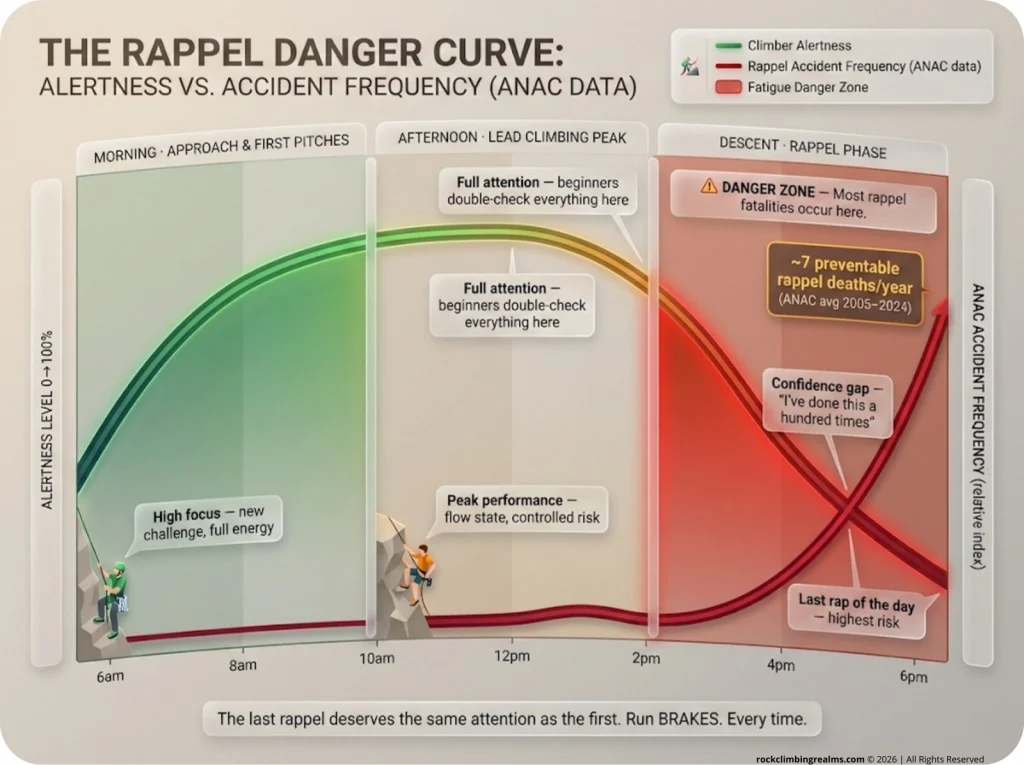
The ANAC numbers don’t lie. In 2024, descent (including rappelling) accounted for 46 of 210 total climbing accidents. That’s disproportionate to the time spent descending. The rappel takes a fraction of the day but delivers a disproportionate share of the injuries and fatalities.
Accidents cluster at end of day. Decision fatigue and physical exhaustion peak on the last two or three raps. Your brain shifts from “ascending mode” (high alert, critical decisions) to “descending mode” (perceived safety, almost done). That shift drops vigilance at the worst possible moment.
Duane Raleigh survived a 150-foot rappel fall at Arches National Monument, caught by a miracle backup that held. He got lucky. Most don’t.
Treat every rappel like it’s the first one of the day, not the last. The moment you think “we’re almost at the ground” is the moment you’re most likely to skip the knot, skip the backup, skip the weight-test. That’s the rap that kills you.
Building Anti-Complacency Habits
Use a pre-rappel reset routine. Drink water. Eat something. Then run BRAKES. That deliberate pause forces a cognitive break between the climbing brain and the rappelling brain.
Assign the less-tired partner as the system checker on the final rappels. On big-wall descents with five or more raps, switch who goes first every other anchor. Distributing the attention load keeps both climbers engaged.
Never skip the autoblock because “we’re almost down.” Most fatal rappel accidents happen on the last rap, not the first. The ground is close, the brain is fried, and the steps that kept you alive all day suddenly feel optional. They’re not.
And when a walk-off trail exists, use it. Especially at end of day when fatigue is high. Building disciplined multi-pitch systems and safety procedures means knowing that the safest rappel is sometimes the one you don’t do at all.
Pro tip: On multi-pitch descents, establish a verbal call with your partner: “System checked, knots tied, backup tested.” Say it before every single rappel. The repetition builds the kind of ritual that catches errors when your brain can’t.
Your Rappel Emergency Kit: Gear That Earns Its Weight
Every climber should carry a minimal backup kit for rappel safety. The total weight is under 200 grams. The cost of not carrying it doesn’t bear thinking about.
The kit: an 18-inch cordelette loop of 6mm or 7mm nylon cord for the autoblock. Two locking carabiners (one for the device, one for the backup to the leg loop). A 120cm backup sling for adding anchor redundancy at suspect stations. A knife accessible with one hand in case a prusik jams under load.
And remember: if a walk-off exists, take it. Research the descent before the climb, not at the summit. Pre-rigged rappel stations with fixed chains reduce setup mistakes but still demand stopper knots. If conditions go bad, wind, darkness, rain, bivvy instead of rapping blind. The safest descent decision sometimes takes longer. It also gets you home.
The full breakdown of the full zero-failure guide to rappelling safely covers every step of the closed-system approach in detail.
Conclusion
Three things will keep you alive on the descent.
First, tie stopper knots in every rope end, every time, before anything else. This single habit would wipe out the deadliest category of rappelling fatalities overnight.
Second, rig your autoblock on the brake strand, clip it to your leg loop (never the belay loop), and weight-test it before committing. A backup you haven’t tested isn’t a backup. It’s a comfort blanket.
Third, run BRAKES out loud with your partner while touching every component. Thirty seconds. Six letters. The ritual that turns a checklist into a life-saving protocol.
Next time you thread your device at a rappel station, run BRAKES before your feet leave the ledge. Touch every buckle, test every knot, slide your autoblock. Make it the last thing you do before gravity takes over, and the first thing that brings you home.
FAQ
What is the most common cause of rappelling accidents?
Rappelling off the end of the rope without stopper knots is the single most common preventable cause of rappel fatalities. ANAC data shows approximately 7 reported accidents per year in North America could be prevented by tying bulky stopper knots in both rope ends before every descent.
What backup should I use for rappelling?
Use a 6mm or 7mm autoblock (French prusik) tied on the brake strand below your rappel device and clipped to your leg loop with a locking carabiner. Always test it by sliding it down and releasing your brake hand before committing. Never clip it to the belay loop, it jams against the device in that position and won’t catch.
Why do experienced climbers still have rappelling accidents?
Risk desensitization. Dr. Valerie Karr’s analysis of twenty years of ANAC data shows that repeated safe rappels build a cognitive shortcut that skips safety steps. Fatigue at end of day compounds the problem: climbers shift mentally from high alert to almost done mode exactly when precision matters most.
How do I check rappel anchors I didn’t build?
Inspect every component visually and by touch. White or gray nylon webbing is a retirement red flag. Test each bolt by pulling laterally. If any point is questionable, add redundancy with your own cordelette or sling. Never trust a single fixed sling. The 2022 Tahquitz fatalities involved a sling that looked solid when wet but failed under load.
What is the BRAKES rappel safety checklist?
BRAKES stands for Buckles, Rappel device or ropes, Anchor, Knots, Ends or Extension, Safety backup and Sharp edges. Developed by Cyril Shokoples in 2005, it’s the standard pre-rappel verification in most climbing schools. Say each letter aloud while physically touching the corresponding component, with your partner watching as a second check.
Safety Notice: Rock climbing and mountaineering are inherently high-risk
activities that can involve physical trauma or fatal incidents. The information on Rock Climbing Realms is for
educational and informational purposes only. Techniques and advice presented here are not a substitute
for professional, hands-on instruction. Conditions and risks vary by location. Always seek guidance
from a qualified instructor before attempting new techniques. By using this website, you agree that you
are solely responsible for your own safety. Any reliance you place on this information is strictly
at your own risk, and you assume all liability for your actions. Rock Climbing Realms and its authors
will not be held liable for any harm, damage, or loss sustained in connection with the use of this information.
Affiliate Disclosure: We are a participant in the Amazon Services LLC Associates Program, an
affiliate advertising program designed to provide a means for us to earn advertising fees by advertising and linking
to Amazon.com. As an Amazon Associate, we earn from qualifying purchases. We are also an official affiliate partner
of Black Diamond Equipment via the AvantLink network. If you click on a Black Diamond affiliate link and make a
purchase, we may earn a commission at no additional cost to you. We also participate in other affiliate programs.
Additional terms are found in the terms of service.