
In this article
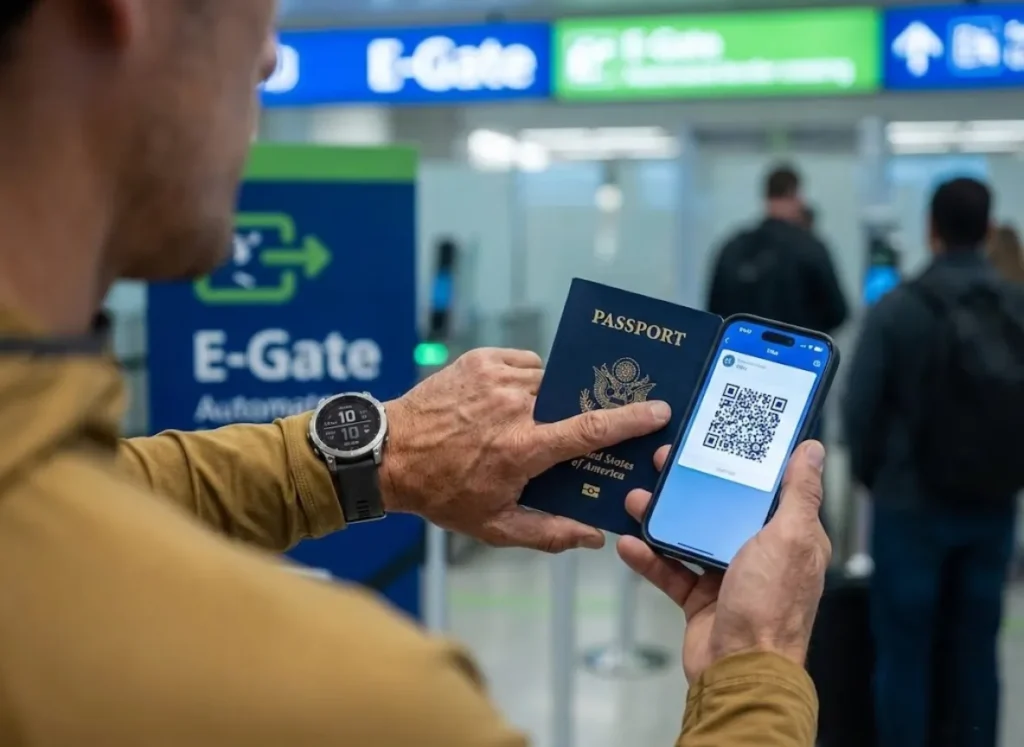
The red light on the e-gate scanner blinks once, signaling a rejection before the human officer even looks up from their screen. It is a soundless, administrative snap of the bolt, but the consequence is severe. In the post-2025 travel environment, the romantic era of the “visa run”—hopping across a border for a day to reset a tourist stamp—is dead. It was killed by the full implementation of the European Union’s Entry/Exit System (EES).
For the modern climber, the crux of the expedition is no longer the runout on the headwall; it is the algorithmic hard border of the immigration desk. Navigating this new geopolitical reality requires shifting your mindset from that of a carefree “dirtbag” to that of a “sovereign operator.”
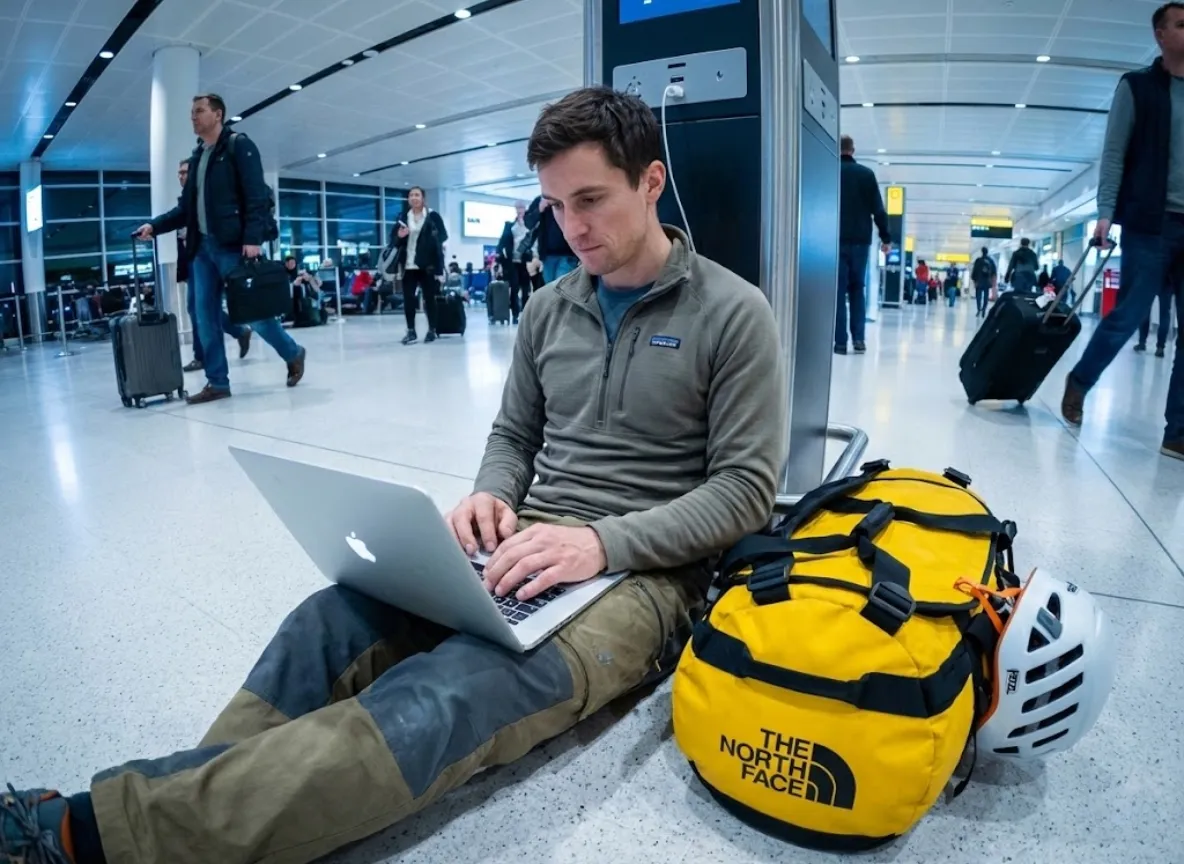
As a guide who has spent decades moving through international ranges—from the granite of Squamish, Canada, to the limestone of Krabi, Thailand—I have watched the hills become gated by biometric algorithms and income thresholds. True outdoor competence now requires mastering the bureaucracy of visa applications and residence permits as skillfully as you master a rescue system.
This guide deconstructs the collapse of the Schengen Area “90-day loophole,” analyzes the “Visa Trilemma” governing your destination choices, and provides the strategic beta needed to access sanctuaries like Thailand and Colombia while navigating the high-cost fortress of the EU.
The New Geopolitical Crux: Why 2026 is Different
The structural changes in global travel regulations force climbers to abandon old strategies. The days of flying on a one-way ticket and figuring it out upon arrival are over. You are now navigating a global climber’s visa & permit matrix that distinguishes between the dirtbag layer and the pro athlete layer.
What is the “Visa Trilemma” and how does it dictate destination choice?
A climbing destination in 2026 can typically only offer two of three critical assets: Duration, Accessibility, and Connectivity. You must choose your compromise.
- Duration: The legal capacity to project routes for a full season, often requiring a residence permit or extended tourist exemptions (stays >90 days).
- Accessibility: The financial barrier to entry, specifically the “Visa Income Index”—the monthly earnings required to legally qualify for a Digital Nomad Visa (DNV).
- Connectivity: The ability to sustain the remote work that funds the trip, demanding reliable 4G/fiber and nearby coworking spaces.
Duration is the first variable to fail for most. The standard tourist visa or visa exemption allows 90 days, which is insufficient for serious projecting or full-season conditioning. Accessibility has shifted from the price of a beer to strict proof of income; Spain, for instance, now demands high monthly earnings. Finally, Connectivity distinguishes between “hostel Wi-Fi” and true professional requirements—upload speeds capable of handling video calls and large data transfers.

High-duration, high-connectivity destinations like Spain (covering Siurana, El Chorro, and Tenerife) now demand high income. Conversely, high-accessibility destinations often suffer from internet reliability deficits. When a location like Portugal attempts to balance all three, it rapidly suffers from overcrowding. Once you understand these trade-offs, you must confront the mechanism that destroyed the old European strategy: the digital border.
Pro-Tip: If you are priced out of residency visas, you must adopt the tactics found in the climber’s blueprint to finding free cheap camping to offset the higher costs of shorter, legal tourist stays.
How has the Schengen Entry/Exit System (EES) ended the “Visa Run”?
The operational shift has moved from human discretion to algorithmic certainty. The official implementation of the Entry/Exit System (EES) replaced physical passport stamping with biometric data logging. Every time you cross an external Schengen Area border, facial recognition and fingerprinting log your exact time of entry.
The system calculates the “90 days in 180” rule instantly. There is no longer any gray area for “overstaying by a few days” or attempting to hide previous visits by using a second passport. The algorithm aggregates data across all documents linked to your biometric identity, making visa-run logistics nearly impossible within the zone.
Specifically, the termination of the 1991 bilateral visa waiver agreement impacts US citizens attempting to use old treaties with Poland. Polish border guards now strictly enforce Schengen Agreement codes, ignoring previous diplomatic loopholes.
The consequences of an automated flag include instant fines, entry bans, and a permanent “overstay” record accessible by all EU member states. Travelers also face the “Nordic Trap.” Time spent in Denmark is now verified via EES and invalidates extension claims in other Schengen states. You now bear the “Burden of Proof”—you must carry digital or physical records of your exit, such as an onward ticket, to correct potential system errors.
The High-Value Sanctuaries: Spain vs. Thailand
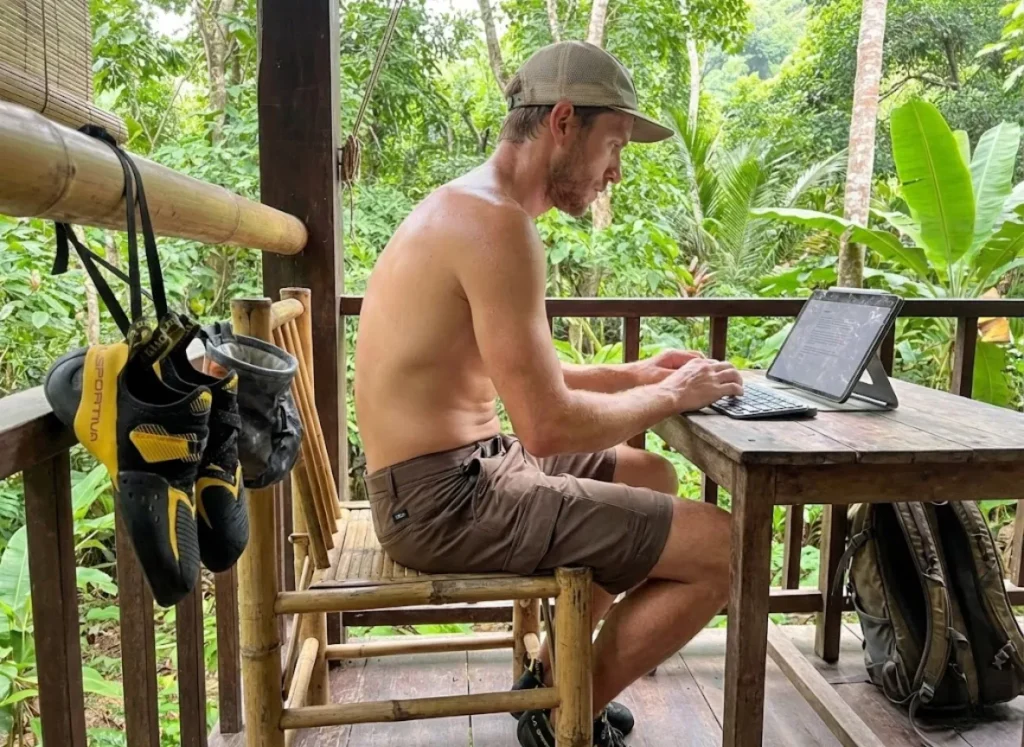
With Europe’s gates closing to the budget traveler, the savvy semi-pro climber looks for high-value sanctuaries. We compare the two leading hubs: Europe’s high-cost entry versus Asia’s asset-based flexibility.
Is the Spanish Digital Nomad Visa viable for the average climber?
Spain remains the epicenter of hard sport climbing, rivaling France’s Fontainebleau or Italy’s Dolomites. However, the financial barrier is steep. The income requirement for the Digital Nomad Visa is indexed to 200% of the Salario Mínimo Interprofesional (SMI). By 2026, the requirements for the Telework Visa mandate a monthly income projected to exceed €3,000.
This creates a “Couples Tax.” Adding a partner increases the requirement by 75% of the SMI, pushing household income needs near €3,800. Beyond income, you face friction points including the need for apostilled criminal records, private health insurance, and employer authorization letters.
Top Global Destinations for Nomadic Climbers (2026)
A comparison of visa requirements, connectivity, and suitability for remote-working outdoor enthusiasts.
Duration & Connectivity
1 Year+ duration with Low connectivity risk (High-speed Fiber available).
Best For
High-earning couples and sport climbers seeking world-class limestone.
Connectivity & Terms
1 Year+ duration; Low connectivity risk (VDSL). Net income requirement.
Best For
Tax optimizers and dedicated Kalymnos devotees.
Connectivity Risk
Moderate connectivity risk. 1 Year duration.
Best For
Alpinists with a high tolerance for complex bureaucracy.
Longevity & Web
Outstanding 5-year duration with Low connectivity risk (Fiber widespread).
Best For
Freelancers or those with high assets but variable monthly income.
2-Year Stay
Moderate connectivity risk. Accessible income floor for many nomads.
Best For
Budget-conscious climbers and start-up founders.
Power & Risk
90+90 days. High connectivity risk due to power stability (loadshedding).
Best For
Hardcore boulderers and nomads capable of working off-grid.
You must also be wary of the “Beckham Law” myth. Most freelance climbers operating as autónomos do not qualify for the 24% flat tax and are liable for progressive tax rates up to 47%. Additionally, Spanish Social Security costs roughly €300+ per month regardless of income. However, for those who qualify, you can explore the regions detailed in our definitive guide to rock climbing Spain, such as the high-cost Siurana or the lower-tax regime of Tenerife.
How does Thailand’s Destination Visa (DTV) solve the income problem?
Thailand has pivoted to a “Soft Power” strategy. The Destination Thailand Visa (DTV) offers a 5-year validity with a 180-day stay per entry, designed to monetize cultural assets. This is a massive shift for the digital nomad layer frequenting Railay and Tonsai.
The critical advantage is financial structure. The Destination Thailand Visa (DTV) regulations allow for an asset-based qualification—roughly 500,000 THB (~$15k USD) in savings—rather than requiring high monthly pay stubs. This is ideal for climbers with irregular freelance income. The “Side-Door Strategy” involves enrolling in a low-cost cultural course to secure the visa while focusing primarily on climbing.
Infrastructure varies significantly. Chiang Mai offers “First World” fiber optic connections for serious work, whereas the limestone paradise of Tonsai relies on spotty connections, often necessitating Starlink. However, the cost-to-climb ratio is unbeatable. The significantly lower living costs allow you to focus on mastering Thailand’s limestone with our climber’s field guide while maintaining a high savings rate.
The Budget & Infrastructure Frontiers: Colombia and South Africa
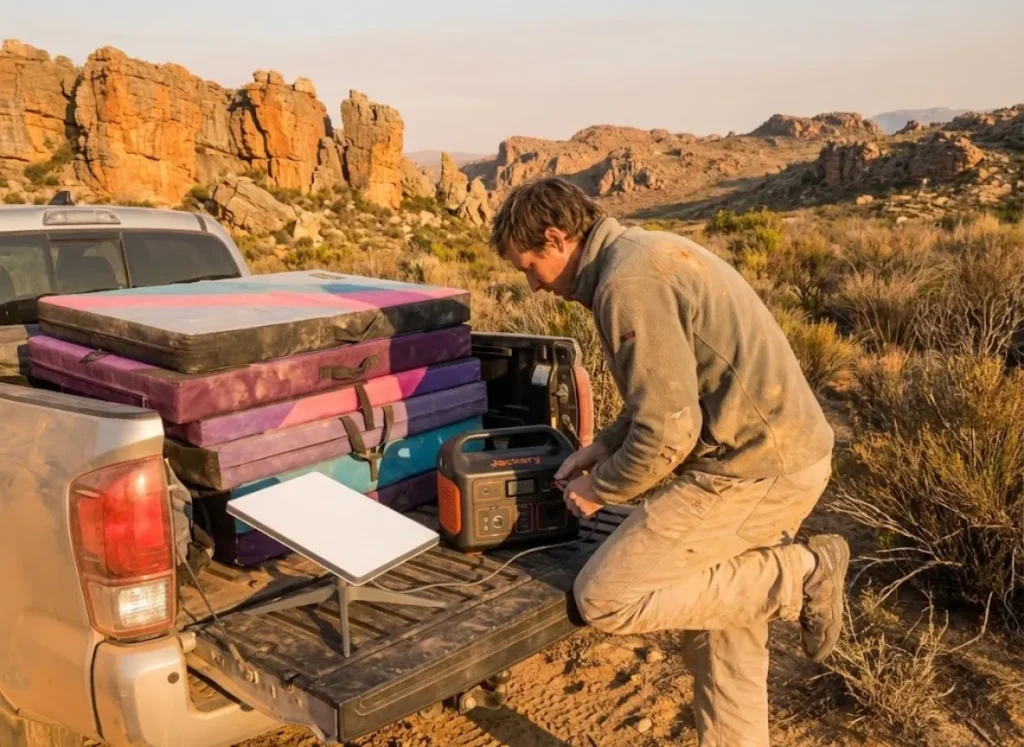
For those who cannot meet the asset requirements of Asia or the income demands of Europe, the Americas offer a raw, budget-friendly frontier, while South Africa presents a unique paradox of world-class rock and crumbling infrastructure.
Is Colombia the last stronghold for the budget climber?
Colombia offers the lowest barrier to entry in the global climbing circuit, far cheaper than Yosemite or Squamish. The “Visa V” (Digital Nomad) income threshold is set by a resolution regarding the Digital Nomad Visa V at 3x the minimum wage, equating to roughly $1,100 USD.
The epicenter is the Mesa de los Santos region, home to the famous La Mojarra cliff. Here, the Refugio La Roca offers world-class sport climbing directly adjacent to your accommodation. The visa processing is simpler and faster than Schengen protocols.
However, you must manage “Connectivity Risk.” Historical reliance on poor hostel Wi-Fi has been a barrier. The “Starlink Revolution”—the official entry of satellite internet in Colombia—has transformed rural climbing hostels into viable workspaces. Beyond the connection speeds, the time zone alignment with the US is a tactical advantage for remote workers. This allows for financial planning frameworks similar to those in our alpine climb budgeting guide, maximizing value.
How do you manage connectivity in South Africa’s Rocklands?
South Africa offers the best bouldering on earth in Rocklands, but you must survive “Load Shedding”—daily, scheduled rolling blackouts that last 4 to 8 hours. These blackouts cripple local LTE towers and Wi-Fi in the Cederberg wilderness.
The visa situation is rigid. The proposed Digital Nomad Visa has high thresholds ($55k+), forcing most climbers to rely on a standard visitor visa or visa on arrival (depending on nationality). Extensions must be processed through the Department of Home Affairs e-Visa services, which are notoriously slow.
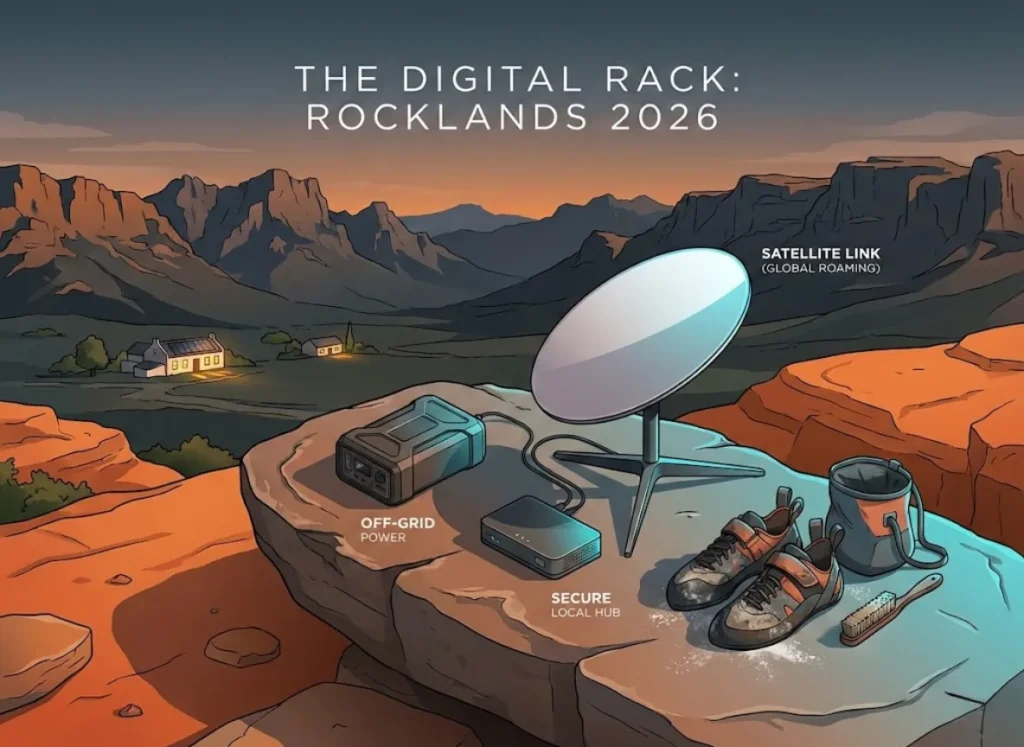
Success in 2026 follows a “Hardware Mandatory” rule. A trip to Rocklands requires independent power—portable power stations like EcoFlow or Jackery—and satellite internet. Since Starlink is not officially licensed in SA, users operate in a “gray market” using Global Roaming plans and hardware imported from neighbors like Mozambique. Prioritize accommodation at farms like De Pakhuys that have invested in industrial solar back-ups, as detailed in our complete plan and beta for bouldering in Rocklands.
The Inflationary Spiral: High Altitude Expeditions
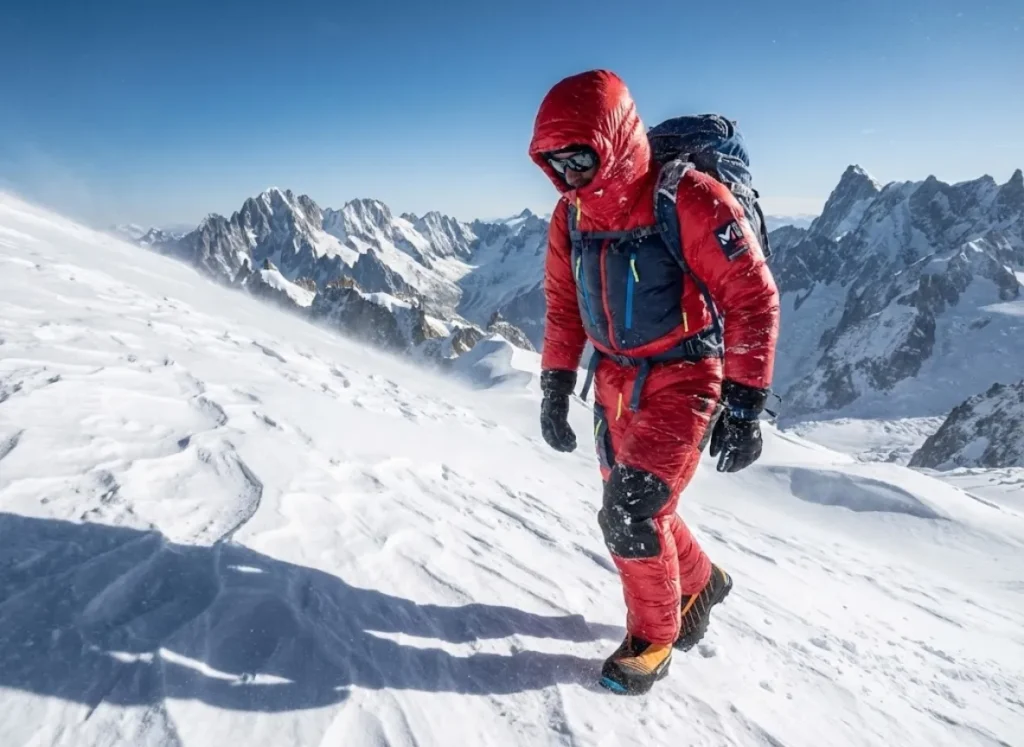
The financial barriers facing the “Expeditionary Professional” have shifted dramatically in the high ranges, from Mount Everest to Mount Elbrus.
How have permit fees changed the reality for Everest and Aconcagua?
In Nepal, royalties for Mount Everest have jumped to $15,000 USD, creating a ripple effect that increases agency fees and support costs across the Himalaya. Similarly, while the “Blue Dollar” arbitrage in Argentina has stabilized, local inflation has driven up the cost of mule services and porter support on Aconcagua.
Skilled alpinists are responding by moving toward an “Autonomous” style. By bypassing expensive full-service expeditions and carrying their own loads, climbers mitigate these costs. This shift is pushing “sabbatical climbers” toward cheaper 6000m peaks in Peru or Bolivia, leaving the 8000m peaks to high-net-worth tourists. For those targeting the Andes, success depends on strategies for the autonomous climbing Aconcagua expedition to keep the budget viable.
Other regions have their own strictures. Climbing Mount Elbrus requires navigating Russian visa complexities and securing a specific border permit (Propusk). Meanwhile, all visitors to Tanzania planning to climb Kilimanjaro are required to carry and show a passport with at least six months of passport validity and a valid Tanzania visa.
Pro-Tip: On Aconcagua, forming an independent team prior to arrival allows you to share the fixed cost of the mandatory mule train to Base Camp, significantly reducing the per-person logistical fee.
The Final Approach
The freedom of the hills in 2026 is accessed through a matrix of decisions involving residence permits, income requirements, and internet reliability.
- Europe is gated: High income (€3k+) is the price of admission for long-term stays in the Schengen Area.
- Asia is the pivot: Thailand’s asset-based DTV offers the best loop for freelancers with savings.
- The Americas offer value: Colombia provides the lowest barrier ($1,100/mo) and excellent time-zone alignment.
- Hardware is freedom: A Starlink Mini and a battery bank are as essential as your rope.
Share your current visa strategy or questions about specific income thresholds in the comments below to help us build a community-verified database.
FAQ – Frequently Asked Questions about Climbing Travel Visas
What is the income requirement for Spain’s Digital Nomad Visa in 2026?
The requirement is projected to exceed €3,000 per month, indexed at 200% of the minimum wage. Adding a spouse increases this requirement by roughly €850 per month.
Can I still do a visa run from Spain to Morocco to reset my 90 days?
No. The Schengen Entry or Exit System (EES) digitally calculates your 90 days in 180 across the entire zone. Leaving to a non-Schengen country like Morocco or Turkey pauses your clock but does not reset it until you have been out for 90 days.
Does Thailand’s DTV visa cover rock climbing activities?
Yes, under the Soft Power category if you enroll in a qualifying course, or the Workcation category if you work remotely. Specific climbing schools in Chiang Mai may help facilitate the necessary paperwork.
How do I get internet in Rocklands during load shedding?
You must rely on satellite internet (Starlink on a Roaming plan) powered by a portable battery station. Local cellular networks often fail during power outages due to battery theft at cell towers.
Safety Notice: Rock climbing and mountaineering are inherently high-risk
activities that can involve physical trauma or fatal incidents. The information on Rock Climbing Realms is for
educational and informational purposes only. Techniques and advice presented here are not a substitute
for professional, hands-on instruction. Conditions and risks vary by location. Always seek guidance
from a qualified instructor before attempting new techniques. By using this website, you agree that you
are solely responsible for your own safety. Any reliance you place on this information is strictly
at your own risk, and you assume all liability for your actions. Rock Climbing Realms and its authors
will not be held liable for any harm, damage, or loss sustained in connection with the use of this information.
Affiliate Disclosure: We are a participant in the Amazon Services LLC Associates Program, an
affiliate advertising program designed to provide a means for us to earn advertising fees by advertising and linking
to Amazon.com. As an Amazon Associate, we earn from qualifying purchases. We are also an official affiliate partner
of Black Diamond Equipment via the AvantLink network. If you click on a Black Diamond affiliate link and make a
purchase, we may earn a commission at no additional cost to you. We also participate in other affiliate programs.
Additional terms are found in the terms of service.