
In this article
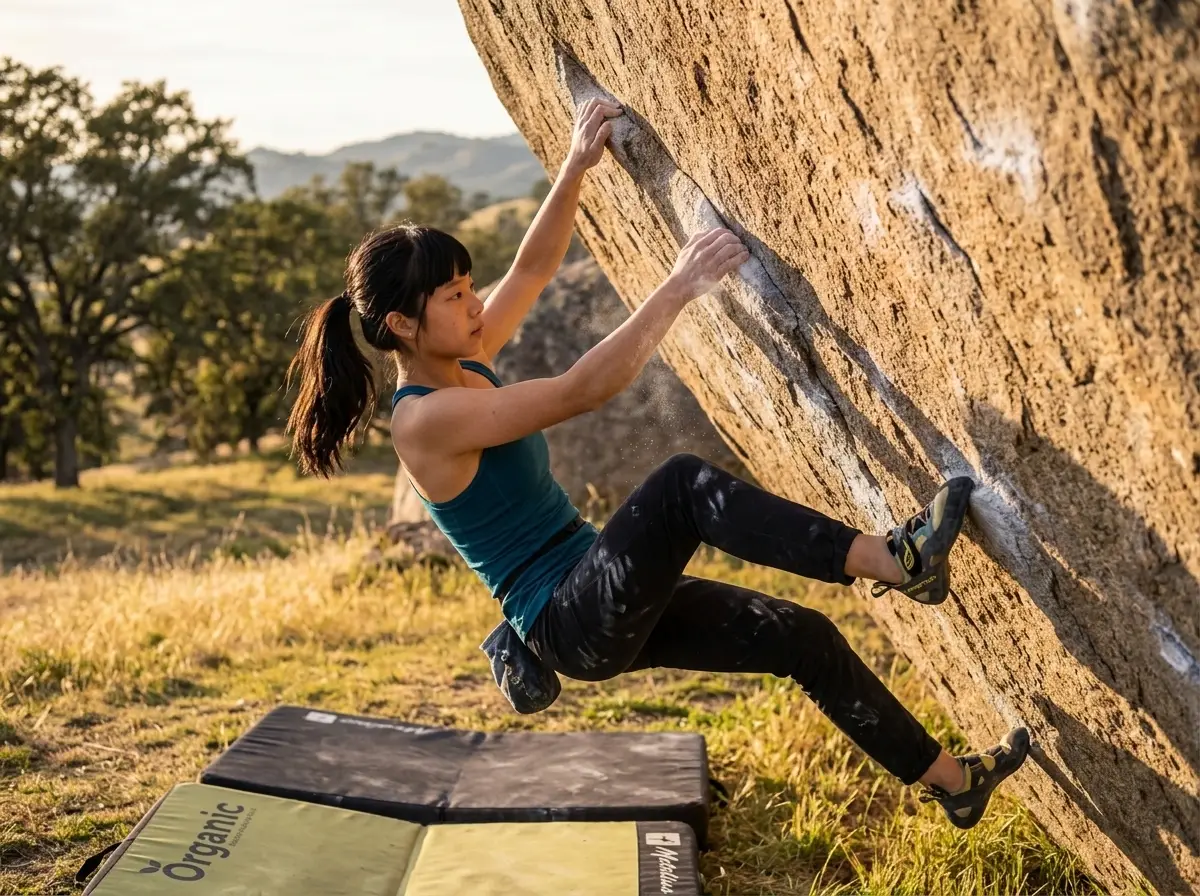
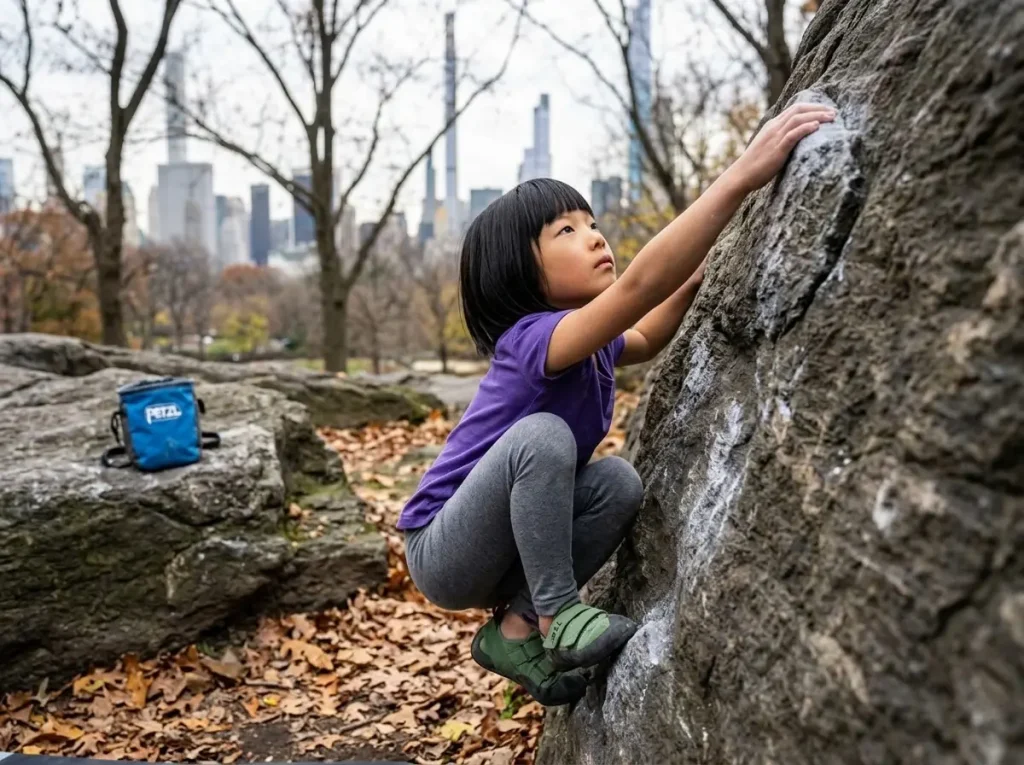
A six-year-old watched strangers climb a boulder in Central Park. She wasn’t there for climbing — her dad had brought her to the park. But something about the movement pulled her in, and within two years she’d sent problems that grown adults spend entire seasons projecting. By fourteen, Ashima Shiraishi had climbed V15 — a grade that fewer than a handful of women have ever touched.
I’ve watched dozens of young climbers move through the grades at gyms and crags over the years. What Ashima did wasn’t just talent meeting opportunity. There’s a reason she set those records before adulthood, and the biomechanics behind it explain why youth climbing is producing increasingly younger record-breakers. Here’s the full story of every record she broke, why her physiology made it possible, and where she is now.
Quick Answer: Ashima Shiraishi holds multiple youngest-ever climbing records, including V10 at age 8, V13 at age 10, V15 at age 14, and 5.14c at age 11. Her pre-puberty strength-to-weight ratio and extraordinary flexibility gave her a physiological edge that most adult climbers can’t replicate. Below is the complete record timeline and the science behind it.
How a Six-Year-Old at Rat Rock Became Climbing’s Biggest Name
The Butoh Dancer Who Built a Prodigy
Ashima’s father, Hisatoshi “Poppo” Shiraishi, was a former Butoh dancer — a form of Japanese avant-garde performance art that demands extreme kinesthetic awareness and slow, controlled movement. When his daughter showed interest in climbing, he recognized something in her movement quality that most parents would miss. He left his artistic career to coach her full-time.
That decision is easy to second-guess and hard to overstate. Without a parent willing to restructure their entire life around a kid’s obsession, most youth climbing talent burns out or never develops past gym grades. Poppo didn’t push structured training. He let Ashima climb.
Central Park’s Underground Bouldering Scene
Rat Rock in Central Park isn’t famous outside climbing. It’s a schist outcrop surrounded by joggers and dog walkers. But it has a surprisingly deep community of boulderers, and the man The New York Times called its “spiritual godfather” — Yukihiko Ikumori — became an early guide for Ashima. He pointed her toward problems, made climbing fun, and gave her an organic introduction to movement on real rock.
By seven, she’d moved into indoor gyms and started working with mentors like Obe Carrion. But Rat Rock was the foundation — raw, unstructured play on rock that built movement awareness before any formal technique entered the picture. If you want to understand how to introduce a kid to climbing, bouldering grades and what they actually mean is a good starting point.
From Watching to V10 in Two Years
The speed of Ashima’s progression is what made climbing media pay attention. Most adult climbers spend years reaching V5 or V6. She went from zero to V10 — Power of Silence at Hueco Tanks, Texas — at age eight. Two years from first touch to a grade most serious climbers never reach.
There was no hangboard protocol. No periodization plan. She just climbed three to five hours daily after school at Brooklyn Boulders, purely focused on movement. That approach — volume over structured training — matters more than most climbing coaches admit for young athletes.
Every Age Record Ashima Shiraishi Broke in Bouldering
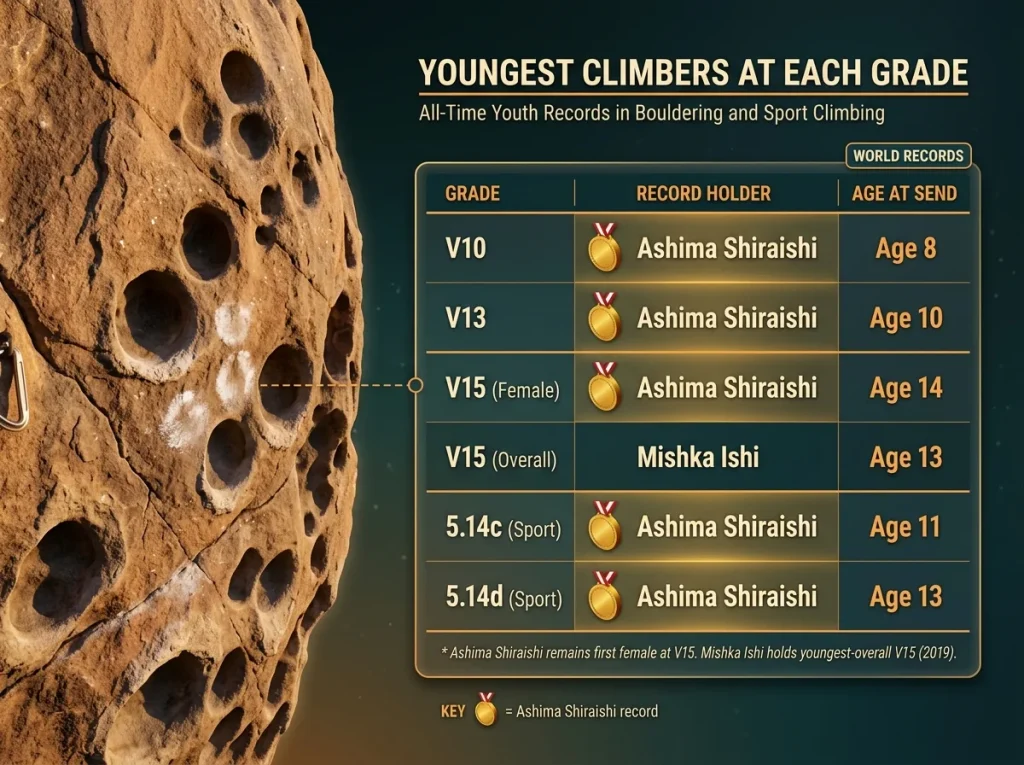
V10 at Eight — Power of Silence
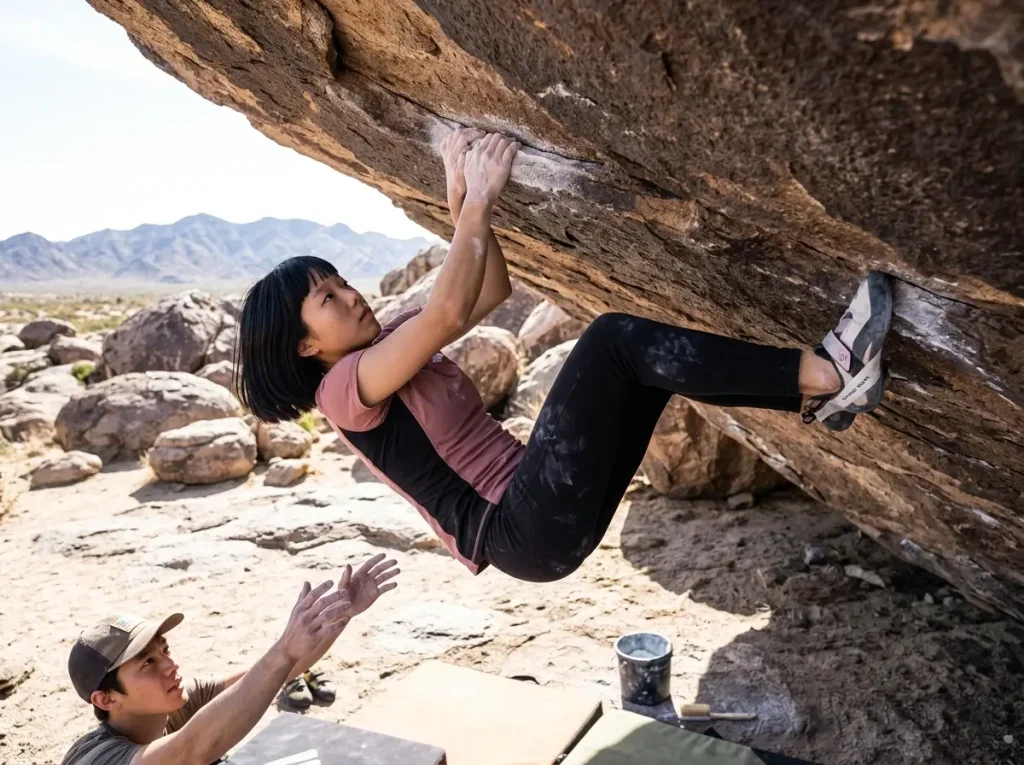
In 2009, Ashima became the youngest person ever to send a V10 boulder problem. The route was Power of Silence at Hueco Tanks, a venue known for world-class winter bouldering on syenite. At eight years old, she weighed maybe 55 pounds.
The strength-to-weight ratio math alone made moves accessible that would require significantly more absolute strength from a 160-pound adult.
But strength-to-weight doesn’t explain the mental piece. V10 is scary even when you know what you’re doing. At eight, she didn’t know enough to be afraid — and that fearlessness let her commit to moves that experienced climbers hesitate on.
V13 at Ten — Crown of Aragorn
Two years later, in 2011, she sent Crown of Aragorn (V13) back at Hueco Tanks, becoming the youngest person to climb that grade. The jump from V10 to V13 in two years is unusual at any age. For a ten-year-old, it was unprecedented.
The climbing community started asking whether this was a one-time talent or something more structural about youth physiology. The answer turned out to be both.
V15 at Fourteen — Horizon
In March 2016, Ashima traveled to Mount Hiei in Japan and sent Horizon (V15/8C), a problem established by Dai Koyamada. She became the first female climber and the youngest person ever to climb V15. Koyamada himself had suggested she try it — he’d told her it was one of the hardest things he’d ever done, and he thought it would suit her style.
That detail matters. Koyamada wasn’t a formal coach. He was a climbing peer who recognized that her specific movement style — flexibility-dependent, compression-heavy, tension-dependent — matched the demands of Horizon. This informal mentorship model produced her best result.
According to peer-reviewed climbing performance research, the determinants for climbing success include finger strength relative to mass, endurance, and flexibility — all areas where youth climbers often have natural advantages.
Pro tip: If you’re a parent watching your kid climb hard grades early, resist the urge to add hangboard sessions. Ashima’s progression came from movement volume, not finger strength protocols. Her tendons adapted through climbing, not isolation exercises.
The Sport Climbing Records Most People Forget
5.14c at Eleven — Southern Smoke
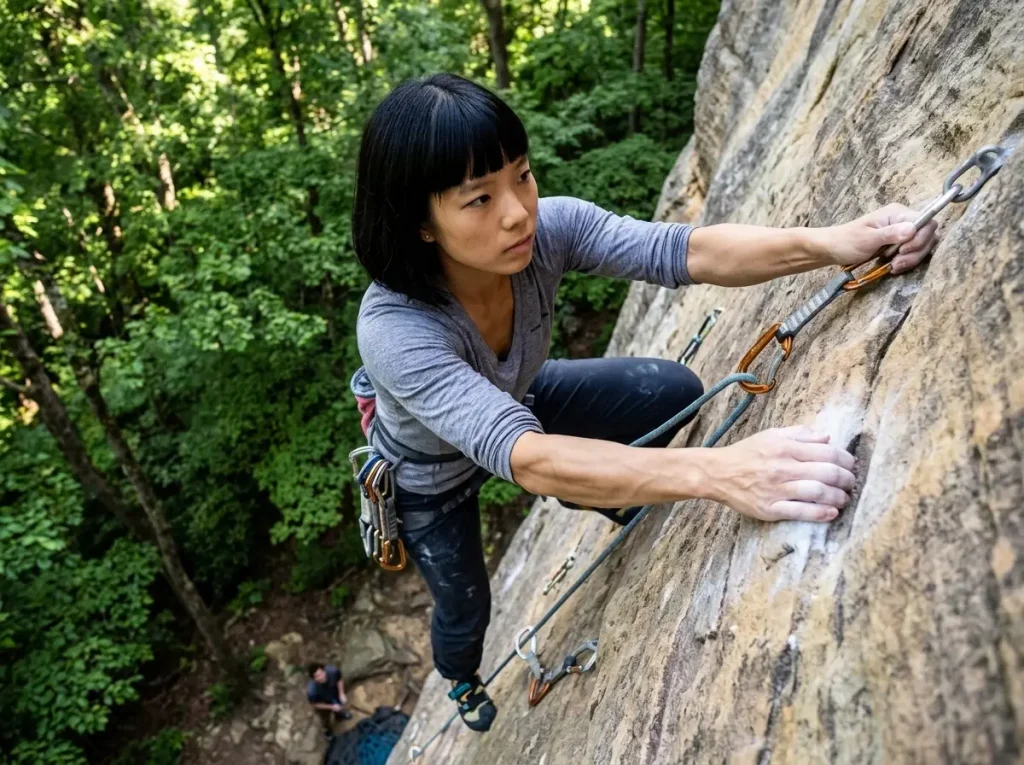
Ashima’s bouldering records get the most attention, but her sport climbing achievements are equally remarkable. In October 2012, at age eleven, she climbed Southern Smoke at the Red River Gorge in Kentucky — a 5.14c route. She became the youngest person to climb at that grade.
Sport climbing at 5.14c requires sustained power endurance over 60-80 feet of climbing. It’s not a four-move boulder problem.
The fact that an eleven-year-old had the endurance base and the sustained performance capacity to redpoint a route of that length speaks to how much volume-based training she’d accumulated simply by climbing daily for five years.
5.14d at Thirteen — The Second Female Ever
At thirteen, Ashima became only the second woman ever — and the youngest person of any gender — to climb a sport route graded 5.14d/5.15a. The first woman to reach that grade was Margo Hayes.
To put this in perspective: at thirteen, Ashima was climbing routes that place a climber in the top fraction of a percent of all sport climbers globally.
Why a Kid Could Outclimb Adults — The Biomechanics
Strength-to-Weight Ratio Before Puberty
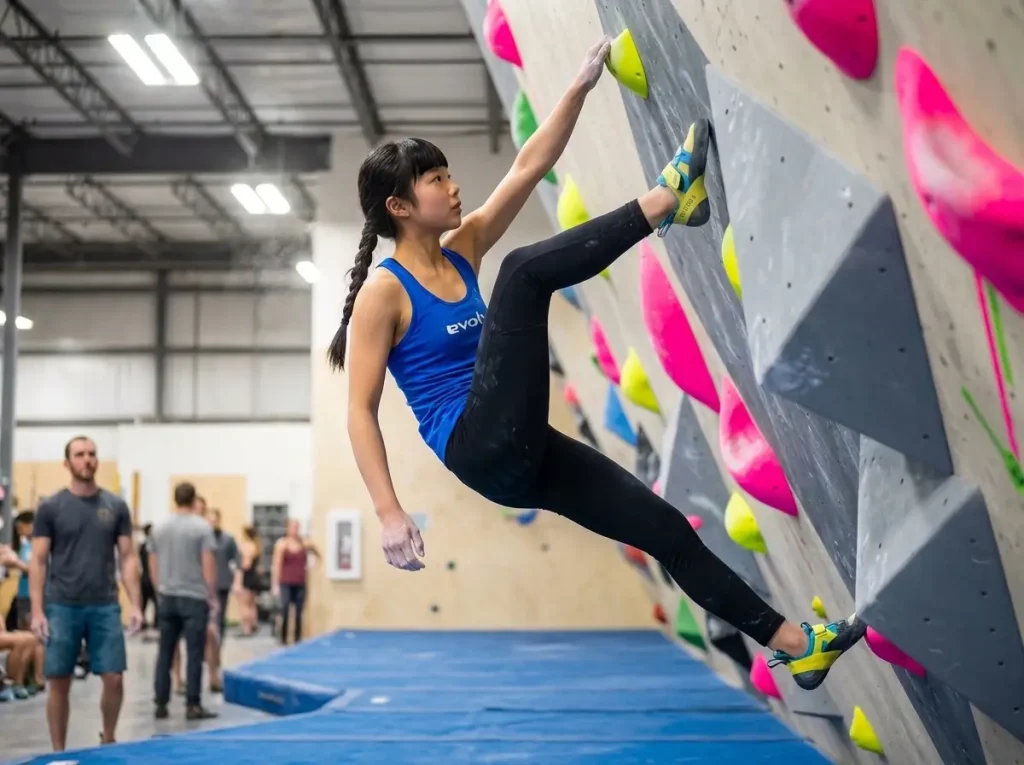
Here’s the part most articles gloss over. Climbing performance correlates strongly with strength-to-weight ratio, not absolute strength. At her peak prodigy years, Ashima stood 5’1″ and weighed approximately 90 pounds. Her finger strength relative to her mass was exceptionally high — she needed less force to hold herself on small holds than a 160-pound adult attempting the same move.
Pre-pubescent climbers also carry less fat and have proportionally longer tendons relative to muscle belly length, which means they can generate grip force more efficiently. This isn’t just Ashima — research from the Climbing Wall Association on age-appropriate training confirms that young climbers demonstrate climbing-specific strength profiles that mirror adult elites.
Flexibility, Fearlessness, and the +4 Ape Index
Ashima has a +4 inch ape index — her wingspan exceeds her height by four inches. That’s a significant reach advantage, especially on problems where long moves between holds determine the sequence.
But reach alone doesn’t explain V15. Her flexibility — the ability to execute high-steps and drop-knees that compress her frame against the wall in ways most adult male climbers physically cannot — opened sequences that were designed with larger climbers in mind. She found different beta. She moved through problems in ways the route setters hadn’t anticipated.
And fearlessness matters more than people admit. The mental training research shows that fear management is one of the biggest performance limiters in climbing. Kids simply haven’t accumulated enough negative experiences to trigger the hesitation patterns that plague adult climbers on hard sends.
Pro tip: If you watch kids climb, notice how they commit to moves without hesitation. That’s not recklessness — it’s the absence of the learned fear responses that adult climbers spend years trying to undo. You can practice this by working falls in a controlled environment.
What Changes After Fourteen
Puberty rewrites the equation. Research published in sports physiology journals shows that the final growth-ceasing stage typically occurs between ages 13 and 17, with the most dramatic changes hitting between 14 and 15. For female climbers, this means an increase in fat percentage, a shift in center of gravity, and changes to the strength-to-weight ratio that made those early sends possible.
Ashima’s hardest bouldering sends came right before this window. That’s not coincidence. The biomechanical conditions that favored her record-breaking performance were temporary by nature — tied to a developmental stage that every climber passes through but that only a few exploit at the right moment with the right skill base.
This doesn’t mean female climbers get weaker after puberty. It means the specific physiological advantage that allowed youth records at those grades shifts, and the climber must adapt their training and movement patterns to a changed physique.
Who Broke Ashima’s Records — And What That Means
Mishka Ishi and V15 at Thirteen
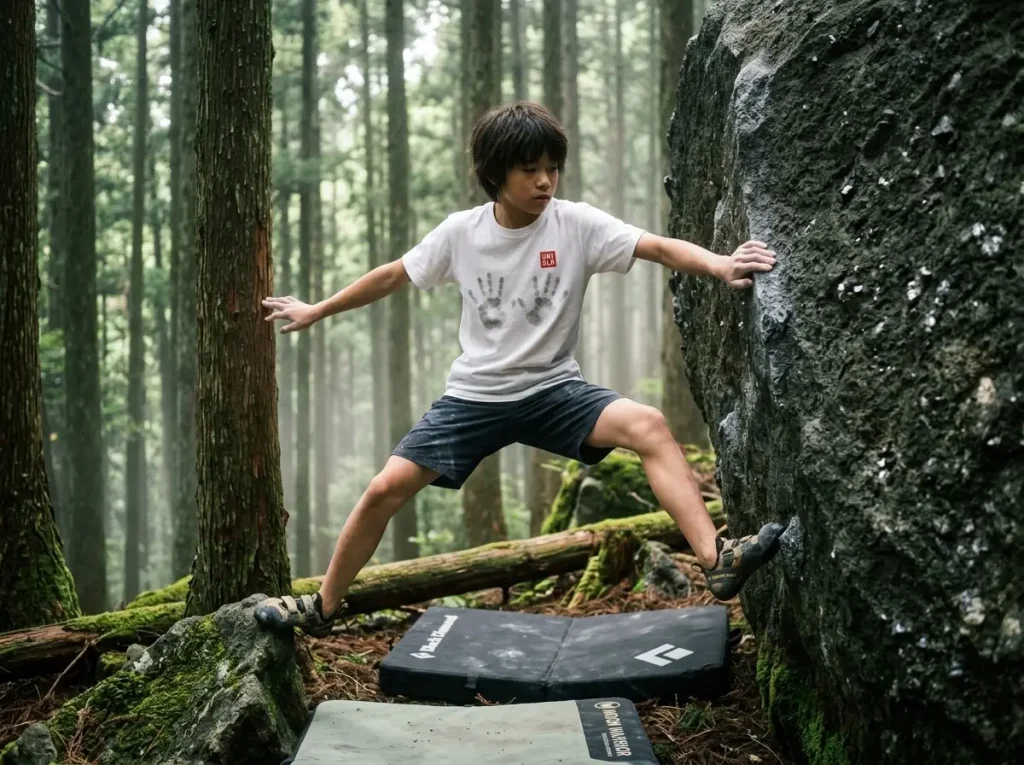
In May 2019, Japanese climber Mishka Ishi sent Byaku-dou (V15) at Horai, Japan — a problem also established by Dai Koyamada — at the age of thirteen. One year younger than Ashima had been. The youngest-ever V15 record moved on.
Ishi’s send took 20 sessions over a year on the 22-move problem. He’d already ticked multiple V12s, V13s, and a V14 leading up to it. The preparation was systematic, the progression deliberate.
The Acceleration Pattern in Youth Climbing
Ashima opened a door, and younger climbers walked through it. This isn’t unique to climbing — the pattern repeats across women’s climbing history and in every discipline where someone proves a barrier was psychological rather than physical.
What’s worth noting is the infrastructure shift. When Ashima started at Rat Rock, youth climbing programs barely existed. Now, every major gym chain has youth teams, competition circuits feed directly into IFSC rankings, and kids have access to training tools — system boards, spray walls, structured coaching — that didn’t exist a decade ago.
The next youngest V15 climber will likely be younger still. That’s what happens when the sport’s infrastructure catches up to the talent pool.
Pro tip: If you’re raising a young climber, focus on movement quality and diverse climbing experiences before structured training. The research consistently shows that early specialization and intensive finger training before age 16 increases injury risk without proportional performance gains.
Competition Dominance — IFSC Youth World Championships
Three Consecutive Gold Medals
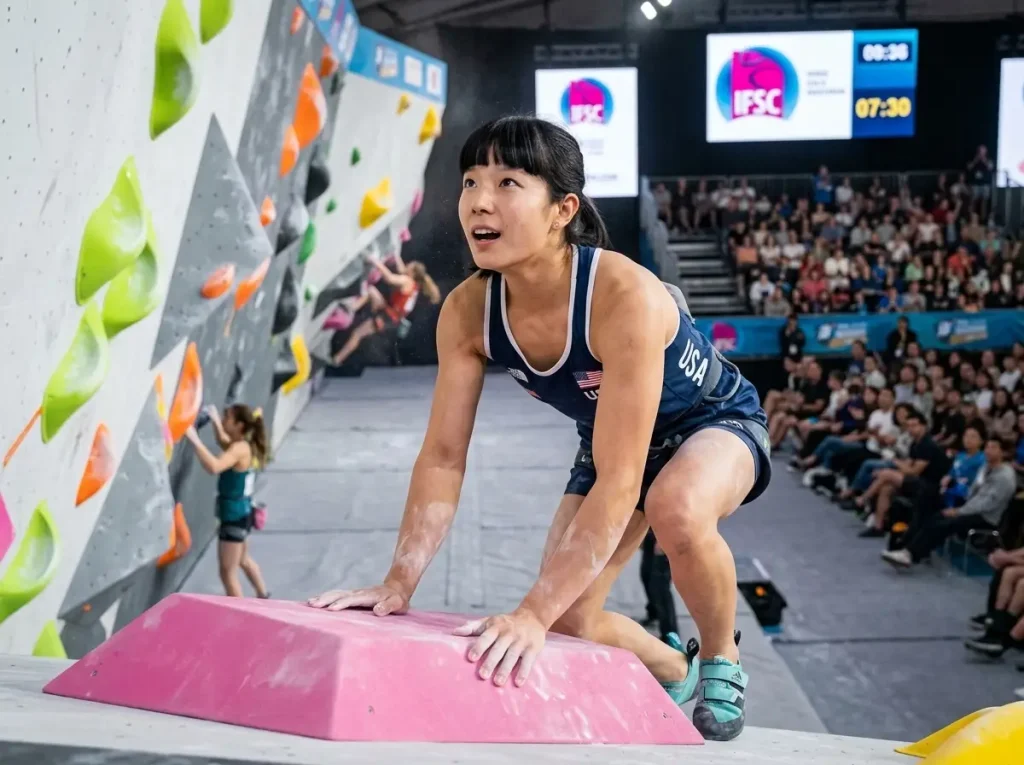
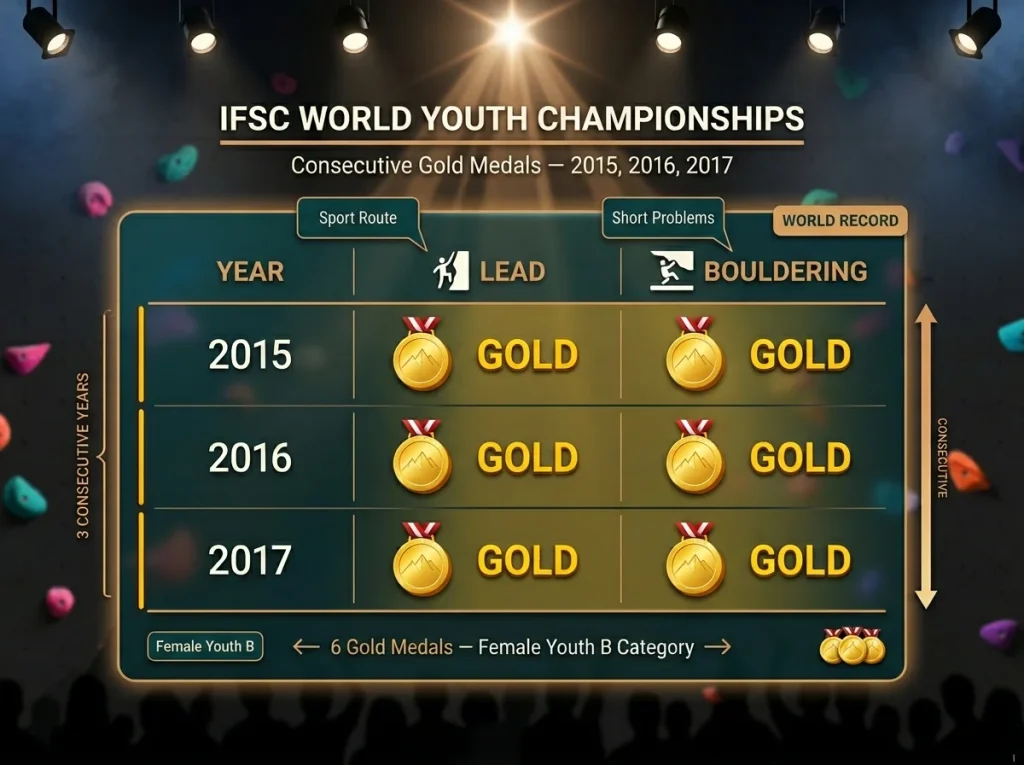
Between 2015 and 2017, Ashima won the IFSC World Youth Championships in both Lead and Bouldering in the Female Youth B category — three consecutive years of dominance. These weren’t close contests. She was operating at a different level than her age-group peers, applying outdoor climbing power in a competition format designed around gym-style movement.
Her competition style was distinctive — less flash and dynamic movement, more precise positioning and technique that reflected years of outdoor bouldering rather than gym-trained movement patterns. If you’re curious about how competition scoring actually works, the format has changed significantly since her youth championship days.
The Olympic Dream and Tokyo 2020
When climbing was added to the 2020 Tokyo Olympics (held in 2021), Ashima was considered a strong contender for the U.S. team. The combined format — bouldering, lead, and speed — forced athletes to train across disciplines.
Ashima qualified for the U.S. Olympic trials but didn’t make the team.
The combined format worked against specialists. Ashima’s strengths were in bouldering and lead — speed climbing was a different animal entirely, requiring explosive power and rehearsed movement that didn’t align with her climbing DNA. The LA28 Olympic format separates the disciplines, which would have suited her much better.
Where Ashima Shiraishi Is Now
UCLA, Arc’teryx, and AllRise
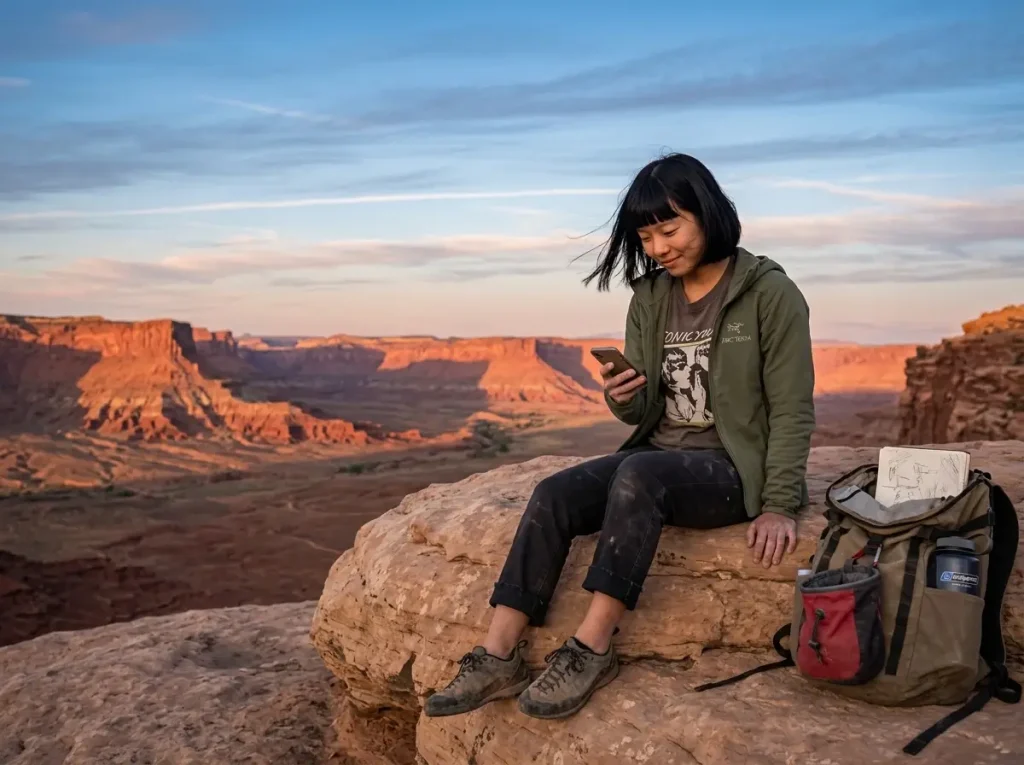
Ashima moved to California in 2021 to study environmental studies and design/media arts at UCLA. She stepped back from full-time competition climbing, though she remains sponsored by Arc’teryx as a global ambassador. In 2020, she co-founded AllRise — a DEI-focused program created in partnership with Braindead and Long Beach Rising — dedicated to making climbing more inclusive and accessible.
She recently left her long-time management team and signed with Outer/One, a new-agency model representing a more diverse generation of athletes. Her interests now span shibori dyeing, ecology, writing, and photography alongside climbing.
From Prodigy to Adult Climber
The “prodigy” label is a trap. It defines you by what you did at fourteen and sets impossible expectations for the rest of your career. Ashima has navigated this better than most — she’s publicly shifted her relationship with climbing from pure performance to something broader.
She still climbs at an elite level. But the narrative has changed from “youngest ever” to “multidisciplinary creative who also happens to be one of the strongest climbers on the planet.” That transition is harder than any V15, and most prodigies in any sport don’t make it through with their love of the activity intact.
Conclusion
Ashima Shiraishi’s record timeline — V10 at eight, V15 at fourteen, 5.14c at eleven — isn’t just a list of firsts. It’s a case study in what happens when natural talent meets favorable biomechanics during a narrow developmental window, guided by a parent who understood that volume beats structure for young athletes.
Her records have been broken, and they’ll keep being broken as youth climbing infrastructure expands. That’s a feature, not a failure — she proved the ceiling was higher than anyone assumed, and the next generation took that as permission to push it further.
If you’re watching a kid crush problems at your local gym and wondering how far they can go: let them climb. Let them play on real rock. Keep the hangboard in the closet until they’re sixteen. The strongest prodigies in climbing history all started the same way — with nothing but curiosity and a boulder.
Q1 How old was Ashima Shiraishi when she climbed V15?
Ashima was fourteen years old when she sent Horizon (V15) at Mount Hiei, Japan in March 2016. She became both the youngest person and the first female to climb V15 at the time. Her youth and light frame gave her a favorable strength-to-weight ratio for the compression-heavy problem.
Q2 What records does Ashima Shiraishi still hold?
Ashima still holds the youngest-female records for V15 (age 14) and 5.14d (age 13). Her youngest-ever V15 record was broken by Mishka Ishi in 2019 at age 13. She also holds three consecutive IFSC Youth World Championship titles in both Lead and Bouldering from 2015 to 2017.
Q3 Is Ashima Shiraishi still competing in climbing?
Ashima stepped back from full-time competition after the Tokyo Olympic cycle. She studies at UCLA and works as an Arc’teryx ambassador. She still climbs at an elite level and hasn’t retired from competition, but her focus has shifted toward creative projects, environmental studies, and broadening access to climbing through her AllRise initiative.
Q4 Who is the youngest person to climb V15?
Mishka Ishi holds the current record, sending Byaku-dou (V15) at Horai, Japan in May 2019 at age thirteen — one year younger than Ashima was when she climbed Horizon. Both problems were established by Japanese climber Dai Koyamada, who mentored both young climbers.
Q5 What grade does Ashima Shiraishi climb?
At her peak as a youth, Ashima climbed up to V15 in bouldering and 5.14d or 5.15a in sport climbing. She remains an elite-level climber as an adult, though she has not publicly announced new grade milestones recently. Her focus has broadened beyond pure grade progression to include outdoor exploration and creative pursuits.
Safety Notice: Rock climbing and mountaineering are inherently high-risk
activities that can involve physical trauma or fatal incidents. The information on Rock Climbing Realms is for
educational and informational purposes only. Techniques and advice presented here are not a substitute
for professional, hands-on instruction. Conditions and risks vary by location. Always seek guidance
from a qualified instructor before attempting new techniques. By using this website, you agree that you
are solely responsible for your own safety. Any reliance you place on this information is strictly
at your own risk, and you assume all liability for your actions. Rock Climbing Realms and its authors
will not be held liable for any harm, damage, or loss sustained in connection with the use of this information.
Affiliate Disclosure: We are a participant in the Amazon Services LLC Associates Program, an
affiliate advertising program designed to provide a means for us to earn advertising fees by advertising and linking
to Amazon.com. As an Amazon Associate, we earn from qualifying purchases. We are also an official affiliate partner
of Black Diamond Equipment via the AvantLink network. If you click on a Black Diamond affiliate link and make a
purchase, we may earn a commission at no additional cost to you. We also participate in other affiliate programs.
Additional terms are found in the terms of service.