
In this article
Most people planning a Cordillera Blanca climb brace for a bureaucratic ordeal that doesn’t exist: an application form, a permit number, an office stamp, maybe a bribe. Ask anyone who’s actually stood in line at the SERNANP office in Huaraz and they’ll tell you the same thing. There is no separate Peru climbing permit. You buy a park ticket like any trekker, and that ticket is your legal cover on the mountain. What follows is the honest, checkpoint-level version: what’s actually required, what’s inconsistently enforced, what’s a myth, plus arrieros, the current high-altitude ban, and what a compliant trip really costs.
There’s No Peru Climbing Permit, Just a Park Ticket
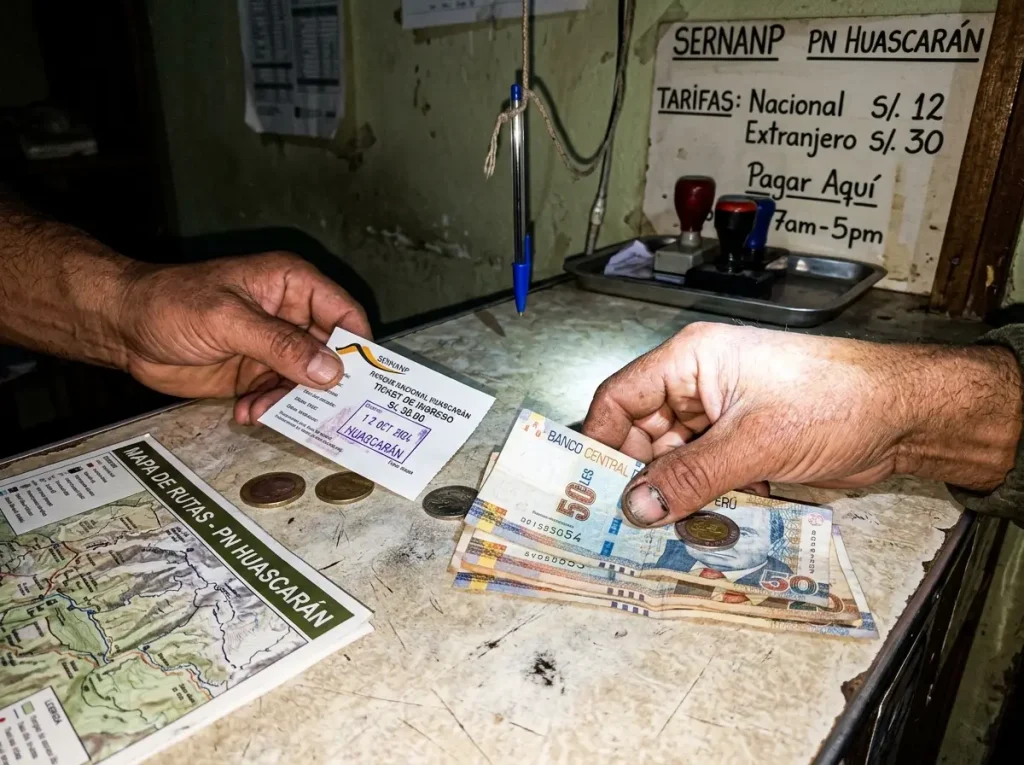
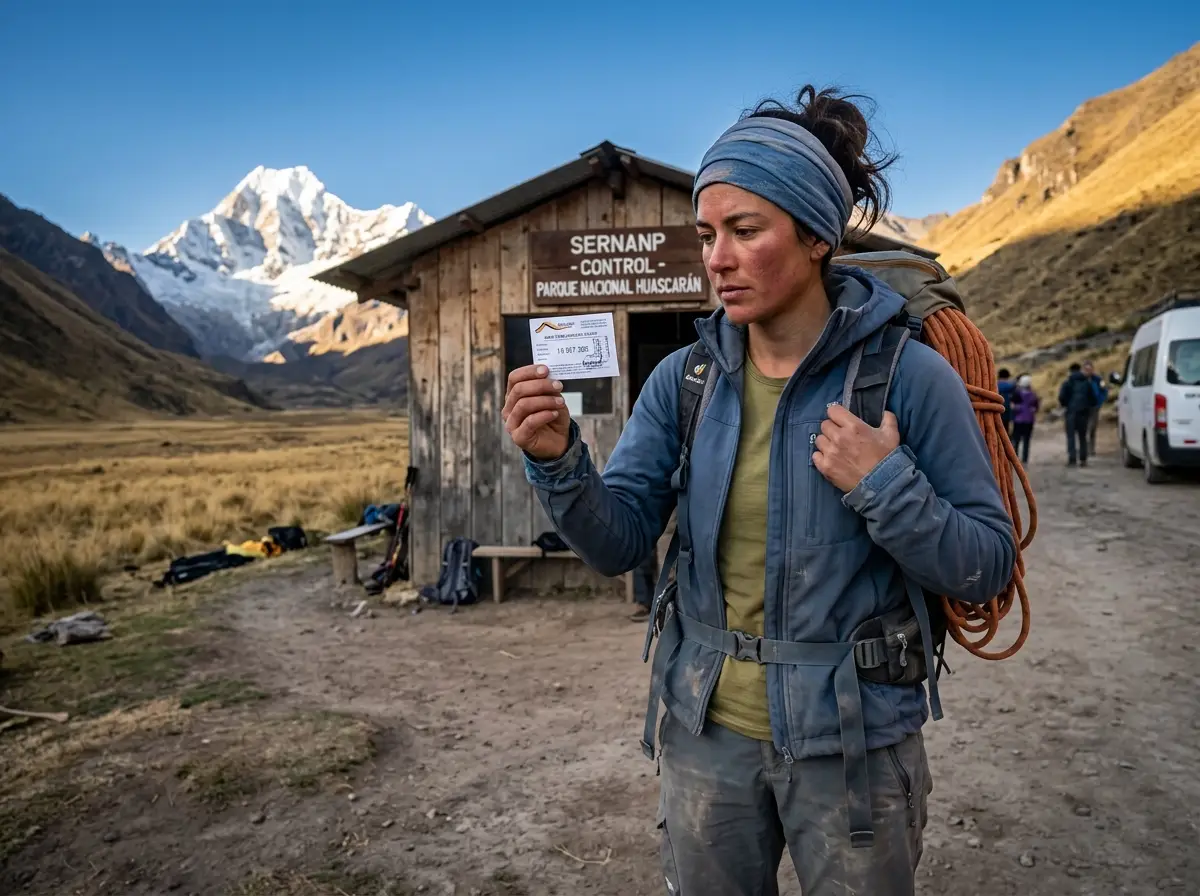
Here’s the relief you didn’t know you needed: the paperwork you’ve been dreading is a park ticket. Almost every independent source that has climbed there, from UKC to SummitPost to Mountain Project, lands in the same place. Nobody hands you a climbing permit. You pay a park entrance fee, and that’s the document that keeps you legal on the glacier.
What the SERNANP entrance ticket costs
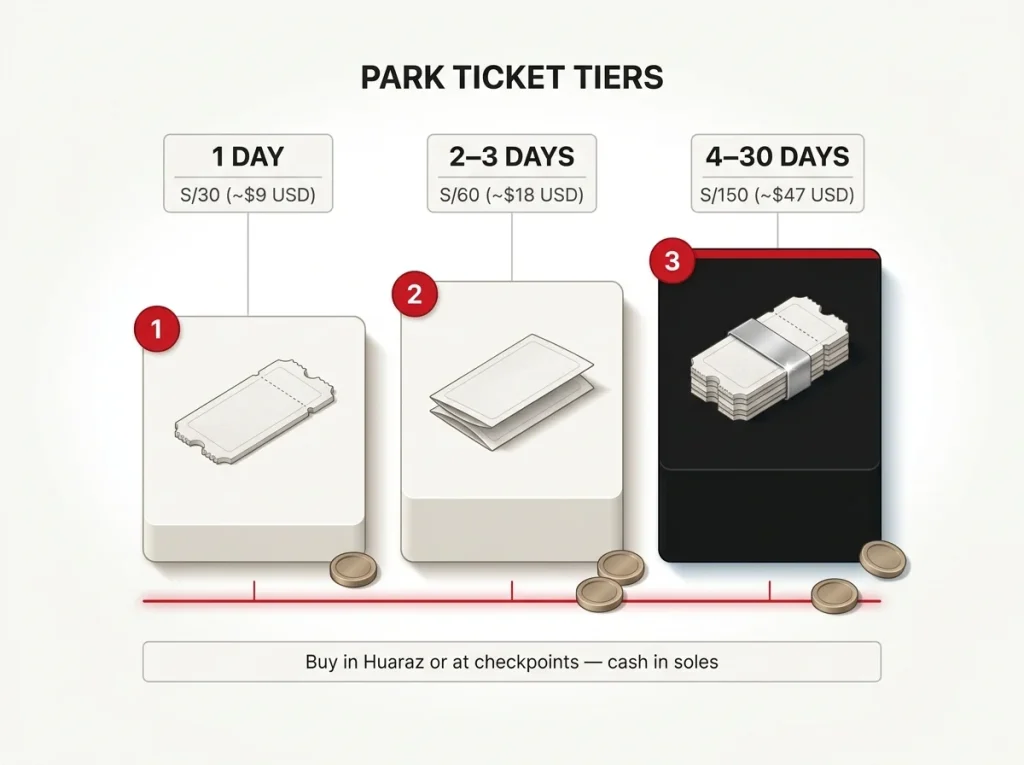
The Huascarán National Park entrance fee runs on a simple tiered schedule. A one-day pass is S/30, a two-to-three-day pass is S/60, and the long multi-day pass that covers 4 to 30 days is S/150 (roughly 9 to 47 US dollars at 2025 to 2026 rates). Buy the tier that matches your objective. A three-day Ishinca outing does not need the 30-day pass, and a full Huascarán push does not want the one-day one.
The ticket is issued by SERNANP, Peru’s national protected-areas authority, the agency that manages the park. It is a receipt for entry, not a competency check and not a climbing authorization. That distinction is the whole reason this article exists.
Where and how to buy it
You buy the ticket at the SERNANP office in Huaraz on Jirón Federico Sal y Rosas, or directly at ranger checkpoints on the way into the valleys. The office route is cleaner if you want a receipt in hand before you drive to the trailhead. The checkpoint route works when you’re already moving.
Bring cash in soles. Cards frequently fail at the gates, and a rural checkpoint is the worst possible place to discover your one payment method doesn’t work.
Pull out more soles in Huaraz than you think you need, in small notes. Checkpoints, arrieros, and the park office all run on cash, and the ATM you’re counting on at the trailhead does not exist. A hiker on the Huaraz forum got waved in for a flat 10 soles at a gate with no card reader in sight. Small bills also spare you the “no change” standoff.
What the ticket does and doesn’t cover
The ticket covers park entry for its window. It does not certify that you can climb, it does not register your route, and it does not obligate the park to rescue you. If Huascarán itself is the objective, the ticket gets you through the gate, but the mountain still asks everything it asks of anyone. That’s a different conversation, and it’s the one in the guide to climbing Huascarán itself.
So Do You Actually Need a Climbing Permit?
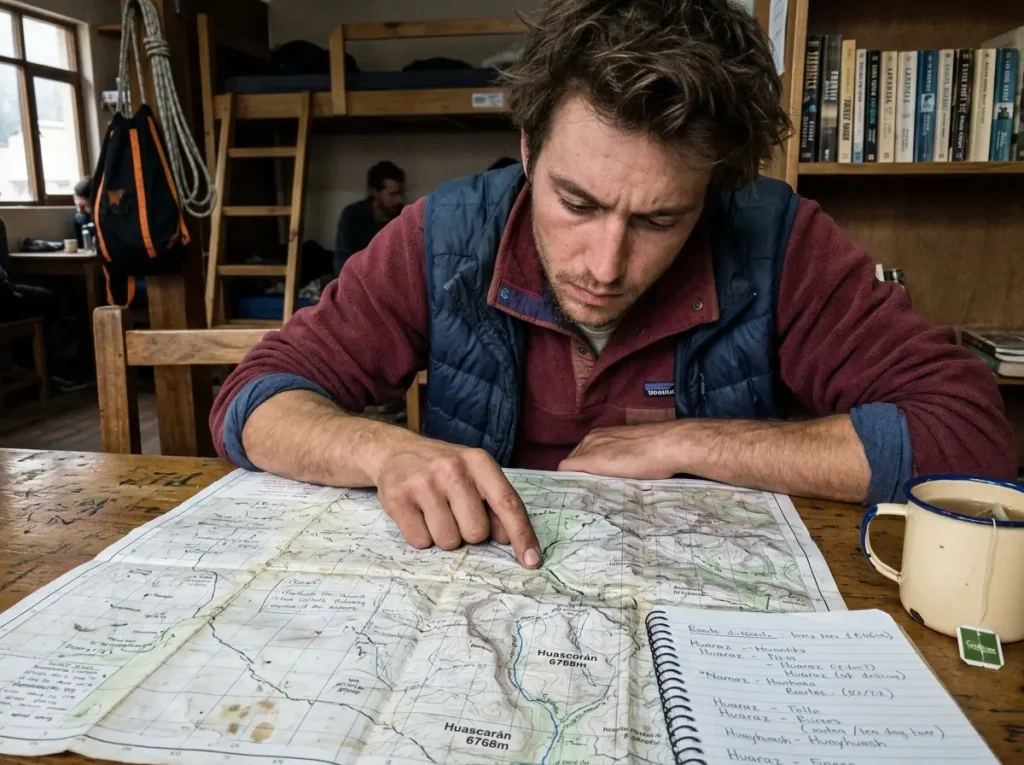
Stop googling “Peru climbing permit application.” You’re chasing a document that isn’t issued. The confusion is real and it has a source, so let’s separate what’s confirmed from what people repeat.
The formal permit claims that don’t hold up
You’ll find trip-planning content that describes a formal climbing permit with an official annex, a procedure code, and itemized fields like passport numbers and a waste-management plan. We went looking for that on SERNANP’s own site and across every climbing community source available. It isn’t there. No annex number, no climbing-specific procedure, no itemized permit form surfaced anywhere we could verify.
So we won’t print it as fact. That’s the honest position, and it’s more useful to you than invented specificity: the entrance ticket is the only document, and any page describing a detailed climbing-permit application is describing something we could not confirm exists.
The regulation history that started the confusion
There is a real regulation underneath the myth, and it’s worth knowing. In 2006, Huascarán National Park brought in a rule, tied to Article 7 of its tourism-use regulation (the Reglamento de Uso Turístico, or RUT), requiring climbers to use an authorized guide or service provider and restricting off-trail travel. It was real and it was dated. It was also never enforced. The international mountaineering bodies, the UIAA and the guiding federation UIAGM/IFMGA, pushed back formally, and park and INRENA staff themselves showed no intention of applying it.
Contemporaneous reporting quoted the view that no Peruvian park had the ability to control such a restriction, and that no group was ever turned back from a route purely for lacking a local guide. That’s the actual root of today’s inconsistent guide checks. Not a mysterious permit annex. An old, toothless rule that never got teeth.
What this actually means for you
Plan around the two things that are real: the park ticket you definitely need, and the guide check you might run into. Don’t plan around a permit form that doesn’t exist. Toothless doesn’t mean guaranteed, though. A rule that’s ignored at the policy level can still be invoked by one ranger having one kind of day, which is exactly where the next section starts.
The Guide Requirement Nobody Enforces the Same Way Twice
Here’s where people actually get turned around, and it has nothing to do with paperwork. The mandatory-guide rule lives on paper and dies in practice, but “in practice” varies checkpoint to checkpoint and ranger to ranger. This is the same gap between written rules and on-the-ground enforcement that trips people up in the North Cascades, just with worse cell service.
Which checkpoints tend to be strict vs. lax
The widely reported pattern is that the busy, high-visibility approaches get checked hardest. The Cebollapampa and Llanganuco side, the standard Huascarán approach, is where climbers most often report being asked for a guide or credentials. Quieter valleys like Ishinca, Parón, and Cashapampa tend to run looser. Treat that as a rule of thumb, not policy. Enforcement is discretionary, it changes year to year, and the flagship peaks are simply the ones rangers watch closest.
The instructive part is who gets stopped. In one widely shared account, a ranger waved unguided hikers through and specifically turned back an unlicensed guide. Enforcement there was aimed at guide legitimacy, not at whether you had a guide at all.
Going independent without agency backup
Going independent is feasible with the right experience. Climbers log unguided Cordillera Blanca summits regularly, sometimes stringing several together over a few weeks. What you give up when you skip the agency isn’t just a guide. It’s the radio, the logistics net, and the person whose job is calling for help.
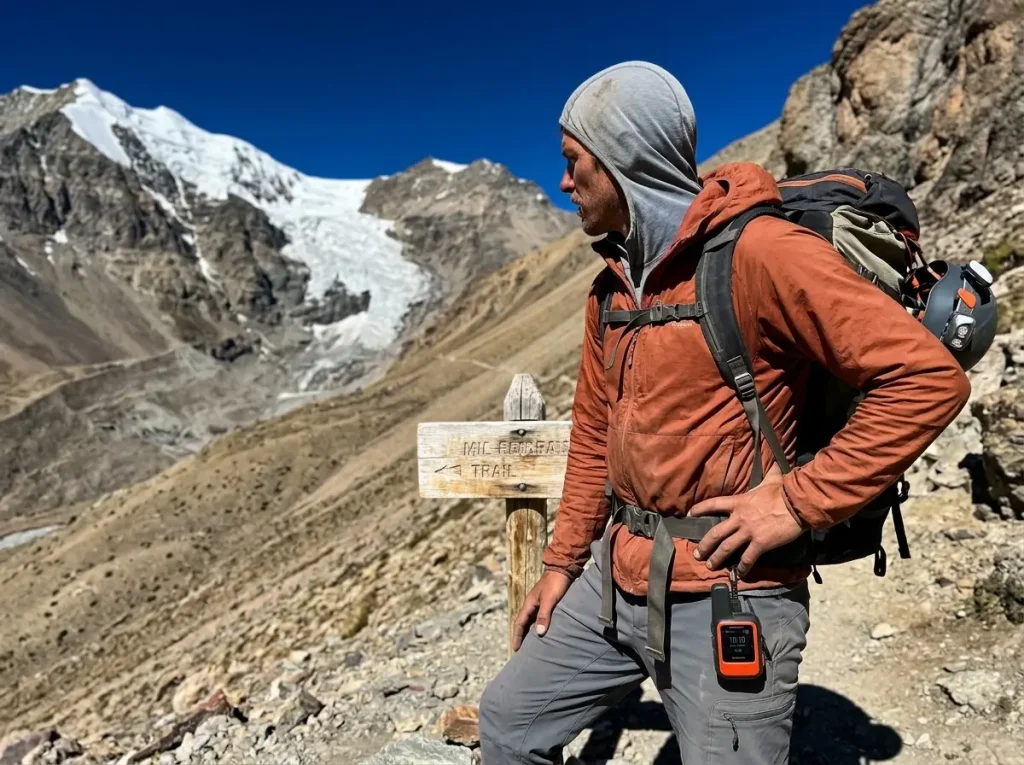
On the remote approaches around Musho and Cebollapampa there is no reliable cell coverage, so your communications plan is whatever you carried in. This is the one piece of gear the no-guide route makes non-negotiable: a satellite messenger like the Garmin inReach Mini 2, which sends two-way messages and an SOS over satellite with no cell signal at all. It’s not a permit workaround and it won’t talk you past a checkpoint. It’s the backup you deleted from the plan when you deleted the agency.
If a checkpoint pushes back, don’t argue the law. Nobody at a trailhead hut wants a lecture on the 2006 regulation’s enforcement history. Show competence instead: a club card, a clear itinerary, the obvious signs you know what you’re doing. The climbers who get through calmly are the ones who look like they belong there, not the ones who are technically right.
When hiring a guide is genuinely the right call
Sometimes the guide is worth every sol. First trip to the Andes, thin glacier-travel experience, or a strict-checkpoint objective are all real reasons to hire one rather than fight the system. There’s no shame in it, and pretending otherwise is how people get in over their heads. A good guide is also reading you the way guides quietly check before they’ll rope up with you everywhere else in the world.
The Alpine Club Card Workaround
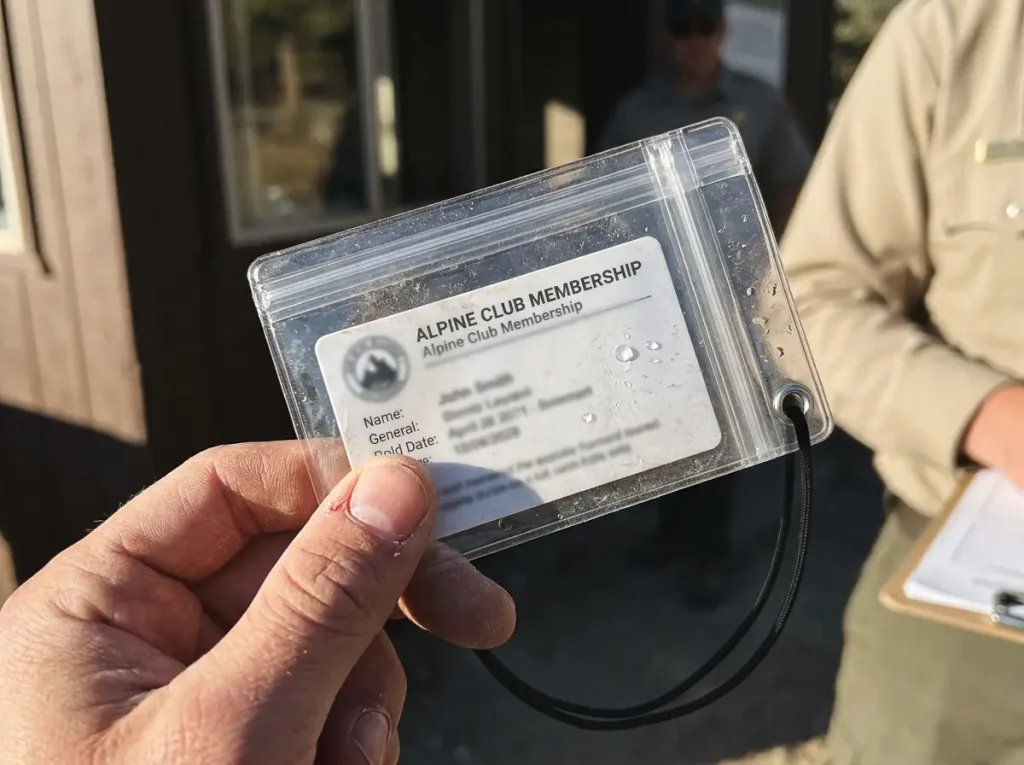
This is the trick nobody spells out, and it’s the practical answer to the whole guide question. A physical Alpine Club membership card in your pocket is what turns a checkpoint standoff into a wave-through. It’s not a legal right and it’s not a permit. It’s credible proof that you’re not a tourist who wandered up here.
Which clubs rangers actually accept
The clubs that keep coming up as accepted informal proof are the American Alpine Club, the Austrian Alpine Club, and the UK Alpine Club or British Mountaineering Council. A card from one of these signals membership in a recognized mountaineering body, which reads to a ranger as basic competency. Frame this as widely reported practice rather than a printed rule. No checkpoint publishes a list of accepted clubs, and a determined ranger can still say no.
Why it has to be a physical card
A screenshot won’t reliably do it at a remote gate. You want the physical card, and you want it to survive the trip. Andes weather and repeated handling turn a bare card to pulp fast, so keep it protected in a simple waterproof card sleeve. A five-dollar resealable vinyl sleeve isn’t glamorous, but a card you can actually produce, dry and intact, beats one that fell apart in your pack. It’s the cheap thing that quietly does the job.
The pre-trip step most climbers forget
Joining or renewing a club and packing the physical card is a from-home task, and it’s the one people remember at the checkpoint being turned around. Membership takes days to process and the card takes longer to arrive, so this is not an in-Huaraz errand. Sort it before you fly, drop the card in its sleeve, and forget about it until a ranger asks.
Hiring Arrieros Without Burning Bridges
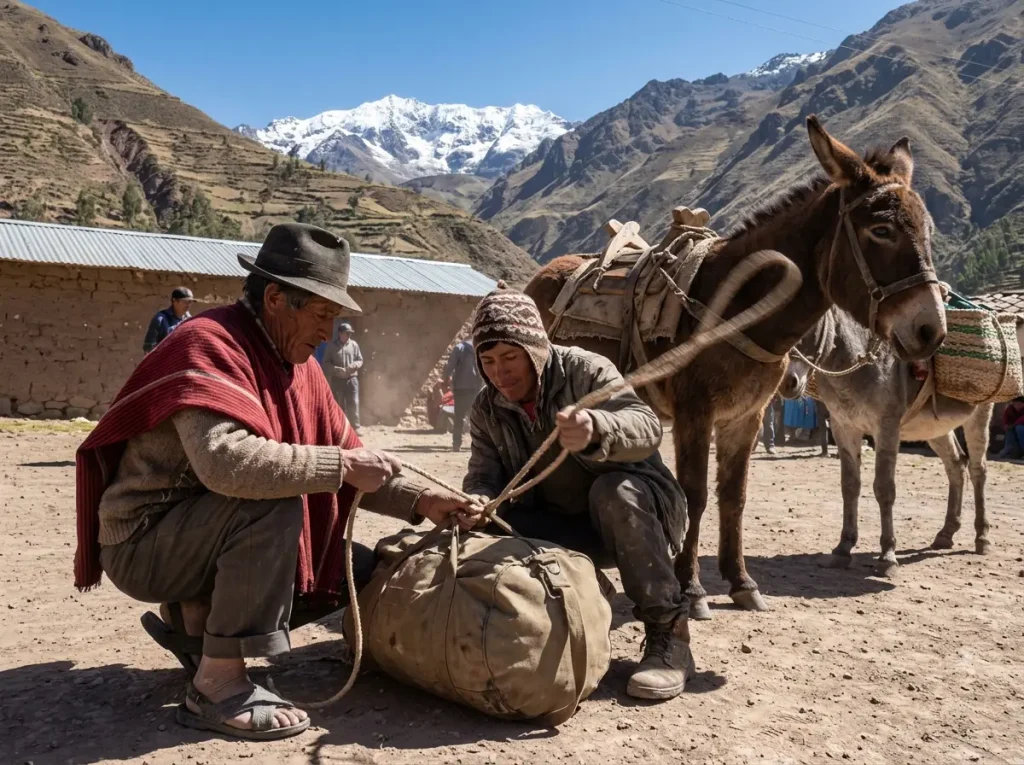
Getting your gear to base camp is its own economy, and it runs on cash and handshakes in a village plaza, not on a booking site. How you handle it affects your trip and, honestly, the next person’s too.
What arrieros and burros actually cost
An arriero is the muleteer who owns and drives the pack animals. A burro is the pack donkey, good for roughly 30 to 40 kilograms. Rates vary enough that you should hold the range loosely. Older sourcing puts an arriero near 10 US dollars a day and a burro near 5. Newer “union rate” figures run higher, closer to 20 to 30 dollars a day for the arriero and 12 to 15 for the animal. The spread is real, driven by time and inflation, so budget the higher end and be pleasantly surprised if it’s less.
How the hire actually works
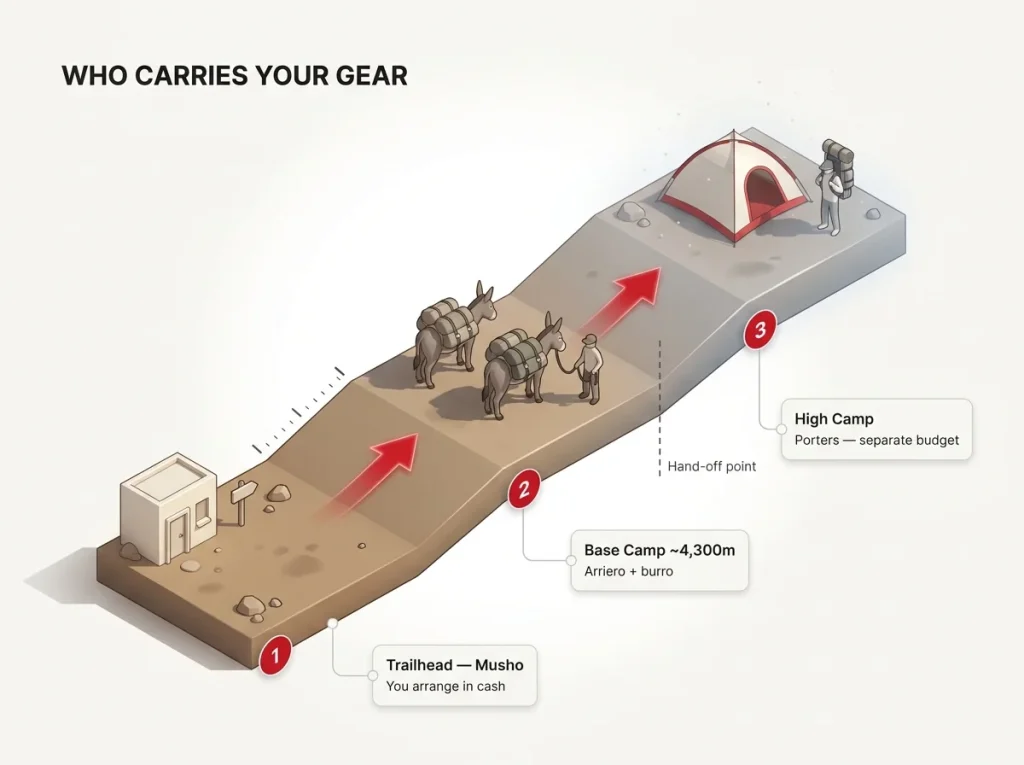
You don’t book this online. You show up at the trailhead village plaza, Musho for the standard Huascarán approach, and arrange it face to face in cash. A local coordinator often manages the burro rotation informally, matching animals and drivers to the parties coming through. It’s a functioning system that has moved expedition gear for decades. Treat it like the real business it is, not a quaint add-on.
Don’t lowball the arriero to save a few soles. Pay the going community rate and tip fairly, because the man with the burros in Musho is also the man who moves fast when something goes wrong up high. That relationship is worth more than the discount, and word travels in a small village. Cheap now can cost you the help you’ll actually need later.
The hand-off point and why lowballing costs you
Know where the animals stop. Arrieros and burros go to base camp, around 4,300 meters, and no higher. Above that, porters take over and that’s a separate cost you have to budget for. Climbers who assume the donkeys carry gear all the way up get caught without a porter plan on the technical upper mountain. Undercutting the local rate is the other avoidable mistake. It burns a relationship you may need for repeat trips or an emergency, in a place where reputation is the whole system.
Casa de Guías, Your Huaraz Home Base
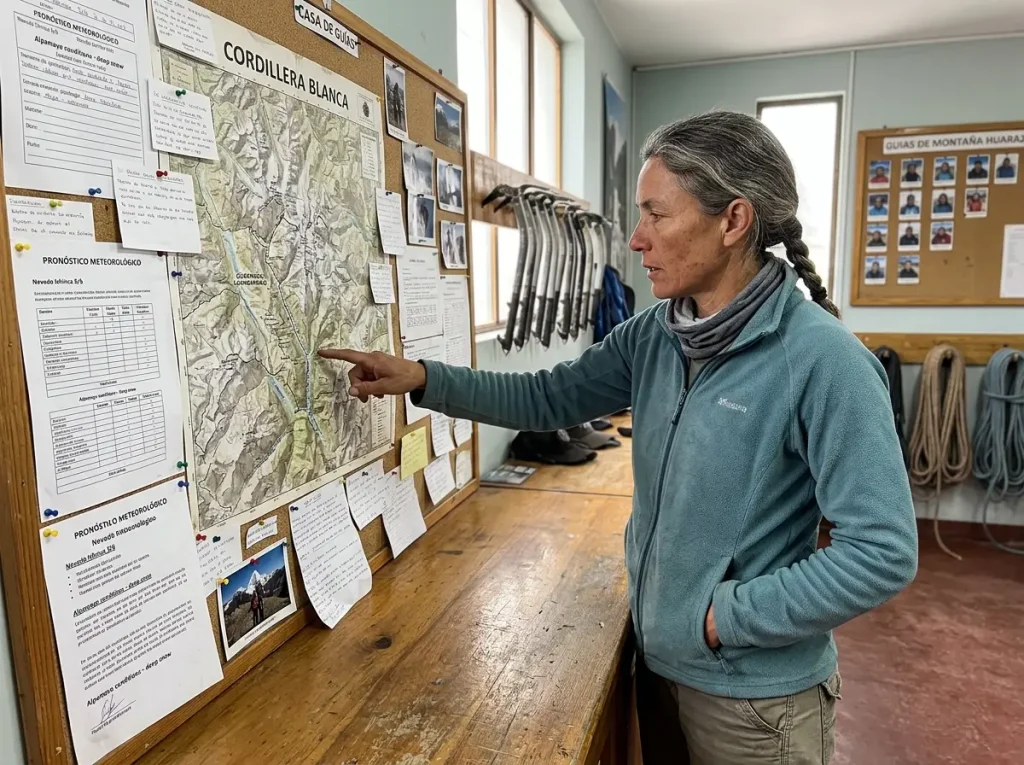
If you do one thing in Huaraz before heading up, do this one. The Casa de Guías is the single most useful physical stop in town, and it saves you from planning your climb on stale guidebook generalities.
What you can get there
Casa de Guías in Huaraz, the AGMP’s home base, is where you get current snow and route conditions from people who were just up there. It’s also where you can hire an independent, certified guide without committing to a full agency package, and where you can pick up free government-issued park maps. Three things you actually need, one counter.
Hours and planning your arrival day around them
The office keeps set hours: Monday through Friday 9am to 1pm and 3:30 to 6:30pm, and Saturday 9am to 1pm. Plan your Huaraz arrival so you’re not locked out on the one afternoon you had free. Glaciated terrain shifts year to year, and conditions from a two-season-old guidebook are a guess, so getting the current read here is the difference between a smart plan and a hopeful one.
Using it to acclimatize smart
Huaraz sits around 3,050 meters, which makes it the natural acclimatization base. Pair your Casa de Guías stop with the standard acclimatization day-hikes above town, like Laguna Wilcacocha and Laguna Churup, before you commit to altitude. Give your body the days it needs and acclimatize properly before you head up, because the mountain doesn’t grade on effort.
The 2025-2026 High-Altitude Ban and What It Means for Your Trip
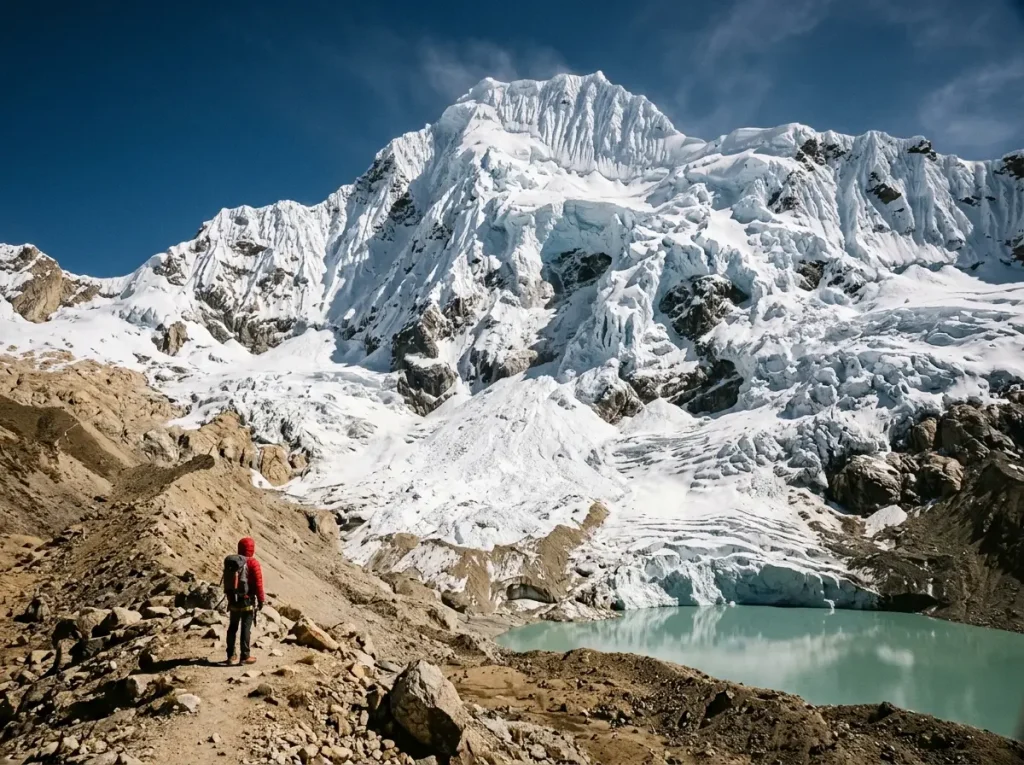
There’s an active ban you need to know about, and the useful move is neither panic nor ignore it. Read what it does and doesn’t change, then plan accordingly.
What’s banned, where, and when
From December 24, 2025 through March 31, 2026, all climbing above 5,000 meters in Huascarán National Park is prohibited by park order. That takes the summits off the table in that window: Huascarán at 6,768 meters, Alpamayo at 5,947 meters, Chopicalqui, and the rest of the high glaciated objectives. Lower crags and treks stay open. If you want the full picture of the major peaks and what each one actually demands, the ban is one more variable stacked on top of everything those routes already ask.
Why the park did it
The ban rests on technical reports citing accelerated glacial retreat, serac collapse, more and larger crevasses, unstable ice, and new glacial lakes. This isn’t bureaucratic caution. The ice itself is measurably less trustworthy than it used to be, and the park drew a hard line rather than manage the hazard case by case.
What it actually changes for a normal May–Sept trip
Here’s the practical part. The ban overlaps the naturally wet low season, so a standard dry season trip from roughly May through September is unaffected. What it should change is your homework. Recurring bans tied to worsening glacial hazard are worth checking for before you book flights, not after you land in Huaraz. Treat the ban as a signal, not just a closure.
What This Actually Costs, Start to Finish
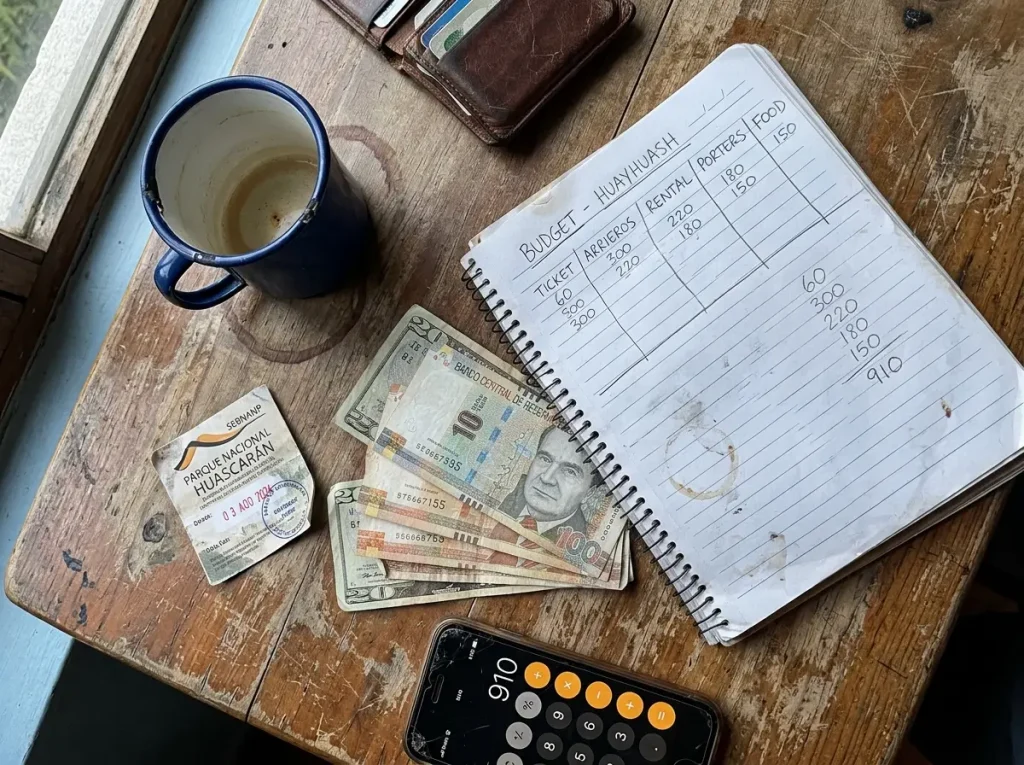
Nobody adds this up for you, so here it is in one place. The real question isn’t the permit. It’s whether to go independent or fully guided, and what each actually runs.
The independent, permit-compliant budget
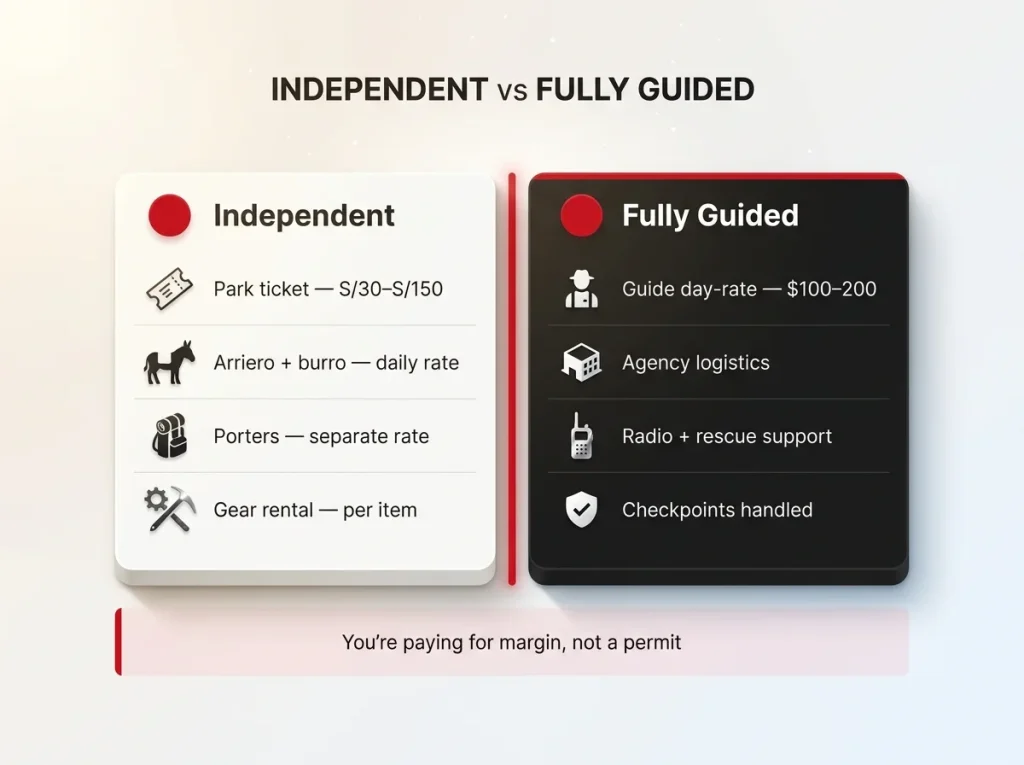
Going independent, your line items are the park ticket, arrieros and animals to base camp, porters above it, and any gear rental. Framed as a table:
| Line Item | Independent | What It Buys |
|---|---|---|
| Park ticket | S/30–S/150 | Legal entry for 1–30 days |
| Arriero + burro | Daily, union-rate range | Gear hauled to base camp |
| Porters | Separate daily rate | Gear above base camp |
| Gear rental | Per item, per day | Axe, crampons, etc. |
The park ticket is the cheap part. The moving cost is the human logistics, arrieros to base camp and porters above it, and whether you rent or bring the sharp gear. On rental, run the rent-or-buy math for a trip like this before you pay to haul your own axe across a continent.
The fully-guided budget
Fully guided flips the math. You’re paying a guide day-rate, commonly in the 100 to 200 US dollar per day range, plus agency logistics. What that buys is real: permits and checkpoints handled for you, radio and rescue support, and a pace set by someone who knows the route. It’s the same budget-tier trap that catches Everest climbers, where the cheapest guided option and the most expensive one are not buying the same margin of safety.
Where the money actually goes
Strip away the sales pitch and the choice is simple. Independent is cheaper and puts everything on you. Guided costs more and offloads the logistics and the risk management. Neither is the “right” answer. An experienced Andes climber can go independent and pocket the difference. A first-timer on a big glaciated peak is often buying exactly the right insurance by going guided. The math is yours; the honest version is that you’re paying for margin, not for a permit.
A Realistic Pre-Trip Checklist
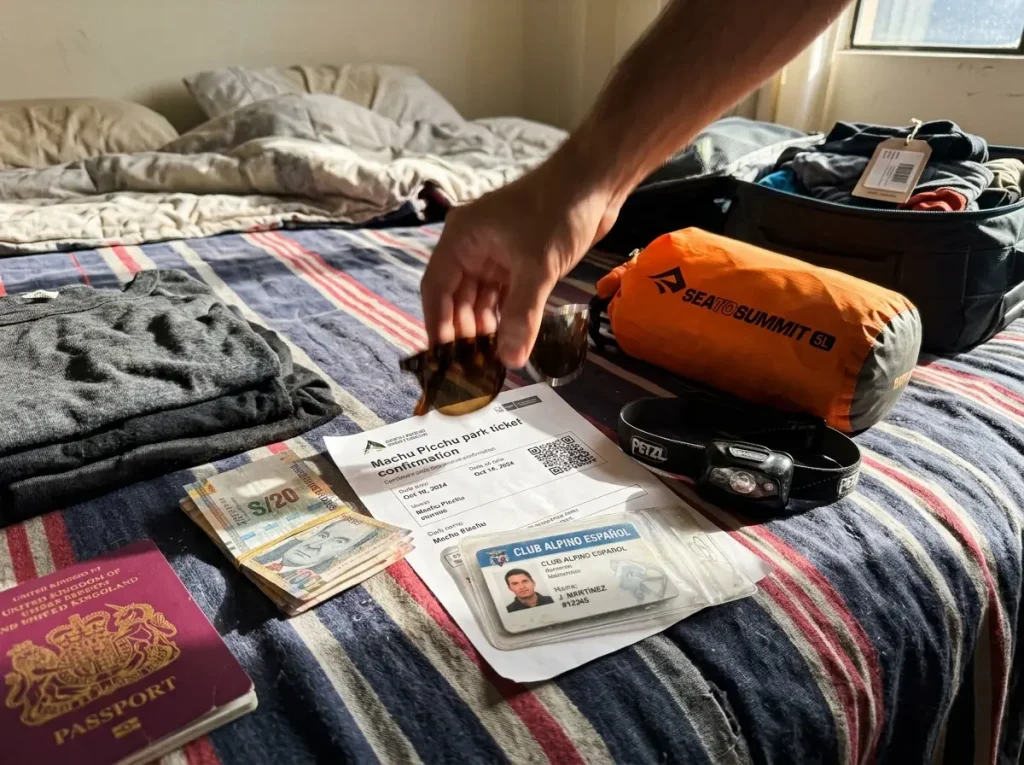
Everything above turns into a short list of things to handle before you’re standing at a Huaraz internet café wishing you’d done them at home.
Documents and cash to bring
Pack your passport, enough cash in soles for the park ticket and the arrieros, and your physical Alpine Club card in its sleeve. Cards fail at gates, so the cash is not optional. These are the two things people most reliably forget: soles in hand and a club card that’s actually on you, not in a drawer back home.
Logistics to arrange before you fly
Confirm you’re traveling in the dry-season window, roughly May through September. Check for any active high-altitude ban before you book flights. And know that you’ll hire arrieros in person at the trailhead village, so you don’t need to chase a nonexistent online booking, you just need to arrive with cash and a plan.
Entry requirements beyond the park
The park ticket isn’t your only paperwork, it’s just the only climbing-related one. Before you book anything, check the entry requirements for your passport, since your nationality determines what Peru asks for at the border. Sorting that early is a five-minute job that saves a trip-ending surprise.
Conclusion
The whole permit question comes down to three things. First, the only permit you need is a park ticket, so buy the right tier in soles and move on. Second, the guide “requirement” is real on paper and inconsistent in the field, so carry a physical Alpine Club card and your own communications if you go independent. Third, check the season and any active ban before you book, and budget arrieros at the honest going rate.
Sort your ticket, your cash, and your club card before you fly, and you’ll walk up to the checkpoint knowing exactly where you stand. No permit myth required.
Frequently Asked Questions
01Do you need a permit to climb Huascaran?
No. There’s no separate climbing permit. You need the Huascaran National Park entrance ticket, plus, at some checkpoints, either a certified guide or proof of competency like an Alpine Club card.
02How much is the Huascaran National Park entrance fee?
S/30 for one day, S/60 for two to three days, and S/150 for a 4 to 30 day pass (roughly 9 to 47 USD, 2025 to 2026 rates). Bring cash in soles, since cards often fail at checkpoints.
03Can you climb in the Cordillera Blanca without a guide?
Yes, in practice. The mandatory-guide rule dates to a 2006 regulation that was never consistently enforced. Experienced climbers do unguided summits regularly, though some checkpoints still ask for a guide or a club card.
04Is climbing banned in Peru’s Cordillera Blanca right now?
All climbing above 5,000 meters in Huascaran National Park is banned from December 24, 2025 through March 31, 2026 for glacial-hazard reasons. Lower crags and treks stay open, and the ban falls in the wet low season anyway.
05What’s the best season to climb in the Cordillera Blanca?
The dry season, roughly May through September, gives the most stable conditions. Plan around it. The current high-altitude ban falls in the wet low season, so a normal dry-season trip is unaffected.
Safety Notice: Rock climbing and mountaineering are inherently high-risk
activities that can involve physical trauma or fatal incidents. The information on Rock Climbing Realms is for
educational and informational purposes only. Techniques and advice presented here are not a substitute
for professional, hands-on instruction. Conditions and risks vary by location. Always seek guidance
from a qualified instructor before attempting new techniques. By using this website, you agree that you
are solely responsible for your own safety. Any reliance you place on this information is strictly
at your own risk, and you assume all liability for your actions. Rock Climbing Realms and its authors
will not be held liable for any harm, damage, or loss sustained in connection with the use of this information.
Affiliate Disclosure: We are a participant in the Amazon Services LLC Associates Program, an
affiliate advertising program designed to provide a means for us to earn advertising fees by advertising and linking
to Amazon.com. As an Amazon Associate, we earn from qualifying purchases. We are also an official affiliate partner
of Black Diamond Equipment via the AvantLink network. If you click on a Black Diamond affiliate link and make a
purchase, we may earn a commission at no additional cost to you. We also participate in other affiliate programs.
Additional terms are found in the terms of service.