
In this article
The going rate for a guided ascent of The Nose is about $6,000, and for a real share of the climbers pricing it out, that is money they never needed to spend. We have watched strong gym climbers drain their savings on a guide when a Camp 4 partner would have gotten them up the wall, and we have watched underprepared people try to skip the guide and bail at Sickle Ledge on day one. The truth sits somewhere in the middle, and it depends almost entirely on who you are as a climber. This guide walks through whether you actually need a guide for The Nose, who the single authorized service is, what that money really buys, what a guided week on the wall feels like, and the cheaper paths that genuinely work.
Do You Actually Need a Guide for The Nose?
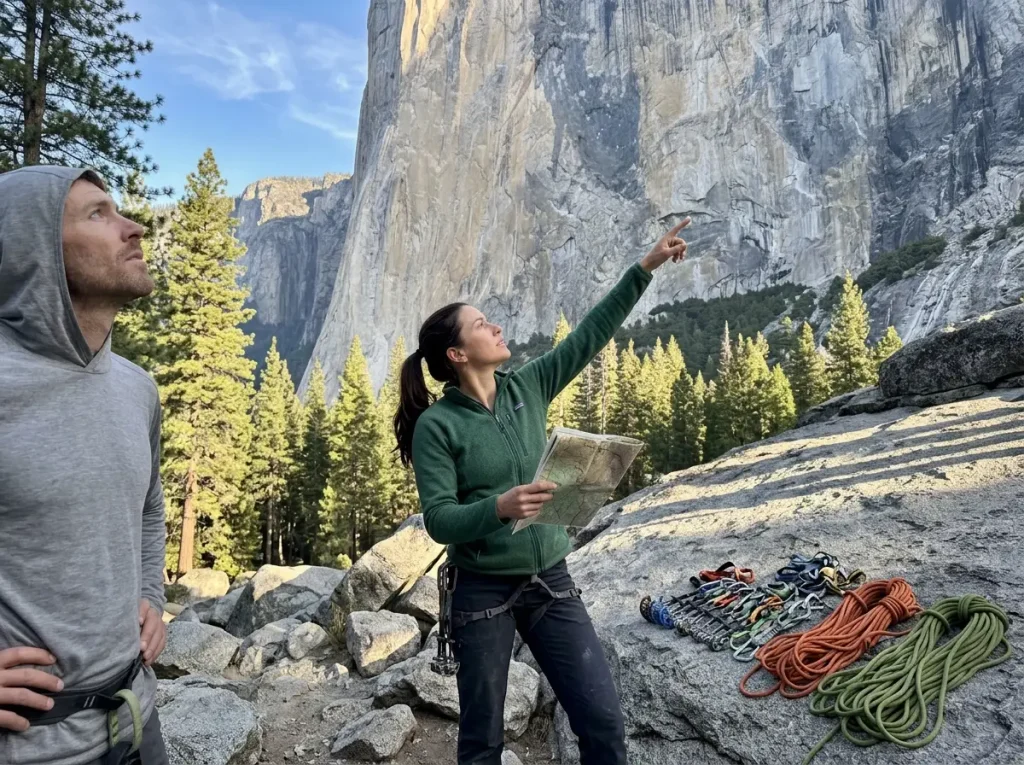
Before anyone talks price, this is the question that matters. The Nose is one of the most demanding big walls in the world, and it is easy to assume that something this serious automatically calls for a professional. It does not. Plenty of people who Google “hiring a guide for The Nose” would be better served putting that $6,000 toward a plane ticket and a case of beer for a partner.
It is about systems, not fitness
Here is the reframe that changes everything. The value a guide brings is not that they are stronger or fitter than you. It is that they already own the big-wall systems you might be missing: efficient hauling, jugging fixed lines, managing an aid transition without turning it into an hour-long tangle, and living for days on a vertical wall without falling apart. If you are missing that knowledge, a guide is worth every dollar. If you already have it, you are paying a premium for something you can do yourself.
That means the honest measure is not “can I do a lot of pull-ups.” It is “do I know how to run the rope systems on a grade VI wall.” A gym climber who can crank 5.12 plastic but has never hauled a pig or slept in a portaledge is exactly the person a guide serves well. A quiet 5.10 trad climber who has done a couple of shorter walls is not.
If you lead 5.10 trad, you probably do not need one
A large percentage of The Nose is 5.10 or easier. A team that can free-climb those pitches cleanly moves meaningfully faster than a team that aids everything, guided or not. If you and a partner already lead 5.10 trad solidly and you understand the basic wall systems, you will move faster and spend far less by self-organizing. This is the same guided-versus-independent call climbers weigh on other big objectives, like the decision to hire a guide or go it alone on Rainier.
The route itself does not hand out participation trophies. The Nose is 31 pitches and roughly 3,000 feet, rated 5.14a if you free it or 5.9 C2 as an aid climb, and only about 60 percent of the parties that start it actually top out. Starting the route is not the same as finishing it, and a guide does not change that math as much as your own preparation does.
The middle path: teach yourself the systems
There is a third option that sits between “pay $6,000” and “already know everything,” and it is teaching yourself the systems knowledge a guide would otherwise sell you. That path is cheaper than most people expect, and we cover it in detail further down under the alternatives. For now, just know that hiring a guide is not the only way to close a systems gap.
Before you price a guide, be honest about which gap you are filling. If it is fitness, a guide will not fix that and you should not book yet. If it is wall systems, a guide is the fast track. If it is just a partner, you have cheaper options than a full guide service.
Yosemite Mountaineering School: The Only Authorized Guide
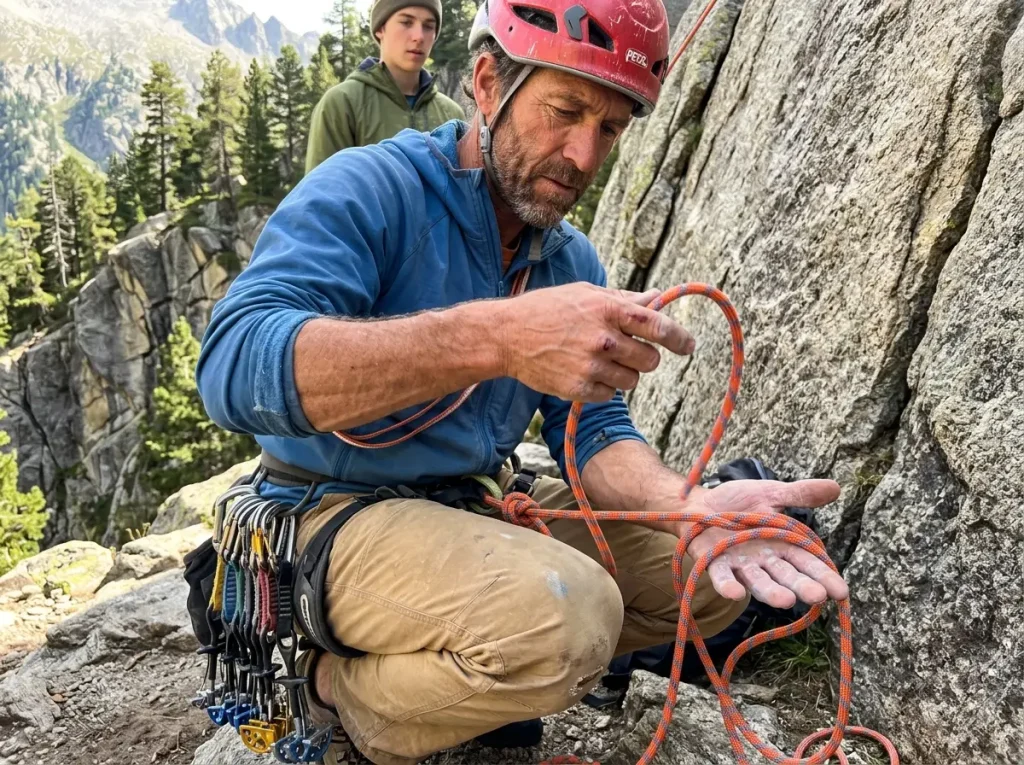
Once you decide a guide makes sense, the shopping trip is short. You are not comparing a marketplace of outfitters. You are calling one number.
One authorized service, and here is why
Yosemite Mountaineering School & Guide Service, usually shortened to YMS, is the only guide service the National Park Service authorizes to operate inside Yosemite, and it has run continuously since 1969. You book direct through Travel Yosemite, not through an affiliate site or a third-party booking engine.
The reason there is only one comes down to permits. Commercial guiding inside a national park requires a Commercial Use Authorization, and on technical terrain the ratios are typically capped at one guide to one client. That is the Commercial Use Authorization every guide service in a national park has to hold, and it is why a six-day trip is priced as a dedicated-guide product rather than a group rate. You are not buying a seat on a bus. You are buying one certified professional for the better part of a week.
What “AMGA-certified” actually means
Guide services throw around “AMGA-certified” like it is a single badge, but it is worth knowing what it certifies. The AMGA-certified Rock Guide credential specifically covers multi-pitch movement, short-roping and short-pitching, rock rescue, and big-wall and aid-climbing skills. In other words, it certifies the exact rope systems a guide uses on a wall, not a generic customer-service credential. Many wall guides also hold a Wilderness First Responder certification, the backcountry medical standard for guiding, so someone on the rope with you knows what to do if a day goes sideways far from a road. If you want to understand the tiers behind that label before you trust your life to it, it is worth learning what an AMGA certification actually certifies.
What the $6,000 does and does not cover
The roughly $6,000 figure is the guide-service fee for a six-day guided ascent. Treat it as a floor, not a ceiling. It buys you the certified guide, the rope systems, the route logistics, and typically the group hardware like haul systems. It does not automatically cover your personal gear, your food, your travel, or a tip for a guide who just spent six days keeping you safe on a vertical wall. The good news, which we will get to, is that the overnight permit itself adds nothing.
One booking detail competitors never mention: YMS requires full payment upfront for most of its programs, but Big Wall Climbs specifically require only a 50 percent deposit. That is a softer commitment while you are still nailing down dates, and it is worth knowing before you assume you need the whole sum in hand to reserve a slot.
The Hiring Process: Booking, Vetting, and Timeline
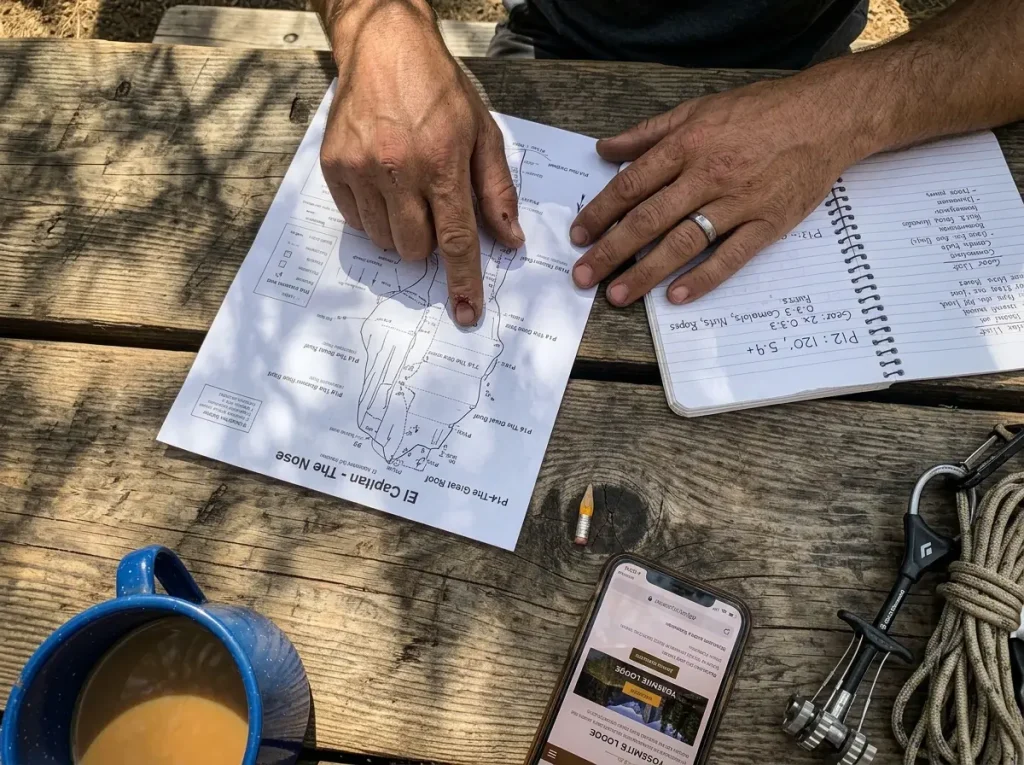
This is the part every other article skips. “You can hire a guide” is where they stop. Here is what actually happens between deciding and standing at the base.
Book far earlier than you think
A dedicated-guide big-wall slot is a limited product. With one-to-one ratios baked in by the permit rules, YMS can only run so many wall trips at once, and the popular fall dates book out fast. Plan on reaching out months ahead, not weeks. Waiting until the season is underway is one of the most common ways people talk themselves out of a trip they were otherwise ready for, simply because the calendar filled.
Expect to be vetted
YMS is not going to clip a rank beginner to a rope and drag them up a grade VI wall. Expect a conversation about your climbing resume: what you have led recently, how much trad experience you have, and whether you have any big-wall or systems background at all. The service does not publish its exact screening criteria, so the honest move is to ask directly what they need to see from you. Go in with a clear, truthful account of your climbing. Overselling your experience to get accepted is how people end up frozen at a hanging belay 800 feet up.
Know what you supply before you pay
A guide provides the rope systems, the route logistics, and usually the group hardware. You still bring your personal kit: climbing shoes, harness, approach shoes, and your own food and clothing. We break down that personal list in its own section below, but the key move at booking time is to confirm the exact split so nothing surprises you at the trailhead.
During the booking call, ask one specific question: how much of this route will I actually lead versus jug? The answer tells you more about the experience you are buying than the price does. Some clients are surprised to learn how much of a guided ascent is spent ascending fixed lines rather than climbing.
What a Guided Ascent Actually Feels Like, Day by Day
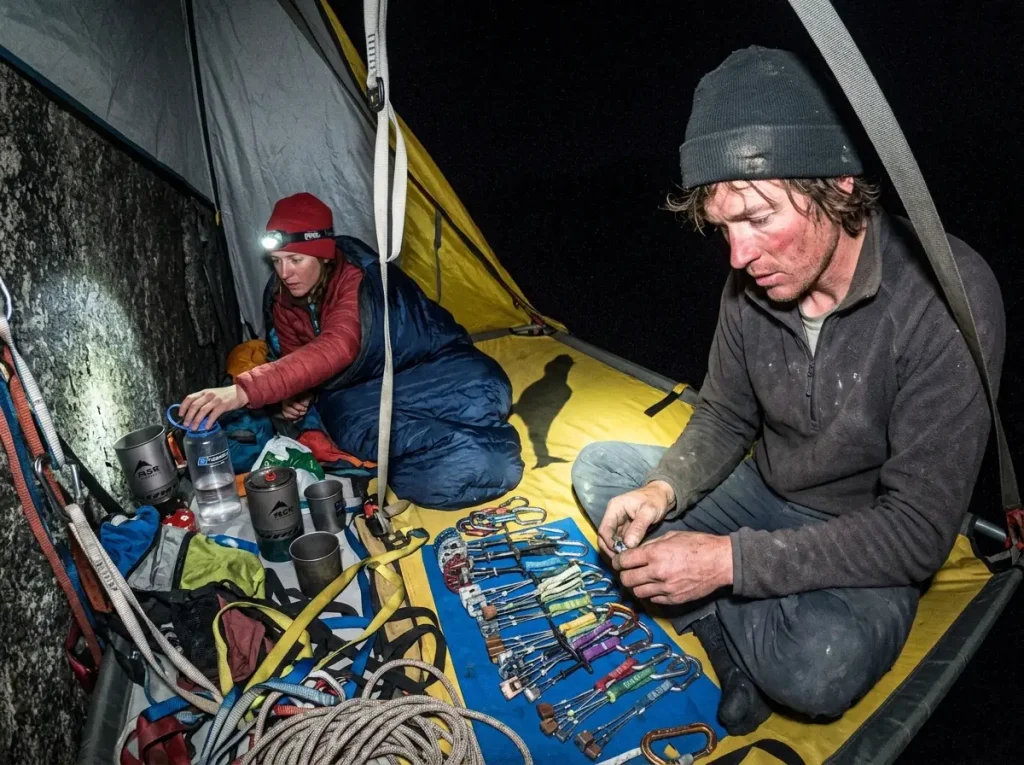
Nobody tells you what four to six days living on a vertical wall is actually like, including the uncomfortable part where “guided” does not always mean “you get to climb.”
The rough shape of the days
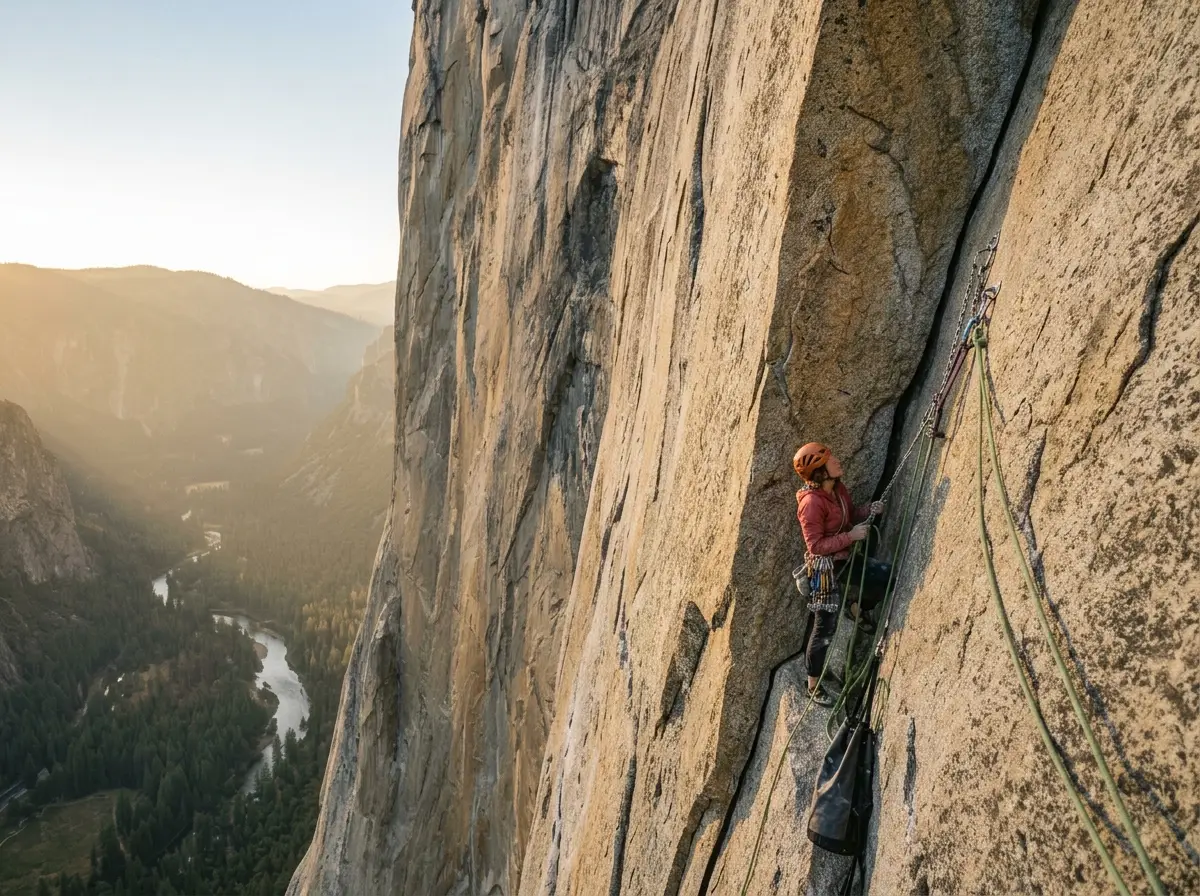
A guided ascent generally starts by fixing the lower pitches and hauling gear to a first bivy, then grinding upward day by day through the route’s named features: past Sickle Ledge, up the Stovelegs, around the Texas Flake, across the wild pendulum of the King Swing, under the Great Roof, and eventually through the Changing Corners near the top. You sleep on a portaledge or a ledge during an overnight bivouac hundreds of feet off the deck, you drag the haul bag behind you, and you manage food, water, and waste for the duration. Then you top out and walk off the East Ledges descent. It is a different route up the same granite than a free line like the Freerider on El Capitan, but the wall living is much the same.
The honest part: you might not lead much
Here is the thing guide services do not advertise. On some guided ascents, clients spend a lot of the route jugging, which means ascending a fixed rope on mechanical ascenders rather than free-climbing or aid-climbing the pitch under their own movement. The guide leads, fixes the line, and the client jugs up behind. This is efficient and safe, and for some clients it is exactly what they want. For others, who pictured themselves climbing El Capitan, it lands as a genuine disappointment. Climbers have aired this frustration openly in community forums, and it is a fair thing to be frustrated about if nobody set the expectation.
So set the expectation yourself. Ask, before you book, how much actual leading and climbing the itinerary includes versus how much jugging. There is no wrong answer, but there is a wrong assumption.
Living on the wall
The logistics are their own skill. Portaledge sleeping takes getting used to. Hauling the bag is heavy, awkward work. Rationing water across multiple days, dealing with human waste responsibly, and keeping your systems organized on a hanging belay all matter. A guide manages most of this, but you still live through it, and it is worth knowing that a big-wall day is far more about patient logistics than heroic movement. You are also expected to follow Leave No Trace even a thousand feet up, which on a wall means hauling out your own waste, not leaving it on a ledge for the next party.
For scale, remember what this wall has held. Warren Harding hauled and drilled his way up the first ascent of The Nose in 1958 over a siege of many days, and later climbers like Royal Robbins and Jim Bridwell pushed the standards of what a Yosemite Valley big wall could be. Lynn Hill became the first person to free-climb the entire route. And in 2018, Alex Honnold and Tommy Caldwell set the sub-two-hour speed record of 1:58:07. A guided week sits somewhere inside that enormous range, high above the Merced River, and it is a useful reminder of just how much history this one line up the granite contains.
Alternatives to a Full Guide Service
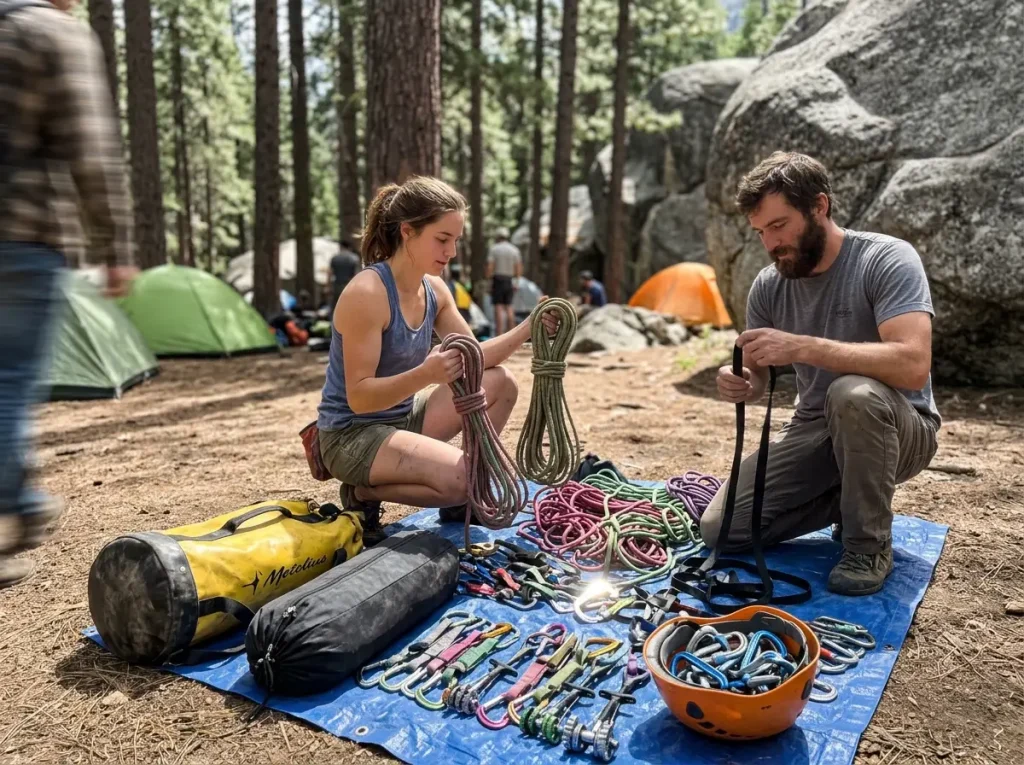
What if you cannot find a free partner but cannot stomach $6,000 either? There is a real middle economy here that almost nobody writes about.
The free-partner path, and its honest limits
Camp 4 and El Capitan Meadow are the established places climbers find partners in Yosemite. The culture is real, and people do meet wall partners there. But do not mistake it for a guaranteed free ride. Experienced trad leaders are realistically reluctant to commit multiple wall-days to a total stranger with no big-wall experience, no matter how enthusiastic that stranger is. Showing up at Camp 4 with zero systems knowledge and hoping a strong climber adopts you for six days is a long shot, not a plan.
The informal paid-partner economy
Between the free partner and the full guide service sits a path most people never hear about: paying an experienced big-wall climber informally to partner with you. Think of it as hiring a private guide without the guide-service overhead, a big-wall climber for hire rather than a formal outfit. This economy exists and gets discussed openly in the community. On Mountain Project you can find climbers posting threads that amount to “looking to pay for a guided big-wall partner in Yosemite,” soliciting an experienced climber for less than a formal guide service charges. Rates are not published and vary widely, so treat any figure you hear as a rough community estimate rather than a set price. It is less polished than YMS and comes without the certification and insurance, but for the right climber it is a legitimate middle path.
Teach yourself the systems
The lowest-cost option is to close the knowledge gap yourself. This is the same is-a-guide-actually-required question climbers work through in other ranges, like the guide requirement and its workarounds in Peru. A step-by-step resource goes a long way here. How to Big Wall Climb by Chris McNamara is the standard guidebook to aid and big-wall systems, covering hauling, aid technique, and portaledge living, written by a climber with more than 70 ascents of El Capitan. It costs a few tens of dollars against a $6,000 guide fee. It will not replace real mileage on smaller walls, but paired with practice it can close a lot of the gap a guide would otherwise fill.
To be clear about what these alternatives actually do: none of them replace competence. They replace paying for competence that you, or a willing partner, already have or are prepared to build.
Gear You Still Need to Bring, Even With a Guide
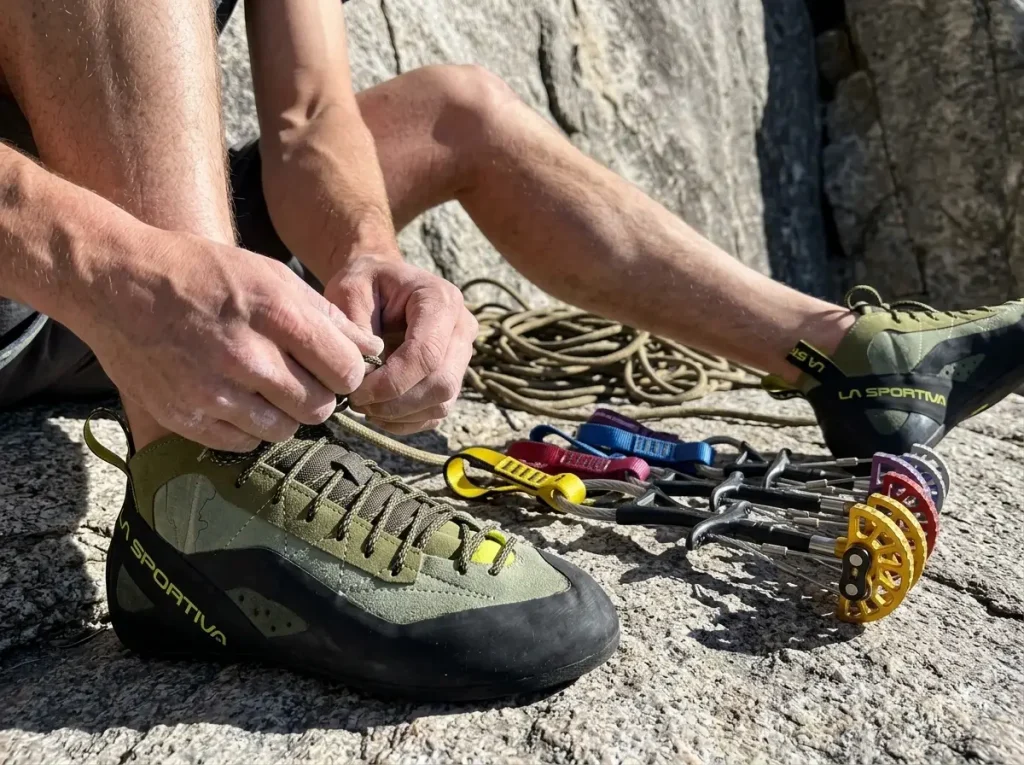
Even fully guided, you are not showing up empty-handed. A common surprise is assuming “guided” means “gear included.” It does not, at least not for the personal kit that touches your body.
Your shoes are always your problem
A guide brings the rack and the haul systems. Your feet are on you. The category standard for a route like this is the La Sportiva TC Pro, a mid-height crack-climbing shoe with a padded ankle cuff that protects your ankles in the constant fist and hand cracks, a Vibram XS Edge sole, and a stiff platform built for standing on tiny edges through multi-day walls. It is the shoe you see on more feet on El Capitan than any other, and for good reason. If you already own a stiff, broken-in crack shoe you trust, bring that instead. This is not a reason to buy new gear you do not need.
Footwear for the approach and descent
You also need real footwear for the hike in and the East Ledges walk-off, which is longer and rougher than people expect after a wall. A grippy approach shoe like the La Sportiva TX4 (the women’s version is here) handles the granite slabs and loose trail far better than trainers, and your knees will thank you on the descent when you are tired.
Personal protection
Even guided clients often supply or split their own protection, and it is worth owning a rack of cams you know. A Black Diamond Camalot C4 set is the standard trad rack for a big wall, covering the finger-to-hand crack sizes that make up much of the route. It is the same rack that works on other Sierra Nevada big routes, including the East Face of Mount Whitney, so it is not a single-use purchase. If you want a budget way to fill in a size or two, a single Metolius Master Cam is an easy add. Your own climbing harness and belay device round out the personal kit, while the aid-specific hardware like aiders and haul systems is usually where a guide’s gear takes over. The guide will confirm exactly which group hardware they cover, so coordinate the split when you book rather than buying doubles.
The anti-sell version of this whole section: if you already own solid shoes and a decent rack, you do not re-buy anything for this trip. Bring what you have, and let the guide fill the wall-specific hardware gaps.
Permits, Timing, and Season
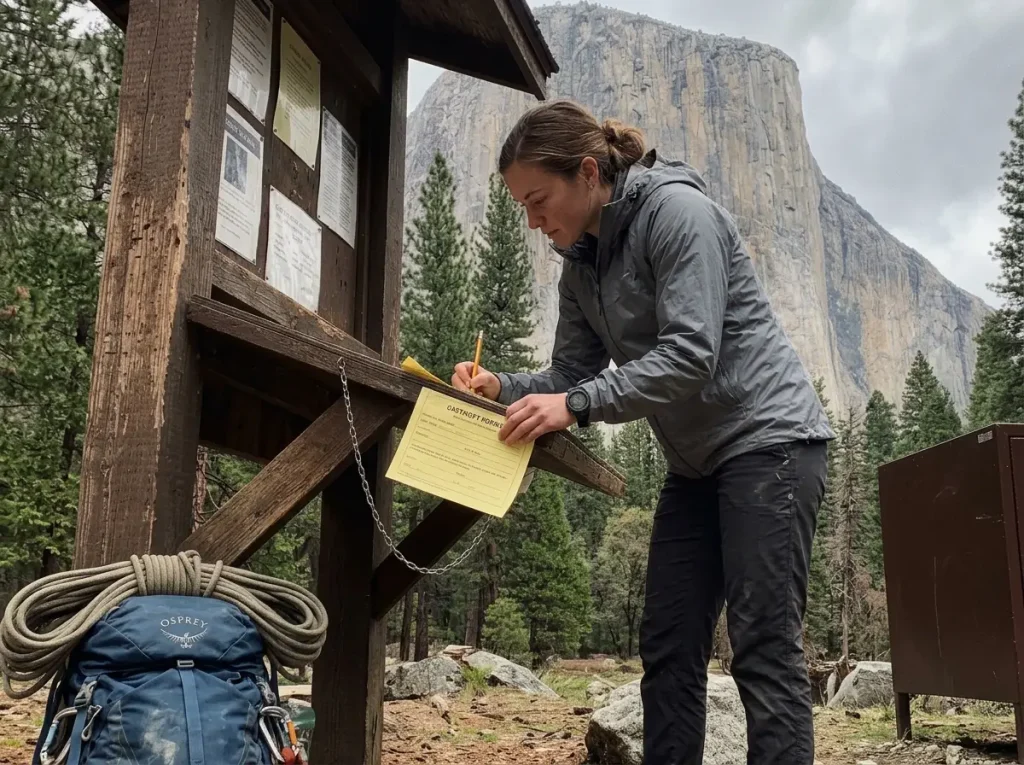
Two things decide when you can go, and one of them also decides how early you have to lock in that guide.
The overnight permit is free, mandatory, and yours to get
Since January 2023, Yosemite’s overnight big-wall permit, essentially a wilderness permit for sleeping on the wall, became a permanent program. Every climber staying overnight on a wall, guided or not, needs one. The good news is that it is free and self-registered at a kiosk near the El Capitan Bridge food lockers. The catch is that even with a guide handling most logistics, this permit is on you personally. It is not something the service silently takes care of without your involvement. You can read the details straight from the source at Yosemite’s overnight big wall permit program, made permanent in 2023.
Fill out your overnight wall permit at the El Capitan Bridge kiosk the afternoon before you start, not at first light. It is free and self-serve, but fumbling with paperwork in the dark while your partner racks up is the kind of avoidable friction that quietly eats your pre-dawn momentum. Confirm your guide is not silently expecting you to have it either.
That free permit is also the payoff on the honest-cost conversation from earlier. Since the permit adds nothing, the real variable costs on top of the guide fee narrow down to your personal gear, your food, and your tip. There is no hidden government surcharge waiting to ambush your budget.
Season, and how it squeezes your booking
Fall and spring are the prime windows in the Nose climbing season. Fall dates crowd the hardest and book out first, which is exactly why the guide-booking timeline from earlier matters so much: the best conditions and the tightest guide availability land on the same calendar. Heat, storm windows, and crowds all shift the ideal window from year to year, so build slack into your dates rather than betting everything on one long weekend. And remember the descent when you plan: topping out means the East Ledges walk-off, which feeds right back into why real approach footwear earns its place in your kit.
The Honest Verdict
So, is a $6,000 guide worth it? If you are strong on rock but missing the wall systems, yes, it is worth every dollar, and it may be the difference between topping out and bailing. If you already lead 5.10 trad with a willing partner, it is money you do not need to spend, and you will likely have a better time self-organized anyway.
Either way, the decision is simpler than it looks. There is one authorized outfit in YMS, a real vetting bar you should meet honestly, a permit that costs nothing, and a set of legitimate cheaper paths, from a paid experienced partner to teaching yourself the systems to finding a partner in the Camp 4 culture. The mountain does not care how you got up it competently. Pick the path that matches who you actually are as a climber, not the one that sounds most impressive at the bar afterward.
Frequently Asked Questions
01How much does it cost to hire a guide for The Nose?
A six-day guided ascent through Yosemite Mountaineering School & Guide Service runs about $6,000. That figure is the guide-service fee. Your personal gear, food, and a tip stack on top of it, while the overnight big-wall permit itself is free. Treat $6,000 as a floor for budgeting, not an all-in ceiling.
02Is Yosemite Mountaineering School really the only authorized guide?
Yes. Yosemite Mountaineering School & Guide Service is the only guide service the National Park Service authorizes to operate inside Yosemite, and it has done so since 1969. Commercial guiding in a national park requires a Commercial Use Authorization, and that permitting structure is why there is a single authorized outfit rather than a competitive marketplace.
03Do you get to lead pitches with a guide, or do they just haul you up?
It varies by service and by the plan you arrange. On some guided ascents, clients spend much of the route jugging fixed lines while the guide leads, rather than free-climbing the pitches themselves. This is safe and efficient, but it surprises climbers who expected to do the climbing. Ask directly, before booking, how much leading versus jugging your itinerary includes.
04Can a beginner climb The Nose with a guide?
Not a rank beginner. YMS vets climbers before accepting them and will not take an unqualified client up a grade VI wall. Expect to be asked about your recent leads, your trad experience, and any big-wall background. The guide route is best suited to climbers who are strong on rock but lack big-wall systems experience, not to people brand new to climbing.
05Is there a cheaper alternative to a $6,000 guide?
Yes, with trade-offs. You can hire an experienced big-wall climber informally as a paid partner for less than a full guide service, teach yourself the systems with a resource like How to Big Wall Climb and real practice on smaller walls, or find a strong partner through the Camp 4 culture. None of these replace actual competence, and the informal options come without a guide service certification and insurance.
Safety Notice: Rock climbing and mountaineering are inherently high-risk
activities that can involve physical trauma or fatal incidents. The information on Rock Climbing Realms is for
educational and informational purposes only. Techniques and advice presented here are not a substitute
for professional, hands-on instruction. Conditions and risks vary by location. Always seek guidance
from a qualified instructor before attempting new techniques. By using this website, you agree that you
are solely responsible for your own safety. Any reliance you place on this information is strictly
at your own risk, and you assume all liability for your actions. Rock Climbing Realms and its authors
will not be held liable for any harm, damage, or loss sustained in connection with the use of this information.
Affiliate Disclosure: We are a participant in the Amazon Services LLC Associates Program, an
affiliate advertising program designed to provide a means for us to earn advertising fees by advertising and linking
to Amazon.com. As an Amazon Associate, we earn from qualifying purchases. We are also an official affiliate partner
of Black Diamond Equipment via the AvantLink network. If you click on a Black Diamond affiliate link and make a
purchase, we may earn a commission at no additional cost to you. We also participate in other affiliate programs.
Additional terms are found in the terms of service.