
In this article
At some point, YouTube tutorials stop being enough. You’ve done the gym thing, you’ve followed stronger friends up easy crags, and now you’re staring at a route — or a whole discipline — that feels like it requires something more deliberate. Hiring a certified climbing guide is one of the highest-leverage moves you can make as a developing climber, but only if you hire the right one. This guide breaks down exactly what credentials to look for, where to find legitimate local guides, what questions weed out the pretenders, and what a real guided day actually costs.
Quick Answer: Here’s how to hire a local climbing guide the right way:
- Look up the guide’s AMGA credential number and verify it at amga.com — “trained” is not the same as “certified”
- Match their certification level to your planned terrain (SPI for single pitch, Rock Guide for multi-pitch or remote terrain)
- Find candidates through the AMGA Member Directory, AMGA Accredited Businesses list, or Mountain Project area forums
- Ask for proof of liability insurance, a first aid certification card (WFR preferred), and land management permits for your target area
- Get a clear, itemized quote — solo vs. group rate, gear included, cancellation policy
- Confirm logistics 48 hours out, show up with the gear list they send you, and come ready to push your climbing
Why Hiring a Guide Is Worth It (Even If You’re Not a Beginner)
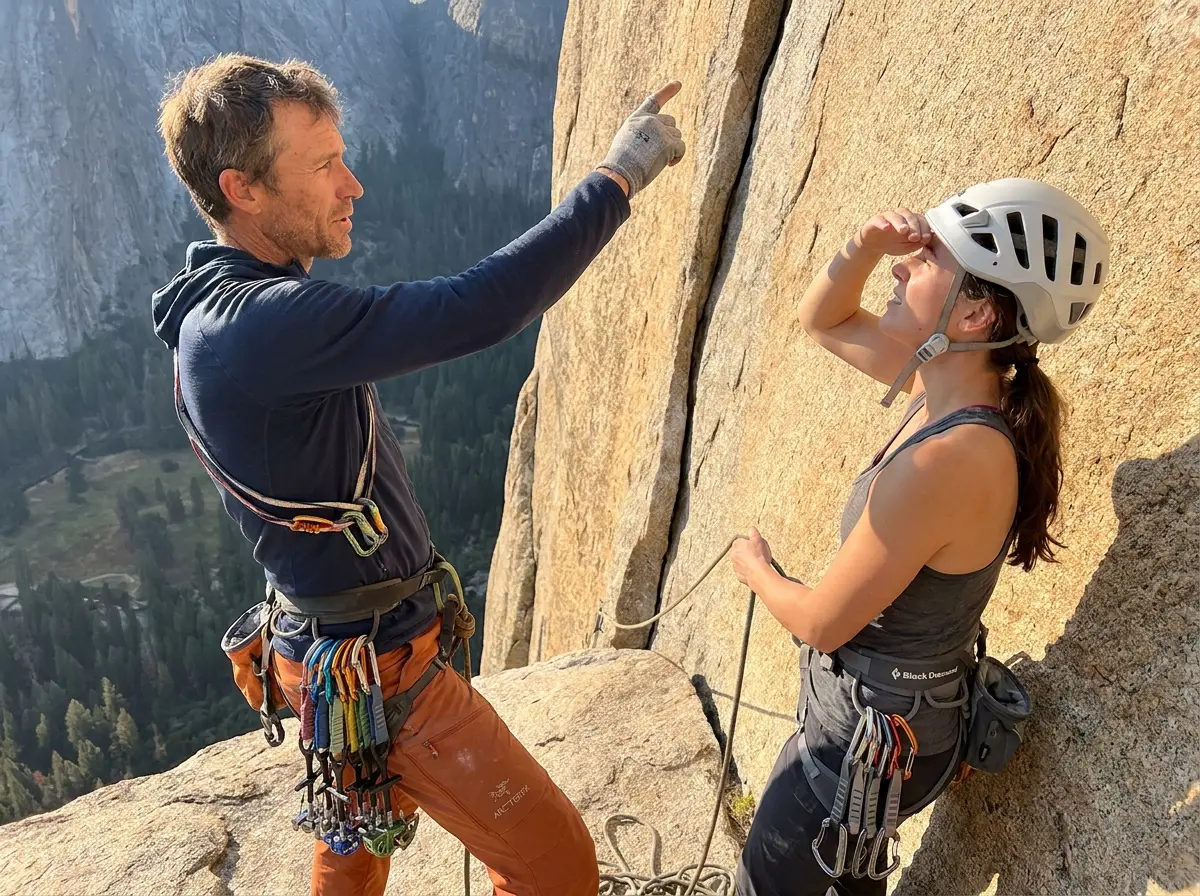
What a Certified Guide Can Compress Into a Single Day
The thing about climbing habits is that bad ones compound quietly. You can spend two years leading 5.10s with inconsistent footwork, a slightly sketchy anchor sequence, or a mental approach to runout that’s just functional enough not to cause an incident — but not good enough to serve you when the terrain gets serious.
One focused day with a certified guide can break three of those patterns in a single pitch. Not because guides perform miracles, but because they’ve spent thousands of days watching clients make the exact same mistakes in the exact same order. They know when to speak up, when to let you feel the consequence, and how to frame feedback so it actually sticks. A climbing partner who’s also learning can’t do that, no matter how supportive they are.
The other thing guides bring is local knowledge that doesn’t exist online. They know which descent trail goes slippery after rain, where the crux of that moderate multi-pitch actually is (not where the topo says it is), and which anchors on that popular sport crag are overdue for a replacement bolt inspection. That real-terrain context is worth more than any beta spray.
Access, Permits, and Beta You Won’t Find on a Forum
Many of the best climbing areas in the country require commercial use permits for guided groups — areas on NPS, USFS, and BLM land all have specific regulations. A legitimate guide holds those permits and operates legally on that terrain. An uncertified person taking money to show you around does not.
For climbers moving from the gym to the crag, a guide also handles the translation layer that can otherwise take years to build: reading a topo, choosing the right line for your ability on a given day, managing weather windows, and knowing when to turn around. If you’re planning your first outdoor lead, your first trad routes, or a goal climb above your current grade, those judgment calls matter enormously. If you want to find beginner-friendly outdoor routes to scope before or after a guided day, this guide to finding beginner outdoor climbing routes near you can help you build context before you book.
When Hiring a Guide Actually Makes Sense
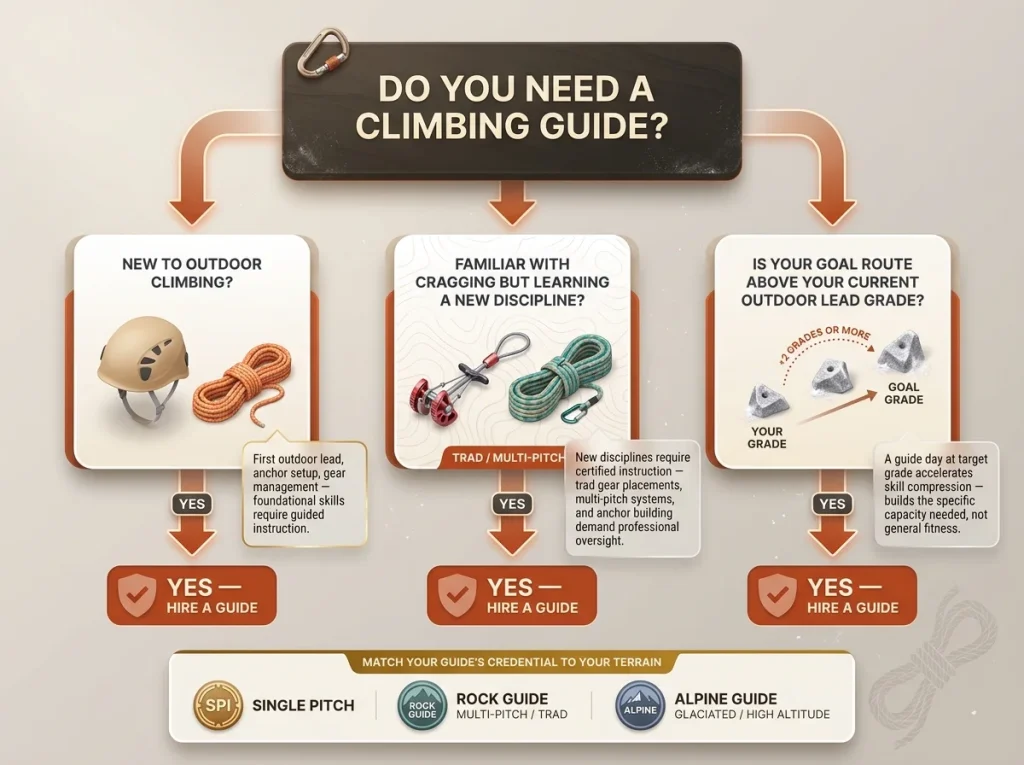
Not every crag day requires a guide. If you’re heading out on a route you’ve climbed before with a competent partner, you’re fine. Guides make the biggest difference in specific situations: your first outdoor lead, first trad placements, first multi-pitch, a goal climb a full grade above your comfortable onsight, or any time you’re climbing in a completely unfamiliar area with no local network to tap.
Pro Tip: If your goal climb is more than two grades above your current outdoor lead level, a one-day guide session at that grade is worth more than six months of gym climbing. The guide doesn’t climb it for you — they help you identify the exact skills you need and build them under real-terrain conditions.
Decoding AMGA Credentials: What Each Level Can (and Can’t) Guide
SPI — What the Single-Pitch Limit Actually Means
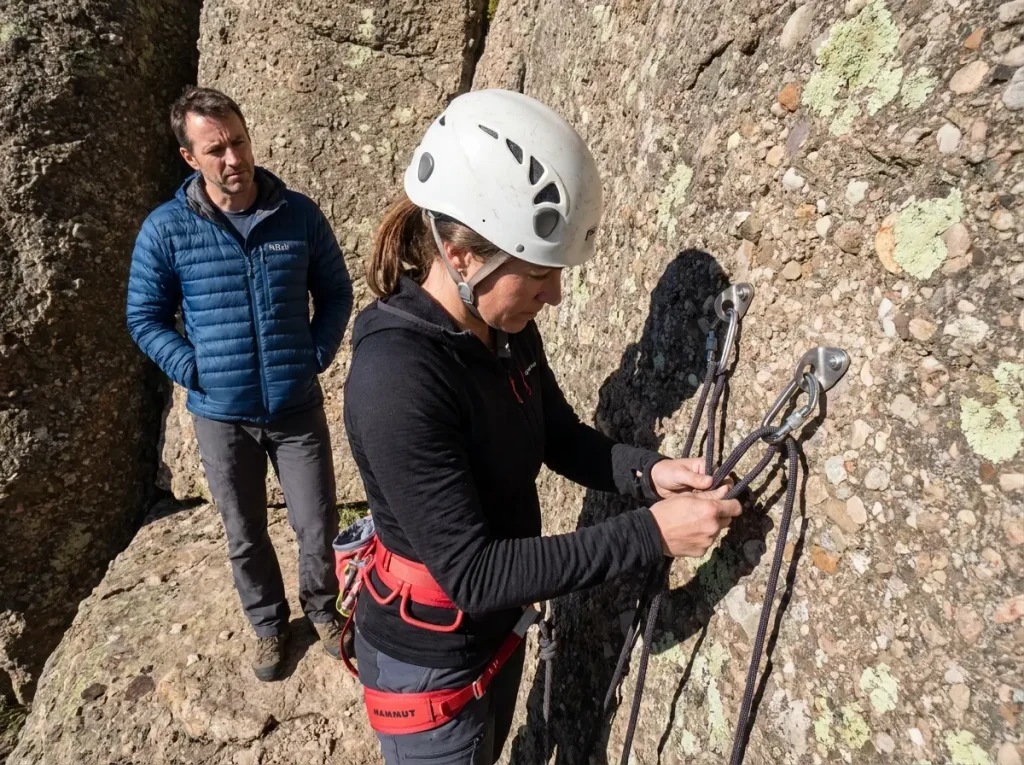
The AMGA Single Pitch Instructor (SPI) is the entry-level credential, and it has a specific, legally meaningful terrain scope: Grade I terrain, single pitch only, with approaches and descents that present no route-finding challenges or scrambling. That means roadside sport crags with a clear descent path.
Not a crag with a scramble approach. Not a climb that requires a rappel to get down. Not anything multi-pitch.
An SPI is certified to teach climbing skills in that environment, and many excellent climbing instructors hold this credential for exactly that context — gym-to-crag transitions, top-rope instruction, first outdoor lead clinics. But if you’re asking an SPI to guide you on a three-pitch moderate trad route with a 30-minute approach, they are operating outside their certification scope. Most clients have no way to know that unless they understand the terrain grade system.
Rock Guide and Alpine Guide: The Terrain Scope Decoded
A Certified Rock Guide holds a significantly more demanding credential. The Rock Guide exam covers multi-pitch terrain at any commitment grade, technical approaches requiring short-roping, and route-finding in complex terrain. This is the credential you want for anything beyond a straightforward single-pitch sport crag.
Above the Rock Guide sits the Alpine Guide, which covers glaciated terrain, mixed routes, and high-altitude objectives. At the top is the IFMGA (International Federation of Mountain Guides Associations) guide, a credential that requires completing all three AMGA disciplines — Rock, Alpine, and Ski — representing roughly 85 exam days of assessed performance. For the vast majority of recreational rock climbing, a Certified Rock Guide is the right call. For multi-day alpine objectives or anything involving glacier travel, you want an Alpine or IFMGA guide.
For a complete breakdown of what each AMGA level covers and how the progression works, this overview of the AMGA certification path is worth reading before you hire.
The “Trained vs. Certified” Trap Most Clients Never Catch
This is the single most important thing in this article, so read it carefully.
“AMGA trained” means a guide attended a course. It does not mean they passed the exam. In the AMGA system, becoming certified requires completing the course AND passing a separate 7–10 day exam under rigorous assessors. A guide can sit through an AMGA Rock Guide course and never take the exam — and they can legally call themselves “AMGA trained” because they technically attended a training.
Many guide businesses prominently display “AMGA trained guides” because it sounds authoritative. Some of those guides are working toward certification and are excellent. Some of them stopped at the course and never sat the exam. You cannot tell from the marketing language alone.
The verification step is simple: ask for their AMGA credential number and look them up on the AMGA Member Directory. The directory shows active credential status. If a guide gets defensive when you ask for their number, that tells you everything.
Pro Tip: Screenshot the AMGA directory listing for your guide before the day out. Certification status is current in the database — if it’s expired or not listed, that’s a real signal, not a bureaucratic technicality.
5 Places to Actually Find a Local Certified Guide
The AMGA Member Directory
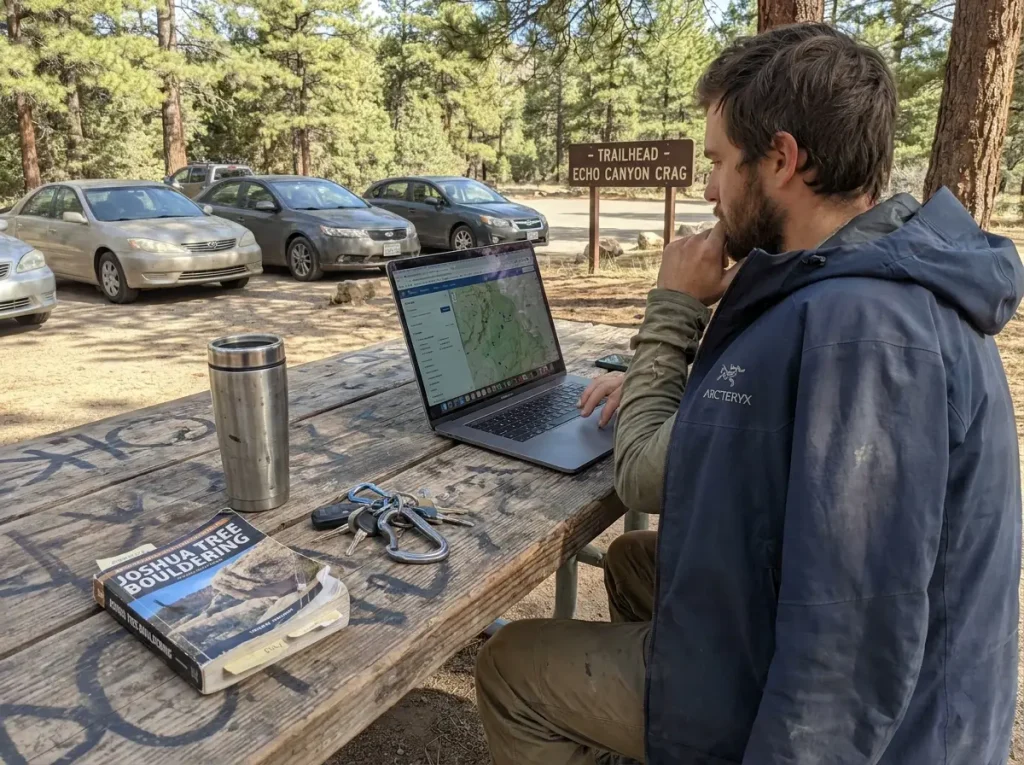
The most reliable starting point is the AMGA Member Directory. You can filter by location and credential type, so searching for “Certified Rock Guide” within 50 miles of your target crag gives you a list of people who have actually passed the exam. This is the fastest way to build a real shortlist.
AMGA Accredited Businesses
A step beyond individual credentials, AMGA Business Accreditation means the entire operation has been reviewed for operating guidelines, risk management protocols, land management permits, liability insurance, and employment practices. Booking through an AMGA Accredited guide service adds a layer of organizational accountability on top of the individual guide’s credential. The AMGA website maintains a current list of accredited businesses.
Mountain Project Forums, Gym Staff, and Community Channels
For genuinely local intel, Mountain Project’s area-specific forums are underused gold. Most major climbing areas have an active forum where locals will recommend specific guides or services with firsthand experience. The referral thread structure means you’re reading real climber reviews, not marketing copy.
Local climbing gym staff are another underrated source. The route setter who’s been at the gym for six years knows who the legitimate guides are in the area and who runs sketchy operations. Ask at the front desk — “Do you know any certified guides in [area]?” often gets you a direct referral with context.
The same logic applies to local climbing Facebook groups and subreddits for specific areas. Before vetting strangers from any source, the framework in this piece on how to vet a stranger before you rope up translates well to the guide context.
7 Questions to Ask Before You Book
Credential and Insurance Questions (Non-Negotiables)
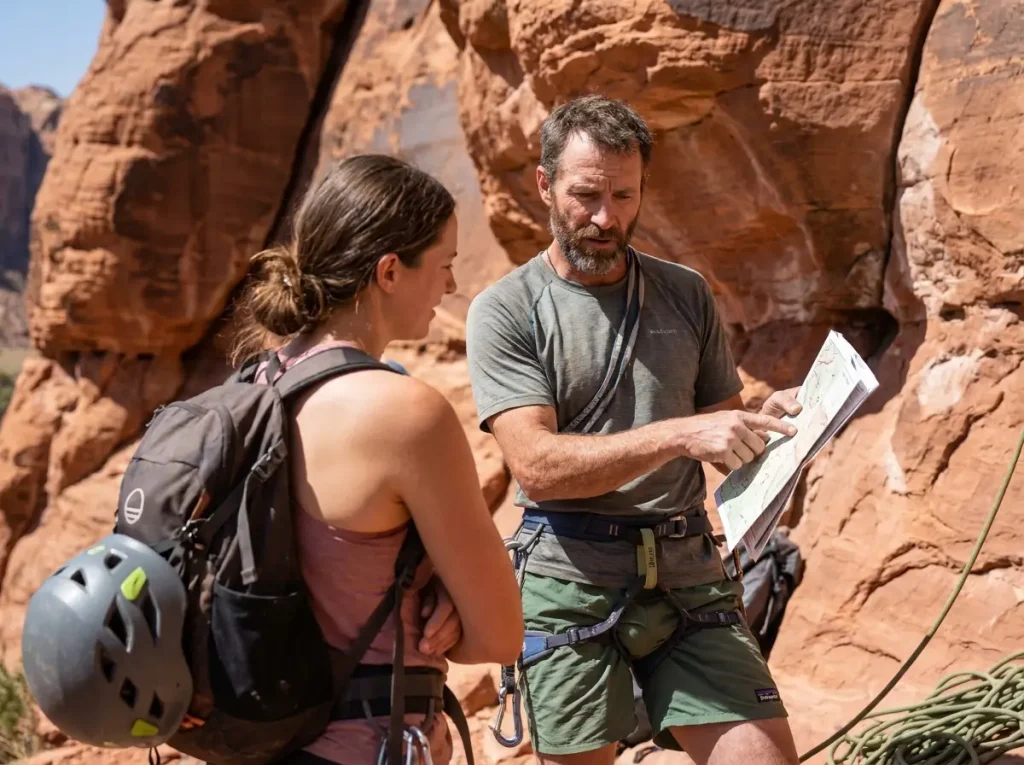
These four questions are not optional and a legitimate guide will answer them without hesitation:
- What’s your AMGA certification level and current credential number? (Then verify it.)
- Do you carry commercial general liability insurance for guided climbing activities — and can you send me the certificate of insurance?
- What’s your current first aid certification? A Wilderness First Responder (WFR) is the professional standard; a Wilderness First Aid (WFA) is the minimum you should accept.
- Do you hold the required land management permits for this specific area?
Any hesitation on questions one or four is a hard stop. Insurance and first aid cert hesitation might indicate a freelance guide who operates under a larger service’s coverage — which is fine, but should be explicitly confirmed.
Experience and Terrain-Specific Questions
Beyond credentials, specificity matters. Ask how many times they’ve guided your target route or crag specifically — not the area in general. A guide who’s taken 30 parties up a particular route knows every tricky move, every anchor nuance, and every place where clients hesitate. That local depth is different from a guide who is competent on that terrain type but has never actually done that specific route with clients.
Ask about your planned terrain difficulty relative to what they typically guide. A guide who usually works with beginner groups on 5.6 slabs has a different skill set than one whose normal workday involves guiding parties on 5.10+ trad routes with complex descents. Both may be fully certified — but one of them is a better fit for your objective.
Logistics and Policy Questions
Before money changes hands, get clear answers on: What gear do you need to bring versus what the guide provides? What’s the guide-to-client ratio for your booking? What’s the rescheduling and refund policy if weather cancels the day? Is gear rental available if you don’t own a harness or helmet?
The gear question matters more than it sounds. Some guides provide everything; others expect you to arrive in a harness and helmet. Showing up without required gear wastes the first hour of your day and starts the trip on a bad note.
Pro Tip: Ask if they’ve had any client incidents or near-misses at your target area and how they handled it. A thoughtful, honest answer tells you more about their judgment than any credential. Defensiveness or a rehearsed “never had any problems” is a flag.
What Guides Actually Charge (And How Group Size Changes Everything)
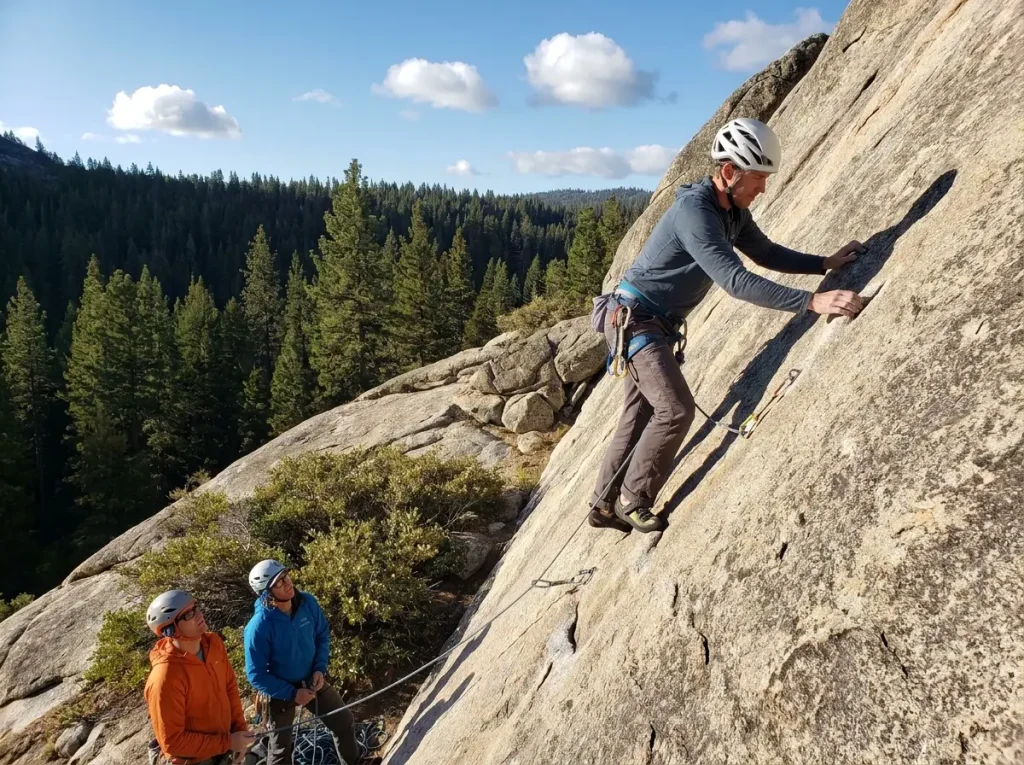
Solo vs. Two-Person vs. Group Rate Breakdown
Guide rates are almost always structured on a per-person basis that drops with group size, because the guide’s time and preparation cost is roughly fixed regardless of whether one or four clients show up.
For outdoor single-pitch cragging in 2025, expect to pay $400–$750 for a solo client day, $250–$400 per person for two clients, and $150–$250 per person for a group of three to four. Multi-pitch rates run higher: $550–$900 solo, $300–$500 per person for two. Rates vary by region — guides working in high-cost-of-living areas like the Pacific Northwest or Northeast charge more than those in lower-cost markets.
Half-Day vs. Full-Day vs. Multi-Day Structures
Most guide services offer half-day (4–5 hours, typically morning) and full-day (7–9 hours) options. For a first outdoor lead or a skills clinic, a half-day is often enough to get meaningful work done on two or three routes. For a goal climb or a first trad day, budget for a full day — you’ll want the extra hours for the debrief work that happens at the base between pitches.
Multi-day packages often include a modest per-day discount and are worth it if you’re working toward a specific objective that requires building skills over consecutive days. Some guides also offer custom packages that combine a skills clinic day with a goal climb day.
What’s Typically Included — and What Isn’t
Most guide day rates include the guide’s time, technical gear (ropes, draws, rack for trad), and area-specific beta. They typically do not include park or climbing area fees, your personal gear (harness, helmet, shoes), transportation, meals, or tips. Gear rental is available through most guide services for an additional fee — usually $25–$50 per day for a harness and helmet package.
If you’re considering a multi-day trip in a remote area, check whether your travel insurance covers guided climbing activities specifically. Not all policies do. This breakdown of what to look for in climbing travel insurance covers the key policy terms to check before you book.
Red Flags That Should End the Booking
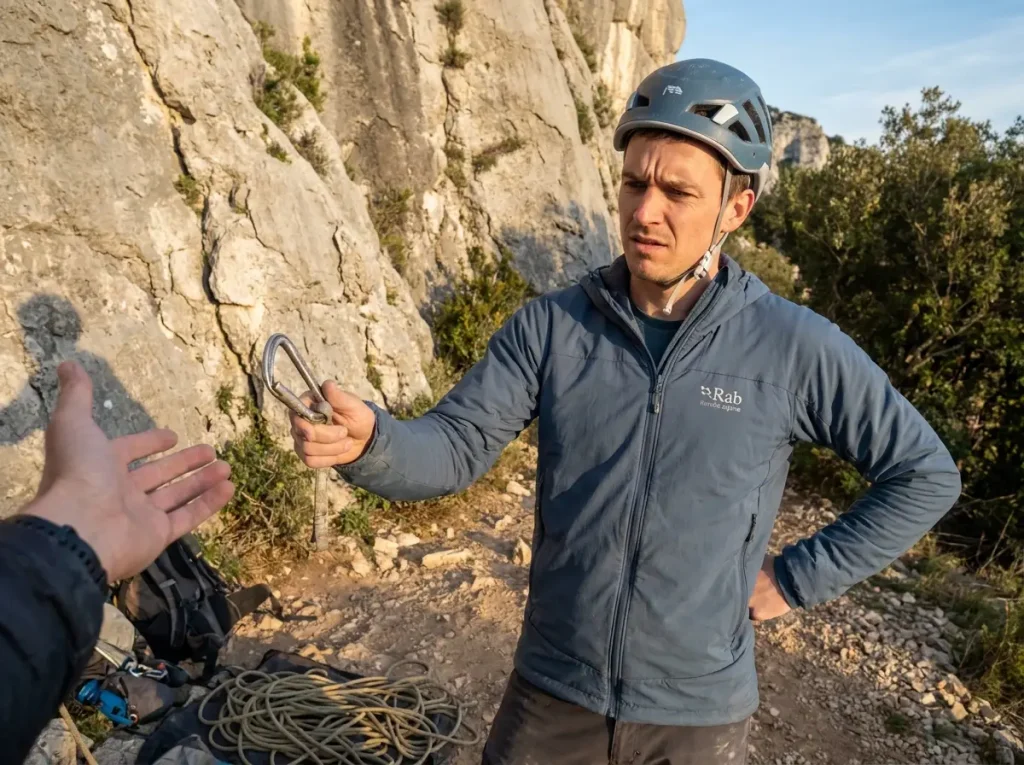
Credential Gaps and Vague Language
Watch for language like “trained by AMGA instructors,” “worked with AMGA guides,” “AMGA trained,” or “pursuing AMGA certification.” These phrases are distinct from “AMGA Certified Rock Guide” — and the distinction is not subtle. Marketing language that buries or softens the credential claim is worth examining carefully.
Equally suspicious: a guide who can’t provide their credential number when asked, or who describes their certification as “equivalent” to AMGA. The AMGA directory is the verification step, not the guide’s own description of their training.
No Insurance, No First Aid, No Permit
A guide without commercial general liability insurance is a legal liability for you if something goes wrong. An unpermitted guide operating on NPS or USFS land is breaking federal regulations — and their operation can be shut down mid-day, stranding your group.
A guide without current first aid certification in a terrain context where you could be an hour from help is a serious hazard to your safety. None of these are paperwork formalities. They are real protections that legitimate guides carry as a matter of professional obligation.
Land management permits also connect directly to access preservation. Unpermitted commercial guiding is one of the documented causes of access restrictions at popular crags. For context on how commercial use regulations connect to broader climbing access issues, this piece on bouldering ethics and access covers the access picture.
Personality and Attitude Red Flags on Terrain
Before you commit to a full-day booking with a guide you haven’t worked with before, some services offer short “meet and climb” sessions or skill assessments at a nominal rate. Use them. A guide whose coaching style is dismissive, impatient, or condescending in a low-stakes intro setting will be worse under pressure on actual terrain.
Other signs to watch for during any pre-trip conversation: a guide who talks about their own climbing achievements more than asking about your goals, who pushes back when you ask about their credential specifics, or who quotes a rate and immediately starts upselling you toward longer or more expensive packages before understanding what you actually need. A guide whose first move is to understand your goals and current ability level is almost always the right kind of person to hand the sharp end of the rope to.
Pro Tip: Search “[Guide Name] + [Area]” before booking. Real climber reviews in forums, Mountain Project threads, or local Facebook groups are more reliable than testimonials on a guide’s own website.
What to Expect When You Show Up
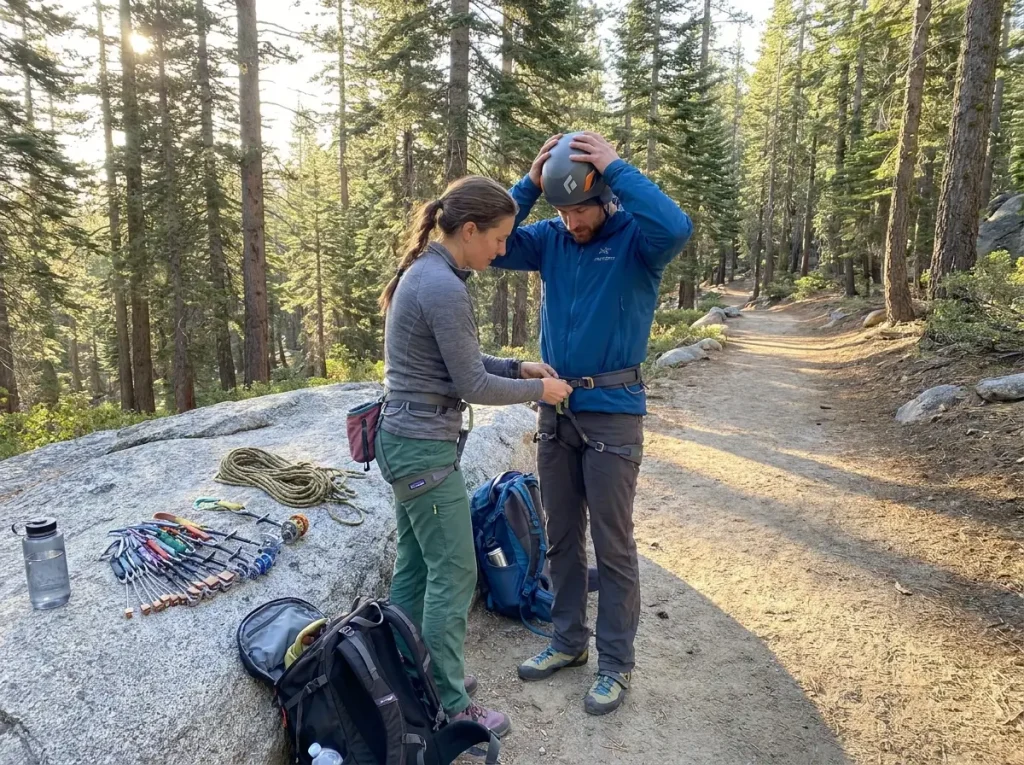
Gear You Bring vs. Gear the Guide Provides
A good guide service sends a detailed gear list when you confirm your booking. Read it. Show up with everything on it.
The list will typically cover personal gear — harness (or rent one), helmet (or rent one), climbing shoes, layers for the forecast, food, water, sun protection, and personal medications. The guide handles all technical systems gear: ropes, protection, draws, anchors, belay devices.
If anything on the list is unclear, ask the day before — not at the trailhead. Clarifying “what kind of layers?” at 7 AM when the guide is trying to rack up wastes the first 20 minutes of your paid day.
The Pre-Climb Conversation and Gear Check
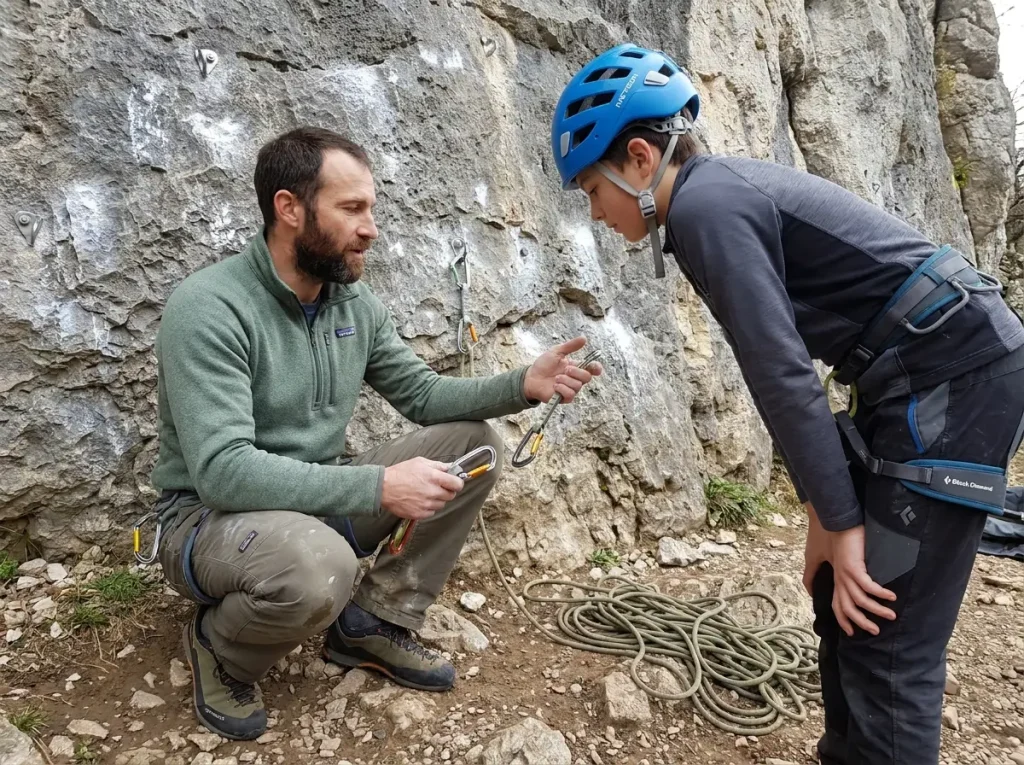
Every legitimate guide starts the day with a structured check-in. They’ll ask about your experience level (even if you listed it when booking — they want to hear how you describe it), your goals for the day, any physical limitations or injuries, and what you’re most nervous or curious about.
Then comes the gear check: harness fit, helmet buckle, shoe fit for the day’s terrain. This is not bureaucratic procedure. It’s the guide calibrating their read of you before you’re 200 feet off the ground.
Answer their questions honestly. If you’ve been overstating your experience level in the booking, this is the moment to correct it — the guide is not going to judge you, and they will adjust the day accordingly.
How the Guide Adapts the Day to Your Actual Ability
A good guide has planned three or four possible routes for your day — one at your stated level, one or two easier fallbacks, and one harder option if you’re moving well. They don’t announce this plan upfront; they watch how you move on the first pitch and adjust from there.
If you hit a wall on a crux and need to rest or downgrade, that is not a failure — it’s information. Guides who work regularly with recreational climbers are calibrated to that reality. The best days often involve an honest conversation mid-route about what’s actually working and a pivoted plan that gets you further than the original objective would have.
For climbers moving toward trad leading specifically, the mental management component is as much of the work as the physical technique. This piece on the trad climbing mental game is useful reading to do before a guided trad day so you have language for what you’re experiencing on the route.
Conclusion
Hiring a legitimate climbing guide comes down to three things: verify the credential (certified, not just trained), match the certification scope to your terrain, and ask the non-negotiable questions before money changes hands. Beyond credentials, find someone whose coaching style fits how you learn — because a guide with the right certification but the wrong communication style is still a frustrating day.
The AMGA directory and accredited business list exist precisely to make this straightforward. Use them. Book through them. And once you’ve found a guide who helped you break through a real plateau, book them again — continuity with a guide who knows your climbing patterns is worth more than variety.
Q1 Do you need a certified guide for a basic sport crag day?
For a well-bolted single-pitch sport crag where you’re already comfortable leading, no — a competent climbing partner is fine. If it’s your first outdoor lead, you’re unfamiliar with the anchor setup at that crag, or you want focused instruction, a guide day is worth the investment.
Q2 What’s the difference between a climbing guide and a climbing instructor?
In the AMGA system, instructors (like the SPI) are certified to teach in controlled, low-complexity terrain. Guides are certified to take clients through challenging, complex, or remote terrain where independent leadership and judgment matter. The terrain scope is the key distinction.
Q3 Can an AMGA Single Pitch Instructor take you on a multi-pitch route?
No. An SPI certification covers single-pitch terrain only, with approaches that have no route-finding difficulties. Taking clients onto multi-pitch terrain is outside the SPI scope of practice. For multi-pitch climbing, you need a guide holding at least an AMGA Certified Rock Guide credential.
Q4 How far in advance should you book a climbing guide?
For popular areas during peak season — spring and fall in the Southwest, summer in the Northeast and Pacific Northwest — book four to six weeks out. Last-minute bookings are possible in shoulder season, but the best guides fill early. For goal climbs requiring specific weather windows, give yourself multiple booking options across a two-week range.
Safety Notice: Rock climbing and mountaineering are inherently high-risk
activities that can involve physical trauma or fatal incidents. The information on Rock Climbing Realms is for
educational and informational purposes only. Techniques and advice presented here are not a substitute
for professional, hands-on instruction. Conditions and risks vary by location. Always seek guidance
from a qualified instructor before attempting new techniques. By using this website, you agree that you
are solely responsible for your own safety. Any reliance you place on this information is strictly
at your own risk, and you assume all liability for your actions. Rock Climbing Realms and its authors
will not be held liable for any harm, damage, or loss sustained in connection with the use of this information.
Affiliate Disclosure: We are a participant in the Amazon Services LLC Associates Program, an
affiliate advertising program designed to provide a means for us to earn advertising fees by advertising and linking
to Amazon.com. As an Amazon Associate, we earn from qualifying purchases. We are also an official affiliate partner
of Black Diamond Equipment via the AvantLink network. If you click on a Black Diamond affiliate link and make a
purchase, we may earn a commission at no additional cost to you. We also participate in other affiliate programs.
Additional terms are found in the terms of service.