
In this article
Ask a room full of American hikers to name the highest mountain in the Americas and half of them will say Denali. It is the peak they know, the one on the Alaska license plates, the Seven Summit in their own backyard. They are wrong, and not by a little. The real answer sits 5,000 miles south in Argentina, and the honest version of this story is more interesting than a single name, because “highest” turns out to depend on how you measure.
Aconcagua Is the Highest Mountain in the Americas
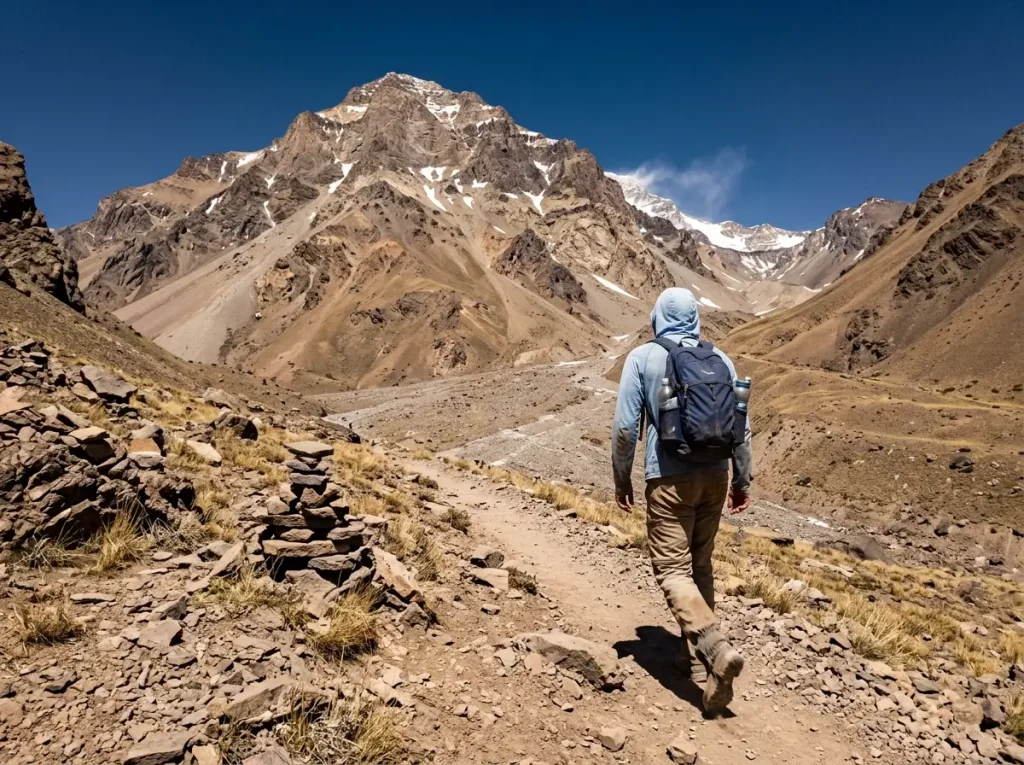
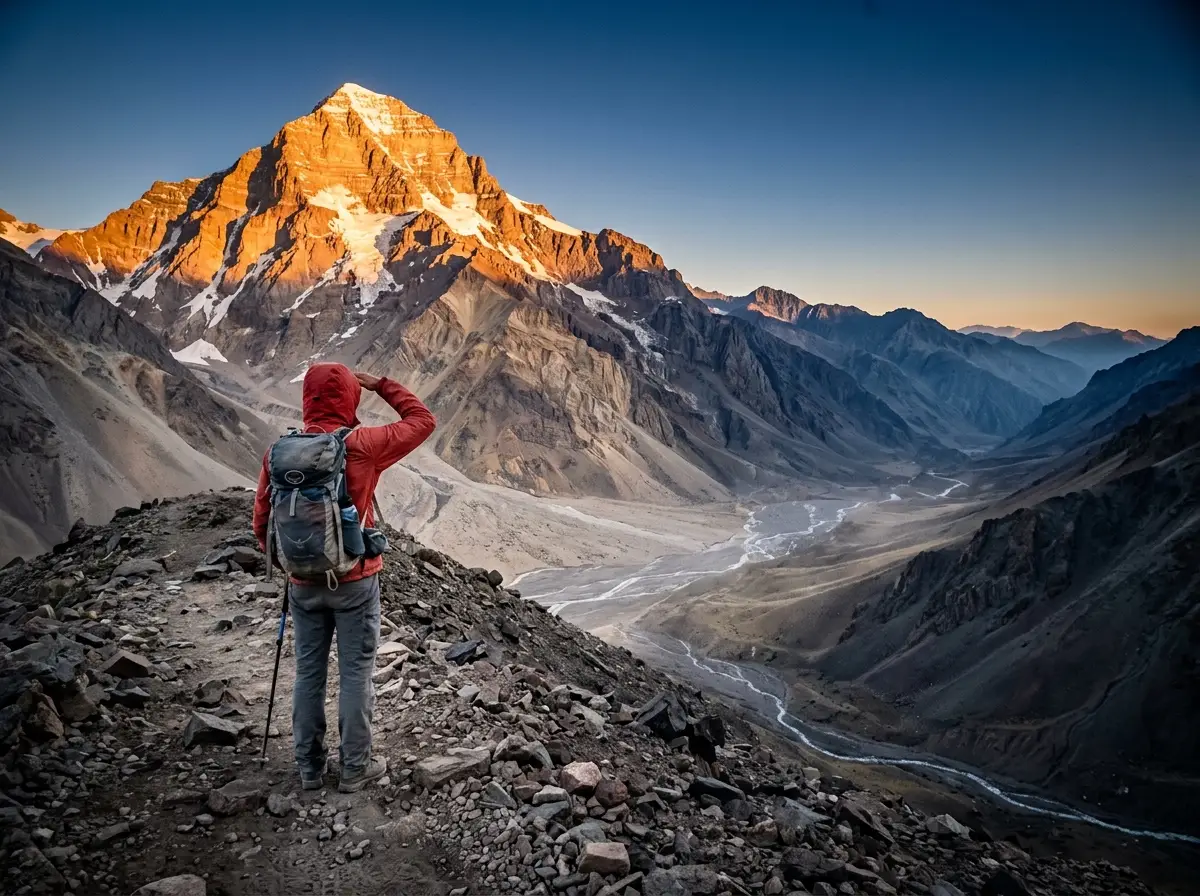
Aconcagua is the answer, and it is not a close race. It stands in the Principal Cordillera of the Andes mountain range, in Argentina’s Mendoza Province, about 112 km northwest of Mendoza city and only 15 km from the Argentina-Chile border. That single peak holds four titles at once: highest in the Americas, highest in the Western Hemisphere, highest in the Southern Hemisphere, and highest outside Asia.
The Exact Height (and Why Sources Disagree)
Here is where most articles quietly pick a number and hope you do not notice. The officially recognized summit elevation is 6,960.8 m, set by the 2012 Sigma Program GPS survey and accepted by Argentina’s Instituto Geográfico Nacional. Wikipedia currently lists 6,967.15 m (22,858 ft). Older maps show 6,962 m or 6,959 m.
None of these are lies. GPS re-measurements of remote high peaks rarely converge to the exact meter, and a six-meter spread on a mountain seven kilometers tall is noise, not error. Pick the IGN figure if you want the official one; round to “about 6,961 m” if you just want to be right in conversation.
If the elevation on your map does not match the guidebook, do not assume one is broken. Note the survey year instead. Anything measured before 2012 predates the GPS re-survey, and that alone explains most of the gap you will see between sources.
Where Aconcagua Actually Sits
The mountain anchors the Aconcagua Provincial Park, a high-desert basin of scree, wind, and thin air. What surprises people is the access. Mendoza is a real city with an international airport and a wine industry, so getting to the trailhead is far easier than reaching a comparable Himalayan giant. This is a serious expedition peak with suburban-easy logistics, an unusual combination that shapes everything about how it gets climbed.
Climbers have been coming since the Swiss guide Matthias Zurbriggen made the first ascent in 1897, so the guiding network of mule trains and fixed camps runs more than a century deep.
The Four Titles It Holds at Once
Being the highest in the Americas is only part of it. Because South America sits entirely in the Western and Southern Hemispheres, and because no peak outside Asia comes close to it, Aconcagua sweeps all four continental and hemispheric records in one shot. The only mountains on Earth that stand taller are in the Himalaya and the Karakoram.
Why It’s Not Denali (Even If You Guessed It)
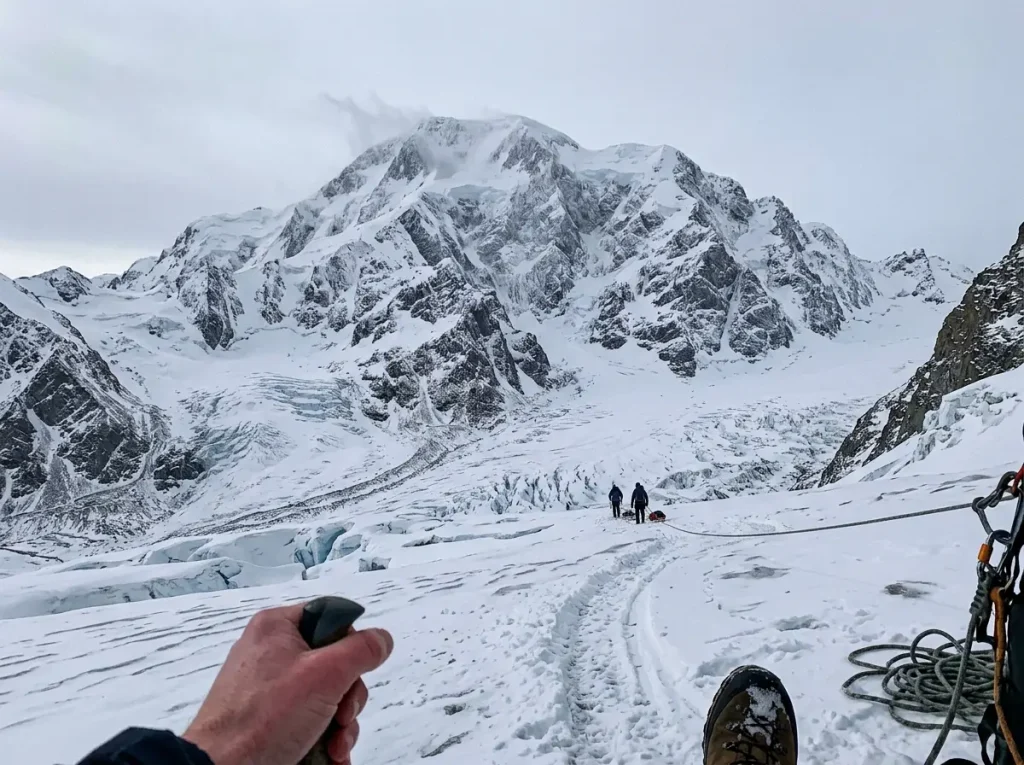
If your gut said Denali, you are in good company, and you are not really wrong to think of it. Denali is the most famous mountain in North America, a genuine Seven Summit, and it dominates US mountaineering culture. It is also 770 m shorter than Aconcagua, which is not a rounding difference. It is more than 2,500 vertical feet.
Denali by the Numbers
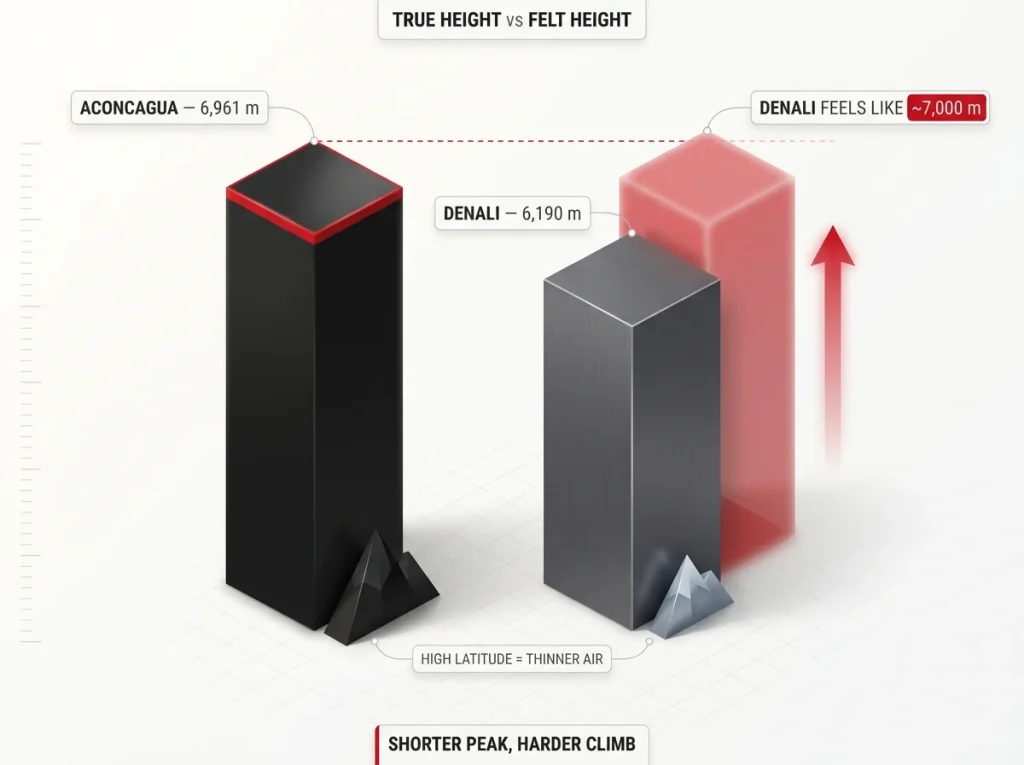
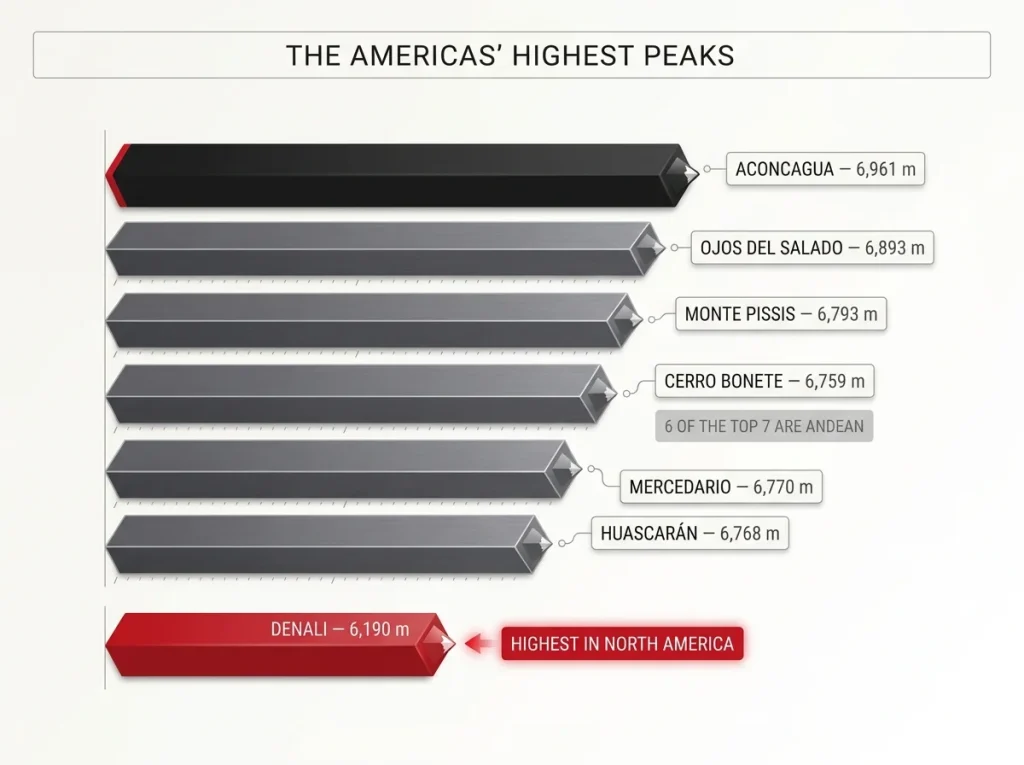
Denali, once named Mount McKinley, tops out at 6,190 m (20,310 ft). Aconcagua reaches about 6,961 m. That gap is bigger than the height of many standalone mountains. In raw elevation, the highest peak in the Americas that is not in South America does not even enter the same tier, and every mountain taller than Denali in this hemisphere sits in the Andes.
Why Denali Feels Taller Than It Is
Now the honest twist. Denali punches far above its number because of where it sits. At 63°N latitude, the atmosphere is thinner per meter of elevation than it is near the equator, so Denali’s effective physiological altitude runs 600 to 900 m higher than its true height.
Add arctic cold and heavy load-hauling and you get a mountain that climbs like a 6,800 to 7,000 m peak. That is why so many people assume it must be the tallest, and it is worth understanding exactly what a Denali expedition actually demands before you rank the two.
Tallest and hardest are two different questions. Denali loses the height contest and still outranks Aconcagua in raw expedition difficulty. When someone asks which is the bigger climb, ask them which they mean first, because the answer flips depending on the word they choose.
Highest Isn’t the Same as Hardest
This is the distinction competitors blur. Aconcagua wins on elevation, but there is no single hardest mountain to climb, and being the tallest tells you almost nothing about the technical demand or the objective hazard. Aconcagua’s standard line is a non-technical walk-up. Denali is a full glaciated expedition. Height and difficulty are separate scales that happen to overlap sometimes.
“Highest” Depends on How You Measure It
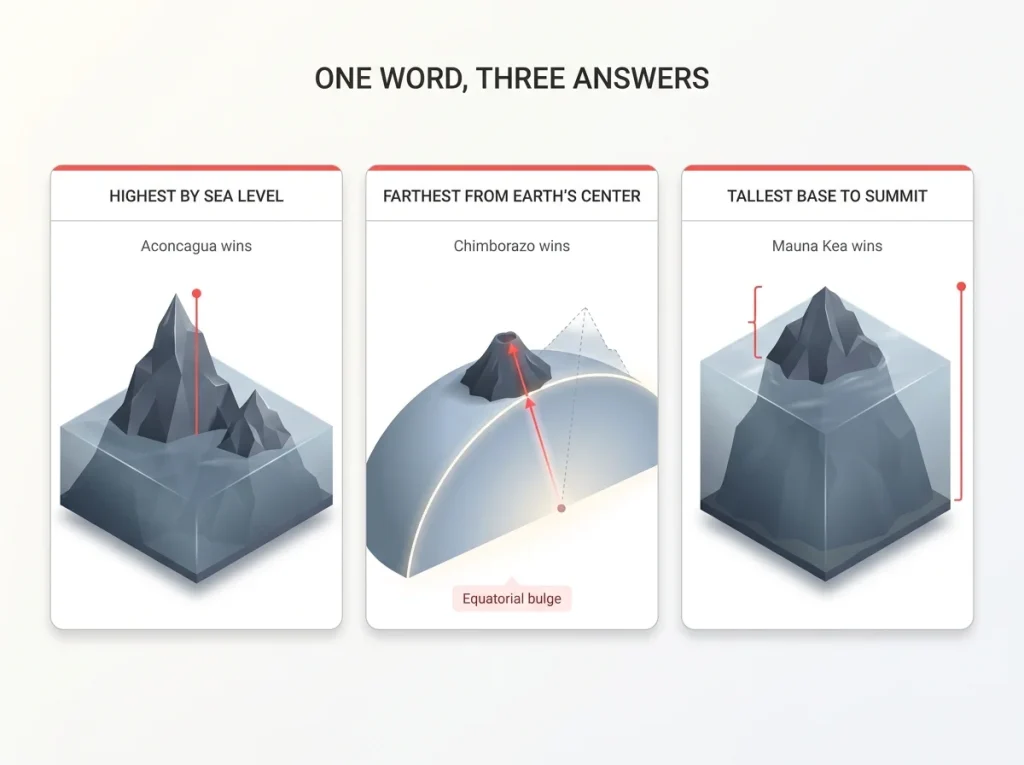
Here is the part almost nobody handles well, and it is the reason this question is more fun than it looks. “Highest” is not one measurement. It is at least three, and each one crowns a different mountain. All three are correct. They are simply answering different questions.
Highest by Sea Level
This is the default, the one everyone means without saying it. Measured as elevation above sea level, Aconcagua wins in the Americas and Everest wins on Earth. When you type “highest mountain” into a search bar, this is the scale the answer box uses, and by this scale Aconcagua’s roughly 6,961 m is the number that matters.
Farthest From Earth’s Center
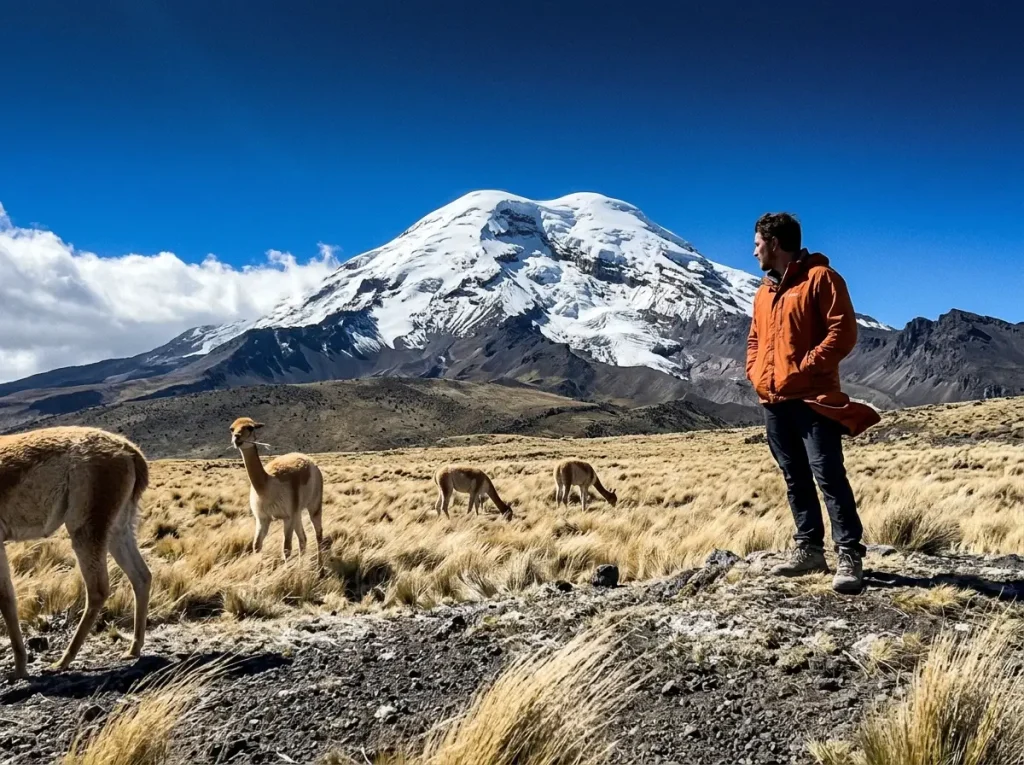
Switch the question to “which summit is farthest from the center of the planet” and the winner changes completely. That title goes to Chimborazo in Ecuador, a 6,263 m volcano that does not even crack the world’s top 100 by sea-level height. Because Earth bulges at the equator, Chimborazo’s summit sits about 2,168 m farther from the core than Everest’s does, as NOAA’s Ocean Service explains, the highest point above Earth’s center isn’t the tallest mountain by sea-level elevation. It is a real record, just a different one.
For the same reason, it is worth seeing how Everest stacks up as the highest by elevation overall, because the two mountains trade the title depending on which question you ask.
Tallest From Base to Summit
There is a third measurement worth naming so you can retire it from the argument. Measured from base to summit, Hawaii’s Mauna Kea is the tallest mountain on the planet, because most of it sits underwater and only about 4,200 m of its 10,000 m rise above the sea. Aconcagua does not compete on this scale and does not need to. The point is that anyone who insists there is one true “tallest” is skipping the question that actually matters, which is tallest measured how.
How Aconcagua Stacks Up Against the Americas’ Other Giants
Once you know the winner, the obvious next question is what else is up there. The Americas’ high-altitude roster is overwhelmingly Andean, and a couple of the runners-up hold records of their own.
Ojos del Salado, the Highest Volcano on Earth
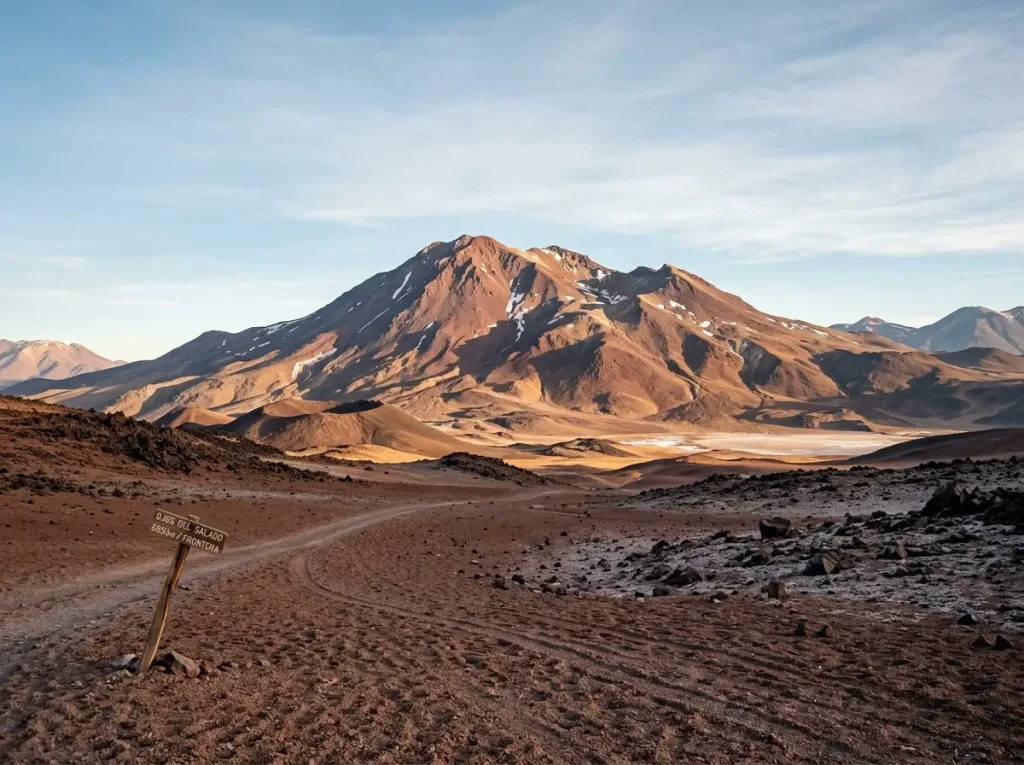
Second place in the Americas belongs to Ojos del Salado, about 6,893 m on the Chile-Argentina border. It is also the highest volcano anywhere on the planet, an active one with a summit crater lake that may be the highest lake on Earth. It sits in the driest part of the Atacama, so despite the altitude it carries almost no permanent snow, which makes it look deceptively gentle from a distance.
The Andean Giants Nobody Names
Below the top two sits a cluster of 6,700 m-plus peaks most people have never heard of. Monte Pissis (about 6,793 m) and Mercedario (about 6,770 m) are both in Argentina, and Cerro Bonete is close behind. These are mountains taller than anything in North America, and they are effectively anonymous outside the climbing world. That anonymity tells you how thoroughly South America dominates this list.
Huascarán and Peru’s High Country
Further north, Huascarán rises to about 6,768 m as the high point of Peru and the tropical Andes. It is a serious glaciated objective, and most Huascarán climbers fail at La Garganta, the col between its two summits. Anyone eyeing Peru’s giants should read up on the permit and logistics reality in the Cordillera Blanca before booking anything, because the paperwork trips up more trips than the altitude does.
How a Dead Volcano Became the Roof of the Americas
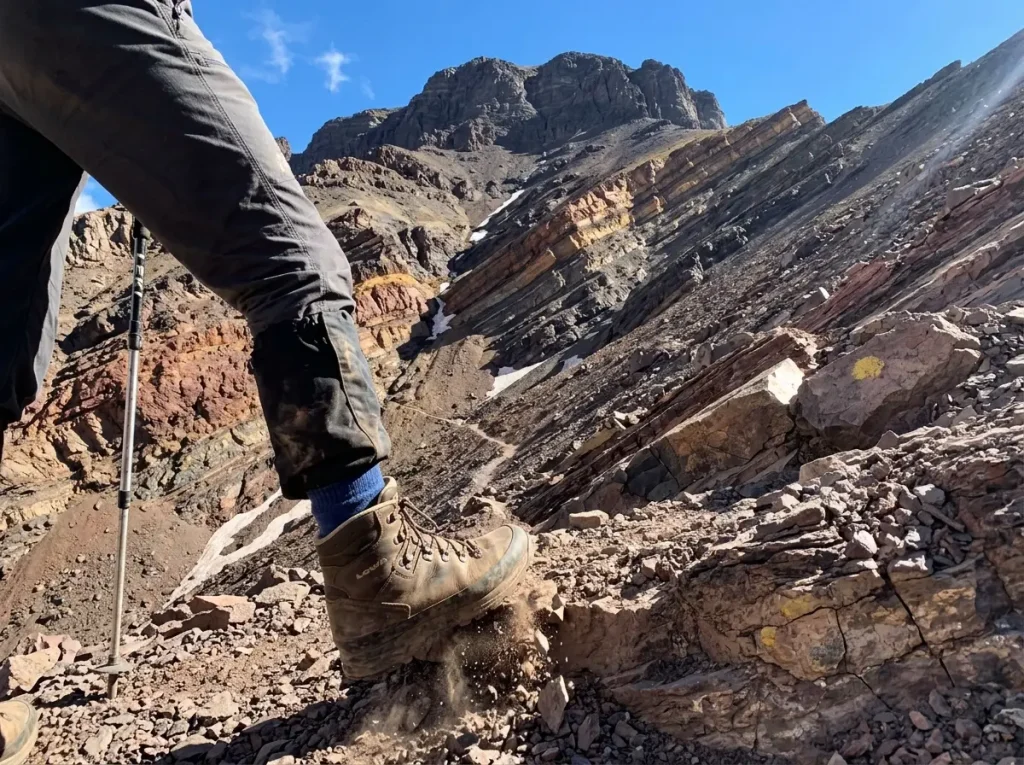
Aconcagua did not get tall by accident. It is the product of the same tectonic engine that built the entire Andes, and its backstory explains both its height and its shape.
The Tectonic Engine Behind the Andes
The mountain sits above a subduction zone, where the Nazca Plate grinds beneath the South American Plate. That collision has been lifting the Andes for tens of millions of years. Aconcagua itself was an active stratovolcano from the Late Cretaceous into the Miocene, with its volcanic activity ceasing roughly 8 to 10 million years ago. It is a long-extinct volcano now, its old volcanic layers tilted and stacked into the striped rock you see on its flanks today.
Prominence, or Why It Counts as Its Own Mountain
Height is not the only way a mountain earns respect. Topographic prominence measures how far a peak rises above the highest saddle connecting it to any taller ground, and by that metric Aconcagua is the second most prominent peak on Earth, behind only Everest, at roughly 6,962 m of prominence. It ranks a distant 189th in raw elevation but 2nd in prominence, which is the honest measure of whether something is a real mountain or just a shoulder of a bigger one. Dozens of “taller” Himalayan points are only bumps on Everest’s massif. Aconcagua stands alone.
One of the Seven Summits
That standalone quality is why Aconcagua is one of the Seven Summits, the highest peak on each continent and the bucket list peak that drives a certain kind of mountaineer. Its inclusion is not a technicality. It is genuinely the continental high point by a wide margin, and if you want the full picture of how it ranks among the world’s benchmark objectives, our guide to the famous mountain peaks and what each one demands lays out all eighteen side by side.
What It Actually Takes to Stand on Top
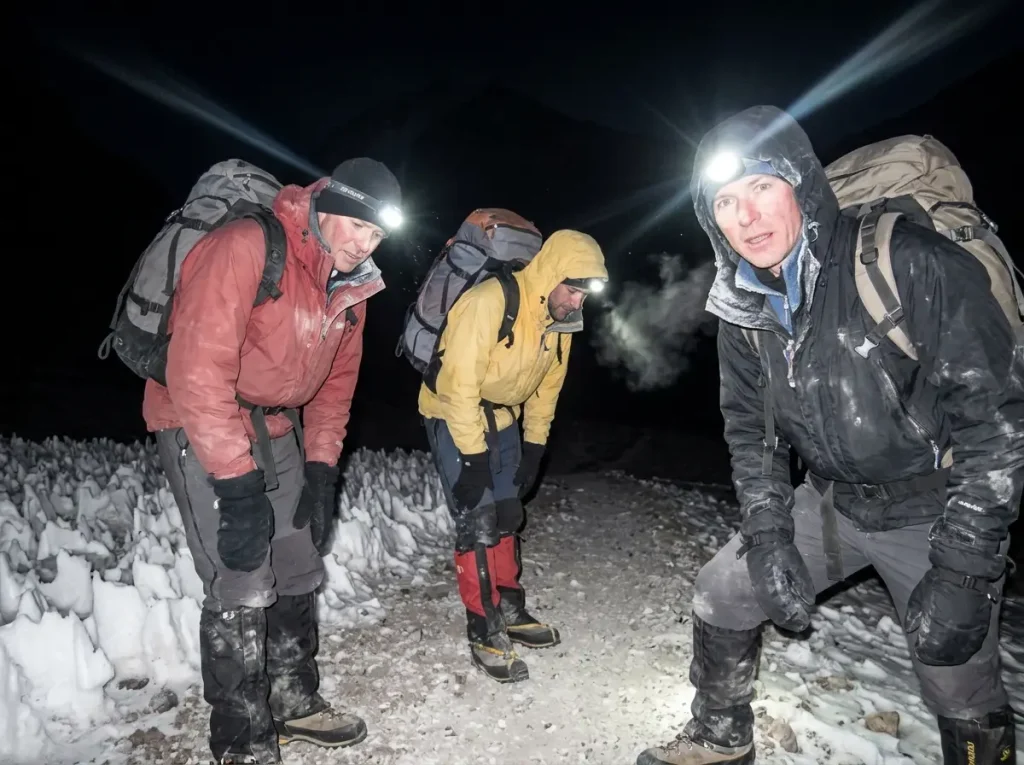
Knowing which mountain is the tallest and standing on top of it are different universes, and the gap between them is wider than most people expect. The speed record belongs to Tyler Andrews, who ran the full round trip in 11 hours and 24 minutes in 2023. A fit guided client typically needs 16 to 20 days. Same mountain, completely different meaning of the word “climb.”
Why Two of Three Climbers Turn Back
Aconcagua’s success rate sits around 30 to 40 percent. Roughly two of every three people who start do not summit, even though the standard Normal Route is a non-technical walk-up with no ropes or vertical rock (the technical Polish Glacier route is a different animal). The reason is almost always altitude, not terrain. The limiter is pace, not fitness. Strong, athletic climbers who move too fast get punished hardest, because acclimatization needs days that cannot be rushed.
The single-day jump from Confluencia at 3,400 m to Plaza de Mulas Base Camp at 4,300 m is where altitude sickness ambushes people, before the real climbing even starts. Guides push 16 to 20 day itineraries for a reason. The extra days buy acclimatization rotations, not sightseeing, and skipping them is the most common way strong climbers talk themselves off the mountain.
The Fatality Rate, Honestly
Aconcagua carries a grim nickname earned from an average of about three fatalities a year. The raw statistics deserve honesty rather than drama. A 2013 to 2024 mortality study on Aconcagua climbers, published in Wilderness & Environmental Medicine, recorded 21 fatalities among 29,397 climbers, a rate of about 0.071 percent. That is roughly three per year given the traffic, and per climber it is actually lower than Denali or Everest.
Ninety percent of fatalities happen above 6,000 m, and climbers over 50 face several times the risk of those under 50. The mountain is not out to get you. Altitude, weather, and pace are, and they are all manageable with time and respect.
If You’re Thinking About Climbing It
This is a geography piece, not a how-to, so here is the honest handoff. If your curiosity has turned into a goal, the real preparation lives elsewhere, and our full breakdown of why most climbers turn back on Aconcagua and what the climb actually demands covers the success rate, acclimatization schedule, permits, and gear in the depth this page deliberately skips. The thing worth sorting out early is the training that actually prepares you for altitude, because on Aconcagua fitness done wrong is exactly what sends strong climbers home early.
The Bottom Line
The highest mountain in the Americas is Aconcagua, about 6,961 m in Argentina, and it is not Denali by a margin of more than 2,500 feet. “Highest” has three honest answers depending on how you measure, with Aconcagua winning by sea level, Chimborazo winning by distance from Earth’s center, and Mauna Kea winning base to summit. And being the tallest does not make it the hardest, which is a separate question with a very different answer.
If reading this turned a trivia question into something closer to a plan, the next honest step is understanding what standing on that summit really asks of you, long before you buy a plane ticket to Mendoza.
Frequently Asked Questions
01Is Denali or Aconcagua taller?
Aconcagua is taller, about 6,961 m to Denali’s 6,190 m, a gap of roughly 770 m. Denali is North America’s highest peak and a Seven Summit, but its high latitude makes it a physiologically harder climb despite being shorter.
02Is Chimborazo higher than Aconcagua?
It depends how you measure. By sea-level elevation, no, Chimborazo is 6,263 m to Aconcagua’s 6,961 m. But Chimborazo’s summit is the farthest point on Earth’s surface from the planet’s center, about 2,168 m farther out than Everest, because of the equatorial bulge.
03What is the highest mountain in the Americas that is not in South America?
Denali (6,190 m) in Alaska is the highest peak in North America and the highest in the Americas outside South America. Every taller peak in the hemisphere sits in the Andes.
04Why is Aconcagua the highest mountain in the Americas?
It is the tallest product of the Nazca and South American plate collision that built the Andes, an extinct stratovolcano with the second-greatest topographic prominence on Earth. No other peak in the hemisphere rises higher above sea level.
Safety Notice: Rock climbing and mountaineering are inherently high-risk
activities that can involve physical trauma or fatal incidents. The information on Rock Climbing Realms is for
educational and informational purposes only. Techniques and advice presented here are not a substitute
for professional, hands-on instruction. Conditions and risks vary by location. Always seek guidance
from a qualified instructor before attempting new techniques. By using this website, you agree that you
are solely responsible for your own safety. Any reliance you place on this information is strictly
at your own risk, and you assume all liability for your actions. Rock Climbing Realms and its authors
will not be held liable for any harm, damage, or loss sustained in connection with the use of this information.
Affiliate Disclosure: We are a participant in the Amazon Services LLC Associates Program, an
affiliate advertising program designed to provide a means for us to earn advertising fees by advertising and linking
to Amazon.com. As an Amazon Associate, we earn from qualifying purchases. We are also an official affiliate partner
of Black Diamond Equipment via the AvantLink network. If you click on a Black Diamond affiliate link and make a
purchase, we may earn a commission at no additional cost to you. We also participate in other affiliate programs.
Additional terms are found in the terms of service.