
In this article
In 1987, a quiet Canadian climbed two sustained 5.11c crack routes in Yosemite in a single day, both of them with no rope, two decades before most people had ever heard the words free solo. His name was Peter Croft, and ask any longtime Yosemite climber who set the template for ropeless big-wall climbing and his name comes up before Alex Honnold’s. The community read on that 1987 day has never been “what a daredevil.” It’s been the opposite: this was the most prepared climber alive working well inside his own margin. Here is who Peter Croft is, what he actually did on Astroman and the Rostrum, and why he’s the soloist Honnold followed.
The Self-Taught Kid Who Slept in a Squamish Cave
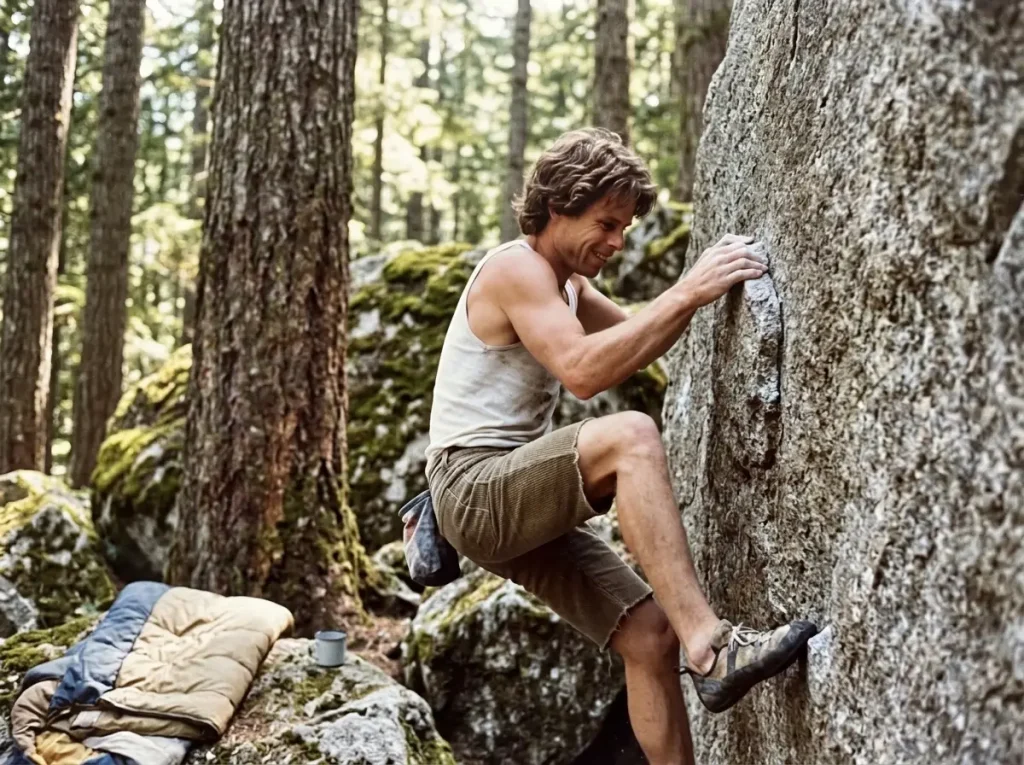
Croft didn’t come up through a coach or a climbing team. He was born on May 18, 1958, in Nanaimo, on Vancouver Island, and he taught himself to climb. That detail matters more than it sounds, because the self-reliant kid is the whole reason the calm soloist exists. He’s Canadian, by the way, which trips people up given how thoroughly he became a Yosemite and High Sierra fixture.
The spark was a book. A young Croft read Chris Bonington’s I Chose to Climb and went looking for rock, first on local basalt crags and then on the granite of Squamish, British Columbia. He climbed the Grand Wall boulders almost daily, with no mentors and no money, figuring out movement by trial and error.
From a Bonington Book to the Grand Wall Boulders
To climb full-time, he lived the way a lot of early dirtbag climbers did: cheap and rough, sleeping under cars and in caves, putting every dollar and every daylight hour into the rock. There was no plan to become famous. There was just the climbing, every day, alone or with whoever showed up.
That apprenticeship is the part competitors list as a fun fact and then drop. It shouldn’t be dropped. When you learn the entire craft by feel, with nobody to copy, you build a particular kind of self-trust, and that self-trust is exactly what a rope-free ascent runs on.
Climbers who came up self-taught in that era tend to share one trait: they read rock by feel instead of by beta. With nobody handing you the sequence, you learn to trust your own read of a hold, a foot, a stance. That habit is worth more on a hard lead than any single technique.
Living Cheap to Climb Full-Time
The trade was simple and total. Comfort went out, climbing days came in. Years of that built an engine most weekend climbers never get to build, because most of us climb on Saturdays and recover the rest of the week.
White Lightning and the Send That Hooked Him
About a year into climbing, Croft sent White Lightning, a 5.10 in Squamish, and by his own telling it blew his mind. That’s the moment a hobby turns into a life. Everything that came later, including a style of free soloing that means climbing with no rope and no protection, where any fall is final, grew out of that first real send.
University Wall and the Granite Standard He Set
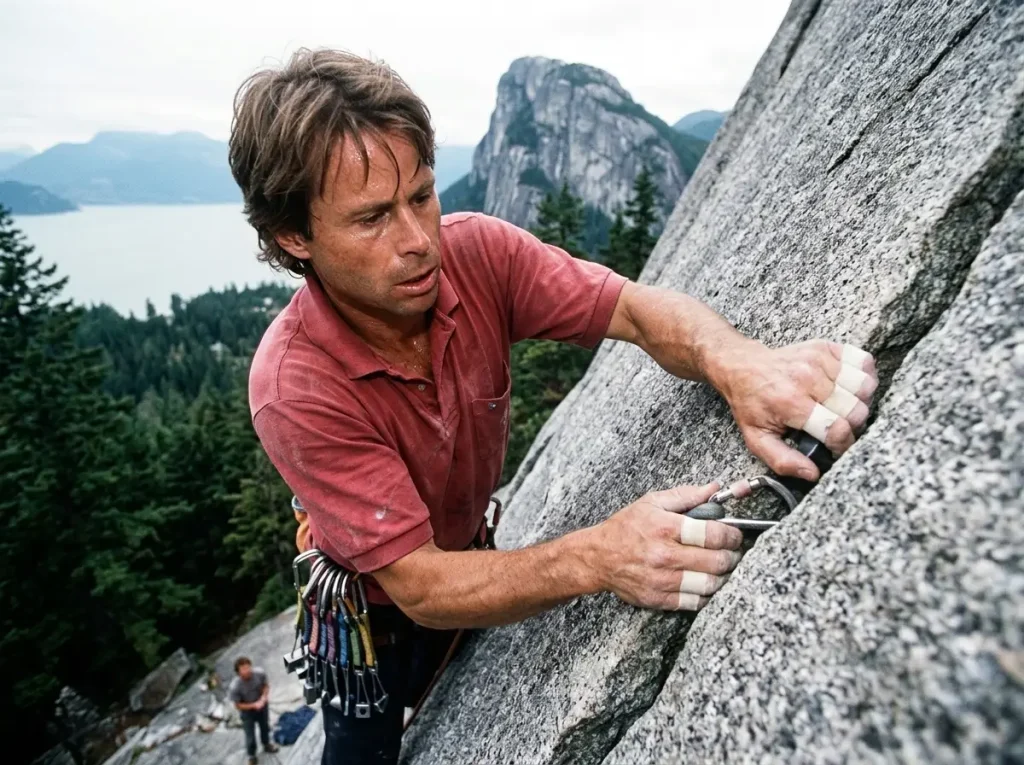
People who only know the solos miss something important: before Croft ever soloed anything famous, he was already one of the best free climbers on the continent. The ropeless ascents didn’t come out of nowhere. They came out of a climber who could flat-out move on granite.
In 1982 he made the first free ascent of University Wall (5.12) in Squamish, with Greg Foweraker and Hamish Fraser. Freeing a wall like that, using hands and feet on the rock and gear only to protect a fall, put him at the front of his generation’s hardest crack climbing.
The 1982 First Free Ascent
University Wall wasn’t a stunt or a one-off. It was pure traditional climbing, placing his own protection on the lead with no bolts to clip, and it put Croft at the level of the best in the same era of free-climbing breakthroughs that produced Lynn Hill’s free ascent of the Nose. That trad climbing foundation, gear placed by hand and trusted with your life, is the standard he set on Squamish stone, and it’s what made the Yosemite solos possible.
Why Squamish Granite Made Him
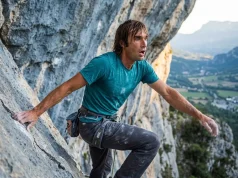
Squamish is steep, clean, and crack-riddled, which means it demands exactly the skills a ropeless wall later would: precise jamming, efficient movement, and total composure when the climbing is sustained. He didn’t train for soloing. He trained for granite, and soloing was one expression of how well he understood it.
He also had a ceiling far above his solos. His onsight of The Shadow, a 5.13 in Squamish, went unrepeated as an onsight for more than 30 years. Onsighting 5.13 means topping a route you’ve never touched, first try, no falls and no rehearsal, and almost nobody matched it.
Astroman and the Rostrum, Roped to Nothing
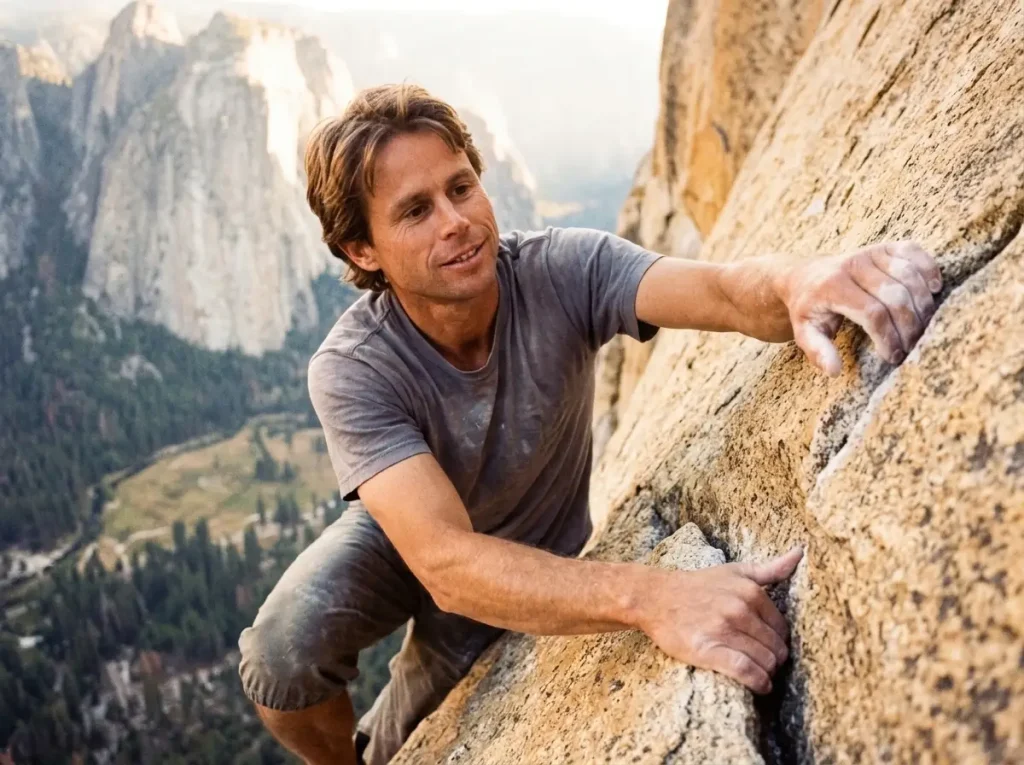
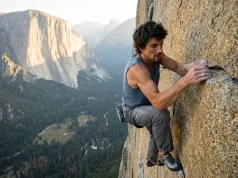
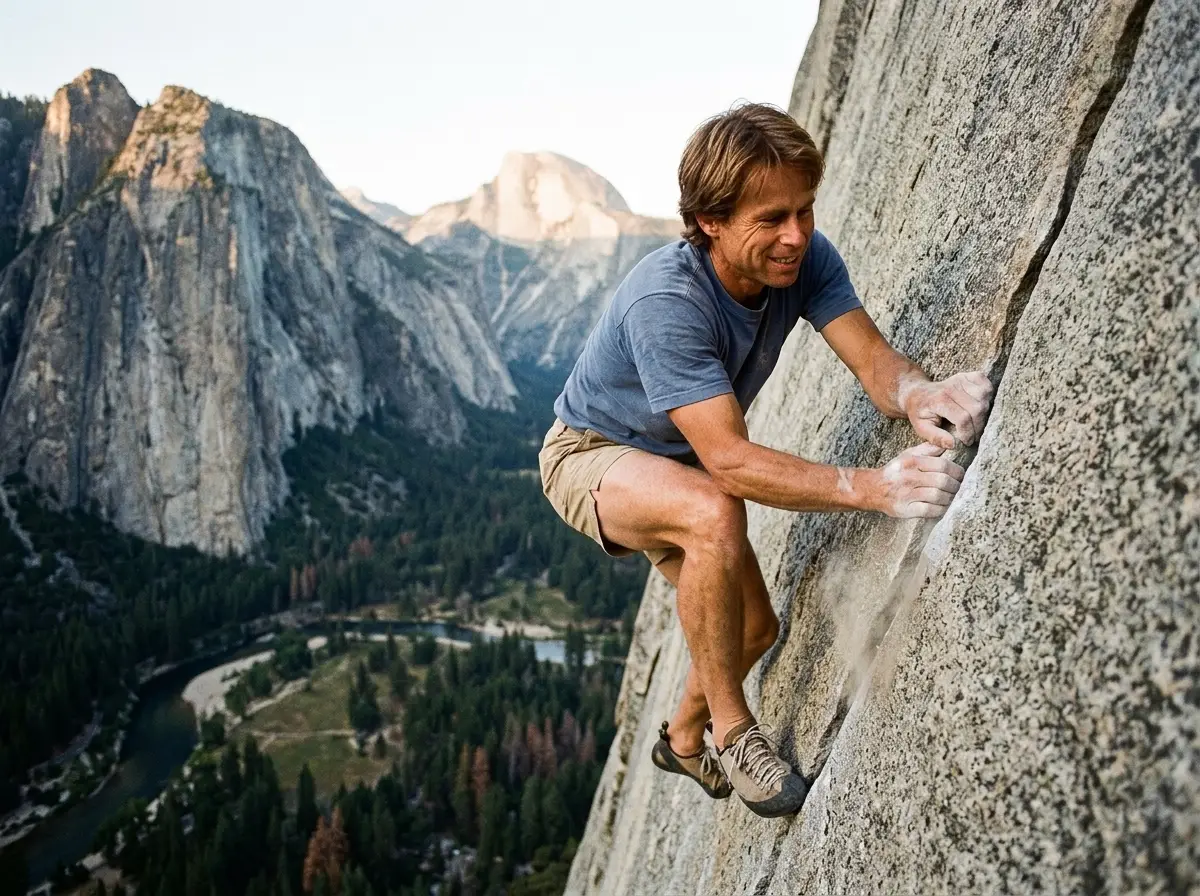
Here’s the day the whole story hangs on. In 1985, Croft free soloed the Rostrum, roughly eight pitches of sustained 5.11c. Then in 1987 he free soloed Astroman (5.11c, about ten pitches) on Washington Column, and linked it with the Rostrum the same day, both ropeless. Keep those dates separate, because almost every retelling blurs them into one.
The reason this landed like a thunderclap isn’t the grade alone. It’s what kind of climbing it was.
Two 5.11c Cracks, One Day, No Rope
Both routes are sustained 5.11c crack, not low-angle slab. That distinction is everything. Soloing a slab is a balance game on friction. Soloing sustained crack means committing hand jams and finger jams, pitch after pitch, where the climbing is strenuous and there’s no resting hands-off and no friction bailout. It’s the sustained crack climbing that defined Astroman, and doing it without a rope was a different order of commitment than anything that had come before.
Why Crack Soloing Changed Everything
He also did it a full generation, roughly twenty years, before ropeless climbing was anything close to culturally normal. There was no audience for this, no sponsorship machine, no film crew. There was a guy who decided two of the hardest free routes in the Valley could be climbed by hand, and then climbed them.
Ask any trad climber why crack soloing reads as so committing: a hand jam you trust is a different animal from a foothold you hope holds. A good jam is bomber, but it’s strenuous, it pumps you out, and you can’t shake out on it the way you rest on a ledge. Sustained crack with no rope leaves no place to stop being switched on.
The Mindset, Not the Nerve
This is where the common read gets it wrong. The Astroman solo wasn’t recklessness. The flat truth, repeated by the people who climbed with him, is that Croft was the most prepared and most efficient climber alive, doing something squarely within his ability. Royal Robbins, the previous-generation Yosemite king, later said Croft had been his hero “ever since he came blazing out of nowhere with his stunning free solo ascent of Astroman.”
None of that softens the stakes, and Croft never pretended it did. On a ropeless 5.11c crack, a mistake is one you don’t get to walk back from. That’s the exact reason the preparation, not the daring, is the real story.
The Linkup Game and the Nose Speed Records
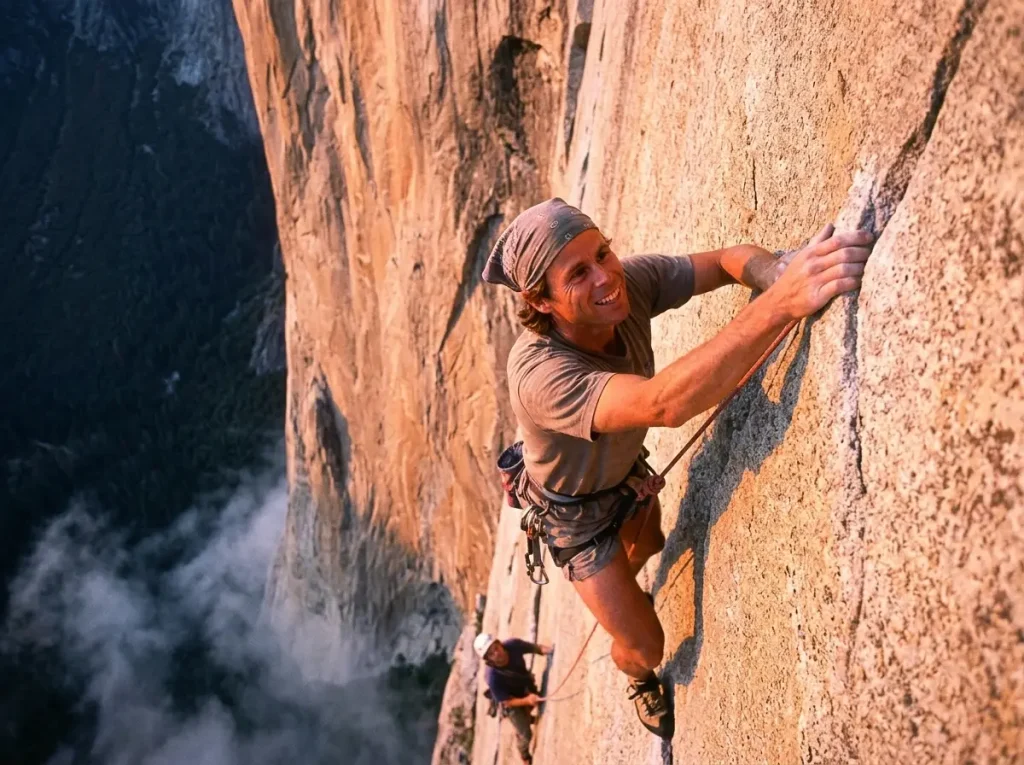
If you want the skill that actually defined Croft, it isn’t nerve. It’s granite efficiency and endurance climbing, moving over rock with less wasted effort than anyone, and the place you see it clearest is the linkups.
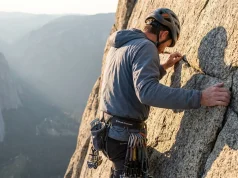
In 1986 he and John Bachar made the first one-day link of the Nose on El Capitan and Half Dome, roughly ten hours of climbing across two of the biggest walls in Yosemite. That had never been done in a day, and it opened a whole new chapter in big wall climbing.
The Nose and Half Dome in a Day With Bachar
The linkup idea spread from there to fellow Yosemite soloist and speed-record chaser Dean Potter, and eventually to the linkup ethos Tommy Caldwell later pushed to its limit on the Dawn Wall. Croft was the front edge of it. He’d go on to link the Nose with the Salathe Wall, El Capitan’s other great line, in a day, and the idea that you could move fast and light over enormous terrain, instead of sieging it, started with parties like his.
From 6:40 to Under 4:30
He also helped invent modern speed climbing on the Nose. With Dave Schultz he ran it in 6:40 in 1990, and with Hans Florine he brought it down to 4:22 in 1992. That’s the speed-climbing game Croft helped invent on the Nose, now known as NIAD, or Nose in a Day, a benchmark climbers still chase.
Lazy Genius and the Birth of NIAD
Here’s the detail that tells you who he really was. By his own account, part of why he and Bachar linked the Nose and Half Dome in a push was that they were too lazy to haul gear bags up there for multiple days. Efficiency as laziness weaponized. The fastest way up was also the least amount of suffering, and Croft saw that before almost anyone.
The fastest parties on a big wall usually aren’t the strongest climbers, they’re the ones who never stop moving. Smooth transitions, no fumbling at the belay, and a rack stripped to what you’ll actually place will beat raw power every time. Croft’s whole career is a case study in that.
The High Sierra Years That Never Really Ended
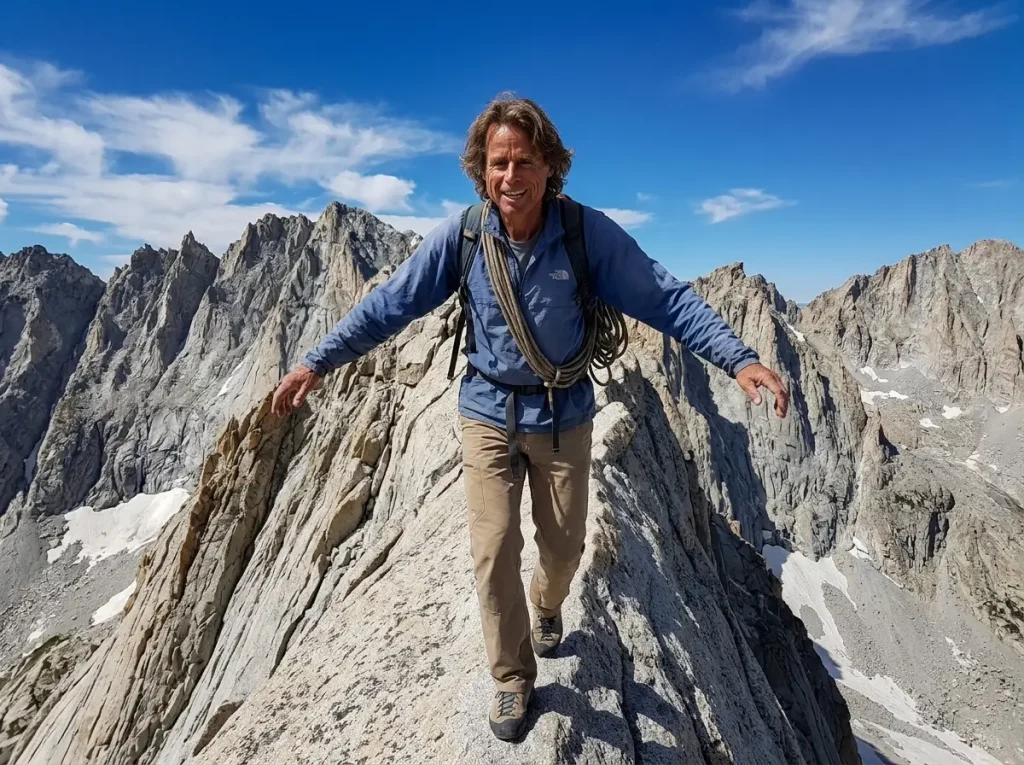
Reduce Croft to Yosemite and you miss half of him. The same endurance engine that powered the linkups ran straight into the alpine, and it never really shut off.
In 2000 he made the first ascent of the Evolution Traverse, a Grade VI, roughly eight miles of High Sierra ridgeline linking Mount Mendel, Darwin, Haeckel, Fiske, Warlow, and Huxley in a single push. It remains one of the great endurance lines in the range, and he pieced together other Sierra skylines too, including the Minaret Traverse.
The Evolution Traverse
The traverse is the clearest proof that the soloing was never the point on its own. It was one application of a bigger idea: move efficiently over huge terrain, carry little, and keep going. The roots run back to 1985, when he made the first traverse of the Waddington Range in the Coast Mountains of British Columbia, a big, remote alpine objective taken on early in his career.
First Ascents Into His Fifties
He kept putting up new routes long after most climbers slow down. On the Incredible Hulk, a remote High Sierra crag, he established hard first ascents into his forties and fifties, including Venturi Effect in 2004 and Solar Flare in 2008 with Conrad Anker. You can read his first-ascent reports from the Incredible Hulk in the American Alpine Journal, which is about as official as a climbing record gets.
Taking the Light-and-Fast Style to Pakistan
He carried the same lightweight approach to the greater ranges. In 1998 he climbed a roughly 8,000-foot rock route on Sponsar Brakk in Pakistan’s Charakusa Valley, at around 5.11. Same engine, bigger mountains.
The Honnold Connection and Where Croft Is Now
Two questions follow Croft everywhere: how is he connected to Alex Honnold, and is he still around? The honest answers are more interesting than the name-drop most articles settle for.
Croft didn’t just precede Honnold. He built the template Honnold inherited, which is why he belongs among one of the climbers who shaped the sport.
The Template Honnold Inherited
Look at what Honnold took from him. The route selection, sustained multi-pitch Yosemite granite at the edge of what’s possible ropeless. The psychological model, calm rehearsed mastery instead of adrenaline. Even the specific objectives. An iconic 1985 photo of Croft soloing, taken the year Honnold was born, became a kind of north star for the soloist Croft directly inspired, Alex Honnold. In 2007, Honnold deliberately repeated Croft’s feat, soloing Astroman and the Rostrum in a day, before scaling the philosophy to Freerider on El Capitan in 2017.
The Quiet Counterpoint to the Camera
Here’s the contrast that makes Croft, Croft. He turned down filming his solos on principle. He’s said the experience was too personal and too important to put in front of a camera, and that film crews add variables and pressure that invite mistakes. Honnold’s defining solo became an Oscar-winning film. Same lineage, opposite relationship with the lens, and Croft’s quieter path is a big part of why his name isn’t a household word.
Climbers who last into their sixties almost all say a version of the same thing: longevity comes from climbing within yourself and skipping the days that feel off, not from pushing through every warning sign. Croft’s long, steady career looks a lot more like that than like the all-or-nothing image people attach to soloing.
Still Putting Up 5.13s at 67
Croft is alive, 67, and still climbing hard. He lives in Bishop, California, with his wife Karine, founded and developed climbing in Owens River Gorge, and still establishes 5.13s around the Eastern Sierra. If you want proof he’s not a museum piece, you can still hire him for a day of cragging through Sierra Mountain Guides.
And his ceiling was always higher than the solos suggested. In 1991 he made the first free ascent of Moonlight Buttress (5.12d/13a) in Zion, and that same year the American Alpine Club honored him with its Underhill Award in 1991, the sport’s top recognition for technical mastery. The rope-free climbing was never his limit. It was just the part the world remembered.
Conclusion
Peter Croft’s 1987 link of Astroman and the Rostrum reset what climbers thought was possible on a rope-free wall, and he did it a full generation early. The engine underneath it was never nerve. It was efficiency, endurance, and a self-taught climber’s total trust in his own read of the rock. And the man is still out there, putting up hard routes in the Eastern Sierra at 67.
Next time you watch Honnold move across a wall with that eerie calm, remember the quiet Canadian climber who drew the map first. Then go read about the other climbers who shaped the sport, because Croft is far from the only one whose story got flattened into a highlight reel.
Frequently Asked Questions
01Who is Peter Croft and what is he famous for?
Peter Croft is a Canadian rock climber born in 1958, famous as a pioneer of free soloing sustained multi-pitch granite. He’s best known for the 1987 same-day ropeless link of Astroman and the Rostrum in Yosemite.
02Did Peter Croft free solo Astroman and the Rostrum in the same day?
Yes. In 1987 he free soloed both Astroman and the Rostrum, each 5.11c, in a single day with no rope. He had already soloed the Rostrum two years earlier, in 1985.
03How is Peter Croft connected to Alex Honnold?
Croft set the template Honnold followed. A 1985 photo of Croft soloing inspired him, and in 2007 Honnold deliberately repeated Croft’s Astroman and Rostrum link before scaling the style to Freerider in 2017.
04How old is Peter Croft and where does he live now?
He’s 67, born May 18, 1958, and lives in Bishop, California. He still establishes hard routes in the Eastern Sierra and guides private climbing days through Sierra Mountain Guides.
05What is Peter Croft’s hardest climb?
His hardest roped free climbing includes the 1991 first free ascent of Moonlight Buttress (5.12d/13a) in Zion. He also onsighted The Shadow, a 5.13 in Squamish that went unrepeated as an onsight for over 30 years.
Safety Notice: Rock climbing and mountaineering are inherently high-risk
activities that can involve physical trauma or fatal incidents. The information on Rock Climbing Realms is for
educational and informational purposes only. Techniques and advice presented here are not a substitute
for professional, hands-on instruction. Conditions and risks vary by location. Always seek guidance
from a qualified instructor before attempting new techniques. By using this website, you agree that you
are solely responsible for your own safety. Any reliance you place on this information is strictly
at your own risk, and you assume all liability for your actions. Rock Climbing Realms and its authors
will not be held liable for any harm, damage, or loss sustained in connection with the use of this information.
Affiliate Disclosure: We are a participant in the Amazon Services LLC Associates Program, an
affiliate advertising program designed to provide a means for us to earn advertising fees by advertising and linking
to Amazon.com. As an Amazon Associate, we earn from qualifying purchases. We are also an official affiliate partner
of Black Diamond Equipment via the AvantLink network. If you click on a Black Diamond affiliate link and make a
purchase, we may earn a commission at no additional cost to you. We also participate in other affiliate programs.
Additional terms are found in the terms of service.