
In this article
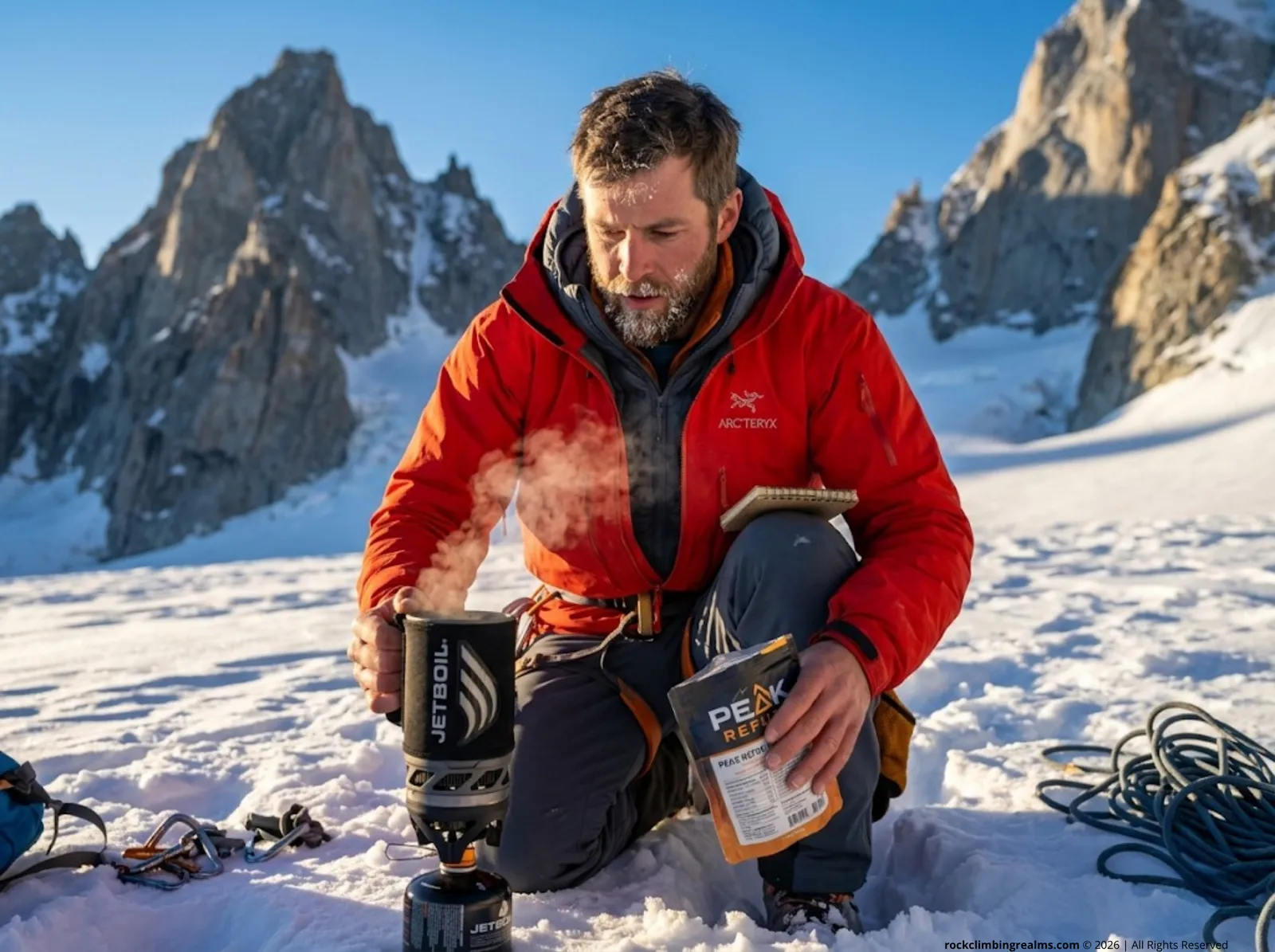
You are pausing on a 40-degree snow slope at 16,000 feet, legs trembling beneath a 60-pound pack, realizing that the generic “2,500 calories a day” advice you read online has left you hopelessly under-fueled and teetering on a metabolic edge. Over my twenty years hauling gear up glaciated peaks, I’ve seen climbers with ironclad fitness break down simply because they treated their expedition food planning like a weekend camping trip. Without an accurate calorie calculator, the mountain strips your energy reserves faster than you can blink. Here is exactly how to sequence your fuel like a safety system—no guessing, no bonking, just calculated performance.
⚡ Quick Answer: Calculating calories for mountaineering requires treating nutrition as a physical science. You must establish a baseline using the Mifflin-St Jeor equation, multiply for terrain resistance like soft snow, and add acute penalties for hypoxia and extreme cold. Ditch generic trail advice and engineer your caloric payload to match the specific grades, pack mass, and temperatures of your objective.
| Expedition Variables & Metabolic Impact | |
|---|---|
| Expedition Variable | Metabolic Impact |
| Terrain Multiplier | Soft Snow (35cm) = 4.1x workload vs. paved road |
| Hypoxia Penalty | +10% BMR increase per 1,000m above 3,000m |
| Digestive Limit | Splanchnic hypoperfusion at 70% exertion traps solid food |
| Isobutane Burn Rate | Winter snow melting reduces 230g canister life to 4-5 days |
The Mathematics of Metabolic Load Carriage
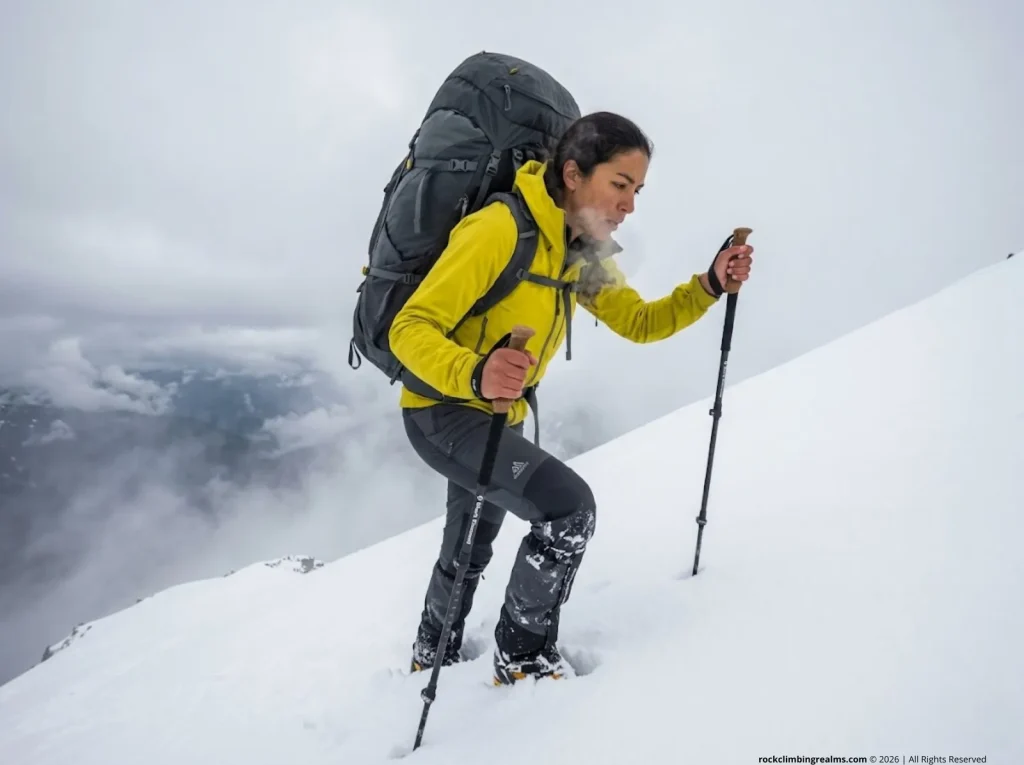
Throw out the Harris-Benedict equation you used in high school health class. Estimating caloric expenditure for an alpine objective requires accounting for the compounding friction between your System weight, your gear, and the mountain itself. A baseline backpacking calorie estimator assumes flat trails and minimal weight. In reality, load carriage on technical routes multiplies the work your muscles must do just to remain upright.
Calculating Baseline and Static Load (Mifflin-St Jeor)
Your basal metabolic rate (BMR) is your engine idling. Most professional athletes rely on the Mifflin-St Jeor formula to determine this baseline because it accounts for a higher muscle mass fraction. But standing on a glacier changes the math immediately. Cold-weather thermoregulation demands extreme energy.
You need to add a 10 to 20 percent baseline increase just for the shivering and heat generation required in sub-zero environments. I use a strict temperature modifier in my calculations because attempting a cold-weather bivouac with a deficit means waking up weaker than when you went to sleep.
The Pandolf Equation and Terrain Penalties
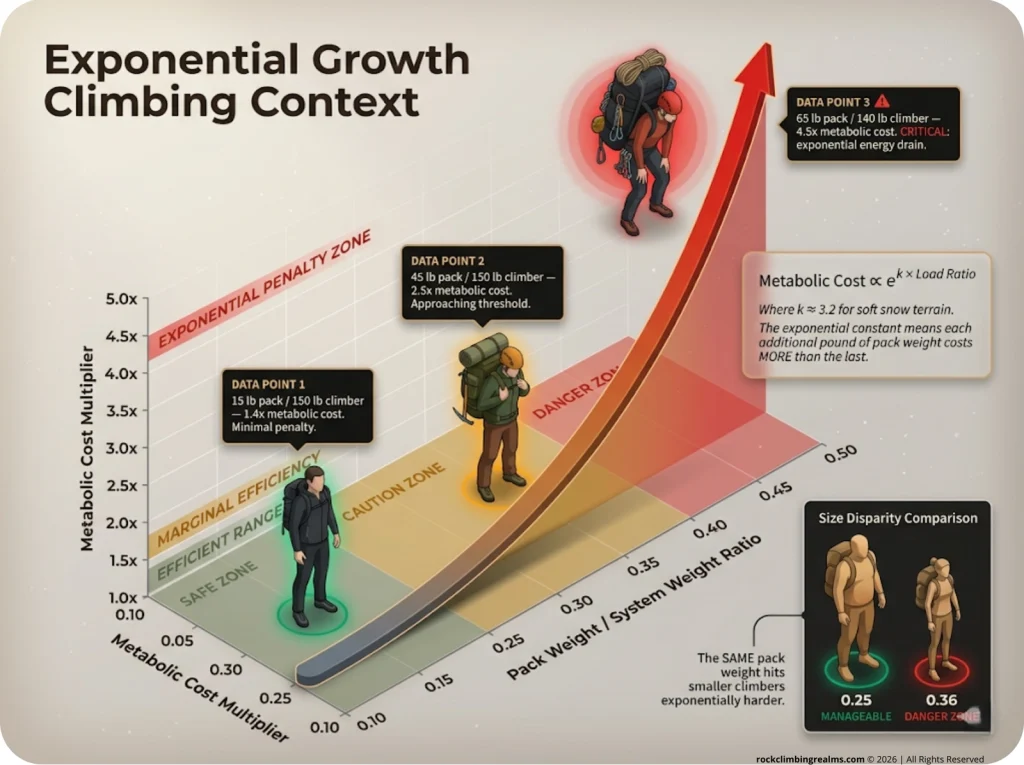
The Pandolf equation is the absolute gold standard for predicting the energetic cost of moving a heavy pack. This formula integrates System mass, pack load, velocity, and incline. More importantly, it features an “Efficiency Penalty.”
As the ratio of your pack weight to your System weight increases, the metabolic demand grows exponentially. This brutally penalizes smaller climbers hauling standard gear. The math explains why dragging a 50-pound sled feels impossible for a 140-pound partner while a 200-pound partner barely notices it. Managing your pack mass prevents this pack weight exponential cost.
The equation also uses a terrain multiplier. Walking on a dirt road sits at 1.1x resistance. Post-holing through 35 centimeters of soft powder yields a staggering 4.1x multiplier. That represents a massive spike in total daily energy expenditure (TDEE).
The Santee Correction for Downhill Eccentric Braking
If you think going down is free miles, your quadriceps will violently disagree. Negative slopes require intense eccentric muscular work just to hit the brakes. The original Pandolf model breaks down on descents, which is why we apply the Santee Correction Factor to account for that decelerative strain, as validated by NASA workload estimations.
You can easily miscalculate the true calories burned on expedition without factoring in gravity fighting against you. Getting down safely is part of the expedition logistics, and underestimating descent effort empties tanks. This is a critical factor when preparing your System for the physical demands of mountaineering.
Pro tip: Use trekking poles to build mechanical struts on long descents. Offloading the eccentric braking force from your legs to your arms saves hundreds of calories and spares your knees and back.
Hypoxic Rewiring and Altitude Logistics
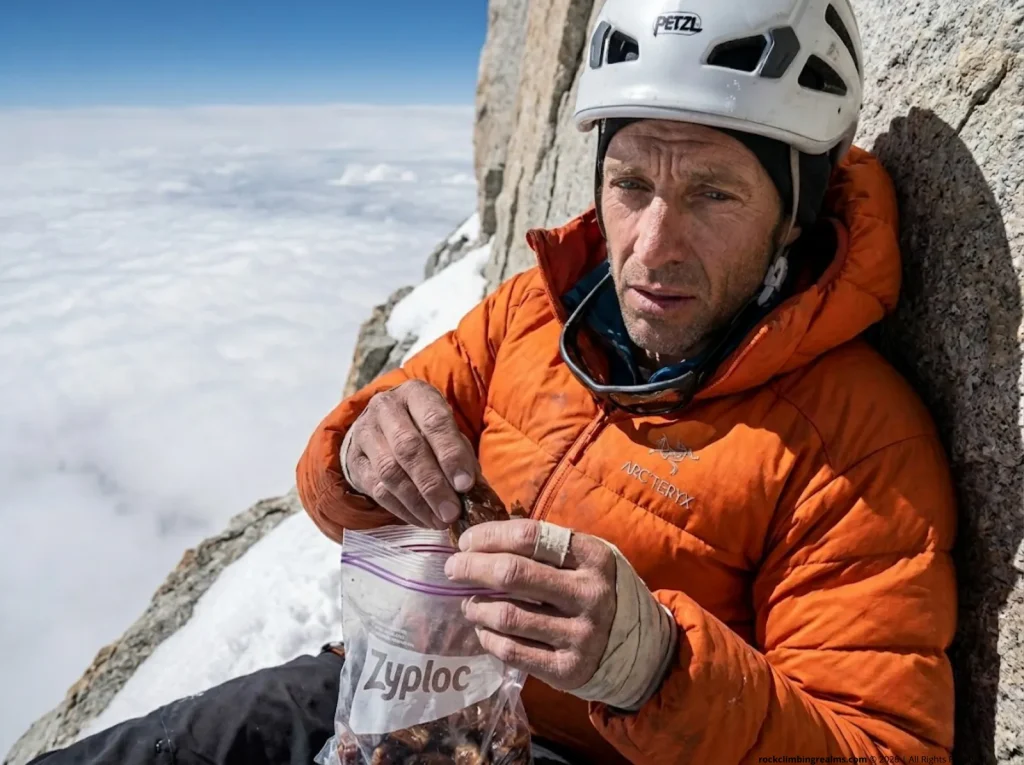
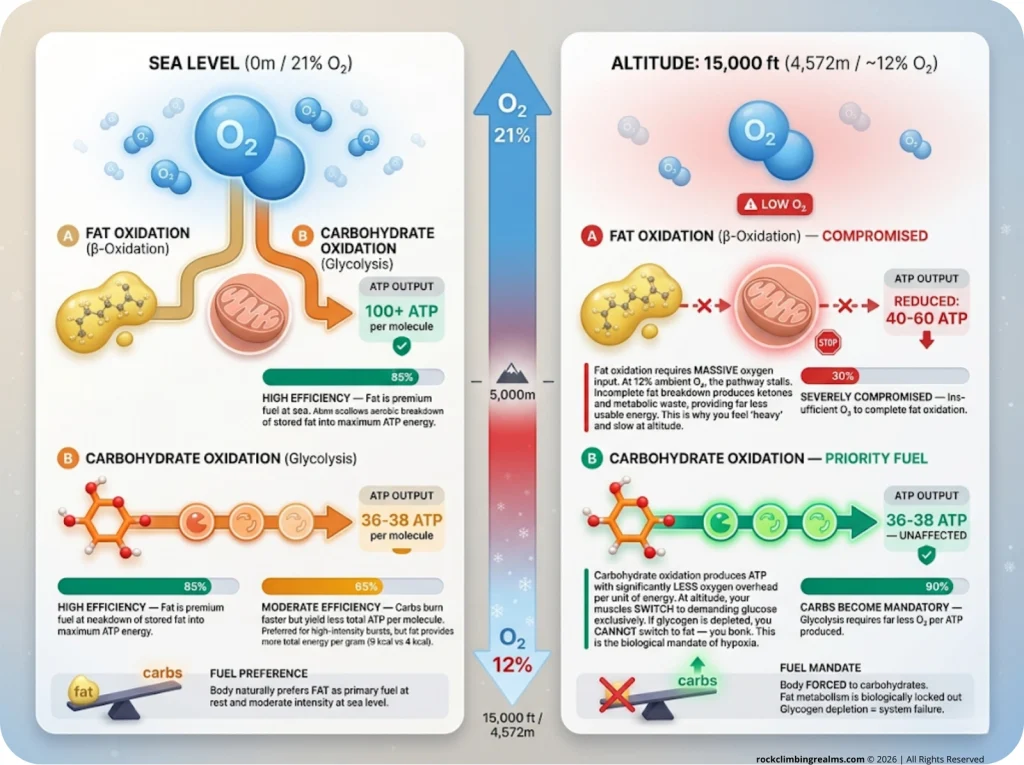
Chronic oxygen deprivation permanently alters how your muscles process fuel. Past 14,000 feet, ambient oxygen plummets and your System shifts into survival architecture. You cannot apply sea-level sports nutrition rules to high-altitude mountaineering.
Carbohydrate Dependency in the Oxygen Economy
Converting stored fat into usable energy burns too much oxygen. When the air is thin, your System avoids fat metabolism at altitude because it cannot spare the respiratory overhead. Instead, your skeletal muscles fight to preserve oxygen by demanding raw glucose.
Carbohydrates primary fuel becomes your biological mandate. Carb dependence at altitude means that if you deplete your glycogen and try to switch to a slow fat-burn near the summit, you will bonk hard. You have to understand the realities of low-carb exercise efficacy before you trust your life to trendy diets above the cloud line.
Altitude-Induced Anorexia and Satiety Hormones
Altitude forcefully rewires your appetite. Massive spikes in satiety hormones like leptin trick your brain into feeling stuffed, even while you burn 6,000 calories a day. Hypoxia suppresses your urge to eat from the inside out.
This condition—altitude anorexia—is silent and destructive. You stop feeling hungry, you skip meals, and your caloric deficit balloons. Relying on “eating when hungry” is a massive tactical error. You must adopt mechanical eating protocols where consuming calories is as mandatory as clipping an anchor.
Mitigating Muscle Wastage at Extreme Heights
At extreme elevation, you aren’t just losing fat. Your System catabolizes your lean muscle for emergency fuel, accelerated by sleep disruption and brutal stress. We know the calories burned climbing everest often come directly from eating away at the System’s own muscle tissue.
To halt muscle breakdown, you need frequent, dense pulses of protein. A 20 to 30 gram hit of protein purely for recovery at the bivy will stop the catabolism overnight. Most climbers focus solely on sugar, but protecting your engine block with amino acids keeps you strong for the descent.
The Energetics of Technical Ascent
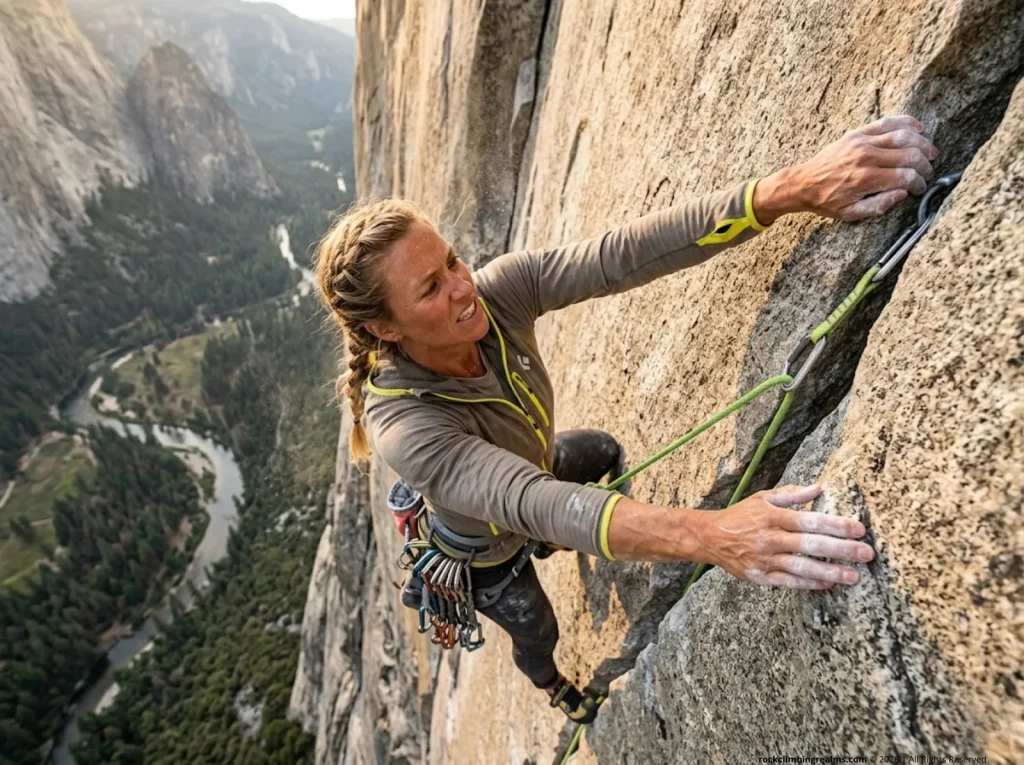
Vertical ground imposes a completely different physiological debt than horizontal hiking. Standard walking assessments fail entirely to measure the brutal isometric tension of hanging off your fingertips. We need a different metric to measure the metabolic cost of technical climbing.
Vertical METs and Grade-Specific Intensity
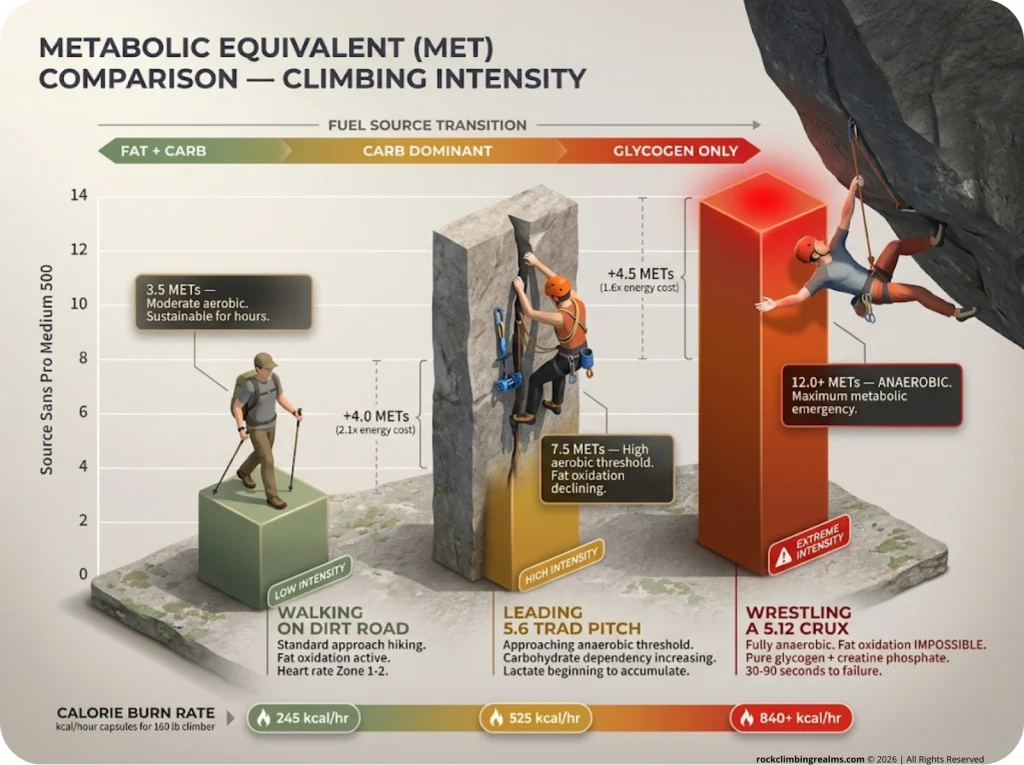
A Metabolic Equivalent of Task (MET) measures exertion compared to rest. The baseline MET value for walking is low, but technical routing pushes your system into overdrive. An intermediate 5.10 route demands around 6.0 to 7.5 met multipliers. A 5.12 sequence spikes to 12.0 METs or higher.
Leading a pitch of 5.11 pushes your muscles completely out of aerobic territory into the anaerobic climbing fuel system. The lactic acid surge requires localized recovery. The climbing intensity multiplier means you are burning vastly more fuel per minute than someone slogging up a snow switchback. To capture this accurately, implement an RCR technical multiplier to account for the true isometric drain on steep pitches.
The Biomechanics and Physics of the Ascending Incline
When you climb past a 90-degree angle, momentum dies. Horizontal walking relies on tendons acting like rubber bands to cycle energy efficiently. Overhanging rock eliminates that mechanical advantage.
Gravity demands raw isometric work from your back and legs just to hold the wall. Every millimeter of elevation gain extracts a heavy toll. The vertical movement caloric cost forces muscles to perform continuous, active pulling rather than passive resting.
Movement Economy: Elite vs. Recreational Energetics
A veteran climber burns dramatically fewer calories on the same piece of rock than a novice. The “Experience Factor” proves that poor hip placement and over-gripping bleed off massive amounts of energy.
Novices waste up to 20 kilojoules per pitch solely through inefficient movement. Developing precise edging and smearing footwork mechanics directly lowers your calorie burn. Honing your technical climbing grade on local crags builds an economy of motion that translates into less food required in your haul bag.
Pro tip: Shaking out on a rest jug isn’t just to un-pump your forearms. You are aggressively flushing lactate out of the tissue to prevent metabolic failure before hitting the next crux. Master the active rest.
Digestive Engineering for the Alpine Climber
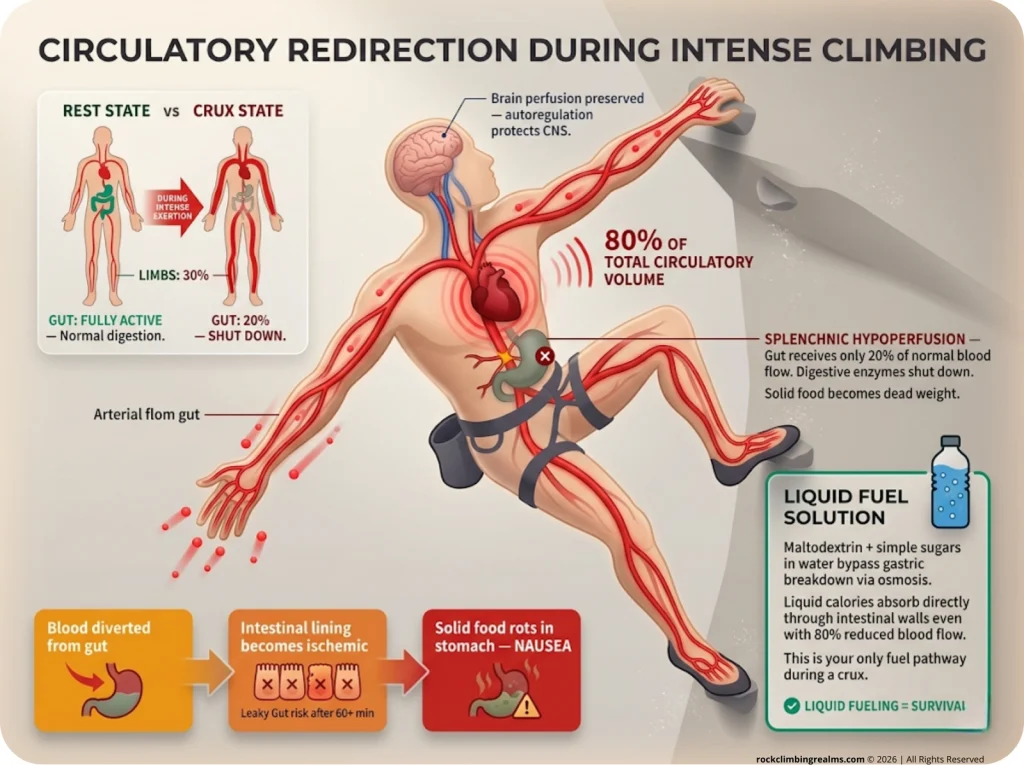
You can carry thousands of calories, but if your gut shuts down, they are dead weight. Under intense physical strain, the human digestive system goes offline. Ignoring the physics of digestion leads directly to vomiting halfway up a headwall.
Splanchnic Hypoperfusion and “Leaky Gut” Risk
When you crank your heart rate pushing a steep grade, your sympathetic nervous system aggressively shunts circulation away from your stomach to your working muscles. Up to 80 percent of your gut’s circulation vanishes.
This triggers “splanchnic hypoperfusion,” leading to ischemic damage in the intestinal lining—famously known as leaky gut, which National Institutes of Health data shows occurs consistently after 60 minutes of high exertion. If you swallow complex, heavy solid food right after a brutal pitch, it rots in your stomach because there is no circulation to digest it. Systemic nausea quickly follows.
Liquid Fueling Strategies for Intensive Exertion
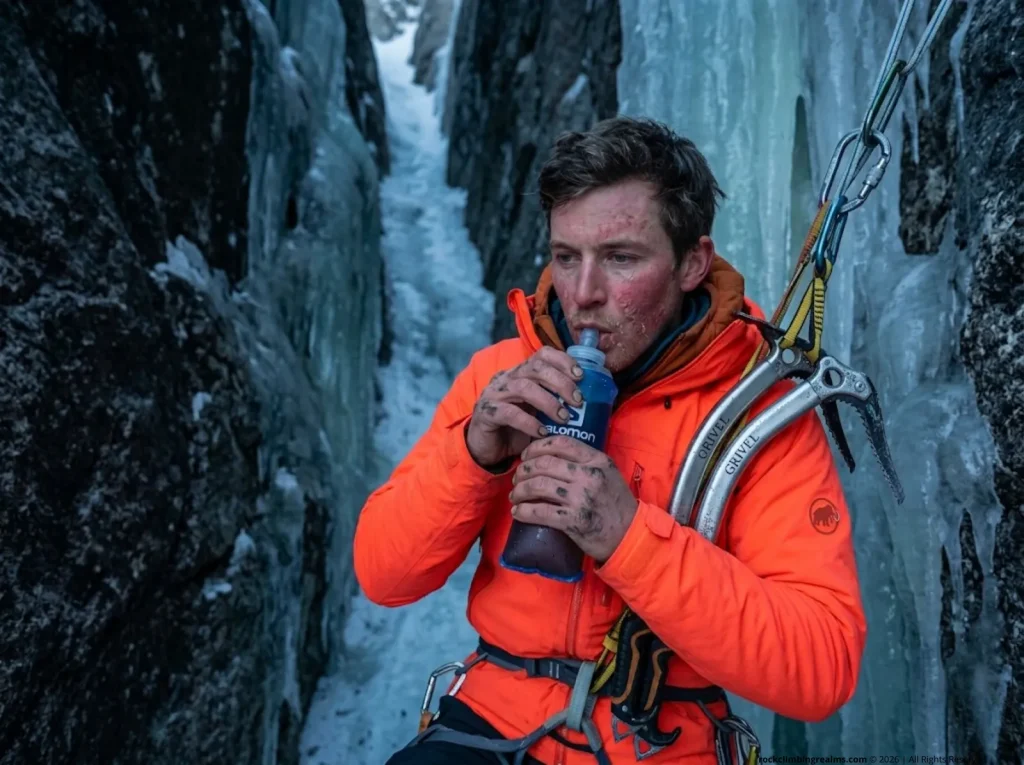
You beat this bottleneck with liquid fueling. Maltodextrin and basic sugars suspended in water cross the gastric barrier via osmosis, skipping the heavy breakdown process altogether.
During an intense push, your expedition meal plan must pivot entirely to fluid intake. I’ve watched friends dry-heave choking down thick energy bars while integrating calories directly into your liquid hydration strategy prevents nausea and delivers immediate explosive power nutrition. Continuous grazing on liquids keeps the metabolic fire burning.
Polycythemia Risk and Sodium Load Management
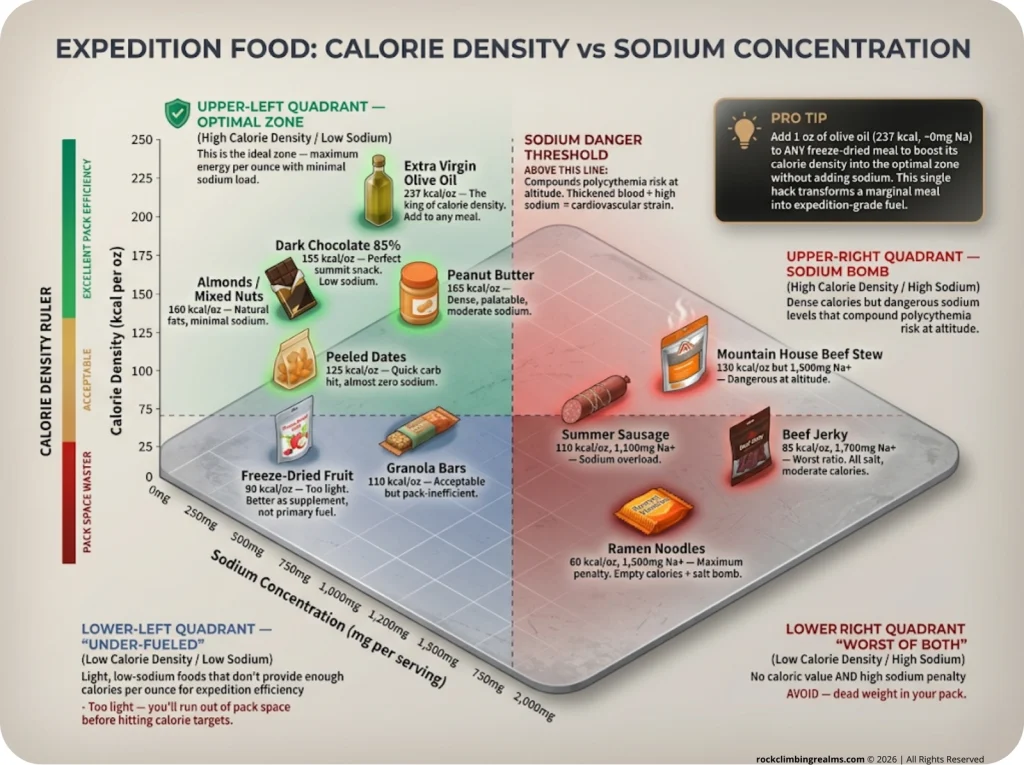
circulation thickens at altitude because your System overproduces oxygen-carrying cells to capture scarce oxygen, a state called polycythemia. Dumping ultra-high sodium meals into already thick circulation creates massive cardiovascular stress.
Salt acts like a sponge, pulling water out of your already compromised hydration reserves. You have to severely dilute salty trail meals with extra snowmelt. Failing to manage your sodium load makes your heart work twice as hard just to circulate sludge.
Thermal Mechanics and The Fuel-to-Weight Equation
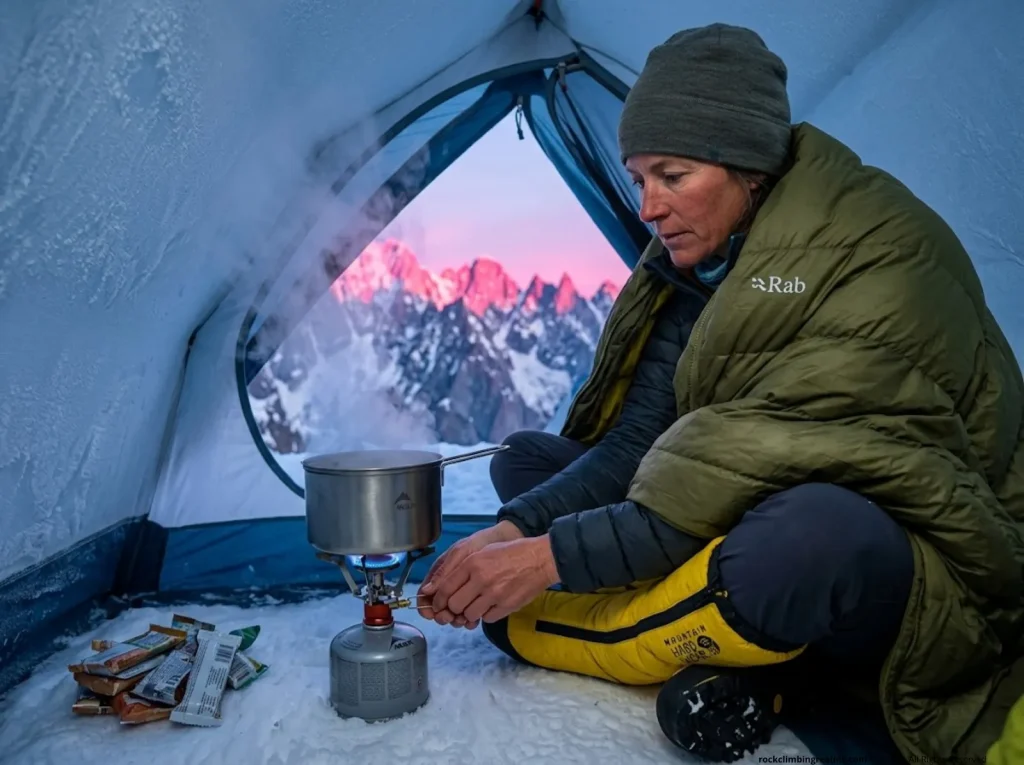
A frozen block of calories provides zero energy. Your fuel weight-to-calorie ratio must account for the gas required to melt ice. The thermodynamic reality of alpine environments radically alters your stove logistics.
The Latent Heat of Fusion: Snow Melting Penalties
Water has a vicious secret called the latent heat of fusion. It requires massive thermal energy just to convert zero-degree ice into zero-degree liquid water before it even begins to warm up.
Melting snow destroys your stove fuel efficiency. An isobutane canister that runs for two weeks in the summer will drain completely in four days of winter snow melting. You have to over-pack fuel specifically for hydration, destroying the delicate balance of how much weight you can reasonably haul. Boil times stretch out endlessly the higher you climb.
Pro tip: Never pack your pot with dry snow. Always keep a tiny puddle of liquid water at the bottom to jump-start the thermal transfer. Dry snow acts as an insulator and scorches your pot while burning your precious gas.
Pressure-Regulated Stoves and Isobutane Efficiency
Standard canister stoves fail at altitude. As the fuel vaporizes, the canister freezes, internal pressure drops, and your flame dies to a useless sputter.
You need pressure-regulated systems to combat this physics trap. Regulators physically force a consistent BTU output regardless of the freezing canister walls. Solving the stove equation is step one when optimizing your entire mountaineering gear system. You also need to keep your fuel warm. Treat that canister like a baby—sleep with it inside your sleeping bag so it functions normally at dawn.
The “Anti-Sell” Analysis of Commercial Freeze-Dried Meals
The high-end outdoor market pushes generic freeze-dried meals like Mountain House as the ultimate hack. Here is the anti-sell truth: they are deeply imperfect for technical climbing. Many are bloated with sodium and lack the heavy protein hit needed to fight muscle wasting.
You need meals with aggressive calorie density measured in kcal/oz. A brand like Peak Refuel offers extreme meat-based protein ratios that save your legs. You can also build DIY high-density fuel hacks. Extra virgin olive oil clocks in at 237 calories per ounce. Dumping liquid fat into a dinner pouch skyrockets the calorie-to-weight ratio of your pack.
Conclusion
We rely on physics because guessing gets people hurt. Your caloric engine demands precise math using the Pandolf load carriage equation, adapting to extreme terrain multipliers, and adjusting for the biological shifts of splanchnic hypoperfusion at altitude.
You cannot afford to ignore the weight of your stove fuel, nor can you treat a 5.12 crux like a steep hike. The best food for high-altitude climbing is the fuel you actually digest. Build a spreadsheet, calculate your exact output, and apply this payload strategy. Next time you rack up for a summit push, you will have the horsepower to see it through.
FAQ
How many calories do you burn on a 7-day expedition?
A 7-day technical expedition can burn between 25,000 and 42,000 calories depending on pack weight and terrain. Daily expenditures often range from 3,200 kcal for acclimatization days up to 6,100+ kcal on summit pushes.
What is the best food for high-altitude climbing?
High-altitude foods must be carbohydrate-dense and easily digestible due to hypoxia and circulation redirection. Simple sugars, maltodextrin mixes, and easily swallowed items like peeled dates out-perform complex fats during the execution phase.
How do I calculate calories for mountaineering?
You must calculate your BMR using the Mifflin-St Jeor formula, apply the Pandolf equation for horizontal approach with pack weight, and multiply technical climbing vertical sections by specific MET exertion grades.
Why do I lose my appetite at high altitude?
Hypoxia triggers a surge in satiety hormones like leptin while simultaneously suppressing your natural hunger cues. This dangerous condition, known as mountain anorexia, necessitates forced, mechanical eating protocols.
How does snow depth affect calorie burn?
Walking through soft, uncompacted snow (35cm depth) multiplies your caloric workload by an astounding 4.1 times compared to walking on a paved surface, drastically altering your daily fuel demands.
Safety Notice: Rock climbing and mountaineering are inherently high-risk
activities that can involve physical trauma or fatal incidents. The information on Rock Climbing Realms is for
educational and informational purposes only. Techniques and advice presented here are not a substitute
for professional, hands-on instruction. Conditions and risks vary by location. Always seek guidance
from a qualified instructor before attempting new techniques. By using this website, you agree that you
are solely responsible for your own safety. Any reliance you place on this information is strictly
at your own risk, and you assume all liability for your actions. Rock Climbing Realms and its authors
will not be held liable for any harm, damage, or loss sustained in connection with the use of this information.
Affiliate Disclosure: We are a participant in the Amazon Services LLC Associates Program, an
affiliate advertising program designed to provide a means for us to earn advertising fees by advertising and linking
to Amazon.com. As an Amazon Associate, we earn from qualifying purchases. We are also an official affiliate partner
of Black Diamond Equipment via the AvantLink network. If you click on a Black Diamond affiliate link and make a
purchase, we may earn a commission at no additional cost to you. We also participate in other affiliate programs.
Additional terms are found in the terms of service.