
In this article
The forearms seize first. It isn’t a gradual fatigue, but a sudden, rock-hard petrification of the flexor muscles that refuses to release the crimp. In my years guiding on granite big walls, I have watched strong climbers crumble not because they lacked strength, but because they experienced a hemodynamic collapse. The blood had become too viscous to navigate the compressed capillaries of a gripping hand.
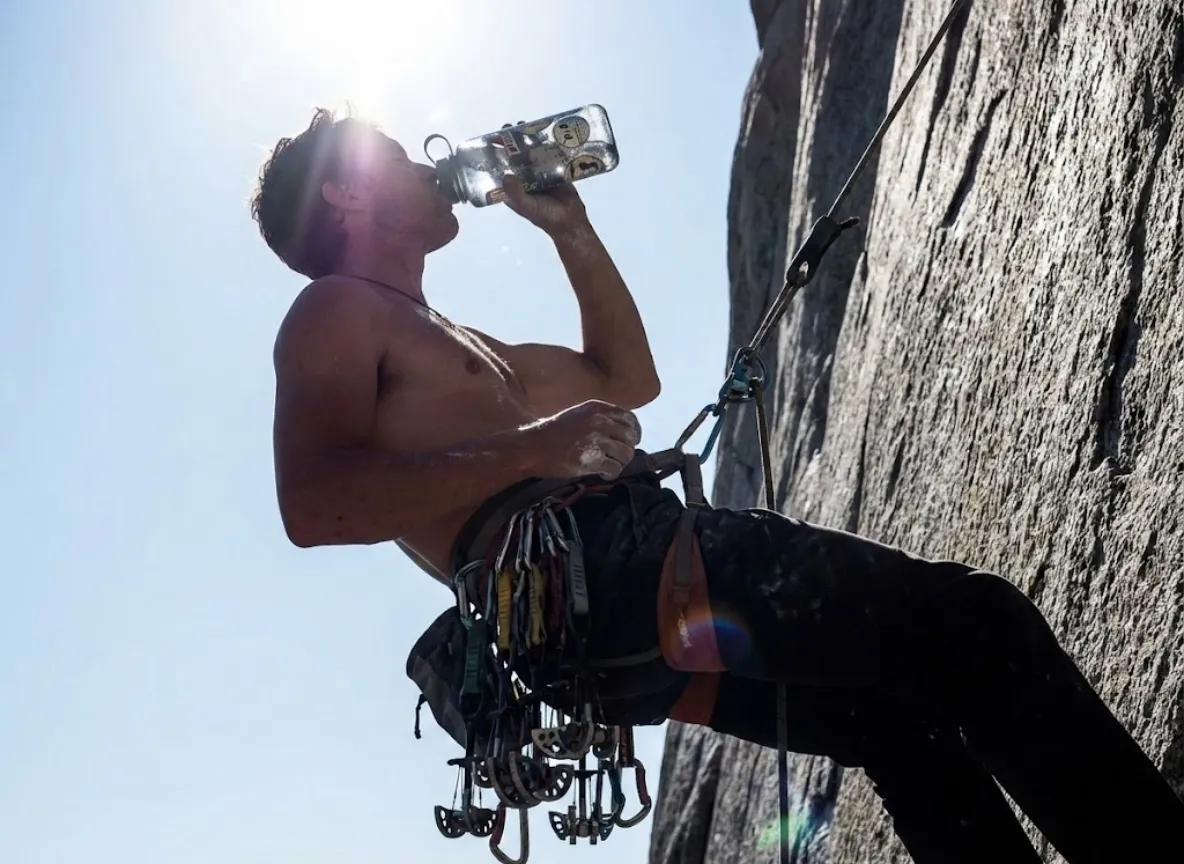
Hydration for climbers is not just about quenching thirst; it is the active engineering of blood volume to maintain the hydraulic pressure required for peak performance. If you are drinking only when your mouth is dry, you are already behind the curve.
This guide moves beyond generic nutrition advice. We will dismantle the physiology of the dreaded “flash pump,” calculate your individual sweat rates to the milliliter, and look at the logistical reality of hauling water up a multi-pitch route. You will also learn why commercial sports drinks often fail, and how to mix a superior oral rehydration formula in your kitchen.
Why Does Hydration Dictate Climbing Performance?
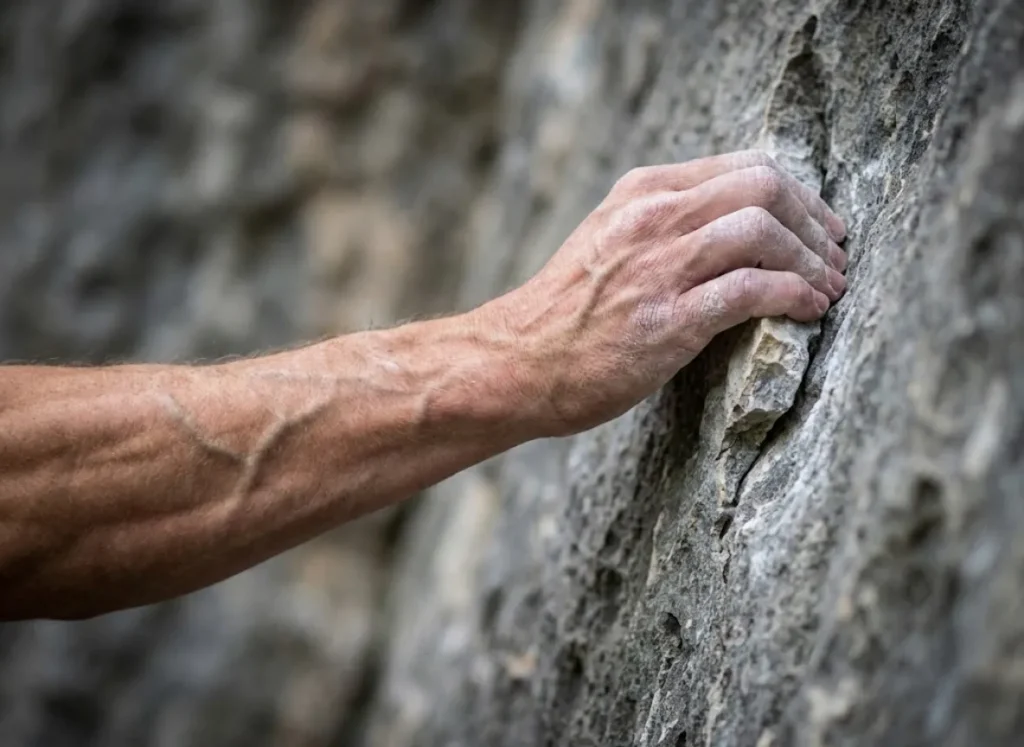
Hydration governs physiological mechanics by determining plasma volume. Without adequate fluid, blood thickens, reducing the heart’s ability to push oxygen into contracted muscles and clearing metabolic waste. This directly accelerates the onset of pump and compromises soft tissue health.
What is the Biological Mechanism Behind “Flash Pump”?
Flash pump occurs when high climbing intensity creates intramuscular pressure that exceeds systolic blood pressure. This mechanical force collapses the capillaries. The body attempts to flush metabolic byproducts, like hydrogen ions, but without sufficient blood volume (plasma), the “drain” remains blocked.
Dehydration reduces plasma volume, increasing blood viscosity. This makes it physically harder for the heart to push oxygenated blood into the tight, contracted forearm muscles. The result is a rapid onset of acidosis and edema that locks the muscle up minutes into a session.
This is distinct from aerobic fatigue; it is a mechanical failure of fluid dynamics where the blood is simply too thick to clear the waste. Sufficient pre-climb hydration ensures central venous pressure is high enough to force open capillary beds during the brief micro-rests between moves.
A dehydrated climber has a reduced “safety margin” between a functional state and catastrophic capillary constriction. Furthermore, chronic dehydration affects synovial fluid, increasing friction in finger pulleys and tendons, which acts as a precursor to injury. This aligns with medical data regarding the hemodynamic influence on muscle blood flow during exercise, which highlights how viscosity impairs performance.
Effective management requires combining hydration with active recovery. Just as you focus on mastering your rock climbing warm-up to open capillaries, you must maintain fluid volume to keep them open.
Pro-Tip: If you feel flash pump setting in, do not just shake out. Lie down (if safe) or elevate your legs to use gravity to assist venous return to the heart, effectively “re-priming” the pump before getting back on the wall.
How Do You Assess and Calculate Fluid Needs?
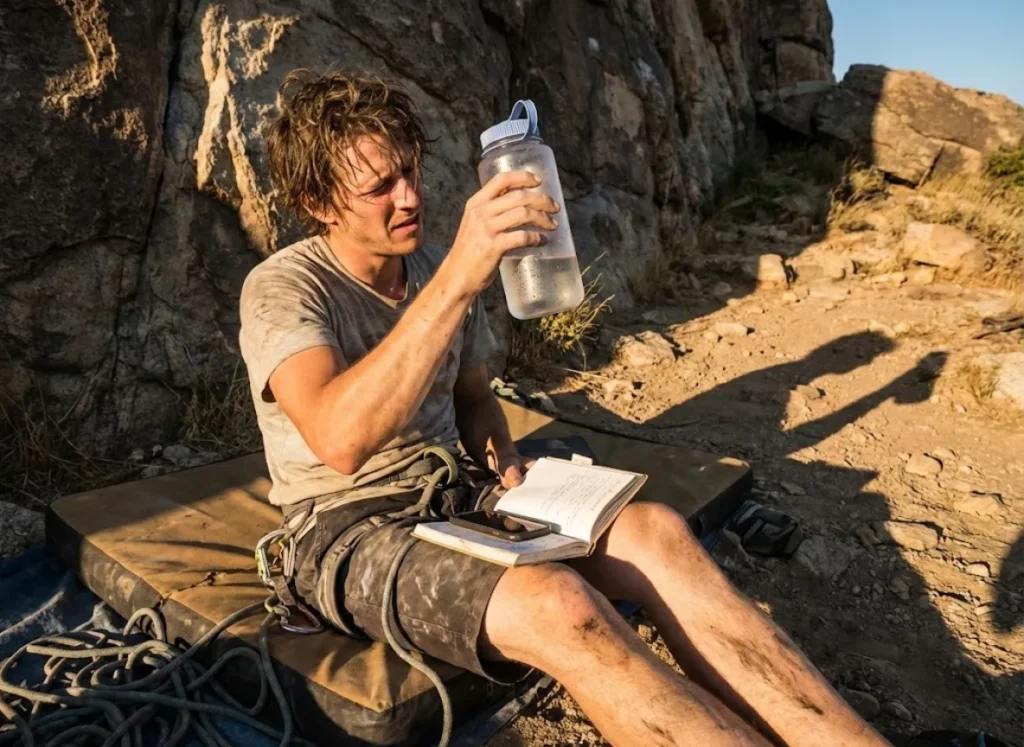
Stop guessing. Actionable, mathematical protocols determine individual hydration requirements, replacing vague guidelines with hard data.
What is the “Gold Standard” Sweat Rate Protocol?
The Sweat Rate Calculation—often called a self-weighing test—begins by weighing yourself nude (or with minimal clothing) immediately after emptying your bladder before a session. Perform a climbing session at race or “send” intensity for exactly one hour. During this hour, track precisely how much fluid you consume using a water bottle with markings.
Weigh yourself again immediately post-session. Towel-dry all sweat from your hair and skin first to ensure accuracy. The formula is straightforward: Weight Loss (converted to ml) + Fluid Consumed = Total Sweat Loss per hour. For example, if you lost 0.5kg (500ml) and drank 250ml, your sweat rate is 750ml/hour.
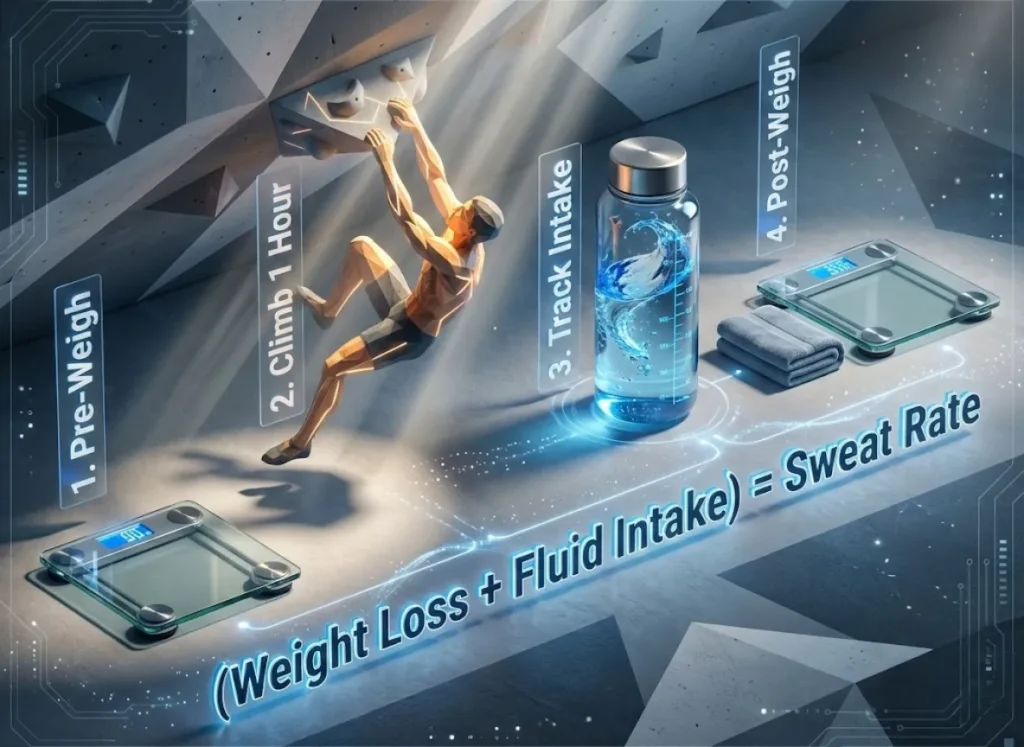
Knowing this rate allows you to target replacing 80-90% of losses. Attempting 100% replacement often leads to gastric distress. This protocol reveals massive variance in individual sweat rates; one climber may lose 0.5L/hour while a partner loses 2.0L/hour in the same heat.
This follows standard CDC guidelines for calculating sweat rate to prevent heat exhaustion. Regular re-testing is necessary. Acclimatization to altitude or different humidity levels changes your biological sweat efficiency. Understanding this math is a cornerstone of the broader science of hydration for climbers.
Why is the Sodium-Glucose Ratio Critical?
Water does not passively flow into the bloodstream efficiently on its own. It requires active transport mechanisms in the small intestine. The Sodium-Glucose Cotransporter (SGLT1) acts as a pump that moves one molecule of sodium and one molecule of glucose together across the gut wall.
This simultaneous transport changes the osmotic gradient. It drags hundreds of water molecules along with it into the blood. This is why effective hydration mixes must contain a small amount of sugar; it is functional machinery, not just for flavor.
The World Health Organization (WHO) and Institute of Medicine established specific ratios to reverse severe dehydration rapidly. Drinks lacking sodium (like plain ol’ water) or lacking glucose (like some “diet” electrolyte tabs) absorb slower. They are less effective at retaining plasma volume.
While sodium is the primary driver, other minerals like magnesium, potassium, chloride, and calcium are vital for preventing muscle spasms and supporting the nervous system. The oral rehydration salts formulation ratios validated by the NIH confirm that precise osmolarity is key.
DIY formulations allow you to hit this precise ratio without the additives or markup of commercial isotonic drinks or coconut water, which often lack sufficient sodium. This also fits well into broader climbing nutrition strategies, allowing you to control your macronutrient intake precisely.
Tactical Logistics: Managing Water by Discipline
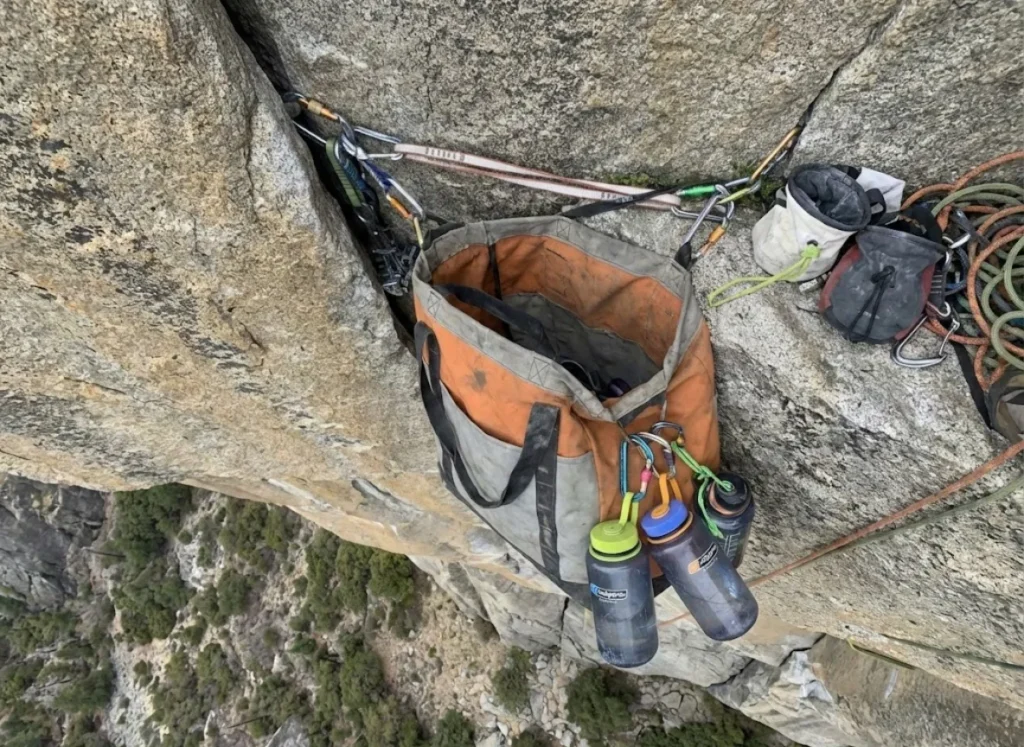
Specific gear and management strategies are required to handle hydration challenges unique to different climbing environments, from gym sessions to multi-pitch days.
How Should You Manage Hydration on Multi-Pitch and Big Walls?
Weight is the primary enemy. Water is heavy (1kg/L), requiring specific hauling systems rather than carrying everything on the harness. “Front-loading” or hyper-hydrating the night before and morning of the climb turns the body into a reservoir. This reduces the immediate carry weight required on the approach.
Rigging protocols involve clipping water bottles (using a constrictor hitch on the neck) to the outside bottom of the haul bag using the clip-in loops. This lowers the center of gravity, making the bag easier to haul.
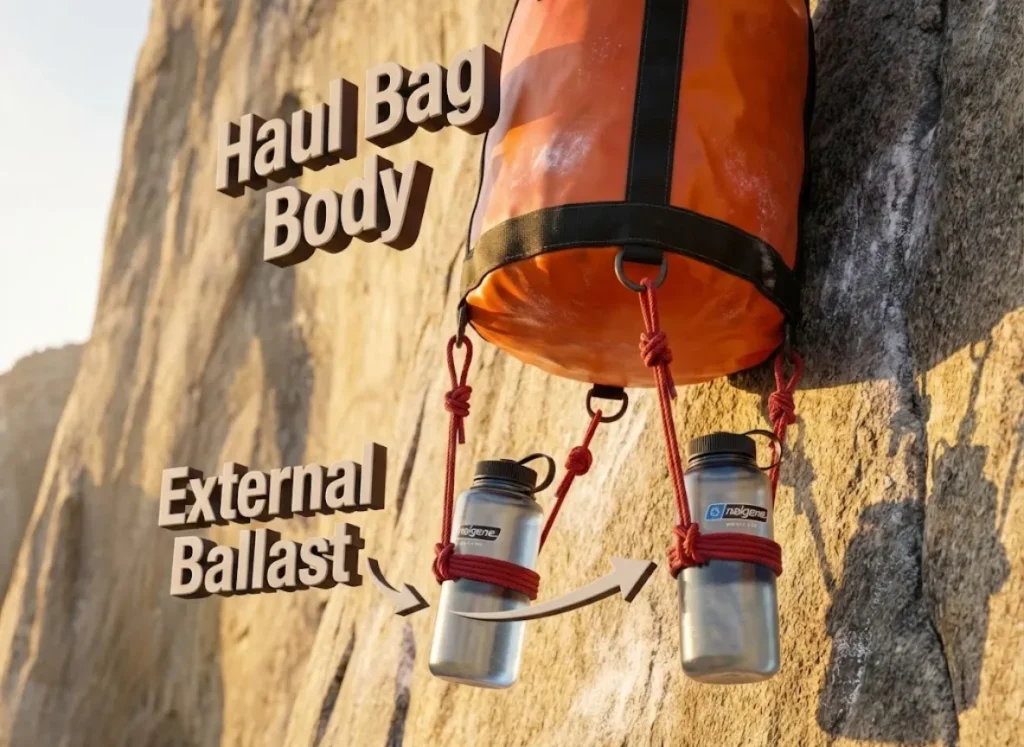
Avoid hydration bladders or a CamelBak hydration backpack on the lead climbing harness. They are prone to bursting in chimneys or offwidths, leaving you with zero water and soaked gear. Ruggedized dromedary bags are standard for base camp, but hard-sided bottles (Nalgene) or collapsible soft flasks are superior for on-route access.
Pace intake to small sips at every belay transition. This maintains blood volume without overloading the bladder, simplifying the logistics of hanging belay urination. Adhering to UIAA recommendations on nutrition and water is critical for alpinism safety. Managing this efficiently is a key part of your guide to multi-pitch systems.
What are the Unique Challenges of Alpine and Ice Climbing?
Cold-induced diuresis occurs when vasoconstriction shunts blood to the core. This tricks the kidneys into sensing fluid overload, increasing urine production. Respiratory water loss is also massive in dry, high-altitude air. Climbers lose liters of fluid simply by breathing, often without feeling thirsty.
Carrying massive water weight is inefficient in the mountains. The strategy shifts to “carry less, melt more” using lightweight stoves. Fluids must be kept warm using insulated bottles or “parkas.” Freezing water turns a resource into a useless brick of ice.
Drinking warm fluids preserves core temperature. It encourages consumption when the thirst mechanism is blunted by cold. Liquid fuel becomes essential here. High-calorie drinks serve the dual purpose of hydration and fueling when altitude suppresses appetite.
Filtration systems must be kept against the body, inside a jacket layer. This prevents the filter element from freezing and cracking. Understanding altitude sickness and fluid regulation is vital to avoid AMS. This hydration gear should be integrated into your complete ice climbing gear system.
Pro-Tip: In extreme cold, store your water bottle upside down. Ice forms at the top of the liquid first (which is the bottom of the bottle). When you flip it right-side up to drink, the cap will not be frozen shut.
DIY Recipes: The “Send Juice” Formulations
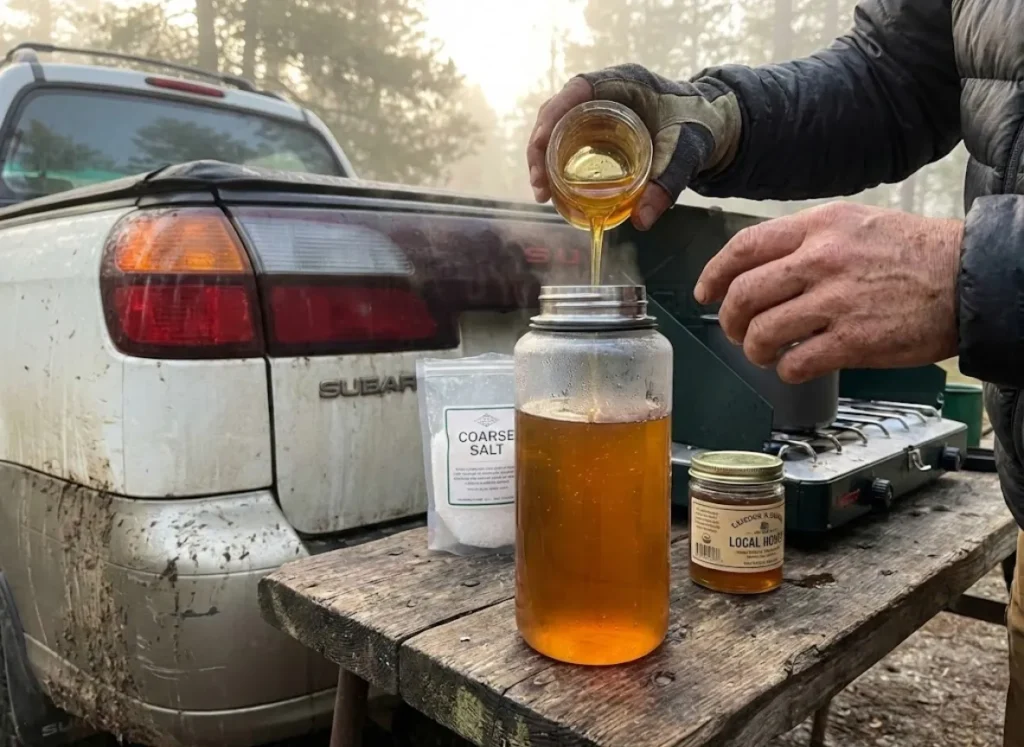
Cost-effective, scientifically valid recipes can be mixed at home, tailored to specific energy and electrolyte needs.
How to Make the “Alpinist’s Nectar” (Fuel + Hydration)?
This recipe targets the endurance climber who needs both electrolyte replacement and caloric energy to prevent “bonking.”
The Mix:
- 3 cups (750ml) Water
- 1 cup (250ml) Fruit Juice (Orange or Apple)
- 1/4 teaspoon Table Salt (essential sodium)
- 1 tablespoon Honey or Maple Syrup
The fruit juice provides natural potassium and fructose. The table salt provides the critical sodium for retention. If you prefer solid food, snacking on boiled potatoes with salt or bananas can supplement this liquid intake.
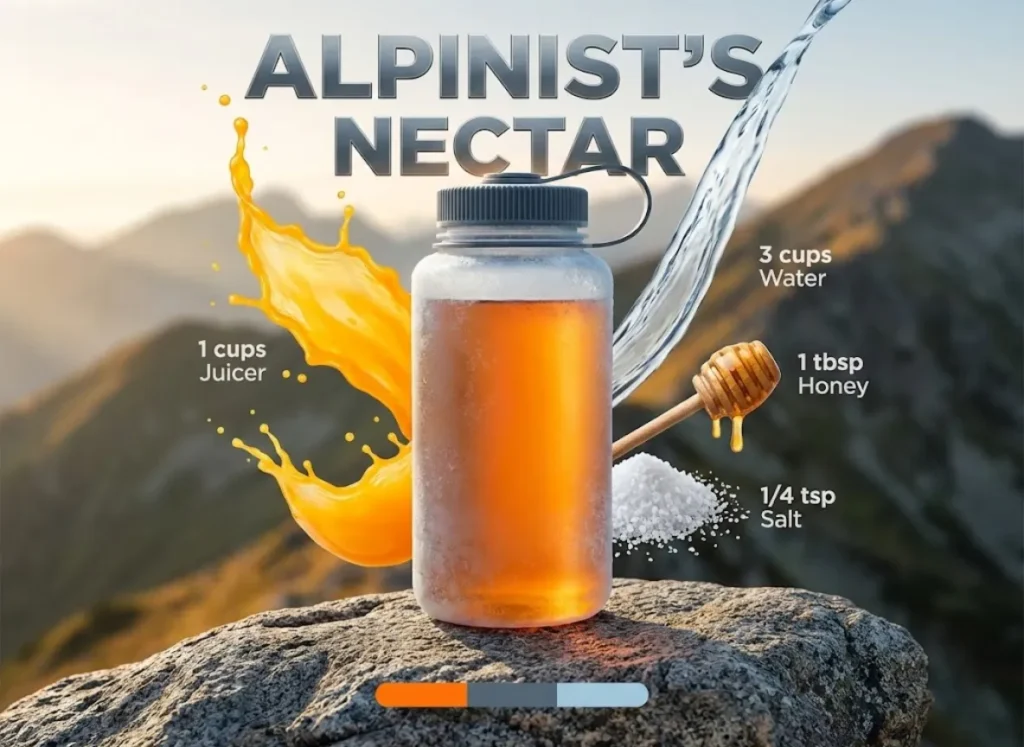
The combination of glucose (from honey) and fructose (from juice) utilizes multiple absorption pathways in the gut. This maximizes carbohydrate uptake rates. This mix is hypotonic to isotonic, ensuring rapid gastric emptying while providing a steady stream of “liquid food.”
It is significantly cheaper than commercial sports gels. It also avoids the “flavor fatigue” of artificial sweeteners during long expeditions. Medical research supports the efficacy of homemade oral rehydration solutions compared to commercial products.
For climbers strictly monitoring intake, this high-carb approach contrasts with low-carb exercise for climbers, but for high-output alpine days, the carbohydrates are fuel, not just filler.
Final Thoughts on Vertical Hydraulics
Hydration is a hemodynamic safety tool that prevents the mechanical failure of “flash pump” by maintaining blood viscosity and soft tissue function. The “2% Threshold” of body mass loss is the tipping point where cognitive focus, mental sharpness, and physical endurance begin to degrade measurably—ruining your weight-to-performance ratio.
Effective rehydration requires a precise ratio of sodium and glucose to activate transport pumps in the gut; plain water is often insufficient for high-output climbing. Logistics dictate success: from hauling ruggedized bottles on big walls to insulating warm fluids against alpine cold, the delivery system is as vital as the fluid itself.
Experiment with the “Alpinist’s Nectar” on your next long session and track your energy levels.
FAQ – Frequently Asked Questions
Is water enough for climbing, or do I really need electrolytes?
For short, low-intensity sessions (under 1 hour), water is typically sufficient. However, for high-intensity bouldering or multi-hour climbs where sweat loss is significant, electrolytes (specifically sodium) are essential to retain fluid and prevent hyponatremia.
How much water should I drink per hour while climbing?
A general baseline is 8–10 ounces (250–300ml) every hour, but this varies wildly based on heat and individual sweat rate. The most accurate method is to calculate your personal sweat rate by weighing yourself before and after a session.
What color should my urine be for optimal hydration?
Aim for a pale straw or light lemonade color. Completely clear urine may indicate over-hydration (diluting electrolyte levels), while dark apple-juice color signals significant dehydration and the need for immediate fluids.
Does dehydration actually cause muscle cramps?
While often blamed solely on dehydration, muscle spasms and cramps are frequently caused by neuromuscular fatigue. However, fluid and sodium deficits exacerbate this fatigue. Maintaining electrolyte balance helps delay the onset of the muscle fatigue that triggers cramping.
Safety Notice: Rock climbing and mountaineering are inherently high-risk
activities that can involve physical trauma or fatal incidents. The information on Rock Climbing Realms is for
educational and informational purposes only. Techniques and advice presented here are not a substitute
for professional, hands-on instruction. Conditions and risks vary by location. Always seek guidance
from a qualified instructor before attempting new techniques. By using this website, you agree that you
are solely responsible for your own safety. Any reliance you place on this information is strictly
at your own risk, and you assume all liability for your actions. Rock Climbing Realms and its authors
will not be held liable for any harm, damage, or loss sustained in connection with the use of this information.
Affiliate Disclosure: We are a participant in the Amazon Services LLC Associates Program, an
affiliate advertising program designed to provide a means for us to earn advertising fees by advertising and linking
to Amazon.com. As an Amazon Associate, we earn from qualifying purchases. We are also an official affiliate partner
of Black Diamond Equipment via the AvantLink network. If you click on a Black Diamond affiliate link and make a
purchase, we may earn a commission at no additional cost to you. We also participate in other affiliate programs.
Additional terms are found in the terms of service.