
In this article
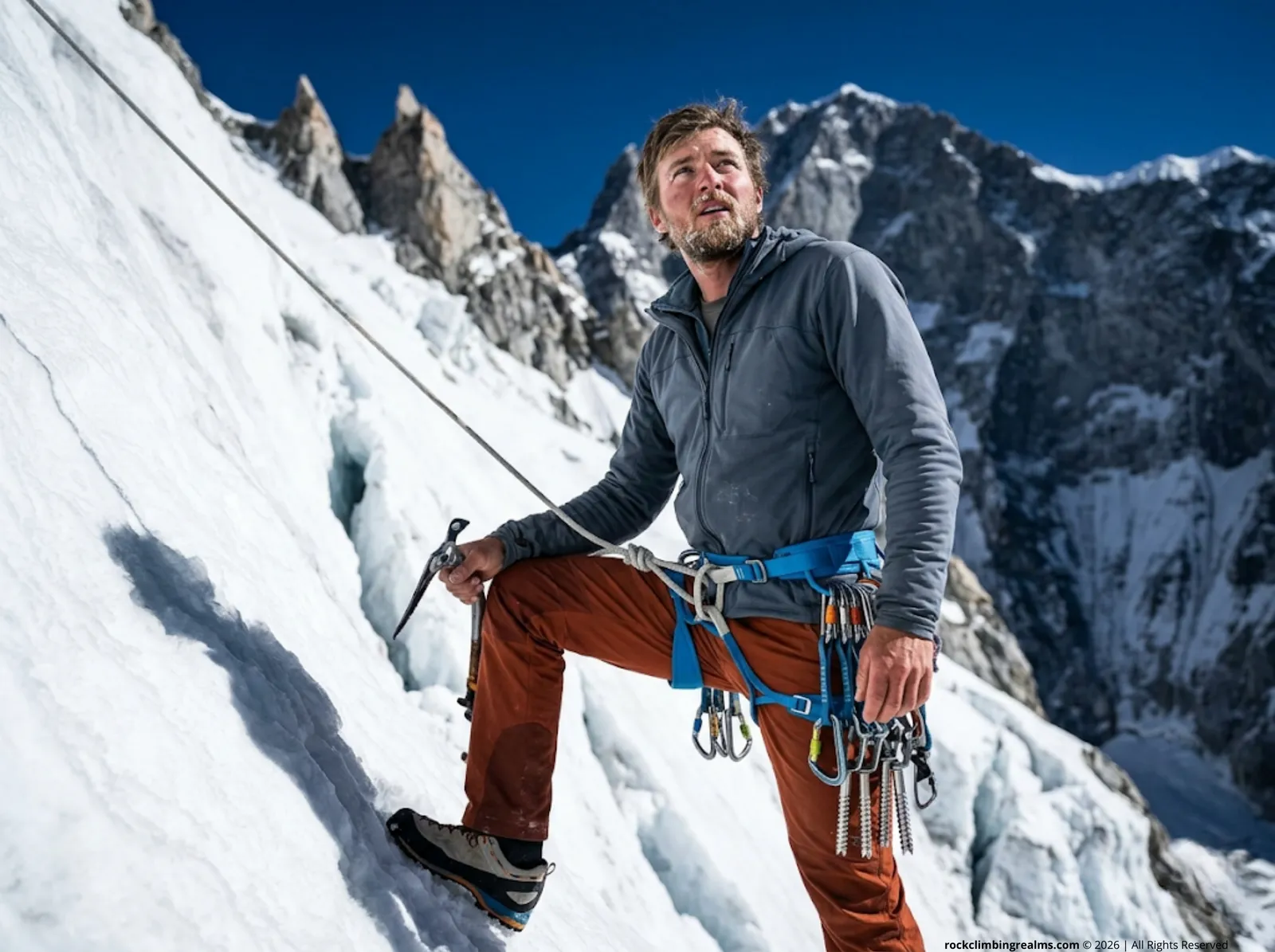
The thermometer read minus 20 degrees, and the beam of my headlamp barely pierced the spindrift howling off the Lhotse South Face. My crampons bit into the brittle ice of the “Yellow Tower,” but what terrified me wasn’t the 60-degree vertical drop beneath my boots—it was the jumar locking mechanism jammed with frozen sheath slippage from the fixed line.
Island Peak, or Imja Tse, is no longer the casual high-altitude trekking peak it was marketed as a decade ago. For any aspiring alpinist, getting above 6,000 meters requires more than waiting for stable weather flights out of Lukla. Between the accelerated glacier retreat turning the approach gully into unstable scree and the aggressive 2026 regulatory mandates redefining Himalayan access, succeeding here requires strict technical mountaineering mastery. This guide will dismantle the mechanics of the 70-degree headwall, unpack the reality of hypoxic acclimatization, and provide a professional-grade framework to ensure your first 6,189-meter Himalayan summit is a calculated execution, not a statistical gamble.
⚡ Quick Answer: Island Peak requires ascending a 150-meter vertical ice wall using a jumar on a fixed line at over 6,000 meters. The 2026 regulations mandate a 2:1 climber-to-guide ratio and restrict unguided climbs. Success demands eccentric leg strength for downclimbing, professional-grade double boots, and absolute mastery of ascender-to-rappel transitions.
The Modern Reality of the Khumbu: Regulations & Ecosystem Shift
The 2026 Himalayan Mandates and The “7,000m Rule”
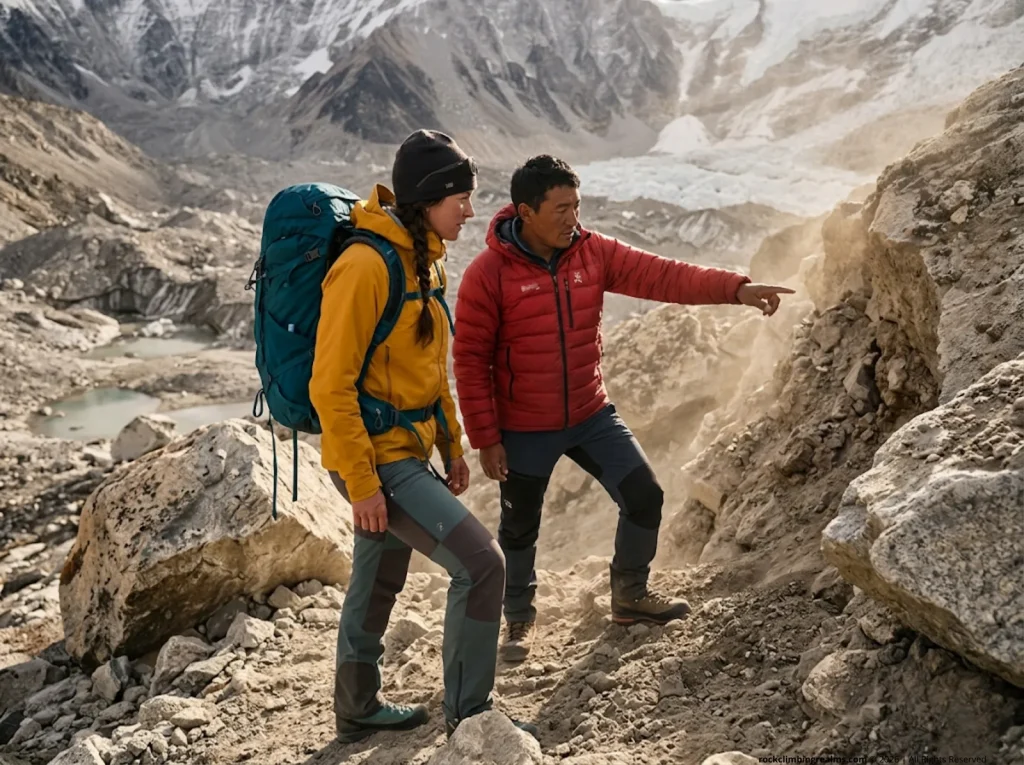
The 2026 Integrated Tourism Bill permanently alters the reality of climbing in the Khumbu region. The government now legally enforces a mandatory 2:1 guide-to-climber ratio on all 6,000-meter peaks, completely eradicating the notion of unguided, solo ascents. If you violate this, you face a permanent ban from climbing any peak in Nepal. This shift enforces true Himalayan ethics by protecting both visitors and local workers.
Island Peak now acts as a mandatory gatekeeper. The new regulations dictate that anyone attempting Everest must provide verified proof of having summited a Nepali peak above 7,000 meters. This forces climbers to use Island Peak as their primary training ground before moving to 7,000-meter objectives like Baruntse or Himlung Himal. The financial barrier has also shifted. While the spring season NMA permit remains $250, expeditions now incur non-refundable environmental welfare fees reaching up to $4,000 to combat degradation. You must also adhere to a strict 2 PM turnaround time. Fail to turn around, and you will be fined $1,500.
“Rotten Rock” and Accelerated Glacier Retreat
The mountain that Tenzing Norgay and early pioneers knew no longer exists. Driven by climate change, route shifting has replaced the classic snow slope approach with unstable, loose scree. Glacial thinning has caused the surrounding rock walls to collapse, turning the approach gully into an objective rockfall hazard.
Guides note that this “rotten rock” has made historical routes untenable for novice groups. The structural integrity of the high-altitude anchors is compromised, forcing teams to rely entirely on early, midnight starts to cross the rock bands while the terrain is still frozen solid. You are no longer just hiking in snow; you are navigating a crumbling mountain.
The 3kg Clean Mountain Strategy at High Camp
Sustainable waste management is now legally enforced through the 2026 Clean Mountain Strategy. Every climber must bring back 3kg of human and camp waste from above Camp II. If you fail to produce this weight upon descent, your mandatory $500 garbage deposit is forfeited, and your outfitter faces severe penalties.
Park authorities, utilizing drones and Mountain Rangers, have analyzed sustainable solid waste extraction strategies within Sagarmatha National Park. The “polluter pays” principle now governs the region, requiring the mandatory use of biodegradable WAG bags. The days of leaving trash around the camping infrastructure are over. If you are unfamiliar with managing human waste in technical outdoor environments, you need to practice this system before arriving at the 5,500-meter High Camp. Leaving waste on the glacier is no longer tolerated.
Physiological Adaptation & The Biology of Hypoxia
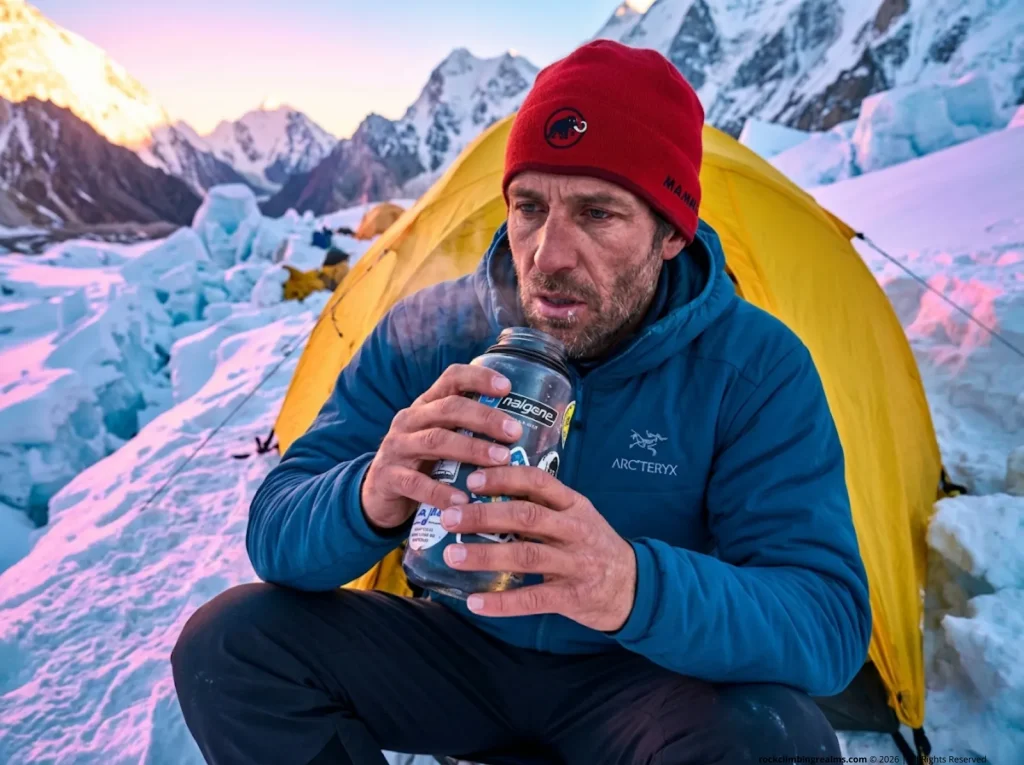
The Hypoxic Ventilatory Response (HVR)
At 6,189 meters, the air holds roughly half the oxygen you breathe at sea level. Your system triggers an automatic response, forcing you to breathe faster and shallower. This flushes carbon dioxide from your system, causing your internal pH to shift and become too alkaline.
To compensate, your kidneys excrete bicarbonate, which drastically increases your urine output. This is why hydration is critical; you are literally urinating fluid to bring your system back into balance. If you fail to follow a strict acclimatization protocol, this delicate balance collapses, triggering Acute Mountain Sickness (AMS). HRA studies spanning 2018 to 2023 reveal that the vast majority of AMS cases stem from gaining more than 500 meters of sleeping elevation per day above 2,500 meters. Follow the climb high sleep low rhythm obsessively.
Recognizing the ‘Khumbu Cough’ vs. HAPE
Many climbers get turned around not by the headwall, but by the “Khumbu Cough.” Inhaling freezing, dry air micro-lacerates the lining of your lungs, producing a violent, rib-cracking cough that ruins your ability to recover. You prevent this by wearing a Buff constantly—even while sleeping in a teahouse—to pre-warm the air before it hits your lungs.
You must be able to differentiate this mechanical cough from High-Altitude Pulmonary Edema (HAPE). If you experience breathlessness while completely at rest, accompanied by a wet, pink, frothy cough, your lung capillaries are leaking fluid. Understanding the physiological mechanisms triggering capillary leakage in the lungs is what protects your health. HAPE demands an immediate, rapid descent of at least 1,000 meters and supplemental oxygen. Do not try to sleep it off.
Pro-Tip: Check your resting heart rate every morning. If it is sitting 20 beats higher than your normal baseline, your system is failing to acclimatize to the new elevation. Do not climb higher that day.
The “Climb High, Sleep Low” Rhythm
The Sherpa people and local guides utilize the acclimatization rhythm of pushing your exertion to a higher altitude during the day and descending to a lower, oxygen-rich camp to sleep. You will hike up to the base of Ama Dablam or Chhukung Ri, stress your cardiovascular system, and drop back down to recover. This forces your system to produce more oxygen-carrying red cells without ruining your sleep quality. Do not rush this process. An extra acclimatization day in Namche or Dingboche is the cheapest insurance policy you can buy for summit day.
The Physics of the 70° Headwall
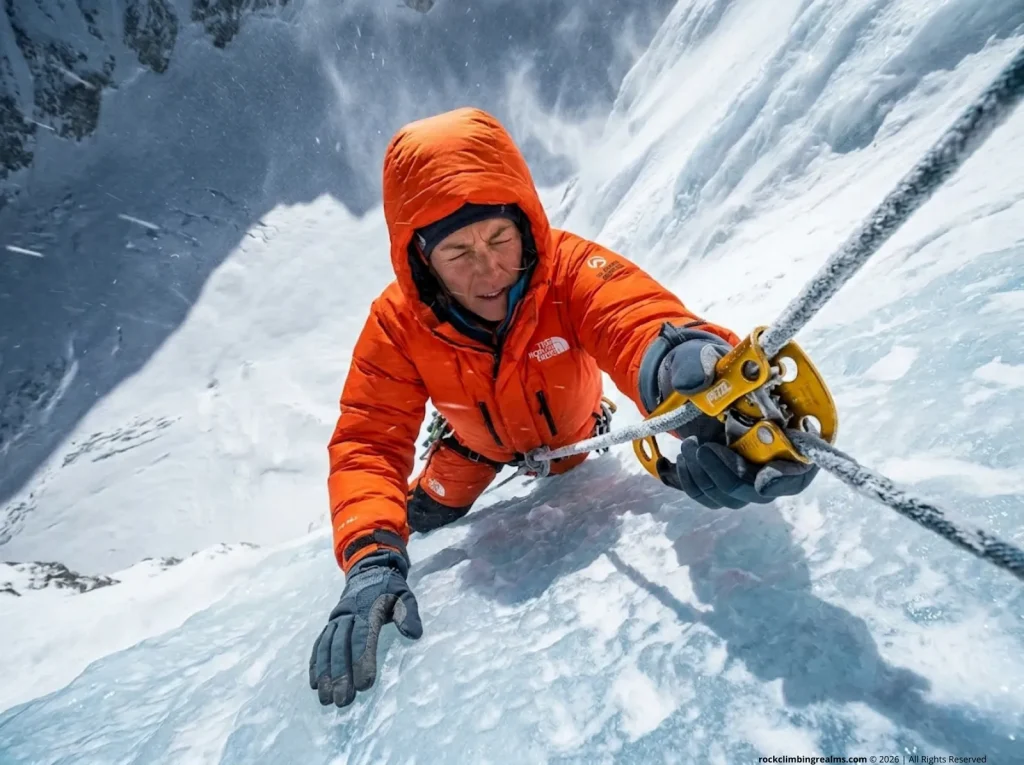
Force Vectors of Fixed-Line Ascending
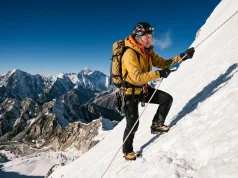
The final push on Island Peak involves a 100m vertical ice headwall pitching up to 60-70 degrees—steep enough to occasionally feel like a Scottish Grade II winter route. Ascending this requires an ascender clipped to a thick static rope. Hauling 90kg of mass and gear up this slope generates roughly 170 pounds of continuous downward pull.
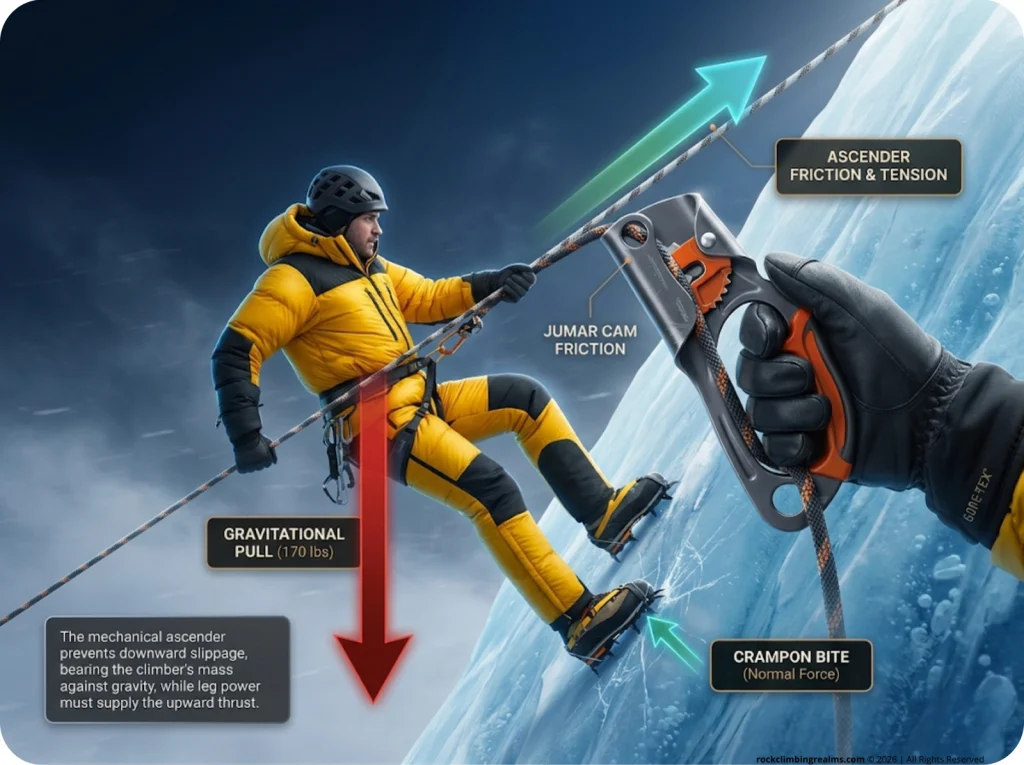
The grinding friction of an ascender biting into an icy rope creates a severe mechanical disadvantage. If you try to perform fixed rope climbing by aggressively pulling with your arms, you will destroy your cardiovascular endurance within minutes in a 50 percent oxygen environment. Use your core and legs. The ascender only holds your progress; your crampons do the work of driving you upward.
The Jumar-to-Abseil Transition Sequence
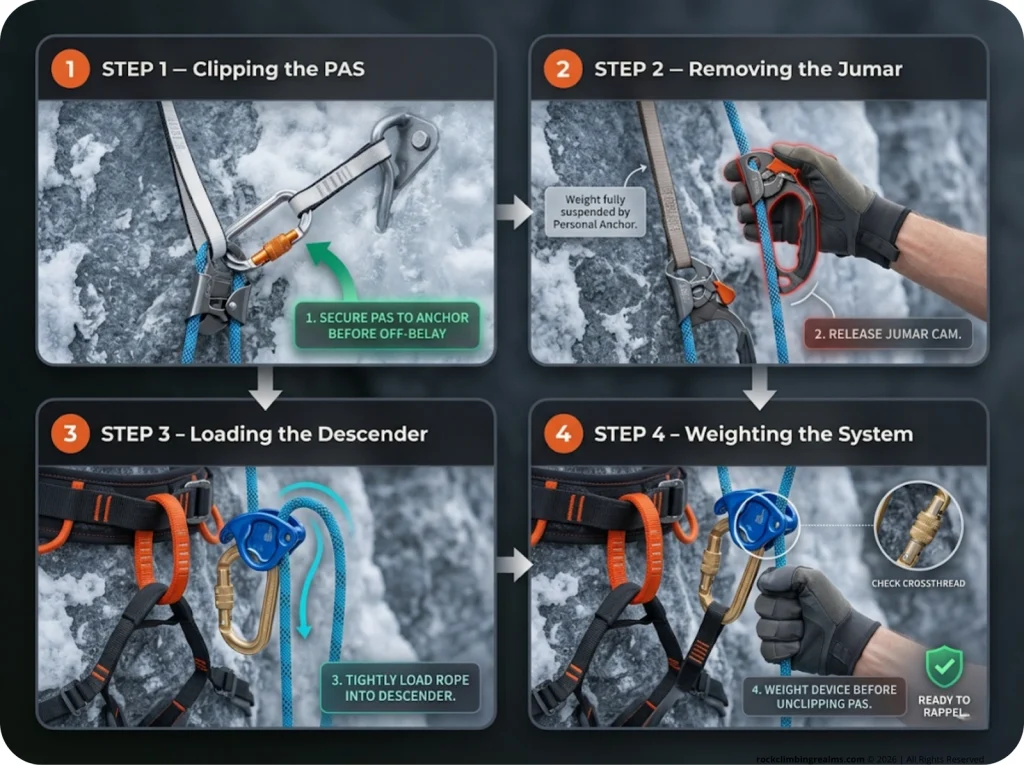
The transition from pulling upward to rappelling down is the single most hazardous moment on the mountain. You must navigate past complex anchor points with absolute precision while operating under extreme hypoxia. Securing a safe rope ascent matrix involves never taking the system off-belay. You clip your Personal Anchor System (PAS) into the hard point, lock your locking carabiner, load your rappel device, and aggressively weight the system to confirm it holds before you unclip your PAS. A mistake here results in an un-arrestable fall. Complete your rope skills training in a rock gym until you can do this blindfolded.
Sheath Slippage and Static Line Integrity
The ropes fixed on Island Peak endure brutal UV radiation, constant tension, and the friction of hundreds of aluminum ascenders. When abseiling, you may encounter “sheath slippage,” where the rope’s outer nylon layer bunches up and jams tightly into your descender. If this happens mid-rappel, you are stranded on an exposed 70-degree face.
This is why understanding UIAA 110 baseline standards for static ropes matters. A legitimate expedition rope must possess a sheath slippage of less than 20 millimeters. When you clip into a sketchy line that feels loose or heavily frayed, be prepared to pass a knot or manage a jammed ATC. Long queues form at these bottleneck anchors. You will likely stand completely still for 30 minutes battling minus 20-degree wind chill. Throw a massive down parka over your harness immediately.
High-Altitude Equipment & UIAA Standards
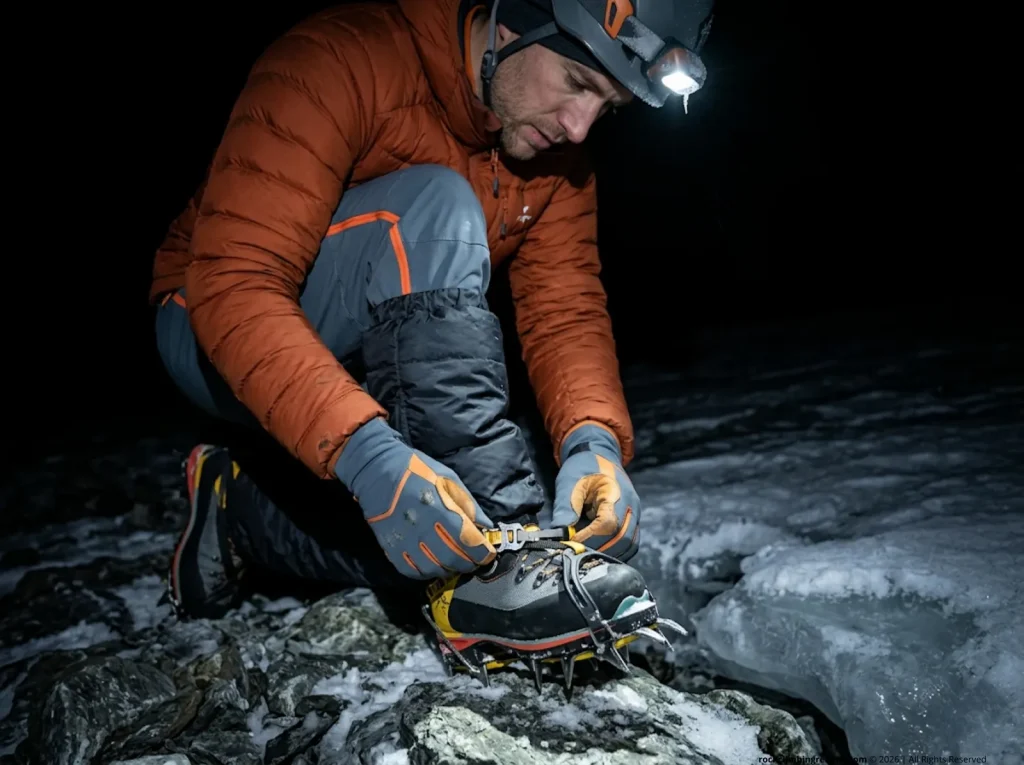
The “Double Boot” Imperative (La Sportiva G2 SM)
You cannot wear single mountaineering boots on Island Peak. Single boots lack the thermal insulation to prevent debilitating frostbite at 6,189 meters during a midnight alpine start. We recommend true double boots like the La Sportiva G2SM boots or the G2 Evo.
Double boots feature an outer shell and a removable inner liner that you can sleep with inside your sleeping bag to dry out sweat. The modern dual-Boa lacing systems allow you to tighten your boots with thick winter gloves on. Taking your heavy gloves off at the summit ridge to tie cold, frozen shoelaces will cost you your fingers. Do not rent battered, packed-out single boots from a teahouse to save a hundred dollars.
Pro-Tip: Practice strapping your crampons onto your double boots in your living room while wearing your expedition gloves. You need the muscle memory before attempting it in the dark at minus 20 degrees.
Hardware Load Thresholds (kN Ratings)
The technical gear you carry is your life-support system. Understanding UIAA safety standards is mandatory. Your carabiners must hold a minimum of 20 Kilo-Newtons (kN) on the major axis. Your static ropes must be rated to 12 kN without knots, and your Petzl harnesses must hold 15 kN.
Do not bring cheap, uncertified knockoff gear from internet retailers. Automatic or semi-automatic 12-point steel crampons are strictly required for security on the dense blue ice of the headwall. If you show up with strap-on aluminum hiking crampons, the front points will violently fail when you kick into the ice, sending you down the face.
Managing Thermal Efficiency at -20°C
Building a personal climbing gear kit requires an obsessive focus on thermal layering. You need an 800-plus fill power expedition down parka worn over a waterproof shell, a mid-layer fleece, and a specialized moisture-wicking base layer. The goal is to avoid sweating at all costs. Sweat freezes, and frozen sweat leeches core heat drastically faster than the ambient air. Vents on your legs and armpits must be actively managed as you climb higher and the wind chill drops further. During your gear comparison, realize that adhering strictly to your packing checklists for legitimate layers supports ethical Sherpa ratios—your guides should not have to drag you down because your core temperature plummeted.
Biomechanical Preparation for Alpine Efficiency
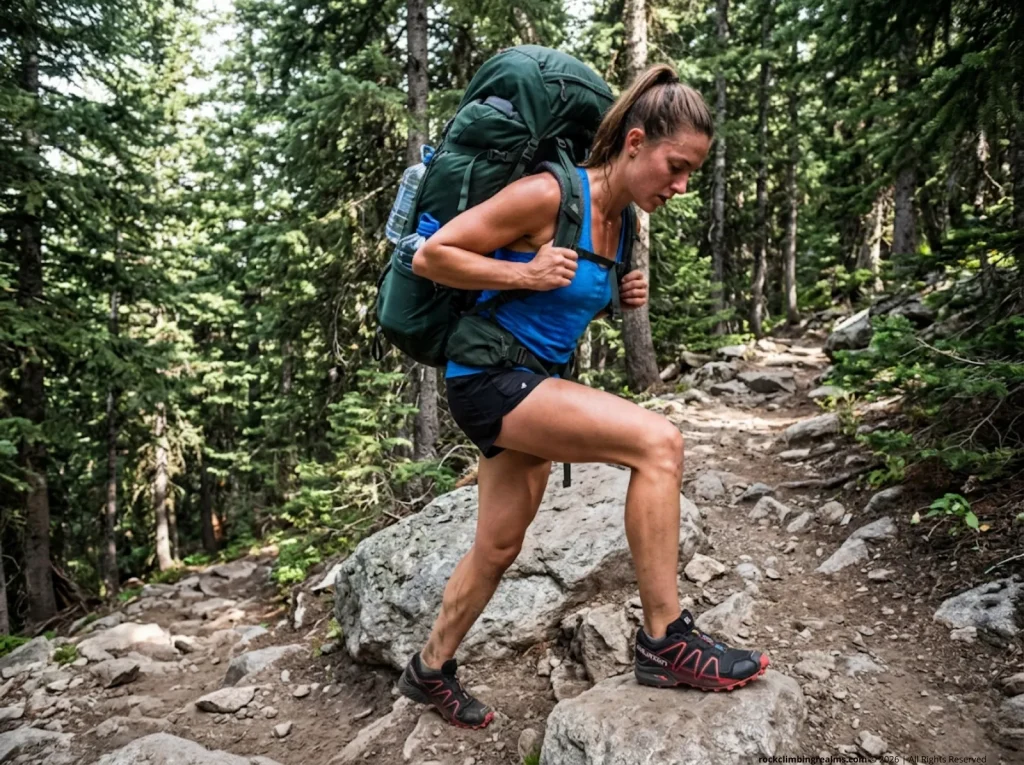
Training Eccentric Strength for the Descent
The majority of catastrophic mountain injuries happen on the descent. Your legs will be destroyed after the massive effort of reaching the summit, and your patellar tendons must absorb the constant, heavy shock of hiking downhill with a bulky pack. Training must focus heavily on eccentric strength—the lengthening of the muscle under load.
Perform box step-overs daily as part of your home training plan. Step directly over a 12-inch box and lower yourself down as slowly as possible on the other side. This forces your quadriceps to stabilize the knee joint. When doing weighted lunges, ensure your knee tracks perfectly over your toes. The uneven boulders and shifting scree will destroy your lateral knee stability if your biomechanics are sloppy.
VO2 Max and the 3,500-Foot Simulation Drill
Mountaineering is fundamentally the act of walking up a steep set of stairs for 12 hours straight with a 15-kilogram backpack. To build your physical fitness, your aerobic foundation requires maintaining a 60 to 70 percent max heart rate for over 60 minutes, four days a week. Use intense uphill hiking or a stair-stepper machine wearing a weighted pack.
To test your readiness, perform a strict training drill: ascend 3,500 vertical feet carrying 15 kilograms within a three-hour window. Understanding how high-altitude hypoxic exposure impacts athletic output will clarify why your sea-level times will drop significantly once you cross 5,000 meters. Pass this benchmark to confirm your raw physiological baseline.
Pro-Tip: Walk on the sides of your feet and do ankle rolls on a balance board to strengthen the stabilizing ligaments. The glacier approaches are notoriously uneven and roll ankles constantly.
Gym-to-Mountain Transference
Actual technical mountaineering requires specific skill acquisition. You must translate your local fitness routine to the realities of the mountain. Incorporating specialized high-altitude training protocols focuses on local muscular endurance in your calves and hip flexors. Simply being able to run a flat marathon will not prepare you for the aggressive high-stepping required to navigate the jagged ice sections framing the mountain’s base.
The Summit Push: From Crampon Point to the Ridge
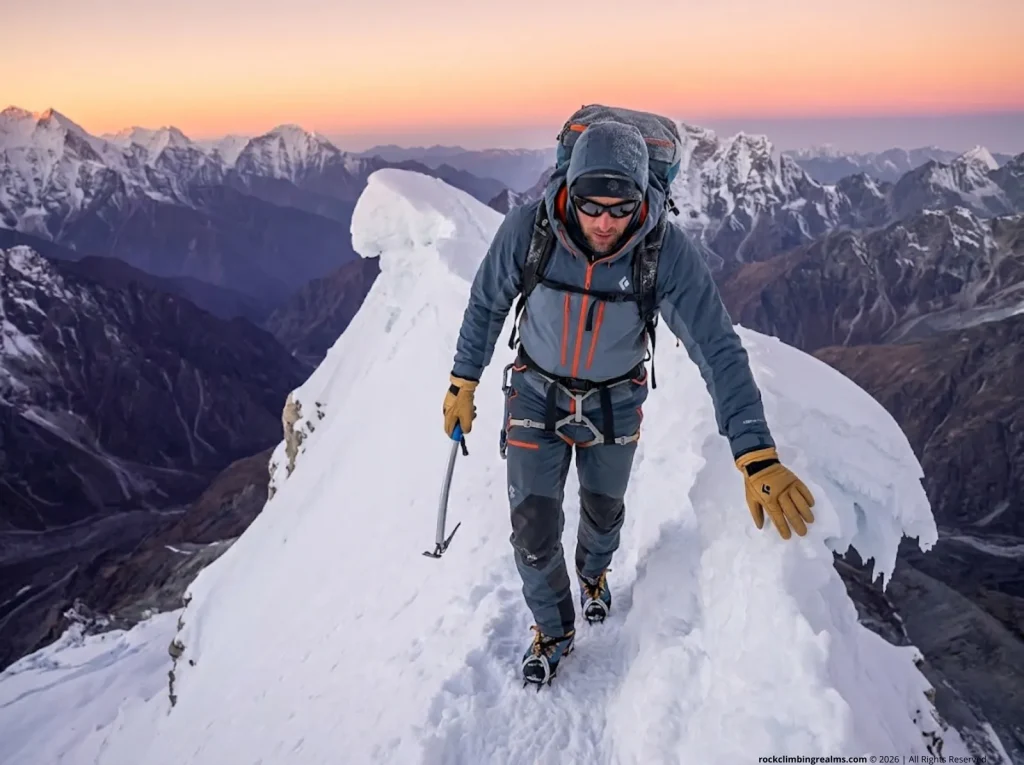
Navigating “Crampon Point” Under Pressure
Summit day begins with a mandatory midnight alpine start. Permafrost melt destabilizes the seracs immediately after the sun strikes the glacier, so you must get up and down the mountain before the warmth triggers avalanches.
The primary early choke point is Crampon Point, the transition zone where the jagged dirt trail hits the permanent glacier. At 1:00 AM, freezing temperatures and pitch darkness cause underprepared climbers to panic. You must transition from hiking boots to double boots and steel crampons quickly. Fumbling with frozen straps drains your energy and freezes your hands. You then proceed through the dark, often navigating a deep gap utilizing an aluminum crevasse ladder laid flat across the abyss. You walk across carefully in your crampons, one metal rung at a time.
The Rhythmic “Three-Step-and-Rest” Rule
When you finally confront the imposing 100-meter headwall, you must institute the three-step-and-rest breathing sequence. Take three deliberate, upward steps using your ascender and your front points. Stop. Rest your weight entirely on your harness. Breathe sharply and deeply to physically clear the carbon dioxide buildup from your lungs. Then repeat.
If you rush this pace, you will redline your cardiovascular system, triggering severe panic or rapid exhaustion. Let the impatient tourists burn matches trying to sprint past you in the queue. You succeed by maintaining a slow, unstoppable mechanical rhythm.
The Mental Game on the Exposed Airy Ridge
Reaching the top of the headwall does not mean you have summited. You face the final summit ridge exposure, a heavily corniced knife-edge strip of snow barely two feet wide. A misplaced boot placement here risks a massive fall down either side into the dark Khumbu valley. This demands absolute psychological focus. You must rely entirely on the mechanical advantage of your fixed safety line and trust that your crampon front points will hold.
Managing the descent safely requires maintaining a secure autoblock knot on your rappel and silencing the urge to rush down. Execute a zero-failure rappel safety system and check your locking carabiners twice before shifting your mass over the void. The climb ends when you are safely back at Base Camp, not at the summit marker.
FAQ
Can a beginner climb Island Peak?
A complete beginner should not attempt Island Peak without rigorous prior training. While technical climbing experience isn’t strictly mandatory if you operate with a certified guide, you must possess elite aerobic fitness, experience in crampons, and a deep understanding of rope ascension systems to survive the final headwall safely.
How much does an Island Peak expedition cost in 2026?
Expect to pay between $2,500 and $4,500 depending on your chosen outfitter. The 2026 regulations enforce a $250 spring climbing permit, mandatory 2:1 guide ratios, and a newly implemented non-refundable environmental welfare fee that operators must absorb into their pricing packages.
Is Island Peak harder than Kilimanjaro?
Yes, Island Peak is significantly harder than Kilimanjaro. While slightly lower in absolute elevation, Kilimanjaro is a non-technical walk-up, whereas Island Peak requires navigating crevassed glaciers, crossing aluminum ladders in sharp crampons, and ascending a vertical ice wall at 6,000 meters.
Do I need double boots for Island Peak?
Double boots are non-negotiable for true safety on Island Peak. Single mountaineering boots lack the required thermal insulation for the minus 20-degree temperatures encountered during a midnight summit push, drastically increasing your risk of debilitating frostbite.
Safety Notice: Rock climbing and mountaineering are inherently high-risk
activities that can involve physical trauma or fatal incidents. The information on Rock Climbing Realms is for
educational and informational purposes only. Techniques and advice presented here are not a substitute
for professional, hands-on instruction. Conditions and risks vary by location. Always seek guidance
from a qualified instructor before attempting new techniques. By using this website, you agree that you
are solely responsible for your own safety. Any reliance you place on this information is strictly
at your own risk, and you assume all liability for your actions. Rock Climbing Realms and its authors
will not be held liable for any harm, damage, or loss sustained in connection with the use of this information.
Affiliate Disclosure: We are a participant in the Amazon Services LLC Associates Program, an
affiliate advertising program designed to provide a means for us to earn advertising fees by advertising and linking
to Amazon.com. As an Amazon Associate, we earn from qualifying purchases. We are also an official affiliate partner
of Black Diamond Equipment via the AvantLink network. If you click on a Black Diamond affiliate link and make a
purchase, we may earn a commission at no additional cost to you. We also participate in other affiliate programs.
Additional terms are found in the terms of service.