
In this article
The 9.2mm felt like dental floss feeding through my ATC. Three pitches into a wandering trad route at the Gunks, rope drag had turned every clip into a full-body wrestling match. My belayer kept short-roping me because the skinny line slipped through his device faster than either of us expected. That rope was lighter, sure. But lighter isn’t always better, and I learned that lesson 400 feet off the deck with numb forearms and fraying patience.
After fifteen years of buying, beating up, and retiring more ropes than I care to count, I’ve landed on a truth most gear shops won’t tell you: the number printed on your rope’s tag is just the starting point. Sheath percentage, belay device compatibility, and your local rock type matter just as much as diameter when you’re choosing the right rope for your climbing.
Here’s how to cut through the marketing noise and pick the climbing rope that actually matches your system, your discipline, and your rock.
⚡ Quick Answer: For most climbers, a 9.4–9.8mm single rope hits the sweet spot between weight, durability, and device compatibility. Gym and top-rope climbers should lean toward 9.8–10.2mm for maximum lifespan. Alpine and redpoint climbers benefit from 8.5–9.3mm lines, but only if they’ve matched the rope to their belay device and have the skills to handle faster feed. Sheath percentage predicts longevity better than diameter alone.
What Rope Diameter Actually Means (And Why the Label Lies)

How Manufacturers Measure Diameter Under Load
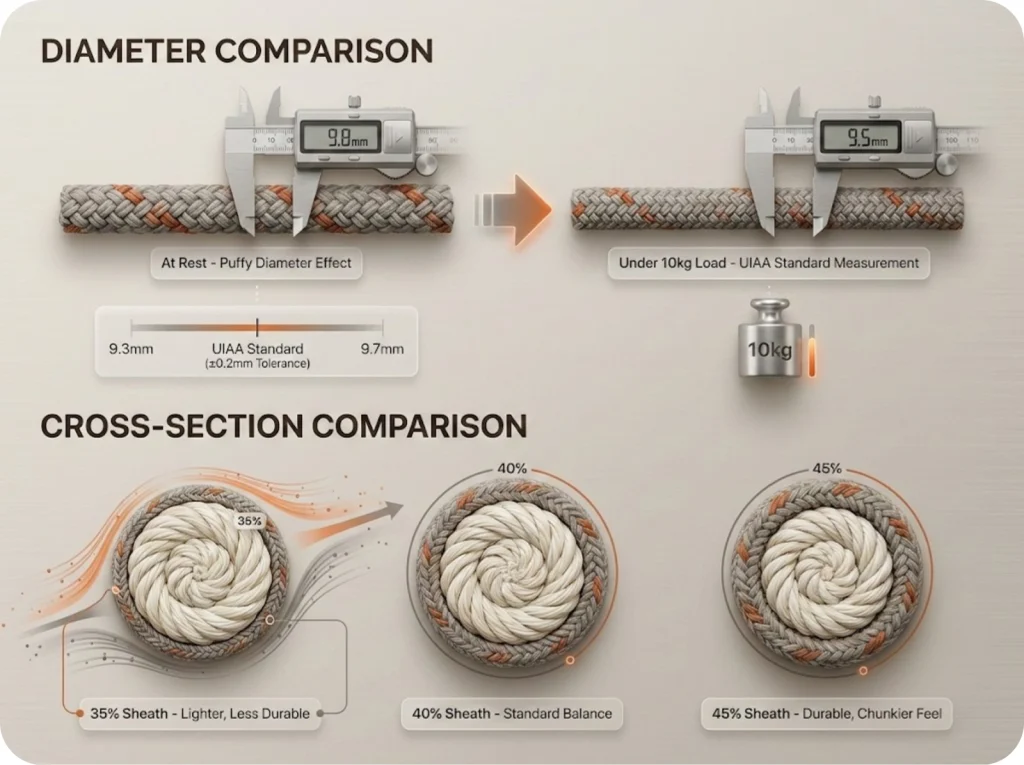
That number on the rope’s tag? It’s not what you think. The UIAA and EN 892 standards require manufacturers to measure diameter under a standardized load: 10 kg for single ropes, 6 kg for half ropes, and 5 kg for twin ropes. There’s also a built-in tolerance of ±0.2mm, which means a rope labeled “9.5mm” can legally measure anywhere from 9.3 to 9.7mm. The UIAA Safety Commission publishes these testing protocols so climbers can compare ropes on a level playing field.
Pick up a rope at the shop and it’ll feel fatter than advertised. That’s normal. At rest, most ropes appear 0.3–0.5mm thicker than their rated spec — what I call the puffy diameter effect. Petzl ropes in particular feel chunky when unloaded because of their sheath braiding pattern. But clip that same rope into your GriGri and pull it under tension, and it suddenly handles like the diameter on the label says it should.
This matters because every belay device compatibility chart uses the loaded diameter, not the hand-feel diameter. If you’re judging rope thickness by squeezing it in the store, you’re measuring the wrong thing.
Pro tip: Before you buy, thread the rope through your belay device right there in the shop. The way it feeds under tension tells you more than the spec sheet ever will.
Sheath Percentage — The Spec That Tells You More Than Diameter
Here’s where it gets interesting. Sheath percentage — measured by mass — ranges from about 30% to 45% across the market, and it predicts rope lifespan more accurately than diameter alone.
A rope with 40%+ sheath (like the Bluewater DynaGym at roughly 45%) is built for heavy abuse. It’s heavier and stiffer, but it’ll take a beating on sharp rock and gym walls without complaining. Drop to the 35–38% range (the Mammut 9.5 Crag Dry sits around 37–40%) and you’ve got the sweet spot where most outdoor climbers live — balanced performance without excess bulk.
Below 35% sheath, you’re in performance territory. These ropes are lighter and thinner, but you’ll notice a shorter lifespan on anything abrasive. The braiding process matters too: a 48-carrier braid produces a smoother, thinner sheath, while a 32-carrier braid yields something thicker and more rugged. Knowing where your rope sits on that spectrum tells you more about how it’ll perform than the diameter alone.
Kernmantle Construction: Core Strength vs. Sheath Defense
Every modern climbing rope uses kernmantle construction: a twisted or braided nylon core wrapped in a braided outer sheath. The core handles the bulk of the rope’s load-bearing work. The sheath takes the abrasion hits and gives you the handling characteristics you feel in your hands.
Both core and sheath are made from polyamide (nylon), chosen because it absorbs energy during falls and resists heat buildup during rappels. Technologies like Beal’s Unicore bond the core and sheath together so they can’t separate — even if the sheath gets severed on a sharp edge. That kind of construction redundancy matters when you’re committing to routes with UIAA safety certification standards that define minimum performance thresholds.
How Diameter Shapes Your Climbing (The Real Trade-Offs)

Weight Savings That Actually Matter
On paper, a millimeter here or there sounds trivial. In your pack, it’s a different story. A 70m rope at 48 grams per meter (Beal Opera 8.5mm) weighs 3.36 kg. That same length at 62 g/m (Sterling Velocity 9.8mm) comes in at 4.34 kg. That’s nearly a kilogram of difference sitting on your shoulders.
On a 5-minute walk from the parking lot to your sport crag, that gap barely registers. On a 3-hour glacier approach with an already heavy alpine climbing pack, it’s the difference between arriving fresh and arriving spent. The threshold where pack weight becomes a deciding factor: any route where you’re carrying the rope for more than an hour.
Pro tip: Some experienced alpinists keep two ropes — a skinny send line for the push and a thick workhorse rope for projecting — rather than compromising on a single mid-range line.
Friction, Feed, and the Belay Device Problem
This is where rope diameter selection gets personal. Thinner ropes produce less friction against carabiners, rock surfaces, and inside belay devices. That means faster feed speed, less effort per clip, and noticeably less drag on wandering trad routes.
But faster feed has a cost. The Petzl GriGri is rated for 8.5–11.0mm, but it performs best with ropes 9.4mm and above. Run a sub-9.0mm rope through a GriGri, and the cam may engage more slowly during gradual loading. Climbers have described being caught off guard by how fast a thin rope feeds through a tube-style ATC during a lead fall.
The Edelrid Mega Jul, rated 7.8–10.5mm, stands out as one of the most versatile devices for climbers who switch between thin alpine lines and thick gym ropes. If you’re buying a skinny rope, check that your device handles it well before you leave the ground. Understanding how different belay devices handle rope diameter can save you from an uncomfortable surprise on your first pitch.
Durability and the Sheath-Wear Clock
Thicker ropes last longer. A 10.2mm gym rope can survive 3–5 times more lowering cycles than a 9.0mm single on the same wall. That’s why gyms stock ropes in the 10.2–10.5mm range — they’re built for volume.
Here’s something most guides skip: rope diameter actually increases as the sheath fuzzes and core fibers expand through repeated loading. An old 9.5mm rope can handle like a fresh 9.8mm. Run the entire rope through your hands regularly. If you feel flat spots or mushy sections where the core and sheath have started separating, that’s a retirement signal — regardless of what the diameter was when you bought it.
Local rock type accelerates the clock. Sandstone eats sheaths faster than polished granite. Limestone edges can core-shot thin ropes in a single bad fall. If you’re climbing on abrasive stone, factor that into your diameter decision. Knowing when to inspect, care for, and retire your climbing rope matters more than any spec on the tag.
Rope Drag — Where Thin Ropes Win (And Where They Don’t)
On wandering routes with multiple directional changes, thinner ropes produce measurably less friction through carabiners. The drag reduction per millimeter of diameter decrease is most noticeable above 5 clips on routes that wander laterally.
But the biggest gains come from combining a thin rope with extended slings. Pairing alpine draws that reduce rope drag with a slimmer diameter creates a stacked benefit that feels dramatic on multi-pitch routes. On straight-line sport climbing routes, though, diameter’s effect on drag is minimal. The friction savings just aren’t there when the rope runs in a clean vertical line.
Matching Diameter to Your Discipline

Gym and Top-Rope (9.8–10.5mm)
Gyms don’t optimize for weight — they optimize for survival. Ropes get lowered hundreds of times each week across sharp-textured holds, and durability is the only metric that matters. The Bluewater DynaGym (10.5mm, 70.7 g/m) and Sterling Slim Gym are purpose-built for this kind of abuse.
Thicker ropes also produce lower dynamic elongation, which cuts down on the “bounciness” that unsettles new top-rope climbers. Weight doesn’t matter when the rope lives on a fixed anchor. And device compatibility is never an issue — every belay device on the market handles 10mm+ without a second thought.
Sport Cragging and All-Around (9.4–9.8mm)
This is the category most outdoor climbers land in, and for good reason. A 9.5mm Mammut Crag Dry at 59 g/m balances weight, handling, and sheath protection for climbers who lead sport-climbing routes two to four days per week. The Sterling Velocity XEROS 9.8mm (62 g/m) offers more sheath protection for abrasive rock.
Both feed cleanly through the GriGri without cam-engagement concerns, and they handle projecting, warming up, and the occasional multi-pitch without complaint. If you own one dynamic rope and climb outside regularly, this is your range.
Alpine, Multi-Pitch, and Redpoint (8.5–9.3mm)
When every gram counts on long approaches or limit-level redpoint burns, skinny ropes become essential tools. The Beal Opera (8.5mm, 48 g/m) represents the cutting edge of single rope technology, but it demands a skilled belayer who understands how fast a thin line feeds.
The Edelrid Swift Eco Dry (8.9mm) is triple-rated for single, half, and twin use — rare versatility that alpinists appreciate when the route demands switching systems. Ropes below 9.0mm need pairing with specific devices: the Edelrid Mega Jul (rated to 7.8mm) or a GriGri handled with extra vigilance.
Beal ropes in this range are known for lower impact force, providing a softer catch preferred in trad climbing and ice climbing where protection may be marginal. If alpine weight savings are your priority, make sure you understand alpine rope management techniques before committing to a sub-9mm line.
The Device Compatibility Matrix You Actually Need
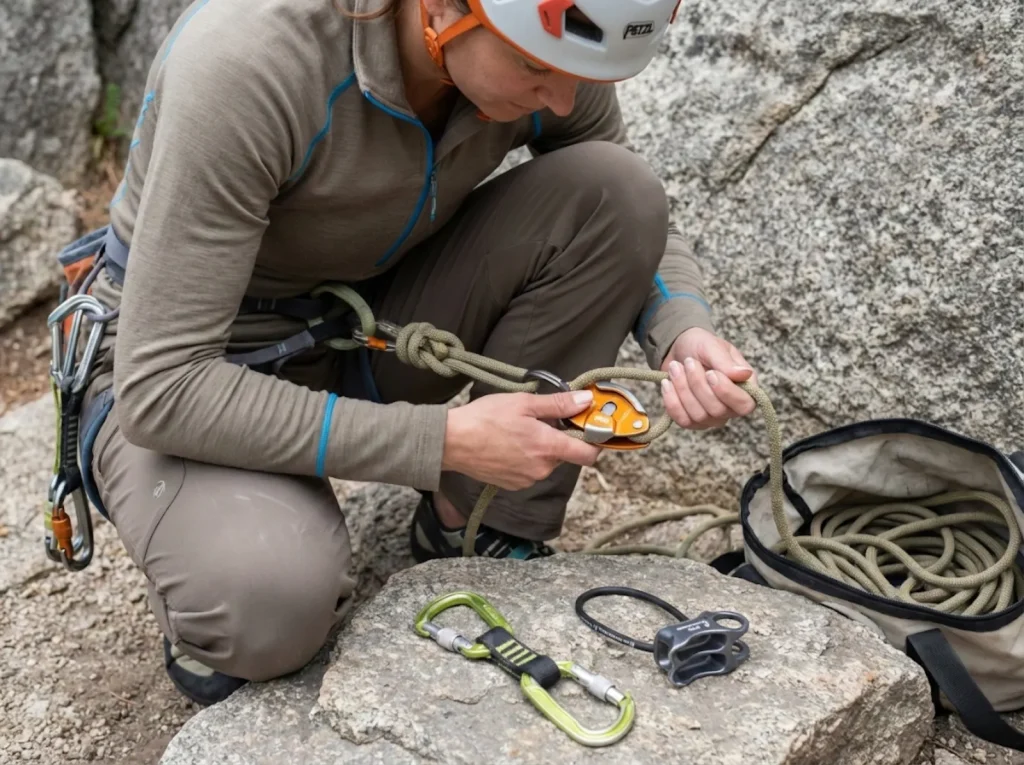
Active vs. Passive Braking and Why Diameter Matters
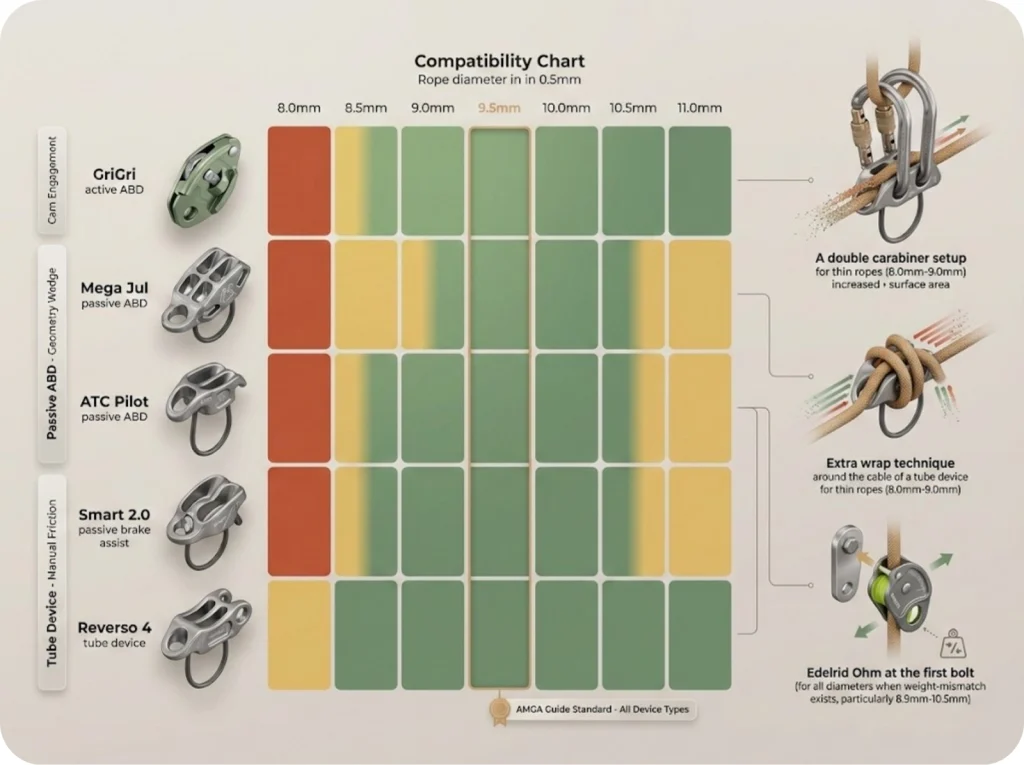
Not all belay devices respond to diameter the same way. Active ABDs like the GriGri use a pivoting cam that pinches the rope — and cam engagement speed depends on both diameter and rope surface texture. Skinny ropes with smooth sheaths engage slower.
Passive ABDs (the Mega Jul, Smart 2.0, ATC Pilot) rely on device geometry to wedge the rope against a carabiner. They tend to be more diameter-tolerant. Tube devices like the ATC and Reverso offer friction that’s entirely manual — thinner ropes feed faster and demand a more experienced brake hand.
AMGA-certified guides overwhelmingly prefer the 9.5–9.8mm range because it works reliably across all device types with clients of varying experience. If you’re guiding or belaying beginners, stick with that range.
Friction Adjustment Techniques for Diameter Mismatches
If you’re running a thin rope through a tube device, adding a second carabiner increases friction surface area. It’s an old guide trick that works well with sub-9mm ropes. You can also add an extra wrap around the tube device’s cable for more braking power.
The Edelrid Ohm provides supplemental friction at the first bolt for weight-mismatched belay teams. Understanding how the Edelrid Ohm changes belay physics helps you compensate for both weight differences and thin-rope feed speed. What you should never do is “tight grip” a thin rope to compensate for poor friction — proper technique matters more than hand strength.
The Quiver Strategy — When One Rope Isn’t Enough

The “Send Line” vs. “Workhorse” Framework
Most experienced climbers don’t own a single rope. They maintain a quiver of two or three: a skinny performance line for send attempts and alpine objectives, and a thicker workhorse rope for projecting, hanging, and daily cragging.
The logic is straightforward. Your skinny rope sees limited use — redpoint burns and alpine pushes only — so it lasts years despite its lighter construction. The workhorse absorbs the daily punishment of projecting falls, hangdogging, and repeated lowering. Each rope does what it was built for, and neither gets destroyed doing the other’s job.
Quiver Math — The ROI of Two Ropes vs. One
A single 9.5mm all-rounder used three to four days per week might last 6–12 months before sheath wear forces retirement. A two-rope system — a 9.8mm workhorse paired with an 8.9mm send line — used strategically can last 18–24 months combined.
At current retail prices ($200–$300 per dynamic rope), the quiver strategy costs roughly the same per year while delivering better performance for each use case. And a dedicated gym climbing rope at 10.2mm+ prevents your expensive skinny line from getting shredded on artificial walls.

Pro tip: The cheapest rope per year is a thick one you’re not afraid to beat up. Save the skinny line for when grams per meter actually affect your climbing.
Rope Care by Diameter — Protect Your Investment
Storage, Cleaning, and Inspection Protocols
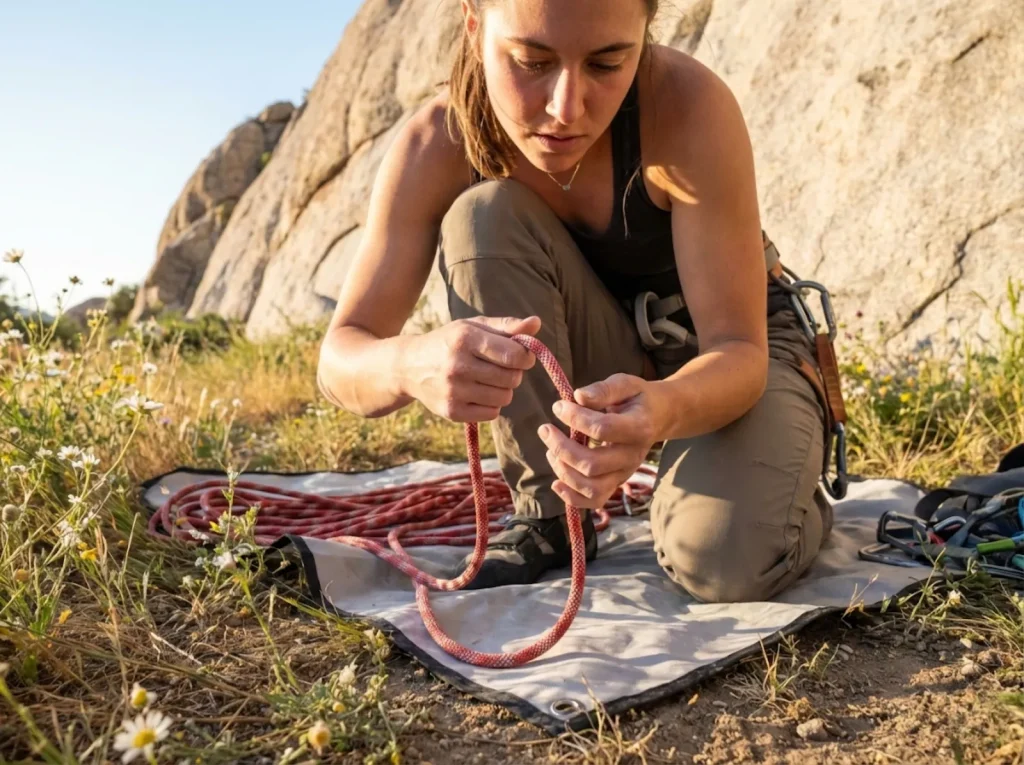
A rope bag or tarp isn’t optional. Sand and dirt penetrate the sheath weave and act as internal sandpaper against the core, grinding it down from the inside. Rope maintenance starts the moment you pull your rope out of the pack.
Wash with mild detergent and lukewarm water to remove crystalline salt and embedded grit. Dry treatment (look for UIAA Water Repellent certification) prevents water absorption that can increase rope weight by up to 50% and reduce dynamic strength by roughly 30%. If you’re climbing on sea cliffs, wash after every session — salt crystals accelerate nylon degradation.
Inspect by feeding the entire rope through your hands every few sessions. Flat spots, mushy sections, or visible core strands through the sheath are retirement signals. No exceptions. Learn the science behind washing your climbing rope if you want to keep your rope alive longer.
How Diameter Affects Retirement Timing
Thin ropes (sub-9.2mm) show sheath wear earlier and have less material buffer before core exposure. There’s simply less nylon between the outside world and the structural core. Thick ropes (9.8mm+) tolerate more abuse cycles but can mask internal core damage beneath a still-intact sheath — which is why the hand-feel inspection matters regardless of diameter.
UV exposure degrades nylon — store your rope in a dark, cool space. Humidity makes older ropes fuzzy and fat, increasing friction to the point of difficult lowering. And the newest development in cut resistance — aramid-integrated sheaths from Mammut (Alpine Core Protect) and Edelrid (Protect series) — adds a layer of edge protection that’s especially relevant for multi-pitch climbing on sharp alpine limestone.
If you’re weighing a dry vs non-dry rope purchase against your budget, factor in that dry-treated ropes also resist dirt penetration better, indirectly extending lifespan.
Pro tip: Mark the midpoint of your rope with tape or a marker. It speeds up rappel setups and helps you track which half is taking more wear on routes where the crux is always in the same spot.
Conclusion
The number printed on your rope tag is a starting point, not the full picture. Sheath percentage, device compatibility, and your local rock type matter as much as rope diameter when you’re making a buying decision. Match your rope to your discipline first, your device second, and your ego last. A 9.8mm workhorse rope that feeds cleanly through your GriGri will serve you better than a 9.0mm send line you can’t safely belay with.
The quiver strategy isn’t a luxury. It’s how experienced climbers extend the life of every rope they own while getting better performance for each specific use.
Next time you’re handling a rope at the shop, run it through your belay device before you buy. The specs on the tag tell you what the rope is. How it feeds through your system tells you whether it’s right for you.
FAQ
What diameter climbing rope should a beginner get?
Start with a 9.8–10.2mm single rope. Thicker ropes are more durable, feed predictably through belay devices, and handle the repeated falls and lowering cycles of learning without premature sheath wear. Move to thinner ropes only after you’ve dialed your belay technique.
Is a 9.5mm rope too thin for top-roping?
It depends on frequency. A 9.5mm handles occasional top-rope use fine, but if you’re top-roping multiple days per week, the sheath will degrade faster than a dedicated 9.8–10.2mm rope. Gyms use 10.5mm ropes for a reason — they survive thousands of lowering cycles.
What diameter rope works best with a Petzl GriGri?
The GriGri is rated for 8.5–11.0mm but performs most reliably with ropes 9.4mm and above. Below 9.0mm, the cam may engage more slowly during gradual loading, requiring a more attentive brake hand.
Do I need two climbing ropes?
Most climbers benefit from a two-rope system once they climb outdoors regularly. A thick workhorse (9.5–9.8mm) handles projecting and daily use, while a skinny line (8.5–9.2mm) serves alpine objectives and redpoint burns. This approach costs roughly the same per year as replacing one mid-range rope more frequently.
How much weight do you actually save with a thinner rope?
On a 70m rope, switching from 9.8mm (62 g/m) to 8.5mm (48 g/m) saves roughly 980 grams — just over 2 pounds. That difference is noticeable on long approaches and alpine routes but negligible for single-pitch cragging with a short walk-in.
Safety Notice: Rock climbing and mountaineering are inherently high-risk
activities that can involve physical trauma or fatal incidents. The information on Rock Climbing Realms is for
educational and informational purposes only. Techniques and advice presented here are not a substitute
for professional, hands-on instruction. Conditions and risks vary by location. Always seek guidance
from a qualified instructor before attempting new techniques. By using this website, you agree that you
are solely responsible for your own safety. Any reliance you place on this information is strictly
at your own risk, and you assume all liability for your actions. Rock Climbing Realms and its authors
will not be held liable for any harm, damage, or loss sustained in connection with the use of this information.
Affiliate Disclosure: We are a participant in the Amazon Services LLC Associates Program, an
affiliate advertising program designed to provide a means for us to earn advertising fees by advertising and linking
to Amazon.com. As an Amazon Associate, we earn from qualifying purchases. We are also an official affiliate partner
of Black Diamond Equipment via the AvantLink network. If you click on a Black Diamond affiliate link and make a
purchase, we may earn a commission at no additional cost to you. We also participate in other affiliate programs.
Additional terms are found in the terms of service.