
In this article
The first time I showed up at Eldorado Canyon, I had been leading 5.10 at my home crag for a season. I picked a route rated 5.10a and figured it would be a good warmup. It wasn’t. It felt like a different grade entirely — the holds were sharper, the sequences demanded more precision, and the gear placements were spaced farther than I expected. I climbed it, but not cleanly, and not with any of the confidence I’d built at home.
That trip taught me that a number on a route description is just a starting point. Understanding climbing area difficulty ratings — what grade systems actually measure, what they don’t, and how to research them before you leave home — changes what you show up expecting. This guide covers the grade systems you need to know, the separate layer of protection ratings that most articles skip, and a practical research method I’ve refined across dozens of crags.
Quick Answer: Climbing difficulty ratings are assigned by the first ascensionist and reflect the hardest single move on a route, not its overall character. In North America, rock climbing uses the Yosemite Decimal System (5.0 through 5.15, with letter subdivisions from 5.10 onward). Bouldering uses the V Scale (V0–V17). To research a specific area, start with Mountain Project for consensus grades and recent comments, cross-reference a current guidebook for protection ratings and route character, read trip reports from the last six months, and ask a local — grades vary meaningfully between areas, and even between crags in the same region.
The Yosemite Decimal System — What the Numbers Actually Mean
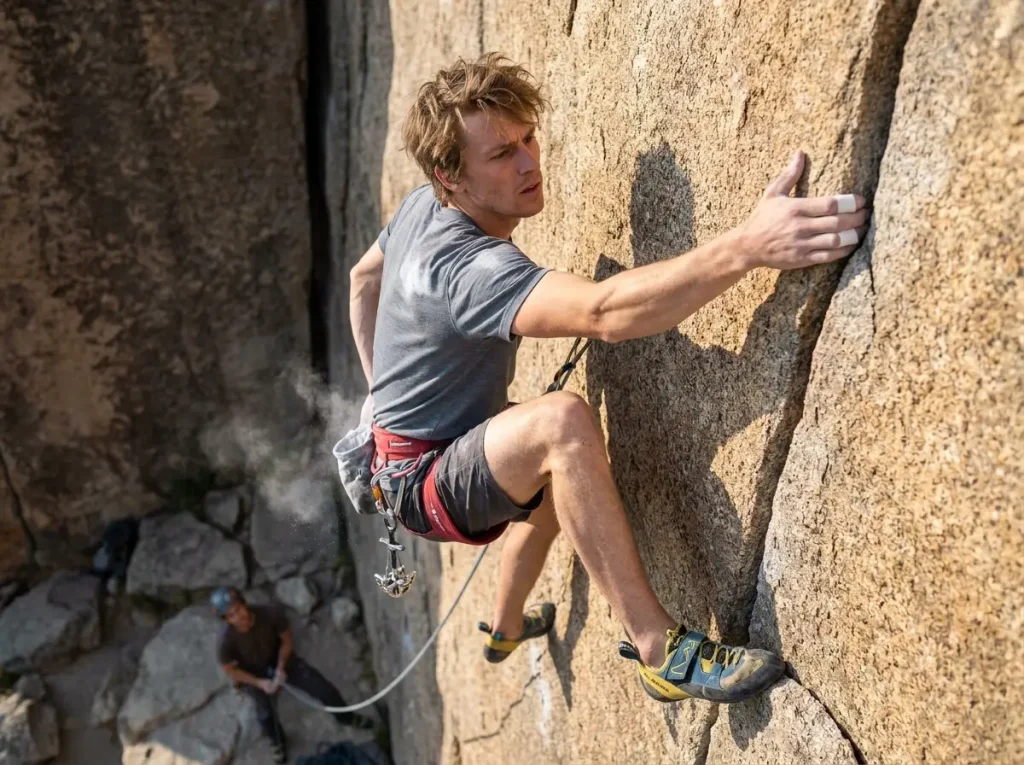
The Yosemite Decimal System is the foundation of climbing grade communication in North America, and understanding it is non-negotiable before you research any area. It was originally developed in the 1930s by the Sierra Club to classify backcountry travel across all terrain types, and the rock climbing portion — Class 5 — is what most climbers mean when they talk about “climbing grades.”
Class 1 through Class 5 — the full scale
Classes 1 through 4 describe terrain without technical climbing: a flat trail (Class 1), a steep hike using hands (Class 2), scrambling with real fall potential (Class 3), and exposed terrain where most people use a rope (Class 4). Class 5 is technical roped climbing — fall could mean serious injury — and it’s where the decimal system begins.
Class 5 runs from 5.0 at the easy end to 5.15 at the other. The scale wasn’t designed to go that high — when the YDS was standardized in the 1950s at Tahquitz Rock in Southern California, 5.9 was considered the outer limit of human climbing ability. As technique and training evolved, grades pushed beyond that ceiling, and rather than redesignate everything, climbers added 5.10, 5.11, and so on.
One practical note: Class 6 on the YDS scale is aid climbing — routes where you physically weight the gear to ascend rather than using only rock features. Aid climbing uses its own grading system (A0 through A5), which you can read about in our aid climbing grade guide if that’s where your research is taking you.
Inside Class 5 — decimal grades and letter subdivisions
From 5.0 through 5.9, the decimal grade is the whole story. A 5.7 is a 5.7. From 5.10 onward, the grades split into four letters: a, b, c, d — where a is the easier end of that decimal grade and d is the harder end. A 5.10a and a 5.10d are meaningfully different climbs despite sharing a decimal grade. This subdivision was added in the 1960s specifically because once grades broke past 5.9, the number alone wasn’t precise enough to describe the spread of difficulty.
Pro tip: In some older guidebooks and on popular traditional routes, you’ll see grades without letters — just “5.10” or “5.11”. This isn’t laziness; it reflects an era when letter subdivisions weren’t universal. When you see an unlabeled decimal grade, treat it as middle of the range — roughly b or c territory.
How the YDS crux rule works
The grade of a route reflects its single hardest move — the crux — not the average difficulty or overall effort. A 200-foot route might have 190 feet of 5.8 climbing and one 5.11a sequence. The route is 5.11a. This matters for research because a high-grade crux can appear near the top of a route, meaning you arrive pumped and face the hardest sequence last. Guidebooks sometimes note where the crux falls within the pitch, and this is worth looking up for any route near your limit.
Bouldering Grades, French Grades, and How They All Connect
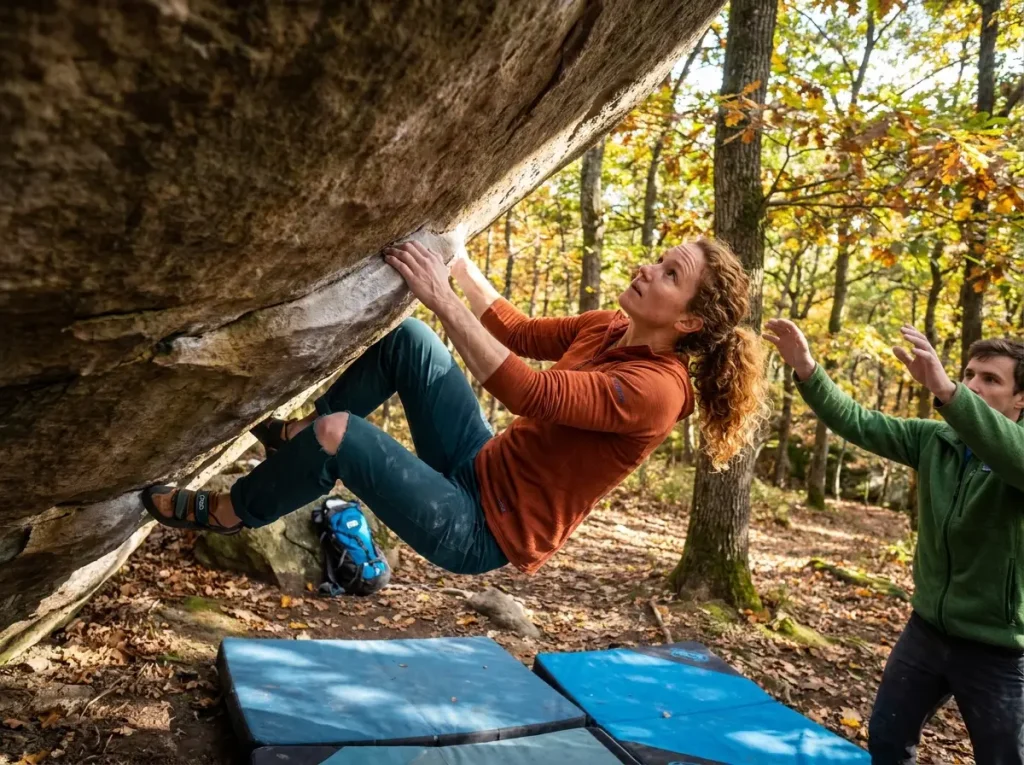
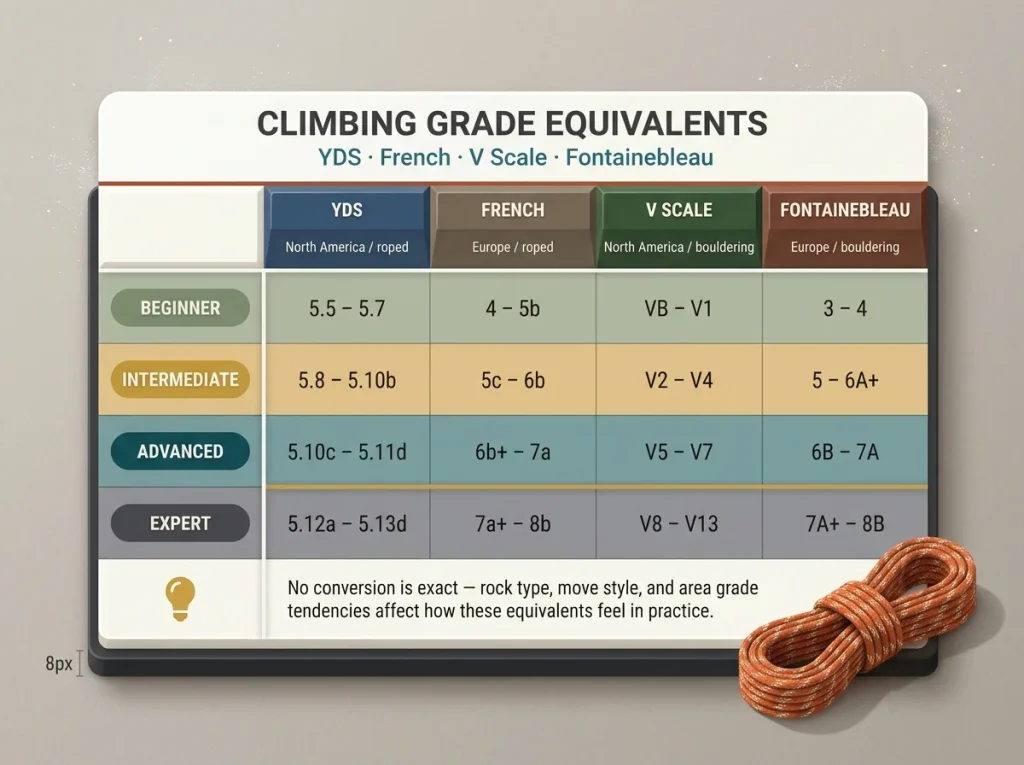
The V Scale is the North American standard for bouldering, named after John “Vermin” Sherman, who developed it at Hueco Tanks in Texas. It runs from V0 (accessible to newer climbers) through V17 (currently the hardest documented bouldering grades in the world), with VB sometimes used for absolute beginner terrain below V0. Unlike the YDS, there’s no upper boundary set in advance — the scale simply extends as climbers push harder.
The V Scale and how it feels in practice
V0 to V2 is generally accessible to climbers who have been bouldering for a few months. V4 to V6 represents a meaningful commitment to strength and technique — most climbers spend considerable time in this range. V8 and above is where the gap between recreational and dedicated training climbers becomes hard to bridge without intentional effort. For a more detailed breakdown of what each grade benchmark requires physically and technically, the bouldering grades explained guide covers V0 through V17 with honest benchmarks.
French grades and the Fontainebleau system
European sport climbing uses the French grade system, which runs from 3 to 9c (the current top of free climbing difficulty). French grades use a number, a letter, and sometimes a + sign: 6a, 6b+, 7a, 8c+. The Fontainebleau system is a parallel scale used specifically for bouldering in Europe, and it uses the same number/letter format (6A, 6B, 7A+) but for boulder problems rather than roped routes.
Grade conversion — the rough equivalents
No conversion between systems is perfect because the scales don’t map onto identical movement types. That said, rough equivalents hold up well enough for trip planning: 5.10a ≈ 6a (French); 5.11a ≈ 6c; 5.12a ≈ 7a+; V4 ≈ 6C/7A (Fontainebleau). For a full conversion chart between YDS, French, UIAA, and British grades, the trad climbing grade conversion chart is worth bookmarking before any international trip.
Protection Ratings — The Research Layer Most People Miss
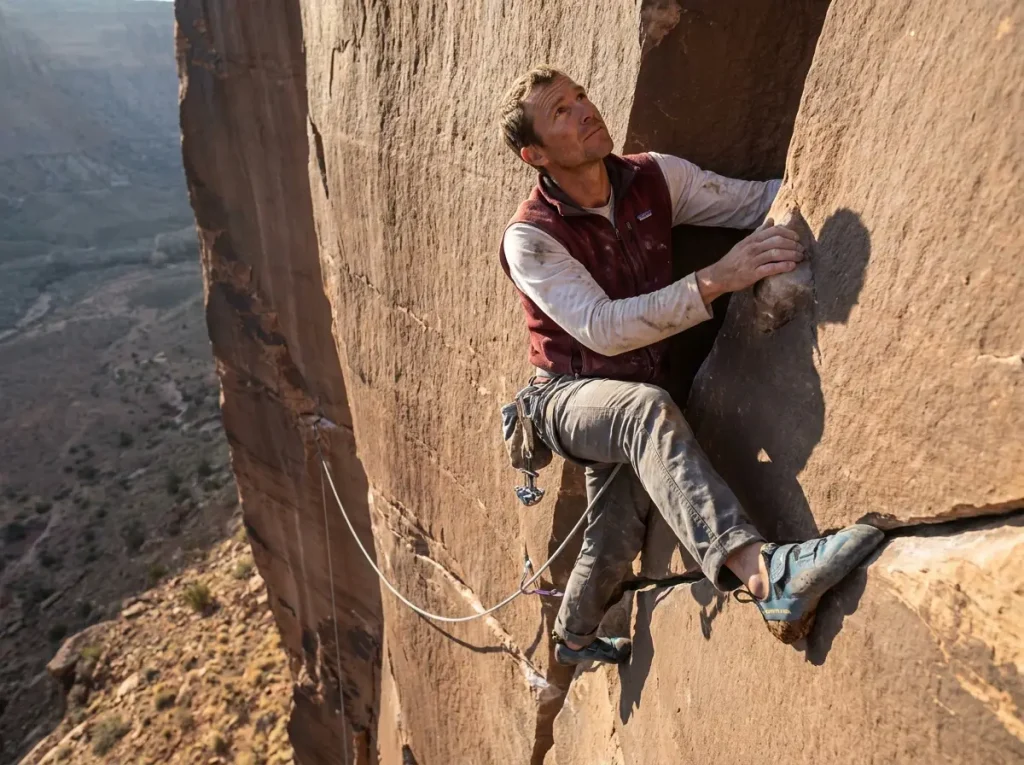
Here’s what most grade articles don’t tell you: difficulty ratings and protection ratings are two separate pieces of information, and confusing them is how climbers end up on routes they aren’t prepared for.
The difficulty grade tells you how hard the hardest move is. The protection rating tells you what happens if you fall. They’re independent. A technically easy route (5.8) can carry a protection rating that makes it entirely inappropriate for anyone who isn’t climbing well below their limit. A hard route (5.12) can be completely safe because it’s bolted every 6 feet.
PG-13, R, and X — what each means in practice
The protection rating system for traditional climbing was formalized by Jim Erickson and works as a modifier added after the difficulty grade:
PG-13 — Protection is available but may require experience to find and place. A fall at the wrong moment could result in a long fall or a difficult situation. Competent trad leaders can typically handle PG-13 terrain, but it warrants attention.
R — Protection is genuinely sparse or difficult to place. A fall on an R-rated route at the wrong point could mean a ground fall, a ledge impact, or another serious consequence. R-rated routes are for climbers who are highly confident in their ability to climb the grade without falling, or who have extensive runout experience.
X — Little or no protection. A fall on an X-rated route should be treated as a near-certainty of serious injury. Some X-rated classics are climbed regularly by very experienced climbers who understand the commitment they’re accepting — but for most people, X means no.
Routes without a protection suffix carry an implied PG rating — protection is reasonable and a leader fall is generally safe.
Why protection ratings are a separate research step
When you’re planning a new climbing area trip, you’re likely searching by grade. The natural instinct is to look for routes at your ability level. But a route at your technical limit with an R rating is a different undertaking than the same grade with solid bolt protection. Before committing to any trad route near your limit, look up its protection rating specifically — not just its difficulty grade. Both Mountain Project and most guidebooks include this information, but you have to look for it deliberately. It’s not always in the headline grade.
The UIAA’s safety standards for climbing equipment provide the underlying framework that informs how protection gear is rated — worth understanding if you want to know why some placements count as adequate and others don’t.
Pro tip: If a route has no protection rating listed and no protection information in the description, that’s worth a question on Mountain Project’s comments or in a local forum. Older trad routes sometimes go undocumented in ways that catch climbers off guard.
How to Research a Climbing Area’s Difficulty Ratings
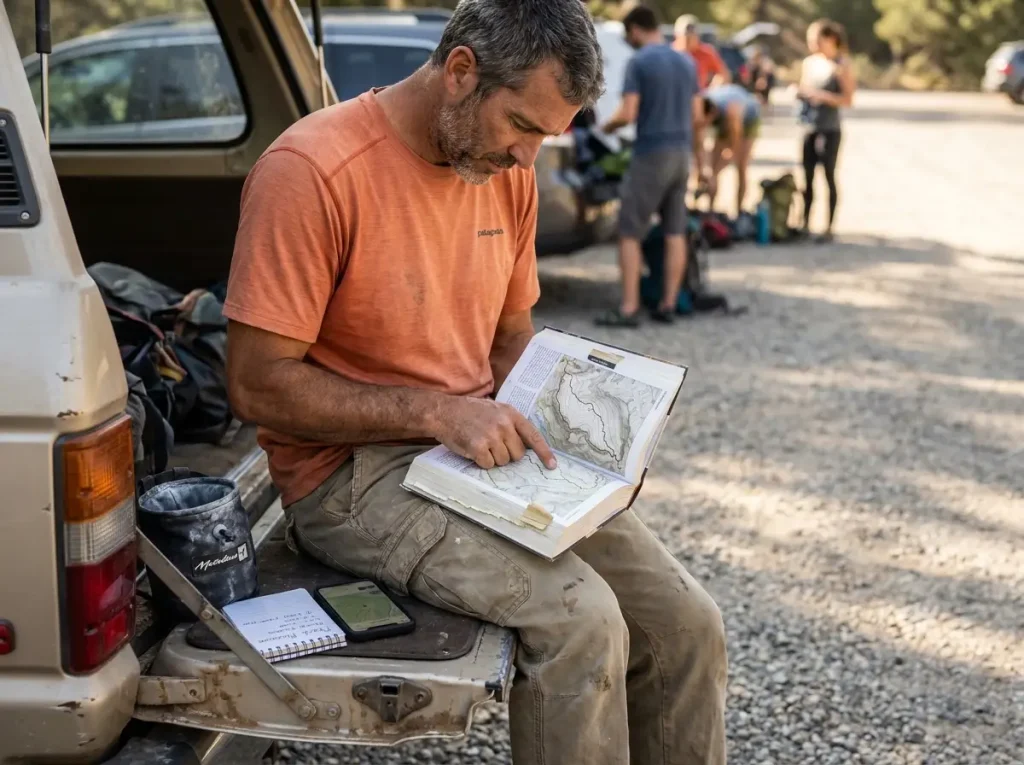
This is the part most grade articles skip. Knowing that the YDS exists doesn’t tell you how to actually research the grades at Red Rock Canyon or Seneca Rocks before your trip. Here’s the methodology I use every time I visit somewhere new.
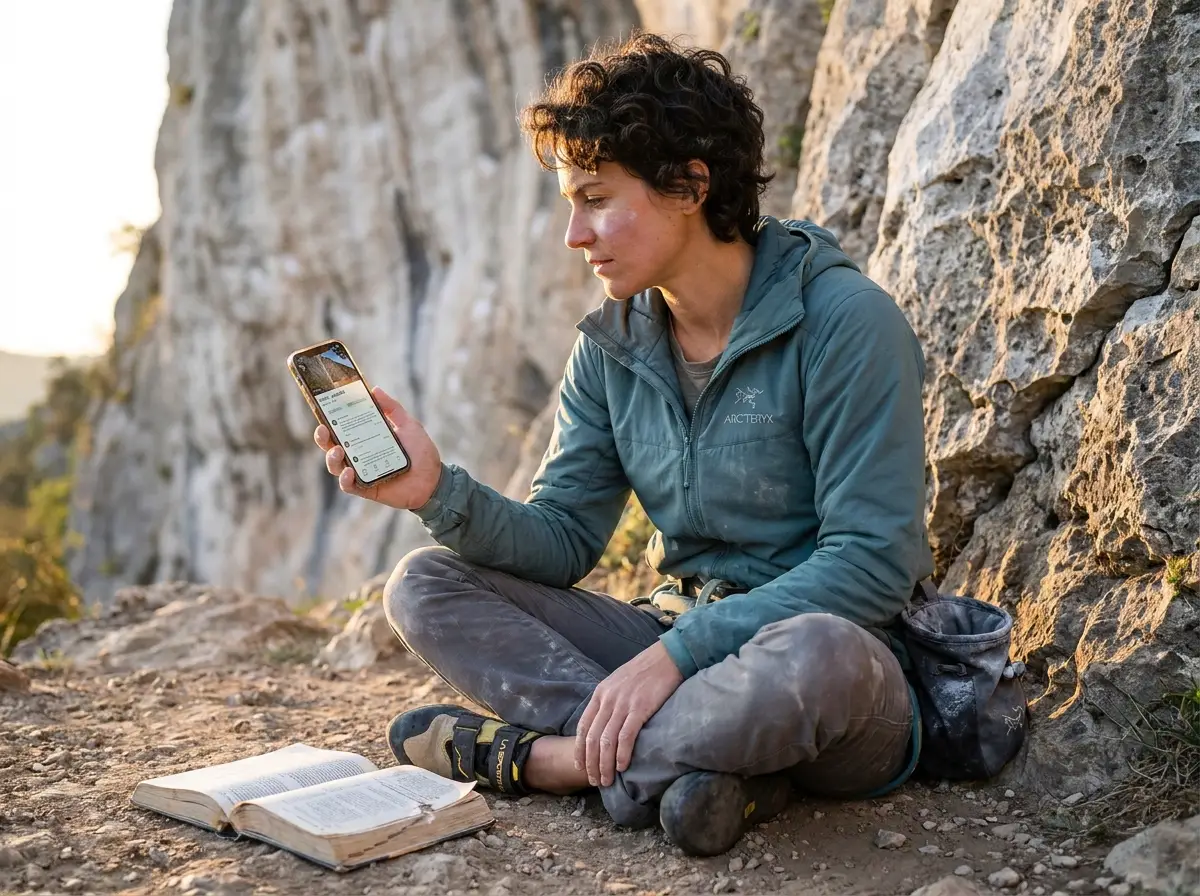
Start with Mountain Project
Mountain Project is the most comprehensive free database of climbing routes in North America, with over 155,000 routes and offline capability for areas you’ve downloaded. Search the area, filter by difficulty range and climbing type, and start reading route descriptions. Pay specific attention to:
The consensus grade shown at the top — this is an aggregate of how climbers who’ve done the route have rated it, which is often more accurate than the first ascensionist’s original grade. Recent comments from the last six to twelve months — these tell you current conditions, where the crux actually falls, and whether the grade is being considered soft or stiff by recent visitors. The star rating — routes with many ascents and high star ratings have more calibrated grades than obscure routes with two-year-old comments.
Cross-reference with the current guidebook
Mountain Project is excellent for route databases but doesn’t replace the area guidebook. Guidebooks include route character that databases often miss — rock quality on different sections, specific gear recommendations, approach beta, descent information, and the protection rating. An older guidebook is still valuable for route character; just cross-check grades against Mountain Project’s consensus since grades sometimes get adjusted as a route accumulates more ascents.
For decoding the symbols and notation in any guidebook — including what the lines, arrows, and letter codes mean on a climbing topo — the climbing guidebook decoder covers every notation type you’ll encounter.
Read recent trip reports and comments
Comments on Mountain Project are crowdsourced and variable in quality, but patterns matter. If ten recent comments say a route feels harder than the grade, it probably does. If a route consistently gets flagged for loose rock or poor protection, that’s not the guidebook’s opinion — that’s recent field experience. Read comments critically but don’t dismiss them. As one piece of research guidance notes: weight comments from climbers who describe specific moves or conditions over vague sentiment (“too hard!” versus “the crux is a one-move wonder on a sidepull at the 3rd bolt”).
Pro tip: Sort comments by newest first, not most-liked. A comment from four years ago about a recently rebolted route or a section that’s changed may be misleading. The most recent six months of trip reports reflect current conditions more accurately than a guidebook published two years ago.
Get local beta — the last step most people skip
For any climbing area you’re visiting for the first time, local beta is worth the effort. Local beta means asking at the gear shop near the crag, posting in the area’s regional climbing forum, or reaching out through Mountain Project’s community. Locals know which routes are pumping at this time of year, which grades are stiff because of a polished crux, and which supposedly classic routes are no longer worth doing because of rock fall. No research tool beats this for a first visit.
For finding climbers to connect with before or during a trip — including how to vet who you’re getting beta from — how to find climbing partners while traveling covers the vetting process.
Calibrating for Sandbagging and Regional Grade Differences
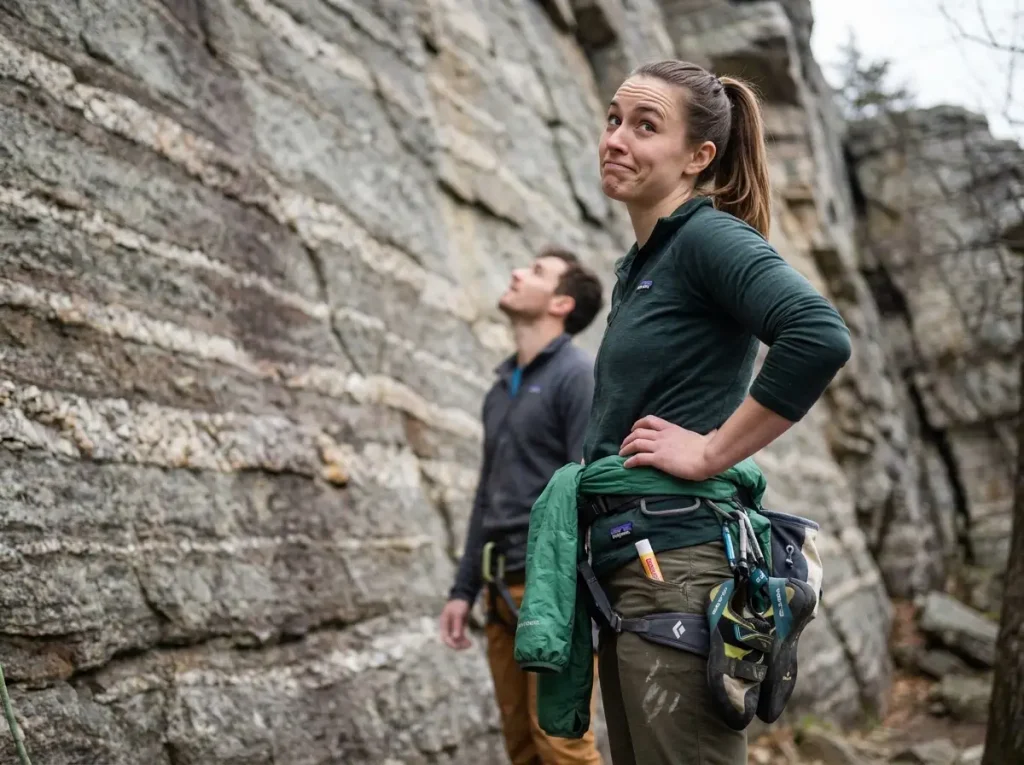
Even after doing your research, you’ll encounter situations where the grade doesn’t match your expectation. Understanding why is half the battle.
What sandbagging is and why it happens
A sandbagged route is one that climbs harder than its grade suggests. The opposite — a route that’s easier than graded — is called a “soft” grade. Neither is a mistake, exactly. Grades are assigned by the first ascensionist based on their experience and local grading norms at the time. A route established in the 1970s at a historically conservative area will often feel stiffer than a newer route at a gym-influenced crag.
Sandbagging persists for several reasons: first ascensionists have a cultural incentive not to overgrade their own routes; older climbers sometimes graded in a different physical style than modern technique rewards; and some areas deliberately cultivate a reputation for stiff grades as a point of local pride.
Areas with known grade tendencies
Certain areas are well-documented for grade character. Eldorado Canyon in Colorado is famously stiff — routes there often climb a full sub-grade harder than the same number elsewhere. The Gunks in New York has grades calibrated to a specific style of horizontal roof climbing that punishes climbers unfamiliar with the movement. Joshua Tree in California runs stiff in the 5.10 range, where the granite friction and sloper-dependent movement don’t always suit every body type.
On the softer side, some areas with significant gym-to-outdoor traffic have seen grades relax over time as the first-ascent culture changed. This isn’t universal — it varies by area and by route.
The Seneca Rocks climbing guide addresses the area’s reputation for grade compression directly. The Gunks climbing guide is equally useful before visiting the Shawangunk Ridge. For Smith Rock, which has its own distinct grade character on welded tuff, what nobody tells you about climbing Smith Rock covers what to expect before your first visit.
The calibration climb technique
The most reliable way to understand a new area’s grading is the calibration climb. Before leading routes near your limit, climb something you know is within your comfortable onsight range. Pick a route one to two full grades below what you can reliably lead at home, and note how it feels.
If your comfortable 5.10 at home feels like 5.10c at the new area, you’re now calibrated — lead accordingly. If it feels like 5.9, the area runs soft and you can trust the grades at face value.
This isn’t about ego. It’s about gathering real data from a low-stakes route before you’re 40 feet up on your project. One calibration climb before a trip is worth more than all the Mountain Project comments combined, because it accounts for rock type, style, weather, and your body that specific day.
Conclusion
Three things that will make your grade research actually useful: understand that the difficulty grade tells you about one move, not the whole route; look up protection ratings as a separate step from difficulty; and do a calibration climb before you commit to anything near your limit at a new area.
The research process isn’t complicated — Mountain Project, a current guidebook, recent trip reports, and one local conversation covers everything you need. The hard part is doing it before you assume your home grade translates. It rarely does perfectly, but it rarely surprises you if you’ve done the homework.
Before your next new crag, spend 20 minutes on Mountain Project reading the area’s comments section. The climbers who’ve been there recently are telling you exactly what the grades feel like right now.
Q1 What is the easiest rock climbing grade for beginners?
Grades between 5.5 and 5.7 are appropriate starting points for beginners on outdoor top-rope or guided lead climbing. Most new climbers make real progress in the 5.6–5.8 range during their first outdoor season, where holds are substantial and sequences are readable without advanced technique.
Q2 How do outdoor climbing grades compare to gym grades?
Outdoor grades typically feel harder than the same number at a gym, for several reasons: real rock holds are often weathered and less positive than plastic, routes are affected by temperature and humidity, and gym grades are frequently set softer to encourage progression. Most climbers drop half a grade to a full grade when moving from gym to outdoor.
Q3 What does 5.10 mean in climbing?
A 5.10 route is a Class 5 technical rock climb in the mid-difficulty range of the Yosemite Decimal System. From 5.10 onward, grades are subdivided into a, b, c, and d — so 5.10a is the easier end and 5.10d is the harder end of that grade. A solid 5.10 climber can generally handle routes that require precise footwork, balance, and some finger strength but not elite-level power or flexibility.
Q4 What do R and X ratings mean in rock climbing?
R and X are protection ratings added after a route’s difficulty grade in traditional climbing. An R rating means protection is sparse and a fall at the wrong point risks serious injury. An X rating means minimal or no protection — a fall at certain points could be fatal. These are separate from difficulty ratings and must be researched independently when planning a trad route.
Q5 How do I find routes at my level at a new climbing area?
Start with Mountain Project’s area search, filter by your difficulty range, and sort by star rating to identify well-documented routes. Read comments from the last six to twelve months for current conditions and grade notes. Then cross-check two or three routes against a current guidebook before committing. Do a calibration climb one to two grades below your limit on your first day to verify how the area’s grades translate to your climbing.
Safety Notice: Rock climbing and mountaineering are inherently high-risk
activities that can involve physical trauma or fatal incidents. The information on Rock Climbing Realms is for
educational and informational purposes only. Techniques and advice presented here are not a substitute
for professional, hands-on instruction. Conditions and risks vary by location. Always seek guidance
from a qualified instructor before attempting new techniques. By using this website, you agree that you
are solely responsible for your own safety. Any reliance you place on this information is strictly
at your own risk, and you assume all liability for your actions. Rock Climbing Realms and its authors
will not be held liable for any harm, damage, or loss sustained in connection with the use of this information.
Affiliate Disclosure: We are a participant in the Amazon Services LLC Associates Program, an
affiliate advertising program designed to provide a means for us to earn advertising fees by advertising and linking
to Amazon.com. As an Amazon Associate, we earn from qualifying purchases. We are also an official affiliate partner
of Black Diamond Equipment via the AvantLink network. If you click on a Black Diamond affiliate link and make a
purchase, we may earn a commission at no additional cost to you. We also participate in other affiliate programs.
Additional terms are found in the terms of service.