
In this article
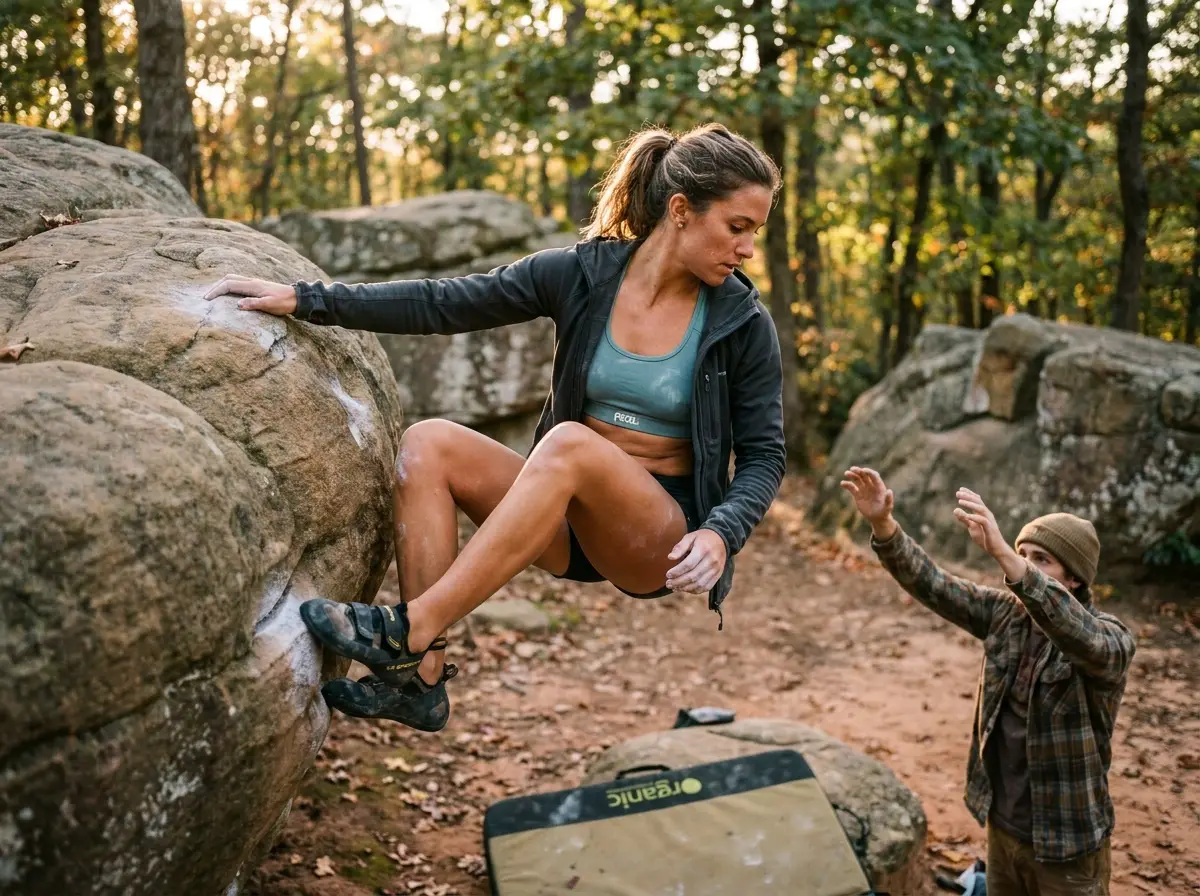
Your first session at Horse Pens 40 will recalibrate everything you think you know about your climbing grade. That V5 you warm up on at the gym? You’ll be projecting it here. The sandstone doesn’t care about your hangboard numbers or your campus board PR — it cares about body tension, skin condition, and whether you can read beta on features that barely qualify as holds.
After a dozen trips spread across different seasons, I’ve figured out what separates a frustrating weekend from the kind of trip you’ll talk about for months. This guide covers the rock, the problems worth chasing, the conditions that actually matter, and the trip logistics nobody else bothers to tell you.
Quick Answer: Horse Pens 40 is a privately owned bouldering area atop Chandler Mountain in Steele, Alabama, with over 200 sandstone problems ranging from V0 to V12. Visit between October and March for the best friction, expect notoriously sandbagged grades, and plan for reservation-only camping at $22 per night. Below, you’ll find everything a first-timer needs — and a few things even regulars forget.
What Makes Horse Pens 40 Sandstone Different
The Pottsville Formation Explained
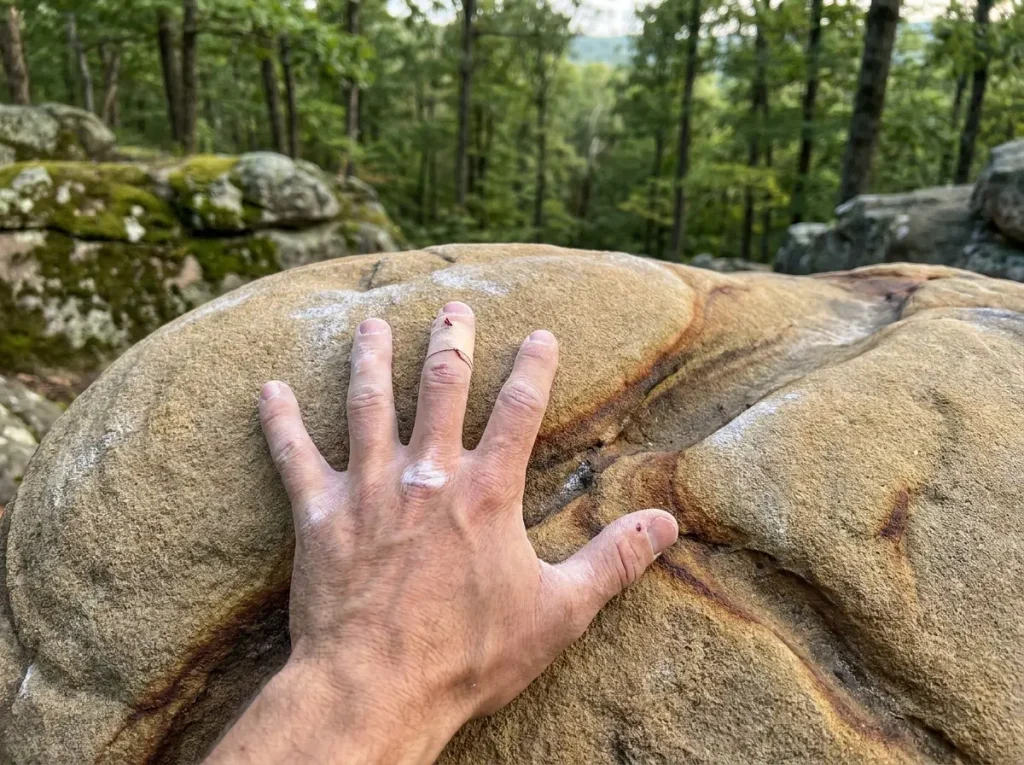
The boulders at HP40 aren’t random rocks dropped in a field. They’re part of the Pottsville Formation, a sandstone layer deposited roughly 310 million years ago during the Carboniferous period. Time, water, and erosion carved them into the bulbous, rounded shapes that make this place look like nothing else in the Southeast. The Chandler Mountain geological history traces these formations back to ancient river systems that deposited fine sediment across what is now northern Alabama.
What that means for your fingers is a stone that’s simultaneously smooth and grippy — fine-grained sandstone with a texture that rewards precise contact over raw strength.
Why Slopers Dominate Here
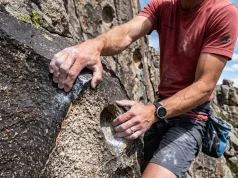
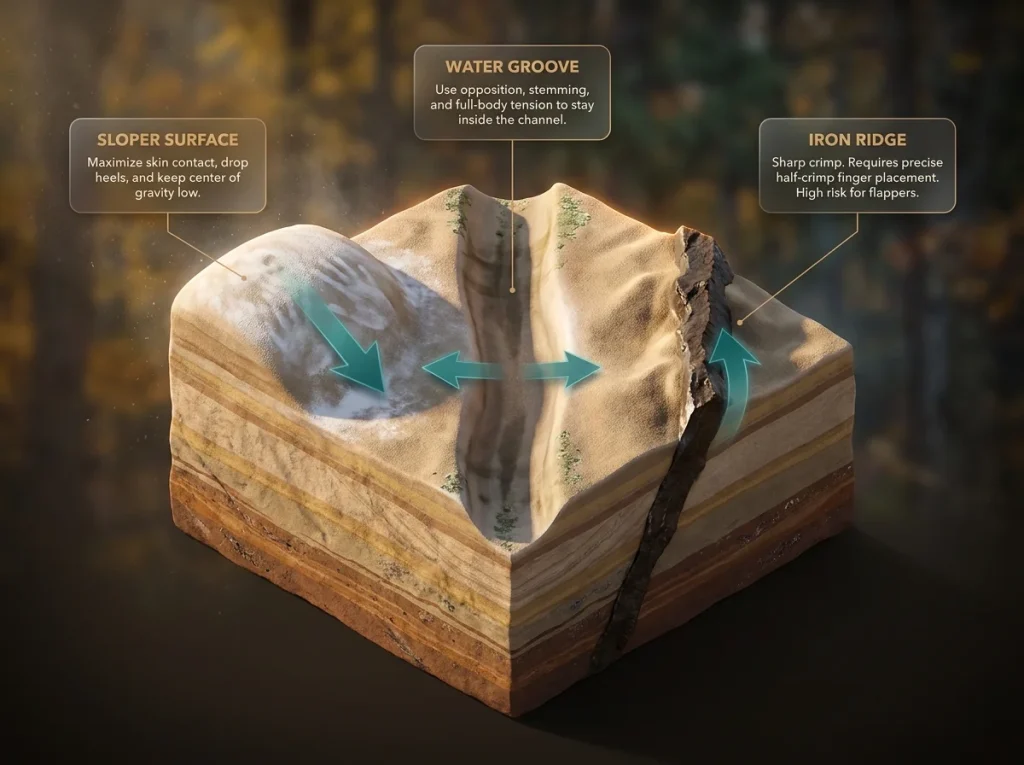
The erosion that shaped these boulders rounded every edge. You won’t find the sharp crimps of granite or the pocketed faces of limestone here. Instead, HP40 is sloper country. Rounded rails, bulging compressions, and water grooves — shallow channels carved by centuries of runoff — define nearly every problem.
Mixed into that smooth stone are iron ridges, thin veins of iron oxide that cut through the sandstone in darker streaks. These are the closest thing to crimps you’ll find, and they’re sharp enough to split skin if you’re not careful. The contrast between pressing flat palms on slopers and crimping down on an iron ridge in the same move is what makes HP40 movement so unique.
Pro tip: Brush holds before every attempt, even if you just watched someone send. HP40 sandstone picks up moisture from breath and sweat faster than you’d expect, and the difference between a greasy sloper and a freshly brushed one can be a full grade.
How Temperature Changes Everything
Friction is the currency at HP40, and temperature is the exchange rate. Below 55°F, the sandstone grips like velcro. Above 70°F, those same slopers become skating rinks. Humidity compounds the problem — Alabama’s air holds moisture like a sponge, and that moisture settles into the stone.
This isn’t theoretical. The same hold that felt bomber at 8 AM on a 45°F morning will spit you off at noon when the sun warms the rock to 65°F. You’ll watch the conditions change mid-session and understand why regulars obsess over weather apps. Learning how rock type shapes technique across different areas helps, but HP40’s friction sensitivity is in a class of its own.
Classic Problems Worth Your Skin
Beginner Favorites (V0–V3)
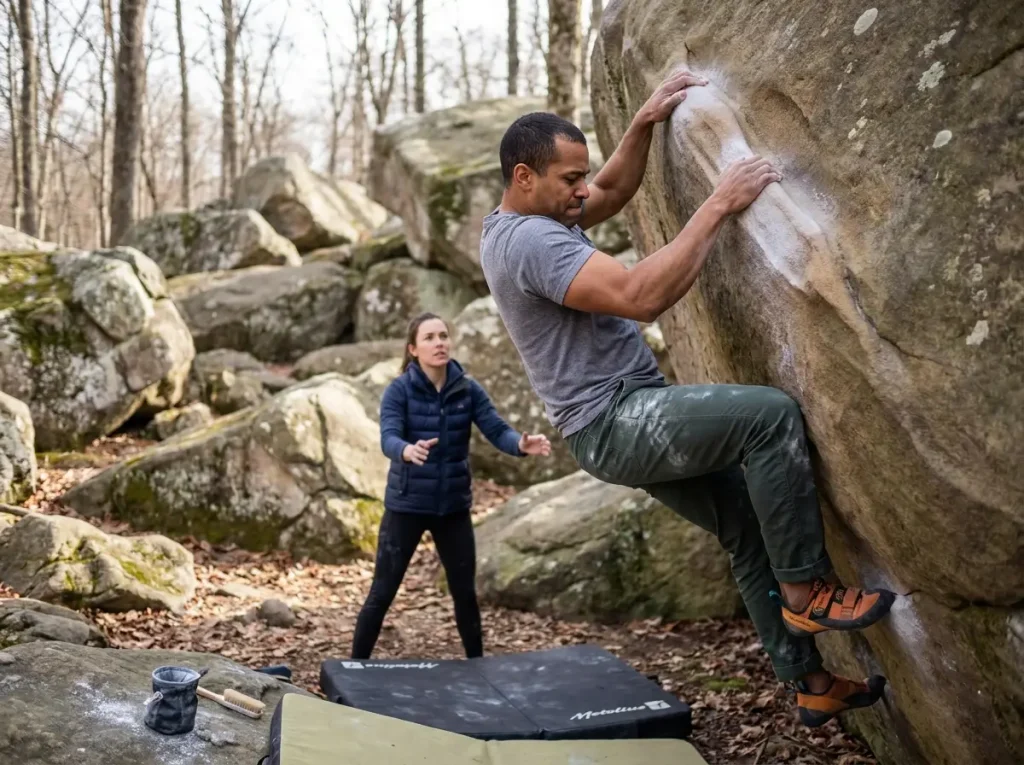
HP40 doesn’t hand out grades. But there are plenty of quality lines in the lower range with flat landings and enough features to build your sandstone vocabulary.
Merlin V1 climbs a rippled face shaped like a wizard’s hat. Sloping edges, arete holds, and tricky feet up a low-angle slab — it’s a perfect introduction to the movement style. Wasp V2 sends you through honeycomb-shaped pinches up a short face. The crux isn’t the climbing — it’s getting off the top.
Then there’s Bumboy V3. This is the problem everyone does and the problem that defines HP40 for most visitors. A sit start on pods leads up a short runnel feature that’s friction-dependent, beta-intensive, and legitimately hard for the grade.
You’ll watch someone casually walk up it and then spend twenty minutes trying to figure out what they did differently. That’s HP40 in a nutshell.
Spirit V3 and Genesis V3 round out the beginner tier with more of the sloping, compression-heavy style that defines the area.
Intermediate Testpieces (V4–V7)
This is where HP40 shines hardest. The V4 to V7 range has the highest concentration of quality problems, and the grades are honest enough to keep you guessing.
Lowdown V4 starts deep under a roof on big jugs, then asks you to negotiate your way out through fluff holds to a mantle near a bulbous arete. Crisifix V4 and Brawn V4 test body tension from different angles. Uniball V4 rewards patience over power.
Millipede V5 is the squeeze problem that HP40 is famous for. Two faint grooves run up a black streak, and the original climbers cleaned and attempted it as a double gaston before discovering that slopers beside the streak were just good enough to hold.
Strong fingers won’t save you here — body positioning is everything. An early ascent took James Litz three times more attempts than God Module V11. Let that sink in.
Hammerhead V5 starts at the bottom of cracks and climbs an arete with a finish that punishes anyone who burns out too early. Litz Pocket Problem V7 sits at the top of this range with a roof problem on shallow pockets that demands spotters and pads. If you’re looking to break through a bouldering plateau, the intermediate circuit at HP40 will expose exactly where your weaknesses live.
The Hard Stuff (V8+)
With around 60 problems at V8 and above, HP40 packs serious firepower into a small area.
Ghetto Superstar V8 threads through sloped edges to a smiley-face feature that begins the crux — a leftward traverse on marginal crimps to a good knob. Slider V9 is the crown jewel for most strong boulderers: a sit start on a jug leads through cutter crimps and butter slopers trending up and right. Originally rated V10, it’s settled into V9 territory as the most-flashed problem at the grade in the park. The sharp crimp match in the middle is the move that stops people.
Hot ‘N Tot V10 starts low and demands a big move to a sloping pod at the top. God Module V11 is the testpiece — a stand start on crimps with a pasted foot, a punch to the upper seam, and a finish that has been done with a crash pad strapped to the back and tennis shoes on the feet. For full local credit, your right foot must hold weight for a two-count before you commit to the break. That’s the kind of detail that separates HP40 from everywhere else.
Why HP40 Grades Will Humble You
The Sandbagging Reality
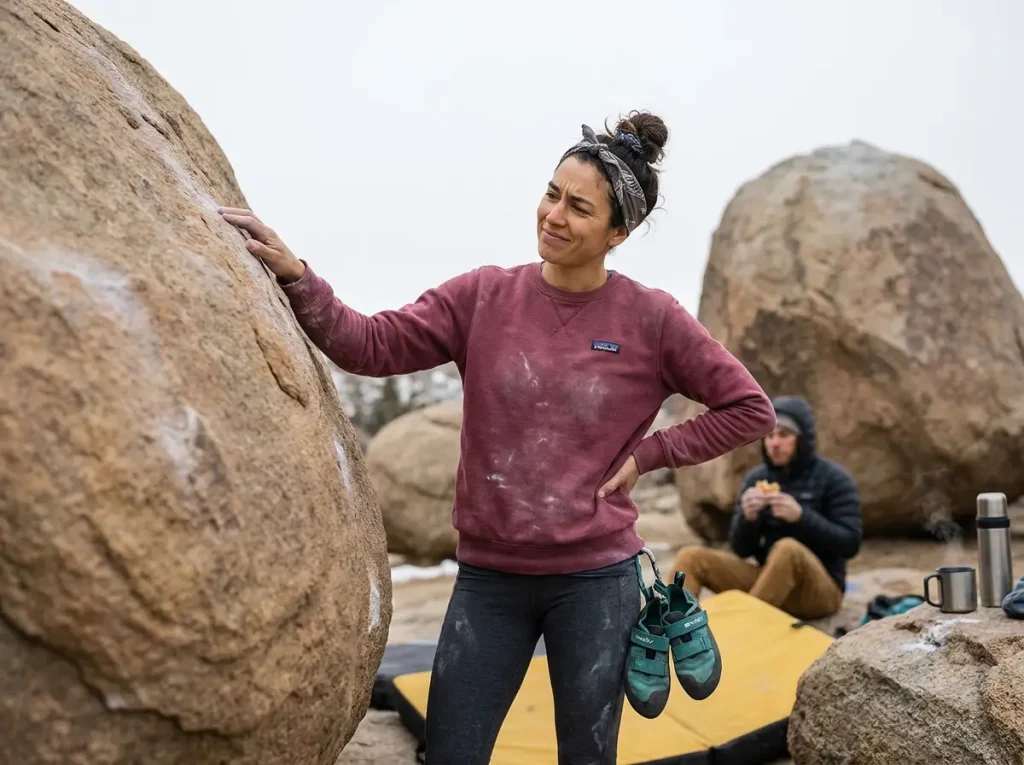
HP40 grades aren’t wrong — they’re just calibrated differently. The V-scale here assumes three things: you know the beta, conditions are perfect, and the style suits your body. Miss any one of those and the grade becomes meaningless.
The climbing community has called HP40 “notoriously sandbagged” for years, but that framing misses the point. The grades were set by locals who climbed these problems hundreds of times in ideal conditions. They knew every foot placement and every body position. When you show up cold and try to flash something, you’re comparing your first attempt against their hundredth.
How to Adjust Your Expectations
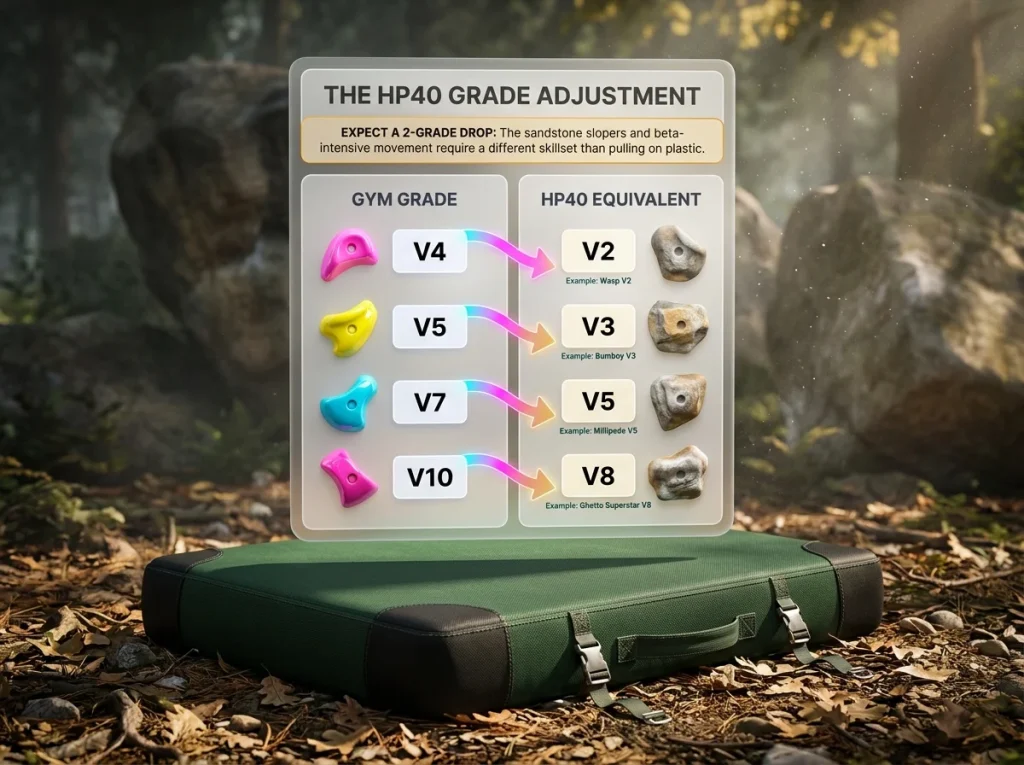
Here’s the practical translation that nobody writes down: subtract two grades from your gym level for your first trip. If you climb V6 indoors, expect to project V4 at HP40. If you climb V4 indoors, the V2 circuit will keep you busy all weekend.
This isn’t sandbagging. It’s a style tax. The compression, slopers, and mantling that define HP40 punish certain body types and reward others. Taller climbers often struggle with the compressed positions, and shorter climbers sometimes can’t reach between features.
Everyone struggles with the topouts — huge rounded slopers with nothing positive to grab, where you have to trust friction and commit. Setting realistic climbing goals before you arrive saves a lot of frustration.
Pro tip: Watch other climbers before you try a problem. Beta at HP40 is worth more than strength. A foot swap or a different hip position can turn a project into a warmup. The regulars are generous with beta if you ask.
Beta-Intensive vs Power-Intensive
Most climbing areas reward one or the other. HP40 rewards both, but in an unusual ratio — roughly 70% beta, 30% power. You can be the strongest person at the park and still fail on V3 because you don’t know where to put your left foot.
The problems are short and dense. Most are under 12 feet. But those 12 feet contain more decision points than a full pitch at many sport crags.
Every hand placement has three options, and only one of them works. This is what people mean when they say HP40 is “beta-intensive” — the difficulty isn’t in the individual moves, it’s in finding the right sequence.
Best Conditions and When to Visit
The Prime Season Window
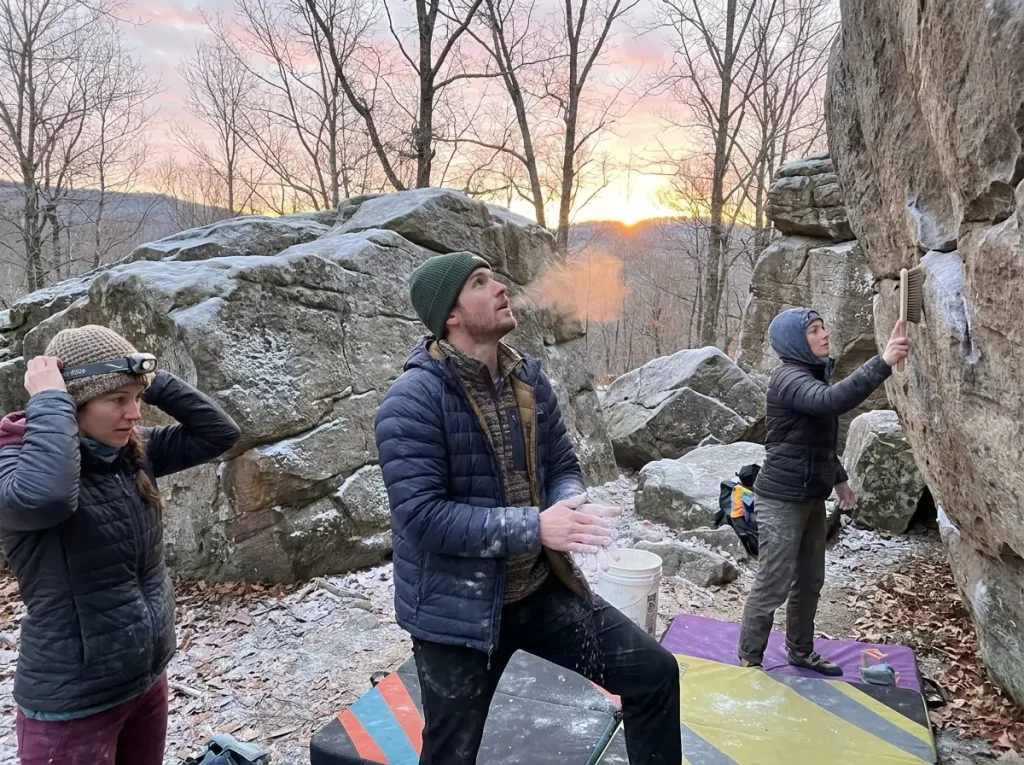
October through March is the window. Within that range, the sweet spot is late November through February, when cold fronts push temperatures into the 30s and 40s and the sandstone friction peaks. A random 35°F morning in December will give you the best conditions you’ve ever felt on rock.
Spring can work through early April, but the humidity climbs fast in Alabama. By late April, you’re fighting condensation on the rock. Summer is a write-off for daytime climbing — temperatures above 85°F with 80% humidity turn the stone into a slip-and-slide.
Weather Patterns That Matter
Rain is the other variable. Alabama gets unpredictable rain spells, especially in winter. The sandstone dries quickly — give it 24 hours after a soak and most problems are climbable. But the seepage problems (anything with water grooves) can stay wet for days.
Check the forecast obsessively. A three-day window of cold, dry weather is the trip you plan around. If rain is coming, shift to problems that face south and catch more sun.
Summer Night Climbing
Here’s the move that regulars know: when Alabama heat shuts you down during the day, HP40 opens for night climbing Thursday through Sunday until midnight. The fee is $15 per person, and camping guests climb at night for free.
Night sessions at HP40 are a different experience entirely. The temperature drops 15–20 degrees after sunset, friction improves dramatically, and the campground comes alive with headlamps bobbing between boulders. You’ll need a solid headlamp — at least 300 lumens with a wide beam — and a partner who can aim a second light at the holds while you climb.
The social scene after dark is half the appeal. Climbers sit around fire rings swapping beta and watching each other work problems by lamplight. It’s one of the few places where the rainy day climbing alternative is just to wait until the sun goes down and climb by headlamp instead.
Pro tip: Bring a portable lantern for your spotting area. Headlamps create hard shadows that make depth perception tricky. A diffused lantern on the ground near the crash pad helps your spotter see where you are in space.
Skin Management for Sandstone Sessions
Pre-Trip Skin Prep
The sandstone at HP40 isn’t brutal on skin the way sharp granite is. The problem is volume. The rock invites high-volume sessions — you’ll want to try everything — and by day two, your fingertips will be paying the price.
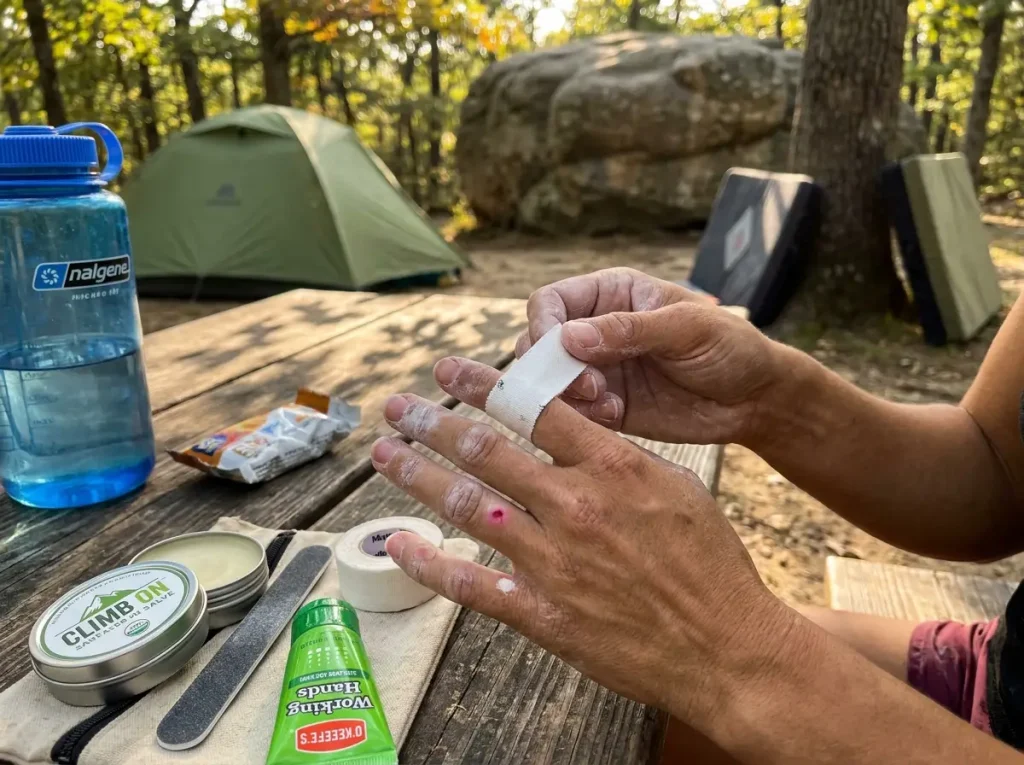
Start prep a week before your trip. File down thick calluses with a fine-grit sandpaper or a pumice stone so they’re smooth and flat. You want even contact on slopers, and lumpy calluses create pressure points that tear. Moisturize every night with something heavy — Climb On salve or O’Keeffe’s Working Hands cream — to keep the skin supple.
Some climbers swear by antihydral to reduce sweating, but it’s a double-edged sword on sandstone. Dry fingertips grip slopers better, but overdry skin cracks under the pressure of iron ridge crimps. If you use it, apply sparingly and only to the fingertips two days before the trip.
During Your Session
Chalk management matters more at HP40 than most areas because the holds are large and your entire palm contacts the rock. Use a chalk ball inside your bag to avoid over-chalking, which actually reduces friction on smooth sandstone by creating a layer between skin and stone.
Brush your hands between attempts, not just the holds. Excess chalk in the creases of your palms acts like ball bearings on slopers. A quick wipe on your pants followed by a light re-chalk is better than dumping a handful of loose chalk on sweaty palms.
When you feel a flapper forming — that telltale burning spot where a callus is peeling — stop. Tape it immediately. A preventive tape job takes thirty seconds, and climbing through a forming flapper costs you two days of recovery.
The sandstone skin protocol used at other sandstone areas applies here too.
Recovery Between Days
Plan at least one rest day for every two climbing days. This isn’t weakness — it’s math. Your skin regenerates overnight, but it doesn’t fully recover in twelve hours of camping sleep.
On rest days, wash your hands with mild soap, file any new hot spots flat, and apply moisturizer twice. Keep your hands out of chalk. Some climbers bring thin cotton gloves to sleep in after applying salve, which sounds ridiculous until you wake up on day three with skin that still has send potential.
The regulars who climb HP40 every weekend know this: three two-hour sessions spread across five days beats two six-hour marathons. You’ll send more, enjoy more, and walk away with skin that can handle your next trip.
Getting There and Getting Set Up
Directions and Parking
HP40 sits on top of Chandler Mountain near Steele, Alabama. The drive up the mountain on a narrow two-lane road is part of the experience — tight switchbacks through hardwood forest that open up to the boulder-studded plateau at the summit. GPS coordinates work fine, but follow the signs once you’re on the mountain road.
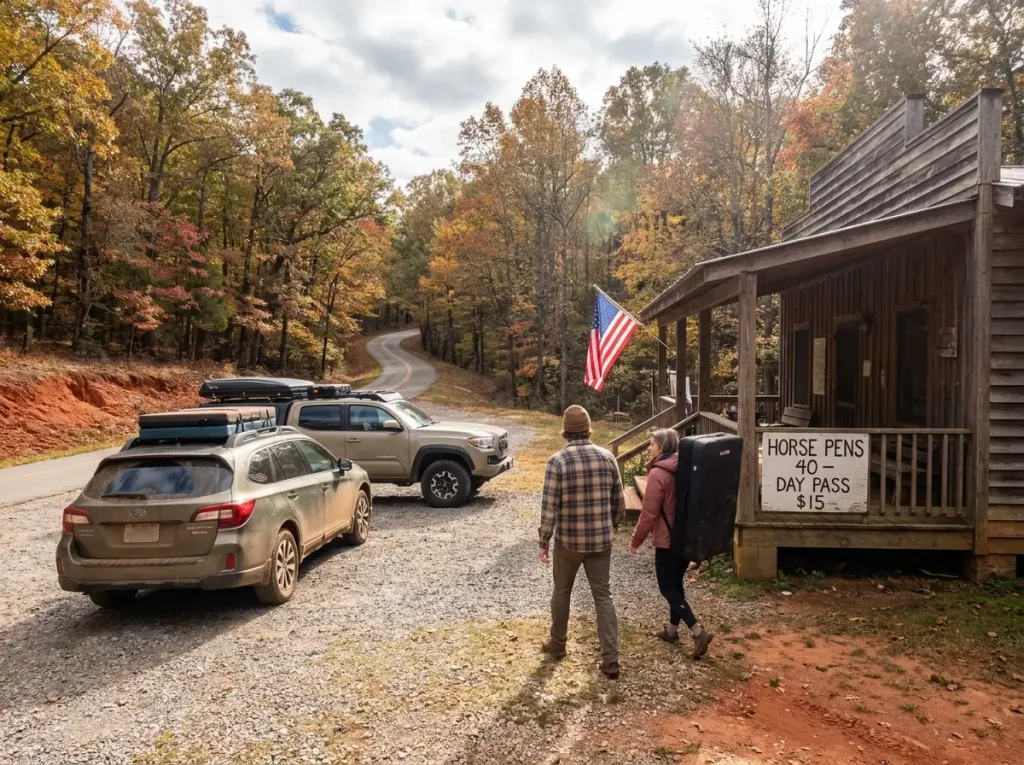
Parking is a gravel lot near the country store. It fills up on prime-condition weekends, especially during Triple Crown Bouldering Series events in November. Arrive early on competition weekends or prepare to park on the shoulder.
Check-In and Fees
Every visitor signs in at the country store and fills out a liability waiver. Current fees are $11 for day use (8 AM to sundown) and $15 for night climbing sessions. Camping is $22 per night, sundown to sundown.
The Schultz family owns and operates HP40, and they’ve kept this place open to climbers for over two decades. Respect the rules — they’re not arbitrary. No dogs except service animals. No glass anywhere in the park. No fires outside designated fire rings.
Leave No Trace applies everywhere. The outdoor bouldering ethics that keep access open at places like this depend on every visitor treating the land like someone’s property — because it is.
Camping vs Day Tripping
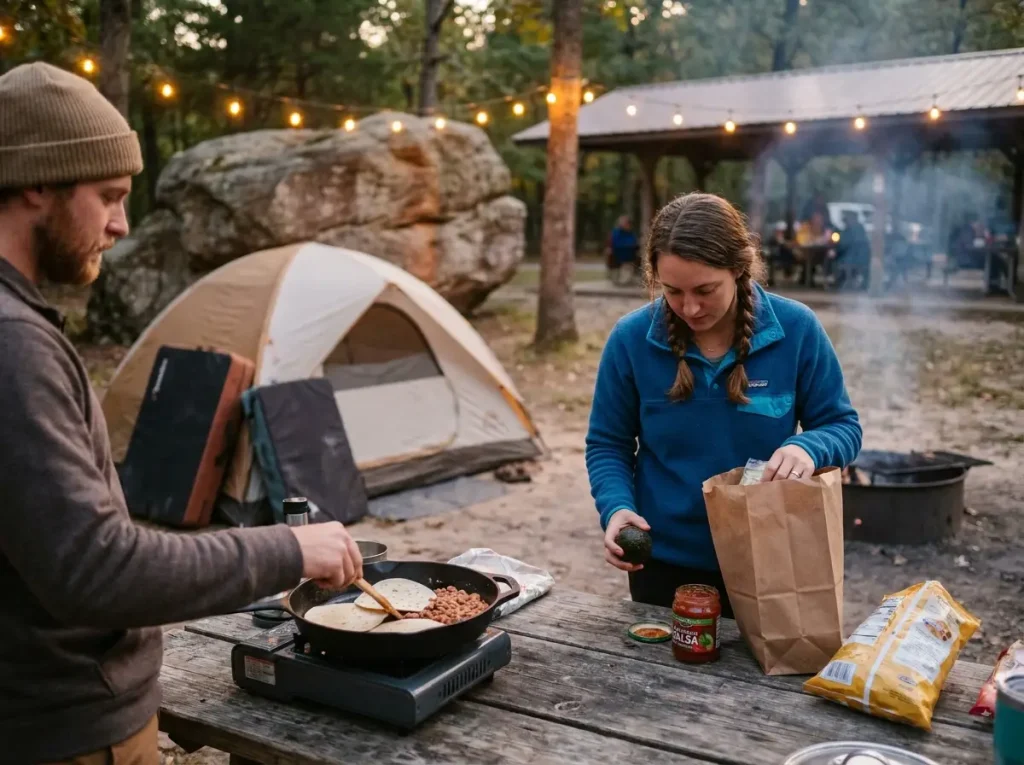
Camping is the move. Setting up thirty feet from the boulders means you can climb at dawn, rest through midday, and session again in the afternoon or evening. Day tripping works for locals in Birmingham or Chattanooga, but if you’re driving more than two hours, camping maximizes your time on rock.
HP40 has shifted to reservation-only camping, so call ahead at 256-458-3545 or book through their website. The gate closes at 6 PM and doesn’t reopen until 8 AM Central. Arriving between midnight and 8 AM costs an extra $20. Plan your arrival accordingly.
Rustic cabins are available too — beds, no linens, around $40 per person. Unless the forecast calls for serious weather, tent camping is the better option and puts you closer to the boulders.
Pro tip: The covered area near the back of the campground has a tin roof. Pitch your tent under it and rain becomes a non-issue. It fills up fast on busy weekends, so arrive early to claim a spot.
What to Pack and What to Leave Behind
Climbing Gear Essentials
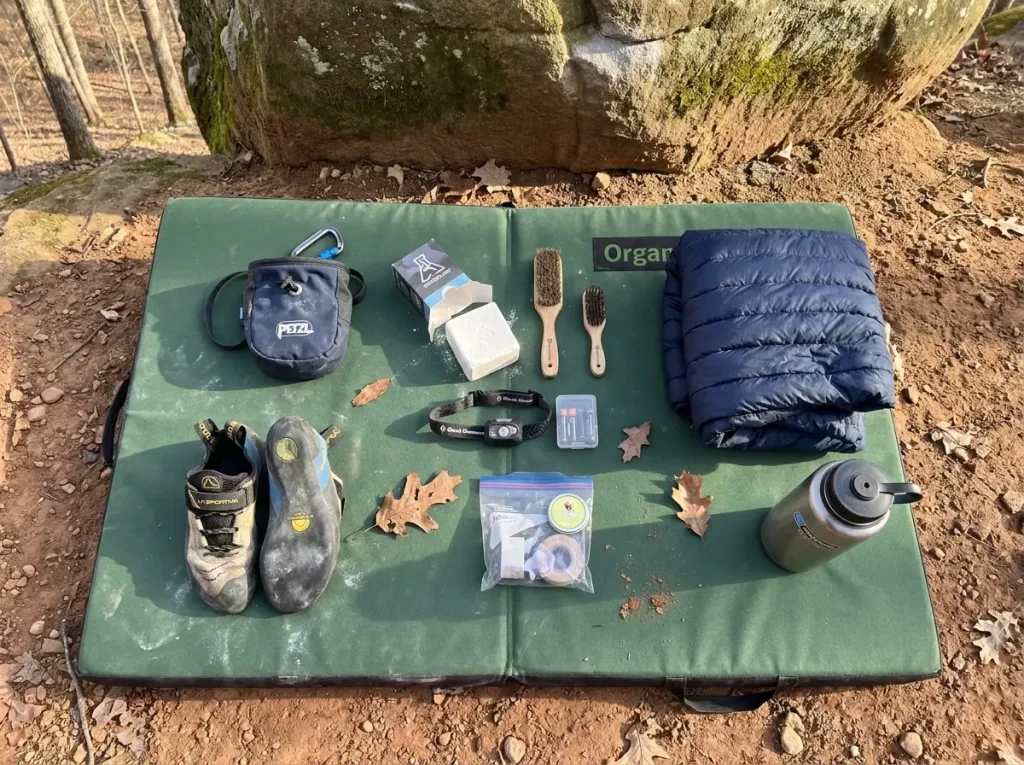
You don’t need six crash pads. HP40 has some of the flattest landings in outdoor bouldering — most problems sit on packed dirt and leaf litter with minimal slope. Two pads cover the vast majority of problems, and you can always share with other groups.
Bring moderate-profile climbing shoes over aggressive downturned pairs. The sloper-heavy style rewards a flat, even contact patch over a pointed toe. La Sportiva Miura, Scarpa Instinct, or anything with a flatter last will outperform steep shoes here. If you’re debating choosing the right shoe profile, HP40 is the place where moderate wins.
Chalk is obvious, but bring a brush too — a stiff boar-hair brush for cleaning holds and a softer one for your hands. A chalk ball keeps application controlled, which matters on smooth stone. Maintaining your crash pads before the trip ensures the foam is still absorbing impact properly.
Camp Comfort Items
A headlamp with at least 300 lumens for night climbing sessions. A portable lantern for the campsite. Layers — cold morning sessions require a puffy jacket you can shed by 10 AM. A skin care kit (tape, file, salve) is non-negotiable for multi-day trips.
Bring a portable kettle if you have one. There are electrical outlets scattered around the campground, and hot coffee at dawn without fussing with a camp stove is a luxury worth the extra ounce of pack weight.
Common Mistakes
Glass containers of any kind — the rules are strict and enforced. Leaving crash pads outside overnight — dew soaks the foam and kills the rebound. Packing only aggressive shoes — you’ll wish you had something flatter by problem three. Forgetting a brush — borrowed brushes are never as good as your own.
Food, Supplies, and the Ashville Run
The HP40 Store and Cafe
The country store on-site sells non-perishable snacks, drinks, and basic supplies. The cafe serves hot food during operating hours — enough to fuel a session but not enough to plan your week around.
For a multi-day trip, you’ll want to do a grocery run before arriving.
Ashville Supply Options
The closest real grocery store is the Piggly Wiggly in Ashville, about 20 minutes down the mountain. It has a small produce section and an impressively large selection of canned goods. Stock up on everything you need here — there’s nothing closer.
For a proper meal, Mi Casita’s in Ashville serves solid Mexican food with free tortilla chips and salsa. The tradition among HP40 regulars is to order the “special dinner” on your first visit — it costs around $10 and contains enough calories to fuel you through your next three sessions. The rest of the restaurants in town are functional but forgettable.
The Sunday Alcohol Rule
Alabama alcohol laws apply: no alcohol sales on Sundays or holidays in this county. If you want beer for the campfire after a Saturday session, buy it Saturday. This catches out-of-state visitors every single time. Stock up at the liquor store next to the Piggly Wiggly — it has reasonable prices and a decent selection.
Conclusion
HP40 packs more quality sandstone into forty acres than most areas spread across a mile. The friction-dependent style, the honest-to-a-fault grading, and the campfire culture make it one of those places that climbers return to season after season.
Three things to remember: visit between October and March when cold air turns the slopers sticky. Drop your grade expectations by two numbers and enjoy the process instead of chasing ticks. And plan rest days for your skin — your fingertips will thank you on day three when everyone else is taping up flappers.
Pick three problems, bring your pads, and let the sandstone teach you something.
Q1 How much does it cost to climb at Horse Pens 40?
Day use is $11 per person from 8 AM to sundown. Night climbing costs $15, and camping is $22 per night with reservation required. The Schultz family keeps fees reasonable to maintain access for the climbing community.
Q2 What grade are the boulders at Horse Pens 40?
Problems range from V0 to V12, with the densest concentration between V3 and V7. HP40 grades are notoriously stiff compared to gym grades — expect to climb about two V-scale numbers below your indoor level on your first visit.
Q3 Is Horse Pens 40 good for beginners?
Absolutely. Plenty of V0 through V3 problems have flat landings and approachable movement. The sandstone rewards good footwork and body awareness, which builds real climbing skill faster than pulling on jugs indoors.
Q4 What is the best time of year to boulder at Horse Pens 40?
October through March offers the best friction and temperatures. Late November through February is the sweet spot, with cold snaps pushing temps into the 30s and 40s for prime sloper conditions.
Q5 Can you camp at Horse Pens 40?
Yes, but HP40 has moved to reservation-only camping. Call 256-458-3545 or book through their website. Tent camping is $22 per night, cabins run about $40 per person. The gate closes at 6 PM — call ahead if you’re arriving late.
Safety Notice: Rock climbing and mountaineering are inherently high-risk
activities that can involve physical trauma or fatal incidents. The information on Rock Climbing Realms is for
educational and informational purposes only. Techniques and advice presented here are not a substitute
for professional, hands-on instruction. Conditions and risks vary by location. Always seek guidance
from a qualified instructor before attempting new techniques. By using this website, you agree that you
are solely responsible for your own safety. Any reliance you place on this information is strictly
at your own risk, and you assume all liability for your actions. Rock Climbing Realms and its authors
will not be held liable for any harm, damage, or loss sustained in connection with the use of this information.
Affiliate Disclosure: We are a participant in the Amazon Services LLC Associates Program, an
affiliate advertising program designed to provide a means for us to earn advertising fees by advertising and linking
to Amazon.com. As an Amazon Associate, we earn from qualifying purchases. We are also an official affiliate partner
of Black Diamond Equipment via the AvantLink network. If you click on a Black Diamond affiliate link and make a
purchase, we may earn a commission at no additional cost to you. We also participate in other affiliate programs.
Additional terms are found in the terms of service.