
In this article
You’re three attempts into a problem when somebody’s heel clips the bucket at the base, and a fine white layer goes across every pad in the landing zone. Ask any crew that boulders together and you’ll hear the same story with different names in it: the failure is almost never the fabric, and it’s almost never the person. It’s the closure, which happens to be the one spec buyers look at last, somewhere after color, brand and price.
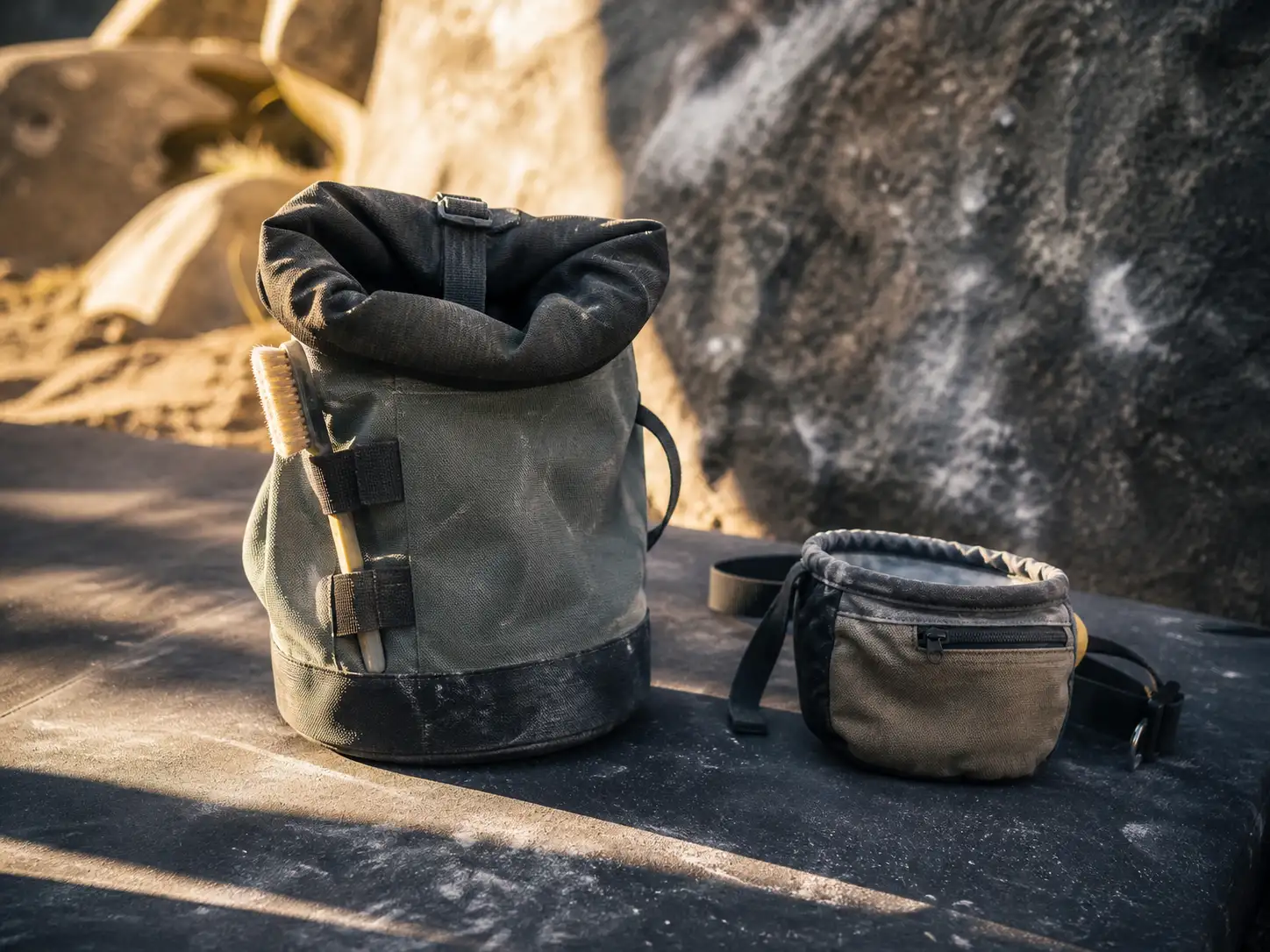
Choosing between the best chalk bags and buckets gets a lot simpler once you sort them by how they seal instead of how they photograph. This piece splits chalk bag from chalk bucket by how each one behaves in the field, then hands you the pick that matches how you actually climb.
Chalk Bag or Chalk Bucket: Which One You Actually Need
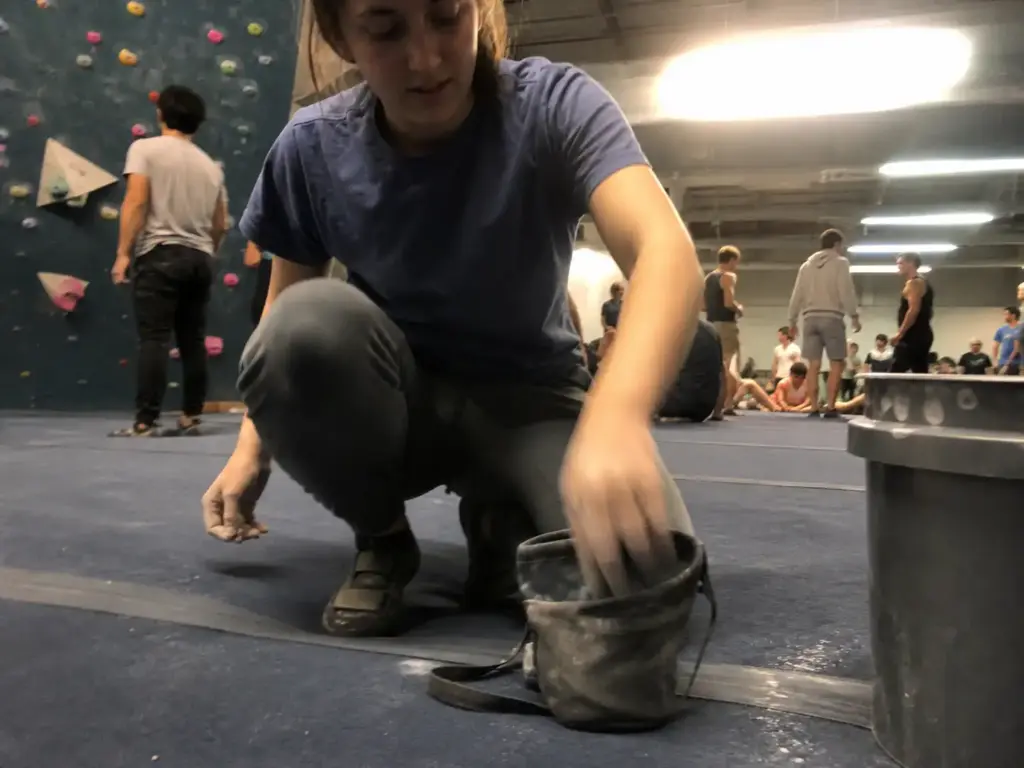
Nobody at the gym ever says this out loud, so here it is: these are two different tools, not two sizes of the same one. You can climb for a year dipping into the gym’s shared bucket and never learn the difference, right up until the morning you pack for a first day outside and realize you own nothing.
What a Waist Bag Is Built to Do
A waist bag holds roughly 100–150 ml of chalk and rides on your body, on a thin belt or clipped to a harness gear loop. It’s sized for one pair of hands over a day of routes, not for a crew. Hand size is worth a thought here too: big hands in a small-mouthed bag means knuckles dragging chalk out on every dip.
Weight is the whole point. The lightest run 38–52 g empty, and the class tops out around 340 g for a padded, pocketed model. You notice the difference around the third pitch, right when you’re trying to shake out and the bag is swinging into your hip.
What a Bucket Is Built to Do
A chalk bucket runs 300–400 ml at the low end, and the big ones go past 4 L. It sits on the ground, opens wide, and gets used by whoever’s standing next to it. Empty weight lands in the 185–250 g range, which is irrelevant because you never carry it up anything.
Buckets are group equipment. The specs that matter are the ones that survive five people around one container: a base that doesn’t tip, a mouth wide enough for two hands, and a closure nobody has to remember.
The Case for Owning Both (and Which One First)
The most common buying mistake here is a format mismatch: a bucket bought for solo sport and trad days and hauled up a route nobody opens it on, or the smallest waist bag on the shelf brought to a group session where four people take turns dipping into something the size of a coffee mug.
If you can only buy one, buy the waist bag. It works indoors, it works on a rope, and it’s the piece you’ll need the first time you climb outside. A bucket is a good second purchase once you’re bouldering with a crew regularly, which is roughly how most climbers progress through your first season moving from the gym to real rock.
Own a compact waist bag even if you boulder indoors on the gym’s shared bucket ninety percent of the time. It costs less than a day pass at most gyms, and it’s the one piece of chalk gear that’s useless to borrow the morning you drive to a crag.
Closures Are Where Chalk Bags Fail
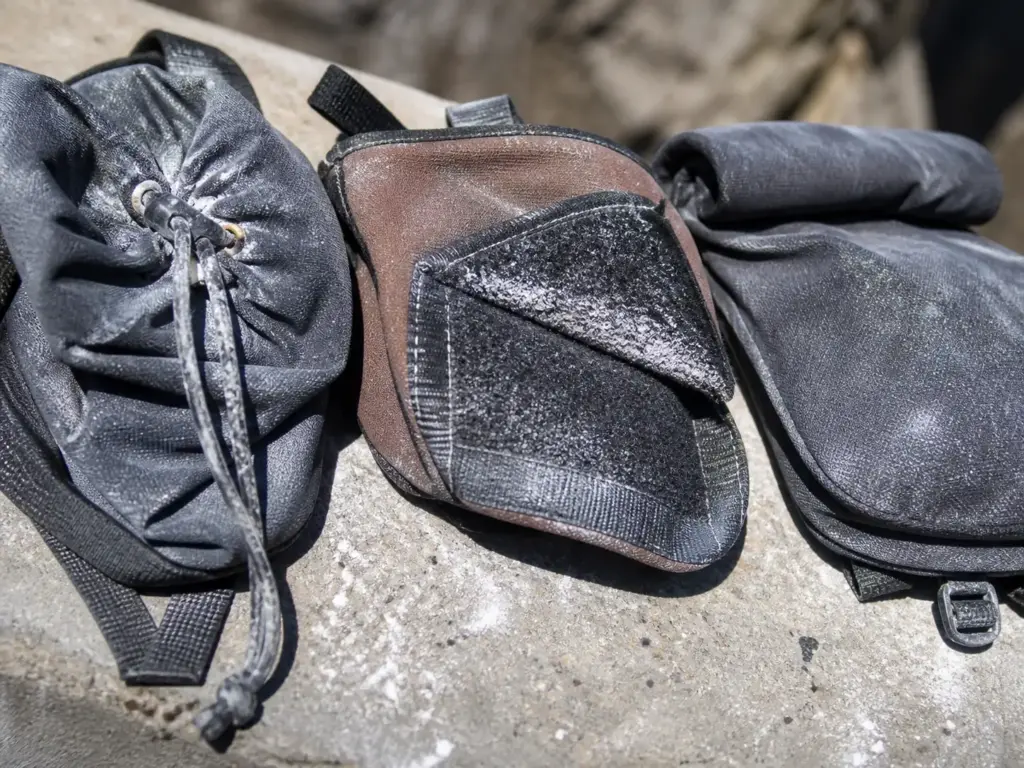
Open your pack at the crag and find chalk film on your rain shell, across your topo and inside every zipper. Everyone blames themselves for not closing it properly. The closure was the problem, and there are four of them worth understanding by how they break rather than how they’re sold.
Drawstring: Fine at the Wall, Leaky in a Pack
The drawstring closure is the default on most waist bags and plenty of buckets. Cinch it, tie it off, done. At the wall it works, because the bag is upright and nobody’s compressing it.
Transit is where it gives up. Gear guides put it plainly: a drawstring allows some chalk to escape when transporting, which is the polite way of saying a knocked-over bucket dumps and a bag buried under a rope in your pack breathes chalk out of the gathers. The cord pulls the fabric into folds, and folds are not a seal. The failure isn’t dramatic, it’s a slow leak you discover three days later.
Velcro: The Closure That Degrades Quietly
Velcro gets marketed as the secure option and gets rated by testers as less secure during dynamic climbing. Both things are true, and the gap between them is where people get burned.
There are two separate failure modes. The first is immediate: repeated hard movement, dynos and high-tension crux pulls work the hook-and-loop apart over a session, a millimeter at a time, until the flap is sitting open and you haven’t noticed.
The second is slow. Chalk dust packs into the hook fibers over months until the hooks physically cannot grab the loop side anymore. The flap still makes the sound. It stops holding.
Magnetic Roll-Top: Sealing Without Thinking About It
A magnetic roll-top closure (Petzl SAKAB, Black Diamond Mondo) uses magnets plus a roll-and-buckle collar so the mouth pulls shut the moment your hand clears it. You don’t perform a closing step, which is exactly the point, because nobody performs a closing step between attempts on a project.
That single property shuts down all three failure modes above. It can’t be left open, it can’t be worked loose because it re-seals passively, and there’s no fiber surface for dust to clog. It’s the closest thing the category has to spill-proof, and on a bucket sitting in a busy landing zone it’s the difference between a kicked container and a chalk cloud.
Everything in this section comes back to one measure: chalk containment, meaning how much chalk stays in the bag when nobody is paying attention to it. That’s the number no spec sheet prints.
Grommets and the Parts Nobody Checks
Grommets are the metal rings the drawcord runs through, and testers flag them specifically as prone to failure on budget models. When a grommet tears out of the fabric, the cord no longer pulls evenly and the mouth stops closing round. The bag doesn’t look broken. It just stops sealing.
Check them twice a season with the same habit you already use on carabiner gates: look, run a finger around, note anything that moved. Soft goods degrade on the same silent timeline as hardware, and nobody inspects them because nothing about a fabric bag suggests inspection.
Capacity, Base Width, and Why Buckets Tip Over
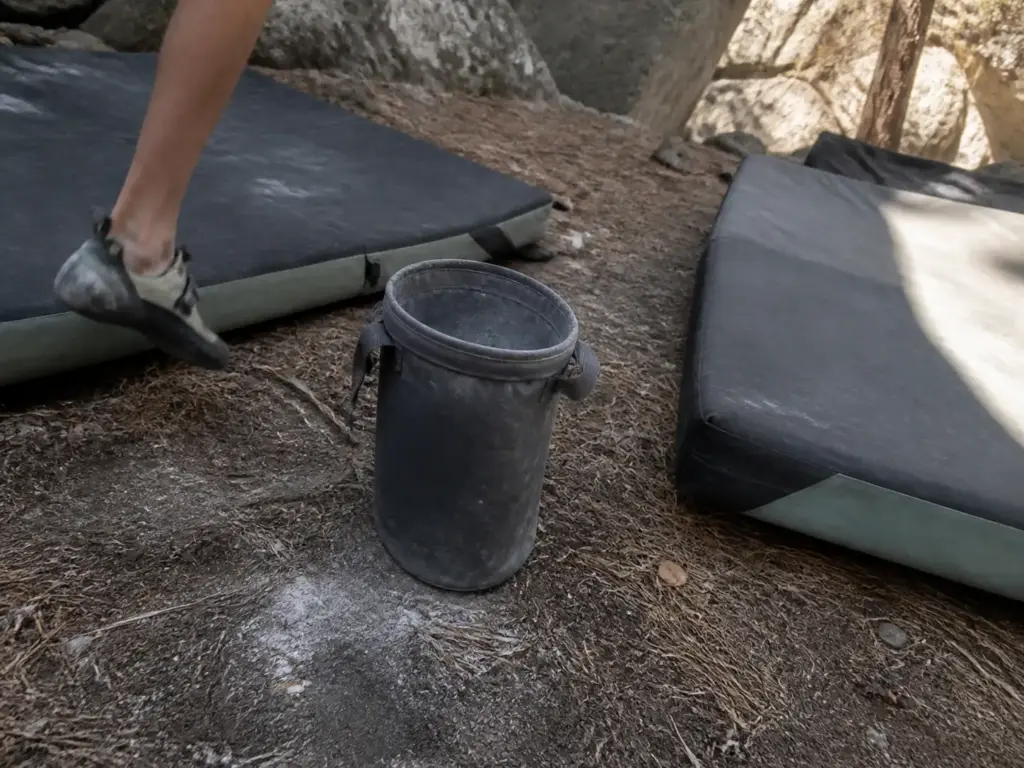
Everybody shops buckets by liters. Then it goes over the first time somebody steps back from a spot, and it turns out the number that mattered was measured across the bottom.
How Much Chalk You Actually Go Through
A waist bag at 100–150 ml covers a full day of roped climbing for one person without a refill. A 300–400 ml bucket covers a boulder session for a small crew. Past that, extra capacity buys fewer trips to the car, not better climbing.
Tested weights show how the trade-off runs. The Cotopaxi Halcon comes in around 3 oz at 1.5 L, the 8BPlus Lilly at 4.4 oz, the Mammut Alpine at 4.9 oz as the heaviest waist bag of the group, and the STATIC Ranger bucket at 12 oz as the largest. The lightest bags buy their weight from capacity. Great on a harness, more dips on a long day.
Base Width Beats Capacity
A wide, stable base keeps a bucket upright when someone bumps it. Not a big mouth, not a big number on the tag. A tall narrow container with 4 L in it has a higher center of mass and a smaller footprint, which is the recipe for a tip-over with a shoe anywhere near it.
The base of a problem is crowded: pads overlapping at the seams, a spotter shuffling backward, shoes, a brush, a water bottle, plus everything else you’re arranging at the base of a problem. The bucket competes for floor space with people watching the wall, not the ground.
Test a bucket before you buy it the way climbers actually test them: set it on the floor, load it with a hand’s weight pressing on the rim, and push sideways at the top edge. If it rocks up onto an edge instead of sliding, it will go over at the base of a problem. Capacity numbers tell you nothing about this.
Mouth Opening and Two-Handed Dips
A wide mouth opening matters for a different reason than capacity. Two climbers dipping at once needs an opening that stays propped rather than collapsing around your wrist, which is what the Petzl SAKAB’s semi-rigid collar and the Mondo’s wide mouth both do. In a group session nobody queues to chalk up, and nobody knocks the container over reaching past somebody else’s arm.
Materials, Pockets, and How You Carry It
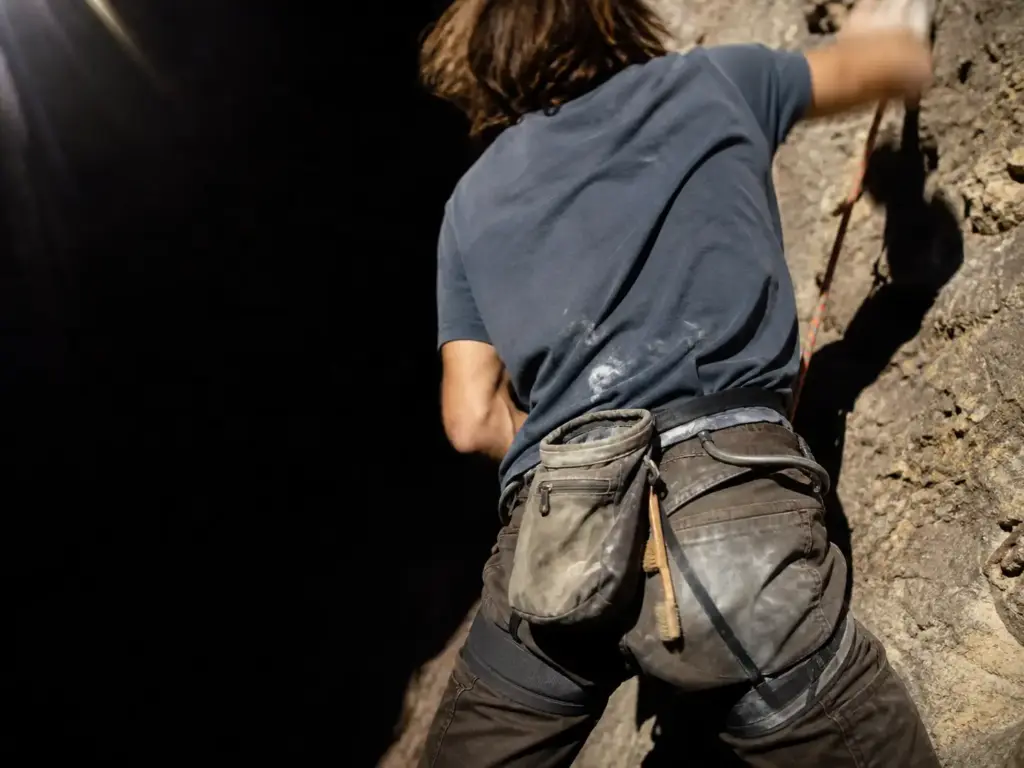
You’re mid-pitch, you reach back for the bag, and the belt has rotated a quarter turn because you clipped it instead of belting it. Attachment isn’t a footnote on the spec sheet. It’s how the bag behaves when you’re pumped and can’t look down.
Cordura, Canvas, and What Denier Buys You
The materials list is short: Cordura, waxed canvas, TPU, nylon and polyester outers, with a fleece lining inside almost everything. Denier is the thread-weight number, and higher denier means better abrasion resistance against granite, gear loops and the inside of a pack. Waxed canvas buys moisture resistance and pays for it in weight, a reasonable trade for wet approaches and a bad one if you’re counting grams.
The fleece lining does more real work than the outer: it holds chalk in the pile and releases it gradually onto your hands, which is why a bag with a wrecked lining feels wrong even when the outside looks new.
Brush Loops and Pockets Worth Paying For
Brush loops and brush slots are a group-session spec. The DMM Edge carries two, which tells you it was designed for a session where everyone is cleaning holds rather than one person carrying one brush.
Zip pockets hold keys and a phone. Velcro pockets hold a brush and not much else, because velcro in a chalk environment is on the clock from day one. Some manufacturers also run stewardship-branded models whose proceeds fund the Access Fund, which keeps crags and boulder fields open for climbers, a real funding line rather than a label on a hangtag.
The pocket you’ll actually use is the one you can open one-handed while hanging. That’s a zip on a waist bag every time.
Belt, Clip-In, or Locking Belt
Three attachment methods, three behaviors. A belt loop with an adjustable webbing belt keeps the bag centered on your lower back and stays put. A carabiner clip-in swaps faster between harnesses and rotates the moment you move, fine cragging and annoying on a long pitch. A locking belt is the alpine answer, since you don’t want the bag migrating under a pack’s hip belt.
The hardware matters more than people expect, so read up on if you’re clipping it in rather than belting it before you use whatever spare biner is in the bottom of your pack. For multi-pitch, the belt wins. Every time.
What a Budget Chalk Bag Actually Gives Up
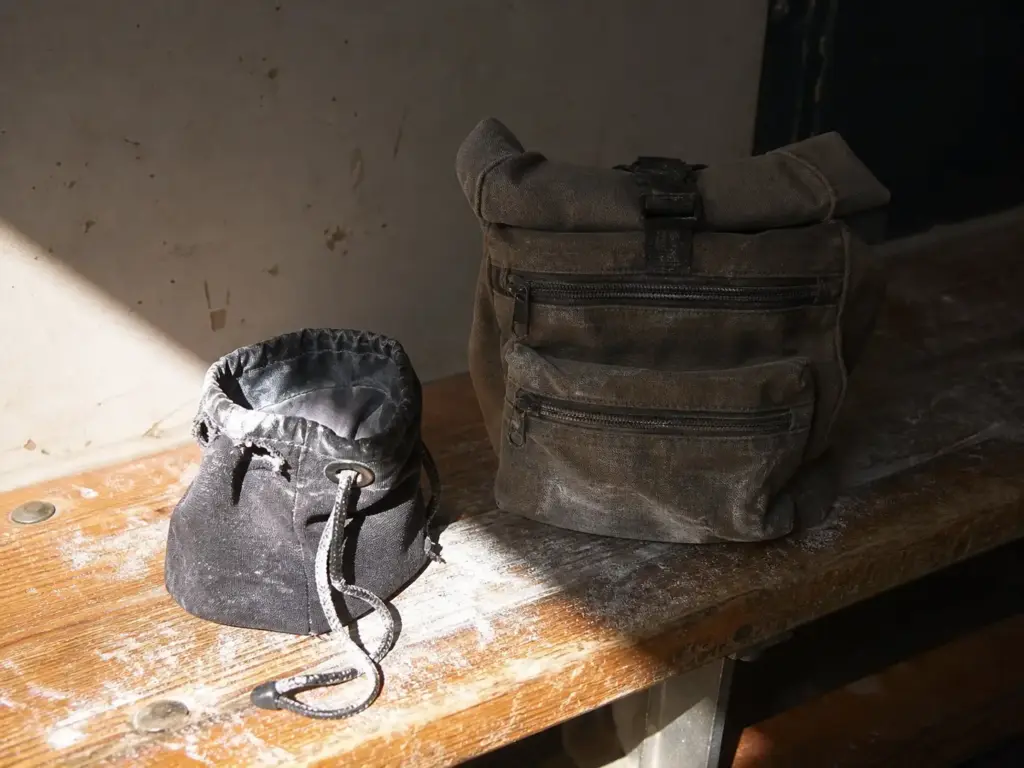
Every roundup tags a best value pick and moves on, as if the cheap one were the same bag with a smaller number on it. It isn’t. Things get cut in a specific order, and knowing that order is what lets you buy cheap deliberately instead of by accident.
What Gets Cut First at the Low End
The tier map is consistent across the category. The budget tier gives you simpler grommets, fewer pockets, and closures more prone to failure. Mid-tier adds better closures, some weather resistance, and more pocket organization. Premium adds alpine-specific features, multiple zip pockets, occasionally handmade construction and a lifetime warranty.
Read that ladder in order of what disappears first and the pattern is uncomfortable. Closure security and pocket organization go first. Durability goes second.
That order is backwards from what you’d want, because closure is the exact spec this whole article argues you should buy on. The cheap bag doesn’t fail by wearing out. It fails by not sealing.
The Spec Worth Paying Up For
Grommet failure being flagged specifically as a budget-model problem is the concrete mechanism under the vague phrase you get what you pay for. It isn’t that cheap fabric shreds. It’s that the small metal parts holding the closure system together are the line item where a manufacturer saves the most money for the least visible change.
What paying more does not buy is capacity or performance. A premium bag doesn’t hold more chalk and it won’t make you climb harder. It buys closure reliability, pocket count, and weather resistance. Decide whether you need those three things, and the price question answers itself.
When Cheap Is Genuinely the Right Call
Here’s the exception worth naming, because it inverts the rule. Both budget buckets in this roundup run magnetic closures. That’s the one spec that shouldn’t get sacrificed at the low end, and these don’t sacrifice it.
A budget bucket with a magnetic closure is a genuinely good buy. A budget bucket with a loose drawstring and thin grommets is a false economy that leaks into your pack for two seasons before you replace it. Same price bracket, opposite outcomes. Spend the difference on the rest of the kit you’re budgeting for at the same time, which is where a hundred saved dollars does more good than it does here.
The Best Chalk Bags and Buckets Right Now
Everything above was the criteria. This is where the criteria produce names, each justified by closure behavior, base stability and format logic rather than a spec sheet you can already read on the product page. Treat the bag as one line item on the same list as the harness and the hardware in the connectors and belay hardware guide, because it gets used on every climbing day you’ll ever have.
Best Overall: Black Diamond Mondo Chalk Pot
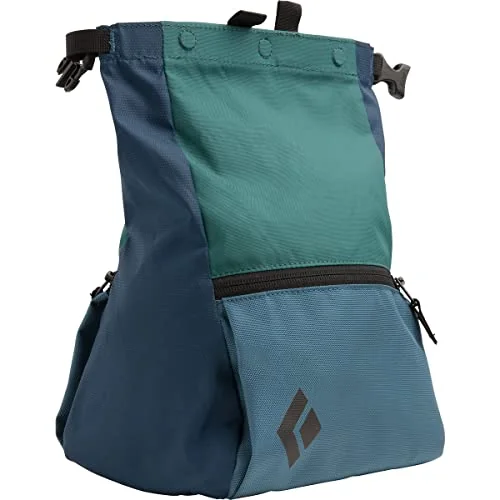
The Black Diamond Mondo Chalk Pot earns the top slot on mechanism, not brand. Containment doesn’t depend on anyone remembering a step between attempts, which is the realistic failure point for every other closure on a bucket. It sits in the mid tier, and the money goes exactly where this article says it should. The honest limitation: it’s a ground-based tool, so clipping it to a harness makes no sense.
Best for Bouldering: DMM Edge Boulder Chalk Bag
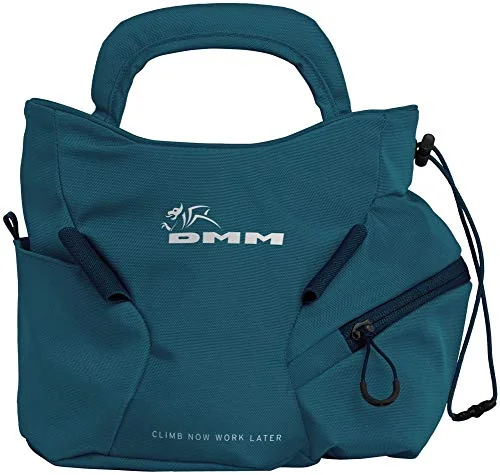
The DMM Edge wins its category on a spec most buyers skim past. Two brush attachments means the brushes live on the bucket instead of in somebody’s pocket, and on a project where every attempt starts with cleaning the crux hold, that changes the rhythm of the session. One brush per crew is a bottleneck. Two isn’t.
Where it sits behind the Mondo is the draw-cord, so cinch it hard before it goes in a pack and don’t leave it on its side in a car trunk.
Best Value: PGmoon Chalk Bucket Bag
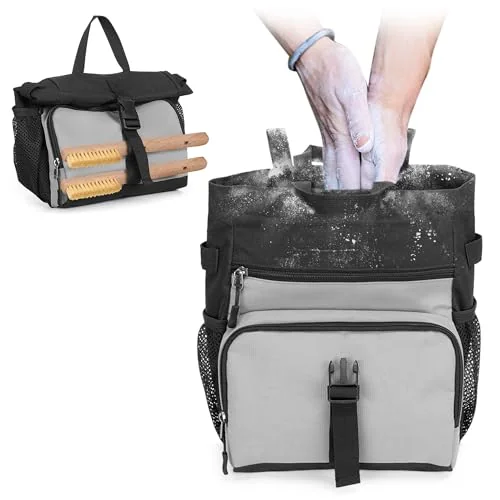
The PGmoon Chalk Bucket Bag proves the point from the budget section. It holds onto the magnetic closure at a price where the category usually gives it up, so you’re buying fewer pockets and simpler construction rather than a worse seal. That’s the right thing to give up.
For a second option in the same bracket, the UpSent Bouldering Chalk Bucket (check it here) runs the same magnetic closure logic with a self-standing base and a larger format. Between the two it comes down to floor space and which one is in stock, since neither carries deep inventory.
Best for Sport and Trad: Compact Waist Bag with Zip Pockets
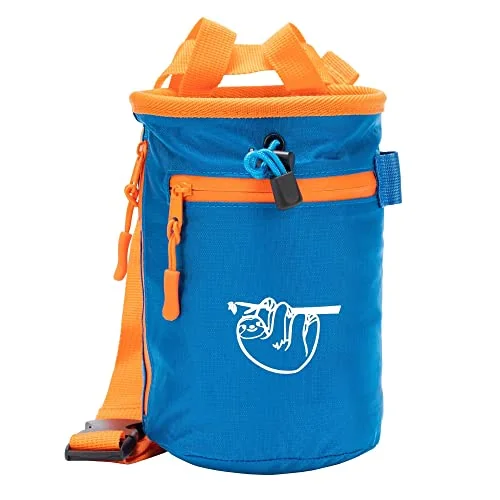
For roped climbing this compact waist bag covers the actual requirements: it belts on rather than clipping, so it doesn’t rotate when you’re pumped and reaching blind.
The drawstring is acceptable here for the reason it isn’t on a bucket. The bag lives on your body, upright, in your line of sight, and never sits in a fall zone. Cinch it before the walk out and it behaves.
Best Closure: Petzl SAKAB
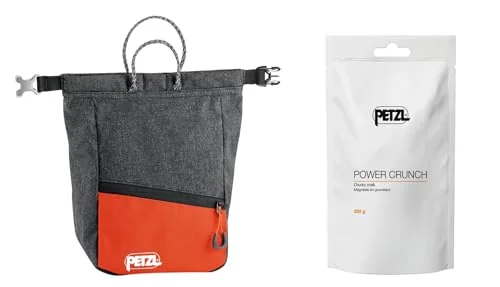
The Petzl SAKAB exists for the reader who read the closure section and decided that’s the whole decision. The semi-rigid structure separates it from soft magnetic buckets: the mouth stays propped for a two-handed dip instead of collapsing, then the roll-and-magnet system takes over when hands come out. It’s the premium pick here, and the one that makes least sense if you already own a bucket you like. If it’s sold out, the Mondo runs the same closure principle a tier down.
Sharing a Bucket Without Making It Weird
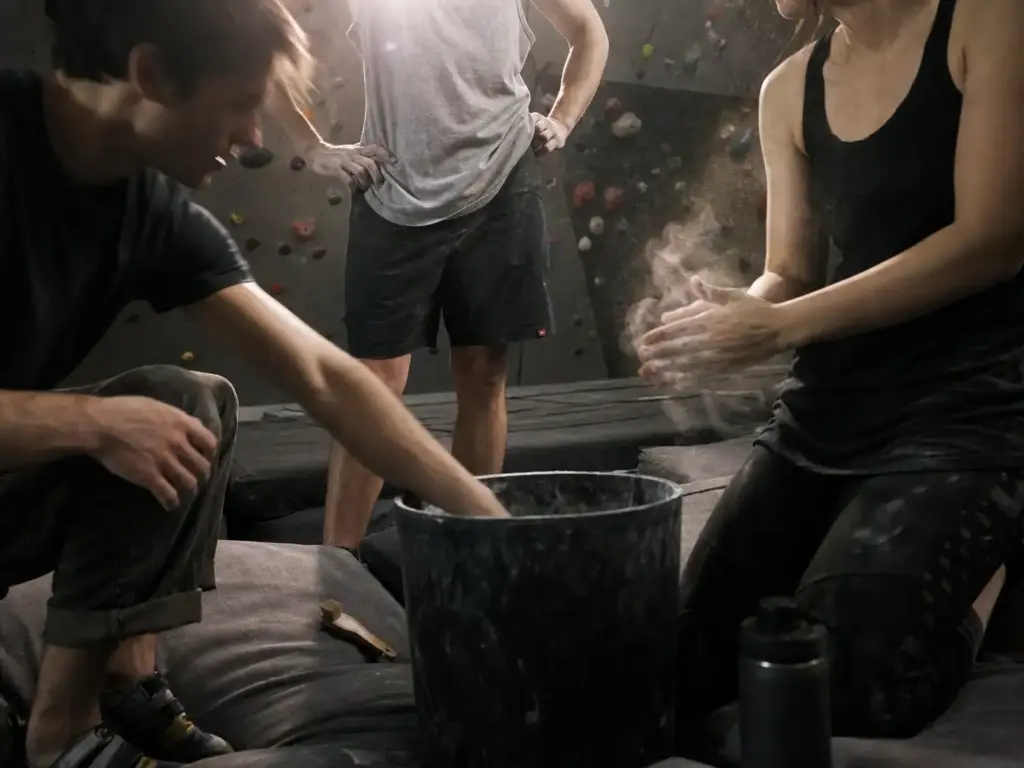
Reach into a gym’s community bucket after a dozen other people have had their hands in it and there’s a half-second where everybody thinks about it and nobody says anything. It’s the most universally noticed and least discussed thing in an indoor session.
The Community Bucket Question
No sanitation study exists on shared chalk containers, so anyone quoting one is making it up. What’s true is simpler: chalk sharing at a gym means a dozen sweaty hands going into the same container across a session, and chalk doesn’t sterilize anything. Hygiene isn’t the reason to buy your own bag, but it’s the reason a lot of people quietly do.
The practical answer doesn’t require a conversation with anyone. Own a compact waist bag, keep it in your gym bag, and the question stops being yours. That’s the same bag from the first section, the one you need outdoors regardless, which makes it the rare gear purchase that solves two unrelated problems.
Where the Bucket Sits When People Are Falling
A bucket at the base of a problem sits inside the fall zone by default, because the fall zone is also the only flat spot with the pads on it. Somebody backing up from a spot is looking up, not down, and a heel finds the rim.
That’s the whole argument for base width and a self-sealing closure in one sentence: the bump is going to happen, and the only variable is whether it becomes a non-event or a chalk cloud across everyone’s pads. Put the bucket behind the pads and outside the line where spotters move, and the geometry does most of the work for you.
Chalk Less, Not More
Thin, deliberate chalking beats repeated heavy dips. One light coat at the start, refresh once mid-session, and that’s it. The climbers who chalk this way burn less chalk, put less dust in the air, and hand over cleaner holds to whoever’s next on the problem.
More chalk on your hands doesn’t mean more grip. Past a thin layer it means a slick pad of powder between your skin and the rock, which is the opposite of the thing you wanted. The community shorthand for this is the poof test: squeeze and see how much visible cloud comes off. It’s unscientific and it’s a decent gut check.
Outside, the residue is an access issue rather than an aesthetic complaint. Chalk buildup on popular problems is one of the things land managers point to when crag access gets reviewed, which is why the American Alpine Club’s advocacy and conservation work treats visible impact as part of the conversation. Read the ethics protocol before your first outdoor send if that’s a season away, because tick marks and chalk caking are easier to avoid than to undo.
Keeping a Chalk Bag Alive
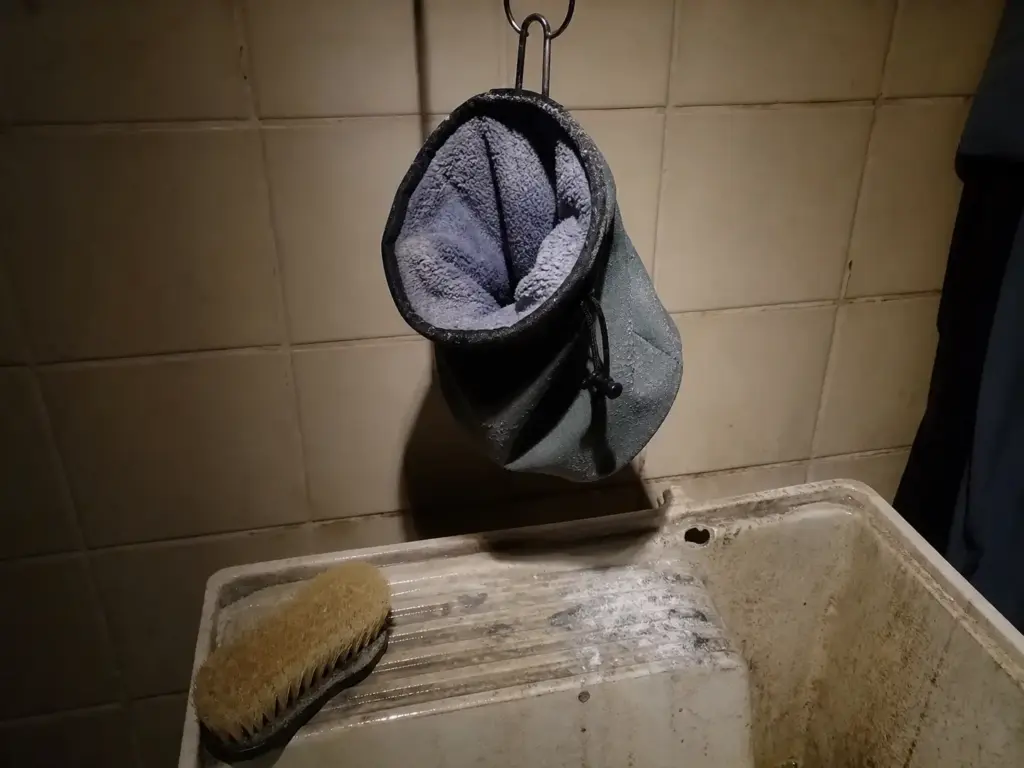
That musty bag in the back of the car didn’t die from use. It died in a dryer. And the velcro that stopped sealing didn’t wear out, it clogged.
Washing It Without Wrecking the Lining
Cadence is two to three times a year, hand-wash or a gentle machine cycle, with every bit of chalk emptied out first. Washing a bag with chalk still in it makes a paste that sets in the fleece and defeats the whole exercise.
Then the part that actually matters: air-dry it, hanging open, and keep it away from machine heat entirely. Heat degrades the fleece lining’s ability to shed chalk dust cleanly, and once that’s gone the bag holds moisture, smells musty, and cakes dust in the pile instead of releasing it onto your hands. This is the same don’t-wreck-the-foam logic that applies to crash pads: the cleaning method ruins more soft goods than the climbing ever does.
What makes this failure stick around is how quiet it is. A busted zipper announces itself. A lining that’s slowly stopped working just feels like a bag that’s getting old, so nobody connects it to the dryer cycle from four months ago and everybody does it again.
Brushing Out the Closure
Between washes, run a dry soft-bristled brush over the surfaces that trap dust: the velcro hooks, the zipper teeth, the fold line on a roll-top. Two minutes, no water, done at the car or on the couch.
On velcro this is the difference between a closure that lasts years and one that quits in a season. The hooks fill with packed chalk from the inside out, and once they’re full there’s nothing mechanical left to grab. Nobody does this because nobody thinks of a bag as maintainable, but it’s exactly the way you’d clean a sticky carabiner gate applied to fabric: the grit is the problem, not the wear.
Keep the same brush you use on holds for the closure, and give the velcro a pass every time you empty the bag. If the flap makes the ripping sound but you can pull it apart with one finger, the hooks are already packed with chalk and the bag has been leaking in your pack for a while.
Storage Between Sessions
Store the bag open, not cinched, somewhere with air. A sealed bag full of chalk and yesterday’s sweat in a hot car is a small humidity chamber, and that’s where musty starts.
Empty it fully at the end of a season rather than leaving a hardening layer in the bottom over winter. What ends most bags is closure failure, degraded grommets and clogged velcro, far more often than fabric wearing through. Buy on the closure, then maintain the closure, and the rest of the bag will outlast your interest in it.
Matching Your Bag to How You Climb
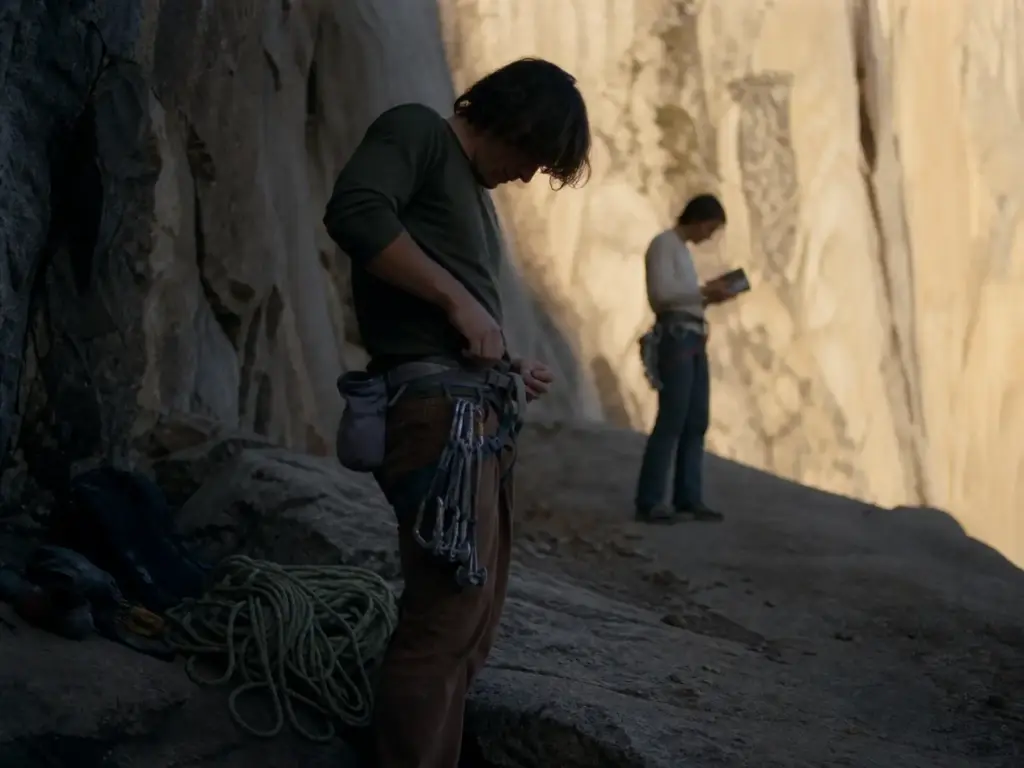
You arrived asking which is better. The honest answer has been that it depends on what you’re doing, so here’s where that stops being a dodge.
Gym and Indoor Bouldering
Use a bucket if you own one, the gym’s if you don’t, and your own small bag if you’d rather not share. Wide base still matters indoors: a gym floor at 7 pm is more crowded than most crags, and everyone is walking backward watching somebody else’s attempt.
Outdoor Bouldering Sessions
A bucket with a magnetic closure and a wide base, full stop. Add two brush attachments if you’re the one in the crew who brings the brushes, which you probably know already.
Sport, Trad, and Multi-Pitch
A compact waist bag on an adjustable belt. For sport cragging the drawstring is fine, because the bag rides upright on your body where you can see it, and zip pockets earn their place for keys and a phone. On a redpoint burn you want the bag exactly where your hand expects it and nothing swinging, which is an argument for belting it snug rather than clipping it loose.
For multi-pitch the constraint shifts to weight and attachment: the 38–52 g bags exist for exactly this, and a belt beats a clip-in that rotates the moment you’re reaching behind you without looking. Same math you’re already running on the rack you’re building for sport and trad days.
Alpine and Cold-Weather Days
Weather resistance and closure security move up the list, and a locking belt keeps the bag from migrating under a pack’s hip belt. A bag that dumps in a pack on a crag approach is an annoyance. The same failure on a long alpine approach means chalking out of a dusted-over pack lid with cold hands.
What goes inside the bag is a separate decision this piece deliberately left alone. If you’re weighing which chalk goes inside it, loose, block, or something in between, sort that out once the format question is settled.
The Short Version
Buy on the closure. A magnetic roll-top seals itself the instant your hand leaves, a drawstring leaks in transit by design, and velcro degrades quietly over a season until it’s decorative.
Format follows discipline, never price. A bucket clipped to a harness is dead weight you’ll never open mid-pitch, and a tiny waist bag at a group session is a bottleneck with four people standing around it.
Heat is what ends a bag’s life. Air-dry it hanging open, brush the closure out every few sessions, and the fabric wear you were worried about will never become the reason you replace it.
Before your next session, empty whatever you’re using now, brush the closure, and see whether it still seals when you close it. That two-minute check tells you whether you need a new bag or just a clean one.
Frequently Asked Questions
01What’s the difference between a chalk bag and a chalk bucket?
Capacity and where it lives. Waist bags hold roughly 100–150 ml and ride on your harness or belt for roped climbing. Buckets hold 300–400 ml and up, sit on the ground, and are built for bouldering sessions where several people dip from the same container.
02Are chalk buckets or chalk bags better for bouldering?
Buckets, for capacity and shared use. The specs that decide it are a wide base for tip-over resistance in the landing zone and a self-sealing closure, not the liter number on the tag.
03How do I stop my chalk bag from leaking chalk into my pack?
It’s the closure, not how you pack it. Drawstrings let chalk escape in transit by design, and velcro that’s collected dust for a season has quietly stopped sealing. A magnetic roll-top closes itself when your hand leaves the bag.
04What’s the best chalk bag for a beginner?
A compact waist bag with an adjustable belt and zip pockets. It works indoors and it’s the format you’ll need the first time you climb outside. Add a bucket later if you start bouldering with a crew.
05How often should you wash a chalk bag, and how?
Two to three times a year, hand-wash or gentle machine cycle with all chalk emptied first. Air-dry it hanging open. Machine heat degrades the fleece lining, which is what makes a bag go musty and cake with dust.
Safety Notice: Rock climbing and mountaineering are inherently high-risk
activities that can involve physical trauma or fatal incidents. The information on Rock Climbing Realms is for
educational and informational purposes only. Techniques and advice presented here are not a substitute
for professional, hands-on instruction. Conditions and risks vary by location. Always seek guidance
from a qualified instructor before attempting new techniques. By using this website, you agree that you
are solely responsible for your own safety. Any reliance you place on this information is strictly
at your own risk, and you assume all liability for your actions. Rock Climbing Realms and its authors
will not be held liable for any harm, damage, or loss sustained in connection with the use of this information.
Affiliate Disclosure: We are a participant in the Amazon Services LLC Associates Program, an
affiliate advertising program designed to provide a means for us to earn advertising fees by advertising and linking
to Amazon.com. As an Amazon Associate, we earn from qualifying purchases. We are also an official affiliate partner
of Black Diamond Equipment via the AvantLink network. If you click on a Black Diamond affiliate link and make a
purchase, we may earn a commission at no additional cost to you. We also participate in other affiliate programs.
Additional terms are found in the terms of service.