
In this article
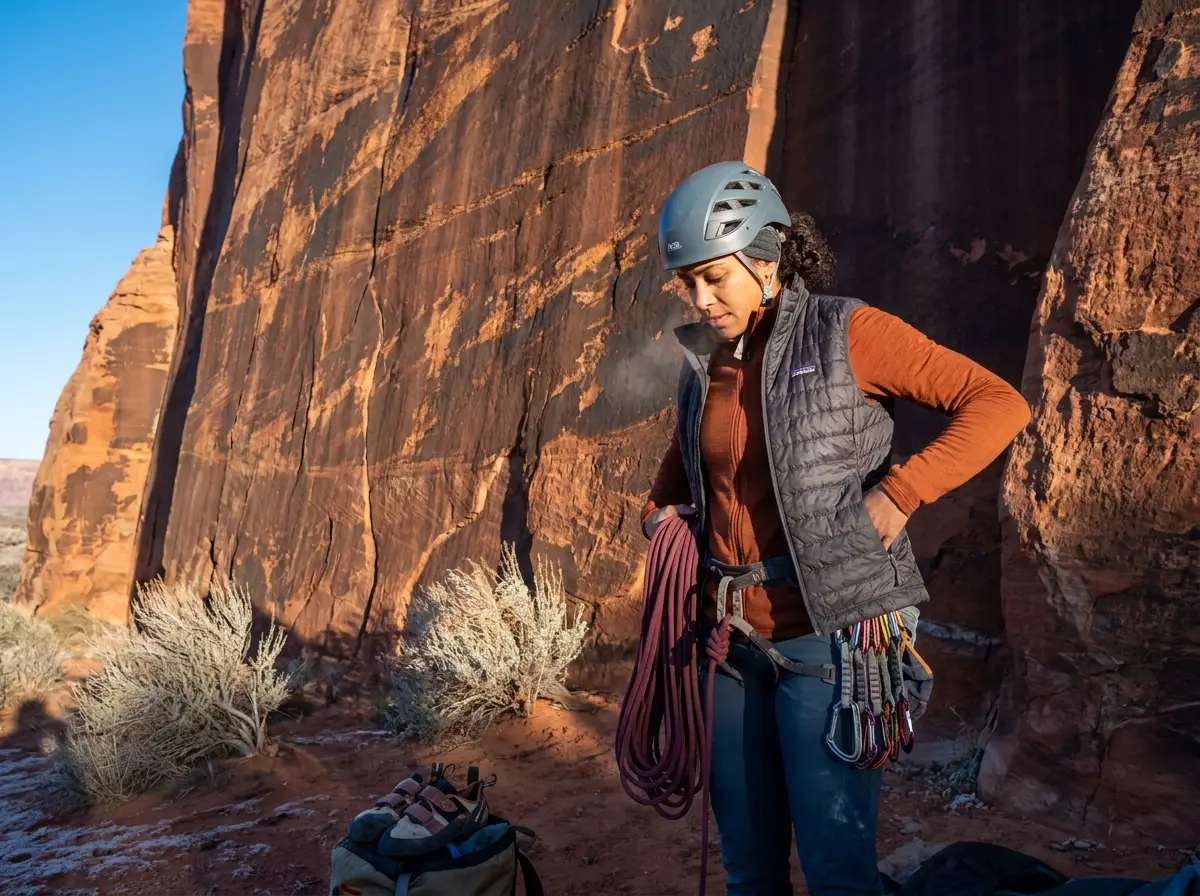
The alarm went off at 4:45 a.m. Outside was 8°F and the car was buried under four inches of new snow. My phone showed the forecast for the crag we’d be reaching in two days: 62°F, sunny, light wind. I had a rope, a rack, and a tent I trusted to handle 25°F nights. That drive south — from frozen-solid home crags to warm desert rock — is one of the most underrated experiences in climbing.
But here’s what those ranked listicles of winter climbing destinations almost never tell you: the list itself isn’t the hard part. Choosing the right destination for your specific situation — your discipline, your experience level, your tolerance for crowds, your budget — that’s where most first-time winter escapes go sideways. I’ve climbed at six of the seven destinations in this guide in December, January, or February. Here’s what I actually think.
| Best Winter Climbing Destinations | ||||
|---|---|---|---|---|
| Destination | Location | Best For | Avg Winter Temp (Day) | Best If You’re… |
| Joshua Tree NP | California | Trad, bouldering | 55–65°F | New to winter climbing escapes |
| Red Rock Canyon | Nevada | Multi-pitch trad, sport | 50–60°F | Intermediate–advanced trad climbers |
| Hueco Tanks | Texas | Bouldering | 55–65°F | Dedicated boulderers who reserved 90 days ago |
| El Potrero Chico | Mexico | Multi-pitch sport | 65–75°F | Sport climbers open to crossing the border |
| St. George, UT | Utah | Sport, trad mix | 45–55°F | All-rounders who want fewer people |
| Indian Creek | Utah | Crack trad | 40–50°F | Crack climbers solid at 5.9+ |
| Chattanooga, TN | Tennessee | Sport, bouldering | 45–55°F | East Coast climbers on a budget |
Why Winter Is Actually the Best Time to Climb (Not Just “Tolerable”)
The friction argument nobody makes
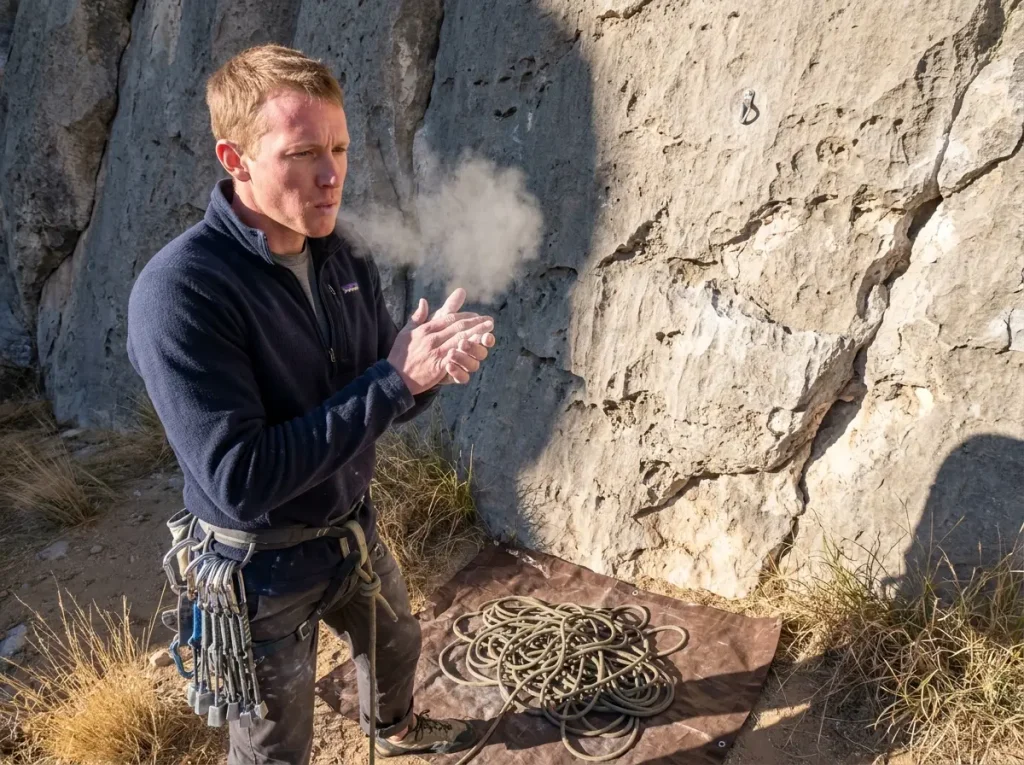
Cold air and cold rock are not a disadvantage. They’re the point. Rubber compounds in climbing shoes grip sandstone, granite, and limestone measurably better at lower temperatures — that’s basic polymer chemistry, and it translates directly to how hard you can pull on routes that would feel greasy and desperate in July.
The sweet spot for most rock types is roughly 45–65°F. Climbing in that range feels different than climbing in heat. Holds that would pump your forearms in summer feel positive and restable. Friction you couldn’t rely on in September becomes solid and predictable. If you’ve wondered why elite climbers send their outdoor projects in October and February, temperature-dependent rubber performance is most of the reason.
The crowd math: winter is peak season in the wrong places
Here’s the part most winter climbing guides skip: winter is not quiet at the good desert crags. Not anymore. Joshua Tree on a December weekend is actually crowded — popular formations have queues by mid-morning. Hueco Tanks has a permit cap specifically because demand exceeds supply every January. Red Rock parking lots fill by 9 a.m. on Saturday in February.
The winter escape fantasy — empty crags, warm sun, solitude — is achievable, but you have to pick the right destination, not just the right season. St. George, Chattanooga, and El Potrero Chico deliver that experience. Joshua Tree in peak season does not.
The desert temperature trap
I want to be direct about this because almost no winter climbing guide addresses it clearly: desert days are warm; desert nights are not.
In Joshua Tree in January, the daytime high might be 62°F and beautiful. By 8 p.m., you’re looking at 28°F in your tent. In Indian Creek, the days can hit 45°F while nights drop into the teens. Even the Tucson-area crags — warm all day — fall 35–40°F after sunset.
If you’re camping, treat your winter climbing trip like the camping trip it actually is: 20°F sleeping bag minimum, insulated ground pad, camp shoes you can slip on immediately when you step outside. If you need help building out your camping kit from scratch, the climbing trip packing list covers what actually earns its place in the bag.
Joshua Tree National Park — The Gateway Drug
What JTree actually delivers
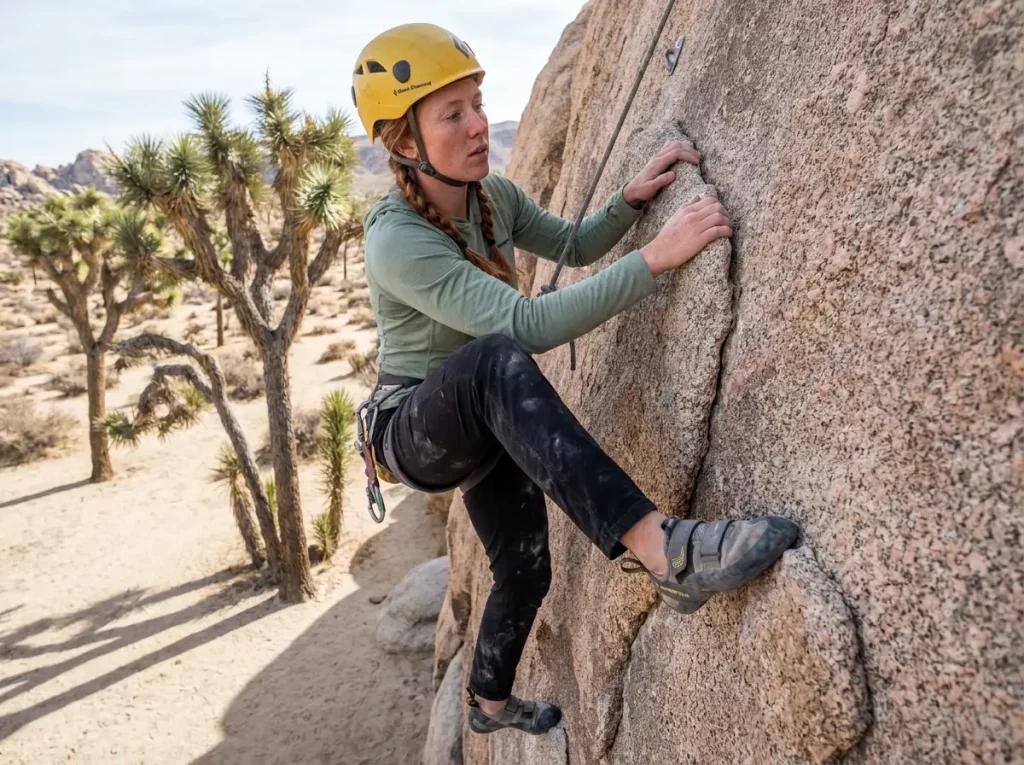
Joshua Tree is the default first answer to “where do I go for winter climbing?” and for real reasons. It has over 8,000 routes, accessible entry for everyone from beginner to 5.13, good nearby infrastructure, and the visual appeal of the Mojave in winter bloom. The classic areas — Hidden Valley, Intersection Rock, The Blob, Sheep Pass — have routes within walking distance of the road. You do not need to earn your climbing day with a long approach.
For newer outdoor climbers making the gym-to-crag transition, JTree is as good a first winter destination as exists: lots of moderate trad routes in the 5.7–5.9 range, clean face climbing on featured granite, and a culture that accommodates newcomers without condescension. If you’re still figuring out how to find safe beginner outdoor routes before committing to a trip, JTree’s sheer volume means you’ll find something appropriate at nearly any ability level.
The grades problem — and what to do about it
JTree granite climbs stiff. Routes listed at 5.8 regularly feel like committed 5.10. This isn’t sandbagging for sport — it’s the nature of monzogranite, which offers positive holds but punishing footwork sequences that require real technique on sloping crystal edges.
Plan accordingly: if you climb 5.10 in a gym, target 5.7–5.8 routes outdoors at JTree for your first session until you’ve calibrated to the rock. You’ll climb into your grade quickly; you’ll just need a session or two to trust your feet on unfamiliar granite.
Pro Tip: At JTree, warm up on a face route before trying anything in the crack grade range. The transition from gym movement to real granite footwork is real, and a blown first-pitch warm-up sets a discouraging tone for the day.
The permit question answered
Joshua Tree’s permit system for general recreational climbing is simple: you pay the entrance fee ($35/vehicle for 7 days, or free with America the Beautiful) and climb. No climbing-specific permit required for recreational visits. Fixed anchor installation and bolting require a separate permit process, but that doesn’t apply to the average climbing trip. The park itself is open year-round.
Red Rock Canyon — The Choice of Climbers Who’ve Moved Past JTree
The quiet confidence of Red Rock regulars
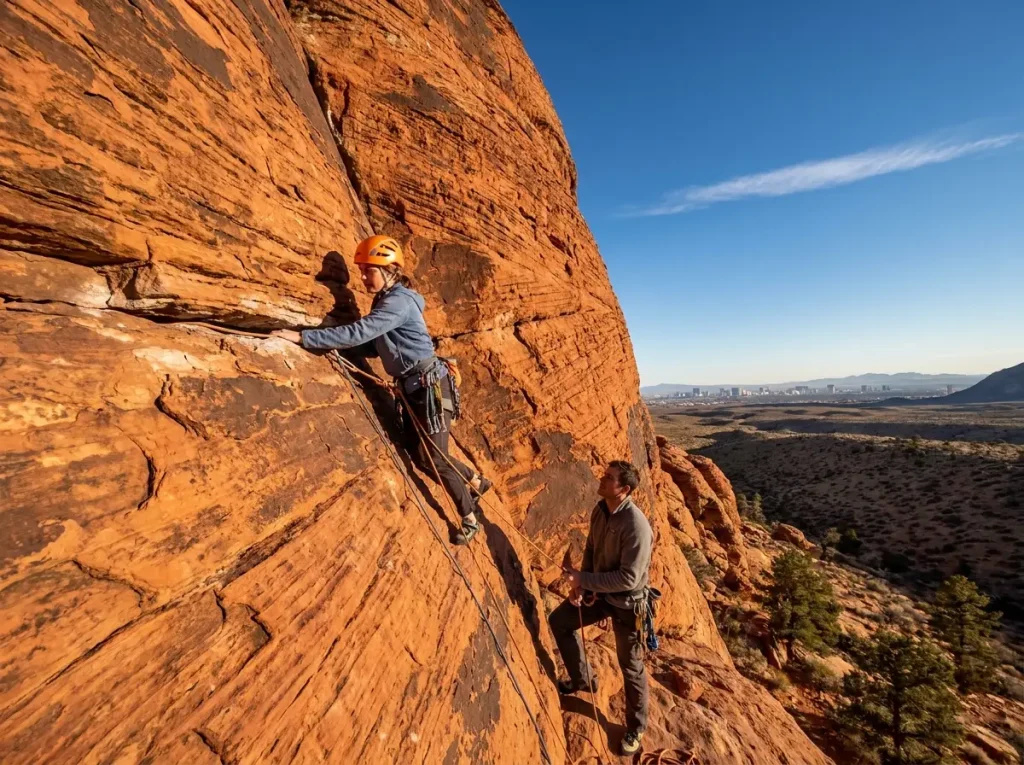
Red Rock Canyon sits 15 miles west of Las Vegas, and climbers who return there year after year will tell you — often unprompted — that it’s better than Joshua Tree. They have a point. The Aztec sandstone is outstanding, the routes average longer and more committing, and the winter temperature window is slightly more forgiving than JTree — highs in the low to mid 50s, with south-facing walls collecting enough sun to feel warm enough to peel layers even in December.
For multi-pitch trad climbing, Red Rock may be the best winter destination in the American West. Routes like Crimson Chrysalis (5.8, 8 pitches) and Epinephrine (5.9, 15 pitches) give you full climbing days in engaging terrain without alpine consequences. The complete Red Rock climbing planner walks through the full area breakdown if you’re going deep on logistics.
Discipline breakdown: who belongs here
Red Rock rewards intermediate-to-advanced trad climbers most. The sport climbing density in moderate grades is lower than JTree, and the descents are more complex — you need solid navigation skills and comfort with long rappels in unfamiliar terrain. Pure boulderers will find quality problems in the Kraft Boulders area, but this isn’t a bouldering destination in the Hueco Tanks sense.
For sport climbers, the Calico Hills area near the visitor center has accessible bolted routes from 5.8 to 5.12, with walls facing southwest to collect afternoon winter sun. But if sport climbing is your primary discipline, St. George or El Potrero Chico serve you better. Red Rock’s identity is trad.
Logistics reality
Las Vegas being right there is both a feature and a trap. You can fly in inexpensively, stay in a hotel, and be climbing in 30 minutes. The 13-Mile Campground inside the conservation area is modest but functional. Gear shops exist nearby. Approaches are short by desert standards. The surrounding city’s 24-hour temptations are, predictably, real. Build your trip around climbing first and treat Las Vegas as the logistics hub it is.
Hueco Tanks — The Bouldering Mecca That Requires Actual Homework
Why climbers make pilgrimages here
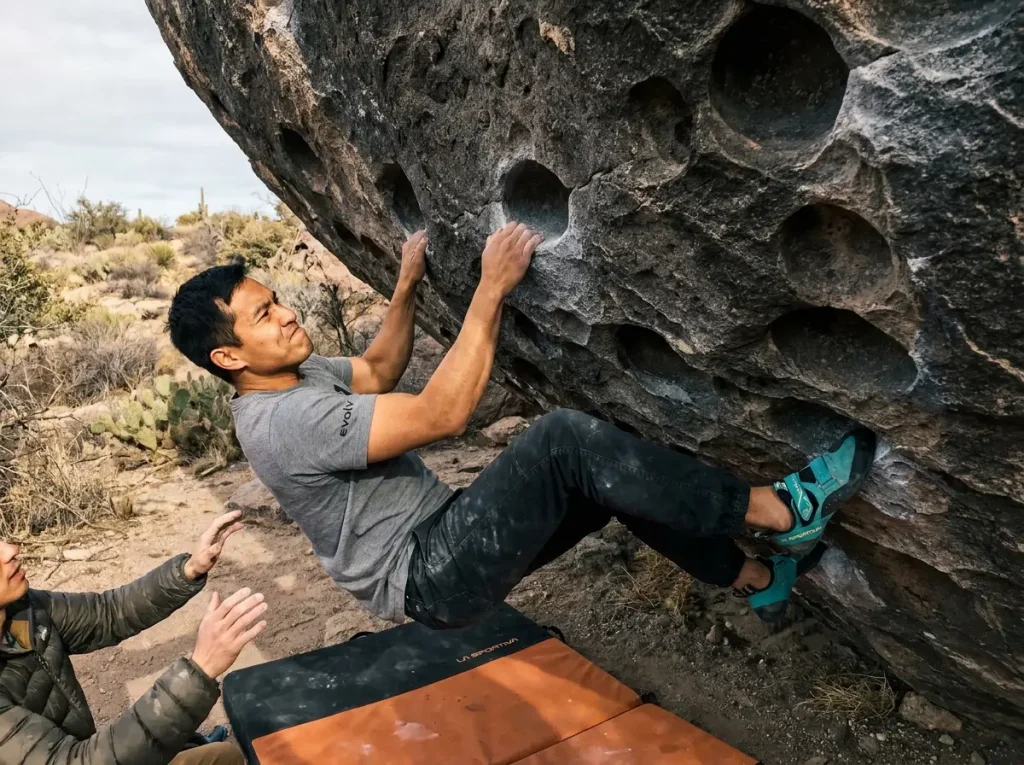
Hueco Tanks is one of the most important bouldering areas in the world. The rock is volcanic syenite — not granite, not sandstone — and it creates holds and movement sequences unlike anywhere else. Problems range from V0 slopers that teach beginners body position to V14 dynos that have stopped some of the best climbers alive. The huecos (Spanish for “holes”) that give the area its name are large, rounded pockets worn into the rock, and they define the movement style: dynamic, body-tension-intensive, pocket-dependent.
In winter, the conditions are exactly right. Daytime temperatures in the 55–65°F range, low humidity, and syenite rock gripping rubber at peak friction. This is why climbers who’ve been here in February talk about it differently than they talk about anywhere else. For a full breakdown of what winter bouldering feels like on the ground, Hueco Tanks’ winter conditions: the real beta has everything you need.
The permit system — the most important section in this guide
Here is what competitors consistently fail to tell you about Hueco Tanks in winter: you need a reservation, you cannot get one online, and the booking window is three months.
The Texas Parks and Wildlife Department limits North Mountain access — where most quality problems live — to 70 people per day. To secure a permit, you call TPWD at (512) 389-8911, up to 90 days before your target visit date. Reservations cover up to four people for a maximum of three consecutive days. Walk-up spots are capped at the first 10 visitors at the gate each morning.
In practice: if you want to climb at Hueco Tanks in January, you are calling in October. If you’re reading this guide two weeks before a planned trip, you’re counting on walk-up availability — which means arriving at the gate before it opens, which means setting an alarm before dawn in El Paso in December.
The complete Hueco Tanks bouldering guide covers the permit process in detail, including which mountain sectors have different access rules. Get this right before you book flights.
Pro Tip: If you miss the 90-day reservation window, the walk-up system occasionally opens up during weekday visits in early December and late February, when weekend crowds thin out. Monday and Tuesday mornings have the best odds.
Who should go — and who should go somewhere else
If you’re a trad climber or sport climber, this isn’t your destination. Almost no roped climbing exists at Hueco Tanks. If you’re a beginner boulderer who hasn’t yet built confidence on outdoor rock, the outdoor grades will feel dramatically different from gym grades, and the permit complexity adds friction you might not be ready for. Come back when you’re climbing V2–V3 confidently outdoors and you’ve got the reservation system figured out.
If you are an intermediate or advanced boulderer who has confirmed reservations and specific problems you want to tick — come. This place is worth the effort.
El Potrero Chico — The International Escape That Costs Less Than You Think
What EPC delivers that no US destination does
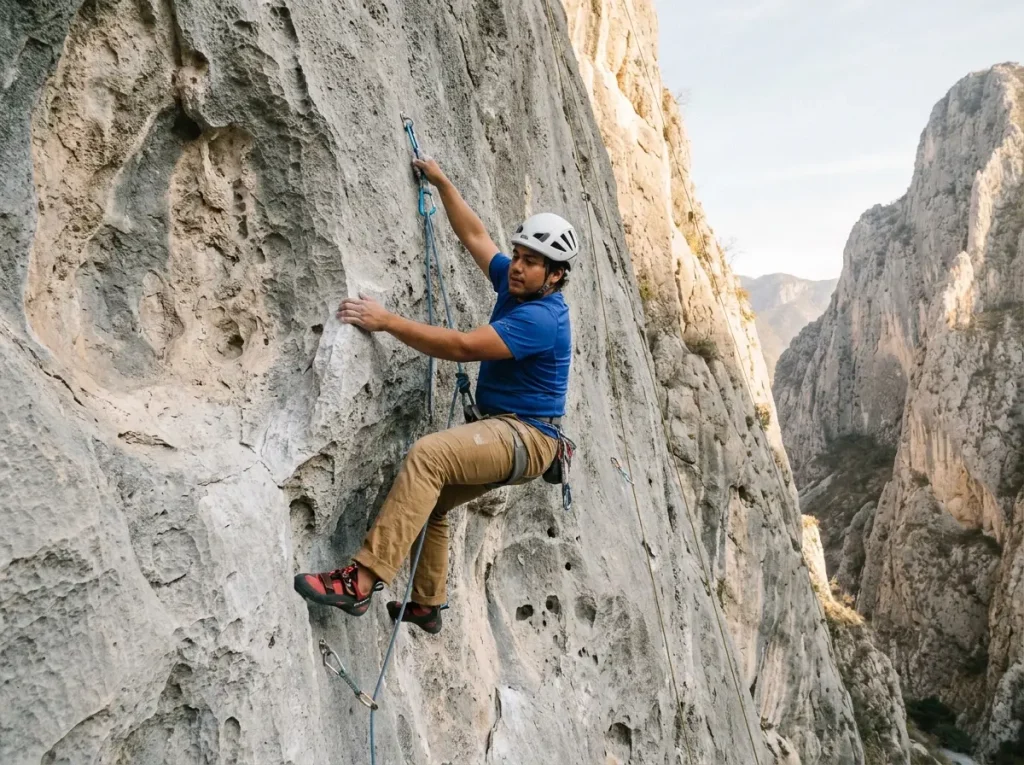
El Potrero Chico (EPC) sits about 40 miles south of the Texas border in the Mexican state of Nuevo León. The crag is a canyon of towering limestone walls reaching 2,300 feet — home to over 600 sport routes from 5.7 to 5.14, with an unusually dense concentration of moderate multi-pitch climbing in the 5.9–5.11a range. The main climbing season runs November through February: warm, dry days in the 65–75°F range with evenings that drop comfortably into the 50s.
For a sport climber who has burned through local moderate single-pitch routes and wants to spend a full day moving upward on long limestone faces, EPC is something different. Routes like Space Boyz (5.10d, 11 pitches) and Time Wave Zero (2,300 feet, one 5.12a crux, otherwise 5.10) deliver genuine big-wall experiences without alpine complexity. If you’re wondering whether to rent gear for a trip like this or bring your own, the climbing gear rental vs. buying for travel breakdown is worth reading before you pack.
The safety question — answered directly
Climbers who haven’t visited EPC often ask about safety in Nuevo León. The real answer: the town of Hidalgo, where most visiting climbers stay, has been hosting the international climbing community since the late 1980s and is flat-out climber-welcoming. The local economy depends on visiting climbers. You drive or fly in, stay at one of several established climber hostels or camping areas within 200 meters of the wall, and spend your week in a community that knows exactly who you are and why you’re there.
The real safety issue at EPC is rockfall. Limestone in active canyons sheds material, and climbing beneath another party on long multi-pitch routes creates serious objective hazard. Helmets are non-negotiable — not just for leader falls but for rock coming off the wall on its own. Don’t climb under parties.
The budget math that surprises people
Flights to Monterrey, Mexico (MTY) are often cheaper than flights to Palm Springs or Las Vegas. Accommodation at climber hostels runs $15–30 per night. Food and water are inexpensive. A week at EPC frequently costs significantly less than a week at Joshua Tree once you account for NPS entrance fees, California lodging prices, and gas. Before any international climbing trip, it’s worth reviewing what climbing travel insurance actually covers — the emergency evacuation provisions matter more outside the US than you’d expect.
The Underdogs: St. George, Indian Creek, and Chattanooga
St. George, Utah — The All-Rounder Nobody Mentions
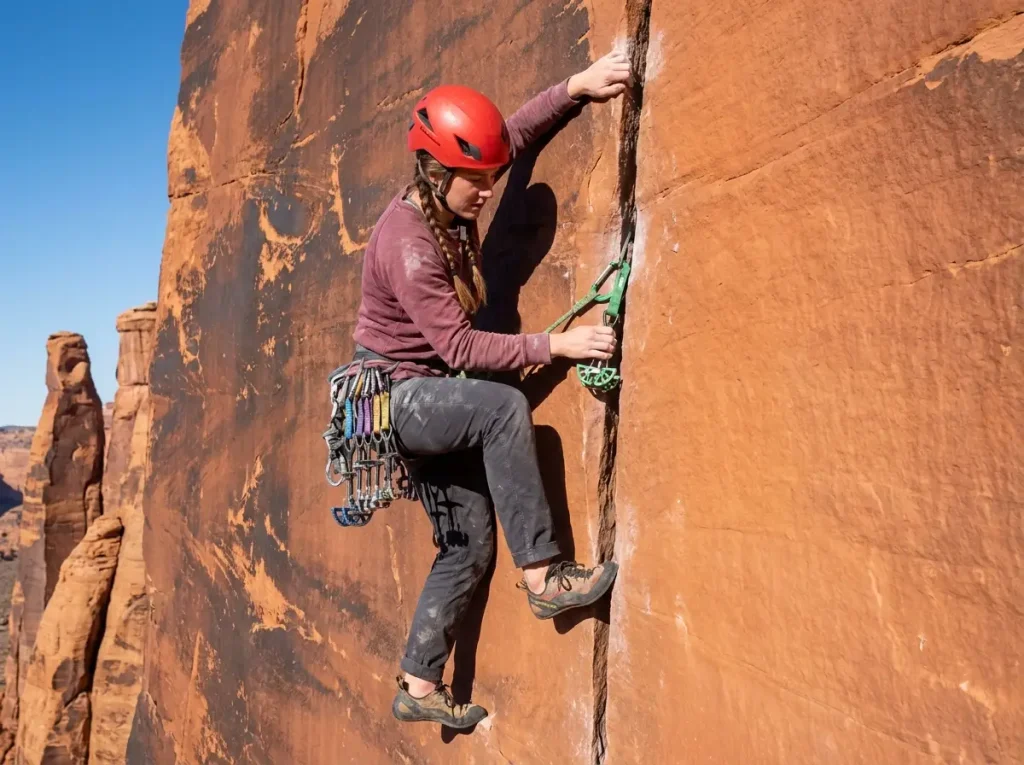
St. George sits in the southwest corner of Utah, pressed between Zion National Park and the Nevada border. It gets more than 300 days of sunshine per year, and its winter climbing areas — Chuckwalla Wall, The Turtle Wall, Cougar Cliffs, Black Rocks — offer quality sport and trad climbing from 5.7 to 5.13. The climbing community here is small, the crowds are manageable even on winter weekends, and access to a real city (grocery stores, gear shops, restaurants that aren’t tourist traps) makes logistics simple.
For climbers who want JTree’s warmth and variety without JTree’s parking lot scene, St. George is the underrated answer that most lists skip.
Indian Creek, Utah — For Crack Climbers Who Mean It
Indian Creek is one of the most iconic crack climbing destinations in the world. The Wingate sandstone produces perfectly parallel splitter cracks — finger-width to fist-width to wide — in routes from 50 to 200 feet. Winter at Indian Creek means temperatures in the 40–50°F range during the day: excellent for crack climbing, where cold keeps sandstone friction high and your hands more sensitive to placements.
Come with the right footwear — your regular sport shoes will fail you on the sustained footwork that sandstone cracks require, and the best crack climbing shoes guide is worth reading before you pack. The Indian Creek climbing guide has the rack recommendations and current access rules for Bears Ears. Nights in the Creek in winter drop into the teens and low 20s°F — solve your sleeping system before you go.
Chattanooga, Tennessee — The East Coast Climber’s Real Option
For climbers east of the Mississippi, winter usually means hibernation. Chattanooga breaks that pattern. The sandstone and limestone bluffs around Chattanooga — including the established areas at Leda, Foster Falls, and the surrounding escarpments — dry fast after rain and stay climbable on many winter days when other eastern crags are soaked or glazed. Daytime highs in the 45–55°F range are real, with occasional warm fronts pushing into the low 60s.
Chattanooga doesn’t compete with the desert Southwest on route volume or grade range. But for an East Coast climber who wants warm rock without a cross-country drive or an international flight, it delivers what the other options in this guide cannot: proximity.
Pro Tip: Chattanooga’s sandstone areas are susceptible to seepage for 24–48 hours after rain. Check recent trip reports on Mountain Project before a weekend drive — a little homework prevents a wasted day on wet rock.
How to Pick the Right Winter Destination
Match your discipline first
Stop trying to find the “best” destination in the abstract. The right destination depends on your primary discipline, your experience level, and your budget — in that order.
If you primarily boulder: Hueco Tanks (with reservations), Joshua Tree bouldering areas, or Bishop High Desert in California.
If you primarily sport climb: El Potrero Chico for volume and warmth, Red Rock Calico Hills for accessible single-pitch, St. George for a balanced experience without crowds.
If you primarily climb trad: Red Rock for long moderate multi-pitch, Indian Creek for crack specialists, Joshua Tree for shorter accessible routes across grades.
For experience level: newer outdoor climbers do best starting at Joshua Tree or St. George. Intermediate climbers extract the most from Red Rock or El Potrero Chico. Crack-focused climbers at any level belong at Indian Creek if they’ve solved the cold-night camping problem.
What nobody actually warns you about
Three things that surprise first-time winter escape climbers:
Skin. Desert air is bone-dry, and cold temperatures accelerate cracking at the fingertip creases. Your tips will split faster than at home. Bring salve (not lotion), climbing tape, and a willingness to take the rest days you didn’t plan on.
The approach tax. Desert areas often look close on the map but require 30–90 minute approaches on sandy trail. In winter, those approaches are colder than the climbing itself — you’ll want a belay jacket you can strip quickly at the base.
Finding partners. If you’re traveling solo, winter desert crags have other climbers but not always at the density you’re used to at home. The guide to finding climbing partners while traveling has practical strategies that work for mid-season desert trips.
Gear adjustments that actually matter
Your winter desert kit differs from your home kit in specific ways. You need more layers than the daytime forecast suggests — desert mornings and evenings are a different season than midday. Your sleeping system needs to be rated for 20°F colder than the predicted overnight low. Sun protection matters more than people expect: winter desert sun at elevation burns fast on exposed skin, and reflected UV off pale sandstone and snow-dusted hillsides compounds the exposure.
If you’re heading to El Potrero Chico or anywhere international, verify your insurance situation before departure. Emergency helicopter evacuation from rural Mexico isn’t covered by most US health plans, and a serious ground fall on a 10-pitch route puts you a long way from a hospital. The climbing travel insurance guide explains what the coverage actually means in practice.
The winter climbing escape is worth doing. It changes how you think about your climbing season — instead of eight months of outdoor climbing and four months of gym training, you realize there’s no off-season if you’re willing to drive or fly toward the equator. Pick the right destination for your situation, solve the night temperature problem before you pack, and if Hueco Tanks is on your list, start counting backward 90 days from your target date right now.
Q1 Is winter a good time to rock climb outdoors?
For destinations in the American Southwest and Mexico, winter is often the ideal time to climb outdoors. Temperatures in the 45–65°F range optimize rubber friction and reduce heat-related pump on hard sequences. The key is choosing destinations that remain accessible in winter — desert and low-elevation crags, not mountain crags above 5,000 feet in elevation.
Q2 Do I need permits for winter climbing at these destinations?
It depends on the location. Joshua Tree requires only the standard park entrance fee — no climbing-specific permit for recreational visits. Hueco Tanks requires advance reservations for North Mountain access: call Texas Parks and Wildlife at (512) 389-8911 up to 90 days before your visit. Red Rock, St. George, Indian Creek, and Chattanooga have no special permit requirements for day climbing beyond any applicable area entrance fees.
Q3 What is the most budget-friendly winter climbing destination on this list?
El Potrero Chico consistently comes out cheapest when you account for total trip cost — flights to Monterrey are often inexpensive, accommodation at climber hostels runs $15–30 per night, and food costs a fraction of US prices. For domestic trips, Chattanooga and St. George are the most accessible without entrance fees at most areas and inexpensive nearby camping.
Q4 What is the easiest winter climbing destination for beginners?
Joshua Tree offers the best combination of beginner-appropriate route volume, good infrastructure, and a culture that accommodates newer outdoor climbers. One important calibration: JTree grades run stiff relative to gym grades — plan to climb 1–2 grades below your gym ceiling on your first session outdoors until you have dialed in the granite footwork.
Safety Notice: Rock climbing and mountaineering are inherently high-risk
activities that can involve physical trauma or fatal incidents. The information on Rock Climbing Realms is for
educational and informational purposes only. Techniques and advice presented here are not a substitute
for professional, hands-on instruction. Conditions and risks vary by location. Always seek guidance
from a qualified instructor before attempting new techniques. By using this website, you agree that you
are solely responsible for your own safety. Any reliance you place on this information is strictly
at your own risk, and you assume all liability for your actions. Rock Climbing Realms and its authors
will not be held liable for any harm, damage, or loss sustained in connection with the use of this information.
Affiliate Disclosure: We are a participant in the Amazon Services LLC Associates Program, an
affiliate advertising program designed to provide a means for us to earn advertising fees by advertising and linking
to Amazon.com. As an Amazon Associate, we earn from qualifying purchases. We are also an official affiliate partner
of Black Diamond Equipment via the AvantLink network. If you click on a Black Diamond affiliate link and make a
purchase, we may earn a commission at no additional cost to you. We also participate in other affiliate programs.
Additional terms are found in the terms of service.