
In this article
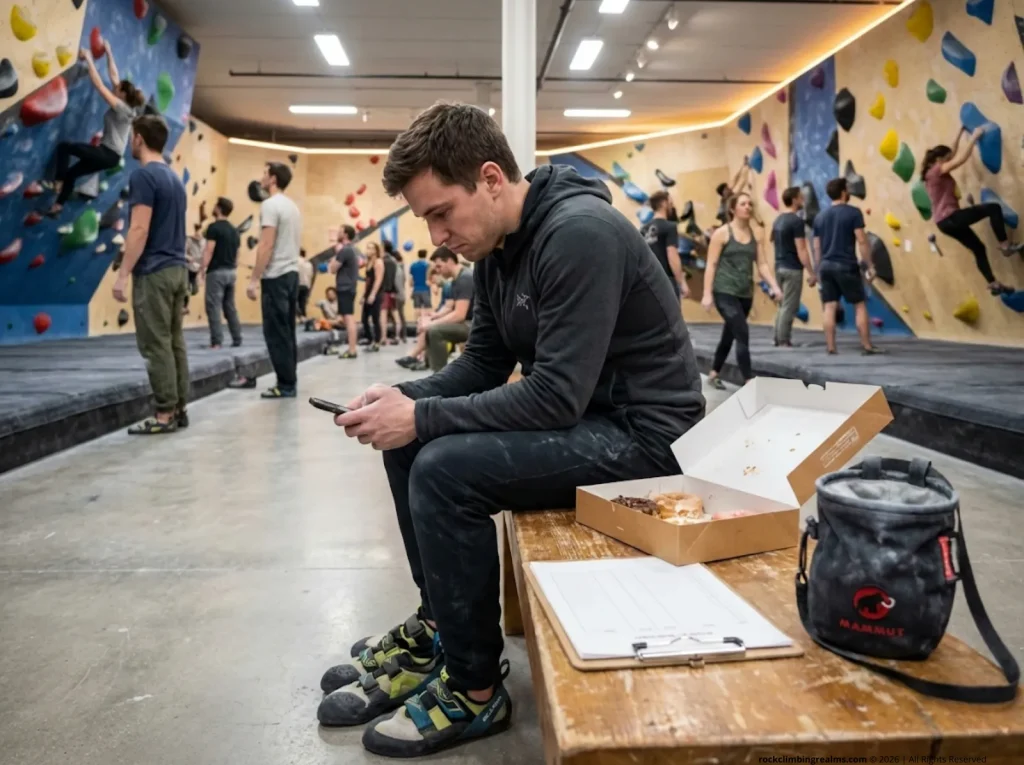
I’d printed thirty flyers, reserved a corner at the gym, and even made a signup sheet with columns for “preferred discipline” and “availability.” At 7 p.m. on a Tuesday, I sat alone next to a half-eaten box of donuts. Zero people showed up. The whiteboard behind me read “FIRST MEETING — New Climbing Club” in letters I’d spent twenty minutes making look casual.
That empty room taught me more about building a climbing community than any guide ever could. Two years later, I run a crew of fifteen regulars who road trip to crags every month, split gear costs, and push each other to send harder than any of us would alone.
Here’s every lesson from that failure — and the exact steps I used to turn a no-show into a club that actually sticks.
⚡ Quick Answer: You need 5–10 committed climbers, not fifty names in a group chat. Start informal — skip the constitution and officer elections. Host your first gathering at the gym itself with zero agenda beyond climbing together. Show up at the same time every week, plan a road trip within the first month, and the crew builds itself. Formal structure can come later, once you know who actually keeps showing up.
Why Most Climbing Clubs Die Before the Second Meeting
The Flyer-and-Hope Fallacy
Posting one flyer on the gym bulletin board isn’t recruitment. It’s wishing. I know because I tried it. The ASCL (American Scholastic Climbing League) recommends running a Student Engagement Survey through Google Forms before you ever announce a meeting — not after. The idea is to confirm real interest before booking a room nobody fills.
Forum threads on Mountain Project are full of the same story. People tack a single poster to a wall, wait for a crowd, and wonder why nobody comes. The founders who survive this phase report needing three to four weeks of repeated outreach across multiple channels before getting their first group together. QR codes near the water fountain, on the restroom door, at the chalk bucket — you want to catch climbers while they’re already thinking about the sport.
Timing, Location, and the Pizza Rule
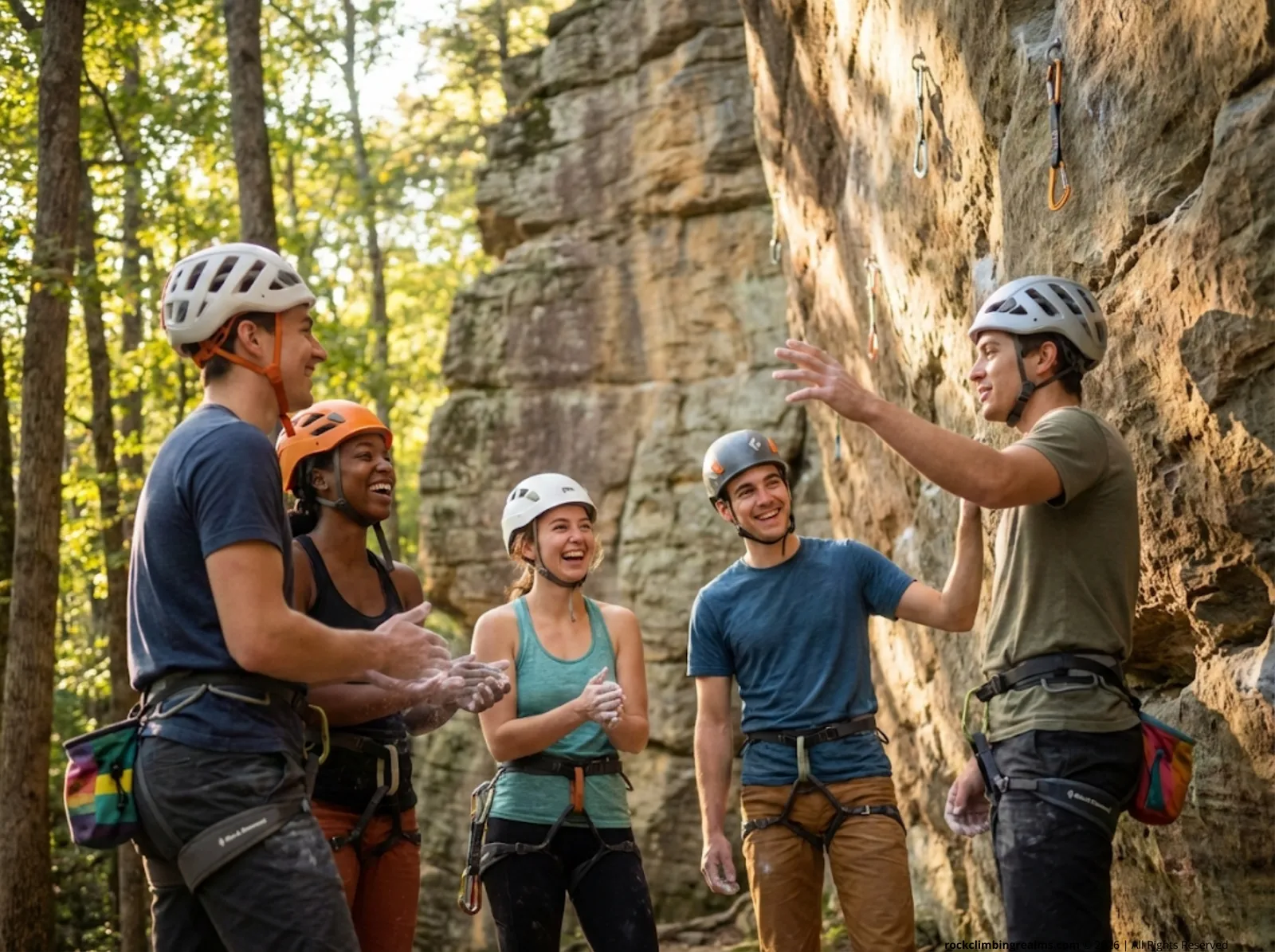
Meet at the gym, not a classroom. This sounds obvious, but I’ve seen university clubs hold their kickoff in a lecture hall with a PowerPoint. If nobody is touching rock, nobody feels like they’re joining a climbing club. They feel like they’re sitting through a meeting.
Pro tip: Host a low-pressure info session with free pizza and a gym tour before anyone ties in. Food lowers the barrier for strangers to sit with other strangers, and a gym tour turns passive interest into “oh, I want to try that.”
Weekday evenings work better than weekends. On Saturday mornings, your target members are already at the gym climbing on their own schedule.
Setting the Right Expectations on Day One
Don’t pitch bylaws, officer elections, or dues at the first gathering. The ASCL’s coaching guidance says it best: “Newer climbers will literally need to ‘learn the ropes,’ so being patient is critical to their success.” Frame the first meetup as “let’s climb together and see if this works” — not “join my organization.”
Collect contact info through GroupMe or Google Groups and nothing else. No commitment. No signup fees. Just a way to text everyone when Tuesday comes around again. If you care about gym climbing etiquette rules your crew should know, share that link in the group chat later — don’t lecture on day one.
Gathering Your First Five Climbers
Mining Your Gym for Hidden Partners
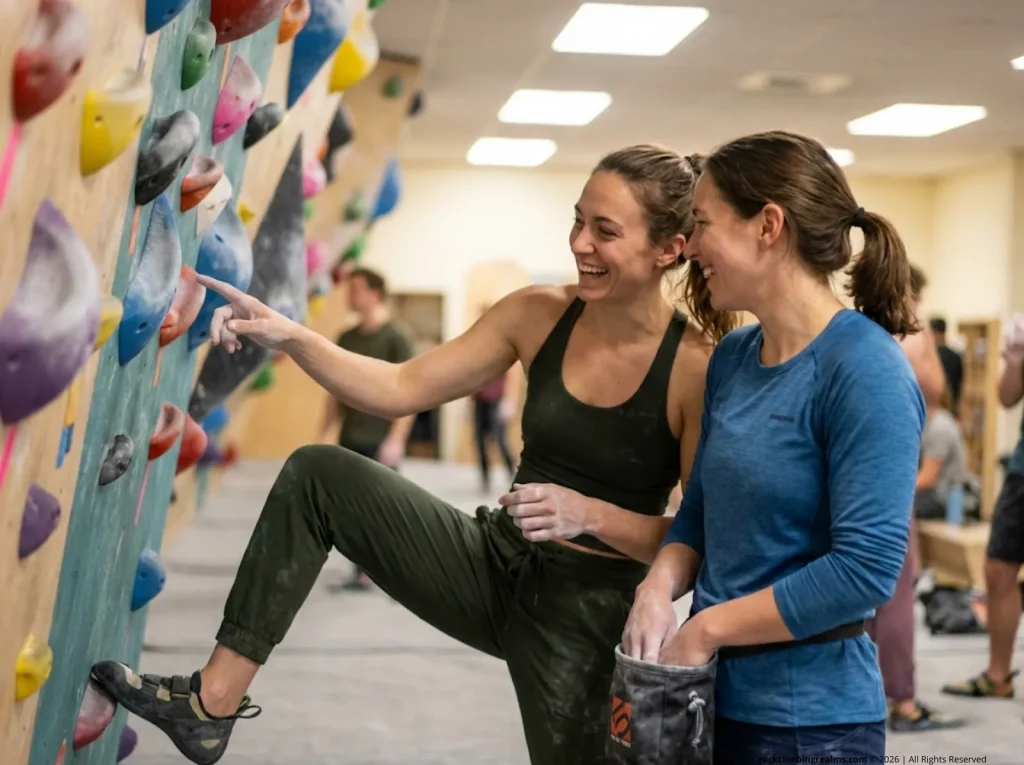
The best recruitment tactic doesn’t involve a single flyer. Justin, a manager at Touchstone Climbing, puts it this way: “You meet people doing the same thing that you love doing, you chat, you either hit it off with them or you don’t, but at least you’ve got one thing in common.”
Target the regulars you already nod at — the solo climbers warming up on the same problems as you, the pair on the autobelay who look like they’d rather have a real partner. Offer beta on a route they’re working. That five-minute conversation converts better than any poster.
Digital Outreach That Doesn’t Feel Desperate
For university clubs, start with your Student Union or Sports Clubs Director. They have mailing lists and bulletin board access you’ll never get on your own. On Meetup.com, you’ll reach a wider audience, but filter for commitment by making a gym session the “first meeting” instead of a coffee chat.
Reddit’s r/climbing and local climbing subreddits work well for city-specific outreach. Keep it short: “Starting a weekly climbing crew at [Gym Name], Tuesdays at 7. DM me.” No paragraphs. No mission statements.
The Magic Number and Why Five Beats Fifty
The ASCL requires only three climbers of the same gender from one school for team scoring eligibility. But functionally, five committed people who show up every single week outperform thirty names sitting silent in a group chat.
The University of Denver Alpine Club started small and grew by linking up with neighboring schools for joint trips. That’s the pattern. Start with whoever shows up. Climb with them consistently. The word spreads because other gym friends see your group having fun and want in — not because your Instagram post hit the algorithm. When recruiting, think about building a climbing community that’s actually inclusive — intentional outreach to underrepresented groups makes for a stronger, more interesting crew.
Formal vs. Informal — Choosing the Right Structure
The Case for Staying Informal
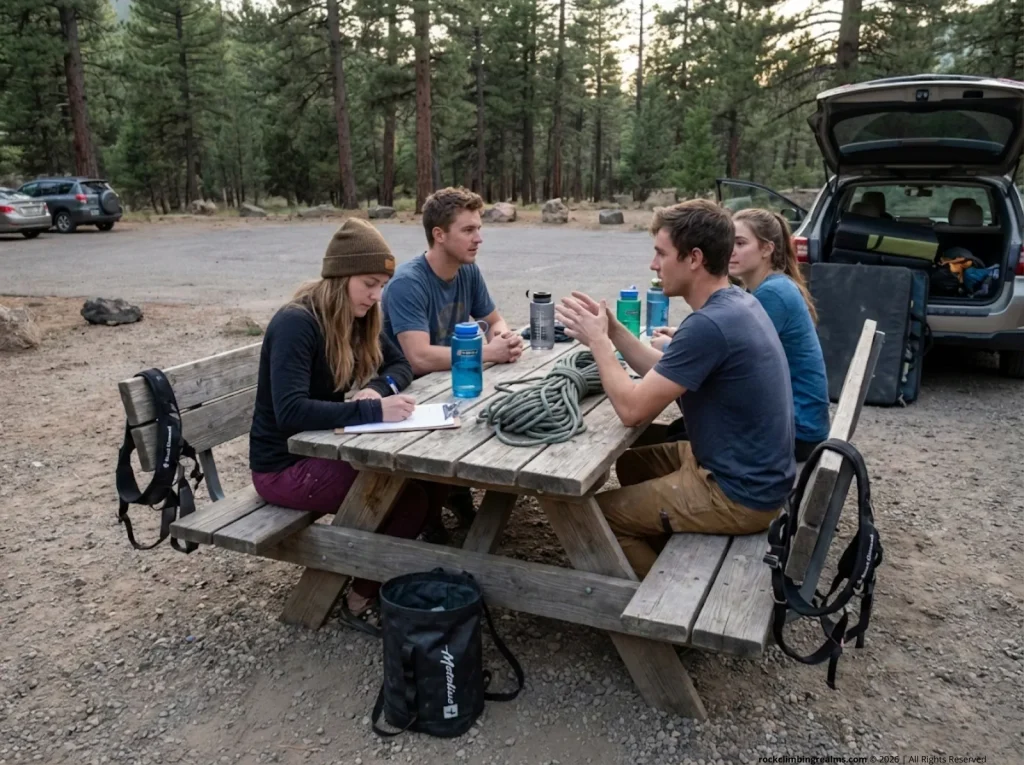
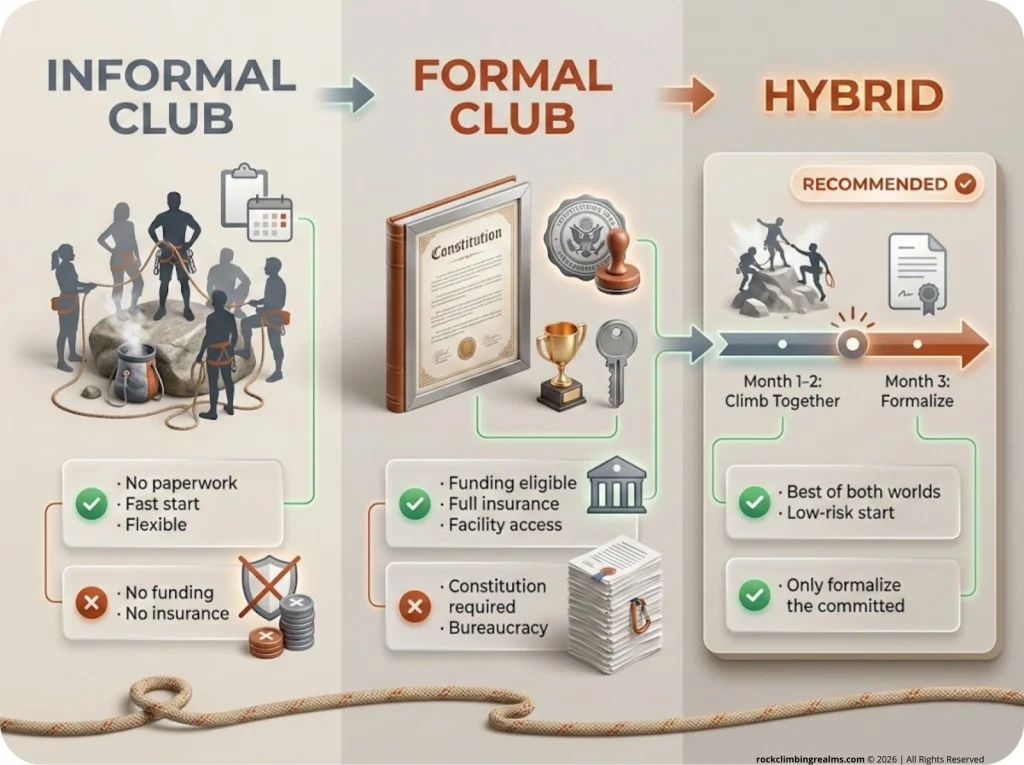
Mountain Project veterans are almost unanimous here: don’t formalize too soon. One thread sums it up perfectly — a founder went official through the school, “got buried in paperwork and liability fears,” and the club collapsed before the second outdoor trip.
An informal climbing club means no constitution, no elections, no treasurer. Just a group chat and a weekly meet time. Liability avoidance is handled by meeting at established climbing gyms — where waivers and insurance already exist — or off-campus locations where institutional risk doesn’t apply. The group enforces its own safety standards through peer accountability. Self-policing works when the crew is small and everyone knows each other’s habits.
When Going Official Makes Sense
Official university recognition opens real doors: meeting rooms, bulletin board access, membership in student activity funding pools, and sometimes institutional insurance coverage. Most schools follow the Bowdoin model — you need a faculty sponsor, a written constitution, a minimum member count, and Student Union approval.
National affiliation through bodies like the ASCL, Mountaineering Scotland, or the BMC provides competition access, club insurance, and ready-made templates for everything from constitutions to safety waivers. ASCL’s official team formation guide walks through the process step by step. Registration runs $100 per climber per season and covers league access plus insurance.
The Hybrid Path
The smartest move is the hybrid. Climb together for two to three months before touching any paperwork. By then, you know who ghosted after week two and who’s actually invested. When you do formalize, the constitution can be a single page — Mountaineering Scotland’s club setup guide offers a downloadable template.
And if your club does outdoor trips, everyone organizing should understand liability laws every climber organizing group outings should understand — even informal groups carry personal responsibility.
Planning Activities That Keep People Coming Back
The Weekly Gym Session — Your Anchor
Same day. Same time. Every week. This is the single biggest retention factor. It doesn’t matter if you run a structured session or just show up and climb. What matters is consistency. If people know Tuesday at 7 means climbing, they’ll build their week around it.
Start with top-rope climbing for mixed-ability groups. Progress to lead climbing as skills develop. Require belay certification at the gym before anyone gets on a rope in your group — most climbing gyms enforce this already, so you’re reinforcing a standard, not inventing one.
Pro tip: Use “offer beta and be nice” as your only club rule. Repeated sightings at the same gym problems turn strangers into regulars faster than any organized activity.
Road Trips — The Glue That Bonds a Crew
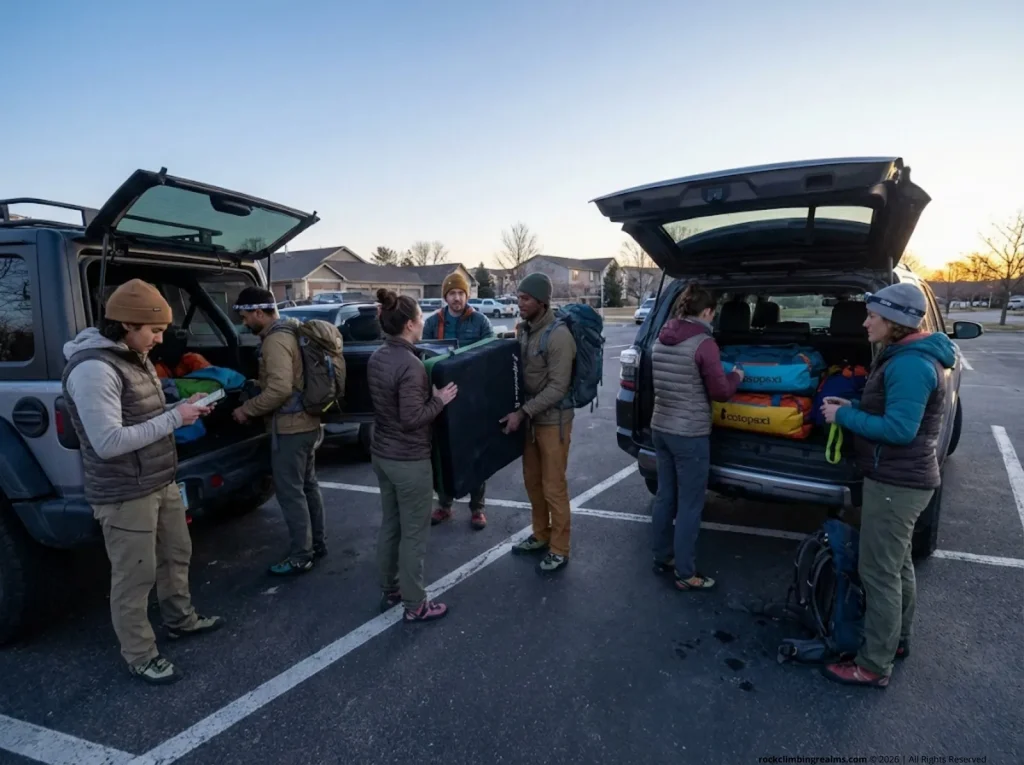
Plan the first outdoor climbing trip within the first month. It doesn’t need to be ambitious — a single-pitch sport climbing crag within a two-hour drive works. What matters is the shared experience. The stories from one weekend at the crag create bonds that no gym session can match.
Carpooling logistics matter. Designate a trip coordinator, share gas costs by car, and set a firm departure time. Nothing stops group momentum like waiting ninety minutes for the person who “just needs to stop for coffee.” Before anyone loads up, make sure the group knows what to actually pack for a climbing road trip.
Beyond Climbing — Socials That Build Trust
Post-session meals, gear swaps, and Reel Rock screenings deepen connections. Charity climbs and local comp spectating build group identity. And honestly, some of the best trip planning happens over drinks at someone’s apartment, not in a Google Doc.
Safety Systems for Group Climbing
Waivers, Belay Certs, and the Bare Minimum
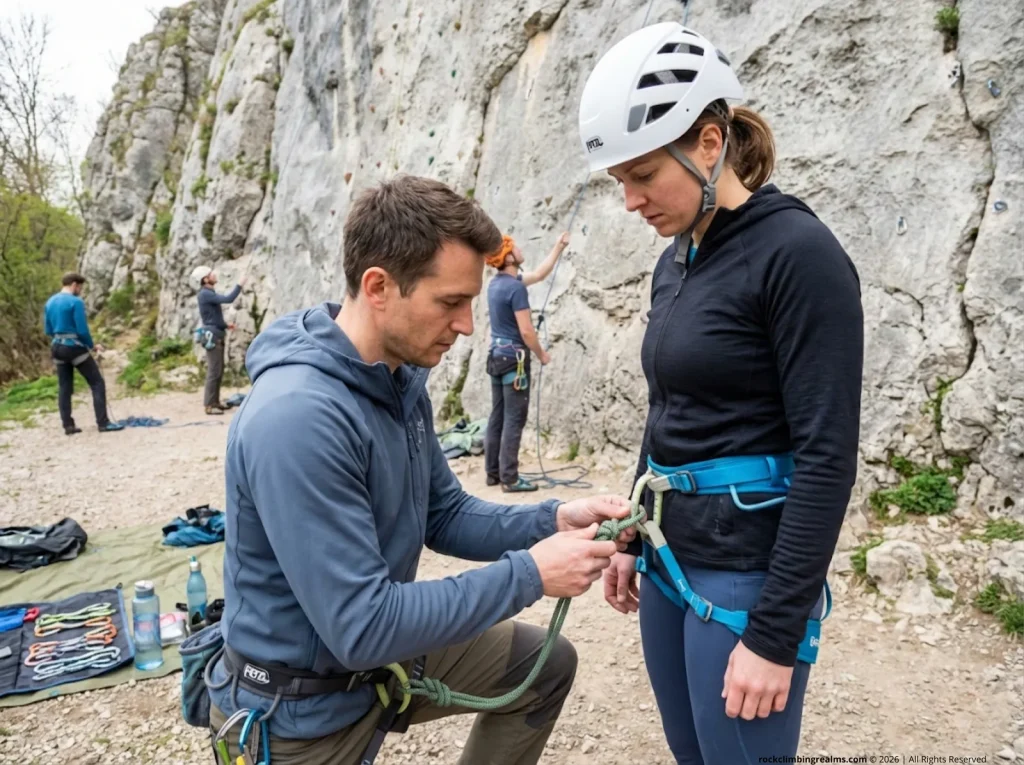
Every participant signs a safety waiver. No exceptions. No “I’ll do it next time.” Gym belay certification is required before any group roped climbing. For outdoor trips, designate a safety lead who checks knots, harnesses, and helmet fit before every climb.
Keep a digital copy of every waiver in a shared Google Drive folder. It takes ten minutes to set up, and you’ll be glad you did it if anything ever goes wrong.
Anchors, Communication, and the SERENE Standard
For outdoor climbs, your club should know and enforce the SERENE anchor standard — Solid, Equalized, Redundant, No Extension. Establish clear communication protocols so everyone uses the same climbing commands. “On belay” means the same thing to every person at the crag, not just the person who learned it first.
Weight disparity in group belaying is real. A 120-pound belayer catching a 200-pound leader is a ground-fall risk. Address it proactively with an Edelrid Ohm or a ground anchor before someone learns the hard way. If your club climbs with mixed experience levels, everyone should know the six pre-climb safety checks most climbers skip.
When Someone Gets Hurt
Have a basic first aid kit at every session. Know the nearest urgent care to your gym and to every outdoor crag you visit. Wilderness First Aid certification for at least one club leader is worth the investment — it costs a weekend and pays for itself in peace of mind.
Document incidents. Not for liability, but so the club learns from them.
Pro tip: Program your local gym’s and crag’s nearest emergency rooms into your phone before you need them. “Where’s the hospital?” is a question you never want to Google under pressure.
Gear Co-Ops, Shared Racks, and the Anti-Sell Approach
Building a Shared Gear Library
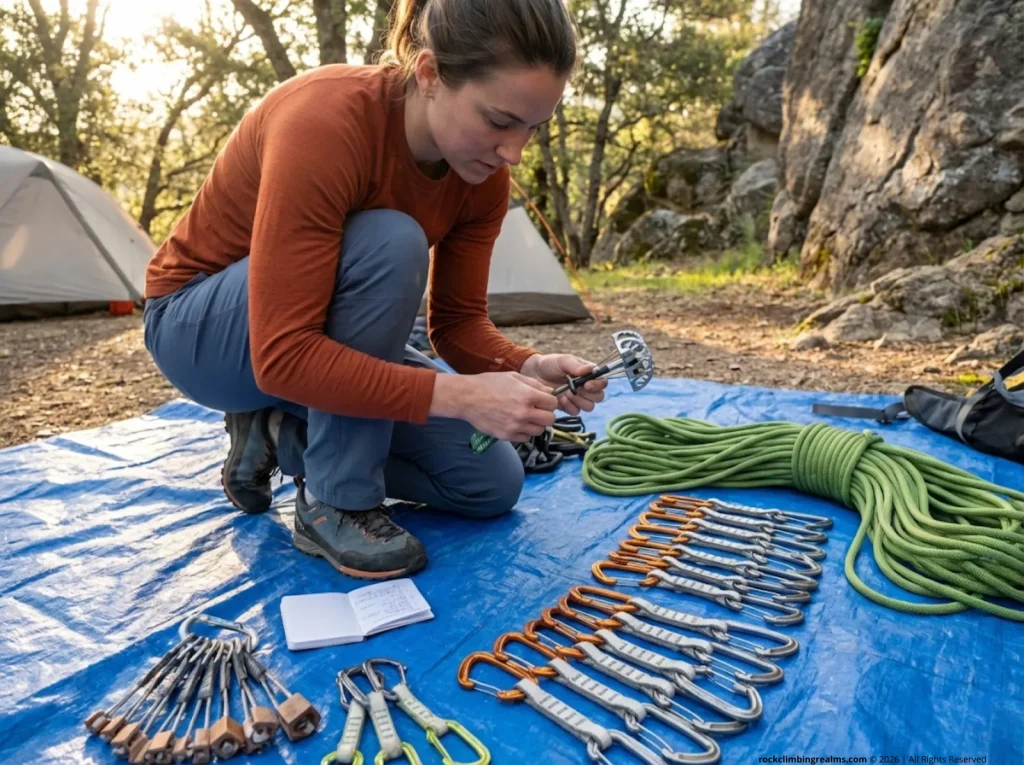
This is the part nobody talks about — and it’s one of the biggest barriers for new outdoor club members. Not everyone can drop $300 on a rope and $200 on quickdraws before their first outdoor climb. A gear co-op solves this.
Pool ropes, quickdraws, helmets, and anchor materials into a communal gear library. Fund it through member contributions — pass the hat — or tap into university student activity funds if your club is official. Track everything with a shared spreadsheet: purchase date, usage count, condition notes, next scheduled inspection.
What to Buy First
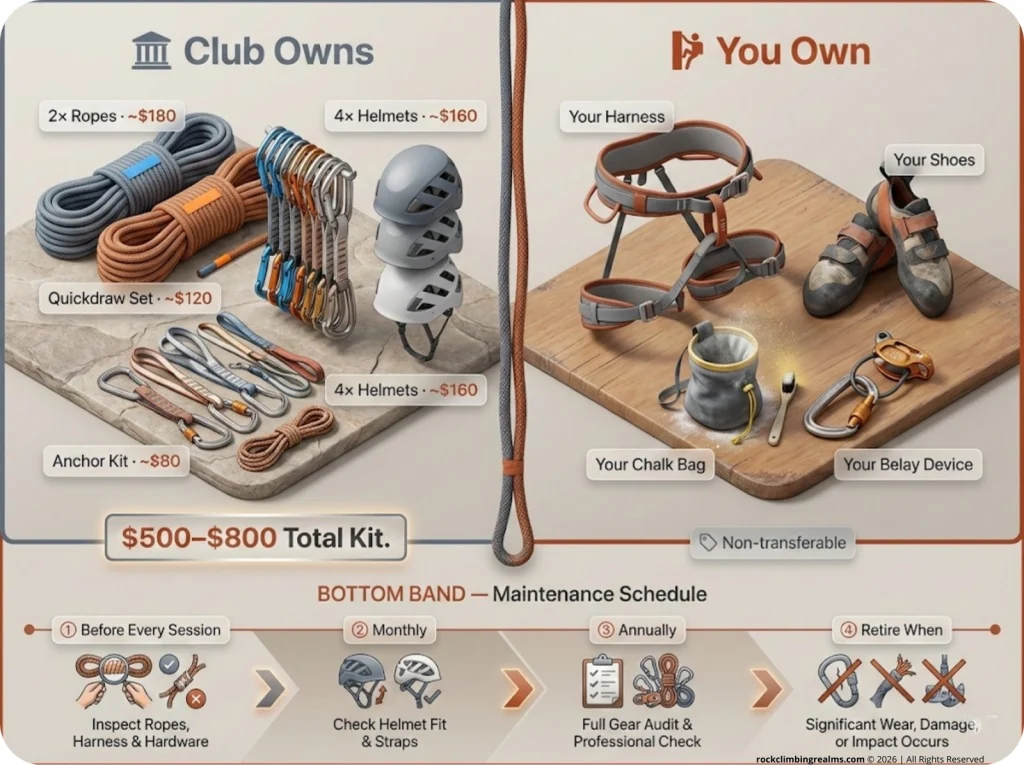
The club should own two 60-meter ropes, a full set of quickdraws, three to four helmets, and basic anchor materials. Members should own their own harnesses, climbing shoes, chalk bags, and belay devices. Personal safety gear is non-transferable.
Budget roughly $500 to $800 for a basic communal kit, less if members contribute retired personal gear. The anti-sell angle here is real: buy quality once, maintain it properly, and it’ll last. Chasing sales on gear that protects lives is false economy. How long your climbing gear actually lasts is worth knowing when you’re managing shared equipment.
Maintenance and Accountability
Assign a gear steward who inspects shared equipment monthly. After every trip: clean ropes, inspect slings, dry helmets. Keep a log. When in doubt, retire it — shared gear gets harder use than personal gear, and cutting corners on rope retirement isn’t a risk worth taking.
Keeping Your Crew Alive Long-Term
The 90-Day Retention Window
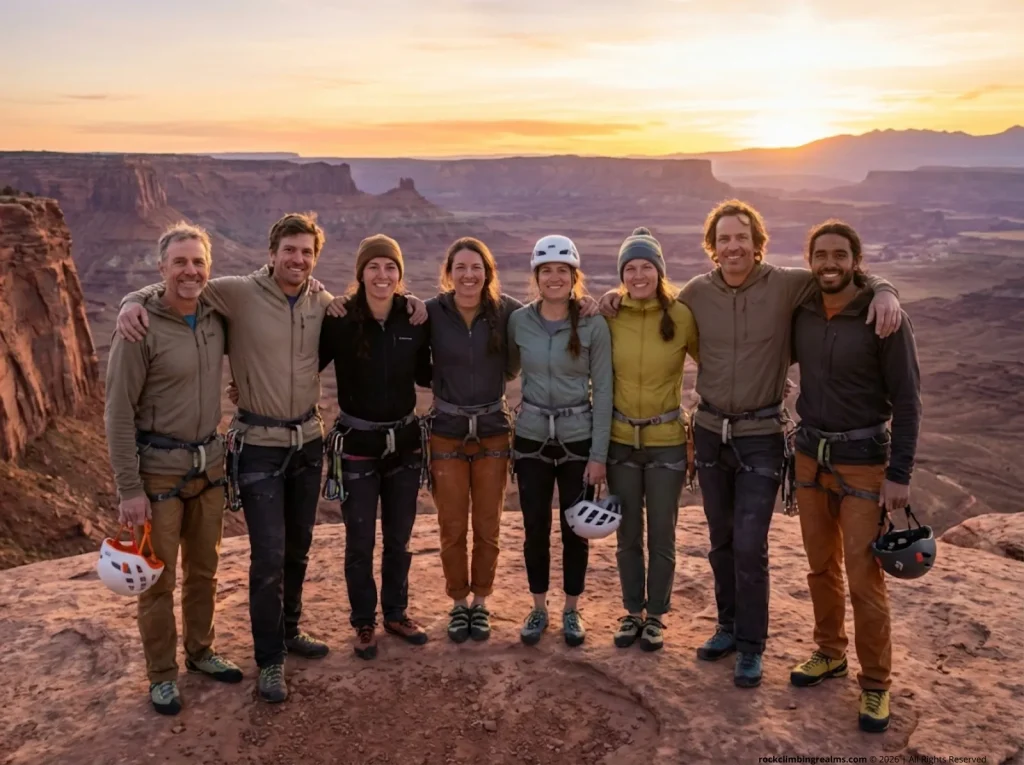
If someone attends three sessions in the first month, they’re sticking around for at least six months. That’s the pattern I’ve seen, and forum threads back it up. Track attendance casually — not to police people, but to notice when regulars disappear. A simple “Miss you at the wall” text brings people back more often than you’d think.
The biggest retention problem isn’t personality clashes or scheduling conflicts. It’s inconsistency from leadership. If you cancel two sessions in a row, you lose the rhythm. And rhythm is everything.
Building a Skill Progression Path
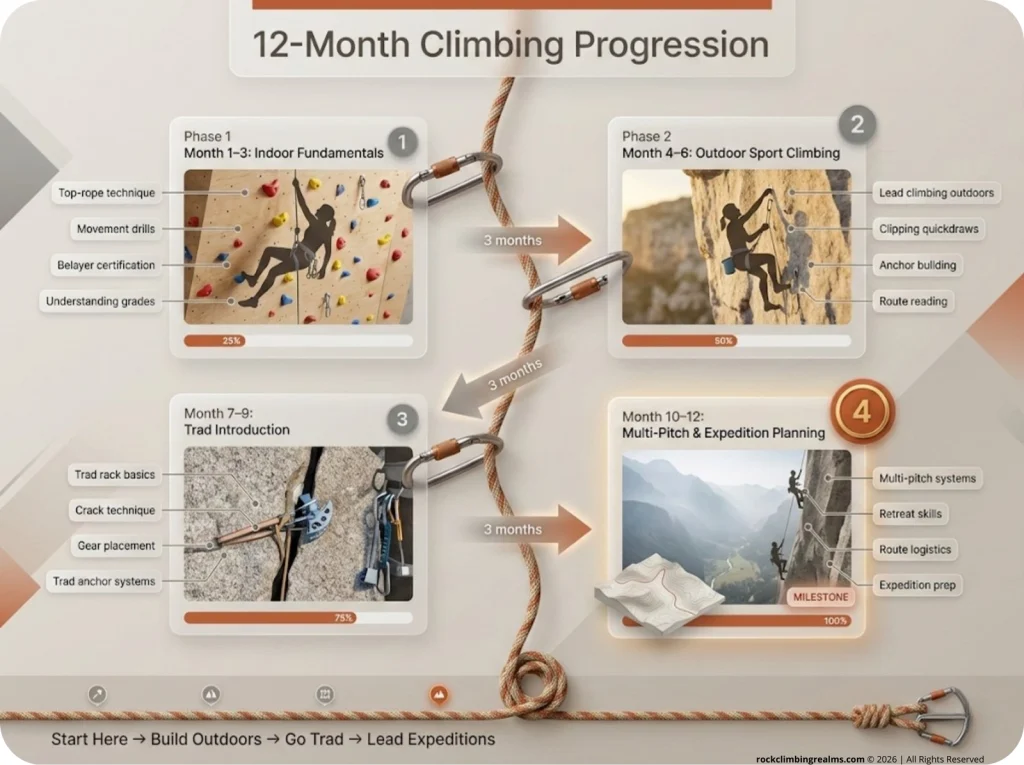
Structure a loose training calendar. Months one through three: indoor climbing fundamentals and belay certs. Months four through six: outdoor sport climbing and first road trips. Months seven through twelve: introduce trad climbing, anchor building, and multi-pitch routes.
Pair experienced climbers with newer members as informal mentors — not instructors, but partners who model safe habits. SPA (Single Pitch Award) training for club leaders who want to guide outdoor sessions adds real credibility and keeps everyone safe on rock.
Crag Stewardship as Group Identity
Incorporate Leave No Trace into every outdoor trip. Not as a lecture. As just how your club operates. Pack out ALL trash, brush chalk from holds after sessions, respect raptor closures and seasonal restrictions.
Making stewardship part of your identity separates your crew from the weekend warriors who leave granola bar wrappers at the base. Organize one group trail cleanup or crag maintenance day per season, and your club becomes part of the solution. That’s what the climber’s pact for responsible crag use looks like in practice.
Conclusion
A no-show first meeting isn’t failure. It’s the starting line. Every sustainable climbing club I know survived that exact silence before finding its people.
Five committed climbers who show up weekly beat fifty names in a group chat. Recruit through climbing, not flyers. Start informal, formalize when you have a reason to. And never skip safety — waivers, belay certs, and SERENE anchors aren’t optional when you’re responsible for a group.
Grab your phone, message three people you’ve seen at the gym this week, and ask them one question: “Want to climb together every Tuesday?” That’s the only first step that matters.
FAQ
How many members do I need to start a climbing club?
You need as few as three climbers of the same gender to form an ASCL-eligible team, but five committed regulars make a functional club. Focus on finding people who will show up consistently rather than building a large roster on paper.
Do I need insurance or a constitution for a climbing club?
Not if you keep things informal. Meeting at established climbing gyms avoids institutional liability requirements. If you want official university recognition or national affiliation through the ASCL or Mountaineering Scotland, you’ll need a simple constitution and may gain access to insurance through the governing body.
How much does it cost to start a climbing club?
Zero if you start informal and meet at existing gyms. ASCL registration runs $100 per climber per season. A basic shared gear kit — two ropes, quickdraws, helmets — costs $500 to $800 from pooled member contributions. Many university clubs access student activity funds to offset startup costs.
How do I keep members coming back after the first meeting?
Consistency above everything. Same day, same time, every week. Plan the first outdoor road trip within the first month to build real bonds. Track who’s showing up and reach out when regulars miss sessions. People stay for the people, not the programming.
What climbing activities should a new club focus on first?
Start with indoor gym sessions on top-rope for mixed-ability groups. Progress to lead climbing within the first month. Schedule your first outdoor sport climbing trip within six weeks. Save trad, multi-pitch, and expedition outings for after the group has built trust and baseline skills.
Safety Notice: Rock climbing and mountaineering are inherently high-risk
activities that can involve physical trauma or fatal incidents. The information on Rock Climbing Realms is for
educational and informational purposes only. Techniques and advice presented here are not a substitute
for professional, hands-on instruction. Conditions and risks vary by location. Always seek guidance
from a qualified instructor before attempting new techniques. By using this website, you agree that you
are solely responsible for your own safety. Any reliance you place on this information is strictly
at your own risk, and you assume all liability for your actions. Rock Climbing Realms and its authors
will not be held liable for any harm, damage, or loss sustained in connection with the use of this information.
Affiliate Disclosure: We are a participant in the Amazon Services LLC Associates Program, an
affiliate advertising program designed to provide a means for us to earn advertising fees by advertising and linking
to Amazon.com. As an Amazon Associate, we earn from qualifying purchases. We are also an official affiliate partner
of Black Diamond Equipment via the AvantLink network. If you click on a Black Diamond affiliate link and make a
purchase, we may earn a commission at no additional cost to you. We also participate in other affiliate programs.
Additional terms are found in the terms of service.