
In this article
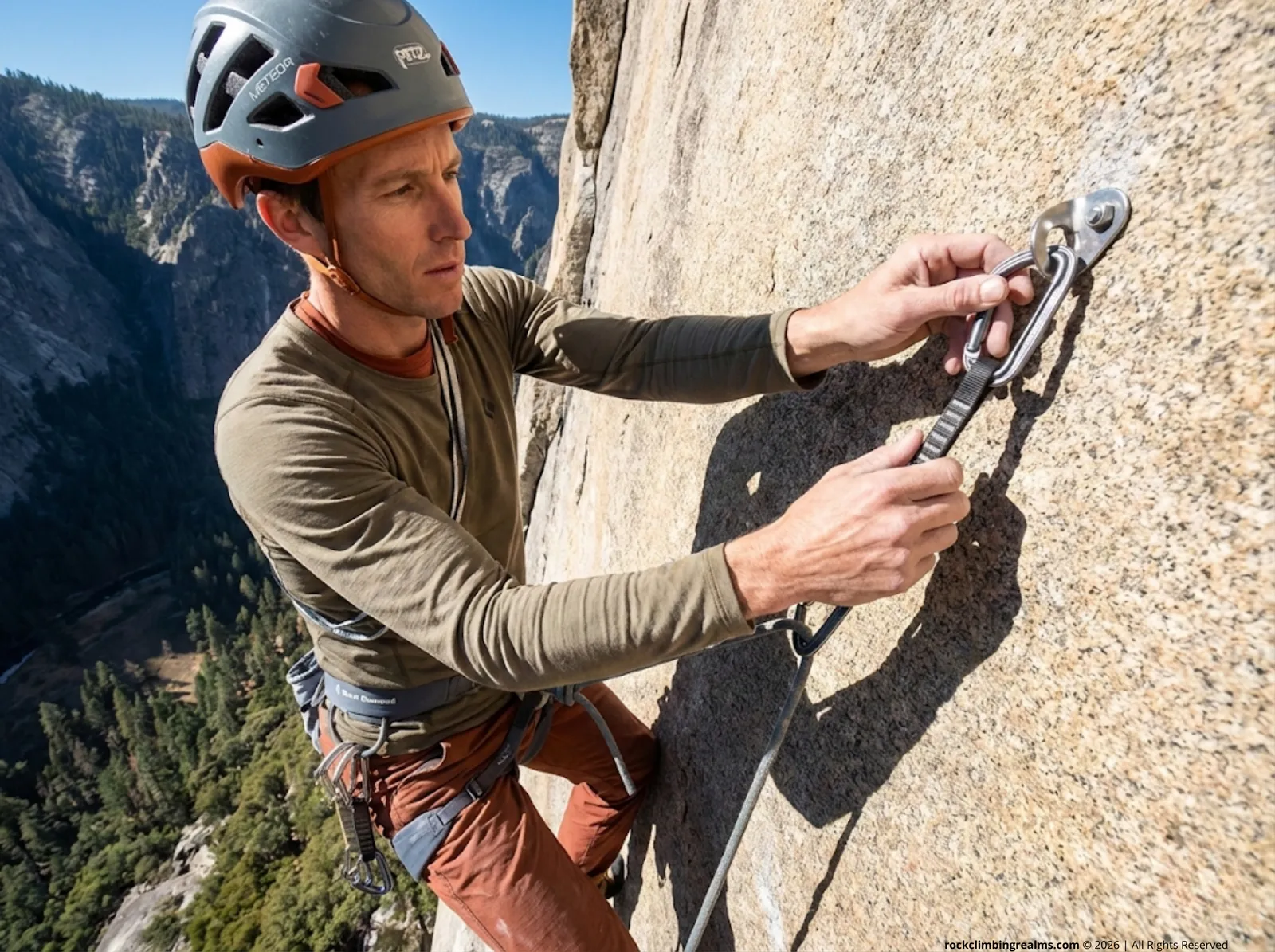
You’re sixty feet up a splitter crack in Indian Creek, the wind pushing your chalk cloud sideways, and the only thing between you and a clean rappel is a rusty bolt that looks like it’s been baking in the Utah sun since Reagan was in office. You tap the hanger with your knuckle. Feels solid enough. You clip it.
Now imagine a federal agency telling you that bolt was never supposed to be there — and they want it removed.
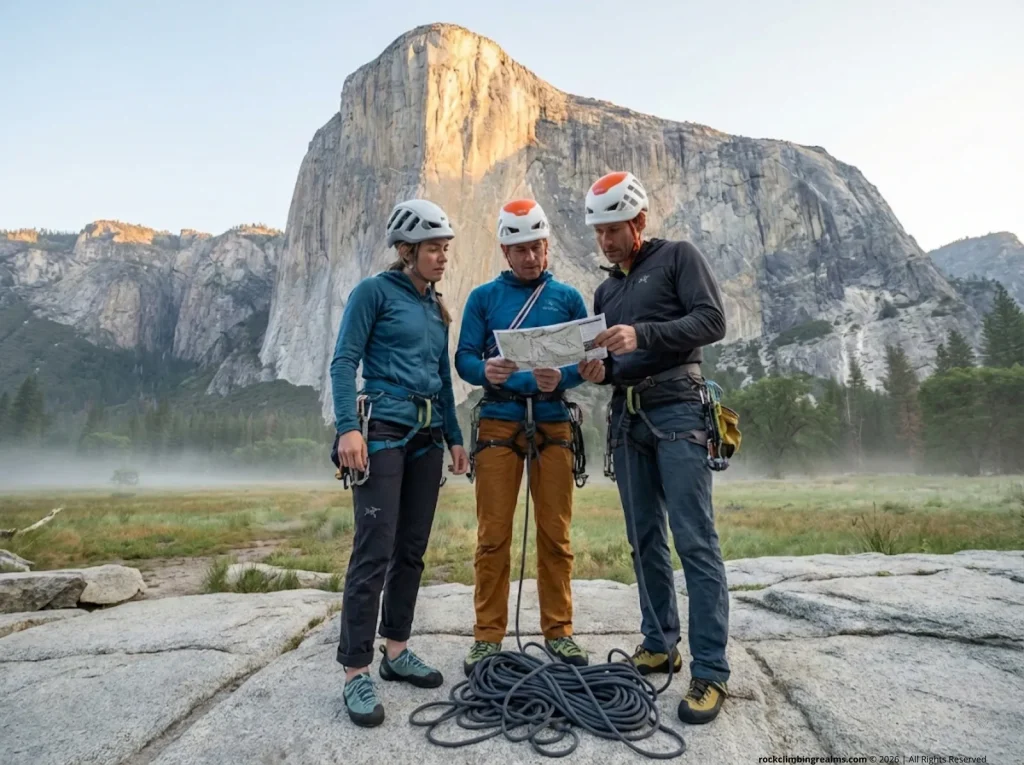
That almost happened. In November 2023, the National Park Service dropped a proposed guidance document that would have reclassified every fixed anchor in wilderness — every bolt, piton, rap ring, and stuck nut — as a prohibited “installation” under the Wilderness Act. The proposal put more than 50,000 climbing routes across 28 states on the chopping block. After years of climbing these routes, building anchors I’d trust with my life, and watching the fixed anchor policy fight unfold from both the crag and the comment section, I can tell you — this was the closest American climbers have ever come to losing access to our most iconic walls.
The proposal didn’t survive. But the rules that replaced it are more complex than most climbers realize, and the fight for climbing access on public lands is far from over. Here’s everything you need to know about what happened, what changed, and what you’re legally required to do right now at the crag.
⚡ Quick Answer: The NPS withdrew its proposal to ban fixed anchors in wilderness on December 18, 2024, after 12,000+ public comments opposed it. The PARC Act (signed into law as part of the EXPLORE Act on December 19, 2024) now codifies recreational climbing and fixed anchor placement as appropriate wilderness use. However, power drills remain banned in wilderness (hand drills only), and management is handled park-by-park. Individual park superintendents retain authority over local climbing regulations.
What Is a Fixed Anchor and Why Does It Matter
The NPS Definition Most Climbers Get Wrong
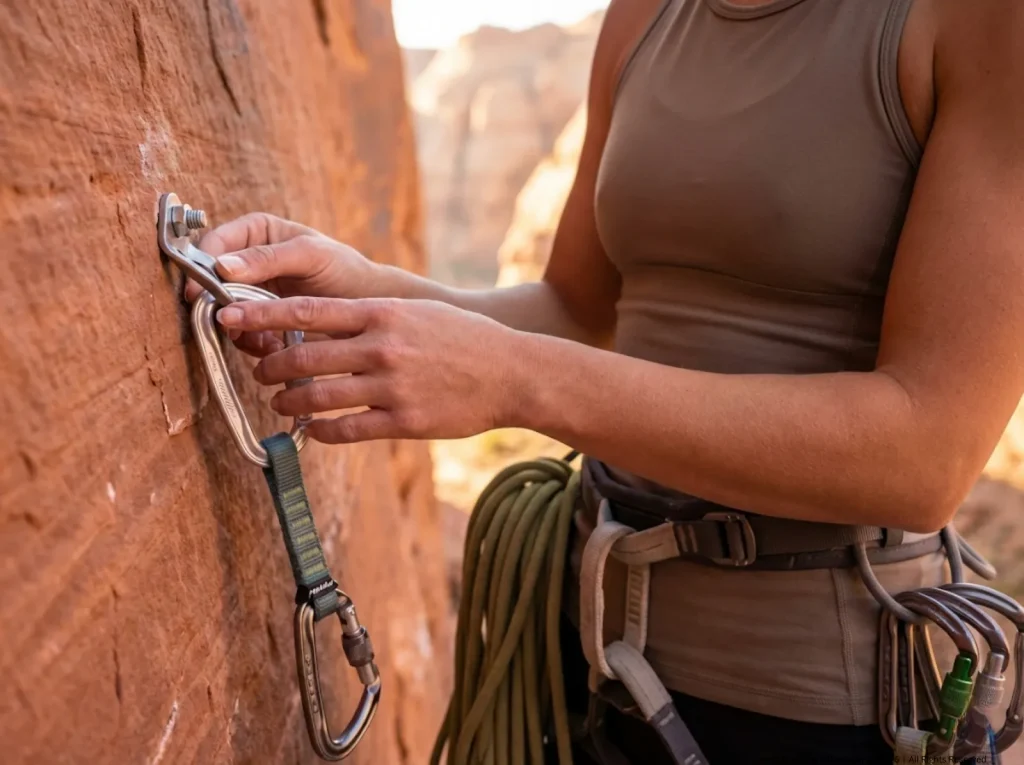
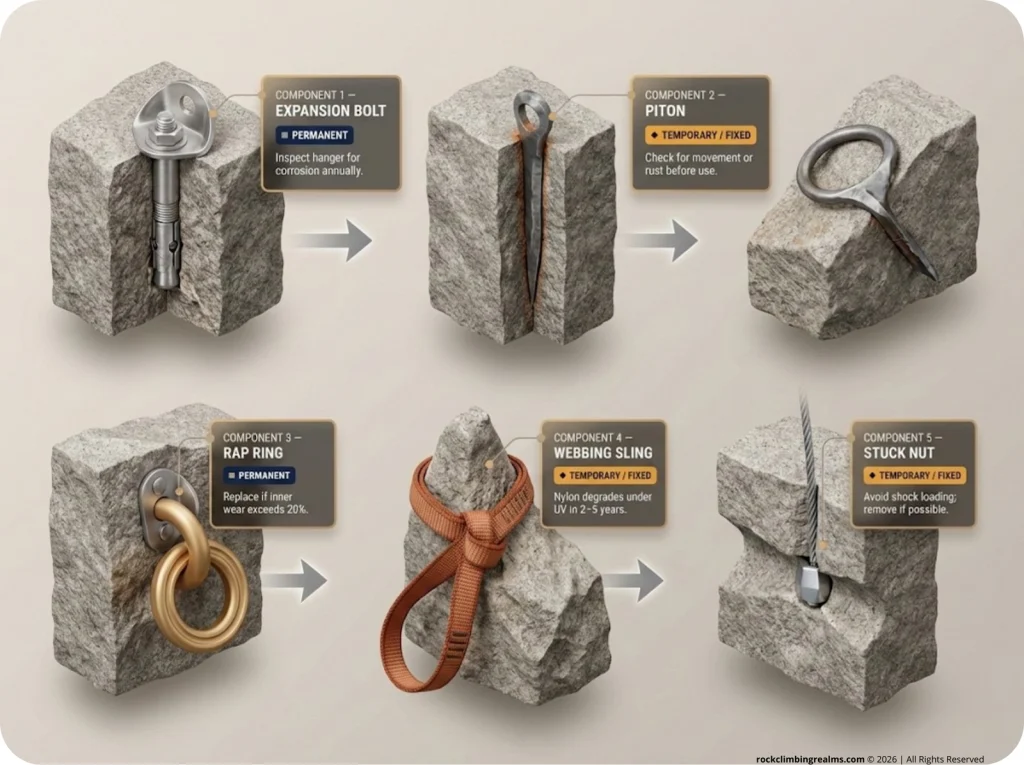
Most climbers hear “fixed anchor” and picture a shiny expansion bolt drilled into granite. That’s part of it — but the NPS definition reaches further than most people expect. According to the official NPS guidance, a fixed anchor is “any piece of climbing equipment left in place to facilitate a safe ascent or rappel.” That includes bolts, pitons, slings, rap rings, and even irrevocably stuck nuts.
The Bureau of Land Management draws a slightly different line. BLM separates “permanent fixed anchors” — hardware that requires altering the rock, like bolts and pitons — from temporary anchors and removable gear like cams and nuts. The practical difference matters: if you leave a stuck nut on a route in a designated wilderness area, the NPS considers it a fixed anchor. The BLM might not. Knowing which agency manages your crag is the first step to understanding the rules.
Pro tip: If you wouldn’t rappel off it without a backup, it’s not a functional fixed anchor — it’s debris. Know the difference before you trust your life to a piece of sun-bleached nylon.
Fixed Anchors vs. Removable Protection
Removable gear — cams, nuts, hexes — goes in on the lead and comes out on the follow. It leaves no permanent trace on the rock. That’s clean climbing at its purest. Fixed anchors solve a different problem entirely. They exist on routes where removable anchors are physically impossible: blank face rock climbing, rappel stations on multi-pitch routes, and bolted belay ledges where no natural features exist to build an anchor around.
Consider The Nose on El Capitan. Hundreds of fixed anchors have been placed on that route over 60+ years of first ascent rock climbing history. Removing them wouldn’t just close a route — it would erase one of the most significant climbs in the world.
Why Wilderness Routes Need Permanent Hardware
Rappel anchors on multi-pitch routes can’t be replaced by removable gear. Once you pull the rope, there’s nothing to retrieve — you need permanent hardware at that station or you’re stuck. Alpine routes in the Wind River Range, North Cascades, and Black Canyon of the Gunnison require fixed belay stations where cracks don’t exist and trees don’t grow. Understanding how multi-pitch anchor systems work makes this reality obvious.
The safety argument isn’t theoretical. In 2022, tat-anchor fatalities on Wolfs Head in the Wind River Range highlighted what happens when climbers rely on deteriorated temporary slings instead of maintained fixed anchors. Those incidents could have been prevented with proper hardware.
Here’s the angle the policy debate misses entirely: bolts actually reduce environmental damage. A single line of fixed protections concentrates traffic on one established path. Without it, climbers scatter across the face, creating social trails, trampling vegetation, and accelerating erosion. The environmental benefits of bolts are measurable — erosion reduction happens when traffic stays on established lines instead of spreading across virgin rock.
The NPS Proposal That Nearly Eliminated 50,000 Routes
What the November 2023 Guidance Actually Said
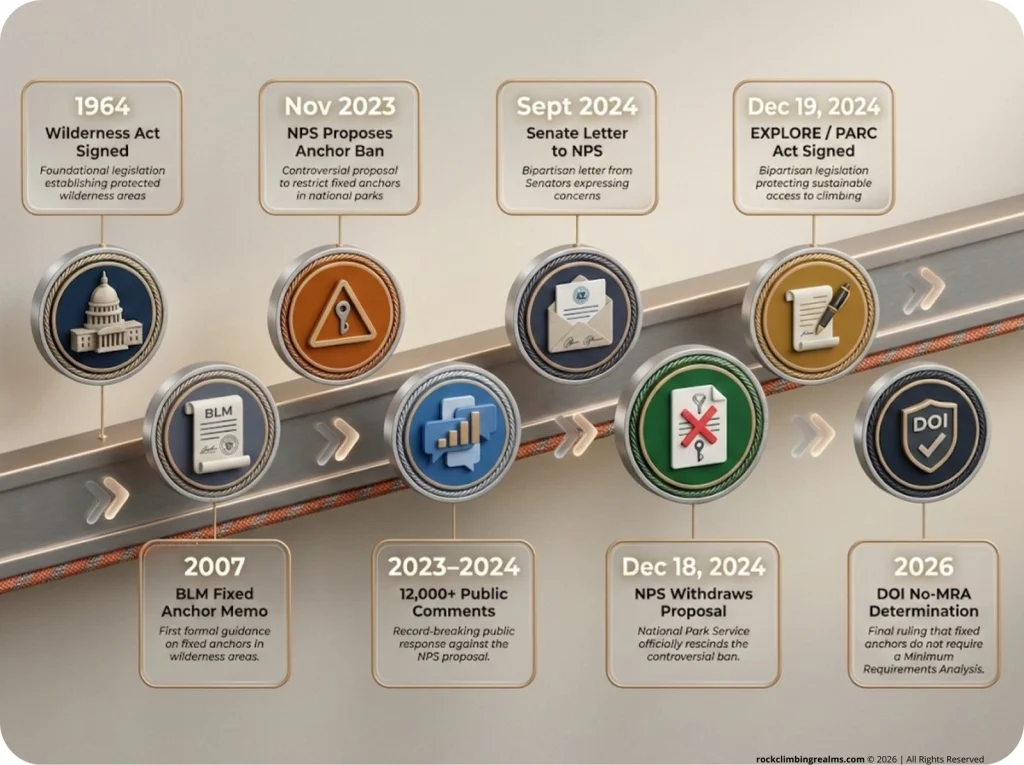
In November 2023, the NPS released proposed anchor guidance classifying all fixed anchors as “installations” under Section 4(c) of the Wilderness Act. That single word — installations — carried enormous weight. The Act prohibits installations in wilderness, and the NPS was arguing that every bolt, piton, and rap ring qualified.
The administrative fallout was staggering. Every existing anchor and new fixed anchor would have required a Minimum Requirements Analysis — a bureaucratic compatibility assessment never designed for individual pieces of climbing equipment. Running an MRA for a single bolt replacement on a remote alpine wall? That’s not policy. That’s a soft ban via red tape.
Unlike previous park-by-park management, this was a national blanket policy. It would have applied across every NPS wilderness area in the country, from Yosemite to Zion National Park to Rocky Mountain National Park.
The Community Response That Changed Everything
The rock-climbing community hit back harder than anyone expected. Over 12,000 public comments flooded the 60-day comment period — one of the largest responses in NPS climbing history. The Access Fund, American Alpine Club, and AMGA formed a unified front, and 14 U.S. Senators — led by Maria Cantwell (D-WA) and John Boozman (R-AR) — formally opposed the NPS fixed anchor proposal, citing budget burden, access limits, and climber safety risks.
The scale was unprecedented. More than 50,000 routes across 28 states hung in the balance — routes on El Capitan, the big walls of Zion, the towers of the Wind River Range, and the granite of the Black Canyon. If you’ve ever tied in at any of these places, you were part of what almost got erased.
The Access Fund’s advocacy work was critical to this fight. Without organized, funded, and legally informed opposition from everyday climbers and professional organizations, the proposal would likely have become policy.
December 18, 2024 — The Withdrawal
The NPS officially discontinued development of the proposed fixed anchor guidance on December 18, 2024. Their statement confirmed that “park leaders will continue to manage climbing activities in wilderness on a park-by-park basis consistent with applicable law and policy, including the Wilderness Act.”
Erik Murdock, Deputy Director of the Access Fund, put it plainly: “The proposals would have prohibited long-established practices and tools for safely ascending and descending climbs in Wilderness areas.”
The withdrawal wasn’t an accident of timing. It was directly linked to the passage of the EXPLORE Act one day later.
The PARC Act and EXPLORE Act Changed the Game
What the PARC Act Actually Says
The Protecting America’s Rock Climbing Act — the PARC Act — was included as Section 122 of the EXPLORE Act, signed into law on December 19, 2024. One day after the NPS withdrawal. That timing was no coincidence.
The PARC Act explicitly codifies recreational climbing AND the placement, use, and maintenance of fixed anchors as “climbing as appropriate wilderness use.” This is the first time Congress has directly addressed climbing equipment in federal wilderness law. The legal shift is significant: it moves authority from agency discretion to legislative mandate — the codification of climbing rights at the federal level. No internal memo can undo what Congress has written into the code.
Why Legislation Beats Agency Guidance
Before the PARC Act, fixed anchor policy was entirely agency interpretation. The NPS, BLM, and USFS could each change regulations independently, which is exactly what the 2023 proposal attempted. A single internal document nearly banned 50,000 routes.
Congressional codification means future administrations can’t unilaterally reverse the policy. And the Department of the Interior has already followed through — in 2025-2026, DOI determined that no Minimum Requirements Analysis is required for fixed anchors consistent with the law. That determination is the direct result of the PARC Act.
Pro tip: Bookmark the NPS official withdrawal statement and the EXPLORE Act text. When crag debates about legality start at the trailhead, having the actual sources shuts down misinformation fast.
What PARC Doesn’t Protect
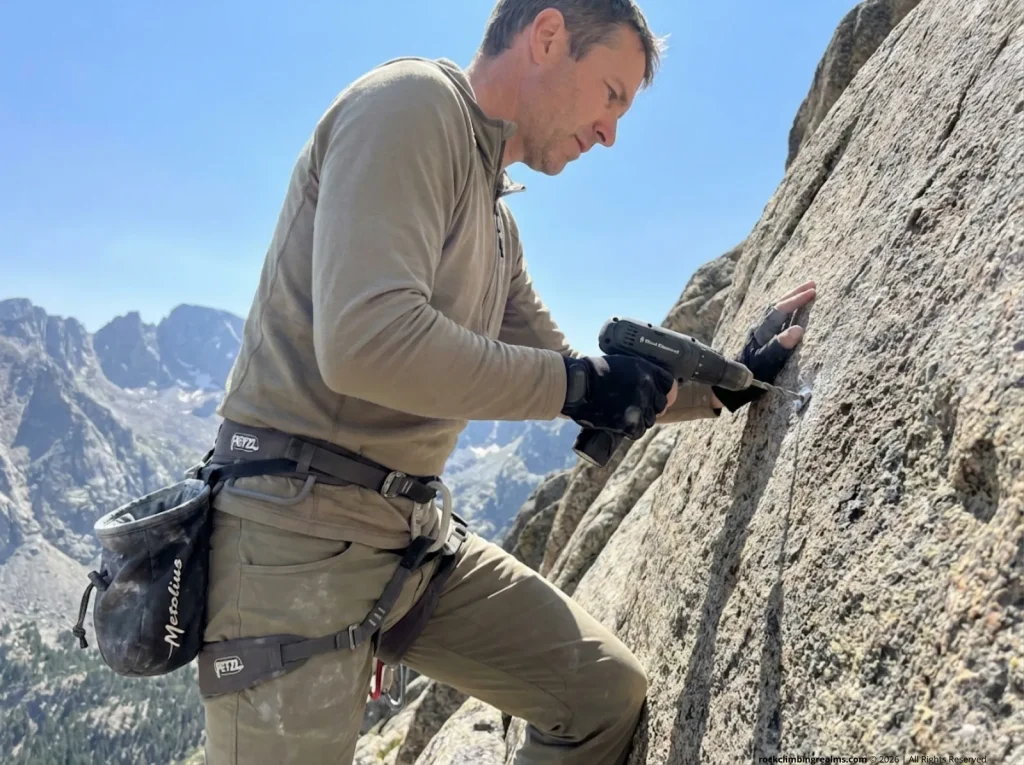
The PARC Act isn’t a blank check. It doesn’t override local park regulations — individual superintendents retain authority on specific climbing management decisions. Power drills remain banned for non-emergency anchor placement in wilderness. Hand drills are the only legal option, period.
New bolt-intensive routes in pristine wilderness can still be restricted under park-by-park management. And the USFS component was not fully resolved — their proposal status remains separate and evolving, which makes the U.S. Forest Service the biggest wild card in this story.
NPS vs. BLM vs. USFS — Who Controls Your Crag
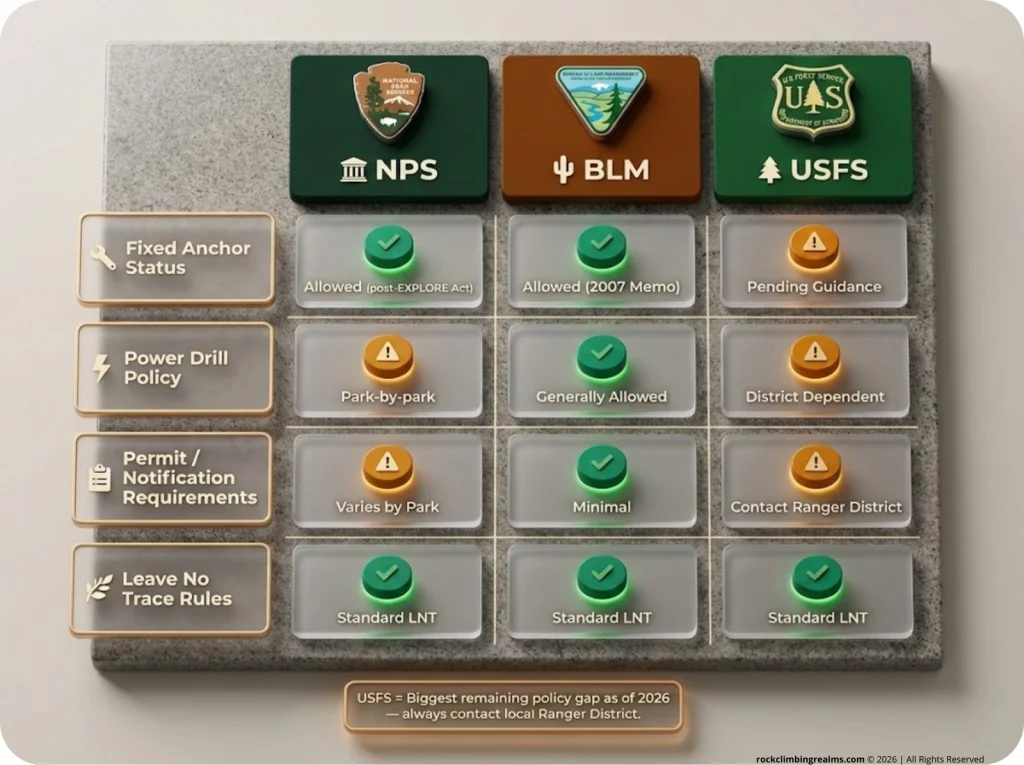
NPS Wilderness (Post-Withdrawal)
No national ban is in effect. Management continues on a per-park basis consistent with the Wilderness Act plus the PARC Act. Active park-specific climbing guidance exists at places like Joshua Tree, Yosemite, and Rocky Mountain National Park. Check NPS permit requirements at Joshua Tree before your trip — understanding the agency-specific local rules saves time and legal headaches.
One critical point the NPS makes clear: they do not maintain or certify fixed anchors. Personal inspection is always the climber’s responsibility. Every single time.
BLM Wilderness (2007 Framework Still Active)
The BLM operates under Instruction Memorandum 2007-084, and that framework remains the foundational policy for BLM regulations. As stated in the 2007 BLM instruction memorandum on fixed anchors, permanent fixed anchors are allowed when they reduce vegetation and soil impacts or improve safety where removable gear is infeasible.
Hand drills only — the power-drill ban applies across all federal wilderness. Low-density route management is encouraged. BLM managers may require advance notification or permits for new bolt placements. And Leave No Trace compliance is strongly expected: remove temporary anchors and slings, minimize visual impact with color-matched hangers.
USFS Wilderness (The Unresolved Wild Card)
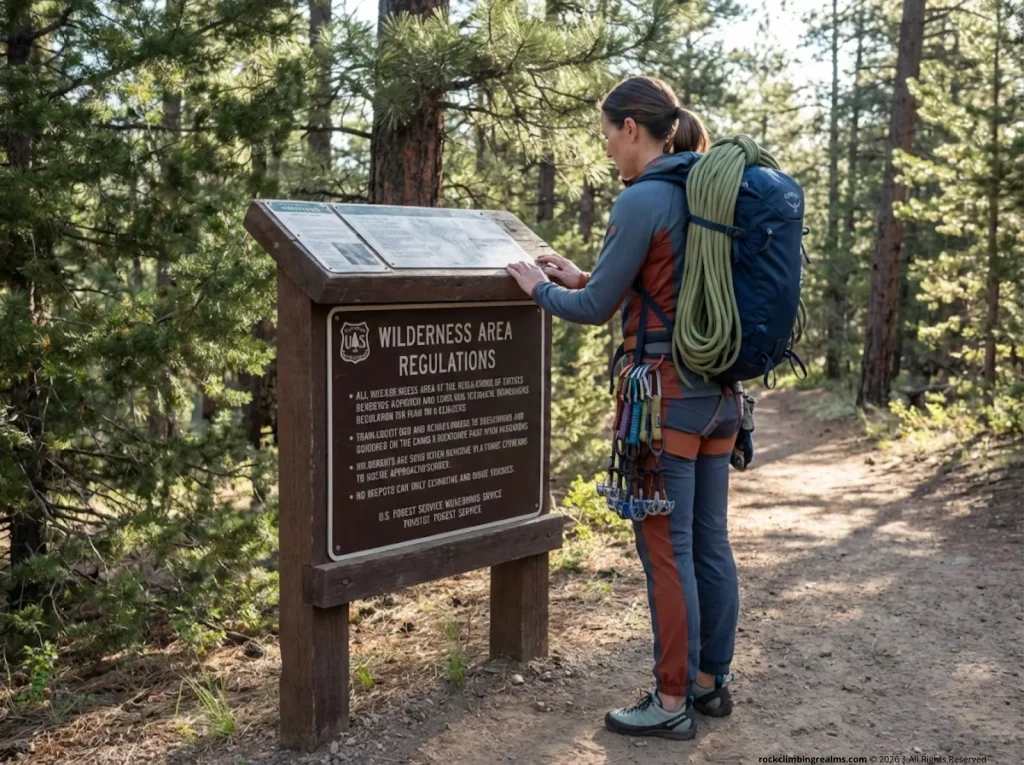
The U.S. Forest Service separately proposed guidance in parallel with the NPS — and their status remains less defined post-EXPLORE Act. The PARC Act applies to USFS wilderness, but implementation guidance is still being finalized as of 2026.
If your crag is on National Forest land, contact the local ranger district for current agency-specific local rules. This is the biggest remaining gap in the fixed anchor policy landscape, and the area most likely to generate future debate.
What You’re Legally Required to Do at the Crag Right Now
The Hand Drill Rule (Non-Negotiable)
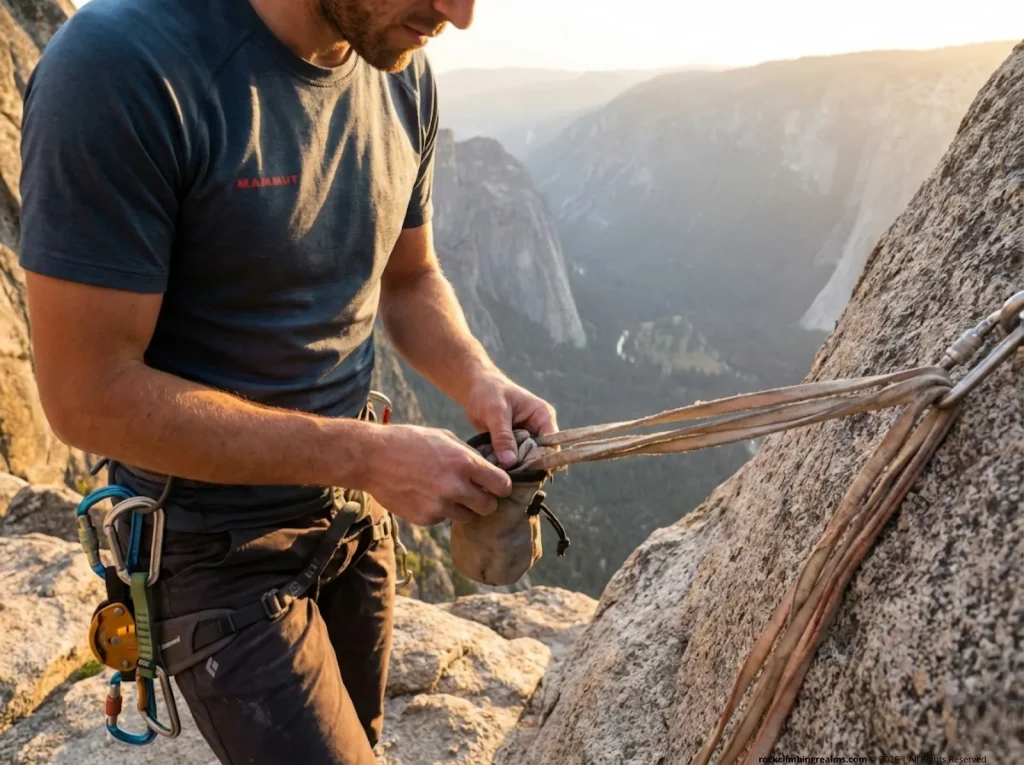
Power drills are illegal for non-emergency bolt placement in all federal wilderness — NPS, BLM, and USFS. No exceptions. The emergencies exception has a narrow legal definition: imminent threat to life, not convenience or difficulty. Violations carry citations, fines, and — just as damaging — they erode the trust between the rock-climbing community and lands managers.
Hand-drilling a single bolt in granite takes 20 to 45 minutes. That time commitment is by design. It forces restraint in new route development and keeps wilderness climbing from turning into a bolt-and-go sport crag mentality. The hand-drill technique ethics aren’t just about legality — they’re about respecting the character of wild places.
LNT and Fixed Anchor Maintenance
Remove all temporary slings, tape, and ropes from fixed anchors after use. Abandoned tat is the number one visual pollution complaint from land managers. It’s also a safety hazard — faded nylon degrades in UV light, and the next party might trust it with their lives.
Use color-matched hangers where possible. Report deteriorated or unsafe fixed gear to local climbing organizations or park rangers with GPS coordinates and photos. Community cleanups — tat removal from high-traffic wilderness walls — are increasingly organized by the Access Fund chapters. Practicing practical field-maintenance protocols is the most visible way to show land managers that climbers deserve continued access. Show up for a cleanup. It matters more than posting about it.
Pro tip: Carry a small hand drill and replacement hardware on multi-pitch wilderness routes. If you find a sketchy sling at a rap station and you have the skills and legal permission, replace it on the spot. Document it with photos and report to the local climbing community.
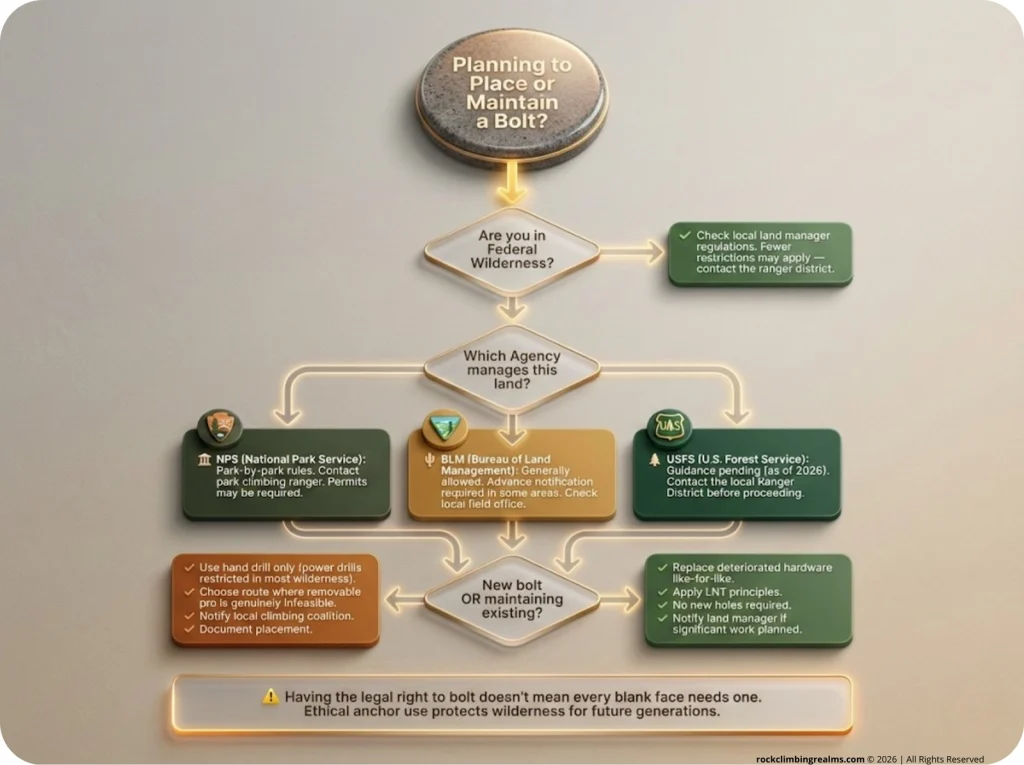
Before You Place a New Bolt
Research local regulations first. Some BLM areas require advance notification. Some NPS parks require something closer to a permit. Prioritize routes where removable protection is genuinely infeasible — not just inconvenient. Choose low-density crags and avoid bolt-intensive sport routes in pristine wilderness to preserve the “untrammeled” character the Wilderness Act was written to protect.
Document your plans and consult with local climbing coalitions before developing new wilderness routes. Having the legal right to place a bolt doesn’t mean every blank face needs one. Ethical anchor use separates sustainable climbing from careless consumption of wild places.
The Fight Isn’t Over — What Could Change Next
USFS Guidance Could Shift Again
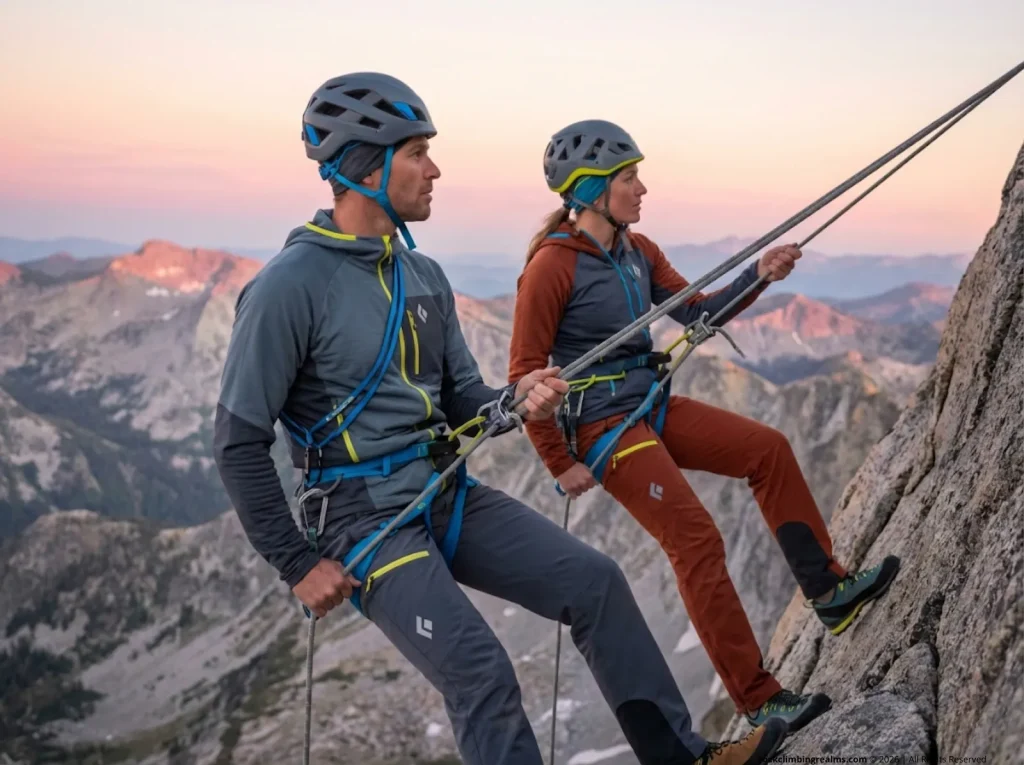
The USFS proposed guidance was parallel but separate from the NPS proposal. Their finalization is ongoing, and future administrations could reinterpret “appropriate” under the PARC Act for specific National Forests. Climate-driven changes — rock instability from permafrost melt, increased traffic at popular crags — may prompt new anchor management proposals. The AAC and Access Fund are actively monitoring agency rulemaking, but agency-level shifts can happen quietly.
How to Protect Your Access Long-Term
Join the Access Fund and American Alpine Club. These organizations directly defeated the 2023 proposal through organized advocacy, legal expertise, and community mobilization. Without them, those 50,000 routes would be in serious jeopardy.
Attend public comment periods when agency guidance opens for review. Volunteer for crag stewardship days — trail maintenance, tat cleanup, fixed anchor inspection reporting. The strongest defense against future bans is a climbing community that visibly practices Leave No Trace and responsible bolt placement.
Heather Thorne, Executive Director of the Access Fund, said it best: “Fixed anchors are essential pieces of our safety system that allow us to safely and sustainably access vertical terrain. Without fixed anchors, many of the wildest and most inspiring places in America would become inaccessible to the public.”
Conclusion
The 2023 NPS proposal was the largest single threat to wilderness climbing access in American history. Fifty thousand routes nearly erased by a policy memo. The PARC Act provides real legislative protection now, but USFS guidance gaps and park-by-park management discretion mean the details still matter — and they will keep changing.
Your part is straightforward and non-negotiable: inspect every anchor before you clip it, remove your tat, use hand drills only, respect wilderness character, and show up when the next comment period opens.
The climbers who defeated this proposal didn’t do it by posting online. They submitted 12,000 comments, funded legal advocacy, and cleaned up crags. Be one of them next time.
Now go send something.
FAQ
What is a fixed anchor in climbing?
A fixed anchor is any piece of climbing equipment left in place to enable safe ascent or rappel. This includes bolts, pitons, slings, rap rings, and irrevocably stuck nuts. Both the NPS and BLM use this broad definition under their wilderness management frameworks.
Are fixed anchors and bolts still allowed in wilderness areas?
Yes. The PARC Act, signed into law in December 2024 as part of the EXPLORE Act, explicitly recognizes climbing and fixed anchor placement as climbing as appropriate wilderness use. However, power drills are banned — hand drills are required for non-emergency placements in all federal wilderness.
What happened to the NPS fixed anchor ban proposal?
The NPS discontinued development of the proposed fixed anchor guidance on December 18, 2024, after over 12,000 public comments opposed it and 14 senators formally objected. Management returned to a park-by-park basis consistent with the Wilderness Act and the newly signed PARC Act.
Why were fixed anchors controversial in wilderness?
The Wilderness Act of 1964 prohibits installations to preserve wilderness character. The installations debate centered on whether fixed anchors qualify. Advocates argued they are minimal safety tools with a 60-year history. The NPS proposal attempted to classify them as prohibited installations requiring individual approval through a Minimum Requirements Analysis.
Does the PARC Act protect all climbing hardware everywhere?
No. The PARC Act codifies climbing and fixed anchors as appropriate wilderness use, but individual park superintendents retain authority over final climbing management. Power drills remain banned, some parks may require notification or permits for new bolt placements, and USFS-specific guidance is still being finalized.
Safety Notice: Rock climbing and mountaineering are inherently high-risk
activities that can involve physical trauma or fatal incidents. The information on Rock Climbing Realms is for
educational and informational purposes only. Techniques and advice presented here are not a substitute
for professional, hands-on instruction. Conditions and risks vary by location. Always seek guidance
from a qualified instructor before attempting new techniques. By using this website, you agree that you
are solely responsible for your own safety. Any reliance you place on this information is strictly
at your own risk, and you assume all liability for your actions. Rock Climbing Realms and its authors
will not be held liable for any harm, damage, or loss sustained in connection with the use of this information.
Affiliate Disclosure: We are a participant in the Amazon Services LLC Associates Program, an
affiliate advertising program designed to provide a means for us to earn advertising fees by advertising and linking
to Amazon.com. As an Amazon Associate, we earn from qualifying purchases. We are also an official affiliate partner
of Black Diamond Equipment via the AvantLink network. If you click on a Black Diamond affiliate link and make a
purchase, we may earn a commission at no additional cost to you. We also participate in other affiliate programs.
Additional terms are found in the terms of service.