
In this article
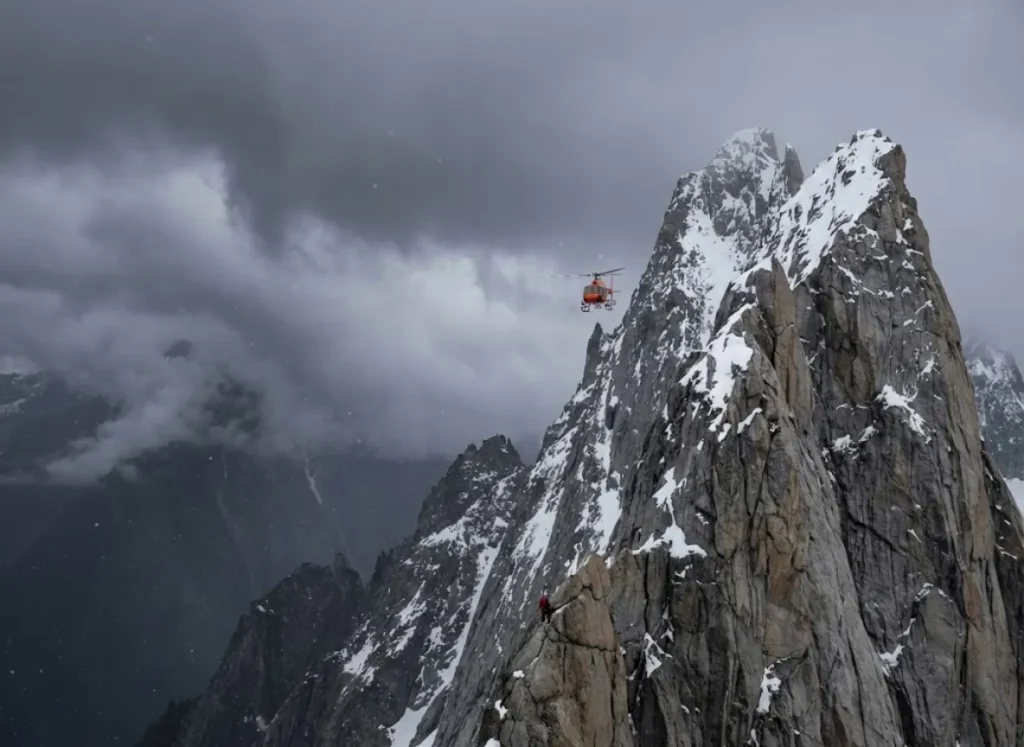
The rotor wash of a commercial rescue helicopter costs approximately $1,600 per minute once it touches down. In the high-stakes environment of American alpinism, the line between a memorable epic and financial ruin is often defined not by your climbing skill, but by the fine print of an insurance policy.
As a guide, I have seen clients obsess over grams on their harness while ignoring the gaping holes in their financial safety net. The American Alpine Club (AAC) membership is frequently marketed for its community vibes and t-shirt discounts, but for the serious practitioner, it functions as a complex financial instrument.
This review strips away the marketing sentiment to calculate the hard Return on Investment (ROI). We will analyze whether the math favors the gym climber, the road-tripper, or the high-altitude alpinist, and exactly how to manipulate the membership levels to subsidize your climbing lifestyle.
What Is the “Climber’s Value Equation” for AAC Membership?
Historically, joining the AAC—headquartered at the American Mountaineering Center in Golden, CO—was a philanthropic act of “joining the tribe.” However, the modern value proposition requires a cold financial audit known as the “Climber’s Value Equation.” We must stop viewing the annual fee as a donation and start viewing it as a premium paid for a bundle of services that would cost significantly more if purchased à la carte.
How Do We Quantify the Membership Beyond Philanthropy?
This equation aggregates three primary pillars of value: Safety Net Layer (insurance), Transactional Layer (discounts/lodging), and Philanthropic Layer (advocacy/grants). To determine your personal ROI, you must weigh these assets against your specific activity level in mountain environments.
The formula (Vc) adjusts the utility of these assets based on frequency of use. For example, the rescue insurance is a contingent value realized only during a catastrophe. In contrast, gear discounts are transactional and offer immediate cost vs savings.
Distinguishing between “gap coverage” and “comprehensive protection” is critical. Many club members mistakenly believe the standard memberships fully indemnify them against all backcountry costs. While the membership supports Live Your Dream grants and an ethical commitment to the Climber’s Pact, relying on it solely for financial protection without understanding the limits is a dangerous gamble.
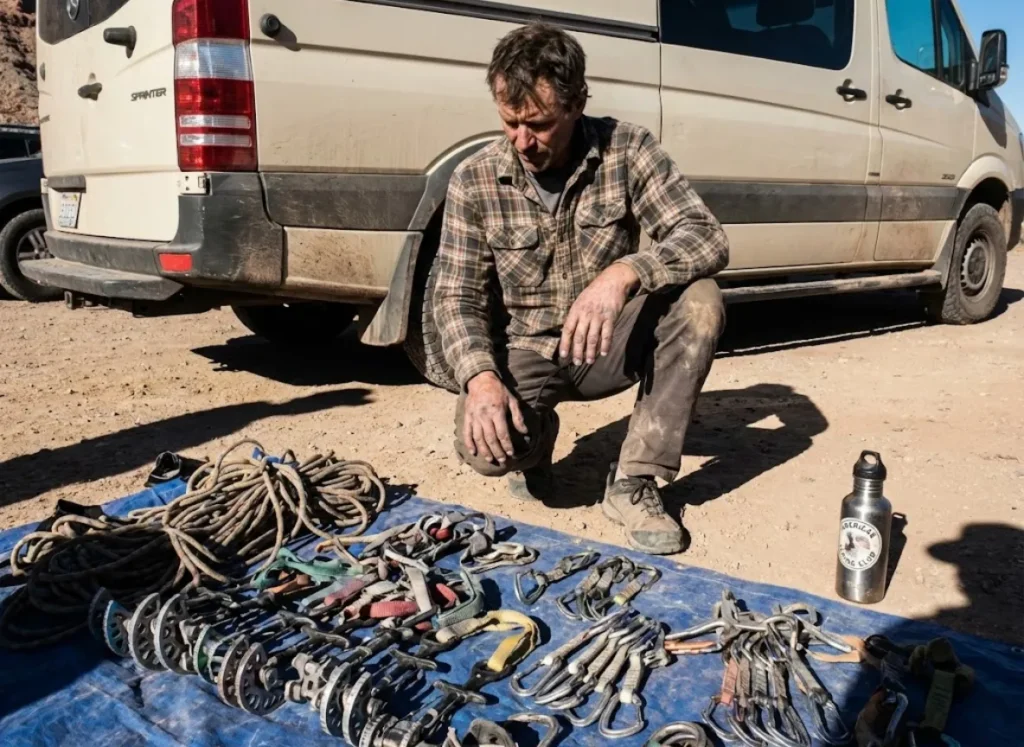
The “Infrastructure” asset offers utilitarian value that fluctuates wildly based on geography. For climbers frequenting hubs like the Tetons or the Gunks, where commercial campground costs have skyrocketed, the membership card acts as a skeleton key to affordable logistics.
Pro-Tip: Treat your membership renewal date like a gear inspection. Review your anticipated travel for the year before clicking renew. If you are planning an international trip, your tier needs to change.
Does the Rescue Insurance Actually Cover You? (The Critical Analysis)
This is the section where the math matters most. We must deconstruct the specific insurance limits of the Partner membership (and the similar Advocate membership or Supporter membership) versus the Leader membership to reveal the massive disparity in actual protective value.
Adventure Coverage Comparison
Compare costs, rescue limits, and critical exclusions across major providers.
Primary Utility
Discounts & Advocacy
Rescue Limit
$7,500 (Low Coverage)
Search Coverage
NO
Rescue & Evac
$300,000 (Global Limit)
Altitude Limit
None (Covers all elevations)
Activity Exclusions
Polar Regions / Free Soloing
Rescue & Evac
$500,000+
Search Coverage
NO (Field Rescue Only)
Medical Expenses
None (Unless purchased as Travel Insurance)
Medical Expenses
$100,000 – $500,000
Altitude Limit
Often <4,000m
Search Coverage
Varies (Often capped at ~$10k)
Search Coverage
YES (SAR Reimbursement)
Rescue Limit
$100,000
Medical Expenses
None
Why Is the Partner Tier Considered Only “Gap” Coverage?
The standard Partner membership level ($65–$100) includes a $7,500 rescue benefit. Statistically, this functions as a deductible offset rather than total protection in the United States. Commercial helicopter rescues and air ambulance transports often exceed $15,000 to $40,000 domestically, leaving the member liable for the substantial remainder of the bill.
This tier acts primarily as a discount pass with a safety net for minor incidents. It is insufficient for high-consequence human-powered activity where complex extraction is a possibility.
Crucially, this benefit is provided via Redpoint Travel Protection. It often operates on a reimbursement model if you cannot contact them immediately to coordinate the rescue. The policy typically excludes “Search” costs (finding you) and focuses on “Rescue” (moving you). This creates a financial blind spot if extensive Search and Rescue (SAR) grid searching is required before you are located.
Climbers relying solely on this tier should view it as a supplement to primary vs secondary insurance. It is not a replacement for a comprehensive backcountry rescue policy or proper training in Wilderness First Aid to manage the scene until help arrives.
Is the “Leader” Tier the Best Insurance Deal in Climbing?
The Leader membership ($250/year) drastically increases the rescue limits to $300,000 medical evacuation coverage. This creates a massive “coverage arbitrage” compared to the open market.
When compared to standalone policies from providers like Global Rescue or Ripcord, which often cost upwards of $330 annually, the AAC Leader tier offers similar limits at a lower price point. This tier effectively subsidizes the entire cost of the club membership through insurance savings alone. It is the mathematical choice for any climber traveling internationally or to remote US ranges like Alaska.
The Leader tier includes medical evacuation to a “hospital of choice” (repatriation). This is a critical feature for international expeditions where local care standards may be insufficient. The U.S. State Department confirms that the government does not pay for medical evacuation, reinforcing the need for private coverage.
However, note that the medical expense coverage (paying the hospital bill itself) remains capped at $5,000 medical expense reimbursement. Climbers still need primary travel medical insurance for treatment costs. The optimal “Safety Stack”—often recommended by the American Mountain Guides Association (AMGA)—involves the AAC Leader Membership for evacuation, primary insurance for medical bills, and strategies for long-stay climbing travel that keep your domestic insurance valid.
How Quickly Can You Break Even on Gear and Lodging?
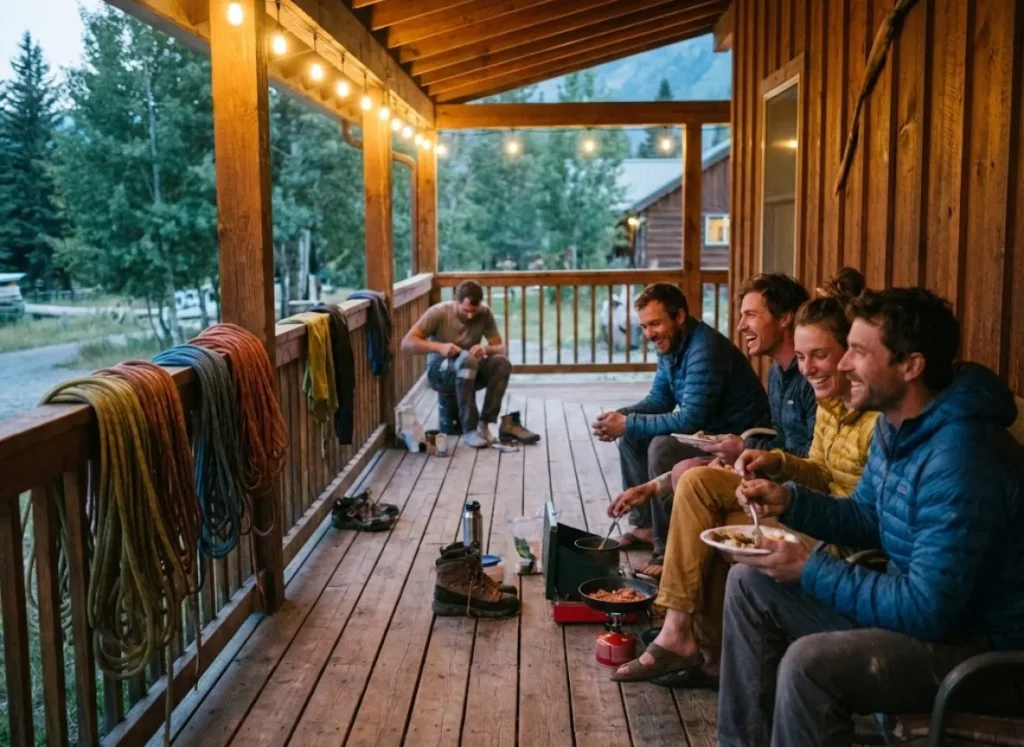
Once the risk mitigation assets are secured, the “Climber’s Value Equation” shifts to the immediate, tangible returns found in the supply chain. Active climbers can often recover their membership fees through retail and lodging savings alone, reaching the breakeven point rapidly.
How Does the ExpertVoice & Gear Discount Benefit Work?
AAC membership grants access to ExpertVoice (formerly Promotive), a pro-deal platform offering discounts typically ranging from 30% to 50% off MSRP on over 300 outdoor brands. A single strategic purchase of a high-ticket item—such as a Big Agnes tent, Mammut avalanche beacon, or Black Diamond dynamic rope—can yield cash savings that immediately exceed the cost of the Partner membership.
Direct partner codes provided by the AAC offer additional stacked savings on brands like Patagonia (historically 20%) and Rocky Talkie, which are rarely discounted elsewhere. The ROI here is transactional and uncapped; the more active the climber is in procuring gear from brands like La Sportiva, Mountain Hardwear, or Outdoor Research, the higher the return.

Smart members time their annual gear refresh to coincide with membership renewal notices. When you are monitoring your climbing gear lifespan and realize your soft goods need replacing, utilizing these discounts effectively makes the membership “free.”
Pro-Tip: ExpertVoice eligibility can take a few days to process after you join the AAC. Do not wait until the night before your expedition to sign up if you need to buy gear immediately.
What Is the “Infrastructure Asset” of Lodging Networks?
The AAC owns and operates lodging in high-friction climbing zones where camping is historically difficult or expensive. This includes the Grand Teton Climbers’ Ranch, Hueco Rock Ranch, the New River Gorge Campground, and the Gunks Campground (Samuel F. Pryor III Shawangunk Gateway).
Members receive significant nightly discounts. For example, saving roughly $9/night at the Climbers’ Ranch compared to non-members means a one-week road trip can offset nearly 70% of the Partner membership dues.
Beyond the ledger, facilities like the Hueco Rock Ranch provide critical logistical support. They offer crash pad rentals that save airline baggage fees and serve as a central hub for finding partners in restricted-access areas. Additionally, AAC members enjoy reciprocal membership privileges with international organizations like The Alpine Club of Canada, the Swiss Alpine Club, and the French Alpine Club, granting discounts at mountain huts worldwide.
This “Infrastructure Asset” provides utilitarian value, but it is highly dependent on geography. It offers zero ROI for a climber who never travels to these specific nodes. However, for those planning a trip with our Grand Teton climbing guide, the access is invaluable.
For East Coast climbers, the discount at the Gunks or Rumney (where the AAC has purchased land to secure access) is a primary driver. It ensures legal camping options near the crags and supports the local economic impact of gateway communities.
Which Membership Tier Is Right for Your Climbing Career?
We can now synthesize this data into a “Verdict Matrix.” This provides clear recommendations for different climber archetypes based on financial logic rather than brand loyalty.
The Decision Matrix: Who Wins and Who Loses?
The “Gym Climber” / Weekend Warrior: The Partner tier is a “Break-Even” proposition. Unless you plan to purchase significant gear via ExpertVoice, such as your first rack of quickdraws or shoes for the gym, the rescue insurance is likely redundant to your front-country needs.
The “Road Tripper”: The Partner tier is a “Win” if you spend at least 7 nights annually at AAC lodging or utilize the Henry S. Hall Jr. American Alpine Club Library for its bookmail service (free guidebook shipping). The savings effectively make the membership free.

The “Alpinist” / International Traveler: The Leader tier ($250) is an absolute “High ROI” asset. It provides $300k evacuation coverage for cheaper than any standalone competitor, making it a mandatory piece of financial kit for those learning how to budget for a major alpine climb.
The “Armchair Mountaineer”: For those who simply wish to support advocacy and receive the American Alpine Journal (AAJ) and Accidents in North American Climbing (ANAC), the value is philanthropic rather than financial.
Climbers must honestly assess their “Risk Profile” (remote vs. accessible terrain) and “Consumption Rate” (gear buying frequency). The AAC membership remains the only product in the outdoor industry that combines a safety net, a supply chain discount, and a cultural badge into a single transaction. Families should also investigate the family membership plan to aggregate these benefits.
The Final Tally
The AAC Partner membership ($65-$100) provides only $7,500 in rescue coverage. It functions best as a gap product utilized for its gear discounts and lodging access. Conversely, the Leader membership ($250) offers a market-beating $300,000 medical evacuation coverage, making it financially superior to standalone options like Global Rescue for international travelers.
Retail discounts through ExpertVoice and direct partners can fully offset the annual dues with a single major purchase. Infrastructure assets like the Grand Teton Climbers’ Ranch offer utilitarian ROI for road-trippers, while the library and publications provide cultural value.
Assess your climbing calendar for the next 12 months. If you see international travel or a gear overhaul in your future, calculate your potential savings and consider the Leader tier for maximum protection.
FAQ – Frequently Asked Questions
Does the American Alpine Club membership cover helicopter rescue?
Yes, but the coverage limit depends heavily on your tier. The Partner tier covers up to $7,500, which is often insufficient for commercial air ambulances. The Leader tier covers up to $300,000, offering significantly more robust protection for away from home coverage.
Is AAC membership tax deductible?
Generally, the membership dues themselves are not tax deductible because you receive tangible goods and services (discounts, insurance) in return. However, additional donations made above the membership fee to support the AAC’s non-profit mission are typically deductible.
What is the difference between the American Alpine Club and the Access Fund?
The AAC focuses on the individual climber (insurance, lodging, grants) and alpine history. The Access Fund focuses on the land (policy, stewardship, keeping climbing areas open). Many climbers join both to cover personal safety and environmental access.
How do I access the AAC gear discounts?
Discounts are accessed primarily through the ExpertVoice platform using your AAC member number to verify eligibility. You can also find direct discount codes for partners like Rocky Talkie or Backcountry.com perks provided in your member profile via the digital membership card.
Safety Notice: Rock climbing and mountaineering are inherently high-risk
activities that can involve physical trauma or fatal incidents. The information on Rock Climbing Realms is for
educational and informational purposes only. Techniques and advice presented here are not a substitute
for professional, hands-on instruction. Conditions and risks vary by location. Always seek guidance
from a qualified instructor before attempting new techniques. By using this website, you agree that you
are solely responsible for your own safety. Any reliance you place on this information is strictly
at your own risk, and you assume all liability for your actions. Rock Climbing Realms and its authors
will not be held liable for any harm, damage, or loss sustained in connection with the use of this information.
Affiliate Disclosure: We are a participant in the Amazon Services LLC Associates Program, an
affiliate advertising program designed to provide a means for us to earn advertising fees by advertising and linking
to Amazon.com. As an Amazon Associate, we earn from qualifying purchases. We are also an official affiliate partner
of Black Diamond Equipment via the AvantLink network. If you click on a Black Diamond affiliate link and make a
purchase, we may earn a commission at no additional cost to you. We also participate in other affiliate programs.
Additional terms are found in the terms of service.