
In this article
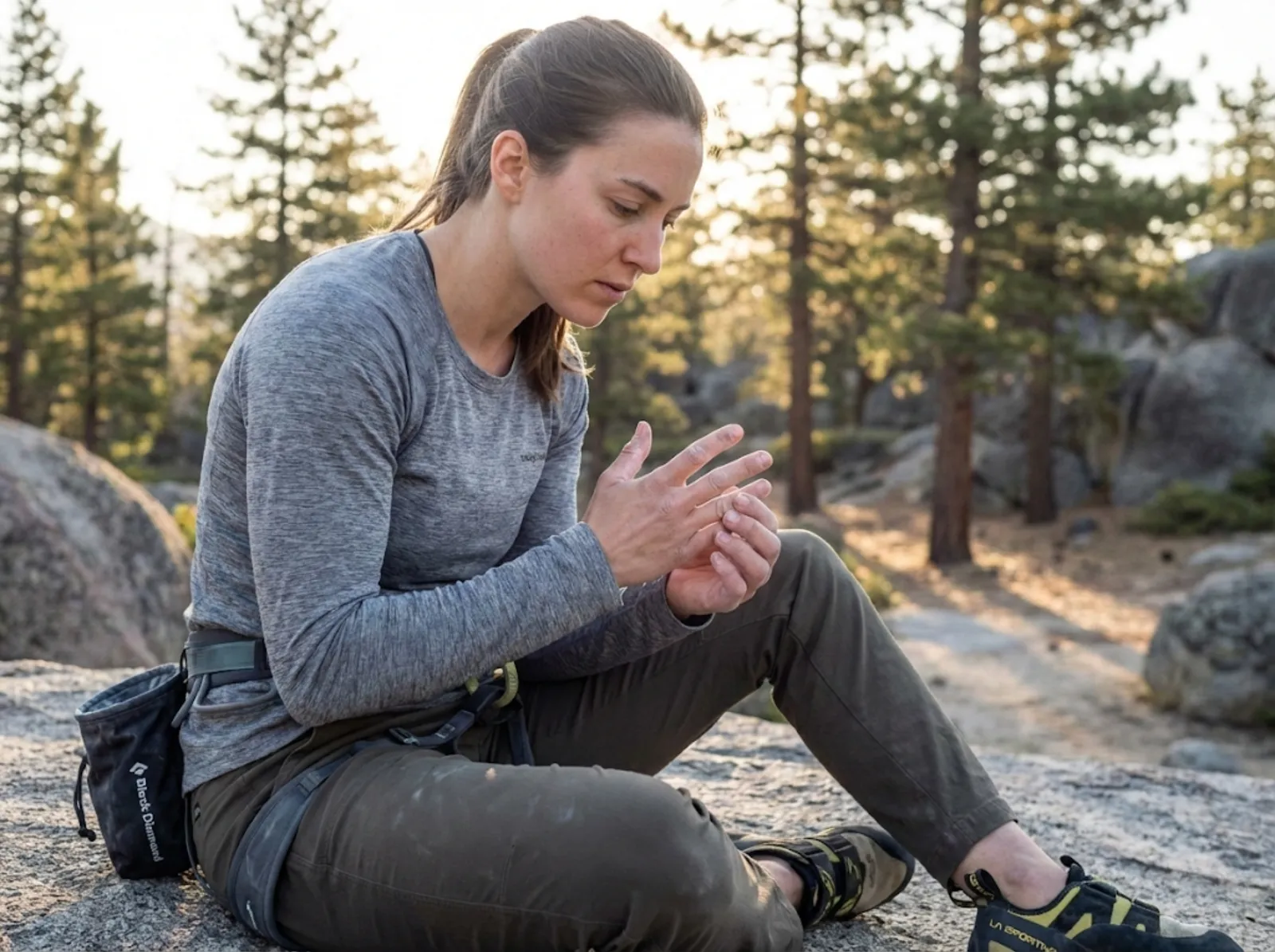
The pop was unmistakable—louder than my screaming forearms, sharper than the chalk dust in the air—and my ring finger went from crimping a 12mm edge to hanging useless at my side. I knew before I even dropped off the wall. This wasn’t a tweak. This was the injury.
After eight years of coaching climbers through everything from their first V0 to double-digit boulder problems, I’ve watched this scene play out more times than I can count. The good news? A finger pulley injury doesn’t have to be a career-ending diagnosis. But I’ve also seen climbers rush back too soon, turn a Grade II into a Grade III, and lose months—sometimes years—to chronic instability.
Here’s the complete roadmap for recovering from a pulley injury, from the ice-and-splint phase through the week-by-week loading protocols that actually rebuild your tissue stronger than rest alone ever could.
⚡ Quick Answer: Pulley injury recovery depends on severity—Grade I strains heal in 2-6 weeks, Grade II partial tears take 6-8 weeks, and Grade III complete ruptures require 3-6 months. The key is progressive loading after the acute phase (not just rest), proper splinting for Grade II/III injuries, and patience. Full return to pre-injury performance typically takes 2-3 times longer than tissue healing.
Understanding the A2 Pulley and Why It Fails
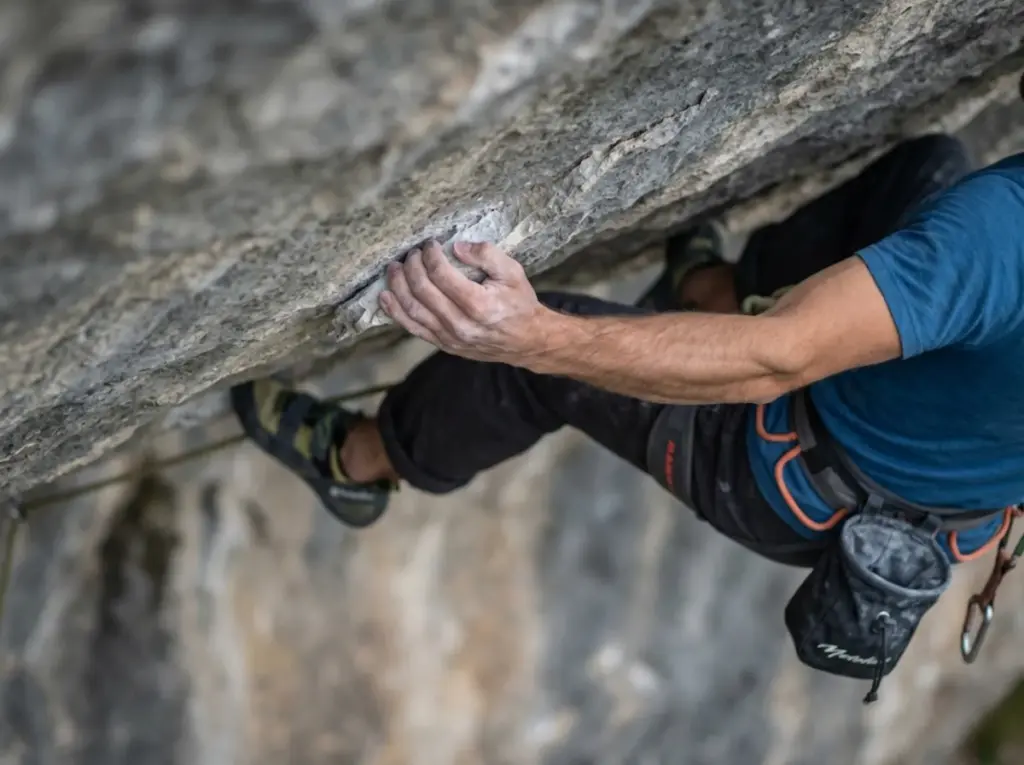
Your flexor tendon system is basically a biological pulley mechanism. The tendons that flex your fingers run from your forearm through a series of fibrous sheaths called annular pulleys—think of them as the rod guides on a fishing pole, keeping the line (tendon) tight against the rod (bone).
The A2 pulley sits at the base of your proximal phalanx, directly over the finger bones, and it’s the workhorse of the system. When you crimp down on a small edge, this pulley takes the lion’s share of force. The A4 pulley, located on your middle phalanx, is the other critical load-bearer. Together, they prevent what’s called bowstringing—where the tendon pulls away from the bone like a bowstring lifting off a stave.
Why the A2 Pulley Bears the Brunt
Here’s the physics that matters: in an open hand grip, your fingers are relatively extended, and the force vectors run nearly parallel to the bone. The A2 barely works. Switch to a full crimp—PIP joint flexed to 90 degrees or more, DIP joint hyperextended—and everything changes. That crimp grip position turns the A2 into a fulcrum, and the load spikes dramatically.
Research from peer-reviewed orthopedic literature confirms the A2 pulley typically ruptures at forces exceeding 400 Newtons. A 70-kilogram climber who cuts feet on a finger pocket can easily spike past 450 Newtons on a single finger. That’s why the full crimp is the mechanism of injury in nearly every rupture—and why your complete guide to hand anatomy for climbers should be required reading before you even touch a hangboard.
Crimp Mechanics and the Physics of Rupture
Most ruptures happen during shock loading—that sudden spike when your foot slips, you dyno to a crimp, or you catch yourself mid-fall. The pulley was already near its threshold from the sustained load; the shock pushes it past the breaking point. The pop you hear is the collagen fibers snapping simultaneously.
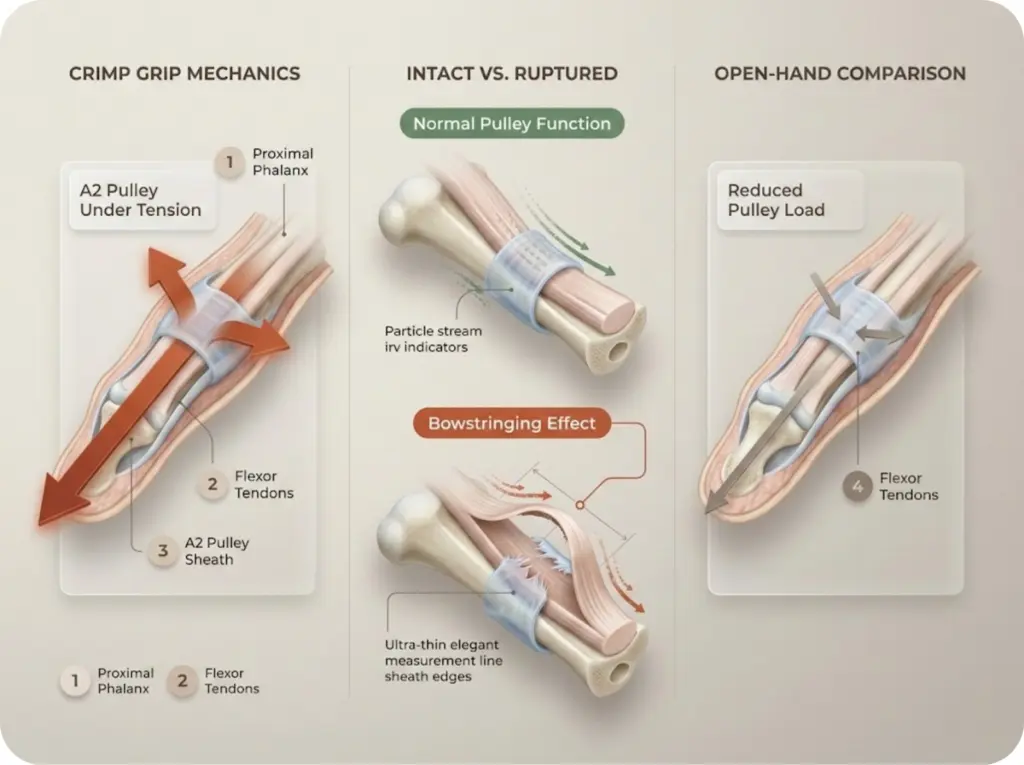
Bowstringing: What Happens After Rupture
If you’ve truly ruptured the A2, make a fist against resistance while palpating the base of your injured finger. Feel the tendon lift away from the bone? That’s bowstringing, and it’s the definitive confirmation of a Grade III pulley injury or worse. The tendon has lost its guide and is now pulling in a mechanically inefficient straight line.
Pro tip: Not every pop is a rupture. Cavitation (joint cracking) and even minor pulley strains can produce sounds. The key indicators are immediate sharp pain, rapid swelling, and visible tendon displacement when you flex against resistance.
Diagnosing Your Injury Using the Schöffl Classification
Dr. Volker Schöffl’s grading system is the global standard for pulley injury classification, and it directly determines your treatment timeline.
Grade I: The Strain
Micro-tears without complete fiber disruption. You’ll have pain with crimping and tenderness when you press on the A2 pulley zone, but your range of motion stays intact. On ultrasound diagnostics, the bone-tendon distance remains normal—less than 2 millimeters. This is the tweaky finger that you can probably climb through if you’re careful, but shouldn’t. Grade I pulley injury cases heal in 2-6 weeks with conservative treatment.
Grade II and III: Partial to Complete Rupture
Grade II pulley injury means either a partial rupture (less than 50%) of your A2/A3 or a complete rupture of the less-critical A4 pulley. Bone-tendon distance stays below 3mm. You’ll have significant pain and swelling but may not have obvious bowstringing.
Grade III pulley injury is the complete rupture of the A2 or A3. Distance exceeds 3-5mm, you almost certainly heard a pop, and you’ll likely see a hematoma form. This is pulley protection splint territory—no exceptions.
Grade IV pulley injury involves multiple pulley ruptures or complex trauma including collateral ligament strain or lumbrical involvement. This one often requires surgical reconstruction.
When to Get Imaging and See a Specialist
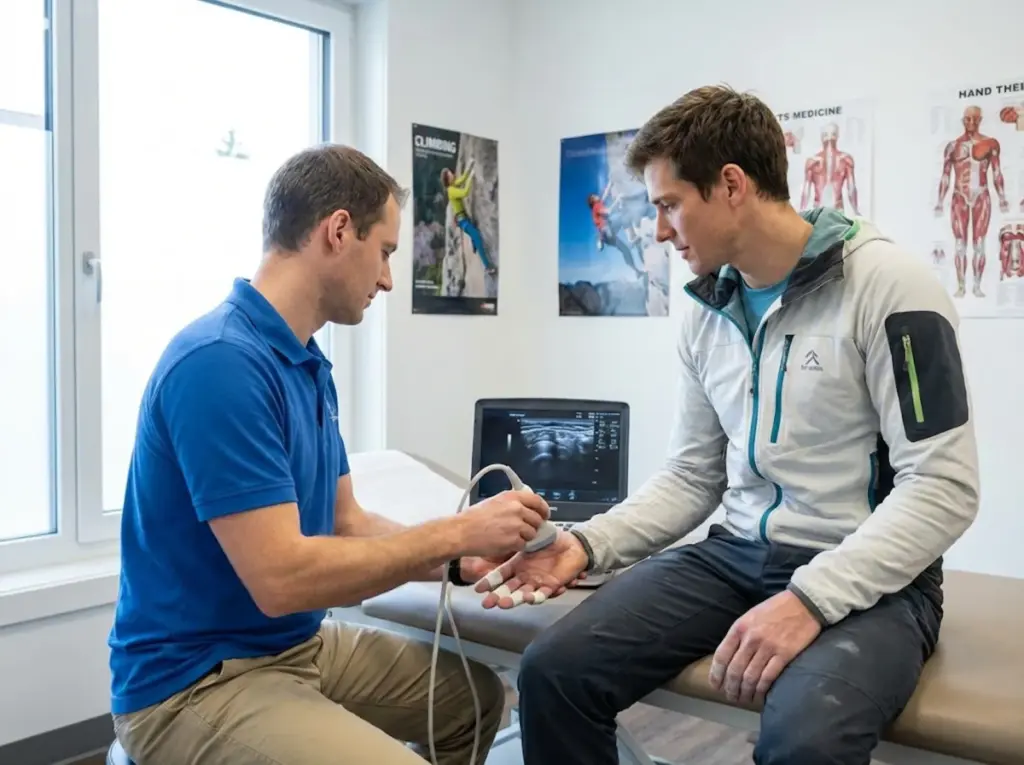
If you suspect anything worse than Grade I—bowstringing, no improvement after two weeks, or significant swelling—get a dynamic ultrasound. It’s the gold standard because it measures bone-tendon distance in real-time while you exert force. MRI diagnostics are reserved for complicated cases or surgical planning.
Finding a climbing-aware practitioner matters. Many general physicians have never seen a pulley injury. Use resources like how to communicate climbing injuries to doctors to translate your symptoms into language that gets you proper care.
Phase-by-Phase Healing Timeline
Understanding what’s happening inside your finger—biologically—prevents you from sabotaging your own recovery process.
Acute Phase (Days 1-14): Inflammation Control
Everything stops. No climbing. No testing. Not even on jugs. The inflammation phase is when your body sends specialized cells to clean up injured tissue and lay the groundwork for tissue healing. You need ice, elevation, and if your injury is Grade II or III, a thermoplastic pulley protection splint (PPS)—not tape.
Athletic tape only reduces bowstringing by 10-20%. It stretches under load and cannot counteract the forces your tendons generate. A rigid PPS holds the tendon against bone, allowing the pulley ends to approximate and heal at their native length.
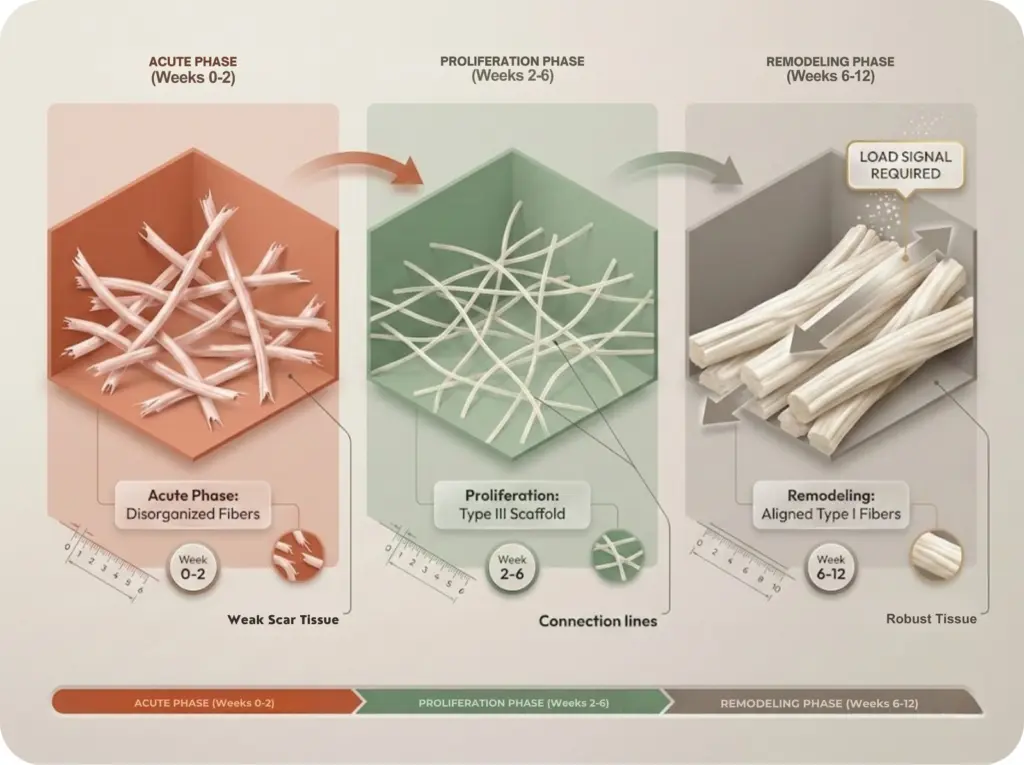
Proliferation Phase (Weeks 2-6): Collagen Deposition
Fibroblasts flood the injury site and start laying down Type III collagen—a temporary, disorganized scaffold. This tissue is weaker than the original. Week 2-3 is the danger zone; many climbers feel better and return to the wall too soon, only to cause re-injury of what little healing has occurred.
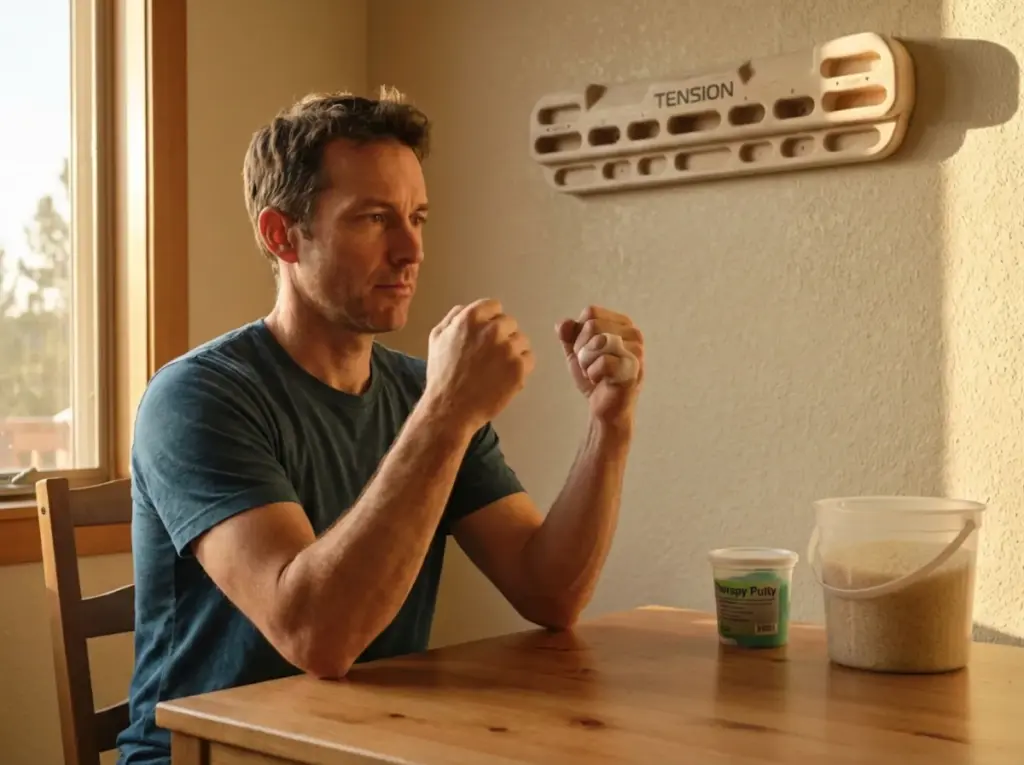
Start tendon glides during this phase—the five-position sequence (straight, hook fist, full fist, tabletop, straight) that maintains differential movement between your flexor digitorum superficialis and flexor digitorum profundus tendons. Add rice bucket work for gentle, accommodating resistance.
Pro tip: The rice bucket isn’t just for rehabilitation—it’s a blood flow pump. The fluid resistance of rice grains applies gentle stress in all planes, encouraging collagen remodeling without high tension.
Remodeling Phase (Weeks 6-12): Load Is Medicine
This is where most recovery articles fail you. Complete rest beyond the acute phase produces weak, disorganized scar tissue prone to injury. The remodeling phase converts Type III collagen into robust Type I collagen—but only with mechanical loading.
When you apply controlled tension to injured tissues, the fibers align along the lines of force. You are literally shaping your collagen architecture through progressive loading. This is why the Esther Smith protocol has become the gold standard for climbers—it treats the hangboard as a piece of rehabilitation equipment, not something to avoid.
For context on why loading matters more than passive rest, see the science of rest and active recovery for climbers.
The Week-by-Week Rehabilitation Protocol
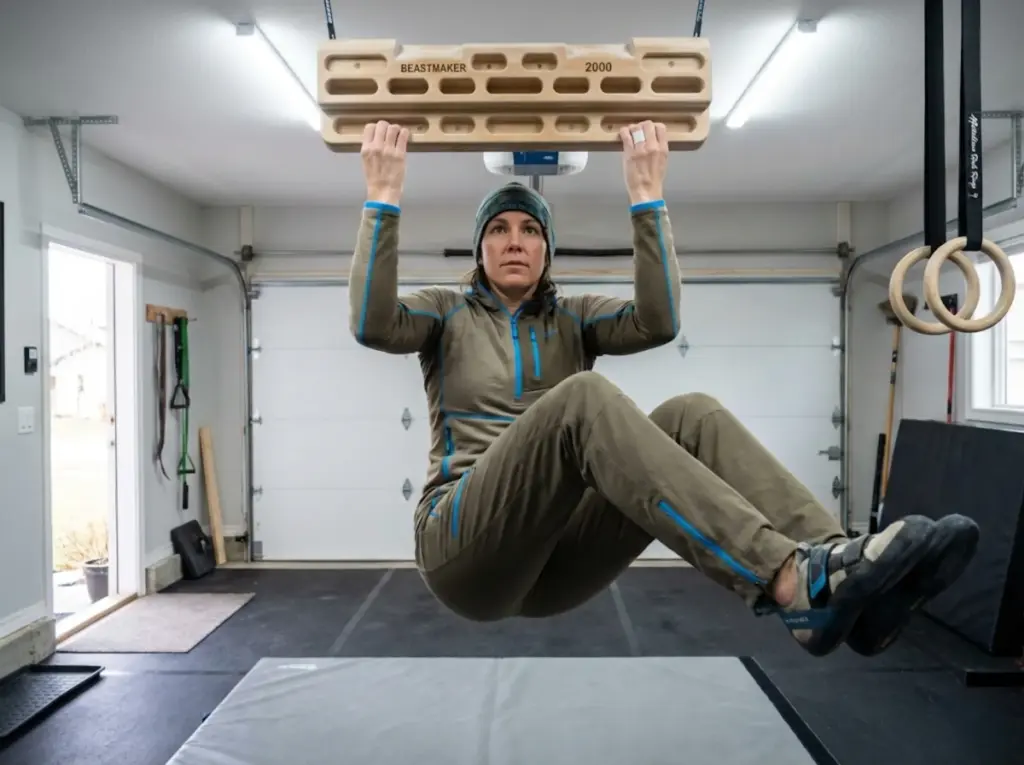
Here’s the exact progression based on the Esther Smith / Grassroots protocol and refined over years of clinical practice with injured climbers.
Weeks 1-2: Mobility Without Load
Your only job is pain-free finger range of motion. Perform tendon glides at least three times daily—5 positions, 10 reps each. Start contrast baths after Day 3 if swelling persists (3 minutes warm, 1 minute cold). When swelling resolves around Day 5-7, transition from PPS to H-taping technique.
Do not “test” the finger. Not even on jugs. The pulley tissue is at its weakest.
Weeks 3-6: Isometrics and Rice Bucket Loading
Begin the 5x5x5 isometric program: 5-second holds, 5 reps, 5 sets in open hand position using therapy putty or light resistance bands. Add rice bucket work—digging, grabbing, rotating—for 5-10 minutes daily.
By Week 4-5, introduce a no-hang device or hangboard with pulley assistance at 50% bodyweight. Use open grip only; no half-crimp yet. The pain rule: 2/10 is green light, 5/10 means regress, 7+/10 means stop immediately.
Weeks 7-10: Heavy Isometrics and Half-Crimp
This is the core of the rock rehab protocol. Find the load that produces 2-3/10 pain—your therapeutic threshold. Perform 10-second hangs, 3-5 reps, 3 sessions per week with 2-3 minutes rest between reps.
Two rules from the Esther Smith methodology must be followed religiously:
- 10-Minute Rule: Pain must return to baseline within 10 minutes post-session
- 24-Hour Rule: No stiffness or ROM loss the next morning
If a session produces 0/10 pain, add 2.5-5 pounds next time. Continue until you can hang with 15-30 pounds over bodyweight pain-free. Consult safe hangboard training principles for proper form throughout.
Weeks 10-16+: Return to Climbing
Week 10-12: Vertical terrain only. Large handholds and slopers. Feet heavily weighted, 30-45 minute sessions. Static movement—no dynamics.
Weeks 12-14: Slight overhangs allowed. Smaller edges, but only with open hand or drag grip. 60-70% effort maximum. You should feel completely in control.
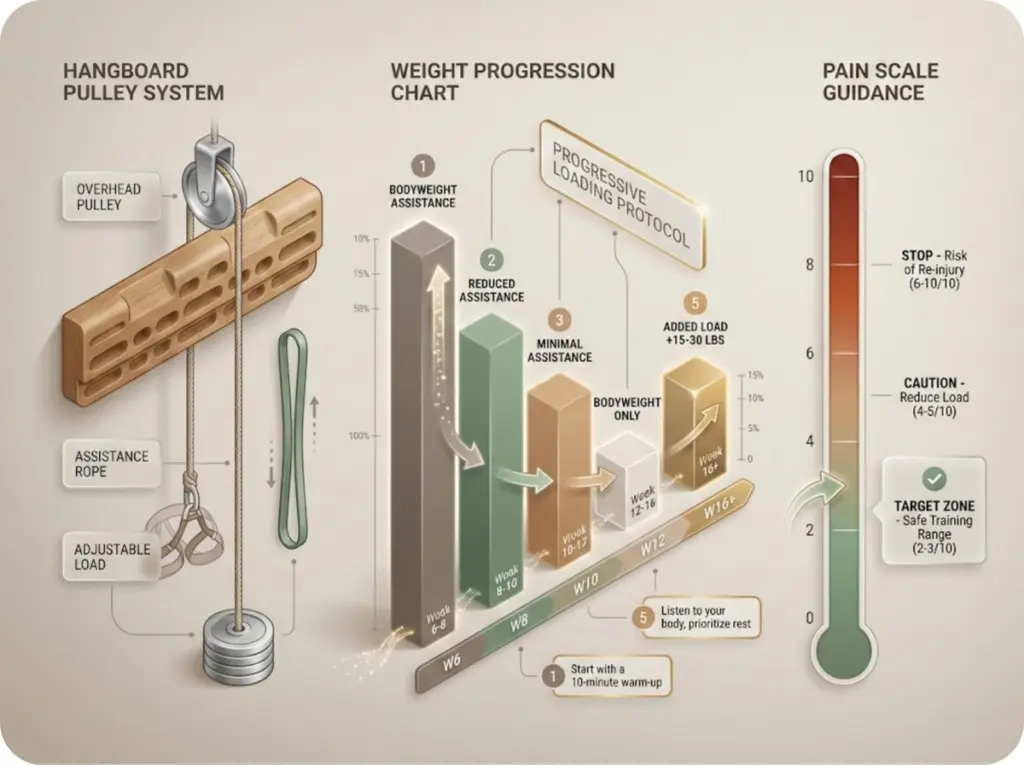
Week 16 and beyond: Gradual half-crimp grip reintroduction on the hangboard before using it on the wall. The full crimp is the last grip to return—often 4-6 months out. Enforce the seven attempt limit on projects to prevent fatigue-related re-injury.
Taping and Splinting That Actually Works
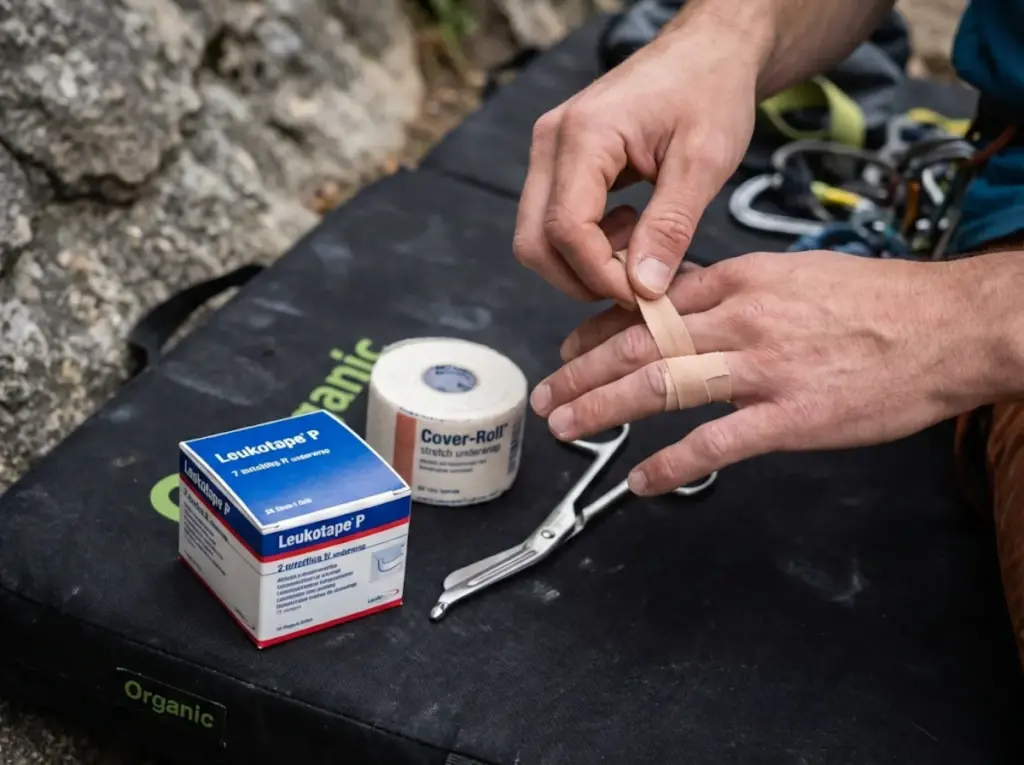
Let’s clear up a dangerous misconception: finger tape does not prevent pulley ruptures. Research shows even the best H-tape reduces bowstringing by only 15-20%—insufficient to counteract the forces of maximal crimping.
The H-Tape Method Step-by-Step
Split a strip of Leukotape at both ends to create two “legs.” The legs wrap around the proximal and middle phalanx; the bridge sits directly over the PIP joint. Apply only after acute swelling resolves—tape on edema restricts circulation.
Width matters: 1.2-1.5cm optimal for ring finger and middle finger. Test by making a full fist—no bunching, and your fingertip stays pink.
For detailed techniques including X-taping and ring taping methods, see the complete guide to taping techniques for climbers.
Thermoplastic Splints for Acute Ruptures
For Grade II and III injuries, a custom-molded pulley protection splint is mandatory during the acute phase. This rigid ring holds the tendon against bone, allowing the pulley to heal at its native length rather than stretched. Without splinting, the pulley may heal elongated, causing permanent mechanical inefficiency.
Protocol: 10-14 days continuous wear for Grade II; 6-8 weeks for Grade III.
Weaning Off External Support
Graduate from PPS to silicone pulley ring splint to H-tape to climbing without support. Most experts recommend weaning from tape by Month 6 to ensure tissue adapts to load independently. Some climbers tape indefinitely as a psychological security blanket—and that’s okay, as long as you recognize it’s comfort, not protection.
Nutrition and Sleep for Collagen Repair
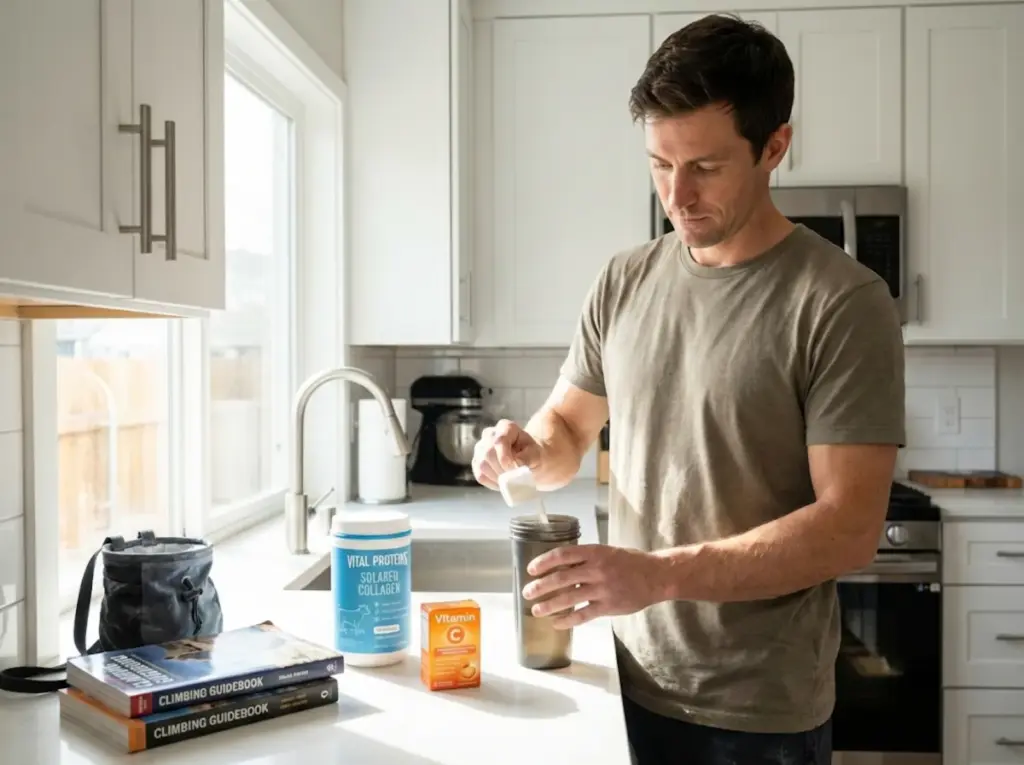
The research of Dr. Keith Baar has transformed how we approach tendon rehabilitation. Your tendons are metabolically selective—they won’t absorb nutrients without a mechanical signal telling them to.
The Gelatin/Vitamin C Protocol
Consuming 15 grams of collagen peptides (or gelatin) with 50mg of Vitamin C approximately 30-60 minutes before your rehab session doubles collagen synthesis markers. The exercise acts as a gatekeeper, opening tendon cells to absorb the amino acids (glycine, proline) circulating in your blood.
Without the tendon loading signal, those nutrients don’t preferentially reach the tendon. This is why passive supplementation without rehabilitation exercise produces minimal results.
Supporting Nutrients and Hydration
Beyond the gelatin protocol: Vitamin C (500-1000mg daily) supports enzymatic collagen production. Copper (1-2mg) stabilizes collagen cross-links. Your tendon is 60-70% water by weight—stay well-hydrated with 0.5-1 oz per pound of bodyweight daily.
Pro tip: Bone broth is a natural source of glycine and collagen precursors. A cup before your rehab session hits the same window as supplemental collagen powder.
Sleep as Tissue Repair Engine
Deep sleep triggers growth hormone release—the primary driver of tissue recovery. Sleep deprivation under 7 hours reduces growth hormone by 30-50%. During recovery, aim for 8-9 hours nightly. Keep consistent sleep/wake times, drop bedroom temperature to 65-68°F, and cut screens an hour before bed.
The Mental Side of Recovery
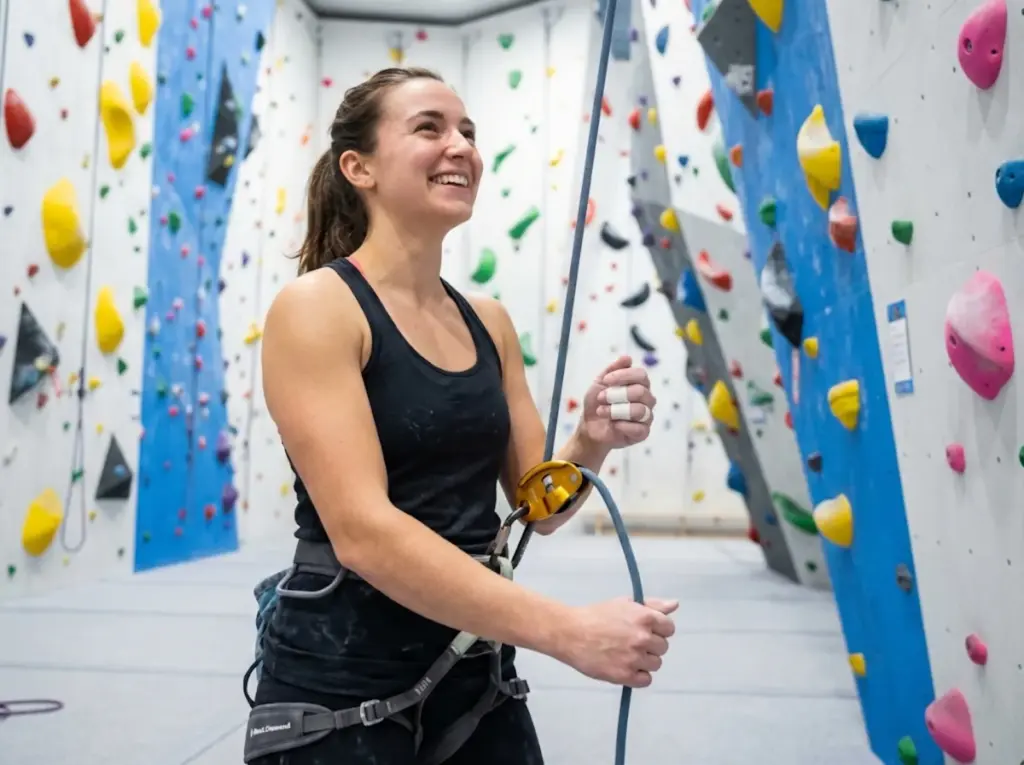
The psychological toll of a pulley injury is often underestimated. For many climbers, the sport isn’t just exercise—it’s identity, social outlet, and mental health management all wrapped into one.
Navigating Identity Loss and Injury Depression
The grief stages are real: denial (“it’s just a tweak”), anger, bargaining, injury depression, acceptance. Climbers who define their self-worth by grade suffer most. The crag is often your primary community; removal causes isolation.
Reframe the downtime as investment. Focus on antagonist training, core strength, mobility work—the things you neglected during hard climbing cycles. Set non-climbing goals. Maintain community by belaying, visiting socially, or coaching others.
Managing Return-to-Crimp Anxiety
Return-to-sport anxiety is a real post-traumatic pattern. Your brain develops avoidance, subconsciously pulling back on crimps even after tissue has healed. This leads to altered mechanics and compensatory injuries elsewhere.
Graded exposure works: start 3 grades below your max and increase gradually. Trust objective benchmarks—if you can Farmer crimp with +25% bodyweight pain-free using a Tension Block or similar device, your tissue is structurally ready. The fear is lying to you.
When to Seek Professional Support
If injury depression persists beyond two weeks, consider a sports psychologist. If return anxiety prevents climbing at full capacity despite physical clearance, evidence-based mental training protocols can help rewire those avoidance patterns.
Conclusion
A pulley injury demands respect for biology—but it doesn’t have to end your climbing season. The Grade determines your timeline: weeks for Grade I, months for Grade III. Loading protocols rebuild tissue stronger than rest alone ever could. Nutrition optimizes what your cells can accomplish. And the mental game is half the battle.
Get diagnosed properly—Grade II versus Grade III changes everything about your protocol. Start progressive loading after Week 3-4, because collagen aligns under tension. Remember that tape supports but doesn’t protect. Feed the repair with 15g collagen and 50mg Vitamin C before every session. And accept that fear of re-injury outlasts physical healing—that’s normal.
Six months from now, when you’re back on your project pain-free, you’ll know you did it right.
FAQ
How long does a pulley injury take to heal?
Grade I strains heal in 2-6 weeks. Grade II partial tears take 6-8 weeks. Grade III complete ruptures require 3-6 months. Full return to pre-injury performance typically takes 2-3 times longer than tissue healing due to strength rebuilding and neurological readaptation.
Can I climb with a pulley injury?
Not during the acute phase (first 2-4 weeks depending on grade). After the acute phase, controlled climbing on easy terrain becomes part of rehabilitation—jugs and slopers only, feet heavily weighted, strict pain monitoring at all times.
How do I know if I tore my A2 pulley?
Classic signs include an audible pop during a crimp, immediate sharp pain at the base of the proximal phalanx (ring and middle fingers most common), rapid swelling, and visible bowstringing when making a fist against resistance. Dynamic ultrasound confirms the diagnosis.
Should I get an MRI for a pulley injury?
Not always necessary. Dynamic ultrasound is the gold standard because it measures bone-tendon distance under load in real-time. MRI is reserved for suspected multi-pulley injury, surgical planning, or cases where diagnosis remains unclear.
Does taping prevent pulley injuries?
No. Research shows H-tape reduces bowstringing by only 15-20%—insufficient to prevent rupture under maximal crimping loads. Taping provides support during return-to-sport, not protection against acute injury.
Safety Notice: Rock climbing and mountaineering are inherently high-risk
activities that can involve physical trauma or fatal incidents. The information on Rock Climbing Realms is for
educational and informational purposes only. Techniques and advice presented here are not a substitute
for professional, hands-on instruction. Conditions and risks vary by location. Always seek guidance
from a qualified instructor before attempting new techniques. By using this website, you agree that you
are solely responsible for your own safety. Any reliance you place on this information is strictly
at your own risk, and you assume all liability for your actions. Rock Climbing Realms and its authors
will not be held liable for any harm, damage, or loss sustained in connection with the use of this information.
Affiliate Disclosure: We are a participant in the Amazon Services LLC Associates Program, an
affiliate advertising program designed to provide a means for us to earn advertising fees by advertising and linking
to Amazon.com. As an Amazon Associate, we earn from qualifying purchases. We are also an official affiliate partner
of Black Diamond Equipment via the AvantLink network. If you click on a Black Diamond affiliate link and make a
purchase, we may earn a commission at no additional cost to you. We also participate in other affiliate programs.
Additional terms are found in the terms of service.