
In this article
The feedback is immediate. It’s the morning after a limit bouldering session, and your forearms throb with a dull, persistent ache. Your dorsal muscles feel like shortened cables, tight and unyielding, and the skin on your fingertips burns at the slight heat of your coffee mug.
This sensation isn’t just fatigue; it is biological deconstruction.
Most climbers treat this state with passive avoidance. They collapse onto the couch, binge-watch a series, and hope the body fixes itself. This is a critical tactical error. The “Rest Day” is a misnomer. Physiologically, it is the only time actual strength is built. I prefer to call it a “Growth Day.” Treating it with the same precision and intensity as a hangboard session is the dividing line between recreational plateau and elite rock climbing performance.
In my years guiding, I’ve seen more climbers fail due to under-recovery than undertraining. We are going to transform your concept of rest from a passive state of waiting into an active, engineered process of physiological recovery and biological upgrades.
Why is the “Rest Day” Actually the Most Important Training Day?
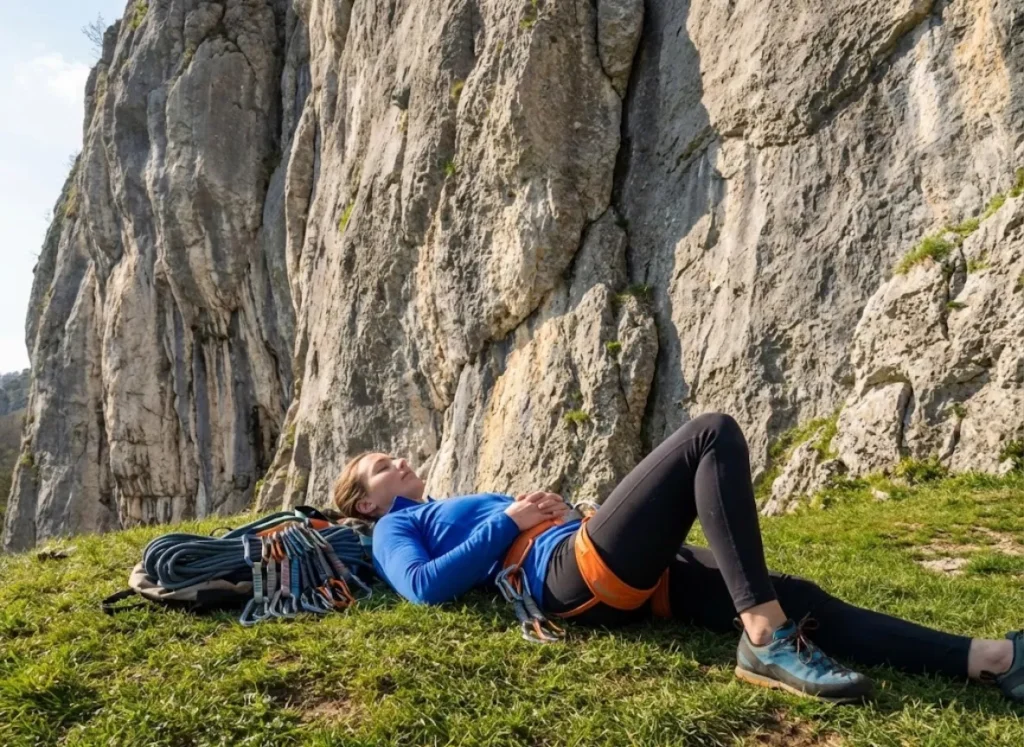
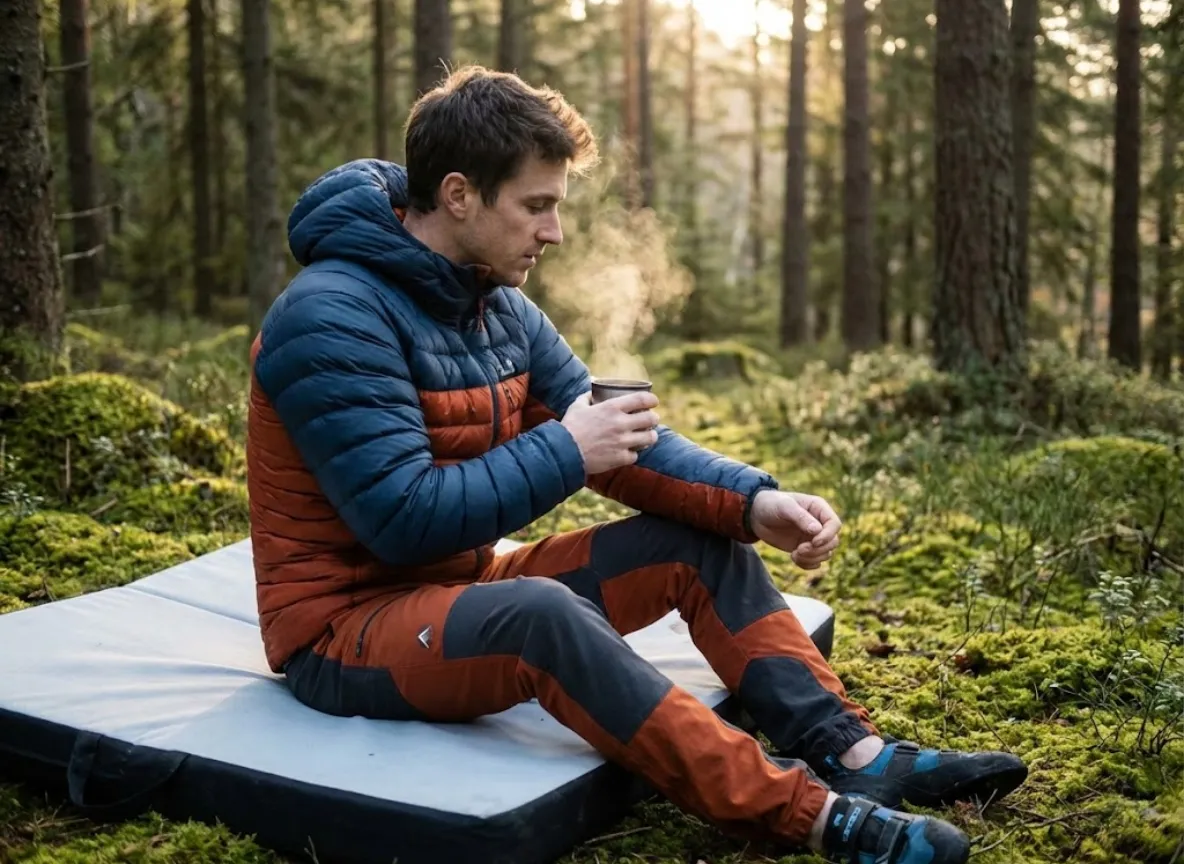
To change your climbing, you must first shift your mindset regarding the anabolic (building) phase versus the catabolic (breaking) training phase.
How does “Supercompensation” drive climbing progression?
Training sessions do not make you stronger. They are destructive events. When you project a hard route, you deplete glycogen, create micro-tears in myofibrils, and accumulate metabolic waste products like hydrogen ions. You are physically weaker when you leave the climbing gym than when you entered.
The magic happens in the rebound. Supercompensation is the body’s survival response to this stress. It rebuilds tissues to be stronger and denser than the previous baseline. However, this upgrade only occurs if the stress stimulus is removed for a specific duration, typically 24 to 48 hours.
If you interrupt this recovery window with premature intense activity, you fall into the “Valley of Fatigue.” You prevent the rebound, leaving yourself in a state of perpetual under-recovery where performance stalls.
This isn’t just about sore muscles. It is about the Central Nervous System (CNS), which governs recruitment and coordination. A comprehensive year-long periodization framework relies entirely on these cycles of stress and rest. Without the rest, the plan fails.
Hormonally, the rest window allows for cortisol regulation—re-balancing the stress hormone against testosterone/HGH (growth) ratios. It shifts the body from a fight-or-flight state to a repair state. It takes significant time and energy to manage glycogen replenishment in the muscle and liver; doing this passively is inefficient compared to active facilitation.
To understand the mechanisms of muscle injury, repair, and regeneration, we look to clinical data showing that inflammation is a necessary trigger, but it must be resolved quickly for cellular house cleaning and hypertrophy to occur. Redefining rest as an active investment prevents the psychological guilt often associated with non-climbing days.
Why do tendons require a different recovery strategy than muscles?
Here lies the paradox of climbing recovery. Muscles are vascular; they are rich in blood vessels and recover through hemodynamic flow. Tendons—specifically the pulleys and flexors in your hands—are avascular. They rely on synovial fluid diffusion for nutrient delivery.
If you treat your fingers like your biceps, you risk overuse injuries like tendonitis.
Groundbreaking research known as the “Keith Baar Protocol” shows that tendons are viscoelastic. They respond best to short, heavy isometric loading rather than total rest or long-duration movement. Long workouts don’t help repair tendons; they just add fatigue.
Tenocytes (tendon cells) become refractory, or unresponsive to signaling, after just 10 minutes of loading. However, the cellular machinery resets after approximately 6 hours. This allows for a “double session” of repair signaling on a rest day without metabolic cost.
Pro-Tip: Use a digital dynamometer (like a Tindeq) or a hangboard to pull at 50-70% intensity for short durations. This maintains stiffness without damaging the collagen matrix.
This is critical for your blueprint to bulletproof climbing hands. While movement helps muscles (“motion is lotion”), tendons specifically need load to drive fluid into the matrix. This is the “sponge effect.” Total inactivity leads to collagen degradation, so the “Growth Day” protocol interrupts this catabolic drift to ensure long-term finger health.
Current research on engineered ligaments and tendon repair protocols confirms that brief, intermittent loading is the superior method for connective tissue health.
What is the Difference Between Active Recovery and “Doing Nothing”?
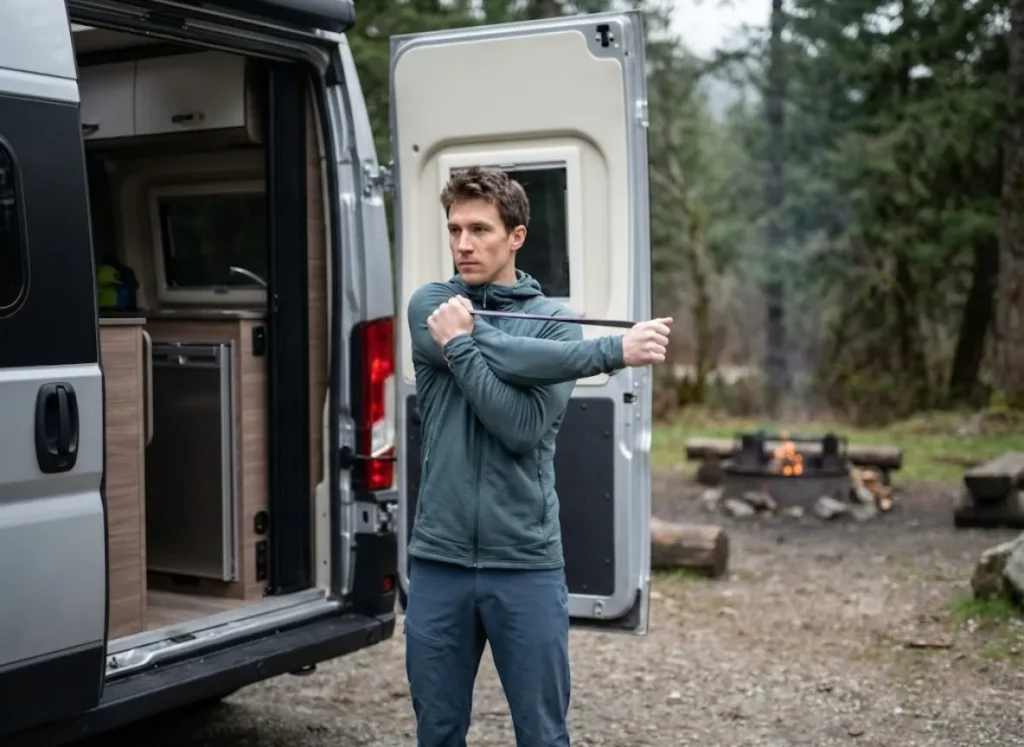
There is a fine line between active recovery and “accidental training.” We need a quantified system to ensure our movement remains restorative.
How does the “Traffic Light System” regulate rest day intensity?
We categorize activity into Green, Yellow, and Red zones. This prevents the common mistake of turning a recovery jog into a threshold run.
- Green Light (Zone 1): These are restorative activities performed at less than 60% of your Max Heart Rate (RPE 1-2/10). Think walking, mobility work, and skin sanding. This promotes parasympathetic activation.
- Yellow Light (Zone 2): Caution. This includes light jogging, ARC traversing, or antagonist band work at 60-70% Max HR. The goal is to stimulate capillary flushing without lactate accumulation.
- Red Light (Zone 3+): Stop. Any activity that induces a “pump,” breathlessness, or muscular failure violates the rest day protocol.
Active recovery utilizes the “muscle pump” to mechanically compress veins. This helps flush out the bad stuff—metabolic byproducts like lactate and hydrogen ions—faster than venous pooling, which happens when you sit still. A smart rock climbing training program integrates these low-intensity days to facilitate high-intensity performance.
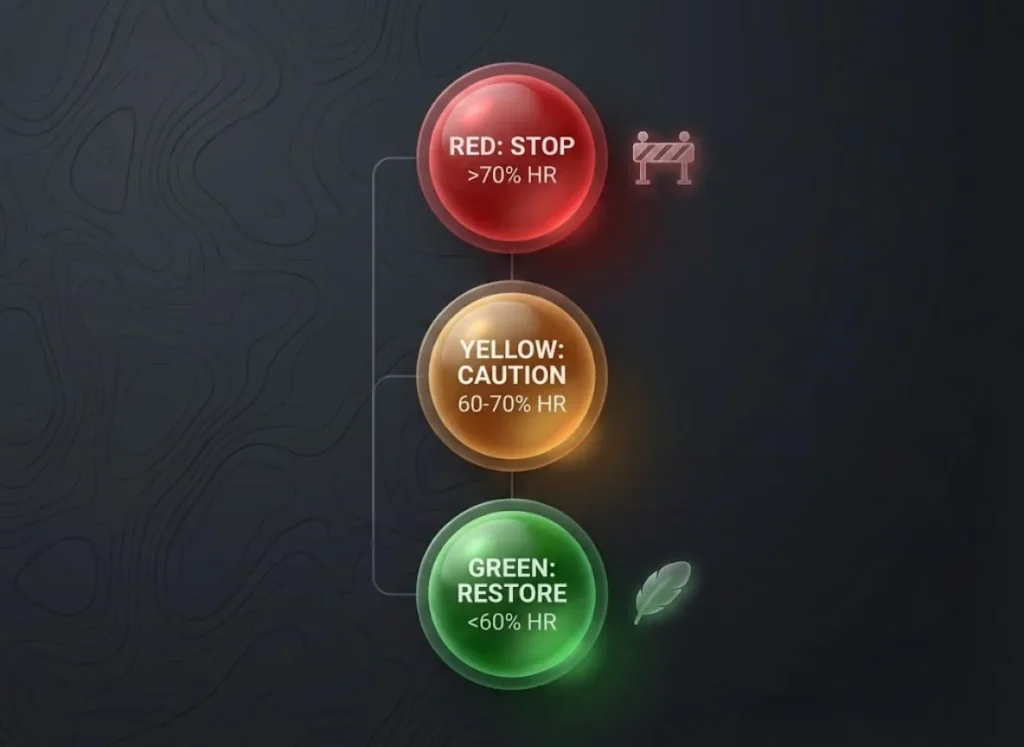
Climbers are notoriously bad at judging intensity. Use a heart rate monitor to ensure you never breach the 70% ceiling.
Pro-Tip: Use the “Nasal Breathing” test. If you cannot maintain strictly nasal breathing during your activity, you are working too hard and have drifted into a training zone.
Studies on the effect of active recovery on lactate clearance in climbers prove that low-intensity movement is significantly superior to passive rest for clearing waste products.
What specific movements flush lactate without causing fatigue?
We want to flush the engine without revving it. Movement is medicine, but the dosage matters.
Use large muscle groups to drive systemic blood flow. Hiking, swimming, or cycling (Zone 2 cardio) indirectly cleanses the smaller climbing muscles without loading them.
Incorporate antagonist training. Use light resistance bands to engage the “Push” muscles (Pecs, Triceps, Extensors). Movements like YTWLs, inchworms, or light push-ups help correct the “Climber’s Hunch” (Kyphosis) and promote joint centration.
For specific climbing muscles, we use ARC Micro-Dosing. Aerobic Restoration and Capillarity (ARC) training involves very easy traversing. On a rest day, cap this at 15 minutes. The goal is to open capillaries without inducing occlusion (the pump). The moment forearm muscles become pumped, blood flow stops, defeating the purpose. For extensor balance without intensity, simple rice bucket exercises are excellent.
Mobility work and flow are also essential. Yoga sequences that focus on active, strength-supported joint control help maintain range of motion while muscles are repairing. Focus on opening the hips for high stepping (via reverse lunges or lateral lunges) and the thoracic spine for overhead reaching. Light foam rolling or self-massage can further aid tissue pliability.
Additional data on the effects of active recovery on lactate concentration supports the use of these specific, low-intensity modalities.
How should nutritional intake change on non-climbing days?
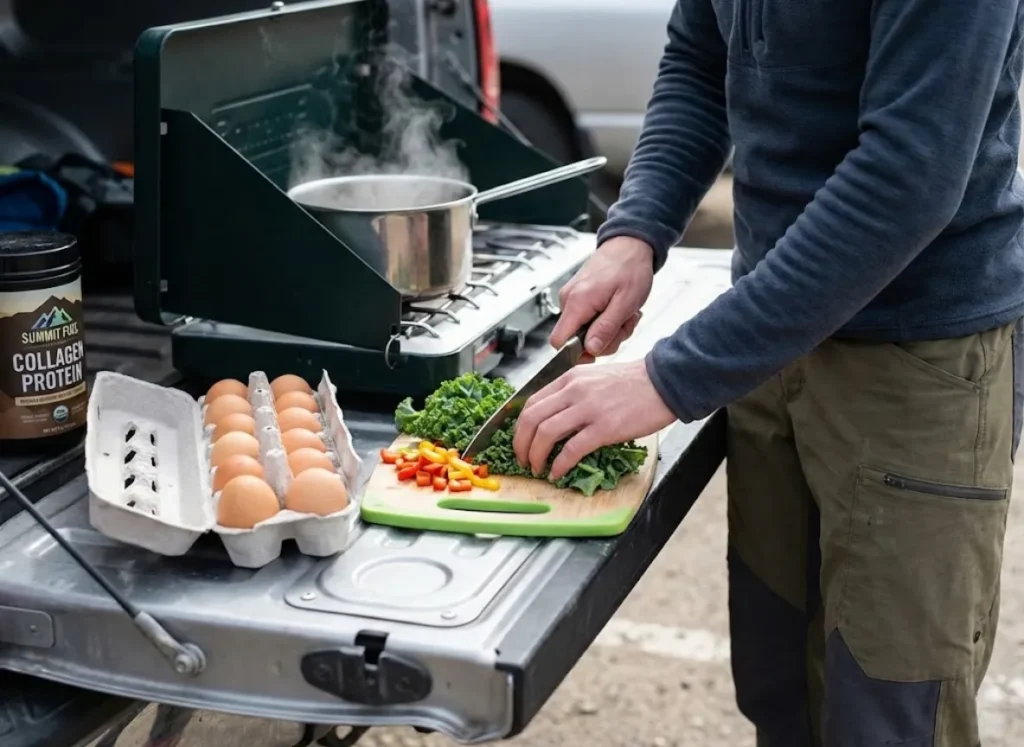
The engine requires a different fuel mix when idling versus racing. You must fuel your rest days strategically.
What is “Carb Cycling” and how does it prevent unwanted weight gain?
Climbing is a high-intensity, glycolytic activity requiring significant carbohydrates. Rest days are low-intensity. Fuel intake must be “cycled” down to match output.
We calculate this by reducing carbohydrate intake to roughly 0.5 – 1.0 grams per pound of body weight (approx. 1.1–2.2 g/kg) on rest days. On training days, this might be double or triple.
This encourages metabolic flexibility. Lowering carbs on rest days forces the body to utilize adipose tissue (fat) for basal metabolic needs. It improves the body’s efficiency at switching fuel sources. Additionally, managing insulin levels prevents the storage of surplus energy as fat—a critical concern for power-to-weight ratio.
Unlike carbs, protein requirements do not drop. Intake should remain high (1.6 – 2.0 g/kg) to support protein synthesis, which peaks 24-48 hours post-exercise.
Focus your limited carbohydrate intake around your active recovery window (e.g., the hike or yoga session). Prioritize fibrous, complex carbohydrates to maintain satiety. A perfect recovery lunch might be a quinoa power bowl with lean protein and healthy fats.
Include anti-inflammatory foods like berries, turmeric, and ginger to help manage systemic inflammation. Hydration and electrolytes are non-negotiable; water is the transport mechanism for nutrients.
For climbers interested in specific food lists, investigating High-protein, low-carb (HPLC) diets can provide a good template for rest day meals. Research into the nutritional intake and habits of climbers highlights the importance of this strategic intake variance.
How does the “Collagen Loading” protocol target finger health?
Beyond macros, we need to target the connective tissue.
The formula is specific: Consume 15g of Hydrolyzed Collagen (or Gelatin) combined with 50mg of Vitamin C. This supercharges the blood with the amino acids glycine and proline.
The timing is non-negotiable. You must take this 30–60 minutes BEFORE your short tendon loading session (the isometrics mentioned earlier).

When you load the tendon, it acts like a sponge, drawing the nutrient-rich synovial fluid into the collagen matrix. Vitamin C is a required cofactor for the enzyme lysyl oxidase, which cross-links collagen fibers to create strength.
This connects directly to effective rock climbing finger training. The supplements must be paired with mechanical loading to work. This is not just for rehab; it is a prophylactic measure to thicken pulleys.
Clinical trials on Vitamin C-enriched gelatin supplementation indicate that this protocol can double the rate of collagen synthesis compared to exercise alone.
How can you engineer skin and mental recovery during downtime?
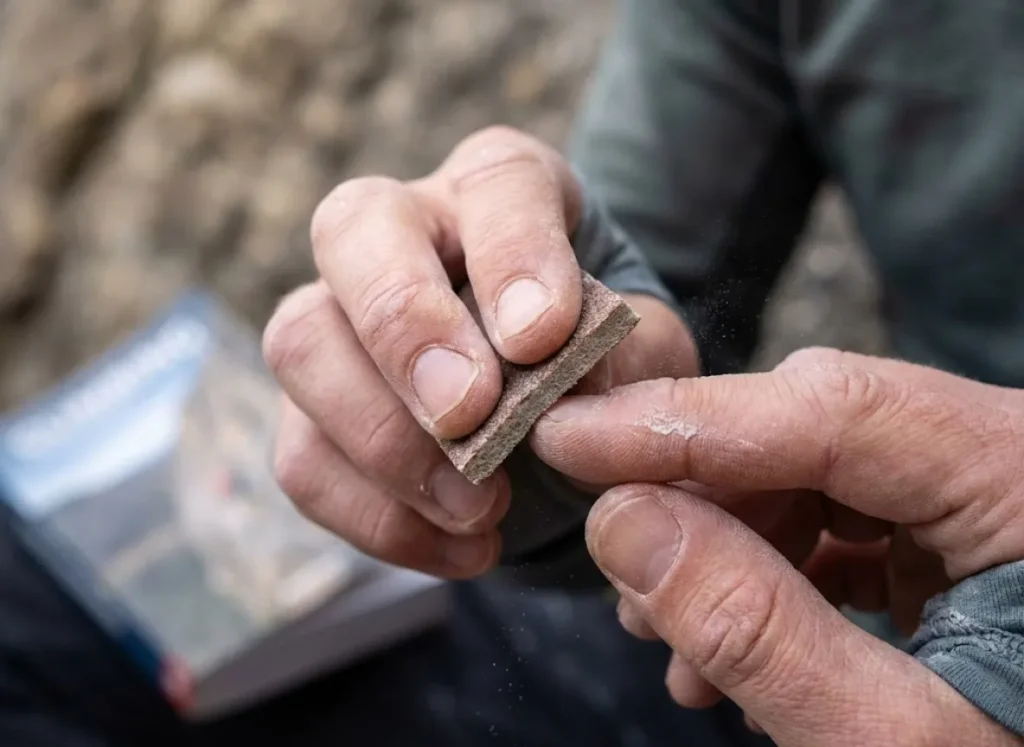
We must also address the “invisible” limiters: skin care for climbers and neural fatigue.
What is the correct skin care protocol for your specific skin type?
Diagnosing your skin type is step one. Do you have Hyperhidrosis (sweaty/soft skin) or Xerosis (dry/glassy skin)? Treating one like the other leads to split tips.
For the “Wet” type, apply a drying agent containing Methenamine (like Antihydral or Rhino Dry) to chemically toughen the skin and reduce sweat gland activity. Understand that Methenamine works by cross-linking proteins in the epidermis. It creates a “shield” that you must maintain.
For the “Dry” type, use occlusive climbing balms (beeswax or oil-based) to seal in moisture. This restores elasticity and prevents dry-firing and cracking.
Regardless of type, sanding calluses is required. Use 80-grit sandpaper to level out skin and remove ridges. A smooth surface distributes force evenly; a ridge catches on crystals and tears.
A comprehensive Ultimate Climbing Skin Care Kit is essential for this maintenance. Sanding is proactive injury prevention.
Medical literature on the management of hyperhidrosis with methenamine confirms the efficacy of these agents for toughening skin.
How does “Beta Visualization” trigger neural adaptations without fatigue?
Your brain can train without lifting a finger.
The Ideomotor Effect describes how vividly visualizing a climb activates the same neural pathways in the motor cortex as physically performing the movement. It reinforces the “engram,” or motor pattern.
Dedicate 15-20 minutes to silent visualization of a project. Feel the texture, the muscle tension, and the emotional response of the send. Combine this with beta analysis—reviewing footage of previous attempts to find micro-inefficiencies. You can also use this time to update your training logs.
This “Cognitive Climbing” improves technical proficiency without draining glycogen. It fits perfectly into a Climber’s Mental Training Framework designed to master fear and execution.
End your visualization with breathwork (e.g., Box Breathing) to ensure the excitement doesn’t spike cortisol levels. Research on motor imagery and neural adaptation in sports verifies that this mental rehearsal strengthens motor pathways and improves performance. Finally, prioritize sleep hygiene; it is the ultimate neural reset.
The Growth Day Manifesto
The “Rest Day” is where the climber is built. The training day is simply the stimulus.
Remember the key propositions:
- Supercompensation: You only get stronger when you rest (24-48h).
- Active > Passive: Zone 1-2 movement clears lactate better than the couch.
- Tendon Specificity: Tendons need short, heavy loading to maintain health.
- Fuel to Repair: Carb cycling and protein pacing prevent fat gain while maximizing muscle repair.
Stop wasting your downtime. Download our “Rest Day Checklist” or share your personal rest day protocol in the comments below to help the community refine the art of the active rest.
FAQ – Frequently Asked Questions
Should I climb on a rest day?
Generally, no—you should avoid training intensity. However, performing ARC training (very easy traversing) for less than 20 minutes without getting pumped is acceptable and can aid recovery.
Is it okay to run on a rest day for climbing?
Yes, if it is kept in Zone 2 (Conversational Pace). Hard running or sprints will compete for recovery resources and fatigue the CNS, hindering climbing gains.
How much protein do I need on a rest day?
Your protein needs do not decrease on rest days. Aim for 1.6–2.0g per kg of bodyweight to support Muscle Protein Synthesis, which stays elevated for up to 48 hours post-climb.
Does yoga count as a rest day activity?
Yes, yoga for climbers is an excellent Green Light activity. Focus on restorative styles (Yin or Hatha) rather than intense Power Yoga to improve mobility without adding fatigue.
Safety Notice: Rock climbing and mountaineering are inherently high-risk
activities that can involve physical trauma or fatal incidents. The information on Rock Climbing Realms is for
educational and informational purposes only. Techniques and advice presented here are not a substitute
for professional, hands-on instruction. Conditions and risks vary by location. Always seek guidance
from a qualified instructor before attempting new techniques. By using this website, you agree that you
are solely responsible for your own safety. Any reliance you place on this information is strictly
at your own risk, and you assume all liability for your actions. Rock Climbing Realms and its authors
will not be held liable for any harm, damage, or loss sustained in connection with the use of this information.
Affiliate Disclosure: We are a participant in the Amazon Services LLC Associates Program, an
affiliate advertising program designed to provide a means for us to earn advertising fees by advertising and linking
to Amazon.com. As an Amazon Associate, we earn from qualifying purchases. We are also an official affiliate partner
of Black Diamond Equipment via the AvantLink network. If you click on a Black Diamond affiliate link and make a
purchase, we may earn a commission at no additional cost to you. We also participate in other affiliate programs.
Additional terms are found in the terms of service.