
In this article
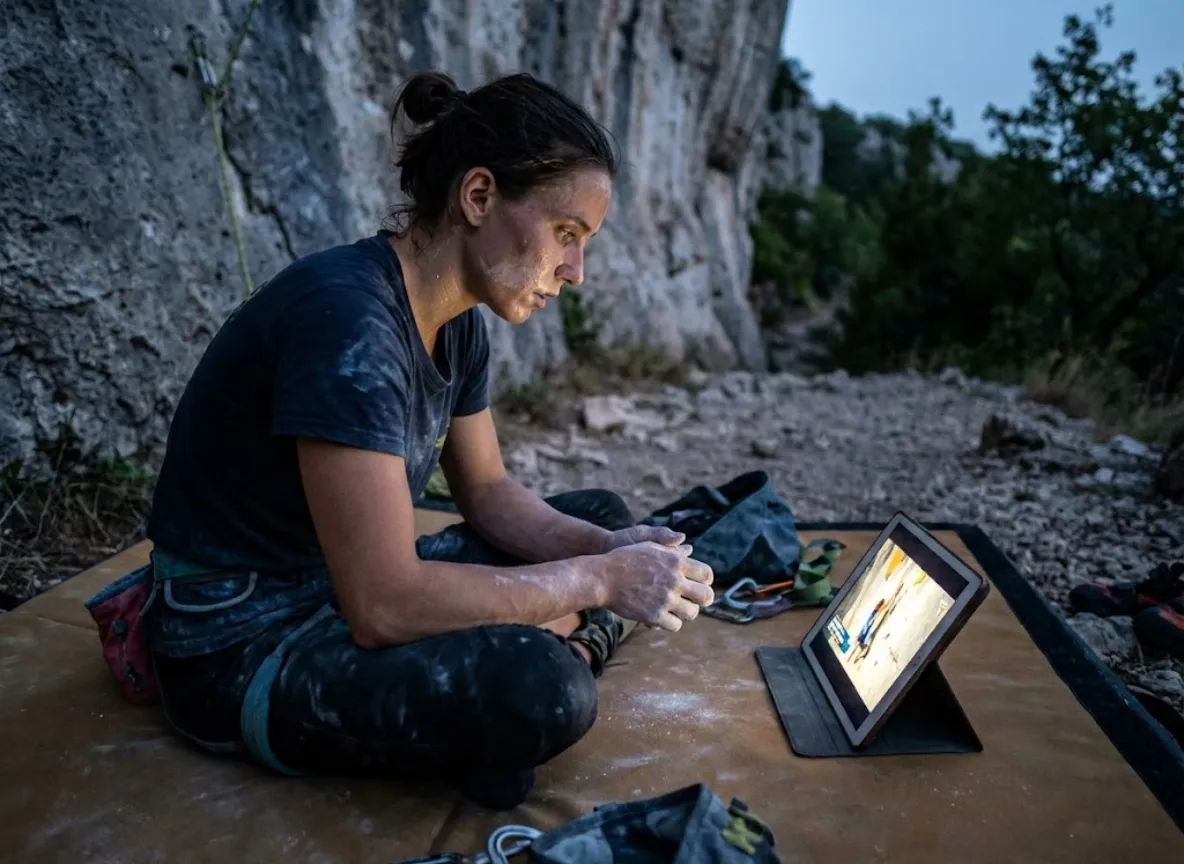
The screen goes black. It is replaced by sterile white text: “Content Not Available in Your Region.” It happens right as the athlete loads up for the buzzer-beating top. In 2026, the crux of the IFSC Climbing World Cup Series isn’t just the coordination dyno on the wall; it is the complex, fragmented matrix of broadcast rights standing between you and the sport.
As a guide, I teach my clients that outdoor competence comes from preparation. You don’t walk up to a multi-pitch route without checking the topo, and you shouldn’t approach the competitive season without a broadcast map. Watching competitive sport climbing is no longer a passive activity—it is a technical skill requiring the same strategic planning as the climb itself.
This guide provides the digital beta you need to bypass geo-blocking. We will map the geopolitical rights boundaries, identify the specific apps required for each zone, and detail the streaming protocols necessary to secure high-fidelity streams of elite climbers like Janja Garnbret.
The Geopolitics of the Vertical Feed
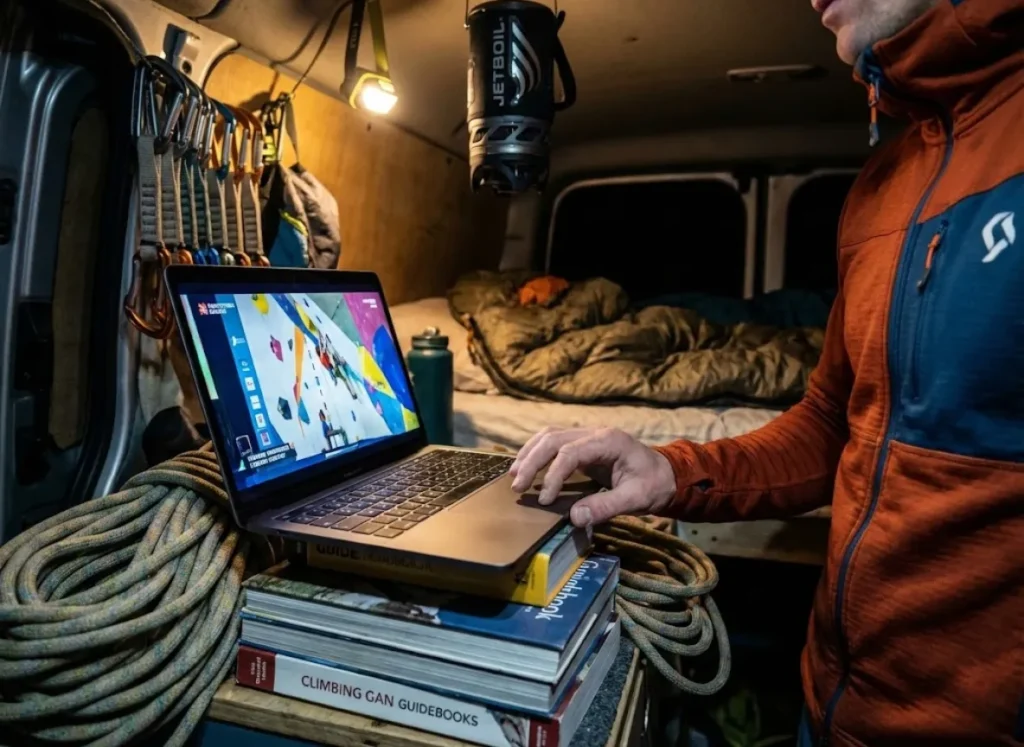
To fix a bad stream, you first have to understand where the signal originates and who bought the fence around it.
Who controls the “World Feed” in 2026?
The “World Feed” is the raw, high-definition signal produced by the International Federation of Sport Climbing (IFSC) in partnership with IRIS Sport Media. This master signal is the source of truth, containing all camera angles, replays, and the visual data required to analyze dynamic movement.
Unlike previous eras of universal free access, this feed is now segmented and sold to commercial broadcasters. The distribution splits into three rigid zones: The “Paywall Fortress” of Europe (WBD), the “Fragmented Giant” of North America (NBC/Outside), and the “Open Market” where networks like CBC (Canada), 9Now (Australia), CCTV (China), and J-Sports (Japan) operate. Access depends entirely on your IP address.
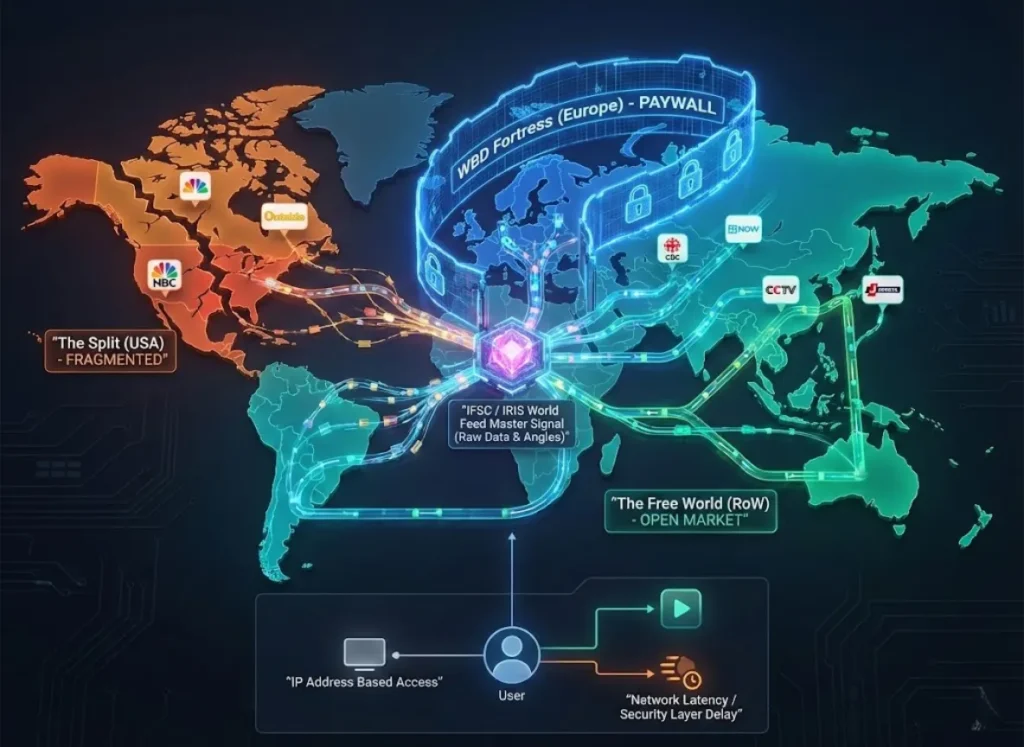
Understanding this tripartite structure is the first step in diagnosing why a standard YouTube link fails in Paris but works perfectly in Toronto. You must also consider the digital streaming technology; recent research on the latency of network layer security suggests that how these broadcasters handle the signal introduces varying latency. If you are serious about understanding the specific IFSC formats and scoring rules, you need a feed that doesn’t cut away during critical scoring reviews.
How do I navigate the “Paywall Fortress” of Europe?
In Europe, Warner Bros. Discovery holds exclusive rights, meaning the free IFSC YouTube Channel is systematically blocked. Viewers must subscribe to Max (formerly HBO Max) with the “Sports Add-on” in most mainland territories, or Discovery+ (TNT Sports tier) in the UK. Even members of The BMC (British Mountaineering Council) are subject to these commercial gates.
The Eurosport legacy channels (Linear TV) are unreliable for the dedicated fan. They often only broadcast Finals, forcing you to use the app for semi-finals coverage and Qualifications. The viewing experience varies by platform; smart TV apps frequently force local language commentary, obscuring the insights of commentators like Matt Groom or Shauna Coxsey, while web players often allow audio track selection.
The cost of fandom has shifted from zero to approximately €15-€30 per month depending on the bundle. However, considering the impact of climbing on balance, agility, and dexterity, seeing the movement clearly is worth the investment for students of the sport. Traveling subscribers should note that while EU portability laws apply, leaving the zone breaks the connection. This is critical if you are planning on watching the iconic Chamonix World Cup from a neighboring non-EU country.
What is the “Fragmented Giant” strategy for USA viewers?
The US market is bifurcated: NBC Universal (Peacock) controls “Olympic Pathway” events, while Outside Interactive (Outside Watch) controls domestic USA Climbing events.
The IFSC YouTube Channel often remains accessible for international World Cups, but “Blackouts” occur unpredictably when NBC asserts rights for high-profile finals. The Salt Lake City World Cups (May and October 2026) present the highest risk of local geo-blocking to protect spectator tickets sales. Peacock coverage is frequently criticized for lacking expert commentary, often airing the raw “world feed” ambient sound.
For the North American Cup Series (NACS) and National Championships, the Outside+ subscription becomes mandatory for on-demand replays. This creates a double-subscription requirement. You must check the rights assignment weekly, as sub-licensing deals can change for events like the GoPro Mountain Games. This fragmentation makes it difficult to consistently follow the sport, which is frustrating when you are analyzing pro-level bouldering competition training to apply to your own regimen. Additionally, with the Asian Games approaching, review the specifications for the host broadcast to see if US carriers pick up those specific feeds.
Pro-Tip: If you are a US viewer, assume Salt Lake City events will be blacked out on YouTube. Secure a Peacock subscription specifically for those months, or utilize the digital tools detailed below to shift your virtual location to Canada.
The Digital Beta: Technical Optimization
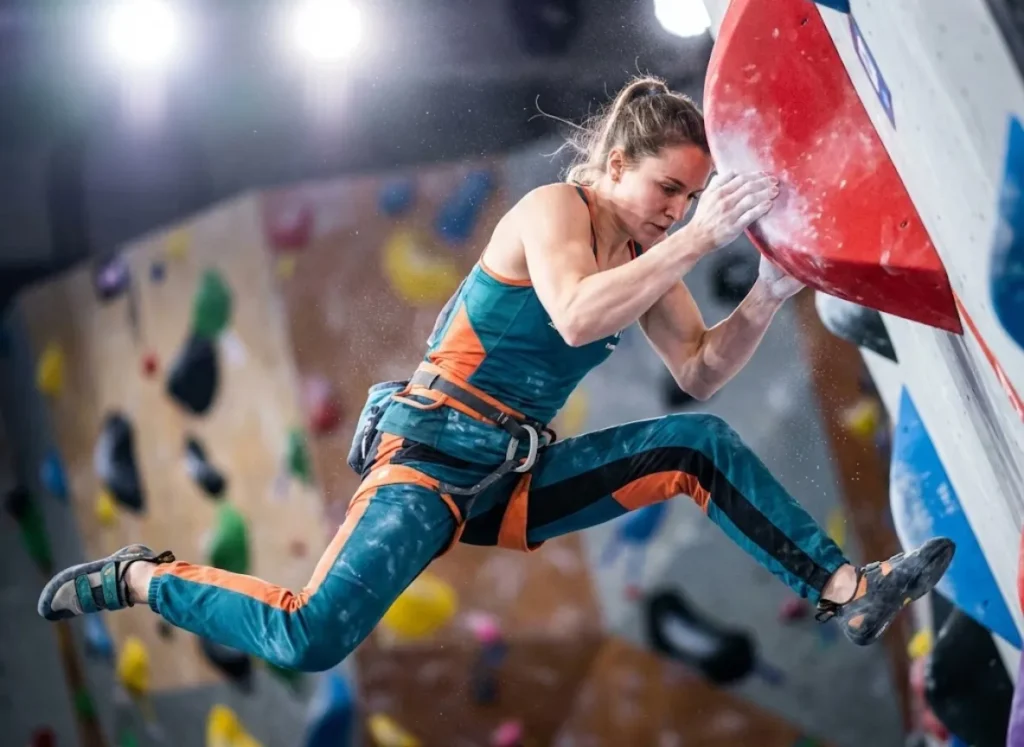
Once you identify where to watch, you must optimize how you watch. A stuttering stream obscures the most important part of sport climbing: the friction.
Why is the WireGuard protocol essential for live sports?
When tunneling to a “Free World” server to access YouTube, the choice of VPN protocol efficiency dictates your buffer rate. WireGuard is the modern standard, utilizing a lightweight codebase that allows for instant handshakes and significantly higher data throughput compared to OpenVPN.
Traditional protocols rely on heavy codebases that introduce processing overhead and “jitter,” leading to the loading spinner during live action. For dangerous sports streamed at 1080p/60fps, WireGuard reduces the “latency overhead” to milliseconds. Benchmarks indicate WireGuard is approximately 4x faster than legacy protocols, ensuring the video keeps pace with the audio.
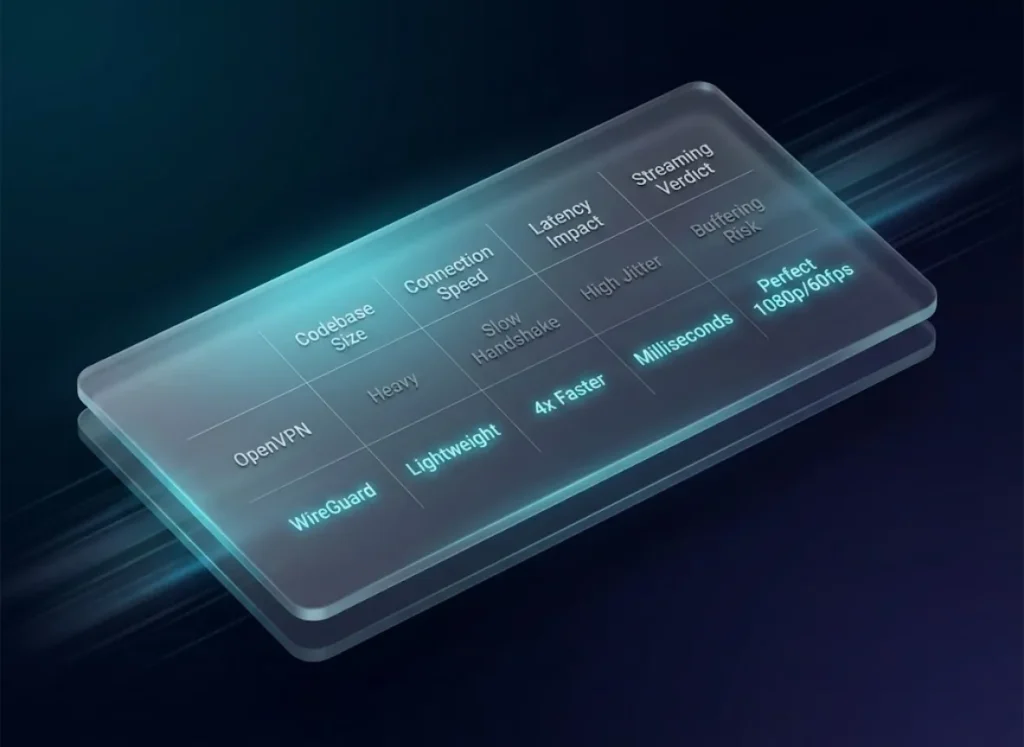
If a connection drops, WireGuard reconnects almost instantly. Older protocols require a lengthy renegotiation that causes viewers to miss crucial tops. Users should specifically configure their client—whether using NordVPN, ExpressVPN, or ProtonVPN—to force WireGuard. Avoid the free VPNs built into the Opera Browser, as they lack the throughput for high-speed sports.
Why does 60fps matter for modern route setting?
Modern competition bouldering is defined by “coordination dynos” where the climber is airborne for split seconds, moving at 2-3 meters per second. At 30 frames per second (fps), an athlete moves approximately 10cm per frame, creating motion blur that obscures hand placement.
60fps framerate doubles the temporal resolution. This captures the climber every ~5cm of movement, allowing the eye to register the exact moment of contact on the physical boulders. The “Free” IFSC YouTube stream typically supports 1080p/60fps natively. This is often technically superior to paid apps which cap at 30fps to save mobile bandwidth.
For the 2026 “Speed 4” format, high framerate is critical to track four competitors simultaneously. Prioritizing a platform that supports 60fps allows you to see the micro-beta. Understanding these visual mechanics is just as important as reading the IFSC wall requirements for competition. When you can see the friction, you can better learn how to dyno climbing movements yourself.
Pro-Tip: On YouTube, right-click the video player and select “Stats for Nerds.” Monitor the “Buffer Health.” If it drops below 10 seconds while using a VPN, switch your server location immediately, even if the video hasn’t frozen yet.
Final Beta
The 2026 viewing environment is defined by the “Stream Matrix”: WBD in Europe, Peacock/Outside in the US, and YouTube for the Rest of the World. The introduction of the “Speed 4” format and the Asian Games in Aichi-Nagoya require viewers to adapt their viewing habits, whether the event is in Keqiao, Innsbruck, or Seoul.
Technical optimization using WireGuard VPN protocols and 60fps streams is essential for analyzing the “coordination era” of modern route setting. Bookmark this matrix, download your .ics schedule for Google Calendar integration, and configure your digital tools before the season starts.
FAQ – Frequently Asked Questions
Why is the IFSC YouTube channel blocked in my country?
The IFSC sells exclusive sports broadcasting rights to regional partners (like Warner Bros. Discovery in Europe), legally requiring them to geo-block the free YouTube feed in those territories to protect the value of the paid contract.
Can I watch the Climbing World Cup on Peacock?
Yes, but primarily for Olympic Pathway events or major Finals; coverage is often inconsistent, and domestic events like the NACS are usually found on Outside Watch or separate YouTube streams.
What is the best VPN protocol for streaming live sports?
WireGuard protocol is the superior choice for live streaming due to its lightweight code and high throughput, which minimizes buffering and latency compared to older protocols like OpenVPN.
How can I watch the Asian Games 2026 climbing events?
Rights for the Asian Games are sold separately from the IFSC World Cup; viewers will likely need access to specific Asian broadcasters (like CCTV, Astro Supersport 4, or J-Sports) or look for a global rights holder closer to the event.
Safety Notice: Rock climbing and mountaineering are inherently high-risk
activities that can involve physical trauma or fatal incidents. The information on Rock Climbing Realms is for
educational and informational purposes only. Techniques and advice presented here are not a substitute
for professional, hands-on instruction. Conditions and risks vary by location. Always seek guidance
from a qualified instructor before attempting new techniques. By using this website, you agree that you
are solely responsible for your own safety. Any reliance you place on this information is strictly
at your own risk, and you assume all liability for your actions. Rock Climbing Realms and its authors
will not be held liable for any harm, damage, or loss sustained in connection with the use of this information.
Affiliate Disclosure: We are a participant in the Amazon Services LLC Associates Program, an
affiliate advertising program designed to provide a means for us to earn advertising fees by advertising and linking
to Amazon.com. As an Amazon Associate, we earn from qualifying purchases. We are also an official affiliate partner
of Black Diamond Equipment via the AvantLink network. If you click on a Black Diamond affiliate link and make a
purchase, we may earn a commission at no additional cost to you. We also participate in other affiliate programs.
Additional terms are found in the terms of service.