
In this article
The crux holds nothing but silence. Your breath is loud, the wind cuts through your fleece, and the next move requires a commitment that feels impossible. But in the hours before this moment—during the commute, the warm-up, the rest day—you filled that silence with the voices of those who have been here before.
Climbing podcasts have evolved from garage-style banter into a vital infrastructure for mentorship. They are no longer just background noise; they are the modern climber’s primary vector for downloading the experience, metrics, and warnings necessary to survive and perform.
In my years guiding, I have seen that true outdoor competence comes from turning theoretical knowledge into practical action. This guide will take you from a consumer overwhelmed by the sheer volume of downloads on Spotify or Apple Podcasts to a curator. You will be equipped to build a personalized audio toolkit.
Whether you need the data-driven rigor of Lattice or the risk management lessons of The Sharp End, this is your blueprint for off-the-wall apprenticeship.
How has the climbing podcast ecosystem evolved beyond simple “banter”?
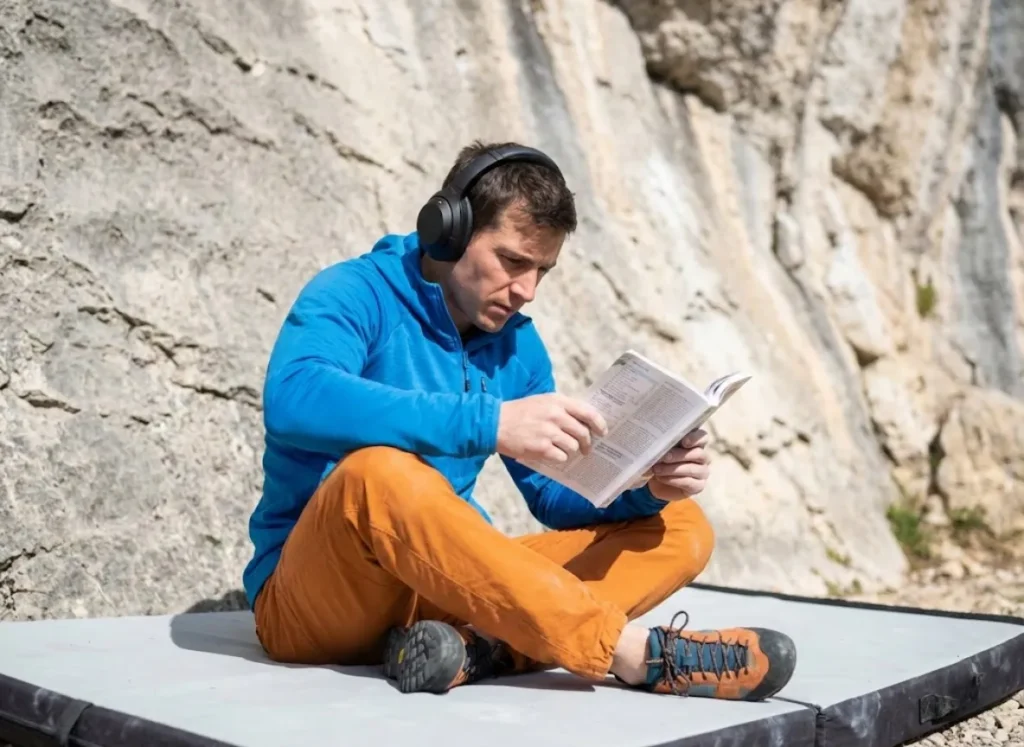
Early climbing media was dominated by print and episodic videos. However, the last decade has seen a seismic shift toward on-demand audio that serves specific “Avatar Profiles.”
The “Generalist” format—two friends discussing their weekend at the crag—has largely been supplanted by high-production networks and hosts with significant authority.
Modern listeners now demand verticalization. They seek distinct shows for distinct needs. The “Self-Optimizer” rejects the “Cultural Historian’s” nostalgia, and vice versa. This specialization mirrors the diversification of the sport itself.
Just as we are understanding the changing social dynamics in climbing, audio media is splitting into sub-disciplines like high-altitude alpinism, indoor bouldering, and Olympic competition.
Training Podcast Showdown
A comparative analysis of podcast categories, intents, and dominant entities.
Dominant Entities
Lattice Training, TrainingBeta, Camp4 Human Performance
Key Value Proposition
Evidence-based protocols, data science, injury rehab.
Tone/Style
Academic, Technical, Instructional
Dominant Entities
The Enormocast, Climbing Gold
Key Value Proposition
Deep-dive interviews, legacy preservation, “soul” of the sport.
Tone/Style
Conversational, Nostalgic, Raw
Dominant Entities
The Nugget, The Power Company, Modus Cafe
Key Value Proposition
Actionable tactics, mental mastery, behavioral coaching.
Tone/Style
Analytical, Detail-Oriented, Practical
Dominant Entities
The Firn Line, The Cutting Edge
Key Value Proposition
High-altitude storytelling, wilderness immersion, journalism.
Tone/Style
Atmospheric, Serious, Journalistic
Dominant Entities
The RunOut, Circle Up, Jam Crack
Key Value Proposition
Current events, banter, competition analysis, diversity.
Tone/Style
Opinionated, Humorous, Social
Dominant Entities
The Sharp End, First Ascent
Key Value Proposition
Accident analysis, trauma processing, systems education.
Tone/Style
Sober, Educational, Emotional
The market now offers highly specific utility. You have Lattice for the data nerd, The Sharp End for risk managers, and Circle Up for competition climbing analysis.
For the listener, this means the “best” podcast is no longer a singular recommendation. It is a curated portfolio that matches your current phase. You assess the vibe meter and the science vs banter ratio to find what fits.
Pro-Tip: Don’t subscribe to everything. Audit your feed seasonally. If you are in a strength phase, mute the news and focus on training science. If you are injured, switch to history and culture to stay connected without the FOMO.
Research on the efficacy of audio-based learning in sports confirms that audio-based learning can effectively reinforce motor skills and strategic thinking in athletes. With the terrain mapped, we must first address the most common listener intent: the pursuit of raw physical power.
Which podcasts are essential for physiological optimization and training?
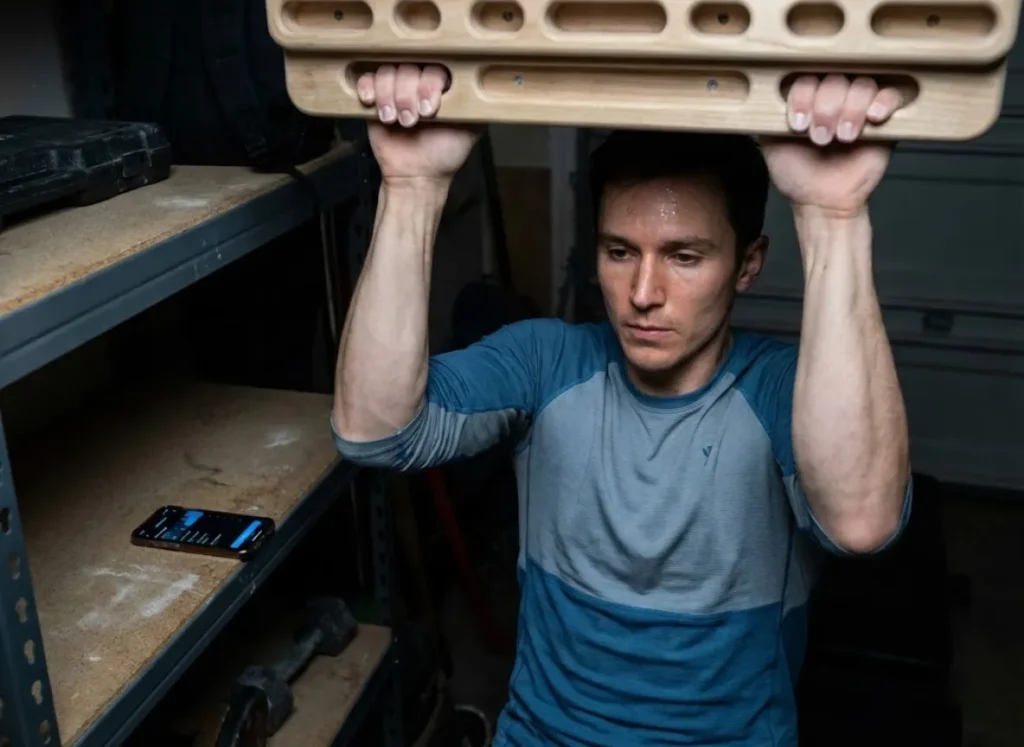
For the “Self-Optimizer,” the goal is to filter out anecdotal “bro-science” in favor of evidence-based resources.
How does Lattice Training leverage data science to dismantle “bro-science”?
Hosted by Tom Randall and Ollie Torr (The Wide Boyz), Lattice Training is backed by the world’s largest dataset of climber assessments. The show functions as a “Performance Lab,” systematically dismantling generic advice (e.g., standard max hangs) in favor of metrics derived from thousands of data points.
Key discussions often center on the validity of “Critical Force” testing and the nuances of energy systems. The podcast is notable for addressing morphological bias—questioning if 20mm edges work for all finger strength protocols—and pioneering discussions on female physiology with coach Maddy Cope. It appeals strictly to those who value academic rigor over entertainment.
Before applying their training protocols, it is critical to establish a baseline by conducting your own climbing assessment. This data-first approach is supported by academic validity and normative scores of finger flexor strength and endurance tests.
Why is TrainingBeta considered the accessible bridge for non-pro climbers?
Neely Quinn, a climber/nutritionist/coach, has hosted TrainingBeta since 2014. She created a massive archive that makes high-level sports science accessible to the everyday climber.
Unlike the singular methodology of proprietary brands, this show aggregates expertise from various coaches (Steve Bechtel, Tyler Nelson), offering a “buffet” of training philosophies. It sits alongside Eric Hörst’s Training for Climbing as a pillar of education.
Quinn’s professional background makes this the definitive resource for nutritional strategies, weight management, and avoiding RED-S (Relative Energy Deficiency in Sport). The show heavily emphasizes injury prevention and rehab, frequently collaborating with physical therapists like Dr. Jared Vagy (“The Climbing Doctor”).
It serves the demographic that wants to climb harder without sacrificing holistic health. This is ideal for recreational climbers balancing a job with getting stronger. Once you have absorbed the theory, the next step is building a smart rock climbing training program that fits a non-pro schedule.
The focus on proper fueling is critical, as highlighted by the International Olympic Committee consensus statement on RED-S.
What makes The Power Company and Camp4 unique in their approach to movement?
The Power Company, hosted by Kris Hampton, focuses on the “software” of climbing. This includes mindset, behavioral tactics, and the concept of “Position Over Everything” (P.O.E.).
Hampton treats “trying hard” as a trainable skill rather than a personality trait. He engages listeners who need to fix their execution.
Camp4 Human Performance (Dr. Tyler Nelson) occupies the other end of the spectrum. Nelson focuses on clinical measurements of tendon stiffness and rate of force development (RFD).
Nelson challenges traditional wisdom, advocating for “active loading” over passive dead-hanging to better simulate the dynamic demands of climbing.
Together, these shows cover the gap between “how strong you are” and “how well you use it,” specifically when executing explosive power and strength exercises.
What shows best preserve the oral history and “soul” of climbing?
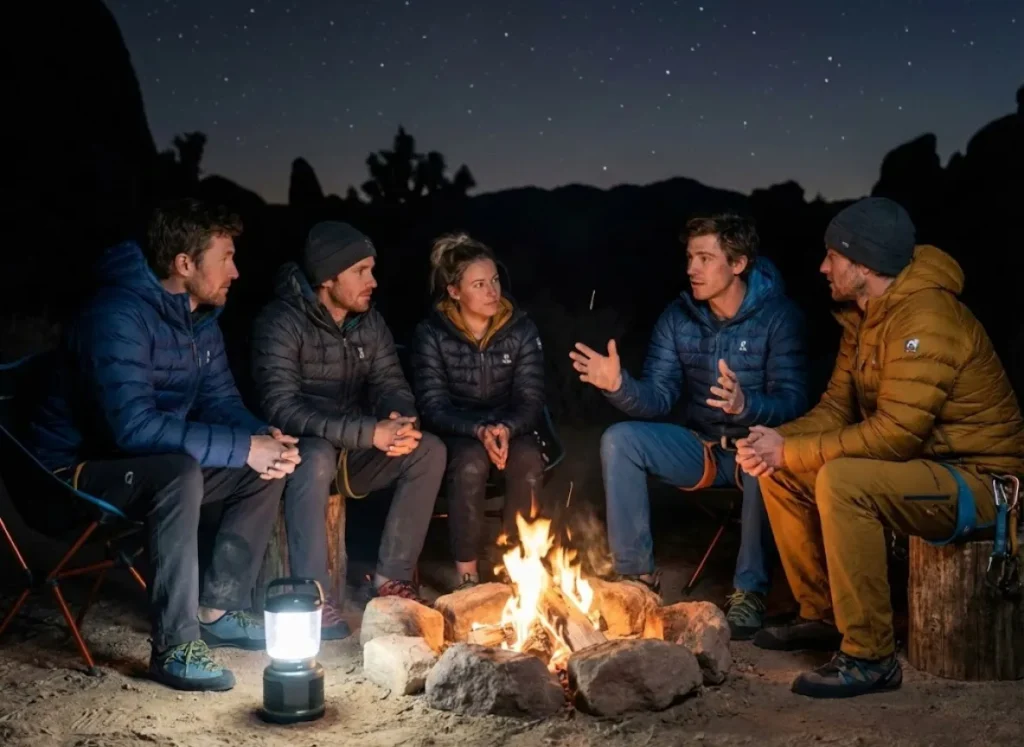
Climbing is not just a sport of metrics; it is a culture built on stories passed down through generations. These podcasts serve as the digital archives for the sport’s legends.
Why is The Enormocast the undisputed “campfire” of the sport?
Chris Kalous has established The Enormocast as the “gold standard” of climbing audio, with over 300 episodes spanning more than a decade.
The format is unscripted, raw, and intimate. It captures the dirtbag state of mind and the personality of guests in a way that polished media cannot. It shares DNA with The Climbing Zine and fellow host Luke Mehall in its dedication to the grit of the lifestyle.
The podcast functions as an oral history project, documenting the lives of aging legends whose stories might otherwise be lost. Kalous staunchly defends traditional climbing ethics against commercialization. Listening gives context to the rock, much like learning from historic climbing routes connects you to the pioneers of the past.
The importance of this documentation is underscored by the Library of Congress Sports History Collection overview, which values oral histories in preserving niche sporting communities.
How does Climbing Gold differ in production value and narrative scope?
Hosted by Alex Honnold and Fitz Cahall, Climbing Gold brings mainstream production values, scripting, and sound design to the niche.
Instead of the “two dudes talking” format, it uses a documentary style to explore broad themes like “Risk,” “Competition,” and “The Edge.”
The show translates esoteric climbing concepts into universal human themes. It provides a window into the elite mindset, such as Honnold’s real-time narration of endurance efforts. It offers insight into the achievements detailed in the definitive Alex Honnold biography.
Who is leading the conversation on tactics, details, and “nuggets” of wisdom?
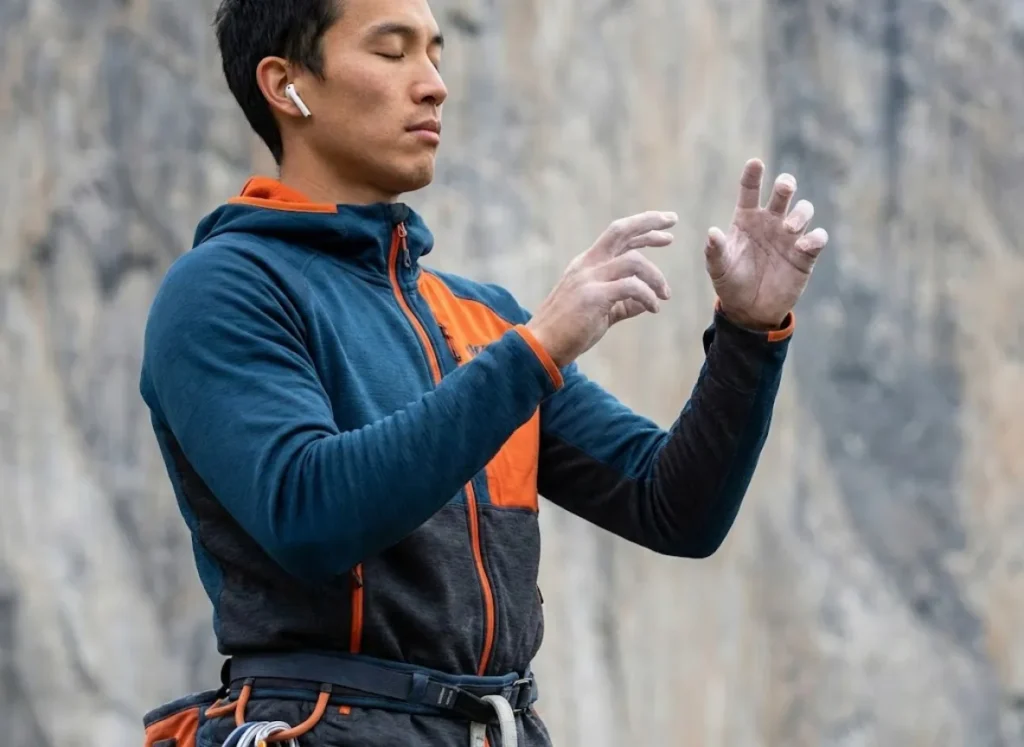
History inspires us, but to execute on the wall, we need granular, actionable details.
How does The Nugget Climbing extract actionable tactics from elite performers?
Since 2020, host Steven Dimmitt has redefined the interview format through obsessive preparation and long-form deep dives.
The goal is to extract specific “nuggets”—dietary habits, warm-up routines, skin care tactics—rather than retelling the guest’s life story. It serves a similar role to The Struggle Climbing Show with Ryan Devlin, which focuses on how average rock climbers can learn from the pros.
The podcast allows listeners to triangulate advice by featuring guests with contradictory methods, encouraging “n=1” experimentation.
Dimmitt balances superstars like Adam Ondra with “local legends,” proving that elite tactics can apply to non-pro climber guests. It is the definitive show for applying these specific climbing redpoint tactics to your own projects.
Which podcasts provide critical analysis of risk, safety, and community news?
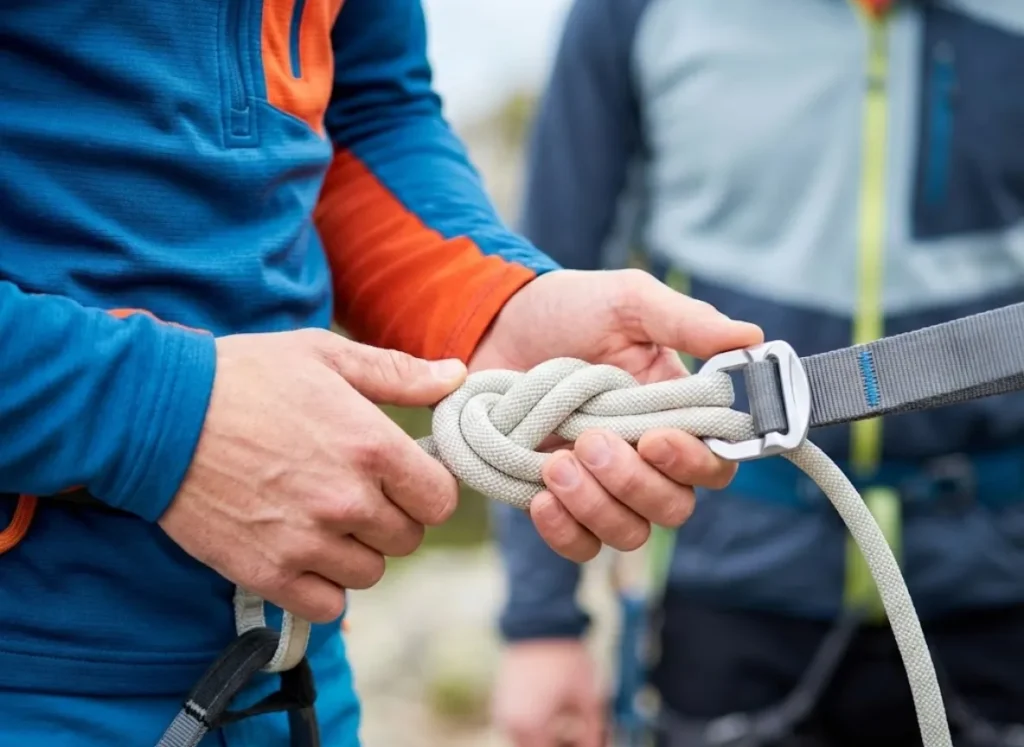
Optimization is futile if we do not survive the climb. We must address the reality of risk and the state of our community.
How does The Sharp End transform accident reports into life-saving lessons?
Supported by the American Alpine Club (AAC) and hosted by Ashley Saupe, The Sharp End is an educational tool rather than entertainment.
Each episode deconstructs a specific accident from the Accidents in North American Climbing publication, featuring interviews with survivors and rescue teams.
The show de-stigmatizes human error, shifting the focus from “blame” to “systems analysis.” The audio format captures the emotional weight of trauma and recovery, serving as a potent psychological deterrent to complacency. It is a critical resource for mitigating risk by understanding the Swiss Cheese Model.
You can view the raw statistics behind these stories in the American Alpine Club annual accident report summary.
Pro-Tip: Listen to The Sharp End on your drive to the crag. It puts your head in a safety-first mindset before you even tie in.
Where can listeners find critical commentary on competition and industry trends?
The RunOut, hosted by Andrew Bisharat and Chris Kalous, acts as the industry’s op-ed page. It offers critical, often cynical analysis of bolt wars, access issues, and current events found on Climbing.com or Reddit.
Circle Up, hosted by Olympians Kyra Condie and Allison Vest, fills a critical gap by covering the International Federation of Sport Climbing (IFSC) circuit.
They pioneer discussions on body image and substance testing, providing transparency into the high-pressure world of professional competition. For a lighter, British take on the industry (and plenty of surreal humor), Niall Grimes‘s Jam Crack Podcast is a staple. For deeper mental health discussions and inclusivity and diversity, Kathy Karlo‘s For the Love of Climbing is essential listening.
This context is vital for navigating the complexities of IFSC formats and scoring rules.
Conclusion
Building a competent climbing mind requires a curated diet of information.
- For Training: Use Lattice and Camp4 for science; TrainingBeta for practical application.
- For Culture: The Enormocast is the archive; Climbing Gold is the documentary.
- For Tactics: The Nugget provides the granular details for sending your project.
- For Safety: The Sharp End is the essential tool for risk mitigation and survival.
Don’t just listen—apply. Pick one protocol from Lattice or one safety system from The Sharp End and integrate it into your next session.
FAQ – Frequently Asked Questions
What is the best climbing podcast for beginners?
TrainingBeta or Climbing Gold. These shows avoid overly dense jargon and cover broad, foundational topics accessible to new climbers. She Explores is also excellent for a broader outdoor perspective.
Are there podcasts specifically for climbing training and finger strength?
Yes, Lattice Training and Camp4 Human Performance. These are the industry leaders for data-driven protocols on hangboarding, energy systems, and recruitment. Eric Hörst’s Training for Climbing is another veteran resource.
Is The Enormocast still running?
Yes, Chris Kalous continues to release new episodes bi-weekly. It remains the longest-running and most consistent interview podcast in the podcast scene.
Where can I find podcasts about climbing accidents and safety?
The Sharp End podcast. It is dedicated exclusively to accident analysis from the Accidents in North American Climbing reports to teach risk management.
Safety Notice: Rock climbing and mountaineering are inherently high-risk
activities that can involve physical trauma or fatal incidents. The information on Rock Climbing Realms is for
educational and informational purposes only. Techniques and advice presented here are not a substitute
for professional, hands-on instruction. Conditions and risks vary by location. Always seek guidance
from a qualified instructor before attempting new techniques. By using this website, you agree that you
are solely responsible for your own safety. Any reliance you place on this information is strictly
at your own risk, and you assume all liability for your actions. Rock Climbing Realms and its authors
will not be held liable for any harm, damage, or loss sustained in connection with the use of this information.
Affiliate Disclosure: We are a participant in the Amazon Services LLC Associates Program, an
affiliate advertising program designed to provide a means for us to earn advertising fees by advertising and linking
to Amazon.com. As an Amazon Associate, we earn from qualifying purchases. We are also an official affiliate partner
of Black Diamond Equipment via the AvantLink network. If you click on a Black Diamond affiliate link and make a
purchase, we may earn a commission at no additional cost to you. We also participate in other affiliate programs.
Additional terms are found in the terms of service.