

In this article
The wind howling down from the Eastern Sierra crest at 40mph doesn’t care about your gym grade. Standing in the rain shadow of the Owens Valley, the rock is sharper, the landings are taller, and the risks are entirely real. To climb in Bishop, California is to step into a geological arena defined by violent volcanic history and glacial slow-motion.
As a guide who has spent countless winters scrubbing icy granite and navigating the high desert climate, I can tell you that success here requires a shift in mindset. You must move from “conquering” rocks to adapting to them. Competence in Bishop isn’t measured solely by the V-scale. It is measured by your ability to adapt to two distinct geologies, manage the harsh physiology, and act as a steward for the fragile Payahuunadü ecosystem.
This how-to planning guide will take you from an aspirational visitor to an informed alpinist. We will cover how to master the granite friction of the Buttermilks versus the pocket pulling of the Tablelands, strategic protocols to manage the “Bishop Skin Tax,” and how to identify the living soil beneath your crash pads.
What Defines the Bishop Climbing Experience?
Why is Payahuunadü more than just a playground?
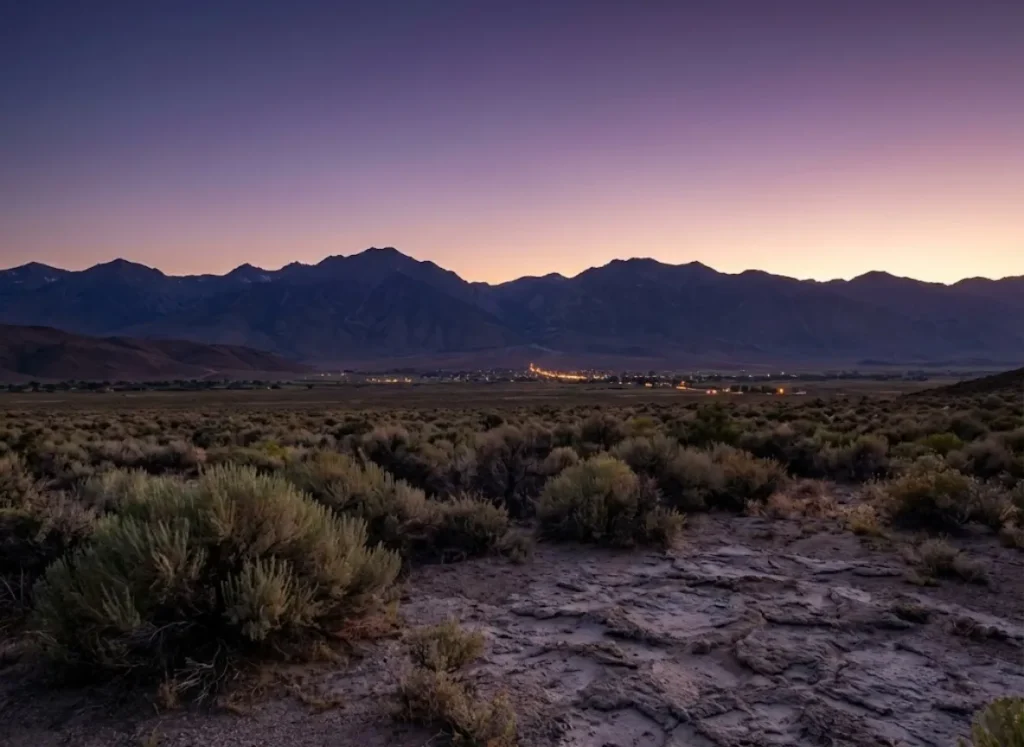
The valley is traditionally known as Payahuunadü, meaning “Land of the Flowing Water.” This name reflects the sophisticated irrigation systems engineered by the Nüümü (Paiute) and Newe (Shoshone) peoples millennia ago. Modern climbers are guests on this land, which remains the home of the Bishop Paiute Tribe. The tribe currently operates on a diminished land base resulting from the California Water Wars.
Acknowledgment of this history is the first technical skill of the trip. It reframes recreation as a privilege rather than a right. You can read the official state assessment regarding the impacts of climate change on the Bishop Paiute Tribe to understand the environmental challenges facing the indigenous stewards of the valley.
Cultural resources such as petroglyphs, hunting blinds, and house rings are prevalent near climbing areas, particularly in the Volcanic Tablelands. The protocol is absolute: look but never touch. Skin oils degrade rock art and foot traffic destroys archaeological context. Refraining from geotagging specific cultural sites on social media acts as a digital Leave No Trace (LNT) practice. This aligns with the broader framework of mastering the Desert Climber’s Ethics Codex, which protects these non-renewable resources.
Once you understand the ground you walk on, you must understand the stone you climb on, for Bishop bouldering is a tale of two distinct rock types.
How does the geology dictate your climbing style?
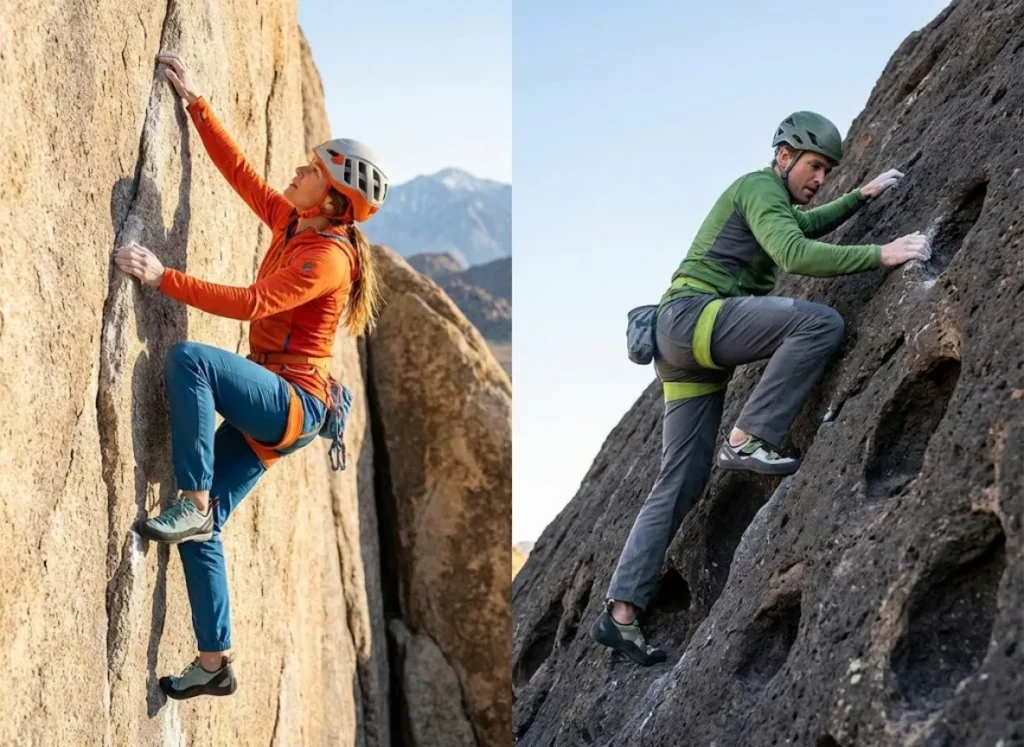
While the comprehensive guidebook details nearly 2,000 problems, you essentially manage two principle rock types. The Buttermilks consist of Quartz Monzonite, a granitic intrusive rock defined by large, sharp crystals. These offer immense friction but high skin abrasion. Conversely, the Happy Boulders and Sad Boulders are composed of Bishop Tuff. This rock was formed by a pyroclastic flow 760,000 years ago, resulting in porous surfaces with pockets and huecos. Climbers must pack different footwear: stiff edging shoes for the granite micro-crystals and softer, sensitive shoes for the steep climbing of the tuff.
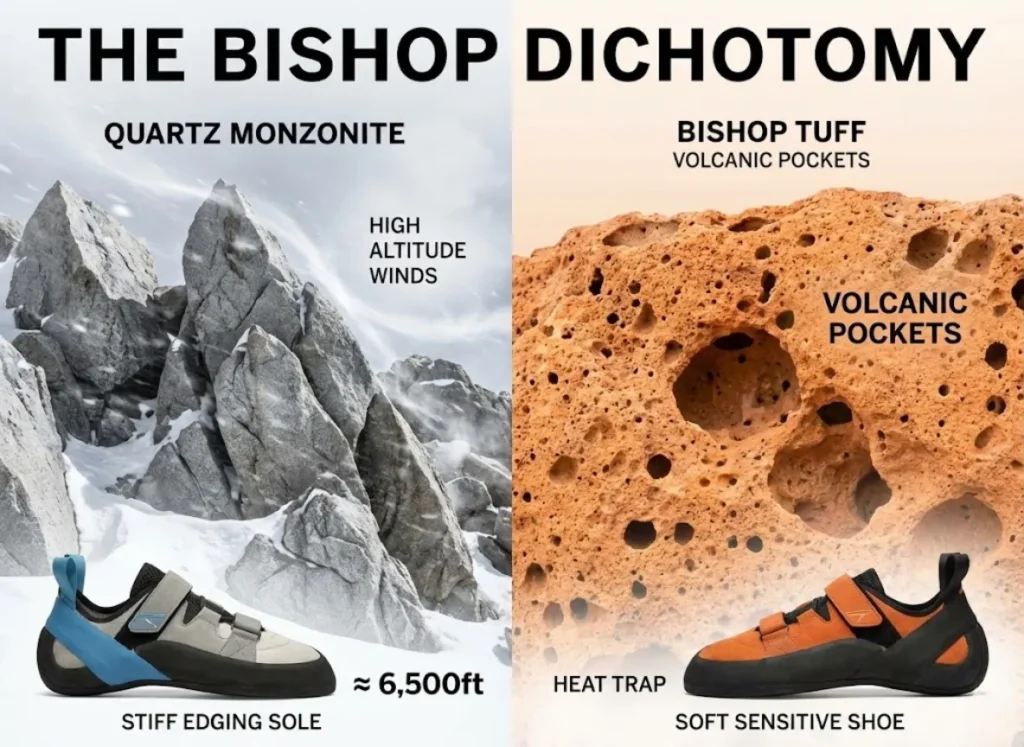
Thermodynamics play a critical role in your daily strategy. The high-altitude Buttermilks (6,500ft) require cold temps for friction but are exposed to fierce winds. The Tablelands (4,500ft) act as “heat traps” in their canyons. This makes them the optimal venue when wind chill makes the open granite unclimable. Leading experts, such as those highlighted in the USGS profile on Jayne Belnap, have studied how these geological factors interact with the desert ecology.
Understanding this geological dichotomy allows for “chasing conditions.” You can swap venues based on wind speed and ambient temperature to maximize sending potential. For a deeper technical breakdown of how igneous vs. sedimentary geology impacts safety, it is worth spending time on identifying climbing rock types before you arrive.
Where Should I Climb Based on My Style?
What makes the Buttermilk Country the epicenter of highballing?
The Buttermilks are characterized by massive glacial erratics, such as the Peabody Boulders. These highball granite boulders blur the line between bouldering and free soloing. Movement here is technical and tension-dependent. It often requires “mandatory” moves well above the height where a fall is safe. Even moderate lines like the Iron Man Traverse (a V4 classic) demand respect for the stone’s texture.
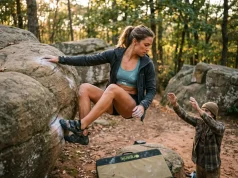
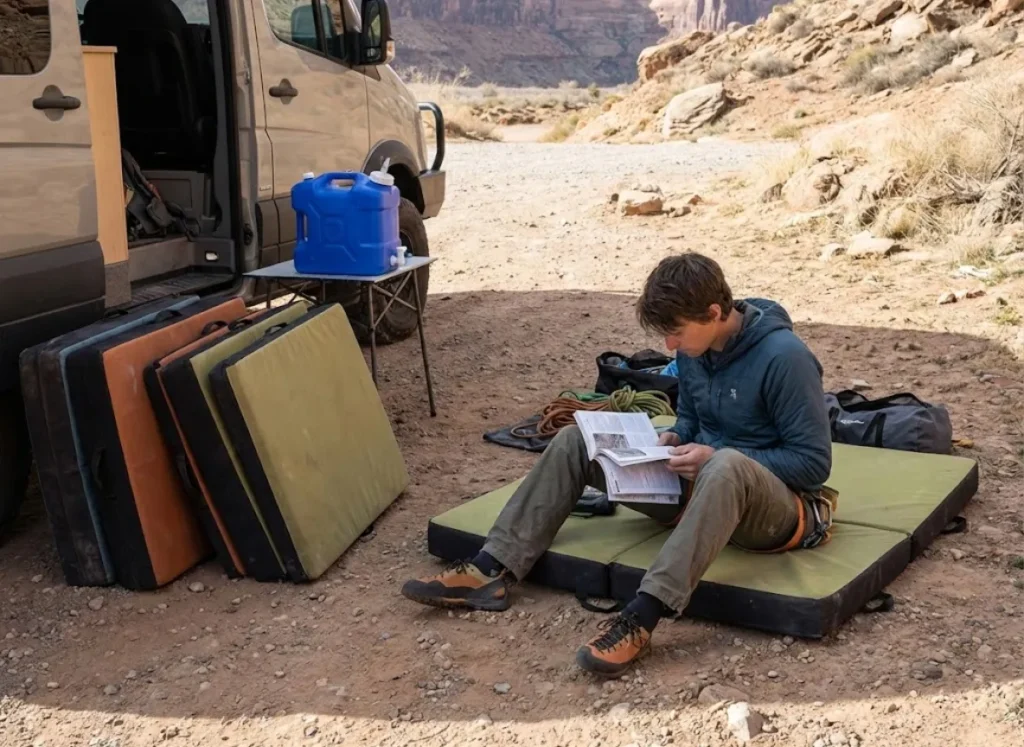
Pad strategy is essential. You must use “pad tetris” to level landings and always employ a spotter who understands “vector spotting” to direct falls away from hazards. For those new to managing uneven terrain, mastering crash pad placement is a non-negotiable skill for these landings.
Pro-Tip: The “Grandpa Peabody” and other highballs have complex descents. Always pre-inspect the downclimb or walk-off before you commit to the climb. Getting up is optional; getting down is mandatory.
The grading can feel “sandbagged” for gym climbers. Difficulty here relies on trusting granite smearing on featureless slabs rather than pulling on positive holds. Morning sessions (“Dawn Patrol”) are preferred to catch the coldest temperatures. Once the sun warms the patina, the coefficient of friction drops significantly. You can verify current access conditions via the BLM California recreation activities page, especially regarding the washboarded Buttermilk Road.
If the friction of the Buttermilks shreds your tips or the height rattles your nerves, the canyons offer a sheltered alternative.
Why are the Happy and Sad Boulders better for power endurance?
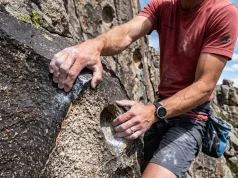
Accessed via Chalk Bluff Road, the Happy Boulders and Sad Boulders offer steep, athletic climbing on volcanic tuff. This style closely mimics the dynamic movement found in modern climbing gyms. The rock features deep pockets, huge jugs, and horizontal roofs. It rewards bicep power and core tension over delicate footwork. These areas are ideal for windy days, as the narrow canyons block the gusts that scour the open plateau.
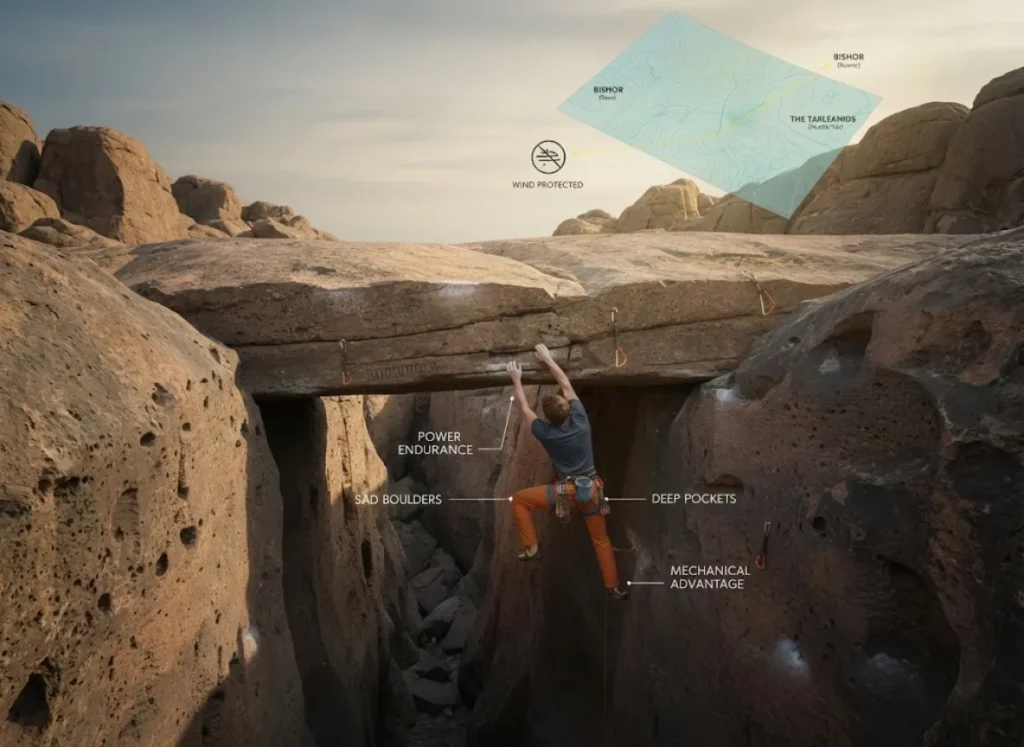
The friction on tuff is lower than granite. Success relies on mechanical advantage (hooking, incut holds) rather than surface adhesion. The Sad Boulders are generally steeper and stay shaded longer, making them a superior choice for warmer afternoons. Check the Bishop Field Office overview for specific canyon regulations.
Warning: The rock quality can be variable. Test holds on easy warm-ups to learn how to identify friable (crumbly) rock before committing to limit moves. This terrain is excellent for practicing executing bouldering moves like dynos, as the holds are often large enough to catch at speed.
Yet, as crowds flock to these legendary canyons, a quieter ecosystem exists beneath the approach trails, demanding a different kind of attention.
What Logistics Are Required for a Sustainable Trip?
What is the “Don’t Crush the Brush” protocol?
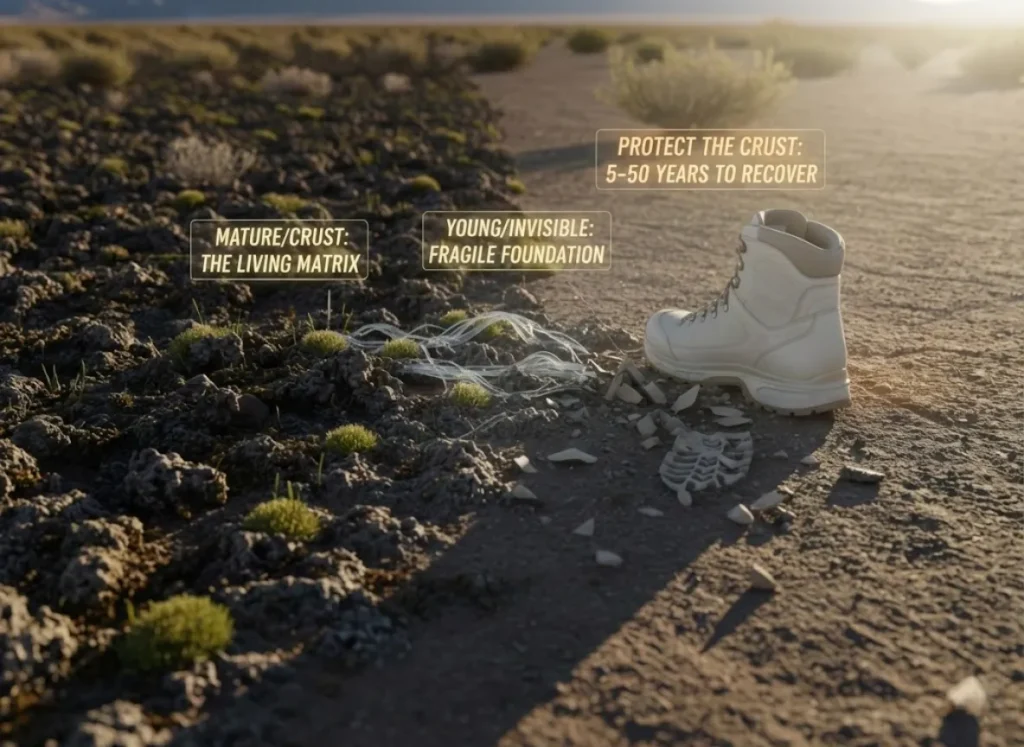
The soil in Bishop is a living matrix known as Biological Soil Crust (biocrust). It is comprised of cyanobacteria, lichens, and mosses that stabilize the desert floor. This crust prevents erosion and fixes nitrogen for plants. A single footstep can shatter the crust, requiring 5 to 50 years for recovery.
The “Don’t Crush the Brush” rule mandates traveling only on established trails, rock surfaces, or sandy washes (dry riverbeds). You can review the scientific basis for this fragility in the NPS resource on the structure and function of biological soil crusts.
Never create new staging areas or campsites. Place crash pads only on bare, durable surfaces to avoid suffocating the crust. Invasive species like cheatgrass thrive in disturbed soil. Protecting the crust is the primary defense against the “grass-fire cycle” that threatens the ecosystem. This aligns with the principles of following the Climber’s Guide to Leave No Trace Ethics.
Protecting the soil is the first step of environmental stewardship; the second is managing the waste we produce and the damage we inflict on our own bodies.
How do I manage the notorious “Bishop Skin Tax”?
Bishop’s quartz monzonite acts as high-grit sandpaper. The primary limiting factor for a trip is often skin thickness, not muscle fatigue. Stop climbing before you bleed. Once a tip “weeps” (oozes pink serum), it will not heal overnight. This can potentially ruin the next two days of your trip.
Clean hands immediately after climbing to remove chalk. Chalk dries out skin and leads to splits (cracks) in the arid climate. You can learn more about the broader impacts of recreation on these environments in academic papers on restoring an important desert resource.
Use sanding blocks to file down the ragged edges of calluses. Sharp edges catch on crystals and rip, while smooth skin distributes force evenly. Strategic rotation is vital. Climb sharp granite in the morning when skin is cold and hard, then switch to the friendlier volcanic tuff or rest in the afternoon.
Pro-Tip: Hydration directly impacts skin elasticity. Drink significantly more water than you think you need to prevent your tips from becoming brittle and prone to cracking.
For a complete list of salve, climbing tape, and tools needed for this specific environment, refer to the guide on building your Ultimate Climbing Skin Care Kit. If you run low on supplies, local outfitters like Sage to Summit, Eastside Sports, or Mammoth Mountaineering are vital resources for gear and crash pad rentals.
The Steward’s Path
Bishop demands a dual skillset: friction technique for the Buttermilks and power-endurance for the Tablelands. The “Skin Tax” is the ultimate trip regulator, so prioritize prevention and sanding over “one more go.” Above all, remember that the desert floor is alive. Walking off-trail destroys Biological Soil Crust that takes decades to rebuild.
We are guests in Payahuunadü. Respect for indigenous land respect and strict adherence to camping regulations ensures future access. Before you pack your pads, download the latest local fire restrictions and commit to the “Don’t Crush the Brush” pledge to keep the Eastern Sierra wild.
FAQ – Frequently Asked Questions about Bishop Bouldering
What is the best time of year to boulder in Bishop?
The prime seasonality is November through March. These winter months offer the cold temperatures needed for optimal friction on the quartz monzonite, though wind chill can be a limiting factor.
Do I need a 4WD vehicle to access the boulders?
No, a standard 2WD vehicle can access the main parking areas for the Buttermilks and Happy or Sad Boulders. However, the Buttermilk Road often develops severe washboarding, so a vehicle with slightly higher clearance is beneficial to avoid overheating your suspension. For deeper exploration into areas like the Druid Stones, hiking is required.
Where can I camp for free in Bishop?
Free dispersed camping is allowed on specific Bureau of Land Management (BLM) lands but requires strict adherence to regulations. You must camp in previously disturbed sites, pack out all human waste (WAG bags are mandatory), and hold a valid California Campfire Permit. Alternatively, The Pit Campground and Pleasant Valley offer established sites with moderate camping fees.
Why are Bishop grades considered sandbagged?
Bishop grades often feel harder than gym grades because they rely on insecure friction and mental control rather than obvious holds. A V2 slab in the Buttermilks requires trusting your feet on microscopic crystals, a skill that physical strength cannot compensate for.
Where can I find topos for the area?
While apps like Mountain Project and Kaya provide interactive maps, a physical Bishop bouldering guide is essential due to spotty cell service in the canyons.
Safety Notice: Rock climbing and mountaineering are inherently high-risk
activities that can involve physical trauma or fatal incidents. The information on Rock Climbing Realms is for
educational and informational purposes only. Techniques and advice presented here are not a substitute
for professional, hands-on instruction. Conditions and risks vary by location. Always seek guidance
from a qualified instructor before attempting new techniques. By using this website, you agree that you
are solely responsible for your own safety. Any reliance you place on this information is strictly
at your own risk, and you assume all liability for your actions. Rock Climbing Realms and its authors
will not be held liable for any harm, damage, or loss sustained in connection with the use of this information.
Affiliate Disclosure: We are a participant in the Amazon Services LLC Associates Program, an
affiliate advertising program designed to provide a means for us to earn advertising fees by advertising and linking
to Amazon.com. As an Amazon Associate, we earn from qualifying purchases. We are also an official affiliate partner
of Black Diamond Equipment via the AvantLink network. If you click on a Black Diamond affiliate link and make a
purchase, we may earn a commission at no additional cost to you. We also participate in other affiliate programs.
Additional terms are found in the terms of service.