
In this article
You’re thirty feet up a slab in Little Cottonwood Canyon, smearing on what looks like a solid foothold. You trust your feet, you weight the rubber, and suddenly—pop. You’re taking a whip. Back on the ground, checking your shoes, you wonder why that hold failed. The rubber is fine. The technique felt right.
The problem wasn’t you; it was the geology. As a climbing guide, I see this disconnect constantly. Professional rock climbers obsess over training plans and lighter carabiners, yet they often ignore the most massive variable in the equation: the cliff itself.
Rock climbing is fundamentally a geological transaction. Every smear, crimp, and cam placement is dictated strictly by the lithological character of the stone. For the tactical climber, applied geology for climbers is not just background scenery. It is the primary variable that determines the coefficient of friction, the structural integrity of holds, and the reliability of safety systems.
In this guide, we are going to stop looking at rock as just “colored shapes” and start reading it as an instruction manual. We will decode how geological formations dictate movement. We will examine how to match your shoe stiffness and rubber type to the grain. Most importantly, we will cover why your gear works perfectly in solid featured rock like granite but might fail in porous, clastic sedimentary rock.
How Does Geology Dictate Vertical Movement?
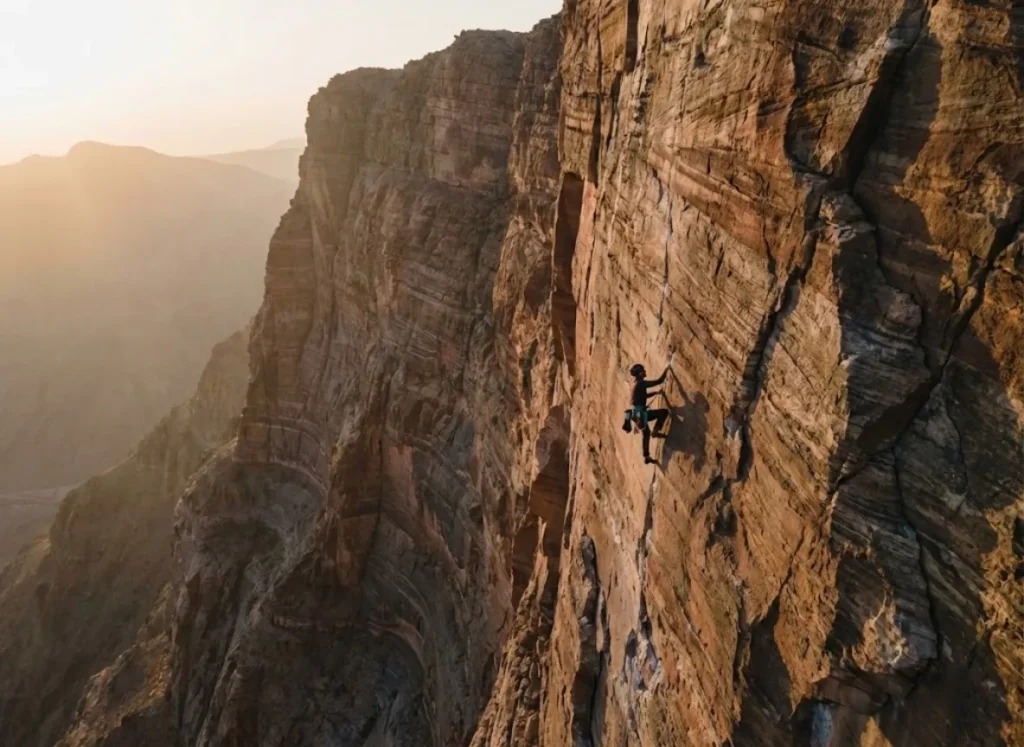
Geology dictates vertical movement by establishing the grain size and fracture patterns of the cliff. This directly informs whether a climber should rely on smearing, positive edges, or compression.
What Is the Connection Between Rock Genesis and Climbing Technique?
The three major geologic rock classifications—Igneous, Sedimentary, and Metamorphic—are defined by their formation history. This genesis story is what you feel under your fingertips. Igneous rocks, formed from cooling magma, typically offer crystalline textures. This creates a “micro-topography” that allows shoe rubber to interlock with individual crystals.
When you are climbing granite in Yosemite or Joshua Tree, you are essentially standing on the cooled history of the earth’s crust. Sedimentary rocks, formed by deposits of sand or shells, behave differently. They are characterized by horizontal bedding planes and a reliance on the “cement” holding grains together. This often results in pockets or fragility found in conglomerate or shale.
Metamorphic rocks, altered by heat and pressure, present the most extreme variations. They often fuse grains into glassy, low-friction surfaces or create directional cleavage planes like those found in slate or schist. By understanding the geological classification of rock types, you can predict the necessary mechanical advantages before you even leave the ground. This identification is the first step in risk management and vital for selecting the right climbing gear essentials to match the terrain.
Which Rock Types Offer the Best Friction and Crack Systems?

Igneous rocks, specifically granite, basalt, and rhyolite, generally offer the most reliable friction and continuous crack systems. This is due to their crystalline structure and cooling fracture patterns.
Why Is Granite Considered the Gold Standard for Friction and Cracks?
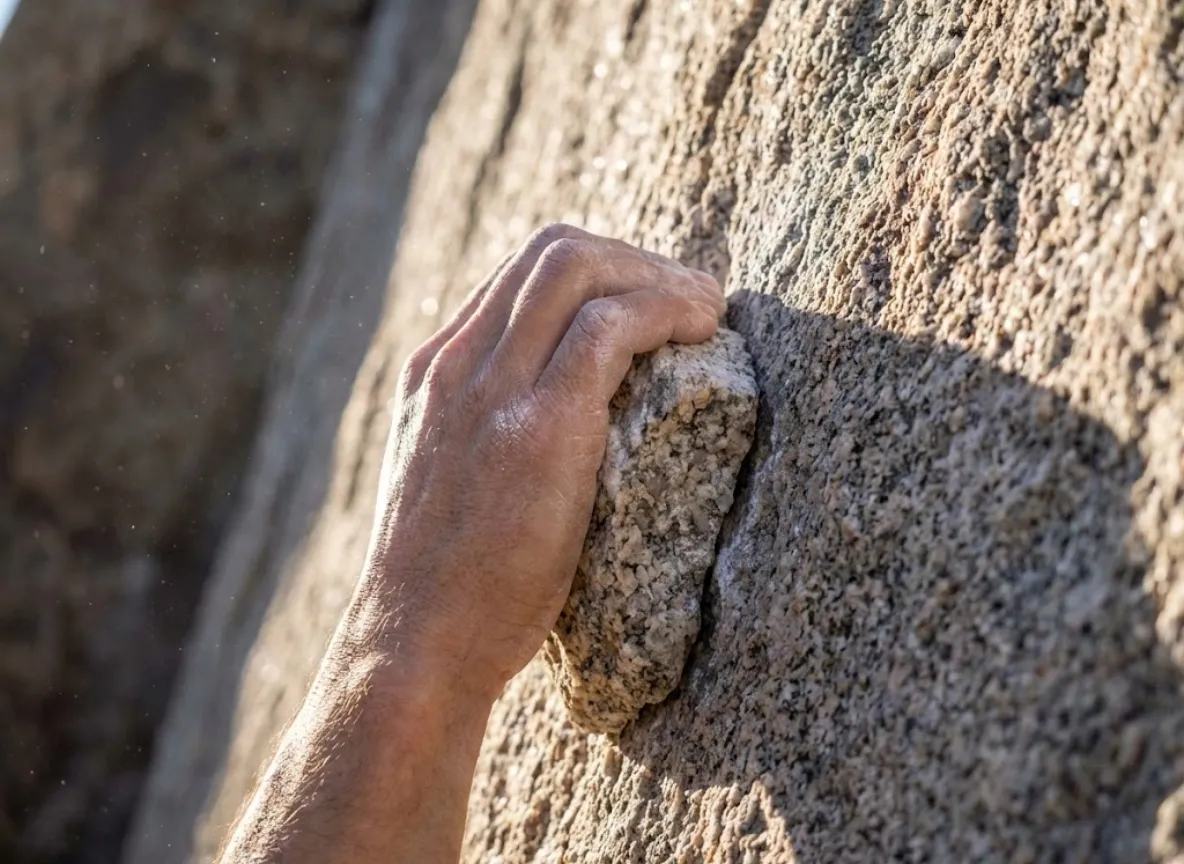
Granite is an intrusive igneous rock (specifically a plutonic rock) with a coarse-grained, or phaneritic, texture. It is composed of interlocking quartz and feldspar crystals. This crystalline structure creates a rugged surface that allows soft shoe rubber to deform around the crystals. This generates mechanical interlock even on slabby, featureless terrain.
The rock typically erodes along vertical stress joints. This creates the parallel-sided splitter cracks found in El Capitan or the Bugaboos. Variations like diorite, gabbro, and pegmatite intrusions offer similar properties but with varying crystal sizes. Joshua Tree Monzonite is famous for its rough, skin-shredding texture that provides immense friction.

Friction levels vary based on the cooling history of magma and subsequent weathering. Glacial polish results in “glassy” slabs requiring precise balance, while weathered granite is abrasive and high friction. Tactically, granite demands stiff shoes for edging on small crystals.
Protection is generally “bomber” (highly reliable) here. The hard rock bites effectively into cam lobes, reducing the risk of gear tracking. This reliability is the primary reason for trusting spring-loaded camming devices when pushing your limits on granite walls.
Pro-Tip: On coarse granite, preserve your skin by avoiding “spinning” on your toes. Place your foot precisely and weight it instantly. The crystals act like sandpaper; unnecessary rotation will wear through your rubber and your skin within a few pitches.
How Does Columnar Basalt Change the Climbing Mechanics?
Basalt is an extrusive igneous rock (or volcanic rock) that cools rapidly, resulting in a fine-grained, aphanitic texture that is often smoother and “glassier” than granite. Its defining feature is columnar jointing. The formation of columnar jointing creates perfect hexagonal pillars and vertical dihedrals.
Consequently, movement here is geometric and compression-based. You will rely heavily on stemming, laybacking, and endurance rather than delicate face climbing. Because the grain size is fine, friction is lower. This often necessitates softer rubber compounds to smear on the slick faces between cracks.
Protection in basalt is unique. Cracks can be perfectly parallel, but the “glassy” interior may reduce cam holding power compared to the bite found in granite. Climbers navigating the columnar routes at Devils Tower must also check for “loose blocks.” The geometric fracturing can sometimes leave detached pillars “stacked” precariously, waiting for a climber to pull outward rather than downward.
How Do Sedimentary Rocks Create Pockets, Slopers, and Solubility Hazards?

Sedimentary rocks create pockets and slopers through the erosion of softer bedding layers and chemical dissolution. However, they also introduce hazards regarding rock fragility and environmental sensitivity.
What Makes Sandstone Both the ‘Friction King’ and the ‘Fragile Giant’?
Sandstone is a clastic sedimentary rock composed of sand grains held together by cement, such as silica, calcite, or iron oxide. This creates a spectrum from “bullet-hard” Gritstone (found in the Peak District) to extremely fragile variants. Soft desert sandstone, like that found in Indian Creek, relies on friction smearing and jamming. However, it is highly porous.
The “Wet Rock Rule” is non-negotiable here. Wet sandstone can lose 50-75% of its structural strength.

Climbing after rain breaks holds and permanently ruins routes. It is critical to review data on sandstone strength loss when wet before heading out to areas like Red River Gorge. Harder “quartzitic” sandstone or conglomerate (like in Maple Canyon or the Shawangunks) behaves more like granite, offering positive edges.
Gear considerations for soft sandstone include avoiding “over-camming.” You should use wide-lobe cams to distribute force. This prevents the unit from shearing through the soft rock. These preservation ethics are critical when planning a trip to Red Rock Canyon, where the Aztec Sandstone is notoriously delicate after precipitation.
Pro-Tip: When climbing soft sandstone cracks, avoid “over-camming” (retracting the lobes fully tight). If you fall, the expansion force can blow out the sides of the crack. Aim for a perfect 50-75% retraction range to allow the lobes to tighten without destroying the rock.
Why Is Limestone the World’s Premier Sport Climbing Medium?
Limestone is a chemical sedimentary rock made of calcium carbonate (and its cousin Dolomite). It is prone to “karstification,” where water dissolves the matrix to create pockets, huecos, and caves. Dissolved minerals re-precipitate to form flowstone features like tufa and stalactites. This creates a unique 3D climbing style involving knee-bars and pinching.
The rock texture varies from razor-sharp water drops to heavily polished holds on popular climbing routes in Kalymnos or the Dolomites. Ideally, you want aggressive, downturned shoes with soft rubber that can hook tufa ribs. A critical invisible danger in marine environments is corrosion.
You must be aware of stress corrosion cracking in climbing anchors. Salt and humidity can corrode stainless steel bolts from the inside out. This is a vital consideration when tufa wrestling on Thailand’s limestone, where titanium glue-in bolts have become the necessary standard for safety.
How Does Metamorphism Alter Rock Texture and Gear Reliability?

Metamorphism alters rock texture by fusing grains through heat and pressure. This often creates harder, smoother surfaces that reduce friction and can compromise the holding power of expansion-based protection.
Why Is Quartzite Known as the ‘Glassy Fortress’?
Quartzite is metamorphosed sandstone. Heat and pressure have fused the sand grains and silica cement into a non-porous, interlocking mosaic. This process creates a surface that is incredibly hard, durable, and smooth. Climbers often describe it as “glassy,” making friction smearing nearly impossible.
Movement relies almost exclusively on finding positive edges and incuts. Other metamorphic rocks like Gneiss (banded) or Schist (found at Rumney) offer slightly more texture but remain distinct from their parent rocks. The hardness and lack of friction in Quartzite pose a specific risk for camming devices. Cams can slide or “skate” out of parallel cracks under load because the teeth cannot bite into the surface. Passive protection is often preferred here.
You must look for constrictions where the geometry prevents the gear from pulling through. To succeed here, you need to understand the metamorphic rock classification and adapt your footwear. Stiff shoes are essential to stand on the positive edges. If you are struggling on this glass-like terrain, it might be time to revisit mastering the science of edging.
How Should Rock Type Influence Your Gear Selection?

Rock type should dictate your gear selection by guiding your choice of shoe stiffness and rubber type. It also informs the type of protection (cams vs. nuts) based on the rock’s friction coefficient and surface hardness.
Which Shoe Rubber Compounds Perform Best on Specific Rock Types?
Climbing rubber performance is governed by tribology and Shore A Hardness. Harder rubbers (Shore A 80-85) resist deformation. This makes them ideal for “edging” on the micro-crystals of Granite and Rhyolite at Smith Rock. Softer rubbers (Shore A <75) have a lower modulus of elasticity.
They flow into rock asperities for maximum friction on Sandstone slabs or polished Limestone.

The “Edging Principle” dictates that on micro-crystalline rock, soft rubber would roll off the hold. Hard rubber maintains a platform for power transfer. Conversely, the “Smearing Principle” applies to slick rock, where soft rubber maximizes the contact patch area. We know from studies on the friction coefficient of climbing chalk and rubber that this surface area contact is critical for adhesion.
Temperature also plays a role; soft rubbers can become “mushy” in hot desert conditions. For a detailed analysis of specific compounds, I recommend using our climbing shoe rubber guide to dial in your kit before your next trip.
Final Thoughts
We often talk about “reading the route,” but we rarely talk about reading the rock itself. Yet, the stone is the only thing holding you up. By identifying whether you are on igneous outcrops, sedimentary beds, or metamorphic glass, you stop guessing and start calculating.
Geology is Beta. It tells you where the friction is. Gear Matches Geology. It tells you why your soft shoes failed on quartzite edges. Safety is Lithological. It warns you when the sandstone is too wet to climb safely.
Next time you approach the crag, take a moment to touch the stone and diagnose its origin before you tie in. It might just save your send—or your skin.
FAQ – Frequently Asked Questions
Why is it dangerous to climb on wet sandstone?
Sandstone is porous and often held together by water-soluble cements like clay or calcite. When saturated, these bonds weaken significantly. Climbing on wet sandstone can reduce hold strength by up to 75%, leading to broken holds, ruined routes, and catastrophic gear failure.
What is the best type of rock for beginner climbers?
Granite and high-quality, hard Sandstone are generally best for beginners. They typically offer high friction and distinct, positive features. This allows learners to focus on movement without the complex 3D reading required for Limestone or the insecure, slippery nature of Quartzite.
How does rock type affect cam placement and safety?
Hard, crystalline rocks like Granite provide excellent bite for cam lobes, making placements very reliable. Soft rocks like Sandstone require wide-lobe cams to prevent shearing through the rock. Smooth, hard rocks like Quartzite or Limestone may cause cams to slide out, often favoring passive protection like nuts.
What are the signs of loose rock or ‘choss’?
Look for fractures around a hold, a lack of chalk (indicating it hasn’t been used recently), or blocks that appear stacked or balanced without attachment. Tap the rock with your palm; a solid ting is good, while a hollow thud or vibration indicates the block is detached and dangerous.
Safety Notice: Rock climbing and mountaineering are inherently high-risk
activities that can involve physical trauma or fatal incidents. The information on Rock Climbing Realms is for
educational and informational purposes only. Techniques and advice presented here are not a substitute
for professional, hands-on instruction. Conditions and risks vary by location. Always seek guidance
from a qualified instructor before attempting new techniques. By using this website, you agree that you
are solely responsible for your own safety. Any reliance you place on this information is strictly
at your own risk, and you assume all liability for your actions. Rock Climbing Realms and its authors
will not be held liable for any harm, damage, or loss sustained in connection with the use of this information.
Affiliate Disclosure: We are a participant in the Amazon Services LLC Associates Program, an
affiliate advertising program designed to provide a means for us to earn advertising fees by advertising and linking
to Amazon.com. As an Amazon Associate, we earn from qualifying purchases. We are also an official affiliate partner
of Black Diamond Equipment via the AvantLink network. If you click on a Black Diamond affiliate link and make a
purchase, we may earn a commission at no additional cost to you. We also participate in other affiliate programs.
Additional terms are found in the terms of service.