
In this article
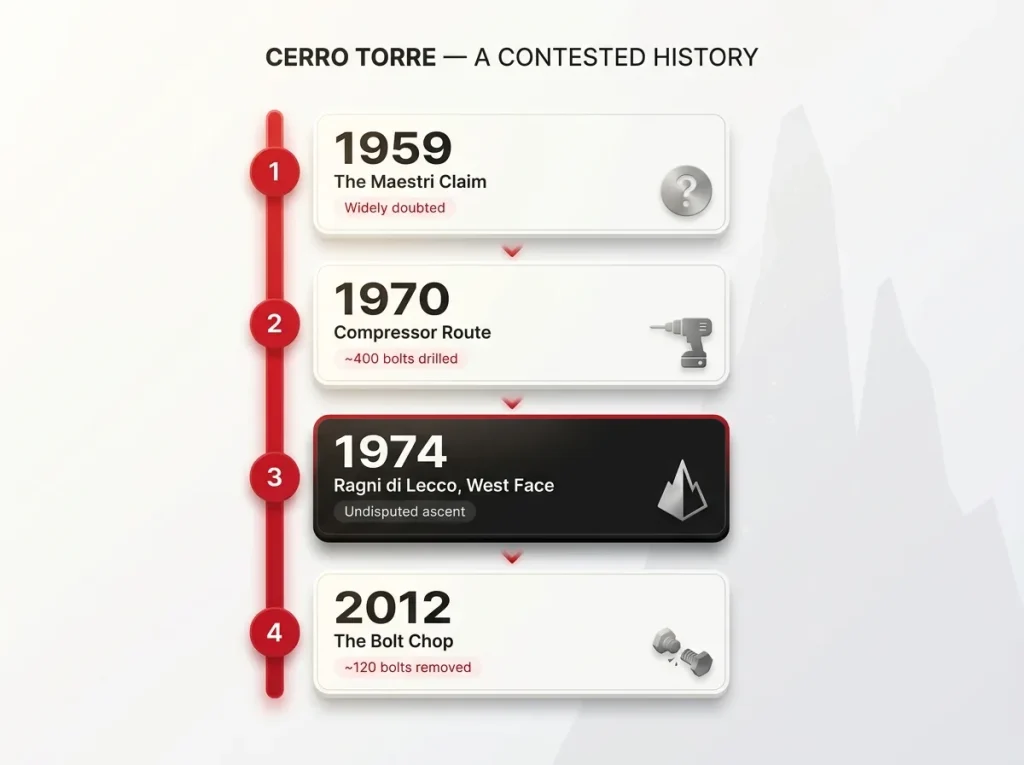
The most famous first ascent of Cerro Torre almost certainly never happened, and the single photo meant to prove it turned out to show a different mountain. That is not a fringe theory. Decades of route-by-route reconstruction by climbers like Rolando Garibotti, plus the American Alpine Club’s own record of the 2012 ascent, have quietly sorted the myth from the record. This walks the real timeline of Cerro Torre’s climbing history and routes, from the disputed 1959 claim to the 1970 compressor drill, the undisputed 1974 ascent, and the 2012 bolt war, then lays out the two standard routes, who this peak is actually for, and what it takes to stand under it today.
The 1959 Claim That Still Doesn’t Add Up
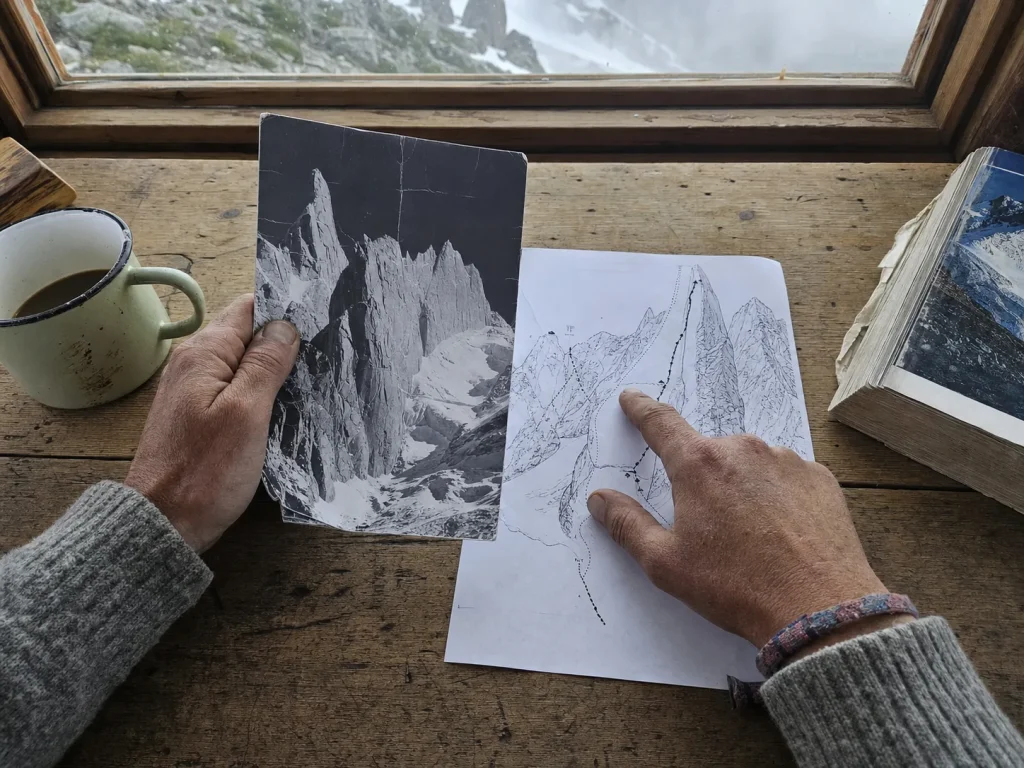
Everything about Cerro Torre traces back to one story that most climbers no longer believe. In 1959, Italian climber Cesare Maestri claimed he and Austrian Toni Egger had reached the summit by the East and North faces. It should have been the achievement of the era. Instead it became the longest-running argument in the sport.
What Maestri and Egger Said Happened
Maestri’s account was simple on the surface: the pair climbed high on the peak, summited, and started down. On the descent, Egger was swept away and died, and the only camera, with the summit photos, went with him. Maestri was found lower on the mountain, dazed, the sole survivor of a summit nobody else witnessed.
For years that was the official record. The problem is that the mountain itself never cooperated with the story.
The Missing Camera and the Snowfield Problem
Later climbers went looking for evidence of Maestri’s line and kept coming up short. Careful reconstruction, most thoroughly by Rolando Garibotti in the pages of Alpinist, traced Maestri’s described high point to roughly 300 meters up the route, near a triangular snowfield, about a quarter of the way to the top. No team following his described path could get past that first band of terrain to find any of the fixed gear a 1959 ascent would have left behind.
That absence matters. A real ascent of a peak this hard leaves traces, and above the snowfield there were none.
The Photo That Showed the Wrong Mountain
The final blow came from Maestri’s own 1961 book. A photograph in it, presented as Egger high on Cerro Torre’s lower slabs, was later identified as Egger on the west face of a different tower nearby. The one piece of photographic evidence for the 1959 climb does not show Cerro Torre at all.
This was never settled trivia. It was a live feud for decades, with Maestri defending his claim to the end and a whole generation of Patagonia climbers steadily proving it could not have happened the way he told it. If you want the deeper argument over what actually counts as a legitimate first ascent, the ethics of it run through this whole story.
The Compressor Route and a 300-Pound Drill
Maestri came back in 1970 to answer his doubters, and he did it in the most divisive way anyone could have imagined.
Why Maestri Brought a Compressor
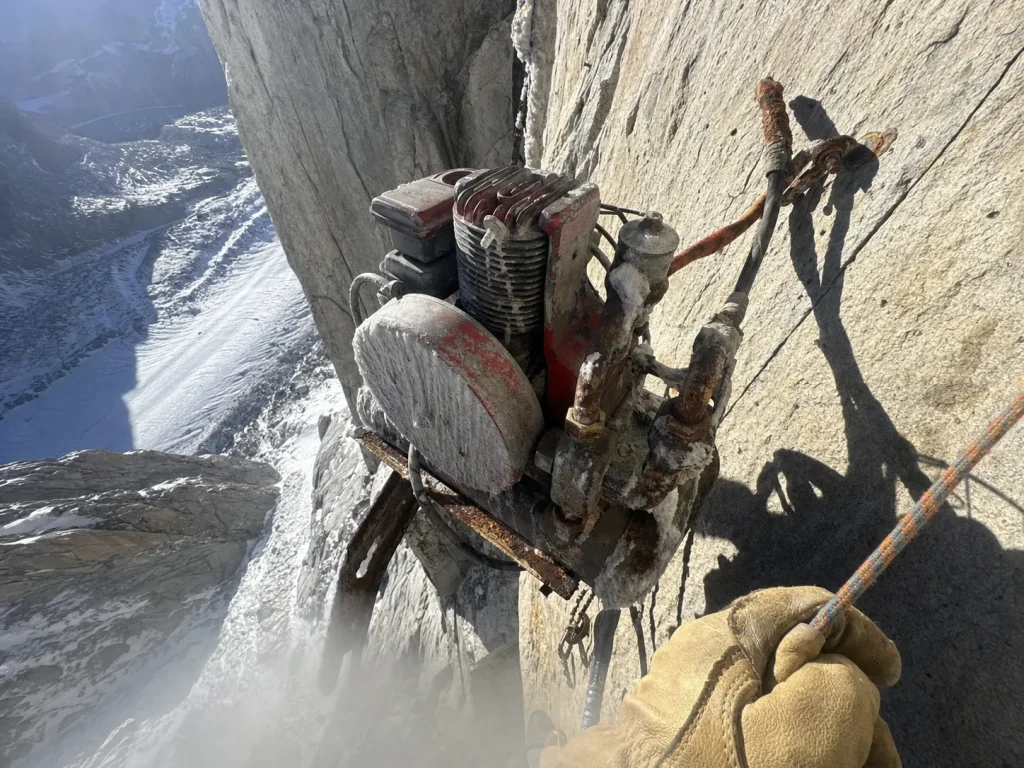
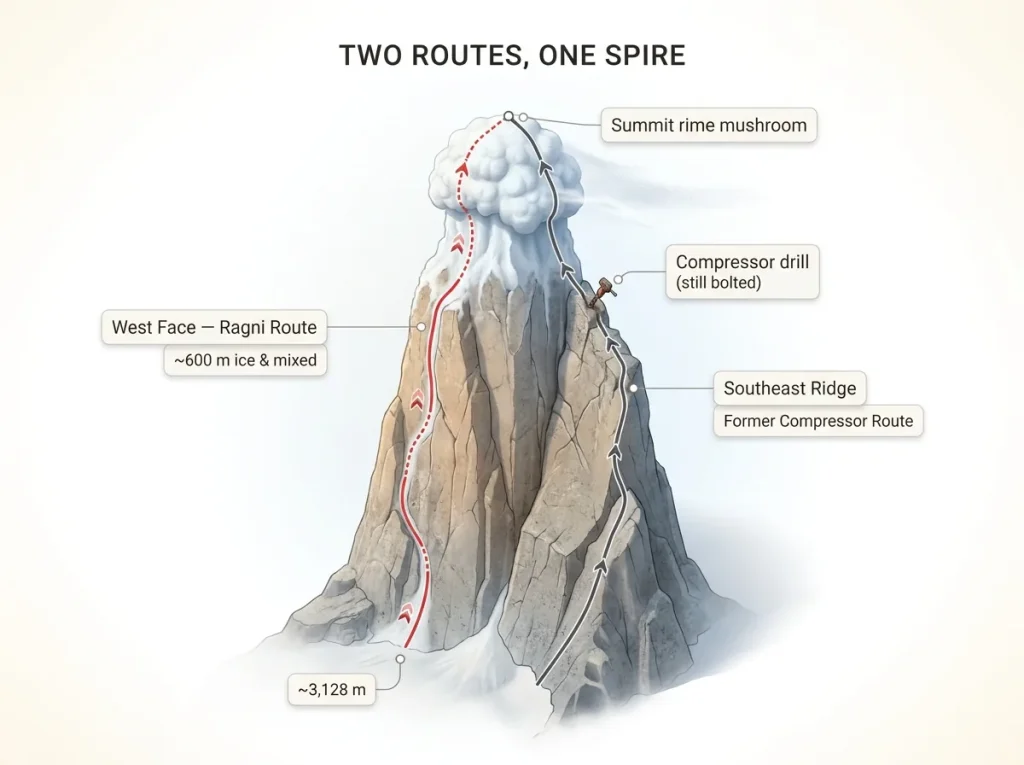
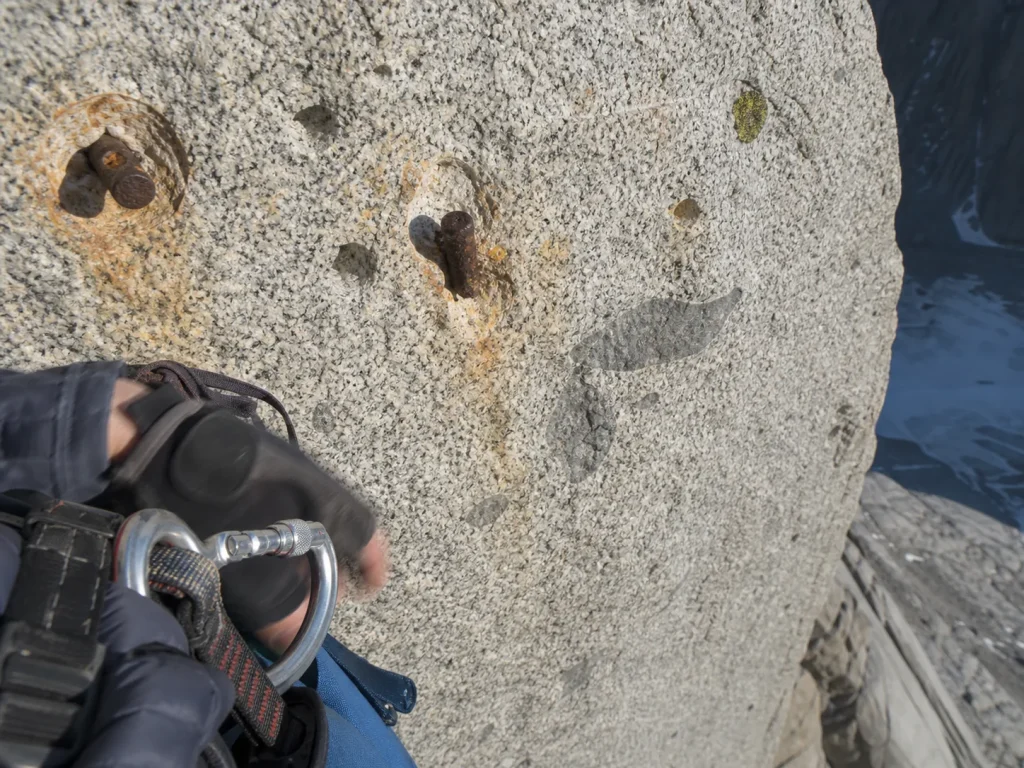
Rather than climb the peak by fair means, Maestri hauled a gas-powered compressor drill up the Southeast Ridge and used it to place bolts. Not a handful. He fixed roughly 350 meters of the ridge with bolts, and by the time the Compressor Route was finished, something close to 400 expansion bolts studded the rock.
The machine weighed around 150 kilograms. Getting it up a Patagonian wall was an act of will that had almost nothing to do with climbing and everything to do with proving a point.
The Bolts That Made Cerro Torre “Easy”
Here is the part that enraged people. Maestri stopped about 100 meters below the true summit, at the base of the summit rime ice formation, and refused to climb it. His reasoning became one of the sport’s most-quoted lines: the ice mushroom, he said, “is not part of the mountain.”
The bolt ladder he left behind changed what Cerro Torre meant. Before 2012, roughly 90 percent of all ascents went up Maestri’s bolts rather than the harder natural line. A serious alpine wall had been converted into the trade route, and that conversion is exactly what a later generation would object to. The aid-ladder logic of big-wall climbing is that enough fixed gear turns nearly any rock into something climbable, and Maestri had taken that idea further than anyone.
The Machine Still Bolted to the Wall
The strangest detail is that the compressor is still there. Maestri’s actual drill remains bolted to the granite near the top of the Southeast Ridge, rusting in the wind, a physical monument to the whole affair. Climbers pass it on the way up. “The mushroom” entered the climbing vocabulary right here, and you will still hear it thrown around sarcastically whenever someone argues that a summit does not really count.
1974 and the Ascent Nobody Disputes
While the climbing world argued about Maestri, an Italian team quietly did the thing for real.
The Ragni di Lecco on the West Face
On 13 January 1974, Casimiro Ferrari, Mario Conti, Pino Negri, and Daniele Chiappa, a team from the Ragni di Lecco (the Lecco Spiders), summited Cerro Torre by the West Face. No missing camera, no lone survivor, no disputed line. They climbed the mountain and came down, and nobody has ever seriously questioned it.
That ascent established the West Face line as the Ragni Route, which is still the standard modern way up the peak.
Two Months on the Mountain
This was not a light-and-fast dash. The Ragni team spent roughly two months working the mountain, waiting out weather and grinding upward, and they were running low on food by the time they pushed for the summit. It was a siege, the way big Patagonian objectives were done at the time, and it worked because they refused to quit.
Why 1974 Became the Benchmark
The 1974 climb is why serious alpinists separate two very different questions: who reached the summit of Cerro Torre, and who reached it by fair means. Maestri’s bolts blurred that line. The Ragni ascent drew it cleanly, up an honest face with honest gear. That distinction sat quietly for decades until, in 2012, it detonated. If you want a sense of what a committing alpine face demands when style defines the whole achievement, Mount Robson’s Emperor Face is cut from the same cloth.
The Two Standard Routes to the Summit
Strip away the history and Cerro Torre comes down to two lines with completely different characters.
The Ragni Route (West Face)
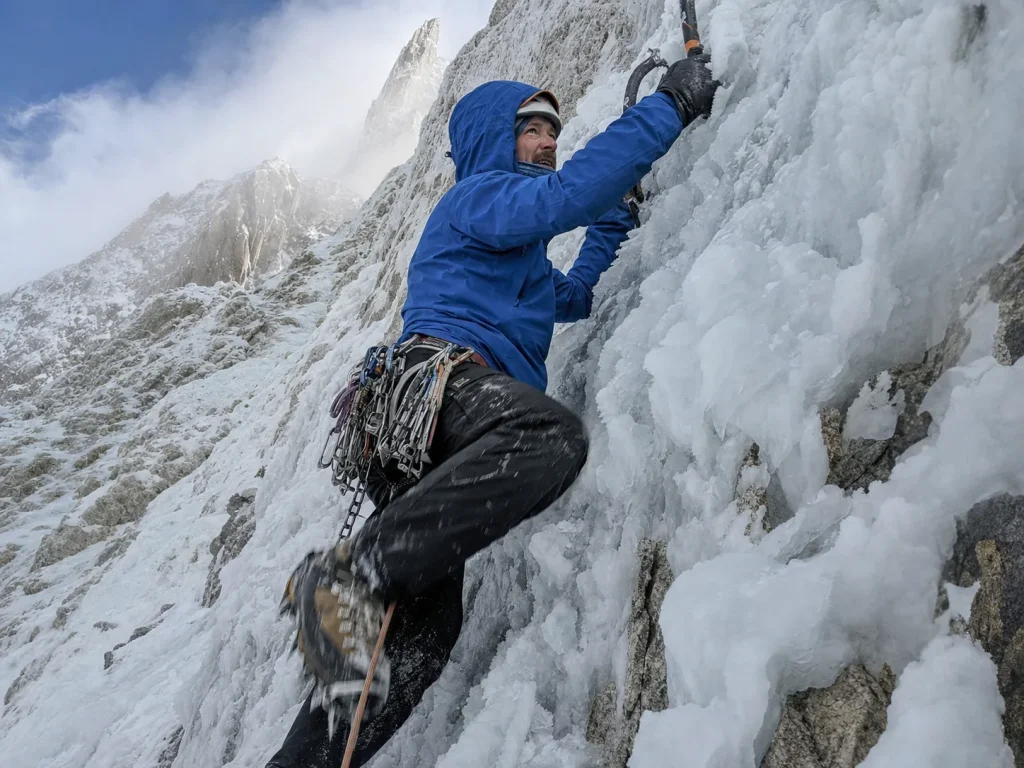
The Ragni Route climbs roughly 600 meters of ice and mixed ground up the West Face, finishing through the summit rime mushrooms. It rewards climbers who can read conditions and move well on steep snow-ice and rime, and it is the most-climbed line on the peak today. When Cerro Torre is “in,” this is usually the way people go.
The Southeast Ridge (Former Compressor Route)
The Southeast Ridge is the old Compressor Route, and it is a different animal: rock-dominant, historically bolt-laddered, and now largely stripped of Maestri’s hardware. What is left is more of a route-finding and traditional-protection problem than an aid climb. Same mountain, opposite skill set.
How the Grades Actually Stack Up
Neither line is moderate. The overall grade sits at ED+ on the Alpine scale, with technical sections stacking granite up to 5.10–5.12, water ice to WI5, aid pitches historically at A1/A2, and mixed climbing around M4/M5. The way an alpine rack and route choice go hand in hand is easier to see on a friendlier objective like the Grand Teton, but the principle is the same here, just turned up to a level very few climbers operate at.
Do not read “standard route” as “the moderate way up.” On Cerro Torre both standard lines are elite objectives. There is no beginner route to this summit, and treating either as a progression climb is the mistake that gets people in over their heads.
The 2012 Bolt War and “Fair Means”
This is where a decades-old ethics argument stopped being abstract and turned physical.
Kennedy, Kruk, and the Chop
On 16 January 2012, Americans Hayden Kennedy and Jason Kruk made the first fair means ascent of the Southeast Ridge, climbing it without using Maestri’s bolts. Then, on the way down, they removed roughly 120 to 125 of those bolts from the headwall. As Kennedy and Kruk laid out in their own account in the American Alpine Club journal, this was a deliberate act, not an accident of the descent.
They did not just skip the ladder. They took it down behind them.
Why a Town Turned on Two Climbers
The reaction in El Chaltén was immediate and furious. A crowd gathered at the pair’s cabin, one person reportedly spoke of a lynching, and police detained Kennedy and Kruk and confiscated the removed bolts for questioning. This was not a magazine debate. It was real anger in a small town, complete with confiscated hardware and a threat of violence.
Part of the fury was economic and cultural. For locals, Maestri’s route was heritage, and two visiting climbers had unilaterally decided its fate for everyone who would come after.
What “Fair Means” Actually Means
Fair means is the idea that you climb a route without relying on pre-placed fixed aid that strips away its natural challenge. Chopping bolts is the flip side: physically removing that fixed gear, which imposes one climber’s style judgment on every future party. Reasonable people still disagree about whether Kennedy and Kruk restored the route or vandalized it, and the argument sits right at the center of modern climbing ethics and how a climb is done.
The counterpoint arrived within days. Austrian climber David Lama made the first free ascent of the now largely unbolted route, climbing the hardest pitches around 5.13b/c with almost no fixed protection. The line the bolts had made “easy” turned out to go clean, and hard.
Where Cerro Torre Sits and How You Reach It
Before any of the climbing, there is the place.
The Peak and Its Neighbors (Fitz Roy, Torre Egger)
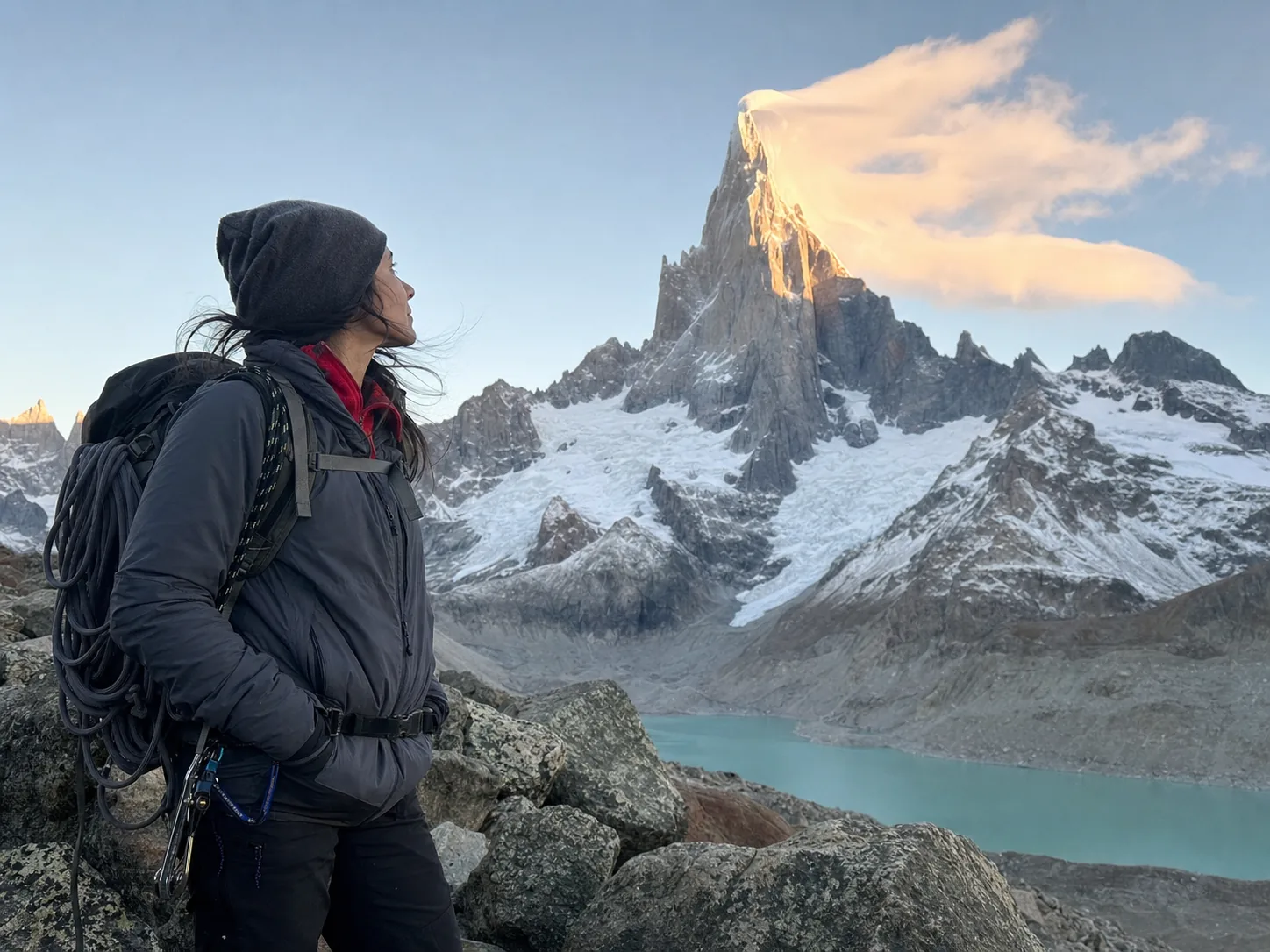
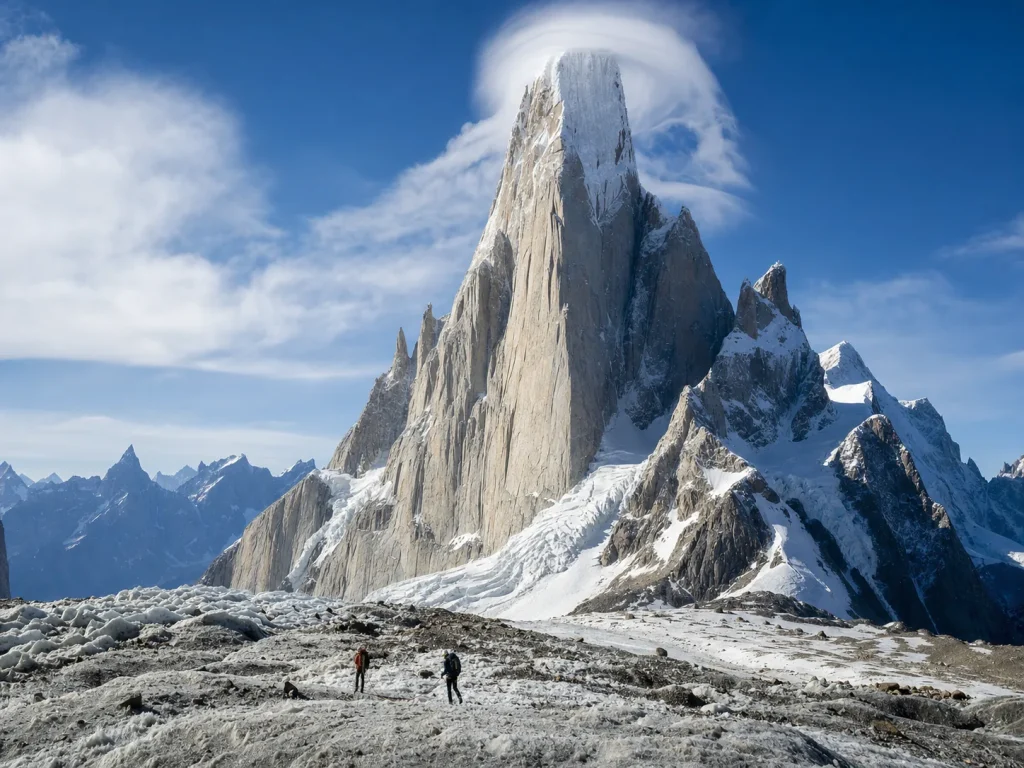
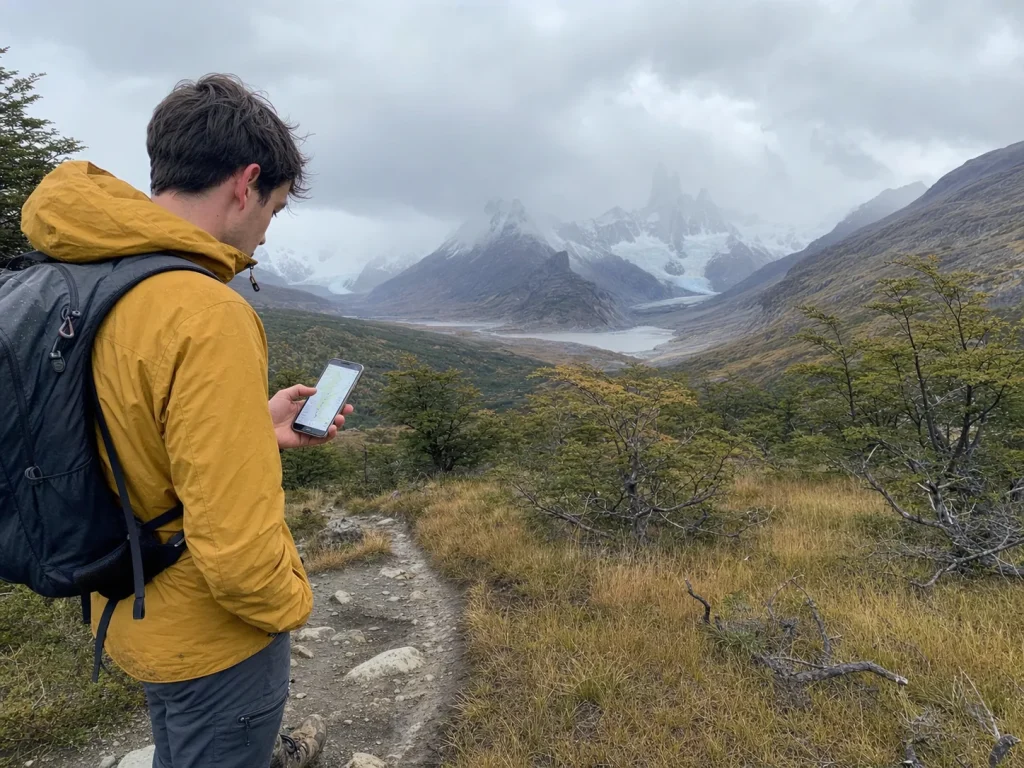
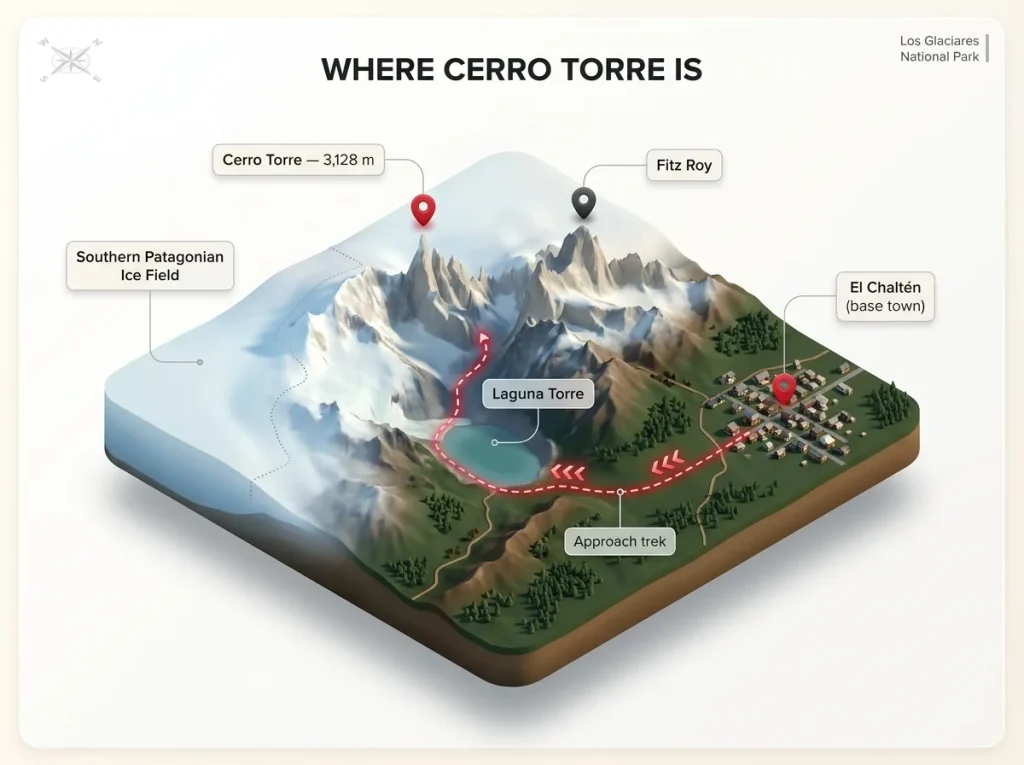
Cerro Torre stands in Los Glaciares National Park, a UNESCO World Heritage Site, on the edge of the Southern Patagonian Ice Field, part of a startling cluster of granite towers that includes Fitz Roy, Torre Egger, Punta Herron, and Cerro Standhardt. It sits near the Argentina–Chile border, and the whole massif catches the raw weather rolling off the ice cap. You can read Los Glaciares National Park’s World Heritage listing for the official protection status, but standing at Laguna Torre and looking up tells you most of what you need to know.
Getting There Through El Chaltén
Access runs through El Chaltén, Argentina, the small trekking and climbing hub town below the range. From there the approach heads toward Laguna Torre and up toward the base, with camping and park rules set by the Los Glaciares administration. El Chaltén is where every attempt is staged, and how a climbing-hub town shapes a trip is a familiar story to anyone who has based out of the Alpine valley towns.
Why Height Isn’t the Point
At roughly 3,128 meters, Cerro Torre is modest by Andean standards. Its difficulty has nothing to do with altitude and everything to do with steepness, rime ice, and exposure. If you are used to equating “hard” with “tall,” this peak resets that assumption fast.
Who Cerro Torre Is Really For
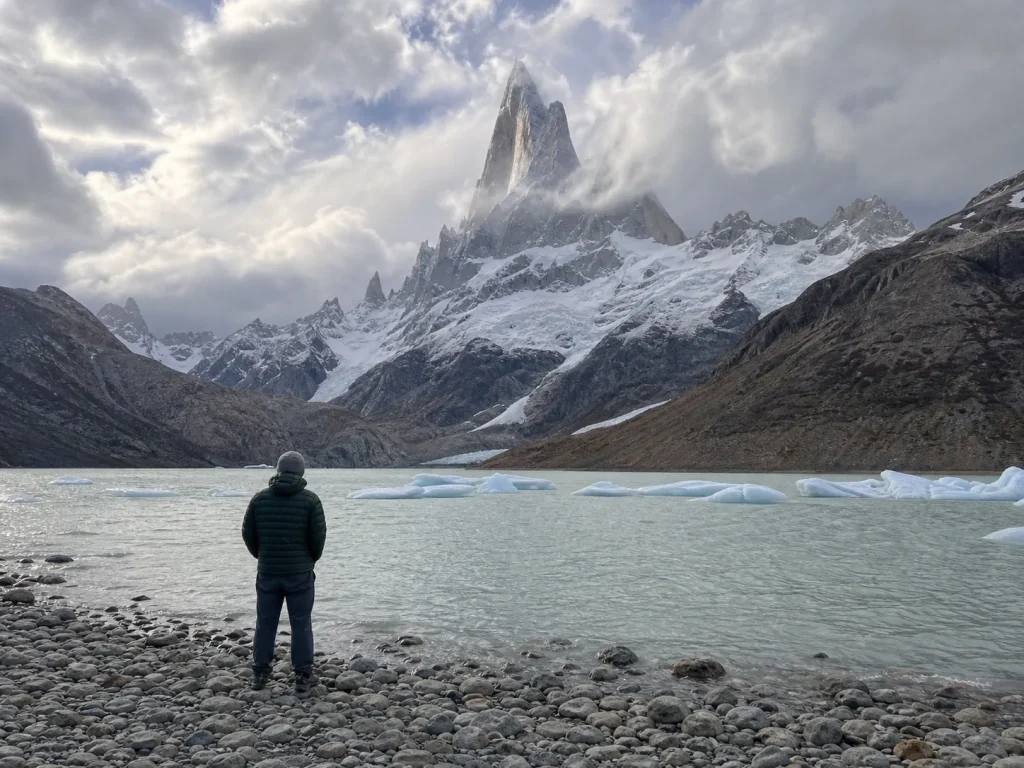
Here is the honest talk most guides to this peak skip. Most people reading this will never climb Cerro Torre, and pretending otherwise does nobody any favors.
The Real Skill Bar
Cerro Torre is not a progression climb. The technical stack, granite to 5.10–5.12, ice to WI5, mixed to M4/M5, and total self-reliance above the col, is a level jump that intermediate alpinists routinely underestimate. This is where Cerro Torre ranks among the world’s iconic peaks, and where technical difficulty stacks up against sheer altitude is worth understanding before you file this under “someday.” The honest readiness check other iconic peaks demand, like the one guides run before the Matterhorn, applies here in an even harsher form.
The No-Rescue Reality
High on Cerro Torre, rescue is effectively impossible. There is no helicopter bailout from the headwall, no rope team coming to pluck you off the rime. Self-reliance and self-rescue are not virtues you bring to this peak, they are the only condition under which the climb exists at all. Even the “easier” post-2012 line has seen only a dozen-plus repeats in over a decade, which tells you how few people are truly operating at this level in these conditions.
Admiring It Is a Legitimate Answer
This is the anti-sell, and it is the truest thing in the article. For almost everyone, the right move is to trek to Laguna Torre, stand under the spire, and climb it in the imagination. That is not a lesser experience. Watching cloud tear off that summit is worth the trip on its own, and there is no shame in letting the mountain stay a mountain you looked at.
The people who climb Cerro Torre are not casually working up to it. They are already elite alpinists picking a weather window. If your honest answer to “can I lead WI5 and 5.11 granite, self-supported, with no rescue” is anything but a flat yes, the peak is telling you to enjoy the view.
What It Takes to Climb This Today
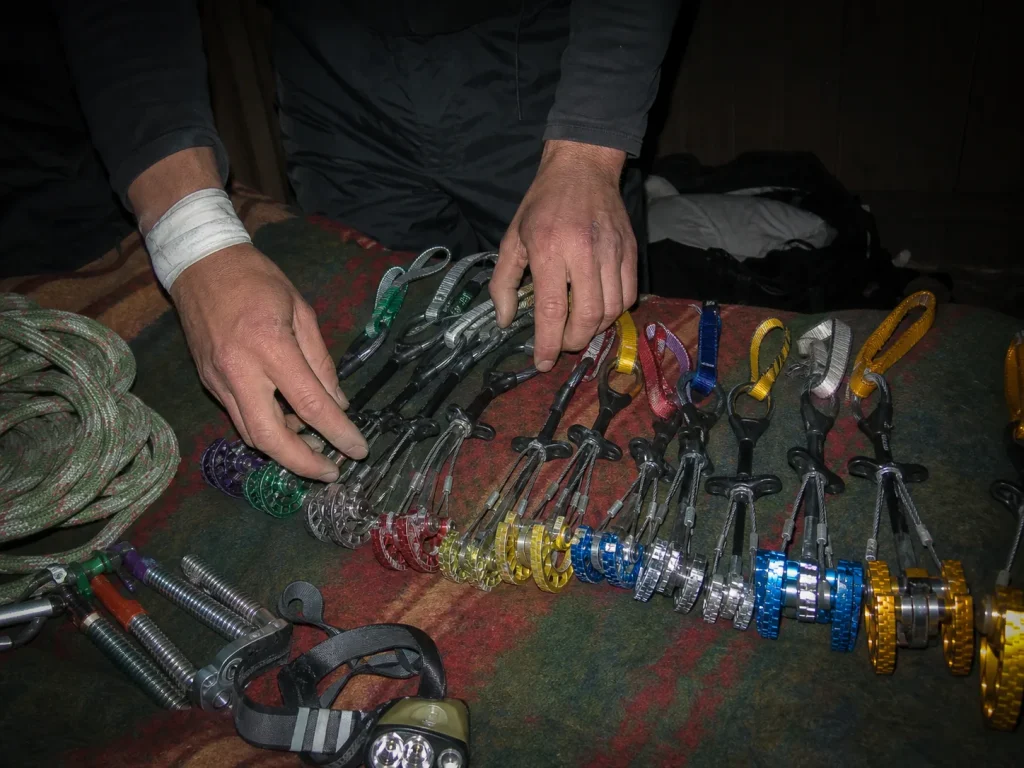
Competitors say “cams, ice screws, crampons” and move on. Here is the practitioner version of what the kit actually has to cover, framed as the beta the climbing community keeps repeating, not a shopping list.
The Rack for the Rock
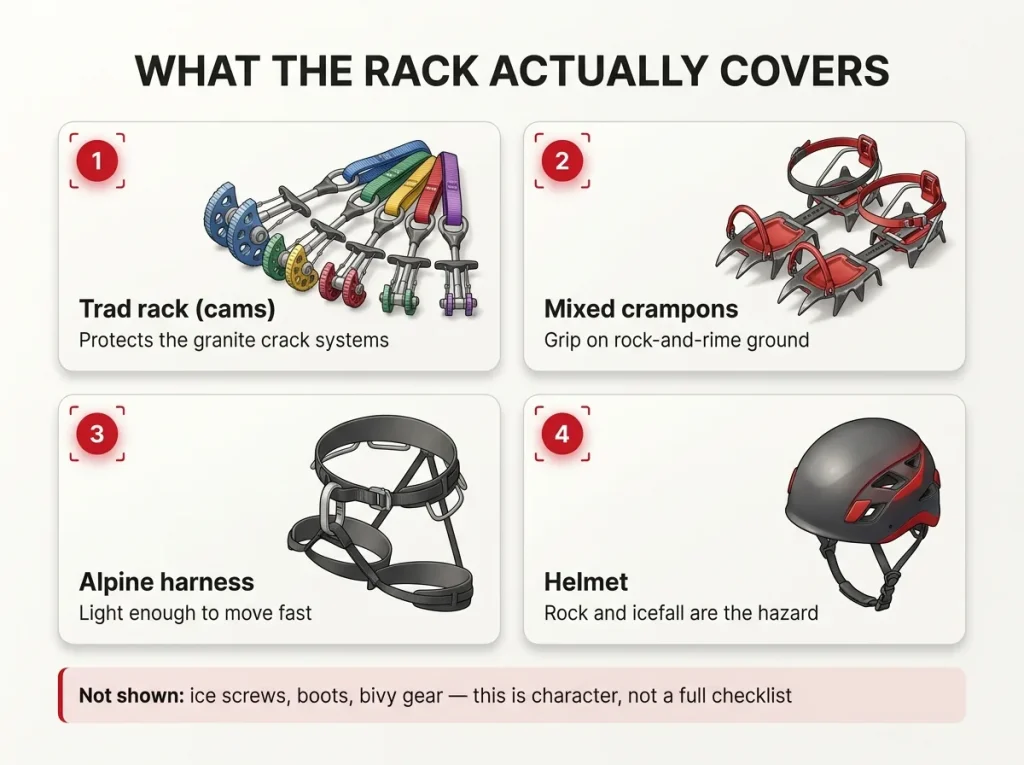
Post-2012, a fair-means ascent depends on a real trad rack for the granite crack systems, because the fixed ladder that used to protect the Southeast Ridge is mostly gone. A standard cam set like the Black Diamond Camalot C4 Set covers the finger-to-hand sizes the rock pitches ask for, and knowing how to place it well matters more than owning it.
Crampons, Screws, and Rime
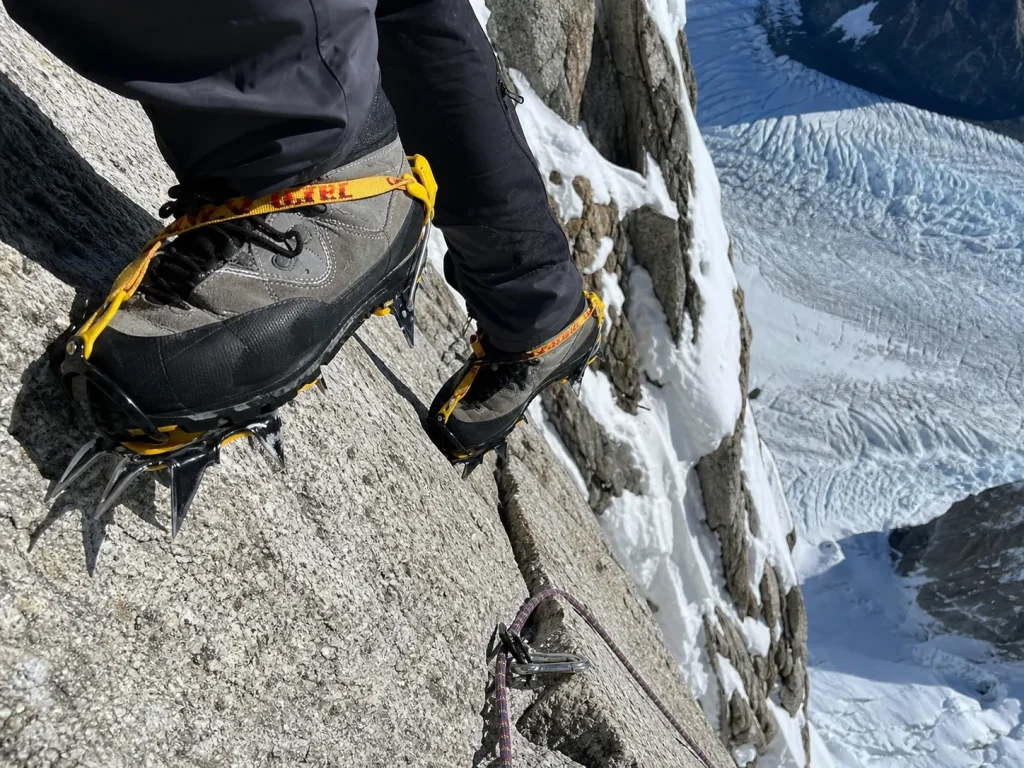
The mixed rock-and-rime ground calls for step-in mixed crampons such as the Grivel G12 New Matic Crampons, or a solid budget alternative like the Black Diamond Sabretooth, plus the skill to place ice screws and build V-thread anchors in rime that ranges from bomber to rotten. Reading that rime is its own craft, and it is not one you learn on Cerro Torre. How a mixed glacier-and-rock kit comes together on a big peak is something climbers usually work out on friendlier Andean objectives first.
Harness, Helmet, and the Light-and-Fast Logic
A lightweight alpine harness like the Petzl Altitude Harness and a low-profile lid like the Petzl Meteor Helmet reflect the reality that you carry what you can actually move fast in. The helmet is not optional here; rockfall and icefall are part of the objective hazard picture, and the light-and-fast approach only works if you are protected when the mountain throws something down.
This is a partial kit by design. A full Patagonia load also means mountaineering boots, a bigger screw rack, and bivy gear this article will not pretend to spec. The point is the character of the kit, not a complete checklist, because the thing that actually keeps you alive up there is judgment, not gear.
What the Southeast Ridge Climbs Like Now
Everyone covers the history of the chop and stops there. Here is the part nobody writes: what a climber standing under that ridge in 2026 is actually looking at.
From Bolt Ladder to Route-Finding Problem
With roughly 120 to 125 headwall bolts removed, the Southeast Ridge reverted to a genuine route-finding and traditional-protection climb. The pre-drilled path is gone. Where a climber once clipped a continuous ladder, they now have to find the line, place their own gear, and accept that the rock does not come with instructions. That change alone raised the seriousness of the route far more than the difficulty numbers suggest.
What “Rarely in Condition” Means
A 2024 field report described the climbing as difficult, varied, and rarely in perfect condition, and that last phrase is the one to sit with. The route did not become off-limits after the de-bolting. It has been repeated a dozen-plus times in the decade since. But it went back to being a serious, inconsistent alpine line instead of a reliable ladder, which means the rock and rime you get depends entirely on the day.
Lama’s Free Ascent as a Benchmark
David Lama’s 5.13b/c free ascent of the same terrain, with almost no fixed protection, is the clearest measure of how much harder the “same” route became once the ladder came out. What free-climbing a wall that used to go on aid really asks is a theme that runs through big granite everywhere, and the parallels with El Cap’s hardest free lines are hard to miss. The bolts had hidden the real climb. Lama showed what was under them.
The El Chaltén Waiting Game
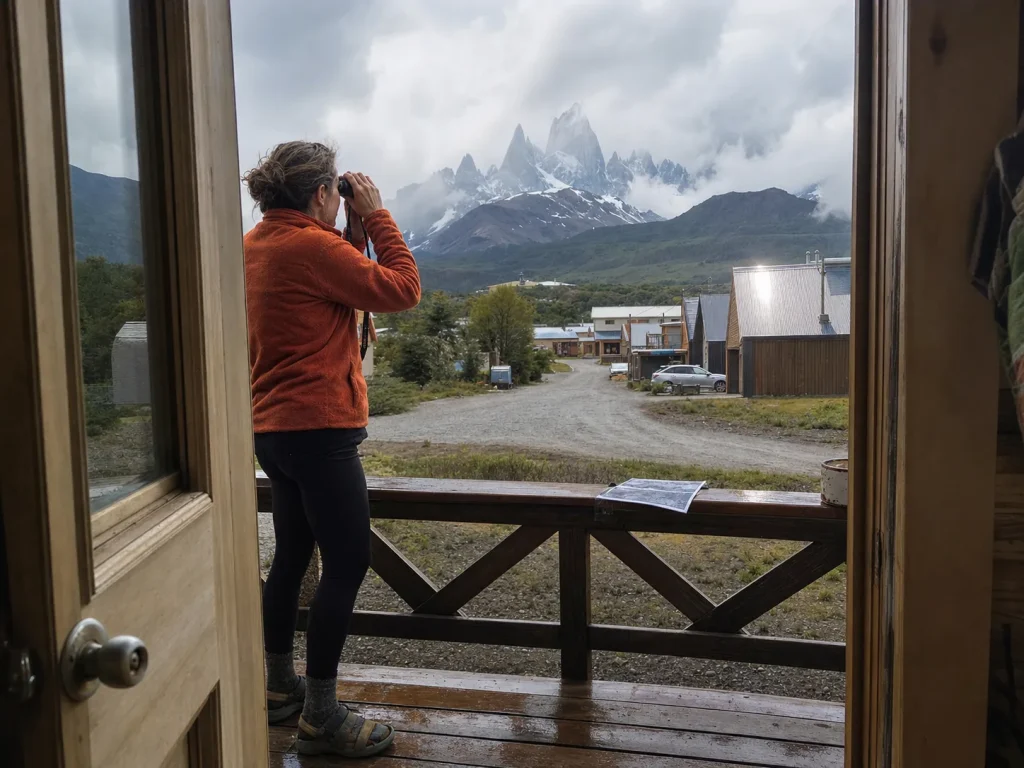
This is the logistics pain nobody spells out. “Bad weather” badly undersells what a Cerro Torre trip actually is.
The Season and the Wind
The austral summer climbing season runs roughly from 21 December to 20 March, but the defining feature of the region is not cold, it is wind. Genuinely calm days are rare even inside that window, and conditions can flip from clear sun to snowstorm in the same afternoon. As El Chaltén’s own weather guide puts it, the mountains here make their own rules.
How the Window Actually Opens
Successful ascents are built around long residencies in El Chaltén. Climbers move to town for weeks, watch the forecast every day, stage their gear, and move the instant a short window opens. The climbing itself might be a couple of days. The trip is mostly waiting, and then a compressed, committed push when the wind finally drops. That same 90-percent-waiting rhythm big peaks run on will be familiar to anyone who has planned a major expedition.
Planning Around a Break You Can’t Schedule
Plenty of climbers cycle through an entire season without ever getting a real shot at the summit. Showing up with a rigid two-week vacation itinerary is a classic way to go home empty-handed, because the mountain does not care about your flights. How a short summit window governs the whole calendar is the same math that rules the world’s biggest peaks, and budgeting for an open-ended alpine trip is the only sane way to plan one to Patagonia.
Build your Patagonia trip around patience, not a summit date. The climbers who succeed treat the forecast-watching as the real work and the climbing as the reward. Come for three weeks if you can, expect to use maybe two good days of it, and count the trekking as time well spent either way.
The Bottom Line on Cerro Torre
Cerro Torre’s story rewards a clear head. The famous 1959 claim does not hold up, and the real first ascent belongs to the Ragni di Lecco in 1974. The Compressor Route was a shortcut written in bolts, and the 2012 chop took most of them back, leaving a more honest mountain behind. And whatever the guidebooks imply, this is an elite objective governed by weather and self-reliance, not a bucket-list send you work toward casually.
If Patagonia is on your mind, the honest first step is not a summit plan. It is the walk to Laguna Torre to stand under the spire, watch the cloud rip off that rime mushroom, and understand exactly what you are looking at.
Frequently Asked Questions
01How hard is it to climb Cerro Torre?
Extremely hard. Cerro Torre is an ED+ alpine objective with rock to 5.10–5.12, ice to WI5, and mixed terrain, plus total self-reliance above the col. Both standard routes are elite lines, and there is no beginner option to the summit.
02Did Cesare Maestri really climb Cerro Torre in 1959?
Almost certainly not by the route he described. Reconstruction traces his high point to about a quarter of the way up, his partner died with the only camera, and the one evidence photo shows a different tower. The undisputed first ascent came in 1974.
03Why were the bolts chopped off Cerro Torre in 2012?
Hayden Kennedy and Jason Kruk climbed the Southeast Ridge by fair means, then removed roughly 120 to 125 of Maestri’s bolts, arguing the ladder had stripped the route’s natural challenge. The move split the climbing world and triggered a confrontation in El Chaltén.
04Has anyone free climbed Cerro Torre?
Yes. David Lama made the first free ascent of the now largely unbolted Southeast Ridge in 2012, climbing the hardest pitches around 5.13b/c with almost no fixed protection, proving the route could go clean and hard.
05How do you get to Cerro Torre to climb it?
Via El Chaltén, Argentina, inside Los Glaciares National Park, with an approach past Laguna Torre toward the base. Most climbers base in town for weeks and wait for a weather window rather than arriving on a fixed schedule.
Safety Notice: Rock climbing and mountaineering are inherently high-risk
activities that can involve physical trauma or fatal incidents. The information on Rock Climbing Realms is for
educational and informational purposes only. Techniques and advice presented here are not a substitute
for professional, hands-on instruction. Conditions and risks vary by location. Always seek guidance
from a qualified instructor before attempting new techniques. By using this website, you agree that you
are solely responsible for your own safety. Any reliance you place on this information is strictly
at your own risk, and you assume all liability for your actions. Rock Climbing Realms and its authors
will not be held liable for any harm, damage, or loss sustained in connection with the use of this information.
Affiliate Disclosure: We are a participant in the Amazon Services LLC Associates Program, an
affiliate advertising program designed to provide a means for us to earn advertising fees by advertising and linking
to Amazon.com. As an Amazon Associate, we earn from qualifying purchases. We are also an official affiliate partner
of Black Diamond Equipment via the AvantLink network. If you click on a Black Diamond affiliate link and make a
purchase, we may earn a commission at no additional cost to you. We also participate in other affiliate programs.
Additional terms are found in the terms of service.