
In this article
If a shop employee handed you an aggressive downturned shoe, told you it would break in, and you’ve hated every session since, you’re not the only one. A clinical study of 56 climbers found ill-fitting footwear on 55 of them, with foot pain during activity reported by 91 percent, so the problem isn’t your feet being weird. It’s that “wide” describes three completely different anatomical problems, and most climbers shopping for the best climbing shoes for wide feet buy a shoe that solves the wrong one. Before any model list is worth reading, you need to know which of the three you actually have. Here’s the diagnostic first, then the nine lasts that fix each version of the problem.
Here’s the short version of what fits what.
| Shoe | Best For | Last / Volume Note |
|---|---|---|
| Scarpa Instinct VSR | Wide forefoot, sport and gym | Standard-volume FV last |
| Evolv Shaman 2S | All-around medium to high volume | Medium-volume last, wide split-tongue entry |
| Butora Acro Comp | Budget pick, any gender | Sold in Wide, Regular and Tight fit labels |
| Mad Rock Drone 2.0 HV | High instep, high overall volume | High-volume last, LV sibling in same family |
| Scarpa Drago | Steep bouldering and gym terrain | Soft sensitive last, roomier than downturned rivals |
| La Sportiva Skwama | The wide-friendly La Sportiva | Softer, less downturned than the P3 line |
| Five Ten Niad Moccasym | High instep, all-day comfort | Slip-on last, no closure tension over the arch |
| Scarpa Instinct VSR LV | Wide forefoot, low instep | Low-volume version of the same FV last |
| Evolv Shaman LV | Narrower foot in the Shaman family | Low-volume last, same shoe family |
What Actually Makes a Climbing Shoe Wide (It Isn’t the Brand)
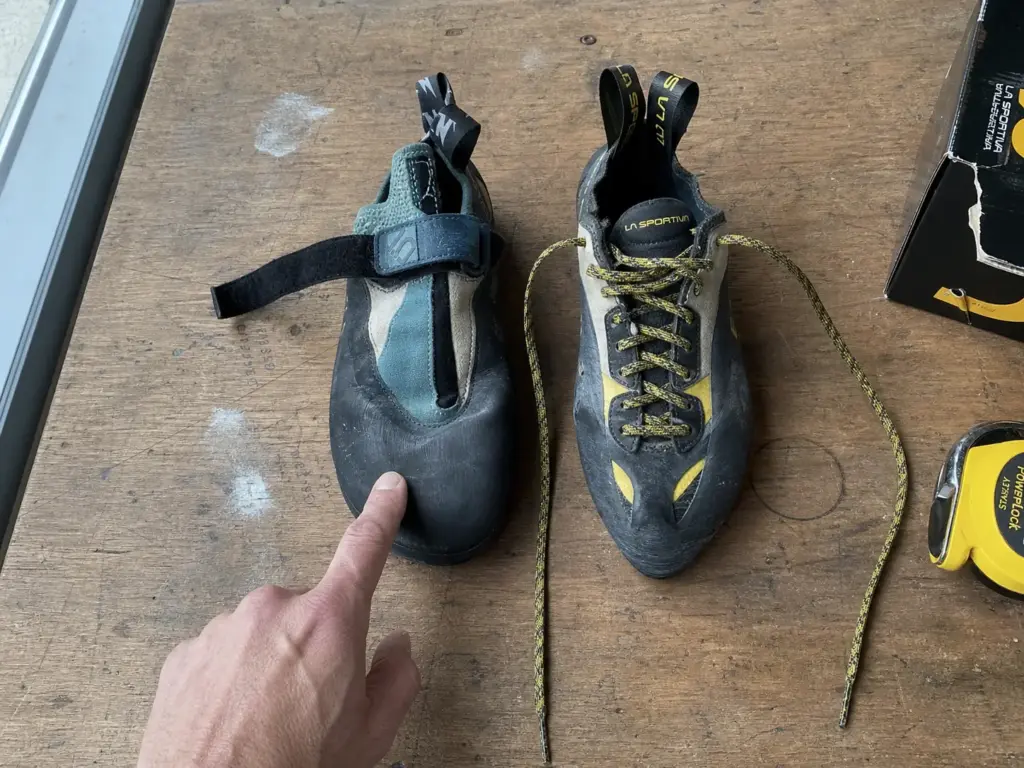
Every climbing shoe is built around a last, a hard plastic mold shaped like an idealized foot. That mold decides heel width, instep height, forefoot width, toe box depth, toe box shape, and how aggressively the whole thing curves. The logo on the heel decides none of it.
This is why brand-level advice keeps failing wide-footed climbers. Two shoes from the same manufacturer can fit like different sports, because they were built on different molds for different feet. Scarpa’s reputation for running wide comes from a handful of lasts in its lineup, not from some company-wide philosophy applied to every model.
Manufacturers almost never publish last width as a number you can compare. There’s no millimeter spec on the box, no width letter like you get with street shoes. What you get instead is model-by-model reputation, which is genuinely useful, plus your own hands and feet in the shop, which is better.
Two last features matter more than the rest for a wide foot. An asymmetrical toe box angles the shoe’s point toward the big toe, which sharpens edging power and simultaneously narrows the space your outer toes have to live in. The slingshot rand, the rubber band that wraps from the heel forward under the arch, sets how hard the shoe pulls your foot back into the toe box. A stiff slingshot on a wide foot means constant rearward pressure with nowhere for the forefoot to expand.
Prioritize toe box shape over stated width. Plenty of shoes measure generously across the ball of the foot and then taper hard toward the toes, which crushes a wide foot despite the wide reputation. Look at how the upper narrows from the ball forward, not just how it sits at the widest point.
So the framing for everything below: you are shopping for a last. The brand narrows thirty models down to eight. The last decides which of those eight you can actually wear. If you want the full picture of how these shoes are built and which shape suits which climber, the deeper background on how climbing shoes are built and who each shape is for covers the ground this article only touches on the width side. The Appalachian Mountain Club’s climbing shoe fit standard gives you the target: snug at the heel, across the instep, and along the sides, with your longest toe just touching the front. Anything that crosses from discomfort into pain has failed, regardless of how wide the last is.
Wide Forefoot, High Volume, and Wide Heel Are Three Different Problems
Here’s where nearly every wide-foot guide goes wrong. They treat “wide feet” as one condition with one fix. It isn’t.
Volume is height and width together. Manufacturers classify a foot as high-volume when width combines with a high arch, a high instep, or bunions, which means volume and width overlap without being the same thing. A shoe can have a genuinely wide toe box and still crush a high-arched foot across the top, because it solved the horizontal problem and ignored the vertical one.
Three problems, three different fixes. A wide forefoot is fixed by toe box shape, meaning how the upper tapers from the ball toward the toes. High instep volume is fixed by the overall depth of the last, meaning how much room exists between the sole and the top of the shoe. A wide or narrow heel is fixed by heel cup design, which is a separate piece of geometry entirely.
Buy for the wrong one and the shoe still hurts. That’s the whole reason the “right” wide shoe from a listicle so often disappoints. The recommendation was fine. It just answered a different question than the one your foot was asking.
Where Your Pain Starts Tells You Which Problem You Have
Pay attention to where it hurts first and when.
- Pinky toe and the outside edge of the forefoot, building over twenty minutes of climbing: forefoot width.
- Top of the foot, pressure that’s there the second you pull the shoe on and never eases: instep volume.
- Heel that lifts on heel hooks, or a gap you can pinch behind your heel: heel width mismatch.
The timing matters as much as the location. Forefoot compression builds under load, so it shows up once you start weighting your toes. Volume pressure is present at rest, because the shoe simply doesn’t have the depth to close around your foot without pressing on it.
If you can pull the shoe on comfortably but it hurts after a few routes, you have a width problem. If getting it on is the fight, you have a volume problem. Two different shoes fix those, and the shops that ask which one you have are the shops worth going back to.
One Shoe, Two Volumes
The cleanest proof that volume and width are separate dimensions comes from a single shoe sold two ways.
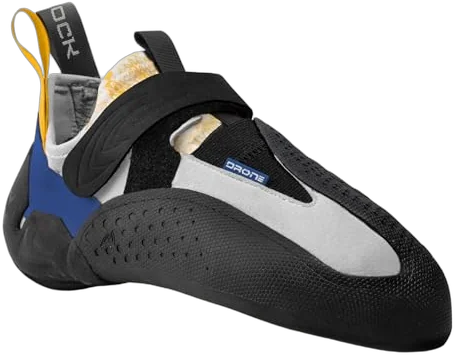
If your foot is wide across the ball but low over the arch, the HV version will feel sloppy on top even though the width is right. If you’re wide and high, it’s the one that finally closes without pressing. Two climbers can describe their feet with the same word and need opposite versions of the same shoe. That’s the framework in one product, and it’s worth reading alongside the broader guidance on matching a shoe’s shape to your foot shape, which comes at the same problem from the aggressive-versus-moderate angle.
Why a Narrow Shoe Hurts a Wide Foot (The Mechanics Nobody Explains)
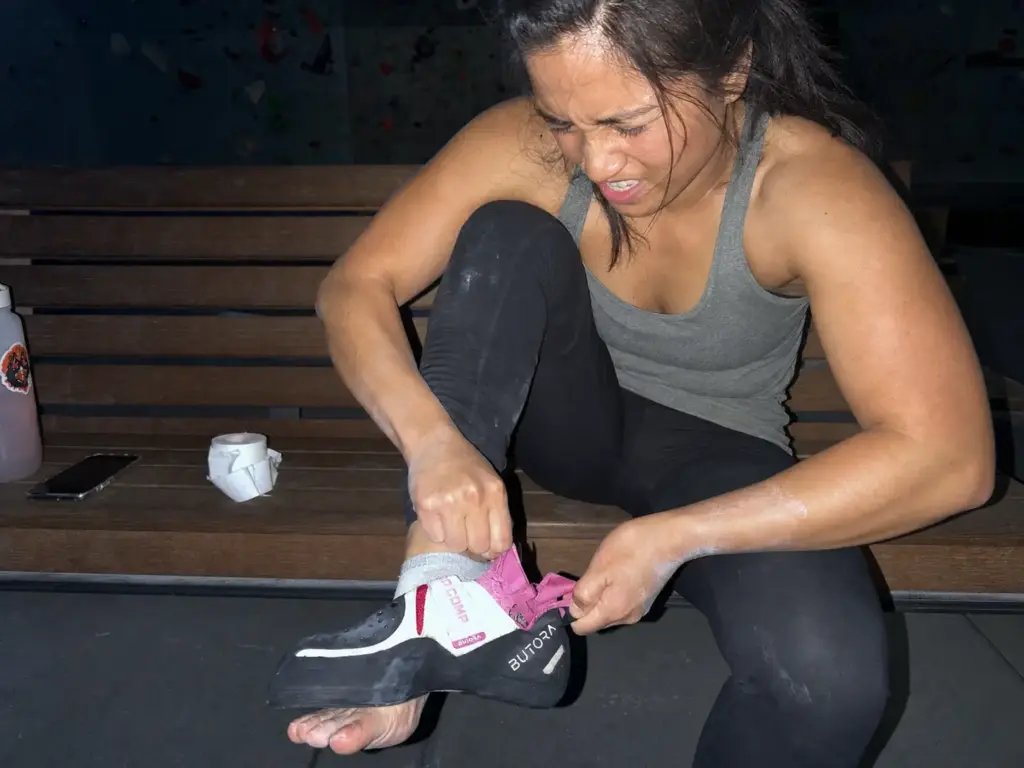
Every guide tells you a narrow shoe is uncomfortable on a wide foot. Almost none explain what’s physically happening, which is a shame, because the mechanism tells you what to look for.
Under load your forefoot splays. The bones spread outward as weight moves onto your toes, and in a shoe built on a narrow last that splay meets the toe rand and the upper’s seams with nowhere left to go. Climbers call the result sausage toes or pinky toe crush, and the vocabulary is accurate. The outside toes take the worst of it because they have the least structural support to push back with.
Downturn makes it worse in a way most beginners don’t see coming. Aggressively downturned shoes compress the forefoot by roughly 20 to 30 percent, because that curved shape is engineered to concentrate force through the toes. For a narrow foot that’s a performance feature. For a wide foot it’s the exact geometry working against you, which is why an aggressive shoe that happens to be labeled wide often still fails.
There’s a cost beyond discomfort that competitors skip entirely. The British Mountaineering Council’s research on tight-shoe fit and injury risk notes that shoe compression can stiffen the foot into a single rigid unit that fails to absorb shock the way it normally would, loading the ankle ligaments on falls and landings. The BMC also points out there’s no known scientific evidence that forcing your toes into a crimped position improves climbing performance across the board.
Then there’s the precision cost, which nobody frames honestly. A forefoot that’s gone numb from compression stops giving you feedback. You lose the micro-adjustments on small edges, the tiny weight shifts that tell you whether your toe is actually on the hold or just near it. That happens right when precision matters most, on a runout slab move where feel is the only thing you have. Pain is the obvious problem with a bad fit. Losing the information your foot is supposed to be sending you is the expensive one. Understanding how a climbing shoe is supposed to fit in the first place gives you the baseline that all of this is measured against.
Which Brands Actually Run Wide (And Why the Reputation Is Only a Starting Point)
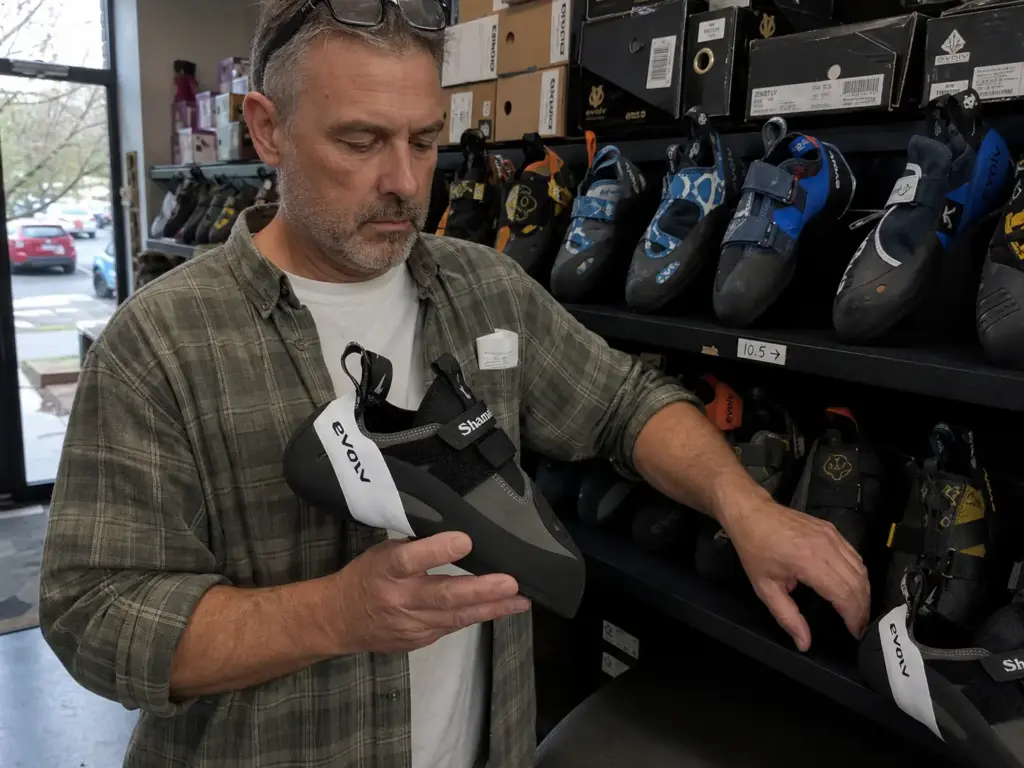
The consensus is real, so use it. Scarpa and Evolv get named for wide feet over and over, across dedicated reviews and forum threads alike. La Sportiva gets named as narrow just as consistently. That pattern didn’t come from nowhere.
Butora is the outlier worth knowing about, because it labels fit width directly instead of leaving you to infer it from reputation. Mad Rock and Five Ten sit in the middle with model-specific exceptions running both directions.
The most honest answer to this question is the one a climber gave in the Google results for it: Scarpa are mostly pretty good for wider feet, just go to a shop and try a bunch on. That’s a reputation plus an instruction to verify, and the instruction is the important half. Every brand on this list carries both wide and narrow lasts in its current lineup.
So treat brand as a filter, not an answer. It takes you from thirty models to eight. The last decides which of those eight you can wear all afternoon. If Scarpa is where you’re starting, the breakdown of how Scarpa’s VS, VSR, and LV lasts differ across the lineup is the model-level detail this section deliberately skips.
Leather or Synthetic Changes How Much Width You Can Buy
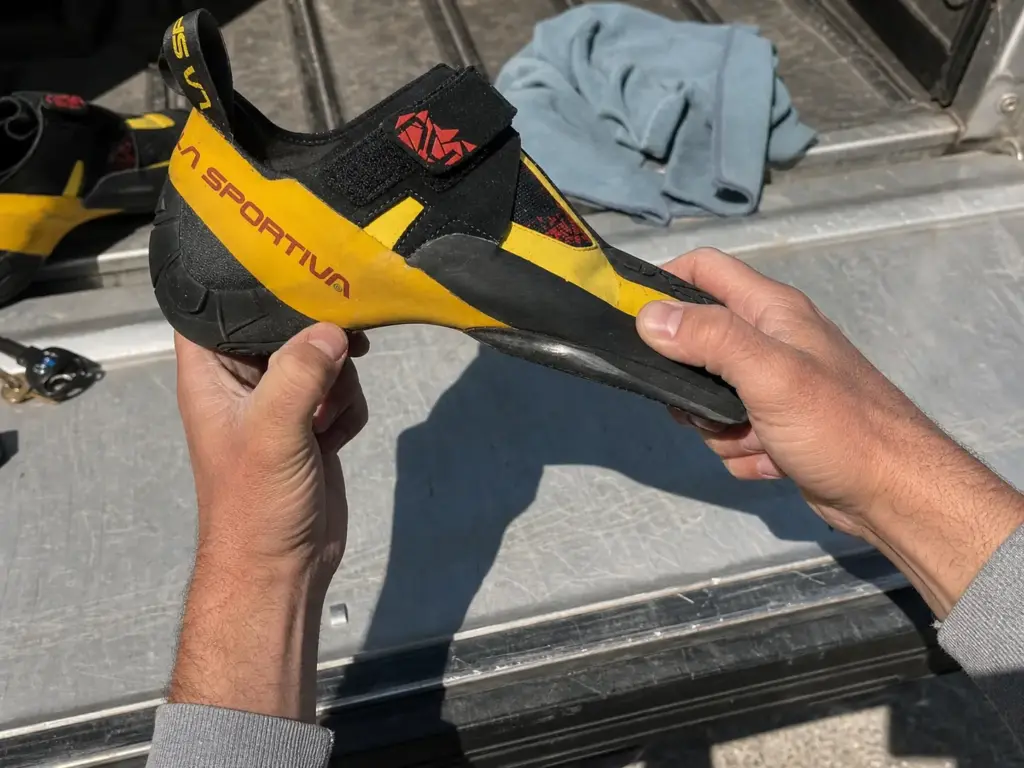
Check the upper before you commit, because it changes whether the shoe you’re holding is the shoe you’ll own in a month.
Leather uppers stretch noticeably in width over time, generally somewhere between half a size and a full size across the industry. Synthetic uppers and microfiber stretch minimally in width and essentially not at all in length. That’s the whole trade, and it turns break-in from folklore into a purchase-time decision.
For a borderline-wide foot, leather is a margin of safety. The shoe grows toward your foot. Synthetic has to already feel correctly wide the day you buy it, because it will not give you anything later.
Stretch is width, not length. A leather shoe that’s too short in the toes stays too short, because leather gives sideways under pressure and barely moves along the axis of your foot. The number of climbers who bought a size down expecting the length to open up is not small.
That last point is the most common misread of “they’ll break in,” and it’s worth being blunt about. Break-in buys you room across the ball of the foot. It does not buy you a longer shoe. If your toes are already knuckled hard against the front, no amount of wearing it changes that. The full picture of what break-in can and can’t fix is worth reading before you gamble on a shoe that hurts today.
Sizing Up Doesn’t Fix Width (It Trades It for a Sloppy Heel)
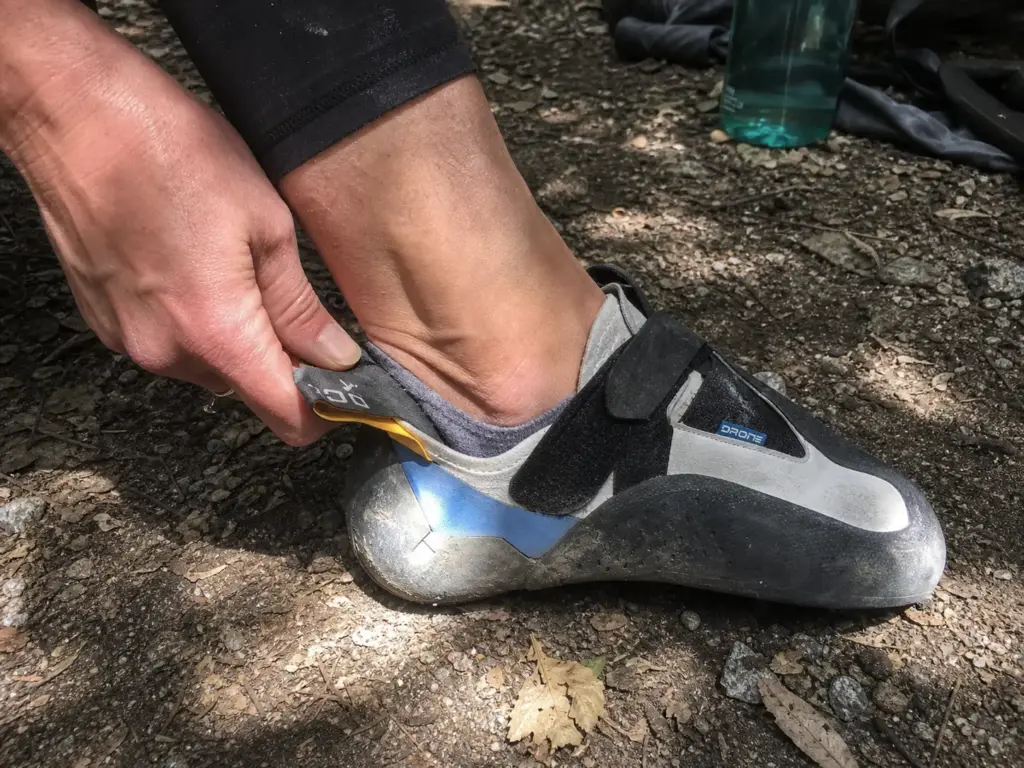
You know the sequence. The forefoot pain was unbearable, so you went up a full size, and now your forefoot is fine and your heel pops out on every heel hook. You didn’t solve the problem. You moved it somewhere it’s harder to notice and more expensive to live with.
Here’s the mechanism. Going up a size scales the whole last, not just the width, so you gain forefoot room and simultaneously open dead space behind your heel. That gap costs you two things: reliability on heel hooks, where the shoe has to stay locked while you pull, and precision on small edges, where any movement between foot and shoe means your weight lands somewhere other than where you aimed it.
The fix is a genuinely wider last at your true length. Not a longer version of a narrow one. That distinction sounds pedantic until you’ve owned both, at which point it’s the only advice that matters.
A lot of this trap is inherited. Pre-2000s climbing culture called for buying two full sizes down from your street shoe, and some shops still repeat it. Current guidance from the BMC and the AMC treats that as outdated and recommends snug rather than painful, which means a climber who sizes up to escape agony is often overcorrecting for advice that was already wrong when they received it. Combine that with the evidence gap around whether crimped toes improve performance at all, and the pain premium is buying much less than the culture claims.
Test the heel before you buy, not after. Pull the shoe on, stand up, rock forward onto your toes, and lift your heel a few millimeters off the ground. If you feel the heel cup separate from your heel before your foot moves, that shoe is too big for you no matter how good the forefoot feels.
There’s a legitimate escape hatch here, and it’s the two-shoe quiver. One comfort fit shoe for volume days and long routes, one performance fit shoe for hard single pitches. Wide-footed climbers reach for this earlier than most, because forcing one last to cover both jobs is where the compromises get painful, and it’s the cleanest way to stop asking a single sport climbing shoe to be comfortable for four hours and precise on a crux. The trade between comfort-fit and performance-fit on long routes is worth understanding before you decide whether one pair can do everything you need.
The Best Climbing Shoes for Wide Feet, Ranked by What Your Foot Actually Needs
Now that you know which problem you have, here are the shoes that solve each one. This isn’t a leaderboard. It’s a matching exercise, and the pick that’s wrong for your foot shape is wrong no matter how highly anyone rates it.
Top Pick for a Wide Forefoot
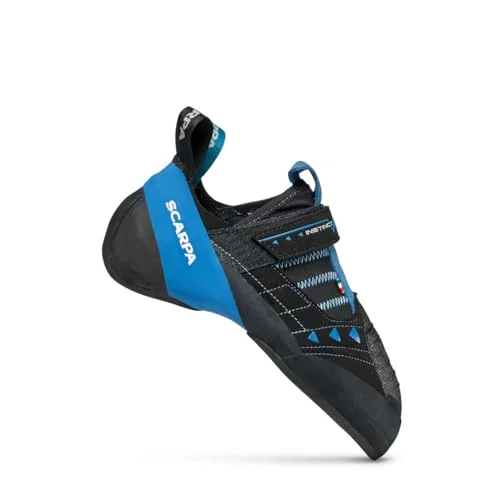
Be honest with yourself about what this is. The Scarpa Instinct VSR is a performance shoe with a wide last, not a comfort shoe. It’s the right answer for a climber whose forefoot is the constraint and who’s climbing hard enough to use the sensitivity. It’s the wrong first pair, because you’ll be paying for precision you can’t yet exploit while your feet learn what standing on a small edge feels like. Stock has been running thin on this model, so if the fit works for you it’s worth acting rather than deliberating. If you’re picking a first pair instead, what a first pair should actually do for you is the more useful place to start.
Best All-Around Medium-to-High Volume Pick
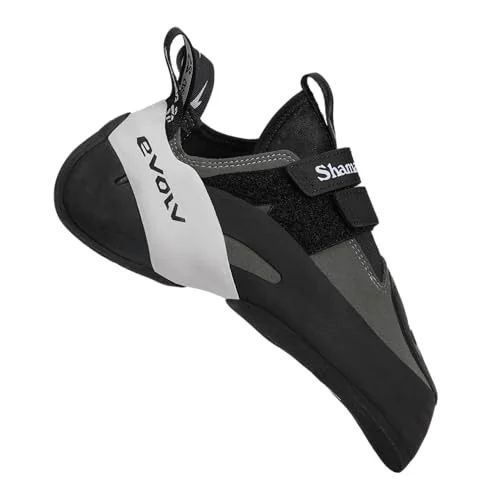
If you’re still building technique, the Evolv Shaman 2S is the more forgiving of the two top picks. The cambered profile gives you some shape for steeper terrain without the aggressive downturn that would undo the width advantage. Worth knowing: the original Shaman is gone from current catalog, so if a forum thread from a few years back sold you on it, the 2S is where that recommendation now points.
Budget Pick That Labels the Width Instead of the Gender

The Butora Acro Comp earns its slot on the label alone. Every other shoe here asks you to infer width from reputation and forum consensus. Butora prints it. The reasoning behind why that convention beats gendered sizing gets its own section further down, because it changes how you shop, not just what you buy.
Wide-Foot Shoes for Bouldering and Steep Gym Terrain
This is the hardest conversation in wide-foot shopping, because the two things you want genuinely fight each other.
Steep terrain rewards downturn. That curved shape puts your toes in a position to pull on overhanging holds and concentrates force where you need it. But downturn compresses the forefoot by 20 to 30 percent to do that, and your forefoot is the thing that’s already short on room. The feature that buys you power on the steep stuff is the same one that hurts.
Softness is the lever that partly resolves it. A soft, sensitive shoe conforms around a wide foot far better than a stiff one at the same nominal width, because the upper and midsole give where your foot pushes instead of holding a fixed shape. Two shoes with identical last dimensions can feel completely different on a wide foot for this reason alone.
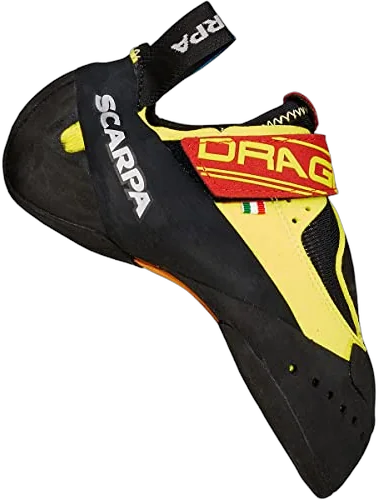
Here’s the mistake to avoid, and beginners make it constantly. You try on five shoes, the aggressive downturned one is the only one that doesn’t pinch, so you buy it. What actually happened is that the shop had it in a size that worked, not that the shape suits you. The downturn will still compress your forefoot, and at the beginner stage it delivers no technique benefit to pay for that. A flat neutral shoe in a genuinely wide last is the better beginner climbing shoe by a wide margin, because it lets your foot sit in its natural shape while you build the toe strength that makes a downturn worth having later. The Scarpa Drago is a shoe for someone already climbing steep terrain well enough to use it, and the guidance on picking a bouldering shoe without wrecking your feet is the better starting point if that’s not you yet.
There’s an honest limit worth stating. At the sharpest end of aggressive geometry, wide-footed climbers are choosing between fit and terrain-specific performance, and one of them has to give. Softness narrows that gap. It doesn’t close it.
Why La Sportiva Runs Narrow and Which Models Break the Rule
Everyone tells you La Sportiva runs narrow. Almost nobody tells you why, which is a problem, because the why is the part that lets you evaluate any model in their lineup yourself instead of memorizing someone’s list.
What the P3 Platform Is Doing to Your Forefoot
La Sportiva builds much of its performance line around the P3 platform, short for Permanent Power Platform. It’s a rand system that extends underneath the forefoot and wraps up into the toe box, and its job is structural: it holds the shoe’s downturned shape permanently instead of letting it relax over time the way an unsupported downturn does.
To do that, it has to resist your foot spreading inside the shoe. That’s not a side effect. Eliminating internal foot movement is precisely the goal, because a foot that can’t shift transmits force cleanly through the big toe, which is what precision edging demands. La Sportiva made a deliberate choice: maximum power transfer, minimum internal room.
For a narrow foot that’s an excellent trade. For a wide foot it’s the design fighting your anatomy at the structural level, and no amount of break-in changes it, because the rand is doing exactly what it was engineered to do.
Which means you can predict the fit. The more aggressively downturned the model, the harder P3 works, and the less room you’ll find. The softer and flatter the shoe, the less the platform is gripping the shape, and the more forgiving it becomes.
The Real Exception in the Lineup
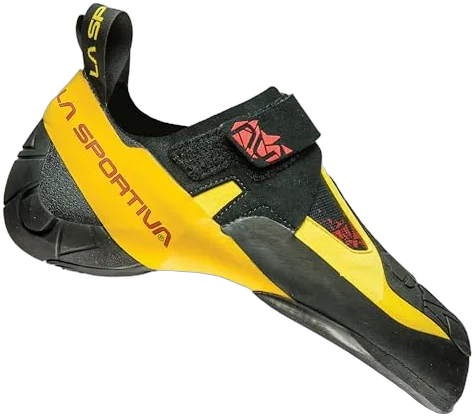
Calling the La Sportiva Skwama a wide shoe would overstate it. It’s a shoe with less structural resistance to your forefoot spreading, which for this brand is the meaningful difference. Availability on this one has been inconsistent, so check before you plan around it. If you want the full picture of how La Sportiva’s lineup splits by discipline, that’s where the model-by-model breakdown lives.
Closure Systems When Your Instep Is the Problem
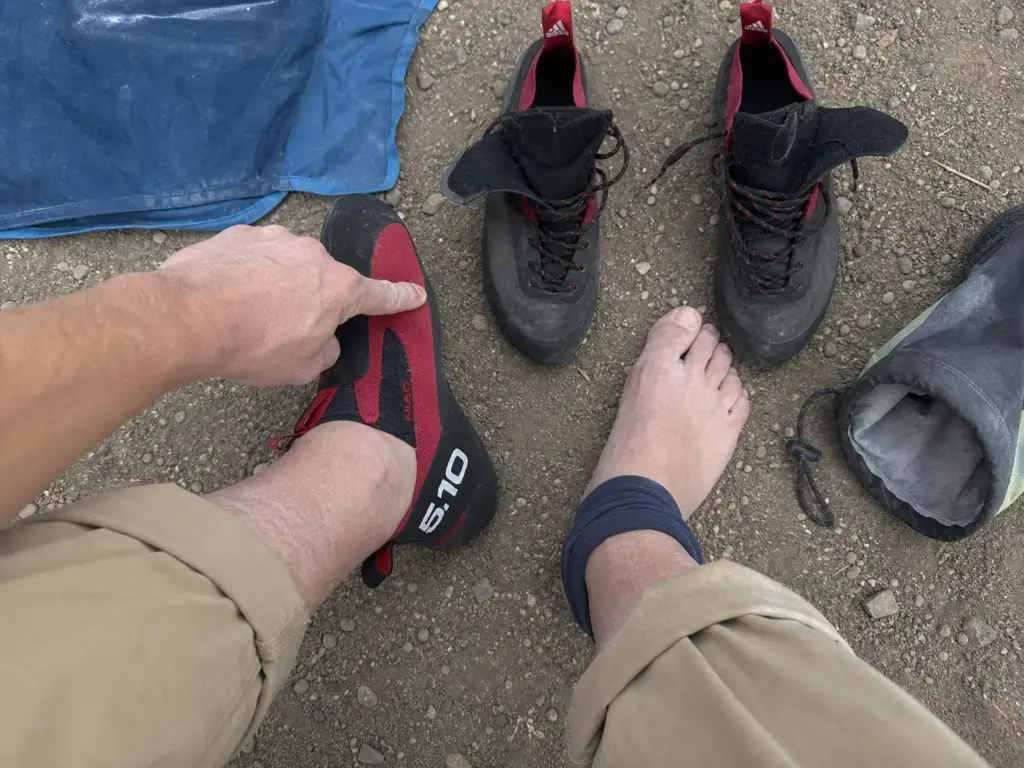
Standard advice says laces are the most adjustable closure, so they’re the best option for an unusual foot. That’s correct in general and exactly backwards if your instep is high.
Think about what a lace-up closure does mechanically. It pulls the two sides of the upper toward each other, and all that tension concentrates in a band directly over the top of your foot. That’s precisely where a high arch already needs room. You can loosen the laces over the instep, but then you’ve given up the closure’s tension where it was supposed to be holding your foot, which defeats the reason you chose laces.
Velcro straps distribute pressure differently. Two or three wide bands spread the load across a larger area instead of concentrating it along a single line, so a high instep gets pressed less sharply. Slip-ons apply no directed tension at all, because there’s nothing pulling anything anywhere.
The trade going the other way is real, though. Velcro is faster but less fine-tunable, and a slip-on gives you no adjustment whatsoever. If your forefoot and heel need different amounts of hold, which is common on a wide foot with a narrow heel, a slip-on can’t give you that and laces can. This is the section where climbers with wide feet and high arches describe the shoe fighting them in two places at once, and there’s no single closure that wins outright.
For the all-day comfort case, the Five Ten Niad Moccasym is the current-catalog slip-on worth knowing about, with a roomier forefoot than the older Anasazi Moccasym it effectively replaces. No closure hardware means nothing pressing on your instep, which for a high-arched foot can be the whole solution. Stock has been thin on it recently. The trade is that you’re accepting whatever hold the last gives you, with no way to dial it in, and the fuller comparison of how each closure system behaves across disciplines is worth reading before you commit to one.
Wide-Footed Women and the LV Naming Convention
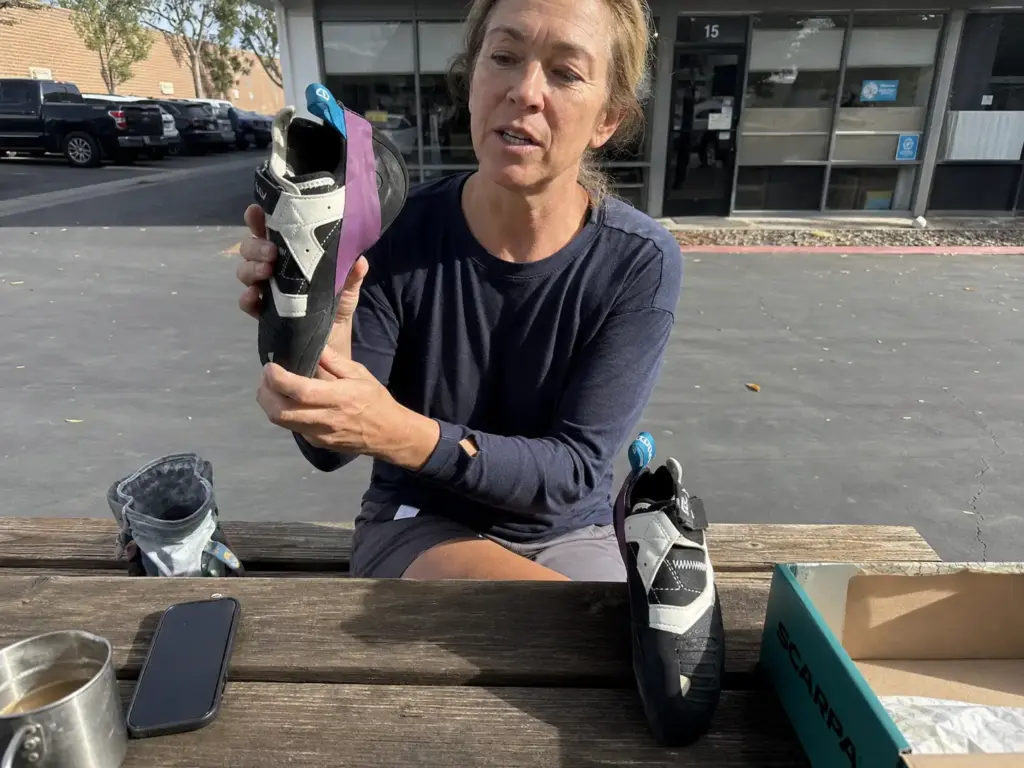
LV means low volume. It describes a last cut narrower through the forefoot and lower through the instep than the standard version of the same shoe. It is a volume label, and it gets conflated with a women’s label constantly, including by shop staff who should know the difference.
Here’s the part that trips people up. Women’s climbing shoe lasts generally run narrower by default, which means a woman with genuinely wide feet is frequently better served by the men’s or unisex version of a shoe than by the version marketed to her. That advice sounds wrong until you understand that the gender label is a proxy for average foot shape, and averages are useless when your foot isn’t average.
The Scarpa Instinct VSR LV shows the convention cleanly. Same model as the top pick above, same FV last family, cut low-volume. If the standard VSR felt sloppy over your arch but right across the ball of your foot, the LV is what you actually wanted. The Evolv Shaman LV does the same thing in a second brand, which matters because it shows this is an industry pattern rather than one company’s quirk. Stock on that one has been limited lately.
Which brings the argument back to Butora, and why its Wide, Regular and Tight labels are the smartest convention in the category. Butora tells you the actual last width. No inference from brand reputation, no hoping the gender label happens to match your anatomy, no decoding what LV means in this particular manufacturer’s vocabulary. For a wide-footed climber of any gender, that’s a fundamentally better way to shop, and it’s slightly absurd that the most affordable shoe in this roundup is also the only one that does it.
The practical instruction is short. Read the volume label. Ignore the gender label. Check the specific last. Everything else is noise, and if you want the full treatment of how women’s climbing shoe sizing actually works, including the downsizing math, that’s the next stop.
Try Them On Late in the Day and Other Fit-Room Rules
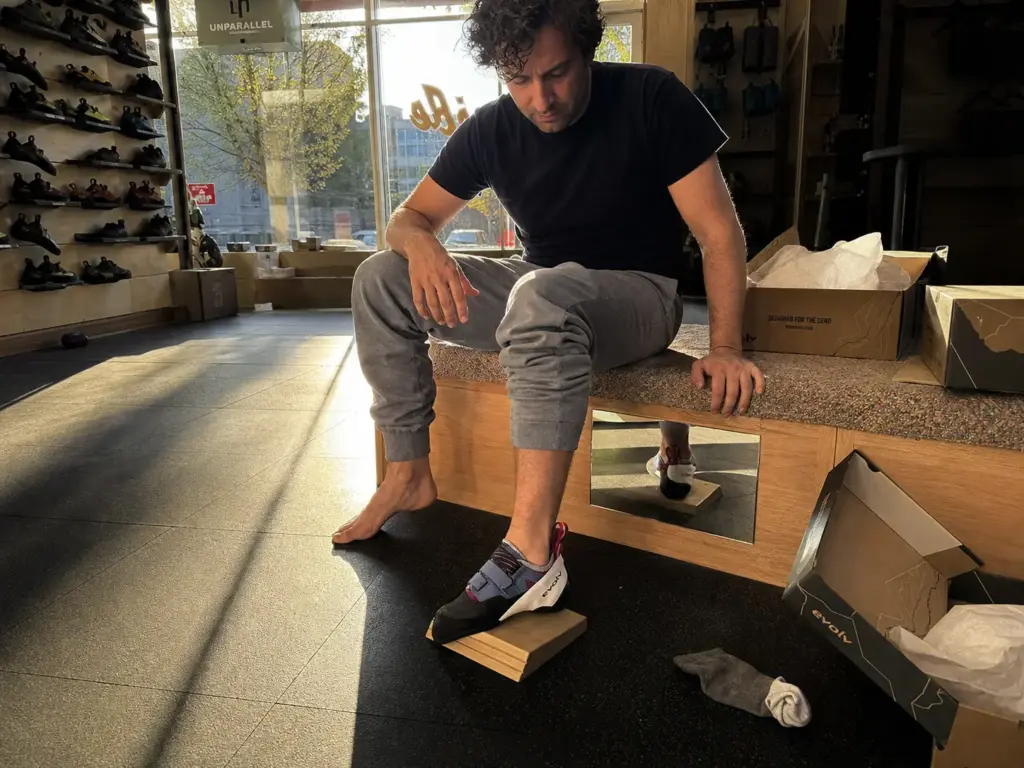
Everything above is theory until you’re standing in a shop with three boxes open. Here’s how to convert it into a decision.
Go late in the day. Your feet swell over the course of normal activity, and both the AMC and BMC recommend trying shoes on after that’s happened. A fit that feels correct in a cool morning shop turns punishing on a warm afternoon at the crag, and a wide foot has the least margin to absorb that difference.
Heat compounds it. Summer humidity and warm rock make your feet swell further than an ordinary afternoon does, which means a borderline fit that passed in an air-conditioned shop can become unwearable on a July crag day. Nobody warns you about this, and it’s the reason a shoe that felt fine in April becomes the one you’re peeling off between every route in August.
Then run the check itself, in this order:
- Heel: pull the shoe on, stand, rock forward, lift the heel a few millimeters. The heel cup should stay with your heel.
- Instep: press down on the top of the shoe. You want contact, not pressure that’s already uncomfortable standing still.
- Toes: your longest toe should just touch the front. Touching is correct. Knuckled hard against it is not.
- Sides: snug along the length of the foot, with no pinch point that stands out from the general snugness.
That’s the Appalachian Mountain Club’s fit standard translated into something you can do in four minutes. Snug at heel, instep, and sides, longest toe just touching, discomfort acceptable and pain not.
One last thing that follows from all of this. A shoe you can’t dial in shifts internally while you smear and edge, and that movement accelerates toe rubber wear while putting extra stress on the seams, which is how rand delamination starts. Getting wide-foot fit slightly wrong isn’t just uncomfortable, it costs you shoe life. Knowing when a resole is worth it and catching rand damage before it spreads matters more for wide-footed climbers than for anyone else, because you’ll hit both sooner.
Conclusion
You’re shopping for a last, not a brand. The logo narrows the search from thirty models to eight, and the mold decides which of those eight your foot can live in for three hours.
Name your problem before you name a shoe. Wide forefoot, high volume, and wide heel need three different fixes, and the best shoe for the wrong problem still hurts exactly as much as the shoe you already regret.
Sizing up is not a width fix. It buys forefoot room and hands you a sloppy heel in exchange, while a genuinely wider last at your true length costs you nothing at all.
Go back to the shop late in the afternoon and run the four-point fit check on whatever you already own. Knowing which of the three problems you actually have is worth more than any single recommendation on this page.
Frequently Asked Questions
01Which climbing shoe brands are good for wide feet?
Scarpa and Evolv come up most consistently for wide feet, with Butora worth a look because it labels last width directly instead of leaving you to guess. Treat that as a starting filter rather than a guarantee, since every one of those brands also sells narrow-lasted models.
02Are Scarpa climbing shoes good for wide feet?
Scarpa’s FV last is one of the most reliably wide-forefoot platforms in climbing, which is why the brand dominates wide-foot recommendations. But Scarpa’s lineup spans several lasts, so a Scarpa model built on a narrower mold fits like any other narrow shoe. Check the model, not the logo.
03What shoe brand is best for wide feet?
There isn’t one, and that’s the useful answer, because the last shape rather than the brand is the biggest contributor to a shoe’s width. Scarpa and Evolv are the strongest starting points, but deciding whether your issue is forefoot width, volume or heel width matters more.
04What size should I get for wide climbing shoes?
Stay at your true performance length and change the last, not the size. Sizing up to escape forefoot pressure opens dead space in the heel, costing you precision on small edges and reliability on heel hooks. Try shoes on late in the day when your feet have naturally swelled.
05What does LV mean on a climbing shoe?
LV stands for low volume, a last cut narrower through the forefoot and lower through the instep than the standard version of the same shoe. It describes volume, not gender, which is why a woman with genuinely wide feet is often better off in the standard version.
Safety Notice: Rock climbing and mountaineering are inherently high-risk
activities that can involve physical trauma or fatal incidents. The information on Rock Climbing Realms is for
educational and informational purposes only. Techniques and advice presented here are not a substitute
for professional, hands-on instruction. Conditions and risks vary by location. Always seek guidance
from a qualified instructor before attempting new techniques. By using this website, you agree that you
are solely responsible for your own safety. Any reliance you place on this information is strictly
at your own risk, and you assume all liability for your actions. Rock Climbing Realms and its authors
will not be held liable for any harm, damage, or loss sustained in connection with the use of this information.
Affiliate Disclosure: We are a participant in the Amazon Services LLC Associates Program, an
affiliate advertising program designed to provide a means for us to earn advertising fees by advertising and linking
to Amazon.com. As an Amazon Associate, we earn from qualifying purchases. We are also an official affiliate partner
of Black Diamond Equipment via the AvantLink network. If you click on a Black Diamond affiliate link and make a
purchase, we may earn a commission at no additional cost to you. We also participate in other affiliate programs.
Additional terms are found in the terms of service.