
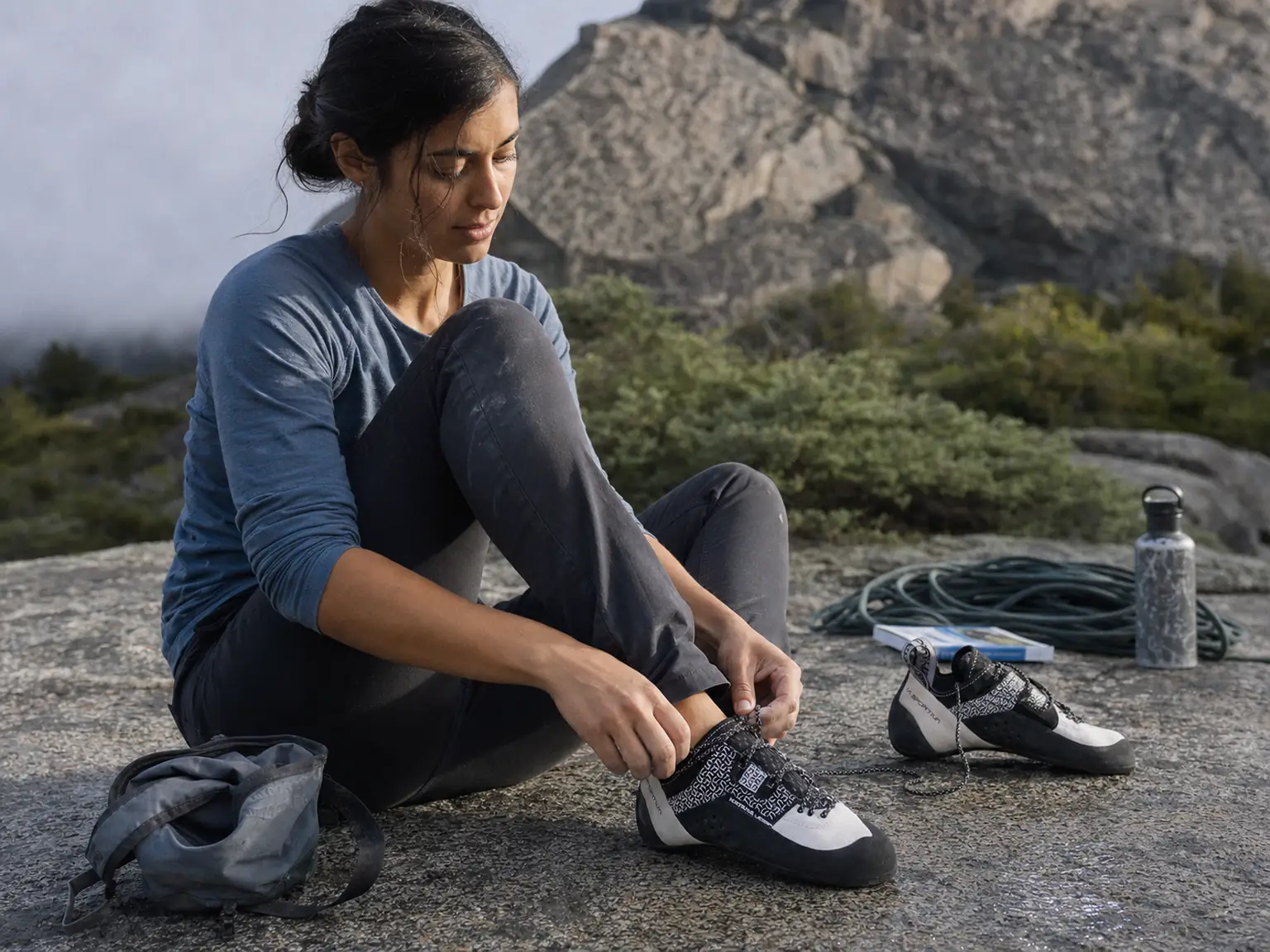
In this article
Research funded by the American Alpine Club found that 53% of climbers with five or more years in the sport have a bunion in at least one foot, against roughly 4.5% of the general adult population. Put the same foot into a climbing shoe and its hallux valgus angle jumps from about 14° to about 21° on the spot, which means the shoe is not a passive object sitting on your foot but something actively reshaping it. This is the guide to the best climbing shoes for women written by someone willing to tell you what the shoe costs you and not only what it does for you, and it leans on a long-running argument the community has been having for years about whether a women’s last is real engineering or a paint job, because women have been climbing at the front of the sport a lot longer than the gear industry has been designing for them. Below you get eight picks organized by what you actually climb and by the shape of your foot, the sizing math each brand refuses to standardize, and a straight answer about what years in tight shoes really do.
Here is the whole list at a glance, in the order it appears below.
| Shoe | Best For | Fit Note |
|---|---|---|
| La Sportiva Katana Lace (Women’s) | Best overall, all-around | La Sportiva chart: down 1.5 to 2 EU sizes; narrow last |
| La Sportiva Skwama (Women’s) | Bouldering and steep terrain | Aggressive downturn; size for short efforts, not full sessions |
| Scarpa Vapor V (Women’s) | Sport climbing | Scarpa chart: down 0.5 to 1 size; roomier than La Sportiva |
| La Sportiva TC Pro | Trad and crack climbing | One unisex US sizing run; brand chart only, no street size |
| Black Diamond Momentum (Women’s) | Budget and first pair | Flat last, generous fit; snug rather than performance-tight |
| La Sportiva Tarantulace (Women’s) | Beginner, all-day comfort | Flat last, laces let you tune volume as feet change |
| Evolv Elektra (Women’s) | Wide and high-volume feet | Roomier toe box; usually true to a half size down |
| Scarpa Instinct VS (Women’s) | Low-volume and narrow feet | Genuine LV last and narrow heel cup; stops heel lift |
What “Women’s-Specific” Actually Means on a Climbing Shoe
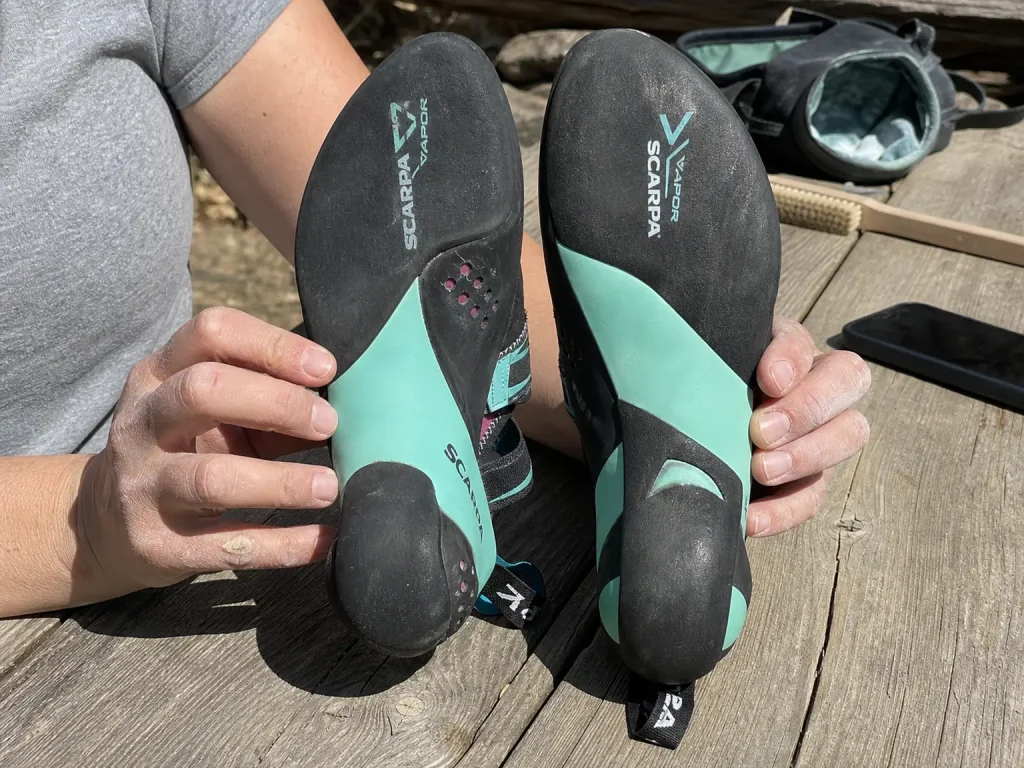
Picture the moment in the gym when a climber unboxes the expensive women’s shoe she ordered, pulls it on, and realizes it fits exactly like the men’s version her belay partner is wearing, except it’s teal. That moment is not a scam and it isn’t nothing either. The honest answer is that a women’s climbing shoe is sometimes a real engineering change and sometimes cosmetic, and the product listing will almost never tell you which one you’re holding.
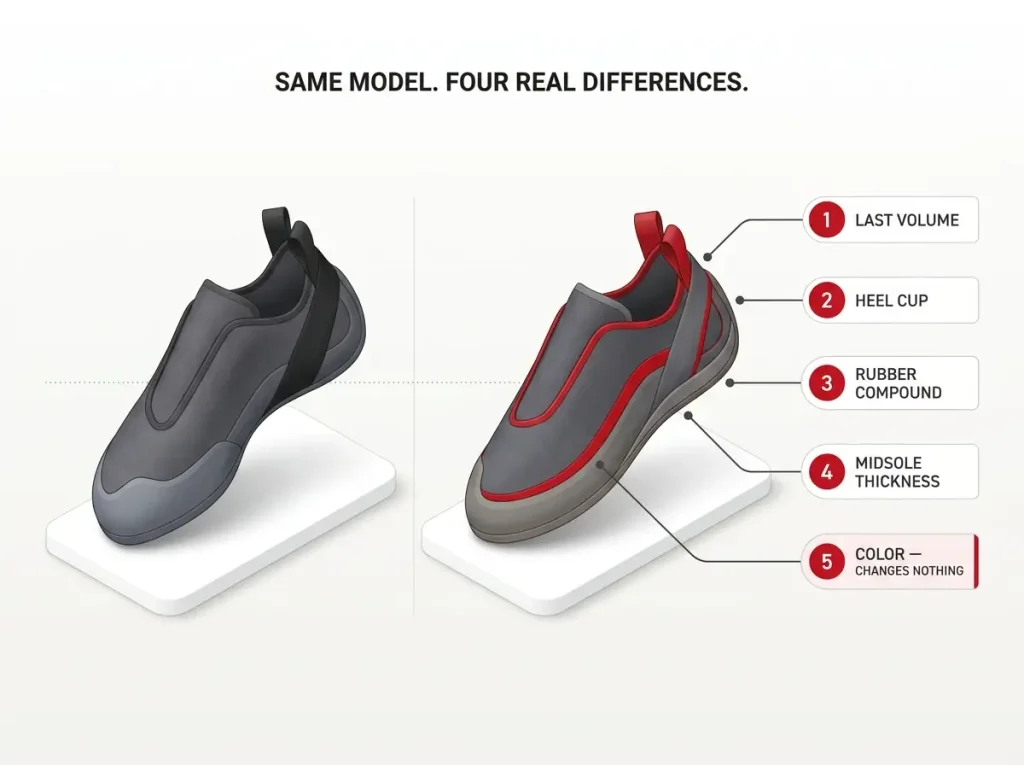
There are only four things a brand can meaningfully change between a men’s and a women’s release of the same model. The last (volume, heel cup width, instep height), the rubber compound, the midsole thickness and stiffness, and the length grading. Everything else on that page is color, marketing copy, and a different photo model. Once you know the list is that short, reading a spec sheet gets a lot faster, because you’re only looking for four things.
Real changes exist, and they’re specific enough to name. On the Scarpa Vapor V, the men’s version runs a stiffer Vibram XS Edge outsole while the women’s runs a softer Vibram XS Grip 2. That’s a genuine compound swap, tuned toward a lighter average bodyweight so the rubber deforms into the rock instead of skating across it, and it’s worth understanding why the softer compound is a real difference and not a spec-sheet flourish before you dismiss the whole category as marketing.
The La Sportiva Otaki Women’s is another one: 0.3mm thinner midsole, 60g lighter than the men’s. Small, specific, measurable. Nobody puts a 0.3mm midsole change in a press release for fun.
Then there’s the counter-case, and it’s the reason this section exists. Some women’s listings differ from the men’s version by a colorway plus one rubber tweak and nothing anatomical at all. If your foot is genuinely wide or high-volume, that kind of release can leave you worse off in the women’s low-volume last than you would have been in the men’s or unisex version of the identical shoe. You paid the same money for a shape that fits you less well, which is the exact opposite of what the label promised.
The decoder is short enough to memorize. LV means low-volume, full stop, and it describes a shallower instep and a narrower heel cup. “Women’s” means the brand’s best guess at a low-volume-ish last for an average woman’s foot.
The industry uses those two words as if they were synonyms and they are not. One is a measurement. The other is a category.
So the practical test, standing in a shop or reading a listing at midnight, is to ask what changed besides the color. If the answer is a compound, a midsole spec, a stated heel cup difference, you’re looking at engineering. If the answer is nothing you can name, you’re looking at a size run in a different palette, and you should be shopping by shape instead of by label.
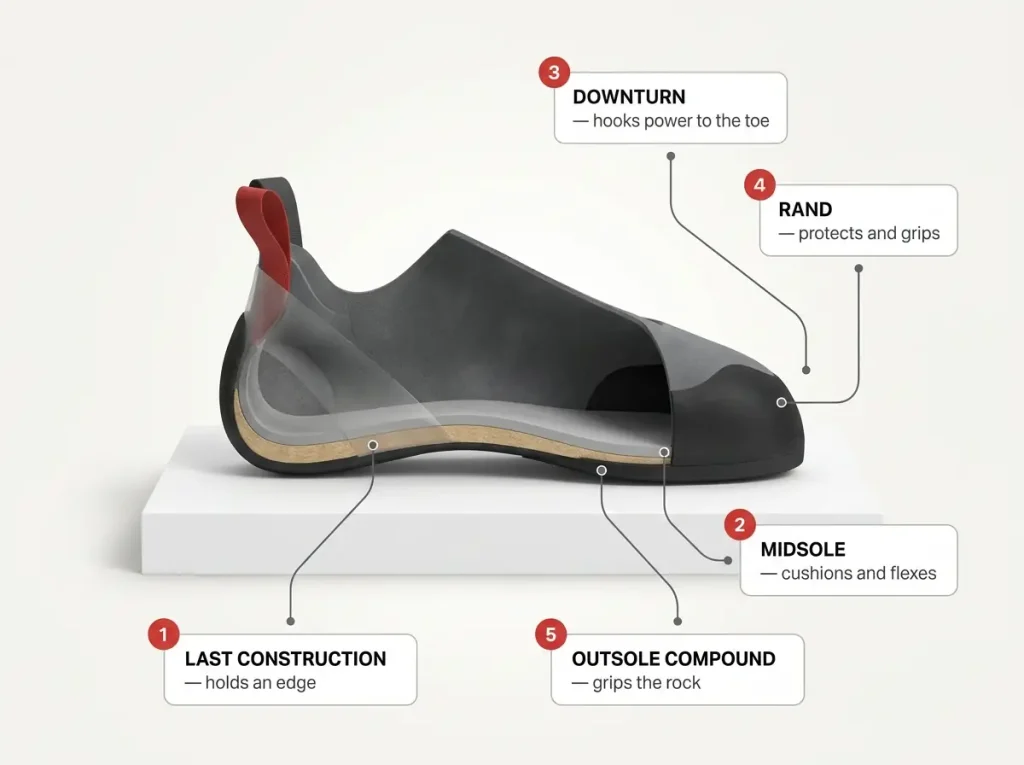
Climbing Shoe Construction in Plain English
Nobody stands at the crag saying they prefer a board-lasted midsole. They say this thing feels like a plank, or they say they can feel every crystal through it. What follows is the compressed version of the full buying guide to matching a climbing shoe to your discipline, foot shape and rock, translated back into what your foot actually reports on the wall.
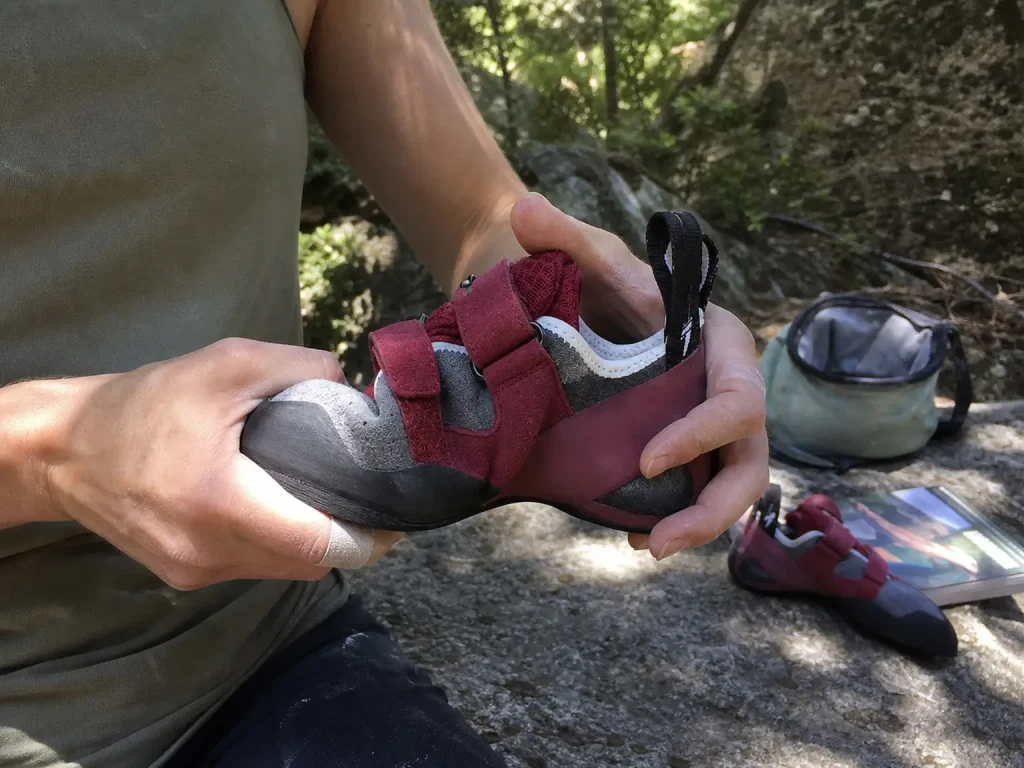
Start with board-lasted versus slip-lasted, because it’s the single spec that most predicts how a shoe feels. A board-lasted shoe has a stiff insole board under your foot, so it holds an edge all day and carries you through a long multi-pitch without your foot doing the structural work. A slip-lasted shoe is sewn like a sock and glued, so it’s softer, more sensitive, better for smearing and better for bouldering where you want to feel the texture you’re standing on.
Neither is better. One does the work for you, the other reports back.
Downturn is the shape of the shoe from heel to toe, and it comes in flat or neutral, moderate, and aggressive. The community calls the aggressive ones downturned, or a banana shoe, and both names are accurate. Aggressive geometry pre-loads your toes into a hooked position so power concentrates at the front of the foot on small holds. That’s also exactly why it’s the wrong first purchase: a shoe that puts your foot in a permanent claw is a poor place to learn what neutral footwork feels like.
Asymmetry is the sibling spec nobody explains, and it’s separate from downturn. It describes how far the shoe’s centerline curves toward the big toe, concentrating power on a single point instead of spreading it across the forefoot.
High asymmetry is precise and uncomfortable. Low asymmetry is comfortable and vague. Every shoe in this guide sits somewhere on that line, and it’s usually the reason two shoes with the same downturn feel nothing alike.
Closure comes down to three options and one honest trade. Lace closure lets you tune tension zone by zone, tight over the toes and loose over a high instep, which matters more the longer your session runs. Velcro closure is faster, and if you’re pulling shoes off between bouldering problems (you should be) the seconds add up.
The slip-on slipper is the most sensitive and the least adjustable of the three. It’s worth knowing how the three closure systems actually differ once you’re on the wall before you decide between a Tarantulace and a Momentum further down this page.
Rubber compound is a trade, not a ranking. Stickier compounds like Vibram XS Grip 2 smear better on slick granite and wear faster. Harder compounds like Vibram XS Edge hold a small edge longer and last longer.
Brands also run their own proprietary formulations, so you’ll see FriXion rubber on Evolv models and BlackLabel rubber on Black Diamond, and comparing across those names is guesswork rather than science. There is no best rubber, only the trade you decided to make.
The upper is the last piece, and it decides how much the shoe changes on you. A leather upper stretches, sometimes close to a full size, which is why an unlined leather shoe should feel tighter on day one than you’d accept from anything else. A microsuede upper or a microfiber upper stretches barely at all, so what you try on is roughly what you own forever. Buying a synthetic shoe the way you’d buy a leather one is a common and expensive mix-up.
Two brand-specific terms are worth decoding while you’re here, because they show up in listings without explanation. La Sportiva’s P3 midsole is a system meant to keep a downturned shoe from flattening out as it breaks in, so an aggressive shoe stays aggressive. Their No-Edge technology removes the traditional edge entirely in favor of a rounded profile that maximizes rubber contact, which some climbers love and others never adapt to.
Neither is a quality rating. Both are shape decisions.
Last come volume and the heel cup, which are the two measurements that decide whether a shoe fits you at all, and the two least likely to appear anywhere on a listing. Volume is depth through the instep. The heel cup is the shape of the pocket your calcaneus sits in. A shoe can be exactly right in length and completely wrong in both, and that’s the shoe that ends up in a closet after four sessions.
How Much to Downsize, Brand by Brand
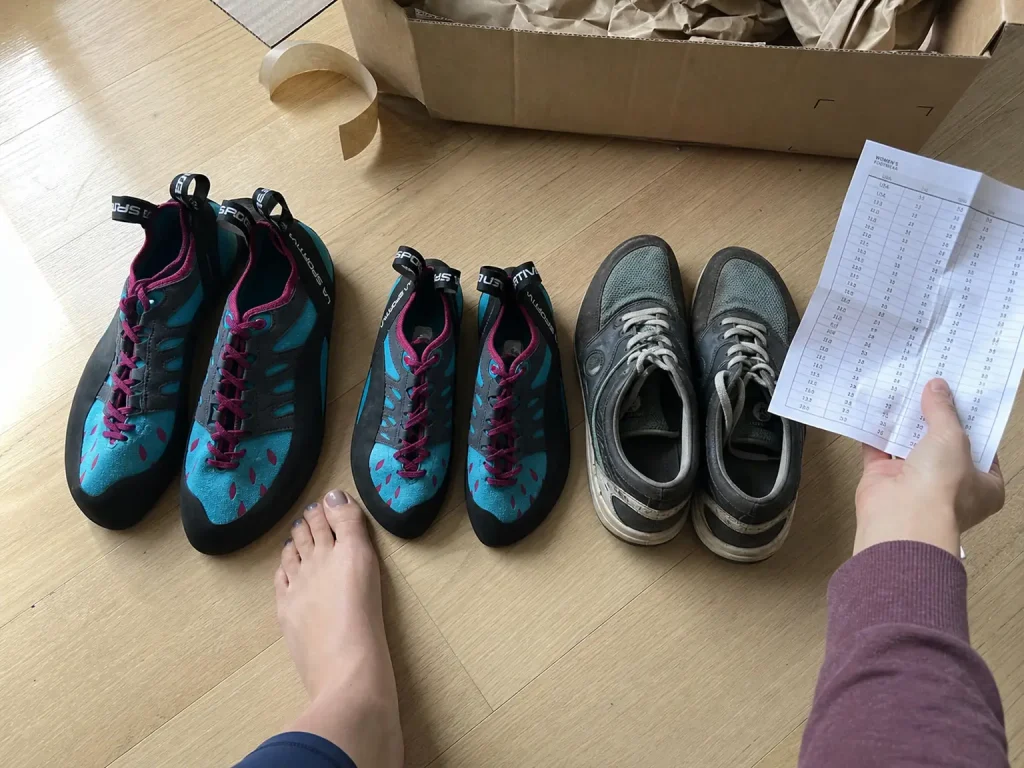
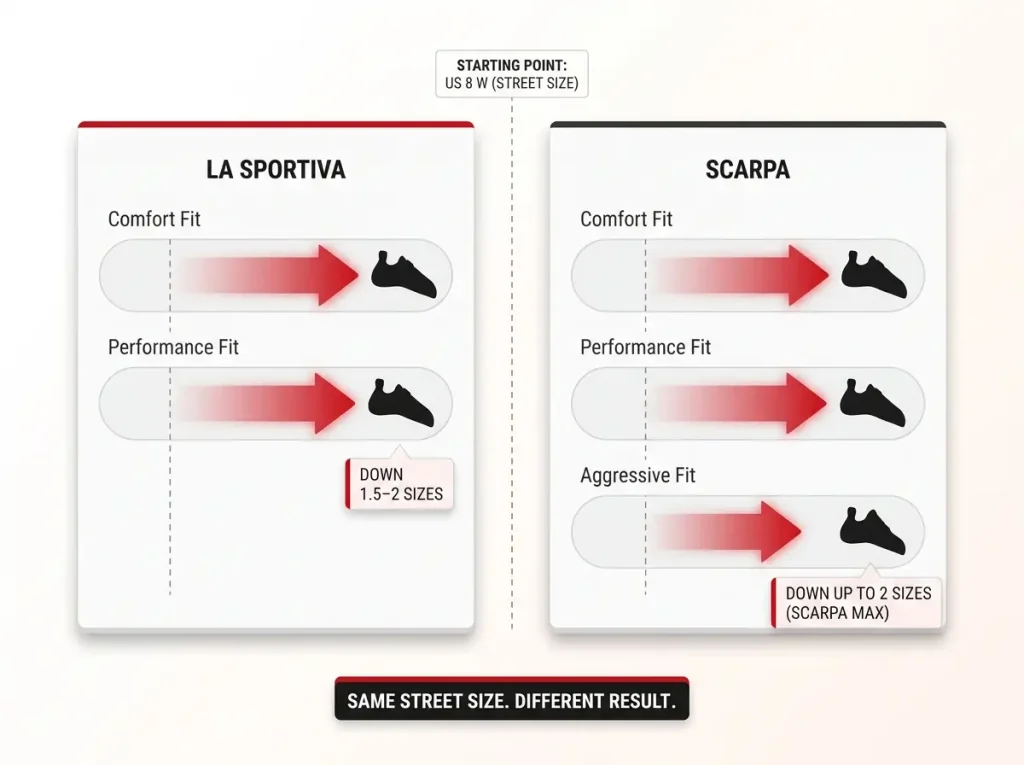
Sizing down is the one piece of advice every climber hears and almost nobody hears correctly. The most expensive mistake in this entire category is taking one brand’s downsizing rule and applying it to another brand’s last. It isn’t a rounding error. It’s a full size or more, and it’s the difference between a shoe that works and a shoe that sits unused with the tags still on it.
Start with the number the brand publishes. La Sportiva’s own sizing guide recommends downsizing 1.5 to 2 full sizes for a performance fit, and as little as one full size if you want comfort. Their last runs long and narrow, so buying your street size in a La Sportiva gets you a sloppy, imprecise shoe that rolls off small holds. This is why beginners who “went true to size” so often report that climbing shoes feel useless.
Scarpa publishes a different answer entirely. Their chart says down only a half size to one full size, and up to two only if you’re chasing an aggressive performance fit. Scarpa’s last runs roomier. Take La Sportiva’s down-1.5 habit into a Scarpa and you’ve bought a shoe that hurts for structural reasons rather than break-in reasons, and no amount of wearing it around the house will fix a shoe that’s simply a size too short.
Which means the charts are not interchangeable, ever. Read the brand’s chart for the brand you’re buying, every single time, even if you’ve owned six pairs of something else and think you know your climbing size.
You know your size in one last. That’s all. Once you internalize that, the decision framework the SERP skips: brand last shape, downturn, and resole math stops sounding like overthinking and starts sounding like the minimum.
There’s a field data point worth keeping in mind here, because it breaks the formula in the other direction. A climber with unusually wide feet documented sizing up to a EU 46 in a popular beginner shoe purely to get enough width across the ball of the foot. Size down is a starting formula, not a law. Foot shape has to be checked against the specific last, and length is a crude tool for solving a width problem.
When you can’t try them on, order the brand’s stated conversion in two adjacent sizes if the return window allows, and judge on two things only: where your longest toe sits against the front of the shoe, and whether there’s a gap behind your heel when you flex. Do not judge on how much it hurts. Pain is the least reliable signal in the box, because a shoe that’s too narrow and a shoe that’s correctly snug both hurt on day one, and only one of them ever stops.
Why Climbing Shoes Hurt, and When That Pain Means You Got It Wrong
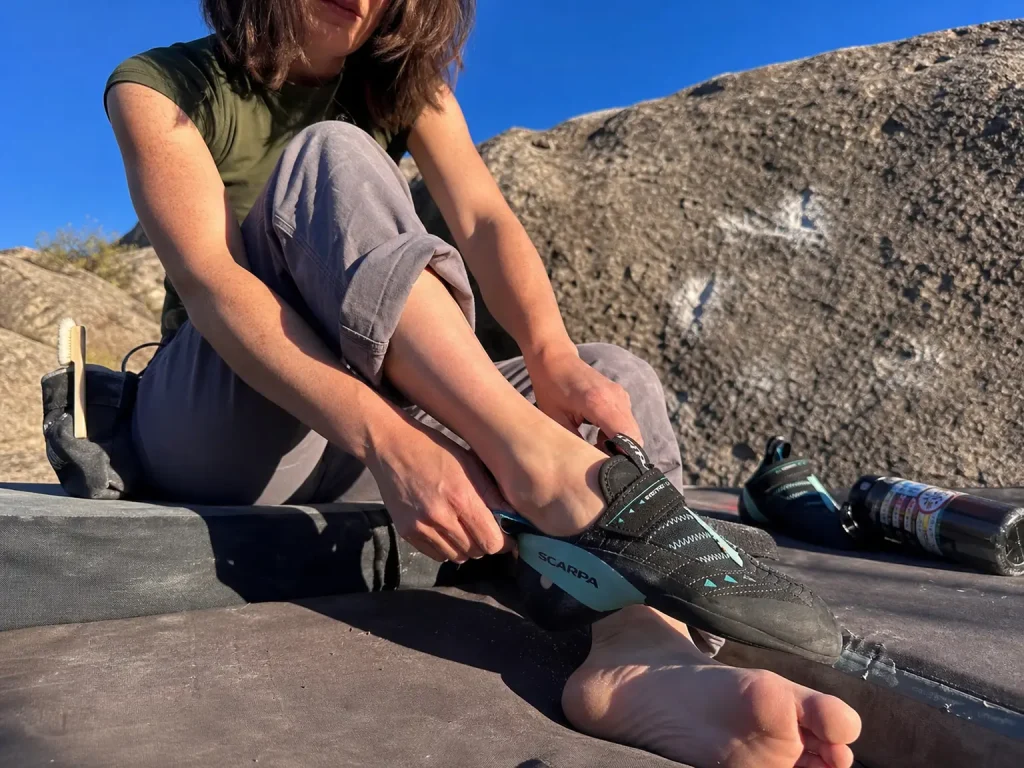
Everyone in the gym repeats the same line: they’re supposed to hurt. Half of that is true, and the other half has sold a lot of shoes that never got worn a second time. The useful version of that advice comes with a boundary attached, and almost nobody attaches one.
Start with the mechanism, because it makes the boundary obvious. A peer-reviewed footwear study on plantar fasciitis found that overly tight shoes measurably alter how load moves across the foot, concentrating stress on the forefoot and changing the foot’s bio-dynamic mechanism.
Break-in pain isn’t mystical and it isn’t character-building. It’s load being redistributed onto a part of your foot that wasn’t built to carry all of it. A correctly sized shoe asks your forefoot to do that for a few minutes at a time. A shoe that’s too small asks it to do that for the entire session, every session.
So here is the boundary, stated as plainly as it can be stated.
Normal feels like this: stiff, snug, distinctly present, and by the end of a long session you want them off. Your toes are flat or very slightly curved. You can walk to the next route in them without limping, even if you’d rather not.
Not normal feels like this: sharp pain anywhere, numbness, toes folded painfully under themselves, a hot spot that doesn’t move, or a shoe you cannot keep on for the length of a single route. Foot-health sources are consistent that genuine pain out of the box is a fit failure signal rather than a phase. If you’re taking the shoe off mid-route, the shoe is wrong. That’s a return, not a project.
The common mistake underneath all of this is treating “it’ll stretch” as permission to buy something that hurts in the store. Leather stretches somewhat, mostly in width and mostly over weeks. Synthetic uppers barely stretch at all.
And neither one changes the length of your foot, which is the dimension people are usually trying to wish away. Half a size of hope is not a break-in plan.
There’s a real break-in method and it’s boring, which is why it works.
Break in a snug but correctly sized shoe in 15 to 20 minute intervals at home, standing and shifting weight onto your toes rather than sitting still. Three or four of those over a week does more than one painful session at the gym, and it tells you early whether the shoe is settling or just crushing you. If nothing has improved after a week of intervals, the shoe is not breaking in. It’s too small.
If a shoe is close but not quite there, there’s the safe way to stretch a shoe that’s close but not quite there, and it’s worth doing properly rather than with a hairdryer and optimism. What that method cannot do is rescue a shoe that was a size too short on the day it arrived.
The image that should stay with you is the one that keeps coming up in gym conversations: a climber pulls off a too-small aggressive shoe after a session and can’t feel her toes for twenty minutes afterward. That’s the version of “they’re supposed to hurt” nobody should be normalizing, and it leads directly into the part of this guide that no other buying guide wants to write.
What Years in Tight Shoes Actually Do to Your Feet
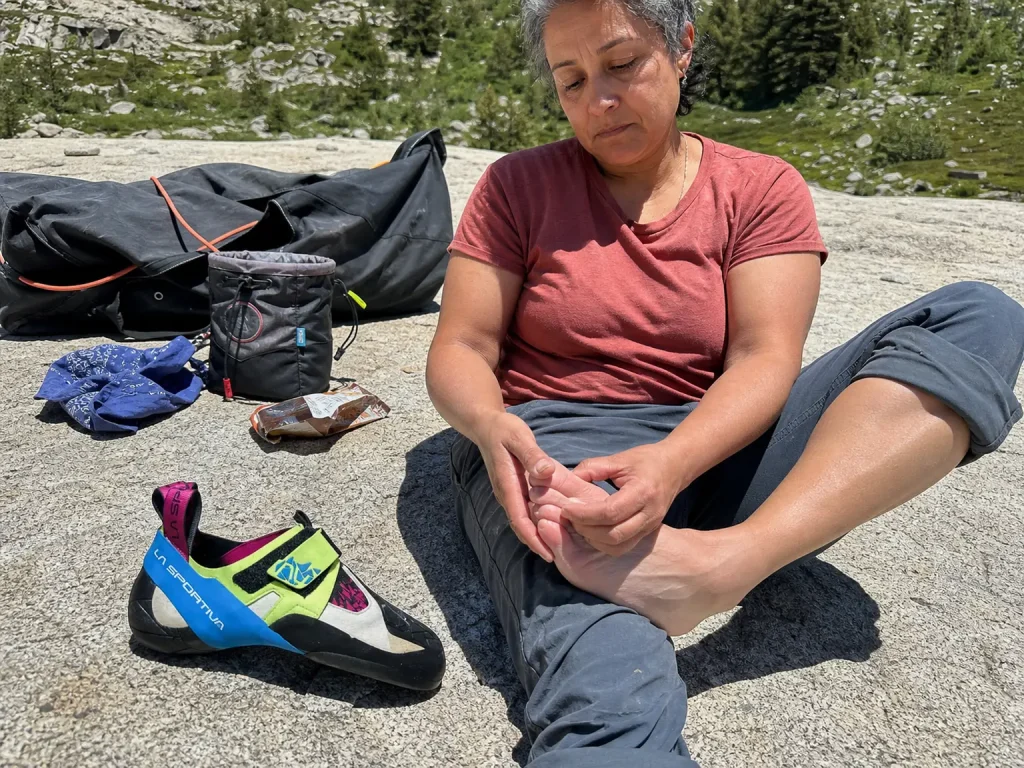
This is the section that’s missing everywhere else, and it isn’t a scare piece. It’s a trade-off, stated out loud, by people who still climb and still buy shoes that are tighter than any podiatrist would sign off on. You’re allowed to make that trade. You just deserve to make it with the numbers in front of you.
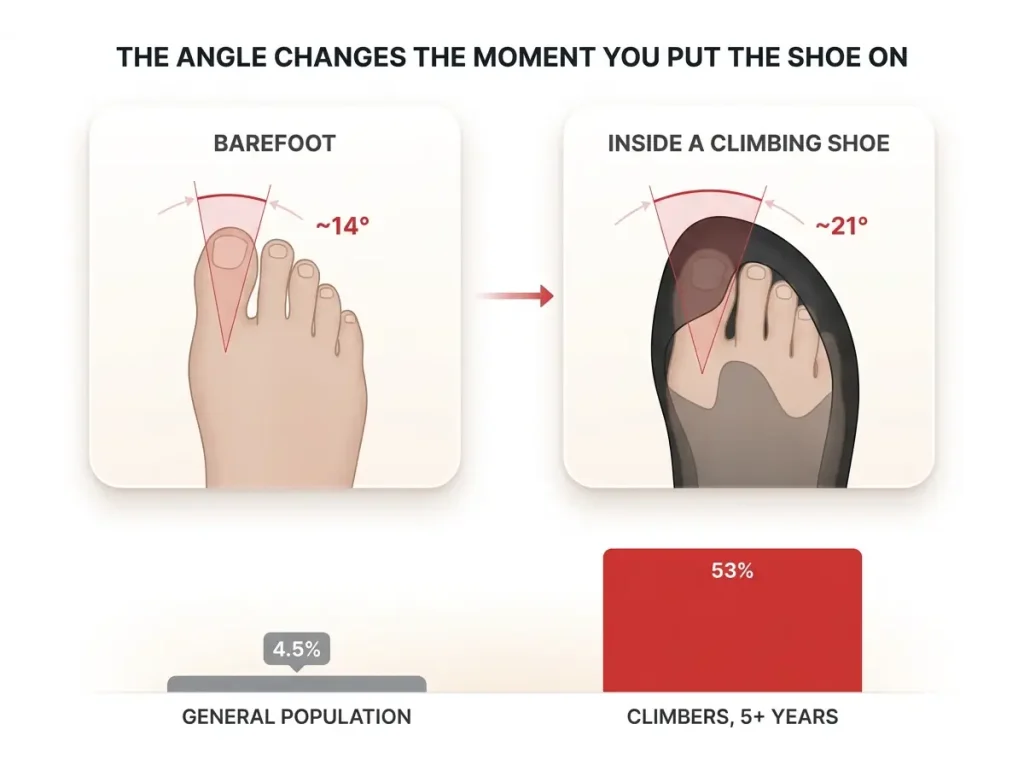
The headline number first. Research funded by the American Alpine Club found that 53% of long-time climbers develop a bunion in at least one foot, specifically climbers with five or more years in the sport, against roughly 4.5% of the general adult population aged 17 to 44.
That’s more than ten times the rate. For long-term climbers, bunions are not a rare misfortune. They’re closer to the baseline outcome.
Then the mechanism, which you can measure rather than argue about. The same foot goes from roughly a 14° hallux valgus angle barefoot to roughly 21° once it’s inside a climbing shoe. The shoe isn’t waiting for years of cumulative damage to start working on the joint. It’s changing the angle right now, on the first day, every time you put it on, and the long-term outcome is that angle spending thousands of hours in its new position.
Then there are the everyday costs nobody counts as injuries. Black toenails are so routine in climbing gyms that people compare them the way runners compare blisters, and they’re the direct result of a toe repeatedly loaded against the front of a shoe that’s shorter than the foot inside it. Losing a nail is not a badge. It’s the mildest visible signal that the fit is past the line.
It also isn’t only about toes, which is the part most climbers miss. The documented climber-specific pathologies span the whole foot and ankle: hallux valgus, Achilles tendinopathy and Haglund’s deformity, chronic plantar heel pain, and chronic ankle instability. Some of that has nothing to do with toe box size at all. A stiff, flat, unsupportive shoe worn for hours changes how your Achilles loads and how your heel absorbs impact, and a shoe with a tight heel cup rubbing the back of the calcaneus is its own separate problem.
Which brings us to plantar fasciitis, the question this search keeps asking. A footwear study found that only 16.8% of participants wore shoes meeting the recommended criteria for foot health: heel height between 0.5 and 4cm, a thick sole, and arch or cushioned support.
Climbing shoes fail nearly all of those criteria by design. Flat, thin, minimal arch support, zero cushioning, and a fit that concentrates load on the forefoot. Climbing isn’t the sole cause of anyone’s plantar fasciitis, but hours per week in close to the worst-case shoe profile is a genuine contributing factor, and pretending otherwise to keep a buying guide upbeat helps nobody.
So what do you actually do about it, without quitting the sport or wearing rentals forever? The practical version has five parts and none of them are preachy.
- Don’t wear aggressive shoes for the approach, the walk between boulders, or the twenty minutes you spend watching someone else’s attempt. Sandals or approach shoes exist for a reason.
- Keep a flatter, more comfortable pair for volume days, long routes, and gym sessions where you’re doing mileage rather than working a limit move.
- Take your shoes off between burns. Every time. This is the single highest-return habit in this list and it costs nothing.
- Treat a shoe you can’t feel your toes in as broken rather than dialed. Numbness is a circulation problem, not a performance setting.
- Size your aggressive downturn pair for the effort it’s actually for. If you’re spending three hours in your bouldering shoe, either the shoe or the plan is wrong.
That last one is where the geometry decision gets real, and it’s worth knowing the four signs you’re actually ready for an aggressive shoe before you buy one because a stronger climber recommended it. The people who wear the most aggressive shoes in your gym are usually wearing them for forty-second efforts. The cost shows up when you copy the shoe without copying the usage pattern.
None of this means the sport is doing something unusual. Ballet, soccer, and most of running have their own version of this conversation. What’s unusual is that climbing has largely refused to have it in public, and the result is a category where “they’re supposed to hurt” gets passed to beginners as gear advice instead of as a warning with an expiration date on it.
Rent First, Buy Second
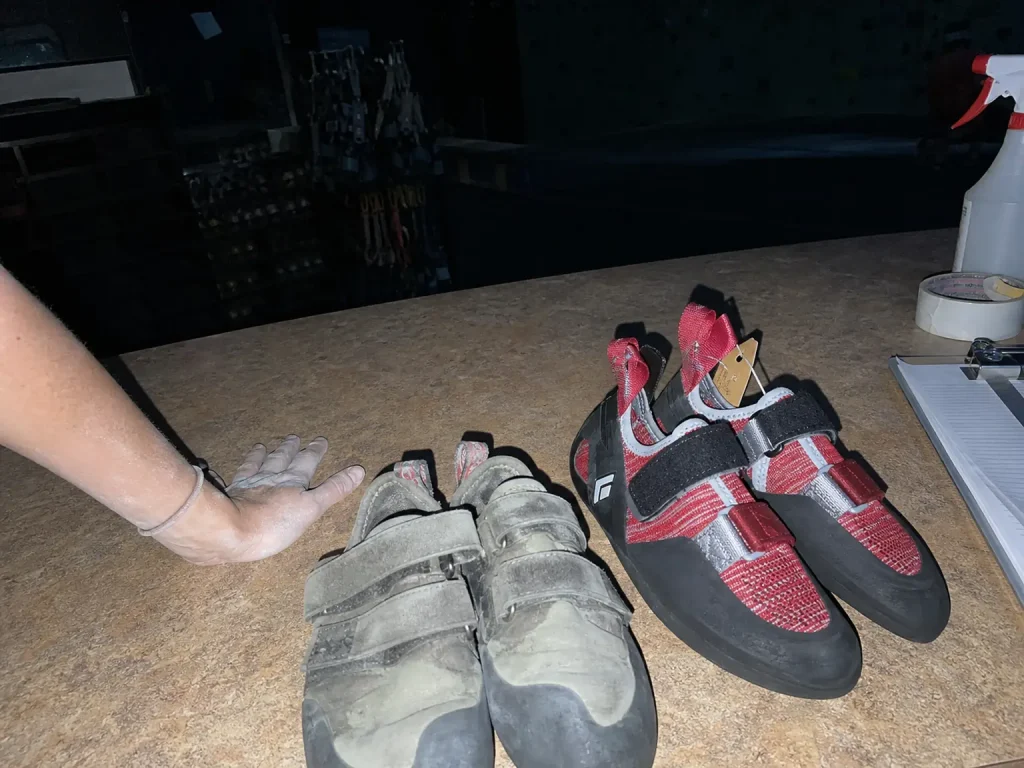
Every gym in the country rents shoes. Using that for two or three sessions before spending real money isn’t a life hack, it’s what people who’ve been around a while quietly recommend, and it’s the advice almost no buying guide says out loud because a rental doesn’t pay a commission. This one will.
Gyms rent near-universally for first-timers, and two or three sessions in rentals costs a fraction of a guess on a pair you can’t return once you’ve scuffed the rubber. What you buy with those sessions is information: what downturn feels like under load, what stiffness does on a small foothold, and where a heel cup sits when it’s actually holding you. That’s the wider context for what actually changes when you take gym habits onto real rock, and it’s a lot cheaper to learn indoors.
While you’re in rentals, pay attention to exactly three things. Where your toes sit at the front of the shoe when you weight a foothold. Whether your heel lifts out of the pocket when you pull on a heel hook. And whether the shoe is simply too soft to stand on anything small without your foot collapsing.
Those three observations turn “I don’t know my size” into a real specification you can shop with.
Understand what rentals are, though. They’re flat, stiff, roomy, and durable on purpose, because they get worn by four hundred different feet. They teach you the baseline, not your final fit. Expect the pair you buy to feel noticeably snugger than the rental in the same nominal size, and expect it to feel more precise for exactly that reason.
The common mistake at this stage is predictable and expensive: a first-timer reaches straight for an aggressive downturned bouldering shoe because it looks like what the strong people are wearing. A flat or moderate all-around shoe is the correct first purchase for gym-to-outdoor learning, full stop. The aggressive shoe will teach your feet a hooked default position and hide the footwork errors you should be feeling.
Stop renting when the rentals start limiting you, not when you feel you’ve earned a real pair. The signal is specific: your feet slide off small holds that your hands can hold, or your heel pops out of the shoe on hooks you’re otherwise strong enough for. Those two failures are the shoe, and they’re the moment buying stops being a guess.
What More Money Actually Buys You
The gap between the cheapest usable shoe and the most expensive one is real, but it isn’t linear, and most of the extra value lands on climbers who are already operating near their limit. If you’re not there yet, the premium shoe mostly buys you a faster trip to the resoler.
Roughly, the category runs from an entry tier around $99 to $150, through a mid tier near $180 to $220, up to premium at about $220 to $240. Those are category bands rather than any specific model’s price, and they move, but the shape of the ladder holds.
The entry tier buys you a flat or neutral last, a harder and more durable rubber, and a shoe you can wear for two hours without hating it. It does not buy sensitivity, and it does not buy a precise heel. Standing on a small edge in an entry shoe is a matter of trusting the shoe. Standing on one in a good shoe is a matter of feeling it.
The mid tier buys a genuinely shaped last, a better heel cup, and a stickier compound. This is the point where the shoe starts giving you information about the hold instead of just standing on it, and it’s where most climbers should be aiming for their second pair. If you only ever own one serious shoe, own it here.
The premium tier buys specialization, and that word is doing a lot of work. Aggressive geometry, thin sensitive midsoles, purpose-built heels and toe patches for hooking. These are also the shoes that wear out fastest, hurt the most, and are worst for the foot-health picture above. That’s the honest framing nobody puts on a product page: you’re not buying a better version of the same thing, you’re buying a more specialized tool with sharper edges in both directions.
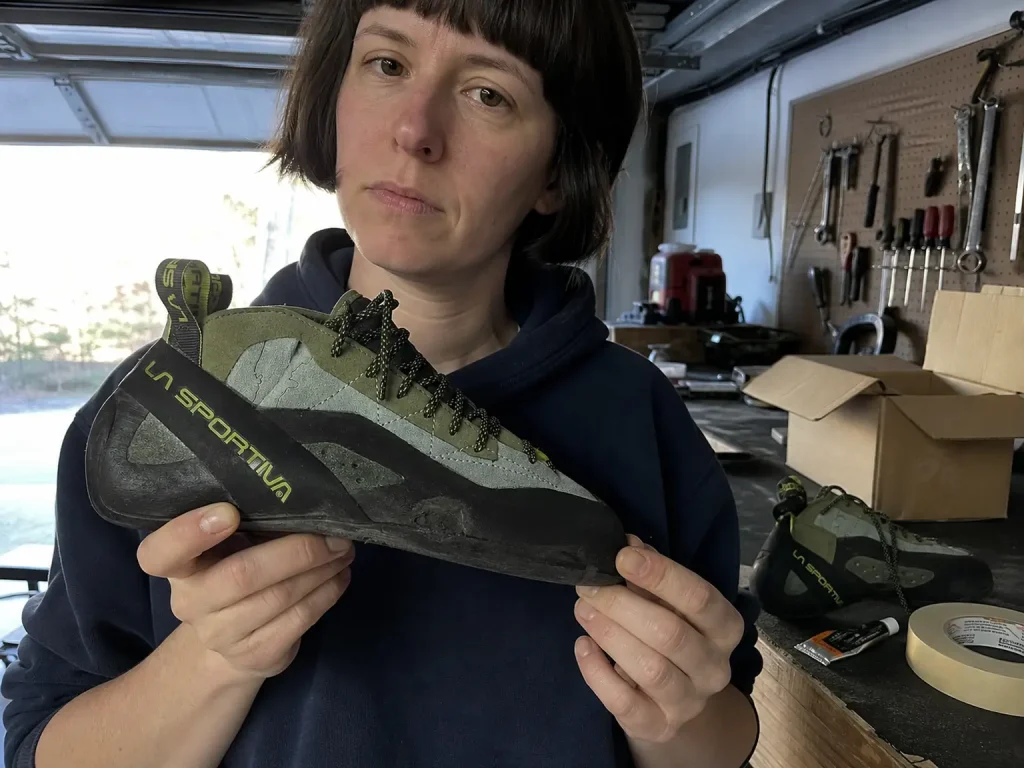
The number that matters is cost per use, adjusted for resoling. One long-term account cites two years of climbing three times a week before the toe rubber wore through on a well-fitted shoe, and a resole costs a fraction of a replacement pair. Catch it before the rand goes and you buy a second life; catch it after and you’re buying a new shoe. A pair that never fit, meanwhile, costs infinity per use no matter what you paid.
That resole math is the whole argument for buying the shoe that fits rather than the shoe that impresses, and it’s worth learning how to tell when a shoe is ready for a resole instead of the bin early, because most climbers wait until the rand is gone and lose the option entirely.
Best Climbing Shoes for Women, Picked by What You Actually Climb
Nobody needs eight pairs. Most climbers need one shoe that fits the thing they do most, what the community calls a quiver-of-one, and maybe a second one later when a specific weakness starts costing them real attempts. So pick the discipline you spend the most days on, buy for that, and let the second pair wait until the first one is genuinely limiting you rather than just unexciting.
Each pick below comes with what it’s for and who it’s wrong for, because a recommendation without a disqualifier isn’t a recommendation. And the fit note carries across all four: the downsizing rule for that shoe’s brand governs, not your street size and not your last pair’s number. Availability on these moves constantly, so check your size rather than the listing.
Best Overall: La Sportiva Katana Lace (Women’s)
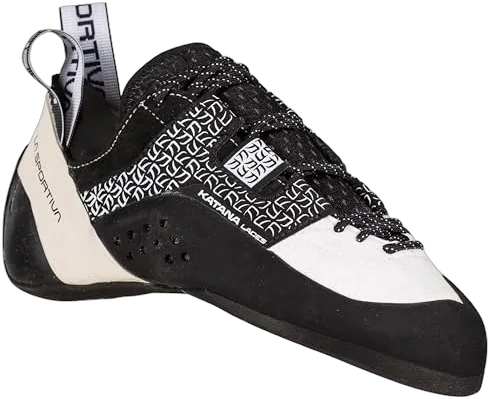
The La Sportiva Katana Lace (Women’s) earns the overall slot because it does the widest range of things without being bad at any of them. Vibram XS Edge is a harder compound, so it holds a small edge under load rather than deforming around it, and the slip-lasted construction keeps enough sensitivity that you still know what you’re standing on. That combination is unusual, and it’s why this model keeps showing up in both the all-around and the sport categories in other roundups.
The lace closure is the part that matters most for a single-shoe climber. Feet swell over a three-hour session. A Velcro strap gives you one setting and a lace gives you a dozen, which means the shoe that fit at the start still fits at the end, and you’re not choosing between numb toes and a sloppy heel by the fourth pitch.
Wrong for two people. If this is your first pair, it’s more shoe than you need and it’ll be less forgiving than a beginner last while you’re still learning where to put your feet. And if you have a genuinely wide forefoot, La Sportiva’s narrow last will fight you no matter which size you order. Size by the La Sportiva chart, down 1.5 to 2 EU from street, and expect it to feel wrong for the first few wears in the way a snug shoe feels wrong rather than the way a small shoe feels wrong.
Best Bouldering: La Sportiva Skwama (Women’s)
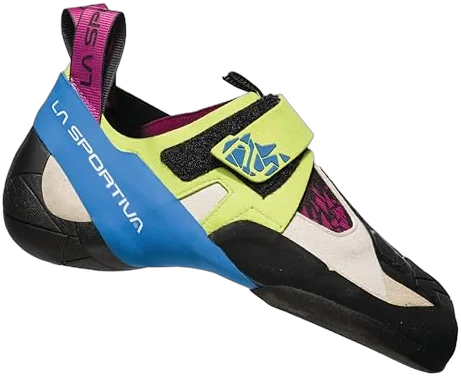
The La Sportiva Skwama (Women’s) is the shoe the previous two sections were warning you about, and that’s not a mark against it. Aggressive geometry plus a soft slip-lasted build is exactly right for steep bouldering, where you need the toe to hook into a small hold and the shoe to deform around whatever texture you find. On overhanging terrain that combination is the difference between a foot that stays and a foot that skates.
The heel deserves its own note. A soft, well-shaped heel cup that holds under tension is the hardest thing to get right in a bouldering shoe, and it’s the spec most people don’t test until they’re already mid-problem with a leg above their head. If heel hooking is where your sessions fall apart, this is the fix. The rubber over the top of the foot matters for the same reason on a toe hook, which is the move that quietly separates shoes built for steep terrain from shoes that just look aggressive.
Wrong for all-day wear, and that’s not a small caveat. This is the exact shoe the foot-health section is telling you not to live in. Wear it for the problem, take it off between attempts, and keep something flatter for volume days. If you’re new, this is also the wrong first purchase, no matter how many people in your gym are wearing them.
Best Sport Climbing: Scarpa Vapor V (Women’s)
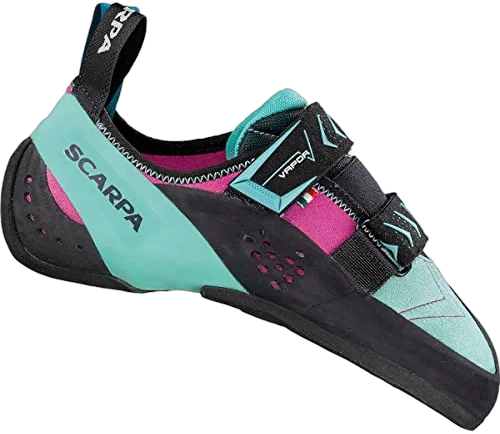
The Scarpa Vapor V (Women’s) is the concrete proof for the argument in the first section of this guide. The men’s Vapor V ships with Vibram XS Edge. This one ships with Vibram XS Grip 2, a softer, stickier compound tuned toward a lighter average bodyweight, which is a genuine engineering decision rather than a colorway. When people ask whether women’s-specific shoes are real, this is the shoe to point at.
What the softer rubber actually changes: it smears better on polished footholds and on the small, sloping feet that show up on hard sport climbing routes, and it deforms into texture rather than skating over it. On the pocketed, overhanging sandstone of the Red River Gorge, where footholds are often more suggestion than shelf, that difference shows up on the first move. It also wears faster, which is the trade. If you want more picks organized this way, there are seven sport climbing shoes sorted by route angle worth reading before you commit.
Wrong for crack climbing, where you want a stiff platform and a shoe that can survive being jammed into granite, and wrong for anyone who wants one shoe to stand on edges all day. Size it by Scarpa’s chart, down a half to one full size, and forget whatever number you wear in La Sportiva.
Best Trad and Crack: La Sportiva TC Pro
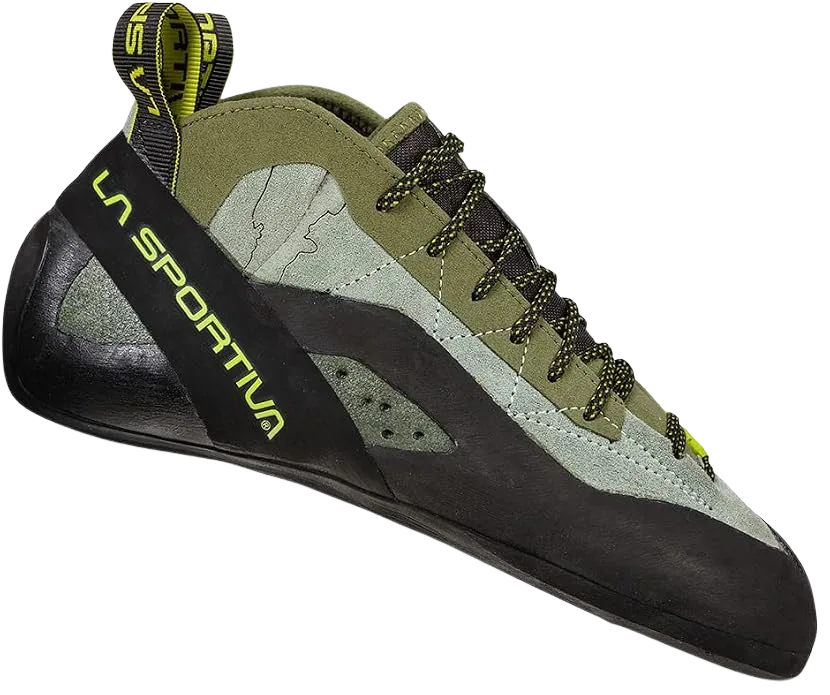
Say the sizing part first, because it’s the thing that gets people. The La Sportiva TC Pro runs in one unisex US sizing run. There is no separate women’s SKU, so there is no women’s number to look up, and street-shoe habit will not get you there. Use La Sportiva’s conversion chart and expect the fit to feel different from their women’s-specific models through the instep and heel.
What you get for that inconvenience is the most purpose-built trad climbing shoe in this list. Board-lasted and stiff, so it stands on granite edges for a full pitch without your foot cramping from doing structural work. High ankle coverage and heavy rand material, so finger jamming and foot jamming in an Indian Creek splitter doesn’t take the skin off your ankle bones.
It’s also comfortable enough for long days in a way aggressive shoes never are, which matters when the route is twelve pitches. This is the shoe you see on more feet than any other on the long granite of Yosemite Valley, and it’s the default answer for anyone whose plans include El Capitan.
Wrong for bouldering, where its stiffness kills sensitivity, and wrong if you only ever climb steep sport routes. If crack is where you’re headed, it’s worth seeing the wider crack shoe comparison, including the Mythos Eco and the Generator Mid before you settle, because crack shoes are more personal than most.
Best First Pairs, If You’re Buying Your Own for the First Time
The first pair’s job is to be worn, not to be impressive. Flat last, forgiving, comfortable enough that you actually climb three days a week in it instead of taking it off between every problem and losing the session to your own feet. If you want the longer version of this argument, it’s laid out in the beginner climbing shoes the gym won’t sell you.
Both picks below share the thing that matters most for a first shoe: a flat or neutral last that doesn’t pre-load your toes into a hooked position. The real choice between them is closure system. Velcro for speed and for bouldering sessions where the shoes come off constantly, laces for fine-tuning fit while your feet are still telling you what they want.
Restate the boundary from earlier in buying terms: snug is the goal, pain is a returned package. And the common mistake bears repeating, because it’s the single most expensive one in this category. Don’t buy the aggressive shoe your strong friend recommends. It’s the right shoe for her feet and her routes, and it will teach yours the wrong things while hurting more than it needs to.
Either of these is a legitimate two-year shoe with a resole in the middle. This is not a placeholder purchase you’re expected to throw away in six months.
Best Budget and Best First Pair: Black Diamond Momentum (Women’s)
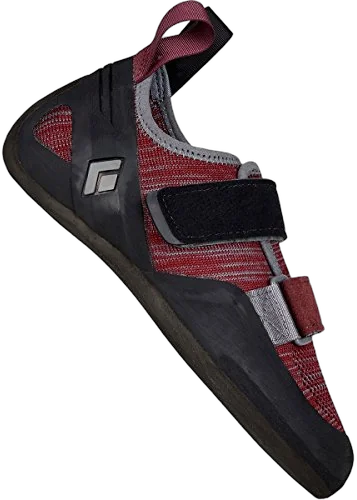
The Black Diamond Momentum (Women’s) is the shoe most people should own first, and it’s cheap enough that being wrong about your size doesn’t ruin your month. The flat last keeps your toes lying reasonably flat, which does two things at once: it lets you climb for two or three hours of gym climbing without misery, and it lets you feel when your footwork is sloppy instead of having the shoe’s geometry paper over it.
The knit upper is a genuinely useful detail for a first pair. It breathes, which matters when you’re in the shoe for long stretches, and it stretches slightly to accommodate a foot the manufacturer didn’t design for. Velcro means you’ll actually take them off between problems, which is the habit that saves your feet more than any other.
Wrong for steep bouldering and small-edge precision. The soft, flat build that makes it comfortable also means it collapses on the tiny holds where an aggressive shoe would hold. When you hit that wall, the next step is the beginner bouldering picks sorted by foot shape and terrain rather than a jump straight to a competition shoe.
Best Beginner for All-Day Comfort: La Sportiva Tarantulace (Women’s)
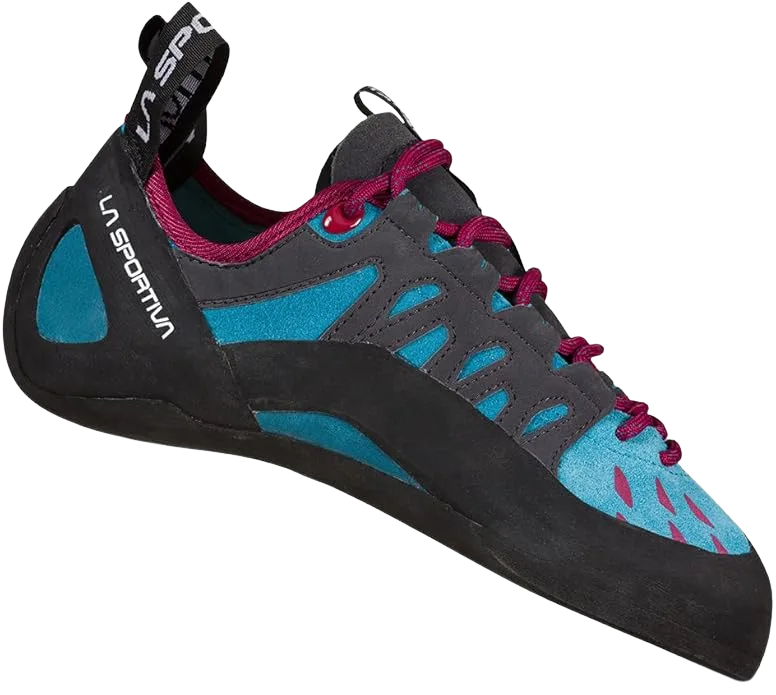
The La Sportiva Tarantulace (Women’s) solves a problem the Momentum can’t, which is a foot that needs different tension in different places. A single Velcro strap applies one pressure across the whole midfoot. A lace applies whatever you want, wherever you want it, and for a climber whose feet are still changing shape as she builds the sport into her week, that adjustability is worth the extra thirty seconds.
The flat last is forgiving of the specific errors beginners make. Standing on the inside edge instead of the big toe, dropping a heel too far, weighting a foot late. A neutral shoe lets you feel those and fix them. It’s also durable enough to survive a lot of scraping while you learn, which entry-level shoes with softer compounds often aren’t.
One sizing reminder, because this is a La Sportiva. Use their chart, not Scarpa’s, which means down 1.5 to 2 EU sizes from your street size. If you’ve been wearing a Scarpa or a Black Diamond and you carry that number over, you’ll end up in something loose enough to be useless.
Picking by Foot Shape Instead of by the Word “Women’s”
The word “women’s” as a product category assumes a narrow, low-volume foot. Plenty of women do not have one. If every women’s shoe you’ve tried has felt like it was crushing the width of your foot while leaving space at the end of your toes, the problem was never your foot and it was never your technique. It was the last.
Start with the vocabulary, because this is where the industry hides things. Volume and width are separate measurements from length. LV means a shallower instep and a narrower heel cup, not a smaller shoe. A shoe can be your correct length and still be wrong through the ball of the foot, wrong through the instep, and wrong at the heel, all at once, and the listing will show you a single number that captures none of that.
The evidence that this matters is concrete. A wide-footed climber documented sizing up to a EU 46 in a popular beginner shoe purely to get enough width across the forefoot. That’s not a fit success story. That’s a last mismatch being solved with length, which buys width at the cost of a toe box full of dead space and a heel that slips on every hook.
Brand tendencies, stated honestly and used as a first filter rather than a rule. La Sportiva’s lasts run long and narrow, which is why so much of the full La Sportiva lineup and the narrow-last truth for wide feet is a conversation about who they don’t fit. Scarpa runs roomier in length, though their explicitly LV models are genuinely narrow through the heel.
Evolv’s fit runs noticeably wider through the toe box than either. Filter by brand first, then choose the model.
The smaller brands are where the fit outliers live, and they’re worth knowing by name even if you never buy one. Butora and Five Ten have long been the first suggestions in any thread about a genuinely wide toe box, and both have built long-standing reputations on lasts that don’t punish a broad forefoot. Tenaya and Ocún run lower-volume and narrower through the midfoot.
Mad Rock, Unparallel and Red Chili sit somewhere between the two, and all three have loyal followings among climbers whose feet the big two brands never fit. If your local shop only stocks La Sportiva and Scarpa, that’s a stocking decision, not the shape of the market.
You can self-assess without a fitting session, and the test is one question: where does the shoe pinch first when you put it on? If you feel pressure across the ball of your foot before your toes reach the front, you’re in a last that’s too narrow for you, and no amount of sizing up will fix it. If your toes hit the end while there’s still room across the width, you’re in a shoe that’s too short and possibly too wide. Those are two different problems with two different solutions, and people confuse them constantly.
This is also where the myth from the top of this guide pays off practically. If you have a wide or high-volume foot, you may genuinely be better served by the men’s or unisex version of a model than by its women’s release, especially when the women’s release is a low-volume last with a different color. That’s not settling. That’s buying the shape that matches your foot, which was always the actual goal.
Best for Wide and High-Volume Feet: Evolv Elektra (Women’s)
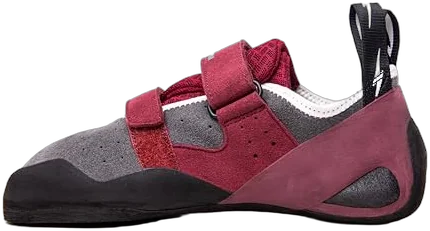
The Evolv Elektra (Women’s) exists for the climber who has been told her whole climbing life that shoes are supposed to hurt, when in fact she has simply never been in a last that matched her forefoot. Evolv builds wider through the toe box than the two dominant brands in this category, and that single difference changes the experience from tolerating a shoe to wearing one.
The moderate downturn is what keeps this from being a purely comfort-oriented pick. You get a shape that still performs on vertical and slightly overhanging terrain instead of a flat gym slipper, which means a wide-footed climber doesn’t have to trade capability for a foot that isn’t in pain. That trade has been the unspoken default for years, and it shouldn’t be.
Fit note: because Evolv’s last is genuinely different, don’t carry over a La Sportiva number. Start closer to a half size down from street and adjust from there, and pay attention to the heel, which is the one place a roomier last can leave you with more space than you want.
Best for Low-Volume and Narrow Feet: Scarpa Instinct VS (Women’s)
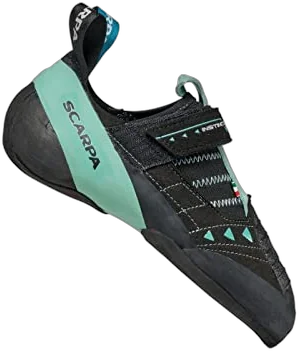
The Scarpa Instinct VS (Women’s) is what an actual low-volume shoe looks like when the brand builds one on purpose. Shallower through the instep, narrower through the heel cup, and tight enough through the midfoot that a narrow foot stops floating inside a shell built for someone else. Heel lift is the most common unsolved fit complaint among narrow-footed climbers, and this is the most direct answer to it in this list.
Underneath is Vibram XS Grip 2, the softer, stickier compound, so you’re not trading precision for grip. That combination of a locked heel and sticky rubber is why this model keeps appearing in other roundups as a women’s-specific top pick rather than as a niche option, and it works across bouldering and sport without feeling like a specialist in either.
Where it gets confusing is the model naming, since Scarpa runs several closely related versions with different volumes and stiffnesses. If you’re deciding between them, the Scarpa lineup decoded, including how VS and VSR differ and what LV actually changes will save you an expensive guess. Wrong for anyone with a wide forefoot, obviously, and wrong as a first pair given how performance-oriented the whole shoe is.
The Short Version
Three things to carry out of this.
“Women’s” describes a last, not a guarantee. Check the volume, the heel cup and the rubber compound, and treat the color as what it is, which is nothing.
Downsize by the brand’s own chart, never by the last brand you owned. La Sportiva and Scarpa are a full size apart on the same foot, and that gap has ruined more purchases in this category than every other mistake combined.
Snug is the target and numbness is a returned package. The 53% bunion rate is what a sport looks like when it normalizes the second one and calls it commitment.
Before you buy anything, rent for two sessions and pay attention to where the shoe pinches first. That single observation is worth more than every spec sheet in this article, and it costs less than a bad guess. After that, put your money into your feet before your gear, because the footwork that makes any shoe stick better than a stiffer one would is free and permanent, which is more than you can say for rubber.
Frequently Asked Questions
01Can climbing cause plantar fasciitis?
Climbing shoes are close to the worst-case profile for plantar fascia health by design: flat, thin, minimal arch support, no cushioning. A footwear study found only 16.8% of participants wore shoes meeting recommended foot-health criteria. Climbing is not the sole cause, but hours in an unsupportive shoe is a real contributing factor.
02How do I know if my climbing shoes are too small?
Snug, stiff and eager-to-remove after a long session is normal. Sharp pain, numbness, or toes curled painfully under is not. If you cannot keep them on for a full route, or your toes still tingle twenty minutes after taking them off, that is a fit failure rather than a break-in phase.
03How much do women’s climbing shoes cost?
The category runs roughly from an entry tier around $99 to $150 up to premium models near $220 to $240, with most solid all-rounders in between. The extra money buys specialization and sensitivity rather than durability, so factor resoling into the real cost instead of the sticker.
04What shoes do the best climbers wear?
Elite climbers overwhelmingly wear aggressive, downturned, high-sensitivity shoes sized far tighter than most people should tolerate, in the same family as the Skwama, Instinct VS and Vapor V. Copying that choice is the classic expensive mistake, since those shoes are tuned for short efforts at a limit grade.
05Is 27 too old to start rock climbing?
No. Twenty-seven is squarely within the range where most climbers start, and it changes nothing about what you should buy. If anything, starting as an adult argues for a flatter, more comfortable first shoe, since adult beginners tend to climb long sessions while building technique.
Safety Notice: Rock climbing and mountaineering are inherently high-risk
activities that can involve physical trauma or fatal incidents. The information on Rock Climbing Realms is for
educational and informational purposes only. Techniques and advice presented here are not a substitute
for professional, hands-on instruction. Conditions and risks vary by location. Always seek guidance
from a qualified instructor before attempting new techniques. By using this website, you agree that you
are solely responsible for your own safety. Any reliance you place on this information is strictly
at your own risk, and you assume all liability for your actions. Rock Climbing Realms and its authors
will not be held liable for any harm, damage, or loss sustained in connection with the use of this information.
Affiliate Disclosure: We are a participant in the Amazon Services LLC Associates Program, an
affiliate advertising program designed to provide a means for us to earn advertising fees by advertising and linking
to Amazon.com. As an Amazon Associate, we earn from qualifying purchases. We are also an official affiliate partner
of Black Diamond Equipment via the AvantLink network. If you click on a Black Diamond affiliate link and make a
purchase, we may earn a commission at no additional cost to you. We also participate in other affiliate programs.
Additional terms are found in the terms of service.