
In this article
The standard route up the Grand Teton is a 5.4. That’s easier than the warm-up wall at most gyms, and yet capable, strong climbers get turned around on this mountain every single season. The grade is the thing everyone fixates on, and it’s the thing that matters least. What actually decides your day on the Grand is your tolerance for exposure, how you handle altitude, and whether you can find your way back down. This guide walks through choosing your route, sorting permits, timing the season, and the altitude and descent realities that send fit people home short of the summit, so you climb one of the most committing of the famous mountain peaks with your eyes open.
Pick Your Route Before You Pick a Date
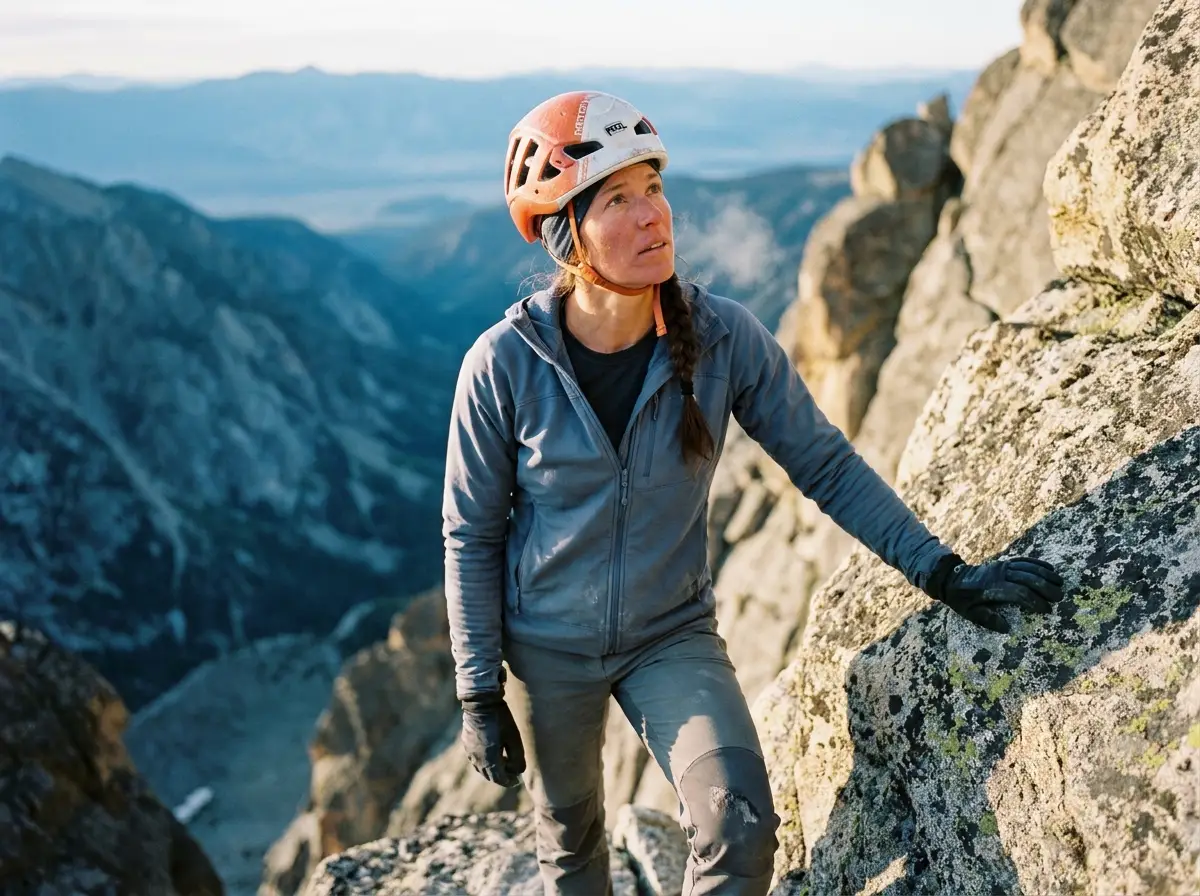
Most guidebooks open with a list of routes. That’s backwards. The first honest question isn’t which line goes to the summit, it’s which line matches what you can actually do when you’re tired, high, and a long way off the deck. Pick the route to your real ability, not your ego, and half the failures on this mountain disappear.
Owen-Spalding — the route most people want
The Owen-Spalding route is the standard line up the highest summit in the Teton Range, rated 5.4 YDS, Grade II, and it runs about 1,560 feet over three short technical pitches from the Upper Saddle at 13,160 feet to the top. Here’s the part people miss: the actual climbing is a handful of moves. Everything else is class 3 to 4 scrambling and easy low-fifth terrain. It was first climbed on August 11, 1898 by William O. Owen and Franklin Spalding, which is where the name comes from.
For most competent trad or alpine climbers who can build an anchor and get themselves out of trouble, the Owen-Spalding is the right call. If you want the full breakdown of the moves, the rack, and the named features in order, our full breakdown of the Owen-Spalding route covers it pitch by pitch.
The Exum lines — when you want more climbing
If you want actual climbing instead of a scramble with three good moves, the Exum routes deliver. The Upper Exum Ridge (5.5 to 5.6) is the classic aesthetic line and the one most guided parties take. The Lower Exum (5.7) and Petzold Ridge (5.6) add sustained pitches for climbers who came for the rock, not just the summit. None of these is harder than what a solid 5.9 leader handles, but they ask more of you up high than the Owen-Spalding does.
The honest self-check before you commit
Strip away the route names and it comes down to three questions. Can you place gear and build an anchor without thinking hard about it? Can you rappel with a backup and get down a route you’ve never seen? Can you self-rescue if your partner can’t move? If the answer to any of those is no, the honest call is a guide, not the cheapest route. A common way people get burned here is trusting beta from a party that climbed a different line entirely. One climber roped up on the Owen-Spalding using conditions notes from an Exum party and found nothing matched, because the two routes face different aspects and hold snow differently. If you climb alpine trad at all, the same honest self-assessment carries over to any serious objective.
Why a 5.4 Stops Strong Climbers
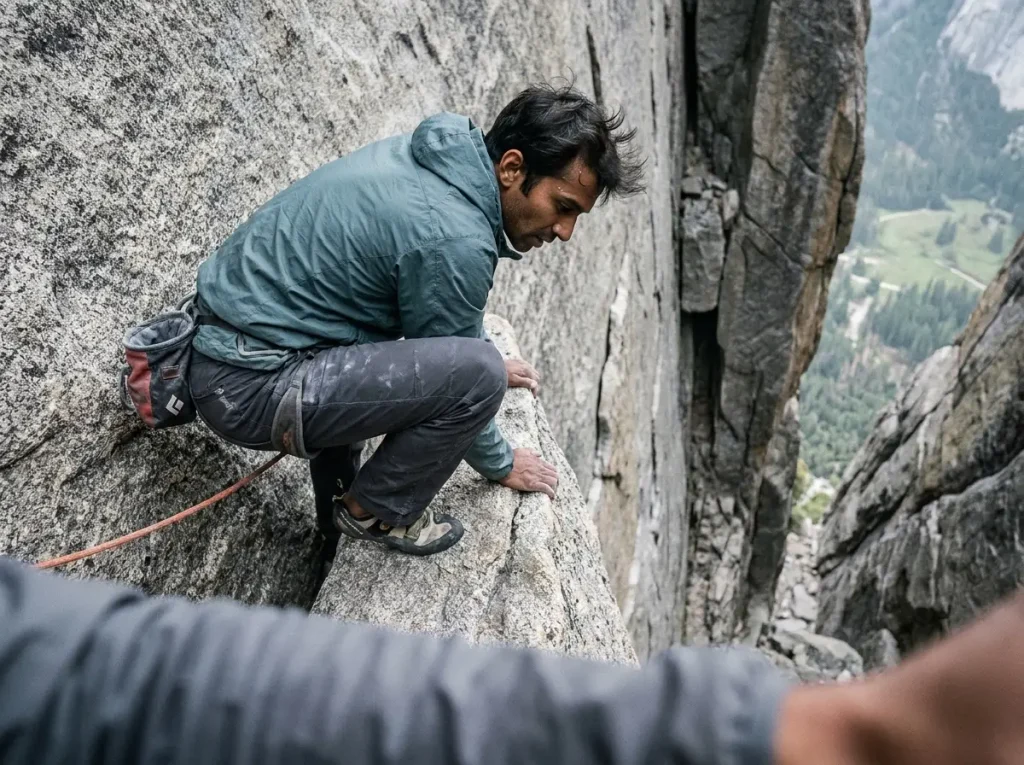
A 5.4 grade tells you almost nothing useful about the Grand Teton. It fools two kinds of people: the strong gym climber who assumes it’s trivial, and the nervous newer climber who reads “alpine” and assumes it’s beyond them. Both are reading the wrong number. You’ll hear about climbers who free solo the Owen-Spalding in a few hours when it’s dry, but that’s elite-only context, not a model for your first trip.
What non-sustained 5.4 actually means
When climbers call the Owen-Spalding a non-sustained 5.4, they mean the hard moves are few and isolated. You might pull two or three genuine 5.4 sequences, and the rest is low-fifth-class scrambling you’d solo without a second thought at the gym. So the grade isn’t lying, but it only describes a small fraction of the route. The rest is moving fast over easy ground where the climbing is simple and the consequences are not.
Exposure is the real grade
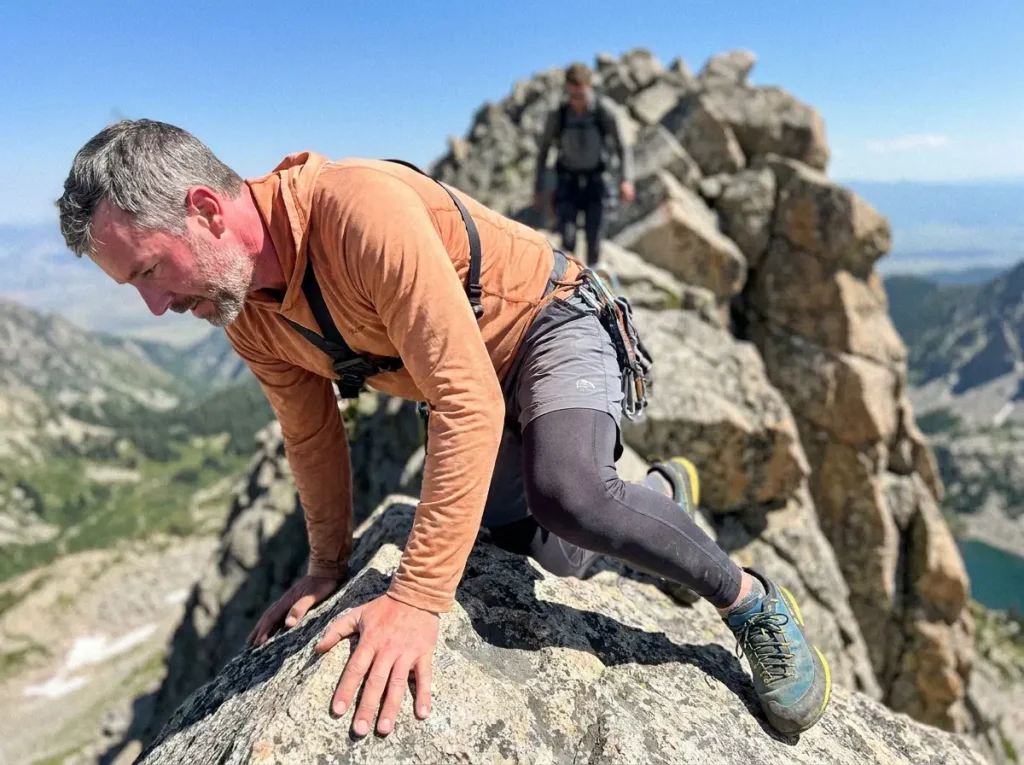
Here’s where strong climbers come undone. Pulling a 5.10 in the gym builds finger strength and nothing else that matters two thousand feet off the valley floor. The Grand’s exposure is the actual test. Sections like the Catwalk are low-angle and physically easy, but a slip there ends the same as a slip on something far harder. Your nerve, not your grade, is what carries you across.
On the Catwalk and the exposed downclimb traverses, stay low and move slow. The climbers who get hurt there are the ones who rush a low-angle section because it “looks easy.” You won’t recover if you slip, so treat the easy-looking moves with the same respect as the crux.
Reading the line on unbolted rock
The Owen-Spalding isn’t bolted. There’s no chain of quickdraws pointing the way, so route-finding is a skill the grade hides completely. People wander off the easiest line onto harder, looser rock simply because they couldn’t read where the route went. Watching someone climb the real exposure and the actual technical pitches shows what no topo can, so it’s worth seeing the route in motion before you go.
Permits, the Trailhead, and the Lower Saddle
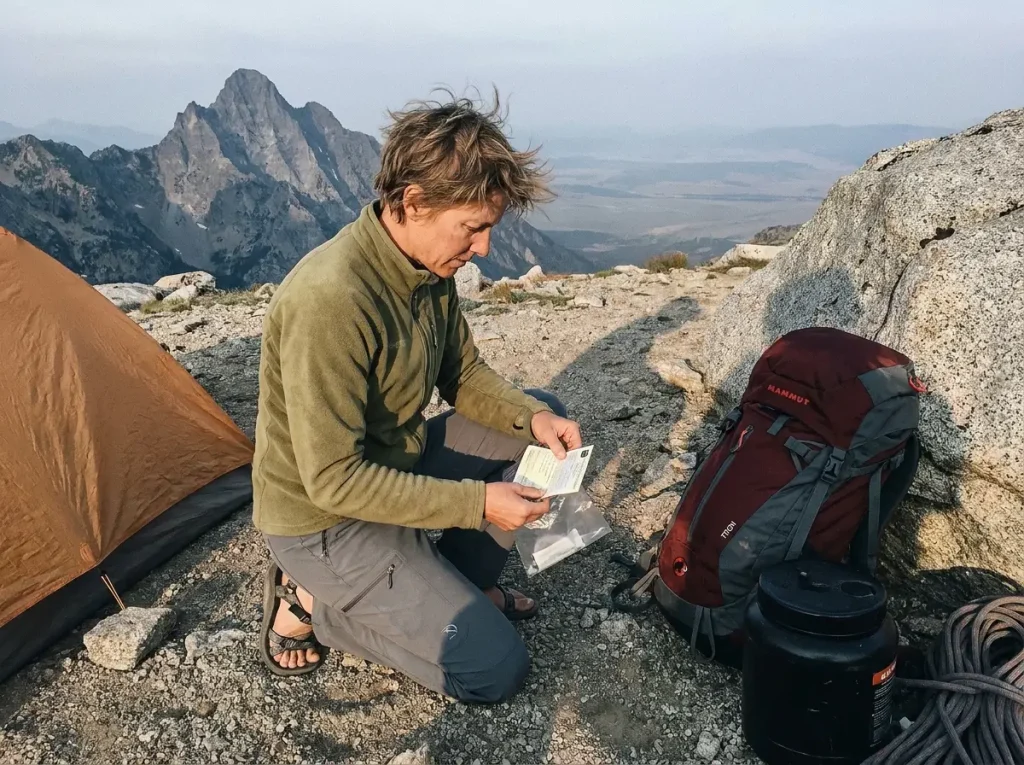
The paperwork trips people up more than the climbing does. The rules are genuinely confusing the first time, so it’s worth getting straight before you drive to Wyoming.
Day climb vs overnight — what needs a permit
You can legally day-climb the Grand Teton with zero permit. Nothing to reserve, nothing to pick up. The moment you plan to sleep in the backcountry, though, a backcountry permit becomes mandatory, whether you’re camping in Garnet Canyon or bivouacking at the Lower Saddle. That single distinction catches a lot of first-timers who assume any climb of a 13,000-foot peak must require a permit. It doesn’t, until you stay the night. The full rules live in the National Park Service’s backcountry camping permit rules for Grand Teton, and they’re worth reading before you build your plan.
How to actually get the permit (advance vs walk-up)
If you do need a permit, all technical-climbing permits are picked up in person at the Jenny Lake Ranger Station, open roughly mid-June through mid-September. That’s not just bureaucracy, the rangers there give you current route conditions, which is intel you want anyway. Roughly a third of backcountry sites are advance reservations through Recreation.gov, released in a January window, and the other two-thirds are first-come walk-ups claimed in person up to a day ahead at 8 AM mountain time. Miss the January window and the walk-up line plus Recreation.gov cancellations are your path in. The same permit-and-season dance plays out on other marquee peaks, and it’s worth seeing how Mount Rainier handles permits and timing if you’re planning more than one big climb this year.
The approach and high camp
The climb starts at the Lupine Meadows Trailhead and works up through Garnet Canyon to a high camp at the Lower Saddle around 11,600 feet. Round trip you’re looking at roughly 12 to 13 miles and over 7,000 feet of vertical gain. Bear canisters are mandatory for every backcountry camper, and the park loans them free when you pick up your permit, so there’s no reason to skip one. Grand Teton National Park also requires you to pack out human waste in WAG bags or blue bags, and Leave No Trace isn’t optional on a route where parties stack up all summer.
When the Grand Is Actually Climbable
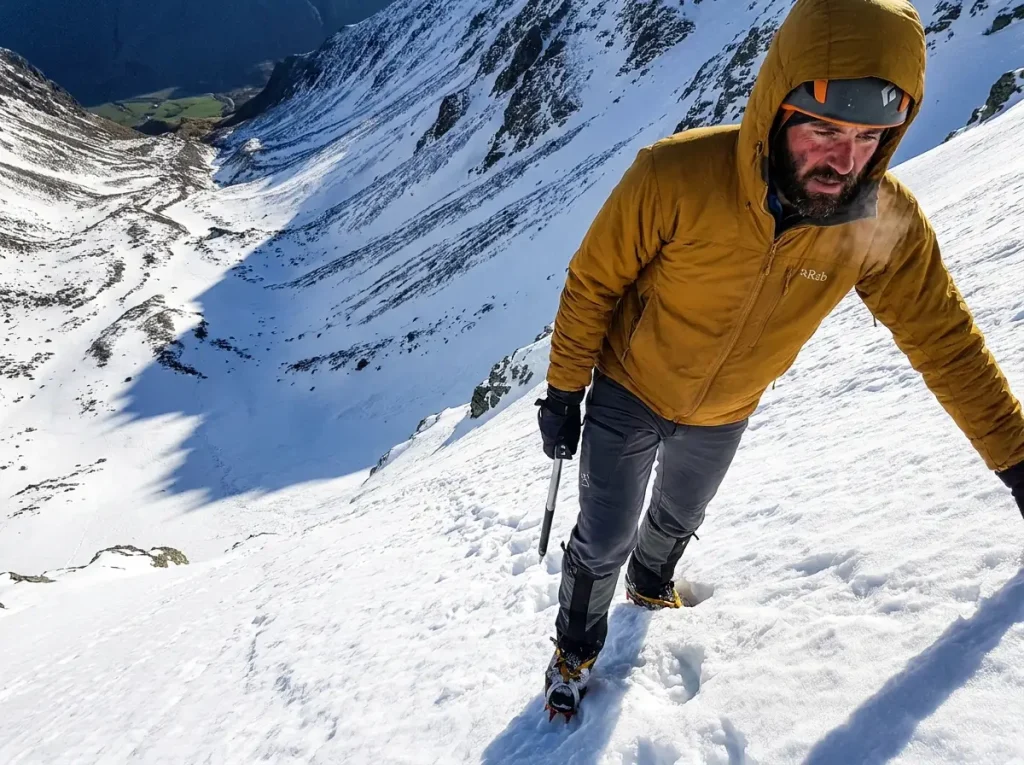
Show up in June with a rock rack and a head full of summit photos, and you’ll meet a completely different mountain. Timing isn’t a detail on the Grand, it’s the difference between a rock climb and a mountaineering objective.
The prime window (late July–mid-Sept)
The best time to climb the Grand Teton is late July through mid-September, when the route is mostly dry and the climbing is what the grade promises. This is the window the featured snippets all point to, and for good reason: outside it, snow and ice change the whole character of the route. If you only have one shot, aim for August, when conditions are most reliable. The same season logic governs most glaciated alpine objectives, so the late-summer window isn’t unique to the Tetons.
What June and early July really mean
This is where most guides go quiet. Before mid-July, the Owen-Spalding and the approach to the Lower Saddle usually require an ice axe and crampons, because the couloirs and the route itself still hold steep snow you have to climb and descend. Early in the season you may also find fixed ropes on the snow slopes below the saddle, and stiff mountaineering boots that take a crampon become the right footwear instead of approach shoes. Canyon trails often don’t fully clear until around mid-July. When the route “comes in,” meaning enough snow has melted to climb it as a rock route, varies year to year depending on whether it was a heavy snow year or a dry one. The rangers’ conditions blog is the only honest source for any given week. The early-season snow is the real hazard here, and it’s the same self-arrest and snow-timing calculus that governs a snow climb like Mount Shasta. One guided climber slipped on snow on the Meadows headwall and slid into a moat of freezing water, the kind of early-season reality that nobody quantifies until it happens to someone in their party.
The afternoon-storm clock and the alpine start
Summer in the Tetons runs on an afternoon thunderstorm pattern, and it’s reliable enough to plan around. That’s why the pre-dawn alpine start is non-negotiable, with most parties leaving high camp somewhere between midnight and 3 AM. The goal is simple: be on the summit and well into your descent before the clouds build. Get caught high on exposed granite in a lightning storm and the easy grade won’t matter at all.
Altitude and Fitness — the Silent Disqualifier
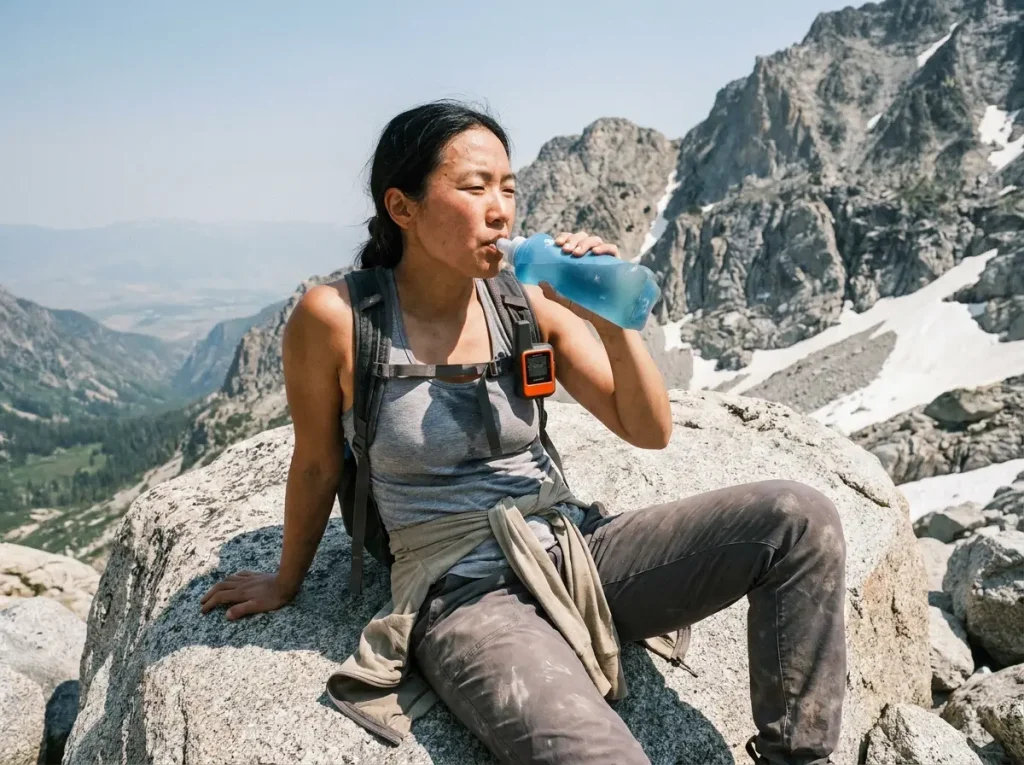
The strongest climber in the parking lot is often the first one to turn around at the Lower Saddle. Altitude doesn’t care about your deadlift, and this is the failure mode the 5.4 grade hides most completely.
Why altitude turns strong climbers back
The summit sits at 13,775 feet. Acute mountain sickness, or AMS, becomes a real risk above roughly 8,200 feet and typically sets in about six hours after you gain altitude, bringing headache, nausea, fatigue, and the kind of broken sleep that wrecks your summit day before it starts. Fit, sea-level climbers regularly get turned around above 10,000 feet, not because they’re weak, but because they haven’t acclimatized. The science on onset and safe ascent rates is laid out plainly in the CDC’s guidance on altitude illness and safe acclimatization rates. This is the same trap that catches climbers on a peak where acclimatization, not difficulty, decides the summit, where strong people fail on physiology rather than the climbing.
Drinking on a schedule, not on thirst
Altitude plays a nasty trick: it suppresses your thirst at exactly the moment dry air is pulling more water out of you through sweat and breathing. So you have to drink on a schedule, not when you feel like it, because by the time you’re thirsty up there you’re already behind. Forced hydration is one of the cheapest insurance policies on the mountain. The acclimatization math backs up sleeping high before you climb: above roughly 9,800 feet, the Wilderness Medical Society guidance is to gain no more than about 1,650 feet of sleeping elevation per night. A night at the Lower Saddle before summit day isn’t just convenient, it’s a real acclimatization buy.
Don’t strip down to move fast and leave food, water, and layers at camp to save weight. Climbers do it to feel light and quick, then bonk above the saddle with nothing to eat, no water, and no shell when the wind comes up. Carry the basics even on a “fast” summit push.
Training the engine, not just the fingers
The Grand is an endurance event as much as a climb. You’re moving roughly 7,000 feet of gain over about six miles of approach and route, often on broken talus, often in the dark. Hangboard strength does nothing for that. Build an aerobic base with steady Zone 2 training in the months before your trip, because the climbers who feel strong on the summit are the ones who trained the engine, not just the grip. Easy-graded big peaks humble fit people who trained for the wrong thing, all strength and no aerobic base.
The Gear System That Gets You Up and Down
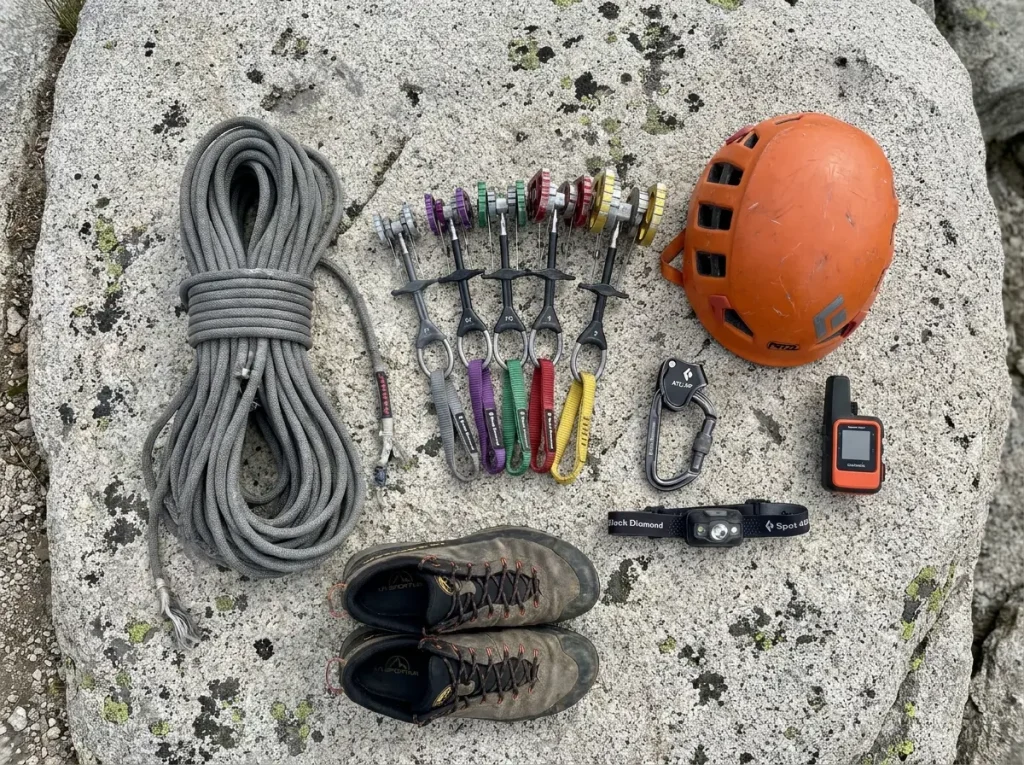
This is a fast-and-light alpine rock climb, not a big-wall siege. The right kit for the Grand is short, and the single most common mistake is over-packing a rack you’ll never place while skimping on the one piece that actually saves lives.
The helmet and the rockfall reality
Put the helmet on at the Lower Saddle and don’t take it off until you’re back down. The Owen-Spalding gully is a bottleneck, and in August traffic jams the live hazard isn’t natural rockfall, it’s human-triggered rock knocked loose by the parties stacked above you. A lightweight lid you’ll actually keep on beats a burly one you take off because it’s hot, which is why the Petzl Meteor Helmet is a solid pick, light enough that you forget it’s there. Manage your spacing too: don’t climb directly under another party if you can help it.
The rope, rack, and belay kit
For a harness, a featherweight alpine model like the Petzl Altitude Harness keeps your summit-day load down, and if you want a cheaper option that still works, the Black Diamond Momentum covers the basics. A single dry-treated 70m rope handles the Owen-Spalding rappels and the wet early-season rock on the multi-pitch climbing, and the Mammut 9.5 Infinity Dry Rope earns its keep when the granite is damp. You don’t need a fancy belay device, just a simple tube like the Black Diamond ATC-XP, which does everything this route asks and nothing it doesn’t. The rack is the part people get wrong: your alpine trad rack here is minimal, a small-to-mid cam set like the Black Diamond Camalot C4 in the #0.4 to #2 range plus a few nuts, not the big-wall kit some people haul up the mountain. Rack it cleanly so you can find a piece without fumbling, and our guide on how to rack it so you never fumble a piece mid-pitch is worth a read if you’re new to alpine trad.
Approach shoes, light, and a way to call for help
Approach shoes do double duty on the Grand: the Garnet Canyon hike in and the class 3 to 4 scrambling up high. A sticky, durable pair like the La Sportiva TX4 (men’s · women’s) handles both jobs without you switching footwear. The pre-dawn alpine start makes a reliable headlamp core kit, not an afterthought, and the Black Diamond Spot 400 is the value pick that gets you through the dark approach. Carry a GPS or a downloaded topo map and know how to read it, since the descent route-finding is exactly where people get lost. There’s no cell signal on the mountain, so a satellite communicator like the Garmin inReach Mini 2 is the piece that matters most if a descent goes wrong above the saddle, when getting an SOS out is the difference between a long night and a tragedy. Round it out with a solid alpine layering system that handles a pre-dawn start and an afternoon storm, and your kit is complete.
The Descent Is the Crux
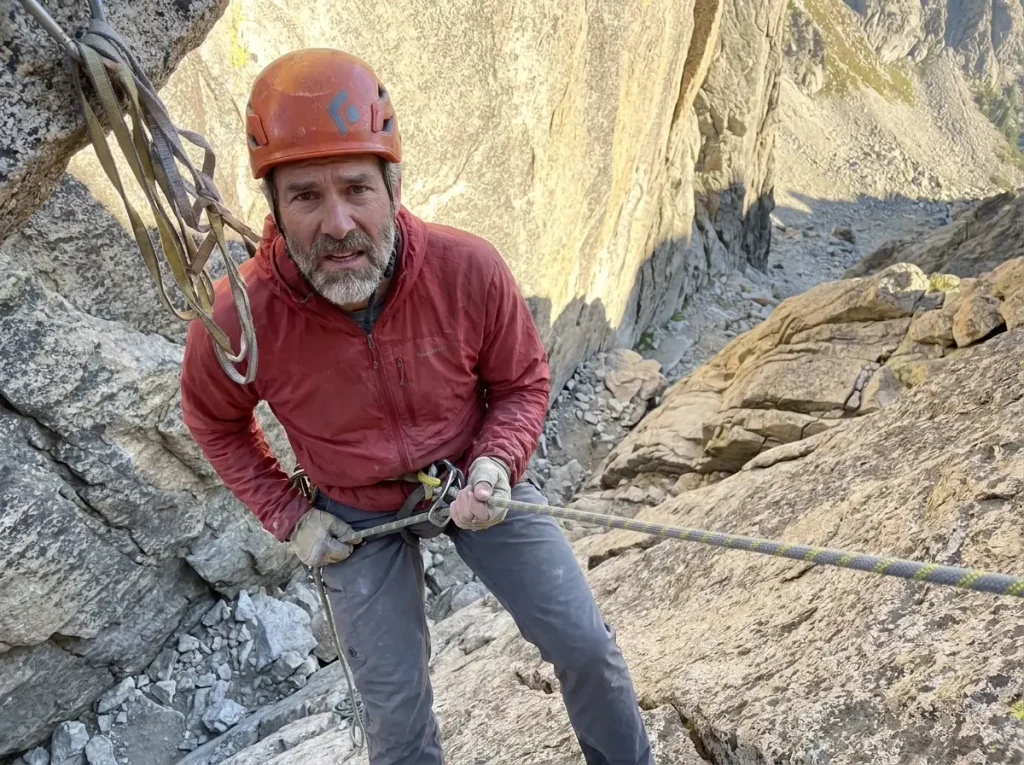
One climber found a big pile of old webbing south of the Catwalk, clipped it, and rappelled sixty feet straight into the wrong gully. Then the rope tied a bight in itself mid-pull, and he had to solo back up to free it before he could even start over. He’d climbed the whole route clean. The mountain wasn’t done with him.
Why the summit is only halfway
The summit is the halfway point, full stop. Most of the epics on the Grand happen on the way down, not the way up. People miss the rappel station, follow faded tat into the wrong gully, and get cliffed out on terrain they can’t reverse. The pattern is documented, not just trail gossip, the American Alpine Club’s accident analysis of where Grand Teton climbs go wrong maps exactly where these incidents cluster, and it’s the descent that shows up again and again. The same class 3 descent trap catches climbers on other peaks too, like the Keyhole Route on Longs Peak.
Finding the right rappel (and the tat trap)
The Owen-Spalding rappel has a correct station, and the trouble starts when people clip the first scrap of old webbing they see. Faded tat below the Catwalk leads climbers off the line and into the wrong descent gully. Know what the correct anchor looks like before you go, and don’t trust webbing just because it’s there, since someone else’s bad decision is what left it. The descent rappel is the single highest-consequence moment of the day, and the one rappelling mistake behind the most accidents is worth internalizing before you ever leave the summit.
Downclimbing the exposed traverses
Route-finding is genuinely harder going down than coming up. On the descent the whole mountain shows traffic and looks “climbed,” so the obvious-looking line is often the wrong one. The exposed traverses you scrambled up in the dark feel very different when you’re tired and downclimbing them in full daylight. Go slow, keep your party together, and treat every “this must be the way” instinct with suspicion until you’ve confirmed it.
Take photos of the descent landmarks on the way up, especially the rappel station and the turns off the summit. When you’re tired and route-finding down, a phone photo of “what it looked like from here” beats your memory every time. The climbers who get lost are the ones who only looked up.
Guided or On Your Own — the Honest Call
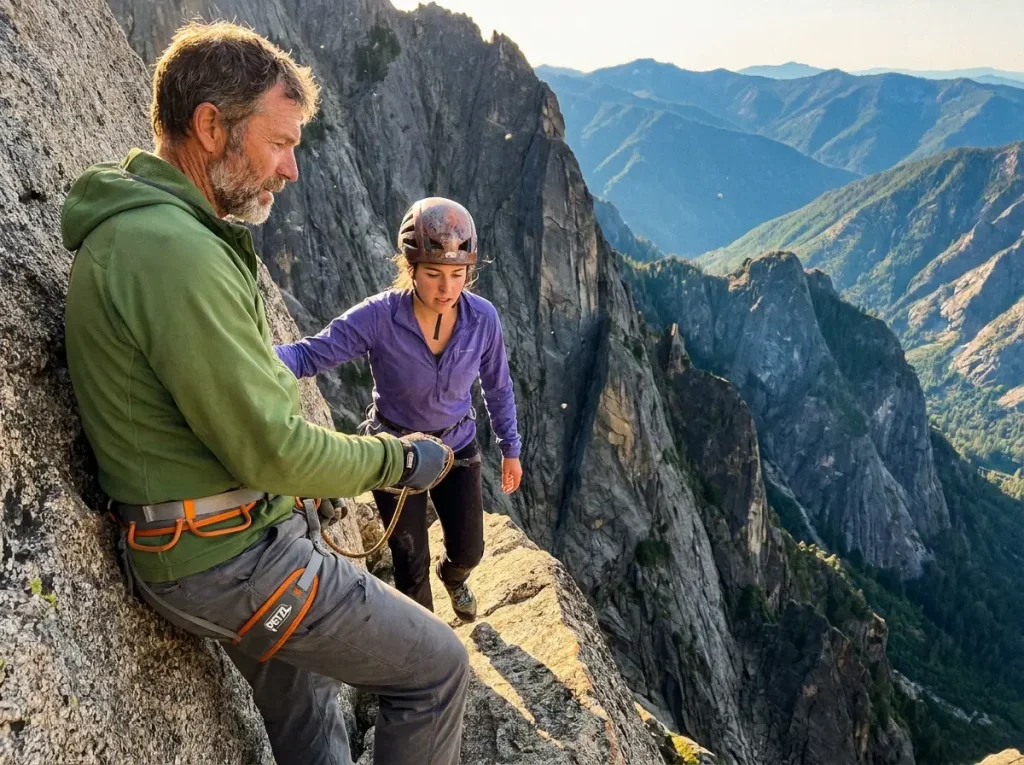
Hiring a guide on the Grand isn’t cheating. It’s a logistics and skills decision, and treating it like an admission of weakness is how people end up over their heads on the descent.
What a guide actually buys you
A guide buys you three real things: the permit hassle handled, a self-rescue safety net if something goes wrong, and route-finding on the descent, which is exactly where most unguided parties get into trouble. For a climber who can’t yet place gear or get themselves down a strange route, that’s not a luxury, it’s the safer and more honest choice. It’s the same guided-versus-unguided math that applies to any big objective, and it carries cleanly to the Grand.
What it costs
The two main operators on the Grand are Exum Mountain Guides and Jackson Hole Mountain Guides, both working out of Jackson, Wyoming. A single-day Teton alpine summit runs in the ballpark of mid-range trip pricing, often cheaper per person when you climb as a pair. Multi-day Grand programs, run from a high camp, cost more but will take climbers with no prior technical experience and teach them what they need on the way up. You’re paying for expertise and a safety margin, not just a babysitter, and on a peak where the descent is the crux, that margin is where the value sits.
When you’re ready to go unguided
Go unguided when you can honestly place gear, build anchors, rappel with a backup, and self-rescue, and when you’ve timed the season and acclimatized properly. If you’re close but not there, the smartest middle path is a skills course or one guided climb first, then come back self-sufficient. The Grand rewards patience here, since on a peak like this the descent is the real hazard, not the ascent. There’s no shame in building the skills before you commit to doing it alone.
The Bottom Line on Climbing the Grand Teton
The Grand doesn’t reject people on the climbing. It rejects them on altitude, on exposure, and on the way down. Pick your route to your honest ability, time your climb for that late-July-to-mid-September window, and arrive acclimatized instead of just fit. Respect the descent as much as the summit, because that’s where the day is actually won or lost. And decide guided versus unguided before you book, not when you’re standing at the Lower Saddle wondering if you’re in over your head.
Frequently Asked Questions
01Do you need a permit to climb the Grand Teton?
No permit is required to day-climb the Grand Teton. A backcountry permit is required only if you camp overnight, and it is picked up in person at the Jenny Lake Ranger Station.
02What is the easiest route up the Grand Teton?
The Owen-Spalding route is the easiest standard line, rated 5.4. Most of it is class 3 to 4 scrambling, with only a handful of true technical moves near the summit.
03How long does it take to climb the Grand Teton?
Most parties take two days, camping at the Lower Saddle before a summit-day push. Strong climbers do it car-to-car in a single day, usually taking 8 to 12 or more hours round trip.
04What is the best time of year to climb the Grand Teton?
Late July through mid-September, when the route is mostly dry. Before mid-July, expect snow and ice that require an ice axe and crampons, turning the climb into a mountaineering objective.
05Can you climb the Grand Teton without experience?
Not safely on your own. Hire a guide, since multi-day programs take climbers with no prior technical experience, or build trad, rappel, and self-rescue skills first before attempting it unguided.
Safety Notice: Rock climbing and mountaineering are inherently high-risk
activities that can involve physical trauma or fatal incidents. The information on Rock Climbing Realms is for
educational and informational purposes only. Techniques and advice presented here are not a substitute
for professional, hands-on instruction. Conditions and risks vary by location. Always seek guidance
from a qualified instructor before attempting new techniques. By using this website, you agree that you
are solely responsible for your own safety. Any reliance you place on this information is strictly
at your own risk, and you assume all liability for your actions. Rock Climbing Realms and its authors
will not be held liable for any harm, damage, or loss sustained in connection with the use of this information.
Affiliate Disclosure: We are a participant in the Amazon Services LLC Associates Program, an
affiliate advertising program designed to provide a means for us to earn advertising fees by advertising and linking
to Amazon.com. As an Amazon Associate, we earn from qualifying purchases. We are also an official affiliate partner
of Black Diamond Equipment via the AvantLink network. If you click on a Black Diamond affiliate link and make a
purchase, we may earn a commission at no additional cost to you. We also participate in other affiliate programs.
Additional terms are found in the terms of service.