
In this article
Elbrus wears the “easiest Seven Summit” tag like a badge, and that badge is exactly what turns fit, capable people around a few hundred meters below the top. The technical grade really is gentle. The mountain still claims 15 to 25 climbers most years, and almost all of them believed the label. Ask the search-and-rescue crews who work the slopes and returning climbers who post their trip reports, and the same story repeats: the technical difficulty isn’t what catches people here, the assumption is. Here’s what “easiest” actually means, the one structural reason the mountain punishes the underprepared, and the honest route, timing, gear, and cost math you need before you book.
How Hard Mount Elbrus Really Is
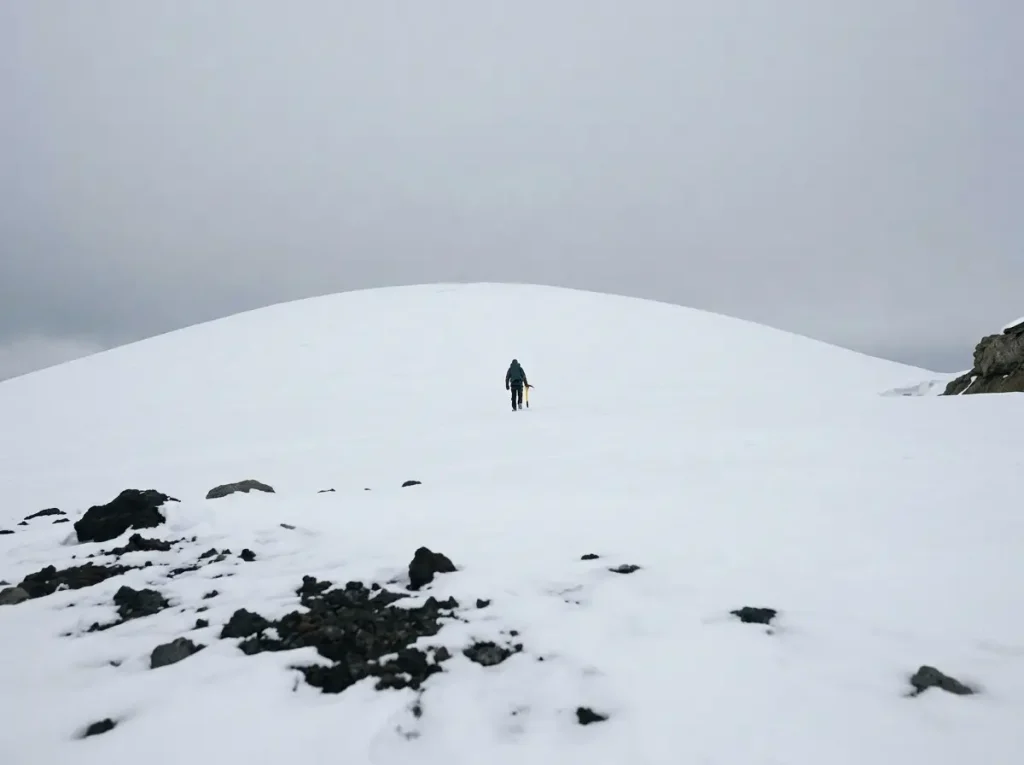
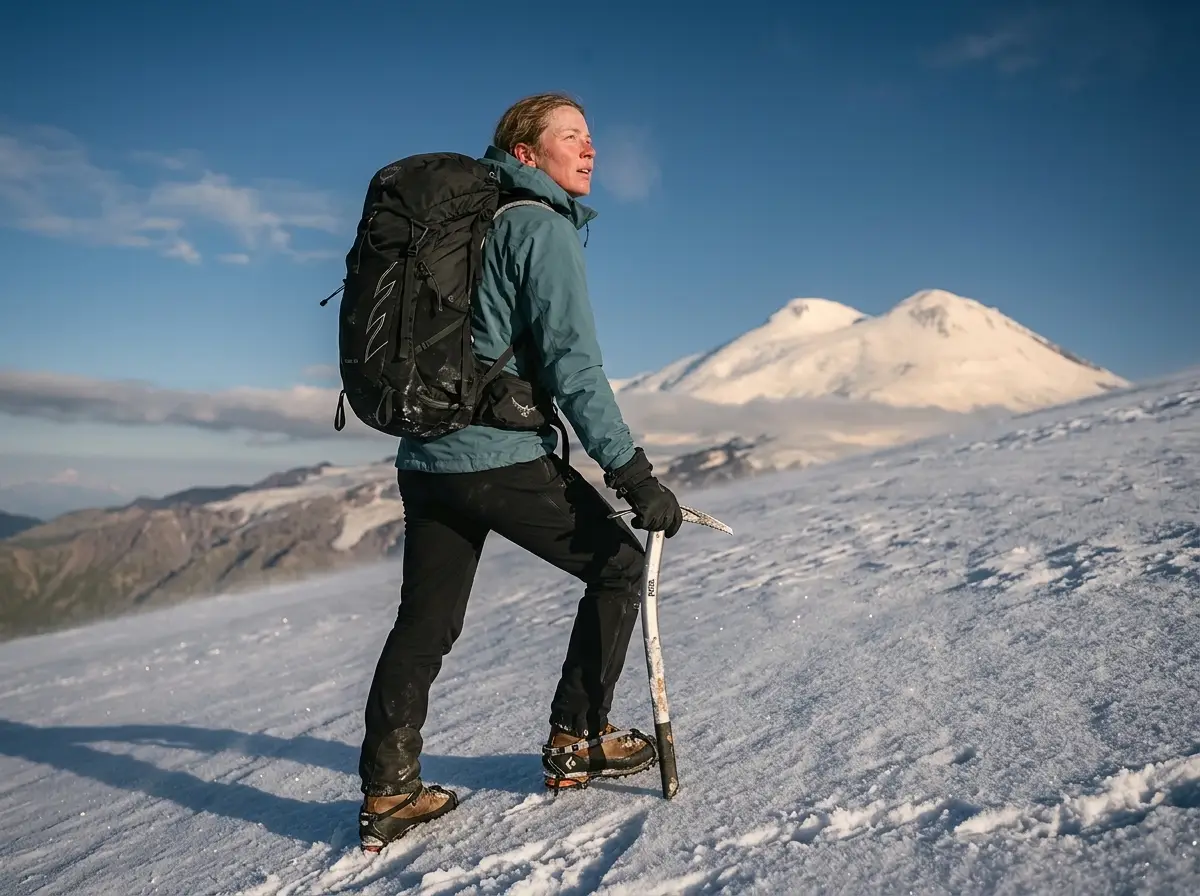
Start with what the grade actually says. Mount Elbrus carries a PD grade (Peu Difficile, or “a little difficult”) on the standard South Route, the same rung of the alpine scale as Mont Blanc’s easier lines. In plain terms, that means a long snow walk in crampons with an ice axe for balance and self-arrest, not a roped climb with technical rock or steep ice. There are no pitches to lead. There is no crux move. That is the whole basis for the “easiest Seven Summits” reputation, and on paper it is fair.
What “PD Grade” Means for a Non-Technical Climber
PD is the second-gentlest rung on the French alpine scale, one step above a pure walk-up. It tells you the terrain angle stays moderate and the hazards are manageable with basic snow skills. What it does not tell you is anything about altitude, weather, or endurance, and those three decide who summits. Elbrus is a pair of twin volcanic cones rising above the western Caucasus mountains, and you climb the higher western summit at 5,642 meters, with its eastern twin standing just behind at 5,621 meters. For a sense of where that puts Elbrus among its peers, our rundown of the world’s famous mountain peaks and what each one demands is the honest yardstick, and this one sits low on skill but high on grind. It also anchors the low end of the full Seven Summits list climbers chase, well below the technical and altitude demands of a peak like Denali, which is exactly why so many first-timers pick it as their entry point.
The Toll Behind an “Easy” Reputation
Here is the part the brochures skip. The fatality rate on Elbrus sits around 0.1 percent, low next to Everest’s roughly 3 percent. But raw numbers matter more than rates when you are the number, and 15 to 25 climbers lose their lives on this mountain in a normal year, because so many people attempt it and a large share go solo or unguided.
In 2004, a single brutal weather season claimed 48 lives, proof that a “low fatality rate” statistic can hide a genuinely bad year. The pattern the rescue service flags every season is the same: the people who get into trouble are almost always the ones who treated the easy reputation as a guarantee.
The Real Reason “Easy” Climbers Turn Back
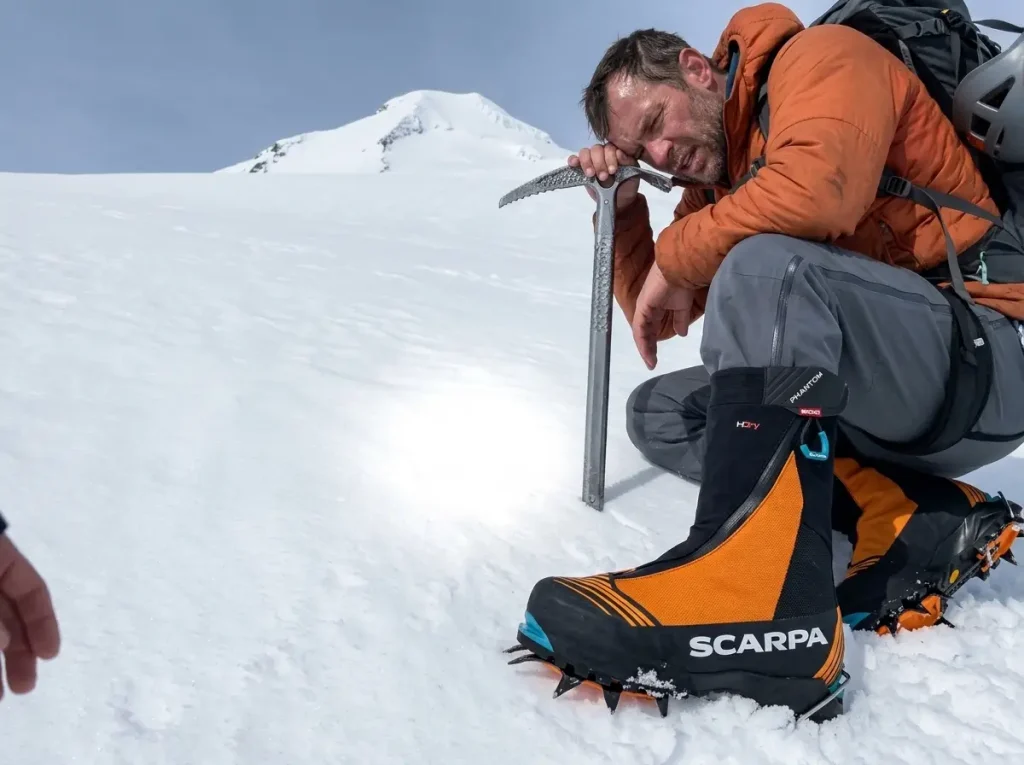
If the grade is so gentle, why does a fit marathon runner get turned around 45 minutes below the summit? Because the number that breaks people on Elbrus is not the grade. It is the shape of the summit day, and it is the one thing almost no competitor guide explains properly.
One Push, No Rest Camp, No Bailout
On the South Route, there is no intermediate high camp between the barrels at Garabashi station, around 3,800 meters, and the 5,642-meter summit. That means summit day gains roughly 1,800 to 2,100 vertical meters in one continuous push, then reverses the whole thing, all in a single day. Compare that to Kilimanjaro or Aconcagua, where a chain of camps absorbs the altitude gain in digestible stages and you sleep partway up.
Elbrus offers no such mercy. Once you leave the barrels in the dark, you are committed to an all-or-nothing effort with nowhere to bail to and rest. That structural fact, not the elevation number, is why hikers who would cruise Kilimanjaro fold on Elbrus. The same “easy mountain that still catches people out” pattern shows up on Cho Oyu, and the mechanism is identical: a reputation that invites people who are not ready for the real day.
Why Fitness Alone Doesn’t Qualify You
Strong legs are necessary and nowhere near sufficient. The climb runs 7 to 8 hours up and 3 to 4 hours down, so you should budget a 10 to 12 hour summit day, not the quick outing the elevation stats alone suggest.
Fitness gets you to Pastukhov Rocks. Altitude physiology decides what happens above it. This is where the alpine fundamentals that keep you moving efficiently on a long snow push matter more than raw cardio, because pacing, turnaround discipline, and efficient crampon footwork save the energy that a strong engine alone will burn too fast.
The moment that breaks most people comes at Pastukhov Rocks, around 4,600 meters. Legs still feel fine, lungs suddenly don’t, and there’s over a thousand vertical meters of snow above with no camp to retreat to. If you’re gassed here, that’s your answer, not a pep talk. Turning around at the rocks beats getting escorted down from higher.
South Route vs North Route and the Day-by-Day Timeline
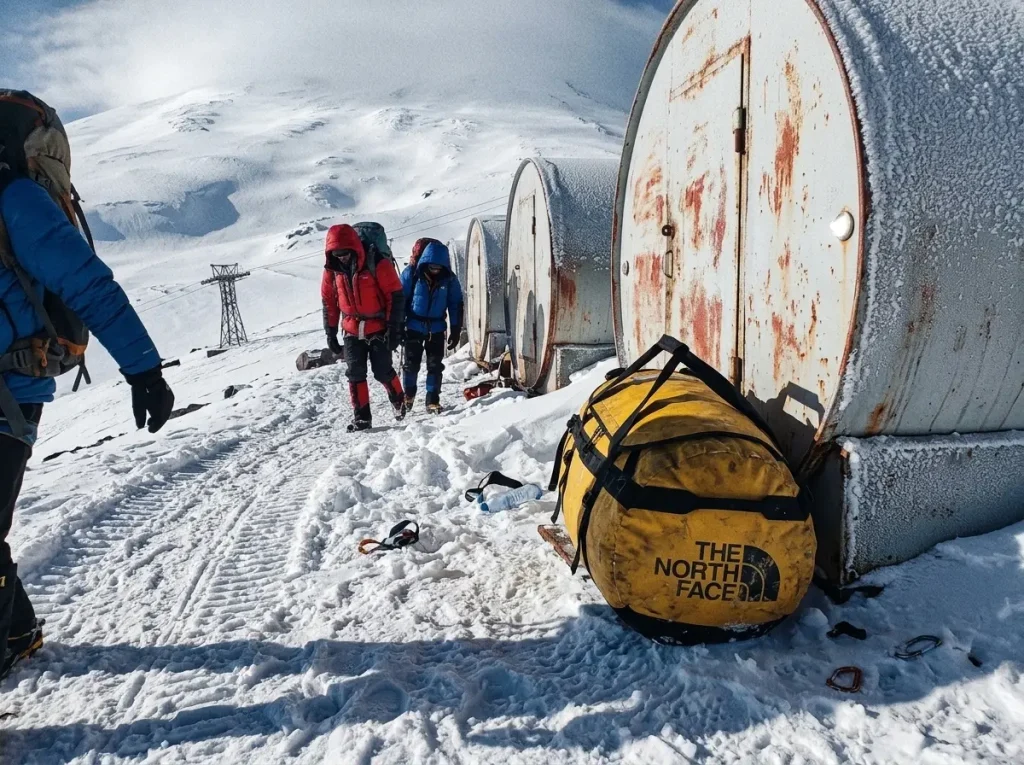
Which side you climb changes almost everything about the experience, from where you sleep to how self-sufficient you have to be. Most first-timers take the South Route for good reason, but the North has its own honest case.
The South Route (Barrels, Lifts, and the Snowcat Question)
The South Route is the standard line and the more forgiving one. A cable car and chairlift haul you and your gear to around 3,800 meters, where you sleep in the barrels, the cylindrical steel huts at Garabashi that every returning climber mentions by name. From there, some operators offer a snowcat, a tracked vehicle that shuttles you higher up the mountain in the dark to shorten the summit push.
It works, and it also starts a genuine argument among climbers about whether a lift-assisted start still counts as a real climb. There is no right answer, only your own honesty about what you came for. This side carries the most infrastructure and the most traffic.
The North Route (Wilder, Tented, More Committing)
The North Route is the purist’s side. No lifts, no barrels, no cable car, just tents, self-sufficiency, and a longer walk into a quieter part of the mountain. It also carries crevasse hazard on the glacier approach that the South Route largely spares you, which raises the skills bar considerably. If you climb the North, brush up on glacier travel and crevasse rescue skills before you go, because there is no lift to retreat to and no crowd to flag down.
How Many Days You Should Actually Budget
Plan on a 7 to 9 day trip for either side, and treat that as a floor, not a target to beat. That window includes arrival, the acclimatization hikes that make or break the climb, at least one weather buffer day, and the summit attempt itself. The same crampon-and-alpine start rhythm climbers know from a peak like Rainier in July applies here, just stretched over a bigger single push. The video below walks the South Route logistics in sequence, from the cable car and snowcat stages up through Garabashi station, which is worth seeing before you commit.
Best Time to Climb and the Summit-Day Clock
Season and timing are not two separate topics on Elbrus. They are one system, and getting either wrong is the fast track to a blown attempt.
When to Go (and the Months to Avoid)
The climbing season runs roughly mid-June to mid-September, with July and August offering the most stable, consolidated snow and the best odds. Outside that window, colder temperatures and unsettled weather stack the deck against you, and the mountain’s already-volatile conditions get worse. Pick the heart of the season for your first attempt and leave the shoulder-month gambling to people who have already stood on top.
The 1 a.m. Start and the 2 p.m. Turnaround Rule
Here is the timing rule that decides summit day. Climbers leave the barrels around 1 a.m., not out of tradition or machismo, but to reach the top inside the reliable 10 a.m. to 1 p.m. summit window and begin descending by roughly 2 p.m. The reason is brutal and predictable: afternoon conditions on Elbrus deteriorate into wind and whiteout with clockwork regularity.
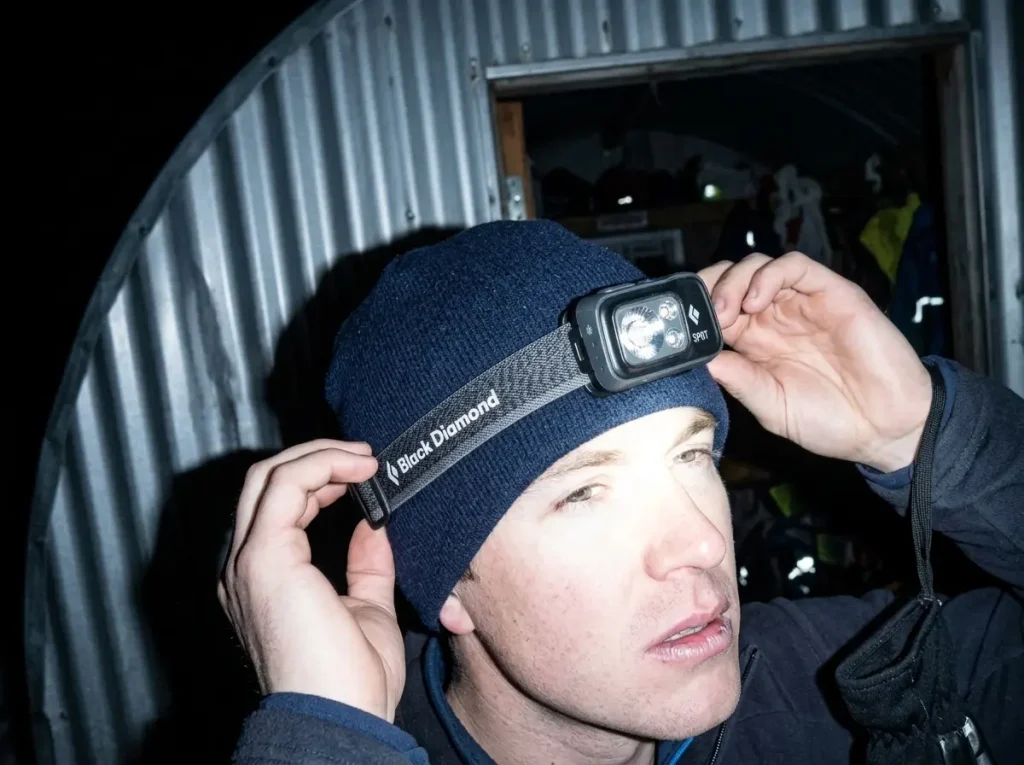
Miss your turnaround time and you are descending through the worst weather of the day, exhausted, with visibility gone. Guides treat the weather window as gospel, and the climbers who ignore it are the ones who make the rescue reports. Because that push starts in full darkness, a reliable headlamp is not optional gear, and the Black Diamond Spot 400 Headlamp with its red night-vision mode is the standard pick for exactly this kind of pre-dawn alpine start.
Treat your turnaround time as a hard number you set the night before, not a feeling you check on the mountain. Write it down, tell your guide, and honor it even if the summit looks close. The top will still be there next season. The afternoon whiteout doesn’t negotiate.
Acclimatization That Actually Works
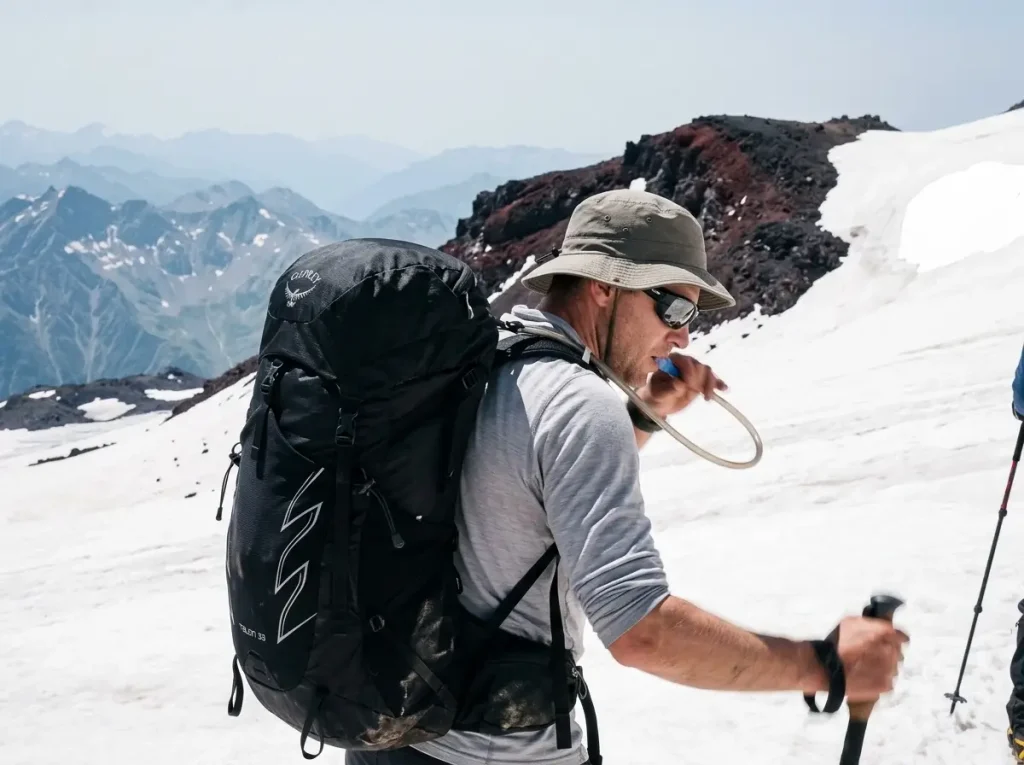
The two acclimatization hikes are the least glamorous days of the trip and the ones that decide it. Skip or rush them and summit day makes the decision for you.
The Shelter Maria / Pastukhov Rocks Ladder
The standard protocol is a simple ladder. On the first day, you hike up to the Shelter Maria area around 4,100 meters and come back down to sleep. On the second, you push to Pastukhov Rocks near 4,600 meters and descend again, following the old “climb high, sleep low” rule that lets your system adapt without staying up high before it is ready.
It feels like wasted effort when you are itching for the summit. It is the opposite. Rushing or skipping these two hikes is the single most common reason fit, experienced hikers fail on Elbrus specifically, and the high-altitude training and acclimatization science behind the schedule explains why your fitness cannot shortcut the adaptation clock.
Reading Your Own Altitude Warning Signs
Learn what the early signs of altitude sickness feel like before you go, because on summit day nobody else is monitoring your headache. Persistent headache, nausea, dizziness, and unusual fatigue are your system telling you to stop going up, and knowing how to recognize and prevent altitude sickness before it ends your climb is a survival skill, not trivia. Some climbers use acetazolamide, sold as Diamox, as a prophylactic under a doctor’s guidance, but a pill is a supplement to the acclimatization ladder, never a replacement for it. The full 7-day arc of a real Elbrus climb, including these acclimatization hikes and the actual summit push, plays out in the documentary below, which shows the barrels, the Pastukhov terrain, and the pacing far better than any description can.
Gear List and the Buy-vs-Rent Math
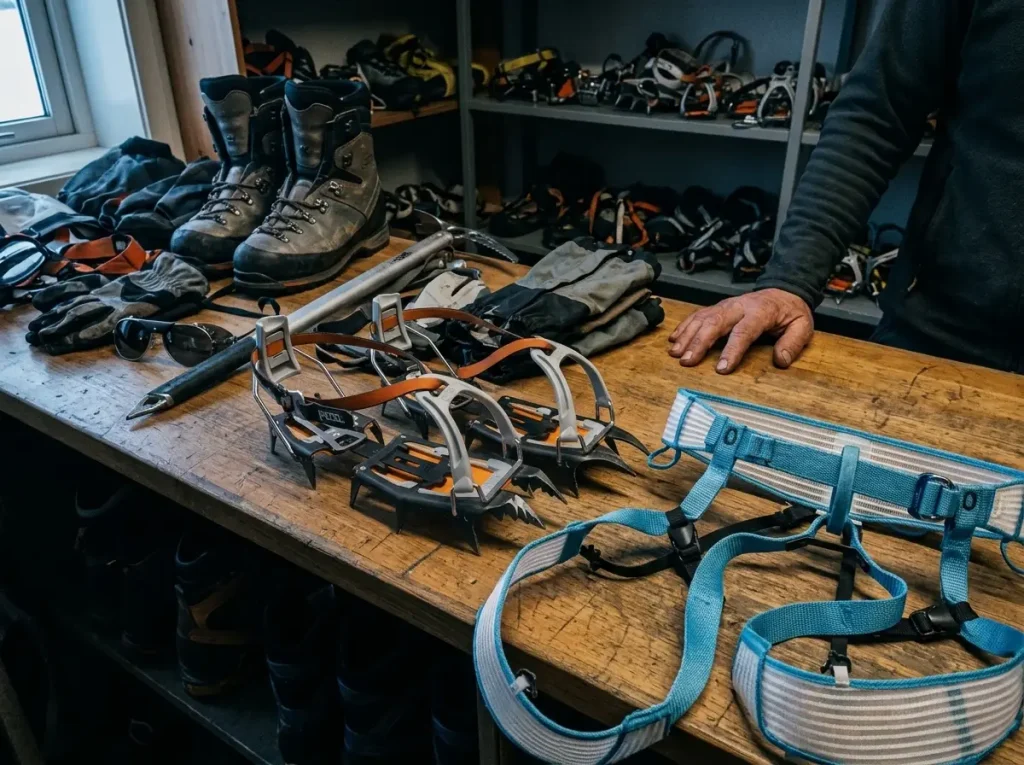
This is the anti-sell section, and it is coming from a gear list, so read the last part before you spend anything. For a one-time Elbrus climb, the smart money often rents the expensive stuff. Let’s cover what you need, then the honest math on whether to own it.
The Technical Kit (Axe, Crampons, Harness, Glasses)
The technical core is straightforward and shared across most alpine snow climbs. You want a general mountaineering ice axe like the Grivel Air Tech Evo Ice Axe, whose self-arrest geometry is proven on exactly this kind of snow slope. For crampons, the Petzl Vasak LeverLock Universal Crampons run 12 points with a flexible binding that fits both rental and owned boots, and the budget-friendly Grivel G12 New Matic Crampons cover the same job for less.
A lightweight harness like the 205-gram Petzl Altitude Harness keeps weight off your hips on that long push, and before you trust that axe to hold you, make sure you know how to actually use it for self-arrest. One item is genuinely non-negotiable above the snowline: category-4 glacier glasses like the Julbo Camino Glacier Glasses, because unfiltered high-altitude glare off snow is a fast route to snow blindness.
Boots, the One Decision Worth Getting Right
Footwear is the gear question climbers search most for Elbrus, and the answer is a double boot, which pairs an insulated inner liner with a weatherproof outer shell to fight the cold and altitude. The premium pick is the La Sportiva Spantik Mountaineering Boot, a thermo-moldable double boot named directly by expedition guides for this cold-and-altitude combination, though it comes in a men’s last only. For a more affordable double boot in the same class, the Scarpa Phantom 6000, rated to 6,000 meters and offered in both men’s and women’s sizing, gives you a real “buy” option before we get to the smarter move.
The Layering System (Base to Parka)
Above the boots, a proper layering system is what keeps you moving through a night start and a windy summit ridge, and it is your first line of defense against the frostbite and hypothermia that the cold and wind on summit day can bring on fast. Start with a merino wool base layer, moisture-wicking and warm even when damp, in the men’s MERIWOOL or women’s Merino.tech set. Top the system with an expedition-weight down parka for the frigid summit push, and the Eddie Bauer Boundary Pass Down Parka, available in men’s and women’s cuts, handles the cold-exposure job without the top-shelf price. Between those two, add insulating mid-layers you already own, plus warm gloves and a face-covering layer, because the base and the parka are where the money earns its keep and bare skin is what freezes first.
Summit Pack, Gaiters, and Hauling It All
Snow travel from the barrels upward makes full-coverage gaiters a requirement, and the Outdoor Research Crocodile Gaiters come in men’s and women’s versions to seal out snow and keep your lower legs dry. For summit day you want a pack sized for layers, water, and snacks, not the whole expedition, and the 33-liter Osprey Talon 33 with its ice axe attachment hits that mark. For getting all your gear to base, a big haul bag like the The North Face Base Camp Duffel at 95 liters swallows everything, or the more compact 70-liter Patagonia Black Hole Duffel if you pack lean.
Rent in Terskol or Buy? The Honest Math
Now the part that saves you real money. A full technical kit rental in Terskol, covering boots, crampons, ice axe, and harness, runs a modest total for the whole trip from shops like Rock’n’Rent and 7 Vershin. A single retail double boot alone costs several times that rental total, before you add crampons, axe, and harness. So for a one-time Elbrus climb, renting the big-ticket technical items locally is dramatically cheaper than buying retail, and the shops stock gear sized for this mountain’s conditions.
Buying only makes sense if you are planning multiple future expeditions and will amortize the cost. If you want the full framework, our breakdown of the rent-versus-buy break-even math for climbing travel gear runs the numbers, and it pairs naturally with understanding how the full mountaineering gear system fits together. It is the same buy-versus-rent call climbers weigh on a peak like Mount Shasta, and on Elbrus the rental economics are especially hard to argue with.
Rent the boots, but bring your own base layers, socks, and glacier glasses. The stuff that touches your skin or your eyes is where rental fit and hygiene fall short, and it’s the cheap end of the list anyway. Save the rental budget for the double boots and crampons you’d otherwise overpay to own for one trip.
What It Costs and the Post-2022 Reality
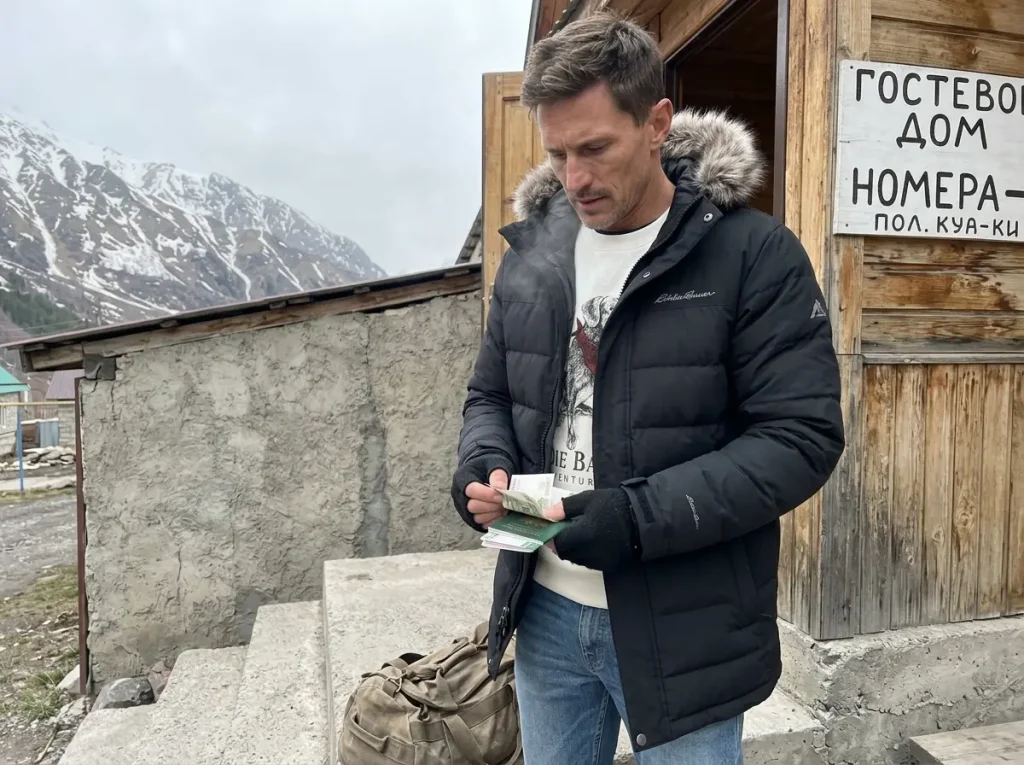
Cost on Elbrus is not just a budget line anymore. Since 2022, it is a logistics problem, and it is the part almost no fresh guide covers honestly.
What a 2026 Climb Actually Costs
A guided package with a Russian or local operator runs in the budget-to-mid range for the climb itself, with premium add-ons pushing higher. Western operators, where they still run trips at all, cost notably more.
The real split is no longer cheap versus expensive. It is a local operator paid in cash versus a Western brand-name operator paid by card or wire, and that distinction now drives the whole decision. For comparison with a far bigger expedition budget, our breakdown of what a full Everest expedition really costs shows how the same cost categories scale up.
Visas, Cash, and the Western-Operator Exodus
Here is the reality that changed after 2022 and that most older guides never updated. Following Russia’s invasion of Ukraine, American and Western guiding companies publicly cancelled their Elbrus programs, and several still show detailed trip pages while quietly listing no scheduled departures for 2026 or 2027, a strong sign they have stepped back without a formal announcement.
Sanctions also broke the normal money pipeline. Western cards and payment apps largely stopped working inside Russia, so the on-the-ground economy has gone cash-only, and climbers who assume a card will work somewhere in Terskol get stranded without enough physical rubles for guides, rentals, and fees. Plan to arrive with your trip’s cash in hand, exchanged before you reach the mountains.
The travel side has its own hoops. Most climbers fly into Mineralnye Vody, the regional gateway airport, then transfer several hours to the Elbrus valley.
The Russian visa process runs through a letter-of-invitation system that you sort out before you travel, and because the Elbrus region sits in a sensitive border zone near the frontier with Georgia, your operator typically arranges the additional area permit that the zone requires. Do not treat any of this as an afterthought. Our 2026 climbing-travel visa matrix, including the Russian letter-of-invitation process, lays out what the paperwork actually requires.
MCHS Registration and Rescue Insurance
Two safety steps are mandatory and easy to skip in the excitement. First, register with MCHS, the Russian rescue center, in Terskol, either in person or by phone, recording your name, passport number, contact, and return date, then sign back out after the climb. Treat it like a flight manifest, because if something goes wrong, rescue services do not know to look for you otherwise.
Second, buy high-altitude rescue insurance as a separate purchase, since a standard travel policy almost certainly excludes a climb at this altitude. The American Alpine Club’s rescue benefit that comes with membership is one starting point, and a dedicated high-altitude evacuation package built for climbs above 4,600 meters covers the gap, since Elbrus’s 5,642-meter summit sits well inside that trigger altitude. Before you buy anything, know the red flags to check in any climbing travel insurance policy, because the wrong policy is worse than obvious when you need it.
Elbrus vs Kilimanjaro Which First
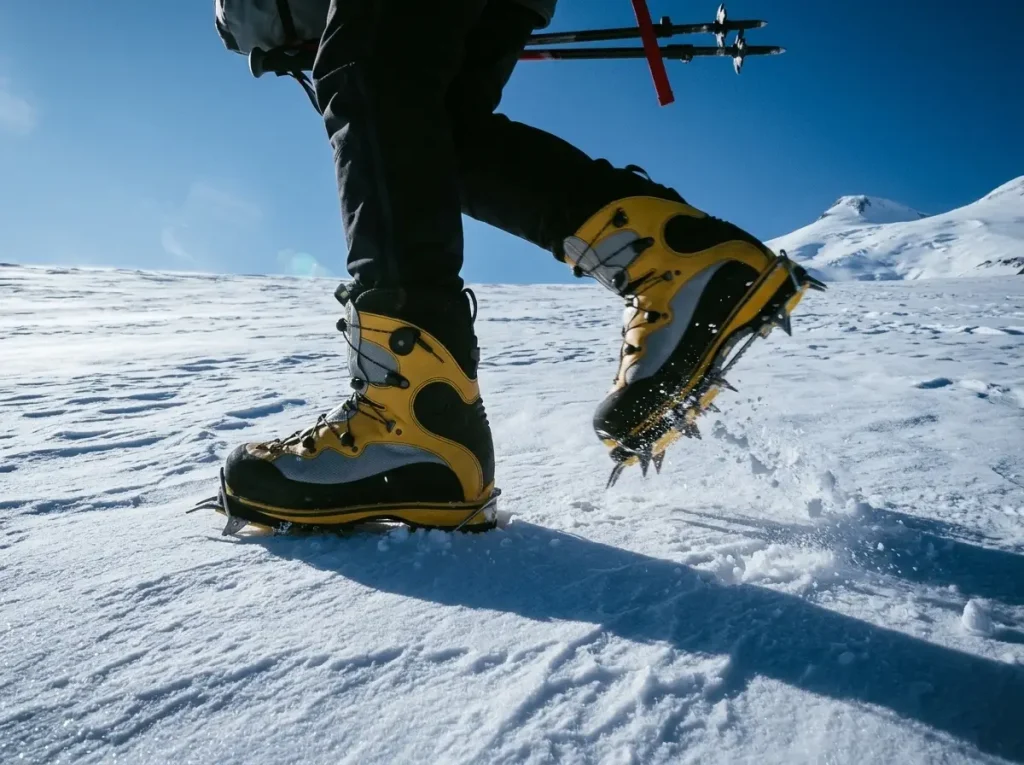
These two get pitched as interchangeable beginner trophies, the twin gateways to bigger mountains. They are not the same climb, and picking the wrong one first is a common, avoidable mistake.
Technical Terrain, Crampons vs Trekking Poles
The summits are close in height, Kilimanjaro at 5,895 meters and Elbrus at 5,642, but the terrain could not be more different. Kilimanjaro is a hiking-boots-only trek from bottom to top, with trekking poles as your most technical gear. Elbrus demands crampons and an ice axe for snow-and-ice travel from Camp 1 to the summit. On common operator difficulty scales, Kilimanjaro rates around a level 5 trek while Elbrus lands near a level 8, and that gap is the snow-travel skill and the continuous push, not the elevation.
Which One Should Be Your First
The honest verdict is simple. Kilimanjaro is the better true-first big mountain for a genuine beginner, because you can succeed on fitness and acclimatization alone without any technical snow skills. Elbrus is the appropriate step up once you have crampon and self-arrest competence and want a real single-push test. If you want the full picture on the trekking-peak side, our honest take on climbing Kilimanjaro covers why days on the mountain beat raw fitness, and Aconcagua, another non-technical walk-up where most climbers turn back, rounds out the picture of how “non-technical” still humbles strong people.
The Honest Bottom Line on Elbrus
Easiest is a technical grade, not a difficulty promise, and treating it as the latter is what fills the rescue reports. The no-high-camp continuous push is the real gatekeeper, so train for one long uninterrupted day, not a series of comfortable ones. Acclimatize honestly, respect the summit-day clock, and rent the expensive gear unless you are collecting expeditions.
If Elbrus is your step up from a trekking peak, build the snow-and-ice skills first, then let the mountain be the reward rather than the lesson. Get the fundamentals right on smaller ground, show up with the right kit and a real turnaround time, and the “easiest Seven Summit” can actually live up to its name.
Frequently Asked Questions
01How long does it take to climb Mount Elbrus?
Budget a 7 to 9 day trip, including acclimatization hikes and weather buffer days. Summit day itself runs 10 to 12 hours, with 7 to 8 hours up and 3 to 4 hours down from the high camp.
02Do you need technical climbing experience for Mount Elbrus?
No roped technical climbing, but you do need basic snow skills. The PD-graded South Route requires comfort walking in crampons and using an ice axe for self-arrest. It is snow travel and altitude, not rock or steep ice.
03Can you climb Mount Elbrus without a guide?
It is possible but strongly discouraged. Search-and-rescue data shows that most fatal accidents involve solo or unguided climbers. A certified local guide removes the majority of the risk on a mountain whose easy reputation lures underprepared independent climbers.
04Do Americans need a visa to climb Elbrus in 2026?
Yes, a Russian visa is required, obtained through a letter-of-invitation system arranged before travel. Since 2022, many Western operators have stepped back, on-the-ground costs are largely cash-only, and paperwork should be handled well in advance.
05What is the success rate on Mount Elbrus?
A large share of climbers turn back short of the summit, most often on altitude and the single continuous push rather than technical difficulty. Proper acclimatization and honest pacing are the biggest levers on whether you make the top.
Safety Notice: Rock climbing and mountaineering are inherently high-risk
activities that can involve physical trauma or fatal incidents. The information on Rock Climbing Realms is for
educational and informational purposes only. Techniques and advice presented here are not a substitute
for professional, hands-on instruction. Conditions and risks vary by location. Always seek guidance
from a qualified instructor before attempting new techniques. By using this website, you agree that you
are solely responsible for your own safety. Any reliance you place on this information is strictly
at your own risk, and you assume all liability for your actions. Rock Climbing Realms and its authors
will not be held liable for any harm, damage, or loss sustained in connection with the use of this information.
Affiliate Disclosure: We are a participant in the Amazon Services LLC Associates Program, an
affiliate advertising program designed to provide a means for us to earn advertising fees by advertising and linking
to Amazon.com. As an Amazon Associate, we earn from qualifying purchases. We are also an official affiliate partner
of Black Diamond Equipment via the AvantLink network. If you click on a Black Diamond affiliate link and make a
purchase, we may earn a commission at no additional cost to you. We also participate in other affiliate programs.
Additional terms are found in the terms of service.