
In this article
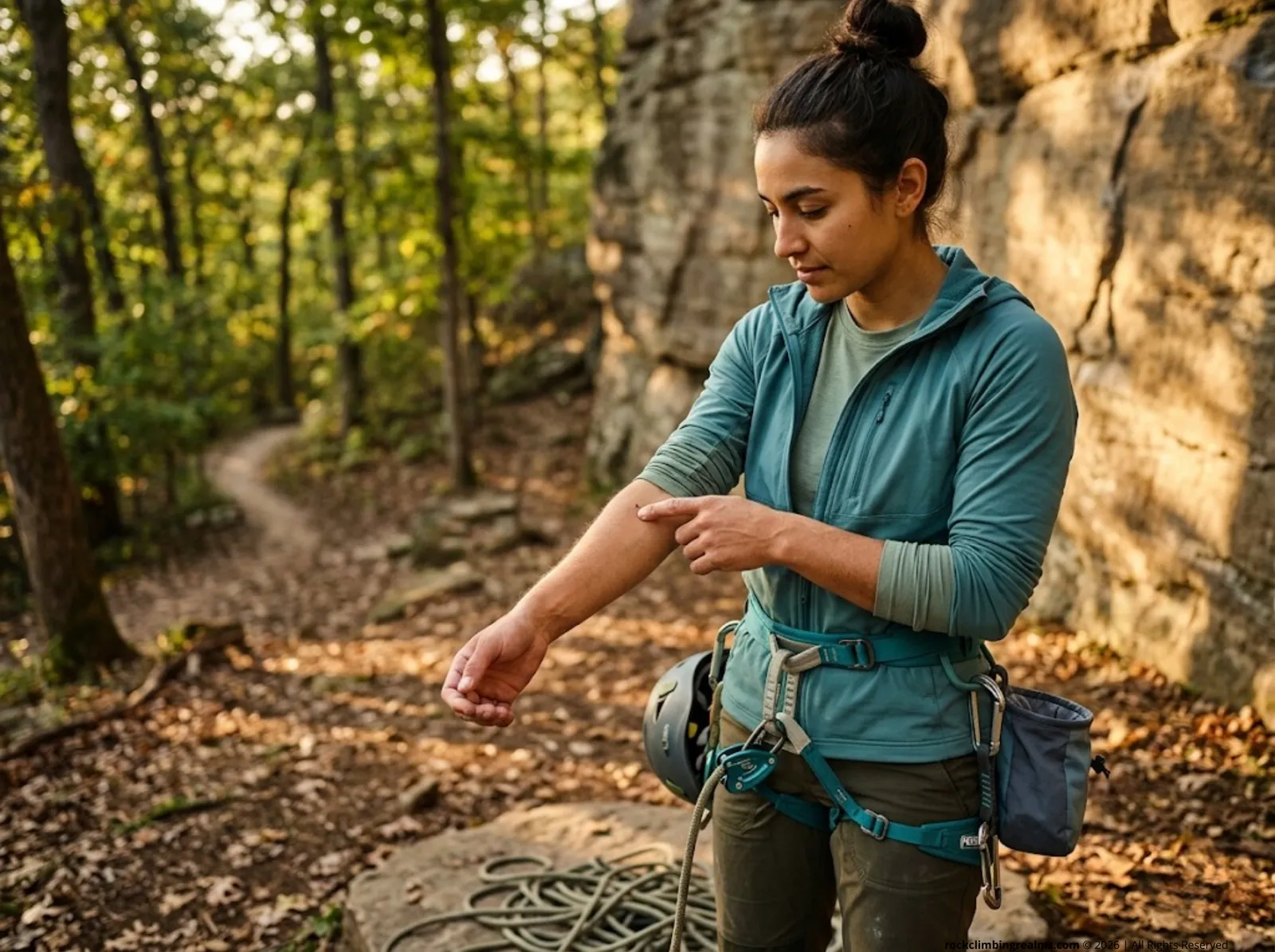
You’re belaying at the base of a sandstone splitter when something crawls up the back of your neck. You reach back and pinch a fat, dark abdomen between your chalked fingers. Your partner is mid-crux on the third pitch. Your tweezers are in the car. And the only spray in the crag bag is a bottle of OFF that you’re pretty sure will eat through your rope’s sheath like acid.
I’ve been climbing long enough to have been in that exact spot, and I’ve watched a lot of good climbers handle it badly. Burning ticks with lighters. Slathering petroleum jelly on them. Spraying DEET directly on harness webbing without a second thought. All wrong. All potentially dangerous.
This is the plan you wish you had before tick season started. You’ll learn which repellents are actually safe for nylon and polyester gear, how to pull a tick mid-route without leaving mouthparts behind, and how to build a prevention protocol that covers the approach, the belay, and the drive home.
⚡ Quick Answer: Use Picaridin (20% concentration) on skin and Permethrin on clothing and gear for tick prevention that won’t damage climbing equipment. Carry a Tick Key clipped to your harness for fast removal. If you find a tick, remove it immediately with steady pressure, not a yank. Some tick-borne pathogens can transmit in as little as 15 minutes, so speed matters more than perfection.
Why Ticks Are a Climber-Specific Problem
Most tick safety advice is written for hikers. Walk the center of the trail, tuck your pants into your socks, check yourself when you get home. Solid advice that completely ignores the reality of a day at the crag.
The Belayer’s Trap: Why Standing Still Gets You Bitten
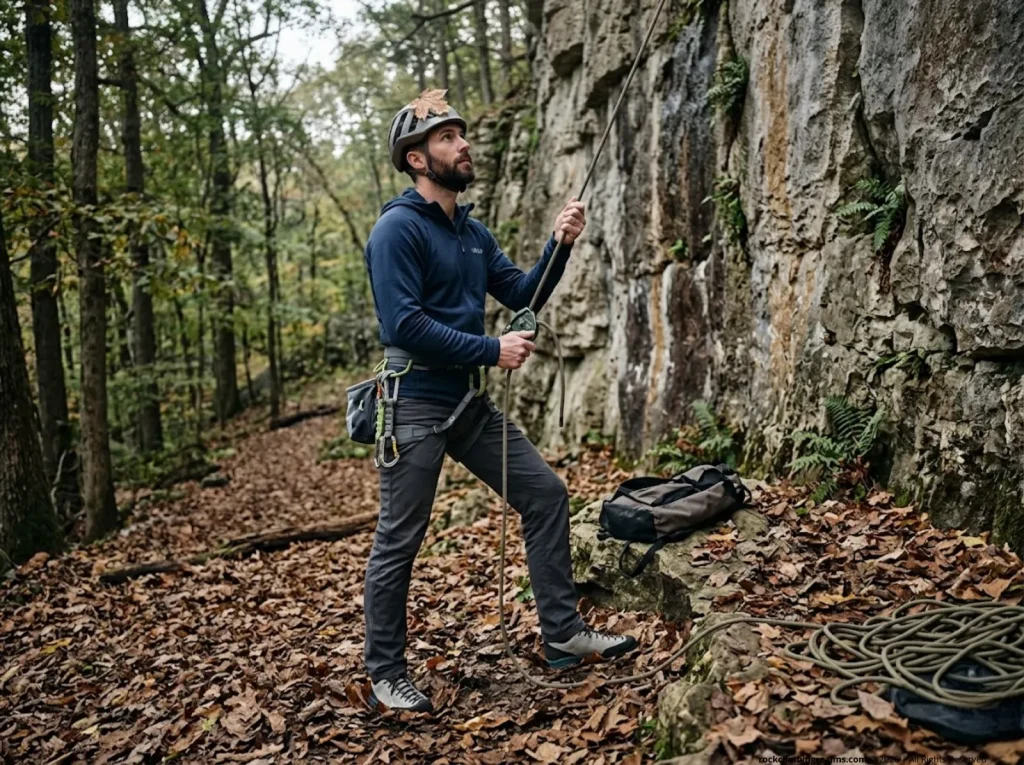
Here’s what nobody tells you: a belayer is a tick magnet. Ticks hunt by a behavior called questing, where they park on the tips of leaves and grass blades with their front legs extended, waiting to latch onto whatever breathes CO2 and radiates heat nearby. A hiker passes through in seconds. A belayer stands in the same patch of leaf litter for 20 to 60 minutes per pitch, exhaling a steady stream of carbon dioxide directly into the exact zone where ticks are waiting.
The base of popular routes makes it worse. Organic debris, fallen bark, and decomposing leaves accumulate at the foot of cliffs, creating a warm, moist microhabitat that ticks love. Your rope bag sits in it. Your pack sits in it. You sit in it while flaking your rope.
Pro tip: Place your rope bag on a flat rock, never in the dirt. If you’re belaying in a brushy area, spread a treated ground cloth under your stance. A 3-foot square of Tyvek treated with Permethrin weighs almost nothing and creates a chemical barrier between you and the forest floor.
If you’re thinking about where to stage your gear at the cliff base, the same principles behind proper pad and gear placement at the crag base apply here: keep your stuff off the vegetation, and be deliberate about your footprint.
The Approach Bushwhack: Where Most Bites Happen
The approach is where most tick encounters begin. Many classic crags require thrashing through dense brush, scrambling through overgrown gullies, or pushing past head-high vegetation on unmaintained trails. Every time you brush past a branch or wade through tall grass, you’re giving questing ticks exactly the contact they’re designed to exploit.
Walking the center of the trail helps. Wearing light-colored clothing makes crawling ticks visible before they reach skin. But the real defense is a treated barrier on your lower half — socks, approach shoes, and gaiters sprayed with Permethrin — combined with Picaridin on exposed skin. More on those chemicals in a moment.
Multi-Pitch Logistics: You Can’t Just Drive to a Clinic
Finding a tick at a fourth-pitch belay station demands a different protocol than finding one in the parking lot. You’ve got limited gear, limited hands, limited visibility, and a partner who needs you on belay.
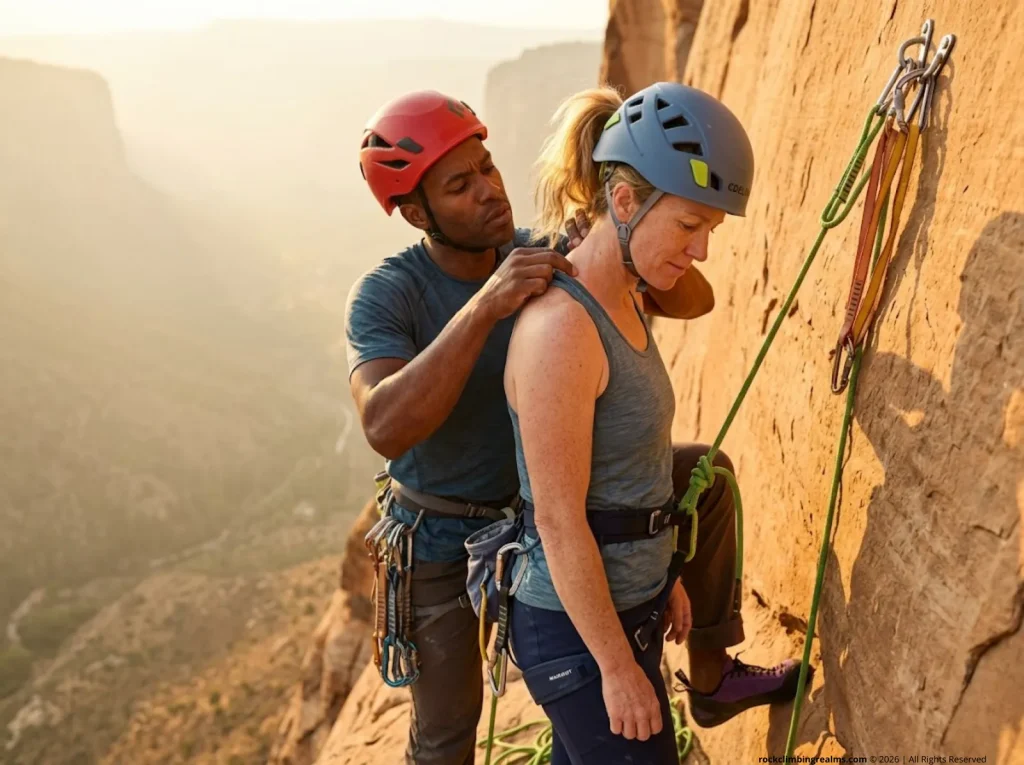
The practical move: run a quick buddy check at every anchor. Hairline, neck, waistband. These are the spots ticks migrate toward because they’re warm and dark. If you find one, removal takes priority over sending.
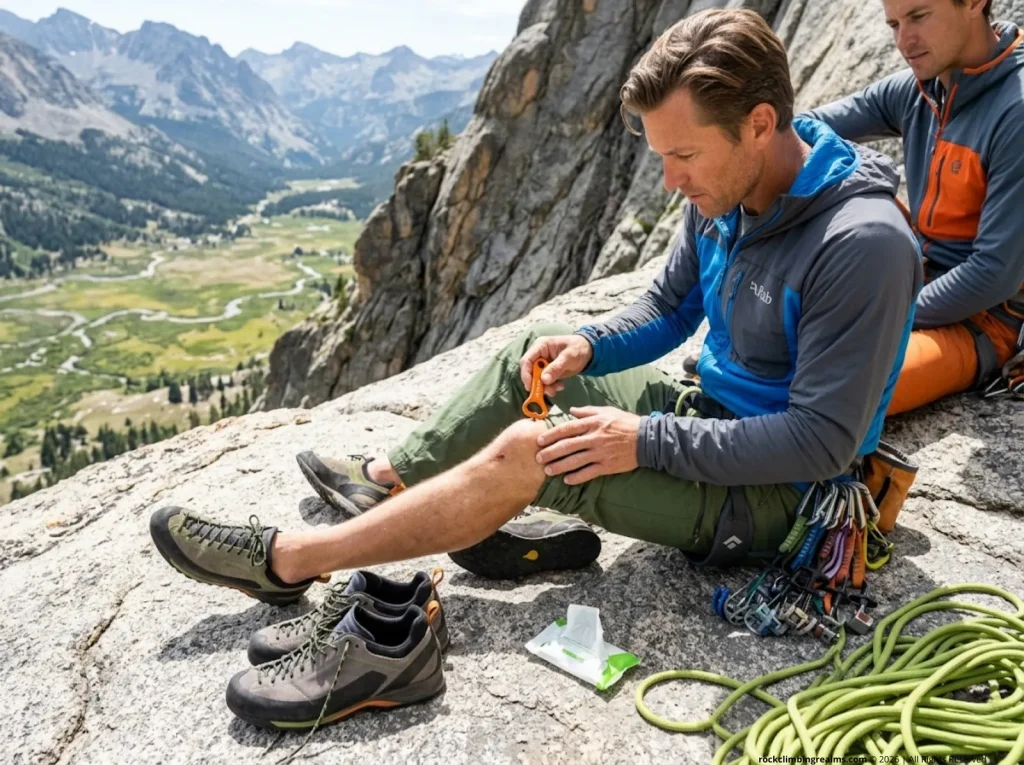
Carry a tick removal tool clipped to a gear loop, not buried in a first aid kit at the base. A Tick Key weighs 3 grams. There’s no excuse not to have one within arm’s reach.
The Gear-Safe Repellent Matrix: DEET, Picaridin, and Permethrin
This is where climbers get stuck. You know you need repellent, but you’ve also heard DEET melts climbing ropes. The truth is more complicated than that, and it matters.
DEET: The Counter-Intuitive Truth About Concentration
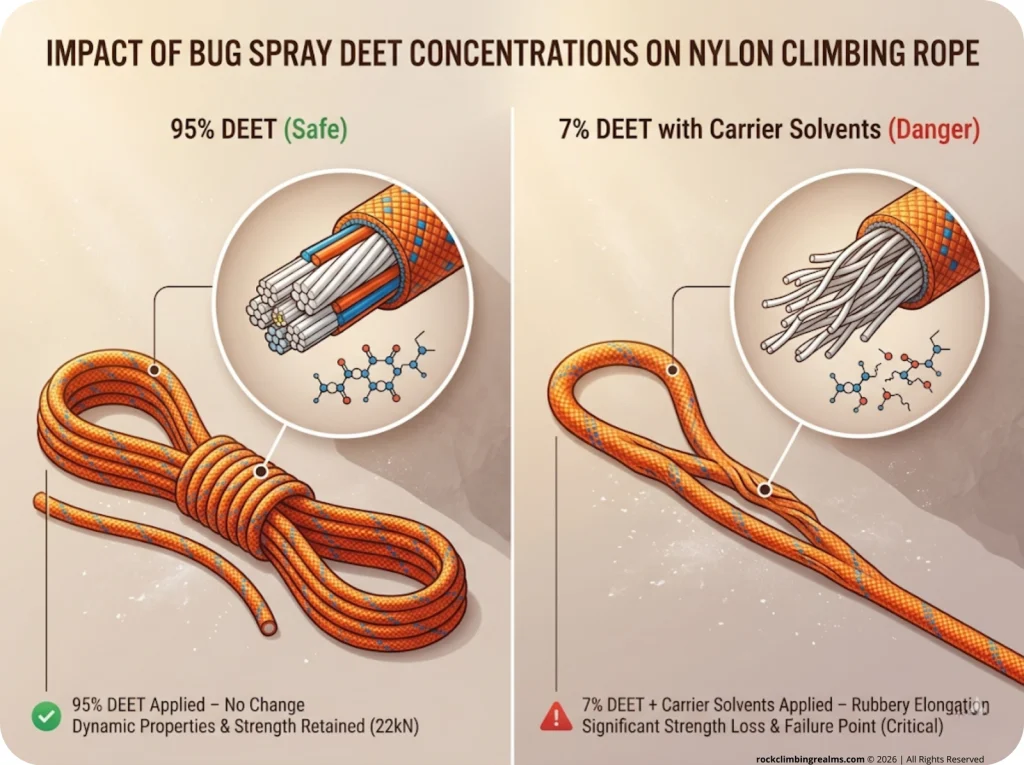
Yes, DEET is a solvent. It will wreck watch faces, ruin sunglasses lenses, and destroy hardshell membranes. That’s where the panic comes from. But here’s where it gets weird: testing shows that the core material in most dynamic climbing ropes stays at full strength even after soaking in DEET for 24 hours. Polyester webbing is completely unaffected too. The fibers themselves are tougher than you think.
The real danger? Low-concentration sprays. A major study found that a 7% DEET formula caused the nylon fibers to stretch much more than normal, making them stretchy and rubbery. But 95% DEET did not produce this effect. The problem isn’t the DEET itself. It’s the oil-based carrier solvents blended into low-concentration products.
So here’s the counter-intuitive takeaway: if you absolutely must use a DEET product, a high-concentration formula (95-100%) is actually safer for nylon gear than a diluted one. But there’s a better option.
Picaridin: The Modern Climber’s Choice
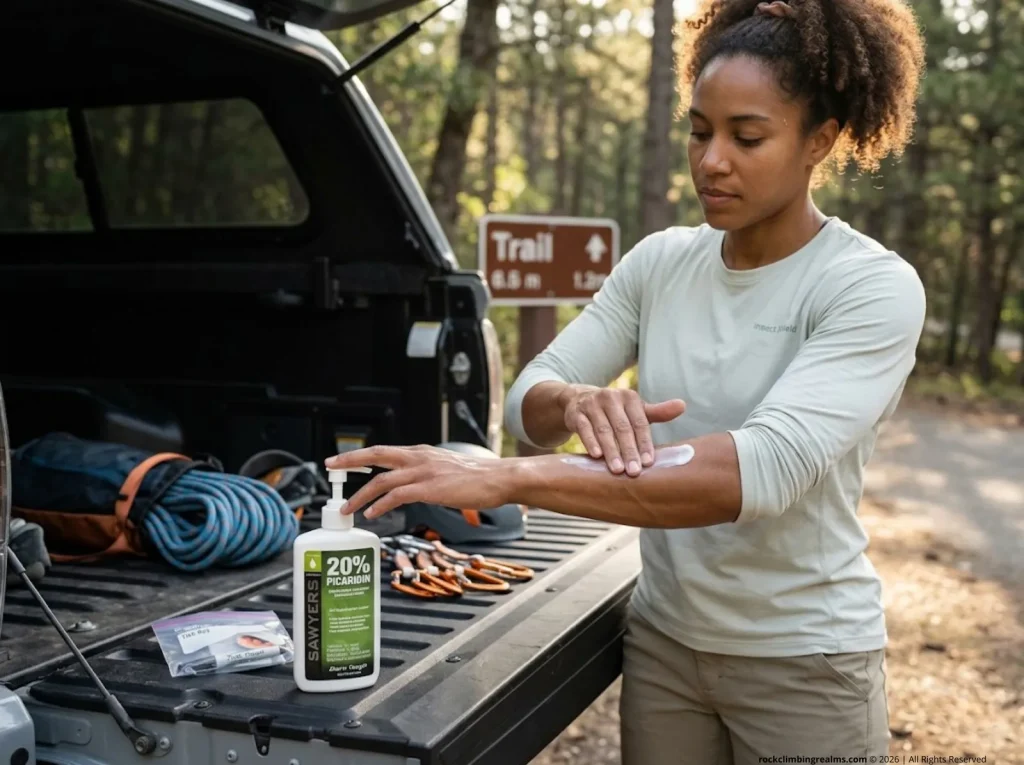
Picaridin is the answer to the DEET problem. Developed by Bayer in the 1980s from a synthetic compound found in pepper plants, it provides 8 to 14 hours of tick repellent protection at 20% concentration. That’s comparable to DEET without any of the gear drama.
Nylon and polyester slings treated with 20% Picaridin show no loss in strength whatsoever. No residue. No melting. No greasy film on your gear. Sawyer Products makes a 20% Picaridin lotion that most guides I know keep in their crag bag permanently.
For climbers specifically, Picaridin solves the entire problem. It protects your skin from tick bites and protects your gear from chemical damage. There’s no trade-off.
If you want to understand more about what chemicals are safe for nylon rope fibers, the same rules apply whether you’re dealing with cleaning agents or insect repellents.
Permethrin: Treating Your Gear (Not Your Skin)
Permethrin is an insecticide, not a repellent. It goes on clothing and gear, never on skin. It works by frying a tick’s nervous system on contact, eliminating anything that touches the treated fabric.
For climbing, the play is simple: treat your approach shoes, socks, gaiters, and the outside of your rope bag. Do not treat the rope itself. The exterior of the rope bag is the piece of gear that sits in the dirt all day, and a single application of Sawyer Permethrin (0.5%) lasts through roughly six washes.
Tests show slings treated with Permethrin suffer absolutely zero degradation. The compound is actually the safest chemical you can put near climbing soft goods.
Insect Shield offers factory-treated clothing that maintains efficacy through 70 washes. If you climb through tick country regularly, investing in pre-treated approach pants and base layers is worth it.
Pro tip: Pre-treat a dedicated pair of approach shoes with Permethrin at the start of tick season. Let them dry for 24 hours. Then just grab them and go — no spraying, no waiting, no thinking about it. The treatment lasts weeks.
Tick Removal in the Field: Tools, Technique, and What Never to Do
You found one. It’s attached. Now what.
Tweezers vs. Tick Keys: The Nymph Problem
The CDC recommends fine-tipped tweezers. That’s good advice for adult ticks in a bathroom with good light and steady hands. It’s less practical at a hanging belay with chalked fingers and fading daylight.
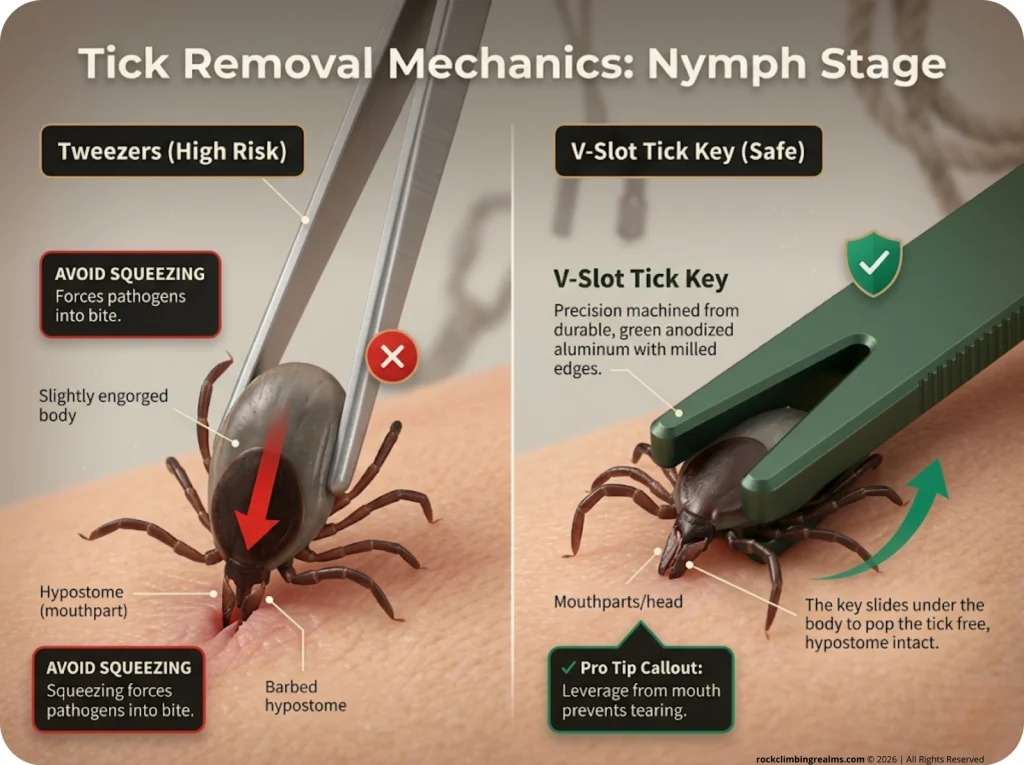
More importantly, tweezers have a serious limitation with nymphs — the immature ticks that are responsible for most disease transmissions. A comparative study found that tweezers failed to remove 95% of Lone Star nymphs without damaging them, frequently leaving mouthparts embedded in the skin. The problem is mechanical: tweezers squeeze the abdomen, which risks pushing gut contents back into the bite site.
V-slot tools like the Tick Key and Pro-Tick Remedy work differently. They slide under the tick and lever it away from the mouthparts without compressing it. For nymph-stage ticks — the ones you really need to worry about — they outperform tweezers significantly.
A Tick Key weighs almost nothing and clips to a carabiner or gear loop. You can operate it one-handed. In a climbing environment where both accessibility and precision matter, it’s the better tool.
The Twist vs. Pull Debate
Traditional advice says never twist a tick. That’s correct — if you’re using tweezers. A twist with tweezers decapitates the tick and leaves the hypostome (the barbed feeding tube) stuck in your skin.
But dedicated rotation tools like the Tick Twister tell a different story. Research from Duscher et al. (2012) found that twisting devices removed ticks with mouthparts intact more reliably than straight-pull tools, and required less force to do it. The gentle counterclockwise rotation dislodges the barbed hypostome without tearing tissue.
The short version: pull with tweezers, twist with a dedicated twist tool. Don’t mix the methods.
Prohibited Methods: Why “Old School” Hacks Are Dangerous
Applying a hot match. Smearing petroleum jelly. Dabbing nail polish. Dousing with rubbing alcohol. These don’t make the tick “back out.” They stress the tick, which increases salivation and regurgitation into the bite site. Every one of these old-school methods raises the odds of disease transmission.
After removal, clean the bite with antiseptic. Drop the tick into a ziplock bag with a damp paper towel, write the date on it, and save it. If symptoms develop in the coming weeks, having the tick identified saves time in diagnosis.
If you carry a proper crag-ready med kit, tick removal tools should be in it alongside bandages and tape. Building wilderness first aid protocols for the vertical environment starts with having the right gear within reach.
The Transmission Clock: Which Diseases and How Fast
Not all tick-borne diseases are created equal. The window between attachment and infection varies wildly, and understanding the timeline changes how urgently you act.
Lyme Disease: The 36-Hour Window
Lyme disease requires the tick to be attached for 36 to 48 hours before the Borrelia burgdorferi bacteria migrate from the tick’s gut to its salivary glands. A tick removed within 24 hours poses very low Lyme risk. The classic bull’s-eye rash appears 3 to 30 days post-bite, but not every case produces it. Joint pain, fatigue, and neurological symptoms can develop weeks later without treatment.
For climbers, this is actually reassuring. A tick found during your post-climb shower is almost certainly within the safe window if you climbed that day.
Powassan Virus and RMSF: The “No Safe Window” Threats
Powassan virus doesn’t wait. It can transmit in as little as 15 minutes and causes severe neurological damage — fever, confusion, seizures. Rocky Mountain Spotted Fever typically takes 10 to 20 hours, but documented cases show transmission in under one hour.
Then there’s Alpha-gal Syndrome. Triggered by a single Lone Star Tick bite, it creates a delayed allergic reaction to mammalian meat — beef, pork, lamb. For a climbing athlete whose recovery depends on high-protein meals, developing Alpha-gal Syndrome can be catastrophic. This isn’t a theoretical risk. The CDC has recorded a sharp rise in cases, and the Lone Star Tick’s range is expanding northward.
The bottom line: don’t rely on the “24-hour myth.” Some pathogens don’t give you that kind of time. Speed of removal always matters.
If you don’t already have a dedicated tick tool in your first aid setup, consider building a climber’s first aid kit with tick tools that covers the specific risks of crag environments.

Building Your Crag-Season Tick Protocol
Prevention works in layers. Think of it like a three-zone defense: before the trip, at the crag, and after you’re back at the car.
Pre-Trip: Treat Your Gear Layer
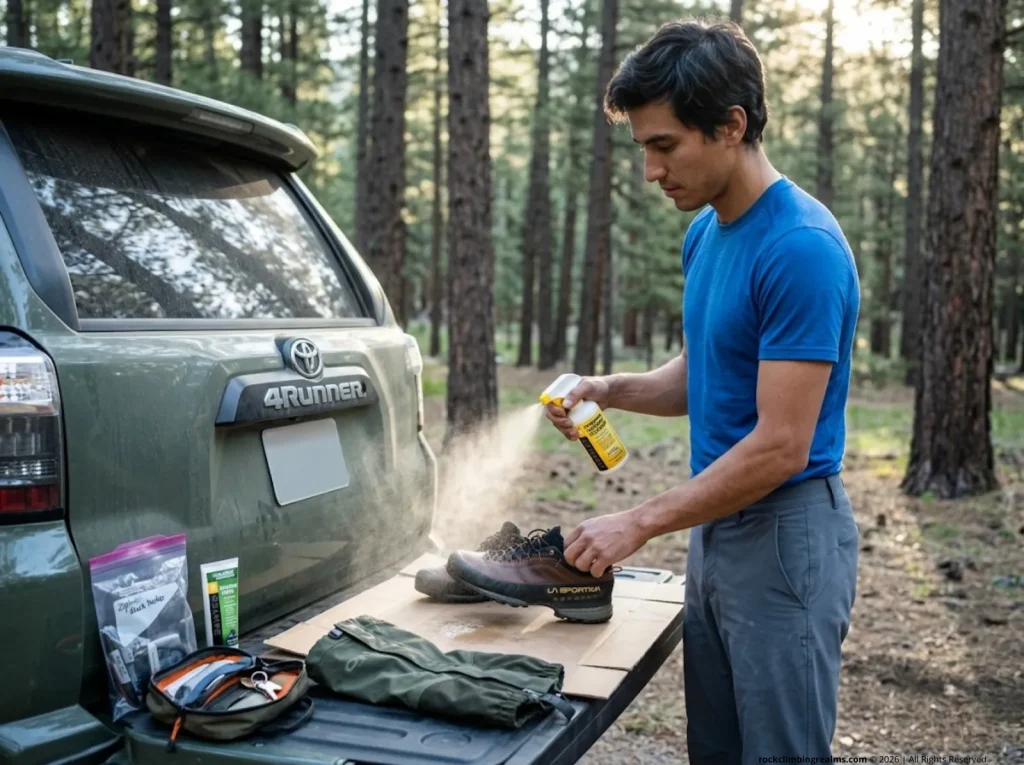
Forty-eight hours before the trip, spray your approach shoes, socks, and gaiters with Permethrin. Let them dry completely — 24 hours minimum. Treat the outside of your rope bag. Do not treat the rope.
Pack your crag bag first aid kit: Tick Key clipped to a gear loop, Picaridin lotion, antiseptic wipes, a ziplock bag, and a Sharpie for logging the date if you find an attached tick.
Wear light-colored clothing on the approach so you can spot dark ticks crawling upward before they reach skin.
If you’re building your packing list for the season, it’s worth adding tick gear to your climbing trip packing list alongside your draws and chalk.
At the Crag: The Three-Zone Defense
Zone 1 — The Approach. Socks tucked into pants. Permethrin-treated lower body. Picaridin on exposed skin applied at the trailhead. Walk the center of the trail. Avoid pushing through overhanging brush with bare arms.
Zone 2 — The Belay Base. Keep gear on flat rocks, not leaf litter. Spread a treated ground cloth under your belay stance. Minimize gear splay. The less contact your stuff has with the forest floor, the fewer ticks hitch a ride.
Zone 3 — The Route. Inter-pitch buddy checks at every belay station. Hairline, neck, waistband. If a tick is found mid-pitch, removal takes priority over sending.
Post-Climb: The 2-Hour Shower Rule
Showering within two hours of leaving the crag washes off unattached ticks and gives you a chance to run a thorough inspection. Hit the spots ticks love: armpits, groin, behind ears, scalp, behind the knees, and along the waistband line.
Pro tip: Throw your climbing clothes directly into the dryer on HIGH for 10 minutes before washing. Heat eliminates ticks. Water does not. A tick can survive a full wash cycle and crawl out when you fold your laundry.
Check the car seat, the rope bag, and the crash pad. Ticks survive for days in vehicles, and a single hitchhiker can turn your car into a transport system.
Field Hacks: The Climbing Tape Trick and Bouldering Mat Hitchhikers
These are tricks that come from the climbing community, not from medical textbooks. They work.
The Climbing Tape Blot for Seed Ticks
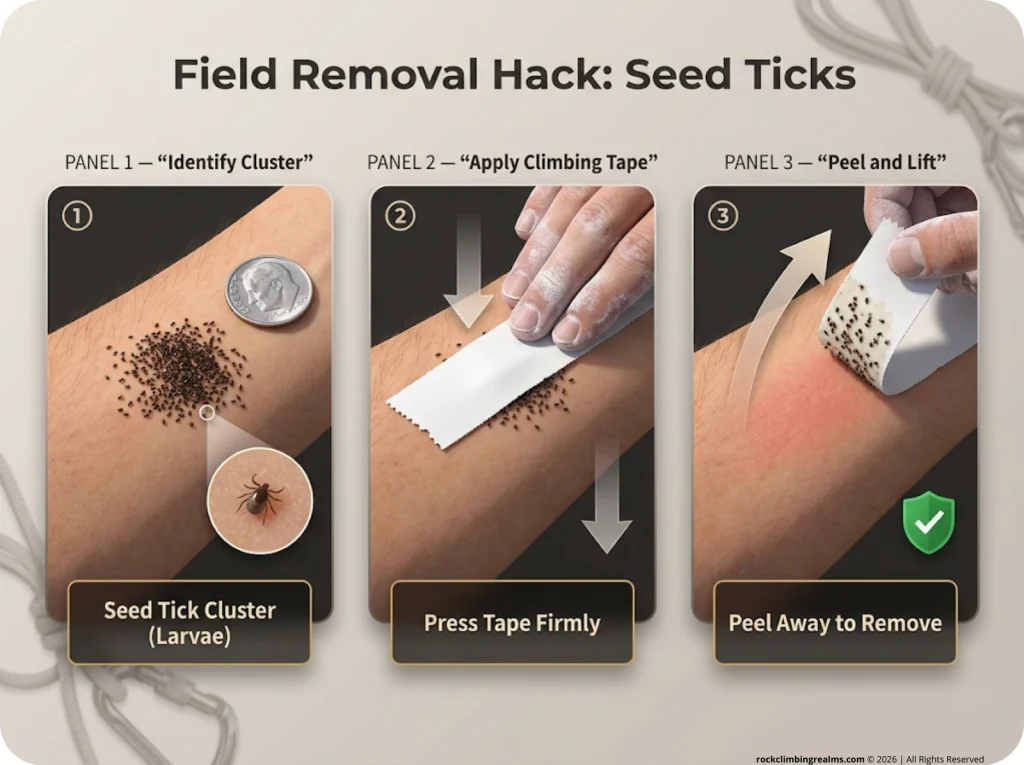
Seed ticks are larval ticks that appear in clusters of hundreds — tiny, poppy-seed-sized dots that swarm when you brush against their nest on the approach. Tweezers are useless here. You can’t remove them one by one.
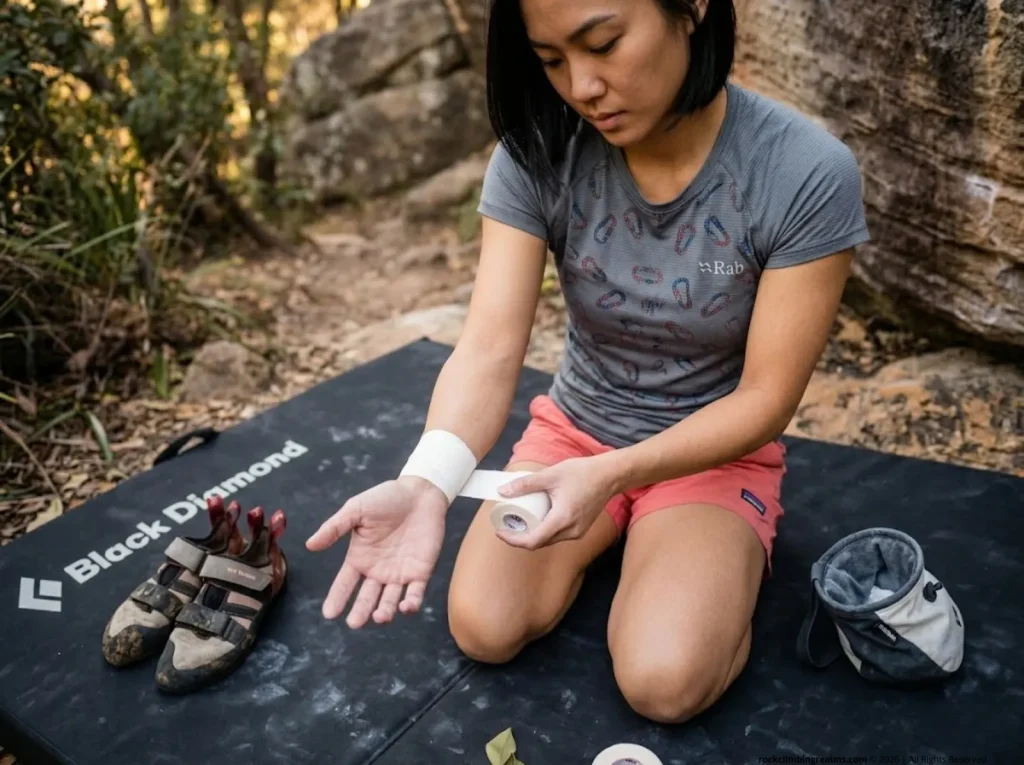
The climbing tape hack: press a strip of white zinc-oxide climbing tape firmly against the affected skin and peel it away. The adhesive lifts unattached or lightly attached larvae without crushing them. It’s the same tape you use for the many uses of climbing tape beyond finger protection, and in this scenario, it’s the best tool available.
Repeat with fresh strips until the skin is clear. It’s not elegant, but it works when nothing else does.
Bouldering Mat Management: Stop Bringing Ticks Home
Bouldering mats collect ticks like a sponge collects water. Every time you lay a pad in the grass or against brush at the base of a boulder, you’re giving ticks direct access to a surface that gets folded (trapping them inside), carried to your car, and brought into your home.
Before folding your mat, shake it out and brush the surface. Inspect the foam edges and carrying straps. If you were sessioning in a known tick-heavy area, leave the mat open in direct sunlight for 30 minutes before packing it away.
Pro tip: Keep a lint roller in your car. Run it over your clothing and the mat surface as a quick sweep before loading gear. It catches crawlers you’d never see by eye.
Conclusion
Three things to remember. First: Picaridin on skin, Permethrin on gear, and DEET only if it’s high-concentration. This protocol protects your health and your equipment. Second: carry a Tick Key on your harness, not buried in the car. Some pathogens transmit in minutes, not hours. Third: treat the belay base like a bivy site. Ground cloth, clean staging, buddy checks at every anchor.
Next time you pack for the crag, add 3 grams to your rack. A Tick Key. It might be the most important piece of protection you clip all season.
FAQ
Does bug spray ruin climbing ropes?
No — the active ingredient doesn’t cause significant damage. Nylon 6 maintains full breaking strength after exposure to both DEET and Picaridin. The danger comes from the oil-based carrier solvents in low-concentration DEET sprays, which can increase rope elongation by 25% and make fibers rubbery. Use Picaridin to eliminate all risk, or stick to 95%+ DEET if that’s what you have.
Can ticks bite through leggings?
Yes. Most thin athletic leggings and base layers do not stop tick bites. Ticks can insert their hypostome through stretchy, lightweight fabrics. Treat leggings with Permethrin for a chemical barrier, or tuck them into treated socks for a physical one.
How do you remove a tick without tweezers in the field?
Use a Tick Key or V-slot tool — they weigh under 5 grams and clip to a carabiner. Slide the widest part of the slot over the tick, then apply steady forward pressure to lever it out from the mouthparts. For seed tick clusters, blot with climbing tape.
What is the best tick repellent for climbers specifically?
Picaridin at 20% concentration is the top choice. It provides 8 to 14 hours of protection, has zero effect on nylon, polyester, or gear coatings, and leaves no greasy residue. Pair it with Permethrin-treated approach shoes and socks for a two-layer defense.
Can you get Alpha-gal Syndrome from a single tick bite?
Yes. A single Lone Star Tick bite can trigger the immune response that leads to Alpha-gal Syndrome — a delayed allergy to red meat including beef, pork, and lamb. For climbers who rely on high-protein diets for recovery and performance, this makes aggressive tick prevention a nutritional priority, not just a health one.
Safety Notice: Rock climbing and mountaineering are inherently high-risk
activities that can involve physical trauma or fatal incidents. The information on Rock Climbing Realms is for
educational and informational purposes only. Techniques and advice presented here are not a substitute
for professional, hands-on instruction. Conditions and risks vary by location. Always seek guidance
from a qualified instructor before attempting new techniques. By using this website, you agree that you
are solely responsible for your own safety. Any reliance you place on this information is strictly
at your own risk, and you assume all liability for your actions. Rock Climbing Realms and its authors
will not be held liable for any harm, damage, or loss sustained in connection with the use of this information.
Affiliate Disclosure: We are a participant in the Amazon Services LLC Associates Program, an
affiliate advertising program designed to provide a means for us to earn advertising fees by advertising and linking
to Amazon.com. As an Amazon Associate, we earn from qualifying purchases. We are also an official affiliate partner
of Black Diamond Equipment via the AvantLink network. If you click on a Black Diamond affiliate link and make a
purchase, we may earn a commission at no additional cost to you. We also participate in other affiliate programs.
Additional terms are found in the terms of service.