
In this article
The hold felt glassy under my fingertips—polished smooth as a doorknob by ten thousand ascents. I’d been climbing this moderate at my home crag for years, but last Tuesday I noticed something I’d never registered before: the crimp rail that used to bite into my skin now slides like wet soap. The rock hadn’t changed. We changed it. And the evidence runs deeper than a polished hold.
Rock climbing damage impacts the vertical ecosystem through three overlapping mechanisms—mechanical friction, chemical weathering from chalk, and biological disruption from route cleaning. After two decades of tying in at crags around the country, I’ve seen the slow degradation firsthand, and it’s time we translate the heavy peer-reviewed geology into the language of working climbers. Here is exactly how to understand the geomorphology you touch every day, and a field-tested crag stewardship protocol that protects both the cliff and your right to climb it.
Synthesized from over 50 academic field studies across PMC, Frontiers, MDPI, and ResearchGate, combined with hard data from the American Alpine Club, UIAA, and NPS land management assessments, this is what the science actually shows about our impact on the wall.
⚡ Quick Answer: Yes, climbing physically and chemically damages rock surfaces. Mechanical friction from rubber shoes rips away the natural weathering crust and causes granular disintegration. Chemical alteration happens when climbing chalk (magnesium carbonate) permanently spikes rock surface pH, creating crusts that choke out micro-organisms. Biological disruption peaks during route development, taking out slow-growing lichens and disrupting nesting birds that rely on untouched cliff biology.
The Mechanical Footprint — How Rubber Friction Reshapes Rock
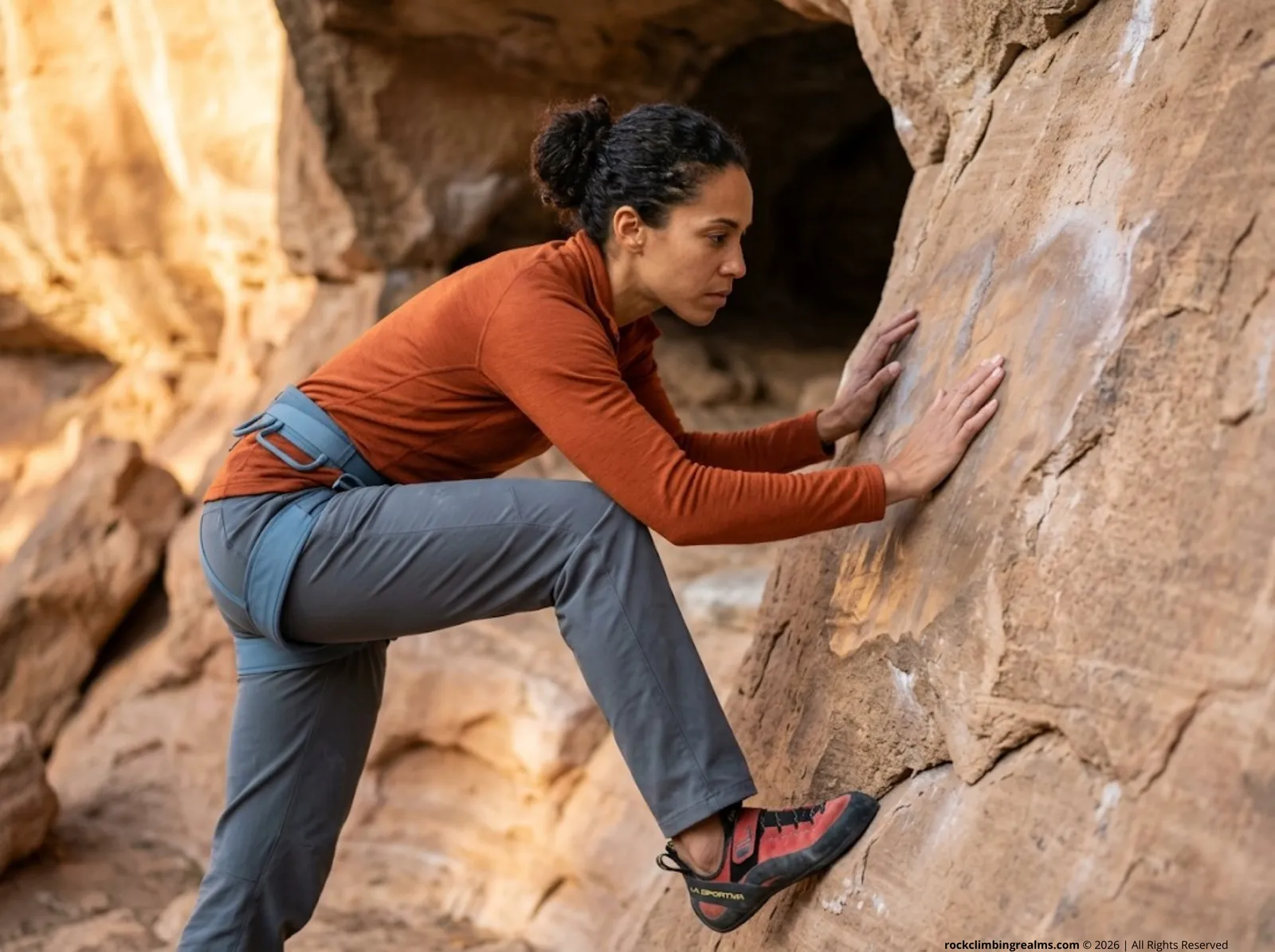
Does the physical act of climbing measurably alter rock surfaces? The short answer is yes. Every time you throw a heel hook or smear on a blank face, your weight grinds against the stone. This mechanical vs chemical impact debate often starts with what we can see: polished holds and flaking edges.
The friction needed to keep you on the wall accelerates cliff micro-relief erosion. We are effectively sanding down the very resource we rely on.
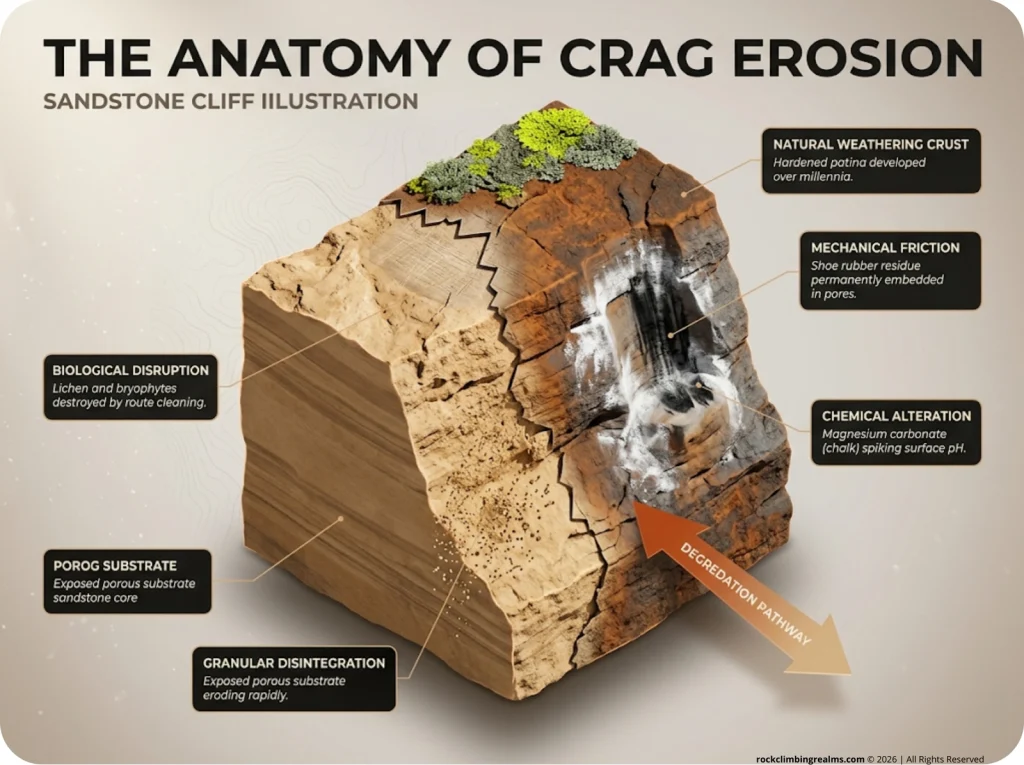
Granular Disintegration and Weathering Crust Removal
Climbing accelerates natural weathering through the forced exfoliation of the weathering crust. This is the hardened outer layer of stone that forms over millennia. Studies on Carpathian Tors show that climbing rips this protective crust away, exposing the softer rock beneath to the elements.
This process is called granular disintegration. It hits porous rocks the hardest. When you load a tiny edge with your full weight, the pressure fractures the microscopic bonds holding the grains together. The most significant crag degradation actually occurs during the first few ascents of a new route, not the 500th repeat. Once that initial crust is gone, the rock wears down at a steady, brutal pace.
Climbed surfaces show measurably smoother micro-relief profiles compared to adjacent unclimbed faces. You can feel this difference with a bare hand.
Pro-Tip: If you can feel the difference in texture between a climbed and unclimbed face with your palm, the weathering crust is already compromised. Treat that rock gently, and avoid pulling hard on small, friable edges when the rock is damp.
The Tribology of Climbing Shoes — Shoe Rubber as Geological Agent
Your shoe rubber friction doesn’t just strip the rock; it leaves a permanent deposit behind. Using Raman spectroscopy, researchers have identified microplastic abrasions and rubber additives deeply embedded in rock footholds. We are leaving a permanent synthetic residue baked into the crag.
Softer rubber molds deeper into porous stone, causing higher rates of friction and faster exfoliation. The “Goldilocks range” for minimizing rock polishing while maintaining grip sits around Shore A 78-85 for harder stone. This contradicts the classic climbing myth that softer rubber is always objectively better. The interaction between your shoe and the wall relies heavily on surface roughness and how much material transfers under pressure.
You can actually see the black streaks on high-traffic footholds if you look closely. That’s not just dirt—it’s your shoe rubber permanently embedded into the geology.
Rock Type Vulnerability — Limestone vs. Granite vs. Sandstone
Not all crags take a beating the same way. Understanding rock type vulnerability is critical for making smart decisions at the cliff. Limestone vs granite vs sandstone react completely differently to the exact same climbing load.
Granite offers high friction from its dense crystalline structure but remains susceptible to large-scale exfoliation under extreme thermal stress. Limestone, a friable marine sediment, is prone to breakage and chemical dissolution under acidic conditions. Sandstone is the most vulnerable overall. Because of its high porosity (sometimes 2-8%) and low cohesiveness, sandstone tors suffer aggressive crust disturbance.
Because each rock type responds uniquely, our stewardship must be geology-specific. This aligns directly with the official NPS rock outcrop management protocols at Shenandoah, which adapt regulations based on specific geological weaknesses. For an in-depth look at how to tackle different rock, read up on understanding how rock geology shapes climbing protection and style.
The Chemical Footprint — What Climbing Chalk Actually Does to Rock
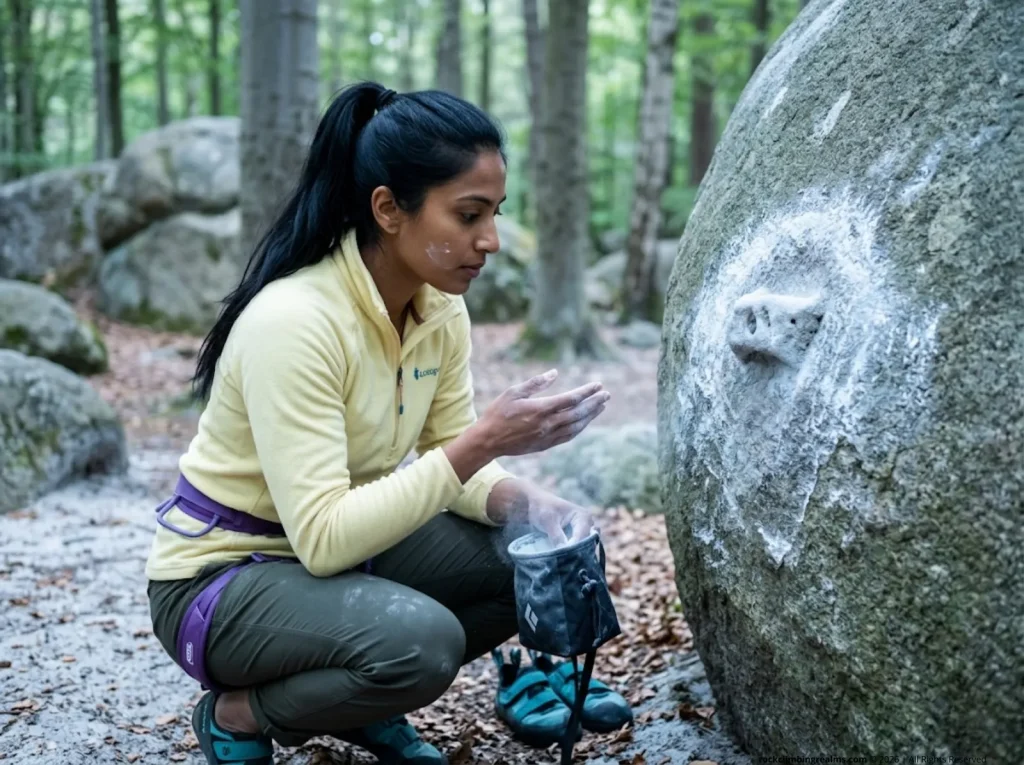
Many climbers ask: does climbing chalk ruin rocks? While it doesn’t melt the stone like acid, it drastically changes the localized environment. Chalk isn’t just a visual nuisance. It alters the surface chemistry of the rock long after the rain washes the white marks away.
Our reliance on climbing chalk triggers chemical reactions that essentially poison the micro-ecosystem living on the cliff.
Magnesium Carbonate’s Invisible Persistence
Chalk, chemically known as magnesium carbonate, persists in significant concentrations on 65% of rock surfaces even when no visible white residue remains. The visible white tick mark is only the tip of the iceberg.
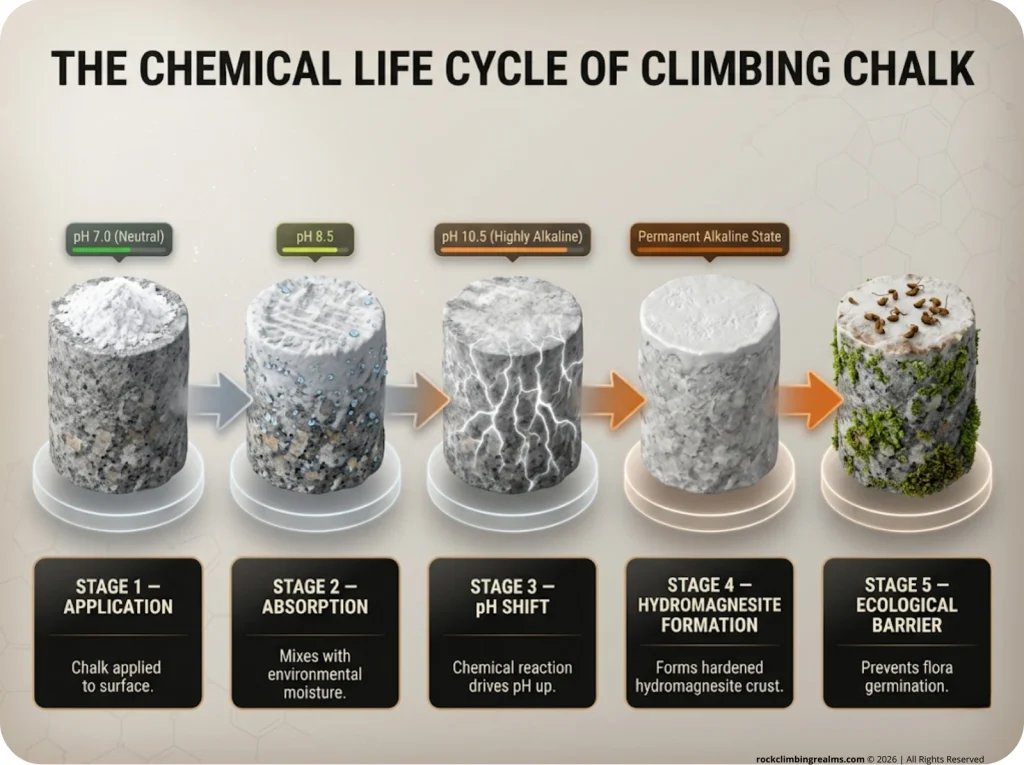
This invisible chalk creates a highly alkaline environment. Over time, magnesium carbonate reacts with environmental moisture to form magnesium carbonate hydroxide (hydromagnesite)—a hard, crusty mineral deposit that permanently alters the rock substrate. This chemical residue migrates into the rock’s porous micro-relief, reducing the microbial activity essential for rock-dwelling organisms.
Just because you can’t see the chalk on the rock doesn’t mean it isn’t there. The chemical signature outlasts the visual one by years.
The pH Shift and What It Means for Cliff Ecology
The natural pH of most rock faces sits around a neutral 7. Magnesium carbonate causes extreme pH shifts, dragging the surface alkalinity up to 10.5. This chemical barrier shuts down the germination of specialized cliff plant species.
Ferns and mosses are particularly vulnerable to this. Their early life stages, called protonema, lack the protective regulatory mechanisms found in mature plants. They absorb the concentrated magnesium salts directly from the rock surface and die. These hydromagnesite crusts also severely interfere with photosynthesis and soil respiration at the cliff bases.
Even heavily “cleared” and brushed routes suffer from this. The chemical legacy is locked tight within the substrate.
Biodegradable Chalk and the Cleaning Protocol Debate
Manufacturers have introduced biodegradable chalk formulations that claim to wash away faster. While they reduce the visual residue, their long-term effect on pH alteration is still under intense scientific debate. Until the data proves otherwise, we have to assume all chalk impacts the rock.
The most effective current mitigation is a dedicated cleanup routine. Brushing holds aggressively with the right tool makes a huge difference. Vinegar-based washing solutions can help neutralize pH on limestone, but they regularly accelerate dissolution on softer rocks, causing more harm than good.
Seawater-derived chalk is emerging as a lower-footprint alternative, but physical removal remains your best tool. Check out these proper chalk cleanup techniques that minimize chemical residue to build a better crag routine.
The Biological Footprint — Flora, Fauna, and the Vertical Ecosystem
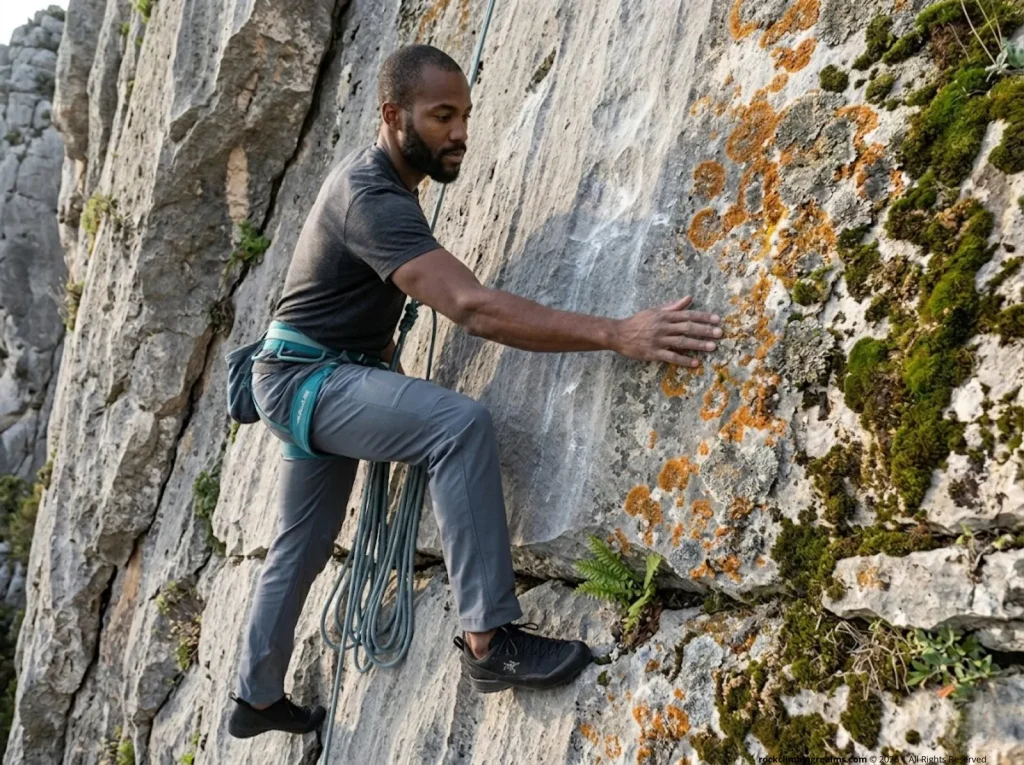
Climbers love the outdoors, but we often forget that a sheer cliff face is a thriving biome. The vertical ecosystem is filled with slow-growing, highly specialized life. Our presence forces a heavy biological toll.
From endemic cliff vegetation to the birds circling above, our impact tears through the cliff’s delicate food web.
Lichen, Bryophytes, and the Cost of Route Cleaning
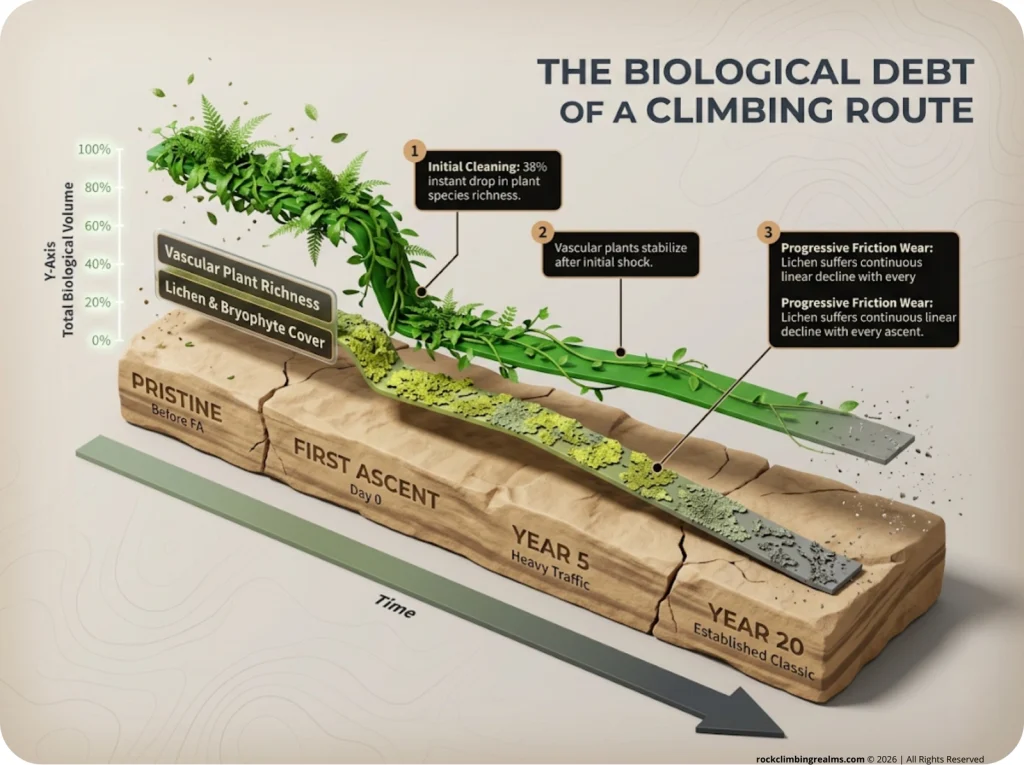
Developing a new route involves heavy scrubbing and pry-bar work. This vegetation removal destroys the biological foundation of the cliff. Route development reduces plant species richness by 38% and overall abundance by an alarming 60%.
The damage reaches far past the actual bolted line. Taking a wire brush to bryophytes and lichens strips away centuries of slow growth. While vascular plants sometimes stabilize after the initial route development shock, lichen communities suffer a continuous, linear decline with every subsequent ascent. By the 500th ascent, total lichen cover drops by nearly 10%.
I’ve watched crags go from green and textured to bare and polished in a single decade. Untouched cliff biodiversity heavily outpaces the life found on adjacent climbed surfaces.
Route Development vs. Repeat Ascents — Where the Real Damage Happens
The single most destructive event in the entire history of a cliff is the opening of a new route. This is where the route development impact massively overshadows the repeat ascent impact.
Subsequent clean ascents primarily degrade lichen, but they don’t cause the massive drop in vascular plant life that initial cleaning does. This distinction is vital for land management. Restricting new route establishment has a disproportionately larger conservation impact than simply limiting traffic volume on established lines.
Delicate areas like the Mediterranean biome and highly regulated Natural Protected Areas face the highest risk. The species living there simply cannot regenerate fast enough to survive aggressive route cleaning.
Nesting Birds and Seasonal Closures
Wildlife relies heavily on undisturbed cliffs. Griffon vultures, Peregrine Falcons, and Golden Eagles use high, inaccessible rock faces as prime nesting habitat. When we climb near them, we act as a direct threat.
Climbing during nesting season causes severe corticosterone stress responses in nesting birds. This stress consistently leads to nest abandonment and chick mortality. Seasonal closures—often called viewshed management—are currently the most effective conservation tool we have, and the data proves they work.
Understanding the science behind the closures completely changes how you view them. It turns compliance from frustration into respect for the area. Brush up on the science behind raptor nesting closures before complaining about restricted access.
This is why Access Fund stewardship and conservation programs fight so hard to maintain strong relationships with wildlife managers.
When Fire Meets Fixed Gear — The Compounding Wildfire Effect
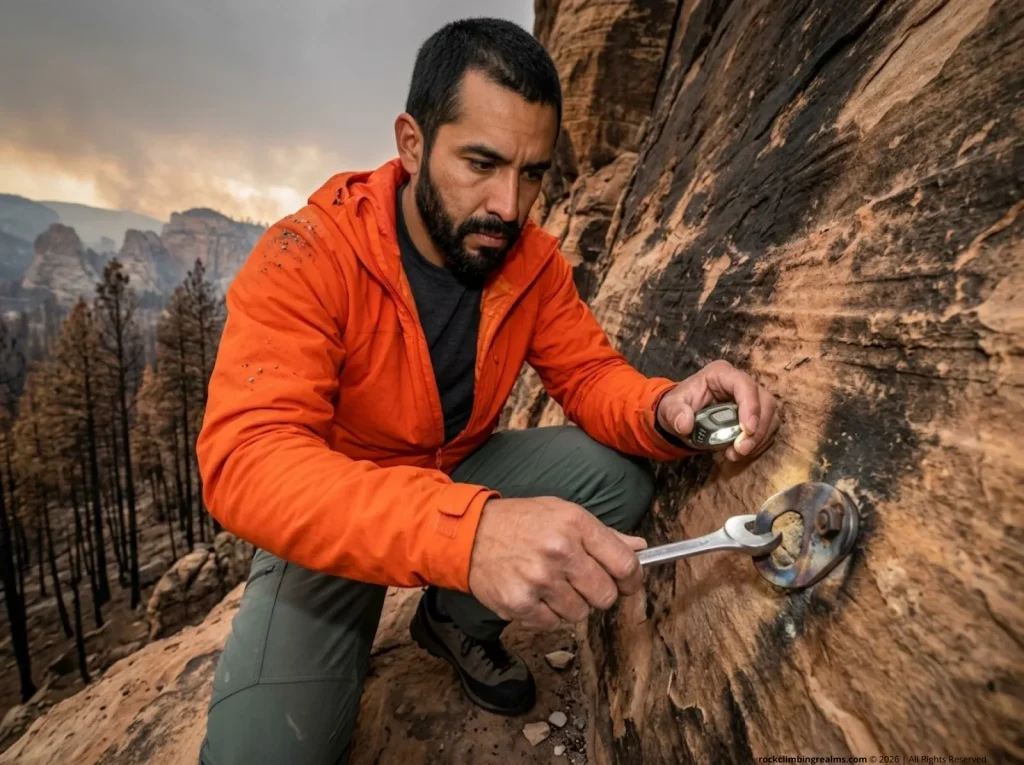
As wildfires rip through public lands with increasing frequency, they introduce a completely new threat to bolted climbing routes. It’s not just the trees that burn; the rock itself takes severe damage from the extreme heat.
This wildfire compounding effect compromises the hidden structural integrity of the routes you trust your life to.
Thermal Degradation of Rock and Hardware
Extreme heat causes violent mineralogical changes. Quartz cracks, minerals calcine, and the surface of the rock begins spalling and flaking off in massive sheets. Scientists measure a severe drop in Ultrasonic Pulse Velocity within the affected rock, meaning the internal structural integrity is ruined.
This thermal stress directly compromises the expansion bolts holding you to the wall. It melts the industrial adhesive used in glue-in anchors and wrecks the temper of stainless steel hangers. A recently burned route might look perfectly fine from the ground, but it possesses fundamentally different load-bearing properties.
Never trust a bolt at a recently burned crag without professional inspection. The rock right around the hardware may have failed at the molecular level.
Post-Fire Assessment and Route Rehabilitation
The American West is burning hotter and faster every year, and climbing access is feeling the pain. Right now, there is no standardized post-fire inspection protocol for climbing anchors, leaving a massive safety void for the community.
Local access groups need strict Limits of Acceptable Change (LAC) frameworks to evaluate when a burned cliff is safe for traffic again. Volunteer organizations are trying to step up and test bolts, but they severely lack official institutional backing or funding.
This issue ties directly into the ongoing debate over fixed anchor policy in American wilderness. If land managers ban the replacement of damaged bolts, entire crags wiped out by fire will permanently close due to unsafe hardware.
The Dedicated Climber’s Stewardship Protocol
We have to become conservation-focused practitioners. You can’t rely on gym rules when you step outside. It’s up to us to adopt an eco-friendly climbing mindset that actually protects the stone.
Here is the practical crag stewardship protocol every serious outdoor climber needs to follow. Small changes in your routine will drastically minimize your footprint.
Brushing Protocol — Friction Without Further Damage
How you clean your holds matters just as much as how much chalk you apply. A stiff nylon brush used aggressively on soft stone will strip the rock faster than a shoe ever could.
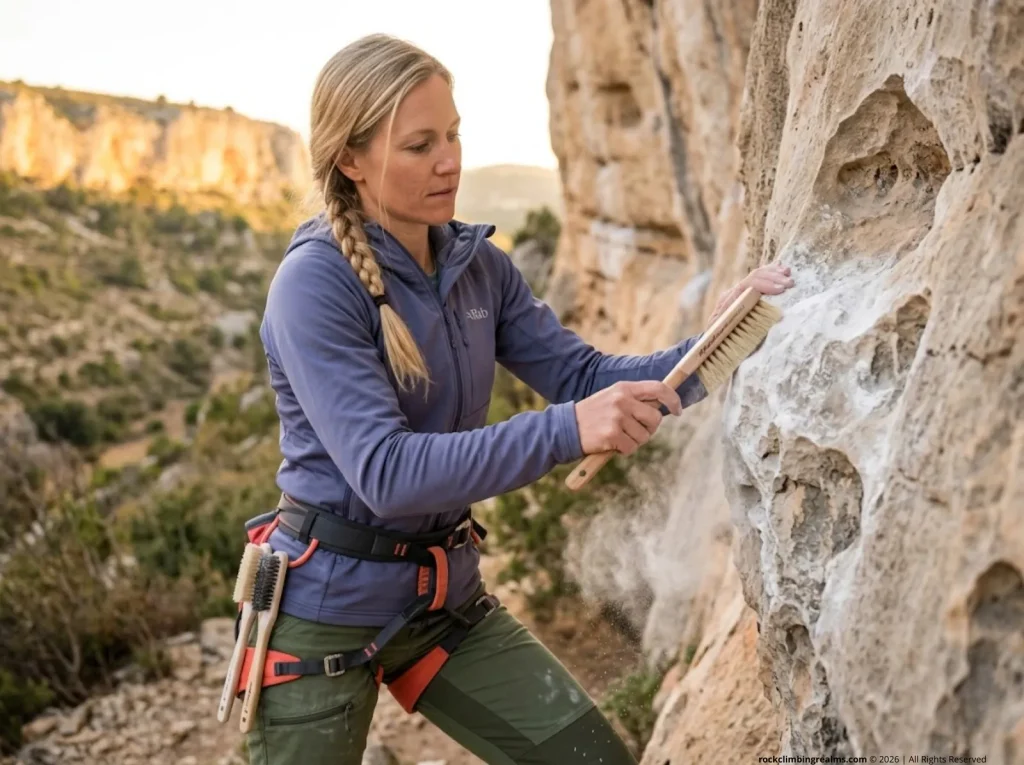
Ditch the plastic and switch to a boar’s hair brush. Natural bristles lift chalk without sanding away the stone. Use deliberate, downward strokes to push the chalk off the hold. Circular scrubbing motions just grind the magnesium deeper into the rock’s porous surface. On sandstone, use light pressure and let the tips of the bristles do the actual work. On harder granite, you can apply a bit more elbow grease.
Make it a habit to clean your chalk after every single session. Don’t leave it for the next party. Learn the right way to brush climbing holds and make it part of your teardown process.
Pro-Tip: Make brushing the last thing you do before lowering off a route. Give the crux holds a quick swipe on your way down. It preserves the rock and leaves the route clean for the next climber.
The “Leave Less Trace” Approach for Route Developers
Since the first ascent causes the most severe biological destruction, the route developer carries the heaviest ethical burden. Before taking a drill or a wire brush to a virgin cliff, evaluate the true value of the line.
Does this route add something vital to the area, or are you just squeezing a mediocre line between two classics? Keep your cleaning restricted to the absolute necessary climbing path—leave the adjacent rock untouched to preserve the surrounding biology. Time your development outside of spring germination and critical nesting windows.
If you are stripping ancient lichen off a cliff face, ask yourself honestly: is this route good enough that a thousand climbers will hike out here for it? If the answer is no, let the lichen live. A healthy dose of outdoor recreation ethics goes a long way.
Base Area Stewardship and Talus Management
Our impact doesn’t start when we leave the ground. Base trampling completely destroys the vegetation at the talus base before anyone even ties in.
Drop your pads and gear strategically to avoid crushing plant life. In desert environments, stepping off the trail destroys delicate soil crusts that take upwards of 250 years to regenerate. Once the crust shatters, severe erosion follows immediately after the next heavy rain. Keep your bags tight to the wall or on durable rock surfaces. Read the guide to protecting cryptobiotic soil in climbing areas to understand exactly what to watch out for on the approach.
Concentrate your group’s movement around designated belay platforms. Supporting local climbing organizations that fund staging-area infrastructure and retaining walls is the best way to fight this horizontal impact.
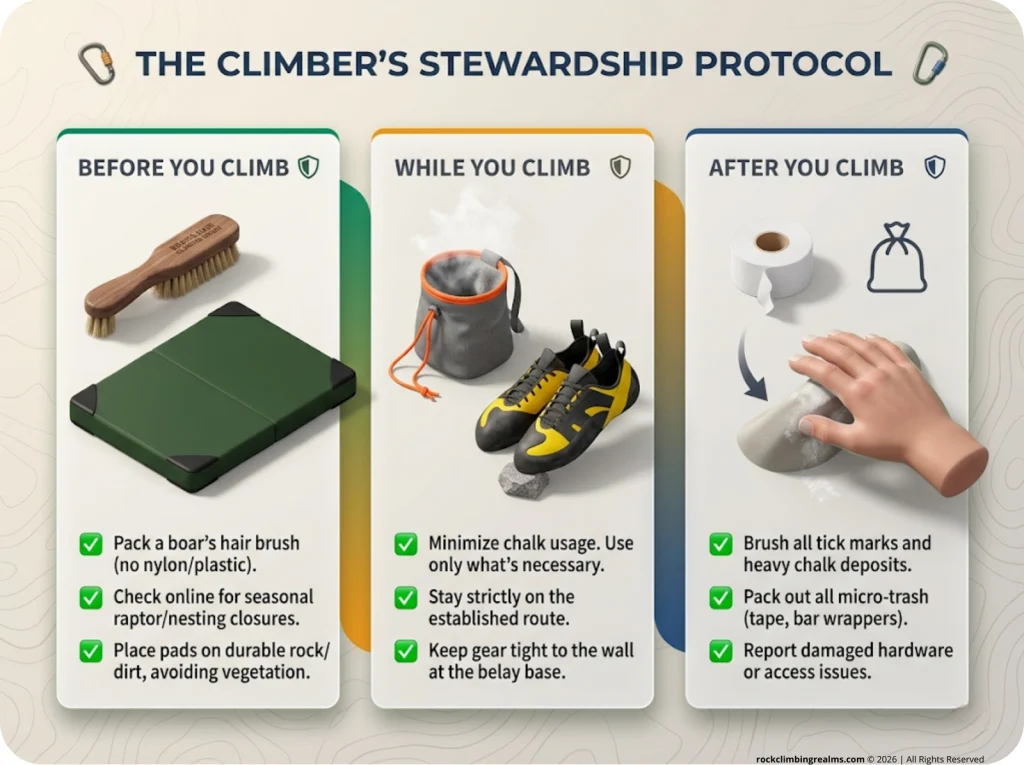
Pro-Tip: Treat the belay area like a high-alpine campsite. Keep your gear explosive radius small. The tighter you pack your ropes and bags at the base, the less footprint you leave on the fragile ecosystem surrounding the wall.
Conclusion
Climbing changes the rock through mechanical friction, aggressive chemical deposits, and long-term biological disruption—and the science proves it. Opening a new route causes more raw geological damage than a lifetime of repeat ascents, putting massive responsibility on the shoulders of local developers. But simple field protocols, like proper brushing, minimizing chalk, protecting base areas, and respecting closures, dramatically reduce your personal footprint.
You do not need to quit climbing to protect the rock. You just need to understand the environment you are grabbing and adjust your tactics. Brush your chalk off the wall. Respect the bird closures. Audit your crag’s health the exact same way you audit your safety gear. The rock gave you your best days outside—your job is to ensure it survives to give someone else theirs. Now go send something.
FAQ
Does rock climbing damage the rock?
Yes, it absolutely does. Climbing accelerates natural weathering through mechanical friction from shoe rubber, chemical alteration from chalk spiking the rock’s pH, and biological disruption via the removal of lichens and mosses. Soft stones like sandstone take the heaviest beating, while dense granite resists mechanical wear much better.
Does climbing chalk ruin rocks?
Chalk doesn’t break the rock structurally, but it permanently alters the surface chemistry. Magnesium carbonate persists on the surface long after it disappears from sight, creating a highly alkaline crust that inhibits the growth of native cliff-dwelling ferns and mosses.
How does climbing affect the environment?
Beyond the actual rock face, our presence severely impacts the surrounding cliff ecosystems through base trampling, nesting bird disruption, and the introduction of synthetic microplastics from our shoe rubber. The total environmental footprint combines our vertical climbs with the heavy horizontal impact of intense foot traffic at the cliff base.
Is new route development worse than climbing existing routes?
Significantly worse, especially for cliff biology. Hard data proves that new route development slashes plant species richness by 38% and overall abundance by 60% in a single event. Subsequent ascents mostly affect slow-growing lichen communities through gradual wear. Protecting pristine cliffs from development completely has a much larger conservation impact than managing traffic on already established routes.
What is the most effective way to reduce your climbing impact?
Clean your chalk with a soft boar’s hair brush after every single session. Respect established seasonal raptor closures, stick to designated trails to protect cryptobiotic soil, and actively support your local climbing coalition.
Safety Notice: Rock climbing and mountaineering are inherently high-risk
activities that can involve physical trauma or fatal incidents. The information on Rock Climbing Realms is for
educational and informational purposes only. Techniques and advice presented here are not a substitute
for professional, hands-on instruction. Conditions and risks vary by location. Always seek guidance
from a qualified instructor before attempting new techniques. By using this website, you agree that you
are solely responsible for your own safety. Any reliance you place on this information is strictly
at your own risk, and you assume all liability for your actions. Rock Climbing Realms and its authors
will not be held liable for any harm, damage, or loss sustained in connection with the use of this information.
Affiliate Disclosure: We are a participant in the Amazon Services LLC Associates Program, an
affiliate advertising program designed to provide a means for us to earn advertising fees by advertising and linking
to Amazon.com. As an Amazon Associate, we earn from qualifying purchases. We are also an official affiliate partner
of Black Diamond Equipment via the AvantLink network. If you click on a Black Diamond affiliate link and make a
purchase, we may earn a commission at no additional cost to you. We also participate in other affiliate programs.
Additional terms are found in the terms of service.