
In this article
I’ll never forget the time we showed up to the local crag ready to work, fifty volunteers strong, only to realize nobody had arranged for a dumpster. We ended up with two dozen heavy bags of garbage sitting in my driveway leaking mystery fluids for a week. After organizing cleanups alongside the local access fund chapters and learning the hard way, I know that successful outdoor stewardship is less about picking up garbage and more about mastering the ugly logistics. If you want to organize a climbing cleanup day that actually leaves the rock better than you found it, this guide covers the entire process from pulling permits to scrubbing chalk correctly.
⚡ Quick Answer: You organize a climbing cleanup day by assessing the crag’s specific trash type, securing permission from your local land manager to avoid liability, and setting up a rock-solid waste disposal plan. Most people skip the initial permit phase and end up risking access instead of protecting it, but the process is straightforward if you plan ahead.
Planning Your Climbing Cleanup Day: The Initial Crag Assessment
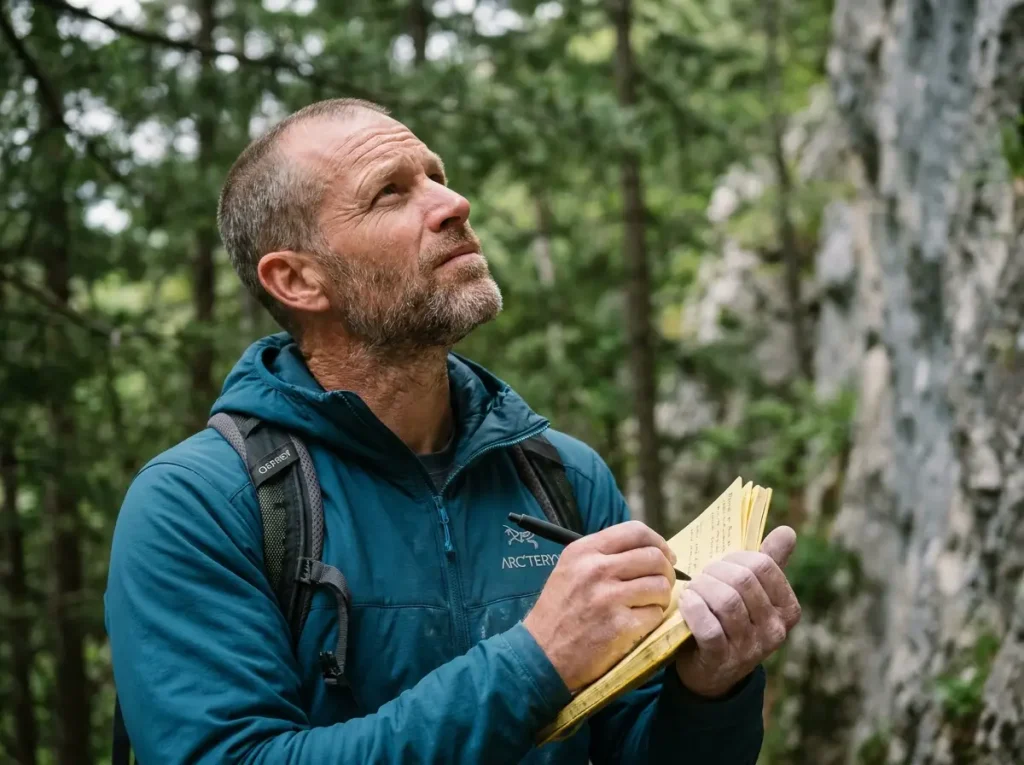
You wouldn’t jump on a hard onsight without trying to read the holds from the ground first. Assessing a crag before a cleanup requires the exact same mindset—you have to map out the problem before throwing your energy at it. A major mistake new organizers make is blindly going into an area without identifying the specific type of trash burying the crag. You need to walk the approach trail a few weeks beforehand to see what you are actually dealing with in terms of climbing litter. Check if the base is covered in small bits of trash or if you need a winch to pull an abandoned tire out of a ravine. If you skip this assessment phase, you end up handing people heavy-duty trail shovels when what they really needed was a soft brush and an old chalk bag for tiny scraps. Taking the time for assessing local crag logistics ensures you show up with the right cleanup supplies on the big day.
Reading the Trash Signature
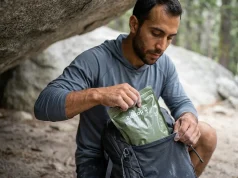
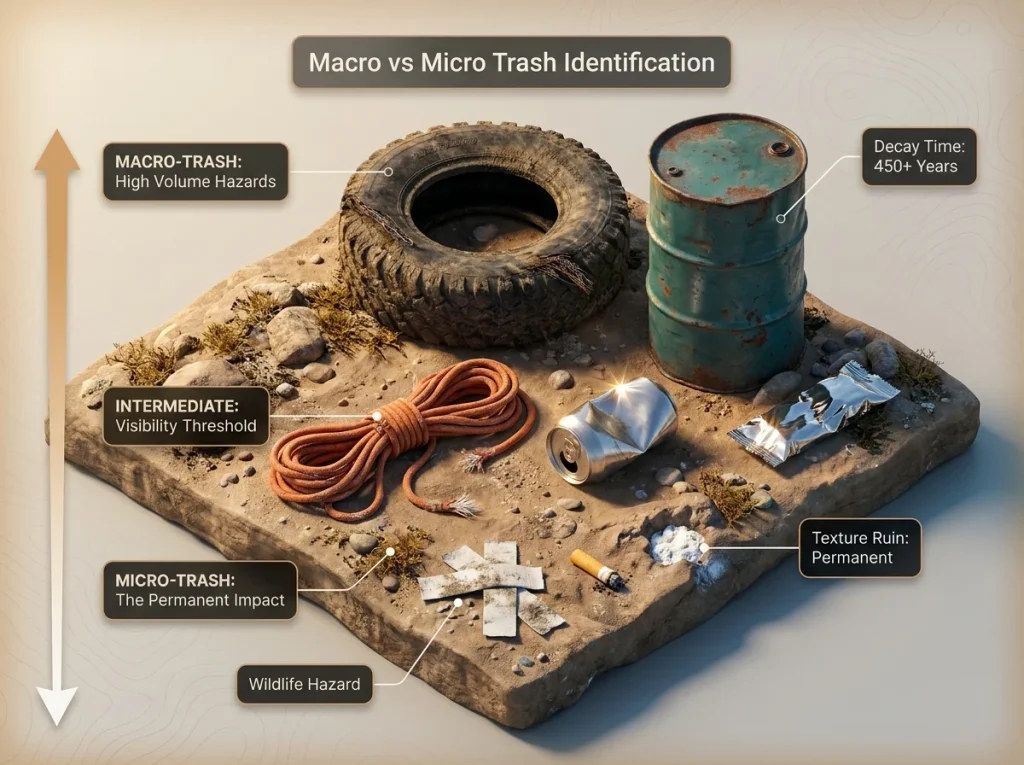
Every climbing area develops a specific trash signature over the years. You need to categorize whether you are dealing with macro-trash or micro-trash. High-traffic boulder fields usually suffer from the small stuff, like athletic tape scraps, torn bar wrappers, and cigarette butts stuffed into the dirt. Embracing leave no trace principles means hunting down this invisible garbage. You know an area is seeing too much use when you start finding finger tape stuffed into the actual climbing cracks. Beginners think it blows away. Veterans know it hardens into a weird plaster that ruins the jam. A crag assessor checking a route needs to look inside the crack, not just at the ground level. These tiny items are nearly invisible to a casual hiker, so your volunteers need explicit instructions on what to hunt for when they arrive. Give everyone a dedicated micro-trash kit or tell them to clip an empty chalk bag to their harness to use exclusively as a garbage pouch while scrambling over talus.
Evaluating Rock and Trail Health
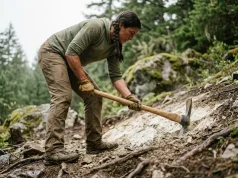
You also need to look up from the ground. Check the actual stone for caked chalk on the holds, heavy tick marks, and ugly graffiti tags. Observe where belayers stand at the crag base to see if the soil is washing away entirely. Sometimes the biggest problem isn’t litter at all, but severe erosion that exposes sensitive tree roots and destabilizes the landing zones. Practice strong low impact ethics by identifying exactly where the damage originates. If you notice deep gullies forming on the approach path, you might need to shift focus from picking up cans to building basic stone retaining walls. In these cases, it pays to document access issues before they escalate so you can get ahead of a potential permanent closure.
Pro-Tip: Walk the approach trail right after a heavy rainstorm. Watching exactly where the water flows down the path will tell you instantly where the trail needs reinforcement and where the mud is washing away.
Making sure your volunteers have the right tools to fix trail erosion and bag up micro-trash is only half the battle. If your crew doesn’t actually have a place to park their vehicles when they arrive, the morning will turn into chaos before the work even begins.
The Problem with Parking Capacity
Before you recruit a single volunteer, you need to calculate the parking capacity at the trailhead. If you invite fifty eager climbers and the dirt lot only holds five cars, people will inevitably park tight on the shoulder or block the fire road. That angers the local ranger and sets a chaotic tone for the day. You want to walk the access road, count the spots, and figure out how many people the area can actually hold without destroying the local peace. If the math on your volunteers crushes the actual parking spots, you have to get creative with your volunteer logistics. A massive bottleneck at the trailhead practically guarantees someone will get a parking ticket, which ruins the vibe fast.
With the parking logistics mapped out and your assessment complete, you might think you are ready to start picking up garbage. Before you invite your crew to the woods, you have to secure formal permission to be there.
The Bureaucracy of Stewardship: Navigating Permissions
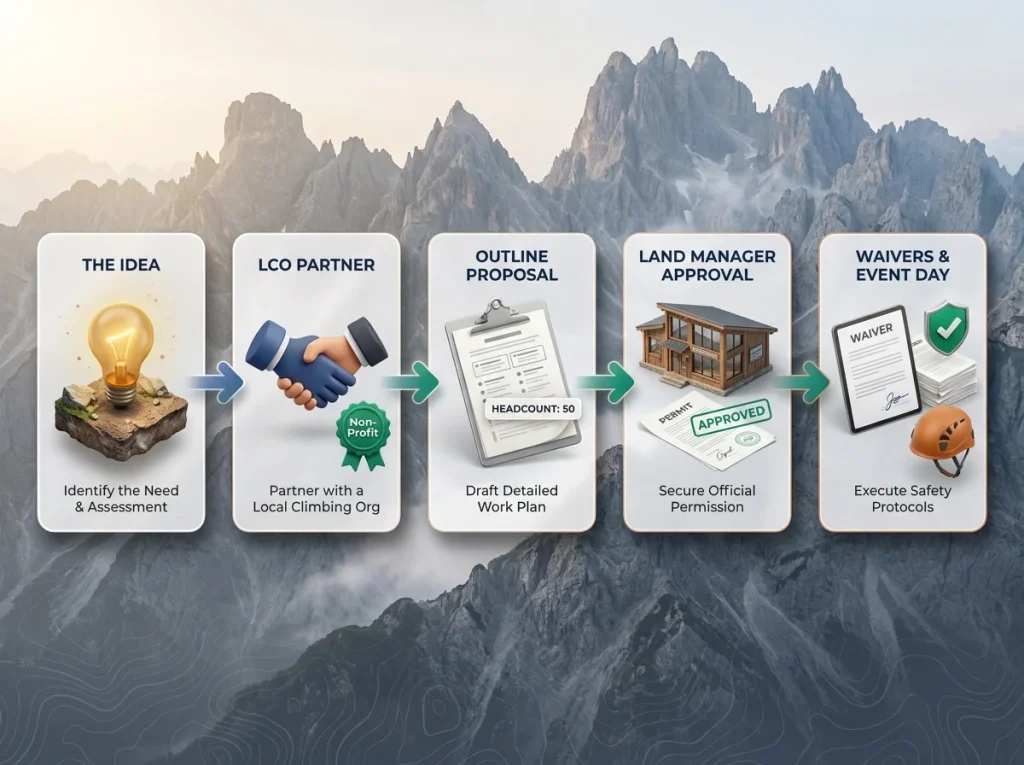
I get it, dealing with paperwork is the last thing you want to do when you just want to clean up the woods. We are guests on the land, and land managers are generally thrilled to have free help. They just want a responsible point of contact instead of a disorganized mob showing up with pitchforks. Reminding your crew of this reality saves you headaches and preserves future climbing access. Never assume you can just arrive with thirty people and a stack of trash bags. The people who run the land need a clear, concise proposal of your timeline, your headcount, and the exact tasks you plan to accomplish. If you operate totally rogue, you assume massive legal liability. If someone twists an ankle hauling a bag of wet dirt out of a ravine, the medical bills could quickly become your fault.
The Proposal Package for Land Managers
Draft a short, one-page document listing your exact start and stop times, the specific tasks you plan to tackle, and the maximum number of people attending. Send this directly to the ranger district, the BLM office, or the forest service contact for the area. You must be extremely clear about what you are NOT doing. State plainly that your crew is picking up trash and scrubbing chalk, not chopping down trees, not rerouting trails, and definitely not replacing structural safety bolts. When the land manager sees you have clear boundaries on the work, they are far more likely to stamp an approval on the project. Giving them a formal document showing you’ve thought about where the trash goes instantly shifts you from a potential problem to a reliable asset.
Bypassing Legal Hurdles with LCOs
The Federal Fair Pay Act and liability concerns present massive hurdles for random individuals trying to organize a crag cleanup on government land. If you do this alone, the bureaucracy will likely shut you down. This is exactly where Local Climbing Organizations step in to save the day. Partnering under an LCO gives you an official, non-profit umbrella. They know who to call, and they turn a complicated legal headache into a simple email introduction. These groups already have working relationships with the authorities and existing insurance policies that cover volunteer labor.
Once the LCO takes the lead on the paperwork, you still have an obligation to protect yourself and your volunteers on the ground.
Why Standard Waivers Actually Protect You
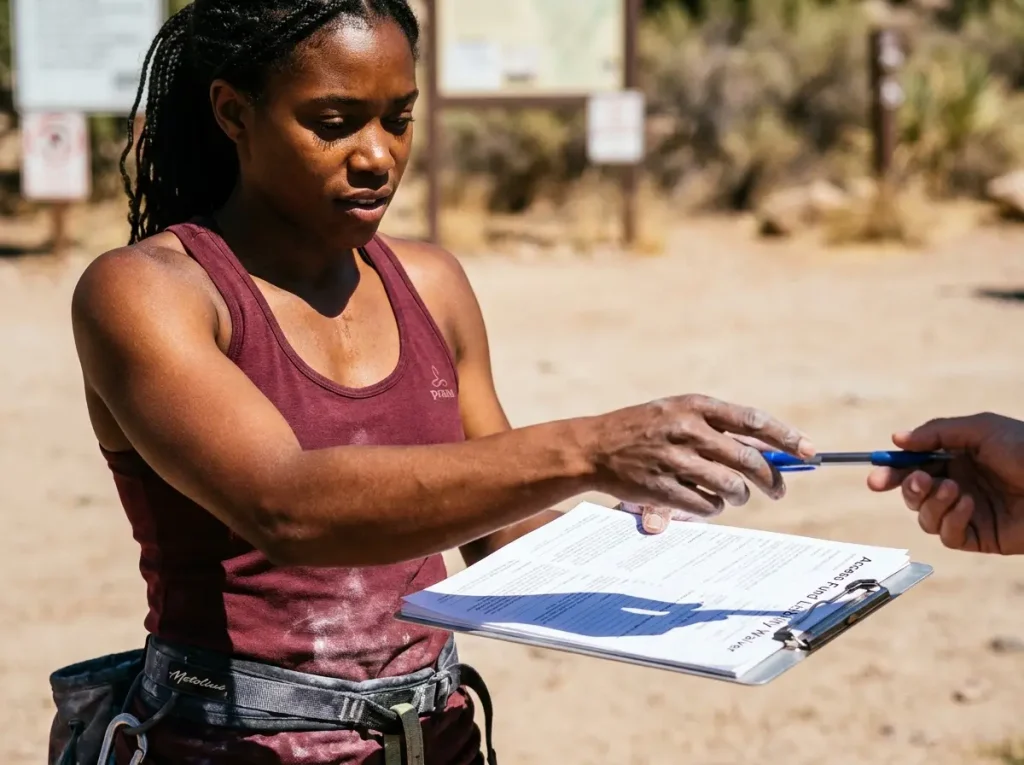
Always ensure every single person signs waivers on the morning of the event at the staging area. Frame it as basic standard protocol so no one feels singled out. Many landowners live in constant fear of being sued if someone trips on a root, which is why managing liability with standard volunteer waivers is mandatory for knowing the liability laws for private land before you step foot on the property. Use waivers that include specific climbing-related risks. A standard city park waiver does not cover hazards like falling rock or the negligence of belayers. You need a document that acknowledges the wild environment you are walking into. Once those papers are signed and safely tucked away in your truck, everyone can relax and get to work.
Now that you’re legally cleared and the waivers are signed, you’ve got to figure out where all the trash is actually going when the bags get heavy.
The Truck Factor: How to Actually Get Rid of the Trash
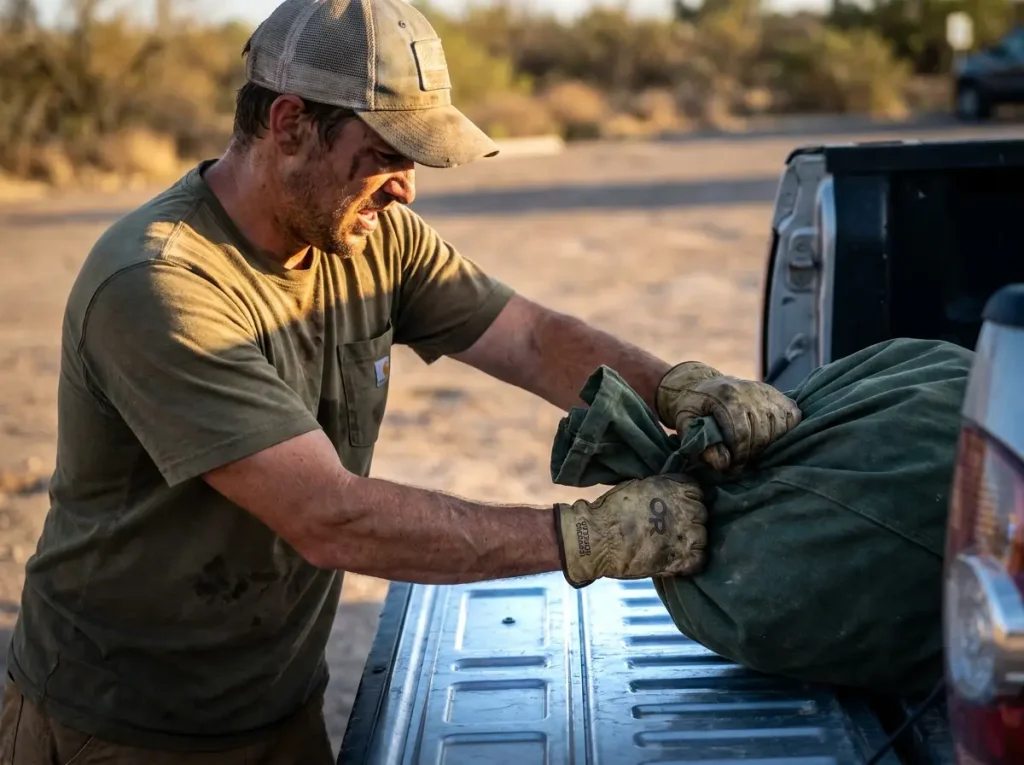
Picking up the trash feels amazing, but realizing you have nowhere to put it is an absolute nightmare. I learned the hard way that you cannot just pile forty bags of dirt and broken glass next to a standard park trash can and hope the city picks it up on Tuesday. Park and trailhead trash cans are built entirely for lightweight picnic waste—think empty chip bags and paper plates. They are absolutely not rated for industrial amounts of heavy cleanup debris. If you jam the cans full, the local wildlife will scatter it overnight, making the problem worse. You have to establish a strict waste disposal plan weeks in advance. During our first massive event, the three volunteers who showed up driving empty flatbed trucks were the undisputed heroes of the day. Working out the truck logistics early prevents the entire operation from failing.
The Haul-It-Yourself Plan
If you don’t have a giant communal dumpster, you have to recruit specific volunteers who own pickup trucks to haul away two or three bags each. This is what we call a micro-cleanup hauling strategy. You spread the load across the community. Make sure these drivers know exactly where the local county dump is located and their operating weekend hours. You also need to confirm if the climbing organization will reimburse their tipping fees at the gate. Dumping a truckload of heavy waste usually costs money, and it isn’t fair to stick your volunteers with the bill after they just spent four hours sweating in the dirt for free.
Government Partnerships for Dumpsters
The cleaner option is to ask the city or the land manager if they can stage a rolling metal dumpster near the trailhead. Sometimes the local municipality will drop one off for free if they know you are running a sanctioned volunteer event. You must confirm the exact drop-off and pick-up dates for the dumpster so you aren’t leaving an overflowing metal box cooking in the woods for two weeks. Securing these bins usually requires reserving community event dumpsters a month in advance, so make the phone call early.
If you have your dumpsters reserved, you have to prioritize what goes in them first by mapping out the heaviest sections of the crag.
Identifying Trash Hot Spots
Walk the area early to map out ravines, gullies, or boulder caves where trash has accumulated naturally for decades. These dark corners are where you will find the heavy, awful stuff. Heavy items like rusted tires, old engine blocks, or discarded washing machines require winches, heavy ropes, or strong teams communicating clearly. People get weirdly competitive about finding the biggest trash. You have to tell them explicitly not to try and excavate rusted car bumpers out of the mud by themselves. I watched a guy spend two hours digging a shopping cart out of a creek bed, completely ignoring the fact that twenty people needed help dragging a tarp elsewhere. Mark these hot spots on a crude map and send a dedicated heavy-lifting crew to handle them.
Pro-Tip: Make sure someone brings a heavy-duty gardening wheelbarrow if the approach trail allows it. Rolling a rusted engine block out is a thousand times safer than trying to carry it like a stretcher.
Once the heavy lifting is mapped out and clear, you can turn your attention to the rock surface itself and clean the holds.
Specialized Crag Remediation: Removing Chalk and Graffiti
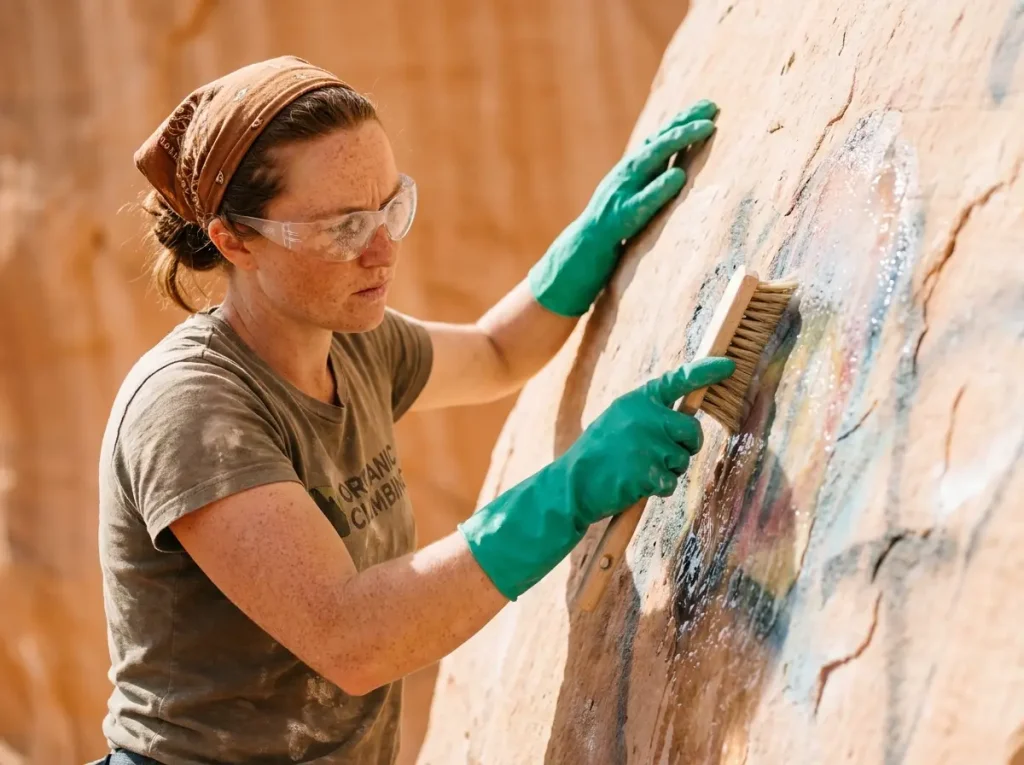
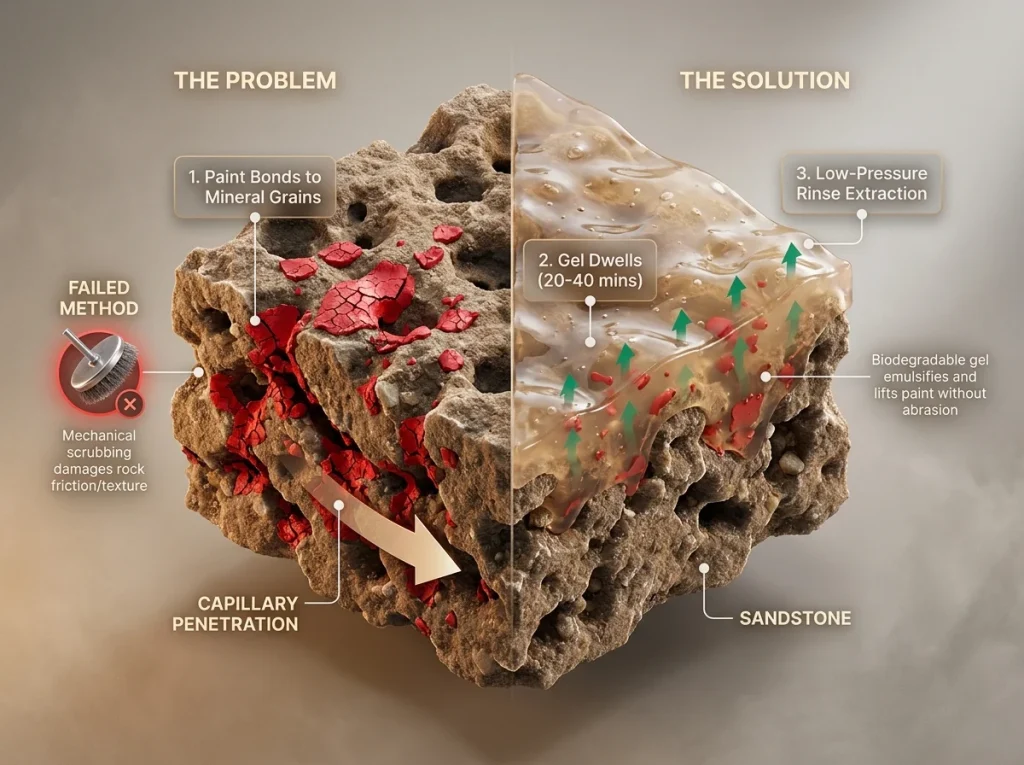
Rock is surprisingly sensitive. Treat cleaning it like performing delicate surgery, not like washing a durable concrete driveway. Slapping a harsh chemical or stiff wire brushes on a classic route permanently scars the stone, changing its friction texture forever. Climbing chalk is primarily magnesium carbonate, and when it mixes with hand sweat and humidity, it bakes into a greasy, hardened paste inside the rock pores. A simple dry brushing session often just sweeps the white dust off the surface and moves it around without fixing the problem. You need genuine crag maintenance tactics to restore the stone. Worse yet is dealing with vandalism. For spray paint graffiti, porous rock requires specialized removing gels that need specific dwell times to pull the paint out of the stone safely. Seeing someone take a heavy wire brush to a soft sandstone sloper is heartbreaking. We always mandate soft nylon or boar’s hair tools for our crews to protect the friction on the holds.
The Chemistry of Chalk Removal
To actually get chalk out of the rock, use the squirt and collect method. You squirt the hold with a spray bottle, but you must hold an absorbent towel directly underneath the lip to catch the milky runoff. If you don’t catch the water, you basically just paint the entire wall beneath the hold white. For stubborn, heavily caked chalk scrubbing, a fifty-fifty mix of water and plain white vinegar breaks down the mess beautifully. The acid in the vinegar targets the carbonate and dissolves the crust. However, never use vinegar on a limestone or marble crag. Because limestone is also a carbonate, the acid eats away the rock holding the route together, and you will destroy the climb. Stick to plain water for limestone. Understanding these basics of safe climbing chalk removal sets the professional standard for stewardship.
Using Elephant Snot for Graffiti
Graffiti sinks deep into the pores of the rock, forming a chemical bond. Spraying it with hardware store paint thinner just bleeds the color deeper into the stone. You need to apply a non-drip, biodegradable alkaline gel. Using proper graffiti removal tech, specifically Elephant Snot, is the gold standard for this work. When you use Elephant Snot, it smells vaguely like an industrial laundry facility masking something sharp. The gel is thick enough that it won’t drip down the wall, which is exactly why it works. You slather the thick gel over the tag, let it sit on the surface, and then rinse it off carefully pulling the paint out with it. Temperature matters heavily. In hot weather, the gel works fast. In cold shoulder-season weather, the dwell time needs to double from twenty minutes to a full forty minutes. Always force your volunteers to wear chemical-resistant gloves and protective wrap-around goggles when handling this stuff. These gels are highly alkaline and cause nasty chemical burns on exposed skin.
After the gel sits and pulls the paint out, you have to rinse it off without destroying the crag.
The Physics of Pressure Washing
Trying to rinse the thick gel off with a weak camp shower pump just creates a sudsy disaster. You really need a battery-powered washer. If you carry a portable pressure washer out to the crag to rinse off the graffiti gel, keep the pressure dialed aggressively low. You want a wand with a wide fifteen-degree spray tip to fan out the water impact. Hard granite crags can withstand decent water pressure, but power-washing sandstone or limestone too aggressively acts like a sandblaster. You will blast the crucial holds away, leaving behind a blank face. Keep the nozzle back a foot from the wall and use sweeping, gentle motions.
Getting a crag this dirty requires a solid crew, so you need to know how to convince climbers to actually show up.
Recruiting Your Crew: Volunteer Motivation and Crag Culture
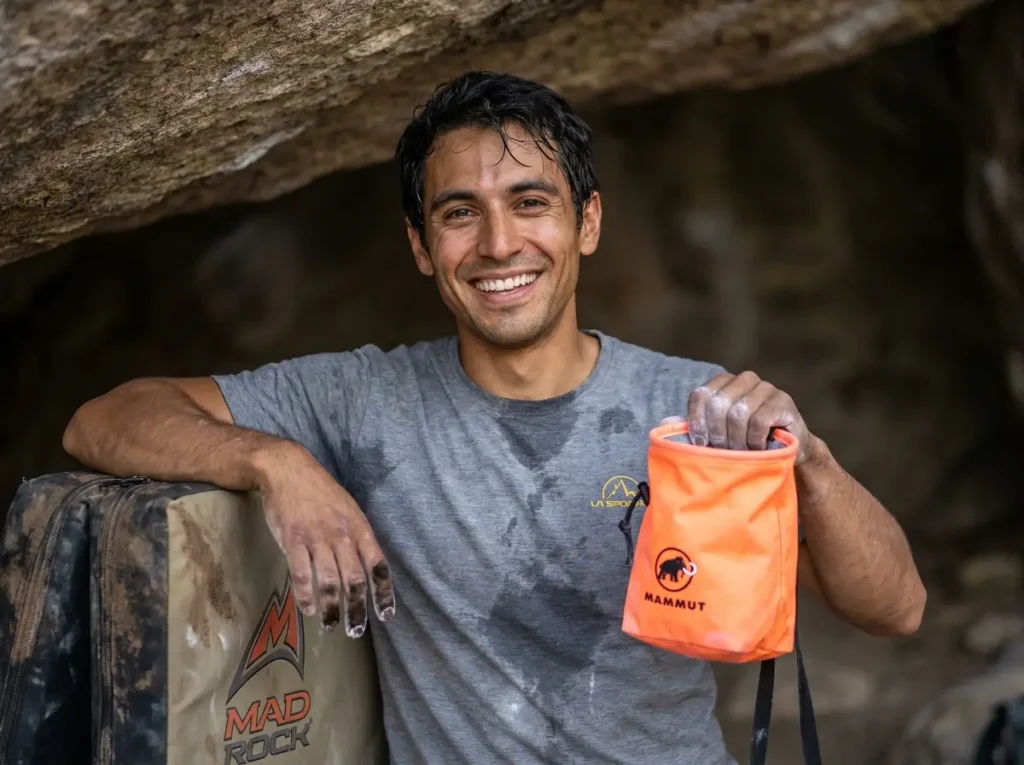
Let’s be honest: climbers are notoriously flaky if the weather happens to be perfectly crisp and sunny on your event day. If you don’t promise them a genuinely good time, or at least some solid karma, they are going to bail and go project their route instead of picking up moldy tape. You cannot run an event on guilt alone. Lean heavily into the concept of sending karma. Frame the dirty, sweaty work as a cosmic down payment on their next hard redpoint project. The superstition is real in the crag culture, and giving back to the dirt is understood as the best way to earn luck on the sharp end. Beyond the spiritual rewards, tangible social rewards are non-negotiable. Having fresh pizza, crag snacks, and good music waiting at the staging area makes the sweat equity entirely worth it. Reach out to local gear shops to donate a few spot prizes, like a fresh rope or an expensive chalk bag, to hand out to whoever hauls the heaviest tire or finds the weirdest piece of trash.
Using Sending Karma to Build Hype
Market your event heavily at the local climbing gyms and on the regional Facebook groups using the language climbers actually speak. You have to tap into the local vibe and make the work sound rewarding. Emphasize that every single hour of work counts toward the big picture. Even if someone can only swing by for a quick hour of trash picking, that small contribution buys them climbing luck and helps the community. Applying recruitment strategies from building a club gets the gym climbers to translate their plastic enthusiasm to outdoor grit.
The Buffer Zone Strategy
Implement the buffer zone rule rigidly. If you demand eight unbroken hours of grueling trash collection, no one will ever return for your event next year. You will burn out your crew immediately. Aim for a solid ratio of three hours of labor followed immediately by an afternoon volunteer climbing session. The post-work climb is always funny, because nobody can grip anything. Your forearms are destroyed from carrying trash and scrubbing rocks, and everyone falls off their warm-up route laughing. That shared misery is exactly what bonds a community together. Always give people a hard, defined stop time for the garbage picking portion. Once noon hits, tell everyone to drop the bags, wash their hands, and rope up. Also, always secure a rain date. Volunteers will bail instantly if they see even a slight drizzle in the morning forecast.
When the work stops, the social rewards lock in their loyalty for next year.
Essential Gear Swag and Social Rewards
Coordinate with a prominent local gear shop or the big climbing gym in town to provide some basic raffle prizes. REI or local outfitters are often happy to throw a few gift cards at an event if it means supporting community access. The post-cleanup tailgate is where your local crew actually bonds. Emphasize in your flyers that the social side of the event is just as critical as the garbage collection. Handing out beer and beta at the cars while everyone compares their dirtiest finds solidifies the relationships that keep the local crag healthy.
Pro-Tip: Always tell your volunteers to pack their own climbing shoes and harness, even if they plan to work all day. Nothing makes a volunteer resentful faster than watching everyone else session a classic route while their gear is sitting an hour away in their closet.
Before they hit the rock, you have an obligation to get them through the dirty work safely.
Keeping Everyone Safe: Hazardous Waste Protocols
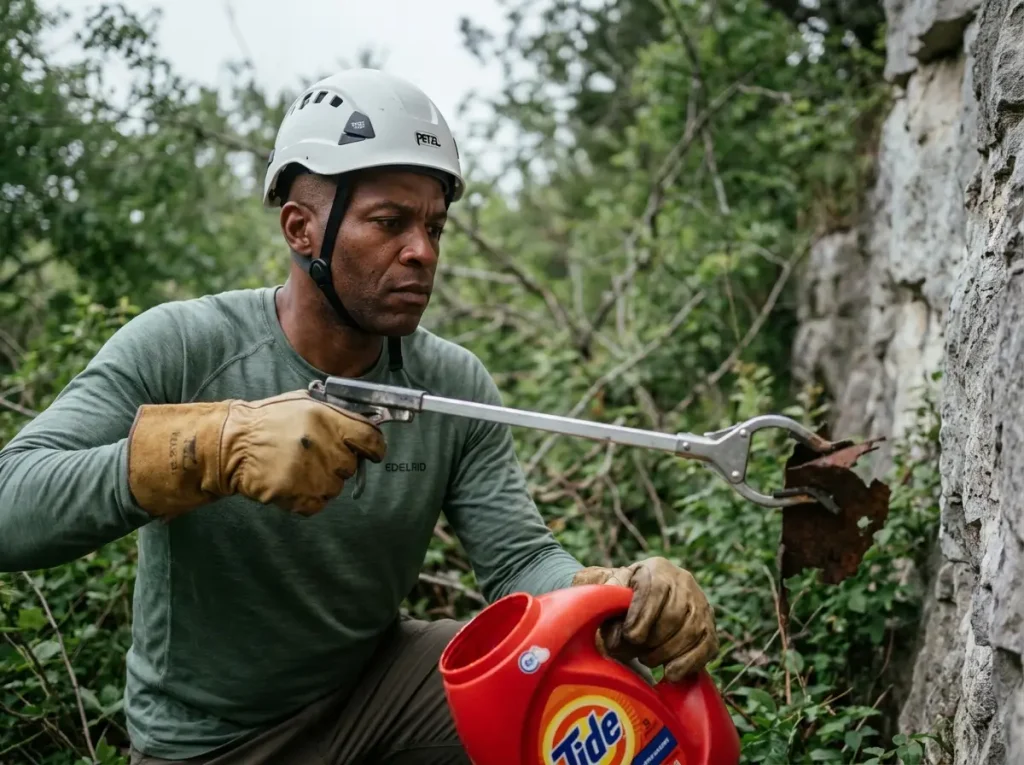
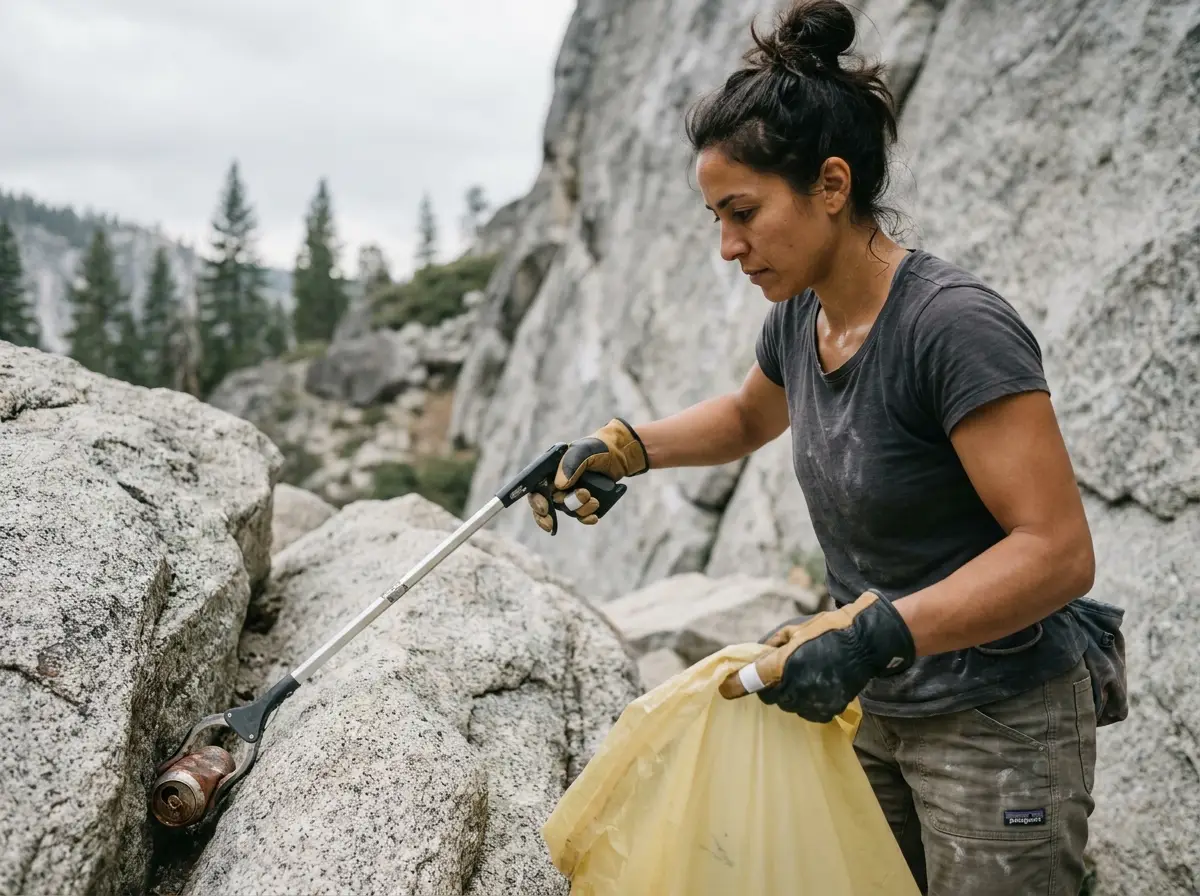
We assess heavy risks on the wall, checking our knots and inspecting rusty bolts. But digging your bare hand into a damp pile of leaves and finding shattered glass or a rusted needle is a completely different kind of hazard. You have to train your crew to treat the ground like it actively wants to bite them. Never stick your hand blindly into a dark hole, under a massive boulder, or into a tight crack. Always poke around with a sturdy stick or use a mechanical trash grabber first. When I found my first discarded WAG bag left over by an irresponsible camper, it instantly validated exactly why tough, thick work gloves are a mandatory requirement for the day. You never know what people have hidden under a rock. Use a simple check-in and check-out clipboard system at the staging area table. When you manage thirty people spread across long approach trails and steep terrain, it is dangerously easy to accidentally leave a quiet volunteer out in the woods as the sun goes down.
Managing Hazardous Weight Limits
We consistently underestimate how much trash weighs. A heavy-duty bag filled with wet dirt, soaked clothing, or broken glass gets intensely heavy within minutes. A contractor bag full of wet soil and glass slices through your hand like a cheese wire if you try to carry it five miles out. Tying off the bag early instead of pushing it to the brim is something you only learn after trying to bear-hug a leaking trash bag down a scree field. Only fill massive trash bags halfway if they contain dense garbage. A ripped bag failing a mile back on the approach trail means you are doing the miserable work twice. Cap all rigid cardboard boxes of trash at forty pounds maximum. Pushing past that weight limit practically guarantees someone pulls a muscle or blows out their lower back trying to wrestle the box over a tricky rock step.
The Rule of the Sharps Container
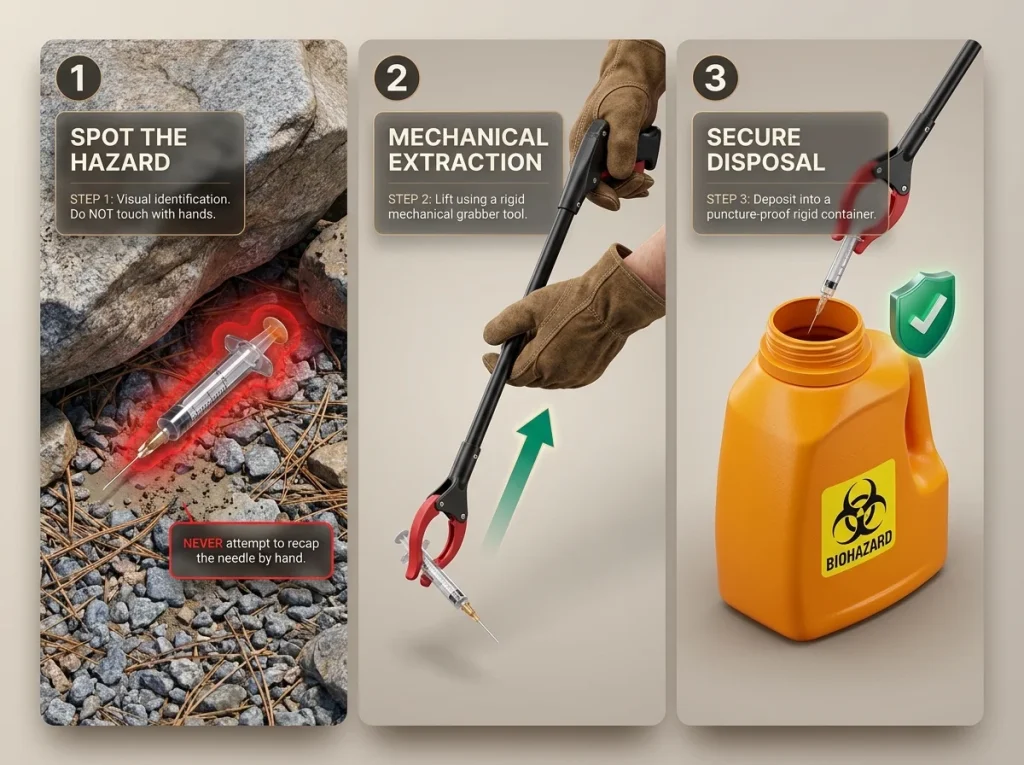
If you are cleaning up an urban boulder park or a roadside cliff, you must assume there will be discarded needles hiding in the brush. Use a thick plastic laundry detergent bottle with a screw top as a fantastic DIY, puncture-proof sharps container. You must command a strict sharps protocol. If someone finds a needle, they must use a mechanical grabber to pick it up, and they must never attempt to recap the needle with its original plastic cap. Trying to clumsily recap a found needle is exactly how the majority of accidental needle sticks occur in the field. When dealing with discarded WAG bags or general human waste management hazards, double-bag the mess immediately and use hand sanitizer immediately after. Disposing of biohazards and using rigid containers for sharps disposal are tasks that require total focus.
With the heavy and sharp hazards managed, you just need to keep track of your people on the trail.
Tracking Volunteers in the Woods
Run a strict clipboard system where every single person signs their name in upon arrival and visibly signs out when they drive away. Do not trust your memory to keep track of a dozen faces you just met. Establish a firm, physical perimeter for the cleanup work, marking boundaries with bright survey tape if necessary. Letting an enthusiastic volunteer wander a mile off-trail looking for a rogue beer can massively increases the risk of twisted ankles, getting lost, or stumbling into a wasp nest without anyone nearby to hear them yell.
Conclusion
A successful stewardship day starts weeks in advance with an honest, sober crag assessment and locking down your heavy disposal logistics before the first piece of trash is moved. You protect the rock and your volunteers by using the correct chemistry for stubborn chalk or graffiti, and by enforcing rigid safety protocols for hauling out heavy or hazardous garbage. Above all, you keep the stoke blindingly high by leaning into “sending karma,” leaving plenty of buffer time for your crew to rope up and climb when the dirty work is finished.
Check the local adopt a crag calendar to find an event firing up near you, or contact the land manager to get permission for your own project. Grab your heavy leather work gloves, rally the local crew, and go secure your sending karma for the rest of the season.
FAQ
Do I need a permit to organize a climbing cleanup day?
Yes, securing permission is non-negotiable. You have to contact the land manager, like the forest service or a private landowner, to ensure your plan doesn’t assume crazy legal liability. Getting a local climbing organization to front the paperwork is the smartest move.
How do you dispose of hazardous waste like glass or needles at a crag?
Hazardous waste requires hard-sided, puncture-proof containers to prevent nasty injuries. Never pick up a needle with your bare hands. Use a grabber tool. Pack broken glass into taped boxes capped at forty pounds to avoid serious back injuries on the hike out.
How do I get people to volunteer for a cleanup?
You incentivize the brutal work through the promise of sending karma and good social rewards. Balancing hard labor with an afternoon dedicated climbing session and treating the crew with fresh pizza and gear raffles guarantees you get a strong turnout.
What should I bring to a climbing cleanup?
Volunteers need thick leather work gloves, wrap-around eye protection, and their sturdiest approach shoes. You should clip an empty chalk bag to your harness to use as a dedicated mini-trash pouch for tiny garbage like athletic tape shreds and cigarette butts.
Safety Notice: Rock climbing and mountaineering are inherently high-risk
activities that can involve physical trauma or fatal incidents. The information on Rock Climbing Realms is for
educational and informational purposes only. Techniques and advice presented here are not a substitute
for professional, hands-on instruction. Conditions and risks vary by location. Always seek guidance
from a qualified instructor before attempting new techniques. By using this website, you agree that you
are solely responsible for your own safety. Any reliance you place on this information is strictly
at your own risk, and you assume all liability for your actions. Rock Climbing Realms and its authors
will not be held liable for any harm, damage, or loss sustained in connection with the use of this information.
Affiliate Disclosure: We are a participant in the Amazon Services LLC Associates Program, an
affiliate advertising program designed to provide a means for us to earn advertising fees by advertising and linking
to Amazon.com. As an Amazon Associate, we earn from qualifying purchases. We are also an official affiliate partner
of Black Diamond Equipment via the AvantLink network. If you click on a Black Diamond affiliate link and make a
purchase, we may earn a commission at no additional cost to you. We also participate in other affiliate programs.
Additional terms are found in the terms of service.