
In this article
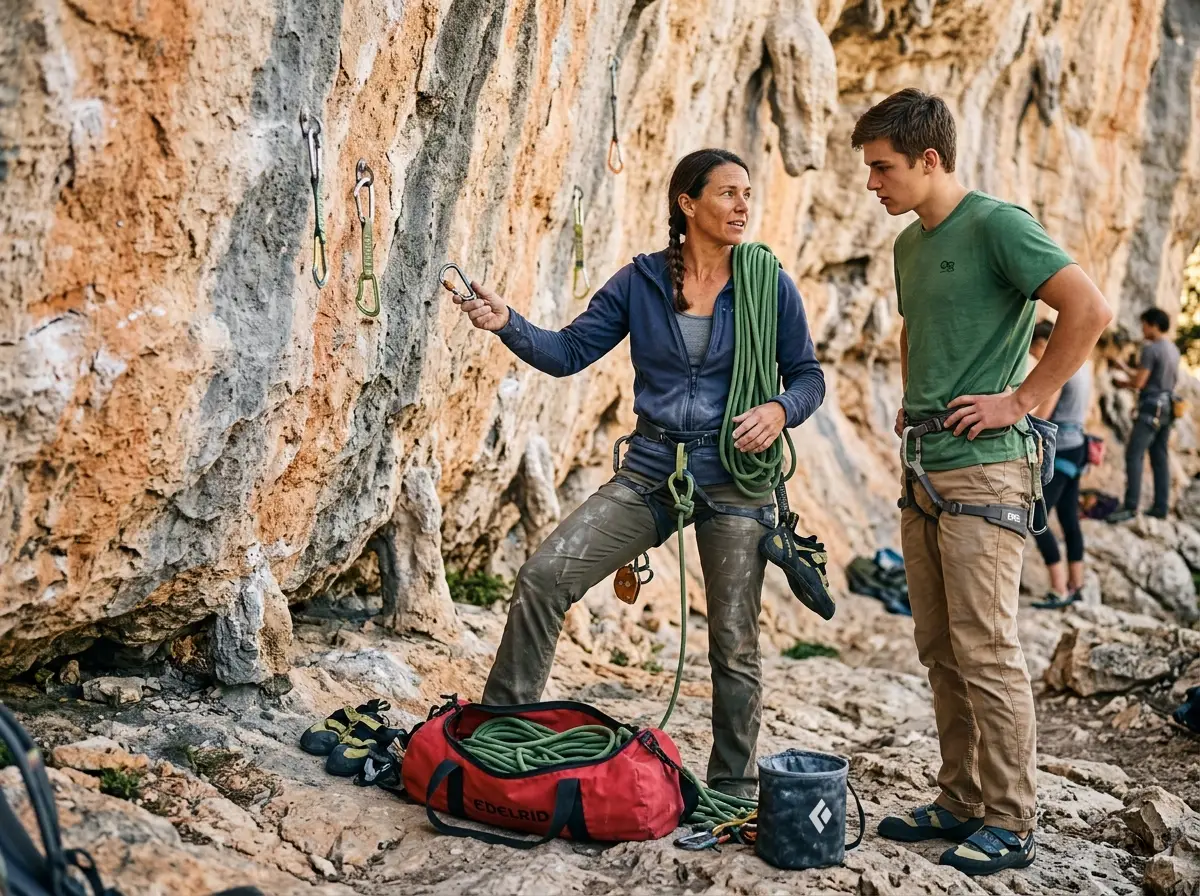
You’re standing at the base of your first outdoor lead, staring at real rock that looks nothing like the gym wall you trained on, and you realize that nobody taught you how to read a route on actual stone. This is the moment most climbers start looking for a mentor — and most of them go about it wrong. I’ve been on both sides of this relationship, and the climbers who found good mentors fast all did the same things. Here’s how to find a climbing mentor who fits your goals, what credentials to look for, the red flags nobody talks about, and how to be the kind of mentee that experienced climbers actually want to invest in.
Quick Answer: The fastest way to find a climbing mentor is to show up consistently at your local gym or crag, build trust through competent belaying, and ask specific questions. Free options include climbing clubs, AAC chapters, and gym communities. Paid programs run $1,500–$5,000 and pair you with AMGA-certified guides for structured progression.
What a Climbing Mentor Actually Is (And Isn’t)
Mentor vs. Guide vs. Coach — Three Different Relationships
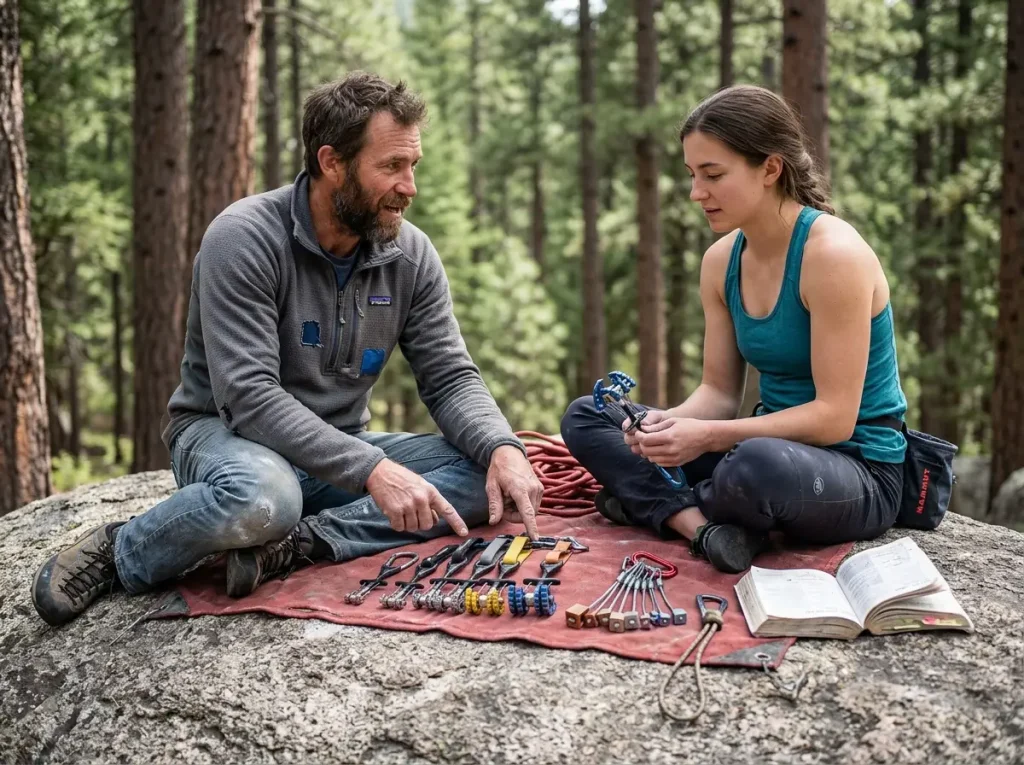
Most people use these terms interchangeably, and that confusion wastes time and money. A climbing guide is a credentialed professional you hire for a specific objective — a day on a multi-pitch route, a week in the alpine. The relationship ends when the trip ends.
A climbing coach designs training programs, analyzes movement, and periodizes your season. You pay them for structured improvement.
A climbing mentor is different from both. It’s an ongoing relationship built on mutual respect where a more experienced climber shares knowledge, judgment, and crag wisdom over time. The best mentorships are rarely transactional. They grow from shared climbing days, honest conversations about risk, and the kind of trust that comes from watching someone manage a sketchy situation well.
If you want someone to teach you anchor building on a weekend clinic, hire a guide. If you want someone in your corner for the next two years of progression, you’re looking for a mentor.
What a Real Mentor Brings That YouTube Can’t
YouTube has excellent instructional content. You can learn clove hitches, anchor equalization, and rope management from your couch. What you can’t learn from a screen is judgment — when to bail on a route because the rock is seeping, how to read a partner’s fear before it becomes a freeze, or which crag to avoid on a crowded Saturday.
Judgment is apprenticed, not taught. It transfers through hours of shared climbing where the mentor’s decision-making becomes visible in real time. That’s why the mentor-mentee relationship is so different from watching someone’s tutorials.
Where to Find a Climbing Mentor for Free
Your Local Gym’s Strongest Asset Isn’t the Holds
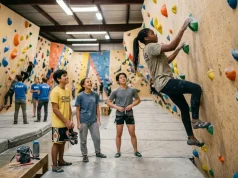
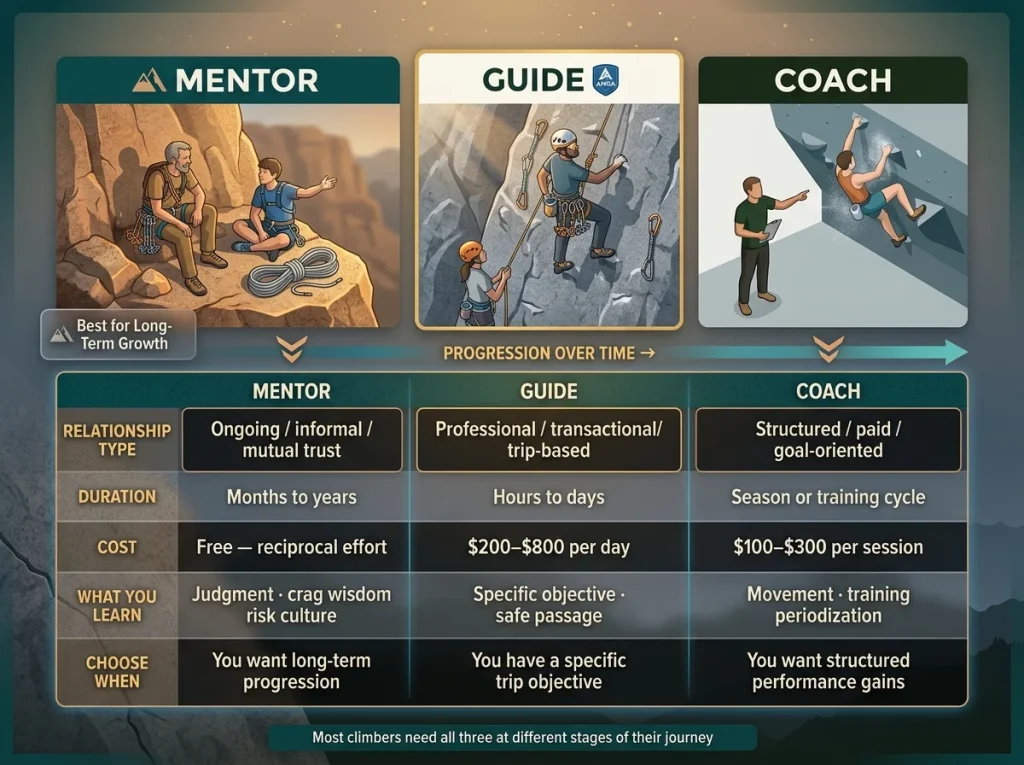
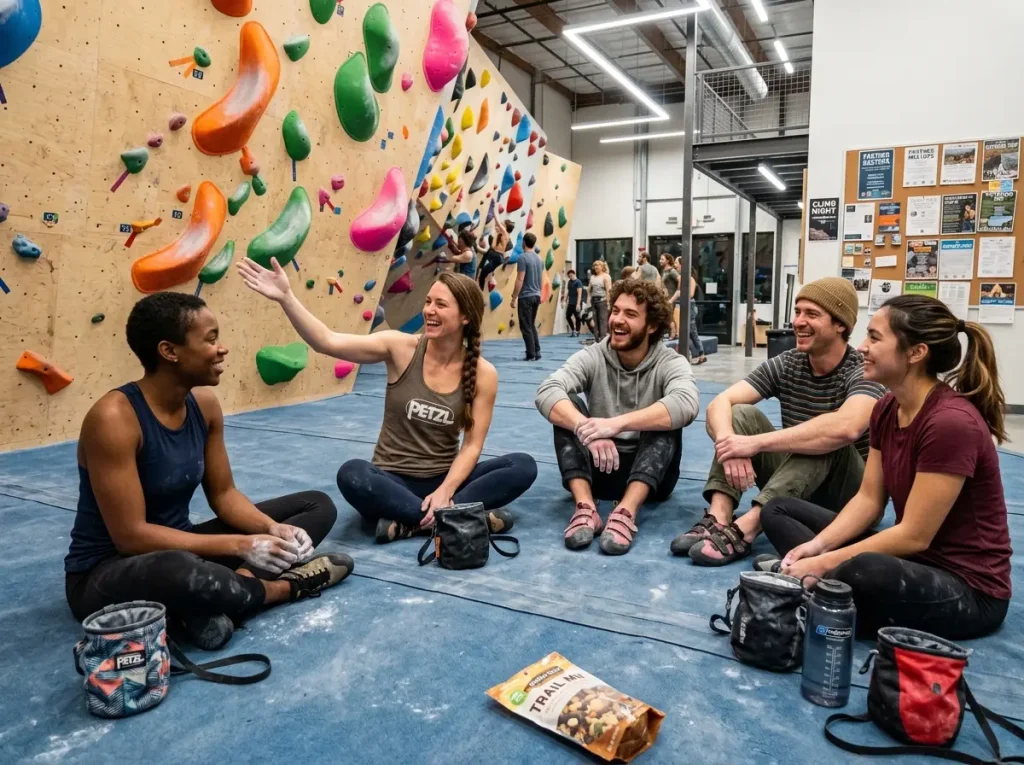
The easiest path to a mentor starts at your climbing gym. Not in a class or a coaching program — at the bouldering wall on a Tuesday night when the same regulars show up. Consistency is the prerequisite. Show up at the same time, the same days, and the same faces start recognizing you.
The move that opens doors is offering a competent belay. If you can prove you’re a safe, attentive belayer, experienced climbers will ask you to climb with them. That invitation is the beginning of an informal mentorship. You don’t have to pitch it that way — just keep showing up, keep asking good questions, and the relationship builds itself.
Pro tip: Don’t walk up to the strongest climber in the gym and ask them to mentor you. Start by being useful — offer belays, help with route setting tear-downs, participate in gym events. Experienced climbers mentor people they trust, not people who ask for favors on day one.
Climbing Clubs and AAC Chapters
The American Alpine Club has local chapters across the country, and many of them run structured mentorship events — Craggin’ Classics, skills clinics, and partner meetups designed to connect experienced climbers with newer ones. An AAC membership costs less than two months of gym fees and gives you access to a national network of climbers.
Local climbing clubs are even more accessible. Most operate through gyms or outdoor clubs vs. gym memberships and organize weekend trips where newer climbers pair with experienced leaders.
The AAC’s mentorship programs include Alpine Track, a year-long program with no participation fee that pairs climbers with cutting-edge alpinists for structured skill development.
The Crag Approach That Works Every Time
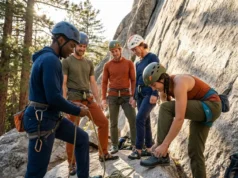
At outdoor crags, the best mentorship opportunities happen organically. Watch someone clean an anchor efficiently, then ask a specific question about their technique.
“Why did you use a cordelette instead of a quad?” gets a real answer. “Can you teach me how to set up anchors?” gets a polite brush-off.
Specificity signals competence. It tells the experienced climber that you’ve done homework, you’re not starting from zero, and your question is about refinement, not hand-holding.
Paid Climbing Mentorship Programs Worth the Money
What $1,500–$5,000 Actually Buys You
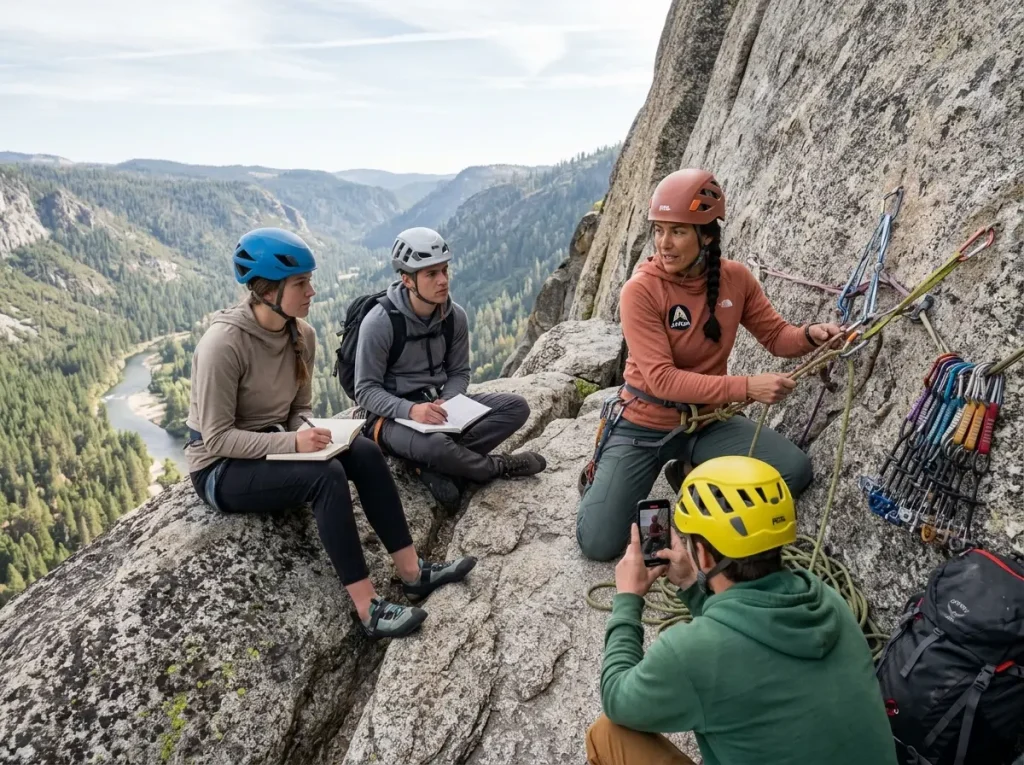
Paid mentorship programs fill the gap between hiring a guide for a day and hoping a mentor appears organically. They pair you with AMGA-certified guides for multi-month curricula that build skills systematically — anchor building, lead placement, route reading, self-rescue basics.
The cost reflects one-on-one or small-group attention over months, not a single weekend. You’re paying for progression tracking, personalized feedback, and a guide who remembers what you struggled with last session.
Programs to Research Before You Commit
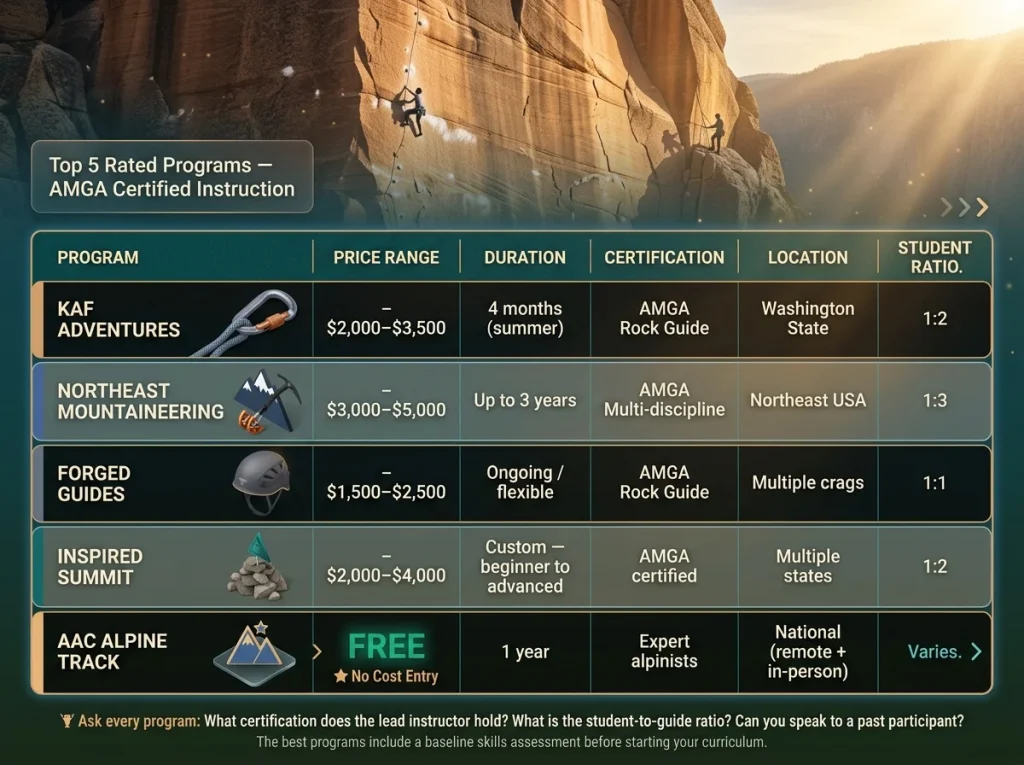
Several organizations run well-regarded climbing mentorship programs. Kaf Adventures runs a four-month summer program in Washington with AMGA Rock Guides. Northeast Mountaineering offers a Mountain Mentor Program spanning up to three years across rock, ice, and alpine.
Forged Guides focuses on long-term personalized coaching. Inspired Summit customizes programs from beginner through advanced alpine.
Before signing up, ask three questions: What certification does the lead instructor hold? What’s the student-to-guide ratio? Can you talk to a past participant? A program worth $3,000 should have clear answers to all three.
Pro tip: Ask your potential program if they do a baseline assessment before starting. The best programs test your current skills and tailor the curriculum. If they put everyone through the same progression regardless of experience, you’ll waste time on things you already know.
What Credentials and Qualities to Look For
AMGA Certification Levels Explained
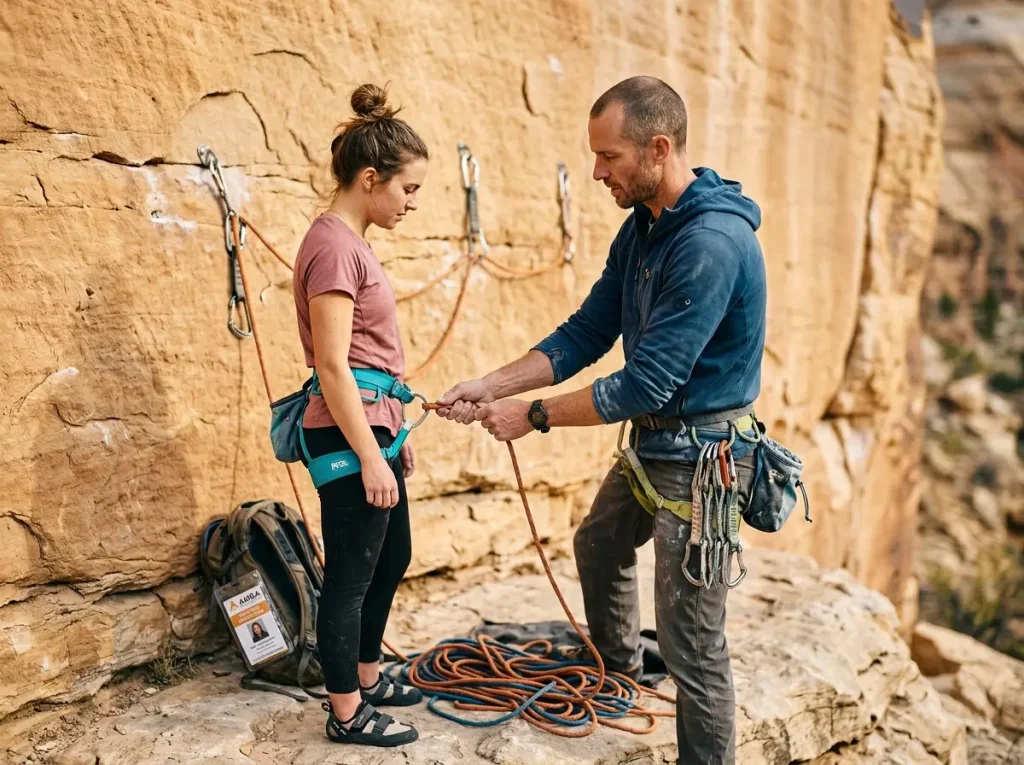
The American Mountain Guides Association runs the only internationally recognized guide certification in the United States. Their programs progress through levels: Single Pitch Instructor (SPI) for teaching at single-pitch crags, Rock Guide for managing clients on multi-pitch terrain, and Mountain Guide for alpine, rock, and ski environments.
An SPI certification requires a minimum of five days of instruction and examination plus documented experience. A full Rock Guide certification takes 26–42 days of coursework over multiple years. The AMGA programs page details each pathway and its prerequisites.
For informal mentors — people who aren’t professional guides — certification isn’t the right benchmark. Instead, look for years of outdoor experience, a visible track record of safe climbing, and the willingness to explain their process rather than just demonstrate it.
Character Traits That Matter More Than Send Grade
A mentor who climbs 5.13 but doesn’t double-check their partner’s knot is worse than a mentor who climbs 5.10 and runs a systematic safety protocol. Character matters more than grade.
Look for patience — someone who explains without condescension. Look for consistency — someone who actually shows up when they say they will. Look for humility — someone who admits when conditions are beyond their experience and backs off a route instead of pushing through ego.
The climbing community has a saying: “There are old climbers and bold climbers, but very few old bold climbers.” Your mentor should be the old kind — the one who got old by making good decisions, not lucky ones. Knowing common belay mistakes and how to prevent them is a non-negotiable baseline.
Red Flags in a Climbing Mentor
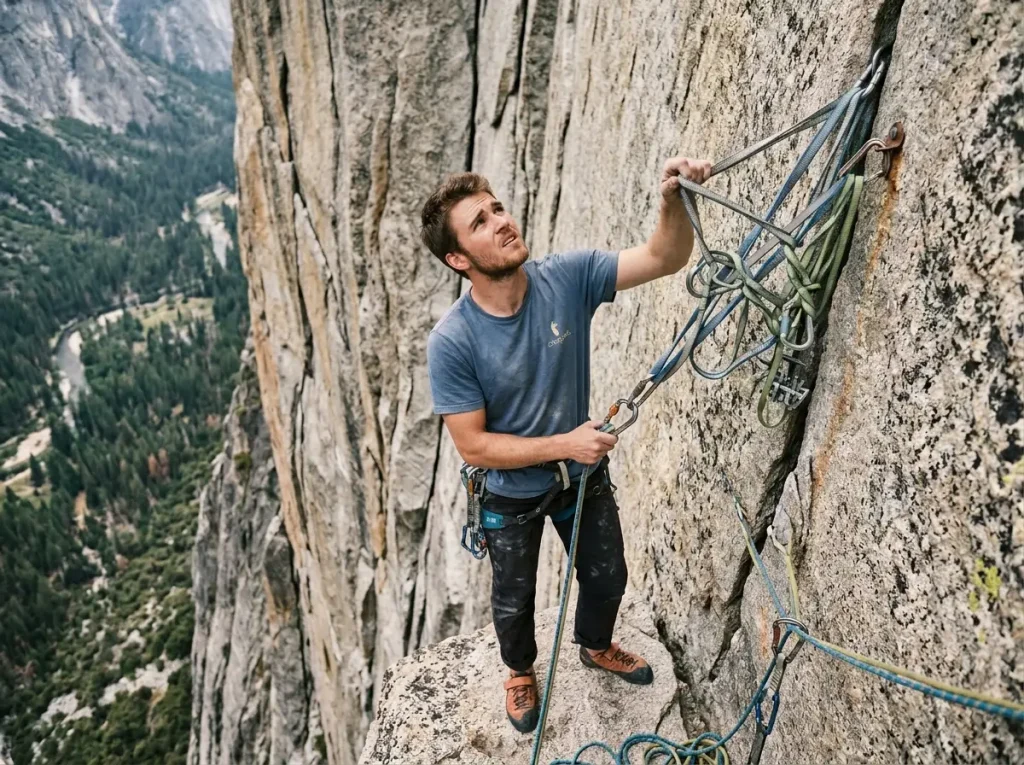
The Ego Climber Who Skips Safety Checks
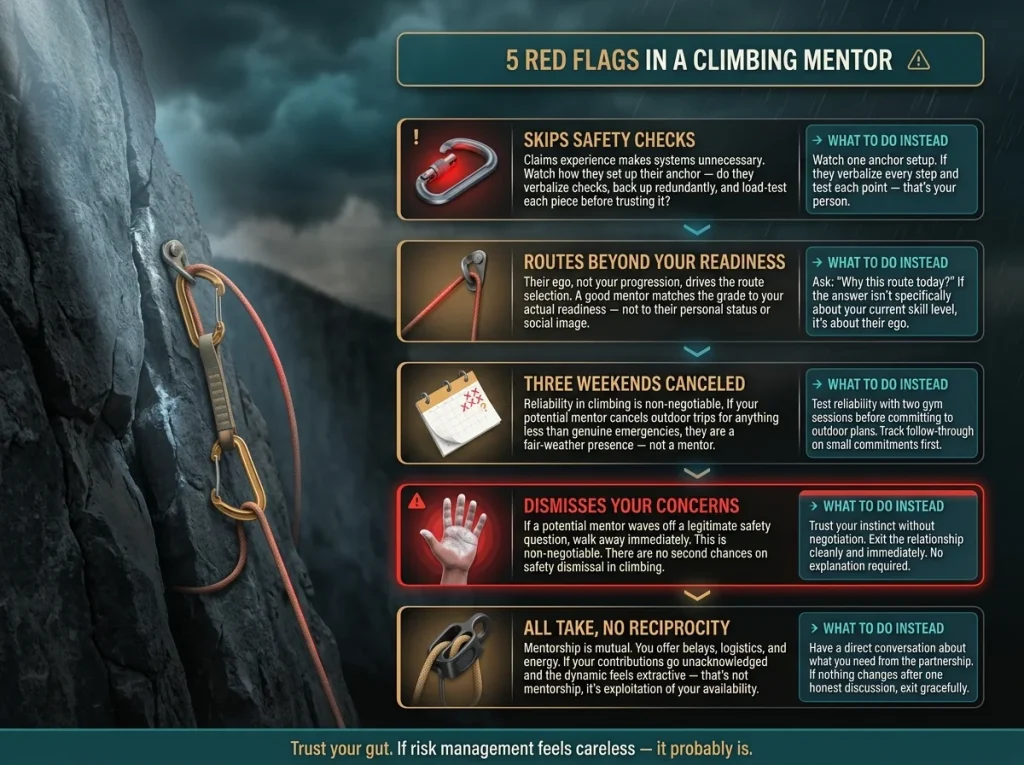
Watch how a potential mentor manages their systems. Do they visually check their knot before leaving the ground? Do they communicate clearly with their belayer, or assume everyone knows what they’re doing? A climber who skips partner checks because they’ve “done this a thousand times” is exactly the person whose habits will get you hurt.
Another version of this red flag: the mentor who pushes you onto routes you’re not ready for because it reflects well on them. Good mentors match your progression to your readiness, not to their ego.
The Flake Who Cancels Every Weekend
Mentorship requires reliability. If someone agrees to take you outdoor climbing and cancels three weekends in a row, that’s not bad luck — it’s a pattern. Real mentors treat their commitments the same way they treat rack organization: with care and follow-through.
A mentor who consistently shows up for easy gym sessions but bails on outdoor plans when the weather isn’t perfect is signaling that they’re a fair-weather friend, not a mentor. The best climbing happens in imperfect conditions, and the best mentors teach you how to manage those conditions rather than avoid them.
When to Walk Away
If your mentor dismisses your safety concerns, that’s non-negotiable — walk away. If they consistently put you in situations where you feel pressured rather than challenged, walk away. If the relationship feels one-directional — all take, no give — that’s worth a conversation first, and a clean exit second.
Good mentorship should feel like steady progress with occasional discomfort, not chronic anxiety. Trust your gut. If something feels off about the way someone manages risk, your instinct is almost certainly right.
Pro tip: The fastest way to evaluate a potential mentor’s safety habits is to watch them set up a top-rope anchor. If they verbalize their checks, back up redundantly, and test the system before loading it — that’s someone worth learning from. If they throw a sling over a tree and say “it’ll be fine,” keep walking.
How to Be a Mentee Worth Mentoring
Showing Up Prepared and On Time
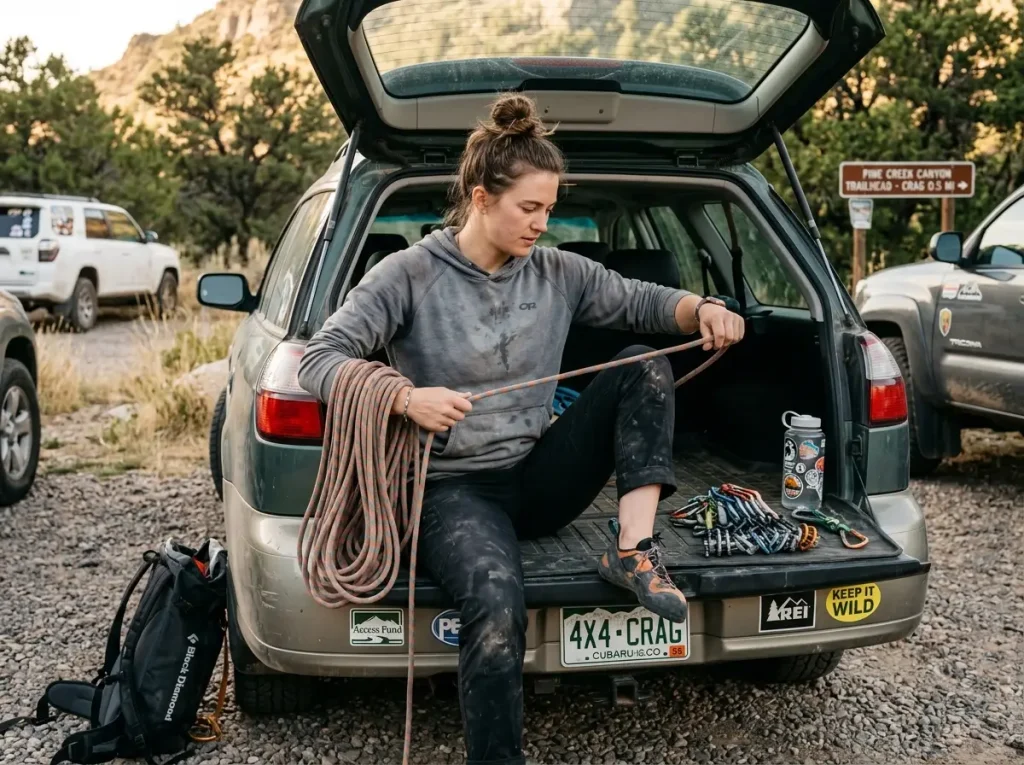
The single fastest way to lose a mentor is to waste their time. Show up to every session with your gear organized, your rope coiled, your rack racked, and your approach shoes on. If your mentor asked you to practice clove hitches before the next session, show up knowing clove hitches.
Preparation signals respect. It tells your mentor that you value their time and take the relationship seriously. A mentee who arrives with a tangled rope and no chalk is telling their mentor that they expect to be managed, not mentored.
Reciprocity — What You Bring to the Partnership
Mentorship isn’t charity. The best mentee relationships involve reciprocity — you offer belays, split gas money to the crag, bring snacks, help rack gear, and handle logistics so the mentor can focus on teaching. As you progress, you start contributing beta observations and route reading that your mentor finds useful.
If you’re working on the transition from gym to outdoor climbing, bring the energy and organization that lets your mentor focus on what they do best: sharing knowledge.
The Gym-to-Crag Gap — Why Most Climbers Need a Mentor Here
Skills That Don’t Transfer From Plastic to Rock
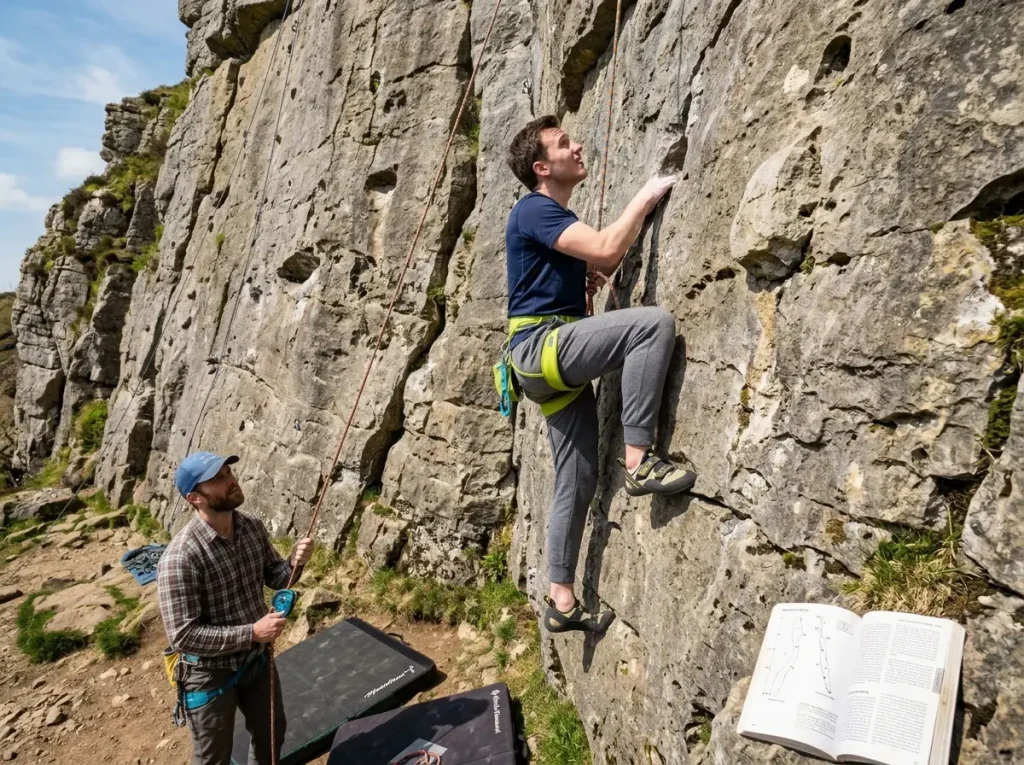
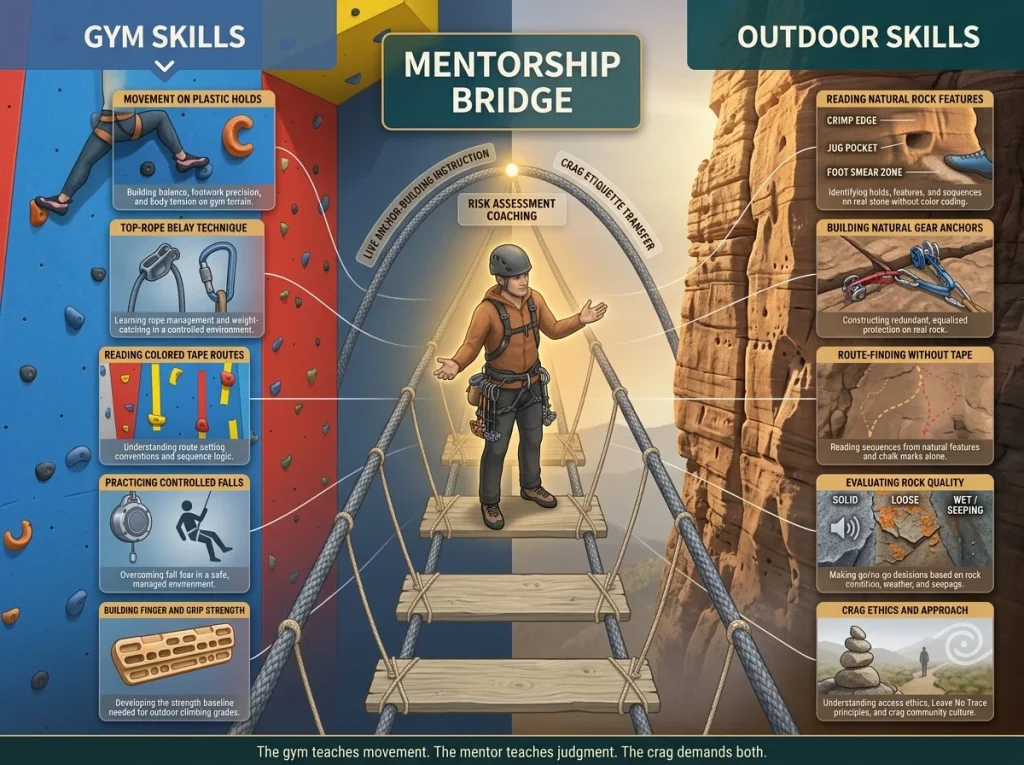
Indoor climbing builds movement skills, finger strength, and confidence on steep terrain. What it doesn’t build is the judgment needed outdoors: reading rock quality, managing natural pro placements, evaluating weather, navigating approach trails, and understanding crag etiquette and access ethics.
The gym-to-crag transition is the single most common trigger for seeking a mentor, and for good reason. The gap between leading 5.11 on plastic and leading 5.9 on real rock is enormous — different hold shapes, inconsistent spacing, route-finding without colored tape, and the psychological weight of being above your last bolt on stone you’ve never touched.
The First Outdoor Lead and Why It Changes Everything
Your first outdoor lead is a milestone that fundamentally shifts your relationship with climbing. It forces you to manage fear, read sequences in real time, and make commitment decisions that have real consequences. Having a mentor on the ground — someone who’s seen every common lead belaying mistake and knows how to coach through them — turns that experience from terrifying to transformative.
A good mentor doesn’t just belay your first outdoor lead. They help you choose the right route, talk through the sequences you’ll encounter, explain the fall zones, and give you the freedom to back off without shame. That experience is almost impossible to replicate without a mentor.
Conclusion
Finding a climbing mentor comes down to three things: start at the gym by being consistent and proving you’re safe to climb with, evaluate potential mentors on character and reliability rather than send grade, and be the kind of mentee who shows up prepared, respects their mentor’s time, and contributes to the partnership.
Paid programs are worth it when you need structured progression with certified instruction. Free mentorship is everywhere if you’re willing to invest the social capital and patience to build trust first.
Next time you’re at the crag and see someone efficiently cleaning an anchor, ask a specific question about their technique. That’s how every good climbing partnership starts — not with a formal ask, but with genuine curiosity and a willingness to learn.
Q1 How do I find a climbing mentor near me?
Start at your local climbing gym by showing up consistently and offering solid belays to experienced climbers. Join an American Alpine Club chapter or local climbing club that organizes outdoor trips. Mountain Project’s partner finder and gym community boards also connect climbers in your area.
Q2 What certifications should a climbing mentor have?
For paid instruction, look for AMGA certification — at minimum a Single Pitch Instructor credential. For informal mentors, years of safe outdoor climbing experience matters more than formal credentials. Watch how they manage safety systems before trusting their guidance.
Q3 How much does a climbing mentorship program cost?
Structured mentorship programs typically run $1,500 to $5,000 depending on duration, location, and group size. Some programs like the AAC’s Alpine Track charge no participation fee. Free alternatives include climbing clubs, gym communities, and organic crag partnerships.
Q4 Can I learn to climb outdoors without a mentor?
Technically yes, but the learning curve is steeper and the risk of developing unsafe habits is significantly higher. Skills like anchor building, route reading, and risk assessment transfer much faster with experienced guidance. Many self-taught outdoor climbers eventually seek a mentor to fill gaps in their knowledge.
Q5 What is the difference between a climbing guide and a climbing mentor?
A climbing guide is a certified professional you hire for specific trips or objectives — the relationship is transactional and time-bound. A climbing mentor is an ongoing relationship where an experienced climber shares judgment, crag wisdom, and decision-making skills over months or years, often without formal payment.
Safety Notice: Rock climbing and mountaineering are inherently high-risk
activities that can involve physical trauma or fatal incidents. The information on Rock Climbing Realms is for
educational and informational purposes only. Techniques and advice presented here are not a substitute
for professional, hands-on instruction. Conditions and risks vary by location. Always seek guidance
from a qualified instructor before attempting new techniques. By using this website, you agree that you
are solely responsible for your own safety. Any reliance you place on this information is strictly
at your own risk, and you assume all liability for your actions. Rock Climbing Realms and its authors
will not be held liable for any harm, damage, or loss sustained in connection with the use of this information.
Affiliate Disclosure: We are a participant in the Amazon Services LLC Associates Program, an
affiliate advertising program designed to provide a means for us to earn advertising fees by advertising and linking
to Amazon.com. As an Amazon Associate, we earn from qualifying purchases. We are also an official affiliate partner
of Black Diamond Equipment via the AvantLink network. If you click on a Black Diamond affiliate link and make a
purchase, we may earn a commission at no additional cost to you. We also participate in other affiliate programs.
Additional terms are found in the terms of service.