
In this article
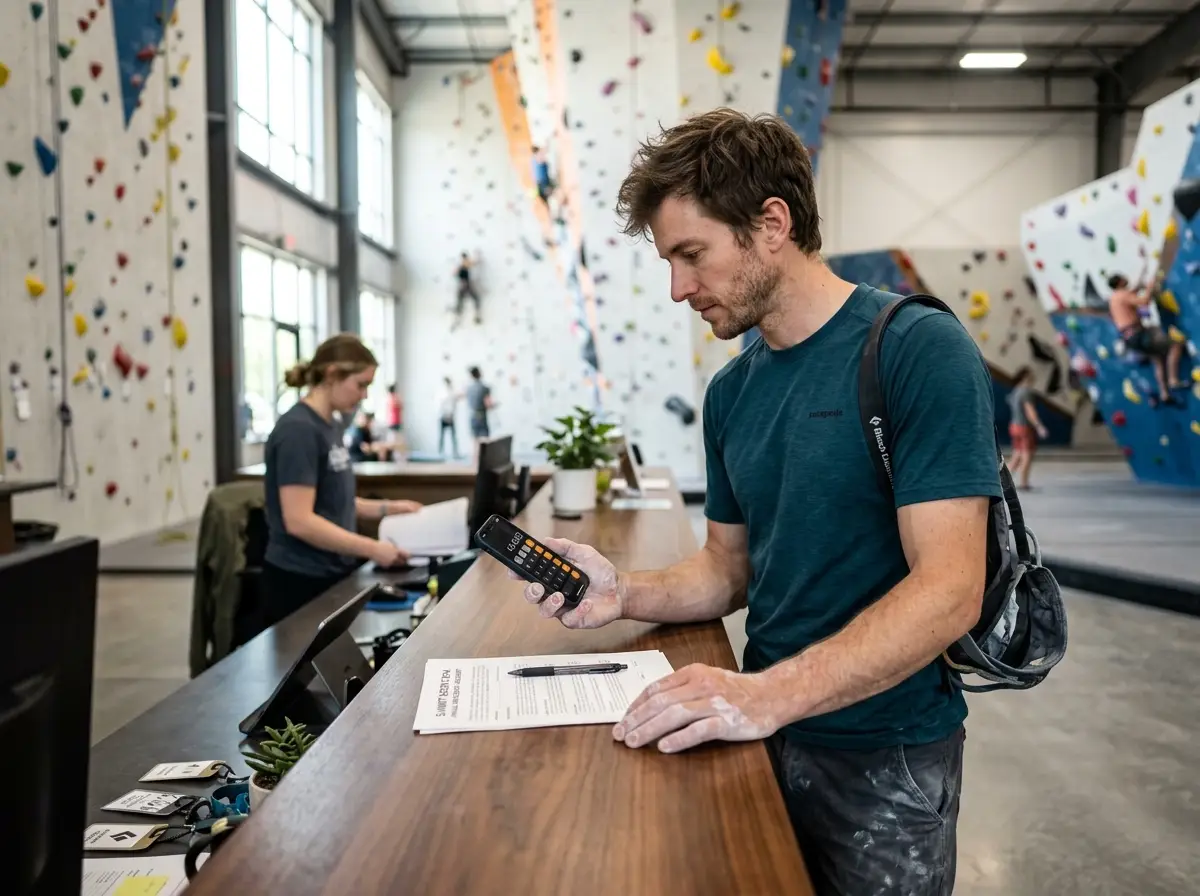
You’re standing at the front desk of a Movement gym, chalk still on your hands from your tenth visit this month, and the staff member says “So, are you ready to sign up?” You’ve been paying $32 a day pass. You do the math in your head in five seconds and realize you’ve already burned $320 in day passes this month alone — a premium membership costs $121. The math is brutal. But before you scrawl your name on that EFT billing form, there are four or five hidden variables nobody at that desk will explain to you.
This guide is a financial document, not a gym directory. We’ll run the actual break-even formula, decode every hidden fee structure, expose the rental gear profit trap, and show you the HSA/FSA maneuver that cuts your effective monthly dues by 30%. By the time you finish, you’ll know exactly how many visits per month justify a membership at every major US gym chain — and when it’s smarter to stay on day passes.
⚡ Quick Answer: A climbing gym membership breaks even at roughly 3–4 visits per month at most major chains. Below that threshold, 7-visit passes or punch passes are cheaper. Above it, monthly membership wins decisively — especially once you factor in the rental gear bundle cost you’re paying every visit. The HSA/FSA pathway through Truemed can reduce your effective annual cost by up to 30%, saving over $400/year on a premium membership. Run the numbers before you sign anything.
The Real Cost Structure: What You’re Actually Paying For
Most people look at a $100+ monthly dues bill and assume they’re being fleeced. They’re not, and understanding why changes how you negotiate.
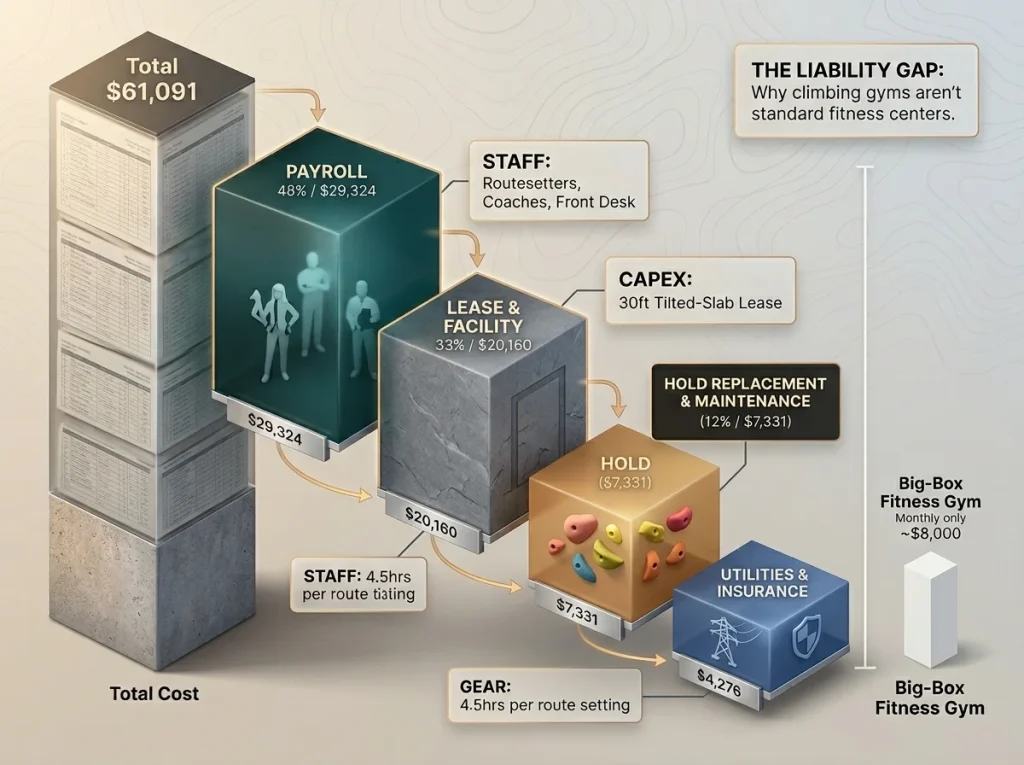
A climbing facility’s average monthly operating cost runs about $61,091 — a figure from Financial Models Lab that covers a standard 10,000–25,000 sq ft facility. Payroll alone eats $29,167 of that, because route setters, coaches, and front desk staff are not minimum-wage positions. Lease costs add another $20,000. Then there’s the overhead that genuinely has no comparison in standard fitness: insurance premiums starting at $5,000–$10,000 per year, which have climbed 20% in the last three years due to climbing’s high-risk classification. Bouldering walls are capped at 15 feet by underwriters. Foam padding must hit 12–15 inches. Daily inspections and annual safety audits are mandated. None of this is optional.
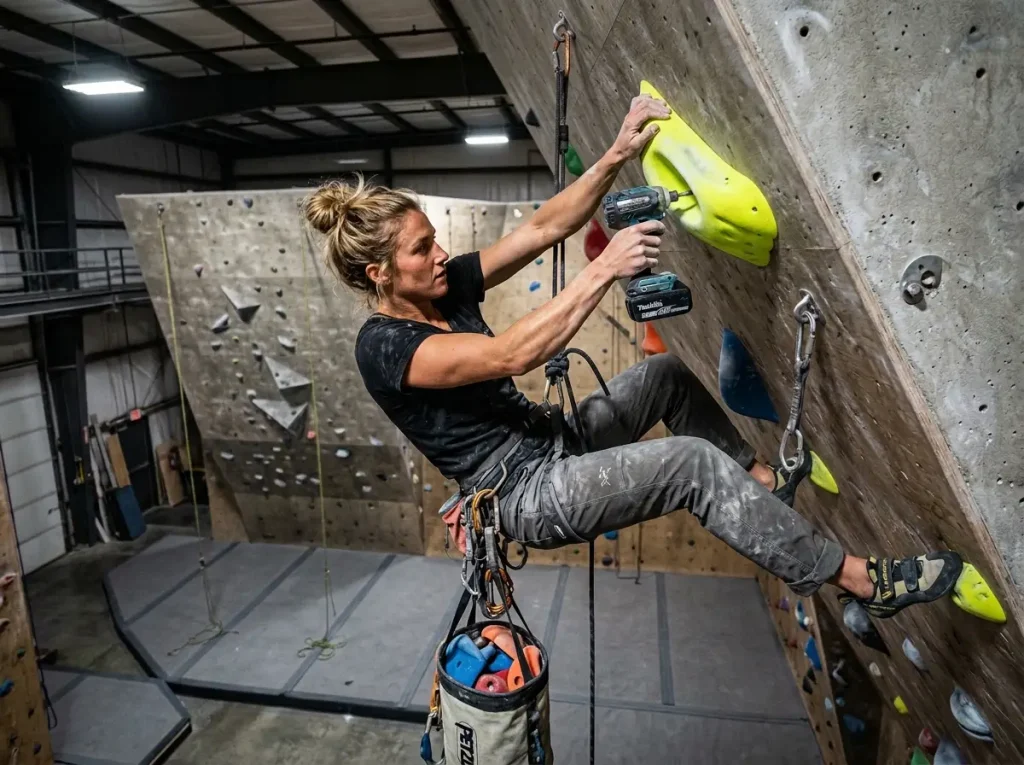
Structural requirements compound the cost. Rope walls need 30-foot ceilings and tilt-slab concrete or steel frames capable of handling lateral anchor loads. Build cost for a full facility runs $1.5M–$2.5M. And once the walls are up, the product — the routes — requires constant renewal. Cal Poly’s route-setting process design study documents route setting at 3.3–4.5 hours per problem. Hold replacement alone can hit $18,696 per year at a new facility.
The revenue breakdown tells the real story: membership monthly dues account for 70% of a gym’s total revenue. Day passes generate only 15%. If you want to understand how climbing gyms structure their revenue model, that 70/15 split is the core fact. You’re not a walk-in customer. You’re a recurring revenue unit. When a gym charges $100+, they’re not extracting a premium — they’re covering a liability-to-premium ratio that your neighborhood Planet Fitness never faces.
The Break-Even Formula: Math That Doesn’t Lie

Here’s the formula most climbers should have before signing any EFT billing agreement:
Break-Even Visits = (Monthly Dues + Initiation Fee ÷ Planned Duration) ÷ Day Pass Price
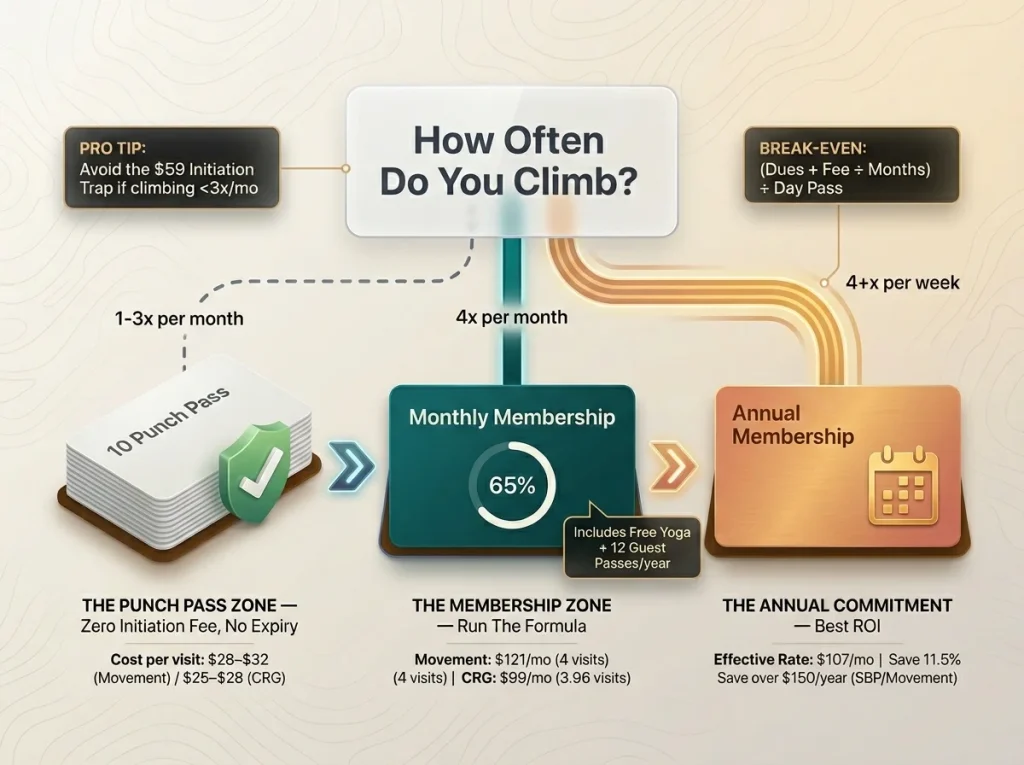
Plug in Movement Sunnyvale numbers: $121 monthly dues, $49 initiation fee amortized over 6 months, $32 day pass price. You get 4 visits per month to break even. At Central Rock Gym ($99 dues, $0 initiation, $25 day pass), the crossover sits at 3.96 visits — and the zero enrollment fee radically changes the calculus when you’re debating whether to cancel and rejoin.
For climbers doing 3 visits per month or fewer, neither day passes nor monthly memberships are the right answer. That’s where 7-visit passes and punch-pass programs live. They eliminate initiation fee risk entirely and don’t lock you into EFT billing cycles. The 15-day trial at Movement for $39 — less than two day passes — is the smartest tool in the consideration-stage toolbox. It gives you real behavioral data before you commit to anything.
Annual memberships ($850–$1,075 depending on the chain) deliver effectively one free month compared to month-to-month billing. That’s the math for a progression-focused climber doing 4+ sessions per week who already has their utilization pattern dialed. If you want to ground these numbers against specific chains and real-world pricing structures, review gym climbing etiquette rules and how to maximize your sessions — the visit patterns that come from knowing the gym matter as much as the cost per visit.
Pro-Tip: Track your actual sessions for the first 30 days before signing anything. Intention and behavior diverge hard in month two when work gets busy. Use your gym’s app check-in history — Movement, SBP, and CRG all have it — to pull your real visit log.
Chain-by-Chain Comparison: Movement, CRG, SBP, and The Spot
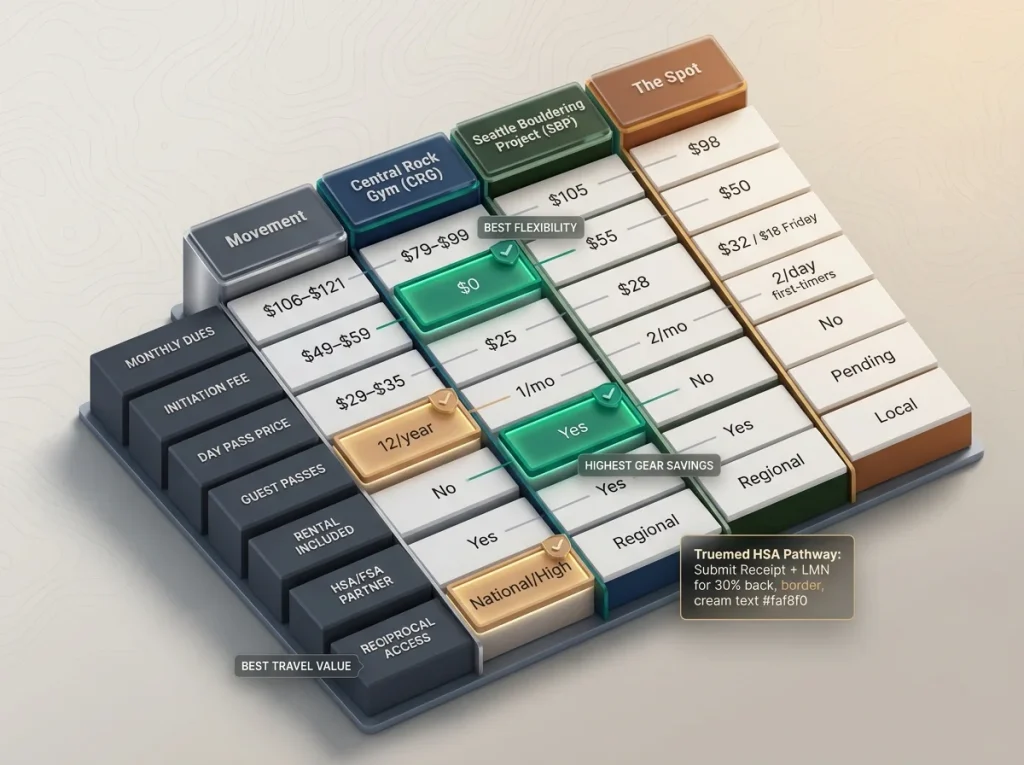
The four major US chains don’t compete on price alone. The member benefits — guest passes, reciprocal access, rental gear inclusion, HSA eligibility — are where the real value diverges.
Movement Climbing + Fitness runs $106–$121/month depending on location, with a $49–$59 enrollment fee and a $29–$35 day pass. The perk that matters most for anyone who travels: reciprocal access nationwide. A member at Movement Sunnyvale walks into Movement DFW, Chicago, or Boulder without paying a day pass. At $30+ per visit, two road trips per year can cover your initiation fee in access savings alone. The 12 member guest passes per year — valued at roughly $360 in day pass equivalents — add another layer. Free yoga and intro classes are bundled. Month-to-month cancellation with 15 days notice means no long-term trap.
Central Rock Gym charges $79–$99/month, $59–$79 for students, with a $0 initiation fee. No other major chain touches this. CRG also includes rental gear bundle in the membership — worth $32–$44/month for beginners who haven’t bought their own kit yet. The Truemed HSA/FSA integration makes CRG the clearest entry point for pre-tax savings. Because there’s no initiation fee, the freeze-versus-cancel math looks completely different: there’s almost never a reason to freeze. Just cancel and rejoin when you’re ready.
Seattle Bouldering Project runs $105/month, $950 annually (12 months for the price of 11), with a $55 enrollment fee. The 10% retail discount and 2 member guest passes per month add real value. SBP’s model is built around the freeze ROI: with a $55 initiation fee, paying $10/month to freeze is mathematically better than canceling and re-enrolling — as long as you’re gone fewer than 5–6 months.
The Spot Climbing Gym charges $98/month and $50 initiation. Their $18 Friday day pass is one of the only transparent discount structures in the industry — letting casual visitors optimize timing. The family membership ($240 for 3 members) and 20% off Rab Denver, 15% off Alpine Start round out a solid community-focused model. Two first-timer guest passes per day let members mentor newer climbers without financial penalty.
Before you commit to any chain, think through what else to evaluate before choosing a climbing gym — wall types, routesetting frequency, chalk dust management, contract terms. Price is just one variable.
The Gear ROI Timeline: Stop Renting by Month Three

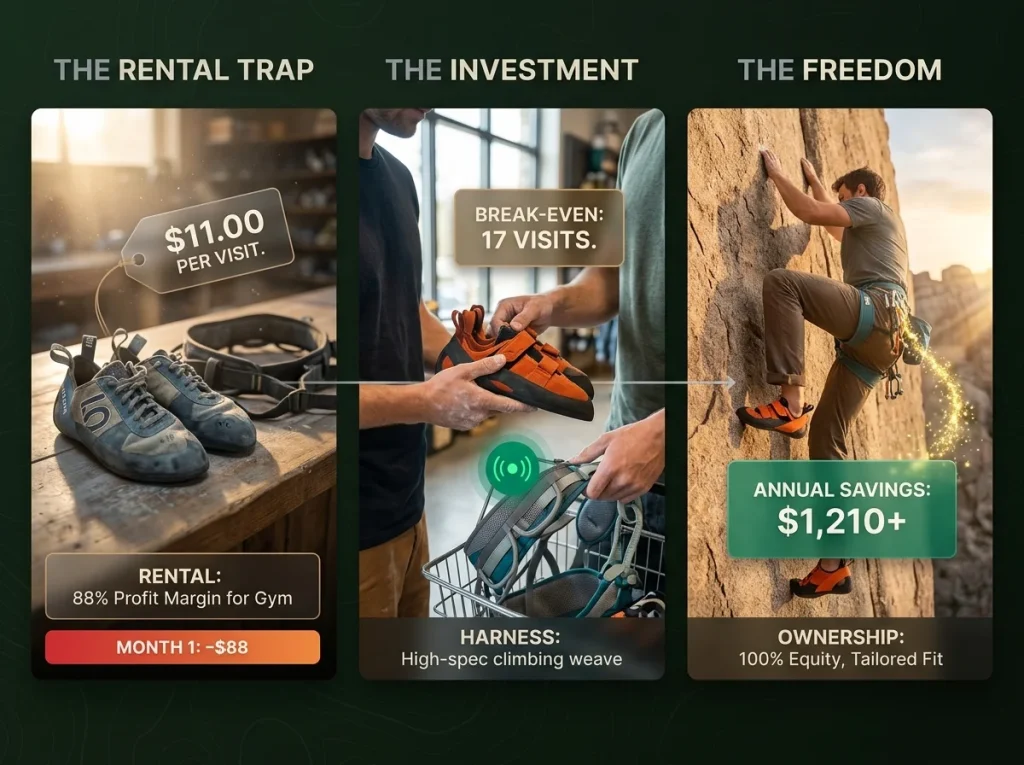
The rental counter is where gyms make their money on beginners. Rental packages run $8–$11 per visit for shoes, harness, and chalk bag, at roughly 80% profit margin. At 2 visits per week, a climber pays $88–$176 per month for gear they own zero equity in. After a full year, that’s $1,000–$2,100 in rental fees with nothing to show for it.
The rental vs ownership math is simple. Climbing shoes average $100 at entry-level, versus $6 per visit in rental fees — break-even hits at 17 visits. At 2 visits per week, that’s about 9 weeks. A harness costs around $60 against a $5 rental fee — ROI at 12 visits, roughly 6 weeks. A chalk bag and chalk runs $25 against $2 per visit — break-even at 13 visits. The full rental gear bundle costs $185 to own against $11 per visit in savings — the whole kit pays for itself in under 9 weeks at 2 visits per week.
There’s a performance argument too. Rental shoes are oversized, worn down, and don’t fit your foot profile. Every session in rentals is a session building bad footwork habits. If you’re smearing or edging on granite friction slab and the shoe is a full size too big, you’re not getting the technique feedback you’re paying for. The rental counter isn’t just a financial trap — it’s a training handicap.
Pro-Tip: Don’t overbuy on day one. Buy shoes first. Harness second. Skip the elaborate chalk bag — a zip-lock works until month two. The $100 shoe purchase is the single highest-ROI move a new climber can make.
The broader case for gym investment versus other climbing access is worth thinking through — see comparing the full ROI of gym membership versus outdoor club access to run the numbers on AAC membership, gear discounts through ExpertVoice, and rescue insurance coverage.
Fiscal Optimization Strategies: Cutting Your Effective Cost by 30%+

Most climbers leave serious money on the table because they don’t know three things exist: the HSA/FSA pathway, the ACH vs. credit card discount, and the freeze math. None of them require special status. They just require knowing to ask.
The HSA/FSA Pathway (30% Savings)
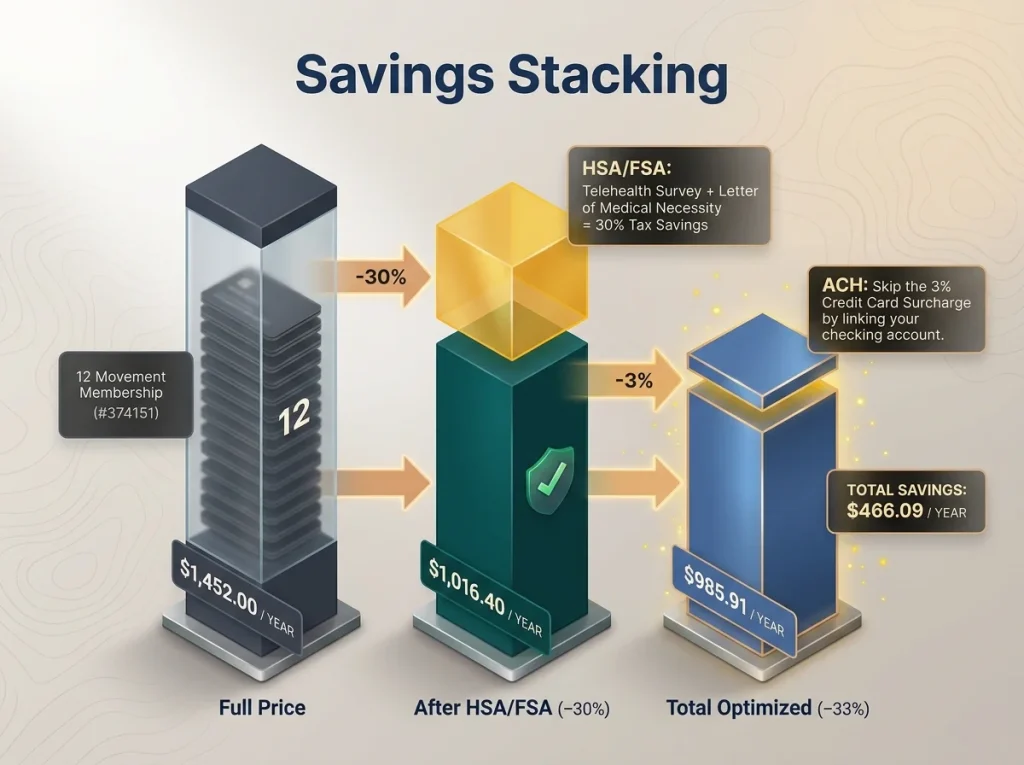
Climbing qualifies as a medical expense under IRS Section 213(d) for treatment or prevention of obesity, hypertension, and depression. The Truemed process is four steps: pay $15 for a telehealth survey, receive a 12-month Letter of Medical Necessity (LMN) from a licensed provider, pay your gym dues with a regular credit card, then submit the receipt and LMN to your FSA/HSA administrator for reimbursement. Average savings: 30% based on your marginal tax bracket. On a $121/month Movement membership over 12 months ($1,452/year), that’s $435.60 back. More than four months of membership, recovered. Per IRS Publication 502 on qualified medical expenses, this is a legitimate, documented pathway. Currently available at Movement, Central Rock Gym, and Seattle Bouldering Project through their Truemed partnerships.
You still pay full price upfront. You get reimbursed after submission. Keep every receipt and don’t mix FSA/HSA funds with non-qualifying expenses. Clean recordkeeping is the only thing standing between you and the reimbursement.
ACH vs. Credit Card Billing
Surcharge-adjusted rates are a real variable most members never ask about. Credit card processing fees run 1.5%–3.5% per transaction. ACH bank transfers cost the gym a flat $0.25–$0.55. Spire Climbing explicitly charges a 3% surcharge for credit card payments. At $121/month, a 3% surcharge adds $3.63 per transaction — $43.56 per year in completely avoidable fees. Ask at sign-up whether ACH bank draft carries a reduced rate. Not every gym advertises it.
Pro-Tip: Link a dedicated checking account to your gym’s ACH billing. It keeps your HSA/FSA reimbursement records clean and separates gym spending from your main account without any extra effort.
The Freeze vs. Cancel Math
Most gyms charge $10/month to freeze your membership. Here’s how the math actually works: if you cancel and rejoin after a 4-month break, you pay a $55 re-enrollment fee. If you freeze for 4 months at $10/month, you pay $40. Freezing saves $15 and eliminates re-enrollment friction. The math inverts at CRG, which charges $0 initiation — cancel freely, rejoin for nothing. The rule of thumb: if your initiation fee divided by planned absence months exceeds the monthly freeze fee, freeze. If not, cancel.
Explore how AAC membership stacks up as a financial tool for serious climbers after you’ve optimized your gym membership cost — the insurance, gear discounts, and access benefits stack on top of everything covered here.
The Lead Test and Utilization Traps: What Kills Your Membership ROI
Two behavioral patterns silently destroy membership value — and neither of them shows up on your credit card statement.
The Lead Test Penalty
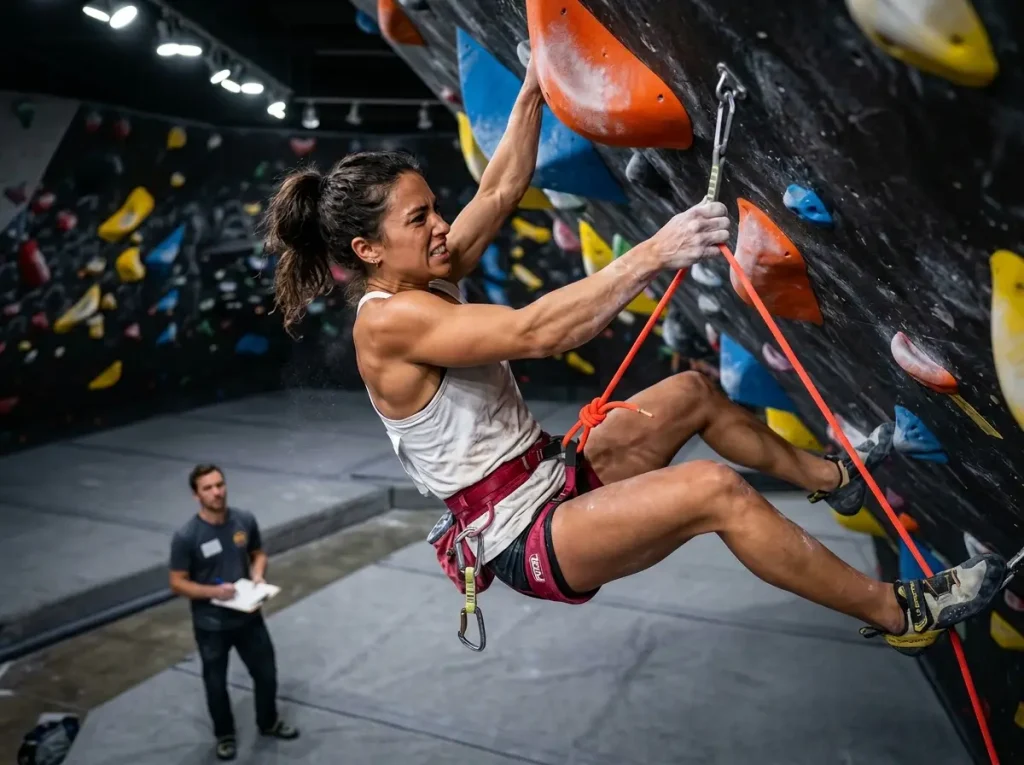
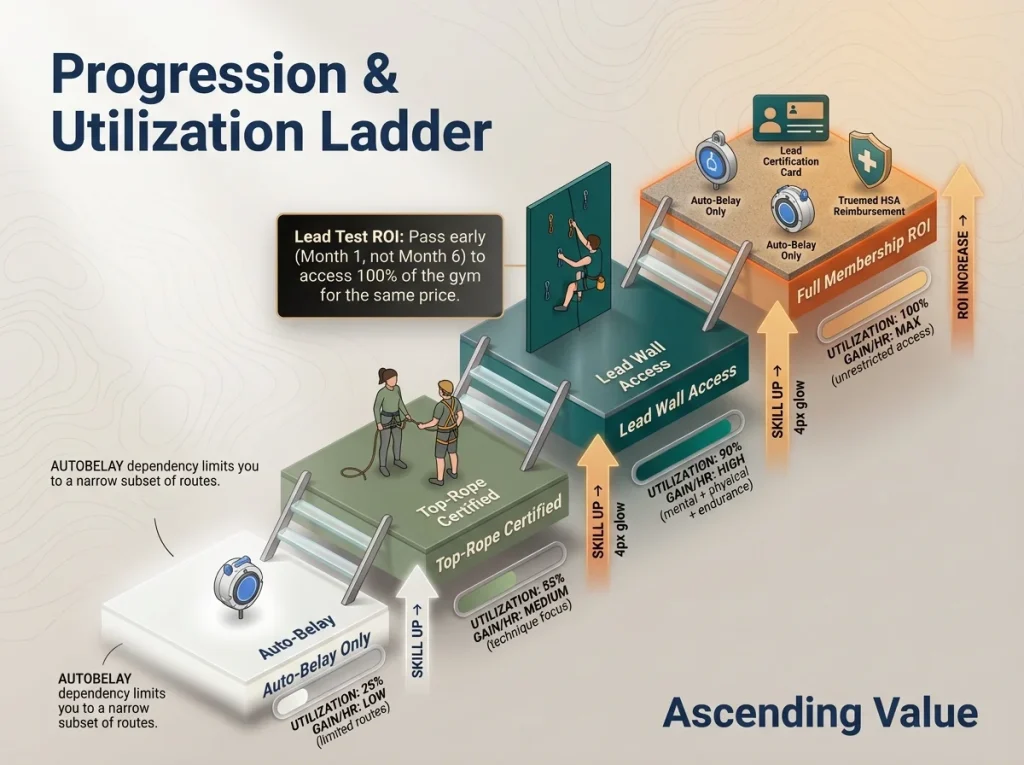
98% of gyms require a lead climbing certification test to access lead walls and autobelay zones on lead-designated routes. Members who delay this end up confined to top-rope only, which delivers lower performance gains per training hour than lead circuit work. The movements are different, the mental load is different, and the route selection available to you is narrower. Every month you spend on top-rope is a month of underutilizing a membership you’re paying full price for.
Lead skills also translate directly to outdoor sport climbing — the gym lead test is the cheapest, most structured entry point to that transition. Take it in your first month, not your sixth. For a full breakdown of what the test actually involves, see how to pass your indoor lead climbing test.
Autobelay Dependency and Its Costs
Solo climbers default to autobelays because it’s convenient. The problem: autobelay dependency limits you to one route family, delays partner skill development, and creates clip-check habits that don’t transfer cleanly to lead climbing. Autobelays have a documented failure risk when users skip the clip-check ritual — see the autobelay clip-check ritual every gym climber should know for the specifics.
Use your member guest passes strategically. Movement’s 12 annual passes (valued at $30+ each) and SBP’s 2 per month are meant to be used to bring in competent climbing partners, not casual friends who’ll lose interest by week two.
Pro-Tip: Your guest passes are a barter currency. Use them to acquire a belay partner who climbs at or above your level. Every visit with a strong partner is worth more development-hours than two visits solo on an autobelay.
Utilization Tracking: The Discipline Most Members Skip
The gym’s churn model banks on a 66% first-visit dropout rate. Operators know that average members pay dues for months they don’t fully use. If you drop below your break-even point for two consecutive months, the logic flips — punch pass or 7-visit pack until you rebuild frequency. Your gym’s check-in app (Movement, SBP, and CRG all have booking systems) generates your full visit history automatically. Run it as a quarterly audit. Utilization data is the only honest measure of whether your climbing economy model is working.
When NOT to Buy a Membership: The Anti-Sell

Understanding what a climbing gym’s real break-even model looks like from the operator’s side makes one thing clear: the gym needs your recurring revenue. That doesn’t mean you need their membership. There are three scenarios where a membership is the wrong financial move.
The 30-Day Rule
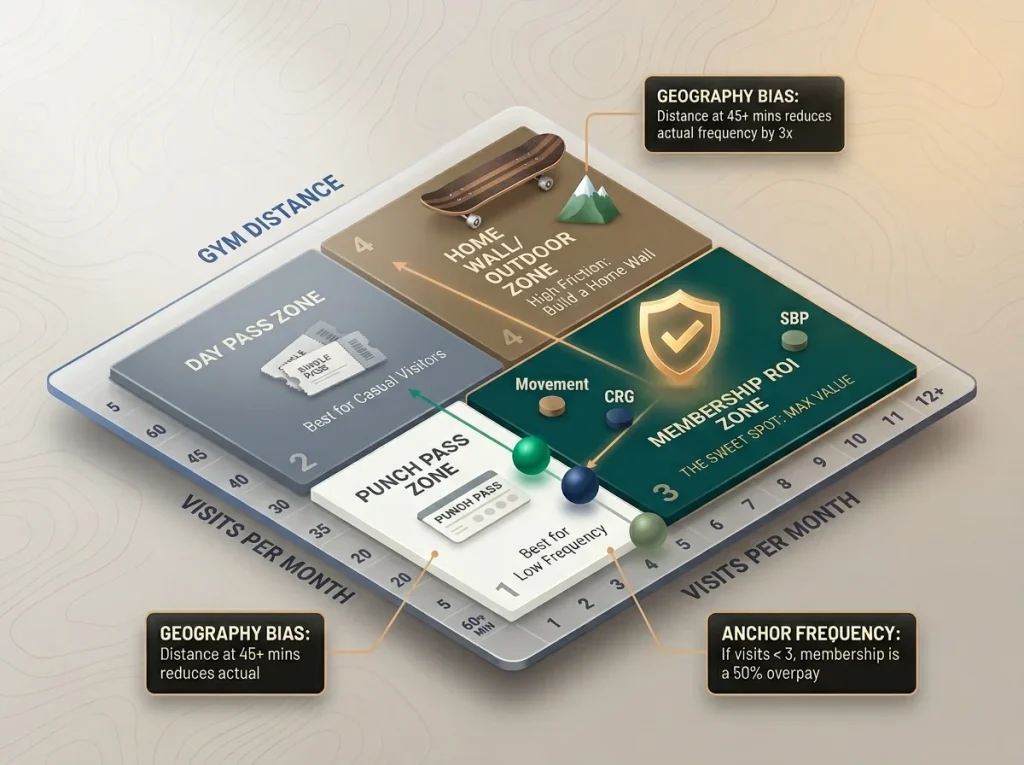
If you’ve climbed fewer than 5 times total in your life, don’t buy a membership. Take the 15-day trial at Movement for $39, or use a punch pass. The 66% first-visit dropout rate is real. 66% of people who walk into a gym as day-pass visitors never come back a second time. Assuming you’re in the 34% before you’ve proven it will cost you a $49–$59 initiation fee you’ll never recover. The verdict: if you can’t commit to 4 visits in your first 30 days as a day-pass user, a membership won’t fix your attendance problem. It will just make it more expensive.
The Geography Problem
If your nearest gym is 45+ minutes away, your actual visit frequency will never match your intended frequency. The industry data is clear: a gym at 20 minutes drives 3 times more visits than one at 45 minutes. Run your break-even calculator using realistic monthly visits, not aspirational ones. For climbers with a home wall or nearby outdoor crags, ongoing monthly dues often compete with free or sunk-cost alternatives. The home wall ROI timeline runs 18–24 months — after that, it costs you nothing per session while the gym membership clock keeps running.
The “First Gear” Financial Priority Order
Before buying a climbing gym membership, buy shoes. Shoes improve your capability on the wall — membership improves your access to the wall. Capability investment comes first. The priority order: (1) shoes, (2) harness, (3) chalk setup, (4) membership. A climber paying $120/month for a gym they visit twice and renting shoes both times is spending $56 in day-pass-equivalent access plus $88 in rental fees — $144 total — when $100 in shoes would have eliminated the rental fees and made those two visits worth three times as much developmentally. The math is insulting.
What You Should Walk Away Knowing
Three things, none of them complicated:
The math is binary at 4 visits per month. Below that, punch passes win. At 4+, membership is the clear financial choice at every major chain. Use the formula every time you’re making this decision — it takes 30 seconds and the answer doesn’t lie.
The HSA/FSA pathway through Truemed is the highest-value optimization available to any gym member. At 30% savings, a $1,452/year membership costs $1,016 net. Most climbers have no idea this exists. Now you do.
Gear ownership ends the rental trap at 17 visits. Every visit after that, the gym’s 80%-margin rental business loses your contribution. Buy shoes first. Everything else follows.
Run your actual visit log from the last 30 days. Not the visits you planned — the visits you did. Then plug your real gym’s numbers into the break-even formula above. The answer will either confirm you’re managing your membership intelligently, or it’ll tell you to change your strategy before another month of dues disappears.
Now go send something (without overpaying for it).
Climbing Gym Membership FAQ
Why is a climbing gym membership so expensive compared to regular gyms?
Climbing gyms carry insurance overhead that standard gyms never face — premiums starting at $5,000–$10,000+ per year, plus structural requirements including 30-foot ceilings and specialized anchor systems. Route setting is a skilled labor process costing 3.3–4.5 hours per route, with hold replacement reaching $18,696 annually at a new facility. None of these costs exist at a treadmill-based gym. The liability-to-premium ratio for an activity with real fall risk has no comparison to a standard fitness floor plan.
Is it cheaper to buy a day pass or a membership at a climbing gym?
At 1–3 visits per month, day pass options are cheaper. At 4+ visits per month, a membership is mathematically superior in almost every situation. At 3 visits/month with rental gear bundle added in, day passes typically run $111–$138 versus a membership at $79–$121. The crossover sits between visit 3 and visit 4, adjusted by your gym’s specific initiation fee amortization.
What is a climbing gym initiation fee, and can I avoid it?
An enrollment fee ($49–$59 at most major chains) is a one-time charge the gym uses to offset member acquisition cost. Central Rock Gym is the only major chain offering $0 initiation. At other chains, you can often negotiate a waiver during promotional periods — new location opens, January fitness rush — or by using their trial offer. Movement’s 15-day trial ($39) is functionally a waiver-equivalent if you convert.
How many times a week should I climb to make a membership worth it?
Twice a week — 8 visits per month — is where membership value is decisive at all major chains. At this frequency, savings over day passes plus rental gear exceed $200/month within your first quarter. Once per week (4 visits/month) is the minimum floor where membership still wins. Below that, you’re almost certainly overpaying.
Can I use my HSA or FSA to pay for a climbing gym membership?
Yes, at gyms partnered with Truemed — currently Movement Climbing + Fitness, Central Rock Gym, and Seattle Bouldering Project. Climbing qualifies as a medical expense for prevention or treatment of conditions like obesity and hypertension under IRS Section 213(d). You need a $15 telehealth survey and a Letter of Medical Necessity (LMN), then submit receipts for HSA or FSA reimbursement. Average savings: ~30% based on your tax bracket.
Safety Notice: Rock climbing and mountaineering are inherently high-risk
activities that can involve physical trauma or fatal incidents. The information on Rock Climbing Realms is for
educational and informational purposes only. Techniques and advice presented here are not a substitute
for professional, hands-on instruction. Conditions and risks vary by location. Always seek guidance
from a qualified instructor before attempting new techniques. By using this website, you agree that you
are solely responsible for your own safety. Any reliance you place on this information is strictly
at your own risk, and you assume all liability for your actions. Rock Climbing Realms and its authors
will not be held liable for any harm, damage, or loss sustained in connection with the use of this information.
Affiliate Disclosure: We are a participant in the Amazon Services LLC Associates Program, an
affiliate advertising program designed to provide a means for us to earn advertising fees by advertising and linking
to Amazon.com. As an Amazon Associate, we earn from qualifying purchases. We are also an official affiliate partner
of Black Diamond Equipment via the AvantLink network. If you click on a Black Diamond affiliate link and make a
purchase, we may earn a commission at no additional cost to you. We also participate in other affiliate programs.
Additional terms are found in the terms of service.